
Robotic NDT Imaging Systems Market Size and Share
Market Overview
| Study Period | 2020 - 2031 |
|---|---|
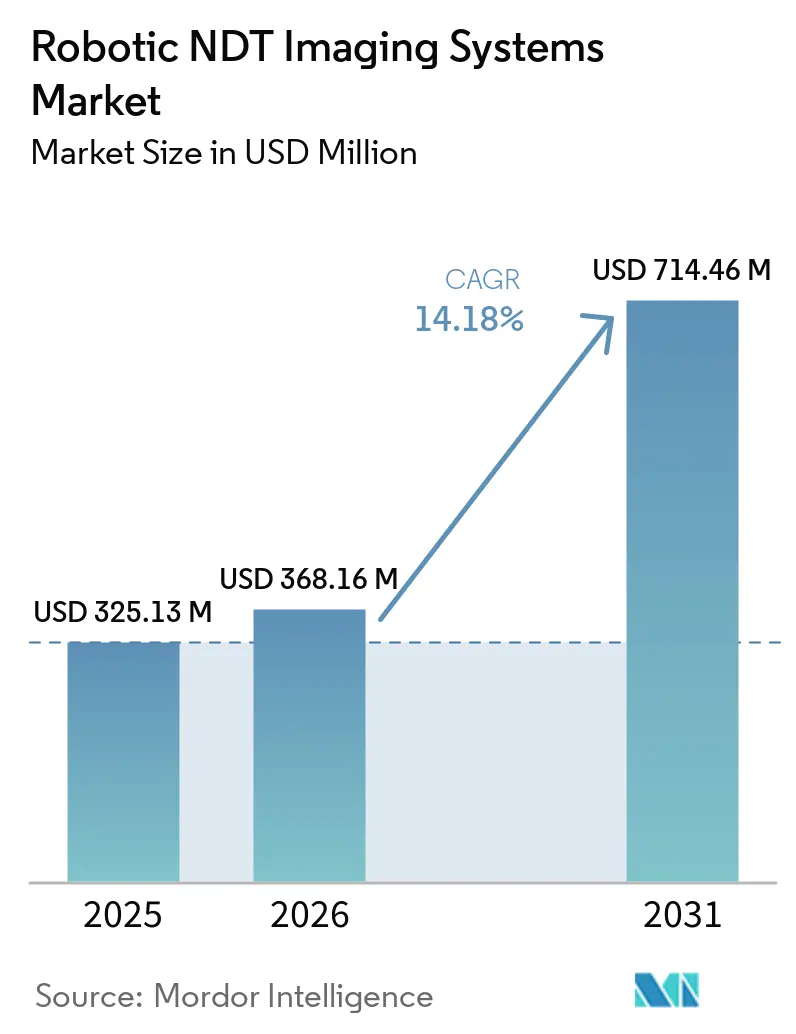
| Market Size (2026) | USD 368.16 Million |
| Market Size (2031) | USD 714.46 Million |
| Growth Rate (2026 - 2031) | 14.18 % |
| Fastest Growing Market | Asia-Pacific |
| Largest Market | North America |
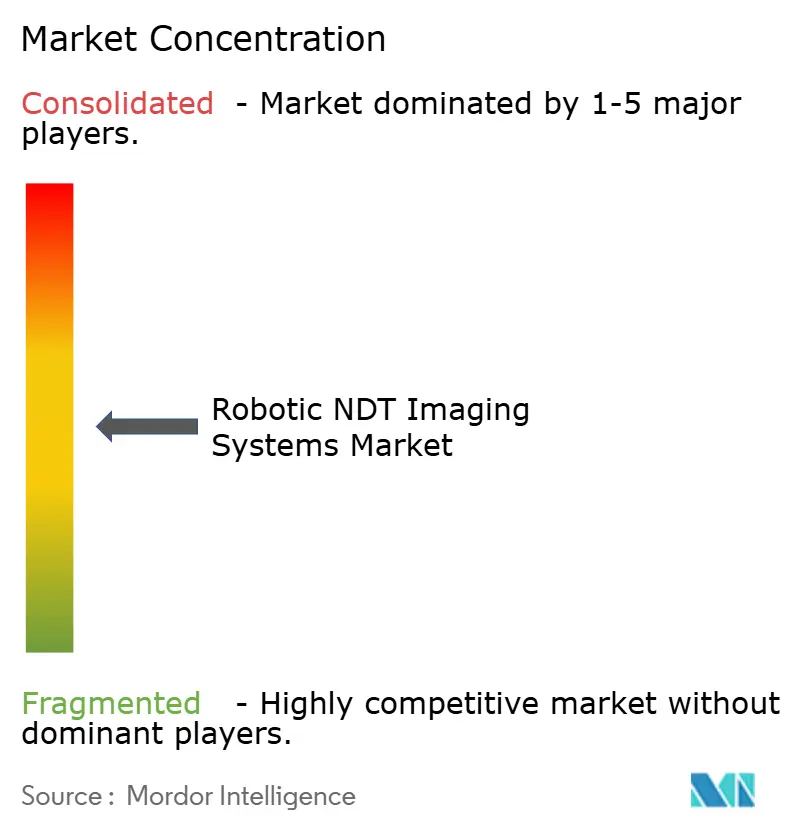
| Market Concentration | Medium |
Major Players *Disclaimer: Major Players sorted in no particular order Image © Mordor Intelligence. Reuse requires attribution under CC BY 4.0. | |
Robotic NDT Imaging Systems Market Analysis by Mordor Intelligence
The Robotic NDT Imaging Systems Market size is projected to expand from USD 325.13 million in 2025 and USD 368.16 million in 2026 to USD 714.46 million by 2031, registering a CAGR of 14.18% between 2026 and 2031. The robotic NDT imaging systems market is supported by inspection work in locations that are difficult or unsafe for people to reach. Aging pipelines, refineries, power plants, and offshore structures require repeatable condition data over their operating life. Risk-based inspection rules also increase the value of structured records that can be reviewed across large asset portfolios. AI-supported classification is making routine image review faster for established inspection methods, while qualified personnel still retain responsibility for approval. The robotic NDT imaging systems market is therefore moving beyond one-time equipment purchases toward inspection contracts that support recurring work and longer customer relationships.
Key Report Takeaways
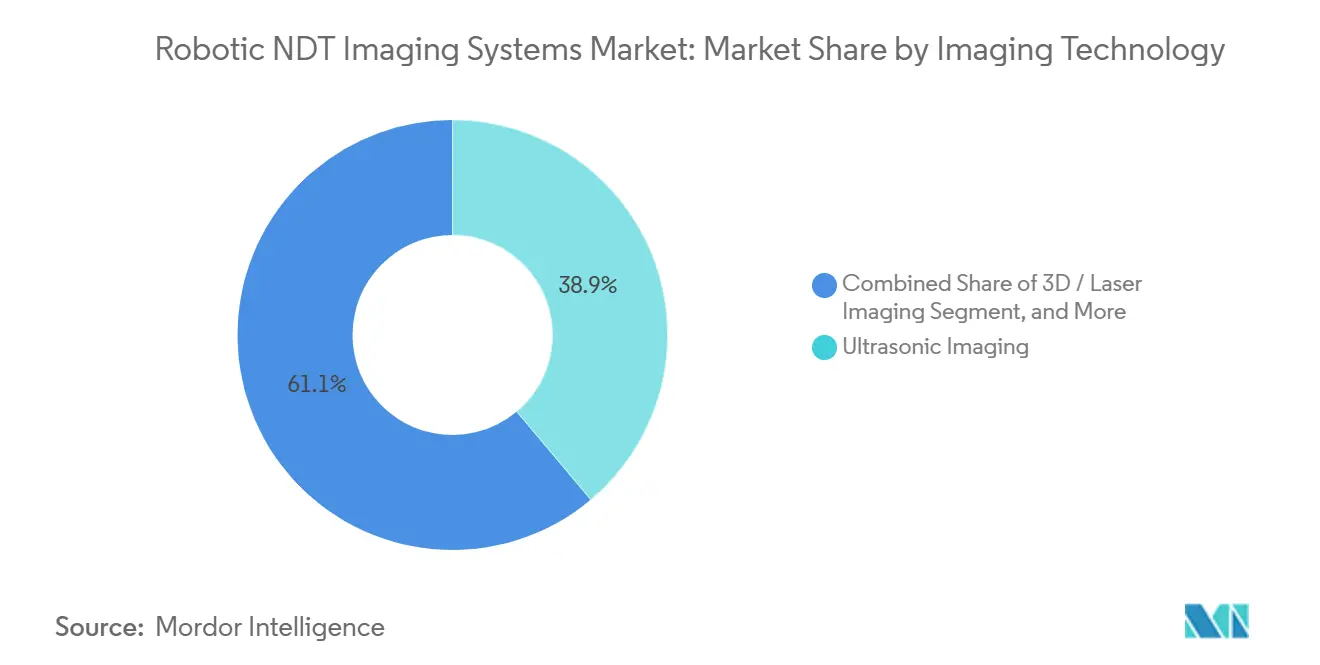
- By imaging technology, ultrasonic imaging held 38.88% of the robotic NDT imaging systems market share in 2025, while 3D and laser imaging are projected to expand at a 14.56% CAGR from 2026 to 2031.
- By robot type, crawler and wall-climbing robots accounted for 34.56% of the revenue share of the robotic NDT imaging systems market in 2025, while aerial robots and drones are projected to expand at a 14.77% CAGR through 2031.
- By automation level, remotely operated systems accounted for 56.61% of revenue in 2025, while fully autonomous systems are projected to grow at a 14.82% CAGR through 2031.
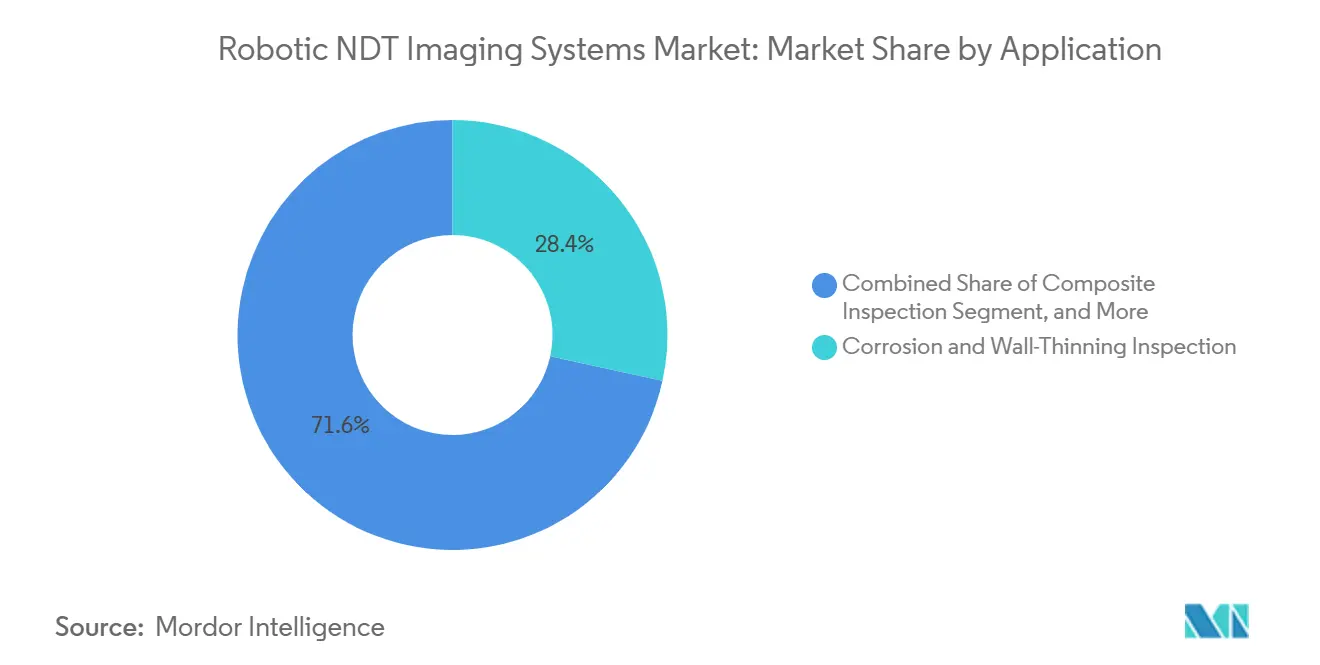
- By application, corrosion and wall-thinning inspection accounted for 28.41% of the revenue share of the robotic NDT imaging systems market in 2025, while composite inspection is projected to expand at a 14.79% CAGR through 2031.
- By end-user industry, oil and gas accounted for 29.98% of spending in 2025, while automotive and transportation are projected to expand at a 14.63% CAGR through 2031.
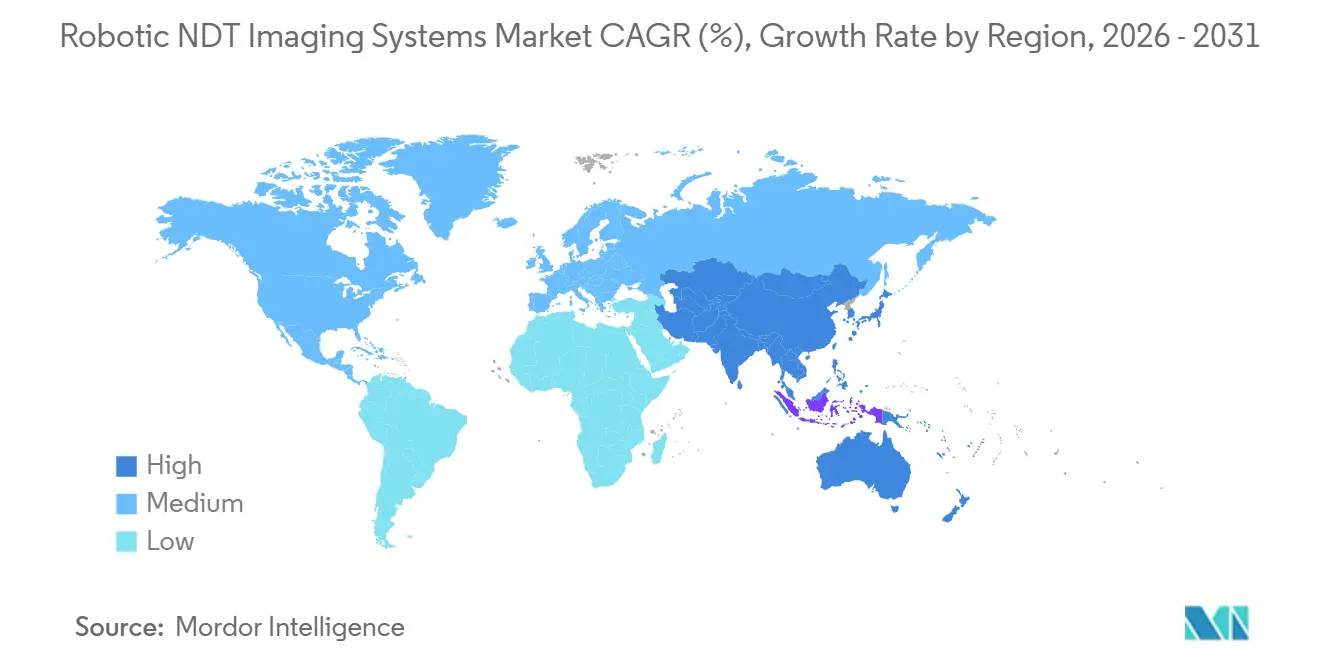
- By geography, North America held 33.51% of revenue in 2025, while Asia-Pacific is projected to expand at a 14.99% CAGR through 2031.
Note: Market size and forecast figures in this report are generated using Mordor Intelligence’s proprietary estimation framework, updated with the latest available data and insights as of January 2026.
Global Robotic NDT Imaging Systems Market Trends and Insights
Drivers Impact Analysis*
| Driver | (~) % Impact on CAGR Forecast | Geographic Relevance | Impact Timeline |
|---|---|---|---|
| Automated Inspection in Hazardous Environments | +3.2% | Global, with strong concentration in the Middle East, North American offshore operations, and Asia-Pacific subsea work | Short term (≤ 2 years) |
| Industry 4.0 and AI-Based Defect Detection | +2.9% | Global, with early gains in North America and Europe | Medium term (2-4 years) |
| Aging Industrial Infrastructure | +2.6% | North America, Europe, and Asia-Pacific | Short term (≤ 2 years) |
| Tightening Safety and Quality Regulations | +2.0% | North America, Europe, and Asia-Pacific | Medium term (2-4 years) |
| Multi-Modal Payloads for Composite and Complex Geometry | +1.5% | North America, Europe, and Asia-Pacific | Medium term (2-4 years) |
| Inspection Data Traceability for Digital Twins | +1.1% | Global, including energy-sector adoption in the Middle East and Africa | Long term (≥ 4 years) |
| Source: Mordor Intelligence | |||
Demand for Automated Inspection in Hazardous Environments
The robotic NDT imaging systems market serves assets where human access brings material safety risks or high preparation costs. Confined vessel interiors, subsea pipelines, elevated structures, and risers often need access work that can take longer than the inspection itself. Wall-climbing platforms and aerial systems can reduce access preparation and collect data during a single shift. ADNOC and Gecko Robotics signed 3 agreements in November 2025 for multi-year AI-powered robotic inspections across ADNOC Gas assets, with the Inspection AI platform expected to generate more than USD 300 million in maintenance savings over 5 years.[1]ADNOC, “ADNOC and Gecko Robotics Sign Three Deals to Accelerate AI, Robotics and Skills Training,” ADNOC, adnoc.ae. A July 2025 offshore trial demonstrated a flying robot that deployed an EMAT-equipped crawler for riser wall-thickness measurements without personnel on deck.[2]Avestec and bp, “Above-Water Riser Visual and EMAT Inspection Using a Marsupial Flying Robot with UAV-Deployed Mini Crawler,” Offshore Technology Conference Proceedings, doi.org. These use cases leave offshore, subsea, and enclosed industrial structures as important areas for robotic inspection coverage.
Industry 4.0 and AI-Based Defect Detection
AI integration is moving robotic inspection from pilot testing into repeatable production use. It can classify routine indications and help inspectors focus on results that need expert judgment. Airbus Helicopters deployed a hybrid robotic inspection center using Laser-Excited Acoustics for serial composite aerostructure production in 2026. Research presented at the 2026 European Conference on NDT reported automated recognition accuracy above 85% on volumetric ultrasonic data and described audit trails aligned with ASME BPVC and ISO 9712 requirements.[3]Aubert et Duval and Fraunhofer IZFP, “An Explainable and Standards-Aware AI Framework for Automated Ultrasonic Inspection,” ECNDT 2026 Proceedings, ndt.net. Routine classification can shift Level III personnel toward model review and quality oversight instead of first-pass interpretation. This matters in high-volume manufacturing, where inspection delays can limit production output in the robotic NDT imaging systems market.
Aging Industrial Infrastructure
Aging assets create recurring demand for detailed integrity assessments that can be compared over time. Peer-reviewed 2025 research reported that 30% of global oil and gas pipelines had exceeded their design service life. The same research reported that China’s oil and gas pipeline mileage rose from 12.66 × 10⁴ km in 2019 to 16.0 × 10⁴ km in 2024. Refineries and power plants built in the 1970s and 1980s are also operating beyond their original design expectations. Robotic platforms using phased array ultrasonic testing and 3D laser sensors can record volumetric data in a single pass over complex assets. The resulting coverage and record quality help operators address rising inspection volumes when certified technician capacity is limited.
Tightening Safety and Quality Regulations
Inspection requirements increasingly cover data consistency, coverage, frequency, and record retention. Updates to ISO 16810 and ISO 16811 during 2024 and 2025, together with ASTM E543-26, increased expectations for consistent automated scanning and NDT agency qualification. China published GB/T 46366-2025 in October 2025 to define requirements for self-driven in-pipe inspection robots, including classification, motion capability, and detection precision. API 580 and API 581 risk-based inspection practices require corrosion-loop mapping at defined intervals. These requirements favor machine-readable output because handwritten records do not scale effectively across large asset portfolios. Nuclear license-extension documentation and food-manufacturing quality requirements also broaden the settings where traceable robotic imaging records have direct value.
Restraints Impact Analysis*
| Restraint | (~) % Impact on CAGR Forecast | Geographic Relevance | Impact Timeline |
|---|---|---|---|
| High Upfront Capital Cost | -2.4% | Global, especially South America, the Middle East and Africa, and small and mid-sized enterprise-led markets | Short term (≤ 2 years) |
| Skilled NDT and Robotics Talent Shortage | -1.9% | Global, with substantial pressure in North America, Europe, and the Middle East | Medium term (2-4 years) |
| Qualification Bottlenecks for AI-Assisted Image Interpretation | -1.4% | Global, especially North America and Europe | Medium term (2-4 years) |
| Sensor-Robot Calibration Drift Across Complex Surfaces | -0.9% | Global, with high relevance for subsea and aerospace inspection | Long term (≥ 4 years) |
| Source: Mordor Intelligence | |||
High Upfront Capital Cost
High acquisition, certification, maintenance, and staffing costs remain a barrier for smaller inspection contractors. The robotic NDT imaging systems market has separated large energy, aerospace, and nuclear operators with established fleets from smaller fabrication yards and utilities that still use manual or semi-automated methods. Full ownership can deliver favorable returns when assets require frequent inspection and scaffolding or safety exposure can be reduced. Direct purchases remain less attractive where inspection work occurs infrequently. Rental and inspection-as-a-service models used by MISTRAS Group and Cyberhawk can convert capital expenditure into variable operating cost. High purchase costs can also delay technology refresh cycles and support incumbent positions while slowing wider use of newer imaging methods.
Skilled NDT and Robotics Talent Shortage
Robotic systems reduce manual scanning work but still require people with advanced NDT and systems skills. The ASNT Foundation reported in 2025 that 30% of certified NDT professionals were older than 55. ASNT’s 2026 assessment estimated 150,000 certified NDT professionals globally and fewer than 1,200 senior Level III trainers.[4]American Society for Nondestructive Testing, “Digital NDE Ecosystem 2030, Skills, Trust, and Technology,” ASNT, asnt.org. The training base cannot expand at the same pace as the inspection requirements in many locations. Staffing shortages can delay turnaround inspections at Gulf Coast refineries and North Sea assets. These constraints remain relevant even as the robotic NDT imaging systems market improves data collection productivity.
*Our forecasts treat driver/restraint impacts as directional, not additive. The impact forecasts reflect baseline growth, mix effects, and variable interactions.
Segment Analysis
By Imaging Technology: Ultrasonics Leads While 3D and Laser Methods Expand
Ultrasonic imaging held 38.88% of the robotic NDT imaging systems market share in 2025. Its position reflects long-standing operator familiarity and broad acceptance under API and ASME requirements. Oil, gas, and power operators use ultrasonic methods for weld, corrosion, and crack detection. Phased array ultrasonic testing and time-of-flight diffraction are commonly installed on crawler and robotic-arm platforms. These methods provide repeatable coverage over pressure vessels and pipelines. Their established procedures also help users integrate robotic data collection into existing inspection programs.
3D and laser imaging is projected to expand at a 14.56% CAGR from 2026 to 2031. Laser-Excited Acoustics used at Airbus Helicopters shows how contact-free methods can inspect composite parts without water-coupled ultrasonic testing. These systems can address curved and layered structures that limit conventional probe performance. Aerospace and defense users increasingly select imaging methods based on composite specifications and component geometry. Radiographic methods remain important for aerospace castings and weld verification. Thermal imaging, machine vision, and eddy-current arrays retain roles in predictive maintenance, anomaly screening, skin-panel inspection, and heat-exchanger tubing assessment.
These platforms also allow teams to plan inspection paths around the surface rather than around temporary access equipment. This matters when assets must remain in service and operational interruptions carry high cost. Crawler data can be reviewed at several stages, which makes it easier to confirm coverage and document areas that need further examination. The same approach supports repeat visits because operators can compare measurements taken along a defined route. For this reason, crawler systems remain useful even where aerial systems provide a faster first look at the asset.



By Robot Type: Crawlers Lead Revenue While Aerial Systems Extend Access
Crawler and wall-climbing robots accounted for 34.56% of the robotic NDT imaging systems market size in 2025. Oil, gas, and marine operators use them for external pipeline surveys, tank-floor assessments, and vessel-wall mapping. Magnetic wheels and vacuum systems support continuous ultrasonic coverage on vertical metal surfaces. These platforms can reduce the time and cost associated with scaffolding access. Robotic arms and gantry systems serve controlled aerospace and automotive production settings. In-pipe robots provide volumetric wall-thickness data from buried infrastructure that inspectors cannot directly access.
Aerial robots and drones are projected to expand at a 14.77% CAGR from 2026 to 2031. Voliro acquired Sixpec’s pulsed eddy current intellectual property in August 2025 after launching a drone-based pulsed eddy current payload in March 2025. The payload enables corrosion-under-insulation mapping without removing insulation. This expands drone use beyond visual surveys into a higher-value inspection task. Mobile ground robots also support nuclear-floor surveys and hazardous-site monitoring. Improved AI-guided navigation can aid these systems in locations where GPS signals are unavailable.
Remote operation also gives site teams a practical transition path from manual work to greater automation. Operators can retain control of system movement while using automated scanning to make data collection more consistent. Semi-autonomous deployment provides a similar balance when inspection conditions vary between sites. The model is particularly relevant where the inspection record must show a clear chain of responsibility. It also helps organizations introduce robotic systems without changing every approval process at once.
By Automation Level: Remote Operation Remains Central While Autonomy Advances
Remotely operated systems held 56.61% of the robotic NDT imaging systems market share in 2025. The segment reflects regulatory preference for human oversight during inspection approval. API 580 and ASNT SNT-TC-1A practices require qualified personnel to retain accountability for data quality. Semi-autonomous systems automate path planning and data collection while human operators review results. This approach can provide labor savings without removing human control from the inspection process. It also allows users to develop trust in automated quality management in stages.
Fully autonomous systems are projected to expand at a 14.82% CAGR from 2026 to 2031. Hardware capability is increasingly available, but approval of AI-based decision systems will determine adoption timing. The AIRPASS project demonstrated automated integration of robotic NDT data into aircraft structural digital twins in 2026. Manufacturing quality control is likely to adopt these workflows before energy and nuclear infrastructure because comprehensive part inspection is already a production requirement. Operators can use automated processing to reduce manual handling of routine data. Human review will remain important where safety certification rules are prescriptive.
By Application: Corrosion Inspection Leads While Composite Inspection Accelerates
Corrosion and wall-thinning inspection accounted for 28.41% of the robotic NDT imaging systems market size in 2025, driven by lifetime corrosion exposure and mature inspection and reporting requirements across oil and gas, marine, and power assets. Weld inspection remains the second-largest application, as fabrication yards and pressure-vessel operators require consistent quality records. Crack and defect detection, surface inspection, and dimensional inspection address distinct component and asset requirements, while AI-supported machine vision can identify potential anomalies before volumetric methods confirm their significance. End users evaluate robotic inspection systems based on the consequences of missed defects, inspection frequency, and component accessibility. Oil and gas remain central to current spending because it combines all three factors, while manufacturing prioritizes repeatability in controlled settings, and aerospace and defense programs value detailed records for complex materials. This diversity of end uses reduces reliance on any single inspection workflow within the robotic NDT imaging systems market.
Composite inspection is projected to expand at a 14.79% CAGR from 2026 to 2031. Aerospace and defense manufacturers use carbon-fiber-reinforced polymer and ceramic-matrix composite structures that can develop delaminations, disbonds, and porosity not visible during visual inspection. The FANTOM project involving Airbus, Daher, Testia, and IRT Jules Verne demonstrated a collaborative robot platform for flexible inspection of large aerostructure composite panels, providing an industrial model for automated composite inspection. Automotive producers are increasing composite content in electric-vehicle structures, while defense manufacturers are scaling additive-manufactured parts that require structured inspection.
By End-User Industry: Oil and Gas Leads Spending While Automotive Gains Momentum
Oil and gas accounted for 29.98% of end-user spending in 2025, driven by dense asset networks, high-consequence failure risks, and mandatory API inspection practices. The sector requires inspections for routine operations and life-extension projects at refinery units and LNG terminals. Power generation, aerospace and defense, and manufacturing and heavy engineering represent the next spending group, with requirements varying by material type, component geometry, and applicable standards. MISTRAS Group received a contract in December 2025 to provide NDT services for Woodside’s USD 17.5 billion Louisiana LNG terminal.
Automotive and transportation are projected to expand at a 14.63% CAGR from 2026 to 2031 as vehicle manufacturers deploy robotic NDT in electric-vehicle structural and battery inspection lines. Bridge and rail owners are also expanding robotic inspection programs as renewal investments increase inspectable assets. Marine and offshore operations remain smaller in revenue but require intensive asset-level inspection, while infrastructure and construction demand is rising as drone-based structural inspections enter bridge-maintenance specifications in North America and Europe. Regional adoption depends on installed asset conditions, inspection regulations, and skilled personnel availability, shaping demand for equipment sales, rentals, and inspection-as-a-service offerings.
Geography Analysis
North America held 33.51% of the robotic NDT imaging systems market share in 2025. The region has a high concentration of aging refineries, LNG facilities, and pipelines governed by API 580 and API 581 practices. The United States accounts for much of the regional volume, while Canada contributes through oil-sands upgrader inspections and pipeline-integrity programs. Mexico adds demand through downstream infrastructure investment. MISTRAS Group’s December 2025 Louisiana LNG contract illustrates the scale of work associated with North America’s LNG construction cycle. The scope includes radiographic, magnetic-particle, ultrasonic-thickness, positive-material-identification, and leak-testing services. Pipeline and hazardous-material safety requirements increase the need for structured inspection records, while nuclear license-extension documentation creates similar requirements for traceable data. Europe is the second-largest cluster, with Germany, the United Kingdom, and France supporting demand through nuclear, offshore, and aerospace programs. Shell renewed a 5-year global agreement with Cyberhawk in July 2025 for the iHawk visual-data management platform. The platform served more than 6,000 users across Shell operations in 4 continents.
Asia-Pacific is projected to expand at a 14.99% CAGR from 2026 to 2031. China is the main volume driver because its pipeline network expanded 26% from 2019 to 2024. China’s 15th Five-Year Plan mandated renovation of 770,000 km of urban underground pipelines. GB/T 46366-2025 also provides a national specification for self-driven in-pipe robots. South Korea’s nuclear maintenance cycle and ASEAN petrochemical construction add regional demand. The Middle East and Africa is developing through projects in the UAE and Saudi Arabia, including ADNOC’s multi-year robotic inspection program. South America gains demand from Brazil’s pre-salt assets and Argentina’s Vaca Muerta development, although fiscal constraints slow adoption relative to North America and Europe.
Competition is shaped by the ability to combine hardware with inspection workflow software and support services. Large platform suppliers can offer customers several methods and integrate results into broader quality systems. Specialist suppliers can compete when their systems solve a difficult access problem or provide a capability that broad portfolios do not offer. Customer qualification requirements can also favor suppliers with experience in regulated environments. These conditions keep the robotic NDT imaging systems market open to both diversified companies and focused technology providers.

Competitive Landscape
The robotic NDT imaging systems market is moderately consolidated among technology-platform providers and fragmented across inspection services. Waygate Technologies, MISTRAS Group, ESAB with Eddyfi Technologies, and Olympus Corporation offer portfolios across imaging methods and robot types. Specialist providers focus on aerial inspection, nuclear applications, and in-pipe ultrasonic work. Voliro and Cyberhawk address aerial robotic inspection needs. Framatome and Tecnatom provide nuclear-focused systems, while Sonomatic and JIREH Industries support in-pipe inspection applications.
ESAB completed its acquisition of Eddyfi Technologies. Hexagon agreed to acquire Waygate Technologies from Baker Hughes, subject to regulatory approval. These transactions show strategic interest in combining NDT capabilities with precision measurement, production-quality platforms, and industrial software. Standalone equipment suppliers face a higher competitive threshold when buyers expect integrated analytics and data-management capabilities. The robotic NDT imaging systems market, therefore, rewards suppliers that can connect sensing, robotic movement, inspection records, and decision support. Software and data management increasingly distinguish leading platforms from sensor-only offerings. Eddyfi’s remote monitoring and structural-integrity analytics capabilities add software functions to ESAB’s portfolio. Waygate’s automated path-planning portfolio also supports repeatable robotic inspection workflows. MISTRAS has invested in aerospace and defense accreditation, where specialized qualifications can support customer retention. Inspection-as-a-service remains an opening for mid-sized industrial operators that cannot justify owning complete robotic fleets. The competitive setting still allows specialists to succeed when they address a specific access, geometry, or regulatory need.
Across the robotic NDT imaging systems market, the key operating question is not simply whether a platform can capture an image. Operators must also determine whether it can reach the component, follow a repeatable path, record sufficient data, and fit the approval process used at the site. These needs explain why remote operation remains important even as autonomous capabilities develop. They also explain why buyers evaluate robotics together with sensors, software, reporting tools, and technical support. Established ultrasonic approaches remain relevant because they fit existing codes and inspection routines. Newer laser, dimensional, and pulsed eddy current methods expand the range of surfaces and materials that can be assessed. The result is a market where use cases vary by asset condition, geometry, access limits, and documentation requirements.
Robotic NDT Imaging Systems Industry Leaders
Eddyfi Technologies Inc.
Waygate Technologies, a Baker Hughes business
Olympus Corporation
Mistras Group, Inc.
Invert Robotics Group Limited
- *Disclaimer: Major Players sorted in no particular order

Recent Industry Developments
- August 2026: Ondas Inc. completed its acquisition of Cyberhawk, integrating drone-based inspection and AI-powered visual data management into its autonomous systems platform. The combination expands capabilities across energy, utilities, mining, and industrial operations in more than 40 countries.
- June 2026: ESAB Corporation completed its USD 1.45 billion acquisition of Eddyfi Technologies. Eddyfi operates in more than 110 countries and brings NDT instrumentation, robotics, and remote monitoring software for nuclear, aerospace, oil and gas, and civil infrastructure work. The company is projected to generate USD 270 million in revenue in 2026.
- April 2026: Hexagon AB signed a definitive agreement to acquire Waygate Technologies from Baker Hughes for USD 1.45 billion in cash. The transaction combines Waygate’s NDT portfolio with Hexagon’s precision measurement hardware, CT analysis software, and production-quality platforms. Regulatory approval remained pending, and closing was expected during the second half of 2026.
- January 2026: TransformNDT highlighted its Flexible Robotic NDT Cell, featuring full simulation and offline programming, custom toolpath generation, and high-speed phased-array imaging for automated inspection.


Global Robotic NDT Imaging Systems Market Report Scope
Robotic NDT Imaging Systems Market refers to automated and semi-automated robotic platforms equipped with non-destructive testing (NDT) sensors and imaging technologies such as ultrasonic, radiographic (X-ray/CT), eddy current, magnetic flux leakage, thermography, and visual inspection to assess structural integrity, material properties, and subsurface defects without damaging components.
The Robotic NDT Imaging Systems Market Report is Segmented by Imaging Technology (Ultrasonic Imaging, Radiographic Imaging, Machine Vision / Visual Imaging, Thermal / Infrared Imaging, 3D / Laser Imaging, and Other Imaging Technologies), Robot Type (Robotic Arms and Gantry Systems, Crawler/Wall-Climbing Robots, In-Pipe Robotic Systems, Mobile Ground Robots, Subsea/Underwater Robots, and Aerial Robots/Drones), Automation Level (Remotely, Semi-Autonomous, and Fully Autonomous), Application (Weld Inspection, Corrosion and Wall-Thinning Inspection, Crack and Defect Detection, Composite Inspection, Surface Inspection, and Dimensional and Structural Inspection), End-User Industry (Oil and Gas, Power Generation, Aerospace and Defense, Automotive and Transportation, Manufacturing and Heavy Engineering, Marine and Offshore, Infrastructure and Construction, and Other End-User Industries), and Geography (North America, South America, Europe, Asia-Pacific, Middle East and Africa). The Market Forecasts are Provided in Terms of Value (USD).
| Ultrasonic Imaging |
| Radiographic Imaging |
| Machine Vision / Visual Imaging |
| Thermal / Infrared Imaging |
| 3D / Laser Imaging |
| Other Imaging Technologies |
| Robotic Arms and Gantry Systems |
| Crawler / Wall-Climbing Robots |
| In-Pipe Robotic Systems |
| Mobile Ground Robots |
| Subsea / Underwater Robots |
| Aerial Robots / Drones |
| Remotely Operated |
| Semi-Autonomous |
| Fully Autonomous |
| Weld Inspection |
| Corrosion and Wall-Thinning Inspection |
| Crack and Defect Detection |
| Composite Inspection |
| Surface Inspection |
| Dimensional and Structural Inspection |
| Oil and Gas |
| Power Generation |
| Aerospace and Defense |
| Automotive and Transportation |
| Manufacturing and Heavy Engineering |
| Marine and Offshore |
| Infrastructure and Construction |
| Other End-User Industries |
| North America | United States | |
| Canada | ||
| Mexico | ||
| South America | Brazil | |
| Argentina | ||
| Rest of South America | ||
| Europe | Germany | |
| United Kingdom | ||
| France | ||
| Italy | ||
| Spain | ||
| Rest of Europe | ||
| Asia-Pacific | China | |
| Japan | ||
| India | ||
| South Korea | ||
| ASEAN | ||
| Rest of Asia-Pacific | ||
| Middle East and Africa | Middle East | Saudi Arabia |
| United Arab Emirates | ||
| Turkey | ||
| Rest of the Middle East | ||
| Africa | South Africa | |
| Nigeria | ||
| Egypt | ||
| Rest of Africa | ||
| By Imaging Technology | Ultrasonic Imaging | ||
| Radiographic Imaging | |||
| Machine Vision / Visual Imaging | |||
| Thermal / Infrared Imaging | |||
| 3D / Laser Imaging | |||
| Other Imaging Technologies | |||
| By Robot Type | Robotic Arms and Gantry Systems | ||
| Crawler / Wall-Climbing Robots | |||
| In-Pipe Robotic Systems | |||
| Mobile Ground Robots | |||
| Subsea / Underwater Robots | |||
| Aerial Robots / Drones | |||
| By Automation Level | Remotely Operated | ||
| Semi-Autonomous | |||
| Fully Autonomous | |||
| By Application | Weld Inspection | ||
| Corrosion and Wall-Thinning Inspection | |||
| Crack and Defect Detection | |||
| Composite Inspection | |||
| Surface Inspection | |||
| Dimensional and Structural Inspection | |||
| By End-User Industry | Oil and Gas | ||
| Power Generation | |||
| Aerospace and Defense | |||
| Automotive and Transportation | |||
| Manufacturing and Heavy Engineering | |||
| Marine and Offshore | |||
| Infrastructure and Construction | |||
| Other End-User Industries | |||
| By Geography | North America | United States | |
| Canada | |||
| Mexico | |||
| South America | Brazil | ||
| Argentina | |||
| Rest of South America | |||
| Europe | Germany | ||
| United Kingdom | |||
| France | |||
| Italy | |||
| Spain | |||
| Rest of Europe | |||
| Asia-Pacific | China | ||
| Japan | |||
| India | |||
| South Korea | |||
| ASEAN | |||
| Rest of Asia-Pacific | |||
| Middle East and Africa | Middle East | Saudi Arabia | |
| United Arab Emirates | |||
| Turkey | |||
| Rest of the Middle East | |||
| Africa | South Africa | ||
| Nigeria | |||
| Egypt | |||
| Rest of Africa | |||


Key Questions Answered in the Report
What is the robotic NDT imaging systems market size?
The robotic NDT imaging systems market was USD 368.16 million in 2026 and is projected to reach USD 714.46 million by 2031 at a 14.18% CAGR.
Which imaging method held the largest share in robotic NDT systems?
Ultrasonic imaging led the imaging technology segment with a 38.88% share in 2025.
Which robot type is projected to expand fastest?
Aerial robots and drones are projected to expand at a 14.77% CAGR from 2026 to 2031.
Why are operators adopting robotic inspection systems?
Operators use these systems to inspect hazardous, elevated, confined, subsea, and difficult-to-access assets while producing structured records.
Which application is expanding fastest for robotic NDT imaging?
Composite inspection is projected to expand at a 14.79% CAGR through 2031, supported by aerospace and defense use of advanced composite structures.
Which region is projected to expand fastest?
Asia-Pacific is projected to expand at a 14.99% CAGR from 2026 to 2031, led by pipeline expansion and maintenance activity.
Page last updated on:





