
RNAi Drug Delivery Market Size and Share
Market Overview
| Study Period | 2020 - 2031 |
|---|---|
| Market Size (2026) | USD 1.43 Billion |
| Market Size (2031) | USD 3.34 Billion |
| Growth Rate (2026 - 2031) | 18.41 % |
| Fastest Growing Market | Asia-Pacific |
| Largest Market | North America |
| Market Concentration | Medium |
Major Players *Disclaimer: Major Players sorted in no particular order Image © Mordor Intelligence. Reuse requires attribution under CC BY 4.0. | |
RNAi Drug Delivery Market Analysis by Mordor Intelligence
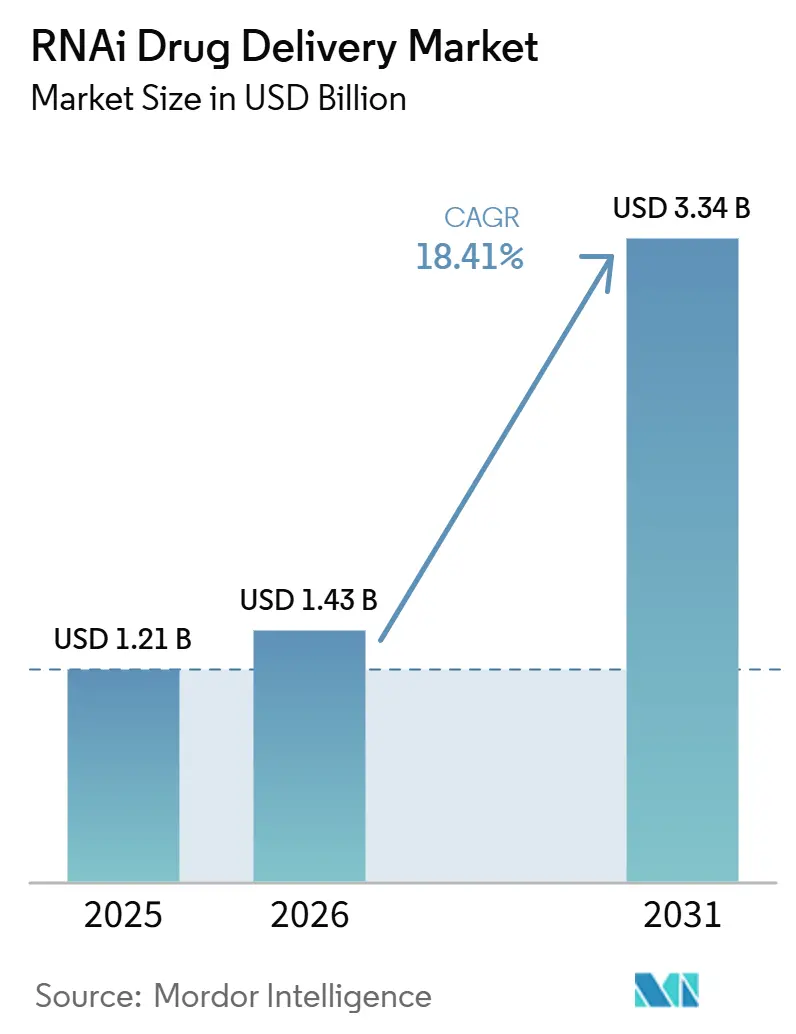
The RNAi Drug Delivery Market size is projected to be USD 1.21 billion in 2025, USD 1.43 billion in 2026, and reach USD 3.34 billion by 2031, growing at a CAGR of 18.41% from 2026 to 2031.
Commercial traction is increasingly tied to approved siRNA therapies, and AMVUTTRA alone generated USD 2.31 billion in global net revenues in 2025, which showed that demand had already moved well beyond a narrow rare disease base. Alnylam’s 2026 guidance of USD 4.9 billion to USD 5.3 billion in total net product revenues also indicates that RNA interference is moving into a more established pharmaceutical segment with stronger revenue visibility than earlier in the decade. Progress in ionizable lipid design, supported by the broader manufacturing lessons built during mRNA vaccine scale-up, is improving the ability of delivery systems to move beyond liver-focused use cases and into tissues such as the spleen, lung, and bone marrow. Licensing activity is also reinforcing the RNAi drug delivery market, with Novartis committing up to USD 2.2 billion to Arrowhead Pharmaceuticals for access to the TRiM platform in Parkinson’s disease, which reflects growing confidence in clinically validated delivery backbones.
Key Report Takeaways
- By technology, siRNA led with 65.31% revenue share in 2025, while shRNA is forecast to expand at a 22.38% CAGR through 2031.
- By delivery system, lipid nanoparticles held 60.24% revenue share in 2025, while polymeric nanoparticles are projected to grow at a 20.52% CAGR through 2031.
- By route of administration, intravenous delivery accounted for 55.64% revenue share in 2025, while subcutaneous delivery is expected to record a 19.62% CAGR through 2031.
- By target disease, cancer captured 39.54% revenue share in 2025, while genetic disorders are forecast to expand at a 22.46% CAGR through 2031.
- By target tissue, liver held 48.62% revenue share in 2025, while brain is projected to advance at a 19.82% CAGR through 2031.
- By end-user, pharmaceutical companies represented 49.26% revenue share in 2025, while academic and research institutions are expected to grow at a 19.95% CAGR through 2031.
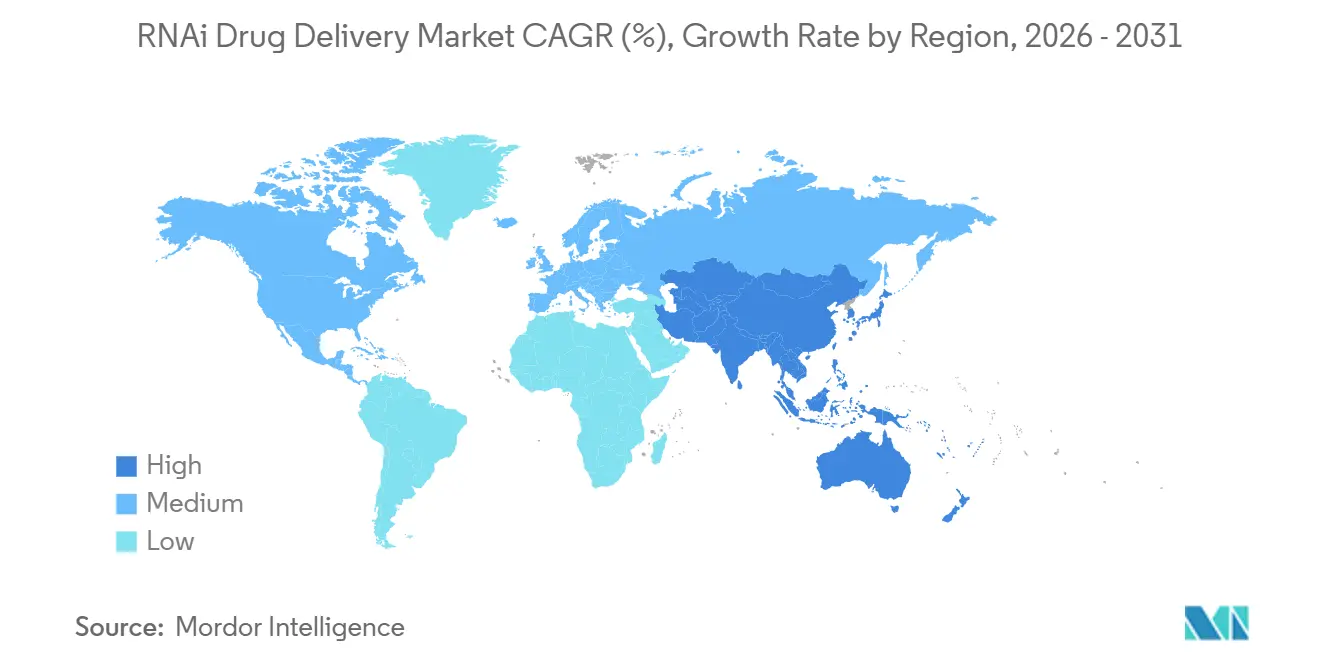
- By geography, North America held 44.61% share in 2025, while Asia-Pacific is projected to expand at 20.65% CAGR through 2031.
Note: Market size and forecast figures in this report are generated using Mordor Intelligence’s proprietary estimation framework, updated with the latest available data and insights as of January 2026.
Market Trends and Insights
Drivers Impact Analysis of RNAi Drug Delivery Market*
| Driver | (~) % Impact on CAGR Forecast | Geographic Relevance | Impact Timeline |
|---|---|---|---|
| Clinical Pull From Approved siRNA Therapies | +3.8% | Global, with highest commercial impact in North America | Short term (≤ 2 years) |
| Expanding Hepatic Delivery Validation | +3.2% | Global, with concentrated gains in North America and Europe | Medium term (2-4 years) |
| Next-Generation Lipid Nanoparticle Engineering | +3.2% | Global, with technology origination in North America and Europe and scale-up in Asia-Pacific | Medium term (2-4 years) |
| Rising Need for Precision Gene Silencing | +2.5% | Global, with highest unmet need in rare disease settings across North America and Europe | Long term (≥ 4 years) |
| Under-Served Extrahepatic Targets | +2.1% | North America and Asia-Pacific first, with spillover into Europe | Long term (≥ 4 years) |
| Platform Convergence With Oligonucleotide and Gene Editing Pipelines | +1.7% | North America and Europe, with early-stage activity in Asia-Pacific | Long term (≥ 4 years) |
| Source: Mordor Intelligence | |||
Clinical Pull From Approved siRNA Therapies
The RNAi drug delivery market is benefiting from a stronger regulatory base because approved siRNA products have reduced the uncertainty that once limited platform adoption. AMVUTTRA’s 2025 approval in ATTR amyloidosis with cardiomyopathy validated a quarterly subcutaneous dosing model that is easier to scale commercially than hospital-centered infusion models. That approval also changed how large drug makers evaluate delivery risk, because proven commercial products now offer a better reference point than early laboratory promise alone. Revenue guidance from Alnylam for 2026 further strengthens that view, since it suggests that approved products can support sustained expansion rather than a one-time launch spike. This is making counterparties more willing to sign large licensing agreements around delivery platforms with clearer commercial precedent. The result is a reinforcing cycle in the RNAi drug delivery market where every new approval improves confidence in the next wave of assets and the systems that carry them[1]Alnylam Pharmaceuticals, “Alnylam Announces FDA Approval of AMVUTTRA for ATTR Amyloidosis with Cardiomyopathy,” Alnylam Pharmaceuticals, alnylam.com.
Next-Generation Lipid Nanoparticle Engineering
The RNAi drug delivery market is also advancing because lipid nanoparticle design is becoming more predictable and more deliberate than earlier formulation work. The COMET model, trained on the LANCE dataset, showed that non-canonical LNP configurations can be evaluated with much greater speed, which reduces the time needed to screen potential delivery compositions. This matters because changing lipid tail length, linker chemistry, and head-group pKa can materially shift where an LNP distributes after administration. German translational programs such as BASE-Lipid and NanoGen also show that formulation research is moving closer to regulatory and manufacturing settings instead of remaining only in academic proof-of-concept work. That shift improves the likelihood that successful laboratory candidates can move into reproducible, compliant production processes. As these methods mature, the RNAi drug delivery market is likely to broaden from liver-biased performance toward a more diverse tissue delivery profile.
Expanding Hepatic Delivery Validation
The RNAi drug delivery market still draws much of its commercial strength from hepatic delivery, and that validation continues to expand into larger and more common disease settings. Alnylam’s USD 250 million investment in a dedicated siRNA manufacturing facility in Massachusetts shows that liver-directed programs now require industrial scale rather than limited clinical supply models. Silence Therapeutics reported Phase 1 data for SLN312 in 2026, and those results showed durable reductions in ANGPTL3 and related lipid markers across 98 dyslipidemia patients. That matters because it extends hepatic delivery evidence beyond rare inherited disease and into cardiometabolic settings with much larger patient pools[2]Silence Therapeutics, “Silence Therapeutics Highlights Recent Business Achievements and Reports Fourth Quarter and Full Year 2025 Financial Results,” Silence Therapeutics, silence-therapeutics.com. Researchers also showed that intratracheal administration of siRNA-LNPs could achieve liver gene silencing at doses as low as 0.13 mg/kg in murine models, which suggests that route innovation may widen future access even inside hepatic applications. Together, these developments keep liver delivery as the commercial base of the RNAi drug delivery market while also opening room for broader patient use.
Under-Served Extrahepatic Targets
Extrahepatic delivery remains one of the most important expansion paths in the RNAi drug delivery market because it opens access to tissues where treatment need is large and validated options are still limited. PeptiDream and Alnylam reported a preclinical milestone in December 2025 showing that macrocyclic peptide-siRNA conjugates could drive gene-silencing activity in selected extrahepatic tissues. That result matters because it suggests a modular route that can be adapted across multiple cell types instead of relying on a single liver-focused playbook. A separate 2025 study showed that an intravenous lipid-siRNA conjugate could achieve broad gene silencing across brain barrier structures with sustained knockdown beyond 30 days, which keeps central nervous system programs in active focus. Vect-Horus and OliX Pharmaceuticals then entered a February 2026 collaboration to evaluate blood-brain barrier shuttle technology for CNS-directed siRNA delivery, showing that the opportunity is drawing international platform work rather than only U.S. programs. If companies can convert these results into clinical proof, the RNAi drug delivery market will gain its strongest new growth lane outside the liver.
Restraints Impact Analysis of RNAi Drug Delivery Market*
| Restraint | (~) % Impact on CAGR Forecast | Geographic Relevance | Impact Timeline |
|---|---|---|---|
| Extrahepatic Delivery Efficiency Limits | -2.5% | Global, with the greatest pressure in central nervous system and cardiac programs | Long term (≥ 4 years) |
| High Formulation and CMC Complexity | -1.8% | Global, with cost pressure strongest for emerging manufacturers and smaller developers | Medium term (2-4 years) |
| Immunogenicity and Off-Target Risk | -1.4% | Global | Medium term (2-4 years) |
| Limited Reimbursement for Ultra-Specialty Therapies | -1.2% | Europe and Asia-Pacific, especially in price-controlled systems | Medium term (2-4 years) |
| Source: Mordor Intelligence | |||
Extrahepatic Delivery Efficiency Limits
The biggest technical ceiling in the RNAi drug delivery market is still the difficulty of reaching non-hepatic tissues with enough active material to create durable therapeutic benefit. The blood-brain barrier, dense cardiac tissue structure, and endosomal trapping all reduce the fraction of delivered material that reaches the cytosol in a productive form. Reviews published in 2025 also noted that many nanocarriers intended for the brain are still cleared by the liver before they can reach central nervous system targets in useful quantities. Even when early animal data looks promising, repeat dosing and protein corona effects can alter biodistribution in ways that are hard to predict at later stages. This creates a scientific problem and a financing problem at the same time because uncertain translation raises the attrition risk of expensive extrahepatic programs. That is especially relevant for brain-directed programs, which represent one of the fastest-moving parts of the RNAi drug delivery market but still lack broad human validation.
High Formulation and CMC Complexity
High chemistry, manufacturing, and controls complexity remains a practical barrier in the RNAi drug delivery market because formulation performance depends on many tightly linked process variables. Ionizable lipid synthesis involves multistep chemistry, and small changes in pKa or particle size distribution can alter efficacy and tolerability in ways that matter clinically. Microfluidic mixing conditions also need close control because they influence encapsulation, particle uniformity, and immunogenic response. The IQ Consortium Nucleic Acids Working Group identified reproducibility and the lack of standardized immunogenicity assays as important development risks for siRNA-LNP products in 2025. Smaller biotechnology companies are exposed more directly because they often depend on a limited pool of specialized external manufacturing partners for GMP-grade production[3]IQ Consortium Nucleic Acids Working Group, “Translational and Clinical Development of Therapeutic siRNA and ASOs,” Nucleic Acids Research, europepmc.org. As a result, the RNAi drug delivery market continues to reward firms with proven internal process control, scale-up experience, and regulatory preparation.
*Our forecasts treat driver/restraint impacts as directional, not additive. The impact forecasts reflect baseline growth, mix effects, and variable interactions.
RNAi Drug Delivery Market Segment Analysis
By Technology:
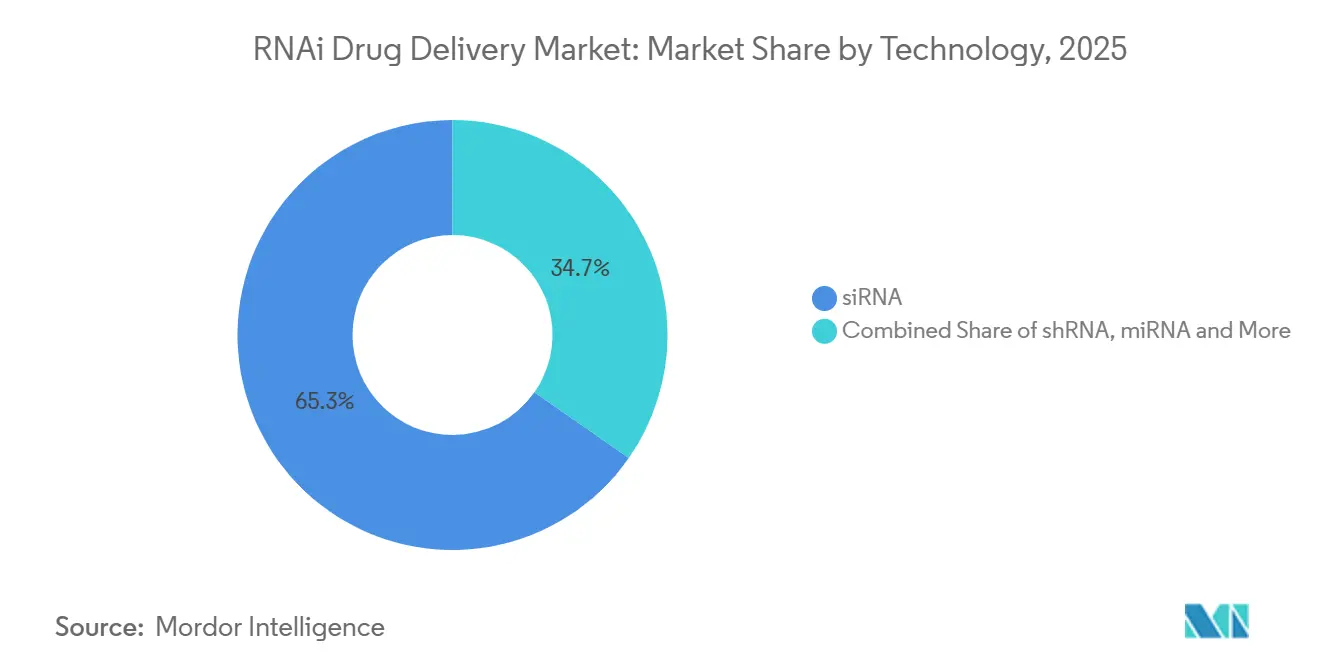
siRNA Leads While shRNA Builds the Fastest Growth TracksiRNA held 65.31% of the RNAi drug delivery market size in 2025, making it the clear commercial anchor across approved products and partner interest. Its lead comes from a much deeper clinical history, better understood conjugate and LNP delivery routes, and a stronger set of regulatory precedents than other RNA interference formats. Large licensing transactions have followed that pattern because platform buyers still prefer molecule classes with visible clinical and commercial proof. In the RNAi drug delivery industry, that preference keeps siRNA at the center of both marketed revenue and platform valuation discussions. miRNA remains smaller today, but investor interest increased in 2026 when Thalia Therapeutics acquired Sanmirna Therapeutics for its clinical-stage anti-miRNA-126 program in acute myeloid leukemia.
shRNA is forecast to grow at a 22.38% CAGR from 2026 to 2031, which makes it the fastest-moving technology segment in the RNAi drug delivery market. That expansion is linked to viral vector-based central nervous system programs where long-duration gene silencing can support neurodegenerative disease strategies. Alnylam’s ALN-HTT02 for Huntington’s disease is expected to deliver Phase 1 data in the second half of 2026, and that readout could shape how investors view shRNA-based delivery over the next few years. Even so, shRNA carries more compliance pressure because viral vector manufacturing, cargo limits, and immunogenicity remain active review points under current gene therapy expectations. Other technologies such as aptamer-mediated delivery are present, but the available evidence suggests they will remain niche positions rather than near-term volume drivers in the RNAi drug delivery industry.



By Delivery System:
LNPs Hold the Base While Polymeric Systems Gain SpeedLipid nanoparticles accounted for 60.24% share in 2025 and therefore represented the largest delivery platform in the RNAi drug delivery market. Their position rests on validated manufacturing infrastructure, established intellectual property, and the credibility built through global RNA vaccine production systems. The commercial importance of that lead is clear because patisiran established an early clinical benchmark for LNP-enabled hepatic transthyretin knockdown and shaped later development standards. LNPs also remain the easiest platform for many developers to explain to regulators and partners because there is a more mature evidence base around quality control and clinical behavior. Exosomes and viral vectors still play useful roles in specialized settings, especially where biological barrier crossing or lower innate immunogenicity matters more than standardized scale.
Polymeric nanoparticles are projected to grow at a 20.52% CAGR from 2026 to 2031, which gives them the highest growth pace among delivery systems in the RNAi drug delivery market. Their appeal comes from tunable degradability, easier surface functionalization for active targeting, and better flexibility for pairing siRNA with other therapeutic payloads. German research programs are already exploring tyrosine-modified polyamine systems for inhaled siRNA delivery in lung tumor models, which shows that polymeric systems are being positioned for routes and tissues that are harder for standard LNPs to serve. These materials still need stronger late-stage validation, but their design range gives them a clear role in the next expansion phase of the RNAi drug delivery market. Regulatory expectations around biodegradable excipients and biocompatibility are becoming easier to manage as RNA-focused CMC frameworks mature, which lowers one barrier to future adoption.
By Route of Administration:
IV Leads Today While Subcutaneous Delivery Improves AdoptionIntravenous administration held 55.64% share in 2025, so it remained the leading route in the RNAi drug delivery market. That lead reflects the established use of infusion protocols for early approved products and the need for controlled dosing in many early oncology programs. Intravenous delivery also remains important when developers need rapid systemic exposure or higher peak doses for difficult extrahepatic targets. This keeps hospital-centered administration relevant even as product design gradually shifts toward more convenient formats. The route still fits the current shape of the RNAi drug delivery market because much of the installed commercial and clinical experience has been built around infusion-based care pathways.
Subcutaneous administration is forecast to grow at a 19.62% CAGR from 2026 to 2031, making it the fastest-growing route in the RNAi drug delivery market. AMVUTTRA’s approved label showed that 25 mg every 3 months could support a practical product profile with less patient burden than infusion-based schedules. That commercial precedent is important because it gives developers a model for how delivery format can support long-term adherence in chronic care settings. Intranasal and other approaches remain under study, especially for central nervous system programs where anatomical bypass routes could matter, but clinical validation is still limited for siRNA specifically. Over time, route convenience is likely to become a stronger differentiator in the RNAi drug delivery market as approved products move into broader patient populations.
By Target Disease:
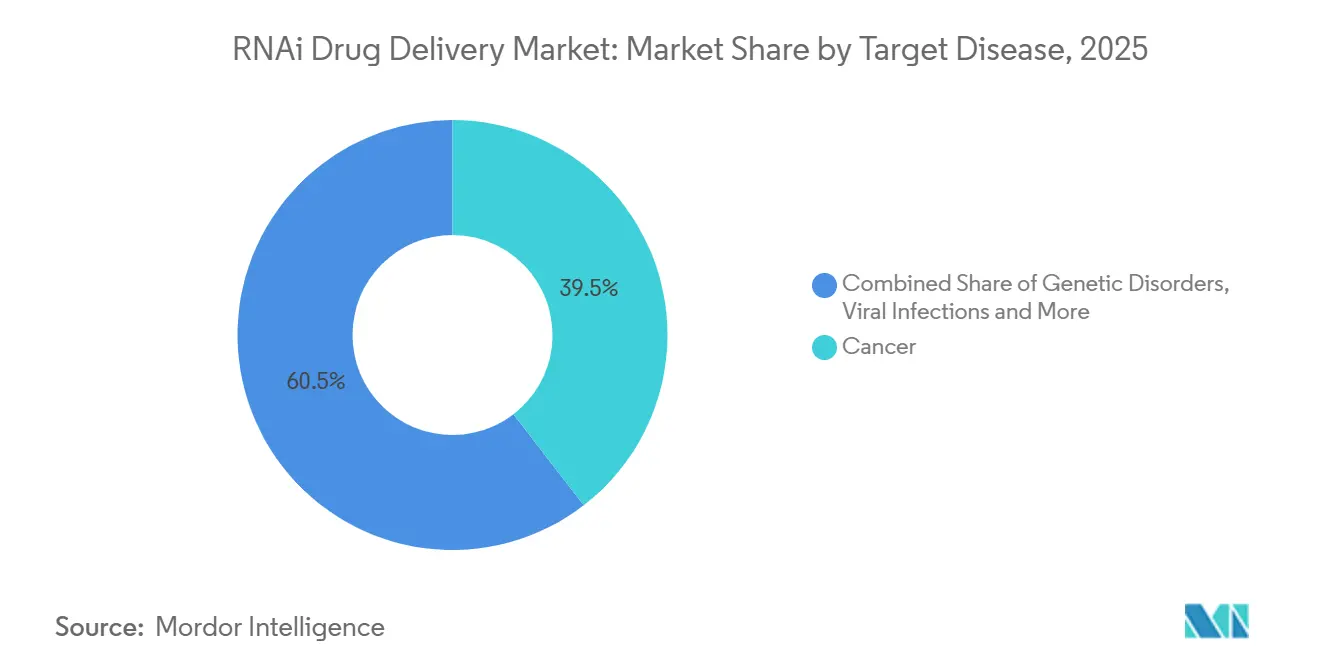
Oncology Has the Largest Base While Genetic Disorders Expand FasterCancer captured 39.54% share in 2025, which made it the largest disease segment in the RNAi drug delivery market. That position reflects a long-standing concentration of RNA interference research in oncology and a wide set of oncogenic targets that can be addressed through sequence-specific silencing. Preclinical work in 2025 also showed that polymeric nanoparticle delivery paired with tumor-responsive release strategies could improve the effect of tumor-suppressor siRNA in cancer models. Even with those encouraging data, oncology remains a difficult commercial field because many programs still face a demanding balance between targeted uptake, tolerability, and combination treatment strategy. Metabolic diseases and viral infections are smaller today, but they are attracting selective platform investment as developers look for disease settings where liver-directed delivery can translate into broader commercial volume.
Genetic disorders are projected to grow at a 22.46% CAGR from 2026 to 2031, which makes them the fastest-growing disease category in the RNAi drug delivery market. Growth is being supported by a rising list of validated rare disease targets, supportive orphan drug pathways, and reimbursement willingness when no other durable therapy exists. Alnylam’s 2025 pipeline included programs such as ALN-4324 in Phase 2 for type 2 diabetes and ALN-2232 in Phase 1 for obesity, which shows that the boundary between rare and broader genetic or metabolic targeting is already widening. That combination of target clarity and regulatory support continues to make genetic disorders one of the most efficient entry points for new delivery systems. Respiratory and autoimmune conditions remain part of the longer-term opportunity set, but current evidence still places them behind genetic disorders in near-term commercialization potential for the RNAi drug delivery market.
By Target Tissue:
Liver Holds the Largest Base While Brain Draws the Growth PremiumThe liver held 48.62% of the RNAi drug delivery market share in 2025, which confirms that hepatocyte access remains the most established tissue advantage in current practice. This leadership is structural because GalNAc ligands bind efficiently to the asialoglycoprotein receptor, and liver vasculature is more permissive to nanoparticle entry than many other tissues. Silence Therapeutics extended that case in 2026 when SLN312 showed durable reductions in ANGPTL3 and related lipid markers, which pushed hepatic validation into larger cardiovascular use cases. Lung and heart tissue programs are progressing in preclinical work, but they still have a narrower clinical evidence base than liver-directed programs. That keeps the liver as the commercial floor of the RNAi drug delivery market even while developers invest heavily in other tissues.
Brain is forecast to grow at a 19.82% CAGR from 2026 to 2031, making it the fastest-growing tissue segment in the RNAi drug delivery market. Demand is coming from neurodegeneration pipelines where gene silencing could address targets that are hard to modulate with conventional small molecules. Alnylam’s mivelsiran program for cerebral amyloid angiopathy was completing enrollment in Phase 2 cAPPricorn-1 in the first half of 2026, with Alzheimer’s disease Phase 2 work planned next. Ractigen Therapeutics’ SCAD platform also showed sustained mRNA knockdown for more than 5 months after local central nervous system administration in rodent models, with activity extending beyond the brain into the eye, lung, and joint. Those data explain why the brain now carries a growth premium in the RNAi drug delivery market even though clinical delivery barriers remain unresolved.
By End-User:
Pharmaceutical Companies Lead Revenue While Academic Centers Deepen the PipelinePharmaceutical companies accounted for 49.26% share in 2025, which made them the largest end-user group in the RNAi drug delivery market. Their lead reflects the fact that late-stage clinical execution, regulatory management, manufacturing scale, and commercial launch infrastructure still sit mainly with larger drug developers. Biotechnology companies remain essential because they generate many of the platform concepts that larger partners later license, validate, or scale. Hospitals and clinics are more limited in this segment today because their role is still focused on product administration rather than platform creation. As more subcutaneous formats reach the market, some administration may shift further toward outpatient settings, but pharmaceutical companies are still expected to define the commercial direction of the RNAi drug delivery market.
Academic and research institutions are projected to grow at a 19.95% CAGR from 2026 to 2031, making them the fastest-growing end-user group in the RNAi drug delivery market. This growth is tied to the rising volume of exploratory work in extrahepatic delivery, non-viral vector design, and computational optimization of nanoparticle systems. The RNApp graduate research network funded in Germany during 2025 is one example of how universities are now working directly on RNA-LNP manufacture, RNA stabilization, and integration challenges that feed into later commercial programs. Academic centers are therefore not only generating early biology but also addressing process and delivery questions that determine whether platforms can move into clinical use. That makes academic participation foundational to the next development phase of the RNAi drug delivery market even if revenue capture remains concentrated with commercial developers.
Geography Analysis
North America RNAi Drug Delivery Market
North America held 44.61% of the RNAi drug delivery market share in 2025, which kept it as the largest regional base for commercial revenue and clinical execution. The United States remains the center of this position because it combines approved siRNA product revenue, established FDA review precedent, and a dense network of platform developers working on next-generation delivery approaches. Alnylam’s plan to invest USD 250 million in dedicated siRNA manufacturing capacity in Massachusetts adds an industrial layer to that regional advantage and reinforces local supply depth. Canada is also contributing through targeted public support for lipid nanoparticle work tied to active endosomal escape, which signals that North American capacity building is extending beyond product commercialization into platform design. This combination keeps North America at the center of the RNAi drug delivery market even as other regions accelerate research and regulatory activity.
Europe and APAC RNAi Drug Delivery Market
Europe remained the second-largest region in 2025, supported by a strong translational research base, active collaboration networks, and a structured regulatory setting for advanced therapeutic products. Programs such as BASE-Lipid and NanoGen show that Europe is building delivery science around both preclinical evidence and scalable manufacturing methods. Asia-Pacific is the fastest-growing regional segment, with the RNAi drug delivery market size in that region projected to advance at a 20.65% CAGR through 2031. China is a major driver because approval pathways for oligonucleotide drugs have been improving, while domestic developers are moving further into liver-targeted and extrahepatic siRNA programs. Japan and South Korea also support the regional story through platform innovation, as shown by PeptiDream’s extrahepatic delivery work with Alnylam and the OliX collaboration with Vect-Horus on central nervous system delivery.
MEA and South America RNAi Drug Delivery Market
Middle East and Africa, together with South America, accounted for a minor share of 2025 revenue in the RNAi drug delivery market. Their current role is still early stage, but interest is increasing as governments place more attention on local biopharmaceutical capability and advanced therapeutics readiness. Gulf countries are building broader biopharma manufacturing agendas, while South Africa remains the strongest Sub-Saharan base for clinical trial execution and research partnerships. In South America, regulatory attention to advanced therapy products is improving, which should support gradual expansion as pricing models become more workable for highly specialized RNA therapies.

Competitive Landscape
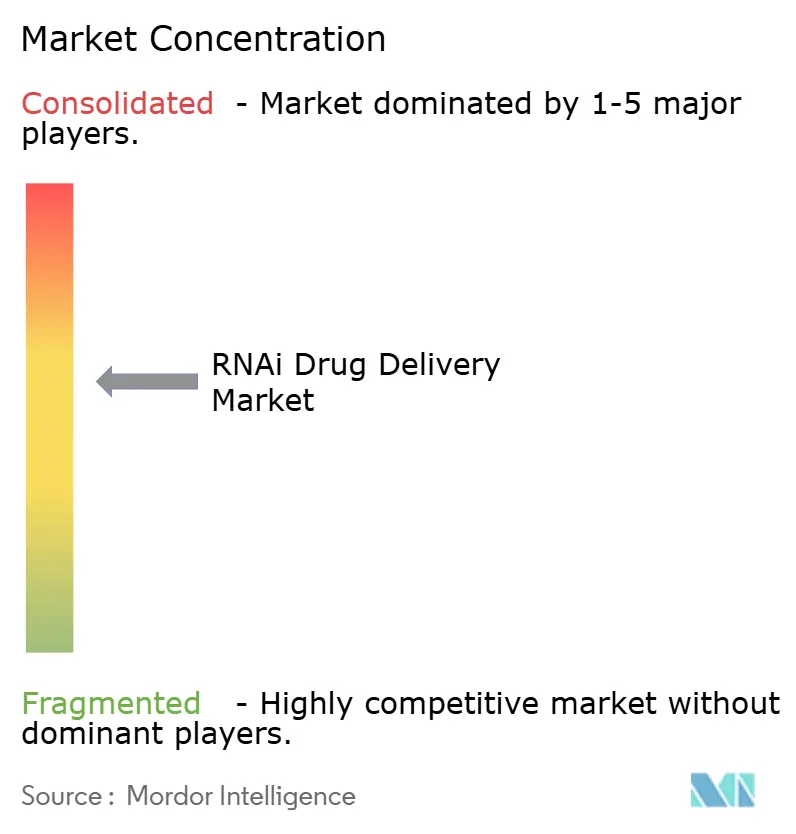
The RNAi drug delivery market is moderately concentrated at the commercial tier because Alnylam has the strongest marketed product base and the clearest revenue scale among current participants. That lead is reinforced by six marketed products, expanding cardiovascular exposure for AMVUTTRA, and a stated strategy that targets continued revenue growth through the end of the decade. Even so, the broader platform and pipeline landscape is far less concentrated because many biotechnology firms control specialized intellectual property in ligands, ionizable lipids, polymers, and tissue-specific conjugates. This means the RNAi drug delivery market rewards both scale and specialization, with commercial power sitting mainly with a few leaders and technical differentiation spread across many smaller companies. The dominant strategic pattern is still licensing rather than full vertical integration, because large pharmaceutical companies are using external platforms to enter or broaden their RNA positions without building every delivery asset internally.
Arrowhead’s collaboration with Novartis is a clear example, as the agreement brought up to USD 2.2 billion in value around the TRiM platform for Parkinson’s disease delivery work. Suzhou Ribo Life Science and Madrigal Pharmaceuticals followed a similar pattern in 2026 with an exclusive global licensing agreement covering six preclinical siRNA programs for MASH, and they reached the first drug candidate nomination milestone in July 2026. Silence Therapeutics also strengthened its position through SLN312, where positive Phase 1 evidence supports the value of mRNAi GOLD in cardiometabolic liver-directed programs. These moves show that delivery technology is now a strategic asset class in its own right rather than a background formulation function. They also show why the RNAi drug delivery market continues to attract milestone-heavy deal structures tied to platform validation and tissue expansion potential.
Technology differentiation is accelerating further as companies blend delivery science with better design tools and adjacent nucleic acid platforms. AI-assisted formulation work, such as the COMET model, can shorten discovery cycles for non-canonical LNP combinations and improve the speed of candidate prioritization. CRISPR Therapeutics added another competitive signal in May 2025 when it entered a multi-target siRNA collaboration with Sirius Therapeutics, including a USD 95 million upfront commitment and a 50-50 cost and profit-share structure on SRSD107. White space remains most visible in cardiac, pulmonary, and immune-cell delivery, where the first clinically validated winners could open new commercial domains beyond the liver-centered model that defines the current RNAi drug delivery market.
RNAi Drug Delivery Industry Leaders
Alnylam Pharmaceuticals, Inc.
Arrowhead Pharmaceuticals, Inc.
Ionis Pharmaceuticals, Inc.
Silence Therapeutics plc
Novo Nordisk A/S
- *Disclaimer: Major Players sorted in no particular order
RNAi Drug Delivery Market Companies Covered in this Report
- Alnylam Pharmaceuticals
- Arbutus Biopharma Corporation
- Arcturus Therapeutics Holdings Inc.
- Arrowhead Pharmaceuticals
- AstraZeneca
- Genentech
- Ionis Pharmaceuticals
- Merck
- Novartis
- Novo Nordisk
- Pfizer
- Roche
- Sanofi
- Silence Therapeutics plc
- Sirnaomics Ltd.
- Takeda Pharmaceuticals

Recent Industry Developments in RNAi Drug Delivery Market
- July 2026: Suzhou Ribo Life Science and Madrigal Pharmaceuticals achieved the first candidate drug nomination milestone under their exclusive global licensing agreement for six siRNA programs targeting MASH, triggering immediate initiation of IND-enabling studies. The milestone validates Ribo's GalSTAR liver-targeting platform in a large-indication metabolic disease setting, extending its relevance beyond rare liver disorders.
- June 2026: Neovacs filed a patent application protecting a new proprietary lipid family for RNA therapeutic delivery, developed in collaboration with the CNRS, Université Paris Cité, and INSERM joint unit UTCBS. The filing directly targets the ionizable lipid composition space that is central to next-generation LNP engineering for inflammatory and autoimmune diseases.


Global RNAi Drug Delivery Market Report Scope
As per the scope of the report, RNA interference (RNAi) drug delivery refers to the method of delivering small RNA molecules, such as siRNA (small interfering RNA) or miRNA (microRNA), into target cells or tissues to silence specific gene expression. The delivery system protects these RNA molecules from degradation, facilitates their entry into cells, and ensures they reach the intended target for therapeutic effect.
The RNAi drug delivery market is segmented by technology, including siRNA, miRNA, shRNA, and other technologies; delivery system, including lipid nanoparticles, polymeric nanoparticles, exosomes, viral vectors, and other delivery systems; route of administration, including intravenous, subcutaneous, intranasal, and other routes of administration; target disease, including cancer, genetic disorders, viral infections, metabolic diseases, and other target diseases; target tissue, including liver, lungs, brain, heart, and other target tissues; end user, including pharmaceutical companies, biotechnology companies, academic and research institutions, hospitals and clinics, and other end users; and geography, including North America, Europe, Asia-Pacific, Middle East and Africa, and South America. The market report also covers the estimated market sizes and trends for 17 countries across major regions globally. For each segment, the market size and forecast are provided in terms of value (USD).
| siRNA |
| miRNA |
| shRNA |
| Other Technologies |
| Lipid Nanoparticles |
| Polymeric Nanoparticles |
| Exosomes |
| Viral Vectors |
| Other Delivery Systems |
| Intravenous |
| Subcutaneous |
| Intranasal |
| Other Routes of Administration |
| Cancer |
| Genetic Disorders |
| Viral Infections |
| Metabolic Diseases |
| Other Target Diseases |
| Liver |
| Lungs |
| Brain |
| Heart |
| Other Target Tissues |
| Pharmaceutical Companies |
| Biotechnology Companies |
| Academic and Research Institutions |
| Hospitals and Clinics |
| Other End-Users |
| North America | United States |
| Canada | |
| Mexico | |
| Europe | Germany |
| United Kingdom | |
| France | |
| Italy | |
| Spain | |
| Rest of Europe | |
| Asia-Pacific | China |
| Japan | |
| India | |
| Australia | |
| South Korea | |
| Rest of Asia-Pacific | |
| Middle East and Africa | GCC |
| South Africa | |
| Rest of Middle East and Africa | |
| South America | Brazil |
| Argentina | |
| Rest of South America |
| By Technology | siRNA | |
| miRNA | ||
| shRNA | ||
| Other Technologies | ||
| By Delivery System | Lipid Nanoparticles | |
| Polymeric Nanoparticles | ||
| Exosomes | ||
| Viral Vectors | ||
| Other Delivery Systems | ||
| By Route of Administration | Intravenous | |
| Subcutaneous | ||
| Intranasal | ||
| Other Routes of Administration | ||
| By Target Disease | Cancer | |
| Genetic Disorders | ||
| Viral Infections | ||
| Metabolic Diseases | ||
| Other Target Diseases | ||
| By Target Tissue | Liver | |
| Lungs | ||
| Brain | ||
| Heart | ||
| Other Target Tissues | ||
| By End-User | Pharmaceutical Companies | |
| Biotechnology Companies | ||
| Academic and Research Institutions | ||
| Hospitals and Clinics | ||
| Other End-Users | ||
| By Geography | North America | United States |
| Canada | ||
| Mexico | ||
| Europe | Germany | |
| United Kingdom | ||
| France | ||
| Italy | ||
| Spain | ||
| Rest of Europe | ||
| Asia-Pacific | China | |
| Japan | ||
| India | ||
| Australia | ||
| South Korea | ||
| Rest of Asia-Pacific | ||
| Middle East and Africa | GCC | |
| South Africa | ||
| Rest of Middle East and Africa | ||
| South America | Brazil | |
| Argentina | ||
| Rest of South America | ||


Key Questions Answered in the Report
What is the 2026 value of RNAi drug delivery?
The RNAi drug delivery market stands at USD 1.43 billion in 2026 and is forecast to reach USD 3.34 billion by 2031 at an 18.41% CAGR.
Which technology leads revenue in RNA interference therapeutics delivery?
SiRNA is the leading technology, with 65.31% share in 2025, because it has the deepest regulatory and commercial validation among RNA interference formats.
Which delivery system is expanding the fastest through 2031?
Polymeric nanoparticles are projected to grow at a 20.52% CAGR through 2031, supported by their tunable design, targeting flexibility, and suitability for harder-to-reach tissues.
Why does the liver remain the main tissue focus for current products?
The liver held 48.62% share in 2025 because GalNAc targeting and liver vascular structure make hepatocyte delivery more reliable than delivery to most extrahepatic tissues.
Which region is growing the fastest for RNAi-based delivery platforms?
Asia-Pacific is the fastest-growing region, with a projected 20.65% CAGR through 2031, driven by regulatory progress and stronger regional platform development.
What is the biggest technical challenge for future expansion?
The main challenge is extrahepatic delivery efficiency, especially in the brain and heart, where biological barriers and endosomal escape limits still reduce clinical translation.
Page last updated on:





