
Rivaroxaban Market Size and Share
Market Overview
| Study Period | 2020 - 2031 |
|---|---|
| Market Size (2026) | USD 7.30 Billion |
| Market Size (2031) | USD 9.69 Billion |
| Growth Rate (2026 - 2031) | 5.82 % |
| Fastest Growing Market | Asia-Pacific |
| Largest Market | North America |
| Market Concentration | Medium |
Major Players
*Disclaimer: Major Players sorted in no particular order Image © Mordor Intelligence. Reuse requires attribution under CC BY 4.0. |
|
Rivaroxaban Market Analysis by Mordor Intelligence
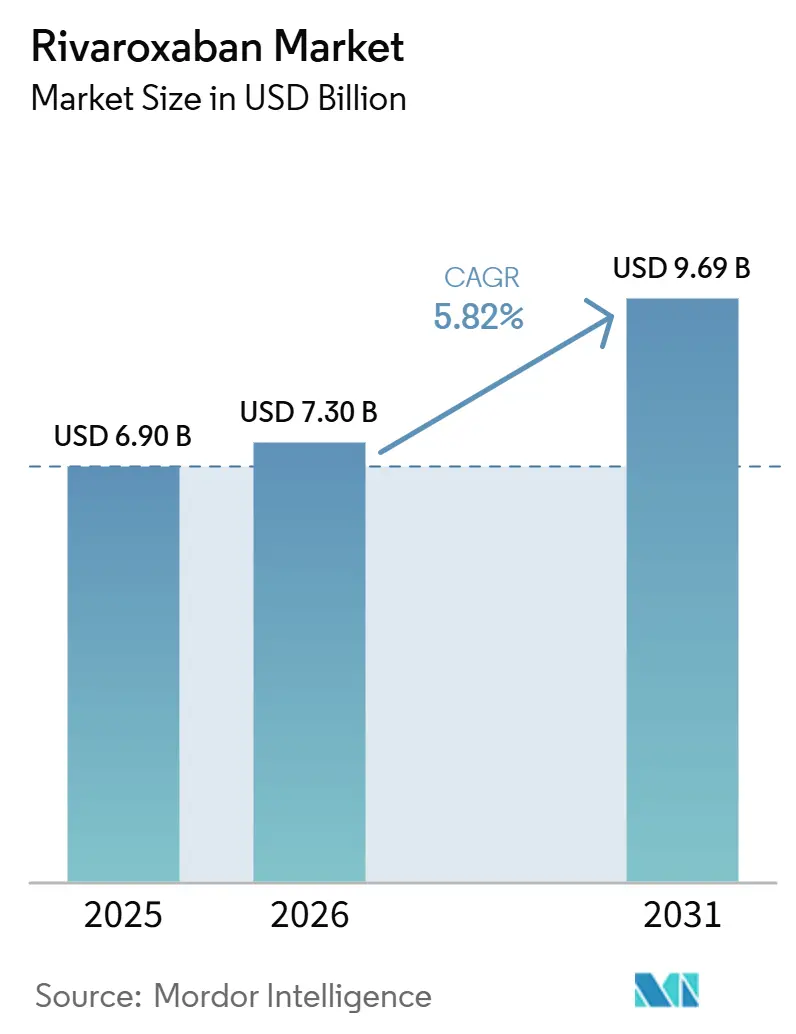
The Rivaroxaban Market size is expected to grow from USD 6.90 billion in 2025 to USD 7.30 billion in 2026 and is forecast to reach USD 9.69 billion by 2031 at 5.82% CAGR over 2026-2031.
The Rivaroxaban market is being supported by the growing burden of atrial fibrillation and venous thromboembolism, with atrial fibrillation affecting 59 million people globally in 2023 and venous thromboembolism incidence rising sharply in older adults. The Rivaroxaban market also benefits from clinician preference for once-daily factor Xa inhibition, because adherence and persistence are stronger with once-daily direct oral anticoagulant regimens than with twice-daily alternatives. Post-patent generic entry in key regulated markets has widened access and lowered treatment cost, with Germany opening full generic access from August 15, 2025 and multiple U.S. launches following FDA approvals in 2025. Additional demand is coming from coronary artery disease, peripheral artery disease, and pediatric use, supported by the 2024 AHA/ACC PAD guideline and the first FDA-approved generic oral suspension launch for children. Competitive activity in the Rivaroxaban market is now centered on regulatory filing depth, geographic launch sequencing, and supply continuity, while established brands still retain clinical recognition across major healthcare systems.
Key Report Takeaways
- By indication, atrial fibrillation held 35.31% of the rivaroxaban market share in 2025, while prophylaxis of VTE is projected to expand at a 7.38% CAGR through 2031.
- By formulation, tablets accounted for 64.24% share of the rivaroxaban market size in 2025, while oral suspension is forecast to grow at a 6.52% CAGR through 2031.
- By patient type, adults captured 62.64% share of the rivaroxaban market size in 2025, while pediatrics is expected to advance at a 6.62% CAGR through 2031.
- By distribution channel, retail pharmacies held 38.26% share in 2025, while online pharmacies are expected to record the fastest CAGR at 7.95% through 2031.
- By geography, North America held 44.61% of the rivaroxaban market share in 2025, while Asia-Pacific is projected to grow at a 7.65% CAGR through 2031.
Note: Market size and forecast figures in this report are generated using Mordor Intelligence’s proprietary estimation framework, updated with the latest available data and insights as of January 2026.
Market Trends and Insights
Drivers Impact Analysis of Rivaroxaban Market*
| Driver | (~) % Impact on CAGR Forecast | Geographic Relevance | Impact Timeline |
|---|---|---|---|
| Rising Atrial Fibrillation And Venous Thromboembolism Burden | +1.8% | Global, with intensity in North America, Western Europe, East Asia | Long term (≥ 4 years) |
| Clinical Preference For Once-Daily Factor Xa Inhibition | +1.2% | Global, strongest in North America and Europe where guideline-concordant prescribing is monitored | Medium term (2-4 years) |
| Rapid Generic Entry After Patent Expiry | +1.0% | North America, Europe post August 2025, with spillover to Asia-Pacific and Middle East and Africa | Short term (≤ 2 years) |
| Expansion Of PAD And CAD Label-Driven Demand | +0.8% | North America, Western Europe | Medium term (2-4 years) |
| Institutional Formulary Rationalization In Cost-Sensitive Health Systems | +0.6% | Europe, North America | Medium term (2-4 years) |
| Digital Adherence And Medication Management Support For Chronic Anticoagulation | +0.4% | North America, East Asia, Western Europe | Long term (≥ 4 years) |
| Source: Mordor Intelligence | |||
Rising Atrial Fibrillation and Venous Thromboembolism Burden
Atrial fibrillation remains the largest demand base for the Rivaroxaban market because the condition affected 59 million people globally in 2023 and continues to generate a large and recurring anticoagulation population. The disease burden is concentrated in North America, Western Europe, and East Asia, which are also the regions where long-established anticoagulation pathways support broad use of rivaroxaban in stroke prevention. The patient base is also aging, and that matters because atrial fibrillation prevalence rises sharply with age and pushes demand toward chronic outpatient therapy rather than short episodic treatment. Women also carry a meaningful mortality and disability burden within atrial fibrillation, which keeps anticoagulation decisions central in cardiology and geriatric practice. Venous thromboembolism adds a second durable demand layer, with incidence at 150 per 100,000 people annually and rising to 2 to 7 per 1,000 among people aged 70 years and above. As these patient pools expand, the Rivaroxaban market gains support from a steady need for long-duration anticoagulation across both stroke prevention and clot prevention settings.
Clinical Preference for Once-Daily Factor Xa Inhibition
The Rivaroxaban market continues to benefit from the practical advantage of once-daily dosing in long-term anticoagulation. A 2025 systematic review found that once-daily direct oral anticoagulant regimens delivered stronger adherence and persistence than twice-daily regimens in non-valvular atrial fibrillation. That matters in routine care because missed doses remain a common cause of unstable protection in chronic anticoagulation, especially in older adults taking several medicines every day. A simpler schedule also fits more easily into managed care pathways, refill programs, and routine follow-up in cardiology clinics and primary care settings. NHS England guidance explicitly notes rivaroxaban's once-daily administration as a convenience feature during direct oral anticoagulant initiation and optimization. In the Rivaroxaban market, that dosing profile helps preserve clinician comfort even as price competition intensifies and therapeutic choices remain broad.
Rapid Generic Entry After Patent Expiry
Rapid generic entry has changed the commercial shape of the Rivaroxaban market since 2025. In the United States, generic tablets moved into the market after FDA approvals and launches across the 2.5 mg, 10 mg, 15 mg, and 20 mg strengths during 2025. In Germany, the dosage patent was revoked in July 2025 and all strengths became fully generic from August 15, 2025, which opened one of Europe's largest anticoagulant markets to broad substitution. Sandoz then launched rivaroxaban in Germany and framed the move around wider access to antithrombotic treatment, which showed how quickly post-patent competition was organized in the region. Wider generic availability improves affordability for long-term patients and increases the feasibility of using rivaroxaban in health systems that are highly sensitive to acquisition cost. In the Rivaroxaban market, that access shift supports prescription volume growth even though each unit now carries lower revenue than it did during the originator period.
Expansion of PAD and CAD Label-Driven Demand
The Rivaroxaban market is also being broadened by use in peripheral artery disease and coronary artery disease. DailyMed lists rivaroxaban 2.5 mg twice daily with aspirin for reducing major cardiovascular events in coronary artery disease and major thrombotic vascular events in peripheral artery disease, including after lower-extremity revascularization[1]U.S. National Library of Medicine, “Rivaroxaban Tablet, Film Coated, Highlights of Prescribing Information,” DailyMed, dailymed.nlm.nih.gov. The 2024 AHA/ACC Peripheral Artery Disease Guideline gave this regimen a Class I recommendation, which is the strongest level of guideline support and directly increases clinician confidence in routine use. This is important because it brings cardiologists and vascular specialists into a prescribing base that was once centered more narrowly on atrial fibrillation and venous thromboembolism. The clinical evidence base is also substantial, with the product characteristics citing the COMPASS trial and its 27,395-patient population with a 24% relative reduction in composite major adverse cardiovascular events versus aspirin alone. That combination of label support, guideline endorsement, and lower generic pricing keeps the Rivaroxaban market relevant in cardiovascular prevention beyond its original anticoagulation core.
Restraints Impact Analysis of Rivaroxaban Market*
| Restraint | (~) % Impact on CAGR Forecast | Geographic Relevance | Impact Timeline |
|---|---|---|---|
| Price Erosion From Multi-Sponsor Generic Competition | -1.5% | North America, Western Europe | Short term (≤ 2 years) |
| Remaining Secondary Patent And Litigation Friction | -0.7% | Primarily United States and Japan | Medium term (2-4 years) |
| Bleeding Risk And Switching Reluctance In High-Risk Patients | -0.6% | Global, with strongest resistance in cardiology practices managing elderly polypharmacy patients | Long term (≥ 4 years) |
| Reimbursement Compression In Tender-Driven Public Systems | -0.8% | Western Europe, South Korea, Australia | Medium term (2-4 years) |
| Source: Mordor Intelligence | |||
Price Erosion From Multi-Sponsor Generic Competition
Price erosion is the clearest revenue restraint in the Rivaroxaban market after patent expiry. In Germany, Pro Generika reported that generic products entered at prices as much as 70% below the originator, which immediately reset the pricing base across all major tablet strengths. The same source noted expected annual savings of EUR 500 million (USD 540 million), for the statutory health insurance system after full generic transition. Those savings improve payer economics, but they also compress supplier revenue and reduce the value captured from each prescription. This pressure is strongest in tender-based and reference-price systems, where lower-cost substitution becomes the default purchasing outcome soon after generic entry. As a result, the Rivaroxaban market can keep growing in patient volume while still facing slower topline expansion than prescription growth alone would suggest.
Bleeding Risk and Switching Reluctance in High-Risk Patients
Clinical caution remains a real restraint for the Rivaroxaban market in high-risk patients. A 2025 study in European Heart Journal: Cardiovascular Pharmacotherapy found a 55% higher risk of major bleeding with rivaroxaban than with apixaban in non-valvular atrial fibrillation patients who also had peripheral artery disease. A nationwide Scandinavian register study also found higher primary-treatment bleeding rates with rivaroxaban than with apixaban in venous thromboembolism patients aged 65 years and above. A separate U.S. real-world study showed that switching from rivaroxaban to apixaban after a bleeding event was associated with lower later major bleeding risk, which reinforces conservative physician behavior in frail patients. These findings matter because older adults, polypharmacy patients, and post-bleeding cases are a meaningful part of routine anticoagulation practice in both atrial fibrillation and venous thromboembolism. In the Rivaroxaban market, that caution slows uptake in the very subgroups that generate long-duration and clinically supervised therapy.
*Our forecasts treat driver/restraint impacts as directional, not additive. The impact forecasts reflect baseline growth, mix effects, and variable interactions.
Rivaroxaban Market Segment Analysis
By Indication:
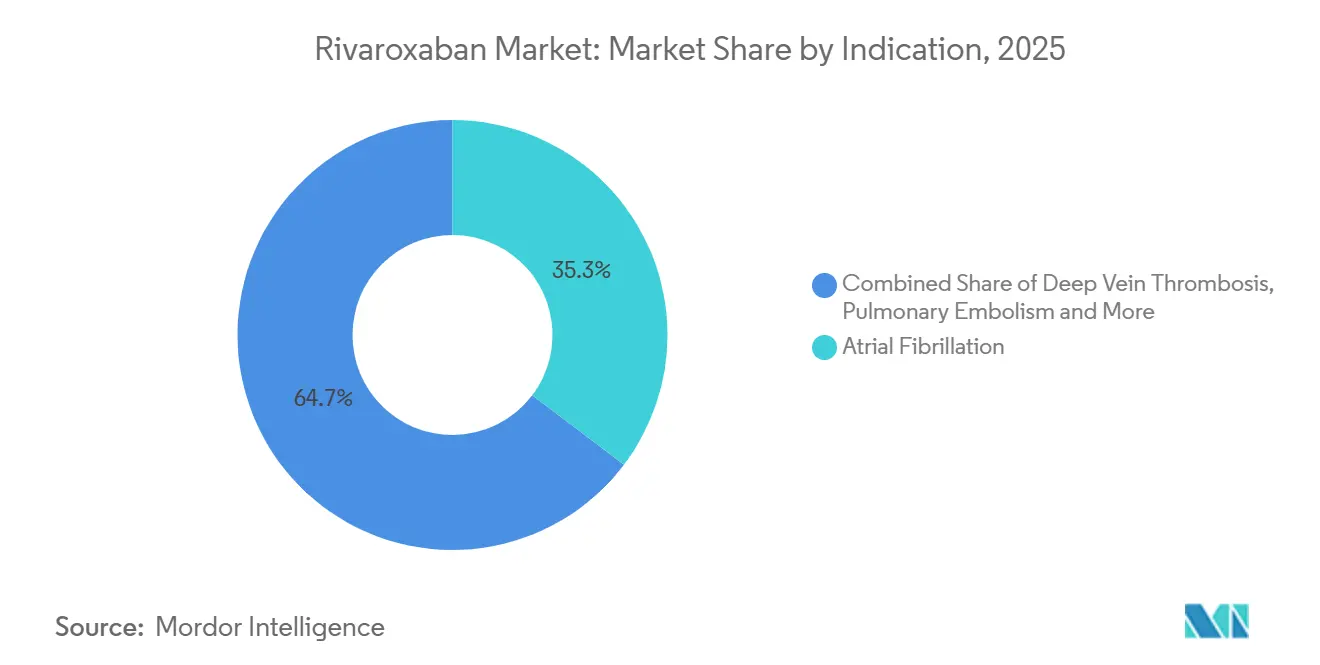
Atrial Fibrillation Anchors Demand, VTE Prophylaxis AcceleratesAtrial fibrillation held 35.31% share in 2025, while the rivaroxaban market size for prophylaxis of VTE is projected to expand at a 7.38% CAGR from 2026 to 2031. The Rivaroxaban market draws much of its recurring demand from atrial fibrillation because stroke prevention requires long treatment duration and regular refill behavior in an older patient base. Global atrial fibrillation prevalence reached 59 million cases in 2023, which keeps the prescribing pool broad across cardiology, internal medicine, and primary care channels. The atrial fibrillation segment also benefits from established care pathways, where patients are often maintained on long-running therapy under cardiologist and pharmacist supervision. The once-daily regimen supports that stability because it fits well with chronic use and with adherence-focused management in older adults.
Prophylaxis of VTE is expanding faster because evidence-backed use has widened across acutely ill medical patients, extended post-surgical settings, and post-discharge thromboprophylaxis. DVT and PE continue to provide a steady base for the Rivaroxaban market because hospital protocols and emergency treatment pathways still direct a consistent flow of patients into anticoagulation. The other indications cluster adds an important second layer, especially where coronary artery disease and peripheral artery disease use is guided by low-dose rivaroxaban plus aspirin. That broadens the prescriber base beyond the traditional direct oral anticoagulant core and brings more cardiology and vascular surgery activity into the Rivaroxaban market. It also creates a volume layer that may not appear fully in revenue-led analysis because generic pricing in the 2.5 mg segment lowers value per prescription while expanding access.



By Formulation:
Tablets Sustain Volume Leadership, Suspension Opens New Patient TerritoryTablets held 64.24% share in 2025, while oral suspension is forecast to grow at a 6.52% CAGR from 2026 to 2031. Tablets remain the backbone of the Rivaroxaban market because they cover the main adult strengths used across atrial fibrillation, DVT, PE, and surgical prophylaxis. The 2.5 mg tablet also supports the cardiovascular prevention use case in coronary artery disease and peripheral artery disease, which extends relevance beyond the original anticoagulation base. In Europe, generic tablet availability is widening through national approvals and post-patent launches, including Ireland and Germany[2]Health Products Regulatory Authority, “Public Assessment Report: Rivaroxaban Ascend 2.5 mg, 10 mg, 15 mg, 20 mg Film-Coated Tablets,” Health Products Regulatory Authority, assets.hpra.ie. In Germany, a minimum 80% generic dispensing quota for rivaroxaban prescriptions in 2026 further reinforces tablets as the most exposed and most scalable part of the portfolio.
Oral suspension is growing faster because it serves pediatric patients who need labeled oral therapy and cannot reliably use adult tablet formats. Lupin launched the first FDA-approved generic rivaroxaban oral suspension in the United States in October 2025, and the company linked the opportunity to a reference product with USD 11 million in annual U.S. sales as of July 2025. J&J prescribing guidance also shows that the suspension covers pediatric VTE treatment and post-Fontan thromboprophylaxis, which gives the segment a clearer clinical role than many small pediatric formulations receive. This is one of the few areas in the rivaroxaban industry where label-backed differentiation still matters more than broad price competition. As pediatric centers standardize practice, the suspension business gives the Rivaroxaban market a smaller but more insulated growth pocket.
By Patient Type:
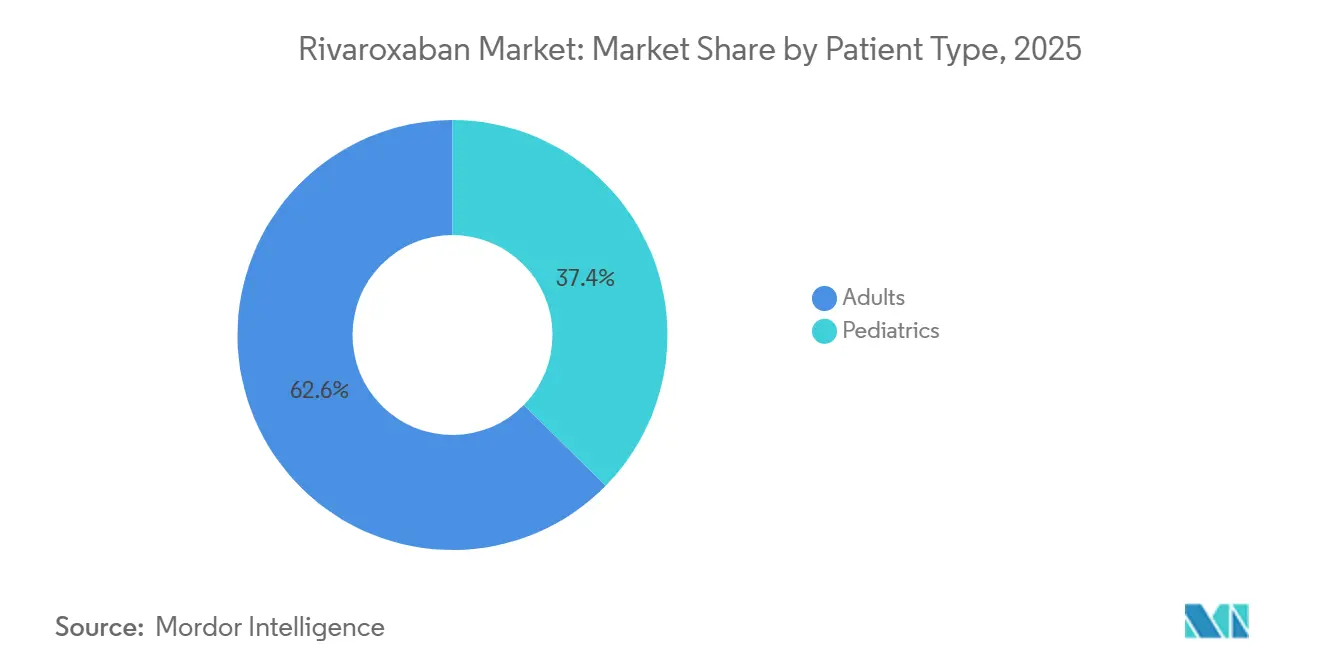
Adults Dominate, Pediatrics Gains with Labeled Oral UseAdults accounted for 62.64% share in 2025, while pediatrics is projected to grow at a 6.62% CAGR from 2026 to 2031. Adult demand remains central to the Rivaroxaban market because the largest treated populations are still non-valvular atrial fibrillation, DVT, PE, and post-surgical venous thromboembolism prevention. These use cases are deeply embedded in cardiology, emergency care, hospital discharge planning, and retail refill pathways, which gives the adult segment both breadth and continuity. Real-world adherence evidence also favors once-daily therapy, which supports persistence in older adults who often manage several medicines at the same time. Even with generic pressure, the adult segment remains the primary revenue pool because absolute patient volumes continue to rise with aging populations.
Pediatrics is scaling from a smaller base, but the clinical shift is meaningful because generic oral suspension now gives physicians a labeled and evidence-backed oral option from birth onward. J&J guidance states that the oral suspension is the labeled rivaroxaban option for children who cannot swallow whole tablets, which makes it essential rather than optional in younger age bands. Lupin's 2025 launch moved this part of the Rivaroxaban market from a narrow branded niche to a more accessible generic pathway in the United States. Pediatric thrombosis programs and Fontan follow-up care provide a specialized but durable source of use, and this is another part of the rivaroxaban industry where clinical fit remains more important than simple scale. As that evidence-backed pathway becomes more routine, the pediatric segment should keep outgrowing the adult segment even though adults will still represent the larger demand base.
By Distribution Channel:
Retail Pharmacies Lead, Online Pharmacies Expand FastestRetail pharmacies held 38.26% share in 2025, while online pharmacies are projected to grow at a 7.95% CAGR from 2026 to 2031. Retail remains the largest channel in the Rivaroxaban market because most chronic anticoagulation prescriptions move into community dispensing soon after initiation. This channel is especially important in the generic phase because pharmacy substitution, payer steering, and refill frequency all shape real-world product mix more than specialist preference alone. Retail chains also sit closest to formulary execution, which means they are often the point where lower-cost generic use becomes routine in practice. As adult tablet use still represents the bulk of volume, retail pharmacies keep their lead even while other channels expand.
Online pharmacies are growing faster because they fit chronic therapy well and support repeat dispensing, e-prescribing, and extended refill cycles. The channel is especially relevant for the Rivaroxaban market because anticoagulation patients often stay on therapy for long periods and benefit from fewer refill gaps. Digital dispensing models also align with adherence monitoring, medication reminders, and telehealth renewal workflows that have become more common in cardiovascular care. Hospitals and clinics still matter because they start many acute DVT, PE, and post-operative prophylaxis cases, and that first prescription often determines what reaches the community setting later. Specialty and institutional channels remain smaller, but they serve higher-acuity patients where oversight is greater and product choice is more tightly linked to clinical complexity.
Geography Analysis
North America Rivaroxaban Market
North America held 44.61% of the rivaroxaban market share in 2025. The United States remains the largest country market within the Rivaroxaban market, with the 10 mg, 15 mg, and 20 mg tablet strengths generating estimated annual U.S. sales of USD 8.05 billion as of March 2025 and the 2.5 mg strength contributing USD 446 million as of January 2025. U.S. generic availability expanded in 2025 through tablet approvals and launches across all four key strengths, which moved the market from a single-brand structure toward active pharmacy substitution. That shift matters because North America combines large prescription volume, strong retail pharmacy reach, and payer systems that quickly translate generic availability into real dispensing change. The Rivaroxaban market in this region therefore remains the largest, even while pricing pressure rises faster than in the originator period.
Europe Rivaroxaban Market
Europe is the second major regional cluster for the Rivaroxaban market and remains highly relevant because reimbursement was well established during the branded phase. Germany is the clearest example of the structural transition, with the dosage patent revoked in July 2025 and all strengths becoming fully generic from August 15, 2025. Pro Generika reported that more than 100 generic companies registered rivaroxaban products around this transition, which shows how broad the supplier response became in a short period. In the United Kingdom, Bennett Institute data showed that apixaban and rivaroxaban tablets together accounted for more than 87% of direct oral anticoagulant defined daily doses dispensed from NHS hospital trusts as of July 2025, confirming the class's entrenched role in secondary care[3]Bennett Institute for Applied Data Science, “Measuring Anticoagulant Use in Secondary Care Using OpenPrescribing Hospitals, Part 2,” Bennett Institute for Applied Data Science, bennett.ox.ac.uk. Smaller European markets are also widening access through staged approvals, including Ireland's August 2025 authorization for Rivaroxaban Ascend across all four tablet strengths.
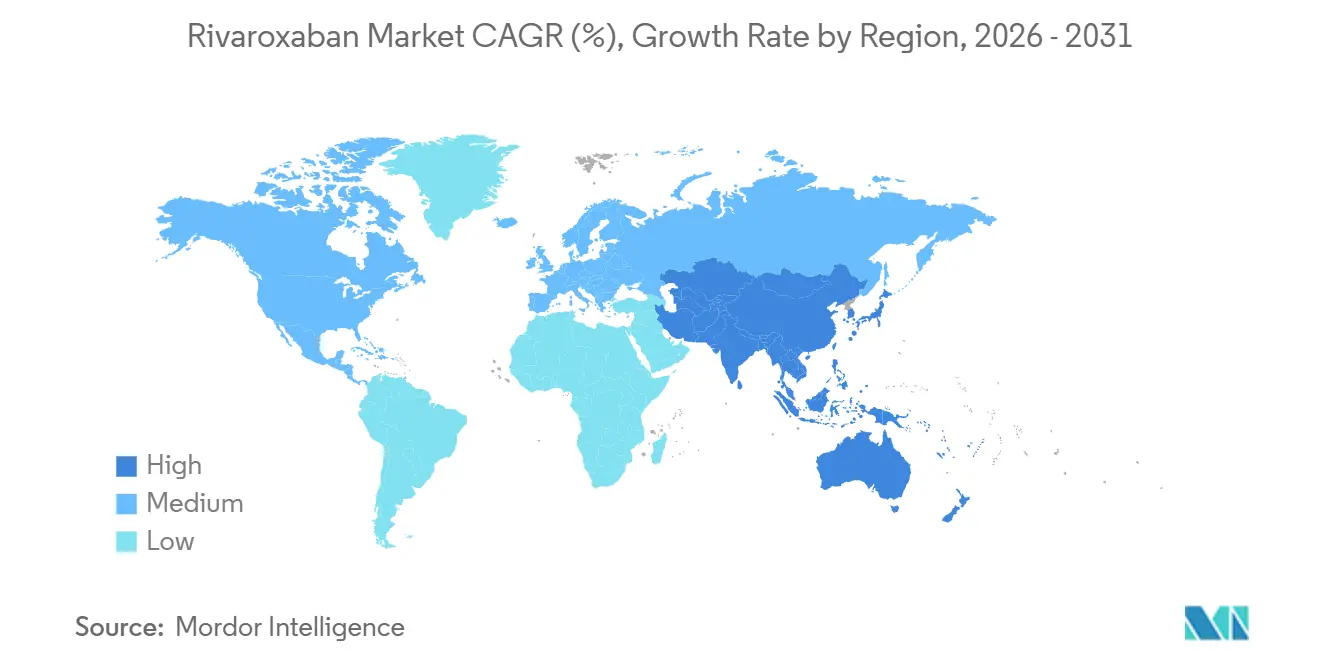
APAC, Middle East and South America Rivaroxaban Market
Asia-Pacific is the fastest-growing region in the Rivaroxaban market, with a projected CAGR of 7.65% from 2026 to 2031. Growth is being supported by rapid population aging, rising cardiovascular disease burden, and the gradual expansion of public coverage and lower-priced access pathways across large national markets. Japan entered an important generic phase with the commercial launch of rivaroxaban orally disintegrating tablets in December 2024, which marked movement beyond the earlier branded structure. India, South Korea, the Gulf states, and South American markets are also building demand as cardiovascular care infrastructure improves and economic case studies continue to support rivaroxaban use in prophylaxis settings.

Competitive Landscape
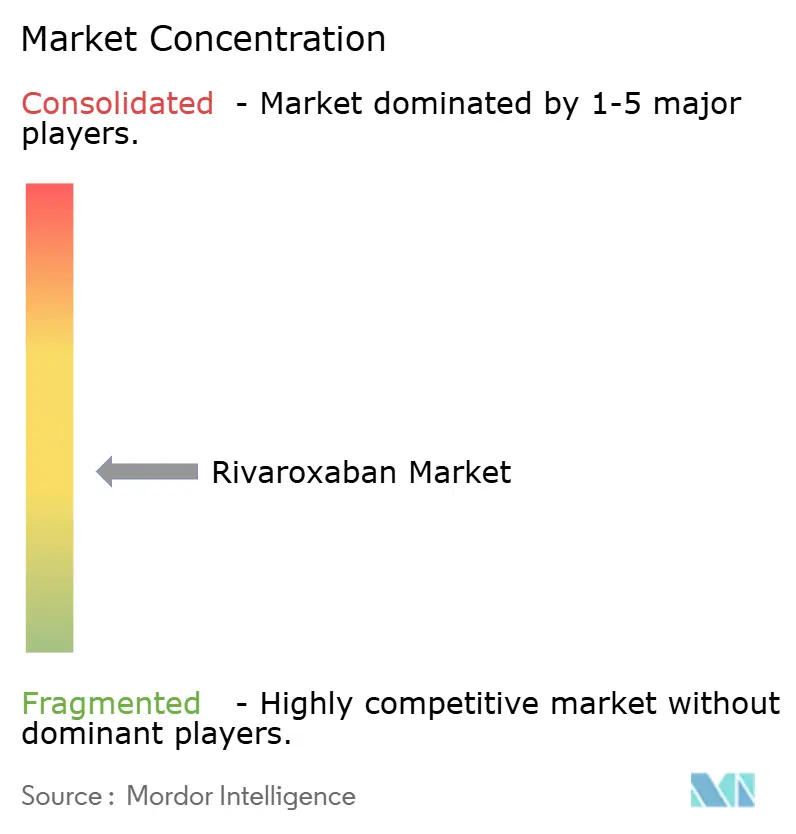
The Rivaroxaban market is moving from originator-led concentration toward a broader generic contest across regions, dosage strengths, and patient settings. Bayer AG and Johnson & Johnson still retain strong brand recognition because Xarelto built deep clinical familiarity during the patented period, especially in atrial fibrillation and venous thromboembolism care. Even so, generic companies are now defining the pace of change through approvals, launches, and regional filing strategies rather than through brand-building alone. Lupin became a visible example in the United States by launching generic 2.5 mg tablets in March 2025, securing approval for 10 mg, 15 mg, and 20 mg tablets in May 2025, and then launching the first generic oral suspension in October 2025. Sandoz also made an important strategic move by launching rivaroxaban in Germany immediately after full generic access opened, which positioned it strongly in one of Europe's largest post-patent opportunities.
The main strategy split in the Rivaroxaban market is now clear. Originator companies still rely on accumulated clinical familiarity, broad indication coverage, and long-established prescriber trust to protect utilization where possible. Generic suppliers are competing instead on timing, dossier breadth, manufacturing control, and the ability to launch across several markets with the same active ingredient base. Viatris shows the value of this approach in Europe, where it holds EMA authorization for rivaroxaban across adult indications under the Rivaroxaban Viatris label. HPRA approvals in Ireland and the German transition after patent revocation show that regional expansion now depends on navigating country-by-country pathways quickly and at scale.
The most attractive white space in the Rivaroxaban market sits where price-sensitive systems need lower-cost anticoagulation but regulatory access is still widening gradually. Pediatric oral suspension remains one differentiated pocket because competition is thinner there than in adult tablets, and the clinical role is more specific. Competitive success is therefore becoming less about brand history alone and more about launch timing, reliable supply, and coverage across adult and pediatric needs. By 2031, the Rivaroxaban market should be much more fragmented than it was before 2025, even though the legacy originator names will still matter in physician perception and treatment continuity.
Rivaroxaban Industry Leaders
-
Bayer AG
-
Johnson & Johnson
-
Dr. Reddy’s Laboratories Ltd.
-
Teva Pharmaceutical Industries Ltd.
-
Viatris Inc.
- *Disclaimer: Major Players sorted in no particular order
Rivaroxaban Market Companies Covered in this Report
- Apotex
- Aurobindo Pharma
- Bayer
- Cipla
- Dr. Reddy’s Laboratories
- Fresenius
- Hetero Laboratories Limited
- Interquim, S.A.
- Johnson & Johnson
- Lupin
- Natco Pharma Limited
- Sandoz Group AG
- Sun Pharmaceuticals Industries
- Teva Pharmaceutical Industries
- Torrent Pharmaceuticals
- Viatris
- Zydus Lifesciences Limited

Recent Industry Developments in Rivaroxaban Market
- June 2026: Sunshine Biopharma Inc. received Canadian regulatory approval for its generic rivaroxaban tablets (2.5 mg, 10 mg, 15 mg, and 20 mg). The company plans to begin commercial shipments to Canadian pharmacies in October 2026 through its subsidiary, Nora Pharma. This approval is expected to improve access to more affordable oral anticoagulation across Canada's market, where branded Xarelto had been the only oral factor Xa inhibitor option.
- October 2025: Lupin Limited launched generic rivaroxaban oral suspension (1 mg/mL) in the United States. At launch, it was the first and only FDA-approved generic alternative to Janssen's Xarelto oral suspension. The product supports pediatric VTE treatment from birth to <18 years and post-Fontan thromboprophylaxis in children aged ≥2 years.


Global Rivaroxaban Market Report Scope
As per the scope of the report, rivaroxaban is an oral anticoagulant medication that belongs to the class of drugs known as direct factor Xa inhibitors. It is used to prevent and treat blood clots by inhibiting the activity of factor Xa, an enzyme involved in the blood clotting process.
The rivaroxaban market is segmented by indication into atrial fibrillation, deep vein thrombosis, pulmonary embolism, prophylaxis of venous thromboembolism, and other indications; by formulation into tablets and suspension; by patient type into adults and pediatrics; by distribution channel into hospitals and clinics, retail pharmacies, online pharmacies, and other distribution channels; and by geography into North America, Europe, Asia-Pacific, Middle East and Africa, and South America. The market report also covers the estimated market sizes and trends for 17 countries across major regions globally. For each segment, the market size and forecast are provided in terms of value (USD).
| Atrial Fibrillation |
| Deep Vein Thrombosis |
| Pulmonary Embolism |
| Prophylaxis of Venous Thromboembolism |
| Other Indications |
| Tablets |
| Suspension |
| Adults |
| Pediatrics |
| Hospitals and Clinics |
| Retail Pharmacies |
| Online Pharmacies |
| Other Distribution Channels |
| North America | United States |
| Canada | |
| Mexico | |
| Europe | Germany |
| United Kingdom | |
| France | |
| Italy | |
| Spain | |
| Rest of Europe | |
| Asia-Pacific | China |
| Japan | |
| India | |
| Australia | |
| South Korea | |
| Rest of Asia-Pacific | |
| Middle East and Africa | GCC |
| South Africa | |
| Rest of Middle East and Africa | |
| South America | Brazil |
| Argentina | |
| Rest of South America |
| By Indication | Atrial Fibrillation | |
| Deep Vein Thrombosis | ||
| Pulmonary Embolism | ||
| Prophylaxis of Venous Thromboembolism | ||
| Other Indications | ||
| By Formulation | Tablets | |
| Suspension | ||
| By Patient Type | Adults | |
| Pediatrics | ||
| By Distribution Channel | Hospitals and Clinics | |
| Retail Pharmacies | ||
| Online Pharmacies | ||
| Other Distribution Channels | ||
| By Geography | North America | United States |
| Canada | ||
| Mexico | ||
| Europe | Germany | |
| United Kingdom | ||
| France | ||
| Italy | ||
| Spain | ||
| Rest of Europe | ||
| Asia-Pacific | China | |
| Japan | ||
| India | ||
| Australia | ||
| South Korea | ||
| Rest of Asia-Pacific | ||
| Middle East and Africa | GCC | |
| South Africa | ||
| Rest of Middle East and Africa | ||
| South America | Brazil | |
| Argentina | ||
| Rest of South America | ||


Key Questions Answered in the Report
What is the current outlook for rivaroxaban through 2031?
The Rivaroxaban market size stands at USD 6.90 billion in 2025, rises to USD 7.30 billion in 2026, and is forecast to reach USD 9.69 billion by 2031 at a 5.82% CAGR.
Which indication contributes the most demand for rivaroxaban?
Atrial fibrillation is the largest indication, with 35.31% share in 2025, supported by a global patient base of 59 million cases in 2023.
Why is prophylaxis of VTE growing faster than other uses?
Prophylaxis of VTE is projected to grow at a 7.38% CAGR through 2031 because use is expanding in acutely ill medical patients, extended post-surgical care, and post-discharge settings.
Why are online pharmacies gaining ground in rivaroxaban dispensing?
Online pharmacies are forecast to grow at a 7.95% CAGR through 2031 because chronic anticoagulation fits e-prescribing, mail-order refill models, and digital adherence support.
How has generic entry changed the competitive picture for rivaroxaban?
Generic entry has widened access in the United States and Europe, lowered treatment cost, and shifted competition toward launch timing, pharmacy substitution, and supply continuity.
Which region offers the strongest growth potential over the forecast period?
Asia-Pacific is the fastest-growing region at a 7.65% CAGR through 2031, supported by aging populations, rising cardiovascular disease burden, and broader access pathways in large national markets.
Page last updated on:





