
Respiratory Pathogen Testing Kits Market Size and Share
Market Overview
| Study Period | 2020 - 2031 |
|---|---|
| Market Size (2026) | USD 3.28 Billion |
| Market Size (2031) | USD 4.09 Billion |
| Growth Rate (2026 - 2031) | 4.52 % |
| Fastest Growing Market | Asia-Pacific |
| Largest Market | North America |
| Market Concentration | Medium |
Major Players *Disclaimer: Major Players sorted in no particular order Image © Mordor Intelligence. Reuse requires attribution under CC BY 4.0. | |
Respiratory Pathogen Testing Kits Market Analysis by Mordor Intelligence
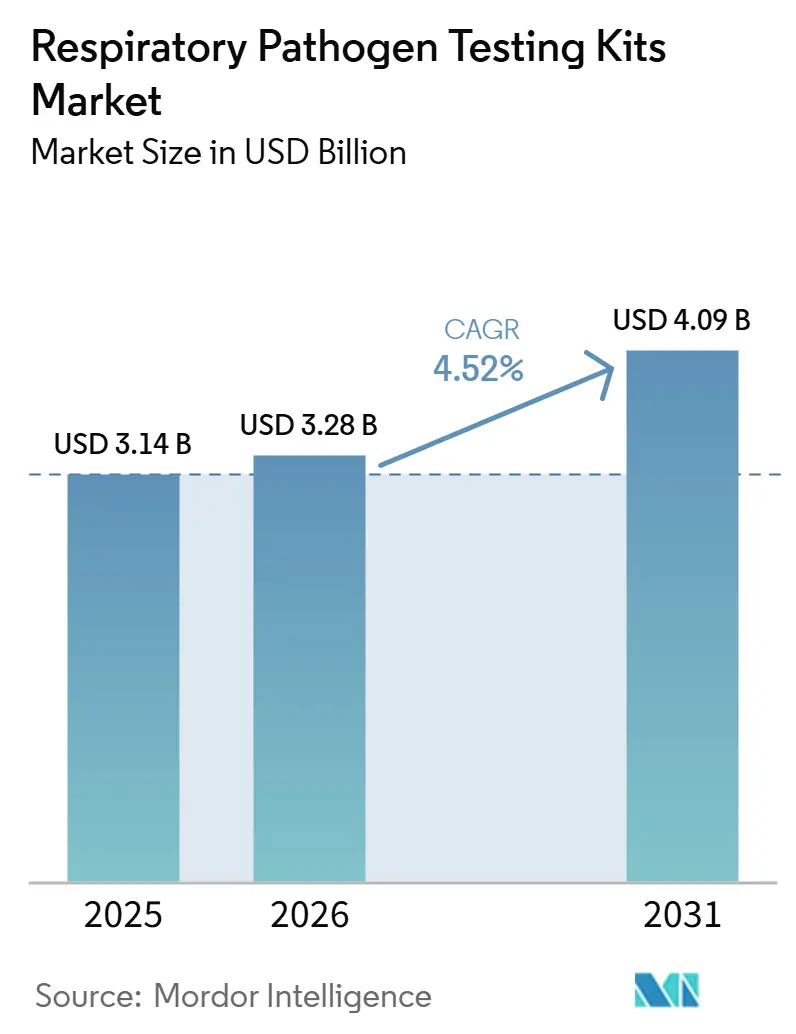
The Respiratory Pathogen Testing Kits Market size is expected to increase from USD 3.14 billion in 2025 to USD 3.28 billion in 2026 and reach USD 4.09 billion by 2031, growing at a CAGR of 4.52% over 2026-2031.
The respiratory pathogen testing kits market is expanding because health systems are keeping respiratory surveillance capacity in place instead of returning to pre-pandemic testing patterns, and this is supporting recurring procurement for assays, consumables, and related workflows. The disease burden also remains broad and recurring, with influenza causing around 1 billion seasonal cases each year and RSV continuing to create major hospitalization pressure, which keeps routine demand in place even outside outbreak periods. Procurement priorities are also shifting toward multiplex and decentralized formats because providers increasingly want faster diagnosis, stronger antimicrobial stewardship, and a clearer view of co-circulating pathogens in the same patient episode. The respiratory pathogen testing kits market also reflects a moderate-to-high competitive intensity, where scale players defend position through installed platforms, long-term reagent contracts, and broader assay menus rather than through simple price competition. The strongest opportunities in the respiratory pathogen testing kits market remain tied to home care, focused multiplex panels, and faster growth across Asia-Pacific, while reimbursement gaps outside hospital settings continue to limit wider adoption in several developed markets.
Key Report Takeaways
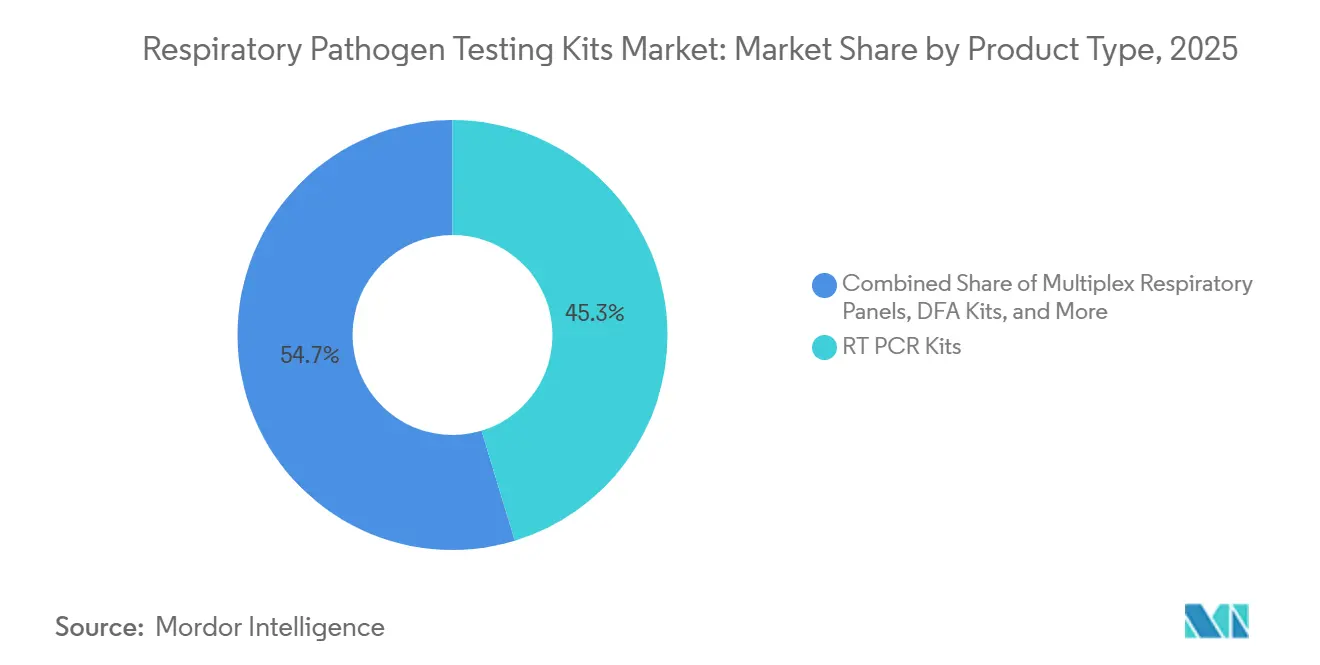
- By product type, RT PCR Kits held 45.31% of the respiratory pathogen testing kits market share in 2025, while Multiplex Respiratory Panels are expected to grow at a 6.38% CAGR through 2031.
- By technology, NAAT accounted for 57.24% share of the respiratory pathogen testing kits market size in 2025, while Next-Generation Sequencing is forecast to expand at a 7.52% CAGR through 2031.
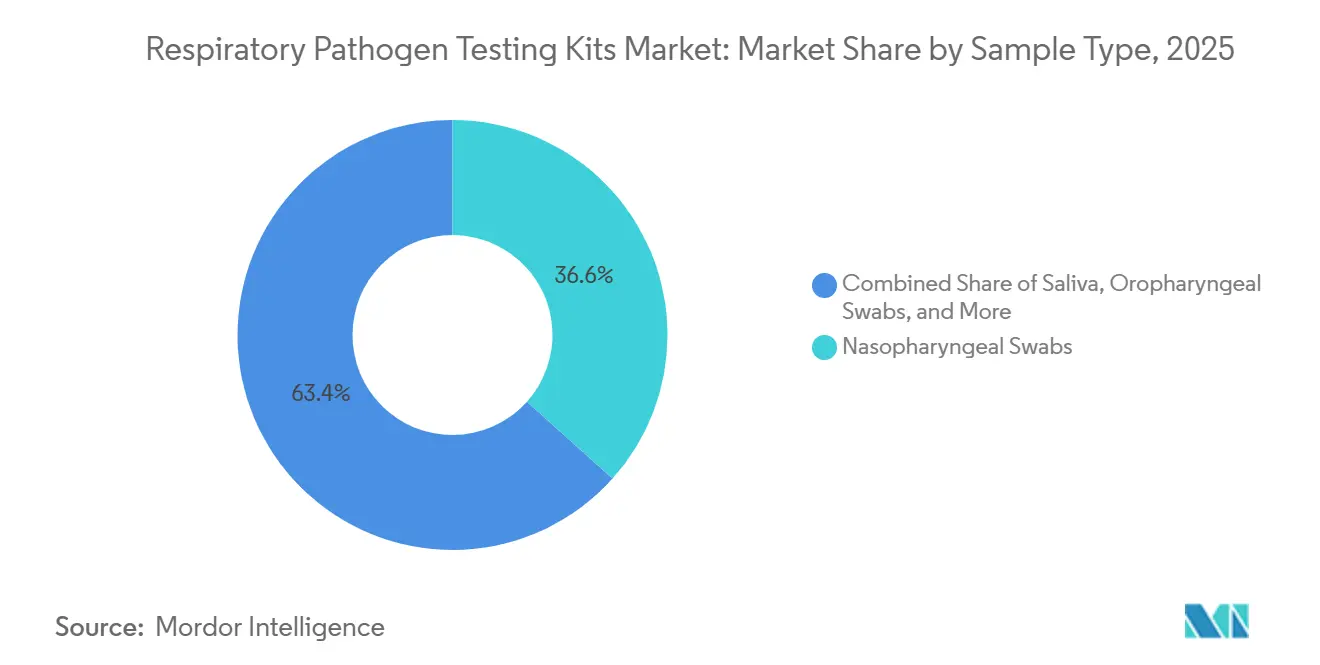
- By sample type, Nasopharyngeal Swabs held 36.64% share in 2025, while Saliva is expected to record the fastest growth at a 6.62% CAGR through 2031.
- By end user, Hospitals accounted for 50.26% share of the respiratory pathogen testing kits market size in 2025, while Home Care Settings are expected to advance at a 6.95% CAGR through 2031.
- By geography, North America held 43.61% of the respiratory pathogen testing kits market share in 2025, while Asia-Pacific is forecast to grow at a 7.65% CAGR through 2031.
Note: Market size and forecast figures in this report are generated using Mordor Intelligence’s proprietary estimation framework, updated with the latest available data and insights as of January 2026.
Market Trends and Insights
Drivers Impact Analysis of Respiratory Pathogen Testing Kits Market*
| Driver | (~) % Impact on CAGR Forecast | Geographic Relevance | Impact Timeline |
|---|---|---|---|
| Rising Burden Of Respiratory Infections And Syndromic Testing Adoption | +1.1% | Global | Short term (≤ 2 years) |
| Expansion Of Institutional Surveillance And Pandemic Preparedness Programs | +0.8% | Global, with priority in APAC and MEA | Medium term (2-4 years) |
| Shift Toward Point-Of-Care And Decentralized Testing | +0.9% | North America and Europe, with spillover to APAC | Short term (≤ 2 years) |
| Multiplex Panel Convergence And Workflow Standardization | +0.7% | North America and Europe | Medium term (2-4 years) |
| Hospital Consolidation And Enterprise Reagent Contracting | +0.5% | North America, with early gains in Germany and the UK | Medium term (2-4 years) |
| Cloud-Connected Respiratory Diagnostics For Real-Time Surveillance | +0.3% | North America, EU, and core APAC | Long term (≥ 4 years) |
| Source: Mordor Intelligence | |||
Rising Burden of Respiratory Infections and Syndromic Testing Adoption
The respiratory pathogen testing kits market continues to benefit from the combined burden of influenza, RSV, SARS-CoV-2, and bacterial co-pathogens, because the volume of respiratory illness is not fading and the affected patient mix is changing across age groups. RSV and influenza burden has shifted more visibly toward older adults, and that makes single-target testing less reliable in many acute lower respiratory presentations where overlapping symptoms remain common. Hospitals and care teams are therefore moving syndromic panels into routine ordering pathways, because simultaneous detection across 5 to 25 pathogens reduces diagnostic uncertainty during the first clinical encounter. A 2025 pediatric study also showed that multiplex molecular testing improved the speed of pathogen identification, supported better isolation practice, and helped reduce hospital transmission risk, which makes the procurement case stronger for institutions that are managing seasonal surges. WHO epidemiological reporting in 2026 also indicated changing circulation patterns and mixed-pathogen activity, which increases the practical value of assays that can capture more than one likely pathogen in a single run. This is why the respiratory pathogen testing kits market is seeing sustained pull for focused multiplex formats rather than a return to older reflex-testing pathways.
Expansion of Institutional Surveillance and Pandemic Preparedness Programs
The respiratory pathogen testing kits market is also being supported by a durable public health procurement layer, because governments are funding laboratory readiness as an ongoing capability rather than as a temporary emergency response. The WHO PIP Framework and related readiness work in 2026 show that respiratory surveillance spending is being organized across multi-year programs, especially in Southeast Asia, Africa, and Latin America, where testing intensity still trails North America and Europe[1]World Health Organization, “Building Research Readiness for Respiratory Pathogen Pandemics in South-East Asia through its WHO GISRS Unity Studies Regional Chapter,” WHO, who.int. This matters because recurring surveillance budgets create repeat purchasing for kits and reagents, and they also reward suppliers that can maintain stable delivery and quality documentation across tender cycles. It also changes vendor strategy, since recurring reagent agreements become more important than one-time instrument placements in many public health settings. Accreditation expectations tied to laboratory quality standards are becoming more relevant across Asia-Pacific and the Middle East, which raises the entry threshold for suppliers that want to participate in institutional tenders. As a result, the respiratory pathogen testing kits market is being shaped as much by public laboratory modernization as by near-term patient testing demand.
Shift Toward Point-of-Care and Decentralized Testing
The respiratory pathogen testing kits market is broadening beyond centralized labs, because respiratory testing is moving into urgent care centers, retail pharmacies, and home-linked care channels where speed and convenience are more important. This shift matters because it expands the addressable testing population, yet it also divides volumes across more sites, smaller order sizes, and different reimbursement pathways. Point-of-care molecular platforms are gaining traction because faster turnaround supports earlier triage and treatment decisions, especially during seasonal respiratory peaks when patient volumes rise quickly. The commercial barrier is that regulatory status for decentralized settings now matters as much as analytical performance, since products that fit waived or simpler-use settings can reach physician offices and pharmacy channels more effectively. Decentralized testing also creates a stronger surveillance function when connected readers can aggregate anonymized result flows across many sites, which supports earlier pattern detection outside conventional central reporting cycles. This is helping the respiratory pathogen testing kits market develop a second layer of value that sits between clinical diagnosis and population-level monitoring.
Multiplex Panel Convergence and Workflow Standardization
The respiratory pathogen testing kits market is also moving toward more standardized multiplex workflows, because many institutions now treat multi-pathogen respiratory testing as part of routine care rather than as a premium add-on. A 2025 multicenter study confirmed that fast multiplex PCR could identify viral and bacterial pathogens from lower respiratory samples with performance comparable to established approaches, which supports broader clinical adoption. Buyers are also narrowing panel design toward focused menus, since many hospitals prefer 5 to 12 common targets that preserve speed and relevance rather than very broad arrays that may slow workflow. Laboratory information system integration is becoming a more visible purchasing criterion, because hospitals want assay outputs that fit existing reporting and care pathways without extra manual handling. Roche’s March 2026 launch of the cobas eplex RP3 also reflects this direction, since it combines broad pathogen coverage with configurable sub-panels that support hospital workflow flexibility. This keeps the respiratory pathogen testing kits market aligned with operational efficiency as much as with analytical breadth.
Restraints Impact Analysis of Respiratory Pathogen Testing Kits Market*
| Restraint | (~) % Impact on CAGR Forecast | Geographic Relevance | Impact Timeline |
|---|---|---|---|
| High Per-Test Cost In Price-Sensitive Markets | -0.5% | APAC, MEA, and South America | Short term (≤ 2 years) |
| Reimbursement Gaps For Non-Hospital Testing | -0.4% | North America and Europe | Medium term (2-4 years) |
| Complex Multiplex Validation And Regulatory Clearance Timelines | -0.3% | Global | Long term (≥ 4 years) |
| Cold-Chain And Reagent-Supply Concentration Risk | -0.2% | MEA, South America, and APAC periphery | Medium term (2-4 years) |
| Source: Mordor Intelligence | |||
High Per-Test Cost in Price-Sensitive Markets
The respiratory pathogen testing kits market still faces a hard affordability ceiling in lower-income and price-sensitive systems, because the cost of broad molecular multiplex panels can exceed the daily diagnostic budget of smaller district facilities. This limits adoption not because the clinical value is unclear, but because public procurement teams must balance panel depth against broader volume needs across basic testing services. The mismatch is strongest in regions where advanced multiplex development is shaped by high-income market expectations, while hospital budgets remain far tighter in parts of Asia-Pacific, the Middle East, and South America. That is why practical use in some settings continues to favor lower-cost formats even when PCR would offer better analytical performance. The result is that regional manufacturers with lower production costs and stronger local tender alignment can be better positioned than multinationals in public sector contracts. This keeps the respiratory pathogen testing kits market segmented by purchasing power as much as by clinical need.
Reimbursement Gaps for Non-Hospital Testing
The respiratory pathogen testing kits market also remains constrained by uneven reimbursement outside hospital laboratories, and this slows commercial conversion in outpatient, urgent care, and decentralized testing channels. Coverage frameworks for respiratory multiplex testing remain inconsistent in major developed markets, which makes ordering behavior less predictable for providers that operate outside large hospital systems. The issue is especially important in the United States, where payment policy and coding updates continue to create uncertainty for some outpatient respiratory panel use cases[2]AAPC, “Local Coverage Articles Identify Code Changes for Q3: Respiratory Pathogen Panel Testing,” AAPC, aapc.com. A 2024 HHS Office of Inspector General report also highlighted structural limits in the way clinical laboratory test rates are set during public health emergencies, which shows that payment responsiveness remains a policy weakness in this space. Smaller outpatient laboratories and urgent care operators are more exposed to these payment gaps because they often lack the scale and contracting leverage available to hospital systems. This means the respiratory pathogen testing kits market can add clinical demand faster than it adds reimbursed testing volume in non-hospital channels.
*Our forecasts treat driver/restraint impacts as directional, not additive. The impact forecasts reflect baseline growth, mix effects, and variable interactions.
Respiratory Pathogen Testing Kits Market Segment Analysis
By Product Type:
RT PCR Kits Anchor Hospitals, Multiplex Panels AccelerateRT PCR Kits held 45.31% of the respiratory pathogen testing kits market share in 2025, and that lead reflected regulatory familiarity, broad diagnostic coverage, and the confidence hospital labs place in validated molecular sensitivity. This segment remains deeply embedded in accredited hospital environments where result reliability, standardized workflows, and compliance expectations continue to support routine molecular respiratory testing. RT PCR Kits also benefit from established installed bases, which helps preserve recurring reagent demand once a platform is already part of a hospital network. The respiratory pathogen testing kits market therefore continues to rely on RT PCR as its core volume category, especially in central laboratories that process mixed respiratory case loads throughout the year. Rapid Antigen Kits remained important in faster-turnaround settings, especially where convenience and short workflow time carry more weight than deeper pathogen resolution.
Multiplex Respiratory Panels are projected to grow at a 6.38% CAGR from 2026 to 2031, because clinicians increasingly prefer a single-run format that can detect influenza A and B, RSV, SARS-CoV-2, and selected bacterial co-pathogens together. This growth is moving beyond academic medical centers and into community hospitals and urgent care networks, which expands the commercial base for respiratory syndromic testing. DFA Kits and ELISA Kits continue to serve narrower use cases, with DFA retaining some presence in pediatric respiratory workups and ELISA still fitting batch-style reference laboratory activity. Isothermal Amplification Kits are also gaining attention because ambient-temperature operation can reduce some logistical barriers in resource-limited settings, and 2025 research showed that multiplex RT-LAMP on saliva specimens achieved clinically relevant detection performance in a single-tube format. As CLIA-oriented molecular platforms expand across decentralized settings, standalone DFA use cases face more pressure because molecular access is no longer limited to highly specialized lab environments.



By Technology:
NAAT Dominates, NGS Shifts from Research to SurveillanceNAAT held 57.24% share in 2025, giving it the clear lead across technologies in the respiratory pathogen testing kits market, and that position reflects long clinical validation, strong installed base support, and institutionalized use in hospital laboratories. The technology is still favored because it combines sensitivity, workflow familiarity, and broad clinician acceptance across respiratory use cases. Immunoassay formats held the second-largest position, especially in rapid antigen applications that fit non-laboratory settings and faster testing pathways. Isothermal Amplification also continues to build relevance where simpler operation and lower infrastructure needs matter more than full central laboratory capability. Within the respiratory pathogen testing kits industry, this technology mix shows that routine diagnosis still favors proven molecular methods, while operational needs continue to preserve room for faster or lower-complexity alternatives.
Next-Generation Sequencing is projected to grow at a 7.52% CAGR from 2026 to 2031, but its role remains distinct because its strongest current value sits in surveillance, strain characterization, and outbreak investigation rather than in standard front-line patient diagnosis. A 2026 study showed that NGS respiratory virus panels complement RT-PCR by supporting deeper typing and epidemiological investigation, which strengthens the case for public health and advanced microbiology settings. The more immediate commercial movement is toward targeted NGS, because hospitals want a lower-cost and faster bridge between panel PCR and full metagenomic sequencing. A 2025 comparison study found that targeted NGS produced overall positivity rates comparable to metagenomic approaches with a simpler workflow and lower cost burden, which is helping drive technology selection in hospital microbiology departments. Within the respiratory pathogen testing kits industry, this keeps NGS on a growth path that is meaningful, but still more specialized than the broad clinical footprint held by NAAT.
By Sample Type:
Nasopharyngeal Swabs Lead, Saliva Opens New Testing ChannelsNasopharyngeal Swabs held 36.64% share in 2025, and this leadership remained tied to their established status in clinical validation work, regulatory submissions, and routine respiratory diagnostic practice across many care settings. Their position stays strong because they are widely recognized as the reference collection method for upper respiratory testing, even when the collection process is less comfortable for patients. Oropharyngeal Swabs ranked second, serving institutional programs where scale and practicality matter, especially when nasopharyngeal collection is harder to manage in large testing flows. Sputum also retains a defined role in lower respiratory infection workups, particularly in hospital and ICU settings where pneumonia evaluation is a core part of clinical decision-making. The respiratory pathogen testing kits market therefore still rests on specimen types that are operationally proven and already reflected in assay validation and clinician training.
Saliva is projected to grow at a 6.62% CAGR from 2026 to 2031, because it offers a more comfortable collection pathway and fits self-collection models that support home testing, workplace screening, and broader decentralized use. Its growth matters because it opens testing to settings that are harder to serve with conventional swab-based collection, especially when trained collection staff are not readily available. A 2025 Tufts-linked study validated dried saliva specimens with 85% sensitivity and 94% specificity against paired liquid samples, showing that transport stability can be addressed in practical diagnostic workflows. A BMJ Open study in 2025 also examined saliva self-sampling for pediatric respiratory infections in South Africa, which showed that non-invasive collection is being evaluated even where operating conditions are more constrained. As more assays secure saliva-compatible validation, the respiratory pathogen testing kits market is likely to convert a larger share of latent demand from home-linked and occupational testing settings into commercial volume.
By End User:
Hospitals Anchor Revenue, Home Care Settings Redefine Market BoundariesHospitals accounted for 50.26% share in 2025, which made them the largest end-user group in the respiratory pathogen testing kits market, and that reflects their high acute case volume, faster diagnostic need, and stronger contracting structures. Emergency departments, inpatient respiratory case management, and accredited core laboratories continue to keep hospitals at the center of assay consumption and platform utilization. Hospital demand is also reinforced by reagent-rental and enterprise supply models, which align vendor revenue with routine testing throughput rather than with one-time capital purchases. Diagnostic Laboratories followed as the second-largest end-user segment, because they support outreach volume from hospitals and regional testing networks. Clinics and Urgent Care Centers are also gaining relevance as faster molecular and simpler-use respiratory testing formats reach more decentralized settings.
Home Care Settings are projected to grow at a 6.95% CAGR from 2026 to 2031, and that makes them the fastest-growing end-user segment in the respiratory pathogen testing kits market even though per-test economics differ from hospital channels. Growth in this segment matters because home-linked testing expands the addressable population while shifting volume toward lower-complexity, more consumer-facing formats. QuidelOrtho’s 2025 availability announcement for QUICKVUE Influenza + SARS Test for professional use in pharmacies and urgent care settings shows how respiratory portfolios are being repositioned toward decentralized care delivery. The channel also carries a broader strategic value, because result capture through connected tools can strengthen anonymized surveillance and improve visibility into respiratory activity outside hospital walls. This is why the respiratory pathogen testing kits market is no longer defined only by where testing accuracy is highest, but also by where testing access can scale more efficiently.
Geography Analysis
North America Respiratory Pathogen Testing Kits Market
North America held 43.61% share in 2025, and that gave the region the leading position in the respiratory pathogen testing kits market because the United States combines high testing intensity, established reimbursement pathways, and mature institutional procurement structures. The region also benefits from a broad installed base of molecular systems and a healthcare environment where respiratory testing is integrated into routine seasonal management rather than reserved only for exceptional outbreak periods. Canada and Mexico contributed to regional revenue through national laboratory networks and seasonal surveillance programs, although per-capita testing intensity remained below the United States. A December 2025 prime vendor laboratory agreement between Medline and Beacon Health System also showed how multi-hospital contracting can reinforce incumbent supply relationships across hospital systems[3]Medline, “Beacon Health System Signs Prime Vendor Lab Agreement with Medline,” Medline Newsroom, newsroom.medline.com.
Europe Respiratory Pathogen Testing Kits Market
Europe remained the second-largest geography, with Germany, the United Kingdom, and France accounting for much of regional demand in the respiratory pathogen testing kits market. The region continues to support advanced respiratory diagnostics through large hospital systems, structured laboratory procurement, and a regulatory environment that rewards suppliers with strong validation packages. IVDR requirements have raised the documentation burden for respiratory panel access, which gives an advantage to manufacturers that can support deeper clinical evidence and smoother notified body engagement. France, Italy, and Spain also contributed meaningful volume, and Spain’s CerTest Biotec showed that regional manufacturing participation is not limited to large multinational suppliers.
APAC, South America and MEA Respiratory Pathogen Testing Kits Market
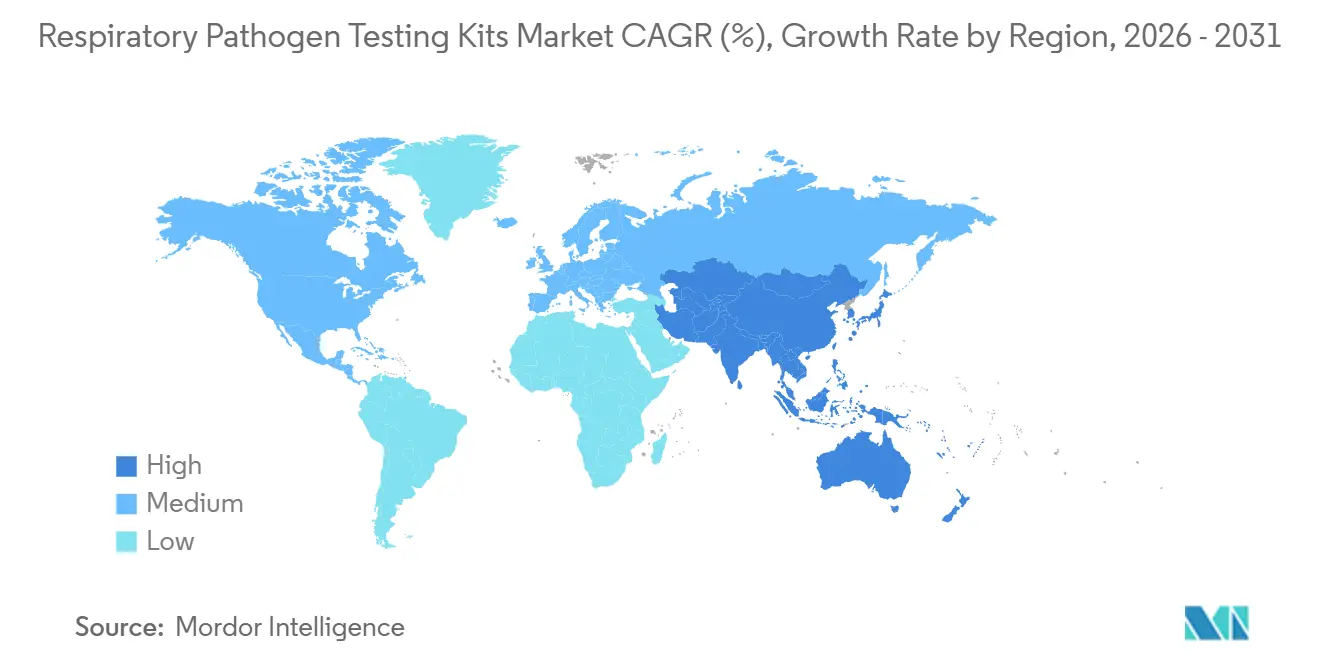
Asia-Pacific is projected to grow at a 7.65% CAGR from 2026 to 2031, making it the fastest-growing regional block in the respiratory pathogen testing kits market and the most important source of incremental demand growth. China and India are central to that expansion because both are building domestic diagnostic capacity and shaping market access through evolving regulatory and registration frameworks. China’s pathway for domestically manufactured IVD assays is helping shorten commercialization timelines for local developers, and this is increasing competitive pressure on imported products. India’s tighter registration approach for imported assays is also encouraging foreign suppliers to consider local partnerships and domestic manufacturing pathways. Japan and South Korea remain important innovation hubs within the region, and South Korean companies such as Seegene and Kogene Biotech are visible in broad-spectrum multiplex respiratory panel development. South America and the Middle East and Africa remain smaller in absolute size, yet they are strategically important because public health systems are expanding reference laboratory capability while respiratory co-circulation continues to reinforce the need for multi-pathogen testing.

Competitive Landscape
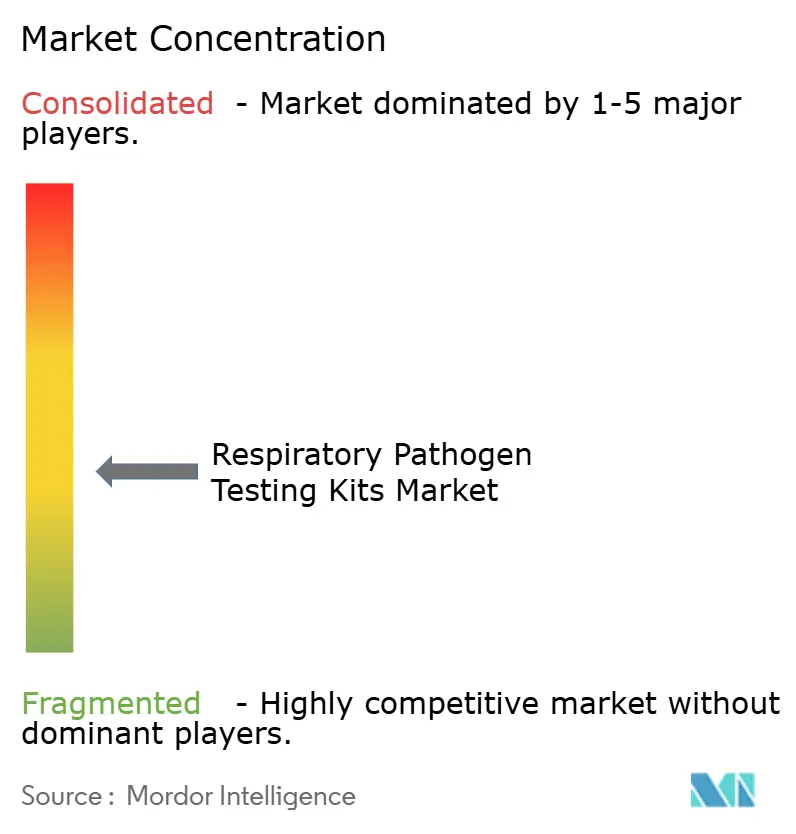
The respiratory pathogen testing kits market is moderately fragmented, with 10 to 12 global IVD incumbents controlling much of institutional procurement across hospitals and organized laboratory networks. Roche, Abbott, bioMérieux through BioFire, Cepheid under Danaher, Hologic, QuidelOrtho, QIAGEN, Thermo Fisher Scientific, and Siemens Healthineers remain the most visible established participants in this competitive group. Their position is supported by installed platforms, broad respiratory menus, regulatory depth, and contracting models that extend across hospital systems. This means competition in the respiratory pathogen testing kits market is shaped less by headline pricing and more by platform access, reagent continuity, assay breadth, and integration into existing laboratory workflows. It also means vendors with stronger regulatory coverage can defend share more effectively across multiple countries and care settings.
Leading players in the respiratory pathogen testing kits market continue to compete through long-term supply agreements and reagent-rental structures, because these models make it harder for competing assays to displace an installed platform once volumes are embedded in daily workflow. Portfolio breadth also matters, since hospitals and health systems increasingly want coverage that spans rapid point-of-care products, routine molecular assays, and broader multiplex respiratory panels. Roche’s August 2025 FDA clearance for cobas Respiratory 4-flex, which used TAGS technology, showed how major players are differentiating at the platform level through digital reflex capability and workflow efficiency. Roche’s March 2026 launch of cobas eplex RP3 added another example, because it offered up to 25 viral and bacterial targets and allowed 5 customizable sub-panels that aligned with hospital demand for more flexible syndromic testing.
QuidelOrtho’s 2025 availability announcement for QUICKVUE Influenza + SARS Test for professional use also showed how established companies are adapting respiratory portfolios toward pharmacy and urgent care channels rather than staying tied only to centralized lab environments. The most attractive open space in the respiratory pathogen testing kits market still sits in lower-cost multiplex options for price-sensitive tenders, saliva-compatible decentralized formats, and tools that connect diagnosis with real-time surveillance reporting. Mid-tier and regional players can gain ground where domestic production, tender fit, or focused channel strategy matters more than the broadest global menu. At the same time, the largest incumbents remain difficult to displace in hospital systems because their installed base, validation history, and contracting reach create durable switching barriers.
Respiratory Pathogen Testing Kits Industry Leaders
Abbott Laboratories
Becton, Dickinson and Company
Danaher Corporation
F. Hoffmann-La Roche Ltd
Thermo Fisher Scientific Inc.
- *Disclaimer: Major Players sorted in no particular order
Respiratory Pathogen Testing Kits Market Companies Covered in this Report
- Abbott Laboratories
- Altona Diagnostics GmbH
- Beckton Dickinson
- bioMérieux
- Bio-Rad Laboratories
- Cepheid
- CerTest Biotec, S.L.
- Danaher
- DiaSorin
- Roche
- Hologic
- Meridian Bioscience, Inc.
- QIAGEN
- QuidelOrtho
- R-Biopharm
- Seegene
- Siemens Healthineers
- Thermo Fisher Scientific

Recent Industry Developments in Respiratory Pathogen Testing Kits Market
- July 2026: Seegene Inc. launched the Global Million Clinical Study (GMCS), a large-scale initiative to build clinical evidence for the shift from conventional virus-centered testing to comprehensive syndromic PCR testing. This testing approach can detect viral and pneumonia-associated bacterial pathogens at the same time.
- March 2026: Roche launched the cobas eplex respiratory pathogen panel 3 (RP3) in CE-mark markets. The panel can detect up to 25 viral and bacterial targets, including SARS-CoV-2, influenza A/B, RSV, Bordetella pertussis, and Chlamydia pneumoniae, from a single sample. It also supports up to five customizable sub-panels, helping hospitals adopt more flexible syndromic testing configurations.


Global Respiratory Pathogen Testing Kits Market Report Scope
As per the scope of the report, respiratory pathogen testing kits are medical diagnostic tools designed to detect the presence of various pathogens that cause respiratory infections. These kits typically analyze respiratory specimens such as nasal swabs, throat swabs, or sputum samples to identify viruses, bacteria, or other microorganisms responsible for illnesses like influenza, COVID-19, respiratory syncytial virus (RSV), and other respiratory pathogens.
The respiratory pathogen testing kits market is segmented by product type into RT-PCR kits, rapid antigen kits, multiplex respiratory panels, DFA kits, ELISA kits, and isothermal amplification kits; by technology into NAAT, immunoassays, isothermal amplification, next-generation sequencing, and other technologies; by sample type into nasopharyngeal swabs, oropharyngeal swabs, saliva, sputum, and other sample types; by end user into hospitals, diagnostic laboratories, clinics and urgent care centers, home care settings, and other end users; and by geography into North America, Europe, Asia-Pacific, Middle East and Africa, and South America. The market report also covers the estimated market sizes and trends for 17 countries across major regions globally. For each segment, the market size and forecast are provided in terms of value (USD).
| RT PCR Kits |
| Rapid Antigen Kits |
| Multiplex Respiratory Panels |
| DFA Kits |
| ELISA Kits |
| Isothermal Amplification Kits |
| NAAT |
| Immunoassays |
| Isothermal Amplification |
| Next-Generation Sequencing |
| Other Technologies |
| Nasopharyngeal Swabs |
| Oropharyngeal Swabs |
| Saliva |
| Sputum |
| Other Sample Types |
| Hospitals |
| Diagnostic Laboratories |
| Clinics and Urgent Care Centers |
| Home Care Settings |
| Other End Users |
| North America | United States |
| Canada | |
| Mexico | |
| Europe | Germany |
| United Kingdom | |
| France | |
| Italy | |
| Spain | |
| Rest of Europe | |
| Asia-Pacific | China |
| Japan | |
| India | |
| Australia | |
| South Korea | |
| Rest of Asia-Pacific | |
| Middle East and Africa | GCC |
| South Africa | |
| Rest of Middle East and Africa | |
| South America | Brazil |
| Argentina | |
| Rest of South America |
| By Product Type | RT PCR Kits | |
| Rapid Antigen Kits | ||
| Multiplex Respiratory Panels | ||
| DFA Kits | ||
| ELISA Kits | ||
| Isothermal Amplification Kits | ||
| By Technology | NAAT | |
| Immunoassays | ||
| Isothermal Amplification | ||
| Next-Generation Sequencing | ||
| Other Technologies | ||
| By Sample Type | Nasopharyngeal Swabs | |
| Oropharyngeal Swabs | ||
| Saliva | ||
| Sputum | ||
| Other Sample Types | ||
| By End User | Hospitals | |
| Diagnostic Laboratories | ||
| Clinics and Urgent Care Centers | ||
| Home Care Settings | ||
| Other End Users | ||
| By Geography | North America | United States |
| Canada | ||
| Mexico | ||
| Europe | Germany | |
| United Kingdom | ||
| France | ||
| Italy | ||
| Spain | ||
| Rest of Europe | ||
| Asia-Pacific | China | |
| Japan | ||
| India | ||
| Australia | ||
| South Korea | ||
| Rest of Asia-Pacific | ||
| Middle East and Africa | GCC | |
| South Africa | ||
| Rest of Middle East and Africa | ||
| South America | Brazil | |
| Argentina | ||
| Rest of South America | ||


Key Questions Answered in the Report
What is the projected value of the respiratory pathogen testing kits market by 2031?
The respiratory pathogen testing kits market is expected to reach USD 4.09 billion by 2031, rising from USD 3.14 billion in 2025 at a CAGR of 4.52% from 2026 to 2031.
Which product category leads respiratory pathogen testing kits demand?
RT PCR Kits led demand with a 45.31% share in 2025, supported by strong hospital adoption and validated molecular sensitivity.
Which technology is growing fastest in respiratory pathogen testing?
Next-Generation Sequencing is the fastest-growing technology segment, with a projected CAGR of 7.52% through 2031, mainly because of its role in surveillance and outbreak investigation.
Why are multiplex respiratory panels gaining traction?
Multiplex panels are gaining traction because they detect several viral and bacterial targets in one run, improve time to diagnosis, and better support treatment and isolation decisions.
Which region has the strongest growth outlook through 2031?
Asia-Pacific has the strongest outlook, with a projected CAGR of 7.65% through 2031, driven by hospital molecular testing expansion and domestic diagnostic capacity building.
How important are home care settings in this space?
Home Care Settings are the fastest-growing end-user segment, with a 6.95% CAGR through 2031, because decentralized and self-directed respiratory testing is expanding beyond hospital walls.
Page last updated on:





