
Remdesivir Market Size and Share
Market Overview
| Study Period | 2020 - 2031 |
|---|---|
| Market Size (2026) | USD 8.26 Billion |
| Market Size (2031) | USD 19.91 Billion |
| Growth Rate (2026 - 2031) | 19.23 % |
| Fastest Growing Market | Asia-Pacific |
| Largest Market | North America |
| Market Concentration | Medium |
Major Players *Disclaimer: Major Players sorted in no particular order Image © Mordor Intelligence. Reuse requires attribution under CC BY 4.0. | |
Remdesivir Market Analysis by Mordor Intelligence
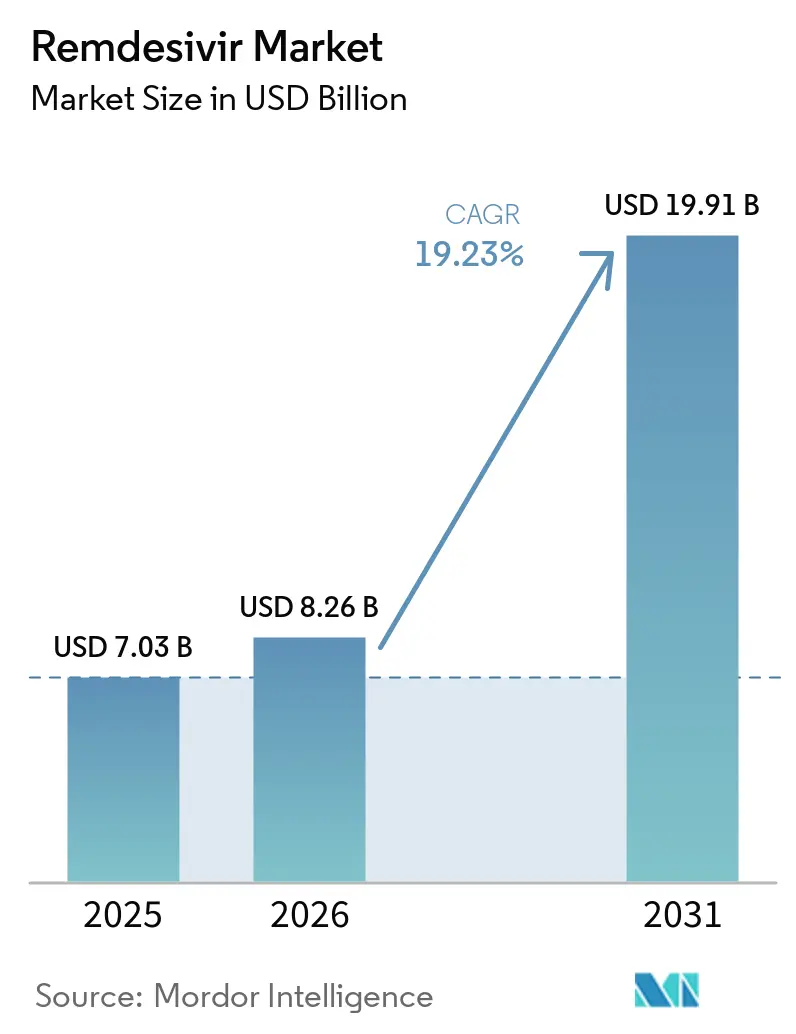
The Remdesivir Market size is expected to increase from USD 7.03 billion in 2025 to USD 8.26 billion in 2026 and reach USD 19.91 billion by 2031, growing at a CAGR of 19.23% over 2026-2031.
The remdesivir market is supported by hospital treatment pathways, public stockpiles, and broader generic availability in emerging health systems. Gilead reported that Veklury revenue fell 49% to USD 911 million in 2025, while its 2026 guidance was USD 600 million, reflecting fewer COVID-19 hospitalizations in mature markets. Demand is becoming less dependent on broad pandemic admissions and more tied to high-risk patients, government preparedness, and outbreak response. The World Health Organization prioritized remdesivir for clinical trials in Bundibugyo virus disease in May 2026, which strengthens its relevance for emergency procurement beyond COVID-19. Competition is increasing as generic suppliers expand in procurement-led markets, although sterile manufacturing requirements remain a barrier for smaller entrants.
Key Report Takeaways
- By route of administration, intravenous delivery held 71.83% of the remdesivir market share in 2025 and is forecast to grow at a 18.15% CAGR through 2031.
- By dosage form, lyophilized solution accounted for 52.38% of the remdesivir market size in 2025 and is forecast to grow at a 19.76% CAGR through 2031.
- By patient age, adults held 61.16% of the remdesivir market share in 2025, while pediatric use is forecast to expand at a 19.57% CAGR through 2031.
- By application, COVID-19 accounted for 82.63% of the remdesivir market size in 2025, while MERS-CoV is forecast to grow at a 20.94% CAGR through 2031.
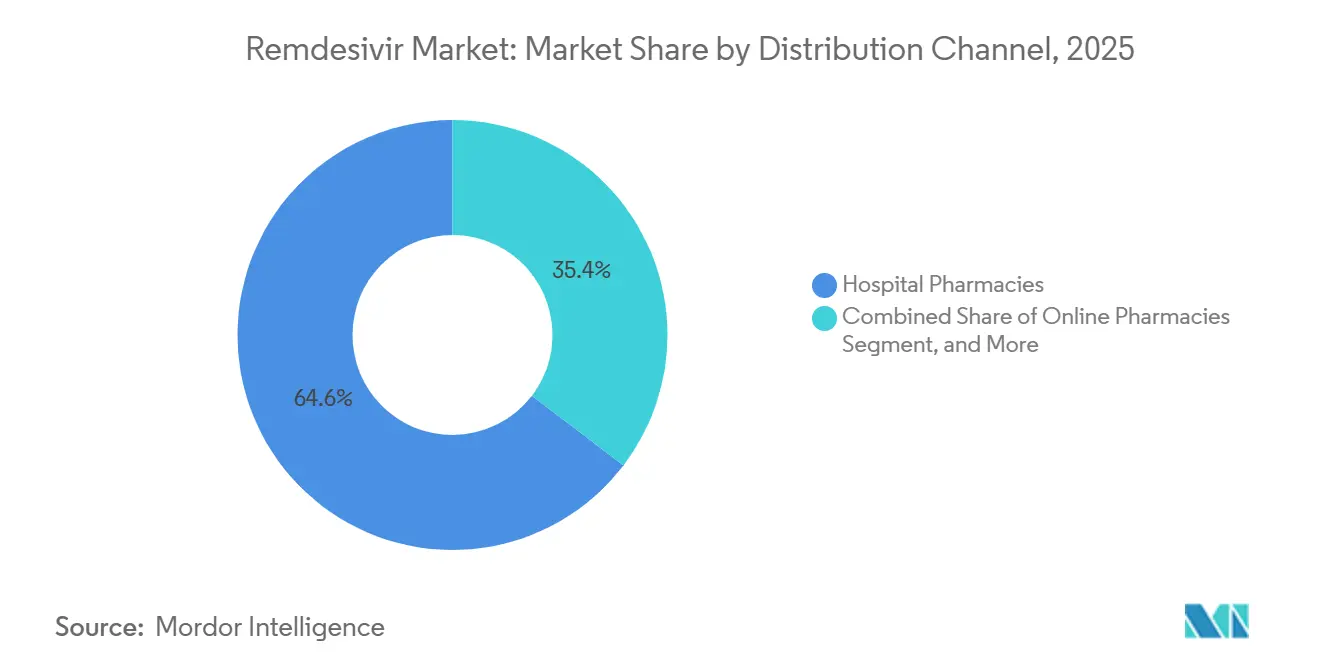
- By distribution channel, hospital pharmacies held 64.63% share in 2025, while online pharmacies are forecast to expand at a 21.04% CAGR through 2031.
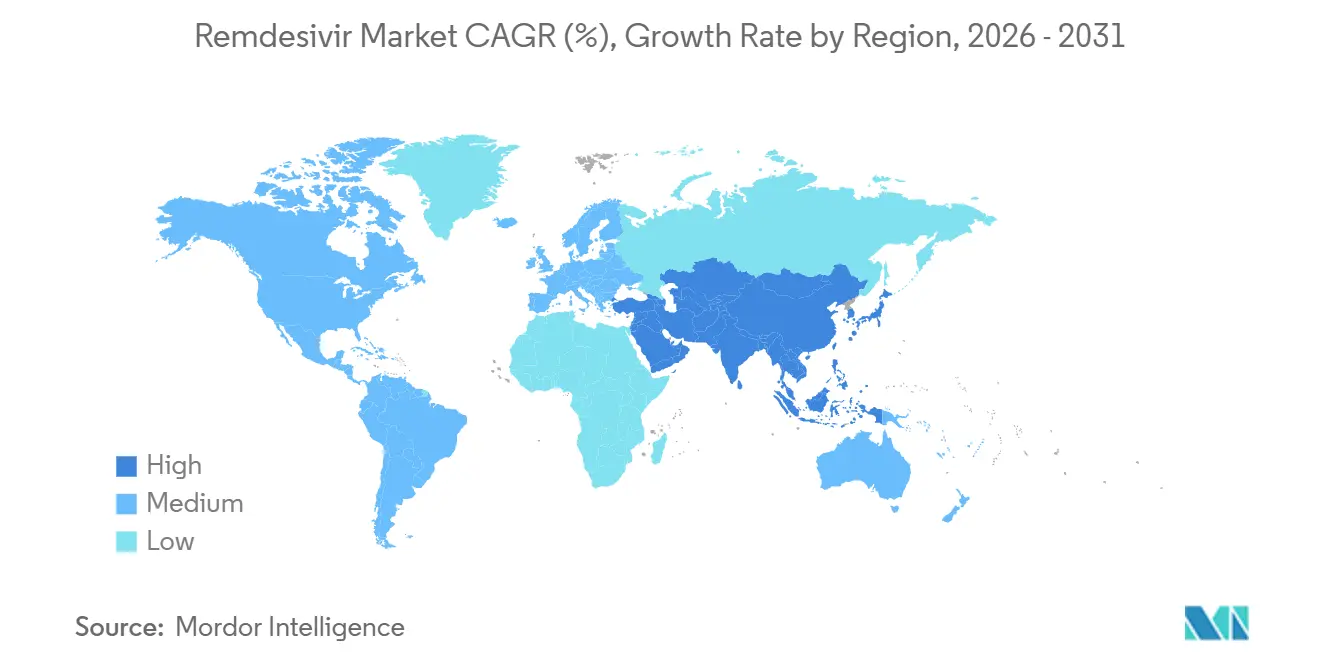
- By geography, North America held 38.63% share in 2025, while Asia-Pacific is forecast to grow at a 19.64% CAGR through 2031.
Note: Market size and forecast figures in this report are generated using Mordor Intelligence’s proprietary estimation framework, updated with the latest available data and insights as of January 2026.
Market Trends and Insights
Drivers Impact Analysis of Remdesivir Market*
| Driver | (~) % Impact on CAGR Forecast | Geographic Relevance | Impact Timeline |
|---|---|---|---|
| Broad-Spectrum Antiviral Need | +2.8% | Global | Long term (≥ 4 years) |
| Government Stockpiling and Preparedness Budgets | +2.1% | North America, Europe, MEA | Medium term (2-4 years) |
| Hospital Protocol Expansion for Severe Viral Disease | +1.6% | North America, Europe, Asia-Pacific | Medium term (2-4 years) |
| High-Risk and Immunocompromised Patient Demand | +2.3% | North America, Europe | Long term (≥ 4 years) |
| Access Expansion in Emerging Healthcare Markets | +1.8% | Asia-Pacific, MEA, South America | Long term (≥ 4 years) |
| Post-Acute and Long-Duration Viral Care Pathways | +1.2% | North America, Europe | Medium term (2-4 years) |
| Source: Mordor Intelligence | |||
Persistent Need for Broad-Spectrum Antivirals
Remdesivir acts by inhibiting viral RNA polymerase, which supports its use across more than 1 viral threat. A 2026 study reported that remdesivir and obeldesivir retained antiviral activity against 10 circulating Omicron subvariants, including LP.8.1 and XFG.[1] This evidence gives procurement authorities a reason to retain an antiviral that can remain useful when variants change. In May 2026, the WHO Technical Advisory Group placed remdesivir among the prioritized therapies for Bundibugyo virus disease trials. Gilead donated more than 2,000 vials for the Uganda Ebola response in 2026 and prepared supplies for the Democratic Republic of the Congo. These actions position the remdesivir market around a reserve role across respiratory and filovirus emergencies.
Government Stockpiling and Pandemic Preparedness Budgets
Government buyers are moving from emergency purchasing toward planned reserves, which provides a more regular source of demand for the remdesivir market. The European Commission launched its EU Stockpiling and Medical Countermeasures Strategy in July 2025 and increased Health Emergency Preparedness and Response Authority investment to EUR 200 million by 2027, with antivirals named as a priority. This policy favors products that can be stored, mobilized, and used under established clinical protocols. Taiwan’s Centers for Disease Control reported a stockpile of 204,000 injectable remdesivir doses in June 2025. The reported reserve illustrates how treatment planning can continue after broad COVID-19 emergency measures recede. Such programs can soften the effect of uneven hospitalization volumes, although they do not fully replace routine hospital demand.
Rising Demand for Antiviral Treatment Among High-Risk and Immunocompromised Patients
Immunocompromised patients are becoming a more important source of demand as COVID-19 becomes a persistent risk for selected populations. A 2026 real-world study found that remdesivir, when started within 2 days of hospitalization, was associated with a 25% reduction in 14-day all-cause mortality among immunocompromised patients.[2] A 2025 study also associated inpatient use with a 27% reduction in long-term post-discharge mortality. Another 2025 analysis linked treatment with a lower risk of Long COVID outcomes.[3] These findings support use among transplant recipients, oncology patients, and people with chronic immune suppression. They also support a remdesivir market that depends less on large, short-lived waves of admissions.
Expansion of Remdesivir Access in Emerging Healthcare Markets
Generic competition is unlocking remdesivir demand in markets where the originator's USD 520 per-course price was prohibitive; generic versions in India and African markets have driven the cost down to approximately USD 120-180 per course. Indian generic manufacturers licensed by Gilead, including Hetero Labs, Cipla, Jubilant Pharmova, and Laurus Labs, have progressively expanded their manufacturing and export footprint into Southeast Asia, the Middle East, and Sub-Saharan Africa. A telling competitive development came in 2025 when Indian firms, including Hetero Labs and Cipla, secured volume-based procurement (VBP) bids through China's National Healthcare Security Administration for anti-infective generics, signaling that Indian pharmaceutical companies are displacing Chinese domestic players in centralized hospital supply tenders. Gilead has simultaneously extended its access programs beyond COVID-19, donating approximately 5,100 vials to Rwanda for Marburg response in October 2024 and supplying Ethiopia's Food and Drug Authority for emergency use in 2025, further embedding remdesivir in regional outbreak-response supply chains across Sub-Saharan Africa. These commercial and humanitarian channels together are widening the market's geographic base at a pace that purely pricing-led analysis would underestimate.
Restraints Impact Analysis of Remdesivir Market*
| Restraint | (~) % Impact on CAGR Forecast | Geographic Relevance | Impact Timeline |
|---|---|---|---|
| Falling COVID-19 Hospitalization Burden | -1.9% | North America and Europe | Short term (≤ 2 years) |
| Viral Resistance and Therapeutic Substitution | -1.4% | Global | Medium term (2-4 years) |
| Sterile Injectable Manufacturing and Distribution Costs | -1.1% | Global | Long term (≥ 4 years) |
| Hospital Formulary Deprioritization | -0.9% | North America, Europe, Oceania | Short term (≤ 2 years) |
| Source: Mordor Intelligence | |||
Falling COVID-19 Hospitalization Burden in Mature Markets
Fewer COVID-19 admissions in mature markets are the most immediate constraint on the remdesivir market. Gilead reported that Veklury revenue declined 49% to USD 911 million in 2025, and U.S. revenue declined from USD 892 million in 2024 to USD 470 million. The company’s USD 600 million Veklury guidance for 2026 indicates continued volume normalization. Lower branded revenue can affect reference pricing and reduce the returns that generic suppliers expect from added capacity. Oral antivirals for mild and moderate outpatient cases also limit the role of an infusion-based therapy. Preparedness orders provide support, but current evidence suggests that they only partly offset lost hospital demand.
Viral Resistance and Therapeutic Substitution Risk
Resistance surveillance remains important for the remdesivir market, particularly for patients receiving prolonged treatment. A 2025 in vivo study identified nsp12 substitutions, including V792I, that warrant ongoing monitoring under extended remdesivir exposure. The nearest commercial risk is substitution by obeldesivir, an oral prodrug with the same active metabolite pathway. Preclinical research published in 2025 found complete post-exposure protection against the Marburg virus in nonhuman primates. If approved, an oral option could reduce the need for infusion visits in suitable outpatient settings. Gilead’s own development of obeldesivir indicates that product transition may become more relevant than direct resistance in the longer term.
*Our forecasts treat driver/restraint impacts as directional, not additive. The impact forecasts reflect baseline growth, mix effects, and variable interactions.
Remdesivir Market Segment Analysis
By Route of Administration:
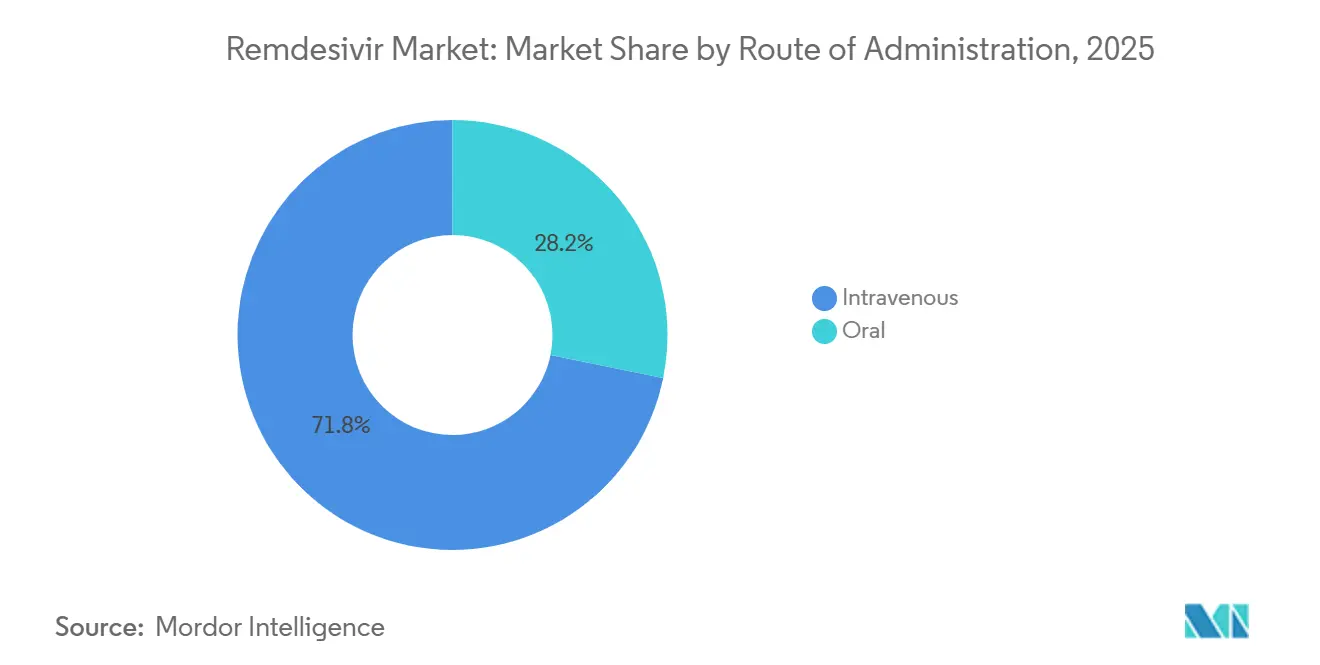
Intravenous Delivery Remains the Core Treatment RouteIntravenous delivery held 71.83% of the market share in 2025. The leading position reflects the product’s established use as an intravenous prodrug in hospital treatment. Hospitals in North America and Europe have integrated infusion into care pathways for COVID-19 pneumonia requiring supplemental oxygen. A 2024 analysis of 33,037 matched patients linked remdesivir plus dexamethasone with lower mortality than dexamethasone alone. This evidence gives pharmacy committees a clinical basis to retain intravenous remdesivir on formularies. It also keeps demand tied to institutions that can deliver monitored treatment.
Research published in 2025 examined nanoparticle and exosome approaches intended to improve oral bioavailability and lung targeting. A 2026 study reported orally bioavailable N-acylated remdesivir derivatives with broad-spectrum antiviral activity. These approaches are not a replacement for the current intravenous product. They show why route innovation could extend treatment into outpatient settings. Hospital formulary deprioritization remains a risk where inpatient COVID-19 use continues to fall. The current route mix still favors providers with infusion infrastructure.
By Dosage Form:
Lyophilized Solution Supports Storage and Preparedness NeedsLyophilized solution accounted for 52.38% of the market share in 2025. Its role reflects the storage requirements of strategic reserves and hospital supply chains. A stable, dry presentation can be useful where long storage periods or variable cold-chain conditions affect procurement decisions. Manufacturing lyophilized sterile injectables requires a cleanroom, aseptic fill-finish, and lyophilization capacity. A 2025 analysis described the substantial manufacturing needs associated with advanced lyophilized injectable production. These requirements favor established manufacturers that have invested in sterile production.
The lyophilized remdesivir market size is forecast to rise at a 19.76% CAGR through 2031. Frozen solution offers a lower-cost pathway where pharmacies have continuous refrigeration and prefer ready-to-dilute products. The two forms serve different operational needs rather than identical purchase decisions. European and Asian preparedness programs can favor lyophilized presentations for reserve use because storage resilience matters. The WHO Prequalification Programme held its ninth annual manufacturer workshop in September 2026, reinforcing the attention given to quality systems for medical products. Qualification and consistent supply can influence tender access in lower- and middle-income settings. High sterile manufacturing and distribution costs set a cost floor that constrains new generic entrants.
By Patient Age:
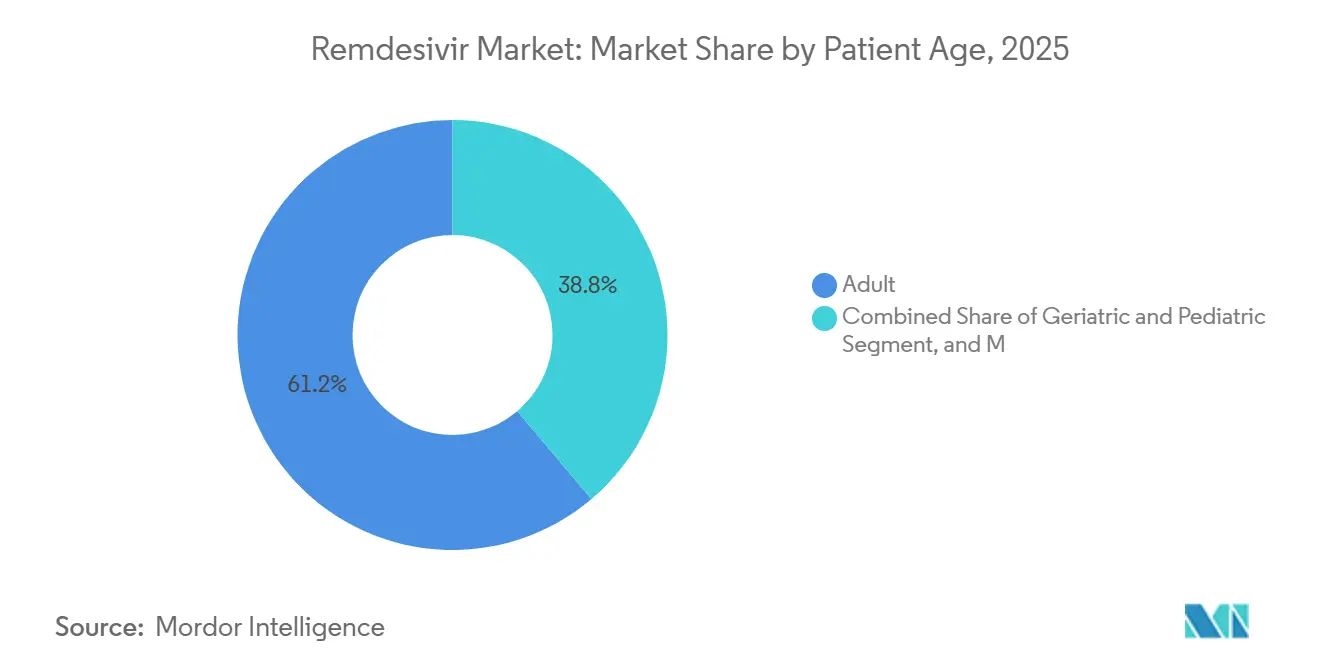
Pediatric Label Expansion Broadens AccessAdults held 61.16% of the market share in 2025. Severe COVID-19 and hospitalization risk remain more common in older adults and people with multiple health conditions. Geriatric patients form an important adult subgroup in Japan, Europe, and North America. Japan’s 2025 clinical management guidance emphasized early antiviral treatment for high-risk populations, including people aged 75 years and older. This approach supports institutional demand for treatment in patients with greater clinical risk. It also keeps the adult segment central to hospital purchasing decisions.
The pediatric segment is forecast to grow at a 19.57% CAGR through 2031. In May 2025, the European Medicines Agency’s Committee for Medicinal Products for Human Use recommended expanding Veklury use to children aged at least 4 weeks and weighing at least 3 kg. Product information was updated in January 2026. The authorization expands the eligible patient group for hospital procurement. It also makes pediatric labeling relevant when suppliers seek access to tertiary care formularies. Pediatric availability does not alter the adult segment’s leading position. It creates a defined growth path for the remdesivir market in specialized care settings.

By Application:
COVID-19 Leads While Filovirus Programs Add DemandCOVID-19 accounted for 82.63% of the market share in 2025. The application remained the largest because remdesivir has established regulatory approvals and inpatient treatment use. A 2025 systematic review covering 1.3 million participants across 122 studies found a survival benefit associated with remdesivir across variants and severity levels. This evidence supports continued use in hospitals when patients have a clinical need for antiviral treatment. SARS-CoV and Ebola remain smaller applications in volume terms. They retain strategic importance through public health stockpiles and emergency protocols.
MERS-CoV is forecast to grow at a 20.94% CAGR through 2031, making it the fastest-growing application in the remdesivir market. Gulf Cooperation Council health systems maintain preparedness activity because MERS-CoV remains an endemic respiratory threat. Ebola-related use gained attention in 2026 when the PARTNERS trial began enrolling participants in Ituri province. The trial evaluates remdesivir, MBP134, their combination, and best supportive care for Bundibugyo virus disease. A positive result could establish evidence for a disease with no established treatment. The WHO’s prioritization of remdesivir reinforces the relevance of this application pathway.
By Distribution Channel:
Hospital Pharmacies Lead as Online Supply DevelopsHospital pharmacies held 64.63% of the market share in 2025. The channel leads because intravenous use requires clinical supervision and structured dispensing. Group purchasing organizations and central formularies are major procurement points in the United States and Germany. Central tender systems in India also channel substantial volume through hospital networks. Clinics, drug stores, and pharmacies serve some post-acute and high-risk treatment contexts. The continued importance of the hospital channel reflects the product’s current route and patient profile.
Online pharmacies are forecast to grow at a 21.04% CAGR through 2031. The channel is linked to telemedicine and electronic prescribing, which can support outpatient access where a course is prescribed outside of admission. In August 2025, Pharmac shifted COVID-19 antivirals, including remdesivir, from government-owned stock to standard wholesaler-to-pharmacy arrangements in New Zealand. The decision expanded the role of regular commercial supply arrangements. It does not remove the need for clinical oversight when intravenous administration is required. The channel shift shows how normalized procurement can widen the distribution perimeter. It also supports the online channel’s higher growth rate from a small base.
Geography Analysis
North America Remdesivir Market
North America held 38.63% of the market share in 2025. The region benefits from large hospital networks, insurance reimbursement, and central procurement arrangements. U.S. Veklury sales were USD 470 million in 2025, compared with USD 892 million in 2024. Despite this decline, the United States remained the largest single-country revenue base described in the supplied material. Hospital protocols and the needs of immunocompromised patients support continued demand. Canada and Mexico also have preparedness plans aligned with WHO guidance, which can support reserve purchasing.
Europe Remdesivir Market
Europe is the second-largest regional contributor to the remdesivir market. The European Commission’s July 2025 strategy names antivirals as priority medical countermeasures and sets out a coordinated stockpiling network. The policy can create a more stable procurement base than commercial sales data alone indicates. Germany’s hospital purchasing groups, the United Kingdom’s standardized care pathways, and France’s national procurement structure support products with established authorization. Europe generated USD 151 million in Veklury revenue in 2025. Generic alternatives in price-sensitive markets can limit branded sales while stockpiling supports demand.
APAC, MEA and South America Remdesivir Market
Asia-Pacific is forecast to grow at a 19.64% CAGR through 2031, the fastest regional pace in the remdesivir market. India combines a large domestic need with a scaled generic manufacturing base that serves export markets. China’s hospital capacity and internal demand add to regional purchasing potential. Japan’s focus on early treatment for high-risk older patients supports institutional demand. MEA and South America have smaller shares, but outbreak-response programs and MERS-CoV preparedness provide specific demand channels. Gilead’s 2025 Ethiopia donation and its 2026 Uganda and Democratic Republic of the Congo response activity show the role of emergency supply in Africa. These activities can support future public procurement relationships.
Competitive Landscape
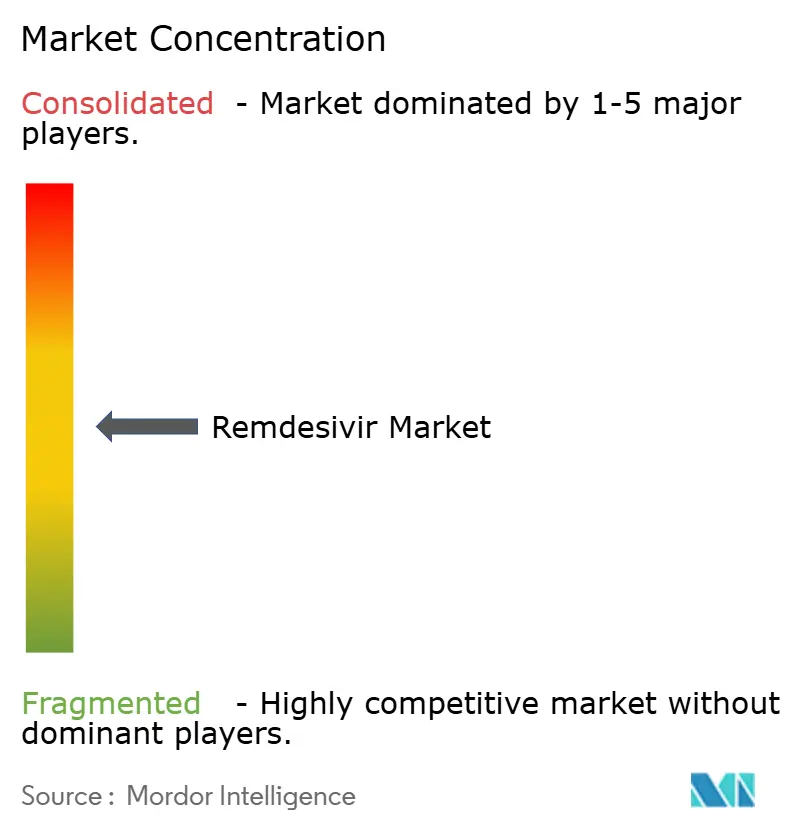
The remdesivir market has a moderately concentrated structure. Gilead retains the originator position for Veklury in high-income markets with FDA and EMA authorization. More than 12 generic manufacturers, concentrated in India and China, compete on price and manufacturing capacity in procurement-led markets. Hetero Labs, Cipla, and Aurobindo Pharma use their generic capabilities and public procurement relationships to compete across Asia, Africa, and the Middle East. Fresenius Kabi and Hikma Pharmaceuticals can compete through sterile injectable expertise, hospital relationships, service, and supply reliability. This mix creates different competitive positions across branded, generic, and hospital supply channels.
Gilead has made several moves that influence the competitive environment. The company reported lower Veklury revenue in 2025 and guided USD 600 million for 2026, showing how it is managing a product with lower COVID-19 demand. It donated more than 2,000 remdesivir vials for the 2026 Bundibugyo virus disease response in Uganda and prepared additional supplies for the Democratic Republic of the Congo. It also supplied Ethiopia’s Food and Drug Authority for Marburg emergency use in 2025. These actions reinforce the company’s role in outbreak supply while generic manufacturers pursue volume through tenders. Manufacturers that meet quality expectations and maintain a dependable supply can have an advantage in multilateral and government purchasing.
Competitive opportunities center on pediatric formulations, thermostable lyophilized presentations, and combinations for immunocompromised inpatients. Pediatric authorization is relevant because the EMA recommendation expanded use to children from 4 weeks of age and at least 3 kg. Lyophilized products can fit stockpiling needs where storage conditions are difficult. Gilead is also developing obeldesivir, an investigational oral alternative with OAKTREE trial data published in 2025. This pipeline could change the competition if it receives approval, but it does not create a current approved oral substitute. The reported lack of a combined top-player share prevents a numeric concentration score based on share thresholds. The market concentration score is 5 out of 10 because Gilead has a strong branded position, while more than 12 generic manufacturers compete in price-led procurement markets.
Remdesivir Industry Leaders
-
Cipla Limited
-
Dr. Reddy’s Laboratories Ltd.
-
Hikma Pharmaceuticals PLC
-
Sun Pharmaceutical Industries Ltd.
-
Teva Pharmaceutical Industries Ltd.
- *Disclaimer: Major Players sorted in no particular order
Remdesivir Market Companies Covered in this Report
- Aurobindo Pharma
- BrightGene Bio-Medical Technology Co., Ltd.
- Cipla
- Dr. Reddy’s Laboratories Ltd.
- Ferozsons Laboratories Limited
- Fresenius
- Gilead Sciences
- Hainan Haiyao Co., Ltd.
- Hetero Labs Limited
- Hikma Pharmaceuticals
- Hunan Warrant Pharmaceutical Co., Ltd.
- Jubilant Pharmova Limited
- Laurus Labs Limited
- Mylan
- Sandoz Group AG
- Shenzhen BORUI Pharmaceutical Technology Co., Ltd.
- Sichuan Kelun Pharmaceutical
- Sun Pharmaceuticals Industries
- Teva Pharmaceutical Industries
- Zydus Lifesciences Limited
Recent Industry Developments in Remdesivir Market
- July 2026: Gilead Sciences donated more than 2,000 vials of remdesivir for compassionate and MEURI-framework use in the Uganda Bundibugyo virus disease outbreak, and prepared additional supplies for the DRC outbreak response.
- May 2026: At meetings convened on 20 and 26 May 2026, the WHO TAG on Therapeutics Prioritization designated remdesivir as a priority therapeutic for BVD trials during the declared Public Health Emergency of International Concern and recommended investigating combination therapy with monoclonal antibodies.
- February 2026: Gilead reported full-year 2025 Veklury revenue of USD 911 million and projected USD 600 million for 2026.
- July 2025: The European Commission announced its Stockpiling and Medical Countermeasures Strategies and an increase in HERA investment to EUR 200 million by 2027.
Global Remdesivir Market Report Scope
The Remdesivir Market encompasses the global manufacturing, distribution, and commercialization of remdesivir, a broad-spectrum antiviral medication administered via intravenous (IV) infusion. It is primarily defined by its use as a specific treatment for Coronavirus Disease 2019 (COVID-19). The market includes both the branded formulation and a rapidly growing segment of generic equivalents produced by licensed global pharmaceutical manufacturers.
The remdesivir market is segmented by route of administration, dosage form, application, distribution channel, and geography. By Route of Administration, the market segments are Intravenous and Oral. By Dosage Form, the market is segmented into Lyophilized Solution and Frozen Solution. By Patient Age, the segments include Adult, Geriatric, and Pediatric. By Application, the market comprises COVID-19, SARS-CoV, MERS-CoV, and Ebola. By Distribution Channel, the segments are Hospital Pharmacies, Clinics, Drug Stores and Pharmacies, and Online Pharmacies. By Geography, the market is segmented into North America (United States, Canada, Mexico), Europe (Germany, United Kingdom, France, Italy, Spain, Rest of Europe), Asia-Pacific (China, Japan, India, Australia, South Korea, Rest of Asia-Pacific), Middle East & Africa (GCC, South Africa, Rest of Middle East & Africa), and South America (Brazil, Argentina, Rest of South America).
Segmentation Overview
| Intravenous |
| Oral |
| Lyophilized Solution |
| Frozen Solution |
| Adult |
| Geriatric |
| Pediatric |
| COVID-19 |
| SARS-CoV |
| MERS-CoV |
| Ebola |
| Hospital Pharmacies |
| Clinics |
| Drug Stores and Pharmacies |
| Online Pharmacies |
| North America | United States |
| Canada | |
| Mexico | |
| Europe | Germany |
| United Kingdom | |
| France | |
| Italy | |
| Spain | |
| Rest of Europe | |
| Asia-Pacific | China |
| Japan | |
| India | |
| Australia | |
| South Korea | |
| Rest of Asia-Pacific | |
| Middle East & Africa | GCC |
| South Africa | |
| Rest of Middle East & Africa | |
| South America | Brazil |
| Argentina | |
| Rest of South America |
| By Route of Administration | Intravenous | |
| Oral | ||
| By Dosage Form | Lyophilized Solution | |
| Frozen Solution | ||
| By Patient Age | Adult | |
| Geriatric | ||
| Pediatric | ||
| By Application | COVID-19 | |
| SARS-CoV | ||
| MERS-CoV | ||
| Ebola | ||
| By Distribution Channel | Hospital Pharmacies | |
| Clinics | ||
| Drug Stores and Pharmacies | ||
| Online Pharmacies | ||
| By Geography | North America | United States |
| Canada | ||
| Mexico | ||
| Europe | Germany | |
| United Kingdom | ||
| France | ||
| Italy | ||
| Spain | ||
| Rest of Europe | ||
| Asia-Pacific | China | |
| Japan | ||
| India | ||
| Australia | ||
| South Korea | ||
| Rest of Asia-Pacific | ||
| Middle East & Africa | GCC | |
| South Africa | ||
| Rest of Middle East & Africa | ||
| South America | Brazil | |
| Argentina | ||
| Rest of South America | ||
Key Questions Answered in the Report
What is the projected size of the remdesivir market by 2031?
The remdesivir market is forecast to reach USD 19.91 billion by 2031, from USD 8.26 billion in 2026, at a 19.23% CAGR. Hospital demand, preparedness purchasing, and generic access support this outlook.
Which route of administration leads remdesivir sales?
Intravenous delivery led with 71.83% share in 2025 because treatment remains closely tied to hospital-based infusion care. Hospital protocols and supervised dosing continue to support this route.
Why is MERS-CoV the fastest-growing remdesivir application?
MERS-CoV is forecast to grow at a 20.94% CAGR through 2031 as Gulf health systems maintain preparedness procurement for endemic respiratory risk. The application remains smaller than COVID-19 but adds a distinct regional demand source.
What is driving pediatric remdesivir demand?
The pediatric segment is forecast to grow at a 19.57% CAGR through 2031, supported by the EMA recommendation for children from 4 weeks of age and at least 3 kg. The label change broadens eligibility in hospital procurement.
Which region is growing fastest for remdesivir?
Asia-Pacific is forecast to grow at a 19.64% CAGR through 2031, supported by Indian generic supply, Chinese hospital demand, and Japanese treatment protocols. India also serves as an export manufacturing base.
What is the main challenge for remdesivir suppliers?
Falling COVID-19 hospitalizations constrain demand, while sterile injectable manufacturing costs and potential oral substitution affect supplier economics. These pressures are strongest where outpatient care replaces hospital treatment.