
Protein Reagents Market Size and Share
Market Overview
| Study Period | 2021 - 2031 |
|---|---|
| Market Size (2026) | USD 11.02 Billion |
| Market Size (2031) | USD 14.28 Billion |
| Growth Rate (2026 - 2031) | 5.32 % |
| Fastest Growing Market | Asia-Pacific |
| Largest Market | North America |
| Market Concentration | Medium |
Major Players *Disclaimer: Major Players sorted in no particular order Image © Mordor Intelligence. Reuse requires attribution under CC BY 4.0. | |
Protein Reagents Market Analysis by Mordor Intelligence
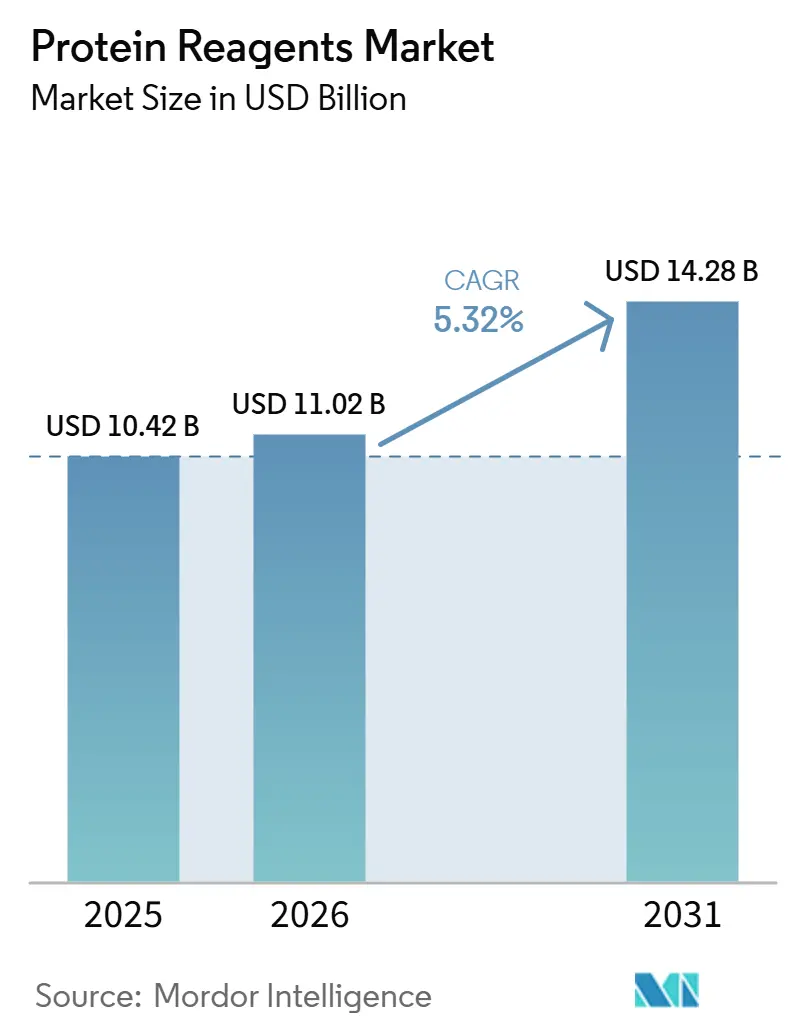
The Protein Reagents Market size was valued at USD 10.42 billion in 2025 and is estimated to grow from USD 11.02 billion in 2026 to reach USD 14.28 billion by 2031, at a CAGR of 5.32% during the forecast period (2026-2031). The protein reagents market is supported by steady biopharmaceutical research activity, a larger clinical base for advanced therapies, and the rising use of higher-specification reagents in proteomics workflows that demand greater batch consistency and cleaner analytical inputs. The market is also benefiting from a clear link between new analytical platforms and reagent demand, as more sensitive instruments increase the need for validated labeling, digestion, enrichment, and sample preparation inputs across routine research settings. Competitive behavior in the market is becoming more platform-led, with large suppliers using acquisitions, software tie-ins, and broader service networks to retain customers across instruments, consumables, and regulated workflows. The market continues to face cost and compliance pressures, as regulated applications favor audited suppliers and keep switching costs high, even when buyers attempt to manage budgets more tightly. These dynamics position the protein reagents market on a stable, medium-term growth path, with value shifting toward high-purity, application-validated, and manufacturing-grade products rather than relying solely on volume expansion.
Key Report Takeaways
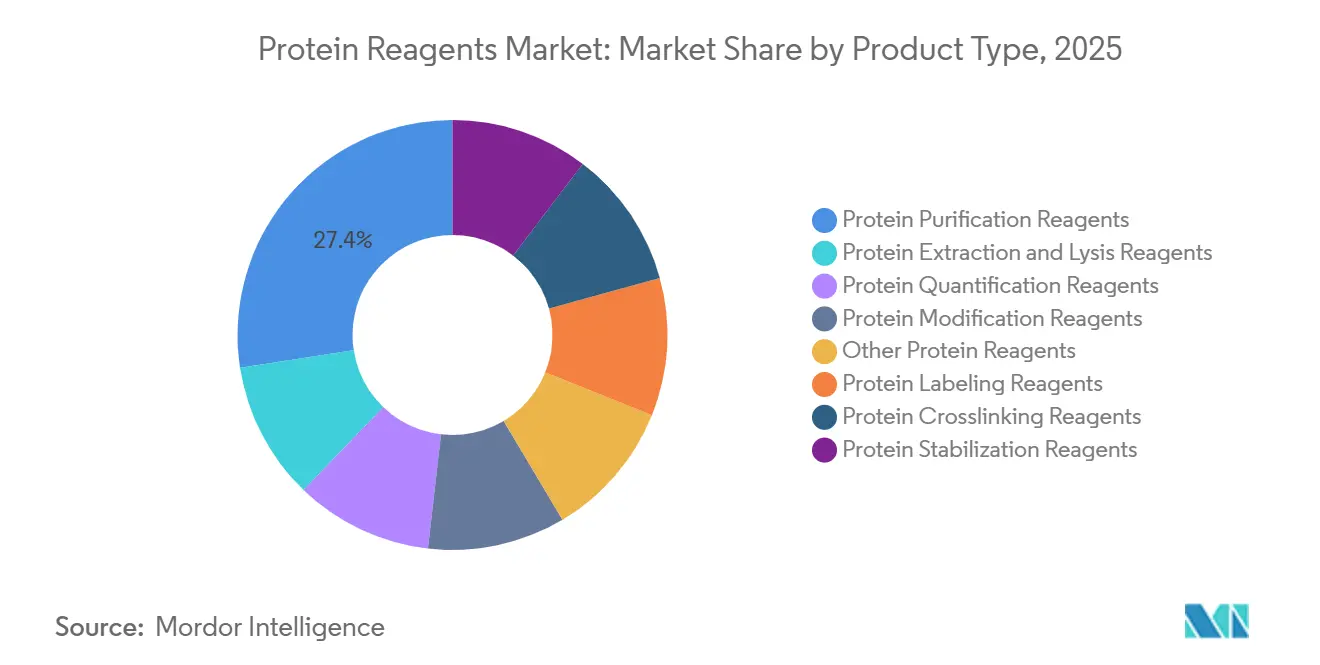
- By product type, protein purification reagents accounted for 27.44% of the protein reagents market in 2025, while protein labeling reagents are projected to grow at a 6.44% CAGR through 2031.
- By technology, chromatography-based reagents accounted for 30.31% of the protein reagents market share in 2025, while mass spectrometry reagents are expected to expand at 6.84% CAGR through 2031.
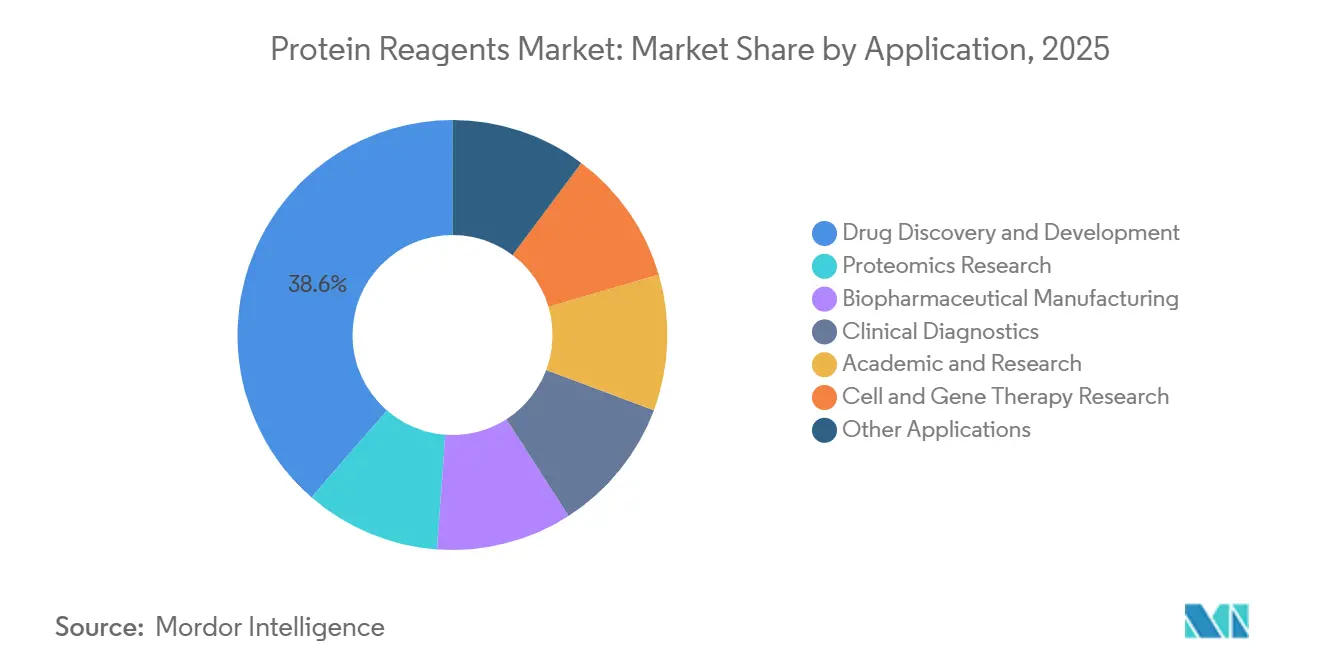
- By application, drug discovery and development accounted for 38.62% of the protein reagents market in 2025, while cell and gene therapy research is forecast to grow at a 7.32% CAGR through 2031.
- By geography, North America held 44.73% of the protein reagents market share in 2025, while Asia-Pacific is projected to record the fastest regional growth at 6.35% CAGR through 2031.
Note: Market size and forecast figures in this report are generated using Mordor Intelligence’s proprietary estimation framework, updated with the latest available data and insights as of January 2026.
Market Trends and Insights
Drivers Impact Analysis of Protein Reagents Market*
| Drivers | (~) % Impact on CAGR Forecast | Geographic Relevance | Impact Timeline |
|---|---|---|---|
| Rising Investments in Biopharmaceutical R&D | +1.2% | Global, concentrated in North America and Europe | Medium term (2-4 years) |
| Growing Biopharmaceutical Pipeline and Manufacturing Capacity | +1.0% | Global, accelerating across Asia-Pacific Contract Development and Manufacturing Organizations (CDMOs) | Long term (≥ 4 years) |
| Increasing Demand for Proteomics-Driven Research Tools | +0.9% | North America, Europe, and emerging across the Asia-Pacific core markets | Medium term (2-4 years) |
| Expansion of Cell and Gene Therapy Clinical Programs | +1.2% | Global, with strong momentum across Asia-Pacific | Long term (≥ 4 years) |
| Growing Use of Protein Reagents in Clinical Diagnostics | +0.7% | North America, Europe, East Asia | Short term (≤ 2 years) |
| Source: Mordor Intelligence | |||
Rising Investments in Biopharmaceutical R&D
Steady research spending by large pharmaceutical and biotechnology companies continues to provide the protein reagents market with a dependable demand base across discovery, characterization, and process development activities. Reagent consumption does not stop at early screening; it continues through protein expression work, assay development, comparability studies, and analytical confirmation as programs advance. The protein reagents market also benefits when biologics pipelines become more complex, as those programs require repeated protein handling, deeper characterization, and stricter documentation across longer development cycles. This pattern extends reagent use per active program and helps reduce the effect of short-term funding changes on total demand. It also supports suppliers with validated catalogs, as research teams prefer continuity in assay conditions once a workflow is established. The protein reagents market draws strength not only from the number of programs in development but also from the rising technical intensity of each program.
Growing Biopharmaceutical Pipeline and Manufacturing Capacity
The shift from clinical research to commercial-scale biologics production continues to expand the operational role of the protein reagents market across purification, stabilization, formulation, and release-support workflows. FUJIFILM Wako Pure Chemical tripled Good Manufacturing Practice (GMP)-compliant raw material production capacity at its Osaka facility in May 2024, directly linking added capacity to growth in antibody and gene therapeutic production needs[1]FUJIFILM Wako Pure Chemical Corporation, “FUJIFILM Wako Pure Chemical Corporation Installs New Equipment to Triple Production Capacity of GMP-Compliant Raw Materials for Pharmaceutical Manufacturing,” FUJIFILM, fujifilm.com. The protein reagents market benefits from this kind of capacity expansion because commercial manufacturing requires recurring lots, validated performance, and stronger process reproducibility than early research settings typically demand. As more biologics plants move from pilot batches to sustained output, catalog-grade and manufacturing-grade reagents gain greater value over small custom runs with longer delivery schedules. This favors suppliers that can provide ready documentation, established lot history, and dependable distribution across multiple production sites. Over time, this makes the protein reagents market more closely tied to industrial biologics execution, rather than only to upstream research budgets.
Increasing Demand for Proteomics-Driven Research Tools
Long-duration public and institutional funding continues to support the protein reagents market through multi-year procurement of labeling, enrichment, digestion, and sample preparation inputs. The US National Institute on Aging awarded USD 1.6 million in August 2024 for ultrahigh-sensitivity mass spectrometry methods, with the award running through April 2028. The Molecular Transducers of Physical Activity Consortium (MoTrPAC) Proteomics Center received USD 17 million through May 2027, and the Mayo Clinic Center for Clinical Proteomics secured USD 5.4 million through May 2027 for proteome-focused research programs that require continuous reagent use across their funded periods. The protein reagents market also benefits from single-cell and spatial proteomics methods, as those workflows increase per-sample complexity and the need for highly specific input materials. Higher analytical resolution increases the cost of failure from poor reagent quality, so buyers place greater value on reproducibility and supporting documentation. This trend strengthens the protein reagents market in both academic centers and translational research settings, where proteome depth now plays a larger role in study design.
Expansion of Cell and Gene Therapy Clinical Programs
Cell and gene therapy remains one of the strongest demand channels for the protein reagents market, particularly for cytokines, growth factors, assay controls, and manufacturing-support inputs. The global landscape included 1,888 open gene therapy clinical trials and more than 812 non-genetically modified cell therapy clinical trials at the end of 2025, reflecting the breadth of the active development base. At least 13 submissions were planned across US and EU regulatory authorities in 2026, and 6 regulatory decisions were pending in the US, indicating a market moving deeper into late-stage review and commercialization requirements. The protein reagents market benefits because late-stage and commercial cell and gene therapy (CGT) programs require more standardized materials, stronger documentation, and tighter control of manufacturing variability than exploratory work. The expansion of CAR-T delivery into outpatient settings indicates that approved therapies are becoming more operationally scalable, supporting recurring consumption across each patient treatment pathway. As a result, the protein reagents market is seeing value growth from CGT programs even before all pipeline assets reach full commercial scale.
Restraints Impact Analysis of Protein Reagents Market*
| Restraints | (~) % Impact on CAGR Forecast | Geographic Relevance | Impact Timeline |
|---|---|---|---|
| High Cost of Specialty and Good Manufacturing Practice (GMP)-Grade Protein Reagents | -0.5% | Global, most acute in emerging markets and small to mid-cap biotech | Medium term (2-4 years) |
| Stringent Quality and Regulatory Compliance Requirements | -0.4% | North America, Europe, and expanding across the Asia-Pacific | Long term (≥ 4 years) |
| Limited Stability and Cold-Chain Storage Challenges | -0.3% | Emerging markets, tropical regions, Rest of the World | Short term (≤ 2 years) |
| Source: Mordor Intelligence | |||
High Cost of Specialty Protein Reagents
The protein reagents market is constrained by the high cost of specialty and manufacturing-grade materials, limiting adoption in smaller laboratories and price-sensitive geographies. A 2025 international workshop on biological testing reagents identified high costs, import complexity, and a limited pool of qualified suppliers as core barriers, particularly for lower-income settings that face logistical pressures and funding constraints[2]Ivana Knezevic et al., “Global Availability of Critical Reagents for Biologicals Testing, Current Status, Challenges and Possible Solutions,” Biologicals, doi.org . When laboratories operate within fixed grant budgets or venture-backed spending plans, higher reagent prices force tradeoffs between reagent quality, assay breadth, and total experiment volume. This does not remove demand from the protein reagents market, but it slows the adoption of premium formats in regions where infrastructure is still developing. The effect is most pronounced where buyers depend on imported products and have limited flexibility in stocking temperature-sensitive materials. Cost pressure may widen the gap between well-funded institutions that can standardize high-specification products and smaller buyers that remain selective in their usage.
Stringent Quality and Regulatory Compliance Requirements
The protein reagents market is also constrained by the cost and operational burden of maintaining quality systems that meet regulatory requirements for biologics and diagnostic workflows. Suppliers serving these applications must invest in validation, traceability, batch reproducibility, and documentation practices that are considerably more demanding than those required by research-use-only supply models. Once a customer qualifies a reagent for a regulated process, switching becomes difficult because replacement materials can trigger additional comparability work, method checks, and internal quality reviews. This protects established suppliers in the protein reagents market but also reduces buyers' flexibility to lower procurement costs. Smaller specialist providers often have strong scientific depth, yet many cannot scale compliance infrastructure at the same rate as larger global platforms. This keeps the protein reagents market tilted toward audited incumbents in the most valuable regulated applications.
*Our forecasts treat driver/restraint impacts as directional, not additive. The impact forecasts reflect baseline growth, mix effects, and variable interactions.
Protein Reagents Market Segment Analysis
By Product Type:
Purification Leads; Labeling Reagents AccelerateProtein Purification Reagents held the largest share at 27.44% in 2025, reflecting their central role in biologics production and protein isolation workflows. Their large installed base reflects routine use from early harvest steps through chromatographic processing and final preparation, making the category difficult to displace quickly. The market continues to favor purification products because many laboratories and manufacturing teams operate with established protocols that depend on consistent resin performance, buffer systems, and validated process chemistry. This creates switching friction, since even a modest process change can require repeat optimization across several downstream steps. Extraction, quantification, and modification products remain important supporting categories, yet they typically follow the broader installed workflow rather than defining it. As a result, the position of purification reagents remains linked to workflow centrality, repeat use, and the cost of protocol disruption.
Protein Labeling Reagents are forecast to grow at a 6.44% CAGR through 2031, making them the fastest-growing product group in the market as protein interaction studies, conjugation workflows, and multiplex discovery tools become more common. Demand is shifting toward site-specific and application-validated labeling formats, as buyers increasingly require tighter signal quality and lower background variation in advanced assays. This has practical importance for antibody-drug conjugate work, proximity-based assays, and live-cell studies where generic dye attachment methods often do not provide sufficient control. Protein Crosslinking Reagents are also gaining relevance in structural proteomics and interactome mapping, where researchers need stable methods to capture protein relationships before mass spectrometric analysis. Protein Quantification Reagents continue to see recurring use in automated screening environments, where consistent compatibility with plate-reader workflows and interference tolerance remain important. Protein Stabilization Reagents serve a growing niche in therapy formulation and cold-chain handling, representing another path toward higher-value, application-specific product demand.



By Technology:
Chromatography Leads, Mass Spectrometry Closes the GapChromatography-Based Reagents accounted for 30.31% of the technology segment in 2025, reflecting their continued strength across purification, separation, and analytical characterization. Affinity, ion-exchange, and size-exclusion methods remain deeply embedded in protein science and biologics manufacturing, keeping chromatography consumables central to routine operations. The market relies heavily on these workflows because they are well understood, scalable, and compatible with established process documentation in regulated settings. Electrophoresis Reagents and Immunoassay Reagents continue to serve broad installed workflows, particularly in routine protein analysis and Enzyme-Linked Immunosorbent Assay (ELISA)-based measurement, where replacement cycles remain steady. Fluorescence-based reagents are also increasingly used in imaging and multi-parameter cellular analysis, driving demand for more specific labeling systems. The strength of chromatography in the market lies in its broad operational role across both research and manufacturing environments.
Mass Spectrometry Reagents are projected to grow at a 6.84% CAGR through 2031, making them the fastest-growing technology group in the market as platform sensitivity and throughput continue to improve. Thermo Fisher Scientific introduced the Orbitrap Tribrid Apex at the American Society for Mass Spectrometry (ASMS) 2026, offering greater sensitivity than the prior generation, and highlighted the Orbitrap Excedion platform for deeper biopharma characterization in complex matrices. Bruker reported that its timsUltra AIP can identify and quantify more than 10,000 proteins per sample and support a throughput of 500 samples per day, underscoring the need for standardized digestion enzymes, isotopic standards, and sample preparation chemistry. A 2026 Nature Methods publication showed that integrating deep learning can improve fragmentation use in Liquid Chromatography-Mass Spectrometry (LC-MS) workflows and extend proteome coverage, further increasing the value of well-characterized reagent systems. These developments indicate that market growth is no longer driven solely by instrument replacement, as each gain in analytical depth expands the practical value of premium reagents, resulting in a closer connection between mass spectrometry performance gains and recurring consumables demand.
By Application:
Drug Discovery Anchors the Market, CGT Research AcceleratesDrug Discovery and Development accounted for 38.62% of total demand in 2025, making it the largest application in the market, as it draws on reagents across target identification, hit validation, and preclinical profiling. This share reflects the breadth of protein-dependent assays used throughout screening and early translational programs, where repeat testing and protocol continuity support stable purchasing patterns. The market remains especially concentrated in this application in North America and Europe, where dense pharmaceutical and biotechnology activity sustains large installed research workflows. Proteomics Research and Biopharmaceutical Manufacturing are major application areas, with the latter driving demand for scale-up, process consistency, and characterization needs tied to commercial biologics output. Academic and research use also remains important, particularly where multi-year government-supported proteomics programs create steady procurement cycles rather than one-time purchases. Together, these factors make discovery-led demand the primary anchor for the market, even as value growth shifts toward more specialized use cases.
Cell and Gene Therapy (CGT) Research is forecast to expand at a 7.32% CAGR through 2031, making it the fastest-growing application in the market as advanced therapy pipelines move toward larger late-stage and commercial requirements. The active trial base exceeded 2,700 across gene and cell therapy modalities at the end of 2025, reflecting the scale of the development pool. CGT workflows use specialized cytokines, growth factors, cell culture supplements, and protein characterization tools that must often meet stricter quality requirements than standard research products. Promega launched the TarSeer BRETSA Target Engagement System in February 2026, providing discovery teams with a live-cell assay approach for protein interaction validation that addresses the need for more physiologically relevant data earlier in development. Clinical Diagnostics is also emerging as a stronger outlet for the market, as multiplex oncology and biomarker panels depend on highly specific reagents with consistent lot performance. This combination of CGT expansion and diagnostic requirements is shifting the market toward higher-value application profiles rather than broader, lower-specification volume.
Geography Analysis
North America Protein Reagents Market
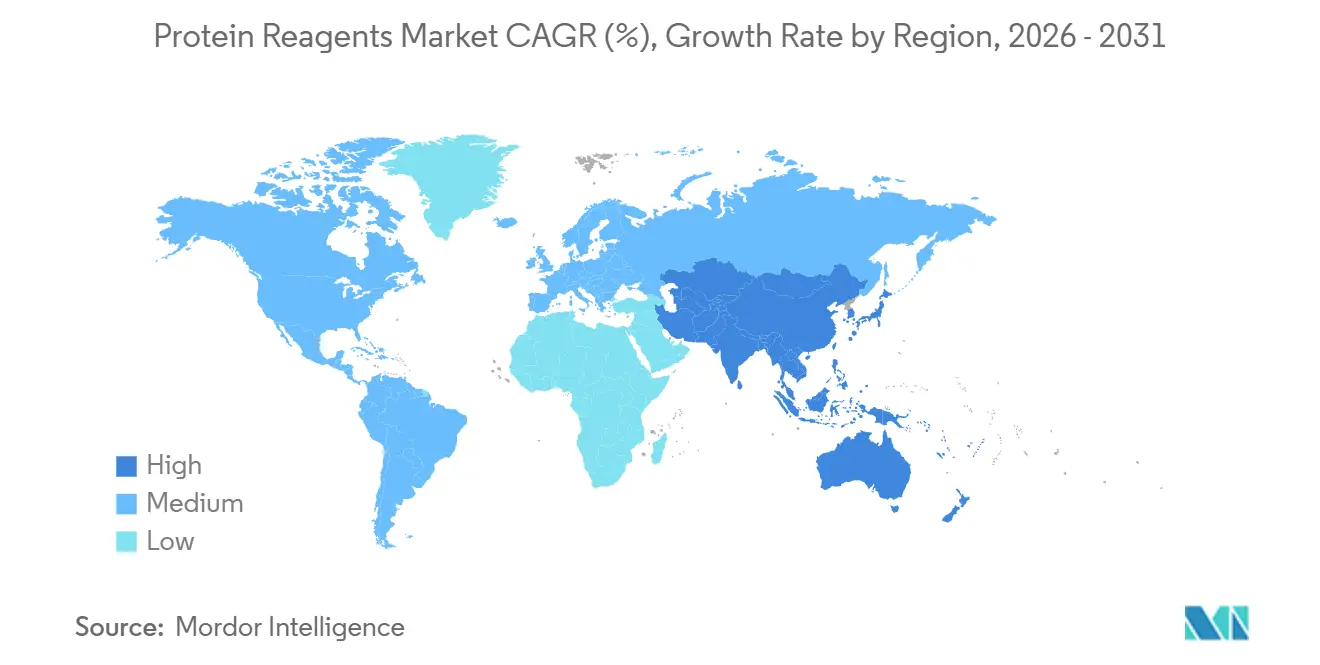
North America held 44.73% of the protein reagents market in 2025, making it the largest region. The region has dense pharmaceutical research capacity and extensive academic and hospital proteomics infrastructure. The United States is the primary demand center, supported by multi-year federal awards that sustain reagent procurement across translational, cancer, aging, and exercise proteomics programs. The region also benefits from a broad base of commercial biologics and advanced therapy activity, which drives regular demand for Good Manufacturing Practice (GMP)-oriented and analytical protein products. Canada contributes to regional depth through biotechnology clusters that use distributed global catalogs for genomics and therapy-related work. North America is the most established geography in the protein reagents market, with strength derived from both discovery activity and industrial execution.
APAC Protein Reagents Market
Asia-Pacific is the fastest-growing region in the protein reagents market and is projected to expand at a CAGR of 6.35% through 2031. Growth is driven by the institutionalization of domestic research systems, the development of contract development capacity, and therapy manufacturing programs across several countries. The Cell and Gene Therapy (CGT) program expansion further supports the market, as a larger clinical and manufacturing footprint increases demand for culture supplements, cytokines, purification inputs, and protein analytics. South Korea contributes to high-purity reagent demand, driven by its expanding biosimilar and antibody-drug conjugate manufacturing base. China and India contribute through broader biotechnology policy support and a larger installed research base, creating a more diversified set of end users compared to several years earlier. Validated availability and regional service depth remain uneven across countries, leaving room for further local supply development.
Europe Protein Reagents Market
Europe is the third-largest regional segment in the protein reagents market, with Germany, the United Kingdom, and France as the primary demand centers. The region benefits from multi-omics and proteomics research programs, while regulated clinical and manufacturing environments support the use of validated and lot-controlled products. Stricter compliance requirements in diagnostics and biologics support premium positioning for suppliers that maintain quality documentation at scale. Rest of the World markets remain smaller due to import costs, cold-chain requirements, and a limited local supplier base, which restricts broader adoption, particularly for temperature-sensitive or regulated materials. International workshop findings have highlighted the importance of regional distribution and supply coordination for biological testing reagents in lower-access settings. Growth outside the major regions is expected to continue, but from a lower base than in North America, Asia-Pacific, or Europe.

Competitive Landscape
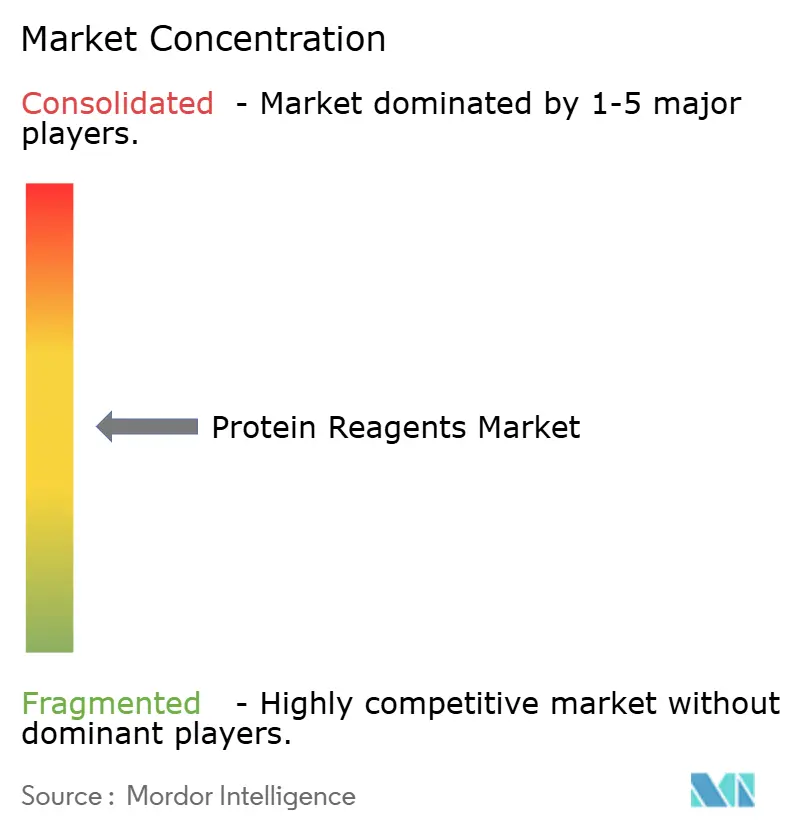
The protein reagents market is moderately fragmented, with large life science platform companies controlling the broadest product catalogs, distribution networks, and regulated workflow access. Thermo Fisher Scientific, Merck KGaA, Danaher through Abcam, Bio-Rad Laboratories, and Agilent Technologies hold an advantage because they can serve customers across research tools, process support, and quality-sensitive applications from the same commercial base. This structure creates a clear scale effect, as broad catalogs and service infrastructure reduce friction for customers who prefer fewer vendors across connected workflows. Smaller participants typically compete through target depth, antibody validation quality, or niche application focus rather than by matching full portfolio breadth. As a result, winning mainstream volume without platform scale is difficult, but specialized demand remains accessible to focused suppliers with strong scientific positioning.
A defining strategic development in the protein reagents market came in June 2026, when Merck KGaA agreed to acquire Bio-Techne for USD 11.3 billion, adding recombinant proteins, cytokines, immunoassay kits, ProteinSimple systems, and RNAscope capabilities to its life science platform. Thermo Fisher Scientific pursued a different path by combining instrument launches with AI-linked laboratory and data capabilities, including a strategic collaboration with NVIDIA and the rollout of next-generation Orbitrap platforms at ASMS 2026. Abcam joined the Innovative Health Initiative LIGAND-AI project in January 2026, demonstrating how suppliers are linking reagent portfolios to computational drug discovery ecosystems. These moves indicate that companies are not competing solely on unit pricing but are building broader workflow control through adjacent technologies and regulated-service capabilities. This approach supports customer retention by tying reagent selection to instrument compatibility, assay design, and software-supported interpretation.
Specialist suppliers retain a presence in the protein reagents market among customers who require deeply characterized proteins and antibodies for narrower biological questions or for emerging assay formats. Companies such as Proteintech Group, Rockland Immunochemicals, and Vector Laboratories remain relevant because curated target portfolios and strong validation histories matter in workflows that large general catalogs do not always prioritize. In June 2026, 10x Genomics acquired Proteintech Genomics, bringing a large antibody-based single-cell protein panel into a sequencing platform environment and highlighting the strategic value of differentiated reagent intellectual property. Compliance also functions as a structural filter, as GMP expectations, laboratory accreditation standards, and documentation requirements can narrow the supplier pool in advanced therapy and diagnostic channels. This dynamic supports incumbent strength in the protein reagents market while leaving selective growth opportunities for specialists that can demonstrate scientific depth and quality reliability. Overall, the market rewards both scale and specialization, though entry barriers are higher where customers require validated performance tied to regulated outcomes.
Protein Reagents Industry Leaders
Thermo Fisher Scientific Inc.
Merck KGaA
Bio-Rad Laboratories, Inc.
Danaher Corporation
Agilent Technologies, Inc.
- *Disclaimer: Major Players sorted in no particular order
Protein Reagents Market Companies Covered in this Report
- Abcam Limited
- Agilent Technologies, Inc.
- Bio-Rad Laboratories, Inc.
- Bio-Techne Corporation
- Danaher Corporation
- FUJIFILM Wako Pure Chemical Corporation
- LGC Biosearch Technologies
- Merck KGaA
- PerkinElmer
- Promega Corporation
- Proteintech Group
- Rockland Immunochemicals
- Takara Bio Inc.
- Thermo Fisher Scientific Inc.
- Vector Laboratories

Recent Industry Developments in Protein Reagents Market
- July 2026: MilliporeSigma opened a EUR 25 million (USD 28.59 million) BioReliance testing facility at Merck KGaA's global headquarters in Darmstadt, Germany. The 2,000-square-meter facility supports drug-substance and drug-product release testing and GMP-compliant stability studies for monoclonal antibodies and cell therapies. Its proximity to clinical trial hubs in Germany, France, Spain, the Netherlands, Belgium, and Italy is intended to reduce biologics release testing timelines for European biopharma customers.
- June 2026: Merck KGaA agreed to acquire Bio-Techne Corporation for USD 11.3 billion, a 36% premium to Bio-Techne's one-month volume-weighted average trading price. The acquisition, Merck's largest in over a decade, adds Bio-Techne's recombinant protein, cytokine, antibody, and immunoassay kit portfolio, the ProteinSimple automated protein detection platform, and RNAscope spatial biology technology.


Global Protein Reagents Market Report Scope
Protein reagents are specialized chemical substances used in laboratories to detect, quantify, modify, or analyze proteins. They serve as essential tools in biotechnology, biochemistry, and medicine for understanding cellular processes, purifying biomolecules, and diagnosing diseases.
The protein reagents market is segmented by product type, technology, application, and geography. By product type, the market is segmented into protein labeling reagents, protein purification reagents, protein crosslinking reagents, protein stabilization reagents, protein extraction and lysis reagents, protein quantification reagents, protein modification reagents, and other protein reagents. By technology, the market is segmented into chromatography-based reagents, electrophoresis reagents, immunoassay reagents, mass spectrometry reagents, fluorescence-based reagents, and other technologies. By application, the market is segmented into proteomics research, drug discovery and development, biopharmaceutical manufacturing, clinical diagnostics, academic and research, cell and gene therapy research, and other applications. The report also covers market size and forecasts for protein reagents across 11 countries in major regions. The market sizes and forecasts are provided in terms of value (USD).
| Protein Labeling Reagents |
| Protein Purification Reagents |
| Protein Crosslinking Reagents |
| Protein Stabilization Reagents |
| Protein Extraction and Lysis Reagents |
| Protein Quantification Reagents |
| Protein Modification Reagents |
| Other Protein Reagents |
| Chromatography-Based Reagents |
| Electrophoresis Reagents |
| Immunoassay Reagents |
| Mass Spectrometry Reagents |
| Fluorescence-Based Reagents |
| Other Technologies |
| Proteomics Research |
| Drug Discovery and Development |
| Biopharmaceutical Manufacturing |
| Clinical Diagnostics |
| Academic and Research |
| Cell and Gene Therapy Research |
| Other Applications |
| Asia-Pacific | China |
| India | |
| Japan | |
| South Korea | |
| Rest of Asia-Pacific | |
| North America | United States |
| Canada | |
| Europe | Germany |
| United Kingdom | |
| France | |
| Italy | |
| Russia | |
| Rest of Europe | |
| Rest of the World | South America |
| Middle-East and Africa |
| By Product Type | Protein Labeling Reagents | |
| Protein Purification Reagents | ||
| Protein Crosslinking Reagents | ||
| Protein Stabilization Reagents | ||
| Protein Extraction and Lysis Reagents | ||
| Protein Quantification Reagents | ||
| Protein Modification Reagents | ||
| Other Protein Reagents | ||
| By Technology | Chromatography-Based Reagents | |
| Electrophoresis Reagents | ||
| Immunoassay Reagents | ||
| Mass Spectrometry Reagents | ||
| Fluorescence-Based Reagents | ||
| Other Technologies | ||
| By Application | Proteomics Research | |
| Drug Discovery and Development | ||
| Biopharmaceutical Manufacturing | ||
| Clinical Diagnostics | ||
| Academic and Research | ||
| Cell and Gene Therapy Research | ||
| Other Applications | ||
| By Geography | Asia-Pacific | China |
| India | ||
| Japan | ||
| South Korea | ||
| Rest of Asia-Pacific | ||
| North America | United States | |
| Canada | ||
| Europe | Germany | |
| United Kingdom | ||
| France | ||
| Italy | ||
| Russia | ||
| Rest of Europe | ||
| Rest of the World | South America | |
| Middle-East and Africa | ||


Key Questions Answered in the Report
What is current market size of Protein Reagents Market?
The Protein Reagents Market size was valued at USD 10.42 billion in 2025 and is estimated to grow from USD 11.02 billion in 2026 to reach USD 14.28 billion by 2031, at a CAGR of 5.32% during the forecast period (2026-2031).
Which application area leads to the current demand for protein reagents?
Drug Discovery and Development led demand with a 38.62% share in 2025, as it uses reagents across target identification, hit validation, and preclinical profiling.
Which technology is growing fastest in protein reagents?
Mass Spectrometry Reagents are projected to grow at the fastest 6.84% CAGR through 2031 as analytical sensitivity and throughput continue to improve.
Why is cell and gene therapy important for protein reagent suppliers?
CGT Research is projected to grow at a 7.32% CAGR through 2031, and the active pipeline exceeded 2,700 trials at the end of 2025, supporting demand for cytokines, growth factors, and analytical tools.
Page last updated on:





