
Protein Microarray Market Size and Share
Market Overview
| Study Period | 2020 - 2031 |
|---|---|
| Market Size (2026) | USD 1.64 Billion |
| Market Size (2031) | USD 2.36 Billion |
| Growth Rate (2026 - 2031) | 7.54 % |
| Fastest Growing Market | Asia-Pacific |
| Largest Market | North America |
| Market Concentration | Medium |
Major Players *Disclaimer: Major Players sorted in no particular order Image © Mordor Intelligence. Reuse requires attribution under CC BY 4.0. | |
Protein Microarray Market Analysis by Mordor Intelligence
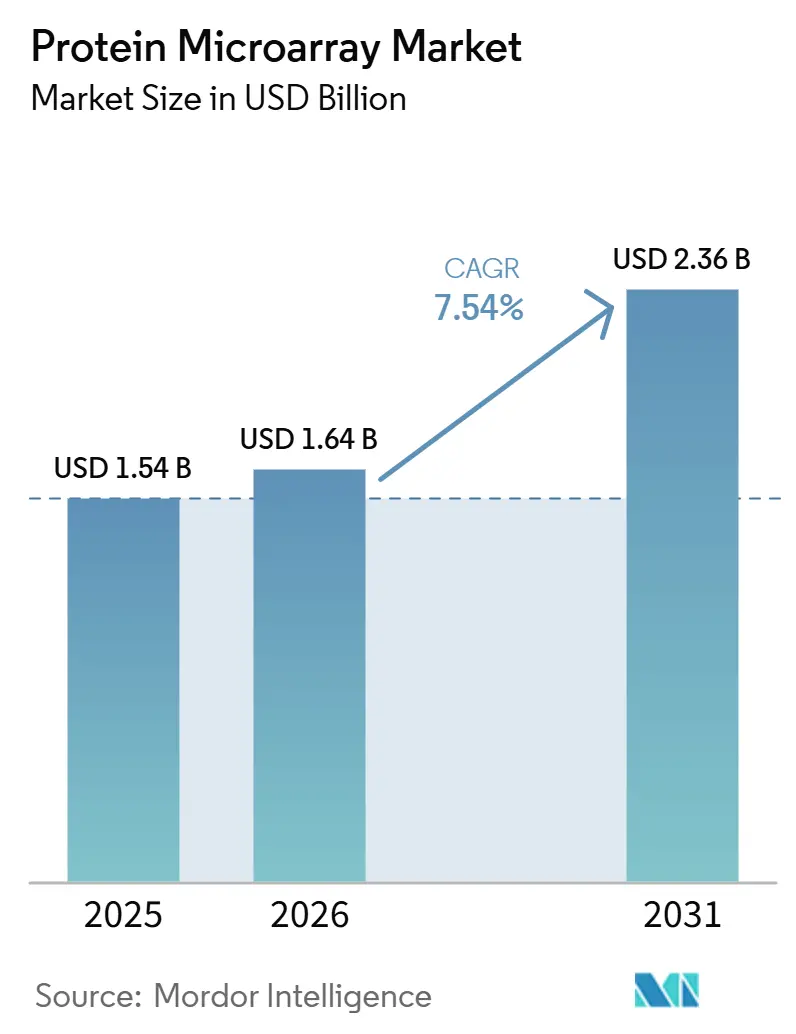
The Protein Microarray Market size is projected to expand from USD 1.54 billion in 2025 and USD 1.64 billion in 2026 to USD 2.36 billion by 2031, registering a CAGR of 7.54% between 2026 to 2031.
The protein microarray market is moving deeper into core research and clinical workflows because protein-level analysis now supports biomarker discovery, clinical validation, and companion diagnostic development in a more direct way than before. Demand is rising as laboratories and biopharmaceutical teams continue to favor multiplexed profiling that can screen many protein interactions in a single assay, which improves throughput and shortens the path from early findings to validation. The current expansion of the protein microarray market is also tied to workflow integration, because protein arrays are increasingly being used to connect genomic information with downstream clinical interpretation rather than serving as isolated tools. Competitive activity is shifting toward broader platform coverage, where suppliers aim to combine reagents, chips, instruments, and analysis support into one workflow so that customers face fewer handoff points and less operational friction. Near-term adoption still faces pressure from reproducibility gaps, reimbursement limits, and the need for trained operators, yet those same constraints are supporting stronger demand for outsourced and managed-service models across the protein microarray market.
Key Report Takeaways
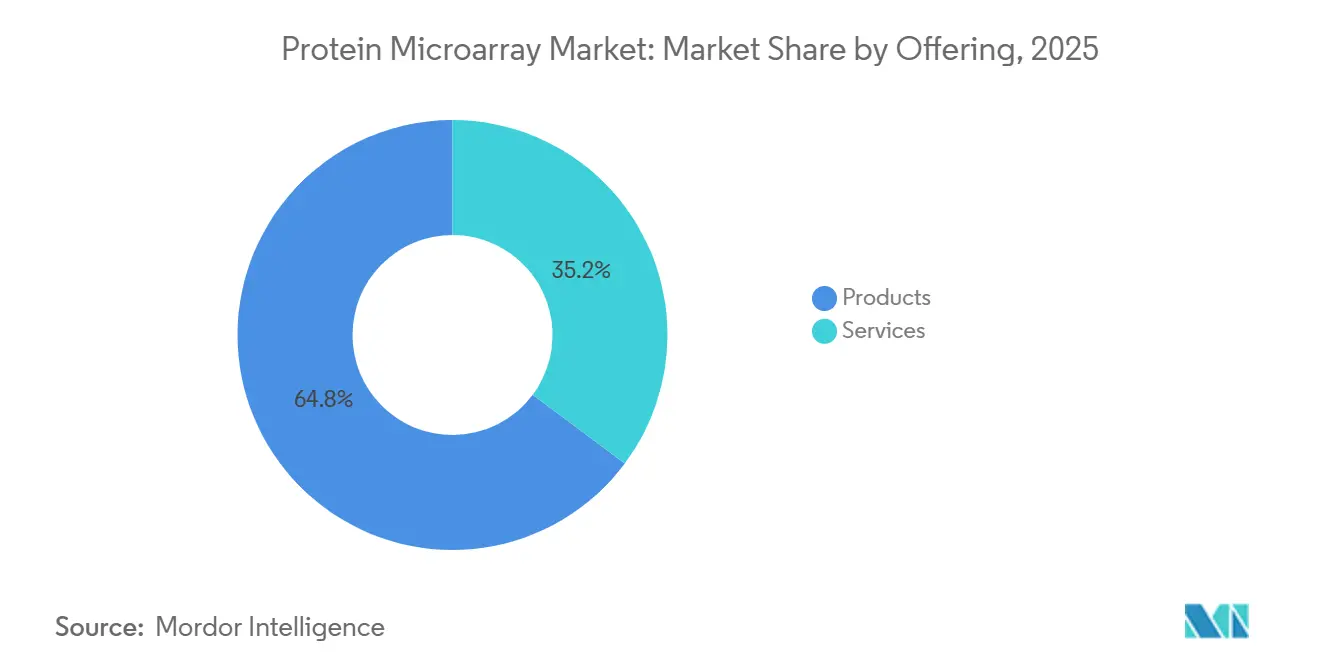
- By offering, products held 64.78% revenue share in 2025, while services are projected to grow at an 8.53% CAGR through 2031.
- By type, biochips accounted for 57.32% of revenue in 2025 and are also forecast to expand at an 8.07% CAGR through 2031.
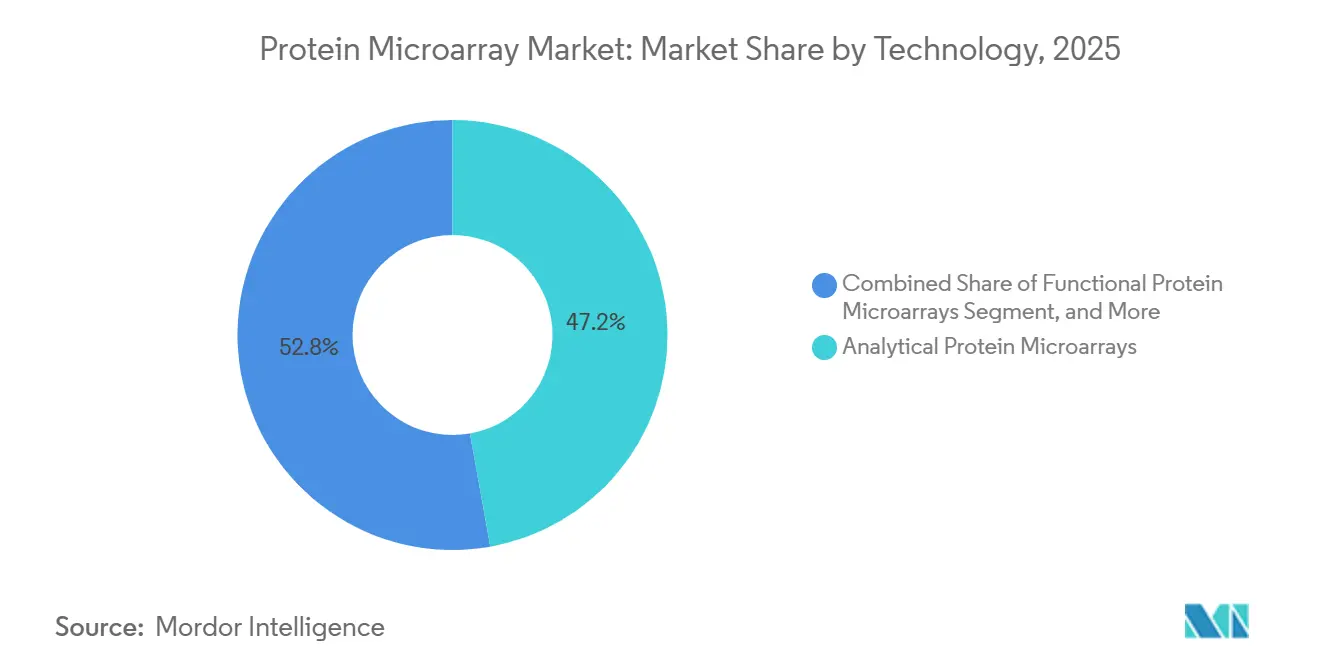
- By technology, analytical protein microarrays led with 47.16% share in 2025, while functional protein microarrays are projected to grow at a 9.03% CAGR through 2031.
- By application, clinical diagnostics captured 34.63% of revenue in 2025, while proteomics research is forecast to advance at an 8.28% CAGR through 2031.
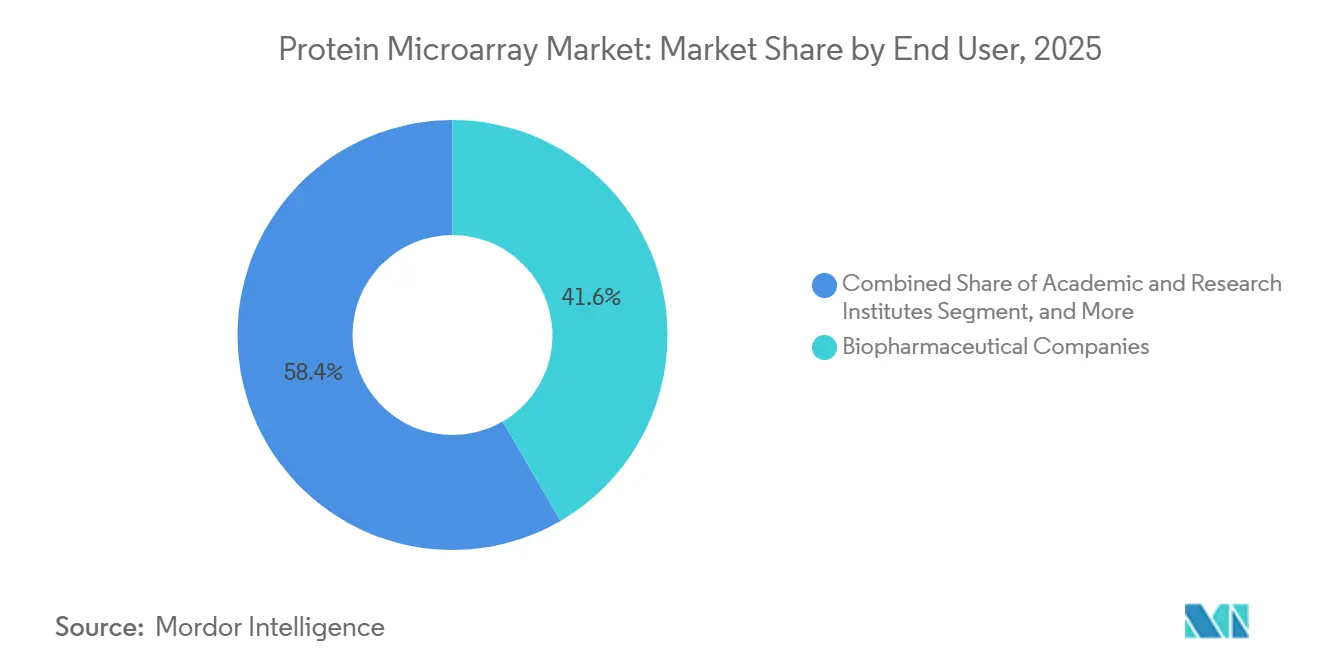
- By end user, biopharmaceutical companies held 41.63% share in 2025, while academic and research institutes are projected to grow at an 8.41% CAGR through 2031.
- By geography, North America held 44.61% of the protein microarray market share in 2025, while Asia-Pacific recorded the highest projected CAGR at 9.26% through 2031.
Note: Market size and forecast figures in this report are generated using Mordor Intelligence’s proprietary estimation framework, updated with the latest available data and insights as of January 2026.
Market Trends and Insights
Drivers Impact Analysis of Protein Microarray Market*
| Driver | (~) % Impact on CAGR Forecast | Geographic Relevance | Impact Timeline |
|---|---|---|---|
| Expanding Multiplex Biomarker Discovery Workflows | +2.1% | Global, with concentration in North America and Western Europe | Medium term (2-4 years) |
| Rising Use in Precision Oncology and Immune Profiling | +1.8% | North America and Europe, with growing spillover to Asia-Pacific | Medium term (2-4 years) |
| Higher Adoption in Translational Research and Clinical Validation | +1.2% | North America, Europe, Asia-Pacific including China, Japan, and South Korea | Long term (≥ 4 years) |
| Growing Integration with Automated Sample Processing and AI Analytics | +1.4% | Global, with early adoption concentrated in the United States and China | Short term (≤ 2 years) |
| Reproducibility Pressure from Clinical Labs for Standardized Protein Assays | +0.7% | North America and Europe | Medium term (2-4 years) |
| Customizable Array Design for Rare-Disease and Autoantibody Panels | +0.6% | North America, Europe, with niche gains in Middle East and Africa and South America | Long term (≥ 4 years) |
| Source: Mordor Intelligence | |||
Expanding Multiplex Biomarker Discovery Workflows
The protein microarray market is benefiting from a shift away from single-analyte testing toward multiplex panel formats that allow many targets to be assessed within one workflow. AliveDx submitted an FDA 510(k) application in April 2025 for its MosaiQ AiPlex CTDplus multiplex microarray, and the panel was designed to detect 15 autoantibody markers while processing 1,275 disease markers per hour, which shows how syndromic testing is moving into regulated settings. This shift matters because it reduces the need for sequential testing in autoimmune and other complex diseases, and that can shorten diagnostic pathways that were previously slow and repetitive. A 2025 study in Frontiers in Microbiology showed that a 49-antibody multiplex protein microarray delivered stronger cross-reactivity discrimination than conventional ELISA in carbapenemase resistance testing, which supports the value of multiplex protein screening in clinically sensitive settings.[1]“High-Throughput Screening of Monoclonal Antibodies Against Carbapenemases Using a Multiplex Protein Microarray Platform,” frontiersin.org As these workflows spread, the protein microarray market is becoming more relevant in settings that need high sample throughput and better differentiation across closely related protein targets. Regulatory pathways such as European IVDR and FDA 510(k) are also shaping commercial panel design, because vendors now need scalable formats that can support both assay breadth and repeatable validation.
Rising Use in Precision Oncology and Immune Profiling
The protein microarray market is gaining support from precision oncology programs that need a bridge between genomic findings and protein-level disease behavior. Illumina launched Protein Prep in September 2025, and the assay was designed to detect 9,500 unique human proteins using SOMAmer technology on standard NGS platforms, which shows that proteomic readouts are being folded into broader multiomics programs rather than treated as stand-alone experiments.[2]Illumina, Inc., “Illumina Protein Prep Launches to Drive Greater Proteomic Insights for Improved Drug Discovery and Development,” investor.illumina.com By November 2025, more than 40 customers across 16 global sites had processed over 40,000 samples with Protein Prep in cancer, cardiometabolic, and immune-related applications, which points to scaling demand from both research organizations and large biobank settings. A 2025 study in Clinical and Experimental Medicine linked microarray-based autoantibody profiling to the prediction of immune checkpoint inhibitor toxicity and identified 9 autoantibody signatures associated with immune-related adverse events, which extends the relevance of these arrays into immunotherapy decision support.[3]“Autoantibody Profiling Using Microarray Identifies Biomarkers Associated with Chemoimmunotherapy Efficacy and Immune-Related Adverse Events in Lung Cancer Patients,” springer.com This is moving the protein microarray market closer to companion diagnostic development, where commercial value rises when protein profiling supports treatment selection or toxicity screening. It also means suppliers with stronger clinical validation pathways may gain more share than vendors focused only on exploratory discovery work.
Growing Integration with Automated Sample Processing and AI Analytics
The protein microarray market is also being supported by better automation and AI-linked analysis that reduces manual variability and improves throughput. GenScript reported in March 2026 that it had upgraded 4 major production sites to AI-driven lights-out manufacturing, and it stated that 60% of its global production capacity will operate on AI-powered automation by the end of 2026, while protein expression service revenue rose 50% year over year in FY2025. A 2026 study in Nature Communications introduced ProteoAutoNet, which combined robotics with an XGBoost-based machine learning model and achieved a twofold throughput improvement in co-eluted protein analysis. These developments matter because reproducibility has long been one of the biggest barriers in the protein microarray market, especially when different scanners, chemistries, and lab routines create variation that is hard to normalize. Better automation supports more consistent handling, while AI-based interpretation can help standardize output across complex data sets and reduce downstream review burdens. As regulators begin to consider AI-assisted analytical validation in in vitro diagnostics, suppliers that embed automation into production and analysis may be better positioned for clinical and reference lab workflows.
Customizable Array Design for Rare-Disease and Autoantibody Panels
The protein microarray market is opening new room for specialized panel design because flexible array content can support smaller disease populations that were historically difficult to serve with standard assay development models. A 2024 study in Scientific Reports described a customizable multiplex protein microarray for simultaneous detection of tick-borne infectious disease antigens, and the work showed that tailored chip-level design can support small patient pools without making test development uneconomic. Thermo Fisher introduced Olink Reveal in January 2025, and the platform measures close to 1,000 human proteins on standard NGS systems, which lowers the entry barrier for custom multiplex profiling in research settings that already run sequencing workflows. This matters because smaller clinical and translational programs often need hypothesis-driven panels rather than large universal content, and a flexible array design can align better with that need. It also creates higher-value niches inside the protein microarray market where suppliers can charge more for content design, validation support, and disease-specific panel optimization. Over time, customizable arrays may remain especially relevant in autoantibody work, low-prevalence disease testing, and focused translational studies that need broad protein coverage without full proteome expense.
Restraints Impact Analysis of Protein Microarray Market*
| Restraint | (~) % Impact on CAGR Forecast | Geographic Relevance | Impact Timeline |
|---|---|---|---|
| High Assay Complexity and Specialized Operator Requirements | -1.3% | Global, with greater pressure in emerging markets across Asia-Pacific excluding China, Middle East and Africa, and South America | Short term (≤ 2 years) |
| Reproducibility and Cross-Platform Standardization Gaps | -0.9% | Global, especially in Europe and the United States | Medium term (2-4 years) |
| Sample Quality Dependence and Protein Stability Constraints | -0.6% | Global, with stronger effect in decentralized and lower-resource settings | Long term (≥ 4 years) |
| Limited Reimbursement and Slow Clinical Adoption Outside Reference Settings | -0.8% | North America, Europe, and Asia-Pacific | Long term (≥ 4 years) |
| Source: Mordor Intelligence | |||
High Assay Complexity and Specialized Operator Requirements
The protein microarray market still faces a real adoption barrier because these workflows demand more technical skill than many comparable immunoassay formats. Preparation steps such as surface blocking, protein spotting, hybridization control management, and fluorescence normalization create more points of failure than standard ELISA or lateral flow routines. This is not only a training issue, because protein conformation and sample handling conditions can affect assay quality before the experiment even reaches the reading stage. As a result, use in hospital laboratories remains concentrated in reference centers and specialized settings that can support stronger quality systems and dedicated staff. That same pressure is helping service providers in the protein microarray market, because outsourced models let customers access the workflow without building a full in-house technical team. Clinical-grade production also carries an extra compliance burden under ISO 13485 quality management expectations, which raises the threshold for smaller manufacturers and for laboratories trying to internalize complex workflows.
Limited Reimbursement and Slow Clinical Adoption Outside Reference Settings
The protein microarray market also remains constrained by limited reimbursement support for multiplex protein panels across many payer systems. In the United States, coding for multianalyte assay procedures is evolving, but current coverage still does not fully match the breadth of protein multiplex formats that are now being used in translational and clinical validation settings. Outside established reference lab networks in North America and Western Europe, this often forces developers to absorb costs internally or rely on broader billing categories that weaken commercial returns. Illumina announced in January 2025 that its 50,000-sample proteomics effort with UK Biobank and biopharma collaborators was structured as a research collaboration, which reflects how large-scale proteomics programs still often sit outside routine billable clinical service models. The effect is that technically ready applications still move into clinical practice more slowly than their scientific maturity would suggest. Until broader payer recognition improves, the protein microarray market is likely to remain more deeply penetrated in research and reference testing than in decentralized routine care.
*Our forecasts treat driver/restraint impacts as directional, not additive. The impact forecasts reflect baseline growth, mix effects, and variable interactions.
Protein Microarray Market Segment Analysis
By Offering:
Products Anchor Revenue While Services Claim the Growth PremiumProducts held 64.78% of the protein microarray market in 2025, which kept this category as the main revenue base across consumables, array chips, reagent kits, and surface chemistries. Each experiment still depends on physical inputs, so recurring product demand remains closely tied to assay volume even when customers choose outsourced models. This keeps the products category central to the protein microarray market because services cannot scale without steady chip and reagent consumption. The installed workflow also supports replacement demand, since repeat testing and validation work continue to draw on the same consumable base. Products, therefore, remain the commercial anchor even as the business model around them changes. The protein microarray market size linked to products remains the largest in 2025 because recurring consumables continue to underpin every research and clinical run.
Services category is projected to grow at an 8.53% CAGR through 2031, which is faster than the broader market. That growth reflects customer preference for managed outcomes, especially when clinical and pharmaceutical users want analysis support, bioinformatics, and documentation without major internal buildout. Service contracts can also deepen vendor relationships because once a laboratory is tied into a supplier’s interpretation workflow, changing providers becomes harder and slower. This raises switching costs and gives service-focused players a more durable revenue stream than one-time product sales alone. The protein microarray industry is therefore seeing a shift where products still lead scale, but services capture more of the added value tied to workflow complexity. The result is a more integrated structure across the protein microarray market, where leading vendors are better positioned when they can pair consumables with interpretation, validation support, and regulated documentation.


By Type:
Biochip Formats Consolidate Clinical and Research DemandBiochips accounted for 57.32% of the protein microarray market in 2025, and they are also forecast to grow at an 8.07% CAGR through 2031, which makes them both the largest and fastest-growing type category. That pattern is notable because leadership in mature platform markets often shifts away from the largest installed format, but here biochips are still gaining new demand. The reason is that standardization in biochip architecture is supporting both clinical and research use cases rather than limiting the format to one niche. Diagnostic lab-on-chip variants are increasingly attractive in workflows that benefit from enclosed sample-to-answer handling and lower contamination risk. Analytical lab-on-chip formats remain relevant where users need broader flexibility for proteomics research and drug discovery tasks. Biochips therefore, sit at the center of the protein microarray market because they combine scale, usability, and compatibility with a wide range of assay designs.
Microarray instruments remain essential because they provide the hardware backbone for scanning, processing, and large-scale execution of chip-based assays. Integrated systems are particularly relevant in high-throughput facilities that want unattended runs and tighter operational control across larger sample batches. Arrayers continue to matter in custom content printing, especially for academic users and contract research groups that build proprietary or disease-specific panels. The protein microarray market share held by biochips shows that instrument demand follows chip adoption rather than leading it. A 2026 Nature Communications study on gold nanoparticle-patterned plasmonic chips showed significant fluorescence enhancement for protein detection and easier droplet confinement in array preparation, which supports the case for continued innovation at the chip surface level. This means the type landscape in the protein microarray market is still advancing through chip design improvements, even as the broader platform architecture becomes more standardized.
By Technology:
Analytical Arrays Lead, Functional Arrays Drive Future PositioningAnalytical protein microarrays held 47.16% of the protein microarray market in 2025, which made them the leading technology segment across research and clinical workflows. Their lead reflects broad applicability in antibody characterization, serology, and biomarker detection, all of which map well to high-throughput sample testing. These arrays fit more naturally into established diagnostic and translational routines because they are comparatively straightforward to apply at scale. Their practical range across disease testing and characterization work keeps them widely relevant even as newer use cases emerge. In this sense, the protein microarray market continues to rely on analytical arrays as the most scalable entry point for many users. Their leadership comes less from novelty and more from usability across many sample types and assay goals.
Functional protein microarrays are projected to grow at a 9.03% CAGR through 2031, which makes them the fastest-growing technology segment in the protein microarray market. They are especially important in early drug discovery because they support the study of protein-protein interactions, enzyme activity, and protein-drug binding at scale. That places them closer to high-value target identification work, where successful findings can influence downstream development programs. Reverse phase protein microarrays remain important in a different way, because they print lysed patient samples directly and support biomarker validation across large patient cohorts, especially in oncology-linked settings. Vendors that can offer analytical, functional, and reverse phase options within one portfolio can cover a wider range of pharma and clinical workflows without forcing customers to split programs across multiple suppliers. This technology breadth strengthens competitive positioning across the protein microarray market because customers often prefer a common platform relationship when work moves from discovery into validation.

By Application:
Clinical Diagnostics Scales Volume, Proteomics Research Commands Value GrowthClinical diagnostics captured 34.63% of the protein microarray market in 2025, which made it the largest application segment. Its lead was supported by the range of conditions addressed through protein arrays, including cancer, infectious diseases, autoimmune disorders, cardiovascular conditions, neurological disorders, and diabetes. This breadth gives clinical diagnostics a stable volume base, because demand is not tied to a single therapeutic area or one research cycle. Multiplexed panels in oncology and autoimmune testing are especially important because they allow more information to be gathered in one workflow. That broad disease coverage keeps the protein microarray market rooted in application settings where testing volume can be sustained over time. Clinical use therefore provides scale even when some individual panels still face reimbursement or standardization hurdles.
Proteomics research is forecast to grow at an 8.28% CAGR through 2031, which makes it the fastest-growing application area in the protein microarray market. Illumina announced in January 2025 that it launched a pilot proteomics program with UK Biobank and 4 biopharmaceutical collaborators to analyze 50,000 samples, which shows how array-linked protein profiling is moving into population-scale discovery programs. Drug discovery and development also remains a major adjacent application block because target discovery, lead identification, lead optimization, and preclinical work all require deeper protein characterization. Antibody characterization and protein functional analysis continue to support biologics quality workflows, where high-resolution protein profiling is increasingly expected in regulated development paths. The protein microarray market size tied to clinical diagnostics remained the largest in 2025, but the faster expansion in proteomics research shows where upstream discovery investment is intensifying. As a result, demand is spreading across a larger application mix, with discovery programs shaping future pipeline value while clinical diagnostics continues to provide present-day scale.
By End User:
Biopharma Anchors Demand, Academia Claims the Steepest Growth CurveBiopharmaceutical companies accounted for 41.63% of the protein microarray market in 2025, which made them the largest end-user group. Their lead reflects required quality control and characterization work in biologics development, including antibody specificity mapping, glycan profiling, and related protein analysis tasks. This type of demand is more resistant to budget swings because regulated drug programs need documented protein characterization to support development and submission pathways. The protein microarray market, therefore benefits from a strong end-user base that is tied to mandatory workflow needs rather than optional exploratory spending alone. This gives the market a more stable commercial floor than would be expected if demand came mainly from early-stage discovery groups. Biopharmaceutical companies remain central because they sustain both routine assay consumption and higher-value validation work.
Academic and research institutes are projected to grow at an 8.41% CAGR through 2031, which makes them the fastest-growing end-user category in the protein microarray market. GenScript reported in March 2026 that FY2025 protein expression service revenue grew 50% year over year and that orders flowing from gene synthesis into its protein platform rose 160% year over year, which suggests that integrated protein workflows are gaining strong momentum across research-oriented programs. Government-backed proteomics initiatives, biobank programs, and multiomics grants are helping academic demand rise more quickly than some clinical segments. Hospitals and clinical laboratories are growing from a smaller base because reimbursement limits and operator complexity still slow broader rollout outside reference centers. Diagnostic centers continue to fill a specialized role in complex autoimmune and oncology testing, where high-end protein profiling is concentrated. This keeps the protein microarray market balanced between regulated biopharma demand today and a faster-growing research user base that is expanding future assay volume.
Geography Analysis
North America and Europe Protein Microarray Market
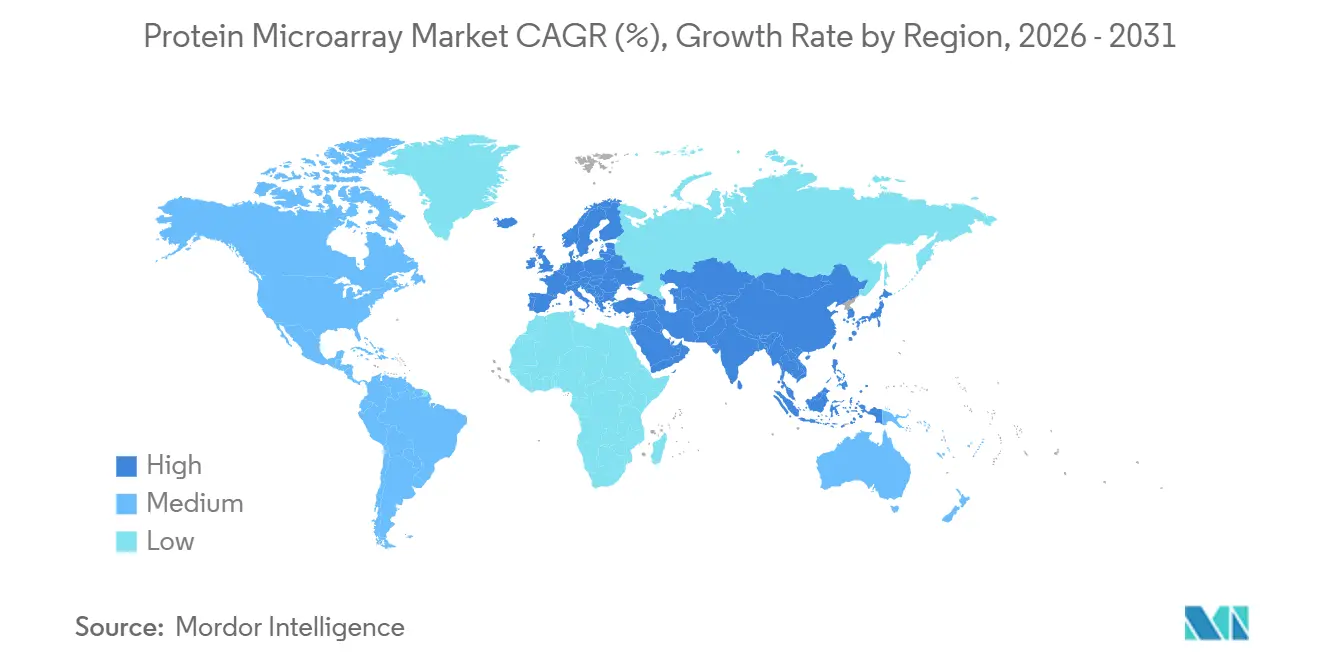
North America held 44.61% of the protein microarray market in 2025, which kept it as the leading regional market. This lead reflects a dense concentration of biopharma companies, federally supported research institutions, and regulated clinical laboratory infrastructure across the United States. The region benefits on both the upstream and downstream sides because it hosts developers of arrays, scanners, and bioinformatics platforms while also supporting demand in diagnostics and drug development. Europe ranked second, supported by strong proteomics research capacity in Germany, the United Kingdom, and France. The European IVDR framework continues to push laboratories toward validated and standardized multiplex protein platforms, which favors suppliers with stronger analytical documentation and clearer clinical positioning. AliveDx received an IVDR-CE mark for its MosaiQ AiPlex CTDplus panel in February 2025, which illustrates how regulatory compliance has become a basic market access condition in Europe rather than an optional advantage.
APAC Protein Microarray Market
Asia-Pacific is projected to grow at a 9.26% CAGR through 2031, which makes it the fastest-growing regional block in the protein microarray market. Growth is being driven by China, Japan, South Korea, India, and Australia, where research capacity, biotech activity, and manufacturing depth are expanding across several parts of the value chain. China remains especially important because it is increasing investment in automated protein systems, bioinformatics capability, and local production scale, which is shifting its role from import demand toward stronger domestic platform development. India contributes through a growing contract research ecosystem that supports outsourced assay and discovery work. South Korea brings relevant manufacturing strength for advanced biochip and electronics-linked components, while Japan adds precision instrument capability and a strong academic proteomics base. The protein microarray market is therefore broadening in Asia-Pacific through both research adoption and supply-side capability expansion.
MEA and South America Protein Microarray Market
Middle East and Africa and South America remain smaller in absolute terms, but they are strategically relevant for the next phase of regional spread in the protein microarray market. GCC countries, especially Saudi Arabia and the United Arab Emirates, are investing in genomics and proteomics programs that can create future demand for validated protein profiling tools. South Africa provides part of the regional anchor for infectious disease and research-related applications. In South America, Brazil and Argentina have the most developed biotech research ecosystems, though reimbursement limits and uneven healthcare infrastructure still slow broader clinical uptake. These conditions favor partnership-led and services-based entry models rather than heavy direct commercial infrastructure in the near term. That pattern fits the wider protein microarray market, where outsourced support often expands first in regions that do not yet have deep in-house operating capability.

Competitive Landscape
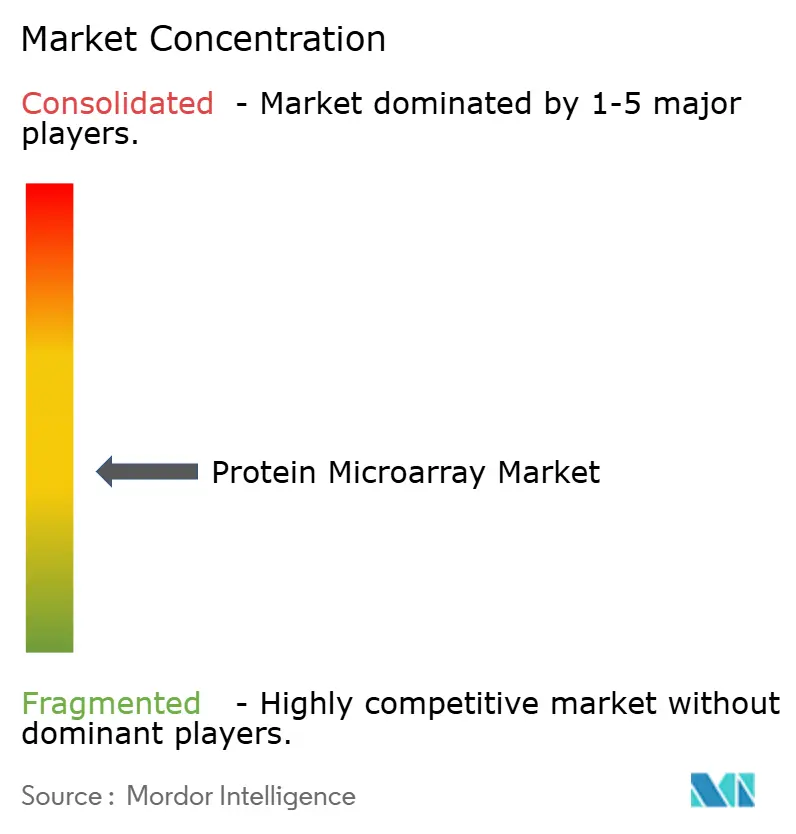
The protein microarray market shows moderate concentration at the top, with Thermo Fisher Scientific, Agilent Technologies, Danaher Corporation, Illumina, and Merck KGaA forming the main first tier alongside a longer list of specialized participants. The broader field still includes niche players focused on areas such as autoantigen panels, cytokine arrays, ultra-multiplex assays, and custom array printing, which keeps the market from becoming tightly consolidated. Competitive positioning increasingly depends on how much of the workflow a supplier can cover across expression, array fabrication, hardware, software, and interpretation support. This is important because customers often prefer fewer vendors when projects move from discovery into validation and then into regulated use. As a result, the protein microarray market is rewarding companies that can offer connected workflow coverage rather than isolated point products.
Agilent’s USD 950 million acquisition of Biocare Medical in 2026 is one of the clearest examples of this shift, because it added more than 300 specialized antibodies and expanded Agilent’s clinical pathology and in vitro diagnostics reach. Illumina’s 2025 launch of Protein Prep is another example, because it brought large-scale protein detection into existing NGS workflows and widened the company’s multiomics reach beyond genomics alone. Thermo Fisher also strengthened its position in early 2025 with Olink Reveal, which lowered the barrier for high-plex protein analysis on standard sequencing platforms already used by many research labs. These moves show that leading companies are not competing only on assay content, because they are also trying to control adjacent workflow layers that make customer retention stronger. The protein microarray market is therefore becoming more platform-driven, even while specialized niche suppliers remain relevant in targeted use cases.
Open space still exists in clinical-grade point-of-care biochip formats, where no single company has established a clearly dominant position. Smaller participants are pursuing alternative detection approaches that aim to reduce dependence on conventional fluorescence readouts and may broaden use in settings with tighter cost or staffing limits. A 2026 Nature Communications publication described a plasmonic gold nanoparticle chip design that improved sensitivity while simplifying droplet confinement and array preparation, which points to a credible route for future platform differentiation. At the same time, regulatory and compliance requirements such as ISO 15189 laboratory standards and FDA 21 CFR Part 11 expectations remain important barriers for newer entrants seeking clinical contracts. That means research-only participation may stay the practical entry path for smaller innovators until they can support stronger validation and compliance infrastructure. The protein microarray market is therefore competitive, but the balance of power still favors companies that can pair technical innovation with operational scale and regulated workflow readiness.
Protein Microarray Industry Leaders
Agilent Technologies, Inc.
Bio-Rad Laboratories, Inc.
Thermo Fisher Scientific Inc.
Qiagen N.V.
Danaher Corporation
- *Disclaimer: Major Players sorted in no particular order
Protein Microarray Market Companies Covered in this Report
- Agilent Technologies
- Arrayit
- Bio-Rad Laboratories
- Danaher
- Full Moon BioSystems, Inc.
- Genscript
- Illumina
- LC Sciences, LLC
- Merck
- Meso Scale Diagnostics, LLC
- PepperPrint GmbH
- PerkinElmer
- QIAGEN
- Quansys Biosciences, Inc.
- Quanterix Corporation
- RayBiotech Life, Inc.
- Sciomics GmbH
- Sengenics Corporation LLC
- Standard BioTools Inc.
- Thermo Fisher Scientific

Recent Industry Developments in Protein Microarray Market
- June 2026: Agilent Technologies completed the acquisition of Biocare Medical for USD 950 million. The deal added over 300 specialized clinical pathology antibodies and IHC/ISH/FISH solutions to Agilent's Life Sciences and Diagnostics Markets Group, directly expanding its clinical protein analysis commercial footprint and IVD antibody commercialization capability.
- March 2026: GenScript Biotech Corporation reported FY2025 revenue of USD 959.5 million, with Life Science Group protein expression service revenue growing 50% and orders from integrated gene-to-protein workflows increasing 160% YoY. GenScript also confirmed that 60% of global production capacity will be AI-driven and automated by the end of 2026, setting a new efficiency benchmark for protein reagent manufacturing.
- November 2025: Illumina reported that Illumina Protein Prep had delivered proteomics capabilities to over 40 customers across 16 global sites, with more than 40,000 samples processed. The platform's broadest coverage of the blood proteome at the lowest cost per protein target is positioning it as a scalable infrastructure layer for large biobank-linked proteomics studies in oncology and immunology.


Global Protein Microarray Market Report Scope
The Protein Microarray Market refers to the global industry encompassing the development, manufacturing, distribution, and commercialization of high-throughput analytical tools used to simultaneously detect, quantify, and analyze hundreds to thousands of proteins within a single biological sample.
The protein microarray market is segmented by offering into products, which include the physical chips and reagents, and services, such as custom profiling and data analysis. Based on type, the market comprises biochips, further classified into diagnostic lab-on-chip, analytical lab-on-chip, and microfluidic chips alongside microarray instruments, which include integrated systems and arrayers. From a technological perspective, the market is divided into analytical protein microarrays, functional protein microarrays, and reverse-phase protein microarrays. In terms of application, these technologies are utilized in clinical diagnostics for managing cancer, infectious diseases, diabetes, neurological disorders, autoimmune diseases, cardiovascular diseases, and other clinical conditions. They are also heavily relied upon in drug discovery and development for target discovery, lead identification, lead optimization, and preclinical studies, as well as in general proteomics research for antibody characterization, protein functional analysis, and biomarker discovery. Finally, the market is categorized by end user, serving biopharmaceutical companies, academic and research institutes, hospitals, clinical laboratories, and diagnostic centers.
| Products |
| Services |
| Biochips | Diagnostic Lab-On-Chip |
| Analytical Lab-On-Chip | |
| Microfluidic Chips | |
| Microarray Instruments | Integrated Systems |
| Arrayers |
| Analytical Protein Microarrays |
| Functional Protein Microarrays |
| Reverse Phase Protein Microarrays |
| Clinical Diagnostics | Cancer |
| Infectious Diseases | |
| Diabetes | |
| Neurological Disorders | |
| Autoimmune Diseases | |
| Cardiovascular Diseases | |
| Other Clinical Diagnostic Applications | |
| Drug Discovery and Development | Target Discovery |
| Lead Identification | |
| Lead Optimization | |
| Preclinical Studies | |
| Proteomics Research | |
| Antibody Characterization | |
| Protein Functional Analysis | |
| Biomarker Discovery |
| Biopharmaceutical Companies |
| Academic and Research Institutes |
| Hospitals |
| Clinical Laboratories |
| Diagnostic Centers |
| North America | United States |
| Canada | |
| Mexico | |
| Europe | Germany |
| United Kingdom | |
| France | |
| Italy | |
| Spain | |
| Rest of Europe | |
| Asia-Pacific | China |
| Japan | |
| India | |
| Australia | |
| South Korea | |
| Rest of Asia-Pacific | |
| Middle East & Africa | GCC |
| South Africa | |
| Rest of Middle East & Africa | |
| South America | Brazil |
| Argentina | |
| Rest of South America |
| By Offering | Products | |
| Services | ||
| By Type | Biochips | Diagnostic Lab-On-Chip |
| Analytical Lab-On-Chip | ||
| Microfluidic Chips | ||
| Microarray Instruments | Integrated Systems | |
| Arrayers | ||
| By Technology | Analytical Protein Microarrays | |
| Functional Protein Microarrays | ||
| Reverse Phase Protein Microarrays | ||
| By Application | Clinical Diagnostics | Cancer |
| Infectious Diseases | ||
| Diabetes | ||
| Neurological Disorders | ||
| Autoimmune Diseases | ||
| Cardiovascular Diseases | ||
| Other Clinical Diagnostic Applications | ||
| Drug Discovery and Development | Target Discovery | |
| Lead Identification | ||
| Lead Optimization | ||
| Preclinical Studies | ||
| Proteomics Research | ||
| Antibody Characterization | ||
| Protein Functional Analysis | ||
| Biomarker Discovery | ||
| By End User | Biopharmaceutical Companies | |
| Academic and Research Institutes | ||
| Hospitals | ||
| Clinical Laboratories | ||
| Diagnostic Centers | ||
| By Geography | North America | United States |
| Canada | ||
| Mexico | ||
| Europe | Germany | |
| United Kingdom | ||
| France | ||
| Italy | ||
| Spain | ||
| Rest of Europe | ||
| Asia-Pacific | China | |
| Japan | ||
| India | ||
| Australia | ||
| South Korea | ||
| Rest of Asia-Pacific | ||
| Middle East & Africa | GCC | |
| South Africa | ||
| Rest of Middle East & Africa | ||
| South America | Brazil | |
| Argentina | ||
| Rest of South America | ||


Key Questions Answered in the Report
What is the projected value of the protein microarray space by 2031?
The protein microarray market is projected to reach USD 2.36 billion by 2031, rising from USD 1.64 billion in 2026 at a 7.54% CAGR.
Which region leads global revenue for protein microarrays?
North America led in 2025 with 44.61% share, supported by strong biopharma infrastructure, research centers, and regulated clinical lab capacity.
Which region is growing the fastest through 2031?
Asia-Pacific is the fastest-growing region, with a projected 9.26% CAGR through 2031, driven by expanding biotech activity and manufacturing capability.
Which product category leads revenue in this field?
Products led with 64.78% share in 2025 because every assay run depends on recurring use of chips, reagents, and related consumables.
Which application is growing the fastest?
Proteomics research is the fastest-growing application, with an 8.28% CAGR through 2031, as large research programs and biobank-linked studies continue to scale.
Who are the most important end users today?
Biopharmaceutical companies are the largest end-user group with 41.63% share in 2025 because protein characterization is tied to required biologics development and quality workflows.
Page last updated on:





