
Processed Cheese Market Size and Share
Market Overview
| Study Period | 2022 - 2032 |
|---|---|
| Market Size (2027) | USD 48.53 Billion |
| Market Size (2032) | USD 62.80 Billion |
| Growth Rate (2027 - 2032) | 5.29 % |
| Fastest Growing Market | Asia-Pacific |
| Largest Market | Europe |
| Market Concentration | Low |
Major Players *Disclaimer: Major Players sorted in no particular order Image © Mordor Intelligence. Reuse requires attribution under CC BY 4.0. | |
Processed Cheese Market Analysis by Mordor Intelligence
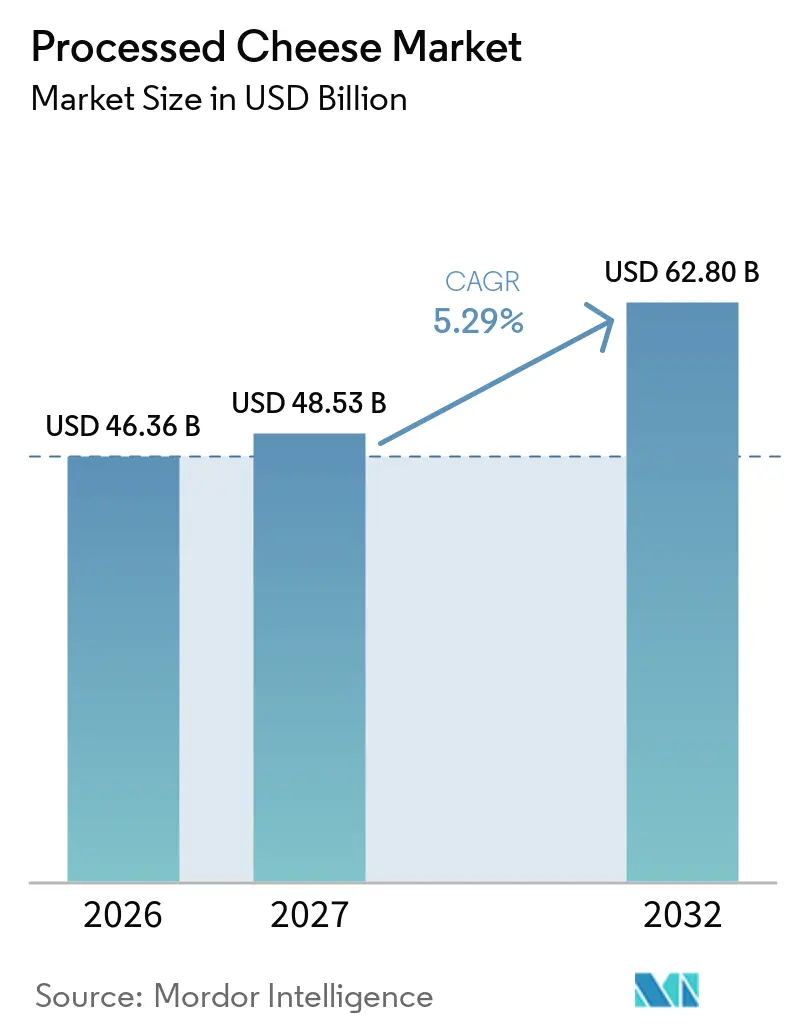
The Processed Cheese Market was valued at USD 46.36 billion in 2026 and is estimated to grow from USD 48.53 billion in 2027 to reach USD 62.80 billion by 2032, at a CAGR of 5.29% during the forecast period (2027–2032). Market growth is driven by rising demand for convenient, versatile, and consistent cheese products that simplify food preparation and offer reliable functional properties. Processed cheese is well-suited for a wide range of food preparation needs due to its controlled texture, uniform consistency, and melting performance. Advances in processing technologies, formulation capabilities, and packaging solutions are enabling manufacturers to improve product quality, maintain shelf stability, and increase production efficiency.
Key Report Takeaways
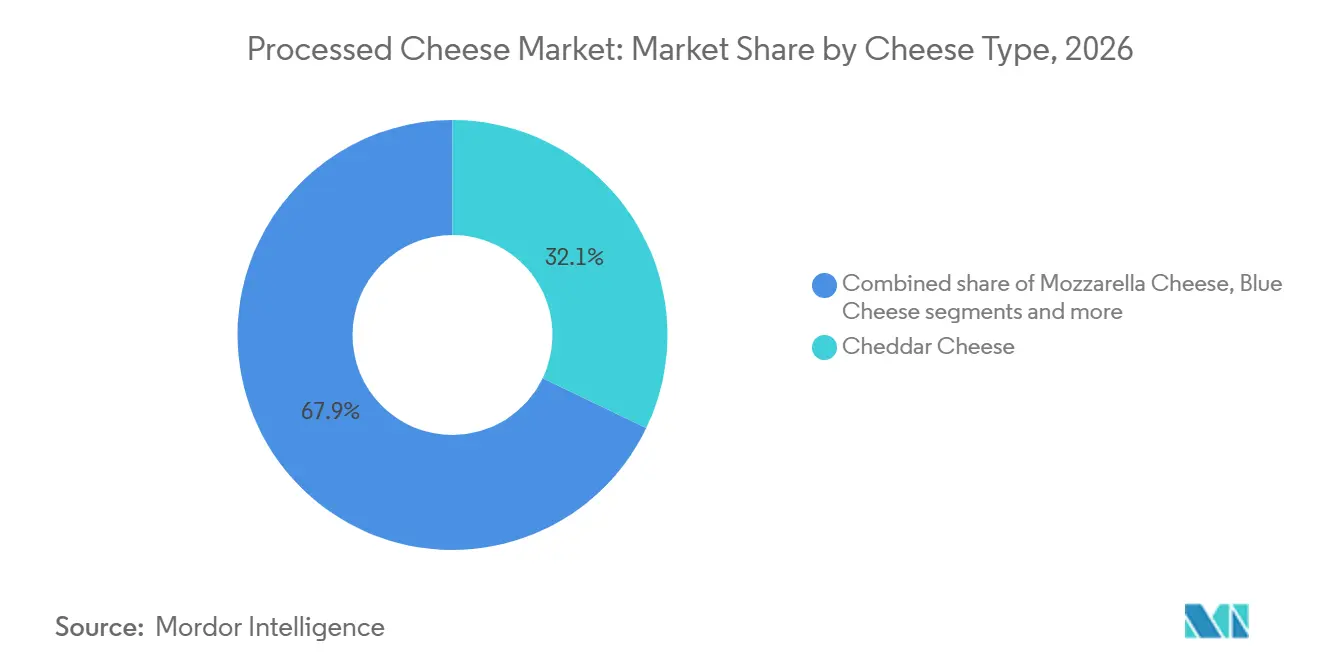
- By cheese type, Cheddar held 32.12% of the processed cheese market share in 2026, while Mozzarella is forecast to grow at a 7.13% CAGR through 2032.
- By milk source, Cow milk accounted for 55.43% of the processed cheese market share in 2026, while Goat milk is projected to record a 6.61% CAGR through 2032.
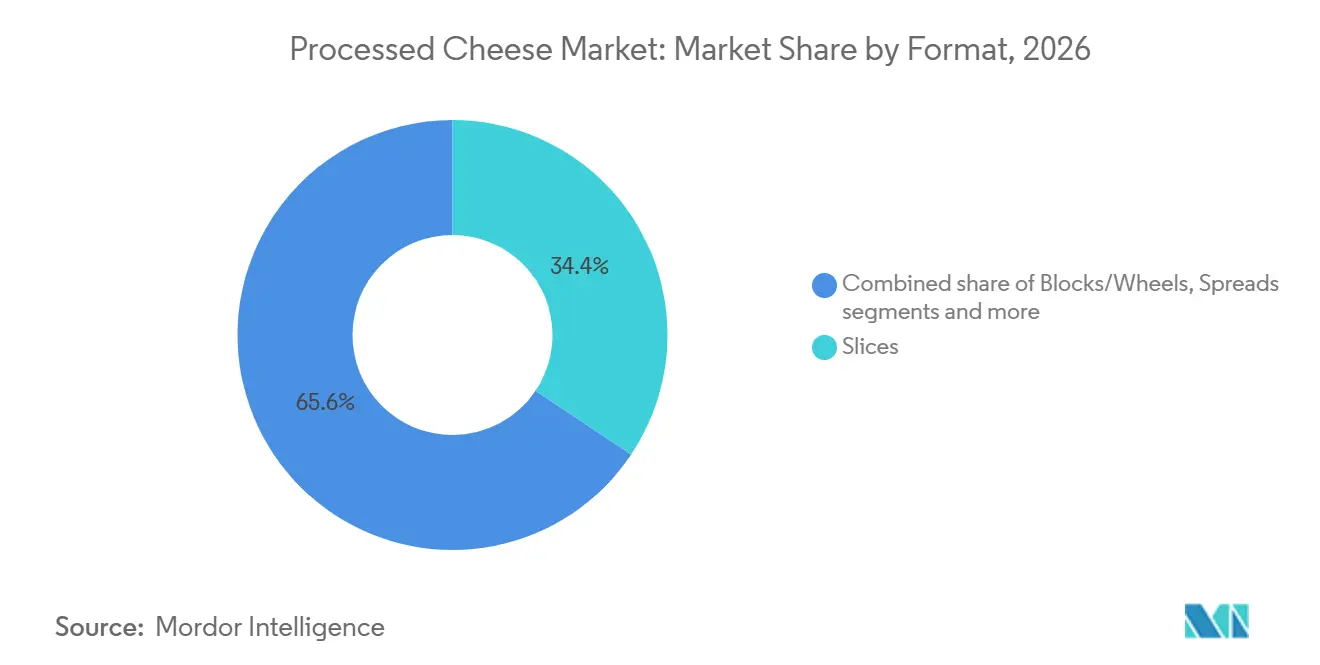
- By format, Slices captured 34.39% of the processed cheese market share in 2026, while Cubes and Sticks are expected to expand at a 6.55% CAGR through 2032.
- By distribution channel, Retail accounted for 65.45% of the processed cheese market share in 2026, while Foodservice is projected to grow at a 6.34% CAGR through 2032.
- By geography, Europe held 28.65% of the processed cheese market share in 2026, while Asia-Pacific is forecast to grow at a 7.06% CAGR through 2032.
Note: Market numbers in this report are based on Mordor Intelligence's proprietary estimation framework, which combines nine months of actuals with Q4 projections for base year 2026.
Global Processed Cheese Market Trends and Insights
Drivers Impact Analysis*
| Driver | (~) % Impact on CAGR Forecast | Geographic Relevance | Impact Timeline |
|---|---|---|---|
| Demand for convenient and ready-to-use cheese products | +1.2% | Global | Short term (≤ 2 years) |
| Increasing adoption of cheese in home cooking | +0.8% | Global, with concentration in Europe and North America | Short term (≤ 2 years) |
| Longer shelf life compared with many natural cheese varieties | +0.6% | Global, particularly Asia-Pacific and Middle-East and Africa | Long term (≥ 4 years) |
| Product innovation in flavors and formats | +0.9% | North America, Europe, Asia-Pacific | Medium term (2–4 years) |
| Increasing use of processed cheese in fast food products | +1.1% | Asia-Pacific, Middle East and Africa | Medium term (2–4 years) |
| Development of healthier processed cheese formulations | +0.7% | North America, Europe | Medium term (2–4 years) |
| Source: Mordor Intelligence | |||
Demand for Convenient and Ready-to-Use Cheese Products
Growing preference for simplified food preparation is driving demand for processed cheese products that offer immediate usability, consistent portions, and minimal handling. Pre-sliced cheese, spreadable formulations, and individually portioned products reduce preparation steps and make serving more predictable, while sealed packaging helps maintain product quality between uses. Their standardized formats also simplify inventory management and portion control for both consumers and commercial buyers, reducing the need for additional preparation equipment or specialized handling. As consumers increasingly seek products that fit flexible eating routines and require less preparation time, processed cheese benefits from its ability to combine convenience, consistent texture, and ease of storage in a single product.
Increasing Adoption of Cheese in Home Cooking
Growing adoption of cheese in home cooking is supporting demand for processed cheese, as consumers increasingly incorporate it into sandwiches, burgers, pasta, casseroles, and homemade baked dishes due to its convenience, consistent texture, and ease of use. Processed cheese offers predictable melting properties and uniform distribution, helping consumers achieve consistent results across different recipes while reducing preparation time. Its ability to blend smoothly into sauces, fillings, and hot meals makes it suitable for quick weekday dishes as well as more elaborate homemade recipes. Its versatility also allows households to adapt familiar recipes, experiment with different meal combinations, and incorporate cheese into everyday cooking with minimal preparation effort. For instance, according to Statistics Canada data, Canada's per-capita processed cheese consumption reached 1.78 kg in 2025, reflecting continued consumer demand for processed cheese products[1].
Longer Shelf life Compared With Many Natural Cheese Varieties
Processed cheese has a longer shelf life than many natural cheese varieties, which is supporting demand. Its manufacturing process typically involves melting cheese with emulsifying salts and applying controlled heat treatment, improving product stability and maintaining consistent quality during storage. Depending on the formulation and packaging, processed cheese offers greater resistance to spoilage and a longer storage period than certain natural cheese varieties, reducing product wastage for households and retailers. Its ability to retain texture, flavor, and functional properties throughout the specified storage period also supports efficient inventory management and distribution. For instance, processed cheese products manufactured using appropriate heat treatment and sealed packaging can remain suitable for consumption for extended periods when stored under the conditions specified on the label.
Product Innovation in Flavors and Formats
Product innovation in flavors and formats is supporting growth in the processed cheese market as manufacturers diversify their product portfolios to address changing consumer taste preferences and demand for greater product variety. The introduction of distinctive flavor profiles, including spicy, peppery, garlic-infused, and herb-based varieties, helps companies differentiate their offerings from conventional processed cheese products and attract consumers seeking new taste experiences. Improvements in formulation, texture, consistency, and spreadability also enable manufacturers to develop differentiated products while maintaining quality and product stability. These innovations strengthen brand differentiation, encourage consumer experimentation, and help manufacturers maintain competitiveness in the processed cheese market.
Restraints Impact Analysis*
| Restraint | (~) % Impact on CAGR Forecast | Geographic Relevance | Impact Timeline |
|---|---|---|---|
| Fluctuations in raw milk and dairy ingredient availability | -1.3% | Global | Short term (≤ 2 years) |
| Competition from natural and artisanal cheeses | -1.0% | Europe, North America | Long term (≥ 4 years) |
| Concerns about saturated fat and calorie content | -0.8% | Europe, North America | Medium term (2–4 years) |
| Stringent food safety and labeling regulations | -0.6% | Europe, North America | Long term (≥ 4 years) |
| Source: Mordor Intelligence | |||
Fluctuations in Raw Milk and Dairy Ingredient Availability
Fluctuations in raw milk and dairy ingredient availability are a significant restraint on the processed cheese market. Inconsistent supplies of milk, milk fat, milk protein, and other dairy-based inputs can disrupt production planning and increase procurement costs. Seasonal variations in milk production, changing weather conditions, animal health issues, and competition for dairy ingredients can affect the volume and quality of raw materials available to processors. These supply fluctuations make it difficult for manufacturers to maintain stable production schedules, consistent product formulations, and predictable pricing. When ingredient costs rise or supplies become constrained, companies may face pressure on profit margins or may need to adjust product prices, potentially weakening price competitiveness. Smaller processors are particularly vulnerable, as they often have less bargaining power and fewer options for securing alternative suppliers.
Competition from Natural and Artisanal Cheeses
Competition from natural and artisanal cheeses is restraining the processed cheese market as consumers increasingly seek products perceived as authentic, minimally processed, and made with simpler ingredients. Natural cheeses appeal to buyers who prioritize traditional production methods, distinctive flavor profiles, and recognizable ingredient lists, while artisanal varieties benefit from associations with craftsmanship, regional identity, and premium quality. These preferences lead consumers to substitute natural or specialty cheeses for processed alternatives, particularly in markets where clean-label purchasing influences product selection. The growing availability of diverse natural cheese varieties across retail channels further intensifies competition for shelf space and consumer attention.
*Our forecasts treat driver/restraint impacts as directional, not additive. The impact forecasts reflect baseline growth, mix effects, and variable interactions.
Segment Analysis
By Cheese Type: Cheddar Anchors Volume, Mozzarella Leads Growth
Cheddar cheese holds the leading position in the processed cheese market, accounting for 32.12% of market revenue in 2026, supported by its well-established flavor profile, formulation adaptability, and suitability for large-scale processing. Its characteristic savory taste and balanced flavor intensity provide a recognizable sensory profile that can be maintained across different processed cheese formulations, helping manufacturers deliver consistent products across production batches. Cheddar also offers flexibility in formulation, as processors can adjust its moisture, firmness, and emulsification characteristics to achieve specific product textures without substantially altering its familiar taste. Its compatibility with different processing conditions supports efficient production, while its broad consumer acceptance reduces the need to establish familiarity with unfamiliar cheese varieties.
Mozzarella is the fastest-growing cheese type in the processed cheese market, projected to expand at a CAGR of 7.13% from 2027 to 2032, driven by its distinctive functional properties and growing suitability for modern cheese formulations. Its mild flavor and soft, elastic texture provide manufacturers with flexibility to develop processed cheese products that appeal to consumers who prefer less pronounced cheese flavors. The segment also benefits from advancements in formulation techniques that help preserve mozzarella's characteristic stretch, cohesive texture, and moisture balance during processing. Improving control over protein functionality and emulsification enables processors to address technical challenges associated with maintaining mozzarella-style characteristics in processed formulations.

By Milk Source: Cow Milk Provides Scale, Goat Milk Commands Premiums
Cow milk dominates the processed cheese market, accounted for 55.43% of market share in 2026, supported by its widespread availability, established dairy-processing infrastructure, and suitability for producing consistent cheese formulations. The well-established collection, storage, and processing systems for cow milk enable manufacturers to secure a consistent raw material supply and maintain production quality across batches. According to the Food and Agriculture Organization (FAO), India produced approximately 221.4 million metric tons of cow milk, while the European Union recorded around 148.95 million metric tons, illustrating the substantial availability of this raw material across major dairy-producing regions[2]. This extensive supply base, combined with the functional suitability of cow milk proteins for cheese processing and the established capabilities of dairy ingredient suppliers, reinforces its position as the leading milk source in the processed cheese market.
Goat milk is the fastest-growing milk source in the processed cheese market, projected to register a CAGR of 6.61% from 2027 to 2032, driven by increasing interest in differentiated dairy products and specialty cheese formulations. Its distinctive flavor profile and different protein and fat composition provide opportunities for manufacturers to develop processed cheese varieties with unique sensory characteristics and product positioning. Goat milk also appeals to consumers seeking alternatives to conventional cow-milk dairy products, particularly those looking for variety in taste and texture. Improvements in dairy processing and formulation techniques are creating opportunities to manage goat milk's characteristic flavor while achieving the emulsification, consistency, and spread ability required in processed cheese.
By Format: Slices Command Retail, Cubes and Sticks Reshape Snacking
Slices accounted for the largest format share in the processed cheese market, representing 34.39% of market revenue in 2026. Their standardized thickness, uniform dimensions, and ease of portioning support this position. The pre-cut format eliminates the need for additional preparation and helps maintain consistency in serving sizes, making it a practical choice for consumers seeking convenient cheese products. Individual slice separation simplifies handling and allows consumers to use the required quantity while keeping the remaining portions packaged. From a product-quality perspective, controlled slice thickness promotes uniformity in appearance and texture, while specialized wrapping helps protect individual portions from moisture loss and external contamination.
Cubes and sticks are projected to register the fastest growth among processed cheese formats, with a CAGR of 6.55% from 2027 to 2032, driven by their portability, portion flexibility, and suitability for ready-to-eat consumption. Their compact shapes make them convenient for snacking without cutting or serving utensils, while pre-portioned pieces simplify quantity control and reduce handling requirements. The format also offers manufacturers opportunities to introduce varied shapes, sizes, coatings, and flavor profiles that support product differentiation and visual appeal. In addition, individual portions can be packed into resealable containers or single-serve packs, helping preserve product quality after opening when appropriate storage conditions are maintained.
By Distribution Channel: Retail Leads, Foodservice Accelerates
Retail accounted for 65.45% of the processed cheese market's distribution share in 2026, making it the primary sales channel due to its broad consumer reach, established grocery infrastructure, and accessibility across diverse shopping formats. The channel benefited from the availability of processed cheese in multiple pack sizes, product varieties, and price tiers, enabling consumers to compare options and select products according to their preferences. Organized retail outlets supported product visibility through dedicated dairy sections, promotional displays, and chilled storage facilities that helped maintain product quality. The expansion of private-label offerings and the availability of packaged cheese products through both physical stores and online grocery platforms further strengthened retail accessibility.
Foodservice (HoReCa) is projected to be the fastest-growing distribution channel in the processed cheese market, registering a CAGR of 6.34% from 2027 to 2032. This growth is driven by increasing demand from commercial kitchens for ingredients that deliver consistent performance, simplified handling, and predictable results during food preparation. Processed cheese offers standardized texture, controlled portioning, and formulation flexibility, helping foodservice operators maintain product consistency across repeated preparation cycles. Bulk packaging and ready-to-use formats reduce preparation time and minimize the need for additional slicing, mixing, or portioning, improving kitchen workflow efficiency. Additionally, the availability of formulations with different firmness, moisture levels, and melting characteristics enables foodservice buyers to select products suited to their operational requirements.
Geography Analysis
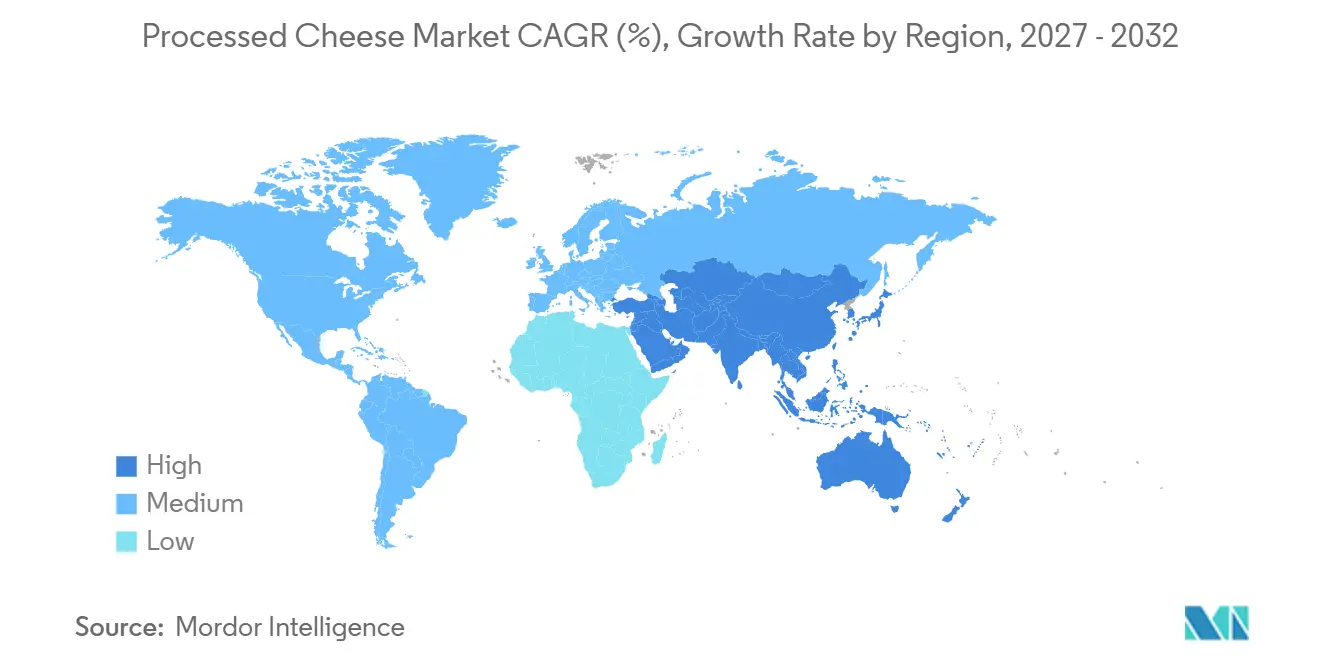
Europe accounted for the largest share of the processed cheese market, representing 28.65% of global revenue in 2026. This position is supported by established cheese consumption habits, mature dairy-processing capabilities, and strong consumer familiarity with processed cheese products. The region also benefits from well-developed dairy supply chains, established retail distribution networks, and processing infrastructure that supports consistent product quality and availability. Germany provides a notable example of this production capacity: according to data from the Federal Office for Agriculture and Food (BLE), the country produced approximately 209,384 tons of processed cheese and cheese preparations in 2025, demonstrating the scale of its dedicated processing industry[3].
Asia-Pacific is projected to register the fastest growth in the processed cheese market, with a CAGR of 7.06% from 2027 to 2032. Growth is driven by the gradual incorporation of cheese into a wider range of everyday eating occasions and the expansion of packaged dairy products. Consumer familiarity with cheese is increasing through greater exposure to international food trends, changing preferences for Western-style flavors, and the availability of processed cheese in accessible formats. The region's diverse food cultures also create opportunities for manufacturers to adapt cheese formulations to local taste preferences, including milder flavors and convenient portions. Improvements in cold-chain logistics and modern grocery distribution are helping extend the availability of temperature-sensitive dairy products beyond established urban retail centers.
North America benefits from an established processed cheese market, supported by familiarity with packaged cheese products, mature food distribution systems, and demand for products offering consistent texture and storage convenience. Growth opportunities are linked to formulation innovation, convenient packaging, and continued demand for differentiated cheese varieties. In South America, expanding access to packaged dairy products and the development of modern retail channels support the gradual adoption of processed cheese, while opportunities to tailor flavors and formats to regional preferences provide scope for further market development. In the Middle East and Africa, market development is supported by the expansion of organized retail, improving refrigerated distribution infrastructure, and demand for convenient packaged foods.
Competitive Landscape
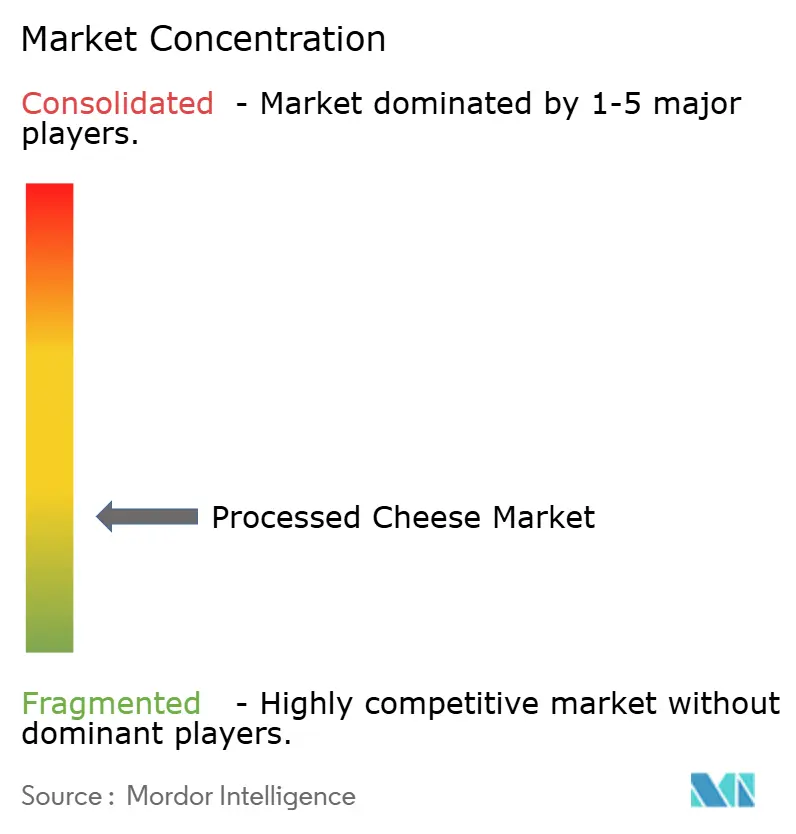
The global processed cheese market is fragmented, with competition distributed among multinational dairy companies, established branded manufacturers, regional producers, and private-label suppliers. Major players include Groupe Lactalis S.A., The Kraft Heinz Company, Fonterra Co-operative Group Limited, Arla Foods amba, and Saputo Inc. These companies compete on product quality, pricing, brand recognition, processing capabilities, and distribution reach. The presence of regional manufacturers and diverse consumer preferences across markets further contributes to fragmentation, limiting the ability of any single company to dominate the global market.
Competition is increasingly shaped by product differentiation, format innovation, and geographic expansion. Manufacturers focus on refining product formulations, improving texture and consistency, and developing formats that maintain functional performance throughout storage and use. Broad product portfolios and established distribution networks help major companies serve different consumer preferences and strengthen their market presence across developed and emerging regions. Investments in processing efficiency, packaging technologies, and supply chain capabilities also support product consistency, operational competitiveness, and access to new markets.
Health-oriented reformulation is becoming an important competitive consideration as manufacturers respond to consumer concerns about sodium intake, saturated fat, and ingredient composition. Companies face the challenge of developing reduced-fat and reduced-sodium processed cheese formulations without compromising meltability, texture, flavor, or stability. Achieving this balance requires formulation expertise and continued product development, creating opportunities for companies that can combine nutritional improvements with desirable sensory characteristics. Sustained competitiveness depends on balancing innovation, affordability, product quality, and geographic reach while responding to evolving consumer expectations.
Processed Cheese Industry Leaders
-
Groupe Lactalis S.A.
-
The Kraft Heinz Company
-
Fonterra Co-operative Group Limited
-
Arla Foods amba
-
Saputo Inc.
- *Disclaimer: Major Players sorted in no particular order
Recent Industry Developments
- August 2026: Wardat Al Mashreq expanded its processed cheese portfolio with individually sealed, single-serve stick packs, installing an IMA Hassia S600 packaging machine to support production of the new format.
- August 2025: Fonterra began a production expansion at its Eltham, New Zealand facility, adding 6,000 metric tons of IQF mozzarella annual capacity and upgrading processed cheese lines to supply 200 million additional burgers per year.
- August 2025: Dairy Farmers of America (DFA) acquired W&W Dairy in Monroe, Wisconsin, a manufacturer of Hispanic cheese products. The acquisition incorporated W&W Dairy's branded La Vaquita operations and created operational synergies with Dairy Farmers of America (DFA)'s Houston Hispanic cheese plant.
Global Processed Cheese Market Report Scope
Processed Cheese is a food product made by melting, blending, and pasteurizing natural cheese with emulsifying agents, salts, and additional dairy or non-dairy ingredients. The Processed Cheese Market is segmented by cheese type, milk source, format, distribution channel, and geography. Based on cheese type, the market is segmented into Cheddar cheese, Mozzarella cheese, Blue cheese, Brick cheese, Camembert cheese, and others. Based on milk source, the market is segmented into cow, goat, buffalo, and others. Based on format, the market is segmented into blocks/wheels, slices, shredded and grated, spreads, cubes and sticks, and others. Based on distribution channel, the market is segmented into foodservice (HoReCa) and retail, with retail further segmented into supermarkets and hypermarkets, convenience stores, specialist retailers, online retail, and others. Based on geography, the market is segmented into North America, Europe, Asia-Pacific, South America, and the Middle East and Africa. The report provides market size and forecasts in both value (USD) and volume (Tons) for all the mentioned segments.
| Cheddar Cheese |
| Mozzarella Cheese |
| Blue Cheese |
| Brick Cheese |
| Camembert Cheese |
| Others |
| Cow |
| Goat |
| Buffalo |
| Others |
| Blocks/Wheels |
| Slices |
| Shredded and Grated |
| Spreads |
| Cubes and Sticks |
| Others |
| Foodservice (HoReCa) | |
| Retail | Supermarkets and Hypermarkets |
| Convenience Stores | |
| Specialist Retailers | |
| Online Retail | |
| Others |
| North America | United States |
| Canada | |
| Mexico | |
| Rest of North America | |
| Europe | United Kingdom |
| Germany | |
| France | |
| Italy | |
| Spain | |
| Netherlands | |
| Poland | |
| Belgium | |
| Sweden | |
| Rest of Europe | |
| Asia-Pacific | China |
| Japan | |
| India | |
| Australia | |
| Indonesia | |
| South Korea | |
| Thailand | |
| Singapore | |
| Rest of Asia-Pacific | |
| South America | Brazil |
| Argentina | |
| Colombia | |
| Chile | |
| Peru | |
| Rest of South America | |
| Middle East and Africa | South Africa |
| Saudi Arabia | |
| United Arab Emirates | |
| Nigeria | |
| Egypt | |
| Morocco | |
| Turkey | |
| Rest of Middle East and Africa |
| By Cheese Type | Cheddar Cheese | |
| Mozzarella Cheese | ||
| Blue Cheese | ||
| Brick Cheese | ||
| Camembert Cheese | ||
| Others | ||
| By Milk Source | Cow | |
| Goat | ||
| Buffalo | ||
| Others | ||
| By Format | Blocks/Wheels | |
| Slices | ||
| Shredded and Grated | ||
| Spreads | ||
| Cubes and Sticks | ||
| Others | ||
| By Distribution Channel | Foodservice (HoReCa) | |
| Retail | Supermarkets and Hypermarkets | |
| Convenience Stores | ||
| Specialist Retailers | ||
| Online Retail | ||
| Others | ||
| By Geography | North America | United States |
| Canada | ||
| Mexico | ||
| Rest of North America | ||
| Europe | United Kingdom | |
| Germany | ||
| France | ||
| Italy | ||
| Spain | ||
| Netherlands | ||
| Poland | ||
| Belgium | ||
| Sweden | ||
| Rest of Europe | ||
| Asia-Pacific | China | |
| Japan | ||
| India | ||
| Australia | ||
| Indonesia | ||
| South Korea | ||
| Thailand | ||
| Singapore | ||
| Rest of Asia-Pacific | ||
| South America | Brazil | |
| Argentina | ||
| Colombia | ||
| Chile | ||
| Peru | ||
| Rest of South America | ||
| Middle East and Africa | South Africa | |
| Saudi Arabia | ||
| United Arab Emirates | ||
| Nigeria | ||
| Egypt | ||
| Morocco | ||
| Turkey | ||
| Rest of Middle East and Africa | ||
Key Questions Answered in the Report
What is the projected value of the processed cheese market by 2032?
The processed cheese market is forecast to reach USD 62.80 billion by 2032, growing at a 5.29% CAGR from 2027 to 2032.
Which cheese type holds the largest share in processed cheese?
Cheddar leads by cheese type with a 32.12% share in 2026. Its use in burgers, sandwiches, snacks, and household cooking supports its position.
Which cheese type is growing fastest through 2032?
Mozzarella is the fastest-growing cheese type, with a projected CAGR of 7.13% through 2032. QSR pizza expansion is a central demand driver.
What is driving demand for processed cheese products?
Demand is supported by convenient formats, foodservice growth, QSR expansion, longer shelf life, and product innovation in snack-oriented formats.