
Private Label Cosmetics Market Size and Share
Market Overview
| Study Period | 2021 - 2031 |
|---|---|
| Market Size (2026) | USD 11.65 Billion |
| Market Size (2031) | USD 15.19 Billion |
| Growth Rate (2026 - 2031) | 5.45 % |
| Fastest Growing Market | Asia-Pacific |
| Largest Market | North America |
| Market Concentration | Low |
Major Players
*Disclaimer: Major Players sorted in no particular order Image © Mordor Intelligence. Reuse requires attribution under CC BY 4.0. |
|
Private Label Cosmetics Market Analysis by Mordor Intelligence
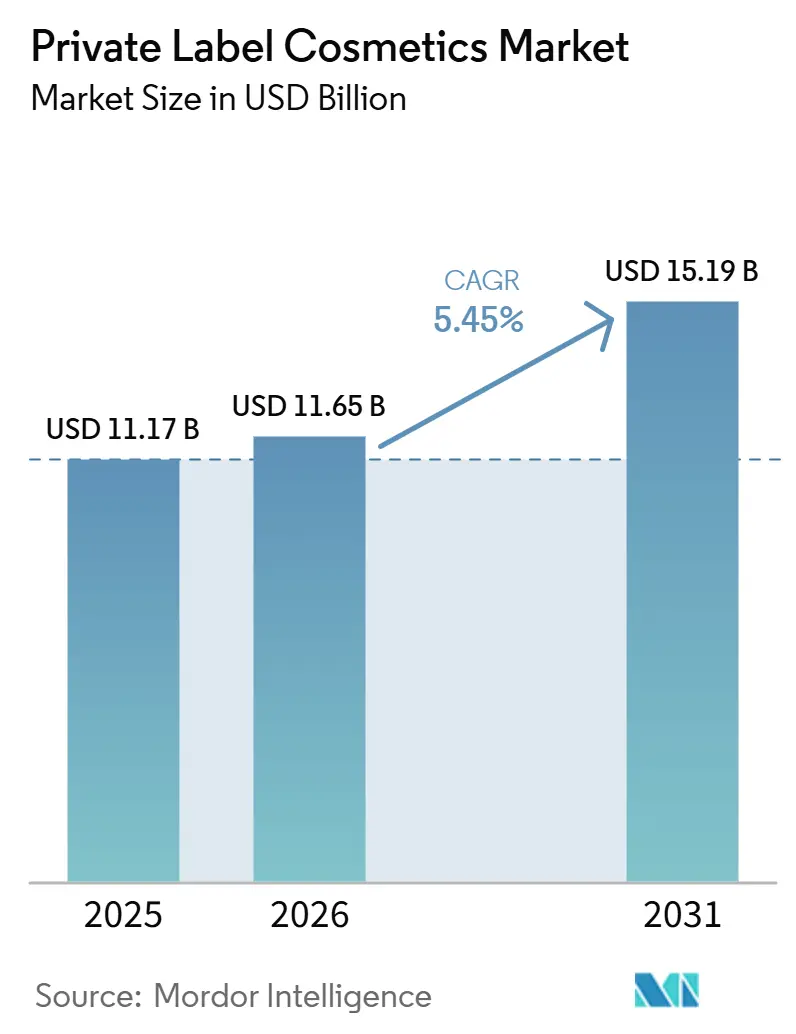
The global private label cosmetics market was valued at USD 11.17 billion in 2025 and is estimated at USD 11.65 billion in 2026, with forecasts projecting it to reach USD 15.19 billion by 2031, at a CAGR of 5.45% during the forecast period. Market growth is driven by retailers' increasing investment in exclusive beauty portfolios to strengthen brand differentiation and customer loyalty, alongside rising consumer preference for clean-label, ingredient-transparent, and sustainably formulated cosmetics. The expansion of omnichannel retailing and direct-to-consumer strategies is enabling retailer-owned brands to reach broader consumer bases while accelerating new product launches. Advances in contract manufacturing, formulation technologies, and premium private label offerings are allowing retailers to introduce high-quality cosmetics with innovative ingredients and improved product performance.
Key Report Takeaways
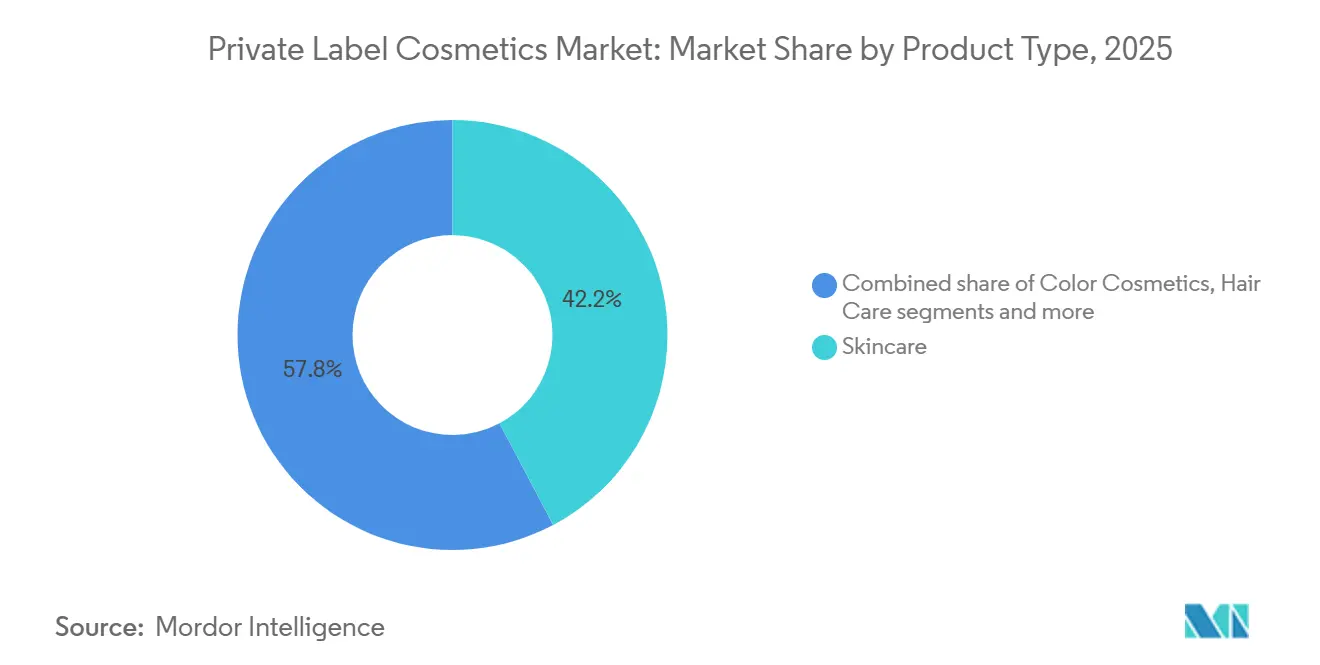
- By product type, Skincare held 42.23% of the private label cosmetics market share in 2025, while Color Cosmetics is forecast to grow at a 5.88% CAGR through 2031.
- By category, Mass accounted for 63.54% of the private label cosmetics market share in 2025, while Premium is projected to expand at a 6.59% CAGR through 2031.
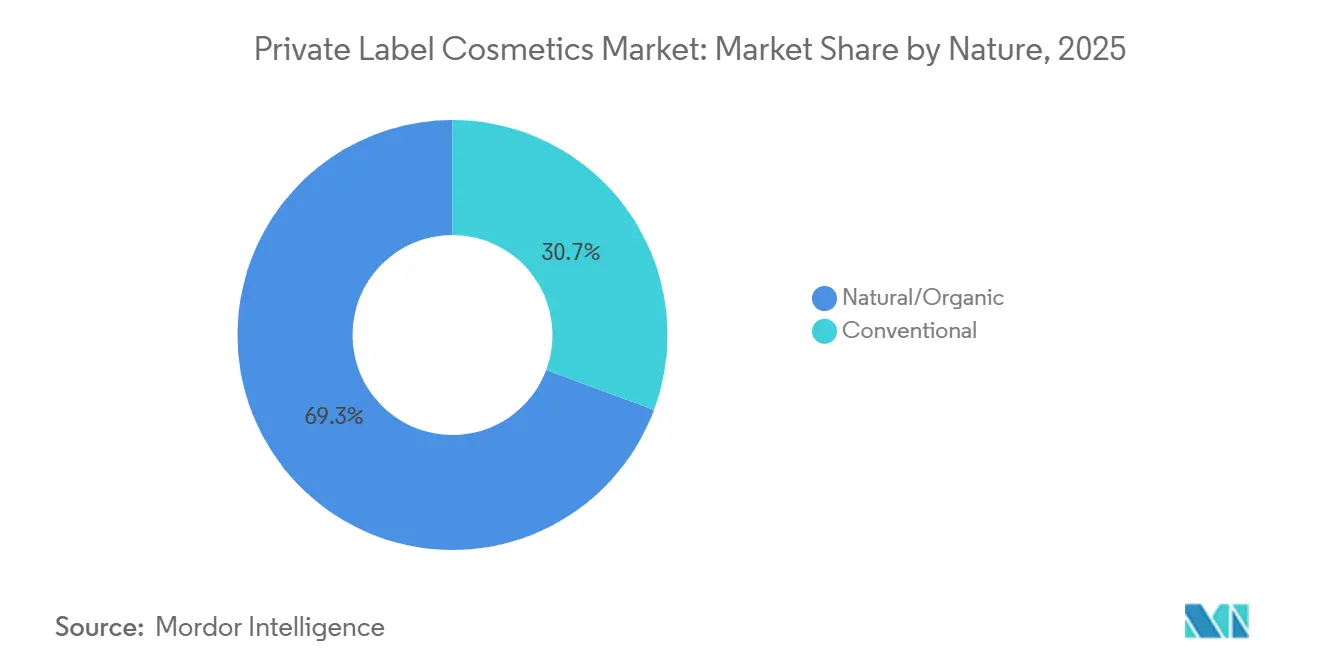
- By nature, Natural/Organic products held 69.32% of the private label cosmetics market share in 2025 and are forecast to record the highest CAGR of 7.09% through 2031.
- By end user, Women accounted for 76.82% of the private label cosmetics market share in 2025, while Men is projected to grow at a 6.87% CAGR through 2031.
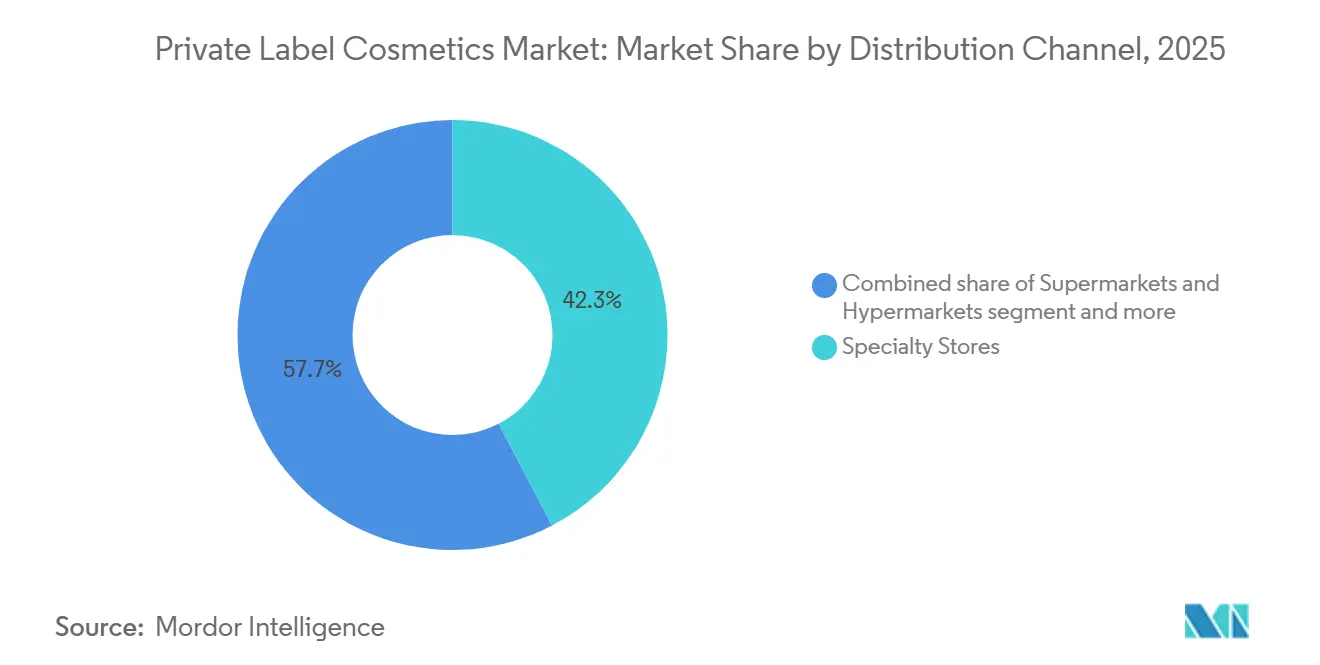
- By distribution channel, Specialty Stores captured 42.34% of the private label cosmetics market share in 2025, while Online Retail Stores are forecast to grow at a 7.81% CAGR through 2031.
- By geography, North America held 33.34% of the private label cosmetics market share in 2025, while Asia-Pacific is projected to expand at a 6.94% CAGR through 2031.
Note: Market size and forecast figures in this report are generated using Mordor Intelligence’s proprietary estimation framework, updated with the latest available data and insights as of January 2026.
Market Trends and Insights
Drivers Impact Analysis of Private Label Cosmetics Market*
| Driver | (~) % Impact on CAGR Forecast | Geographic Relevance | Impact Timeline |
|---|---|---|---|
| Growing retailer focus on exclusive beauty portfolios | +0.6% | Global, with strongest gains in North America and Europe | Short-term (≤ 2 years) |
| Demand for clean-label and ingredient-transparent cosmetics | +0.9% | North America and Europe; spill-over to Asia-Pacific | Medium-term (2–4 years) |
| Expansion of omnichannel and direct-to-consumer retail strategies | +0.8% | Global; Asia-Pacific and North America lead adoption pace | Short-term (≤ 2 years) |
| Growing influence of social media and digital beauty trends | +0.7% | Global; concentrated in TikTok-heavy markets (United States, Southeast Asia) | Short-term (≤ 2 years) |
| Expansion of premium private label cosmetic offerings | +0.6% | North America, Europe, South Korea | Medium-term (2–4 years) |
| Emphasis on sustainable and eco-friendly cosmetic packaging | +0.5% | Europe primary; spill-over to North America and Asia-Pacific export markets | Long-term (≥ 4 years) |
| Source: Mordor Intelligence | |||
Growing retailer focus on exclusive beauty portfolios
Retailers are increasingly expanding exclusive beauty portfolios to strengthen brand differentiation, improve customer loyalty, and enhance profitability through retailer-owned cosmetic brands. By developing proprietary product lines, retailers gain greater control over product innovation, formulation, packaging, pricing, and merchandising, while responding more quickly to evolving consumer preferences. Exclusive private label beauty portfolios also enable retailers to offer unique products unavailable through competing retail channels, creating stronger consumer engagement and repeat purchases. For instance, in May 2024, Reliance Retail's Tira Beauty expanded its private label portfolio with the launch of Nails Our Way, an exclusive nail care and nail color brand. This launch expanded Tira Beauty's retailer-owned beauty offerings, reinforcing the industry's increasing focus on building differentiated private label cosmetic portfolios through exclusive product development.
Demand for clean-label and ingredient-transparent cosmetics
Consumer preference for clean-label and ingredient-transparent cosmetics is driving growth in the private label cosmetics market, as buyers increasingly scrutinize ingredient lists and prioritize products formulated with naturally derived, safe, and scientifically validated ingredients. For instance, the European Union published Regulation (EU) 2026/909 on April 28, 2026, amending Regulation (EC) No. 1223/2009 on cosmetic products. Based on the latest scientific opinions of the Scientific Committee on Consumer Safety (SCCS), the regulation prohibits the use of Triphenyl Phosphate (TPP) in cosmetic products, with a ban on placing non-compliant products on the market from January 1, 2027, and a complete ban on making such products available from July 1, 2028 [1]Source: European Union, "Commission Regulation (EU) 2026/909", europa.eu. This regulatory update is encouraging cosmetic manufacturers and private label retailers to reformulate products with safer ingredients and improve ingredient transparency, reinforcing the market's shift toward clean-label cosmetics.
Expansion of omnichannel and direct-to-consumer retail strategies
The expansion of omnichannel and direct-to-consumer (D2C) retail strategies is accelerating the private label cosmetics market by enabling retailers to offer consistent shopping experiences across physical stores, e-commerce platforms, mobile applications, and social commerce channels. Integrating online and offline touchpoints allows retailers to strengthen customer engagement, personalize product recommendations using consumer data, improve inventory visibility, and launch exclusive private label beauty collections across multiple sales channels. Omnichannel capabilities also support services such as click-and-collect, same-day delivery, loyalty program integration, and AI-powered beauty consultations, improving convenience and customer retention. For instance, in January 2026, Sephora and Korean wellness retailer CJ Olive Young partnered to bring curated K-beauty products to global markets. The omnichannel collaboration features dedicated K-beauty zones in both online and offline stores, expanding the global reach of Korean health and beauty brands.
Growing influence of social media and digital beauty trends
The growing influence of social media and digital beauty trends is a key driver of the private label cosmetics market, enabling retailer-owned brands to respond rapidly to changing consumer preferences and accelerate product commercialization. Beauty trends now emerge and spread within days through platforms such as TikTok, Instagram, YouTube, and Pinterest, significantly shortening traditional product development cycles. This has encouraged private label manufacturers to adopt agile formulation, rapid prototyping, and small-batch production capabilities, allowing retailers to introduce trend-driven cosmetics while consumer interest remains high. Digital platforms also increase product visibility through beauty influencers, user-generated content, live-stream shopping, tutorials, and viral beauty challenges, creating immediate consumer awareness and increasing purchase intent. The availability of real-time consumer feedback further enables retailers to refine formulations, packaging, and product assortments more quickly than conventional product development models.
Restraints Impact Analysis of Private Label Cosmetics Market*
| Restraint | (~) % Impact on CAGR Forecast | Geographic Relevance | Impact Timeline |
|---|---|---|---|
| Intense competition from established cosmetic brands | -0.8% | Global | Long-term (≥ 4 years) |
| Dependence on third-party manufacturers for quality and supply consistency | -0.6% | North America and Europe; emerging in Asia-Pacific supply chains | Medium-term (2–4 years) |
| Costs associated with product reformulation and regulatory compliance | -0.9% | North America and Europe primary; spill-over to export markets | Medium-term (2–4 years) |
| Challenges in building long-term brand loyalty | -0.7% | Global | Long-term (≥ 4 years) |
| Source: Mordor Intelligence | |||
Intense competition from established cosmetic brands
Intense competition from established cosmetic brands continues to restrain the growth of the private label cosmetics market. Globally recognized beauty companies possess strong brand equity, long-standing consumer trust, extensive research and development capabilities, and substantial marketing investments. Consumers often associate these brands with proven product efficacy, superior quality, and continuous innovation, making it difficult for retailer-owned cosmetic brands to attract and retain customers, particularly in premium beauty categories. Established brands also maintain broad product portfolios, frequent product launches, strong retailer relationships, and high visibility through omnichannel marketing, celebrity endorsements, and influencer collaborations, limiting the market penetration of private label alternatives. Additionally, their ability to rapidly commercialize new technologies and scientifically validated formulations increases competitive pressure on retailer-owned brands.
Dependence on Third-Party Manufacturers for Quality and Supply Consistency
Dependence on third-party manufacturers remains a significant restraint for the private label cosmetics market. Retailers rely on contract manufacturers for product formulation, ingredient sourcing, production, quality assurance, and timely delivery. Any disruption in manufacturing operations, shortages of cosmetic ingredients or packaging materials, quality inconsistencies, or regulatory non-compliance can delay product launches, interrupt supply continuity, and negatively affect consumer confidence in retailer-owned brands. Unlike vertically integrated cosmetic companies, many private label retailers have limited direct control over manufacturing processes, making them more vulnerable to production bottlenecks and variations in product quality across suppliers. Additionally, managing multiple contract manufacturers across different regions increases the complexity of maintaining standardized formulations, packaging specifications, and regulatory compliance.
*Our forecasts treat driver/restraint impacts as directional, not additive. The impact forecasts reflect baseline growth, mix effects, and variable interactions.
Private Label Cosmetics Market Segment Analysis
By Product Type:
Skincare Anchors Portfolios While Color Cosmetics Pivots for GrowthSkincare held the largest share of 42.23% in the private label cosmetics market in 2025. The segment's leadership is supported by the high frequency of daily skincare routines, making products such as moisturizers, cleansers, serums, and sunscreens recurring purchases throughout the year. Consumers increasingly prioritize preventive skin wellness and long-term skin maintenance, driving consistent demand for products formulated with functional ingredients and transparent labeling. Retailers have strengthened their private label skincare portfolios by introducing dermatologist-tested, fragrance-free, vegan, and clean-label formulations that address evolving consumer preferences for ingredient safety and efficacy. According to the IfD Allensbach, approximately 29.87 million people aged 14 years and above in Germany used skin cream in 2025, highlighting the widespread and habitual use of skincare products that supports sustained demand for private label skincare offerings [2]Source: IfD Allensbach, "Number of people in Germany who use skin cream", ifd-allensbach.de.
Color cosmetics is projected to be the fastest-growing product type segment, registering a CAGR of 5.88% during 2026–2031. Growth is driven by the increasing pace of beauty trend adoption and consumers' preference for frequently refreshed product assortments featuring new shades, finishes, and textures. Retailers are expanding private label color cosmetics portfolios with formulations incorporating skincare benefits, long-wear performance, lightweight textures, and clean-label ingredients to meet evolving consumer expectations. The growing influence of social media, beauty creators, and digital content has accelerated demand for trend-responsive makeup products, encouraging retailers to shorten product development cycles and introduce new collections more frequently. Advancements in pigment technology, inclusive shade development, and multifunctional cosmetic formulations have further strengthened product appeal, supporting sustained growth throughout the forecast period.



By Category:
Mass Holds the Volume Base as Premium Commands the Margin RaceThe Mass category accounted for the largest share of 63.54% of the private label cosmetics market in 2025. This segment's dominance is driven by the broad availability of retailer-owned cosmetic products across everyday shopping destinations, making them easily accessible during routine purchases. Retailers continuously expand their mass private label assortments with complete beauty ranges, enabling consumers to purchase multiple cosmetic products under a single store brand. High product turnover, standardized manufacturing, and streamlined sourcing allow retailers to maintain consistent product availability while frequently refreshing their assortments. Additionally, the ability to quickly introduce new formulations and packaging under retailer-exclusive brands has strengthened consumer engagement and encouraged repeat purchases, reinforcing the mass segment's position in the private label cosmetics market.
The Premium category is projected to be the fastest-growing segment, registering a CAGR of 6.59% during 2026–2031. Growth is supported by increasing demand for sophisticated formulations incorporating clinically backed active ingredients, biotechnology-derived compounds, and multifunctional skincare benefits. Retailers are elevating their private label portfolios by investing in premium packaging, advanced product testing, and enhanced sensory experiences that rival established prestige brands. Consumers are increasingly seeking products with higher efficacy, dermatologist validation, and specialized beauty solutions, prompting retailers to introduce premium private label collections with differentiated formulations. The expansion of science-backed cosmetics, luxury-inspired product presentation, and premium ingredient innovation is driving the transition of private label cosmetics beyond traditional value positioning, supporting strong growth in the premium category over the forecast period.
By Nature:
Natural/Organic Commands the Private Label BaselineNatural/organic products accounted for the largest share of 69.32% of the global private label cosmetics market in 2025 and are projected to be the fastest-growing segment, registering a CAGR of 7.09% during 2026–2031. The segment's growth is driven by increasing consumer focus on ingredient transparency, product safety, and environmentally responsible beauty formulations. Consumers are actively seeking cosmetics formulated with plant-based extracts, naturally derived active ingredients, and certified organic materials, while avoiding synthetic additives and harsh chemicals. This shift has encouraged retailers to expand their private label portfolios with clean-label, vegan, cruelty-free, and sustainably formulated products that align with evolving beauty preferences. Advances in green chemistry, biotechnology-derived ingredients, and natural preservation technologies have improved the efficacy, stability, and shelf life of natural formulations, making them increasingly competitive with conventional products.
The conventional segment is projected to register a slower growth rate than the natural/organic segment during the forecast period. Despite its smaller market share, conventional cosmetics continue to maintain a stable consumer base due to their proven formulation performance, broader ingredient compatibility, and extensive history of use. Many consumers remain loyal to conventional products because they offer longer shelf life, greater formulation flexibility, consistent texture and color stability, and access to scientifically validated active ingredients that may not be feasible in natural formulations. Conventional cosmetics also support specialized beauty functions requiring advanced synthetic polymers, pigments, preservatives, UV filters, and performance-enhancing ingredients, ensuring their continued relevance across numerous cosmetic categories.
By End User:
Women Define the Market Scale; Men Emerge as the Pivotal Growth SegmentWomen accounted for 76.82% of the global private label cosmetics market in 2025. This segment leads the market because women maintain broader and more frequent beauty care routines spanning facial care, hair care, makeup, body care, and personal grooming, resulting in continuous product replenishment throughout the year. The growing emphasis on preventive skincare, healthy skin maintenance, age-specific beauty solutions, and personalized cosmetic regimens has increased the diversity of products purchased by female consumers. Retailers have also expanded their private label portfolios with products formulated for different skin types, life stages, and beauty concerns, encouraging consumers to purchase multiple complementary products under the same retailer-owned brand. The increasing adoption of science-backed ingredients, multifunctional formulations, and clean beauty standards has strengthened consumer confidence in private label cosmetics, reinforcing the women's segment as the largest end-user category.
The men's segment is projected to be the fastest-growing end-user category, registering a CAGR of 6.87% during 2026–2031. Growth is driven by the shift in men's personal care from basic grooming toward comprehensive skincare and appearance management. Increasing awareness of concerns such as acne, pigmentation, premature aging, sun protection, and scalp health has encouraged men to incorporate specialized cosmetic products into their daily routines. Retailers are responding by expanding private label offerings specifically formulated for male skin physiology, beard care, and hair maintenance, supported by simplified routines and functional formulations. The rising acceptance of self-care, workplace grooming standards, and wellness-oriented lifestyles has further broadened the consumer base for men's cosmetics, positioning this segment for sustained growth during the forecast period.
By Distribution Channel:
Specialty Retail Provides the Foundation as Online Channels AccelerateSpecialty stores accounted for 42.34% of the global private label cosmetics market in 2025. The channel maintains its leading position by offering a curated retail environment where consumers can evaluate product quality, compare formulations, and receive personalized recommendations before purchase. Unlike general retail outlets, specialty stores regularly refresh their assortments with new beauty concepts, ingredient-focused collections, and retailer-exclusive product lines, encouraging consumers to explore and purchase private label cosmetics. Trained beauty consultants, diagnostic tools, in-store skin analysis, and personalized beauty services further build consumer confidence in retailer-owned products. Premium merchandising, immersive store layouts, sampling opportunities, and experiential retail formats create stronger consumer engagement and higher conversion rates, enabling specialty stores to remain the dominant distribution channel for private label cosmetics.
Online retail stores are projected to be the fastest-growing distribution channel, registering a CAGR of 7.81% during 2026–2031. The segment is expanding as digital platforms enable consumers to make informed purchasing decisions through detailed ingredient disclosures, user-generated reviews, product ratings, and side-by-side product comparisons. AI-powered recommendation engines, personalized product suggestions, and virtual beauty tools such as shade-matching and skin analysis have improved the online shopping experience and increased conversion rates for private label cosmetics. The growth of social commerce, live-stream shopping, creator-led product demonstrations, and short-form video content has further increased product visibility and accelerated consumer adoption. Online retailers also benefit from real-time inventory management, rapid product launches, subscription-based replenishment services, and direct consumer feedback, allowing retailer-owned beauty brands to respond quickly to changing consumer preferences and sustain growth throughout the forecast period.
Geography Analysis
North America Private Label Cosmetics Market
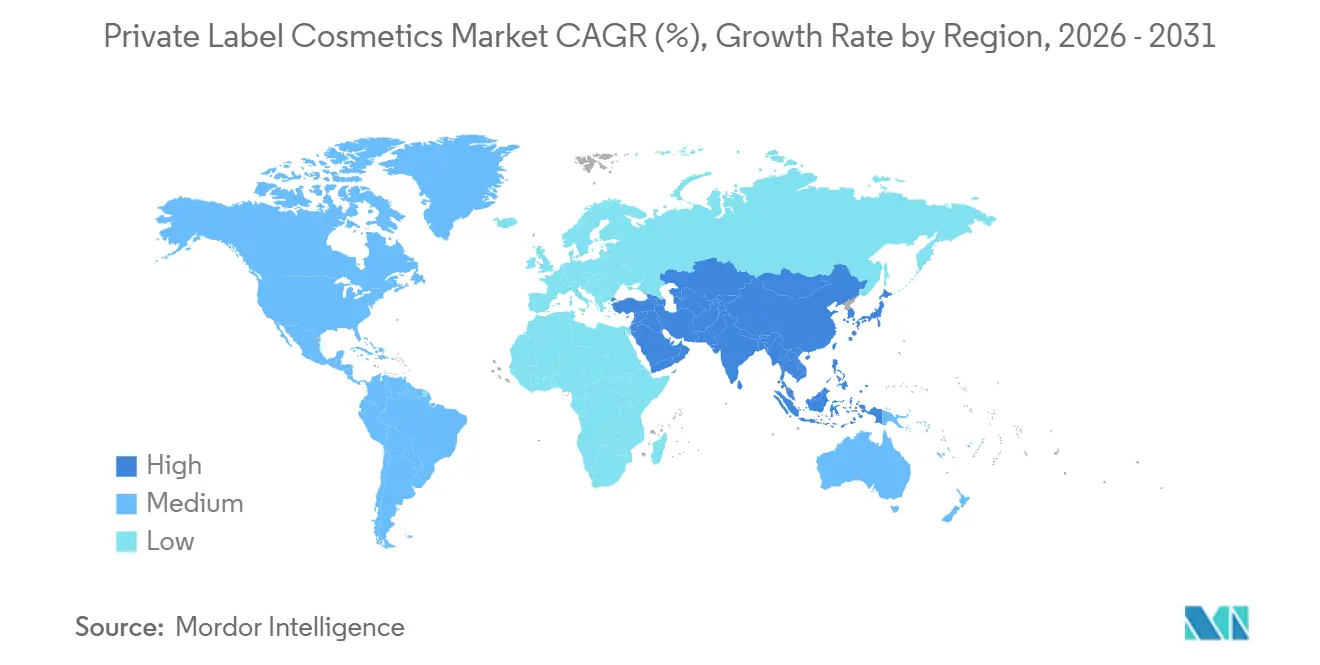
North America accounted for the largest share of 33.34% of the global private label cosmetics market in 2025. The region's position is supported by a well-developed beauty retail ecosystem, widespread acceptance of retailer-owned brands, and strong consumer confidence in private label product quality. Retailers continue to strengthen their exclusive beauty portfolios by introducing scientifically formulated skincare, clean-label cosmetics, and premium private label collections, supported by advanced merchandising and omnichannel retail strategies. The presence of established specialty beauty retailers, supermarkets, pharmacies, and warehouse clubs provides extensive shelf visibility and consistent product availability. Continuous investment in product innovation, sustainable packaging, and dermatologist-backed formulations further reinforces the region's dominant market position.
APAC Private Label Cosmetics Market
Asia-Pacific is projected to be the fastest-growing regional market, registering a CAGR of 6.94% during 2026–2031. Growth in the region is driven by the rapid modernization of beauty retail, expanding omnichannel distribution networks, and the increasing presence of retailer-owned cosmetic brands across both established and emerging markets. Consumers are placing greater emphasis on preventive skincare, personalized beauty solutions, ingredient transparency, and multifunctional cosmetic products, encouraging retailers to broaden their private label portfolios with innovative formulations. The region has also become a significant hub for beauty innovation, with retailers adopting advanced ingredients, biotechnology-based actives, K-beauty and J-beauty inspired formulations, and science-backed skincare concepts to meet evolving consumer expectations.
EMEA and South America Private Label Cosmetics Market
Europe represents a mature and strategically important market for private label cosmetics, characterized by strong mass-market penetration and expanding premium retailer-owned beauty portfolios. According to the Office for National Statistics (UK), consumer spending in the United Kingdom reached approximately GBP 38.3 billion in 2025, reflecting the country's substantial beauty and personal care consumption, which continues to support demand for private label cosmetics [3]Source: Office for National Statistics (UK), "Consumer spending on personal care in the United Kingdom", ons.gov.uk. Meanwhile, South America is witnessing steady growth supported by the expansion of modern retail formats and increasing availability of retailer-exclusive cosmetic brands. The Middle East & Africa is also emerging as a promising market, driven by the development of organized retail, growing demand for premium personal care products, and retailers' increasing investment in private label beauty assortments to meet evolving consumer preferences.

Competitive Landscape
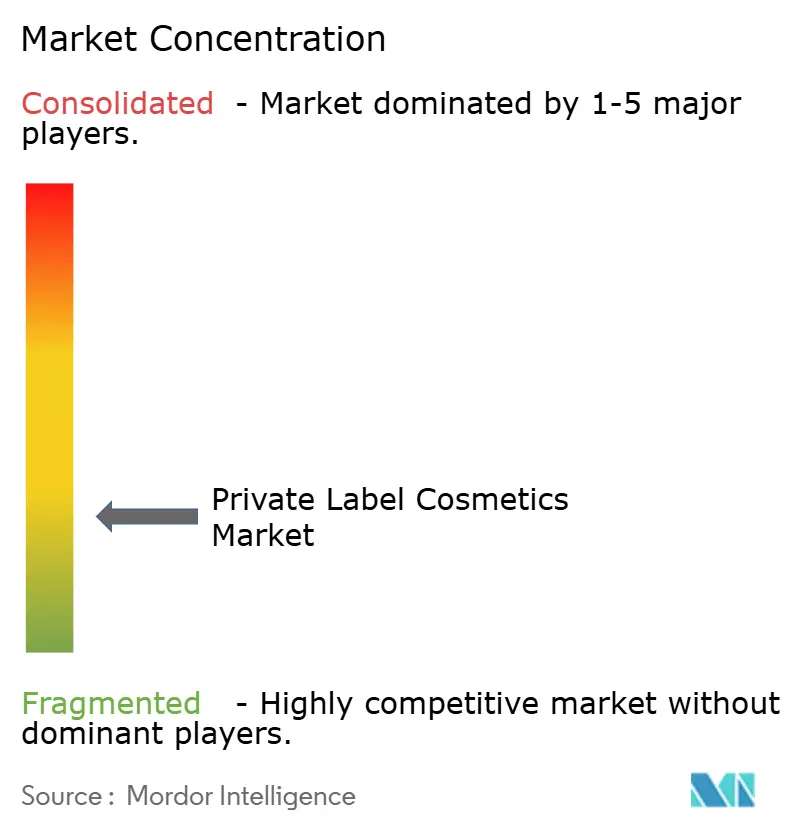
The global private label cosmetics market is moderately fragmented, with competition among global contract manufacturers, specialized private label developers, and formulation experts across dimensions such as innovation, manufacturing flexibility, product quality, regulatory compliance, and speed-to-market. Key manufacturers, including Cosmax, Inc., Intercos S.p.A., Kolmar Korea Co., Ltd., Knowlton Development Corporation (KDC/Innovative Beauty Group), and Ancorotti Cosmetics S.p.A., leverage extensive research and development capabilities, formulation expertise, and global manufacturing networks to support retailers, beauty brands, and e-commerce companies in launching differentiated private label cosmetics.
The competitive landscape is also evolving with the emergence of beauty incubators and platform-based product development companies that operate beyond traditional contract manufacturing models. These firms collaborate closely with retailers and digital-first beauty businesses to identify emerging consumer trends, develop exclusive private label concepts, manage formulation and packaging development, and accelerate product launches through agile manufacturing. Their ability to rapidly convert market insights into retailer-exclusive beauty products has shortened innovation cycles and enabled retailers to respond more effectively to changing consumer preferences, increasing competitive intensity across the market.
Technology is becoming a significant competitive differentiator as manufacturers invest in AI-powered quality monitoring, autonomous production systems, digital manufacturing execution platforms, and data-driven quality assurance to improve operational efficiency and product consistency. Artificial intelligence is increasingly being used for formulation optimization, automated visual inspection, predictive maintenance, process monitoring, and quality control, reducing production variability while accelerating manufacturing throughput. Combined with smart factory technologies and advanced analytical systems, these investments are enabling private label manufacturers to deliver higher-quality products with shorter lead times, greater manufacturing flexibility, and improved regulatory compliance, strengthening their competitive position in the global private label cosmetics market.
Private Label Cosmetics Industry Leaders
-
Cosmax, Inc.
-
Intercos S.p.A.
-
Kolmar Korea Co., Ltd.
-
Knowlton Development Corporation, Inc.
-
Ancorotti Cosmetics S.p.A.
- *Disclaimer: Major Players sorted in no particular order
Private Label Cosmetics Market Companies Covered in this Report
- Cosmax, Inc.
- Intercos S.p.A.
- Kolmar Korea Co., Ltd.
- Knowlton Development Corporation, Inc.
- Fareva
- Ancorotti Cosmetics S.p.A.
- Chromavis Fareva
- Schwan-STABILO Cosmetics GmbH & Co. KG
- Cosmecca Korea Co., Ltd.
- Cosmetic Solutions Innovation Labs
- H.S.A. S.p.A.
- TOA Inc.
- HCT Group
- COPTIS
- Lady Burd Cosmetics
- Cosmetic Solutions Europe
- Vee Pak Inc.
- Garcoa Laboratories
- Maesa Inc.
- BPI Labs

Recent Industry Developments in Private Label Cosmetics Market
- March 2026: Cosmax Indonesia plans to announce a new product line featuring skincare products that address common concerns in tropical regions, as well as color cosmetics suited to the skin tones of consumers in these areas, available at an accessible price point.
- October 2025: kdc/one (Knowlton Development Corporation) officially acquired the business and operations of Barony Universal. Based in Irvine, Scotland, Barony is the United Kingdom's largest independent filler of personal care and household aerosol products.
- July 2025: Kolmar Korea completed construction and began full-scale operations of its second manufacturing facility in the United States, the world's largest cosmetics market. Located in Scott Township, Pennsylvania, the new plant represents a key strategic move to expand K-beauty's global footprint while establishing a United States-based tariff-safe zone amid rising trade pressures.


Global Private Label Cosmetics Market Report Scope
Private label cosmetics are manufactured by a specialized third-party facility but sold under your own brand name. The private label cosmetics market is segmented by product type, category, nature, end user, distribution channel, and geography. Based on product type, the market is segmented into skincare, hair care, color cosmetics, and others. Based on category, the market is segmented into premium and mass. Based on nature, the market is segmented into conventional and natural/organic. Based on end user, the market is segmented into women and men. Based on distribution channel, the market is segmented into supermarkets and hypermarkets, specialty stores, online retail stores, and other distribution channels. Based on geography, the market is segmented into North America, Europe, Asia-Pacific, South America, and Middle East and Africa. The report provides market size and forecasts in both value (USD) and volume (tons) for all the mentioned segments.
| Skincare |
| Hair Care |
| Color Cosmetics |
| Others |
| Premium |
| Mass |
| Conventional |
| Natural/Organic |
| Women |
| Men |
| Supermarkets and Hypermarkets |
| Specialty Stores |
| Online Retail Stores |
| Other Distribution Channels |
| North America | United States |
| Canada | |
| Mexico | |
| Rest of North America | |
| Europe | Germany |
| United Kingdom | |
| Italy | |
| France | |
| Spain | |
| Netherlands | |
| Poland | |
| Belgium | |
| Sweden | |
| Rest of Europe | |
| Asia-Pacific | China |
| India | |
| Japan | |
| Australia | |
| Indonesia | |
| South Korea | |
| Thailand | |
| Singapore | |
| Rest of Asia-Pacific | |
| South America | Brazil |
| Argentina | |
| Colombia | |
| Chile | |
| Peru | |
| Rest of South America | |
| Middle East and Africa | South Africa |
| Saudi Arabia | |
| United Arab Emirates | |
| Nigeria | |
| Egypt | |
| Morocco | |
| Turkey | |
| Rest of Middle East and Africa |
| By Product Type | Skincare | |
| Hair Care | ||
| Color Cosmetics | ||
| Others | ||
| By Category | Premium | |
| Mass | ||
| By Nature | Conventional | |
| Natural/Organic | ||
| By End User | Women | |
| Men | ||
| By Distribution Channel | Supermarkets and Hypermarkets | |
| Specialty Stores | ||
| Online Retail Stores | ||
| Other Distribution Channels | ||
| By Geography | North America | United States |
| Canada | ||
| Mexico | ||
| Rest of North America | ||
| Europe | Germany | |
| United Kingdom | ||
| Italy | ||
| France | ||
| Spain | ||
| Netherlands | ||
| Poland | ||
| Belgium | ||
| Sweden | ||
| Rest of Europe | ||
| Asia-Pacific | China | |
| India | ||
| Japan | ||
| Australia | ||
| Indonesia | ||
| South Korea | ||
| Thailand | ||
| Singapore | ||
| Rest of Asia-Pacific | ||
| South America | Brazil | |
| Argentina | ||
| Colombia | ||
| Chile | ||
| Peru | ||
| Rest of South America | ||
| Middle East and Africa | South Africa | |
| Saudi Arabia | ||
| United Arab Emirates | ||
| Nigeria | ||
| Egypt | ||
| Morocco | ||
| Turkey | ||
| Rest of Middle East and Africa | ||


Key Questions Answered in the Report
What is the projected growth rate of the private label cosmetics market?
The private label cosmetics market is projected to grow at a CAGR of 5.45% from 2026 to 2031, reaching USD 15.19 billion by 2031.
Which product type holds the largest share of private label cosmetics sales?
Skincare is the largest product type, accounting for 42.23% of the private label cosmetics market share in 2025.
Which private label cosmetics category is growing the fastest?
The Premium category is the fastest-growing category, with a projected CAGR of 6.59% from 2026 to 2031.
Why are natural and organic cosmetics important for private label brands?
Natural/Organic products accounted for 69.32% of the market in 2025 and are projected to expand at a 7.09% CAGR through 2031, supported by consumer interest in ingredient transparency and certified formulations.
Page last updated on:





