
Port Wine Market Size and Share
Market Overview
| Study Period | 2021 - 2031 |
|---|---|
| Market Size (2026) | USD 837.63 Million |
| Market Size (2031) | USD 994.81 Million |
| Growth Rate (2026 - 2031) | 3.50 % |
| Fastest Growing Market | Asia-Pacific |
| Largest Market | Europe |
| Market Concentration | Medium |
Major Players
*Disclaimer: Major Players sorted in no particular order Image © Mordor Intelligence. Reuse requires attribution under CC BY 4.0. |
|
Port Wine Market Analysis by Mordor Intelligence
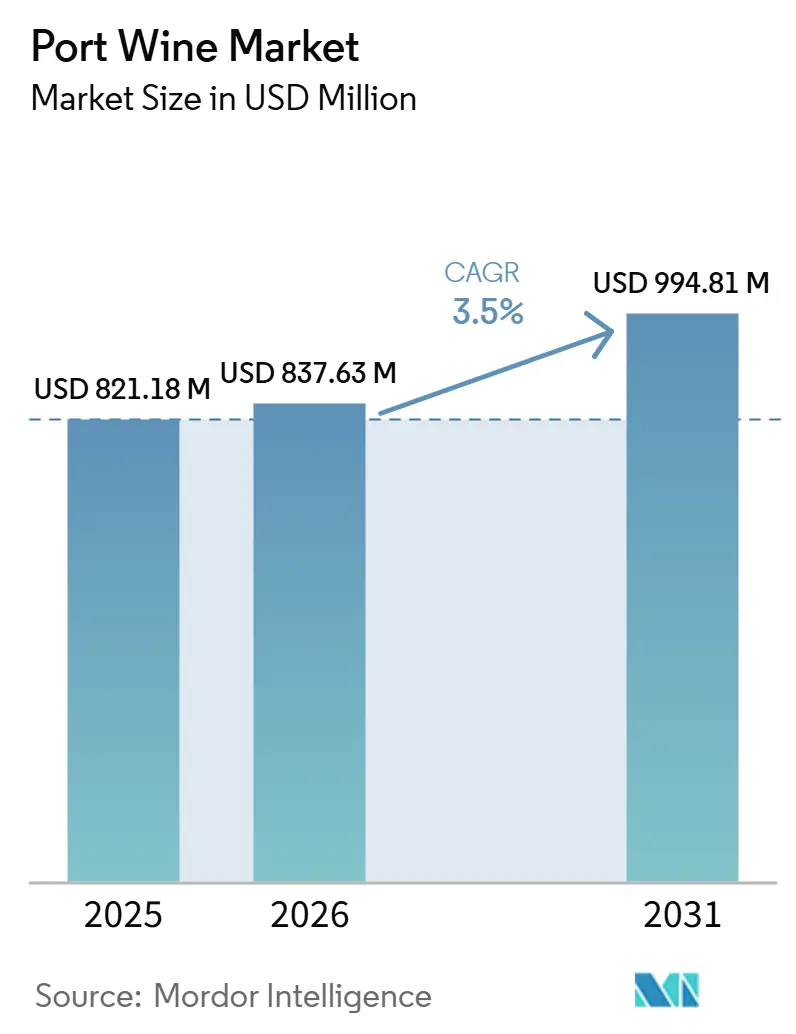
The port wine market size is expected to grow from USD 821.18 million in 2025 to USD 837.63 million in 2026 and is forecast to reach USD 994.81 million by 2031 at a 3.50% CAGR over 2026-2031. The market is growing steadily, driven by increasing consumer preference for premium and heritage wines, growing interest in wine tourism, and expanding awareness of port wine beyond traditional consumption occasions. Product innovation, including lighter styles and cocktail-friendly offerings, is attracting new consumer groups while maintaining the category's premium positioning. Strong geographical identity, established production standards, and growing availability through retail and online channels continue to support market expansion. Rising demand for premium gifting, collectible wines, and authentic regional products is further reinforcing long-term value growth across domestic and international markets.
Key Report Takeaways
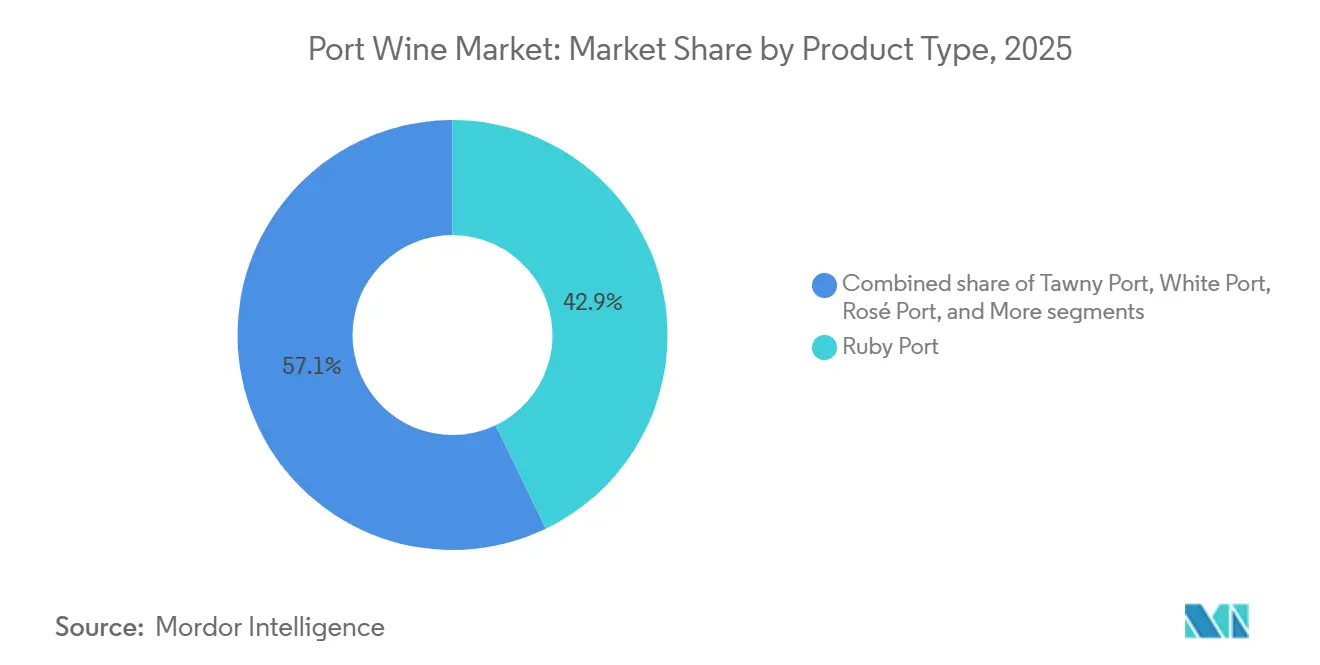
- By product type, ruby port held the largest 2025 share at 42.87%, while rosé port is forecast to record the highest CAGR at 6.91% during 2026-2031.
- By price point, standard port held the largest 2025 share at 37.18%, while the premium tier is forecast to grow at the highest CAGR of 5.63% during 2026-2031.
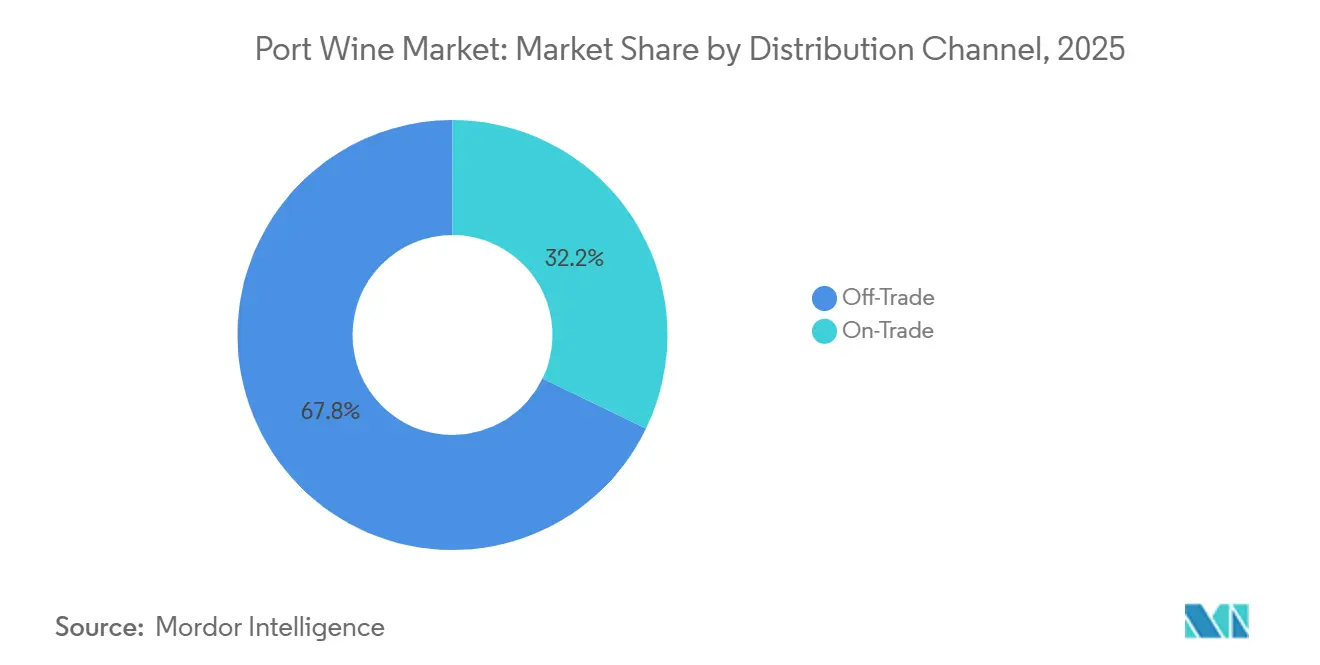
- By distribution channel, off-trade held the largest 2025 share at 67.84%, while on-trade is forecast to expand at the highest CAGR of 4.18% during 2026-2031.
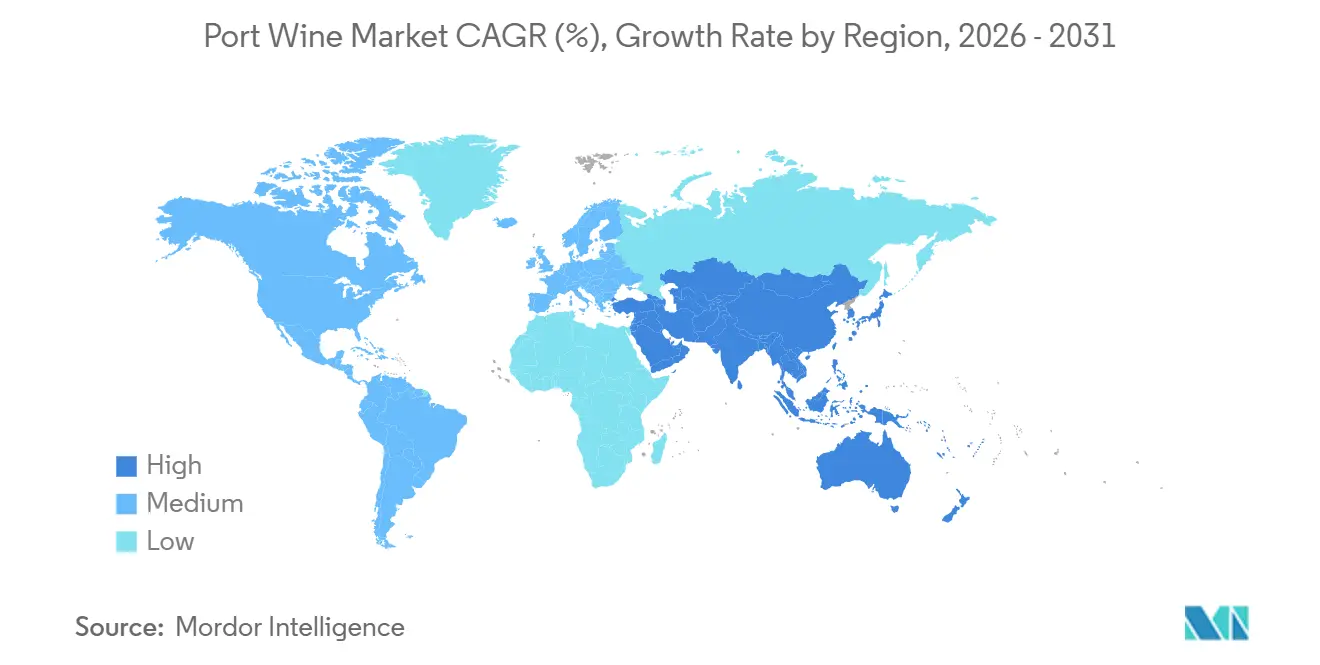
- By geography, Europe held the largest 2025 share at 82.16%, while Asia-Pacific is forecast to grow at the highest CAGR of 6.46% during 2026-2031.
Note: Market size and forecast figures in this report are generated using Mordor Intelligence’s proprietary estimation framework, updated with the latest available data and insights as of January 2026.
Market Trends and Insights
Drivers Impact Analysis of Port Wine Market*
| Driver | (~) % Impact on CAGR Forecast | Geographic Relevance | Impact Timeline |
|---|---|---|---|
| Premiumization of fortified wines | +1.3% | Global, with concentration in Europe and Asia-Pacific premium corridors | Medium term (2–4 years) |
| Port wine tourism and experiential consumption | +0.8% | Europe (Portugal), with spill-over to North America and Brazil | Medium term (2–4 years) |
| Growing popularity of port-based cocktails and aperitifs | +0.6% | Europe, North America | Short term (≤ 2 years) |
| Expansion of online wine retail and digital discovery | +0.5% | North America and Europe, growing in Asia-Pacific | Short term (≤ 2 years) |
| Heritage and protected origin appeal | +0.4% | Global, anchored in Europe regulatory framework | Long term (≥ 4 years) |
| Growing demand for premium wine gifting | +0.3% | North America, Asia-Pacific | Medium term (2–4 years) |
| Source: Mordor Intelligence | |||
Premiumization of fortified wines
Premiumization of fortified wines is a key growth driver for the port wine market, as consumers increasingly seek higher-quality products that offer authenticity, craftsmanship, and distinctive regional heritage. Rising interest in aged, vintage, and limited-edition port wines is encouraging producers to expand their premium portfolios while investing in quality improvements, sustainable production practices, and premium packaging. Consumers are also placing greater value on provenance, protected geographical indications, and traditional winemaking methods, reinforcing the appeal of premium fortified wines. This shift toward value-driven purchasing is supporting higher spending per bottle and strengthening long-term market growth across both mature and emerging wine markets.
Port wine tourism and experiential consumption
Port wine tourism and experiential consumption are supporting the port wine market by strengthening consumer engagement and increasing demand for premium and authentic regional wines. According to the Instituto dos Vinhos do Douro e do Porto (IVDP), overnight stays in the Douro region increased by 29.1% between 2019 and 2024, significantly outpacing the 14.5% growth recorded across Portugal during the same period[1]Source: Instituto dos Vinhos do Douro e do Porto, "Tourism in the Douro and Porto regions: Culture and Wine as drivers of the tourist experience.",ivdp.pt. The IVDP also reported that overnight stays in rural tourism and residential accommodation across Northern Portugal grew by 51.2% between 2019 and 2024, reflecting rising demand for immersive wine and countryside experiences associated with the Douro wine region[2]Source: Instituto dos Vinhos do Douro e do Porto, "Tourism in the Douro and Porto regions: Culture and Wine as drivers of the tourist experience.",ivdp.pt. As wineries continue to expand cellar tours, guided tastings, wine education programs, and hospitality offerings, experiential consumption is expected to reinforce port wine's premium positioning and support long-term market growth.
Growing popularity of port-based cocktails and aperitifs
The growing popularity of port-based cocktails and aperitifs is creating new consumption occasions and broadening the appeal of port wine among younger consumers. Traditionally associated with after-dinner consumption, port is increasingly being served chilled or incorporated into cocktails, making it more suitable for casual social settings and contemporary drinking preferences. Producers are actively promoting white and rosé port as versatile ingredients for mixed drinks, helping reposition the category beyond its traditional image. This shift is expanding port wine's presence in bars, restaurants, and hospitality venues while supporting greater consumer awareness and encouraging more frequent consumption across domestic and international markets.
Expansion of online wine retail and digital discovery
The growth of online wine retail and digital discovery is supporting the port wine market by improving consumer access to a broader range of products across domestic and international markets. E-commerce platforms, winery websites, and digital marketplaces allow consumers to explore different port wine styles, compare products, and purchase premium offerings that may not be available through traditional retail channels. Digital marketing, social media, and online educational content are also increasing consumer awareness and encouraging product discovery among younger wine consumers. As producers continue to strengthen their digital presence and direct-to-consumer strategies, online channels are expected to play an increasingly important role in expanding market reach and supporting premium wine sales.
Restraints Impact Analysis of Port Wine Market*
| Restraint | (~) % Impact on CAGR Forecast | Geographic Relevance | Impact Timeline |
|---|---|---|---|
| Climate-driven yield and quality volatility | -0.9% | Global, concentrated in Portugal's Douro Valley | Long term (≥ 4 years) |
| Growing preference for lower-alcohol beverages | -0.6% | Europe, North America | Medium term (2–4 years) |
| Challenges in attracting younger consumers | -0.5% | Global, most acute in North America and Northern Europe | Medium term (2–4 years) |
| Long-aging inventory and working capital burden | -0.4% | Global, most acute for smaller independent quintas | Long term (≥ 4 years) |
| Source: Mordor Intelligence | |||
Climate-driven yield and quality volatility
Climate-driven yield and quality volatility remains a key restraint for the port wine market, as rising temperatures, prolonged droughts, and irregular rainfall continue to affect grape production in Portugal's Douro Valley. These conditions can reduce yields, alter grape quality, and increase uncertainty in raw material availability, creating additional pressure on producers. Reflecting the need to balance supply with production conditions, the Instituto dos Vinhos do Douro e do Porto (IVDP) set the 2026 benefício at 76,000 pipas (550-liter casks), equivalent to approximately 57 million kilograms of grapes, maintaining tight controls over authorized port wine production[3]Source: Instituto dos Vinhos do Douro e do Porto, "Annual Harvest Announcement for the Douro Demarcated Region 2026",ivdp.pt. Producers are therefore required to invest in vineyard adaptation, water management, and sustainable viticulture practices to preserve long-term production and quality.
Growing preference for lower-alcohol beverages
The growing preference for lower-alcohol beverages is restraining the port wine market, as consumers increasingly shift toward lighter alcoholic drinks and moderation-focused consumption habits. Rising health awareness and changing lifestyle preferences are encouraging consumers to choose beverages with lower alcohol content, particularly among younger demographics. This may reduce the frequency of port wine consumption, as traditional port wines typically have a higher alcohol content than many table wines and ready-to-drink alternatives. As a result, producers face increasing pressure to diversify their product portfolios, promote alternative serving occasions, and adapt their marketing strategies to remain relevant in an evolving beverage market.
*Our forecasts treat driver/restraint impacts as directional, not additive. The impact forecasts reflect baseline growth, mix effects, and variable interactions.
Port Wine Market Segment Analysis
By Product Type:
Ruby Port Anchor Share, Rosé Port Drive GrowthRuby port held the largest share of the port wine market, accounting for 42.87% in 2025. This is driven by its widespread consumer acceptance, broad retail availability, and established presence across traditional port wine markets. Its approachable flavor profile and competitive pricing make it the preferred choice for everyday consumption, supporting consistent demand through supermarkets, specialty wine stores, and other off-trade channels. The segment continues to benefit from strong brand recognition and remains the foundation of global port wine sales.
Rosé port is projected to register the fastest growth in the market, expanding at a CAGR of 6.91% during 2026–2031. Growth is supported by changing consumer preferences toward lighter, fruit-forward wine styles and more versatile drinking occasions. Its increasing popularity as an aperitif and cocktail ingredient is expanding consumption beyond traditional after-dinner occasions, particularly among younger consumers. Continued product innovation and greater promotion through hospitality and on-trade channels are expected to further support the segment's growth.



By Price Point:
Standard Value Holds, Premium Margin LeadsThe standard price point accounted for the largest share of the market, representing 37.18% in 2025. This segment leads due to its affordability, broad retail availability, and strong demand across traditional port wine-consuming markets. Standard port wines are widely purchased for regular consumption through various channels, making them accessible to a broad consumer base. Their balanced quality, established brand presence, and competitive pricing continue to support steady demand across both domestic and export markets.
The premium price point is projected to register the fastest growth in the port wine market, expanding at a CAGR of 5.63% during 2026–2031. Growth is driven by increasing consumer demand for aged, vintage, and limited-edition port wines, supported by premium gifting, wine collecting, and experiential consumption. Rising interest in high-quality wines and consumers' willingness to pay more for premium products are encouraging producers to expand their higher-value portfolios, supporting long-term value growth across the market.
By Distribution Channel:
Off-Trade Breadth, On-Trade GrowsOff-trade accounted for the largest share of the port wine market, representing 67.84% in 2025. This segment dominates due to the wide availability of port wines through supermarkets, specialty wine stores, and other retail outlets, giving consumers convenient access to a broad range of products across different price points. Strong retail distribution networks and established purchasing habits in key consumption markets continue to support the segment's position. The expansion of organized retail and online retail platforms is further improving product accessibility and consumer reach.
On-trade is projected to register the fastest growth in the port wine market, expanding at a CAGR of 4.18% during 2026–2031. Growth is driven by increasing consumer interest in premium wine experiences, food pairing, and port-based cocktails served in restaurants, bars, hotels, and other hospitality venues. Rising tourism, expanding wine-focused hospitality offerings, and greater promotion of port wines in experiential consumption settings are expected to further strengthen demand through on-trade channels during the forecast period.
Geography Analysis
Europe Port Wine Market
Europe accounted for the largest share of the port wine market, representing 82.16% in 2025. The region's dominance is supported by its long-established consumption culture, strong domestic demand in Portugal, and well-developed distribution networks across key Western European countries. High consumer awareness, widespread retail availability, and the protected geographical identity of port wine continue to reinforce Europe's position. Ongoing demand for both everyday and premium port wines further supports the region's market position.
APAC Port Wine Market
Asia-Pacific is projected to register the fastest growth in the port wine market, expanding at a CAGR of 6.46% during 2026–2031. Growth is driven by rising disposable incomes, increasing interest in premium imported wines, and growing awareness of port wine among younger and affluent consumers. The growing popularity of wine gifting, fine dining, and premium beverage consumption is creating new opportunities across several Asian markets. Increasing availability through retail, e-commerce, and hospitality channels is expected to further support regional growth.
North America Port Wine Market
North America is emerging as a strategically important market for port wine, supported by growing consumer interest in premium and fortified wines, expanding wine tourism awareness, and increasing product availability through retail and online channels. Rising demand for premium alcoholic beverages, greater adoption of experiential wine consumption, and a well-developed hospitality sector continue to strengthen market opportunities across the region. Producers are also expanding marketing initiatives and distribution networks to improve brand visibility and attract new consumers, supporting steady long-term market growth.

Competitive Landscape
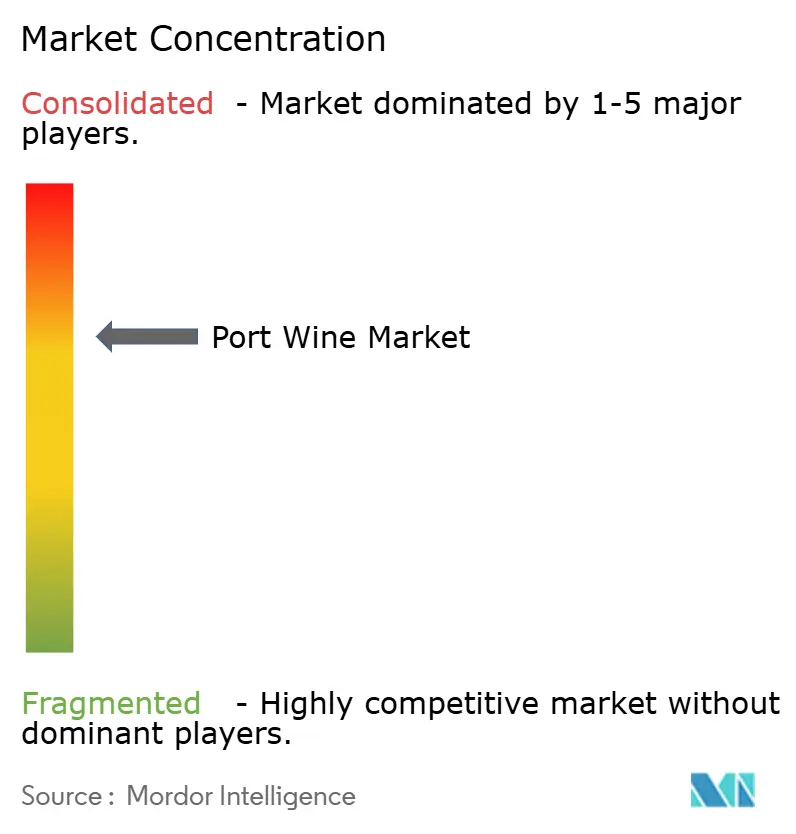
The port wine market is moderately consolidated, with competition driven by a small number of well-established producers that benefit from extensive vineyard ownership, strong brand portfolios, and long-standing expertise in port wine production. Major companies operating in the market include Symington Family Estates, The Fladgate Partnership, Sogrape, Quinta do Noval, and Adriano Ramos Pinto - Vinhos S.A. These companies compete on product quality, premium positioning, geographical reach, and diversified portfolios spanning multiple port wine styles, while maintaining their presence across domestic and international markets.
Leading producers are focusing on expanding their premium portfolios through Vintage, Late Bottled Vintage (LBV), Aged Tawny, and other specialty port wines to meet growing demand for high-value offerings. Companies are also investing in winery tourism, visitor experiences, premium packaging, digital marketing, and direct-to-consumer sales to strengthen brand engagement and expand their global customer base. Limited-edition releases and product innovation continue to support brand differentiation within the competitive landscape.
Several independent wineries and family-owned estates are also intensifying competition by emphasizing small-batch production, estate-grown grapes, and premium craftsmanship. These producers differentiate themselves through sustainable viticulture, organic production practices, and regional heritage, while expanding exports into emerging international markets. Growing consumer interest in premium, collectible, and experiential wines is expected to drive continued product innovation and further intensify competition across the market.
Port Wine Industry Leaders
-
Symington Family Estates
-
The Fladgate Partnership
-
Sogrape
-
Quinta do Noval
-
Adriano Ramos Pinto - Vinhos S.A.
- *Disclaimer: Major Players sorted in no particular order
Port Wine Market Companies Covered in this Report
- Symington Family Estates
- The Fladgate Partnership
- Sogrape
- Kopke Group
- Quinta do Noval
- Adriano Ramos Pinto - Vinhos S.A.
- Niepoort Vinhos S.A.
- Quinta do Crasto SA
- Churchill's Port
- Quinta do Vallado
- Quinta da Romaneira
- Quinta do Tedo
- Quinta do Portal
- Quinta de la Rosa
- Quinta do Vesuvio
- Quinta do Passadouro
- Rozès
- A. A. Cálem S.A.
- La Martiniquaise
- Quinta do Infantado

Recent Industry Developments in Port Wine Market
- July 2026: The Fladgate Partnership launched Taylor's Very Very Old White Port (VVOP White), the first ultra-aged White Port in the brand's history. The limited-edition release was blended from White Ports aged for more than 80 years in oak casks, with some components dating back to 1896, strengthening the company's presence in the ultra-premium and collectible port wine segment.
- April 2026: The Fladgate Partnership declared the 2024 Vintage Port across its three flagship houses, Taylor's, Fonseca, and Croft, marking the first simultaneous vintage declaration by all three brands since 2017. The release, produced in limited quantities from the 2024 harvest, strengthened the company's premium and collectible port wine portfolio while reinforcing its position in the luxury fortified wine segment.
- October 2024: Quinta do Noval launched its 50 Year old tawny port, expanding its ultra-premium port wine portfolio. The release joined the IVDP's recently introduced 50-Year-old tawny port category, strengthening the company's presence in the luxury fortified wine segment and catering to growing demand for rare, long-aged port wines.


Global Port Wine Market Report Scope
Port wine is a fortified wine produced exclusively in Portugal's Douro Valley under a Protected Designation of Origin (PDO), recognized for its distinctive production process, diverse styles, and premium heritage. The port wine market is segmented by product type into ruby port, tawny port, white port, rosé port, vintage port, and late bottled vintage port; by price point into economy, standard, and premium; by distribution channel into off-trade and on-trade; and by geography into North America, Europe, Asia-Pacific, South America, and Middle East and Africa.
| Ruby Port |
| Tawny Port |
| White Port |
| Rosé Port |
| Vintage Port |
| Late Bottled Vintage (LBV) Port |
| Economy |
| Standard |
| Premium |
| Off-Trade | Supermarkets/Hypermarkets |
| Specialty Wine Stores | |
| Others | |
| On-Trade | Restaurants |
| Bars/Wine Bars | |
| Hotels |
| North America | United States |
| Canada | |
| Mexico | |
| Rest of North America | |
| Europe | Germany |
| United Kingdom | |
| Italy | |
| France | |
| Spain | |
| Netherlands | |
| Poland | |
| Belgium | |
| Sweden | |
| Rest of Europe | |
| Asia-Pacific | China |
| India | |
| Japan | |
| Australia | |
| Indonesia | |
| South Korea | |
| Thailand | |
| Singapore | |
| Rest of Asia-Pacific | |
| South America | Brazil |
| Argentina | |
| Colombia | |
| Chile | |
| Peru | |
| Rest of South America | |
| Middle East and Africa | South Africa |
| Saudi Arabia | |
| United Arab Emirates | |
| Nigeria | |
| Egypt | |
| Morocco | |
| Turkey | |
| Rest of Middle East and Africa |
| By Product Type | Ruby Port | |
| Tawny Port | ||
| White Port | ||
| Rosé Port | ||
| Vintage Port | ||
| Late Bottled Vintage (LBV) Port | ||
| By Price Point | Economy | |
| Standard | ||
| Premium | ||
| By Distribution Channel | Off-Trade | Supermarkets/Hypermarkets |
| Specialty Wine Stores | ||
| Others | ||
| On-Trade | Restaurants | |
| Bars/Wine Bars | ||
| Hotels | ||
| By Geography | North America | United States |
| Canada | ||
| Mexico | ||
| Rest of North America | ||
| Europe | Germany | |
| United Kingdom | ||
| Italy | ||
| France | ||
| Spain | ||
| Netherlands | ||
| Poland | ||
| Belgium | ||
| Sweden | ||
| Rest of Europe | ||
| Asia-Pacific | China | |
| India | ||
| Japan | ||
| Australia | ||
| Indonesia | ||
| South Korea | ||
| Thailand | ||
| Singapore | ||
| Rest of Asia-Pacific | ||
| South America | Brazil | |
| Argentina | ||
| Colombia | ||
| Chile | ||
| Peru | ||
| Rest of South America | ||
| Middle East and Africa | South Africa | |
| Saudi Arabia | ||
| United Arab Emirates | ||
| Nigeria | ||
| Egypt | ||
| Morocco | ||
| Turkey | ||
| Rest of Middle East and Africa | ||


Key Questions Answered in the Report
What is the forecast value of the port wine market by 2031?
The port wine market is forecast to reach USD 994.81 million by 2031, from USD 837.63 million in 2026, at a CAGR of 3.50%. The forecast reflects value growth supported by controlled supply, premium releases, experiential demand, and geographic expansion.
Which port style held the largest share in 2025?
Ruby port led product types with a 42.87% share in 2025, supported by established retail availability in major European markets. Its familiar style and supermarket presence give it a broad consumer base in France, the Netherlands, and the United Kingdom.
Which port style is forecast to grow fastest through 2031?
Rosé port is forecast to grow at a 6.91% CAGR during 2026-2031, supported by aperitif and cocktail occasions. Its lighter color and fruit-forward profile provide an accessible format for warmer-weather and social consumption occasions.
Which sales channel leads port purchases?
Off-trade led with 67.84% of value in 2025, while On-trade is forecast to grow faster at a 4.18% CAGR through 2031. Supermarkets provide repeat household access, while bars, restaurants, and hotels build discovery through guided service and cocktails.
Page last updated on:





