
PLGA (Poly Lactic-co-glycolic Acid) Market Size and Share
Market Overview
| Study Period | 2022 - 2032 |
|---|---|
| Market Size (2027) | USD 154.91 Million |
| Market Size (2032) | USD 280.77 Million |
| Growth Rate (2027 - 2032) | 12.63 % |
| Fastest Growing Market | Asia-Pacific |
| Largest Market | North America |
| Market Concentration | Medium |
Major Players *Disclaimer: Major Players sorted in no particular order Image © Mordor Intelligence. Reuse requires attribution under CC BY 4.0. | |
PLGA (Poly Lactic-co-glycolic Acid) Market Analysis by Mordor Intelligence
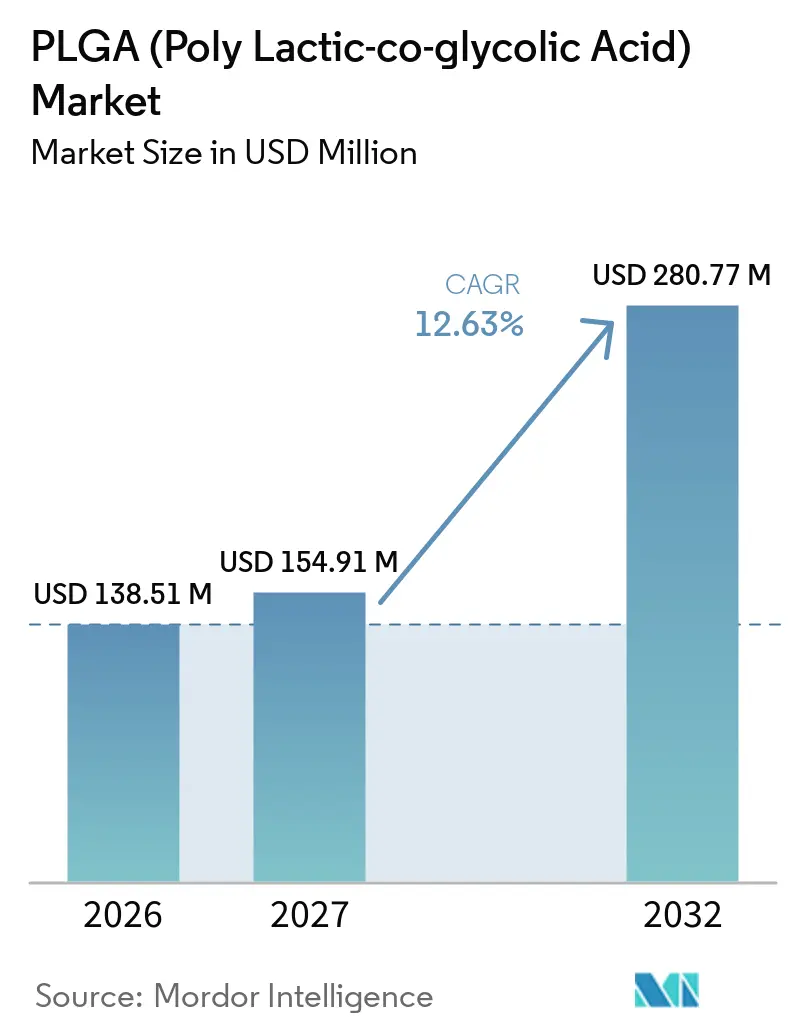
The PLGA (poly lactic-co-glycolic acid) Market size was valued at USD 138.51 million in 2026 and is estimated to grow from USD 154.91 million in 2027 to reach USD 280.77 million by 2032, at a CAGR of 12.63% during the forecast period (2027-2032). The PLGA (poly lactic-co-glycolic acid) market benefits from established use in controlled-release medicines, bioresorbable implants, and tissue engineering, which limit reliance on any one use case. Regulatory familiarity with the polymer supports development programs because product developers can draw on an existing record of material characterization and biocompatibility. Generic long-acting injectable approvals are likely to increase demand for well-characterized polymer grades while placing more attention on material consistency. Suppliers with Good Manufacturing Practice (GMP) manufacturing, documentation, and technical support are positioned to serve the most demanding applications. The PLGA (poly lactic-co-glycolic acid) market also has room to grow in Asia-Pacific as pharmaceutical manufacturing and medical-device capacity expand.
Key Report Takeaways
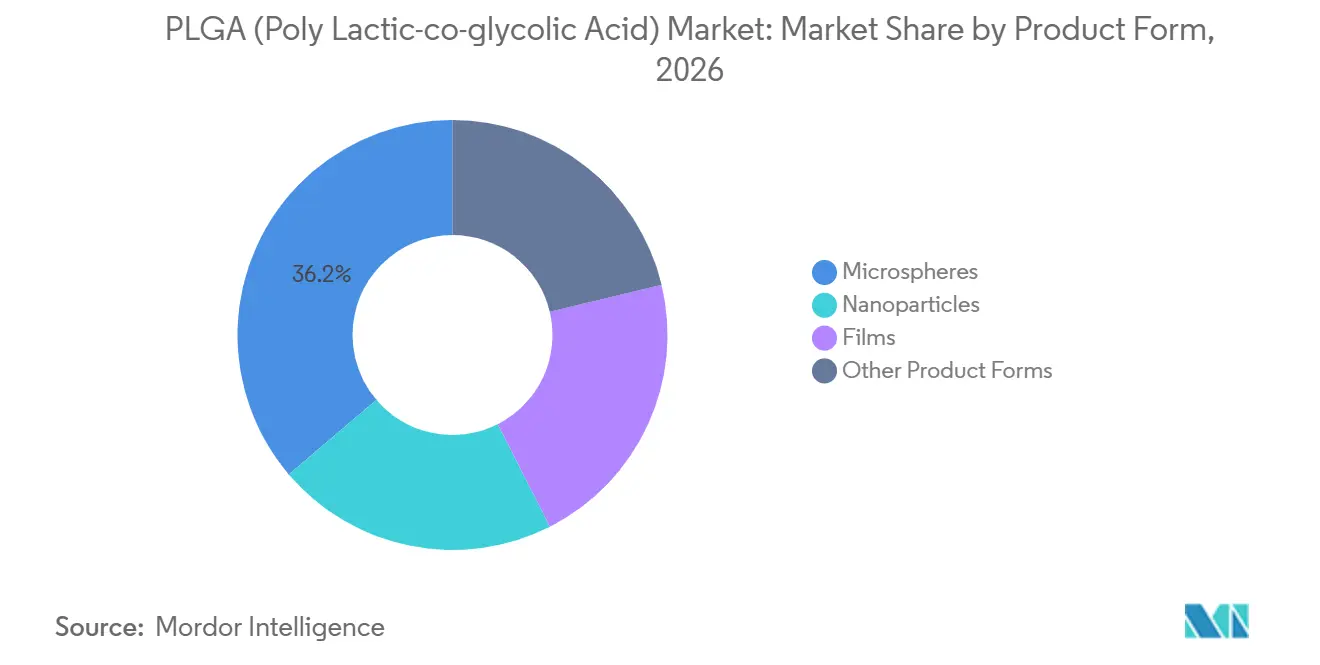
- By product form, microspheres held 36.23% of the PLGA (poly lactic-co-glycolic acid) market share in 2026, while nanoparticles are forecast to advance at a 13.54% CAGR through 2032.
- By application, medical held 75.65% of the PLGA (poly lactic-co-glycolic acid) market share in 2026 and is forecast to advance at a 13.81% CAGR through 2032.
- By processibility, injection molding held 34.81% of the PLGA (poly lactic-co-glycolic acid) market share in 2026 and is forecast to advance at a 13.73% CAGR through 2032.
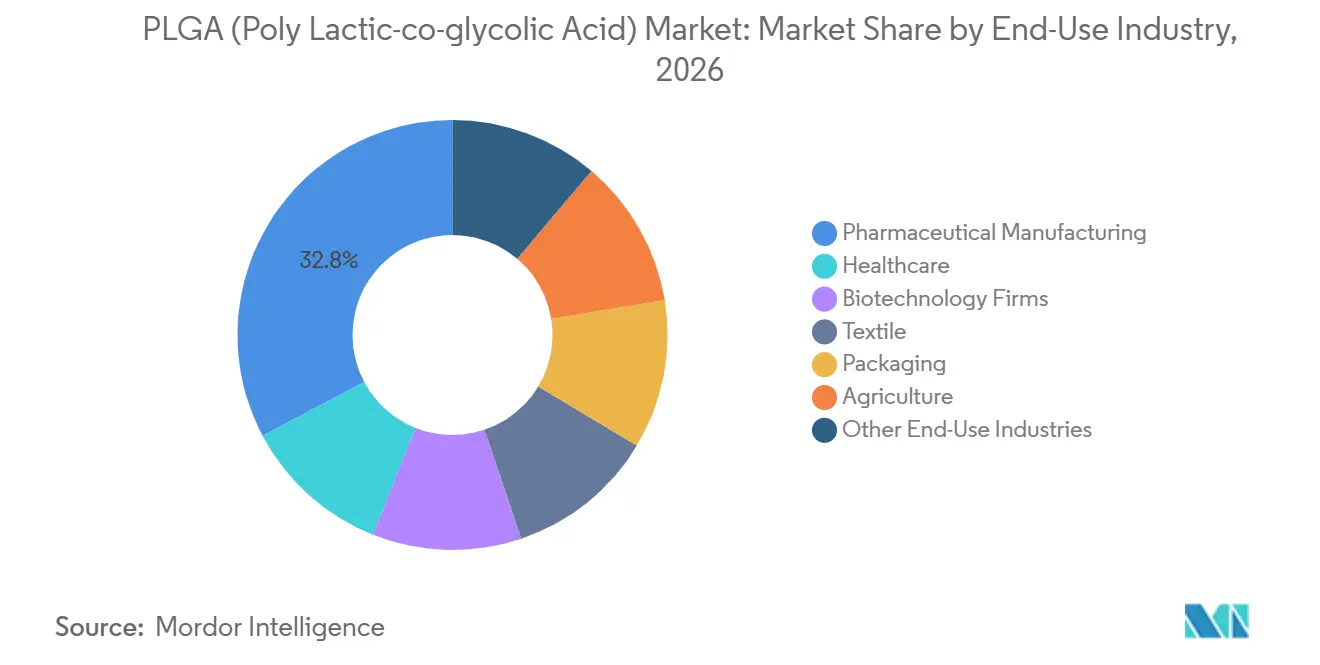
- By end-use industry, pharmaceutical manufacturing held 32.77% of the PLGA (poly lactic-co-glycolic acid) market share in 2026, while biotechnology firms are forecast to advance at a 14.46% CAGR through 2032.
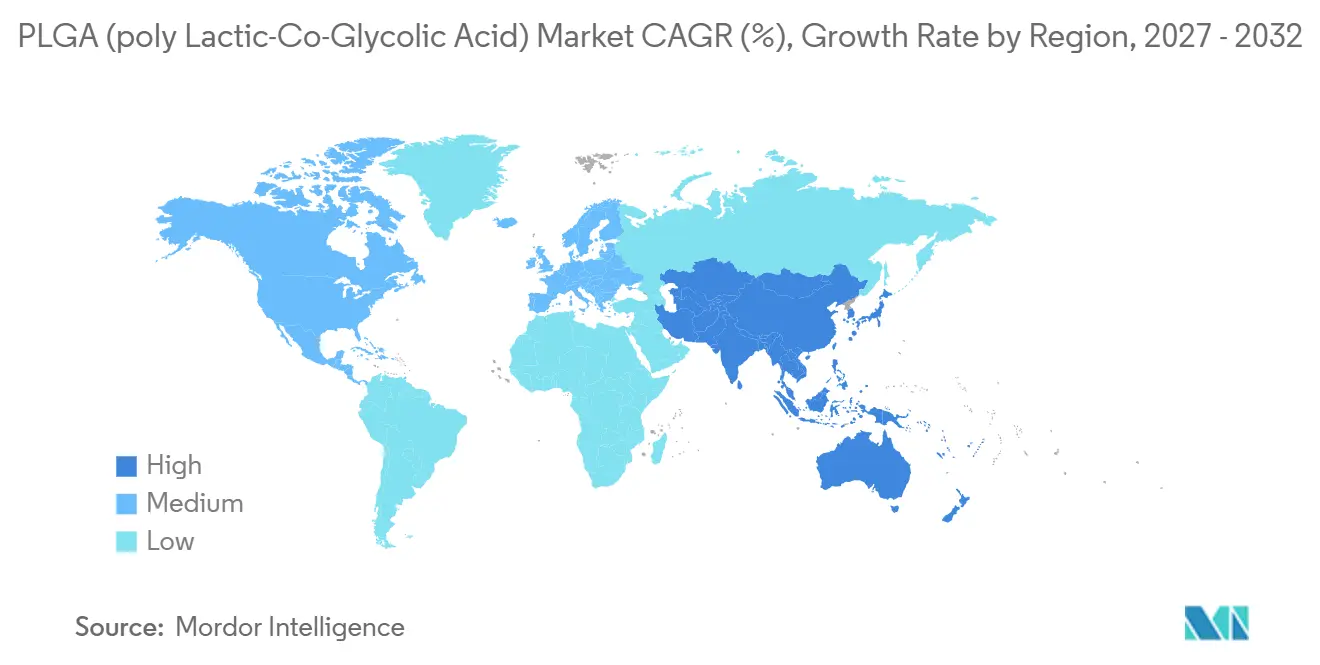
- By geography, North America held 38.08% of the PLGA (poly lactic-co-glycolic acid) market share in 2026, while Asia-Pacific is forecast to advance at a 14.04% CAGR through 2032.
Note: Market numbers in this report are based on Mordor Intelligence's proprietary estimation framework, which combines nine months of actuals with Q4 projections for base year 2026.
Market Trends and Insights
Drivers Impact Analysis of PLGA (Poly Lactic-co-glycolic Acid) Market*
| Driver | (~) % Impact on CAGR Forecast | Geographic Relevance | Impact Timeline |
|---|---|---|---|
| Rising Demand for Long-Acting Injectable Therapies | +3.5% | Global; highest concentration in North America and Europe | Short term (≤ 2 years) |
| Expansion of Bioresorbable Implants and Surgical Materials | +2.5% | North America, Europe, Asia-Pacific (APAC core) | Medium term (2–4 years) |
| Growth of Regenerative Medicine and Tissue Engineering | +2.0% | North America, Europe, with early gains in Japan, South Korea | Medium term (2–4 years) |
| Regulatory Familiarity with PLGA-Based Medical Products | +1.7% | Global; spillover to MEA, Latin America as regulatory convergence advances | Long term (≥ 4 years) |
| Increasing Demand for Tunable Drug-Release Profiles | +1.3% | Global; North America & EU as primary early adopters | Medium term (2–4 years) |
| Source: Mordor Intelligence | |||
Rising Demand for Long-Acting Injectable Therapies
The PLGA (poly lactic-co-glycolic acid) market is supported by long-acting injectable therapies that can maintain drug exposure after a single administration. The U.S. Food and Drug Administration had approved 27 PLGA-based long-acting injectable drug products by 2025 across microparticle, solid-implant, and in situ gel formats. Lupin Limited received U.S. Food and Drug Administration approval for risperidone extended-release injectable suspension in September 2025, with 180-day competitive generic therapy exclusivity. Generic entry makes polymer characterization more important because developers must demonstrate comparable release behavior and product performance. Spray-drying research published in 2025 also showed a one-step route for continuous microparticle production with control over particle size, morphology, and release kinetics.
Expansion of Bioresorbable Implants and Surgical Materials
The PLGA (poly lactic-co-glycolic acid) market benefits from material adjustment through the lactide-to-glycolide ratio, molecular weight, and end-group chemistry. A 2025 review documented PLGA-based fixation devices, cardiovascular products, tissue-engineering scaffolds, and drug-eluting implants. Evonik Industries AG opened a medical device center in Shanghai in July 2025 with an ISO Class 7 cleanroom for bioresorbable components used across orthopedic, cardiovascular, ophthalmic, dental, and surgical applications. A 2025 study found that patient-specific 3D-printed PLGA implants for hypertelorism surgery achieved a 0.1 mm design deviation. These capabilities can support specialized craniofacial and pediatric procedures where avoiding later metal-removal surgery may be valuable. Device suppliers still need to meet U.S. Food and Drug Administration requirements, European Medical Device Regulation requirements, and ISO 13485 quality-system expectations.
Growth of Regenerative Medicine and Tissue Engineering
The PLGA (poly lactic-co-glycolic acid) market gains from research using scaffolds to support bone, cartilage, tendon, and neural repair. Published 2025 work reported PLGA scaffold porosity of up to 82.3%, a property that can support cell attachment and nutrient movement. A 2025 study found that 3D-printed PLGA and nano-hydroxyapatite scaffolds seeded with adipose-derived mesenchymal stem cells improved bone regeneration in a rat radius-defect model. Research in large-animal Achilles tendon models also examined PLGA scaffolds with amniotic epithelial stem cells and reported controlled collagen deposition and M2 macrophage recruitment. Existing material safety knowledge can reduce development risk compared with entirely new biodegradable materials. Electrospinning remains relevant because it can create fibrous structures that guide cell alignment in tendon, ligament, and vascular applications.
Regulatory Familiarity with PLGA-Based Medical Products
The U.S. Food and Drug Administration has identified 28 branded PLGA drug products and 6 generic products in its nomenclature resource[1]. This regulatory history makes the PLGA (poly lactic-co-glycolic acid) market familiar to teams developing depot formulations, implants, and combination products. A 2025 review described more than 60 PLGA-based drug products marketed globally across multiple routes of administration. The PLGA (poly lactic-co-glycolic acid) market, therefore, benefits when developers can use established material evidence as part of a broader product-development package. The U.S. Food and Drug Administration guidance on complex injectables focuses attention on critical material attributes and critical process parameters for microsphere products. Suppliers that provide traceability, certificates of analysis, and consistent polymer characterization can meet these expectations more readily than suppliers focused only on research-grade material.
Restraints Impact Analysis of PLGA (Poly Lactic-co-glycolic Acid) Market*
| Restraint | (~) % Impact on CAGR Forecast | Geographic Relevance | Impact Timeline |
|---|---|---|---|
| Complex Polymerization, Purification, and Scale-Up Requirements | -1.4% | Global; most acute in emerging PLGA manufacturing bases in Asia-Pacific | Short term (≤ 2 years) |
| High Production and Quality-Control Costs | -1.1% | Global; most constraining in price-sensitive non-medical segments | Medium term (2–4 years) |
| Acidic Degradation Products and Local Tissue-Tolerance Risk | -0.7% | Global, with higher clinical relevance in biologic payload applications | Long term (≥ 4 years) |
| Source: Mordor Intelligence | |||
Complex Polymerization, Purification, and Scale-Up Requirements
PLGA production uses ring-opening polymerization of lactide and glycolide monomers, and its output is sensitive to temperature, catalyst selection, monomer purity, and moisture. These variables affect molecular weight distribution, end-group chemistry, stereochemical composition, degradation, and release behavior. A 2025 study found that longer microsphere residence time in ethanolic solution during solvent extraction reduced residual ethyl acetate by 93% from the baseline formulation. Such process changes can require extensive revalidation when production moves from laboratory work to commercial volumes. Manufacturers must also control particle size, morphology, drug loading, residual solvents, and release behavior across batches. This raises the qualification hurdle for suppliers seeking to serve regulated pharmaceutical applications.
High Production and Quality-Control Costs
Pharmaceutical-grade PLGA needs extensive raw material characterization and batch testing before it can support regulated drug or implant programs. Quality control commonly includes particle sizing, encapsulation-efficiency testing, residual-solvent analysis, and in vitro release profiling. These requirements can be justified for high-value medicines and implantable devices, but they raise costs in lower-value applications. Agriculture, packaging, and textiles face more pressure to compete against lower-cost biodegradable polymers such as polylactic acid and polycaprolactone. Development tools may reduce formulation screening time, but they do not remove the cost of controlled manufacturing and routine release testing.
*Our forecasts treat driver/restraint impacts as directional, not additive. The impact forecasts reflect baseline growth, mix effects, and variable interactions.
PLGA (Poly Lactic-co-glycolic Acid) Market Segment Analysis
By Product Form:
Microspheres Anchor Revenue While Nanoparticles Expand Development OptionsMicrospheres held 36.23% of the PLGA (poly lactic-co-glycolic acid) market share in 2026, reflecting their established role in long-acting injectable formulations. They are used in marketed therapies across oncology, endocrinology, and psychiatry, including leuprolide acetate, octreotide acetate, and triamcinolone acetonide products. Lupin Limited’s September 2025 approval for risperidone extended-release injectable suspension showed continuing generic activity in complex microsphere products. This activity can increase demand for consistent pharmaceutical-grade polymer as competing developers work to achieve comparable performance.
Nanoparticles are projected to advance at a 13.54% CAGR through 2032, making them the fastest-growing product form in the PLGA (poly lactic-co-glycolic acid) industry. Their small size supports work in drug co-delivery, diagnostic imaging, and nucleic-acid encapsulation. A 2025 Scientific Data dataset included 433 PLGA nanoparticle formulations covering 65 small molecules. Evonik Industries AG published a U.S. patent application in August 2025 for PLGA-based polynucleotide delivery particles that combine PLGA with cationic lipids. The PLGA (poly lactic-co-glycolic acid) market also includes in situ forming matrices and hydrogels for intra-articular and intraocular delivery.

By Application:
Medical Sets the Revenue Base and Growth RateThe medical segment held 75.65% of the PLGA (poly lactic-co-glycolic acid) market size in 2026 and is projected to advance at a 13.81% CAGR through 2032. Drug delivery, surgical implants, and regenerative medicine provide several routes for medical demand rather than relying on a single clinical category. The material can be used in drug-eluting implants and bioresorbable fixation devices that contain therapeutic agents. The mature regulatory history for PLGA in both drug and device uses can simplify the material case within a broader development plan. Pharmaceutical-grade suppliers must still meet current good manufacturing practice standards and quality documentation requirements.
Non-medical applications account for the remaining revenue and include agriculture, packaging, and textiles. Agrochemical encapsulation can use hydrolytic release to extend the delivery of pesticides and fertilizers. This can reduce application frequency and limit unnecessary environmental loading when product performance is validated. Packaging and textile use face more difficult cost comparisons with polylactic acid and polycaprolactone. The PLGA (poly lactic-co-glycolic acid) market remains weighted toward applications where performance, regulatory evidence, and controlled degradation are more important than polymer price alone.
By Processibility:
Injection Molding Leads Both Scale and GrowthInjection molding held 34.81% of the PLGA (poly lactic-co-glycolic acid) market share in 2026 and is projected to advance at a 13.73% CAGR through 2032. The method supports tight dimensional control for interference screws, suture anchors, and fracture-fixation plates. In these products, geometry affects both mechanical performance and the rate of polymer degradation during healing. Corbion N.V. identifies glass-transition temperature, intrinsic viscosity, and crystallinity as relevant parameters for processing PURASORB materials in medical devices. The PLGA (poly lactic-co-glycolic acid) market benefits from molding methods that combine scalable production with reproducible implant components, while giving device developers a practical route to maintain dimensional control across repeat production runs.
Extrusion is used for implantable rods, intravitreal implants, and continuous filaments for 3D printing. Steady polymer flow can help maintain drug-distribution uniformity in these applications. Spray-drying is increasingly important for long-acting injectable microparticles because it can control particle size, morphology, drug loading, and release kinetics in a single process. Electrospinning produces nano- and micro-fibrous scaffolds that can reproduce aspects of extracellular-matrix structure. Other processing methods include compression molding, solvent casting, and nanoprecipitation.
By End-Use Industry:
Pharmaceutical Manufacturing Leads Both Scale and GrowthPharmaceutical manufacturing held 32.77% of the revenue in 2026, giving it the largest share of the PLGA (poly lactic-co-glycolic acid) market size. The segment consumes industrial-scale polymer for approved long-acting injectable formulations and implantable drug products. It needs documented polymer specifications because material variation can affect release behavior and bioequivalence. Healthcare also uses PLGA in surgical fixation materials, regenerative scaffolds, and depot injections delivered in clinical settings. The PLGA (poly lactic-co-glycolic acid) market, therefore, depends on pharmaceutical manufacturing for a substantial part of its high-value demand.
Biotechnology firms are projected to advance at a 14.46% CAGR through 2032. These firms are developing gene-therapy adjuvants, biologic-releasing in situ depots, and cell-therapy support systems that may require tighter polymer characterization. Their programs often need custom formulation support and rapid screening of polymer grades. Compliance with U.S. Food and Drug Administration current good manufacturing practice rules and European Union standards limits supply to qualified manufacturers for clinical and commercial programs. The PLGA (poly lactic-co-glycolic acid) industry is likely to see biotechnology customers influence the mix of high-value development work.
Geography Analysis
North America PLGA (Poly Lactic-co-glycolic Acid) Market
North America held 38.08% of the PLGA (poly lactic-co-glycolic acid) market share in 2026, supported by pharmaceutical and biotechnology research activity in the United States. The region has a substantial base of U.S. Food and Drug Administration-approved long-acting injectable products and regulated medical-device development. Lupin Limited received U.S. Food and Drug Administration approval for risperidone extended-release injectable suspension in September 2025, adding a generic entrant to a complex injectable category. Canada’s contract development and manufacturing capacity and Mexico’s links to North American pharmaceutical supply chains add to regional demand. U.S. regulatory guidance on complex injectables and International Council for Harmonisation residual-solvent requirements define a demanding quality floor for the regional supply base.
APAC PLGA (Poly Lactic-co-glycolic Acid) Market
Asia-Pacific is projected to advance at a 14.04% CAGR through 2032, driven by China’s domestic pharmaceutical manufacturing and emerging bioresorbable medical-device base. Evonik Industries AG opened its largest medical device center in Shanghai in July 2025 to process bioresorbable components for customers across Asia. India’s contract development and manufacturing sector supports demand linked to generic long-acting injectable programs. Japan and South Korea add demand through the pharmaceutical and orthopedic-device markets. The Association of Southeast Asian Nations (ASEAN) countries remain early-stage adopters as healthcare infrastructure develops.
EMEA and South America PLGA (Poly Lactic-co-glycolic Acid) Market
Corbion N.V. is headquartered in the Netherlands, while Seqens has operations in France and GMP manufacturing in Devens, United States, and Aramon, France. Evonik Industries AG appointed IMCD as the exclusive European distributor for RESOMER bioresorbable polymers for implantable medical-device uses in July 2025[2]. European Medical Device Regulation requirements and European Medicines Agency familiarity with PLGA products support demand for certified grades. South America and the Middle East and Africa hold smaller positions, while Brazil and Saudi Arabia offer potential as pharmaceutical production and healthcare investment expand.
Competitive Landscape
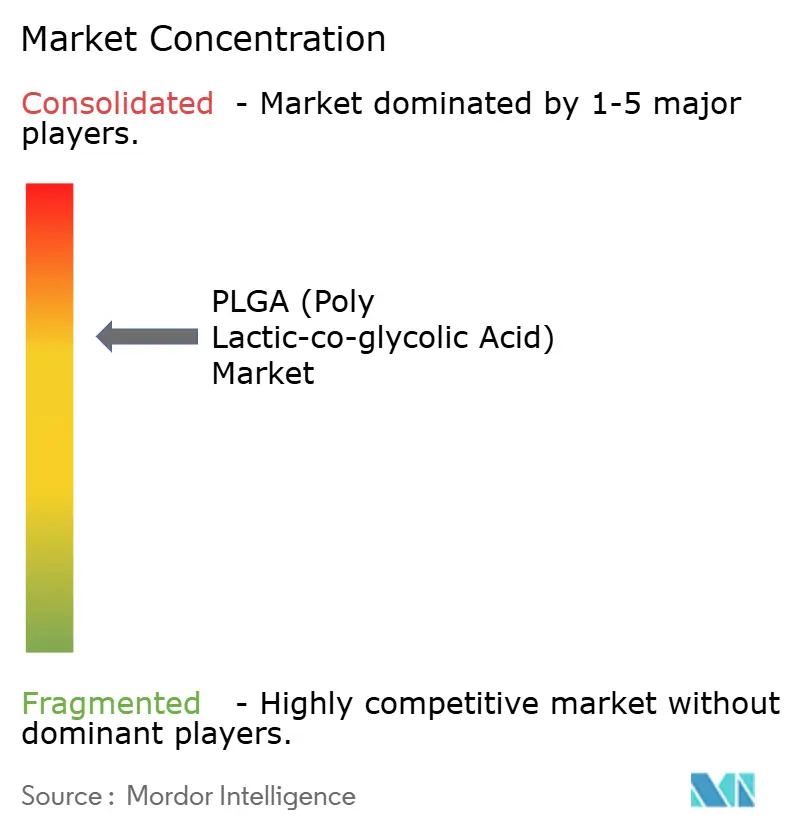
The PLGA (poly lactic-co-glycolic acid) market is moderately concentrated, with the top five players including Evonik Industries AG, Corbion N.V., Ashland, Merck KGaA, and Mitsui Chemicals, Inc. They compete through polymer-grade breadth, supply reliability, regulatory documents, certificates of analysis, and technical assistance. Jinan Daigang Bioengineering Co., Ltd. and Shandong Keyuan Pharmaceutical Co., Ltd. also participate in the broader supply base. This structure gives qualified suppliers an advantage where customers need consistent material properties and documentation, because the PLGA (poly lactic-co-glycolic acid) market serves customers whose qualification processes link polymer properties with finished-product performance and can make supplier switching difficult once development programs progress.
Evonik Industries AG used capacity and product development to reinforce its position in medical materials. Its Shanghai medical-device center opened in July 2025 and provides cleanroom processing for bioresorbable components across several clinical specialties. The company also published a U.S. patent application in August 2025 for cationic-lipid and PLGA particles intended for polynucleotide delivery. Corbion N.V. continues to compete through its PURASORB polymer offering for drug delivery and medical devices. Seqens offers the EXPANSORB range and emphasizes its long-standing GMP polymer-production capabilities.
The PLGA (poly lactic-co-glycolic acid) market has a developing opportunity in nucleic-acid and biologic delivery, although acidic degradation remains a formulation challenge, and product developers must establish that their formulation retains payload stability throughout the intended delivery period. Shandong Keyuan Pharmaceutical Co., Ltd. disclosed a 2025 pilot-scale project that includes a leuprolide acetate line with a capacity of 20 kg per batch and 400 batches per year. Competitive outcomes will depend on whether suppliers can combine validated quality systems with application-specific polymer design.
PLGA (Poly Lactic-co-glycolic Acid) Industry Leaders
-
Evonik Industries AG
-
Corbion N.V.
-
Ashland
-
Merck KGaA
-
Mitsui Chemicals, Inc.
- *Disclaimer: Major Players sorted in no particular order
PLGA (Poly Lactic-co-glycolic Acid) Market Companies Covered in this Report
- Akina, Inc.
- Ashland
- Bezwada Biomedical, LLC
- CD Bioparticles
- Corbion N.V.
- Creative PEGWorks
- Evonik Industries AG
- Jinan Daigang Bioengineering Co., Ltd.
- Merck KGaA
- Mitsui Chemicals, Inc.
- Nomisma Healthcare Pvt. Ltd.
- Poly-Med Incorporated
- Polysciences
- Seqens
- Shandong Keyuan Pharmaceutical Co., Ltd.
Recent Industry Developments in PLGA (Poly Lactic-co-glycolic Acid) Market
- June 2026: Evonik Industries AG showcased its RESOMER and LACTEL bioresorbable polymer portfolios at the BIO International Convention, highlighting materials for long-acting injectables, targeted therapies, and sustained-release drug delivery. The initiative supports the PLGA market by reinforcing pharmaceutical demand for biodegradable polymers with customizable degradation and drug-release characteristics.
- September 2025: Amneal Pharmaceuticals, Inc. received U.S. Food and Drug Administration (FDA) approval for its risperidone extended-release injectable suspension, a long-acting formulation that uses PLGA microspheres to deliver the drug over an extended period. The approval supports the PLGA market by expanding the commercial use of biodegradable polymer microspheres in long-acting injectable medicines.
Global PLGA (Poly Lactic-co-glycolic Acid) Market Report Scope
PLGA (poly lactic-co-glycolic acid) is a biodegradable and biocompatible polymer that degrades into lactic acid and glycolic acid under suitable conditions. Its tunable degradation rate and material properties make it useful in drug delivery, medical materials, and other specialized applications.
The PLGA (Poly Lactic-co-Glycolic Acid) Market is segmented by product form, application, processibility, end-use industry, and geography. By product form, the market is segmented into microspheres, nanoparticles, films, and other product forms. By application, the market is segmented into medical and non-medical. By processibility, the market is segmented into extrusion, injection molding, electrospinning, and other processibilities. By end-use industry, the market is segmented into pharmaceutical manufacturing, healthcare, biotechnology firms, packaging, textile, agriculture, and other end-use industries. The report also covers the market size and forecasts for PLGA across 15 countries. For each segment, the market sizing and forecasts have been done on the basis of value (USD).
Segmentation Overview
| Microspheres |
| Nanoparticles |
| Films |
| Other Product Forms |
| Medical |
| Non-Medical |
| Extrusion |
| Injection Molding |
| Electrospinning |
| Other Processibilities |
| Pharmaceutical Manufacturing |
| Healthcare |
| Biotechnology Firms |
| Packaging |
| Textile |
| Agriculture |
| Other End-Use Industries |
| Asia-Pacific | China |
| India | |
| Japan | |
| South Korea | |
| ASEAN Countries | |
| Rest of Asia-Pacific | |
| North America | United States |
| Canada | |
| Mexico | |
| Europe | Germany |
| United Kingdom | |
| France | |
| Italy | |
| NORDIC Countries | |
| Rest of Europe | |
| South America | Brazil |
| Argentina | |
| Rest of South America | |
| Middle East and Africa | Saudi Arabia |
| South Africa | |
| Rest of Middle East and Africa |
| By Product Form | Microspheres | |
| Nanoparticles | ||
| Films | ||
| Other Product Forms | ||
| By Application | Medical | |
| Non-Medical | ||
| By Processibility | Extrusion | |
| Injection Molding | ||
| Electrospinning | ||
| Other Processibilities | ||
| By End-Use Industry | Pharmaceutical Manufacturing | |
| Healthcare | ||
| Biotechnology Firms | ||
| Packaging | ||
| Textile | ||
| Agriculture | ||
| Other End-Use Industries | ||
| By Geography | Asia-Pacific | China |
| India | ||
| Japan | ||
| South Korea | ||
| ASEAN Countries | ||
| Rest of Asia-Pacific | ||
| North America | United States | |
| Canada | ||
| Mexico | ||
| Europe | Germany | |
| United Kingdom | ||
| France | ||
| Italy | ||
| NORDIC Countries | ||
| Rest of Europe | ||
| South America | Brazil | |
| Argentina | ||
| Rest of South America | ||
| Middle East and Africa | Saudi Arabia | |
| South Africa | ||
| Rest of Middle East and Africa | ||
Key Questions Answered in the Report
What is the size of the PLGA (poly lactic-co-glycolic acid) market?
The PLGA (poly lactic-co-glycolic acid) market size was valued at USD 138.51 million in 2026 and is estimated to grow from USD 154.91 million in 2027 to reach USD 280.77 million by 2032, at a CAGR of 12.63% during the forecast period (2027-2032).
What is driving demand for PLGA materials?
Long-acting injectable therapies, bioresorbable implants, regenerative medicine, and established regulatory familiarity are supporting demand across regulated pharmaceutical, biotechnology, and medical-device programs worldwide.
Which product form is projected to advance fastest through 2032?
Nanoparticles are projected to advance at a 13.54% CAGR through 2032, supported by drug delivery, imaging, and nucleic-acid delivery work.
Which application held the largest share in 2026?
Medical held 75.65% of the market share in 2026.