
Phosphate Market Size and Share
Market Overview
| Study Period | 2021 - 2031 |
|---|---|
| Market Size (2026) | USD 191.27 Billion |
| Market Size (2031) | USD 251.48 Billion |
| Growth Rate (2026 - 2031) | 5.63 % |
| Fastest Growing Market | Asia-Pacific |
| Largest Market | Asia-Pacific |
| Market Concentration | Medium |
Major Players *Disclaimer: Major Players sorted in no particular order Image © Mordor Intelligence. Reuse requires attribution under CC BY 4.0. | |
Phosphate Market Analysis by Mordor Intelligence
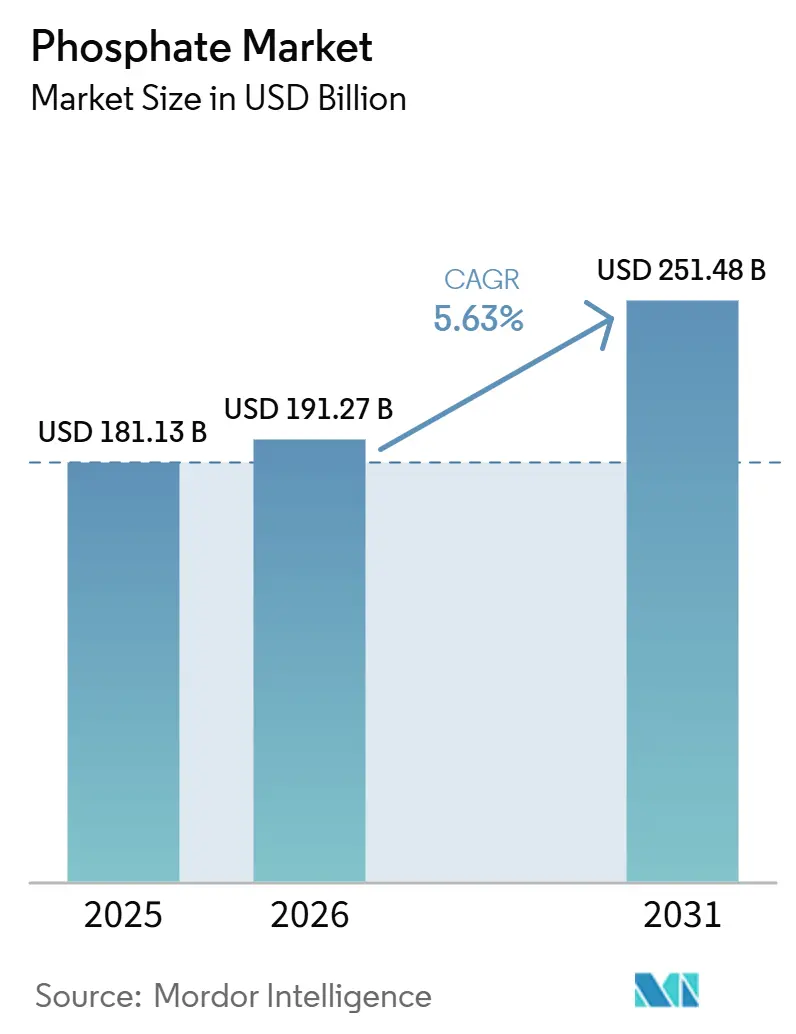
The Phosphate Market size was estimated at USD 181.13 billion in 2025 and is projected to grow from USD 191.27 billion in 2026 to USD 251.48 billion by 2031, at a CAGR of 5.63% over the forecast period (2026-2031). The phosphate market is supported by the material's essential role in fertilizer production, water treatment, food processing, animal feed, and industrial chemistry. U.S. policy treats elemental phosphorus supply as a strategic concern, following the 2025 critical mineral designation for phosphate rock and the 2026 application of the Defense Production Act. Carbon requirements and water quality regulations are also influencing purchasing decisions, particularly for fertilizer producers serving European markets. Producers with lower-emission production plans, reliable ammonia supply, and certified quality systems can improve their access to regulated markets. Supply security remains a key consideration, as phosphate rock is finite, geographically concentrated, and difficult to substitute in agriculture.
Key Report Takeaways
- By product type, ammonium phosphate held 46.22% of revenue in 2025, while potassium phosphate is forecast to grow at a 6.47% CAGR through 2031.
- By grade, industrial grade accounted for 52.85% of the phosphate market size in 2025, while food and feed grade is projected to expand at a 6.22% CAGR through 2031.
- By end-user industry, agrochemicals held 58.43% of revenue in 2025, while water treatment is forecast to grow at a 6.51% CAGR through 2031.
- By geography, Asia-Pacific accounted for 44.81% of revenue in 2025 and is projected to grow at a 6.14% CAGR through 2031.
Note: Market size and forecast figures in this report are generated using Mordor Intelligence’s proprietary estimation framework, updated with the latest available data and insights as of January 2026.
Global Phosphate Market Trends and Insights
Drivers Impact Analysis*
| Drivers | (~) % Impact on CAGR Forecast | Geographic Relevance | Impact Timeline |
|---|---|---|---|
| Phosphate Chemicals for Water Treatment and Wastewater Management | +1.1% | Global, concentrated in North America, Europe, East Asia, and Southeast Asia | Medium term (2-4 years) |
| Feed-Grade Phosphate Demand from Animal Nutrition | +0.9% | Asia-Pacific core, with demand in the Middle-East, Africa, and South America | Medium term (2-4 years) |
| Phosphorus Recovery and Recycling Technology Adoption | +0.7% | Europe, North America, and East Asia | Long term (≥ 4 years) |
| Integrated Phosphate Mining and Processing Investment | +0.8% | Middle-East and Africa, Asia-Pacific, and South America | Long term (≥ 4 years) |
| Sustainable and Low-Carbon Fertilizer Demand | +0.6% | Europe, with wider global adoption | Long term (≥ 4 years) |
| Source: Mordor Intelligence | |||
Increasing Use of Phosphate Chemicals in Water Treatment and Wastewater Management
Phosphate corrosion inhibitors and scale-control compounds remain important in municipal and industrial water systems. Governments are expanding treatment capacity as discharge requirements become more stringent. Water regulations in the United States and Europe, along with chemical compliance requirements, encourage utilities to use treatment chemicals and recovery reagents. Wastewater plants are also shifting from phosphate consumption toward struvite recovery, which can be sold as a slow-release fertilizer. A 2026 study found that struvite and struvite-K crystallization can recover phosphorus from laundry effluent, broadening the range of industrial wastewater streams that can support recovery. Expanding treatment infrastructure in Southeast Asia and sub-Saharan Africa is increasing demand for phosphate in both water-treatment chemicals and recovery inputs.
Rising Demand for Feed-Grade Phosphates Driven by Growth in Animal Nutrition
Feed-grade phosphate demand supports the phosphate market through the scale of global livestock production and the nutritional requirements of poultry and swine. Broiler diets generally require phosphorus for bone development and shell formation, while swine requirements increase during peak growth stages. Purity standards are becoming more important in feed supply chains, favoring producers with controlled processing and documentation. PhosAgro reported that its phosphate-based fertilizer and feed-phosphate production rose 5.5% year over year to 7.02 million tons in the first nine months of 2025. Its Balakovo monocalcium phosphate modernization program was advancing as part of the company's long-term development plan[1]PhosAgro, “PhosAgro Reports Operating and Financial Results for 9M 2025,” PhosAgro, phosagro.com. Certified synthetic phosphate salts are also being used by aquafeed mills seeking improved digestibility and traceability for export markets.
Expanding Adoption of Phosphorus Recovery and Recycling Technologies
Phosphorus recovery is becoming a production option in the phosphate market rather than solely a means of meeting wastewater requirements. Struvite crystallization can lower treatment costs and generate a fertilizer product for sale. A 2026 study of distillery wastewater recovered 72.6% of influent phosphorus through struvite and calcium or magnesium phosphate precipitation. The same study reported a return of USD 72 per day for a facility processing 90 cubic meters of wastewater. Electrochemical flow-cell experiments reported phosphorus recovery rates of 40% to 54% from synthetic wastewater, supporting the potential for smaller, decentralized systems. As recovered struvite gains wider acceptance, wastewater operators can become suppliers to fertilizer value chains.
Increasing Demand for Sustainable and Low-Carbon Fertilizer Solutions
Carbon requirements are changing the cost position of phosphate fertilizer producers selling into Europe. The EU Carbon Border Adjustment Mechanism, effective in January 2026, incorporates carbon intensity into decisions on imported fertilizer products. Integrated mining and processing investments can help producers manage raw material flows, energy use, and product quality within a single operating system. OCP's Jorf Lasfar complex generates 62 MW of electricity from exothermic reactions involving sulfuric and phosphoric acids. OCP plans domestic green-ammonia production of 100,000 to 200,000 tons in 2026, followed by 1 million tons in 2027 and 3 million tons in 2032. This approach reduces exposure to imported ammonia and can support the production of lower-carbon fertilizers.
Restraints Impact Analysis*
| Restraints | (~) % Impact on CAGR Forecast | Geographic Relevance | Impact Timeline |
|---|---|---|---|
| Limited Availability and Geographic Concentration of Phosphate Rock Resources | -1.1% | Global, especially Europe, South Asia, and Southeast Asia | Long term (≥ 4 years) |
| Environmental Regulations on Phosphate Emissions and Water Pollution | -0.8% | North America and Europe, with effects in China and Latin America | Medium term (2-4 years) |
| Regulatory and Quality Compliance for Food, Feed, and Pharmaceutical Grades | -0.6% | Global, especially North America, Europe, and Japan | Long term (≥ 4 years) |
| Source: Mordor Intelligence | |||
Limited Availability and Geographic Concentration of Phosphate Rock Resources
Phosphorus cannot be produced from the atmosphere and depends on finite mined deposits, making the global phosphate market sensitive to reserve concentration, export decisions, and logistics disruptions. OCP and China account for a large share of global phosphate rock output, while the European Union has limited domestic reserves. Import-dependent fertilizer producers therefore rely on long-term supply arrangements and have few rapid alternatives. The United States invoked the Defense Production Act in 2026 to secure supplies of elemental phosphorus, highlighting the growing strategic importance of supply reliability. China's export restrictions and high sulfur costs can further affect availability, pricing, and production planning for buyers outside major producing regions.
Stringent Environmental Regulations Related to Phosphate Emissions and Water Pollution
Phosphate production generates significant volumes of phosphogypsum, requiring long-term waste management. Environmental permits, discharge requirements, and quality standards increase capital requirements for both new and existing operations, favoring integrated producers that can finance purification, monitoring, and audited supply systems. Food and pharmaceutical grades face additional controls on impurities, creating a barrier for smaller producers. Maaden is working with technology partners on phosphogypsum recycling and carbon capture at Ras Al Khair, indicating how environmental obligations can also support investment in more resilient operations.
*Our forecasts treat driver/restraint impacts as directional, not additive. The impact forecasts reflect baseline growth, mix effects, and variable interactions.
Segment Analysis
By Product Type: Ammonium Phosphate Leads While Specialty Applications Support Potassium Phosphate
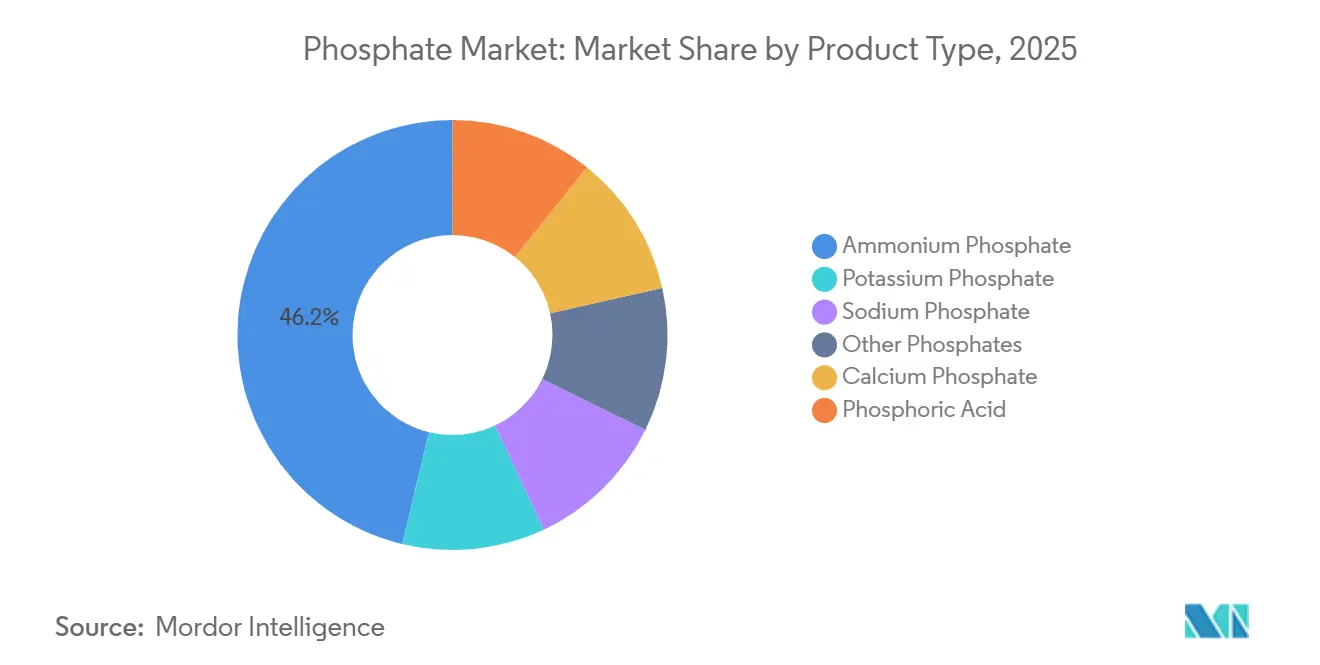
Ammonium phosphate held 46.22% of product-category revenue in 2025, making it the largest product category. This position reflects sustained demand for diammonium phosphate (DAP) and monoammonium phosphate (MAP) across grain-producing regions in Asia, North America, and South America. Potassium phosphate is the fastest-growing product type, with a projected CAGR of 6.47% through 2031. Demand is concentrated in specialty crop nutrition, high-pressure drip-irrigation horticulture, and food ingredients that require controlled phosphorus-to-potassium ratios. These uses include coffee-creamer buffering and non-dairy protein stabilization. Brazil's fertilizer deliveries reached 49.11 million tons in 2025, with phosphate products accounting for a material share of import demand, underscoring the importance of large agricultural markets to ammonium phosphate consumption.
Phosphoric acid is developing into distinct fertilizer and industrial application streams. Battery-grade phosphoric acid for lithium iron phosphate cathodes represented an estimated 15% of China's industrial phosphoric acid demand in 2024, with demand growing at more than 20% annually from its current base. Calcium phosphate is used as a pharmaceutical excipient and in nutraceutical products, where quality specifications are important. Sodium phosphate retains established roles in food processing, detergent formulations, and boiler-water treatment. Other phosphates, including polyphosphates and electronic-grade reagents, serve semiconductor production and specialty industrial cleaning. These smaller applications give specialty producers areas where formulation quality and customer approvals matter more than volume.



By Grade: Industrial Grade Retains Scale While Food and Feed Grade Grows Faster
Industrial grade accounted for 52.85% of grade-category revenue in 2025, serving the large requirements of fertilizer production and metal-treatment applications. Its majority position is expected to continue through 2031, as agrochemical demand remains substantial. Food and feed grade phosphates are forecast to grow at a CAGR of 6.22% through 2031. Processed-food manufacturers in the Asia-Pacific region use phosphates in cheese alternatives, cured meats, and functional beverages, driven by higher packaged-food consumption in urban areas. As a result, industrial grade retains volume leadership while food and feed grade represents a faster-growing specialty outlet.
Pharmaceutical grade is the smallest segment by volume but commands a 30% to 40% price premium over food-grade products. Producers in this segment must meet stricter pharmacopeia requirements and control elemental impurities. The 2024 revision of the U.S. Pharmacopeia monograph for calcium phosphate excipients reduced permitted arsenic and lead limits, increasing the need for certified ore and in-line testing. This compliance environment supports vertical integration and validated supply relationships. ICL reported that food-grade phosphoric acid sales increased across most regions in Q1 2026, supported by firmer pricing and higher volumes in key markets[2]ICL Group, “ICL Reports First Quarter 2026 Results,” ICL Group, businesswire.com. ICL's phosphate solutions segment recorded sales of USD 679 million in Q1 2026, up 18% year over year.
By End-user Industry: Agrochemicals Lead While Water Treatment Grows Faster
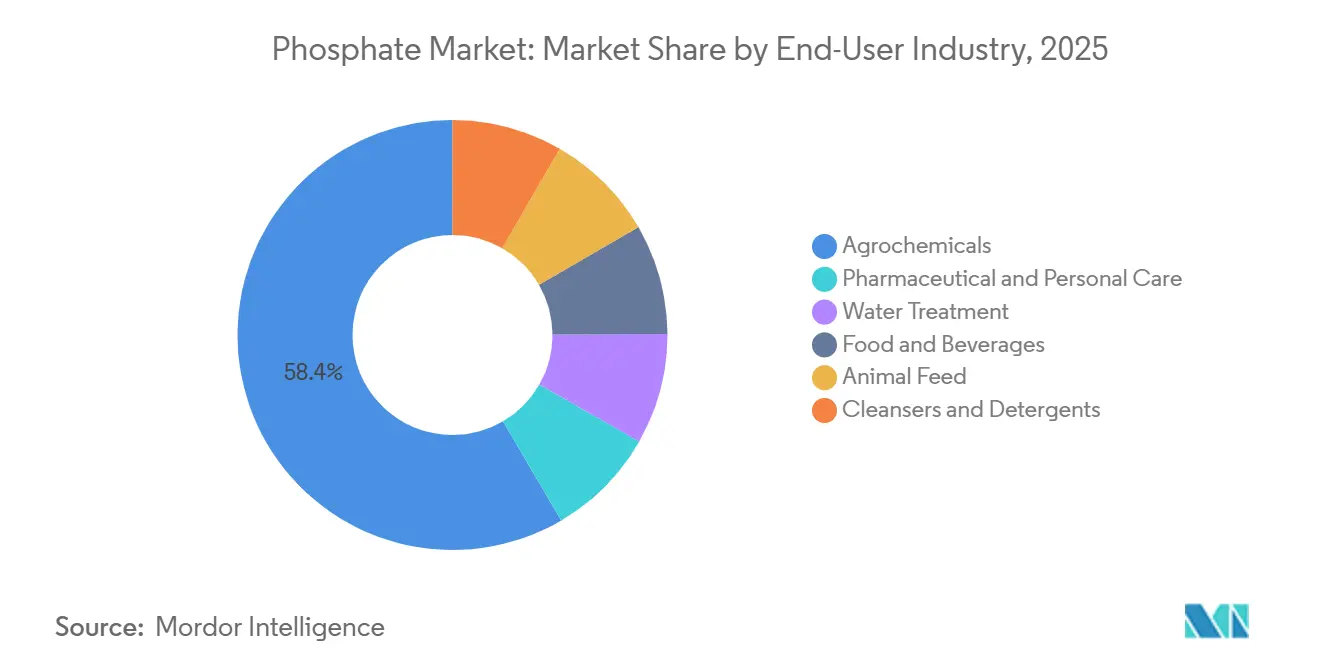
Agrochemicals held 58.43% of end-user revenue in 2025 and remain the leading end-user industry. The phosphate market depends on phosphorus for soil fertility management, with no direct agronomic substitute for correcting soil phosphorus deficiency. Water treatment is the fastest-growing end-user category, with a projected CAGR of 6.51% through 2031, supported by stricter discharge regulations, infrastructure spending in developing economies, and phosphorus recovery at treatment plants. Animal feed consumption remains supported by livestock production and expanding aquaculture in Southeast Asia, providing demand beyond conventional poultry and swine feed applications.
Food and beverage applications range from meat processing to plant-based dairy alternatives and functional beverages, where phosphate compounds provide emulsification and buffering functions. Pharmaceutical and personal care products are subject to higher quality standards, with more stringent certifications and quality controls. Cleansers and detergents face continuing substitution pressure from phosphate-free products in the European Union and Japan, though industrial cleaning applications partly offset this pressure where phosphate performance cannot be readily replaced. Overall, the phosphate market has a broad end-user base, with agriculture remaining central to demand, while water treatment and specialty uses provide additional growth opportunities and higher-value products.
Geography Analysis
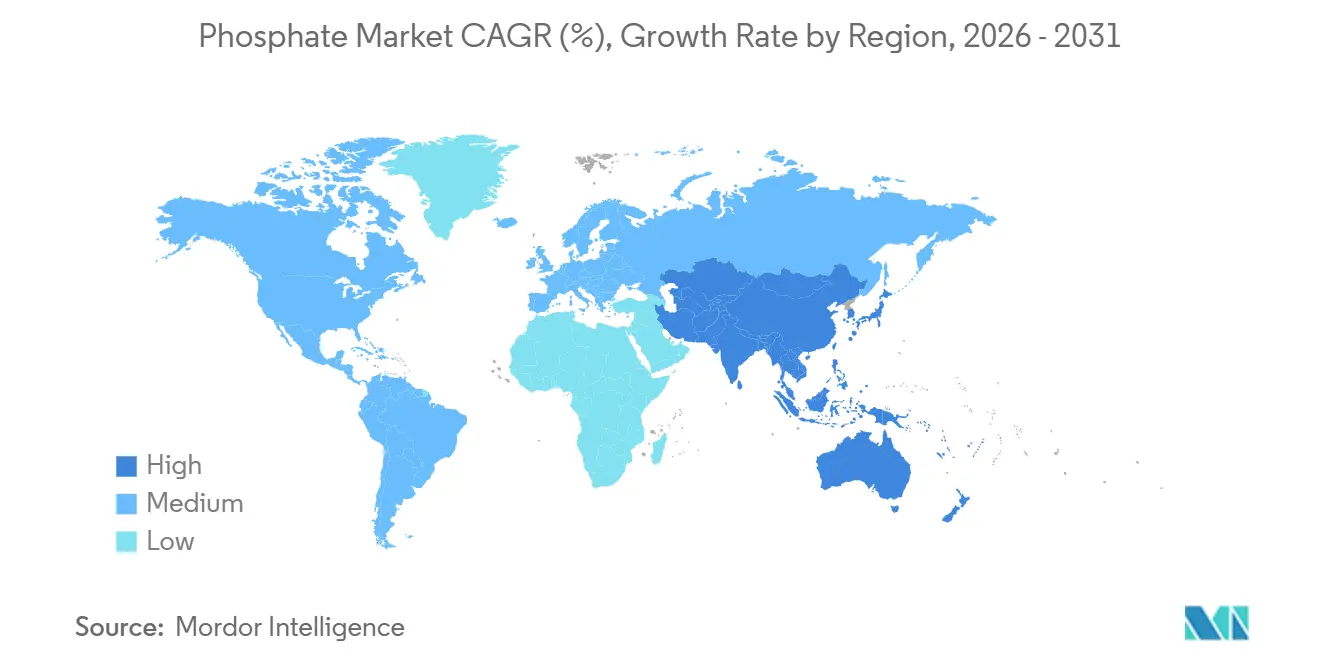
Asia-Pacific accounted for 44.81% of the phosphate market in 2025 and is forecast to grow at a 6.14% CAGR through 2031. Agricultural intensification, food processing, and demand for battery materials support phosphate consumption in the region. China produces an estimated 41% of global phosphate output from 5% of known reserves, raising concerns about resource depletion and conservation. India remains a major DAP importer, and its subsidy system supports large fertilizer demand. CRISIL Ratings stated in February 2026 that India's complex fertilizer capacity is expected to increase by 25% over the next three fiscal years. Japan and South Korea support specialty and pharmaceutical-grade demand, while Vietnam and Indonesia represent growing feed and aquaculture markets.
North America and Europe are both significant net-importing regions in the phosphate market, though their approaches differ. In North America, Mosaic and Nutrien account for more than 90% of regional phosphate production capacity. Nutrien is evaluating options for its phosphate division, while Mosaic adjusted output at its Louisiana and Bartow facilities amid high sulfur costs in 2026. U.S. policy actions since 2025 have focused on domestic supply resilience. Europe is using carbon and compliance requirements to influence the sourcing of imported fertilizers. Downstream processors in Germany, France, and Italy are reviewing supply chains that have long relied on Moroccan phosphate flows.
South America, the Middle-East, and Africa each have distinct roles in the phosphate market. Brazil is a major import destination. Argentina remains a price-sensitive MAP buyer and imported cargoes from Saudi Arabia during tighter global supply conditions in 2025. Morocco's OCP is investing in fertilizer capacity, green ammonia, desalination, and renewable energy infrastructure, aiming to add 9 million tons of fertilizer production capacity by 2028. Saudi Arabia's Maaden is growing as an integrated producer, while South African demand is tied to food security. Angola is also adding regional supply capacity through the Cabinda Phosphate Fertilizer Plant Project.

Competitive Landscape
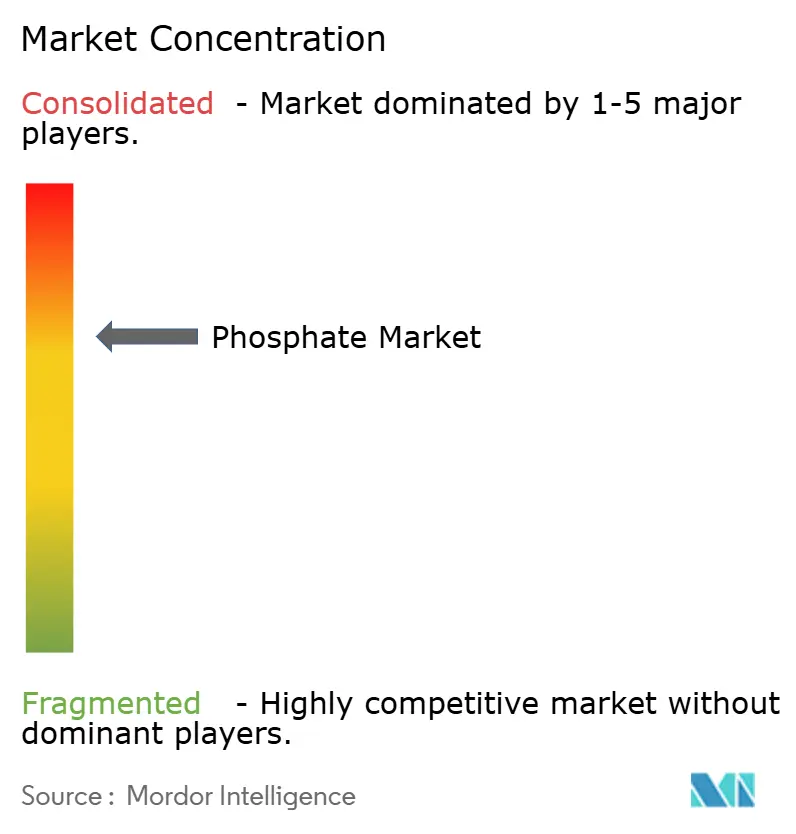
The phosphate market is moderately consolidated. ICL Group, PhosAgro, Chinese integrated producers, and European specialists compete on product grades, logistics, formulations, and regulatory approvals. This structure means that resource ownership is more important for bulk products, while operational knowledge is more important in specialty applications.
In July 2026, OCP and Koch Ag and Energy Solutions agreed that Koch would acquire a 50% stake in Jorf Fertilizers Company I from OCP Nutricrops. This transaction illustrates how major producers can leverage distribution and agricultural-input partnerships to improve end-market access. ICL exited downstream LFP battery-material processing and acquired a 49.9% stake in Bartek Ingredients, shifting its portfolio toward food and specialty products. PhosAgro is modernizing its Balakovo monocalcium phosphate operation as part of its development plan. These moves reflect a broader focus on integrated supply, specialty grades, and closer customer access.
High-specification pharmaceutical, electronic, and battery-grade products remain important competitive areas in the phosphate market. Entry barriers in these segments are based on qualification, purity control, analytical capability, and customer approvals rather than mining scale alone. Circular phosphate applications are also attracting interest, as struvite recovery and phosphogypsum recycling can create new product streams. Smaller companies such as Prayon SA and Chemische Fabrik Budenheim focus on high-purity phosphates for food, pharmaceutical, and electronics applications. Their European regulatory experience supports their ability to compete with lower-cost producers in specialized segments.
Phosphate Industry Leaders
OCP S.A.
Mosaic
Nutrien
Maaden
PhosAgro Group
- *Disclaimer: Major Players sorted in no particular order

Recent Industry Developments
- June 2026: Minbos Resources signed a USD 13.8 million Phase 2 construction contract for its Cabinda Phosphate Fertilizer Plant in Angola. This development advanced phosphate manufacturing capacity in sub-Saharan Africa and reduced regional dependence on fertilizer imports for smallholder agriculture.
- February 2026: The US government invoked the Defense Production Act to secure elemental phosphorus supplies, building on the US Geological Survey's 2025 decision to classify phosphate rock as a critical mineral. This policy shift reflected a formal change in US phosphate strategy, moving from commodity market participation to strategic resource security.


Global Phosphate Market Report Scope
Phosphate is an inorganic compound or chemical ion composed of one phosphorus atom bound to four oxygen atoms. It is a naturally occurring mineral found in the human body, the earth's crust, and various biological systems, and it plays a key role in DNA structure, cellular energy, and agricultural fertilizers.
The phosphate market is segmented by product type, grade, end-user industry, and geography. By product type, the market is segmented into ammonium phosphate, calcium phosphate, phosphoric acid, potassium phosphate, sodium phosphate, and other phosphates. By grade, the market is segmented into food and feed grade, pharmaceutical grade, and industrial grade. By end-user industry, the market is segmented into agrochemicals, food and beverages, animal feed, cleansers and detergents, pharmaceutical and personal care, and water treatment. The report also covers the market size and forecasts for the phosphate market in 16 countries across major regions. The market sizes and forecasts are provided in terms of value (USD).
| Ammonium Phosphate |
| Calcium Phosphate |
| Phosphoric Acid |
| Potassium Phosphate |
| Sodium Phosphate |
| Other Phosphates |
| Food and Feed Grade |
| Pharmaceutical Grade |
| Industrial Grade |
| Agrochemicals |
| Food and Beverages |
| Animal Feed |
| Cleansers and Detergents |
| Pharmaceutical and Personal Care |
| Water Treatment |
| Asia-Pacific | China |
| India | |
| Japan | |
| South Korea | |
| Rest of Asia-Pacific | |
| North America | United States |
| Canada | |
| Mexico | |
| Europe | Germany |
| United Kingdom | |
| France | |
| Italy | |
| Russia | |
| Rest of Europe | |
| South America | Brazil |
| Argentina | |
| Rest of South America | |
| Middle-East and Africa | Saudi Arabia |
| South Africa | |
| Rest of Middle-East and Africa |
| By Product Type | Ammonium Phosphate | |
| Calcium Phosphate | ||
| Phosphoric Acid | ||
| Potassium Phosphate | ||
| Sodium Phosphate | ||
| Other Phosphates | ||
| By Grade | Food and Feed Grade | |
| Pharmaceutical Grade | ||
| Industrial Grade | ||
| By End-User Industry | Agrochemicals | |
| Food and Beverages | ||
| Animal Feed | ||
| Cleansers and Detergents | ||
| Pharmaceutical and Personal Care | ||
| Water Treatment | ||
| By Geography | Asia-Pacific | China |
| India | ||
| Japan | ||
| South Korea | ||
| Rest of Asia-Pacific | ||
| North America | United States | |
| Canada | ||
| Mexico | ||
| Europe | Germany | |
| United Kingdom | ||
| France | ||
| Italy | ||
| Russia | ||
| Rest of Europe | ||
| South America | Brazil | |
| Argentina | ||
| Rest of South America | ||
| Middle-East and Africa | Saudi Arabia | |
| South Africa | ||
| Rest of Middle-East and Africa | ||


Key Questions Answered in the Report
What is current market size of Phosphate Market?
The Phosphate Market size was estimated at USD 181.13 billion in 2025 and is projected to grow from USD 191.27 billion in 2026 to USD 251.48 billion by 2031, at a CAGR of 5.63% over the forecast period (2026-2031).
Which phosphate product type has the largest revenue share?
Ammonium phosphate led product types, accounting for 46.22% of revenue in 2025 supported by demand for diammonium phosphate (DAP) and monoammonium phosphate (MAP) in major agricultural regions.
Which end-user application is expanding fastest?
Water treatment is projected to grow at a 6.51% CAGR through 2031, supported by discharge rules, treatment infrastructure, and phosphorus recovery.
Why is phosphate supply security important?
Phosphorus comes from finite mined deposits, and supply is concentrated geographically. The United States used the Defense Production Act in 2026 to secure supplies of elemental phosphorus.
Page last updated on:





