
Paprika Market Size and Share
Market Overview
| Study Period | 2022 - 2032 |
|---|---|
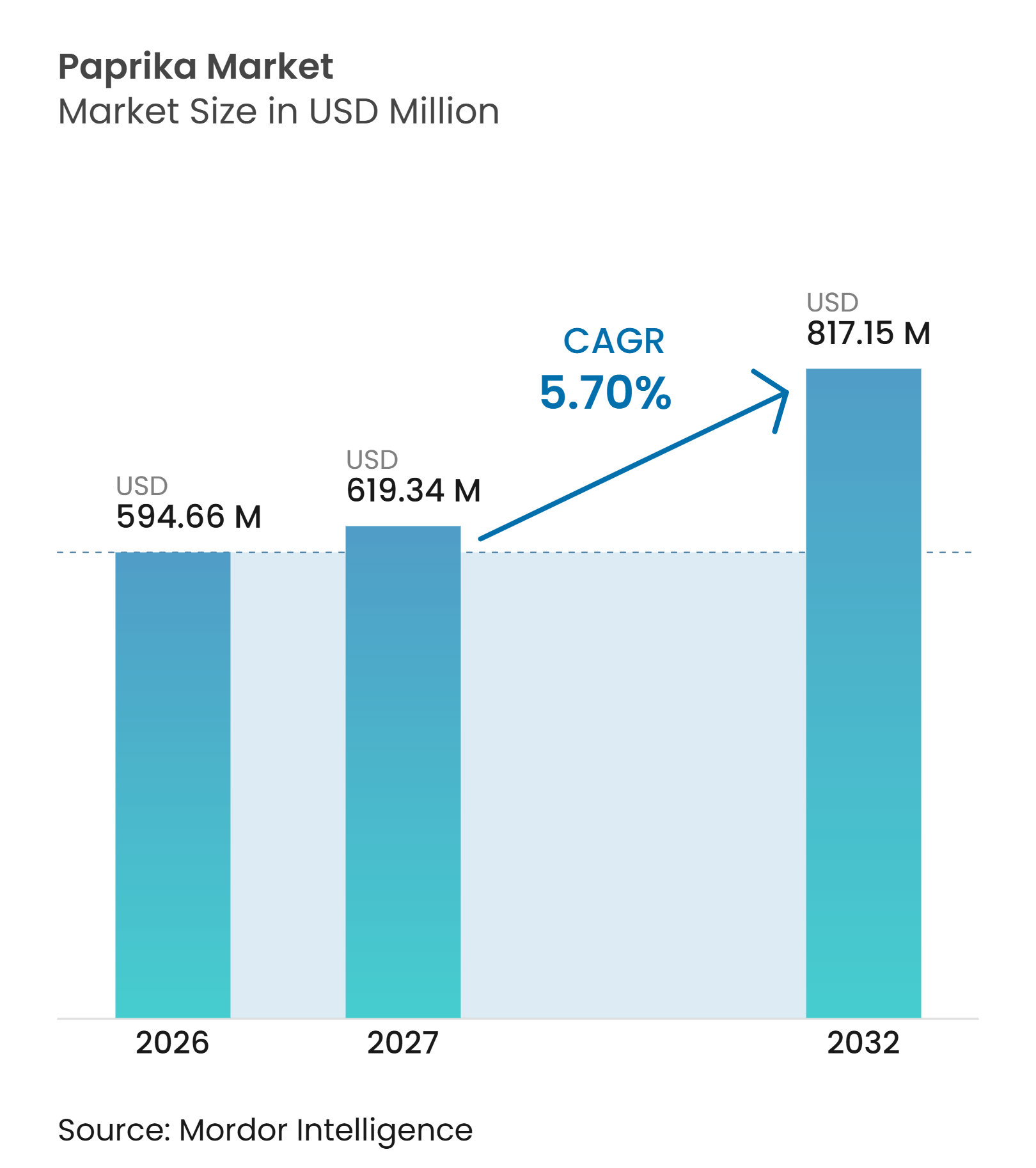
| Market Size (2027) | USD 619.34 Million |
| Market Size (2032) | USD 817.15 Million |
| Growth Rate (2027 - 2032) | 5.70 % |
| Fastest Growing Market | Asia-Pacific |
| Largest Market | Europe |
| Market Concentration | Low |
Major Players *Disclaimer: Major Players sorted in no particular order Image © Mordor Intelligence. Reuse requires attribution under CC BY 4.0. | |
Paprika Market Analysis by Mordor Intelligence
The paprika market size is expected to grow from USD 594.66 million in 2026 to USD 619.34 million in 2027 and is forecast to reach USD 817.15 million by 2032 at a 5.70% CAGR over 2027-2032. The market is supported by growing demand for natural food colorants and clean-label ingredients as food manufacturers increasingly seek alternatives to synthetic additives. Paprika's versatility as a coloring and flavoring ingredient supports its widespread use across processed foods, meat and poultry products, savory snacks, sauces, and seasonings. Additionally, expanding consumption of processed meat and poultry products is creating opportunities for paprika-based ingredients in industrial food formulations. Technological advancements in extraction, processing, and formulation are further broadening the ingredient's applications, including its use in functional foods and nutraceutical products. Growing interest in the functional properties of paprika-derived carotenoids is also supporting its positioning beyond traditional coloring and flavoring applications.
Key Report Takeaways
-
By type, sweet paprika held 63.45% of the paprika market share in 2026, while hot paprika is forecast to grow at a 7.28% CAGR during 2027-2032.
-
By form, powder held 57.62% of the paprika market share in 2026, while liquid extract is forecast to grow at a 7.41% CAGR during 2027-2032.
-
By nature, conventional paprika held an 89.37% share in 2026, while organic paprika is forecast to grow at a 7.36% CAGR during 2027-2032.
-
By application, food and beverages held 24.65% of the paprika market share in 2026, while pharmaceuticals are forecast to grow at a 7.58% CAGR during 2027-2032.
-
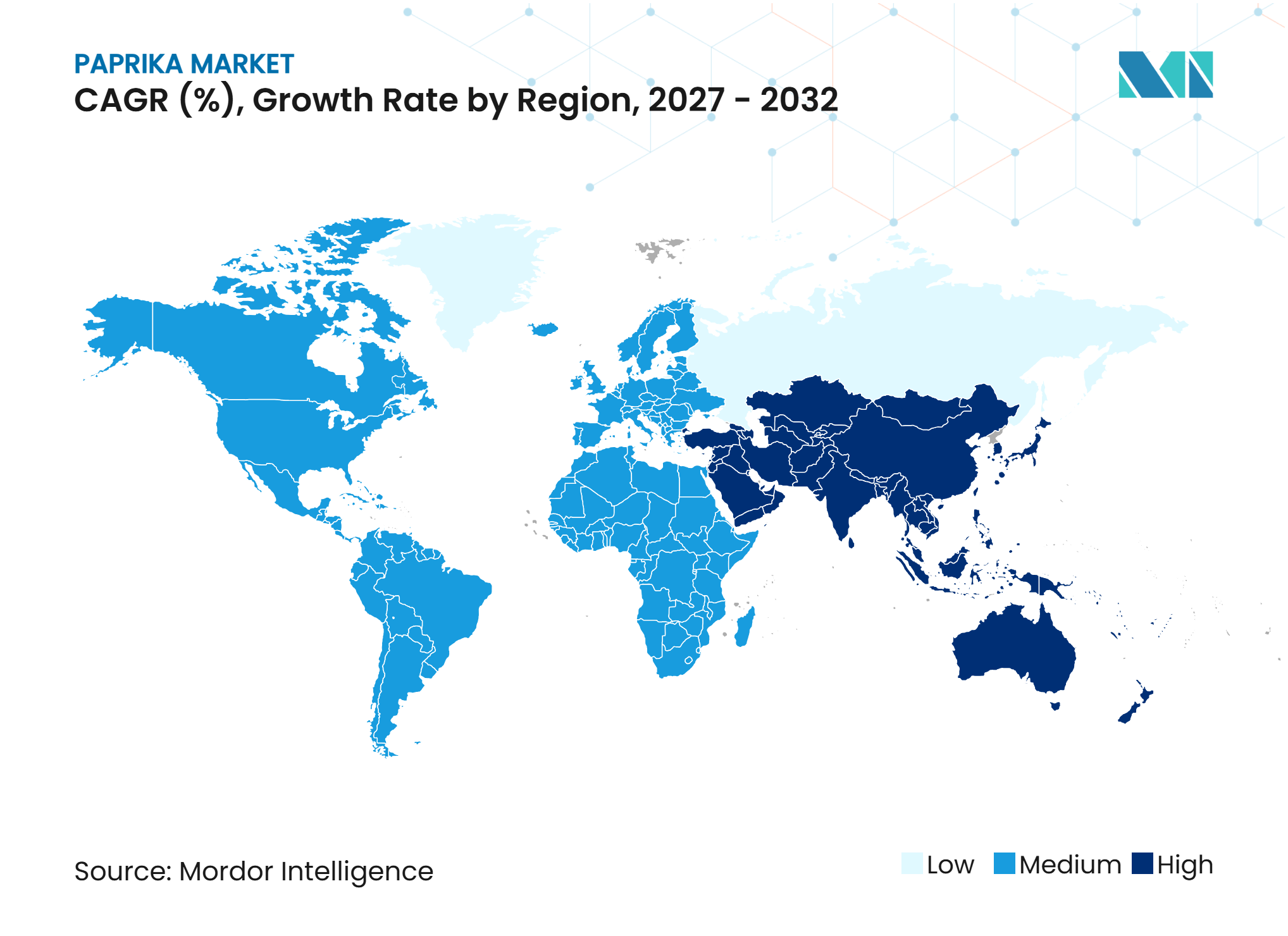
By geography, Europe held a 29.76% share in 2026, while Asia-Pacific is forecast to grow at a 7.46% CAGR during 2027-2032.
Note: Market numbers in this report are based on Mordor Intelligence's proprietary estimation framework, which combines nine months of actuals with Q4 projections for base year 2026.
Market Trends and Insights
Drivers Impact Analysis of Paprika Market*
| Driver | (~) % Impact on CAGR Forecast | Geographic Relevance | Impact Timeline |
|---|---|---|---|
| Shift towards natural food colorants and replacement of synthetic dyes | +1.4% | Global; intensity concentrated in North America and Europe | Short term (≤ 2 years) |
| Expansion of global meat and poultry processing | +0.9% | Global; strongest in Asia-Pacific and South America | Medium term (2–4 years) |
| Rising consumption of savory snacks and convenience foods | +0.8% | Global; urban Asia-Pacific, North America, and Europe | Medium term (2–4 years) |
| Increasing adoption of paprika-derived pigments in poultry nutrition | +0.7% | Asia-Pacific, South America, Europe | Medium term (2–4 years) |
| Increasing use of paprika in processed seafood | +0.6% | Asia-Pacific core, spill-over to North America and Europe | Long term (≥ 4 years) |
| Expanding industrial applications of paprika extracts in beverages and nutritional products | +0.8% | Global; innovation hubs in Europe and North America | Long term (≥ 4 years) |
| Source: Mordor Intelligence | |||
Shift Towards Natural Food Colorants and Replacement of Synthetic Dyes
Growing consumer preference for naturally sourced ingredients and increasing regulatory scrutiny of petroleum-based synthetic dyes are encouraging food manufacturers to transition towards natural colorants, including paprika-derived pigments. A 2025 consumer study by the Natural Food Colors Association (NATCOL), involving 1,004 United States consumers, found that explaining the concept of natural food colors increased consumer acceptance by 15%, highlighting the importance of consumer awareness in driving adoption [1]. Regulatory developments are further reinforcing this transition, with the United States Food and Drug Administration (FDA) announcing initiatives in April 2025 to phase out petroleum-based synthetic food dyes and encourage the adoption of naturally derived alternatives. This shift is creating opportunities for paprika oleoresin and other naturally sourced pigments as food manufacturers increasingly seek color ingredients aligned with evolving consumer preferences and regulatory requirements.
Expansion Of Global Meat And Poultry Processing
The expansion of global meat and poultry processing has supported demand for paprika as a coloring and flavoring ingredient in industrial food formulations. According to the Food and Agriculture Organization (FAO), global meat production reached an estimated 383.5 million tons in 2025, representing a 1.4% increase over the previous year. Poultry meat production recorded comparatively stronger growth, increasing by 2.9% to 154.4 million tons, making it the largest contributor to the expansion of global meat output[2]. The OECD-FAO Agricultural Outlook 2026–2035 also identified poultry as the primary driver of global meat production growth during 2025. This expansion supported demand for paprika in processed meat products, sausages, marinades, seasoning blends, poultry coatings, and ready-to-cook formulations, where it serves both coloring and flavoring functions.
Rising Consumption of Savory Snacks and Convenience Foods
Increasing consumption of savory snacks and a growing preference for convenient, ready-to-eat foods are driving demand for paprika as a seasoning and flavoring ingredient. According to SNAC International's 2025 State of the Industry Report, the United States snack food industry's sales increased by 4.8% over the preceding year. The report also highlighted a 15% increase in consumer preference for spicy and globally inspired flavors, reflecting growing interest in more diverse and distinctive snack profiles [3]. Additionally, sales of single-serve snack packages increased by 10%, indicating the importance of portability and portion convenience in shaping purchasing patterns. This is encouraging snack manufacturers to diversify seasoning formulations and introduce differentiated flavor variants across potato chips, extruded snacks, crackers, popcorn, and other savory snack categories, supporting the use of paprika powder and paprika oleoresin in industrial snack applications.
Increasing Adoption of Paprika-Derived Pigments in Poultry Nutrition
The increasing use of natural pigment sources in poultry nutrition is creating opportunities for the use of paprika-derived carotenoids, particularly capsanthin and capsorubin, as feed additives. Poultry producers and feed manufacturers incorporate natural pigments into animal feed to influence the coloration of poultry skin, shanks, and egg yolks, which are important visual attributes in consumer purchasing preferences. Paprika extracts offer a natural source of red carotenoid pigments and can be combined with yellow pigments from other feed ingredients to achieve desired coloration in poultry products. Their incorporation into feed formulations also provides manufacturers with an alternative to synthetic pigmentation agents, supporting the development of naturally derived feed additives. Consequently, growing interest in natural pigment solutions and the functional versatility of paprika extracts are supporting their adoption in commercial poultry nutrition.
Restraints Impact Analysis of Paprika Market*
| Restraint | (~) % Impact on CAGR Forecast | Geographic Relevance | Impact Timeline |
|---|---|---|---|
| Climate-driven variability in paprika crop yields and raw-material prices | -1.1% | Global; most acute in Spain, Hungary, India, and China | Short term (≤ 2 years) |
| Food-safety and regulatory compliance requirements for mycotoxins, microbial contamination, and pesticide residues | -0.8% | Europe and North America primarily; emerging in Asia-Pacific | Medium term (2–4 years) |
| Economic adulteration, product substitution, and geographical origin-authenticity risks | -0.7% | Global; particularly cross-border trade flows | Medium term (2–4 years) |
| Pigment degradation and color instability during processing and storage | -0.5% | Global; most acute in liquid extract and oleoresin applications | Long term (≥ 4 years) |
| Source: Mordor Intelligence | |||
Climate-Driven Variability in Crop Yields and Raw-Material Prices
Paprika cultivation is sensitive to climatic conditions, making agricultural output and raw-material availability vulnerable to changing weather patterns. Variations in temperature, irregular rainfall, prolonged droughts, and extreme weather events can affect crop growth, fruit development, and harvesting conditions, resulting in fluctuations in yield and product quality. Such uncertainties can disrupt the supply of dried peppers used in paprika powder and oleoresin production, creating challenges for processors in maintaining consistent raw-material procurement. Additionally, fluctuations in crop availability can influence sourcing costs and increase price volatility across the supply chain. These factors can complicate production planning, inventory management, and pricing decisions for paprika processors and ingredient manufacturers, potentially constraining market growth.
Food-Safety and Regulatory Compliance Requirements for Mycotoxins, Microbial Contamination and Pesticide Residues
Maintaining food safety and regulatory compliance poses a significant challenge for paprika producers and processors due to the potential presence of mycotoxins, microbial contaminants, and pesticide residues in raw peppers and processed ingredients. Improper drying, storage, and handling conditions can promote mold growth and increase the risk of aflatoxin and other mycotoxin contamination, while inadequate processing controls can lead to microbial hazards such as Salmonella. Additionally, variations in pesticide residue limits and food safety requirements across importing markets increase the complexity of international trade and product compliance. Paprika manufacturers must therefore implement stringent quality-control procedures, including raw-material screening, laboratory testing, hygienic processing, and appropriate storage practices, to meet regulatory and customer specifications. These requirements can increase operational costs, extend quality-assurance procedures, and create barriers for smaller producers seeking to supply regulated international markets.
*Our forecasts treat driver/restraint impacts as directional, not additive. The impact forecasts reflect baseline growth, mix effects, and variable interactions.
Paprika Market Segment Analysis
By Type:
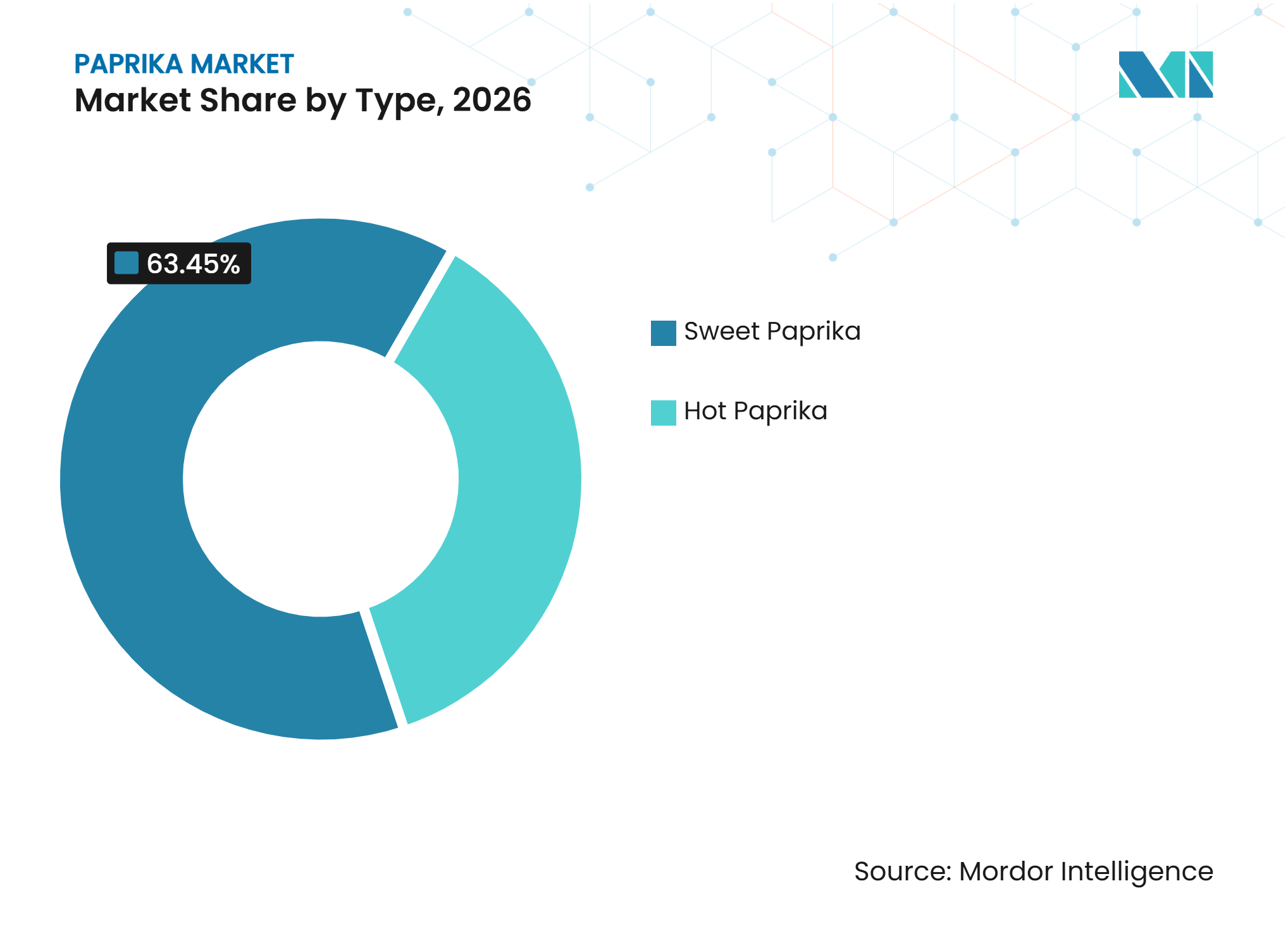
Sweet Dominance Intact, Hot Paprika Redefining Application BoundariesSweet paprika dominates the market, accounting for 63.45% of the total market share in 2026. Its leading position is supported by its versatility across food applications, including processed foods, sauces, seasonings, dairy products, and bakery formulations. Its comparatively mild flavor profile allows manufacturers to incorporate it into a broader range of products without significantly increasing heat intensity. Additionally, its coloring and flavoring properties support its use in standardized industrial formulations, sustaining demand across food processing applications.
Hot paprika is the fastest-growing segment, registering a projected CAGR of 7.28% over 2027–2032. Its growth is supported by growing consumer interest in spicy flavors and the incorporation of heat-oriented seasonings across a wider range of food products. Food manufacturers are increasingly diversifying flavor profiles to cater to changing consumer preferences, supporting the use of hot paprika in seasoning blends, sauces, marinades, and processed food formulations. Its compatibility with other spices and flavoring ingredients further broadens its potential applications in industrial food manufacturing.


By Form:
Powder Leads, Liquid Extract Commands Innovation PremiumPowder holds the largest share of the paprika market, accounting for 57.62% in 2026. Its leading position is supported by its versatility, ease of storage, and compatibility with established food manufacturing processes. Paprika powder is widely used in seasoning blends, spice mixes, processed foods, sauces, and meat preparations, where it provides consistent color and flavor. Its suitability for dry blending and straightforward incorporation into industrial formulations further supports its widespread adoption among food manufacturers.
Liquid extract is the fastest-growing form segment, registering a projected CAGR of 7.41% over 2027–2032. Its growth is supported by increasing demand for concentrated coloring and flavoring ingredients that can be incorporated into standardized liquid formulations. Compared with powder, liquid extracts offer greater flexibility in applications requiring uniform ingredient distribution and controlled color intensity. Improvements in extraction, formulation, and encapsulation technologies are also broadening their applicability across diverse food matrices, thereby supporting their adoption among industrial ingredient users.
By Nature:
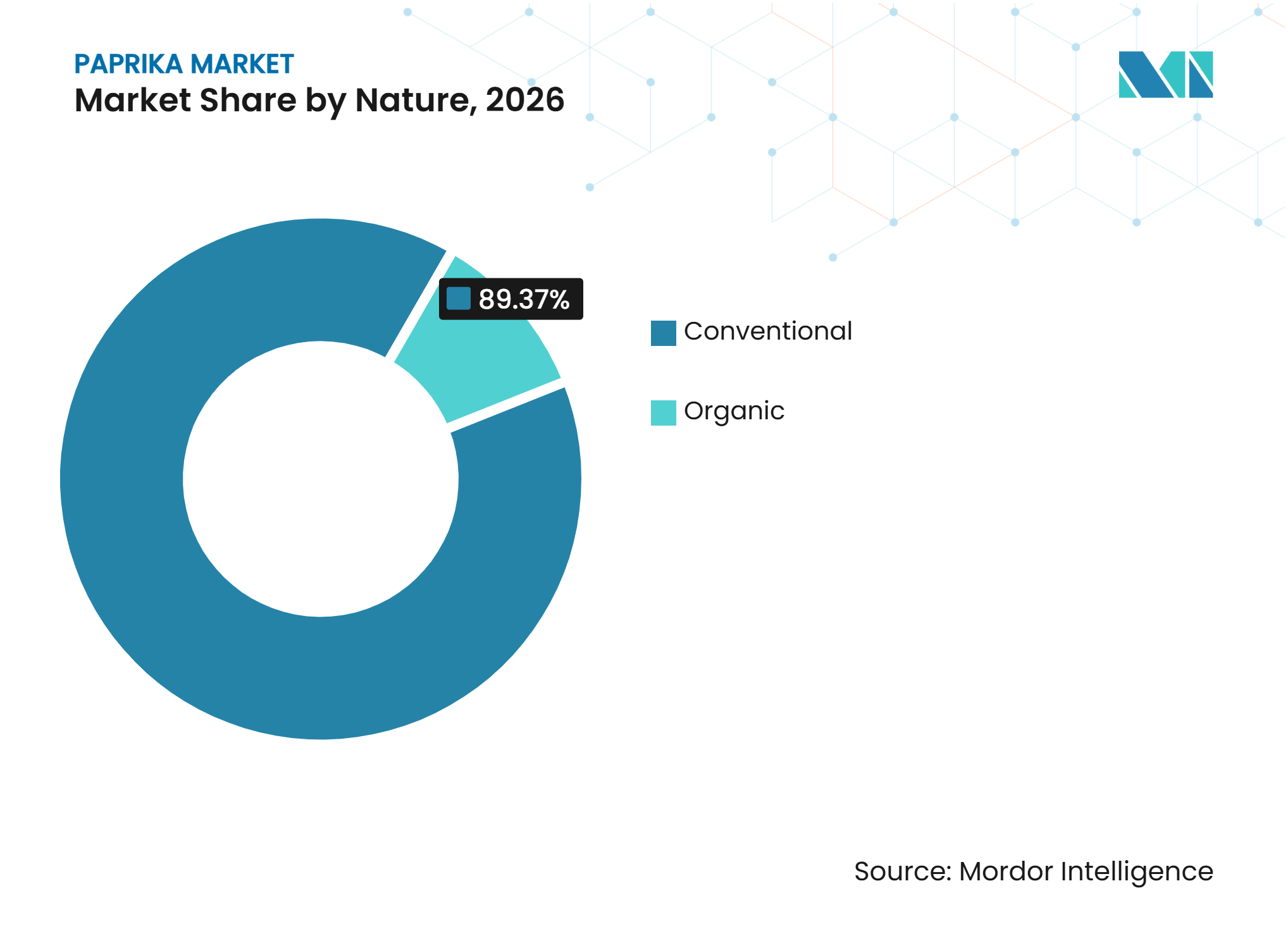
Conventional's Scale Advantage vs. Organic's Traceable PremiumConventional paprika dominates the market, accounting for 89.37% of the total market share in 2026. Its leading position is supported by established cultivation practices, greater availability of raw materials, and comparatively lower production costs. Conventional paprika benefits from well-developed supply chains and large-scale processing capabilities, making it suitable for high-volume industrial applications. Its cost competitiveness and availability across different product forms further support its widespread use among food manufacturers and ingredient processors.
Organic paprika is the fastest-growing segment in the nature category, with a projected CAGR of 7.36% over 2027–2032. Its growth is supported by increasing demand for organically certified ingredients and greater emphasis on production transparency and traceability across food supply chains. Food manufacturers are increasingly incorporating certified organic ingredients into product formulations to address clean-label preferences and sourcing requirements. The availability of established organic certification frameworks and improvements in supply-chain traceability are further supporting the adoption of organic paprika among manufacturers seeking certified natural ingredient alternatives.

By Application:
Pharmaceuticals Redefine Paprika's Industrial Value PropositionFood and beverages account for the largest share of the paprika market, representing 24.65% in 2026. The segment's leading position is supported by the widespread use of paprika as a natural coloring and flavoring ingredient across diverse food categories. Its applications include processed meat and seafood, savory snacks, sauces, dressings, condiments, dairy products, bakery items, and ready meals. Paprika's versatility, characteristic flavor profile, and coloring properties support its incorporation into both conventional and specialized food formulations, sustaining demand among industrial food manufacturers.
Pharmaceuticals represent the fastest-growing application segment, registering a projected CAGR of 7.58% over 2027–2032. Growth is supported by increasing research interest in the bioactive compounds found in paprika and other Capsicum-derived ingredients, particularly capsaicin and carotenoids. These compounds are being explored for their potential applications in topical formulations, pain-management products, and other therapeutic preparations. Growing interest in plant-derived functional compounds and continued research into their biological properties are expanding the potential use of paprika-derived ingredients beyond traditional food applications.
Geography Analysis
Europe
Europe holds the largest share of the paprika market, accounting for 29.76% in 2026. The region's leading position is supported by established paprika consumption in the food processing industry, well-developed ingredient supply chains, and demand for natural coloring and flavoring ingredients. Paprika is widely used in processed foods, meat products, sauces, seasonings, and other food applications across the region. Additionally, established production and processing capabilities, particularly in traditional paprika-producing countries, support regional supply and product differentiation. The region's regulatory emphasis on food safety, ingredient traceability, and naturally derived colorants further reinforces demand for compliant paprika ingredients among food manufacturers.
Asia-Pacific
Asia-Pacific is the fastest-growing regional market, registering a projected CAGR of 7.46% over 2027–2032. Growth is supported by the region's established role in paprika cultivation, spice processing, and oleoresin extraction, as well as by expanding demand from domestic food manufacturing industries. Increasing consumption of processed foods, packaged snacks, meat products, and convenience foods is broadening the application base for paprika ingredients. Furthermore, expanding food processing capabilities and growing interest in natural coloring and flavoring solutions are encouraging manufacturers to incorporate paprika powder and extracts into industrial formulations. The combination of established processing infrastructure and expanding end-use demand is strengthening the region's position in the global market.
North America, South America, and the Middle East and Africa
North America is an important consumption market, supported by established processed-food and snack-manufacturing industries and growing interest in naturally derived food colorants. South America benefits from paprika cultivation and export-oriented production, while expanding food processing activities create additional opportunities for domestic consumption of ingredients. Meanwhile, the Middle East and Africa region is experiencing growing demand for processed food ingredients alongside the development of local food manufacturing capabilities. Increasing reliance on imported food ingredients, expanding packaged food consumption, and greater emphasis on food quality and safety are supporting the adoption of paprika powder and oleoresin across these emerging markets.
Competitive Landscape
Market Concentration
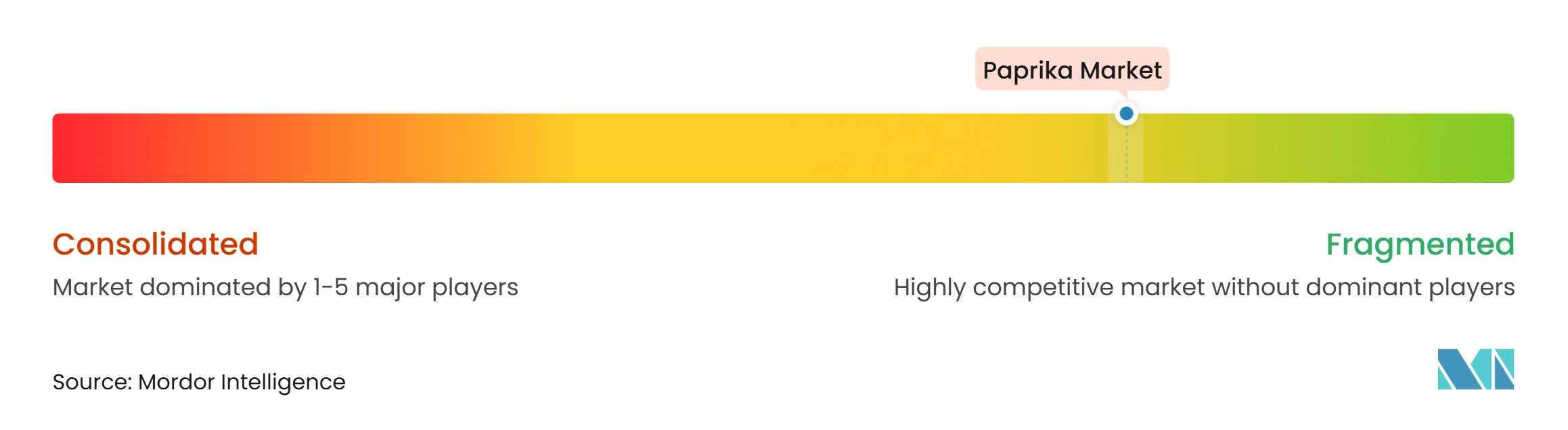
The paprika market is fragmented, with a competitive landscape comprising spice manufacturers, paprika processors, oleoresin producers, and natural color ingredient suppliers. Key market participants include McCormick & Company, Inc., Synthite Industries Pvt. Ltd., Oterra A/S, Kalsec Inc., and Mane Kancor Ingredients Private Limited. These companies compete on the basis of product portfolios, processing capabilities, ingredient quality, distribution networks, and relationships with food manufacturers. The presence of participants across different stages of the value chain contributes to market fragmentation, with competition spanning conventional paprika powders, standardized oleoresins, and specialized natural color solutions.
Key companies are strengthening their market positions through portfolio expansion, improvements in extraction and processing technologies, and the development of specialized natural color ingredients. Their strategies focus on expanding paprika-based colorant offerings, standardizing pigments, enhancing product quality, and developing solutions for diverse food manufacturing applications. Investments in research and development, quality assurance, supply chain traceability, and regulatory compliance are also supporting their efforts to meet evolving customer requirements and strengthen relationships with industrial food manufacturers.
Emerging players and regional suppliers are intensifying competition by expanding paprika processing capabilities, developing specialized oleoresin products, and strengthening their presence in international supply chains. Their competitive strategies emphasize sourcing capabilities, product consistency, cost efficiency, and compliance with food safety standards. Suppliers with access to established paprika-growing regions and specialized extraction infrastructure are also seeking opportunities to serve food manufacturers looking for diversified sourcing options and application-specific natural color ingredients.
Paprika Industry Leaders
-
McCormick & Company, Inc.
-
Synthite Industries Pvt. Ltd.
-
Oterra A/S
-
Kalsec Inc.
-
Mane Kancor Ingredients Private Limited
- *Disclaimer: Major Players sorted in no particular order
Paprika Market Companies Covered in this Report
- McCormick & Company, Inc.
- Chenguang Biotech Group Co., Ltd.
- Synthite Industries Pvt. Ltd.
- Antonio Sotos S.L.
- Sensient Technologies Corporation
- Oterra A/S
- Givaudan SA
- Döhler GmbH
- Mane Kancor Ingredients Private Limited
- Plant Lipids Private Limited
- Universal Oleoresins
- Extractos Vegetales, S.A.
- Paprika Oleo's (India) Limited
- AVT Natural Products Limited
- Fuchs GmbH & Co. KG
- Olam Food Ingredients
- Spiceology Inc.
- B&G Foods, Inc.
- Badia Spices, Inc.
- Frontier Co-op
- The Spice House
- Kalsec Inc.
Recent Industry Developments in Paprika Market
- September 2025: NK Agro Exports (India) Pvt. Ltd. announced the launch of a new Capsicum and Paprika Oleoresin manufacturing facility in Mahabubabad, Telangana, India. The facility features continuous extraction and centrifugal separation technologies, with a processing capacity of 100 metric tons of raw material per day, expanding the company's capabilities in value-added paprika ingredients.
- March 2025: Tikehau Capital completed the acquisition of a controlling stake in Juan Navarro García (JNG), a Spanish processor and distributor specializing in paprika, capsicum, and oleoresins. The investment, alongside Queka Real Partners and JNG's management, was intended to support the company's growth, international expansion, and development in the paprika industry.
- February 2025: Oterra A/S inaugurated a new color blending and application center in Kochi, Kerala, India, through its subsidiary Akay Natural Ingredients. The facility processes natural raw materials, including paprika, turmeric, annatto, and red beet, into color blends for food and beverage applications, strengthening regional manufacturing and customer support capabilities.
Global Paprika Market Report Scope
The paprika market covers the production, processing, and commercialization of paprika derived from dried red peppers, supplied in powder, whole, and extract forms for use as a natural coloring and flavoring ingredient. The market is segmented by type into sweet paprika and hot paprika, by form into powder, whole pods, flakes and granules, and liquid extract, by nature into conventional and organic, by application into food and beverages, animal feed and pet food, dietary supplements, and more, and by geography into North America, Europe, Asia-Pacific, South America, and the Middle East and Africa. Market forecasts are provided in USD.
Segmentation Overview
| Sweet Paprika |
| Hot Paprika |
| Powder |
| Whole Pods |
| Flakes and Granules |
| Liquid Extract |
| Conventional |
| Organic |
| Food/Beverages | Meat and Seafood |
| Snacks | |
| Sauces, Dressings and Condiments | |
| Dairy Products | |
| Bakery Products | |
| Beverages | |
| Others (Ready Meals, Confectionery, etc.) | |
| Animal Feed/Pet Food | |
| Dietary Supplements | |
| Cosmetics/ Personal Care | |
| Pharmaceuticals |
| North America | United States |
| Canada | |
| Mexico | |
| Rest of North America | |
| Europe | Germany |
| United Kingdom | |
| Italy | |
| France | |
| Spain | |
| Netherlands | |
| Poland | |
| Belgium | |
| Sweden | |
| Rest of Europe | |
| Asia-Pacific | China |
| India | |
| Japan | |
| Australia | |
| Indonesia | |
| South Korea | |
| Thailand | |
| Singapore | |
| Rest of Asia-Pacific | |
| South America | Brazil |
| Argentina | |
| Colombia | |
| Chile | |
| Peru | |
| Rest of South America | |
| Middle East and Africa | South Africa |
| Saudi Arabia | |
| United Arab Emirates | |
| Nigeria | |
| Egypt | |
| Morocco | |
| Turkey | |
| Rest of Middle East and Africa |
| By Type | Sweet Paprika | |
| Hot Paprika | ||
| By Form | Powder | |
| Whole Pods | ||
| Flakes and Granules | ||
| Liquid Extract | ||
| By Nature | Conventional | |
| Organic | ||
| By Application | Food/Beverages | Meat and Seafood |
| Snacks | ||
| Sauces, Dressings and Condiments | ||
| Dairy Products | ||
| Bakery Products | ||
| Beverages | ||
| Others (Ready Meals, Confectionery, etc.) | ||
| Animal Feed/Pet Food | ||
| Dietary Supplements | ||
| Cosmetics/ Personal Care | ||
| Pharmaceuticals | ||
| By Geography | North America | United States |
| Canada | ||
| Mexico | ||
| Rest of North America | ||
| Europe | Germany | |
| United Kingdom | ||
| Italy | ||
| France | ||
| Spain | ||
| Netherlands | ||
| Poland | ||
| Belgium | ||
| Sweden | ||
| Rest of Europe | ||
| Asia-Pacific | China | |
| India | ||
| Japan | ||
| Australia | ||
| Indonesia | ||
| South Korea | ||
| Thailand | ||
| Singapore | ||
| Rest of Asia-Pacific | ||
| South America | Brazil | |
| Argentina | ||
| Colombia | ||
| Chile | ||
| Peru | ||
| Rest of South America | ||
| Middle East and Africa | South Africa | |
| Saudi Arabia | ||
| United Arab Emirates | ||
| Nigeria | ||
| Egypt | ||
| Morocco | ||
| Turkey | ||
| Rest of Middle East and Africa | ||
Key Questions Answered in the Report
What is the projected value of the paprika sector by 2032?
The paprika market is projected to reach USD 817.15 million by 2032, from USD 594.66 million in 2026, at a 5.70% CAGR for 2027-2032.
Which paprika type is growing fastest?
Hot paprika is forecast to grow at a 7.28% CAGR through 2032, while sweet paprika held the largest type share at 63.45% in 2026.
Which form has the strongest growth outlook?
Liquid extract is forecast to grow at a 7.41% CAGR through 2032, supported by advances that improve the dispersibility of paprika oleoresin.
Which region is expected to grow fastest through 2032?
Asia-Pacific is forecast to grow at a 7.46% CAGR from 2027 to 2032, supported by food processing, poultry production, and packaged food consumption.