
Organic Rice Protein Market Size and Share
Market Overview
| Study Period | 2021 - 2031 |
|---|---|
| Market Size (2026) | USD 141.94 Million |
| Market Size (2031) | USD 268.41 Million |
| Growth Rate (2026 - 2031) | 13.59 % |
| Fastest Growing Market | Asia-Pacific |
| Largest Market | Asia-Pacific |
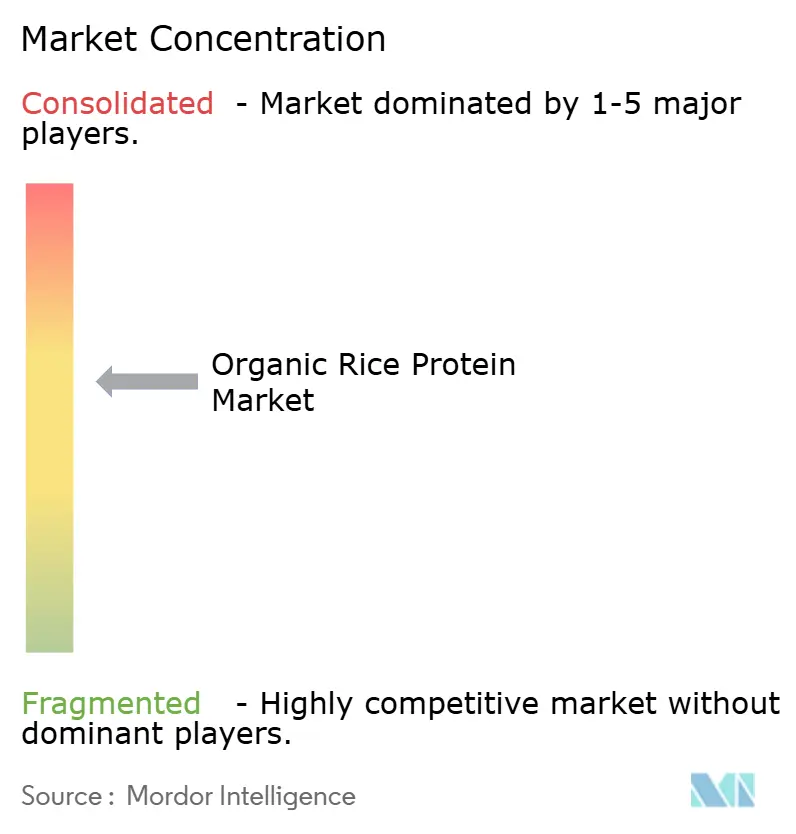
| Market Concentration | Medium |
Major Players *Disclaimer: Major Players sorted in no particular order Image © Mordor Intelligence. Reuse requires attribution under CC BY 4.0. | |
Organic Rice Protein Market Analysis by Mordor Intelligence
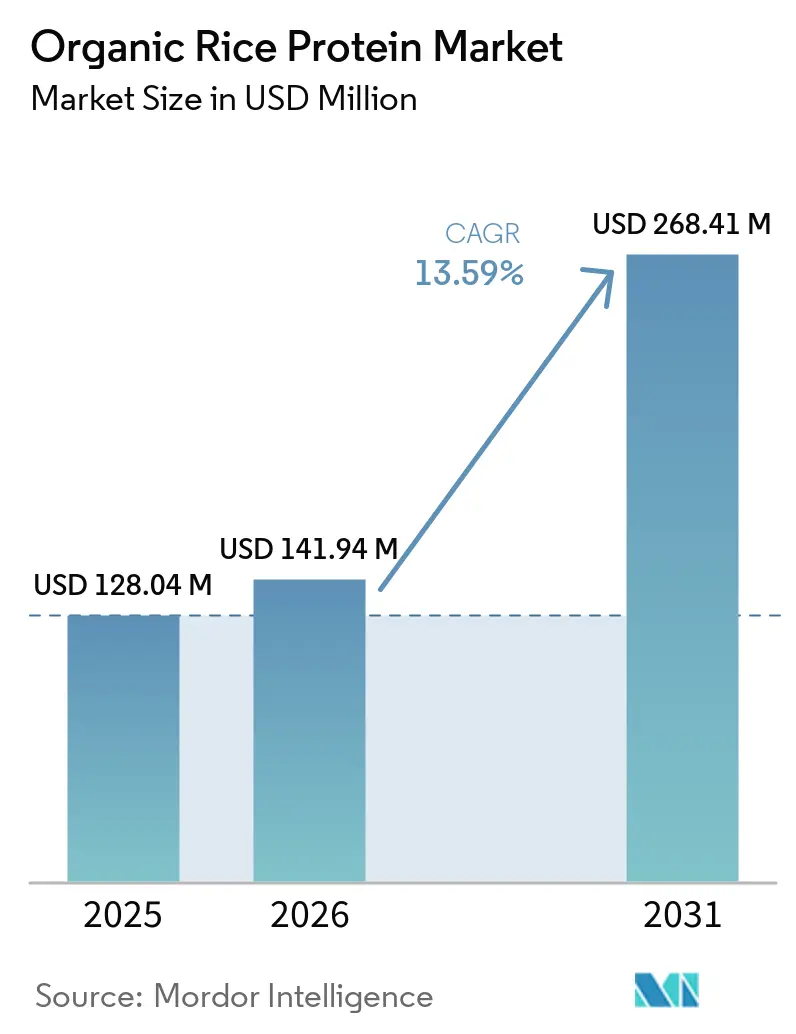
The Organic rice protein market size was valued at USD 128.04 million in 2025 and is estimated to grow from USD 141.94 million in 2026 to reach USD 268.41 million by 2031, at a CAGR of 13.59% during the forecast period (2026-2031). Demand is supported by food and nutrition brands seeking plant-based ingredients with organic certification, allergen-free positioning, and clear supply-chain documentation. The Organic rice protein market also benefits from demand in supplements, dairy alternatives, fortified foods, and specialized nutrition products. USDA organic enforcement requirements have made verified certification and transaction-level traceability more important for suppliers serving North American buyers[1]. Processing improvements are helping suppliers address long-standing challenges with solubility, texture, and flavor in beverages and protein-enriched foods. Competition remains moderate because suppliers compete through certified sourcing, heavy-metal documentation, product functionality, and application support rather than through a single dominant product standard.
Key Report Takeaways
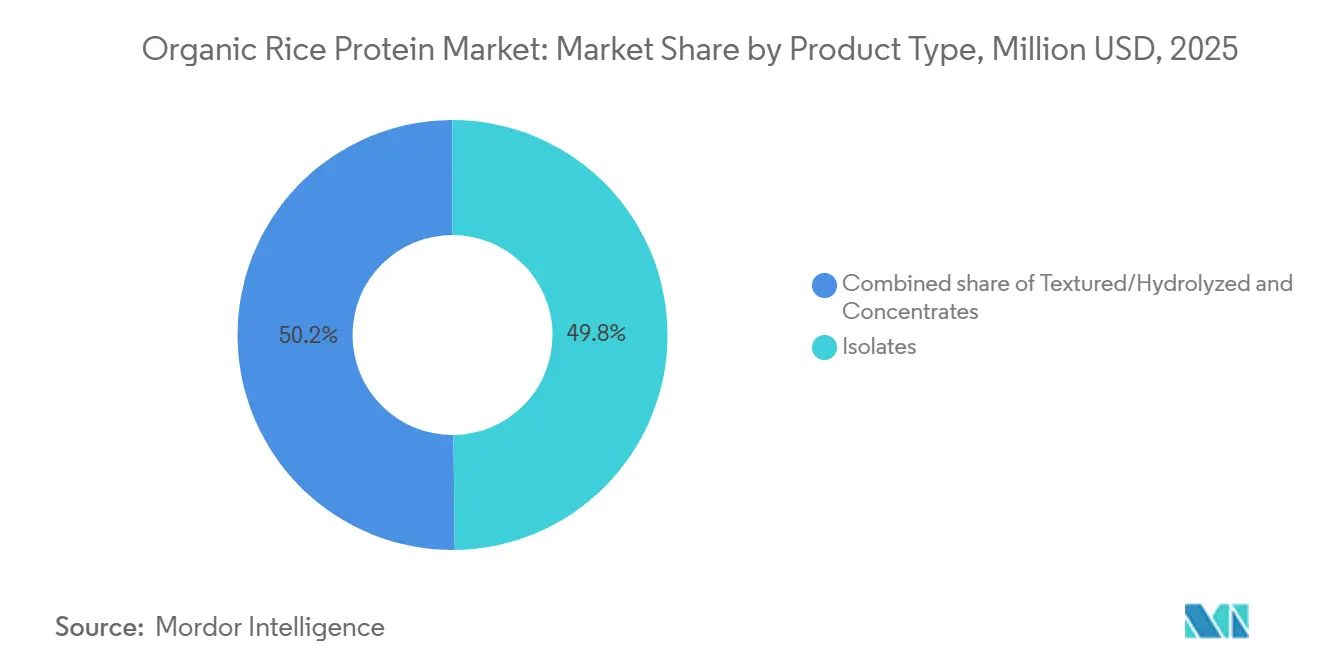
- By product type, isolates held 49.83% of the Organic rice protein market share in 2025, while textured and hydrolyzed products are forecast to grow at a 14.92% CAGR through 2031.
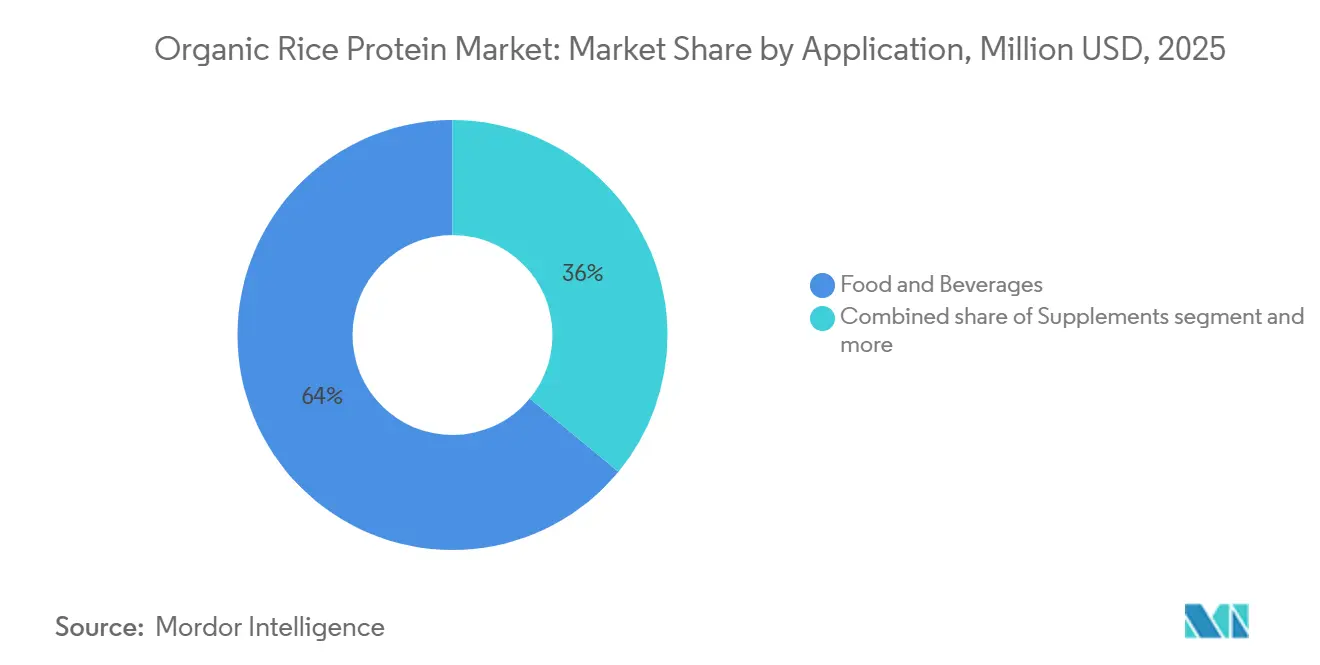
- By application, food and beverages accounted for 64.04% of the Organic rice protein market size in 2025, while supplements are forecast to expand at a 13.43% CAGR through 2031.
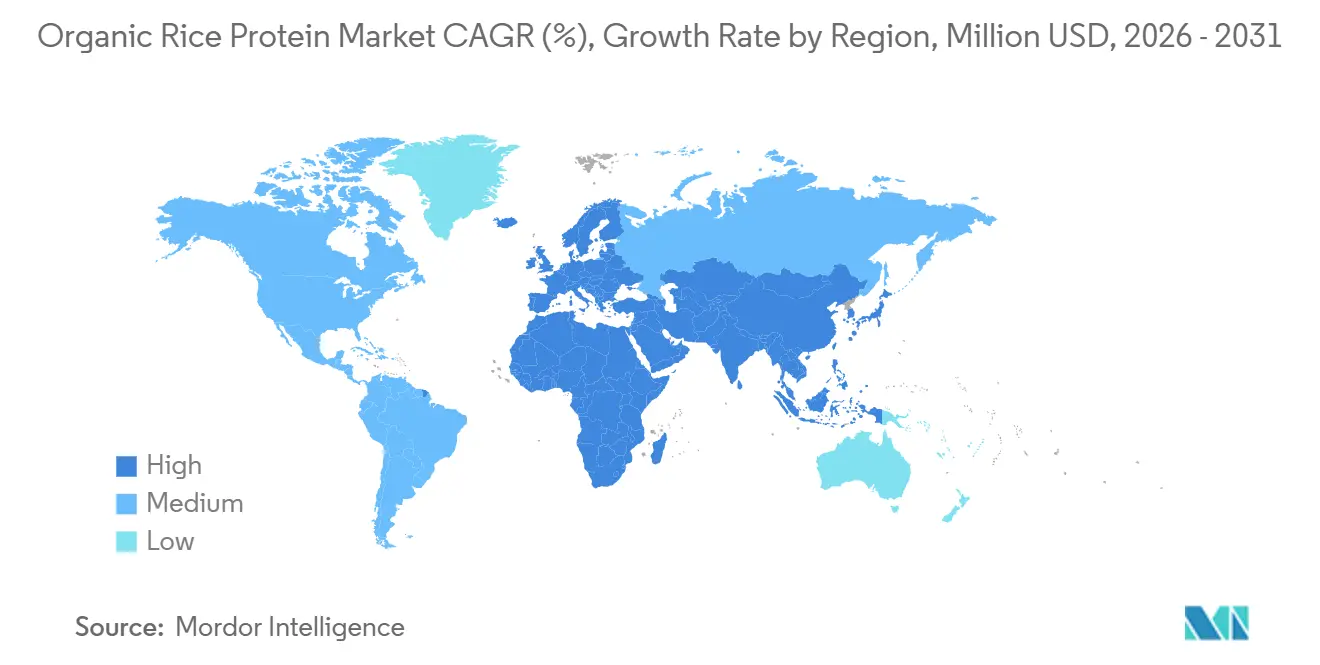
- By geography, Asia-Pacific held 38.90% of the Organic rice protein market share in 2025 and is projected to advance at a 13.98% CAGR through 2031.
Note: Market size and forecast figures in this report are generated using Mordor Intelligence’s proprietary estimation framework, updated with the latest available data and insights as of January 2026.
Market Trends and Insights
Drivers Impact Analysis of Organic Rice Protein Market*
| Driver | (~) % Impact on CAGR Forecast | Geographic Relevance | Impact Timeline |
|---|---|---|---|
| Clean-label and hypoallergenic protein demand | +3.2% | Global | Short term (≤ 2 years) |
| Sports and energy nutrition adoption | +2.8% | North America, Europe, and the Asia-Pacific core | Medium term (2–4 years) |
| Growth of organic vegan and flexitarian diets | +2.4% | Global, led by North America, Europe, and India | Medium term (2–4 years) |
| Expansion of organic certification and traceability requirements | +1.5% | North America and Europe, spill over to the Asia-Pacific | Short term (≤ 2 years) |
| Enzymatic processing and solubility improvements | +1.3% | Global | Medium term (2–4 years) |
| Organic rice protein demand in infant and specialized nutrition | +1.7% | Europe, the Asia-Pacific, and North America | Long term (≥ 4 years) |
| Source: Mordor Intelligence | |||
Clean-label and hypoallergenic protein demand
Organic rice protein's freedom from all 9 major U.S. allergen categories, along with its gluten-free and non-GMO profile, makes it one of the most broadly compatible functional ingredients for brands managing multi-claim product lines. The certification shift is structural: organic dietary supplement sales in the U.S. expanded 8.7% in 2025, and organic beverage dairy alternatives rose 18.2%, both categories reflecting consumer willingness to pay a premium for transparent, minimal-input ingredients, according to the Organic Trade Association[2]. A less-obvious consequence of pea protein's supply constraints, documented shortages in certified organic pea crop availability, is that food and beverage manufacturers are actively requalifying rice protein as a functionally substitutable, cost-comparable alternative, without requiring consumer re-education. Regulatory influence is increasingly relevant here: the USDA's SOE regulations, active since March 2024, require QR-code-verifiable certification for each organic transaction, significantly narrowing the field of credible rice protein sources and rewarding suppliers with fully auditable organic chains. Axiom Foods, for instance, tripled its Organic Oryzatein production capacity in August 2024 specifically to meet brands' urgent need to transition away from non-compliant sources.
Sports and energy nutrition adoption
Performance-oriented consumers are the organic rice protein market's most consistent growth constituency, but the uptake is no longer driven solely by vegan athletes. A controlled clinical trial published in PMC found that 48 g of rice protein isolate produced gains in lean mass and strength statistically comparable to an equivalent whey dose over 8 weeks of resistance training, directly addressing the performance credibility gap. BENEO's applied sports nutrition research confirms that rice-and-faba-bean blends can support muscle mass goals equivalently to whey, with rice protein contributing high sulfur-containing amino acids, methionine and cysteine, that complement legume lysine to form a complete amino acid matrix. Plant-based foods overall reached USD 7.9 billion in U.S. retail sales in 2025, with 60% of households purchasing them and 78% returning, a retention rate that suggests habitual rather than trial-stage adoption, which materially benefits repeat-purchase supplement SKUs, according to the Plant Based Foods Institute. The less-examined factor is that digestive comfort, not ethical conviction, is emerging as the primary reason dairy-averse athletes abandon whey, and rice protein's 100% digestibility rating positions it precisely for this growing consumer cohort. Surging whey protein prices, noted by Axiom Foods CEO David Janow as going "off the chart," make rice protein a cost-competitive swap for formulators under input-cost pressure.
Growth of organic vegan and flexitarian diets
As of January 2026, a Harris Poll commissioned by the Vegetarian Resource Group found that 33% of U.S. adults always, sometimes, or usually consume vegan meals, with approximately 8 million strict vegans among the adult population[3]. The commercially larger signal, however, is flexitarianism: the Vegan Society's 2025 multi-country survey found 16–30% of respondents in almost every country sampled identified as flexitarian, motivated primarily by health rather than ethics. For organic rice protein suppliers, this distinction carries formulation consequences. Flexitarians evaluate products on taste and digestive comfort before label claims, meaning the grain's neutral organoleptic profile and high digestibility are the actual demand levers, not organic certification alone. In India, where a structurally large share of the population avoids animal protein for cultural reasons, organic rice protein benefits from deep-rooted, non-trend-dependent demand in everyday food and nutrition formats. European plant-based food and drink continue to grow across key markets, including Germany and Spain, widening the downstream formulator base for organic rice protein as a functional ingredient in dairy alternatives, meat analogs, and fortified bakery.
Organic rice protein demand in infant and specialized nutrition
Hydrolyzed rice protein has secured a regulatory and clinical foundation in infant nutrition that competing plant proteins have not yet matched. The RIGHT-HY multi-center randomized controlled trial, sponsored by Société des Produits Nestlé and published in Frontiers in Nutrition in April 2026, confirmed that a new hydrolyzed rice protein-based infant formula enriched with two human milk oligosaccharides met EU hypoallergenicity criteria, with 90%+ of enrolled infants with documented cow's milk protein allergy showing no allergic reaction under double-blind food challenge conditions. An ILSI Europe expert workshop convened in November 2024 confirmed that hydrolyzed rice proteins are already approved and in active use for infant formula in both the EU and the U.S., while emerging legume proteins still require extensive safety validation, giving rice protein a structural lead in the regulatory pathway for regulated nutritional applications. The specialized nutrition channel, encompassing elderly nutrition, enteral formulas, and medical nutrition products, shares this high-digestibility and allergen-free requirement, extending rice protein's applicability across demographically distinct but structurally similar end-use segments. Each clinical milestone achieved in infant nutrition serves as a regulatory template transferable to adjacent categories, giving established rice protein suppliers a cumulative compliance advantage that newer plant proteins cannot replicate quickly.
Restraints Impact Analysis of Organic Rice Protein Market*
| Restraint | (~) % Impact on CAGR Forecast | Geographic Relevance | Impact Timeline |
|---|---|---|---|
| Limited availability and higher cost of certified organic rice | -1.2% | Global, most acute in North America and Europe due to import dependency | Short term (≤ 2 years) |
| Lower consumer familiarity compared with whey, soy, and pea protein | -0.8% | North America and Europe | Medium term (2–4 years) |
| Naturally lower digestibility and amino acid balance compared with some alternatives | -0.5% | Global | Medium term (2–4 years) |
| Heavy-metal monitoring and batch-level compliance burden | -0.4% | North America and Europe, compliance-driven markets | Short term (≤ 2 years) |
| Source: Mordor Intelligence | |||
Limited availability and higher cost of certified organic rice
Certified organic rice is among the most geographically concentrated agricultural commodities in the ingredient supply chain. Organic rice cultivation requires multi-year soil transition periods, third-party annual audits, and continuous avoidance of prohibited synthetic inputs, factors that structurally limit how rapidly the supply base can expand in response to demand signals. USDA data shows that domestic organic rice acreage did grow, but the U.S. remains heavily dependent on Asian imports for organic rice protein raw materials, exposing buyers to currency risk, shipping cost volatility, and now regulatory scrutiny under SOE import certificate requirements . The consequent cost premium over conventional rice protein, estimated in industry practice at 30–60%, functions as a market-access barrier for price-sensitive food and beverage applications, channeling organic rice protein primarily into supplement and premium food segments. A tightening in certified organic pea crop availability, rather than easing rice protein supply pressure, has paradoxically added demand-side urgency that temporarily pushed prices further as brands scrambled to requalify suppliers under stricter traceability protocols.
Heavy-metal monitoring and batch-level compliance burden
The FDA's established action level of 100 ppb inorganic arsenic in infant rice cereals, finalized in 2020 and cited by the agency's ongoing "Closer to Zero" initiative as a benchmark for further arsenic-exposure reduction in baby foods, creates a tiered compliance environment where each batch of rice protein destined for infant or pediatric applications must be independently tested and documented. In parallel, EFSA has set a 0.1 mg/kg arsenic limit in rice-based baby foods, reinforcing that regulatory scrutiny on this contaminant is a trans-Atlantic compliance requirement PMC / NIH – Heavy Metal Contamination. Testing commissioned by Healthy Babies Bright Futures and published in 2025, covering 145 rice samples from U.S. retailers, found inorganic arsenic in 100% of samples, with more than 25% exceeding the infant rice cereal benchmark, underscoring the scale of the challenge for rice-derived ingredient manufacturers seeking infant nutrition contracts. The competitive implication is significant: producers who invest in proprietary processing steps specifically engineered to remove heavy metals, such as Axiom Foods' patented low-heavy-metal Oryzatein 2.0, independently certified by ISO/IEC 17025-accredited laboratories as free of detectable lead, are systematically capturing a quality tier that qualifies for premium infant nutrition contracts. Smaller processors without equivalent analytical infrastructure and remediation capability are effectively excluded from the highest-value application tier.
*Our forecasts treat driver/restraint impacts as directional, not additive. The impact forecasts reflect baseline growth, mix effects, and variable interactions.
Organic Rice Protein Market Segment Analysis
By Product Type:
Isolate Purity Standards Anchor Market ValueIsolates held 49.83% of the Organic rice protein market share in 2025 because they meet the specification requirements of sports nutrition, clinical formulas, and dairy-alternative beverages. These applications commonly require protein concentrations above 80% and dependable solubility. The grade is especially relevant when formulation teams need a concentrated protein source without the more visible texture associated with less refined materials. Concentrates generally contain 70% to 80% protein and are used in bakery, snacks, and meat-alternative foods where cost is an important factor. They provide a practical option for fortification where very high purity is not essential. Product selection, therefore, reflects the intended food format, the required protein level, and the balance between ingredient cost and finished-product performance. Isolates remain important when formulators need a cleaner taste profile and more consistent performance in liquid systems.
Textured and hydrolyzed products are projected to record a 14.92% CAGR from 2026 to 2031. This projected growth shows that the Organic rice protein market is moving toward grades designed for applications that cannot accept grittiness, opacity, or poor dispersion. Enzymatic extraction can improve rice protein solubility from 49% in native form to 88% under optimized conditions. A 2025 Food Chemistry study also found that ultrasound-assisted protein-glutaminase modification improved rice protein dispersibility and solubility in water. These advances make hydrolyzed grades more suitable for clear beverages and ready-to-drink nutrition products. They also reduce the need for formulators to choose between plant-based protein content and a drinkable finished-product texture. Hydrolysis also supports infant formula development because the degree of hydrolysis affects hypoallergenicity qualification.

By Application:
Food and Beverages Dominance Coexists With Rapid Supplement GrowthFood and beverages accounted for 64.04% of the Organic rice protein market size in 2025. Plant-based beverages, meat and poultry alternatives, bakery products, and snacks form the main volume channels. The Organic rice protein market supports food manufacturers across these formats through protein enrichment, texture development, and blend formulation. Rice protein can improve texture in meat alternatives, particularly when it is blended with pea or lentil proteins. Bakery and snack manufacturers often use concentrate grades for cost-conscious protein fortification. Beverage manufacturers increasingly seek hydrolyzed isolate grades when clarity and flavor neutrality are required. This application base gives the Organic rice protein market exposure to both everyday packaged foods and higher-value nutrition products.
The supplements segment is forecast to grow at a 13.43% CAGR from 2026 to 2031. Clinical evidence showing comparable exercise outcomes for rice and whey protein supports use in performance nutrition products. Elderly and medical nutrition products provide another application because they require digestible protein in compact formats. Organic rice protein has no plant-specific allergen flag, which can help formulators serving consumers who avoid soy or gluten-containing alternatives. China’s special medical purpose food category also supports demand from infant food, sports nutrition, and medical nutrition applications.
Geography Analysis
APAC Organic Rice Protein Market
Asia-Pacific held 38.9% of the Organic rice protein market share in 2025 and is projected to expand at a 13.98% CAGR through 2031. China, India, and Southeast Asian countries provide important organic rice cultivation and processing capacity. This regional supply base enables processors to connect certified farms with finished ingredient production. The Organic rice protein market in China is linked to infant food, sports nutrition, and special medical purpose food applications. India supports demand through established preferences for non-animal protein in everyday foods and nutrition products.
North America and Europe Organic Rice Protein Market
North America and Europe are mature regions with established clean-label rules and experienced food formulation sectors. The Organic rice protein market in these regions is shaped by buyer expectations for dependable documentation, product quality, and regulatory compliance. USDA organic enforcement rules have narrowed the supplier pool for buyers who need verified transaction records. This has encouraged U.S. suppliers to expand verified production capacity. Europe applies import equivalency requirements under EU Organic Regulation 2018/848, which increases reliance on verified suppliers. European clinical work on hydrolyzed rice protein infant formula supports demand for EU-compliant hypoallergenicity-certified grades.
MEA and South America Organic Rice Protein Market
South America, the Middle East, and Africa have lower current penetration but growing demand conditions. Brazil provides organic rice supply potential and a consumer base for sports nutrition and plant-based foods. Colombia and Argentina are gaining attention as local plant-based food categories develop. Gulf Cooperation Council countries support imports of premium organic plant protein supplements through health, fitness, and urban consumer demand. Rice protein’s halal-compatible and allergen-free profile can help it compete with soy alternatives in these markets.
Competitive Landscape
The Organic rice protein market is moderately fragmented, and no supplier holds a decisive market share. Axiom Foods, AIDP, and RiceBran Technologies hold differentiated positions in the United States through ingredient technology, regulatory documentation, and specialty product offerings. Chinese processors, including Bioway Xi’an Organic Ingredients, Shaanxi Fuheng Biotechnology, and Golden Grain Group, compete through production scale and cost efficiency. BENEO GmbH markets Remypro rice protein in Europe through established relationships with food manufacturers. Cambridge Commodities supports regional access by aggregating supply for formulators that do not manage direct importer relationships.
Supplier strategies differ between high-volume commodity positioning and premium capability-based products. Axiom Foods launched Oryzatein® 2.0 in January 2025, emphasizing a white color, grit-free texture, higher water solubility, and independently tested low-heavy-metal credentials. The company also tripled Organic Oryzatein production capacity in August 2024 in response to demand created by stronger organic traceability requirements. These moves show how certification and product quality can create an advantage in premium applications. Suppliers that cannot document source certification and contaminant testing face weaker access to regulated contracts.
Hydrolysate development is an important area within the Organic rice protein market because it addresses clarity, texture, and solubility barriers in beverages. The Organic rice protein market can also favor suppliers that combine hydrolysis capabilities with evidence that supports use in sensitive nutrition applications. Infant-grade low-heavy-metal products are another important area because validation and testing requirements limit the number of eligible suppliers. Functional cosmetics provide a separate opening for traceable hydrolyzed organic rice protein products. Clear sports beverages may expand as processing advances improve protein performance in liquids. The Organic rice protein industry is therefore becoming more reliant on technical processing, clinical support, and regulatory documentation.
Organic Rice Protein Industry Leaders
-
Axiom Foods, Inc.
-
RiceBran Technologies
-
Shafi Gluco-Chem (Pvt.) Ltd.
-
Golden Grain Group Limited
-
Shaanxi Fuheng (FH) Biotechnology Co., Ltd.
- *Disclaimer: Major Players sorted in no particular order
Organic Rice Protein Market Companies Covered in this Report
- Axiom Foods, Inc.
- RiceBran Technologies
- Shafi Gluco-Chem (Pvt.) Ltd.
- Shaanxi Fuheng (FH) Biotechnology Co., Ltd.
- Golden Grain Group Limited
- Bioway (Xi’an) Organic Ingredients Co., Ltd.
- AIDP, Inc.
- Ribus, Inc.
- The Green Labs LLC
- Top Health Ingredients, Inc.
- NutriBiotic
- BENEO GmbH
- Nutrition Resource Inc.
- Cambridge Commodities
- Nature Bio Foods
- Organicway
- NewGen Direct Ltd
- Hill Pharma
- Laybio
- North Coast Naturals
Recent Industry Developments in Organic Rice Protein Market
- August 2026: NNB Nutrition and Axiom Foods partnered to launch PeptiClear, a hydrolyzed, high-solubility plant protein platform for global food and beverage manufacturers, addressing whey protein supply constraints. The partnership expanded Axiom's presence in functional beverages and ready-to-drink categories and added DL-185, a clinically supported di-leucine peptide ingredient, to its supplement-ingredients portfolio.
- January 2025: Axiom Foods began commercial production of Oryzatein 2.0 at 10 containers per month and sampled it with select natural products, infant nutrition, and dairy-alternative partners. The launch made available the first hexane-free, non-GMO organic rice protein grade that met California Proposition 65 lead specifications at typical use levels.
- August 2024: Axiom Foods tripled its Organic Oryzatein rice protein capacity after the USDA’s Strengthening Organic Enforcement (SOE) regulations took effect in March 2024. The expansion met rising demand from North American food and beverage manufacturers requalifying organic rice protein supply chains under the USDA Organic Integrity Database framework.
Global Organic Rice Protein Market Report Scope
Organic rice protein is a plant-based nutritional powder extracted from certified organic whole-grain brown rice using a chemical-free, natural enzyme process. The organic rice protein market report is segmented by product type, application, and geography. By product type, the market is segmented into concentrates, isolates, and textured/hydrolyzed. By application, the market is segmented into food and beverages, personal care and cosmetics, and supplements. By geography, the market is segmented into North America, Europe, Asia-Pacific, South America, and the Middle East and Africa. The Market Forecasts are Provided in Terms of Value (USD).
Segmentation Overview
| Concentrates |
| Isolates |
| Textured/Hydrolyzed |
| Food and Beverages | Bakery |
| Beverages | |
| Meat/Poultry/Seafood and Meat Alternative Products | |
| Snacks | |
| Personal Care and Cosmetics | |
| Supplements | Elderly Nutrition and Medical Nutrition |
| Sport/Performance Nutrition |
| North America |
| Europe |
| Asia-Pacific |
| South America |
| Middle East and Africa |
| Product Type | Concentrates | |
| Isolates | ||
| Textured/Hydrolyzed | ||
| Application | Food and Beverages | Bakery |
| Beverages | ||
| Meat/Poultry/Seafood and Meat Alternative Products | ||
| Snacks | ||
| Personal Care and Cosmetics | ||
| Supplements | Elderly Nutrition and Medical Nutrition | |
| Sport/Performance Nutrition | ||
| Geography | North America | |
| Europe | ||
| Asia-Pacific | ||
| South America | ||
| Middle East and Africa | ||
Key Questions Answered in the Report
What is driving demand for organic rice protein?
Demand is supported by organic certification, allergen-free positioning, plant-based food adoption, and use in supplements and specialized nutrition.
Which product type leads organic rice protein sales?
Isolates led with 49.83% share in 2025 because they meet purity and solubility requirements in beverages, clinical formulas, and sports nutrition.
Which application uses the most organic rice protein?
Food and beverages held 64.04% share in 2025, led by plant-based beverages, bakery, snacks, and meat alternatives. The Organic rice protein market also has a faster-growing supplement channel for performance and daily nutrition products.
Why are hydrolyzed rice proteins gaining use?
Hydrolyzed products are forecast to grow at 14.92% CAGR through 2031 because processing can improve solubility and performance in clear drinks and infant nutrition.