
Organic Cocoa Market Size and Share
Market Overview
| Study Period | 2022 - 2032 |
|---|---|
| Market Size (2027) | USD 8.72 Billion |
| Market Size (2032) | USD 11.88 Billion |
| Growth Rate (2027 - 2032) | 6.37 % |
| Fastest Growing Market | Asia-Pacific |
| Largest Market | Europe |
| Market Concentration | Medium |
Major Players *Disclaimer: Major Players sorted in no particular order Image © Mordor Intelligence. Reuse requires attribution under CC BY 4.0. | |
Organic Cocoa Market Analysis by Mordor Intelligence
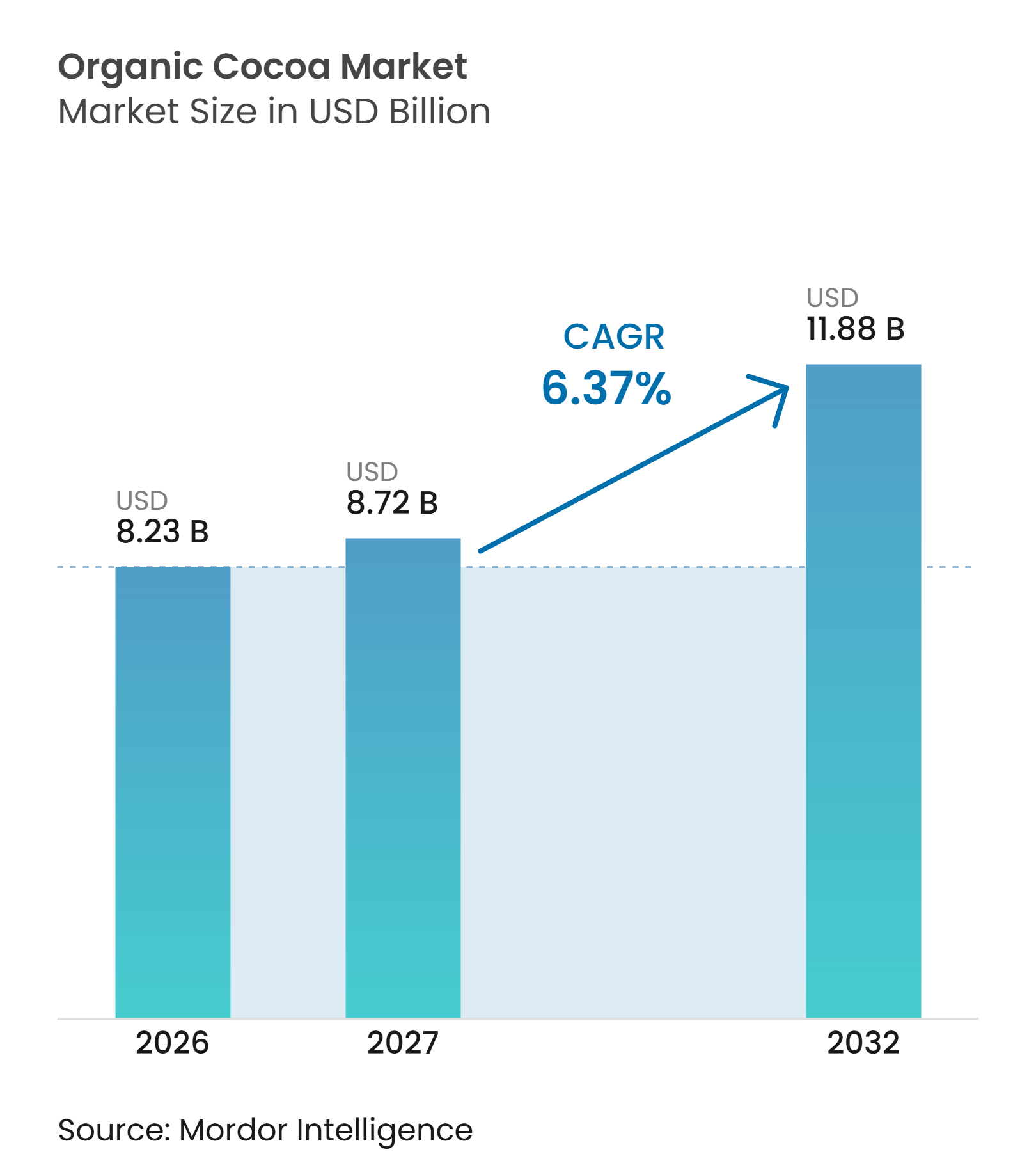
The organic cocoa market size was valued at USD 8.23 billion in 2026 and is estimated to grow from USD 8.72 billion in 2027 to reach USD 11.88 billion by 2032, at a CAGR of 6.37% during the forecast period (2027-2032). The organic cocoa market is increasingly shaped by a widening gap between demand for verified ingredients and the availability of certified supply. High conventional cocoa prices, stricter import requirements, and harvest volatility have made it more difficult for producers to maintain certification at origin. Consequently, buyers place greater value on long-term relationships with cooperatives that can ensure traceability and maintain valid certification. This trend favors processors that integrate sourcing, verification, and processing capabilities rather than relying on spot-market purchases.
Key Report Takeaways
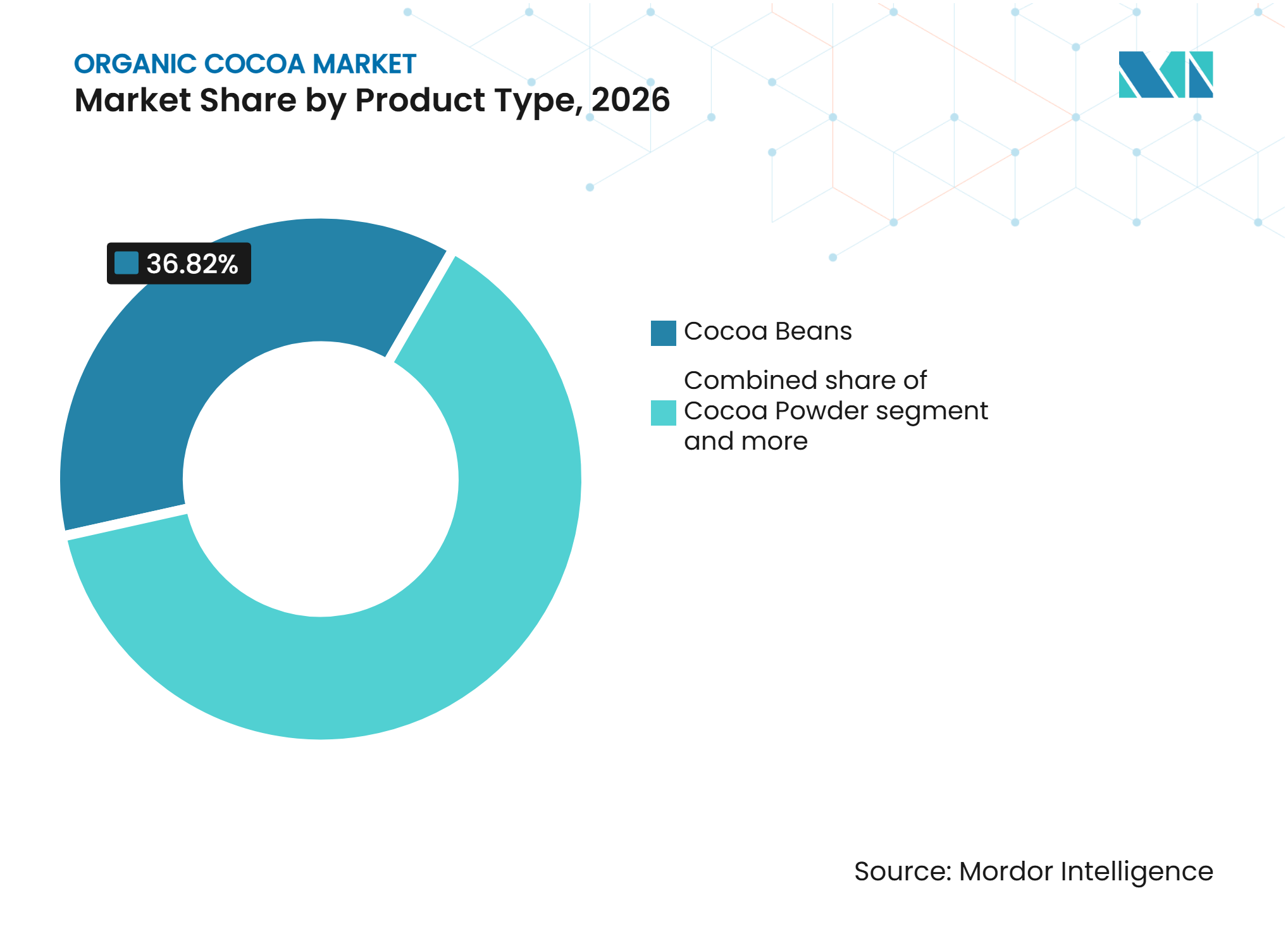
- By product type, cocoa beans held the largest share of the organic cocoa market at 36.82% in 2026, while cocoa powder is forecast to be the fastest-growing segment, expanding at a CAGR of 7.41% during 2027-2032.
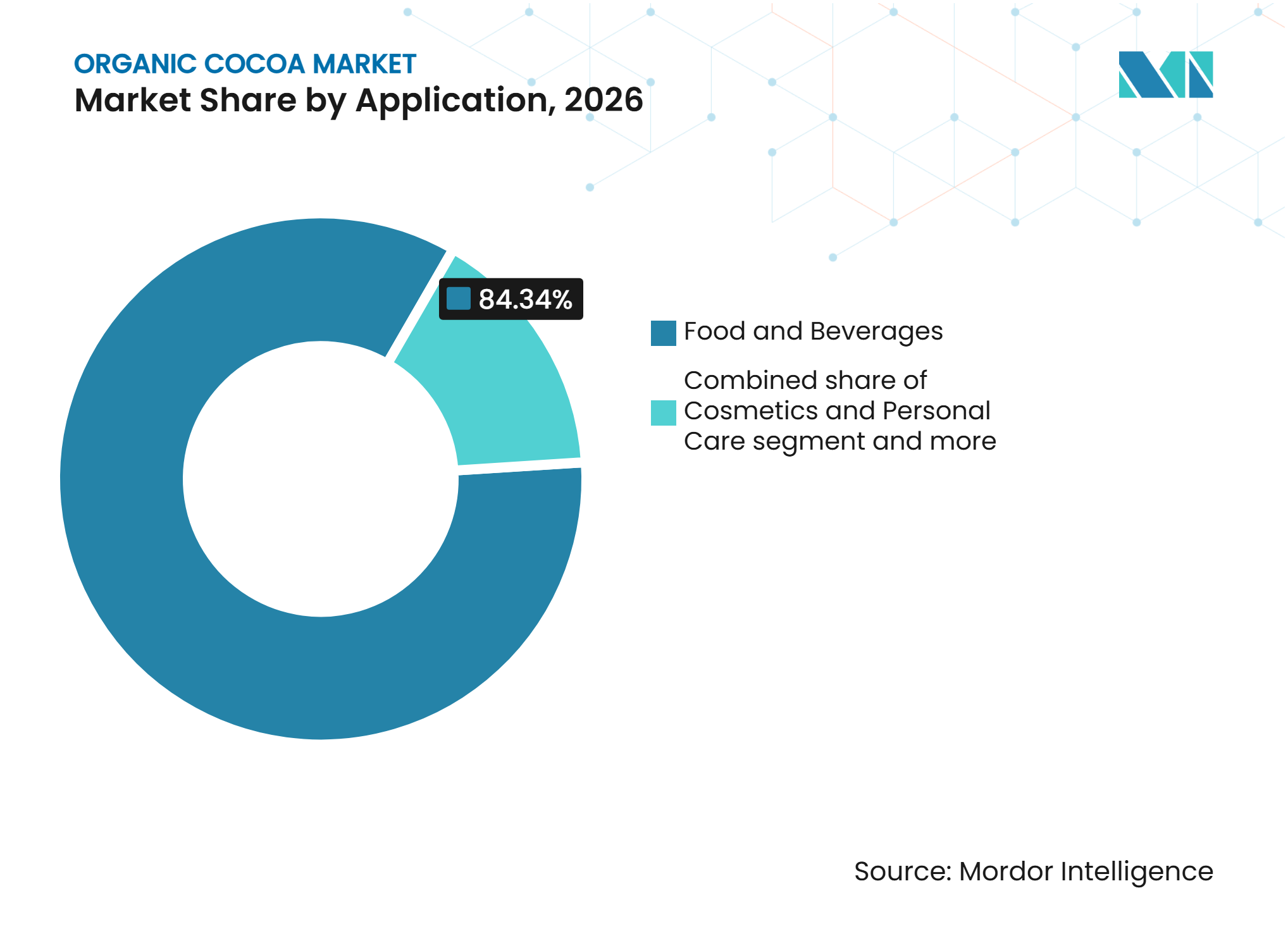
- By application, food and beverages accounted for the largest market share of 84.34% in 2026, while cosmetics and personal care are forecast to be the fastest-growing segment, registering a CAGR of 7.63% during 2027-2032.
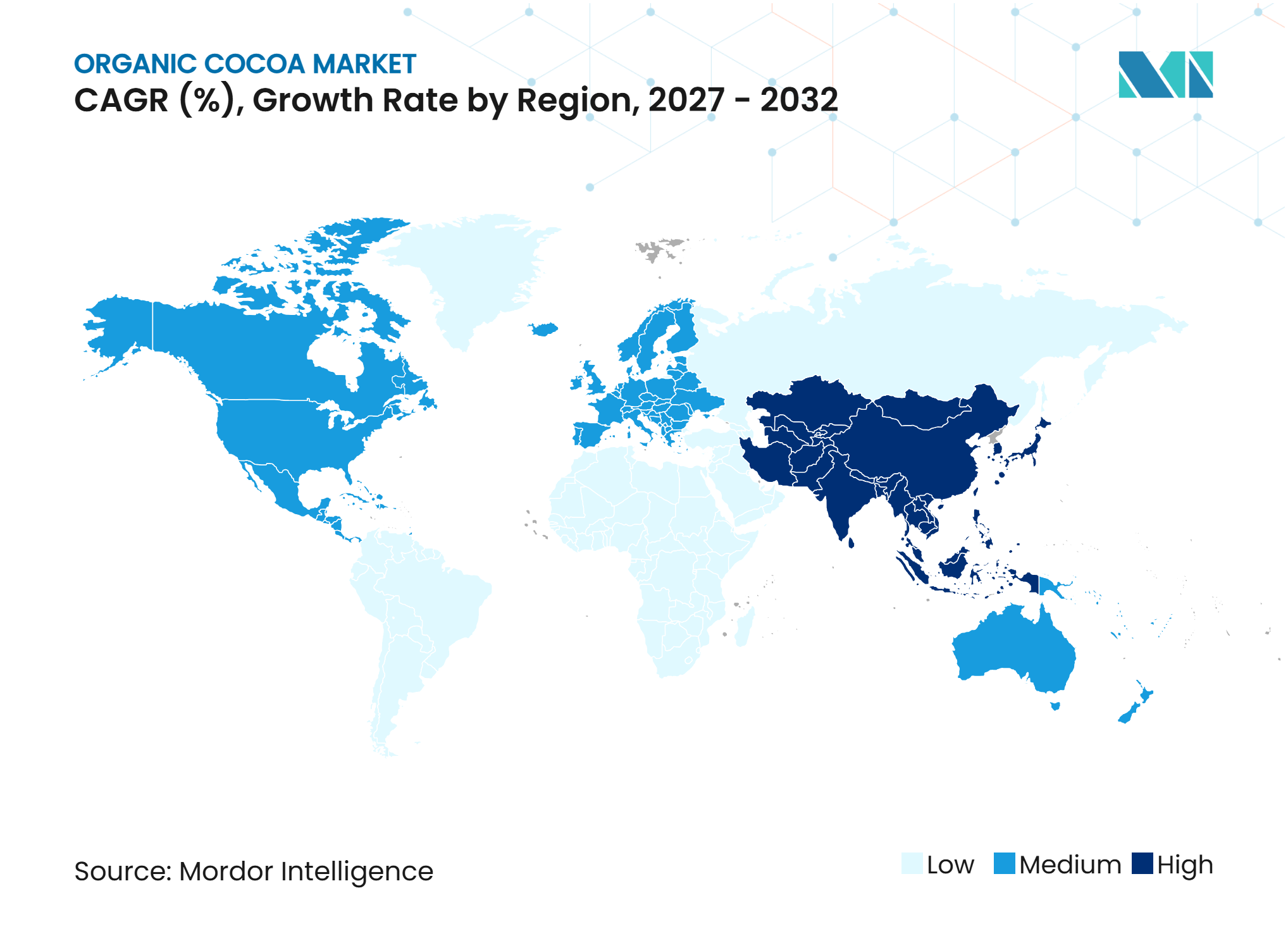
- By geography, Europe dominated the organic cocoa market with a share of 36.12% in 2026, while Asia-Pacific is projected to be the fastest-growing region, expanding at a CAGR of 7.88% during 2027-2032.
Note: Market numbers in this report are based on Mordor Intelligence's proprietary estimation framework, which combines nine months of actuals with Q4 projections for base year 2026.
Market Trends and Insights
Drivers Impact Analysis of Organic Cocoa Market*
| Driver | (~) % Impact on CAGR Forecast | Geographic Relevance | Impact Timeline |
|---|---|---|---|
| Consumer preference for organic and certified food products | +1.4% | Global | Medium term (2-4 years) |
| Demand for sustainable and ethically sourced cocoa | +1.3% | Global | Long term (≥ 4 years) |
| Expansion of premium and organic chocolate products | +1.2% | Europe and North America | Medium term (2-4 years) |
| Consumer focus on health and wellness | +1.0% | Global | Medium term (2-4 years) |
| Increasing adoption of organic cocoa in bakery and food processing | +0.8% | Europe, North America, and Asia-Pacific | Medium term (2-4 years) |
| Expansion of organic food retailing and e-commerce distribution | +0.7% | Global | Short term (≤ 2 years) |
| Source: Mordor Intelligence | |||
Consumer Preference for Organic and Certified Food Products
Consumer preference for certified organic food products is supporting demand for organic cocoa, as consumers increasingly prioritize clean-label ingredients, transparent sourcing, and production methods that minimize synthetic agricultural inputs. According to the Organic Trade Association's March 2026 report, certified organic food sales in the United States continue to grow[1]. This trend is creating opportunities for organic cocoa beans, cocoa powder, nibs, and butter in certified chocolate, confectionery, bakery, and beverage formulations. As food manufacturers respond to growing demand for organically certified ingredients, demand for certified organic cocoa is expected to gain further support.
Demand for Sustainable and Ethically Sourced Cocoa
Sustainability requirements increasingly determine suppliers’ ability to sell cocoa in major consumer markets. According to a January 2026 article by the Research Institute of Organic Agriculture, cocoa has the largest certified agricultural area among major commodity crops, with at least one certification standard covering 36.2% of the global cocoa-growing area[2]. In 2025, ofi distributed 2.6 million trees to cocoa farmers in Ghana and Côte d’Ivoire and provided good agricultural practice support to 98,000 farmers. This scale demonstrates that certification systems now influence sourcing decisions throughout the cocoa supply chain. The program links farm resilience to long-term cocoa availability. The organic cocoa market benefits when suppliers demonstrate both verified sourcing and credible farm support, as buyers require evidence beyond certification claims.
Expansion of Premium and Organic Chocolate Products
Premium chocolate drives demand for certified ingredients, as organic claims reinforce product quality, flavor, and origin positioning. Organic chocolate brands use certification and fair-trade credentials to justify premium pricing to consumers. This strategy is particularly effective in Europe and North America, where specialist retailers and well-established premium chocolate categories support a wide range of certified products. Origin-specific cocoa also enables manufacturers to differentiate finished products without altering cocoa’s fundamental role in the recipe. The organic cocoa market benefits when processors establish verified origin as a consistent product attribute rather than a limited seasonal claim. This trend increases the importance of stable relationships with certified farmer groups and local processors.
Consumer Focus on Health and Wellness
Growing consumer awareness of dietary quality and healthier food choices is driving demand for cocoa-based ingredients in wellness-focused food formulations. According to the United Kingdom Food Standards Agency’s Food and You 2 survey published in March 2026, conducted between May and August 2025, 75% of respondents reported changing their eating habits for health reasons during the preceding 12 months. Among these respondents, 49% reported eating less processed food, while 48% reduced their consumption of high-sugar foods and beverages[3]. This shift in dietary preferences is creating opportunities for organic cocoa powder and cocoa nibs in nutritional snacks, beverage mixes, and reduced-sugar chocolate formulations. Manufacturers can use organic cocoa ingredients to develop products that align with consumer preferences for higher-quality ingredients and more conscious food choices.
Restraints Impact Analysis of Organic Cocoa Market*
| Restraint | (~) % Impact on CAGR Forecast | Geographic Relevance | Impact Timeline |
|---|---|---|---|
| Higher production costs associated with organic cocoa cultivation | -1.2% | Global, with acute pressure in West Africa and South America | Long term (≥ 4 years) |
| Limited availability of certified organic cocoa beans | -1.0% | Global | Short term (≤ 2 years) |
| Lower agricultural productivity and pest management challenges | -0.7% | West and Central Africa, South America | Medium term (2-4 years) |
| High price sensitivity and limited affordability | -0.5% | Emerging markets in Asia-Pacific, the Middle East and Africa, and South America | Medium term (2-4 years) |
| Source: Mordor Intelligence | |||
Higher Production Costs Associated with Organic Cocoa Cultivation
European Union Regulation 2018/848 requires organic producers in third countries that sell products into the European Union to comply with stringent requirements. The regulation was divided into two entities to meet revised member limits, increasing the number of required audit days and auditors. Certification expenses, manual pest management labor, and the costs of maintaining organic production practices further raise operational costs. Georeferencing and traceability requirements also create additional administrative work for cooperatives supplying the European market. These conditions favor suppliers with the resources to manage compliance systems across multiple origins. Moreover, smaller cocoa farmers and producer cooperatives face greater financial pressure, potentially limiting their participation in certified organic cocoa supply chains and restricting the expansion of production capacity.
Limited Availability of Certified Organic Cocoa Beans
The limited number of cocoa farms operating under recognized organic certification standards restricts the availability of certified organic cocoa beans. To maintain certification, farmers must follow specific cultivation practices, keep detailed production records, and undergo regular inspections. These requirements can discourage smaller producers from entering the certified supply chain. In addition, converting conventional cocoa plantations to certified organic farms requires time and sustained investment. Certified organic cocoa production is also concentrated in selected sourcing regions, limiting supplier diversification. These factors create procurement challenges for chocolate manufacturers and cocoa processors seeking consistent demand of certified organic beans, thereby constraining the scalability of the organic cocoa market.
*Our forecasts treat driver/restraint impacts as directional, not additive. The impact forecasts reflect baseline growth, mix effects, and variable interactions.
Organic Cocoa Market Segment Analysis
By Product Type:
Beans Retain the Largest Value PositionCocoa beans accounted for 36.82% of the market share in 2026. Their leading position reflects their role as the primary input for cocoa butter, cocoa powder, cocoa nibs, and other processed products. Large processors and origin-based handlers typically purchase and manage certified cocoa in bean form first. Crop availability, cooperative certification, post-harvest handling, and export documentation shape the segment. Buyers that secure verified beans can serve multiple downstream categories from the same supply base. Cocoa butter also benefits from demand in food and personal care applications, providing an outlet beyond conventional chocolate production.
Cocoa powder is projected to grow at a CAGR of 7.41% through 2032, the fastest rate among product types in the market. It is used in bakery products, beverages, dessert mixes, and functional nutrition products. The powder format is familiar to both consumers and food manufacturers, making it easier to introduce in private-label and branded products. Cocoa nibs represent a smaller but developing segment. Their limited processing aligns with clean-label product formats, including snacks and ingredient mixes targeting health-focused consumers. Nibs can be used in direct-to-consumer food products, where visible cocoa pieces help communicate a whole-food proposition.



By Application:
Food and Beverages Remain the Core Demand BaseFood and beverages accounted for 84.34% of value in 2026. Chocolate and confectionery represent the largest applications within this segment, followed by bakery products, desserts, beverages, and dairy products. The segment benefits from well-established links among cocoa processors, chocolate manufacturers, and organic food brands. Bakery and dessert manufacturers use certified cocoa powder, cocoa butter, and cocoa nibs across various recipes, supporting recurring demand for these ingredients. In dairy products, cocoa is used in yogurts, desserts, flavored milk, and other products that rely on an organic positioning across the overall formulation.
Cosmetics and personal care are expected to grow at a CAGR of 7.63% through 2032, making the segment the fastest-growing application in the market. Manufacturers use cocoa butter as an emollient in skincare, haircare, and body care products. Cocoa polyphenols also provide formulators with an ingredient narrative linked to antioxidant research. Clean-label and plant-derived ingredient preferences further support interest in cocoa-based inputs. Personal care manufacturers require consistent quality, documented origin, and ingredient specifications that meet product safety requirements. These requirements make supply chain controls critical for cocoa ingredients marketed as organic or ethically sourced.

Geography Analysis
Europe
Europe accounted for 36.12% of the market value in 2026. Germany, France, Italy, and the United Kingdom provide a strong consumption base for certified cocoa ingredients and finished organic chocolate products. The region also benefits from established organic food retail networks and well-developed distribution channels that improve the accessibility of organic cocoa-based products. The European Union Deforestation Regulation creates an additional requirement for geo-referenced supply chain records. These compliance requirements increase the value of suppliers that can provide transparent documentation. European demand is also supported by premium retailers and specialist chocolate makers that have long used certification to support product differentiation.
Asia-Pacific
Asia-Pacific is projected to register a CAGR of 7.88% through 2032. China, India, Japan, and Australia are the key markets driving regional demand for certified cocoa ingredients. India’s National Program for Organic Production provides a certification framework that supports domestic processors and labeled organic products. Japan and Australia have established wellness and premium retail formats for imported cocoa ingredients. In China, expanding specialty chocolate and health food channels in major cities are driving demand in the market. However, distribution constraints beyond major urban centers continue to limit the reach of certified products to a broader consumer base. Demand for plant-based ingredients in personal care products provides an additional growth avenue for cocoa butter in the region.
North America, South America, and the Middle East and Africa
North America has mature natural and organic retail channels that provide consumers with access to certified cocoa foods. In South America, certified sourcing capacity can help processors diversify procurement when supply pressures affect other origins. In the Middle East and Africa, cocoa-producing countries remain critical to global supply chains, while domestic sales of premium organic foods remain in their early stages. Gulf Cooperation Council markets, including Saudi Arabia and the United Arab Emirates, are expanding specialty grocery and imported food retail formats. Demand across these diverse regions reflects their distinct roles in the value chain, ranging from farm production and processing to premium retail consumption. Traceability systems and certification infrastructure will determine which origin areas capture greater benefits from this growth.
Competitive Landscape
Market Concentration
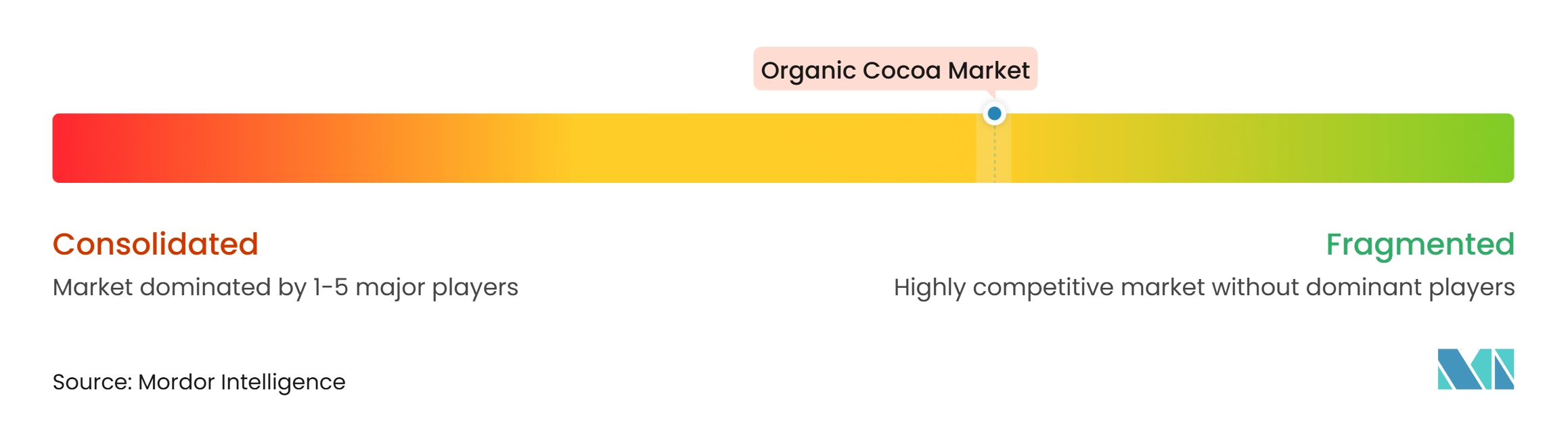
The organic cocoa market is moderately fragmented. Barry Callebaut AG, Cargill, Incorporated, and Olam International maintain broad sourcing networks and extensive processing capabilities. Specialist suppliers, including Tradin Organic Agriculture B.V., PRONATEC AG, and Kaoka, compete through certified sourcing expertise and robust chain-of-custody controls. Large processors can serve global customers who require a consistent supply across multiple product categories. As a result, competition depends less on processing prices alone and more on secure access to certified supply. Long-term relationships with farmers and cooperatives are therefore strategically important. Suppliers with established organic certification systems and diversified sourcing networks can also strengthen their position against smaller market participants.
In July 2025, Barry Callebaut collaborated with the Zurich University of Applied Sciences on cocoa cell culture and formed a commercial alliance with Planet A Foods for cocoa-free alternatives. These initiatives demonstrate how leading processors are preparing for supply uncertainty while continuing to invest in cocoa sourcing. ofi has also leveraged technology and farm programs to strengthen its sustainability proposition. Its carbon stock monitoring tool tracks tree locations and growth within agroforestry programs, supporting evidence-based sustainability reporting. Such systems can help suppliers meet customer expectations for documented environmental progress. Investment in agricultural innovation and digital monitoring also enables processors to improve supply chain visibility and strengthen relationships with international buyers.
The strongest commercial opportunities lie in verified origin, traceability, and specialized ingredients. Mid-sized processors can compete by offering certified organic cocoa with geo-referenced records and reliable documentation. Direct-trade platforms can help aggregate certified volumes from smallholders, provided they maintain quality and documentation controls. Biochar and agroforestry programs can improve farm resilience while creating additional environmental value. Companies that convert these systems into reliable supply arrangements are better positioned to meet the requirements of food and personal care manufacturers. Developing customized organic cocoa ingredients and maintaining consistent product specifications can further help suppliers secure long-term contracts with specialized manufacturers.
Organic Cocoa Industry Leaders
-
Barry Callebaut AG
-
Cargill, Incorporated
-
Olam International
-
PRONATEC AG
-
Ciranda, Inc.
- *Disclaimer: Major Players sorted in no particular order
Organic Cocoa Market Companies Covered in this Report
- Barry Callebaut AG
- Cargill, Incorporated
- Olam International
- Tradin Organic Agriculture B.V.
- PRONATEC AG
- ECOM Agroindustrial Corp. Limited
- Ciranda, Inc.
- Blommer Chocolate Company
- The Hershey Company
- Guittard Chocolate Company
- Alter Eco
- Equal Exchange
- PASCHA Chocolate Co.
- CasaLuker
- Cémoi Group
- Puratos Group
- Kaoka
- Natra S.A.
- Pruthvi Foods Pvt. Ltd.
- Kaira Organic World
Recent Industry Developments in Organic Cocoa Market
- April 2026: Mars and ofi announced a five-year strategic collaboration to advance regenerative cocoa farming in Ecuador. The initiative covered more than 960 farmers across El Oro, Esmeraldas, and Manabí.
- July 2025: Barry Callebaut AG and Nestle entered into a partnership to accelerate net-zero cocoa production in Brazil. The five-year planting initiative covers 6,215 hectares of agroforestry and includes the planting of 7.7 million trees.
- January 2025: PRONATEC AG expanded its sourcing network by identifying new suppliers of organic and Fairtrade-certified cocoa beans in Africa to address supply constraints. The company also continued its partnership with Lizard Earth in Sierra Leone while diversifying its sourcing base across additional countries to improve the availability of certified organic cocoa.
Global Organic Cocoa Market Report Scope
Organic cocoa refers to cocoa beans cultivated and processed in accordance with certified organic farming standards, without the use of prohibited synthetic pesticides, chemical fertilizers, or genetically modified inputs. The organic cocoa market is segmented by product type, application, and geography. By product type, the market is segmented into cocoa beans, cocoa powder, cocoa nibs, cocoa butter, and others. By application, the market is segmented into food and beverages (chocolate and confectionery, bakery and desserts, beverages, dairy products, and other food and beverage applications), cosmetics and personal care, pharmaceuticals, and other applications. By geography, the market is segmented into North America, Europe, Asia-Pacific, South America, and the Middle East and Africa. The market forecasts are provided in terms of value (USD).
Segmentation Overview
| Cocoa Beans |
| Cocoa Powder |
| Cocoa Nibs |
| Cocoa Butter |
| Others |
| Food and Beverages | Chocolate and Confectionery |
| Bakery and Desserts | |
| Beverages | |
| Dairy Products | |
| Other Food and Beverages Applications | |
| Cosmetics and Personal Care | |
| Pharmaceuticals | |
| Other Applications |
| North America | United States |
| Canada | |
| Mexico | |
| Rest of North America | |
| Europe | Germany |
| United Kingdom | |
| Italy | |
| France | |
| Spain | |
| Rest of Europe | |
| Asia-Pacific | China |
| India | |
| Japan | |
| Australia | |
| Rest of Asia-Pacific | |
| South America | Brazil |
| Argentina | |
| Rest of South America | |
| Middle East and Africa | South Africa |
| Saudi Arabia | |
| Turkey | |
| Rest of Middle East and Africa |
| By Product Type | Cocoa Beans | |
| Cocoa Powder | ||
| Cocoa Nibs | ||
| Cocoa Butter | ||
| Others | ||
| By Application | Food and Beverages | Chocolate and Confectionery |
| Bakery and Desserts | ||
| Beverages | ||
| Dairy Products | ||
| Other Food and Beverages Applications | ||
| Cosmetics and Personal Care | ||
| Pharmaceuticals | ||
| Other Applications | ||
| By Geography | North America | United States |
| Canada | ||
| Mexico | ||
| Rest of North America | ||
| Europe | Germany | |
| United Kingdom | ||
| Italy | ||
| France | ||
| Spain | ||
| Rest of Europe | ||
| Asia-Pacific | China | |
| India | ||
| Japan | ||
| Australia | ||
| Rest of Asia-Pacific | ||
| South America | Brazil | |
| Argentina | ||
| Rest of South America | ||
| Middle East and Africa | South Africa | |
| Saudi Arabia | ||
| Turkey | ||
| Rest of Middle East and Africa | ||
Key Questions Answered in the Report
What is the current size and future growth outlook of the organic cocoa market?
The organic cocoa market was valued at USD 8.23 billion in 2026 and is estimated to reach USD 8.72 billion in 2027. The market is projected to grow to USD 11.88 billion by 2032, registering a CAGR of 6.37% during 2027–2032.
Which product type held the largest share of the organic cocoa market in 2026?
Cocoa beans was the largest product type segment in 2026, accounting for 36.82% of the organic cocoa market.
Which application segment dominated the organic cocoa market in 2026?
Food and beverages was the largest application segment in 2026, accounting for 84.34% of the organic cocoa market.
Which region dominated the organic cocoa market in 2026?
Europe was the leading regional market in 2026, accounting for 36.12% of the organic cocoa market.