
Omega 3 Market Size and Share
Market Overview
| Study Period | 2021 - 2031 |
|---|---|
| Market Size (2026) | USD 7.84 Billion |
| Market Size (2031) | USD 11.57 Billion |
| Growth Rate (2026 - 2031) | 8.09 % |
| Fastest Growing Market | Asia-Pacific |
| Largest Market | North America |
| Market Concentration | Medium |
Major Players
*Disclaimer: Major Players sorted in no particular order Image © Mordor Intelligence. Reuse requires attribution under CC BY 4.0. |
|
Omega 3 Market Analysis by Mordor Intelligence
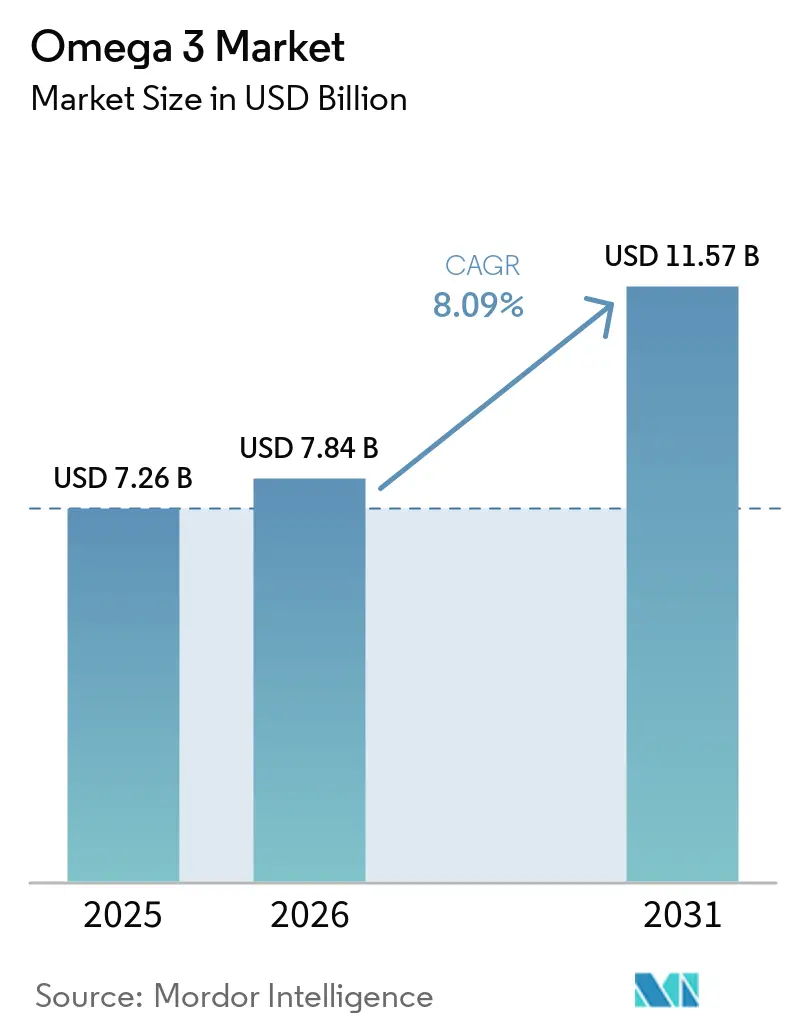
The omega-3 market size is expected to grow from USD 7.26 billion in 2025 to USD 7.84 billion in 2026 and is forecast to reach USD 11.57 billion by 2031 at a 8.09% CAGR over 2026-2031. The global omega-3 market is driven by increasing consumer awareness of the benefits of omega-3 fatty acids in promoting cardiovascular, cognitive, eye, and joint health, leading to higher adoption of daily nutritional supplements. The growing focus on preventive healthcare, along with an aging population aiming to manage chronic conditions through nutrition, continues to support market growth. Rising interest in prenatal and infant nutrition has also contributed to increased consumption of DHA-rich formulations among pregnant and breastfeeding women. The shift toward plant-based lifestyles has spurred the development and adoption of algae-derived omega-3 supplements, offering sustainable alternatives to traditional fish oil. Technological advancements in extraction, purification, and encapsulation have enhanced product quality, bioavailability, and sensory appeal, making these supplements more appealing to consumers. Furthermore, higher disposable incomes, the expansion of e-commerce platforms, and the availability of personalized nutrition products have improved market accessibility. Additionally, the growing adoption of fitness and active lifestyles has driven demand for omega-3 supplements that aid in muscle recovery, inflammation management, and overall wellness.
Key Report Takeaways
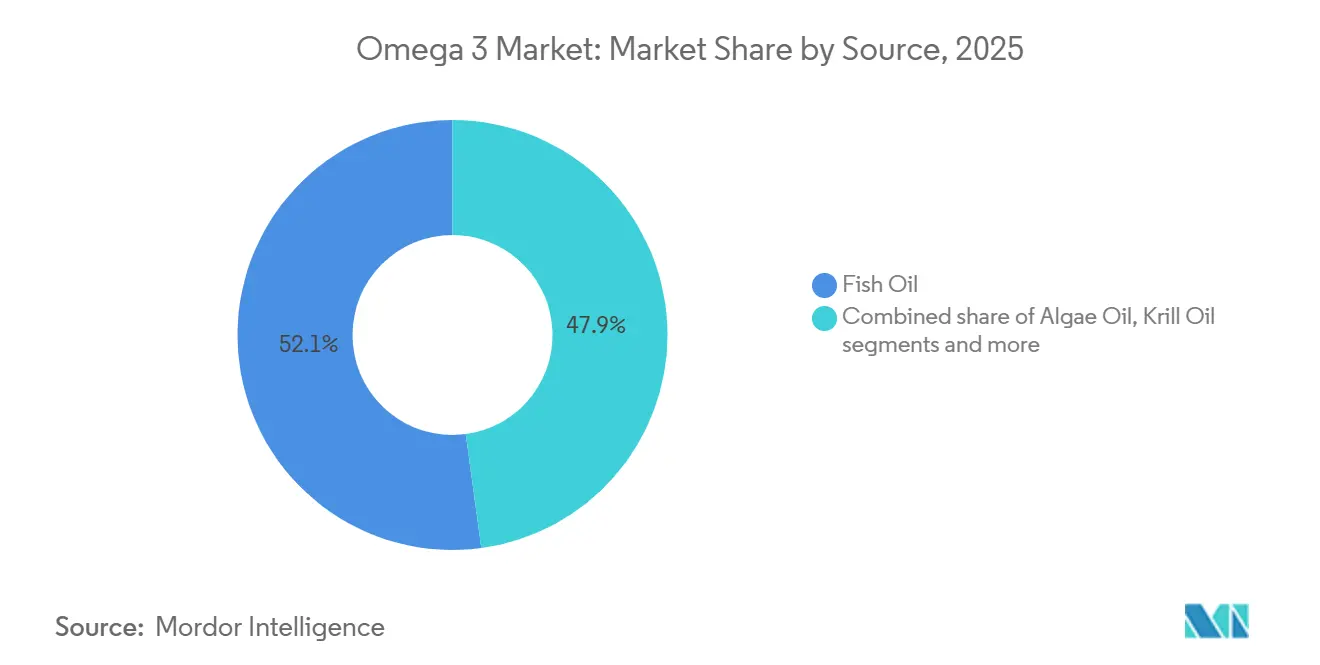
- By source, fish oil held the largest share at 52.13% in 2025, while algae Oil recorded the fastest forecast CAGR at 8.73% during 2026-2031.
- By form, softgel capsules led with 48.03% share in 2025, while gummies posted the highest projected CAGR at 9.05% through 2031, supported by rising use among children and older consumers who prefer easier daily formats.
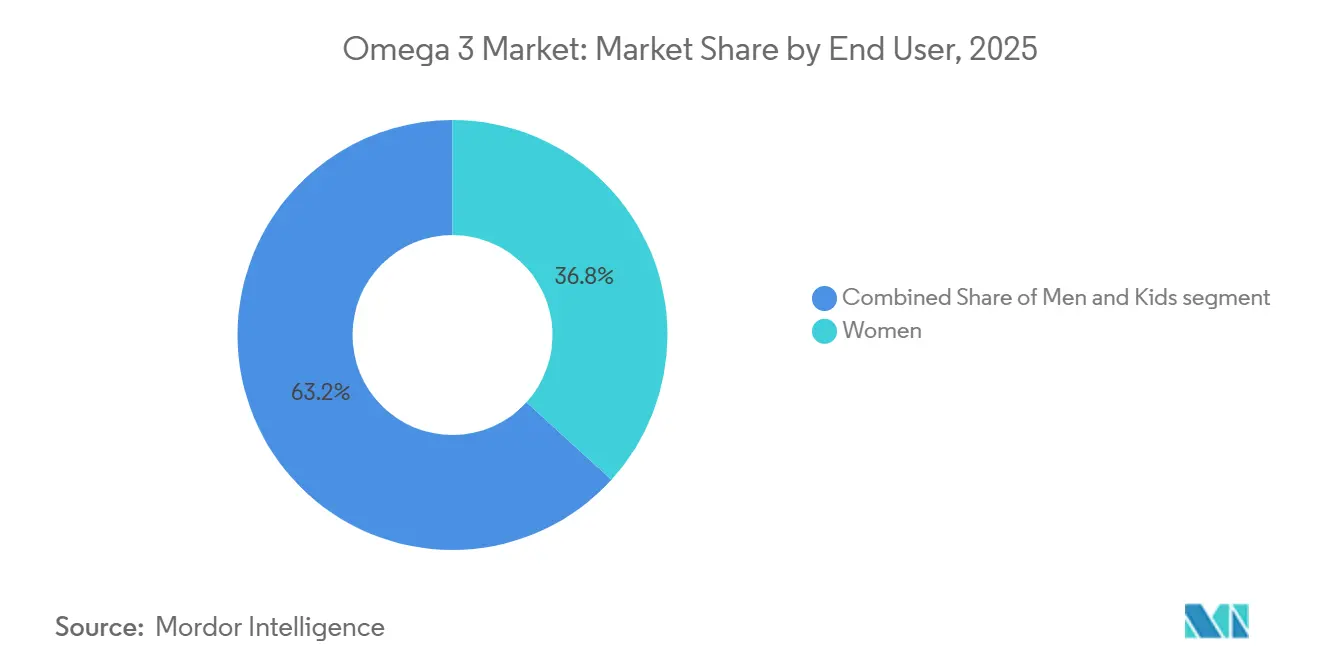
- By end user, women accounted for the largest share at 36.75% in 2025, while the kids segment is expected to grow the fastest at a 9.13% CAGR between 2026 and 2031, reflecting stronger prenatal and pediatric demand patterns.
- By health benefits, cardiovascular health represented the largest share at 41.25% in 2025, while brain & cognitive health is projected to expand the fastest at an 8.93% CAGR through 2031, with demand rising across both aging and pediatric use cases.
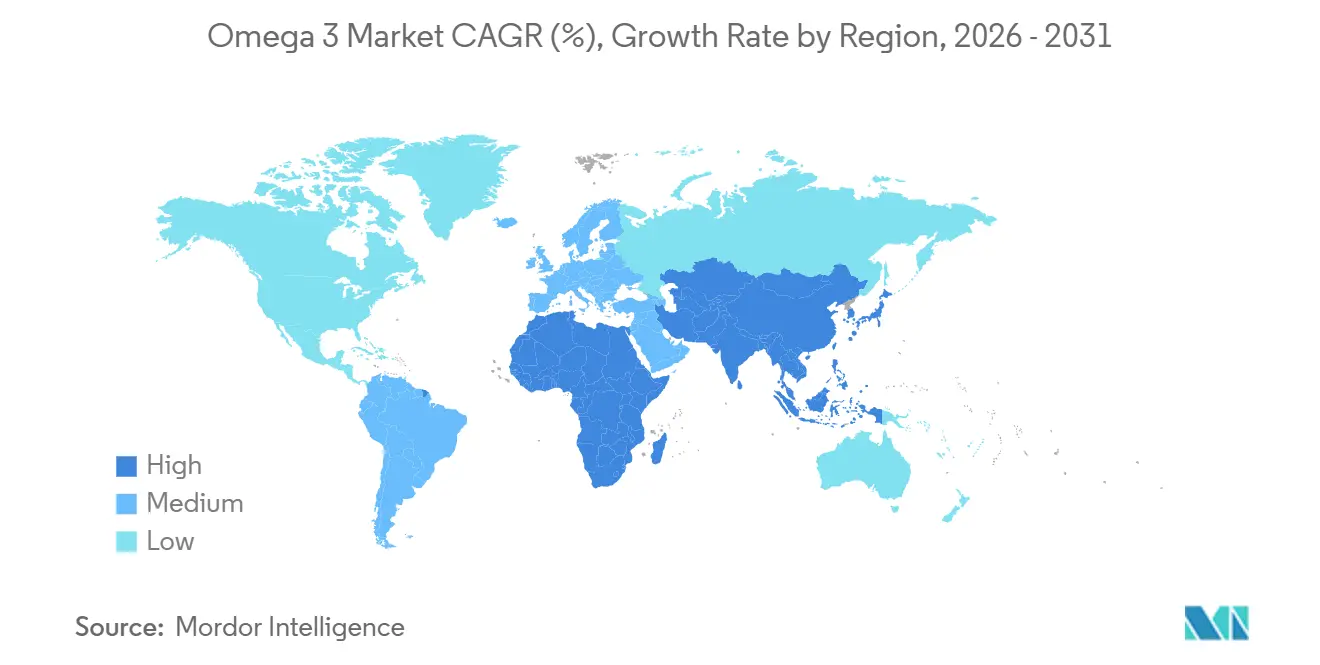
- By geography, North America held the largest regional share at 34.82% in 2025, while Asia-Pacific is forecast to advance at the fastest CAGR of 8.80% during 2026-2031 because of urbanization, chronic disease concerns, and infant nutrition demand.
Note: Market size and forecast figures in this report are generated using Mordor Intelligence’s proprietary estimation framework, updated with the latest available data and insights as of January 2026.
Market Trends and Insights
Drivers Impact Analysis of Omega 3 Market*
| Driver | (~) % Impact on CAGR Forecast | Geographic Relevance | Impact Timeline |
|---|---|---|---|
| Rising consumer awareness of cardiovascular and cognitive health | +2.5% | Global, highest intensity in North America and Europe | Medium term (2-4 years) |
| Increasing demand for preventive healthcare and daily wellness supplements | +2.0% | Global, with rapid acceleration in Asia-Pacific and Middle East | Medium term (2-4 years) |
| Growing adoption of vegan and algae-based omega-3 supplements | +1.5% | North America, Europe, urban Asia-Pacific | Long term (≥ 4 years) |
| Technological advancements improving purity and bioavailability | +1.0% | Global, manufacturing hubs in Norway, United States, and China | Short to medium term (≤ 4 years) |
| Expanding maternal and infant DHA use | +0.8% | Asia-Pacific core, North America, with spill-over to Middle East and Africa | Medium term (2-4 years) |
| Premiumization toward algal and krill oil formulations | +0.7% | North America and Europe | Long term (≥ 4 years) |
| Source: Mordor Intelligence | |||
Rising consumer awareness of cardiovascular and cognitive health
Heightened awareness of cardiovascular and cognitive health is a key factor driving the global omega-3 supplements market. Scientific studies have established links between omega-3 fatty acids, particularly EPA and DHA, and benefits such as improved heart health, enhanced brain function, and healthy aging. This has prompted consumers to integrate these supplements into their daily health routines. The rising prevalence of cardiovascular diseases and concerns about cognitive performance have further reinforced preventive health measures, resulting in increased supplement consumption across various age groups. According to the British Heart Foundation, cardiovascular diseases accounted for 169,205 deaths in the United Kingdom in 2024, underscoring the significant health burden and boosting demand for heart-supporting nutritional products[1]Source: British Heart Foundation, "Cardiovascular Disease Statistics 2026," bhf.org.uk. Similarly, dsm-firmenich’s The Nootropics Report 2.0 (January 2024) indicated that 63% of consumers identified mental and emotional health, and 60% identified mental performance, as primary health concerns. The report also highlighted that 75% of consumers globally recognize the importance of maintaining cognitive health for long-term well-being and quality of life[2]Source: dsm-firmenich, "The Nootropics Report 2.0," dsm-firmenich.com. These growing health priorities, coupled with a rising preference for preventive nutrition, are driving the global adoption of omega-3 supplements.
Increasing demand for preventive healthcare and daily wellness supplements
The global omega-3 market is driven by the increasing emphasis on preventive healthcare, as consumers focus on maintaining long-term health rather than addressing illnesses after they arise. Factors such as rising healthcare costs, heightened awareness of lifestyle-related disorders, and improved access to health information have encouraged the integration of nutritional supplements into daily routines to support overall well-being. Omega-3 supplements are widely recognized for their potential benefits in promoting cardiovascular health, cognitive function, immune support, eye health, and healthy aging, making them a key component of preventive nutrition. This trend is further bolstered by the growing adoption of personalized wellness programs, regular health screenings, and fitness-oriented lifestyles, where dietary supplements are considered essential for maintaining optimal health. Additionally, the increased availability of omega-3 products through pharmacies, supermarkets, online retail platforms, and subscription-based wellness services has enhanced accessibility, supporting consistent daily use and driving sustained global market growth.
Growing adoption of vegan and algae-based omega-3 supplements
The rising preference for plant-based nutrition is driving the demand for vegan and algae-based omega-3 supplements, contributing to growth in the global omega-3 market. As consumers prioritize sustainability, environmental impact, and animal welfare, algae-derived omega-3 products are gaining traction as an alternative to traditional fish oil supplements. Unlike marine-sourced omega-3, algal oil offers a direct and sustainable source of DHA and, increasingly, EPA, catering to vegan, vegetarian, and flexitarian consumers. Advances in product innovation, extraction technologies, and expanded retail availability have improved the affordability and accessibility of these formulations. The increasing adoption of plant-based dietary patterns further supports this trend. According to the 2025 IFIC Food & Health Survey, 3% of Americans follow a plant-based diet, while 1% identify as vegan, indicating a growing consumer base for plant-derived nutritional supplements[3]Source: International Food Information Council, "IFIC 2025 Food & Health Survey," ific.org. As manufacturers introduce clean-label, allergen-free, and environmentally responsible omega-3 products, the adoption of vegan and algae-based supplements is expected to remain a significant driver of market growth.
Technological advancements improving purity and bioavailability
Ongoing technological innovation in omega-3 extraction, purification, and formulation is a significant driver of the global omega-3 market. Manufacturers are adopting advanced purification methods, such as molecular distillation, supercritical fluid extraction, and advanced filtration processes, to eliminate contaminants like heavy metals, dioxins, and polychlorinated biphenyls (PCBs). These techniques result in higher-purity products that comply with stringent regulatory and consumer quality standards. Simultaneously, advancements in formulation technologies, including triglyceride and phospholipid forms, microencapsulation, emulsification, and delayed-release capsules, have improved the bioavailability, stability, and absorption of EPA and DHA. These innovations also help reduce oxidation and minimize the unpleasant fishy aftertaste. Such developments have boosted consumer confidence, enhanced product efficacy, and broadened the appeal of omega-3 supplements among various demographic groups, including children, older adults, athletes, and individuals with specific health requirements. As companies continue to innovate with delivery systems and premium-quality formulations, technological progress is expected to remain a critical factor driving sustained growth in the global omega-3 supplements market.
Restraints Impact Analysis of Omega 3 Market*
| Restraint | (~) % Impact on CAGR Forecast | Geographic Relevance | Impact Timeline |
|---|---|---|---|
| Availability of alternative wellness supplements | -0.8% | Global, most acute in North America and Europe | Short term (≤ 2 years) |
| Raw material volatility in marine feedstocks | -0.7% | Global, concentrated in Peru, Norway, Chile supply chains | Medium term (2-4 years) |
| Fishy aftertaste and oxidation sensory issues | -0.5% | Global consumer markets | Short term (≤ 2 years) |
| Higher cost of purified and premium omega-3 inputs | -0.4% | Price-sensitive Asia-Pacific, South America, and Middle East and Africa markets | Medium term (2-4 years) |
| Source: Mordor Intelligence | |||
Availability of alternative wellness supplements
The extensive availability of alternative wellness supplements poses a notable challenge to the growth of the global omega-3 supplements market by increasing competition within the nutritional products industry. Consumers seeking benefits such as heart health, cognitive support, joint mobility, immunity enhancement, or overall wellness have access to a wide array of alternatives, including multivitamins, probiotics, coenzyme Q10 (CoQ10), magnesium, turmeric and curcumin, collagen, plant sterols, adaptogenic herbs, and other functional ingredients. Many of these products feature overlapping health claims, prompting consumers to substitute or diversify their supplement choices rather than relying exclusively on omega-3 products. Additionally, the rising trend of personalized nutrition has encouraged consumers to opt for supplements tailored to specific health objectives, which can decrease the frequency of omega-3 supplementation. Factors such as price sensitivity, the growing variety of products, aggressive marketing by competing supplement categories, and the development of multifunctional formulations further influence consumer purchasing behavior. These dynamics limit the market share growth of standalone omega-3 supplements, despite their well-documented health benefits.
Fishy aftertaste and oxidation sensory issues
Fishy aftertaste and oxidation-related sensory issues present significant challenges for the global omega-3 market, particularly for products derived from marine fish oil. Consumers often report unpleasant burping, fishy breath, or a lingering aftertaste after consumption, which can diminish satisfaction and discourage consistent use. Additionally, omega-3 fatty acids are highly prone to oxidation when exposed to heat, light, or oxygen. This oxidation results in rancidity, off-flavors, unpleasant odors, reduced nutritional value, and a shorter shelf life. These quality concerns can adversely affect consumer perception and trust, especially in markets where freshness and taste are critical purchasing factors. While manufacturers are implementing solutions such as advanced purification techniques, antioxidant stabilization, microencapsulation, enteric-coated capsules, and flavored formulations to address these issues, these technologies often lead to higher production costs and increased retail prices. Consequently, sensory challenges and oxidation risks continue to limit broader consumer adoption and repeat purchases, particularly among first-time users and individuals sensitive to taste and odor.
*Our forecasts treat driver/restraint impacts as directional, not additive. The impact forecasts reflect baseline growth, mix effects, and variable interactions.
Omega 3 Market Segment Analysis
By Source:
Fish Oil Anchors the Market While Algae Oil Resets Long-Term ExpectationsFish oil accounted for a 52.13% market share in 2025, driven by strong consumer demand for EPA- and DHA-rich products that support cardiovascular health, brain function, eye health, and joint mobility. As the most established and clinically researched source of long-chain omega-3 fatty acids, fish oil remains the preferred choice among healthcare professionals and consumers seeking evidence-based nutritional solutions. The rising prevalence of lifestyle-related diseases, an aging global population, and growing awareness of preventive healthcare have contributed to the increased daily consumption of fish oil supplements. Additionally, the expanding sports nutrition sector has fueled demand, as athletes and fitness enthusiasts use fish oil to aid recovery, reduce exercise-induced inflammation, and maintain overall performance. Advances in purification technologies, concentration methods, and odor-reduction techniques have improved product quality, while widespread availability through pharmacies, supermarkets, online platforms, and health stores has further supported global market growth.
Algae oil is the fastest-growing source segment, with a projected CAGR of 8.73% from 2026 to 2031. The algae oil omega-3 supplements market is expanding rapidly due to increasing consumer preference for sustainable, plant-based, and environmentally responsible nutrition. As vegan, vegetarian, and flexitarian lifestyles become more prevalent, algae oil has emerged as a preferred alternative to fish-derived omega-3, offering a direct source of DHA and, increasingly, EPA without dependence on marine fisheries. Concerns about overfishing, ocean pollution, and marine contaminants have further encouraged consumers to adopt algae-based products, which provide high purity and traceability. Advances in microalgae cultivation, fermentation, and extraction technologies have enhanced production efficiency, scalability, and affordability, making algae-derived omega-3 supplements more accessible globally. Demand is also increasing in prenatal nutrition, infant formula, and functional foods, where algae oil is valued for its clean-label appeal, allergen-free profile, and compatibility with vegetarian and vegan dietary preferences. These factors, along with growing investments in sustainable biotechnology and innovative product development, continue to drive the growth of the algae oil omega-3 supplements market.



By Form:
Softgels Lead, but Gummies Are Restructuring the Repeat-Purchase EconomySoftgel capsules accounted for a 48.03% market share in 2025, driven by consumer preference for a convenient, accurate, and easy-to-swallow dosage format suitable for daily supplementation. These capsules offer excellent protection against oxidation, ensuring the stability, potency, and freshness of sensitive omega-3 fatty acids throughout their shelf life. Their ability to encapsulate concentrated fish oil or algae oil while minimizing unpleasant taste and odor has made them a preferred choice among adult consumers. Advancements in softgel manufacturing, such as enteric coatings, odor-reduction technologies, and enhanced bioavailability formulations, have further improved user experience and product effectiveness. Additionally, factors such as the growing emphasis on preventive healthcare, increasing physician recommendations, an expanding aging population, and the widespread availability of softgel products through pharmacies, supermarkets, online retailers, and health stores continue to bolster demand. These elements position softgel capsules as the leading dosage form in the global omega-3 supplements market.
Gummies are projected to be the fastest-growing dosage form, with a CAGR of 9.05% from 2026 to 2031. This growth is attributed to increasing consumer demand for enjoyable, convenient, and easy-to-consume dietary supplements that enhance adherence to daily wellness routines. Gummies address swallowing difficulties associated with traditional capsules and reduce the fishy aftertaste often linked to marine-derived omega-3 products, making them particularly appealing to children, older adults, and first-time supplement users. Rising interest in preventive nutrition, family health, and functional confectionery has driven manufacturers to develop flavored, sugar-free, vegan, and clean-label gummy formulations enriched with EPA and DHA. Innovations in texture, taste masking, and nutrient stability have further improved consumer acceptance. Additionally, attractive packaging and expanded availability through supermarkets, pharmacies, e-commerce platforms, and direct-to-consumer channels have widened market reach. These factors, along with growing demand for personalized and on-the-go nutrition solutions, continue to fuel robust growth in the global omega-3 gummies market.
By End User:
Women Drive Volume, Kids Define the Fastest Growth TrajectoryWomen represented the largest end-user segment, accounting for 36.75% in 2025. This growth is attributed to increasing awareness of the benefits of EPA and DHA in supporting women's health across various life stages, including pregnancy, breastfeeding, reproductive health, menopause, and healthy aging. The rising focus on maternal nutrition has driven demand for DHA supplements to support fetal brain and eye development. Additionally, women are incorporating omega-3 products into their daily routines to enhance cardiovascular health, cognitive function, skin health, and joint mobility. Factors such as growing participation in preventive healthcare, higher disposable incomes, and improved access to personalized nutrition have further encouraged the adoption of supplements tailored to female health needs. The introduction of women-specific formulations that combine omega-3 with vitamins, minerals, collagen, or botanical ingredients has also increased product appeal.
The kids segment is projected to grow at the fastest CAGR of 9.13% from 2026 to 2031. This growth is driven by increasing parental awareness of the importance of DHA and EPA in supporting children's brain development, cognitive function, vision, and overall growth. Greater emphasis on early-life nutrition, coupled with concerns about insufficient dietary intake of omega-3-rich foods like oily fish, has led parents to include supplements in their children's diets. Recommendations from pediatricians and healthcare professionals to support neurological development and learning during critical growth stages have further boosted consumer confidence. Manufacturers are contributing to market growth by offering child-friendly formulations such as gummies, chewable tablets, flavored syrups, and mini softgels, which enhance taste and compliance. Innovations featuring natural flavors, sugar-free options, clean-label ingredients, and algae-based alternatives appeal to health-conscious parents seeking safe and convenient nutritional solutions.
By Health Benefits:
Cardiovascular Foundations Remain Solid, Cognitive Health Becomes the Category's Next Growth EngineCardiovascular health is projected to account for 41.25% of the market value in 2025, driven by increasing global awareness of heart disease prevention and the rising prevalence of cardiovascular disorders. Consumers are incorporating EPA- and DHA-rich supplements into their daily routines to support healthy triglyceride levels, maintain normal blood pressure, promote healthy circulation, and enhance overall heart function. Factors such as an aging population, sedentary lifestyles, obesity, diabetes, and other lifestyle-related risks have further fueled the demand for nutritional solutions that align with preventive healthcare strategies. Clinical research and endorsements from healthcare professionals have bolstered consumer confidence in omega-3 supplementation as part of a heart-healthy lifestyle. Additionally, routine health screenings and the growing adoption of wellness programs continue to encourage long-term supplement use. The availability of high-purity, concentrated formulations in convenient dosage forms, coupled with expanding retail and online distribution networks, supports sustained growth in the cardiovascular health segment.
The brain & cognitive health segment is expected to grow at a CAGR of 8.93% from 2026 to 2031, driven by increasing consumer focus on memory, concentration, mental performance, and long-term neurological health. DHA, a key structural component of the brain, is widely recognized for its role in supporting cognitive development in children and preserving cognitive function throughout adulthood and aging. Rising concerns about stress, mental fatigue, age-related cognitive decline, and productivity have encouraged consumers to include omega-3 supplements in their daily wellness routines. Demand is particularly strong among students, working professionals, and older adults seeking nutritional support for learning, focus, and healthy brain aging. Growing awareness of mental wellness, personalized nutrition, and healthy aging, along with expanding research on the link between omega-3 intake and cognitive function, has further strengthened market demand. Manufacturers are also introducing specialized formulations for prenatal nutrition, children's development, and senior cognitive support, broadening the application of omega-3 supplements across diverse consumer groups.
Geography Analysis
North America Omega 3 Market
North America held the largest regional share at 34.82% in 2025, driven by high consumer awareness of preventive healthcare, strong demand for dietary supplements, and the increasing prevalence of cardiovascular disease, obesity, and cognitive health concerns. Consumers in the United States and Canada are increasingly incorporating omega-3 supplements into their daily routines to support heart health, brain function, eye health, and healthy aging. The region benefits from well-established dietary supplement regulations, high healthcare spending, and widespread recommendations from healthcare professionals, which enhance consumer confidence in omega-3 products. Product innovation, including high-concentration EPA/DHA formulations, algae-based alternatives, gummies, and personalized nutrition products, continues to attract a broader consumer base.
APAC Omega 3 Market
Asia-Pacific is the fastest-growing region, with a CAGR of 8.80% from 2026 to 2031. This growth is attributed to rising disposable incomes, expanding middle-class populations, increasing health awareness, and improved access to dietary supplements. Urbanization and changing lifestyles have led to higher incidences of lifestyle-related diseases, prompting consumers to adopt preventive nutrition practices. The growing demand for maternal and infant nutrition products, supported by increased awareness of DHA's role in fetal and child brain development, is a significant growth driver in countries such as China, India, Japan, South Korea, and Australia. The region is also experiencing rising demand for plant-based and algae-derived omega-3 supplements as vegan and environmentally conscious lifestyles gain traction. Expanding online retail platforms, government initiatives promoting nutritional health, and continuous product innovation tailored to regional preferences further accelerate market growth in the Asia-Pacific.
EMEA and South America Omega 3 Market
The omega-3 supplements market in Europe, South America, and the Middle East and Africa is driven by increasing consumer focus on preventive healthcare, growing awareness of the health benefits of EPA and DHA, and rising demand for nutritional products that support cardiovascular, cognitive, and immune health. In Europe, strong regulatory oversight, high adoption of premium dietary supplements, and growing interest in sustainable algae-based omega-3 products continue to drive market growth. In South America, expanding healthcare awareness, improving economic conditions, and greater availability of supplements through pharmacies and digital retail channels are encouraging consumer adoption. Meanwhile, the Middle East and Africa is experiencing steady market expansion due to rising disposable incomes, increasing prevalence of lifestyle-related diseases, a growing young population, and greater investment in healthcare and wellness.

Competitive Landscape
The global omega-3 market is moderately fragmented, with competition among premium nutrition brands, large-scale consumer health companies, and private-label manufacturers. Market players primarily differentiate themselves through factors such as ingredient quality, clinical validation, third-party purity testing, product traceability, and brand credibility. The competitive focus has shifted toward premium formulations, including high-concentration triglyceride (TG) omega-3, phospholipid-based products, and algae-derived alternatives. These products command higher margins due to their superior bioavailability, sustainability, and targeted health benefits. Conversely, conventional fish oil softgels face increasing price sensitivity, with intense competition from generic and private-label offerings exerting downward pressure on margins.
At the ingredient manufacturing level, competition is evolving as consolidation among large omega-3 producers reduces the number of independent suppliers and enhances economies of scale in refining and production. This consolidation has increased reliance on contract manufacturing and specialized ingredient suppliers, particularly for smaller supplement brands with limited vertical integration capabilities. Additionally, sustainability has become a critical competitive requirement. Adherence to internationally recognized environmental standards, responsible fisheries certifications, carbon reduction initiatives, and sustainable sourcing frameworks is now essential for securing partnerships with premium retailers and meeting the procurement expectations of global distributors, particularly in Europe and other developed markets.
Future opportunities in the omega-3 supplements market are expected to focus on personalized nutrition, life-stage-specific formulations, and sustainable alternative omega-3 sources. Companies are increasingly investing in biomarker-based nutrition platforms to enable customized supplementation based on individual omega-3 status. Product portfolios are also expanding to address specific needs in prenatal health, pediatric nutrition, healthy aging, and active lifestyles. Advances in microbial fermentation and algae cultivation technologies are reducing dependence on marine resources, creating more resilient and scalable supply chains. Furthermore, contract development and manufacturing organizations (CDMOs) are enhancing their formulation capabilities to support innovation in delivery formats and premium product development. Transparency in ingredient sourcing, third-party sustainability certifications, and full supply-chain traceability are emerging as key competitive differentiators, helping brands strengthen retailer relationships and position themselves in the premium segment of the global omega-3 supplements market.
Omega 3 Industry Leaders
-
Reckitt (Mead Johnson)
-
Nordic Naturals
-
NOW Foods
-
Nature Made
-
Carlson Laboratories
- *Disclaimer: Major Players sorted in no particular order

Omega 3 Market Companies Covered in this Report
- Nordic Naturals
- Nature Made
- Carlson Laboratories
- NOW Foods
- Herbalife
- Nestlé
- Amway
- Sports Research
- Kirkland Signature
- Jamieson Wellness
- Kirin Holdings
- Swisse Wellness
- Wiley's Finest
- Life Extension
- Metagenics
- NutraSea (Ascenta Health)
- Procter & Gamble (P&G)
- Nutrigold
- Reckitt (Mead Johnson)
- Vitabiotics

Recent Industry Developments in Omega 3 Market
- April 2026: Norwegian CDMO has expanded its Concordix® platform to include over 60 ready-to-launch supplement concepts, featuring omega-3 products produced in Friend of the Sea (FoS)-certified facilities. The portfolio encompasses formulations targeting brain health, immune support, eye health, and children's nutrition. The chewable emulsion delivery system is designed to enhance taste, stability, and user compliance, with clinical evaluations showing up to 44.9% higher omega-3 absorption. By combining improved bioavailability with certified sustainable sourcing, traceability, and responsible fisheries practices, the platform meets the increasing consumer demand for high-performance and environmentally responsible omega-3 supplements.
- December 2024: Nature’s Bounty expanded its omega-3 product line with the introduction of a plant-based omega-3 supplement derived from vegetarian algae oil. Each softgel contains 1,000 mg of algae oil, providing 510 mg of EPA and DHA to promote heart, joint, and skin health. Designed as an alternative to conventional fish oil, this product is aimed at consumers seeking vegetarian and plant-based nutritional options. It is available through major retail outlets and e-commerce platforms.
- June 2024: MegaFood launched Omega 3-6-9, a plant-based fatty acid supplement that combines algal oil and Ahiflower oil to support heart, brain, eye, and joint health. The product provides 600 mg of omega-3 fatty acids and features a delayed-release capsule with organic lemon oil to enhance taste by minimizing fishy aftertaste and burps. Manufactured using sustainably sourced, regenerative ingredients, the supplement is free from mercury, PCBs, major allergens, and GMOs, aligning with the increasing demand for clean-label and environmentally friendly alternatives to conventional fish oil supplements.


Global Omega 3 Market Report Scope
| Fish Oil |
| Algae Oil |
| Krill Oil |
| Others |
| Softgel Capsules |
| Capsules |
| Gummies |
| Liquid |
| Others |
| Men |
| Women |
| Kids |
| Cardiovascular Health |
| Brain & Cognitive Health |
| Eye Health |
| Joint & Bone Health |
| Others |
| North America | United States |
| Canada | |
| Mexico | |
| Rest of North America | |
| Europe | Germany |
| United Kingdom | |
| Italy | |
| France | |
| Spain | |
| Netherlands | |
| Poland | |
| Belgium | |
| Sweden | |
| Rest of Europe | |
| Asia-Pacific | China |
| India | |
| Japan | |
| Australia | |
| Indonesia | |
| South Korea | |
| Thailand | |
| Singapore | |
| Rest of Asia-Pacific | |
| South America | Brazil |
| Argentina | |
| Colombia | |
| Chile | |
| Peru | |
| Rest of South America | |
| Middle East and Africa | Saudi Arabia |
| United Arab Emirates | |
| South Africa | |
| Nigeria | |
| Egypt | |
| Morocco | |
| Turkey | |
| Rest of Middle East and Africa |
| By Source | Fish Oil | |
| Algae Oil | ||
| Krill Oil | ||
| Others | ||
| By Form | Softgel Capsules | |
| Capsules | ||
| Gummies | ||
| Liquid | ||
| Others | ||
| By End User | Men | |
| Women | ||
| Kids | ||
| By Health Benefits | Cardiovascular Health | |
| Brain & Cognitive Health | ||
| Eye Health | ||
| Joint & Bone Health | ||
| Others | ||
| By Geography | North America | United States |
| Canada | ||
| Mexico | ||
| Rest of North America | ||
| Europe | Germany | |
| United Kingdom | ||
| Italy | ||
| France | ||
| Spain | ||
| Netherlands | ||
| Poland | ||
| Belgium | ||
| Sweden | ||
| Rest of Europe | ||
| Asia-Pacific | China | |
| India | ||
| Japan | ||
| Australia | ||
| Indonesia | ||
| South Korea | ||
| Thailand | ||
| Singapore | ||
| Rest of Asia-Pacific | ||
| South America | Brazil | |
| Argentina | ||
| Colombia | ||
| Chile | ||
| Peru | ||
| Rest of South America | ||
| Middle East and Africa | Saudi Arabia | |
| United Arab Emirates | ||
| South Africa | ||
| Nigeria | ||
| Egypt | ||
| Morocco | ||
| Turkey | ||
| Rest of Middle East and Africa | ||


Key Questions Answered in the Report
What is the current size outlook for omega-3 market?
The omega-3 market stands at USD 7.84 billion in 2026 and is forecast to reach USD 11.57 billion by 2031, growing at an 8.09% CAGR over 2026-2031.
Which source category leads omega-3 sales?
Fish oil leads by source with a 52.13% share in 2025 because it has the broadest supply base, the deepest retail presence, and the strongest mass-market affordability.
Which product form is growing the fastest?
Gummies are the fastest-growing form with a 9.05% CAGR for 2026-2031, as they improve adherence among children, older adults, and first-time users.
Why is pediatric demand becoming more important?
Kids are the fastest-growing end-user group at a 9.13% CAGR through 2031, supported by stronger use of DHA in neurodevelopment and growing family-based purchase patterns.
Page last updated on:





