
Oil Spill Remediation Materials Market Size and Share
Market Overview
| Study Period | 2021 - 2031 |
|---|---|
| Market Size (2026) | USD 4.38 Billion |
| Market Size (2031) | USD 5.22 Billion |
| Growth Rate (2026 - 2031) | 3.56 % |
| Fastest Growing Market | Asia-Pacific |
| Largest Market | Middle East and Africa |
| Market Concentration | Medium |
Major Players *Disclaimer: Major Players sorted in no particular order Image © Mordor Intelligence. Reuse requires attribution under CC BY 4.0. | |
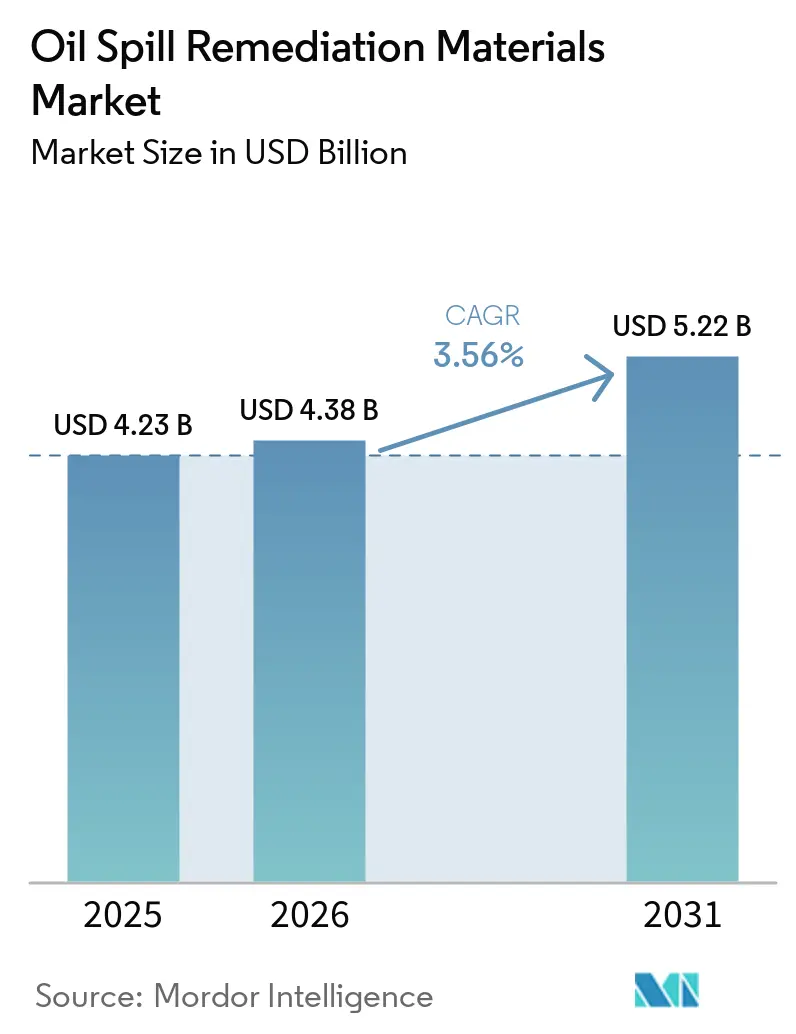
Oil Spill Remediation Materials Market Analysis by Mordor Intelligence
The Oil Spill Remediation Materials market size was valued at USD 4.23 billion in 2025 and is estimated to grow from USD 4.38 billion in 2026 to reach USD 5.22 billion by 2031, at a CAGR of 3.56% during the forecast period (2026-2031). The oil spill remediation materials market is shaped by stricter spill-preparedness rules, expanding offshore activity, and the technical challenges created by very low sulfur fuel oil. These fuels have exposed the limits in existing response inventories because they can be more difficult to recover than heavier fuel oils. Suppliers that combine certified products with training, maintenance, and replenishment services can secure repeat orders from response organizations. The oil spill remediation materials market also has opportunities for physical and biological products as scrutiny of chemical agents increases. Procurement increasingly favors materials that meet authorization rules while reducing waste-handling requirements.
Key Report Takeaways
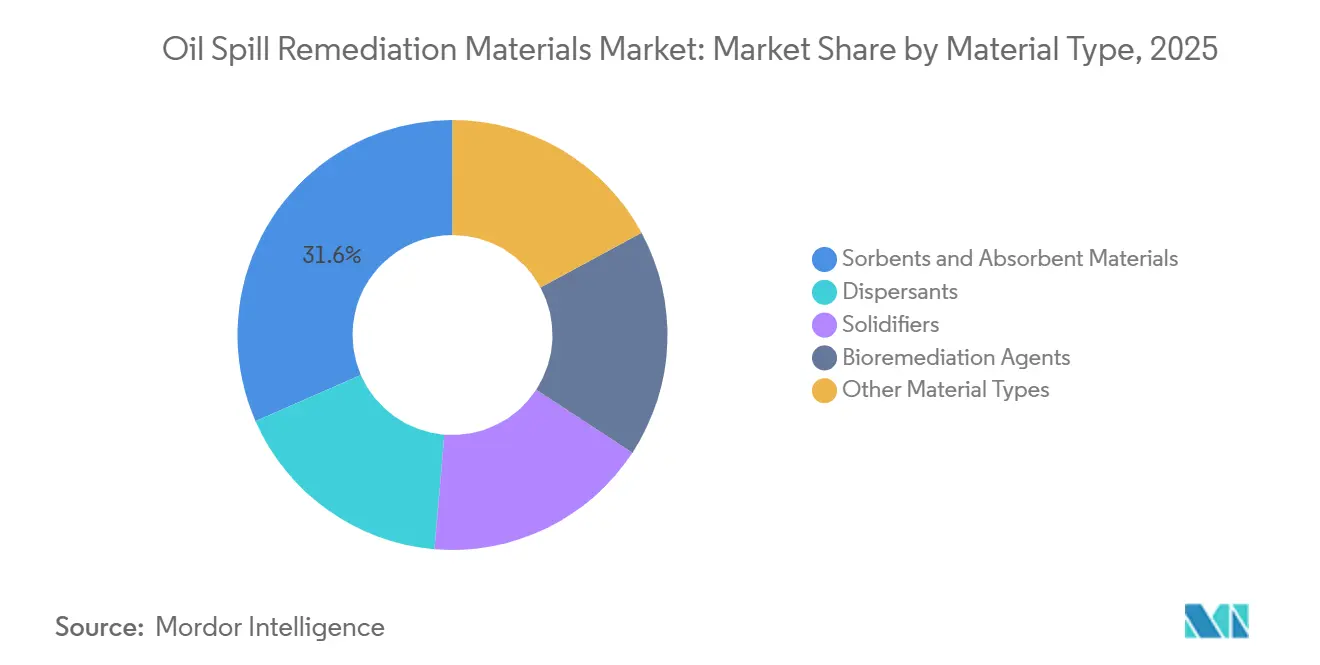
- By material type, sorbents and absorbent materials held 31.56% of the oil spill remediation materials market share in 2025, while bioremediation agents are projected to advance at a 4.51% CAGR through 2031.
- By remediation method, physical remediation held 24.32% of the oil spill remediation materials market share in 2025, while bioremediation is projected to advance at a 4.32% CAGR through 2031.
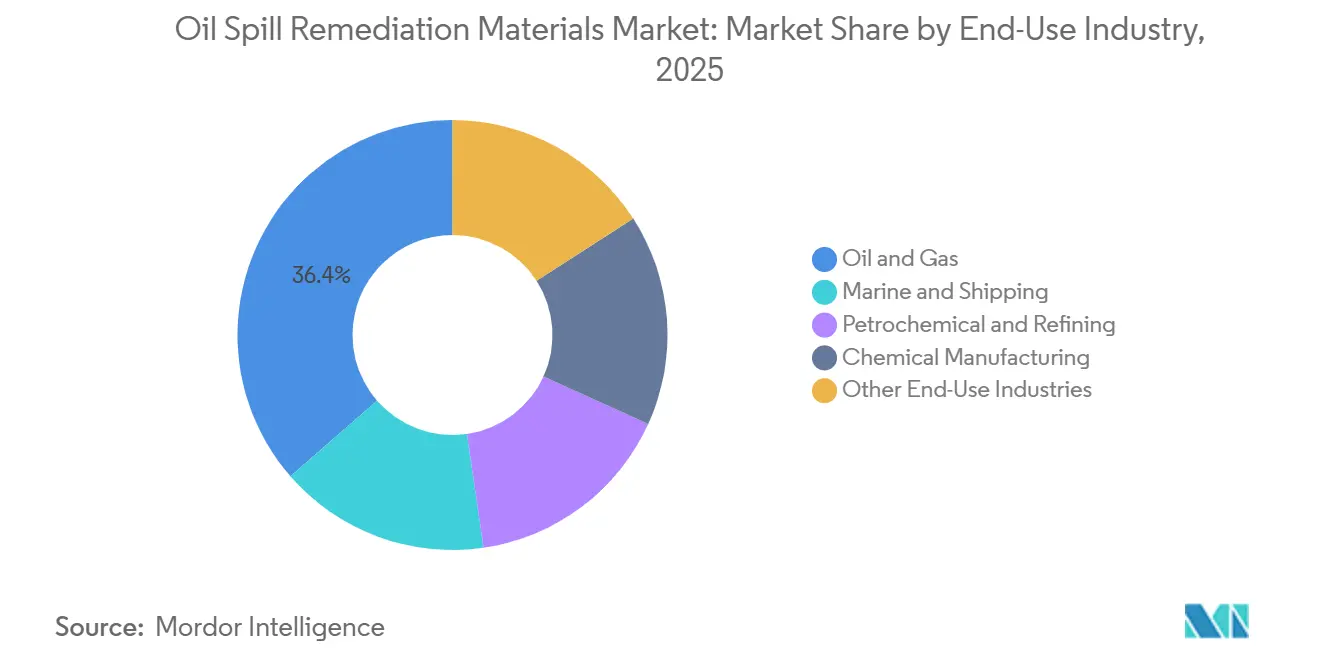
- By end-use industry, oil and gas held 36.41% of the oil spill remediation materials market share in 2025, while marine and shipping is projected to advance at a 4.75% CAGR through 2031.
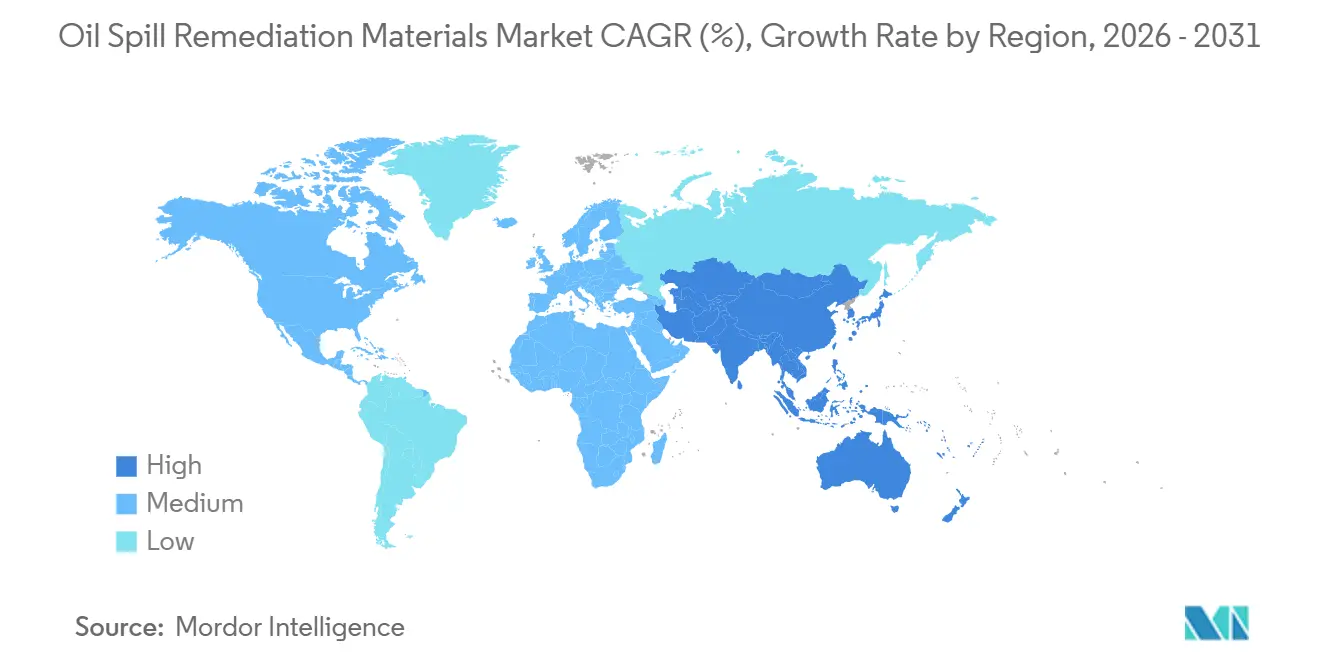
- By geography, the Middle East and Africa held 40.56% of the oil spill remediation materials market share in 2025, while Asia-Pacific is projected to advance at a 4.61% CAGR through 2031.
Note: Market size and forecast figures in this report are generated using Mordor Intelligence’s proprietary estimation framework, updated with the latest available data and insights as of January 2026.
Market Trends and Insights
Drivers Impact Analysis of Oil Spill Remediation Materials Market*
| Driver | (~) % Impact on CAGR Forecast | Geographic Relevance | Impact Timeline |
|---|---|---|---|
| Stricter Spill-Preparedness and Product-Authorization Requirements | +1.2% | Global, with early gains in North America and EU | Short term (≤ 2 years) |
| Expansion of Offshore Production and Marine Oil Transport | +0.9% | APAC core, spillover to MEA and South America | Medium term (2–4 years) |
| Aging Pipelines, Terminals, and Storage Infrastructure | +0.7% | North America, MEA, and Eastern Europe | Medium term (2–4 years) |
| Bio-Based and Regenerable Sorbent Innovation | +0.5% | Global, with early gains in Northern Europe and East Asia | Long term (≥ 4 years) |
| Low-Sulfur Fuel Oil Spill Recovery Complexity | +0.4% | Global maritime corridors, SECA-designated waters | Short term (≤ 2 years) |
| Source: Mordor Intelligence | |||
Stricter Spill-Preparedness and Product-Authorization Requirements
Regulatory reform supports demand for oil spill remediation materials because operators must use products that meet current authorization requirements. The United States Environmental Protection Agency revised the National Contingency Plan Subpart J, which became effective in December 2023, and its 24-month transition period ended in December 2025. The revision required sorbents, dispersants, and bioremediation agents to meet revised efficacy and toxicity criteria for federally authorized spill responses. Products that did not meet the revised criteria required replacement, which created new submission and purchasing activity. Egypt validated its revised national oil and chemical spill contingency plan in April 2026, which supported the need to pre-position approved response materials in the Red Sea and Gulf of Aden region. The oil spill remediation materials market, therefore, depends on both product approval and local response readiness.
Expansion of Offshore Production and Marine Oil Transport
New offshore projects extend the locations where operators need certified response inventories before production starts. The United States Environmental Protection Agency issued an air permit in September 2025 for the proposed Texas GulfLink deepwater port, which was designed to load up to 365 million barrels of crude oil a year onto very large crude carriers[1]. Nigeria commissioned its first wholly owned floating storage and offloading vessel in October 2025, creating another point where spill response capability was needed. Lamor received a EUR 6 million (approximately USD 6.7 million) order from the Indian Coast Guard in September 2025, with most production required locally, which showed the importance of domestic supply capability in Asia-Pacific procurement. These projects create procurement tied to capital investment rather than only to short-term oil price movements. The oil spill remediation materials market benefits when offshore operators and public agencies require readiness packages alongside new facilities.
Aging Pipelines, Terminals, and Storage Infrastructure
Aging infrastructure creates continuing demand for spill preparedness materials because equipment failures cannot be addressed quickly through policy alone. The Alberta Energy Regulator recorded 277 pipeline incidents in 2025, and pipeline failures accounted for 83% of those incidents. Internal corrosion caused 38% of leaks and ruptures, despite monitoring programs intended to reduce failures. A 2025 Scientific Reports study found that nearly 85% of petroleum released during hazardous-material pipeline failures in the United States remained unrecovered after standard remediation. This recovery gap supports follow-on demand for containment, collection, and treatment materials. The oil spill remediation materials market can build recurring relationships with pipeline and terminal operators that maintain mandatory stockpiles.
Bio-Based and Regenerable Sorbent Innovation
Bio-based sorbents are becoming more relevant where buyers seek both operational performance and lower environmental risk. A 2025 review reported that modified sphagnum moss reached a crude oil adsorption capacity of 22.756 g/g, while kapok and waste-cotton nonwovens retained motor oil capacity after 10 reuse cycles. Klaipeda University startup Inobiostar completed marine field testing of InnoAerogel in Athens in July 2026, using a biodegradable aerogel made with recycled paper waste and immobilized oil-degrading bacteria. CEDRE International had validated the product earlier in 2026, and the material was being evaluated under Mediterranean conditions. Standardized testing against weathered and low-sulfur oils remains limited. The oil spill remediation materials market favors bio-based formulations when they can meet toxicity requirements and deliver reliable recovery performance.
Restraints Impact Analysis of Oil Spill Remediation Materials Market*
| Restraint | (~) % Impact on CAGR Forecast | Geographic Relevance | Impact Timeline |
|---|---|---|---|
| Ecotoxicity and Secondary-Waste Liability of Chemical Agents | -0.8% | Global, with highest scrutiny in North America and EU | Short term (≤ 2 years) |
| Limited Approval Windows for Dispersant Use | -0.6% | North America, SECA-designated European waters | Medium term (2–4 years) |
| Variable Performance of Materials Across Weathered and Low-Sulfur Oils | -0.4% | Global maritime corridors, Arctic-adjacent waters | Long term (≥ 4 years) |
| Source: Mordor Intelligence | |||
Ecotoxicity and Secondary-Waste Liability of Chemical Agents
Chemical dispersants face commercial limits when their toxicity profiles create environmental and worker safety concerns. Environmental groups filed a noncompliance complaint with the Occupational Safety and Health Administration and the United States Environmental Protection Agency in June 2025 concerning 4 dispersant manufacturers. The complaint addressed safety data and the ecological and human health effects of surfactants, including dioctyl sodium sulfosuccinate, Span 80, and Tween 80. A 2025 Environmental Health study found elevated endocrine and metabolic conditions among Deepwater Horizon Coast Guard cohort workers associated with dioctyl sodium sulfosuccinate exposure over 5 years of follow-up. Used chemical agents can also create hazardous waste disposal obligations that raise incident costs. These factors direct some procurement toward physical sorbents and bioremediation agents in the oil spill remediation materials market.
Limited Approval Windows for Dispersant Use
Dispersant use depends on prior approval, location, and on-scene regulatory confirmation rather than product availability alone. In United States waters, only products listed under the National Contingency Plan can be used in federally controlled responses. The International Association of Oil and Gas Producers noted that dispersant decisions require consideration of local conditions, product suitability, and regulatory requirements[2]. International Maritime Organization Response to Pollution from Alternative Fuels research found that chemical dispersants had limited effectiveness on low-sulfur fuel oils because of their altered chemical composition. This limitation narrows the practical operating window for chemical treatment when fuel properties are uncertain. The oil spill remediation materials market consequently relies on a broader mix of mechanical, sorbent, and biological options for marine incidents.
*Our forecasts treat driver/restraint impacts as directional, not additive. The impact forecasts reflect baseline growth, mix effects, and variable interactions.
Oil Spill Remediation Materials Market Segment Analysis
By Material Type:
Sorbents and Absorbent Materials Demand Remains Broad While Bioremediation Agents AdvanceSorbents and absorbent materials held 31.56% of the oil spill remediation materials market share in 2025, supported by their use across shoreline, nearshore, and industrial settings. The United States Environmental Protection Agency National Contingency Plan Sorbent Product List, updated in March 2026, included generic materials such as polypropylene, polyurethane, and cellulose composites. The list also included proprietary products such as MagnetAsorb and Spill Tackle, both listed in January 2026. These listings widen the certified product options available to response organizations. They also help procurement teams compare product characteristics within a regulated product pool.
Bioremediation agents are projected to advance at a 4.51% CAGR through 2031 in the oil spill remediation materials market. Improved microbial degradation methods and bioaugmentation are supporting their use in multistage response protocols. Solidifiers remain relevant for high-viscosity and heavy-oil incidents where containment and handling require a different material approach. Other material types include herding agents, surface washing agents, and photocatalytic composites such as sepiolite-titanium dioxide systems designed for adsorption and in-situ degradation. Bio-based and regenerable formats within the sorbent category are gaining attention as regulatory toxicity requirements and sustainability criteria narrow the use of synthetic-only formulations.

By Remediation Method:
Physical Remediation Leads While Bioremediation Supports Follow-On TreatmentPhysical remediation held a 24.32% share in 2025. International Maritime Organization Response to Pollution from Alternative Fuels work found that mechanical recovery remained the most viable approach for low-sulfur fuel oil incidents. That finding supported the development of low-sulfur fuel oil-specific skimmers during 2025 and 2026. Physical remediation remains important because it can remove oil before further treatment is considered. Its role is especially clear when difficult fuel characteristics reduce the effectiveness of other methods.
Bioremediation is projected to advance at a 4.32% CAGR through 2031 in the oil spill remediation materials market. A 2025 study described how nutrient-amended bacterial consortia, including Alcanivorax borkumensis, achieved degradation efficiencies of 60% to 70% under optimized conditions. Chemical remediation has narrower growth prospects because of toxicity concerns and authorization limits, despite its role in some open-ocean cases. Thermal remediation, including in-situ burning, has limits with low-sulfur fuel oils because these fuels burn poorly and can leave substantial residue. Bioremediation is often applied after mechanical recovery rather than as a replacement, which supports material purchases across several remediation methods.
By End-Use Industry:
Oil and Gas Maintains Demand While Marine and Shipping ExpandsOil and gas held a 36.41% share in 2025. The sector requires response materials for aging pipelines, offshore platforms, storage terminals, and other infrastructure that can create recurring spill risks. The Alberta Energy Regulator recorded 229 pipeline failures in 2025, and internal corrosion in uncoated steel pipelines remained the leading cause. National contingency frameworks also require operators to maintain spill response inventories. These requirements provide a steady demand base for containment and recovery materials.
Marine and shipping is projected to advance at a 4.75% CAGR through 2031 in the oil spill remediation materials market. Vikoma International Ltd launched the Komara Omni skimmer in October 2025 after the International Maritime Organization Response to Pollution from Alternative Fuels trials in Horten, Norway. The skimmer was designed for low-sulfur fuel oil, very low-sulfur fuel oil, and ultra-low-sulfur fuel oil recovery, with interchangeable brush, disc, and V-brush modules. Petrochemical and refining facilities require materials for fixed-site risks at refinery terminals and storage tank farms. Chemical manufacturing and other end-use industries also need containment-grade sorbents where oil-based materials occur with other liquids.
Geography Analysis
MEA Oil Spill Remediation Materials Market
The Middle East and Africa held 40.56% of the oil spill remediation materials market share in 2025. The region combines dense oil production, active marine trade routes, and government investment in national response capacity. Saudi Arabia’s marine protection program used a multilayer monitoring architecture to coordinate surveillance across territorial waters. Kuwait Petroleum Corporation awarded a KWD 6.39 million contract (approximately USD 21 million) in 2025 for 2 oil spill response vessels, each requiring certified material inventories for operations. Lamor also operated a Kuwait soil remediation project and opened a Saudi Arabia Service Center in September 2025, supporting regional production of response solutions.
APAC Oil Spill Remediation Materials Market
Asia-Pacific is projected to advance at a 4.61% CAGR through 2031 in the oil spill remediation materials market. Demand is supported by offshore activity in the South China Sea, crude imports through Indian ports, and environmental rules that impose financial penalties for violations. The Indian Coast Guard placed a EUR 6 million (approximately USD 6.7 million) materials and equipment order with Lamor in September 2025, with most production required locally. China’s refinery expansion and offshore activity in Vietnam and Indonesia extend demand among authorities and private operators. Oil Spill Response Limited deployed equipment and conducted NOFI system trials during Singapore Offshore Week in April 2026, reflecting the region’s role in capability testing and procurement.
The Americas and Europe Oil Spill Remediation Materials Market
North America maintained a technically advanced demand base in 2025 because of the Oil Pollution Act of 1990 inventory requirements and continuing pipeline risks. The United States Environmental Protection Agency’s revised Product Schedule requirements also increased the focus on approved products. Europe relies on the European Maritime Safety Agency Equipment Assistance Service, which pre-positions NOFI Current Buster systems, DESMI A/S Ro-Trawl nets, and Lamor workboats across 5 bases in the Baltic, North Sea, and Mediterranean. South America contributes demand through Petrobras offshore expansion, including Current Buster 6 technology supplied for 4 new vessels under a 2025 contract.
Competitive Landscape
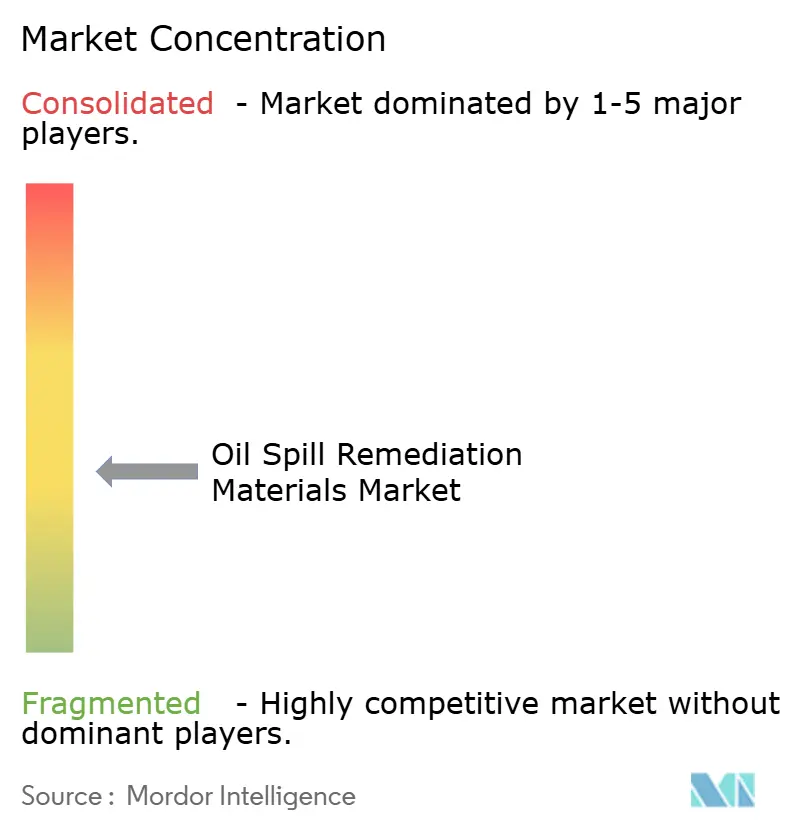
The oil spill remediation materials market is moderately fragmented. Lamor, Elastec, DESMI A/S, and Vikoma International Ltd provide broad response equipment and materials portfolios. SORB XT GmbH, TOLSA, S.A., Oil-Dri Corporation of America, and Sarva Bio Remed, LLC focus more closely on material performance and formulation expertise. Competitive position depends on certification under the National Contingency Plan, the International Convention for the Prevention of Pollution from Ships, or comparable frameworks. Suppliers also compete through training, maintenance, and replenishment services that support repeat procurement.
Lamor secured a 3-year oil spill response services contract in Angola in July 2025 and a Trion Project contract with Woodside Energy USA in October 2025. The Trion contract covered containerized systems, skimming systems, dispersant and spray systems, tracking buoys, and a 3-year training and maintenance agreement. Oil Spill Response Limited awarded 2Excel Group a 20-year contract for Global Wide Area Oil Spill Dispersant Services in May 2025. The new service is scheduled to begin in 2028 with specially modified Boeing 737-800 aircraft and the TERSUS dispersant system. These long-duration arrangements link equipment standards, training, and material supply over extended periods.
Very low sulfur fuel oil optimized materials remain an area where the certified supply base is limited. Vikoma International Ltd’s Komara Omni and DESMI A/S’s Octopus low-sulfur fuel oil skimmer were early equipment responses to this need. Bio-based materials that meet both toxicity requirements and sustainability criteria form another area of competition. Patent activity in oil-boom paravane systems and photocatalytic composite sorbents shows that mechanical and material development are progressing together.
Oil Spill Remediation Materials Industry Leaders
-
Oil Spill Response Limited
-
Lamor
-
Elastec
-
DESMI A/S
-
Oil-Dri Corporation of America
- *Disclaimer: Major Players sorted in no particular order
Oil Spill Remediation Materials Market Companies Covered in this Report
- 3M
- Brady
- DESMI A/S
- Elastec
- GEI Works
- Lamor
- MARKLEEN MANAGEMENT, S.L.
- New Pig Corporation
- NOFI AS
- Oil Spill Response Limited
- Oil-Dri Corporation of America
- Regenesis
- Sarva Bio Remed, LLC
- SORB XT GmbH
- TOLSA, S.A.
- Vikoma International Ltd
Recent Industry Developments in Oil Spill Remediation Materials Market
- April 2026: Lamor and Oxxean formalized a strategic alliance at AquaSur 2026 to strengthen response capabilities for hydrocarbon spills and hazardous-substance incidents across Chile’s Los Lagos and Aysén regions. The partnership combines Lamor’s specialized environmental-response solutions with Oxxean’s local infrastructure and operational expertise, supporting faster deployment of spill-response equipment and services for maritime terminals, aquaculture, and energy operations.
- September 2025: Lamor received a EUR 6 million (approximately USD 6.7 million) order from the Indian Coast Guard, with most production required locally. The order supports demand for oil spill response equipment and remediation materials in India while highlighting the growing importance of localized supply and manufacturing capabilities in the Asia-Pacific oil spill response market.
Global Oil Spill Remediation Materials Market Report Scope
Oil spill remediation materials are products used to contain, recover, break down, or otherwise manage petroleum hydrocarbons released into marine, freshwater, and terrestrial environments. They support rapid response and environmental restoration by reducing the spread, persistence, and ecological impact of spilled oil.
The Oil Spill Remediation Materials Market is segmented by material type, remediation method, end-use industry, and geography. By material type, the market is segmented into sorbents and absorbent materials, dispersants, solidifiers, bioremediation agents, and other material types. By remediation method, the market is segmented into physical remediation, chemical remediation, bioremediation, and thermal remediation. By end-use industry, the market is segmented into oil and gas, marine and shipping, petrochemical and refining, chemical manufacturing, and other end-use industries. The report also covers the market size and forecasts for oil spill remediation materials in 15 countries across major regions. For each segment, the market sizing and forecasts have been done on the basis of value (USD).
| Sorbents and Absorbent Materials |
| Dispersants |
| Solidifiers |
| Bioremediation Agents |
| Other Material Types |
| Physical Remediation |
| Chemical Remediation |
| Bioremediation |
| Thermal Remediation |
| Oil and Gas |
| Marine and Shipping |
| Petrochemical and Refining |
| Chemical Manufacturing |
| Other End-Use Industries |
| Asia-Pacific | China |
| India | |
| Japan | |
| South Korea | |
| Rest of Asia-Pacific | |
| North America | United States |
| Canada | |
| Mexico | |
| Europe | Germany |
| United Kingdom | |
| France | |
| Italy | |
| Rest of Europe | |
| South America | Brazil |
| Argentina | |
| Rest of South America | |
| Middle East and Africa | Saudi Arabia |
| South Africa | |
| Rest of Middle East and Africa |
| By Material Type | Sorbents and Absorbent Materials | |
| Dispersants | ||
| Solidifiers | ||
| Bioremediation Agents | ||
| Other Material Types | ||
| By Remediation Method | Physical Remediation | |
| Chemical Remediation | ||
| Bioremediation | ||
| Thermal Remediation | ||
| By End-Use Industry | Oil and Gas | |
| Marine and Shipping | ||
| Petrochemical and Refining | ||
| Chemical Manufacturing | ||
| Other End-Use Industries | ||
| By Geography | Asia-Pacific | China |
| India | ||
| Japan | ||
| South Korea | ||
| Rest of Asia-Pacific | ||
| North America | United States | |
| Canada | ||
| Mexico | ||
| Europe | Germany | |
| United Kingdom | ||
| France | ||
| Italy | ||
| Rest of Europe | ||
| South America | Brazil | |
| Argentina | ||
| Rest of South America | ||
| Middle East and Africa | Saudi Arabia | |
| South Africa | ||
| Rest of Middle East and Africa | ||
Key Questions Answered in the Report
What is the size of the oil spill remediation materials market?
The oil spill remediation materials market stands at USD 4.38 billion in 2026 and is projected to reach USD 5.22 billion by 2031.
What is driving demand for oil spill remediation materials?
Product authorization requirements, offshore activity, aging infrastructure, and the need to recover low-sulfur fuel oils support demand.
Which material type had the largest share in 2025?
Sorbents and absorbent materials held 31.56% of the market share in 2025.
Which remediation method is expected to grow fastest through 2031?
Bioremediation is projected to advance at a 4.32% CAGR through 2031, supported by its role after mechanical recovery.