
Office-Based Labs Market Size and Share
Market Overview
| Study Period | 2020 - 2031 |
|---|---|
| Market Size (2026) | USD 40.22 Billion |
| Market Size (2031) | USD 66.76 Billion |
| Growth Rate (2026 - 2031) | 10.67 % |
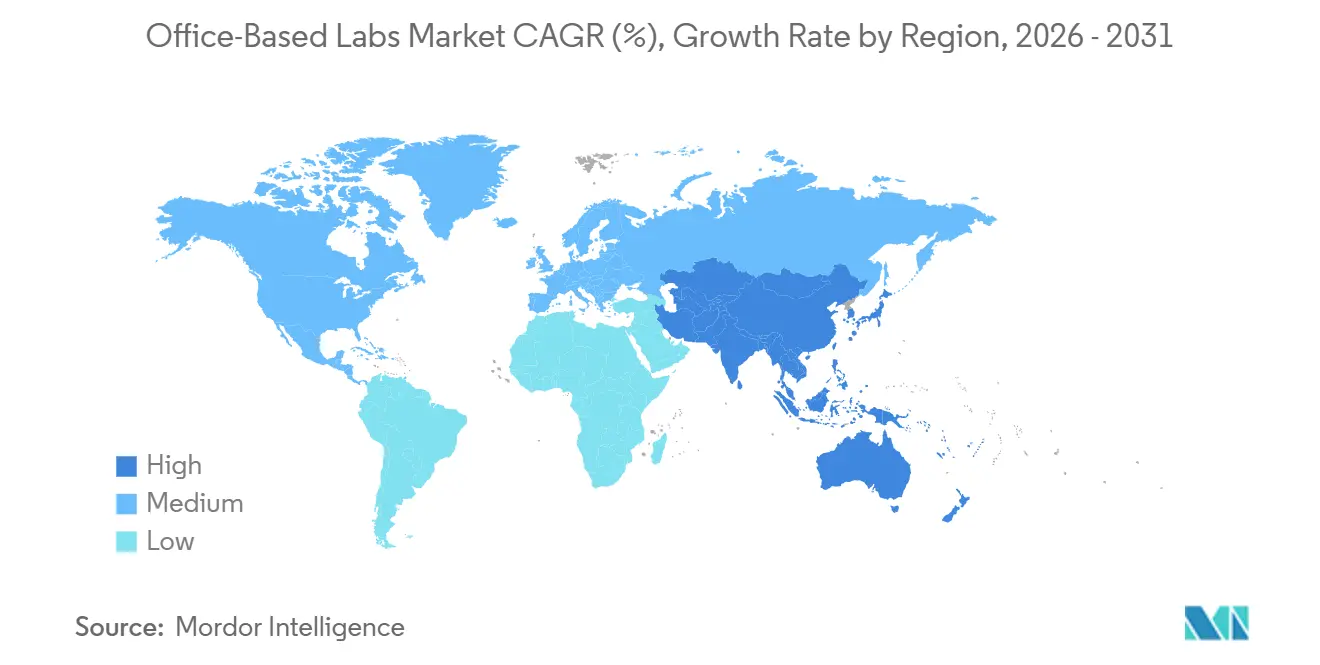
| Fastest Growing Market | Asia-Pacific |
| Largest Market | North America |
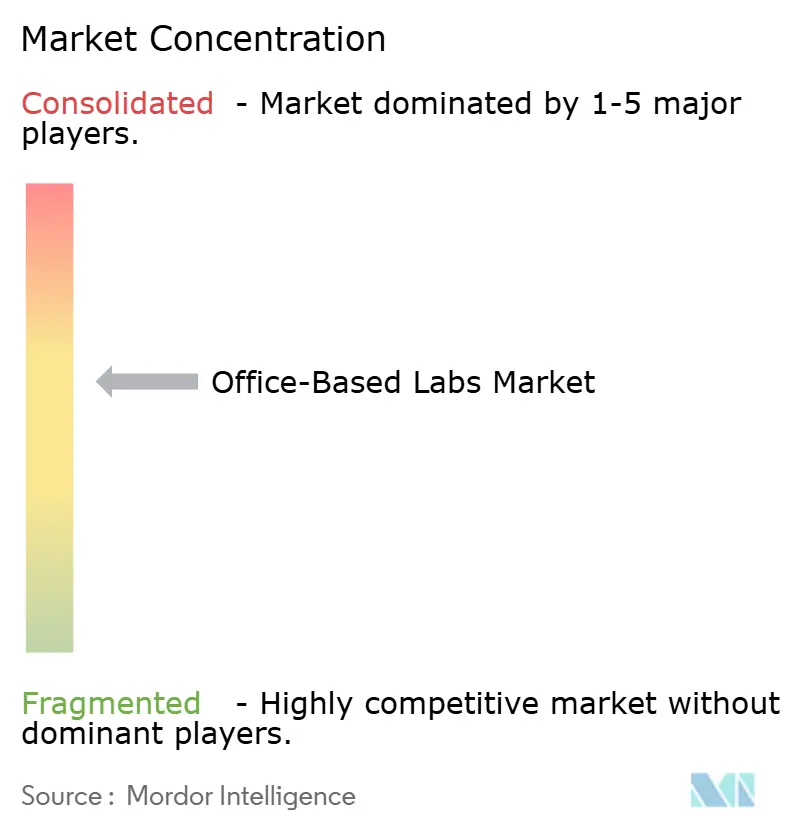
| Market Concentration | Medium |
Major Players *Disclaimer: Major Players sorted in no particular order Image © Mordor Intelligence. Reuse requires attribution under CC BY 4.0. | |
Office-Based Labs Market Analysis by Mordor Intelligence
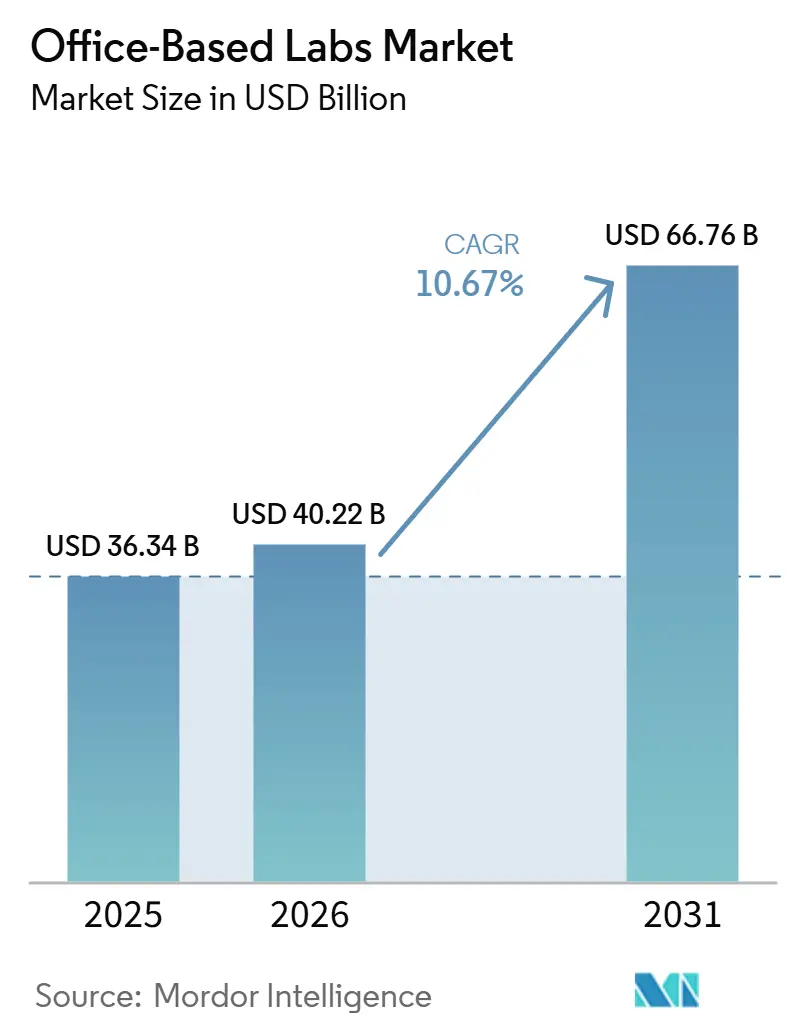
The Office-Based Labs Market size is projected to be USD 36.34 billion in 2025, USD 40.22 billion in 2026, and reach USD 66.76 billion by 2031, growing at a CAGR of 10.67% from 2026 to 2031.
Growth reflects the continued shift of suitable cardiovascular and vascular procedures from hospital outpatient departments to physician-controlled settings. Payment changes in the 2026 Medicare Physician Fee Schedule support this transition by recognizing higher indirect practice costs in office settings. The office-based labs market also benefits as patients receive minimally invasive treatment and return home on the same day. Operators are responding through specialty partnerships, shared OBL and ambulatory surgery center structures, and broader payer contracting. These developments create opportunities for networks that can maintain clinical governance while managing costs and compliance.
Key Report Takeaways
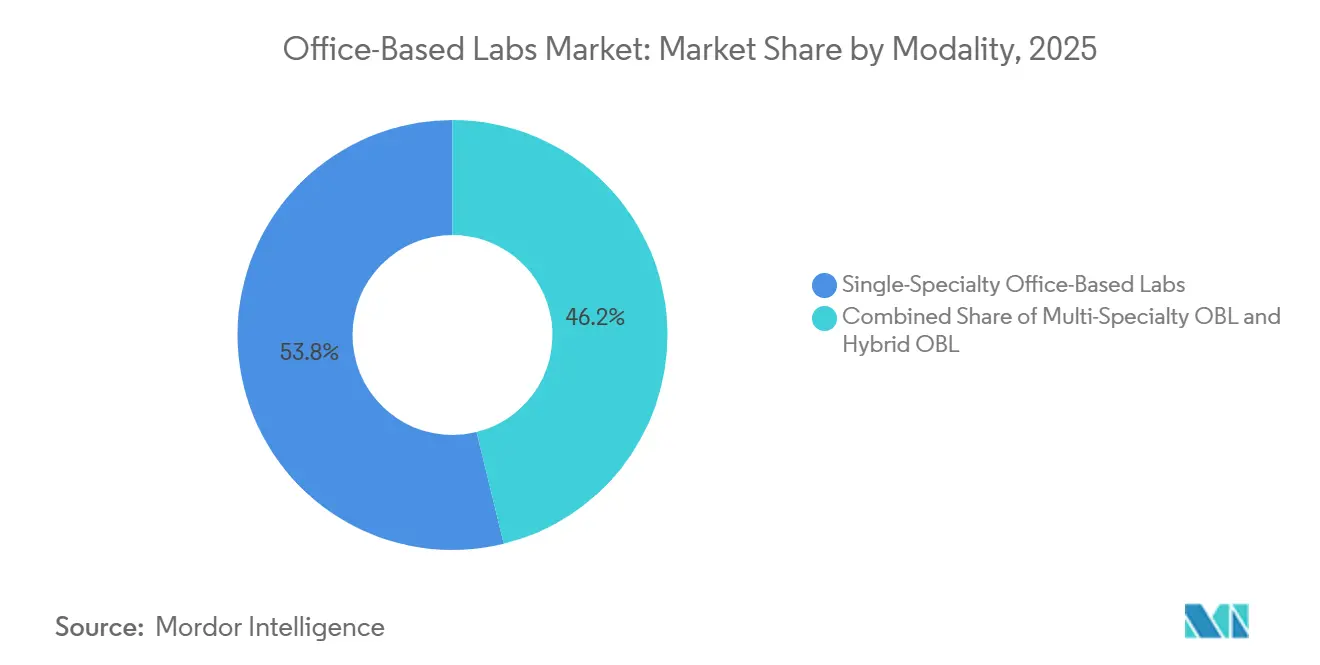
By modality, single-specialty office-based labs accounted for 53.84% of the office-based labs market share in 2025, while hybrid office-based labs are projected to grow at a CAGR of 12.87% through 2031.
By service type, peripheral vascular intervention accounted for 42.34% of the office-based labs market share in 2025, while venous intervention is projected to grow at a CAGR of 12.63% through 2031.
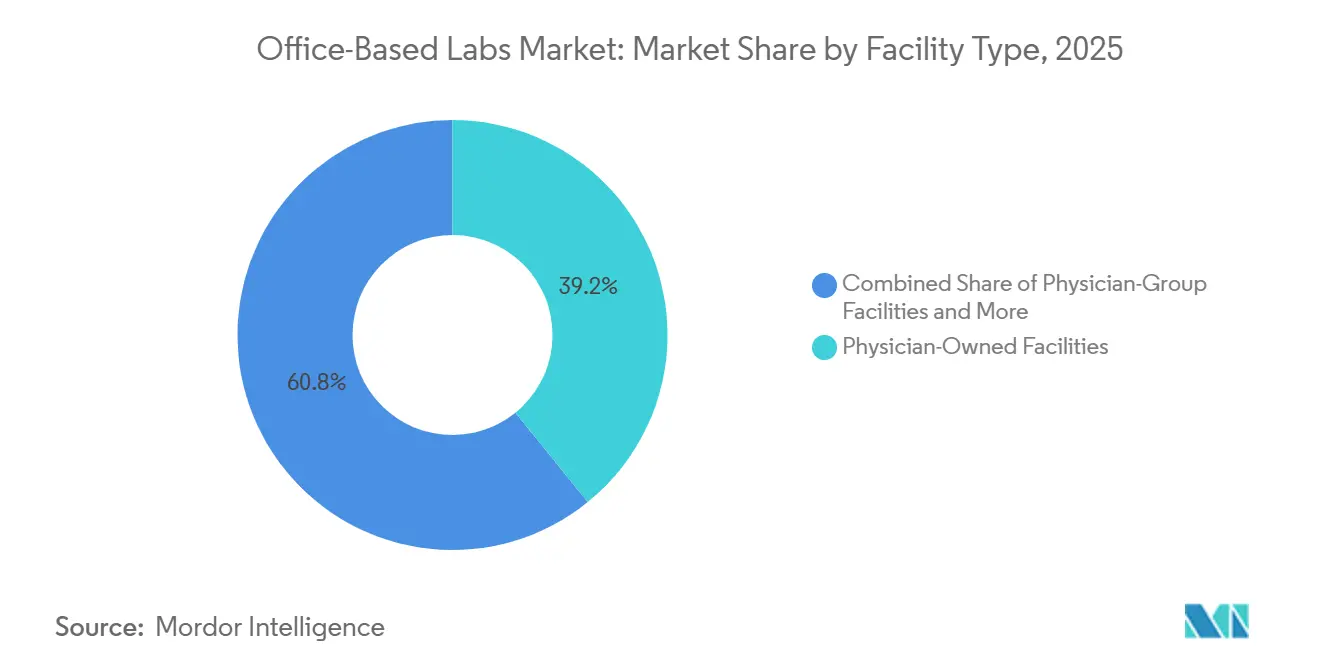
By facility type, physician-owned facilities accounted for 39.17% of the office-based labs market share in 2025, while private-equity-backed platforms are projected to grow at a CAGR of 11.87% through 2031.
By procedure type, diagnostic procedures accounted for 45.88% of the office-based labs market share in 2025, while interventional procedures are projected to grow at a CAGR of 12.36% through 2031.
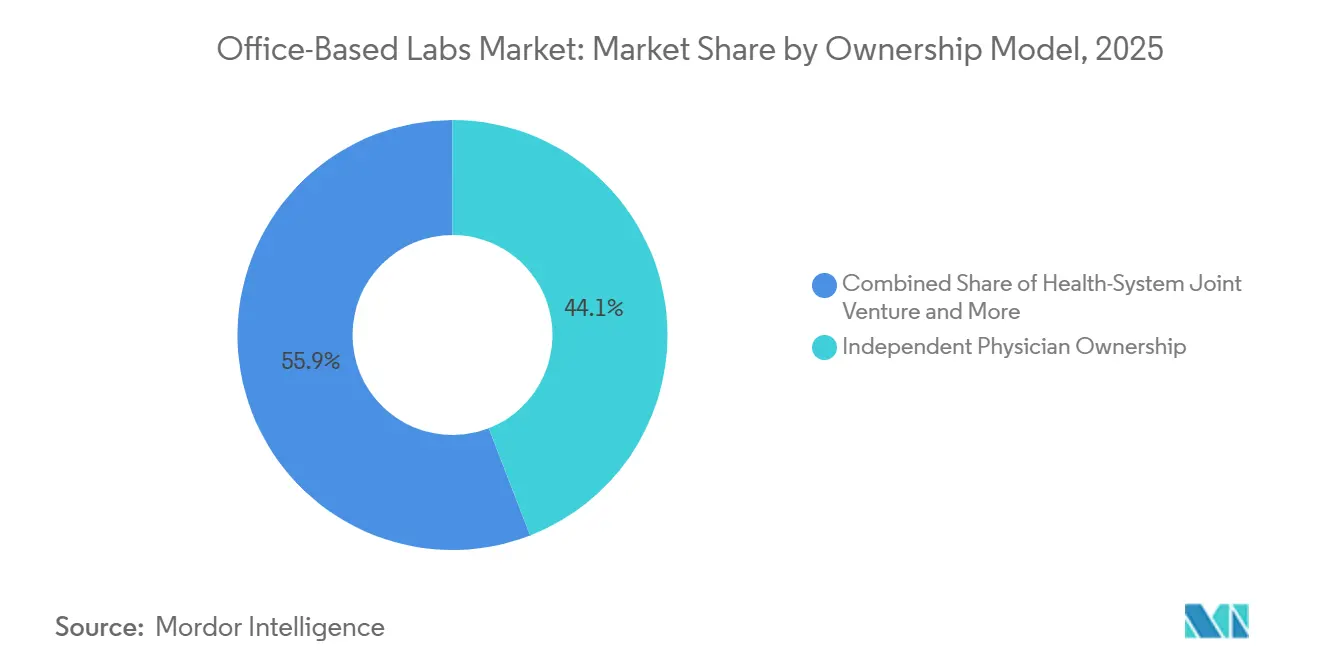
By ownership model, independent physician ownership accounted for 44.11% of the office-based labs market share in 2025, while corporate and private-equity ownership is projected to grow at a CAGR of 12.46% through 2031.
By geography, North America accounted for 54.38% of the office-based labs market share in 2025, while Asia-Pacific is projected to grow at a CAGR of 12.45% through 2031.
Note: Market size and forecast figures in this report are generated using Mordor Intelligence’s proprietary estimation framework, updated with the latest available data and insights as of January 2026.
Market Trends and Insights
Drivers Impact Analysis of Office-Based Labs Market*
| Driver | (~) % Impact on CAGR Forecast | Geographic Relevance | Impact Timeline |
|---|---|---|---|
| Shift of Cardiovascular and Vascular Procedures to Lower-Cost Outpatient Settings | +2.3% | North America and Europe, with early spillover to Asia-Pacific | Short term (≤ 2 years) |
| Rising Prevalence of Peripheral Artery and Cardiovascular Disease | +1.9% | Global, especially North America and high-SDI Asia-Pacific countries | Long term (≥ 4 years) |
| Favorable Reimbursement for Office-Based Interventional Procedures | +1.7% | North America, with influence in Australia and selected European markets | Short term (≤ 2 years) |
| Patient Preference for Convenient, Same-Day Minimally Invasive Care | +1.1% | Global, strongest in North America and Western Europe | Medium term (2-4 years) |
| Procedure Migration Enabled by Compact Imaging and Monitoring Systems | +1.0% | Global, concentrated in North America, South Korea, and Germany | Medium term (2-4 years) |
| OBL Expansion Through Specialty Physician Partnerships and Platform Consolidation | +0.8% | North America, with early gains in Australia and the GCC | Short term (≤ 2 years) |
| Source: Mordor Intelligence | |||
Shift of Cardiovascular and Vascular Procedures to Lower-Cost Outpatient Settings
The shift toward outpatient treatment is a key driver of the office-based labs market. Equivalent procedures in hospital outpatient departments can incur facility costs three to five times higher than those in an OBL. CMS has removed all percutaneous coronary intervention codes from the inpatient-only list and continues to expand the ambulatory surgery center covered procedures list. The 2026 fee schedule recognized higher indirect practice expenses for office settings and supported reimbursement gains of 5% for office-based cardiology services. This change reduces the relative appeal of facility-based delivery for appropriate cases. As a result, health systems have a stronger incentive to partner with outpatient operators rather than rely solely on hospital pricing.
Rising Prevalence of Peripheral Artery and Cardiovascular Disease
Rising peripheral artery disease supports demand for vascular services in the office-based labs Market. Global peripheral arterial disease cases reached 113.71 million in 2021, compared with 56.29 million in 1990. Population aging, diabetes, and hyperlipidemia were identified as major factors behind this increase. The elderly population with peripheral artery disease is projected to increase from 87.5 million in 2021 to 160.2 million by 2040.[1]“Trends in the Burden, Risk Factors, and Future Projections of Peripheral Artery Disease in the Elderly,” BMC Geriatrics, springer.com North America had the highest age-standardized prevalence at 2,486.5 cases per 100,000 person-years. Areas with higher diabetes and smoking prevalence can support stronger referral volumes for vascular OBLs.
Favorable Reimbursement for Office-Based Interventional Procedures
Payment policy remains important to the office-based labs market because it affects the economics of each procedure setting. The 2026 Medicare Physician Fee Schedule recognized higher indirect overhead in non-facility settings and included a 3.8% conversion factor increase for 2026. These provisions improve the financial position of eligible office-based procedures. Hybrid OBL and ASC facilities can select the appropriate place of service for each procedure, helping operators manage varying levels of procedure complexity without relying on a single payment structure.
OBL Expansion Through Specialty Physician Partnerships and Platform Consolidation
Specialty physician partnerships are expanding the office-based labs market by improving access to capital and shared administrative support. Management services organizations provide billing, payer contracting, purchasing, and operating infrastructure, while physicians retain clinical ownership. In Massachusetts, a law enacted in January 2025 requires quarterly disclosure of financial transactions involving private-equity-backed healthcare entities and management services organizations. Washington State introduced similar transparency legislation in 2025. This policy direction increases the need for clear governance and financial reporting. Platforms with disciplined clinical oversight are better positioned to operate under higher disclosure standards.
Restraints Impact Analysis of Office-Based Labs Market*
| Restraint | (~) % Impact on CAGR Forecast | Geographic Relevance | Impact Timeline |
|---|---|---|---|
| High Capital Requirements and Utilization Risk for Advanced Procedure Suites | -1.4% | North America, Western Europe, and the GCC | Short term (≤ 2 years) |
| Reimbursement Uncertainty and Technical-Component Payment Pressure | -1.1% | North America, with compliance effects in European markets under DRG reform | Medium term (2-4 years) |
| Limited Availability of Credentialed Interventional Staff | -0.6% | North America, Western Europe, and Australia | Medium term (2-4 years) |
| Concentration of Referral and Payer Power around Large Health Systems | -0.5% | North America and core European markets, especially Boston, London, and Munich | Long term (≥ 4 years) |
| Source: Mordor Intelligence | |||
High Capital Requirements and Utilization Risk for Advanced Procedure Suites
A vascular or cardiac suite can require USD 2 million to USD 4 million before its first billable procedure. The equipment may include biplane fluoroscopy, intravascular ultrasound, rotational atherectomy capability, and filtered ventilation. Fixed costs require sustained procedure volumes and a suitable payer mix. New facilities may struggle to establish both conditions during their first 12 to 18 months. A narrow referral network increases the effect of any change in hospital relationships or competing ASC capacity. Development guidance has identified payer mix and reimbursement modeling as important issues before a new OBL is opened.
Reimbursement Uncertainty and Technical-Component Payment Pressure
The office-based labs market continues to face uncertainty over future technical-component payments. The 2026 Medicare fee schedule improved office-based reimbursement, but it may not ensure a stable advantage for every procedure. ASC and OBL payments are converging for several endovascular and interventional codes. Commercial insurers may adjust technical fee schedules when public payment policies change. The Consolidated Appropriations Act of 2026 restored Clinical Laboratory Fee Schedule data reporting for physician office laboratories from May 2026. Smaller practices may face greater challenges in managing private-payer rate reporting.
*Our forecasts treat driver/restraint impacts as directional, not additive. The impact forecasts reflect baseline growth, mix effects, and variable interactions.
Office-Based Labs Market Segment Analysis
By Modality:
Single-Specialty Depth Holds Scale, While Hybrid Flexibility Supports GrowthSingle-specialty office-based labs accounted for 53.84% of the office-based labs market size in 2025. Vascular, endovascular, and cardiology-focused labs form the primary volume base for this modality. Dedicated teams can build repeatable workflows around a defined procedure mix, while concentrated purchasing and focused payer contracting support operating discipline. This model suits providers seeking consistent utilization from a specific clinical specialty.
Multi-specialty OBLs offer a shared facility for orthopedic, ophthalmology, and gastroenterology case mixes and can diversify revenue, though their operating model is more complex than that of a focused specialty lab. Hybrid office-based labs are forecast to register a 12.87% CAGR from 2026 to 2031 and can operate under an OBL structure on certain days and as a Medicare-certified ASC on other days. This arrangement gives operators more flexibility when reimbursement and case complexity vary by procedure. The choice among these models depends on case mix, physician participation, reimbursement conditions, and the level of flexibility the local facility requires.



By Service Type:
Peripheral Vascular Procedures Retain Scale, While Venous Care ExpandsPeripheral vascular intervention held 42.34% of the office-based labs market share in 2025. This position reflected the significant burden of peripheral artery disease and the suitability of many procedures for same-day care. Endovascular intervention and cardiovascular and cardiac services formed the next revenue tier. The removal of PCI codes from the inpatient-only list supported the migration of appropriate cardiac cases to outpatient settings. Interventional radiology and non-vascular office-based procedures added case volume for multi-specialty facilities.
Venous intervention is expected to register a CAGR of 12.63% through 2031. Chronic venous insufficiency affects more than 25 million adults in the United States.[2]Society for Cardiovascular Angiography and Interventions, “SCAI Clinical Practice Guidelines for the Management of Chronic Venous Disease,” SCAI, scai.org Endovenous laser ablation and radiofrequency ablation support the shift away from traditional surgical stripping due to lower complication rates. Providers focused on lower-extremity vein care can use office settings for many suitable procedures. Peripheral vascular care remains important because it links diagnostic assessment, follow-up, and intervention within a defined patient pathway. This integration helps specialty labs organize staff, supplies, and physician time around recurring clinical needs. Endovascular and cardiac services require careful case selection for outpatient settings. Interventional radiology and other non-vascular services can broaden the use of multi-specialty facilities when scheduling capacity is available. The service mix, therefore, affects revenue composition and the practical use of rooms, equipment, and trained personnel throughout the week.
By Facility Type:
Physician Ownership Leads, While Platform Facilities Grow FasterPhysician-owned facilities represented 39.17% of the office-based labs market share in 2025, reflecting the established preference for physician-majority ownership across many OBL structures. Corporate practice of medicine rules restrict direct non-physician ownership of clinical entities in many states, supporting a lasting role for physician-led structures in the office-based labs market. Physician-group facilities and health-system-affiliated facilities form the next tier.
Private-equity-backed platforms are projected to grow at a CAGR of 11.87% through 2031. Management services organization arrangements enable capital deployment while physicians retain clinical ownership. Health systems are also entering outpatient care to retain patients who might otherwise use independent facilities. In June 2026, Ascension completed its acquisition of AmSurg after an FTC consent order required divestitures. Imaging-center-affiliated and academic-institution-affiliated facilities remain focused on diagnostic-heavy and teaching markets. Physician-owned facilities can move quickly when participating physicians agree on investment, staffing, and the clinical scope of the lab. Platform facilities offer centralized functions and a broader operating network. Health-system-affiliated sites may be particularly relevant where health systems aim to preserve relationships with patients who need outpatient procedures. Each structure must still align expansion plans with rules that protect physician control over clinical decisions. Therefore, the office-based labs market includes both independent facilities and larger organizations, each using a different route to reach patients and manage operations.
By Procedure Type:
Diagnostics Support Volume, While Interventional Care GrowsDiagnostic procedures held 45.88% of the office-based labs market share in 2025. Coronary angiography, peripheral angiography, diagnostic catheterization, and duplex ultrasound are the key procedures in this category, often guiding decisions on subsequent interventions. However, high-resolution CT angiography and AI-guided echocardiography could reduce some invasive diagnostic volumes, creating a need for labs to align diagnostic services with intervention pathways and referral requirements.
Interventional procedures are forecast to register a CAGR of 12.36% from 2026 to 2031, supported by broader code eligibility and growing physician familiarity with higher-acuity care outside hospital settings. The other category includes minor surgical and rehabilitative procedures, helping multidisciplinary facilities improve room utilization across the weekly schedule. SCAI partnered with Corazon in 2026 to help practices address procedural and regulatory requirements for ASC-level interventional lab development, supporting the shift toward higher procedure complexity in selected outpatient facilities. Diagnostic activity remains important for determining intervention needs, while operators must maintain an appropriate mix of diagnostic and therapeutic care. The growth of interventional care requires trained teams, defined clinical protocols, and equipment aligned with the expected case mix. Meanwhile, minor surgical and rehabilitative procedures can support utilization when advanced interventional suites are not scheduled for complex cases.
By Ownership Model:
Independent Physicians Hold the Largest Position, While Corporate Models ScaleIndependent physician ownership accounted for 44.11% of the office-based labs market size in 2025. Partnership-based facility entities offer tax structuring benefits while preserving clinical decision-making authority. Health-system joint ventures represent the next ownership tier, providing capital and administrative support in exchange for partial facility control. This option appeals to operators in locations where independent payer contracting remains difficult.
Corporate and private equity ownership is projected to register a 12.46% CAGR through 2031. Management services organizations bridge independent and corporate structures by offering back-office support, purchasing leverage, and national payer contracts, capturing 20% to 30% of practice revenue in new platform configurations. The Massachusetts transparency law has increased scrutiny of financial relationships involving private equity and management services organizations, and similar oversight may affect how platforms structure and document future expansion. Independent physicians may value ownership for preserving their role in clinical and business decisions, while joint ventures offer a middle path for groups needing capital or operating support without fully exiting the local care model. Corporate structures support scale through shared purchasing, standardized technology, and payer relationships across several markets, but they still require clear clinical governance, especially where management services organizations provide nonclinical functions. Ownership choices in the office-based labs market remain closely linked to local regulation, physician objectives, payer access, and capital availability.
Geography Analysis
North America Office-Based Labs Market
North America held 54.38% of the office-based labs market share in 2025. The region benefits from United States reimbursement arrangements, physician entrepreneurship, and a high burden of peripheral artery disease. The 2026 Medicare payment change has reinforced the relative value of office-based cardiology in the United States. The region’s position also reflects a mature base of physicians familiar with outpatient procedure delivery and private payer administrative requirements. Facilities can focus on specialty procedures suited for same-day care and coordinate follow-up with referring physicians. While payment changes do not remove the need to maintain credentialed staff, equipment standards, and clear patient selection criteria, they strengthen the case for facilities delivering defined cardiovascular and vascular services outside hospital outpatient departments. North American operators, therefore, remain important partners, competitors, and potential acquirers for independent practices expanding outpatient capacity.
Europe Office-Based Labs Market
Europe has a meaningful presence in the office-based labs market, although hospital-centered regulation has kept many procedures within accredited institutions. Germany, the United Kingdom, and France are the main European markets in the supply analysis. German hospitals and networks modernized cardiac catheterization infrastructure during 2024 and 2025, reflecting demand for outpatient-compatible interventional capacity. DRG-based payment reforms in several countries are reducing the advantage of inpatient procedures. Italy, Spain, and other European countries are developing through academic and research settings. European adoption depends on integrating outpatient procedures within national payment rules and institution-based accreditation requirements, which may slow the transition compared with the United States but support structured protocol and clinical pathway development. The office-based labs market in Europe may develop through hospital-linked facilities, specialty practices, and selected outpatient platforms, allowing providers to respond to payment reform while operating within established clinical oversight arrangements.
APAC Office-Based Labs Market
Asia-Pacific is the fastest-growing geography and is forecast to register a 12.45% CAGR from 2026 to 2031. China, India, and Japan support this growth through a rising cardiac disease burden and population aging. India’s Ayushman Bharat program and private hospital development are widening access to interventional cardiology. Japan provides a rigorous but predictable device approval process through the Pharmaceuticals and Medical Devices Agency. China’s expansion of secondary-hospital catheterization capacity provides a large base for future outpatient-compatible interventional infrastructure. India combines a broad patient population with private hospital networks that can support specialty physician services, while Japan’s predictable approval environment helps providers plan investments in devices and procedural capacity. Across the Asia-Pacific, the model will vary by country because payment systems, clinical infrastructure, and the role of private providers differ widely. Still, the common need is to treat more cardiovascular patients through accessible and efficient procedural care.

Competitive Landscape
The office-based labs market is moderately fragmented at the facility level, with independent, single-specialty physician-owned labs operating alongside national and regional networks. SCA Health, Surgery Partners, United Surgical Partners International, and the Ascension-AmSurg organization are pursuing multi-state outpatient networks to build purchasing scale and strengthen payer relationships. Non-certificate-of-need states in the United States remain important locations for new physician-led facilities. National platforms leverage broad location networks to negotiate with payers and distribute administrative functions, while independent labs compete through physician relationships, focused clinical services, and knowledge of local referral patterns. Operators base build-or-acquire decisions on staff availability and the likelihood of maintaining suitable case volumes. Facilities with a narrow specialty focus may follow a clear operating model, while broader organizations may use multiple service lines to support utilization. These varied approaches keep the competitive environment active even as consolidation continues.
Independent operators also use physician-syndication structures that provide payer contracting, benefits, and revenue cycle support without requiring an equity sale. Compact fluoroscopy, AI-enabled imaging, electronic health record integration, and quality registries are becoming more important for quality reporting, operational efficiency, procedure tracking, and accountability with clinicians and payers. SCAI and the Outpatient Endovascular and Interventional Society support procedure tracking and quality accountability, helping reduce the perceived quality gap between hospital and physician-owned settings. National Cardiovascular Partners was integrated into SCA Health after Fresenius Medical Care’s divestiture in 2023, highlighting the role of hybrid ASC and OBL management platforms in physician partnerships. Ascension completed its USD 3.9 billion AmSurg acquisition in June 2026, following an FTC order requiring the divestiture of 7 facilities, placing the combined organization among the largest ASC and OBL platforms in the United States. AMSURG expanded through 5 North Carolina center acquisitions in July 2026, with a focus on gastroenterology services. These transactions show continued health-system interest in outpatient procedural networks and targeted local expansion. Surgery Partners’ planned M&A spending indicates that established platforms continue to pursue additional facilities and service lines. Smaller practices can remain independent, form a joint venture, or join a network that provides administrative support, with competitive outcomes shaped by the local mix of physicians, referral relationships, payers, regulatory requirements, and patient demand.
Office-Based Labs Industry Leaders
SCA Health
Surgery Partners, Inc.
United Surgical Partners International, Inc.
Vascular Surgical Associates
Ascension
- *Disclaimer: Major Players sorted in no particular order
Office-Based Labs Market Companies Covered in this Report
- American Vascular Associates
- Ascension
- Cardiovascular Centers of America
- Cardiovascular Coalition
- Coastal Vascular Institute
- HCA Healthcare, Inc.
- Heartland Heart & Vascular
- Insight Vascular Consultants
- iOR Partners
- Midwest Heart and Vascular Associates
- Midwest Institute for Minimally Invasive Therapies
- National Cardiovascular Partners
- SCA Health
- Surgery Partners, Inc.
- The Vascular Care Group
- United Surgical Partners International, Inc.
- Vascular Institute of Michigan
- Vascular Management Associates
- Vascular Surgical Associates
- White-Wilson OBL

Recent Industry Developments in Office-Based Labs Market
- July 2026: AMSURG expands with five North Carolina center acquisitions. Following its acquisition by Ascension, AMSURG added five centers across eastern and central North Carolina, with a focus on gastroenterology services. The move extends the combined platform's coverage in the Southeast and reinforces AMSURG's stated strategy of deepening procedural specialization across new geographies.
- June 2026: Ascension closes USD 3.9 billion AmSurg acquisition following FTC consent order. The Federal Trade Commission cleared the transaction with mandatory divestiture of 7 AmSurg facilities. The combined Ascension-AmSurg entity became the third-largest ASC and OBL platform in the United States with more than 300 clinical locations.
- May 2026: Surgery Partners reaffirms 2026 guidance at USD 3.35 billion to USD 3.45 billion revenue and USD 530 million adjusted EBITDA. The company confirmed stable same-facility case volume growth and signaled USD 200 million in targeted M&A spending for the year.
- January 2026: CMS 2026 Medicare Physician Fee Schedule became effective, delivering 5% reimbursement gains for office-based cardiology services. The indirect practice expense methodology formally recognizes higher non-facility overhead and shifts reimbursement flow away from hospital outpatient departments.


Global Office-Based Labs Market Report Scope
The office-based labs (OBL) market covers the global industry for outpatient laboratories that provide diagnostic and interventional procedures outside traditional hospital settings. These labs support the delivery of minimally invasive procedures in a controlled outpatient environment. They help improve patient access to specialized care while reducing reliance on hospital-based facilities. The market reflects the growing shift toward cost-effective, patient-centric care delivery models. It also includes facilities that enable physicians to perform select procedures with greater scheduling flexibility and operational control.
The office-based labs market is segmented by modality, service type, facility type, procedure type, ownership model, and geography. By modality, it is further divided into single-specialty labs, multi-specialty office-based labs, and hybrid office-based labs. By service type, it is segmented into peripheral vascular intervention, endovascular intervention, cardiovascular and cardiac services, interventional radiology, venous intervention, and non-vascular office-based procedures. By facility type, the market is segmented into physician-owned facilities, physician-group facilities, health-system-affiliated facilities, imaging-center-affiliated facilities, private-equity-backed platforms, and academic & research institutions. By procedure type, it is segmented into diagnostic procedures, intervention procedures, and others. By ownership model, it is further segmented into independent physician ownership, health-system joint venture, management-services organization model, and corporate and private-equity ownership. The geography segment is further divided into North America, Europe, Asia-Pacific, and the rest of the world. The report also covers the estimated market sizes and trends for 17 countries across major regions globally. The report offers the market size and forecasts in value (USD) for the above segments.
| Single-Specialty Office-Based Labs | Vascular and Endovascular Labs |
| Cardiology-Focused Labs | |
| Ophthalmology-Focused Labs | |
| Pain Management Labs | |
| Gastroenterology-Focused Labs | |
| Orthopedic and Spine Labs | |
| Other Office-based Labs (Urology Labs, ENT Labs, etc.) | |
| Multi-Specialty Office-Based Labs | |
| Hybrid Office-Based Labs |
| Peripheral Vascular Intervention |
| Endovascular Intervention |
| Cardiovascular and Cardiac Services |
| Interventional Radiology |
| Venous Intervention |
| Non-Vascular Office-Based Procedures |
| Physician-Owned Facilities |
| Physician-Group Facilities |
| Health-System-Affiliated Facilities |
| Imaging-Center-Affiliated Facilities |
| Private-Equity-Backed Platforms |
| Academic and Research Institutions |
| Diagnostic Procedures |
| Interventional Procedures |
| Others (Minor Surgical Procedures, Rehabilitative Procedures, etc.) |
| Independent Physician Ownership |
| Health-System Joint Venture |
| Management-Services Organization Model |
| Corporate and Private-Equity Ownership |
| North America | United States |
| Canada | |
| Mexico | |
| Europe | Germany |
| United Kingdom | |
| France | |
| Italy | |
| Spain | |
| Rest of Europe | |
| Asia-Pacific | China |
| Japan | |
| India | |
| Australia | |
| South Korea | |
| Rest of Asia-Pacific | |
| Middle East and Africa | GCC |
| South Africa | |
| Rest of Middle East and Africa | |
| South America | Brazil |
| Argentina | |
| Rest of South America |
| By Modality | Single-Specialty Office-Based Labs | Vascular and Endovascular Labs |
| Cardiology-Focused Labs | ||
| Ophthalmology-Focused Labs | ||
| Pain Management Labs | ||
| Gastroenterology-Focused Labs | ||
| Orthopedic and Spine Labs | ||
| Other Office-based Labs (Urology Labs, ENT Labs, etc.) | ||
| Multi-Specialty Office-Based Labs | ||
| Hybrid Office-Based Labs | ||
| By Service Type | Peripheral Vascular Intervention | |
| Endovascular Intervention | ||
| Cardiovascular and Cardiac Services | ||
| Interventional Radiology | ||
| Venous Intervention | ||
| Non-Vascular Office-Based Procedures | ||
| By Facility Type | Physician-Owned Facilities | |
| Physician-Group Facilities | ||
| Health-System-Affiliated Facilities | ||
| Imaging-Center-Affiliated Facilities | ||
| Private-Equity-Backed Platforms | ||
| Academic and Research Institutions | ||
| By Procedure Type | Diagnostic Procedures | |
| Interventional Procedures | ||
| Others (Minor Surgical Procedures, Rehabilitative Procedures, etc.) | ||
| By Ownership Model | Independent Physician Ownership | |
| Health-System Joint Venture | ||
| Management-Services Organization Model | ||
| Corporate and Private-Equity Ownership | ||
| By Geography | North America | United States |
| Canada | ||
| Mexico | ||
| Europe | Germany | |
| United Kingdom | ||
| France | ||
| Italy | ||
| Spain | ||
| Rest of Europe | ||
| Asia-Pacific | China | |
| Japan | ||
| India | ||
| Australia | ||
| South Korea | ||
| Rest of Asia-Pacific | ||
| Middle East and Africa | GCC | |
| South Africa | ||
| Rest of Middle East and Africa | ||
| South America | Brazil | |
| Argentina | ||
| Rest of South America | ||


Key Questions Answered in the Report
What is the projected size of the office-based labs Market by 2031?
The sector is projected to reach USD 66.76 billion by 2031, from USD 40.22 billion in 2026, at a 10.67% CAGR.
Which modality has the largest office-based labs Market share?
Single-specialty office-based labs held the largest share at 53.84% in 2025.
Which service type is growing fastest in office-based labs?
Venous Intervention is projected to grow at a 12.63% CAGR through 2031.
Why are cardiovascular procedures moving to office-based labs?
Lower facility costs and 2026 Medicare payment changes improve the economics of suitable office-based cardiology procedures.
Which region leads office-based labs?
North America led with 54.38% share in 2025, supported by reimbursement conditions and a high peripheral artery disease burden.
What is the main challenge for new office-based lab facilities?
Advanced suites can require USD 2 million to 4 million in initial capital and need reliable procedure volume to cover fixed costs.
Page last updated on:





