
Non-Dairy Probiotic Drinks Market Size and Share
Market Overview
| Study Period | 2021 - 2031 |
|---|---|
| Market Size (2026) | USD 10.05 Billion |
| Market Size (2031) | USD 14.98 Billion |
| Growth Rate (2026 - 2031) | 8.31 % |
| Fastest Growing Market | Asia-Pacific |
| Largest Market | Europe |
| Market Concentration | Low |
Major Players *Disclaimer: Major Players sorted in no particular order Image © Mordor Intelligence. Reuse requires attribution under CC BY 4.0. | |
Non-Dairy Probiotic Drinks Market Analysis by Mordor Intelligence
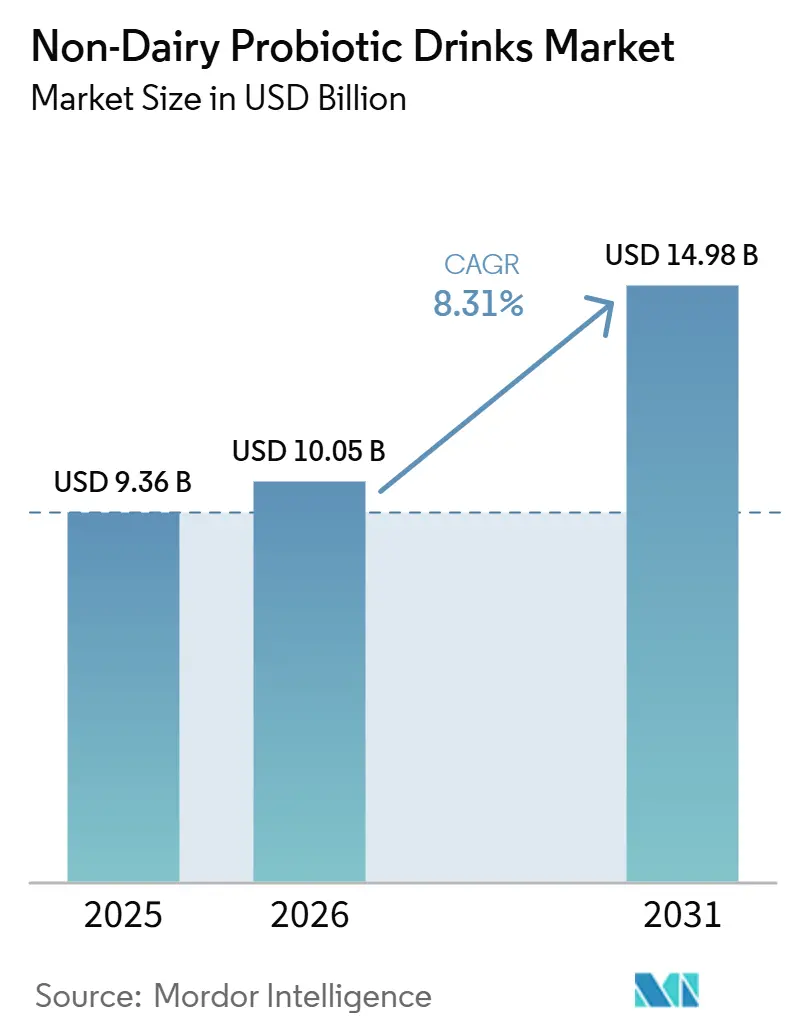
The non-dairy probiotic drinks market size is expected to be valued at USD 9.36 billion in 2025. It is estimated to grow from USD 10.05 billion in 2026 to USD 14.98 billion by 2031, registering a CAGR of 8.31% during the forecast period (2026-2031). Demand for products that combine dairy avoidance, lower sugar content, and digestive wellness supports the non-dairy probiotic drinks market. Gut microbiome research has expanded consumer interest beyond digestive health to immunity, cognition, and metabolic health, while plant-based formats allow brands to address a broader range of dietary needs. GLP-1 users may also seek low-calorie, nutrient-dense beverages positioned for gut health, creating a relevant consumer group for these products. Competition is shifting toward protein and probiotic combinations, low-sugar formulations, and direct online relationships rather than conventional kombucha alone. Regulatory progress on established strains in Europe may reduce development barriers; however, strain-specific evidence, culture stability, and compliant labeling continue to limit product claims.
Key Report Takeaways
- By product type, kombucha held 39.71% of the Non-dairy probiotic drinks market share in 2025, while plant-based yogurt drinks are forecast to grow at an 11.46% CAGR through 2031.
- By flavor, flavored products accounted for 65.62% of revenue in 2025 and are forecast to expand at a 10.11% CAGR through 2031.
- By packaging format, bottles represented 51.93% of revenue in 2025, while cans are forecast to advance at an 11.88% CAGR through 2031.
- By distribution channel, supermarkets and hypermarkets held 47.13% of revenue in 2025, while online retail stores are forecast to grow at an 11.51% CAGR through 2031.
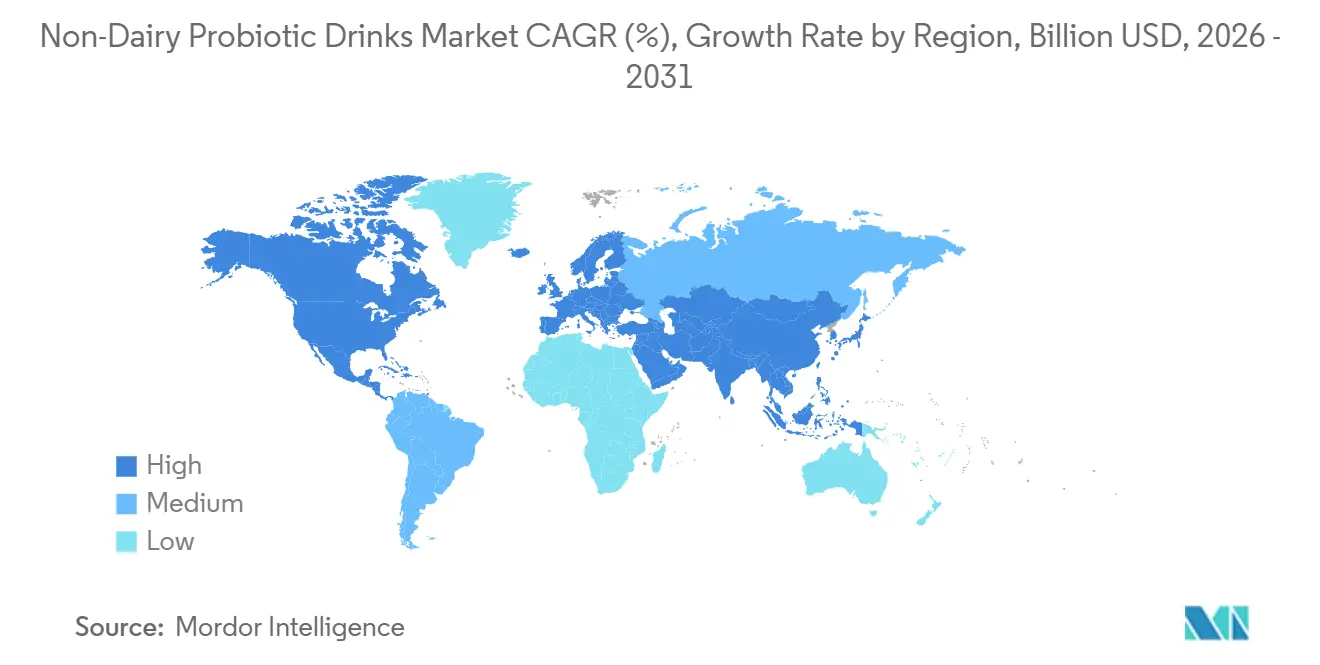
- By geography, Europe held 43.90%of the Non-dairy probiotic drinks market share in 2025, while Asia-Pacific is forecast to grow at an 11.98% CAGR through 2031.
Note: Market size and forecast figures in this report are generated using Mordor Intelligence’s proprietary estimation framework, updated with the latest available data and insights as of January 2026.
Market Trends and Insights
Drivers Impact Analysis of Non-Dairy Probiotic Drinks Market*
| Driver | (~) % Impact on CAGR Forecast | Geographic Relevance | Impact Timeline |
|---|---|---|---|
| Gut health and preventive wellness adoption | +2.1% | Global | Long-term (≥ 4 years) |
| Plant-based and flexitarian diet expansion | +1.4% | North America, Europe, and the Asia-Pacific | Medium-term (2–4 years) |
| Lactose-free and dairy-allergen avoidance | +1.2% | The Asia-Pacific, Middle East and Africa, and South America | Long-term (≥ 4 years) |
| Mainstream retail and E-commerce expansion | +1.0% | Global, with early gains in Southeast Asia | Short-term (≤ 2 years) |
| Low-sugar and better-for-you beverage reformulation | +0.8% | Europe, North America | Medium-term (2–4 years) |
| Technological innovations in plant-based probiotic formulation | +0.7% | North America, Europe | Medium-term (2–4 years) |
| Source: Mordor Intelligence | |||
Gut health and preventive wellness adoption
Growing awareness of the relationship between gut microbiome health and overall well-being is accelerating demand for non-dairy probiotic drinks as consumers increasingly incorporate functional beverages into preventive health routines. The World Gastroenterology Organization (WGO) 2024 Global Guidelines emphasize that specific probiotic strains can support digestive health and should be selected based on clinically documented benefits, reinforcing consumer confidence in probiotic foods and beverages. Manufacturers are responding by expanding plant-based probiotic portfolios with products that combine digestive wellness with clean-label and dairy-free positioning. In 2025, Aldi UK launched The Juice Company Kombucha in passionfruit, ginger and lemon, and wild berry variants, containing live cultures and targeting growing consumer interest in gut-friendly beverages following a significant increase in kombucha searches. In 2026, manufacturers continued to strengthen non-dairy probiotic offerings through kombucha, functional waters, and plant-based fermented beverages featuring live cultures, low-sugar formulations, and natural ingredients, reflecting sustained investment in preventive wellness. As consumers increasingly prioritize everyday digestive health over reactive healthcare, demand for convenient, functional, and plant-based probiotic beverages continues to drive growth in the global non-dairy probiotic drinks market.
Plant-based and flexitarian diet expansion
The expansion of plant-based and flexitarian diets is driving the global non-dairy probiotic drinks market as consumers increasingly seek dairy alternatives that deliver both digestive health benefits and sustainable nutrition. According to the Good Food Institute (GFI), plant-based food continues to gain mainstream adoption, supported by growing consumer demand for products that align with health, environmental, and ethical preferences. In parallel, the 2025 review published in the International Journal of Food and Fermentation Technology highlights that the popularity of non-dairy probiotic beverages is being fueled by rising veganism, lactose intolerance, and increasing interest in functional plant-based foods. Reflecting this trend, Yakult Europe launched Yakult Vitals in April 2026, its first dairy-free, soy-based probiotic drink in Europe, available in Strawberry, Mango, and Passionfruit variants and fortified with vitamin D, calcium, magnesium, and zinc to support digestive and immune health. As consumers continue to embrace flexitarian eating patterns, manufacturers are expanding plant-based probiotic portfolios with nutrient-rich formulations based on soy, oats, fruits, vegetables, and other botanical ingredients, reinforcing long-term growth in the global non-dairy probiotic drinks market.
Lactose-free and dairy-allergen avoidance
The increasing prevalence of lactose intolerance and dairy allergies is driving demand for non-dairy probiotic drinks as consumers seek digestive health solutions without dairy-derived ingredients. According to the National Institute of Diabetes and Digestive and Kidney Diseases (NIDDK), lactose malabsorption affects approximately 68% of the global population, making lactose-free food and beverage alternatives an important dietary choice for millions of consumers. Additionally, the Food and Agriculture Organization (FAO) recognizes lactose intolerance as one of the key factors influencing the growing adoption of plant-based dairy alternatives worldwide. Reflecting this trend, Yakult Europe introduced Yakult Vitals in April 2026, its first 100% dairy-free, soy-based probiotic drink fortified with vitamin D, calcium, magnesium, and zinc, specifically catering to consumers seeking lactose-free digestive health beverages. In 2025, Lifeway Foods expanded its plant-based ProBugs Organic Oat cultured beverage range in the U.S., offering dairy-free probiotic nutrition for children with lactose intolerance and dairy sensitivities. The growing need for allergen-friendly, plant-based nutrition continues to encourage manufacturers to develop innovative probiotic beverages, supporting sustained growth in the global non-dairy probiotic drinks market.
Low-sugar and better-for-you beverage reformulation
The reformulation of beverages with lower sugar content and healthier ingredient profiles is driving growth in the global non-dairy probiotic drinks market as consumers increasingly prioritize products that support long-term wellness without excessive sugar intake. The World Health Organization (WHO) recommends limiting free sugar intake to less than 10% of total daily energy intake, with additional health benefits achieved by reducing it below 5%, encouraging manufacturers to develop reduced-sugar functional beverages. In response, producers are reformulating probiotic drinks using natural sweeteners, fruit-derived sugars, and clean-label ingredients while maintaining probiotic efficacy. Reflecting this trend, Remedy Drinks expanded its no-sugar kombucha portfolio into additional international markets during 2025, offering naturally fermented beverages free from sugar, artificial sweeteners, and preservatives. In 2026, Health-Ade broadened its SunSip prebiotic soda range with new fruit-forward flavors containing low sugar, added prebiotics, and functional ingredients to meet growing demand for better-for-you beverages. These innovations demonstrate how sugar reduction, clean-label formulation, and functional nutrition are strengthening consumer adoption of non-dairy probiotic drinks worldwide.
Restraints Impact Analysis of Non-Dairy Probiotic Drinks Market*
| Restraint | (~) % Impact on CAGR Forecast | Geographic Relevance | Impact Timeline |
|---|---|---|---|
| Live-culture viability and shelf-life loss | -1.5% | Global | Long-term (≥ 4 years) |
| Cold-chain cost and distribution rigidity | -1.0% | The Asia-Pacific, the Middle East and Africa, and South America | Medium-term (2–4 years) |
| Health-claim and probiotic-labeling complexity | -0.8% | Europe, with spillover to North America | Medium-term (2–4 years) |
| Plant-matrix taste, texture, and fortification trade-offs | -0.6% | North America, Europe | Medium-term (2–4 years) |
| Source: Mordor Intelligence | |||
Live-culture viability and shelf-life loss
The limited stability of live probiotic cultures during processing, transportation, and storage is a key restraint for the global non-dairy probiotic drinks market, as maintaining sufficient viable microorganisms throughout a product's shelf life remains technically challenging. Exposure to heat, oxygen, moisture, and fluctuating storage temperatures can significantly reduce probiotic viability, affecting both product efficacy and consumer confidence. According to the International Scientific Association for Probiotics and Prebiotics (ISAPP), probiotic products should deliver an adequate number of live microorganisms at the end of their shelf life to provide the claimed health benefits, placing considerable formulation and cold-chain demands on manufacturers. Similarly, the FAO/WHO Guidelines for the Evaluation of Probiotics in Food emphasize that probiotic viability must be demonstrated until the product's expiry date. To address these challenges, manufacturers are investing in advanced stabilization technologies. For example, Chr. Hansen expanded its FreshQ bioprotective culture portfolio in 2025 to enhance microbial stability and extend product shelf life in fermented foods and beverages, while dsm-firmenich continued advancing robust probiotic strains with improved stability for food and beverage applications in 2026. Despite these technological developments, ensuring consistent live-culture viability without compromising taste, shelf life, or distribution efficiency continues to increase production costs and remains a significant challenge for the non-dairy probiotic drinks market.
Cold-chain cost and distribution rigidity
Cold-chain requirements and the high cost of refrigerated distribution remain significant restraints for the global non-dairy probiotic drinks market, as many products containing live probiotic cultures require continuous temperature control to maintain microbial viability and product quality. Maintaining refrigerated storage throughout manufacturing, transportation, warehousing, and retail increases logistics costs, limits market reach, and complicates distribution in regions with inadequate cold-chain infrastructure. According to the Food and Agriculture Organization (FAO), insufficient cold-chain capacity continues to contribute to food losses and distribution inefficiencies, particularly in developing economies, creating challenges for temperature-sensitive food and beverage products. Similarly, the International Institute of Refrigeration (IIR) highlights that expanding cold-chain infrastructure remains essential for preserving the quality and safety of perishable foods worldwide. To overcome these limitations, manufacturers are developing more resilient formulations and packaging technologies. For instance, Yakult Europe launched Yakult Vitals in 2026, a shelf-stable dairy-free probiotic drink designed for ambient storage before opening, while GoodBelly continued expanding its shelf-stable probiotic beverage portfolio in 2025 to improve distribution flexibility. Nevertheless, the dependence on refrigerated logistics for many live-culture beverages continues to increase operating costs and restrict market penetration, particularly across emerging economies with limited cold-chain networks.
*Our forecasts treat driver/restraint impacts as directional, not additive. The impact forecasts reflect baseline growth, mix effects, and variable interactions.
Non-Dairy Probiotic Drinks Market Segment Analysis
By Product Type:
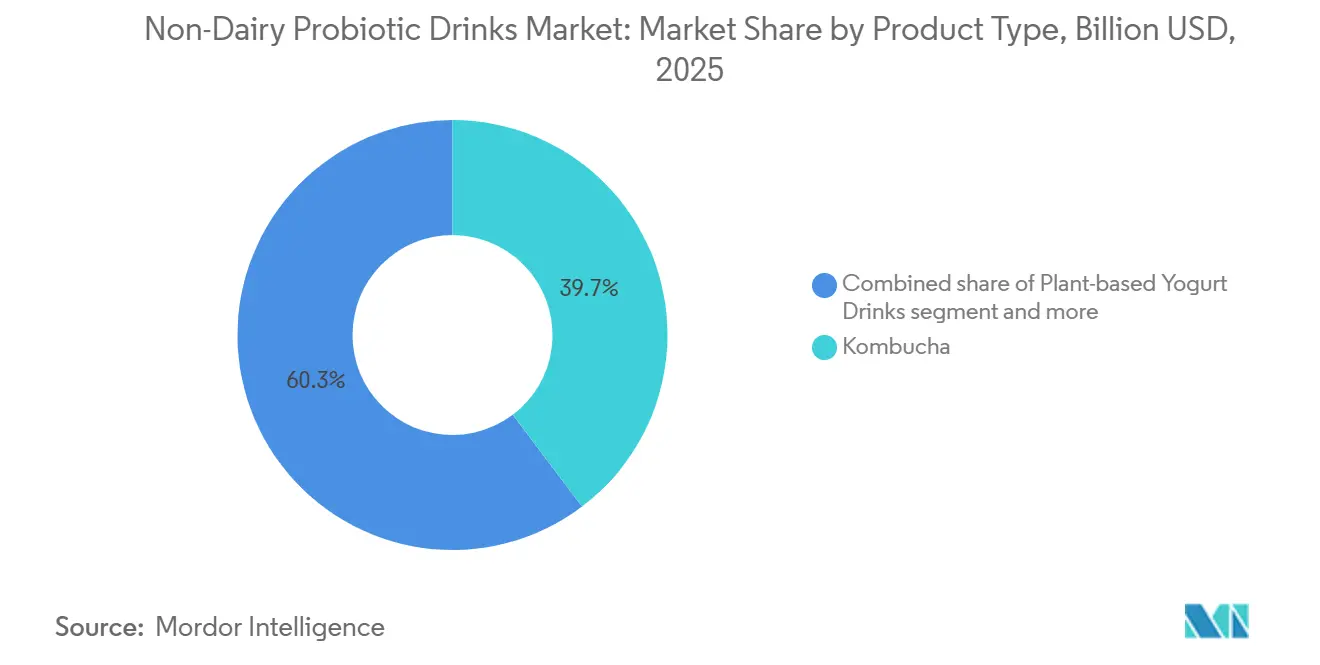
Kombucha Dominates but Plant-Based Yogurt Drinks Redefine Category TrajectoryKombucha is expected to hold a 39.71% share of the non-dairy probiotic drinks market in 2025. This position reflects two decades of retail education, mass-market brand building by GT's Living Foods and Health-Ade, and the category's strong visual and flavor identity[1]Source: GT’s Living Foods, “SYNERGY The Real Kombucha Launches Latest UNITY Flavor, in Collaboration with Cheribundi Tart Cherry Juice,” GT’s Living Foods, prnewswire.com. The kombucha SCOBY fermentation process structurally supports the segment's dominance, as it naturally generates organic acids and viable cultures in a shelf-stable, carbonated format that aligns with on-the-go consumption preferences. Water kefir, probiotic juices, and other product types are expected to account for a collectively significant but fragmented share of the remaining 60.29%, with water kefir gaining traction in Europe and North America due to its lighter mouthfeel and lower residual sugar content compared to kombucha.
Plant-based yogurt drinks are projected to be the fastest-growing product type, registering an 11.46% CAGR from 2026 to 2031. Innovation in oat, cashew, and coconut fermentation bases is driving this growth by delivering the creamy textures that consumers previously associated mainly with dairy kefir. A 2026 review published in Current Nutrition Reports is expected to validate that plant matrices, including oat and almond, can sustain Lactiplantibacillus viability when manufacturers manage fermentation pH correctly, providing a scientific foundation for product development. In early 2026, GoodBelly is expected to launch Protein + Probiotics Smoothies, a dairy-free kefir alternative that delivers 11 grams of protein and 1 billion CFUs per serving[2]Source: GoodBelly, “GoodBelly Launches New Protein + Probiotics Smoothies, a Dairy-Free Alternative to Kefir,” GoodBelly, morningstar.com. This launch illustrates how the plant-based yogurt drink segment is converging with the sports nutrition market rather than competing solely within traditional gut-health positioning. USDA Organic and vegan certifications are increasingly serving as entry-level compliance markers for this sub-category.



By Flavor:
Flavored Variants Lead and Continue to Grow, Reflecting a Taste-First Acquisition LogicFlavored non-dairy probiotic drinks are expected to command a 65.62% market share in 2025 and grow at a CAGR of 10.11% from 2026 to 2031. This combination underscores the primary role of taste in expanding the category beyond health-motivated early adopters. Fruit-forward profiles, particularly tart cherry, ginger-lemon, and tropical blends, have emerged as the main flavor architecture for kombucha and water kefir. These profiles help reduce the sharp vinegar aftertaste that historically limited repeat purchases in the category. GT's Living Foods' planned June 2026 UNITY x Cheribundi collaboration, which combines SYNERGY Kombucha with antioxidant-rich tart cherry juice, highlights how co-branding with credentialed ingredient suppliers is becoming a distinct flavor-differentiation strategy.
Unflavored variants are expected to retain a meaningful but smaller share of 34.38% in 2025, primarily among high-frequency probiotic users who prioritize CFU density and clean-label simplicity over palatability. The growth differential between flavored and unflavored segments indicates an acquisition-versus-retention dynamic. Flavored formats convert health-curious mainstream consumers, while unflavored products serve committed wellness consumers who generate higher repeat-purchase rates and lifetime value. Innovation pressure on flavored formats is intensifying as sugar-reduction mandates across EU member states and the United Kingdom's soft drinks industry levy push manufacturers to deliver flavor intensity without added sugar. This technical challenge favors producers with access to natural botanical extracts and advanced fermentation flavor modulation.
By Packaging Format:
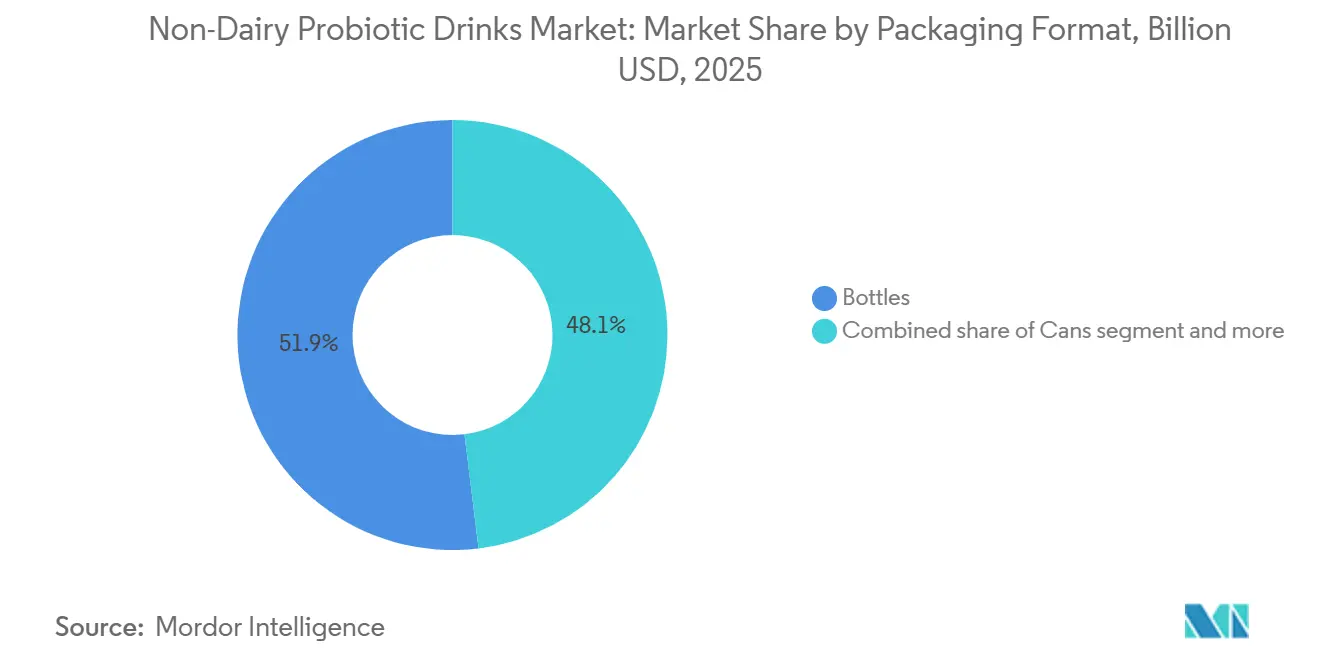
Bottles Anchor the Market While Cans Accelerate on Sustainability and On-the-Go DemandBottles are expected to hold a 51.93% share of the non-dairy probiotic drinks packaging market in 2025, supported by their ability to display product color and turbidity. Consumers increasingly associate these visual cues with authentic fermentation and live culture content. Glass bottles, which organic and premium-positioned brands favor, reinforce clean-label credentials, while PET bottles support mass-market distribution at lower logistics costs. The segment’s dominance reflects the cold-chain retail model, where refrigerated kombucha and water kefir occupy dedicated gondola sections in health food and grocery stores. Tetra paks and other packaging formats play a secondary but growing role in ambient markets across Asia-Pacific and the Middle East, where cold-chain penetration remains uneven.
Cans are expected to be the fastest-growing packaging format, registering an 11.88% CAGR from 2026 to 2031. Growth aligns with the consumer shift toward on-the-go functional beverages and benefits from aluminum’s infinite recyclability, with recycling rates exceeding 70% in North America and Europe. However, canned probiotic drinks require pasteurization processes that reduce viable CFU counts, creating an unresolved category-integrity issue that is becoming commercially significant as consumers demand authentic probiotic performance. Brands investing in microencapsulation technology and post-pasteurization strain reintroduction are differentiating themselves through live-culture authenticity in a format that otherwise often relies on probiotic marketing without delivering probiotic substance. Compliance with packaging recyclability standards under the EU’s Packaging and Packaging Waste Regulation (PPWR) is increasingly influencing procurement decisions among retail buyers.
By Distribution Channel:
Supermarkets Anchor Volume as Online Retail Compounds Its Structural AdvantageSupermarkets and hypermarkets are expected to account for a 47.13% share in 2025 and remain the volume backbone of non-dairy probiotic drink distribution. These formats provide the chilled shelf space, foot traffic, and impulse-purchase environment that the category relies on to generate trials at scale. Specialty stores also contribute a meaningful share, particularly in North America and Europe, where health-food retailers such as Whole Foods and Sprouts serve as incubators for new brands before they secure mainstream retail distribution. Convenience stores remain a secondary but consistent channel, particularly for single-serve kombucha and probiotic juice formats. However, the cost dynamics of DTC subscriptions are disrupting the channel’s conventional structure.
Online retail stores are projected to be the fastest-growing distribution channel, registering an 11.51% CAGR from 2026 to 2031. DTC subscription models support repeat-purchase rates of 58–67%, compared with 22–28% for conventional retail, while AI-driven personalization increases average order values. Lifeway Foods’ planned 2026 partnerships with Erewhon and Time Out Market New York indicate that hybrid distribution, which pairs high-visibility experiential retail with online subscriptions for replenishment, is emerging as the highest-margin distribution model for probiotic beverage brands[3]Source: Lifeway Foods, Inc., “Lifeway Foods Announces Record-Breaking Results for the First Quarter Ended March 31, 2026,” Lifeway Foods, morningstar.com. In China, online channels are expected to account for over 34% of total active lactic acid bacteria drink sales by 2025, indicating that Asia-Pacific’s e-commerce infrastructure is accelerating the channel shift well ahead of comparable Western markets.
Geography Analysis
Europe Non-Dairy Probiotic Drinks Market
Europe is expected to lead the non-dairy probiotic drinks market with a 43.9% share in 2025. Familiarity with fermented foods, mature cold-chain systems, and retail environments that position gut-health drinks in premium chilled and ambient locations support the region’s leadership. Germany, France, and the United Kingdom are the region’s largest national markets for these products. Kombucha demand has increased in Germany and France as younger consumers reduce their consumption of conventional carbonated soft drinks and seek simpler ingredient lists. The European Commission is expected to update its Novel Food Catalog in December 2025 and list 34 probiotic strains as not novel, which could reduce compliance work for manufacturers using established strains. Plant-based non-dairy probiotic beverages are expected to account for 5% to 8% of European volume in 2025 and grow by 15% to 18% annually, while low-sugar reformulation has become a baseline requirement in the region.
APAC Non-Dairy Probiotic Drinks Market
Asia-Pacific is projected to be the fastest-growing regional area, with a 12% CAGR from 2026 to 2031. China and India are the main volume drivers, supported by improved refrigerated logistics, clean-label demand, and an urban consumer base willing to try premium kombucha and plant-based yogurt drinks. China’s non-dairy probiotic segment is growing by 12% to 18% annually in volume, with demand expanding into tier-2 and tier-3 cities. Japan’s Food for Specified Health Use framework enables strain-level validation and more precise health claims than those permitted in the European Union. Thailand, Singapore, Indonesia, South Korea, and Australia also benefit from expanding modern retail and rising disposable incomes. Clearer pathways for new food ingredients in India and China could accelerate local work on new strains.
The Americas and MEA Non-Dairy Probiotic Drinks Market
North America remains strategically important to the non-dairy probiotic drinks market because of its well-developed online and direct-to-consumer channels. Structure/function rules in the United States allow companies to communicate certain gut-health benefits more directly than European rules. Direct-to-consumer and subscription revenue is expected to represent 15% to 20% of the United States probiotic beverage value in 2025, with health-conscious adults aged 25 to 55 forming the main buyer group. South America is growing from a smaller base, led by Brazil and Colombia, where lactose intolerance prevalence of 50% to 80% supports dairy-free demand, and modern retail is expanding in São Paulo, Bogotá, and Lima. The Middle East and Africa remain smaller in absolute value, but the United Arab Emirates and South Africa serve as useful entry points. High temperatures and weak cold-chain systems in parts of sub-Saharan Africa restrict refrigerated products. Ambient kombucha and water kefir can help companies enter these areas before cold-chain systems mature.

Competitive Landscape
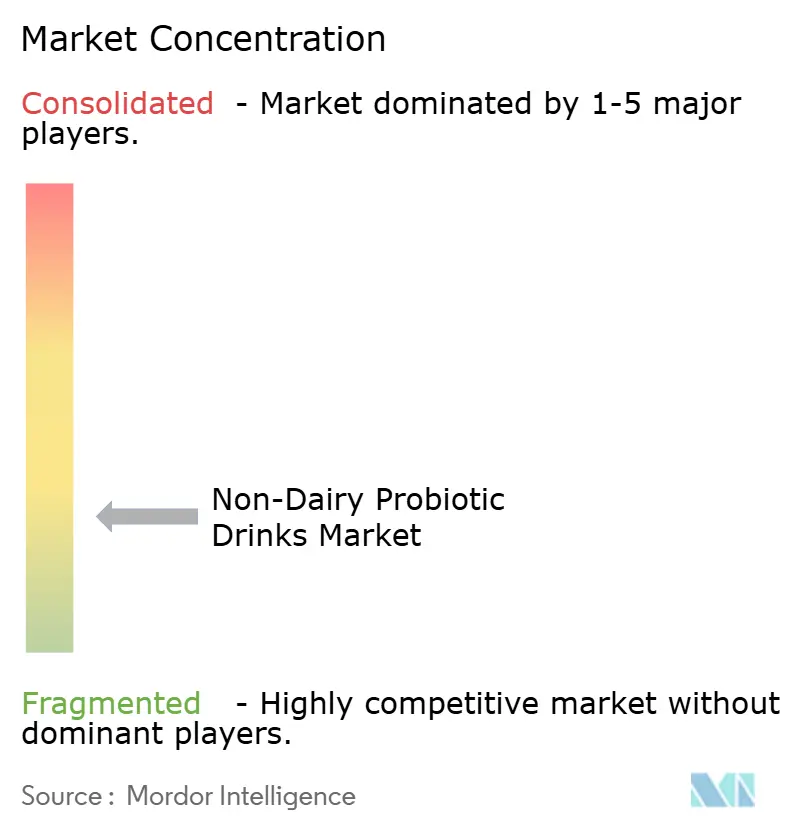
The non-dairy probiotic drinks market remains moderately fragmented globally, despite the presence of established premium kombucha brands. GT’s Living Foods, Danone’s plant-based brands, including Silk, Alpro, and So Delicious, and Remedy Drinks hold meaningful positions in their respective regions. However, no company dominates all formats and markets. Larger competitors are expanding into protein and probiotic products, lower-sugar probiotic sodas, and direct subscription relationships. These initiatives help companies target new consumption occasions while improving access to consumer purchasing data. Regional brands in India, South Korea, and Brazil also have opportunities through formulations adapted to local tastes. Their ability to move quickly in smaller markets remains relevant, particularly where international brands have been slower to develop localized products.
Generous Brands is expected to acquire Health-Ade Kombucha for USD 500 million in 2025, combining the brand with a premium refrigerated beverage portfolio that had nearly USD 1 billion in combined sales. According to the supplied company release, Health-Ade had retail sales approaching USD 250 million and distribution across 65,000 outlets. This transaction highlights the value of established refrigerated distribution and manufacturing capacity. Danone is expected to launch Silk Protein Shakes in July 2026, offering 30 grams of complete plant protein in a dairy-free, ready-to-drink format. Danone’s planned acquisition of Huel for EUR 1.2 billion reflects a broader strategy to build a portfolio around protein and gut-health-related products. PepsiCo’s acquisition of Poppi adds pressure on independent producers, as prebiotic soda brands can use gut-health positioning without facing the same live-culture stability challenges.
The most significant opportunities in the non-dairy probiotic drinks market include clinically supported strain-specific claims, shelf-stable products for warm regions, and fermented plant-based drinks using local substrates. Human clinical evidence could help companies differentiate product efficacy in European markets, where regulations restrict general probiotic messaging. Shelf-stable formats could improve access in the Middle East, Africa, and South Asia, where refrigerated distribution remains limited. Millet in India, maize in sub-Saharan Africa, and cassava in Brazil may support locally sourced beverage development at price points suited to broader consumer access. Poppi and Culture Pop illustrate competition from functional beverages that avoid live-culture challenges through prebiotic formats. Microencapsulation patents and plant-matrix fermentation methods can provide useful protection for producers that develop and secure proprietary technology. Codex Alimentarius nutrition and special dietary-use frameworks are also becoming quality references for buyers serving regulated export markets.
Non-Dairy Probiotic Drinks Industry Leaders
Danone S.A.
PepsiCo, Inc.
The Coca-Cola Company
GT'S Living Foods
Califia Farms, LLC
- *Disclaimer: Major Players sorted in no particular order
Non-Dairy Probiotic Drinks Market Companies Covered in this Report
- Danone S.A.
- PepsiCo, Inc.
- The Coca-Cola Company
- GT'S Living Foods
- Health-Ade LLC
- Califia Farms, LLC
- Lifeway Foods, Inc.
- Nestlé S.A.
- Yakult Honsha Co., Ltd.
- The Hain Celestial Group, Inc.
- Good Karma Foods, Inc.
- Bio-K Plus International Inc.
- Forager Project
- Oatly Group AB
- Chobani, LLC
- General Mills, Inc.
- Groupe Lactalis S.A.
- Fonterra Co-operative Group Limited
- Arla Foods amba
- Remedy Drinks Pty Ltd

Recent Industry Developments in Non-Dairy Probiotic Drinks Market
- July 2026: Danone launched Silk Protein Yogurt and Silk Protein Shakes, positioning the shakes as the first ready-to-drink (RTD) plant-based shakes in the Silk lineup. Each bottle delivered 30 grams of complete plant protein in a dairy-free format. The launch strengthened Danone’s leadership in plant-based beverages within the premium protein tier and directly competed with dairy-based recovery drinks.
- June 2026: GoodBelly introduced Protein + Probiotics Smoothies, a dairy-free kefir alternative that delivered 11 grams of protein and 1 billion CFUs per 8-ounce serving. The product was available in Blueberry, Peach, and Strawberry variants and distributed through Giant Food, FreshDirect, and Raley's. The launch indicated the convergence of the plant-based probiotic segment with the sports nutrition aisle.
- June 2026: GT’s Living Foods launched UNITY x Cheribundi: Shirley Temple, a limited-edition kombucha that combined SYNERGY Kombucha’s live cultures with Cheribundi’s antioxidant-rich tart cherry juice. The product targeted gut health and muscle recovery and was available in a single-serve can format.


Global Non-Dairy Probiotic Drinks Market Report Scope
Non-dairy probiotic drinks are plant-based beverages containing live beneficial microorganisms that support digestive health without using dairy ingredients. The Non-dairy probiotic drinks market is segmented by product type, flavor, packaging format, distribution channel, and geography. By product type, the market is segmented into Kombucha, water kefir, plant-based yogurt drinks, probiotic juices, and other product types. By flavor, the market is segmented into flavored and unflavored. By packaging, the market is segmented into bottles, cans, tetra packs, and others. By distribution channel, the market is segmented into supermarkets/hypermarkets, convenience stores, specialty stores, online retail, and other distribution channels. By Geography, the market is segmented into North America, Europe, Asia-Pacific, South America, and the Middle East and Africa. The market forecasts are provided in terms of value (USD).
| Kombucha |
| Water Kefir |
| Plant-based Yogurt Drinks |
| Probiotic Juices |
| Other Product Types |
| Flavored |
| Unflavored |
| Bottles |
| Cans |
| Tetra packs |
| Other Packaging Formats |
| Supermarkets/Hypermarkets |
| Convenience Stores |
| Specialty Stores |
| Online Retail Stores |
| Other Distribution Channels |
| North America | United States |
| Canada | |
| Mexico | |
| Rest of North America | |
| Europe | United Kingdom |
| Germany | |
| France | |
| Italy | |
| Spain | |
| Sweden | |
| Belgium | |
| Poland | |
| Netherlands | |
| Rest of Europe | |
| Asia-Pacific | China |
| Japan | |
| India | |
| Thailand | |
| Singapore | |
| Indonesia | |
| South Korea | |
| Australia | |
| Rest of Asia-Pacific | |
| South America | Brazil |
| Argentina | |
| Colombia | |
| Peru | |
| Chile | |
| Rest of South America | |
| Middle East and Africa | United Arab Emirates |
| South Africa | |
| Saudi Arabia | |
| Nigeria | |
| Egypt | |
| Morocco | |
| Turkey | |
| Rest of Middle East and Africa |
| Product Type | Kombucha | |
| Water Kefir | ||
| Plant-based Yogurt Drinks | ||
| Probiotic Juices | ||
| Other Product Types | ||
| Flavor | Flavored | |
| Unflavored | ||
| Packaging Format | Bottles | |
| Cans | ||
| Tetra packs | ||
| Other Packaging Formats | ||
| Distribution Channel | Supermarkets/Hypermarkets | |
| Convenience Stores | ||
| Specialty Stores | ||
| Online Retail Stores | ||
| Other Distribution Channels | ||
| Geography | North America | United States |
| Canada | ||
| Mexico | ||
| Rest of North America | ||
| Europe | United Kingdom | |
| Germany | ||
| France | ||
| Italy | ||
| Spain | ||
| Sweden | ||
| Belgium | ||
| Poland | ||
| Netherlands | ||
| Rest of Europe | ||
| Asia-Pacific | China | |
| Japan | ||
| India | ||
| Thailand | ||
| Singapore | ||
| Indonesia | ||
| South Korea | ||
| Australia | ||
| Rest of Asia-Pacific | ||
| South America | Brazil | |
| Argentina | ||
| Colombia | ||
| Peru | ||
| Chile | ||
| Rest of South America | ||
| Middle East and Africa | United Arab Emirates | |
| South Africa | ||
| Saudi Arabia | ||
| Nigeria | ||
| Egypt | ||
| Morocco | ||
| Turkey | ||
| Rest of Middle East and Africa | ||


Key Questions Answered in the Report
What is driving growth in non-dairy probiotic drinks?
Demand is supported by lactose avoidance, preventive wellness, lower-sugar reformulation, and wider access through retail and online channels. The category is projected to grow at an 8.3% CAGR from 2026 to 2031.
Which product type leads non-dairy probiotic drinks?
Kombucha led with 39.71% of revenue in 2025. Plant-based yogurt drinks are projected to be the fastest-growing product type at an 11.46% CAGR through 2031.
Why are plant-based yogurt drinks growing quickly?
Oat, cashew, and coconut bases can provide a dairy-free fermented texture while supporting viable cultures. New products also combine probiotics with protein for sports nutrition uses.
Which sales channel is growing fastest?
Online retail is projected to grow at an 11.51% CAGR through 2031. Subscription models can improve repeat purchases and give brands a direct relationship with consumers.
Page last updated on:





