
N-Methyl Pyrrolidone Market Size and Share
Market Overview
| Study Period | 2020 - 2031 |
|---|---|
| Market Size (2026) | USD 1.11 Billion |
| Market Size (2031) | USD 1.35 Billion |
| Growth Rate (2026 - 2031) | 3.92 % |
| Fastest Growing Market | Asia Pacific |
| Largest Market | Asia Pacific |
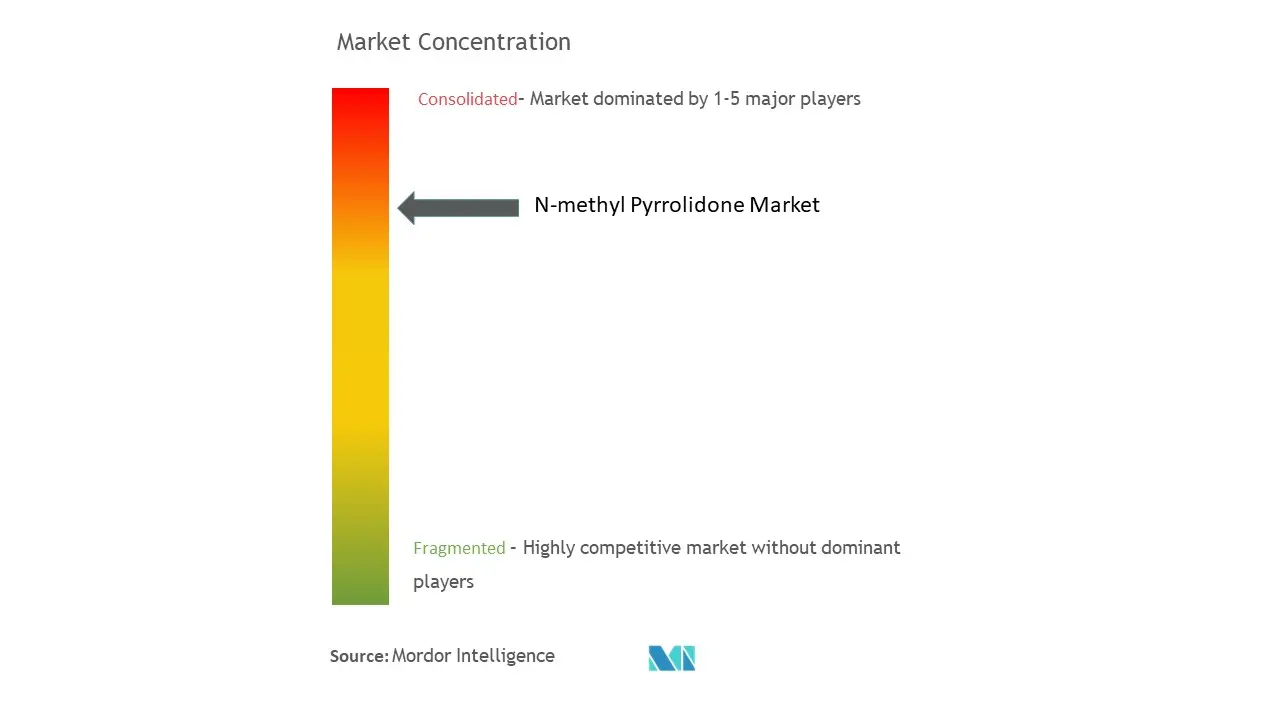
| Market Concentration | Medium |
Major Players *Disclaimer: Major Players sorted in no particular order Image © Mordor Intelligence. Reuse requires attribution under CC BY 4.0. | |
N-Methyl Pyrrolidone Market Analysis by Mordor Intelligence
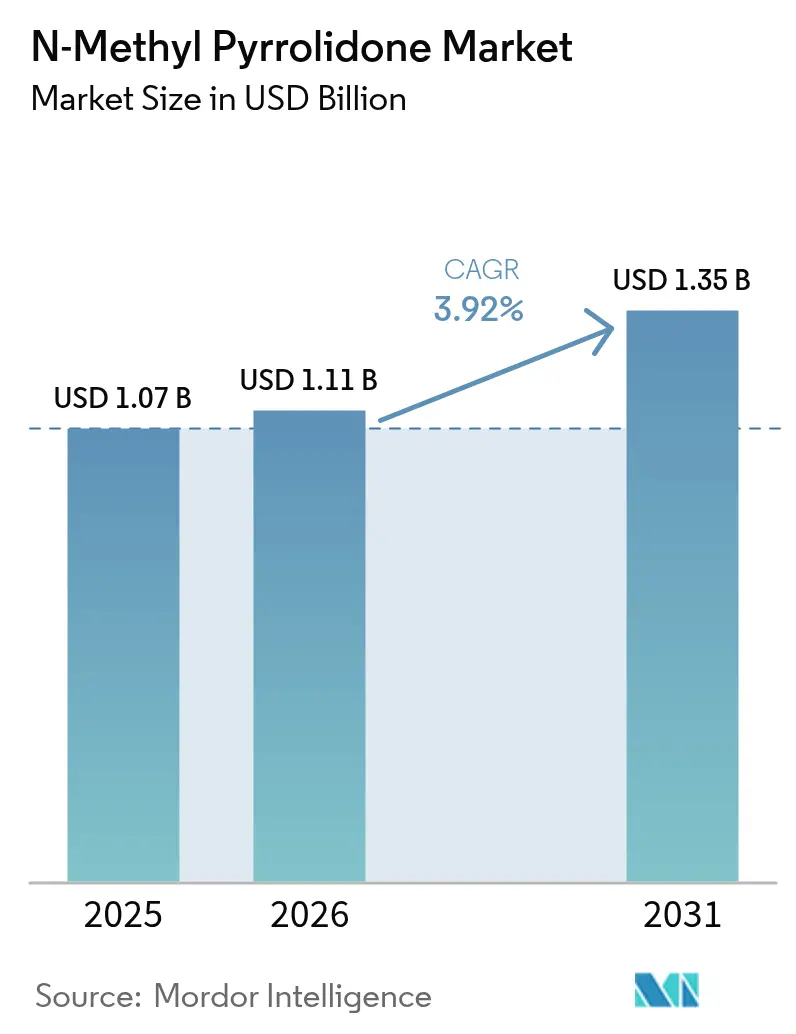
N-Methyl Pyrrolidone Market size in 2026 is estimated at USD 1.11 billion, growing from 2025 value of USD 1.07 billion with 2031 projections showing USD 1.35 billion, growing at 3.92% CAGR over 2026-2031.
The N-Methyl Pyrrolidone (NMP) industry is experiencing significant transformation driven by technological advancements and shifting industrial landscapes. According to the Japan Electronics and Information Technology Industries Association (JEITA), the global electronics and IT industries are projected to achieve 9% growth in 2024, following an estimated decline of 3% in 2023, indicating a robust recovery in key end-user sectors. The semiconductor industry, in particular, has shown remarkable resilience, with the Semiconductor Industry Association (SIA) reporting a 15% increase in sales in January 2024 compared to the same period last year. This growth trajectory is reinforced by major investments in semiconductor manufacturing capabilities across various regions.
The industry landscape is being reshaped by significant manufacturing capacity expansions and strategic collaborations. In February 2024, TSMC announced plans to build a second semiconductor plant in Japan with an investment exceeding USD 20 billion, which will begin operation by the end of 2027. Similarly, GlobalFoundries became the first semiconductor foundry in the United States to receive an incentive of USD 1.5 billion under the CHIPS and Science Act in February 2024. These developments are complemented by strategic partnerships, such as Foxconn's announcement in July 2023 to collaborate with TSMC and Japan's TMH Group for establishing semiconductor fabrication units in India.
The oil and gas sector, a significant consumer of NMP, is witnessing substantial infrastructure developments and capacity expansions. According to the U.S. Energy Information Administration, U.S. refining capacity increased by 1% to 18.1 million barrels per calendar day (b/cd) in 2023, marking a positive growth trend. This expansion was highlighted by ExxonMobil's completion of a significant refinery capacity addition in March 2023, which increased total crude oil distillation capacity by 250,000 barrels per day to 630,000 b/d, demonstrating continued investment in refining capabilities.
The market is also benefiting from robust growth in the pharmaceutical sector, with global pharmaceutical sales registering a significant increase of 9.6% in 2023 compared to 2022, according to AstraZeneca's recent report. The industry is witnessing a wave of manufacturing facility expansions, particularly in emerging markets. Notable developments include Wuxi STA's inauguration of a new API manufacturing facility in Taixing, China, with an annual capacity of 100 tons, and Rusan Pharma's new API manufacturing facility in Madhya Pradesh, India, boasting an annual capacity of 400 tons of API per year, both announced in late 2023.
Note: Market size and forecast figures in this report are generated using Mordor Intelligence’s proprietary estimation framework, updated with the latest available data and insights as of 2026.
Market Trends and Insights
Growing Demand from the Electronics Industry
N-methyl pyrrolidone (NMP) has become increasingly vital in the electronics industry due to its versatile applications as a lithium-ion battery solvent, in semiconductor device fabrication, and wire enamel coating. In lithium-ion batteries, NMP serves as a critical solvent for electrode preparation, particularly in dissolving the polyvinylidene fluoride binder and coating it on the positive aluminum foil. The compound's excellent dispersion and solubility properties make it an essential dispersant for evenly distributing the lithium-ion battery slurry. Additionally, NMP is extensively utilized in semiconductor manufacturing for three main applications: as a dedicated solvent in photolithography formulations, as a pre-application agent for spin-on polymers, and as a crucial component in photoresist stripper formulations.
The electronics industry's robust growth has significantly driven NMP demand, with the global electronics and IT industry reaching a production value of USD 3,436.8 billion in 2022. According to the Japan Electronics and Information Technology Industries Association (JEITA), the sector is projected to achieve 9% growth in 2024, following an estimated decline of 3% in 2023. This growth is further supported by major government initiatives worldwide, such as the United States' CHIPS and Science Act launched in August 2022, which allocated USD 52 billion for chip manufacturing incentives and research investments. Similarly, India's comprehensive semiconductor program, with an outlay of USD 10 billion, and China's state-backed investment fund of USD 40 billion announced in 2023 for its semiconductor sector, are creating substantial opportunities for NMP consumption in electronic applications as a high-purity solvent.
Increasing Usage in the Pharmaceutical Industry
N-methyl pyrrolidone (NMP) has established itself as a crucial component in pharmaceutical manufacturing due to its exceptional properties as a pharmaceutical solvent and drug delivery enhancer. The compound serves as a strong solubilizing excipient in both parenteral and oral medications, while also playing a vital role in peptide synthesis. Compared to other solvents, NMP demonstrates superior permeability rates in human skin, gastrointestinal, and respiratory tracts, making it particularly valuable for drug delivery systems. Its low viscosity characteristics make it especially suitable for parenteral medications using fine-gauge needles or microcatheters, while its effectiveness in enhancing the transdermal delivery of both hydrophilic and hydrophobic drugs has led to increased adoption in topical formulations.
The pharmaceutical industry's robust growth has significantly driven NMP demand, with global pharmaceutical sales growing by 9.6% in 2023 compared to 2022, according to AstraZeneca's recent report. The United States, which dominates pharmaceutical sales with a share of over 50.9% of global pharmaceutical sales in 2023, reached pharmaceutical sales of USD 678 billion, registering a growth of more than 11% compared to 2022. This growth is further supported by significant investments in new production facilities, such as Wuxi STA's inauguration of a new API manufacturing facility in January 2024 in Jiangsu, China, with an annual capacity of 100 tons, and Rusan Pharma's new API manufacturing facility in Madhya Pradesh, India, with an annual capacity of 400 tons of API per year, announced in November 2023. These developments underscore the increasing reliance on NMP as a pharmaceutical solvent and industrial solvent in the sector.
N-Methyl Pyrrolidone Market Segment Analysis
Electronics Segment in N-Methyl Pyrrolidone Market
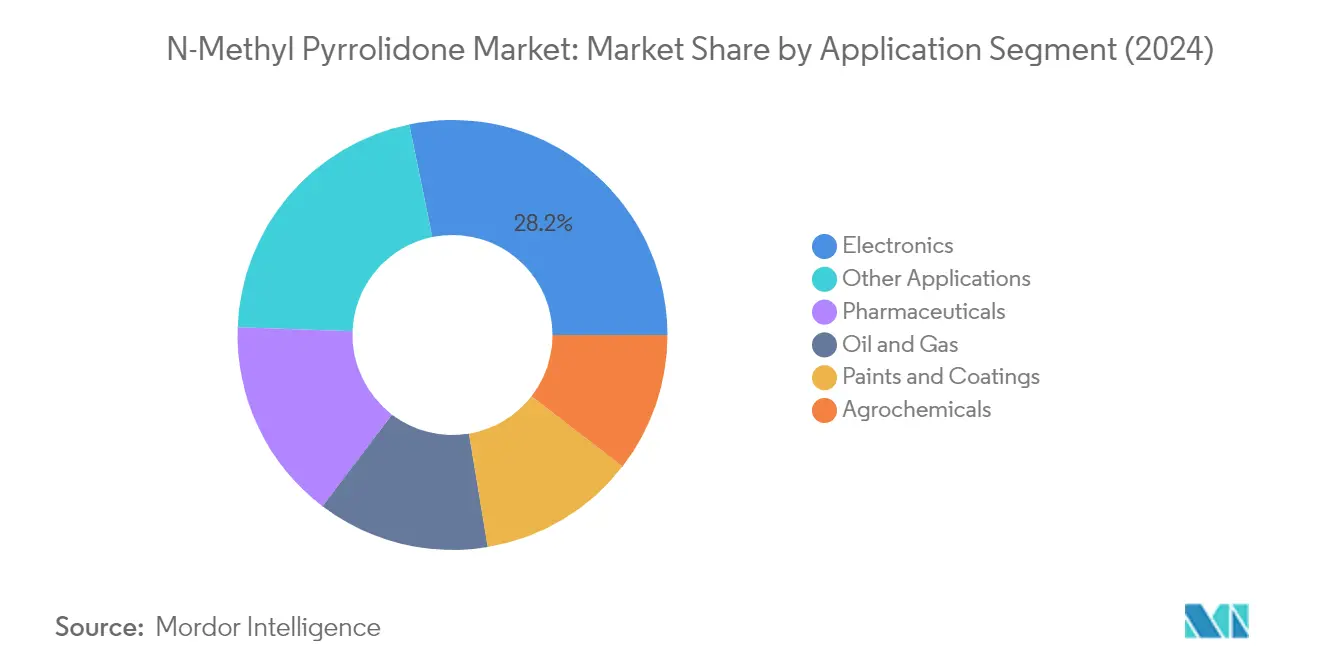
The electronics segment dominates the N-Methyl Pyrrolidone market, accounting for approximately 27.65% of the total market share in 2025. This significant market position is driven by the extensive use of NMP in various electronic applications, including lithium-ion battery manufacturing, semiconductor device fabrication, and wire enamel coating. The segment's growth is particularly notable in the semiconductor industry, where NMP serves as a dedicated solvent in photolithography formulations, bottom anti-reflective coatings, and polyimides. The versatile properties of NMP, such as its ability to dissolve a wide range of materials and remain effective at high temperatures, make it essential in electronic component manufacturing. In the lithium-ion battery sector, NMP plays a crucial role as a solvent for electrode preparation, particularly in dissolving polyvinylidene fluoride binder and coating it on positive aluminum foil.
Pharmaceutical Segment in N-Methyl Pyrrolidone Market
The pharmaceutical segment is projected to experience robust growth with a CAGR of approximately 4.12% during the forecast period 2026-2031. This growth trajectory is supported by the increasing adoption of NMP as a solvent and co-solvent in pharmaceutical manufacturing processes. The segment's expansion is driven by NMP's unique capabilities as a strong solubilizing excipient used in parenteral and oral medications, as well as its application in peptide synthesis. The pharmaceutical industry's growing demand for NMP is further bolstered by its effectiveness in enhancing the absorption of topically applied drugs and its superior permeability rate in human skin, gastrointestinal, and respiratory tracts. The compound's versatility in extraction, purification, and crystallization of pharmaceutical drugs, combined with its role in improving bone morphogenetic protein and enhancing kinase activity, positions it as a crucial component in pharmaceutical manufacturing.
Remaining Segments in N-Methyl Pyrrolidone Market
The N-Methyl Pyrrolidone market encompasses several other significant segments, including oil and gas, paints and coatings, and agrochemicals. In the oil and gas sector, NMP serves as a critical solvent for extracting aromatic hydrocarbons and in the purification process of lube oil, aligning with its role in petrochemical processing. The paints and coatings segment utilizes NMP as a solvent for coatings for polyamide-imide resins in wire coatings and as a solvent for coatings for urethanes, polyvinyl chloride, and epoxies in water-based coatings. In the agrochemicals sector, NMP functions as an agrochemical solvent and as an inert ingredient in various pesticide products and as a formulating agent in insecticides, herbicides, seed treatment products, and fungicides. Additionally, NMP's role as an industrial cleaning solvent is noteworthy in maintaining equipment efficiency. These segments collectively contribute to the market's diverse application portfolio and overall growth dynamics.
N-Methyl Pyrrolidone Market Geography Segment Analysis
APAC N-Methyl Pyrrolidone Market
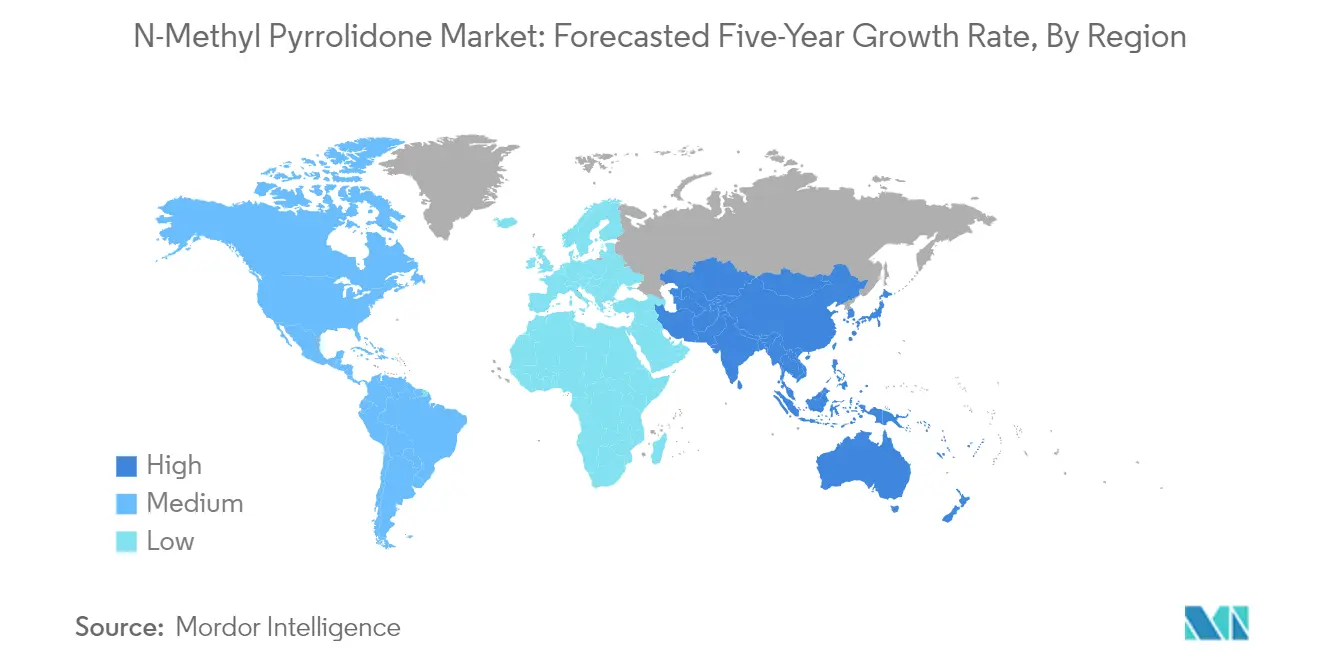
The Asia-Pacific region represents the largest and most dynamic N-Methyl Pyrrolidone market globally, driven by rapid industrialization and technological advancement across multiple sectors. The region's growth is primarily fueled by expanding electronics manufacturing, pharmaceutical production, and petrochemical processing industries in countries like China, India, Japan, and South Korea. Countries such as Malaysia, Thailand, Indonesia, and Vietnam are also witnessing increased demand due to growing industrial activities and foreign investments in various end-user industries.
China dominates the Asia-Pacific N-Methyl Pyrrolidone market as the largest consumer and producer, holding approximately 46.30% of the regional market share in 2025. The country's market leadership is supported by its massive electronics manufacturing sector, being the world's largest producer and consumer of electronics components. China's semiconductor industry has shown remarkable growth, with the government announcing investments of over USD 100 billion for semiconductor technology development. The country's pharmaceutical sector continues to expand, while its position as a global manufacturing hub for various industries, including electronics, automotive, chemicals, and pharmaceuticals, drives sustained demand for the NMP market.
India emerges as the fastest-growing market in the Asia-Pacific region with a projected growth rate of approximately 5.74% during 2026-2031. The country's growth is driven by rapid industrialization and government initiatives like "Make in India" that promote domestic manufacturing. India's expanding electronics sector, supported by schemes like the Modified Incentive Special Package Scheme (M-SIPS) and Electronics Development Fund (EDF), creates substantial demand for the NMP market. The country's position as a global pharmaceutical hub, exporting to over 200 countries, coupled with its growing semiconductor industry, expected to reach USD 64 billion by 2026, further strengthens its market potential.
North America N-Methyl Pyrrolidone Market
The North American market for the NMP market demonstrates strong growth potential, supported by advanced manufacturing capabilities and technological innovation across various industries. The region's market is characterized by robust demand from the pharmaceutical, electronics, and oil & gas sectors. The United States, Canada, and Mexico form the key markets in this region, each contributing significantly to the overall market growth through their respective industrial strengths and technological advancements.
The United States leads the North American market, commanding approximately 57.25% of the regional market share in 2025. The country's dominant position is reinforced by its status as one of the world's largest pharmaceutical markets and its significant oil refining capacity. The U.S. electronics market, being the largest globally, continues to drive demand through increased manufacturing activities and development centers. The country's focus on domestic semiconductor production, supported by initiatives like the CHIPS and Science Act, further strengthens its market position within the specialty chemical market.
Canada demonstrates strong growth potential with an expected growth rate of approximately 3.88% during 2026-2031. The country's market is driven by its expanding pharmaceutical sector, supported by significant government investments in healthcare infrastructure. Canada's growing electronics manufacturing sector, comprising about 2,000 firms, and its participation in the Information Technology Agreement by the World Trade Organization contribute to market growth. The country's focus on agricultural innovation and chemical manufacturing further supports market expansion within the chemical intermediate market.
Europe N-Methyl Pyrrolidone Market
The European N-Methyl Pyrrolidone market presents a mature and well-established landscape, characterized by strong regulatory frameworks and advanced industrial infrastructure. The region encompasses key markets including Germany, the United Kingdom, Italy, France, Spain, Nordic Countries, Turkey, and Russia, each contributing uniquely to the market dynamics. The region's strength lies in its advanced pharmaceutical research, robust automotive sector, and growing focus on sustainable manufacturing practices.
Russia emerges as the largest market for the NMP market in Europe, driven by its substantial petrochemical industry and growing manufacturing sector. The country's market is supported by significant investments in industrial development and chemical production. Russia's strong presence in oil and gas processing, combined with its expanding pharmaceutical and electronics sectors, maintains its position as a key market in the region.
Turkey represents the fastest-growing market in the European region, characterized by rapid industrial development and increasing investments in manufacturing capabilities. The country's strategic location between Europe and Asia facilitates trade and investment opportunities. Turkey's expanding chemical industry, growing pharmaceutical sector, and increasing focus on electronics manufacturing contribute to its market growth momentum within the industrial cleaner market.
South America N-Methyl Pyrrolidone Market
The South American N-Methyl Pyrrolidone market shows promising growth potential, with Brazil, Argentina, and Colombia as key markets. Brazil emerges as the largest market in the region, benefiting from its extensive pharmaceutical manufacturing base and significant petrochemical industry. Argentina demonstrates the fastest growth rate, driven by its expanding pharmaceutical sector and growing industrial applications. The region's market is characterized by increasing investments in manufacturing capabilities and growing demand from various end-user industries.
MEA N-Methyl Pyrrolidone Market
The Middle East & Africa region presents diverse market opportunities for the NMP market, encompassing countries such as Saudi Arabia, Qatar, UAE, Nigeria, Egypt, and South Africa. Saudi Arabia maintains its position as the largest market in the region, supported by its robust petrochemical industry and growing manufacturing sector. The United Arab Emirates emerges as the fastest-growing market, driven by increasing investments in industrial development and expanding end-user industries. The region's market growth is primarily supported by ongoing industrialization efforts and increasing investments in manufacturing capabilities.
Value Chain Analysis
The NMP value chain begins with upstream petrochemical feedstocks that are converted into gamma-butyrolactone (GBL), which is then aminated to produce NMP. Several established producers also integrate upstream into GBL to manage cost and availability. On the downstream side, NMP is supplied in multiple purity grades, with higher-purity material routed to electronics (including lithium-ion battery electrode processing and semiconductor photoresist stripping and cleaning), while industrial and pharmaceutical solvent uses typically rely on broader specifications. Distribution commonly runs through bulk logistics and regional chemical distributors, where qualification, packaging, and contamination control become differentiators for electronics-grade supply.
The value chain is also being reshaped by tighter handling and emissions controls. This is driving investment in on-site solvent recovery, distillation, and purification loops to reduce virgin NMP consumption and support compliance. Regulatory tightening under EU REACH has reinforced the role of closed systems and recovery units for users in applications such as wire coatings and electronics cleaning. At the same time, scale-up in semiconductor and battery manufacturing is increasing the need for consistent, high-purity lots and reliable regional supply, which is encouraging closer supplier-user integration near large manufacturing clusters.
Competitive Landscape
Top Companies in N-Methyl Pyrrolidone Market
The global N-Methyl Pyrrolidone (NMP) market is characterized by continuous product innovation and strategic expansions by leading players like Mitsubishi Chemical Corporation, LyondellBasell, Eastman Chemical, Balaji Amines, and BASF SE. Companies are focusing on developing high-purity grades of NMP to cater to demanding applications in electronics and pharmaceuticals while simultaneously expanding their production capacities through new facility investments. Operational excellence is being achieved through vertical integration strategies, with many players manufacturing their own raw materials like Gamma Butyro Lactone (GBL). Strategic partnerships with distributors and end-users are being prioritized to strengthen market presence across regions. Manufacturing process improvements and sustainable production methods are emerging as key focus areas, with companies investing in R&D to minimize environmental impact and improve product quality. The specialty chemicals sector plays a crucial role in these developments, as companies seek to enhance their offerings in the industrial chemicals landscape.
Consolidated Market with Strong Regional Players
The N-Methyl Pyrrolidone market exhibits a partially consolidated structure, dominated by large multinational chemical conglomerates with diverse product portfolios alongside specialized regional manufacturers. These established players leverage their extensive distribution networks, technical expertise, and long-standing customer relationships to maintain their market positions. The market is characterized by high entry barriers due to complex manufacturing processes, stringent quality requirements, and significant capital investments needed for production facilities. Regional players, particularly in Asia-Pacific, are gaining prominence through cost advantages and proximity to growing end-user industries.
The competitive landscape is shaped by a mix of integrated chemical companies that produce their own raw materials and specialized manufacturers focusing solely on NMP production. Market consolidation is primarily driven by vertical integration strategies rather than horizontal acquisitions, as companies seek to secure raw material supply and optimize production costs. The presence of strong local players in key markets like China and India has created a dynamic competitive environment, where global players must balance their international presence with local market requirements and relationships. The chemical intermediates industry is a significant contributor to this dynamic, offering opportunities for growth and innovation.
Innovation and Sustainability Drive Future Success
Success in the NMP market increasingly depends on developing environmentally sustainable production processes and meeting stringent regulatory requirements across different regions. Companies must invest in research and development to create greener alternatives and improved production methods while maintaining product quality and performance. Building strong relationships with end-users in high-growth sectors like electronics and pharmaceuticals is becoming crucial, as these industries demand higher purity grades and consistent quality. Market leaders are focusing on developing specialized grades for specific applications while maintaining cost competitiveness through operational efficiency.
For new entrants and smaller players, success lies in identifying and serving niche market segments while building strategic partnerships with established distribution networks. The increasing focus on environmental regulations and workplace safety standards presents both challenges and opportunities, requiring companies to adapt their product portfolios and production processes. Geographic expansion strategies need to consider regional regulatory frameworks, end-user concentration, and the availability of raw materials. Companies must also address the growing threat of substitutes by emphasizing the unique properties and benefits of NMP in specific applications while developing complementary products to maintain market relevance. The coating solvents market is one such area where NMP's unique properties can be leveraged to meet industry demands.
N-Methyl Pyrrolidone Industry Leaders
Eastman Chemical Company
Mitsubishi Chemical Corporation
LyondellBasell Industries Holdings B.V.
BASF SE
Balaji Amines
- *Disclaimer: Major Players sorted in no particular order
N-Methyl Pyrrolidone Market Companies Covered in this Report
- Ashland
- BALAJI AMINES
- BASF SE
- Binzhou City Zhanhua District Ruian Chemical Co. Ltd
- BYN Chemical Co. Ltd
- Eastman Chemical Company
- Ganzhou Zhongneng Industrial Co. Ltd
- Hefei TNJ Chemical Industry Co. Ltd
- LyondellBasell Industries Holdings BV
- Mitsubishi Chemical Corporation
- Prasol Chemicals Limited
- Puyang Guangming Chemical Co. Ltd
- Santa Cruz Biotechnology Inc.
- Shandong Qingyun Changxin Chemical Science-Tech Co. Ltd
- Tokyo Chemical Industry Co. Ltd


Market Opportunities and Future Outlook
Near-term opportunities are centered on higher-value, high-purity NMP grades and on services and equipment that reduce exposure and emissions, including closed transfer, abatement, and solvent recovery and reuse. Mitsubishi Chemical Engineering Corporation markets modular NMP solvent recovery and purification facilities, which fits the need for recycling loops in lithium-ion battery manufacturing where NMP is used intensively in electrode processing. This also creates room for adjacent capabilities such as engineering, filtration, and quality-control support that help maintain stable solvent purity over repeated cycles.
Regulatory actions are also shifting addressable demand toward compliant formulations and substitute pathways. In the United States, EPA issued a proposed TSCA Section 6(a) rule in June 2024 that combines prohibitions for certain occupational uses with a workplace chemical protection program or prescriptive controls for others, and it also introduces concentration limits for consumer products. That framework expands demand for compliant industrial solvent programs, monitoring, and reformulation support. Meanwhile, distribution partnerships promoting NMP alternatives in coatings, inks, cleaners, and electronics reflect ongoing substitution activity, raising the practical value of application-specific performance data, customer qualification support, and transition-ready solvent portfolios.
Recent Industry Developments in N-Methyl Pyrrolidone Market
- February 2026: BASF announced an expansion of its production footprint in Mangalore, India, to support intermediates and dispersion capabilities used across multiple industrial value chains. The company expects this to strengthen regional supply of specialty chemical building blocks and support downstream formulation and processing ecosystems that use polar aprotic solvent systems in manufacturing.
- October 2025: Eastman expanded its partnership with ChemPoint (Univar Solutions) for sales, marketing, and distribution of TamiSolve NxG solvents in the United States and Canada, positioned as an alternative to NMP for coatings, inks, cleaners, and electronics applications. The expanded channel support is aimed at accelerating substitution programs for customers managing tighter health and safety requirements while maintaining solvent performance targets.
- March 2024: Ganzhou Municipal Administration for Industry and Commerce announced planned acceptance of an environmental impact assessment file for Ganzhou Zhongneng Industrial Co. Ltd, covering a 150,000-ton NMP, 30,000-ton GBL, and 20,000-ton 2P expansion project. The plan includes building both a 50,000-ton NMP synthetic production line and a 50,000-ton NMP recovery refining production line, underscoring continued investment in integrated capacity and recycling-oriented capabilities.


N-Methyl Pyrrolidone Market Report Scope and Research Methodology
Market Definition and Coverage
For this study, the market is defined as revenues generated from the sale of N-methyl-2-pyrrolidone (NMP), used as a solvent and process aid across industrial and specialty applications, tracked at the point of sale in each covered geography.
Scope exclusions: Excludes internal transfers within integrated producers and excludes adjacent solvent families unless NMP is explicitly sold and reported as the underlying product.
Segments Covered in This Report
- By Application
- Oil and Gas
- Pharmaceuticals
- Paints and Coatings
- Electronics
- Agrochemicals
- Other Applications
- By Geography
- Asia-Pacific
- China
- India
- Japan
- South Korea
- Malaysia
- Thailand
- Indonesia
- Vietnam
- Rest of Asia-Pacific
- North America
- United States
- Canada
- Mexico
- Europe
- Germany
- United Kingdom
- Italy
- France
- Spain
- Nordic Countries
- Turkey
- Russia
- Rest of Europe
- South America
- Brazil
- Argentina
- Colombia
- Rest of South America
- Middle East and Africa
- Saudi Arabia
- Qatar
- United Arab Emirates (UAE)
- Nigeria
- Egypt
- South Africa
- Rest of Middle East and Africa
- Asia-Pacific
Data Sources, Market Sizing, and Validation
Desk Research
Desk research was used to map the supply chain and to anchor the model on measurable chemical industry signals before assumptions were tested with experts. We referenced public sources such as the US Environmental Protection Agency for risk and use restrictions, the European Chemicals Agency for registration and hazard dossiers, and the UN Comtrade database for trade flows that help indicate cross-border movement of NMP and related inputs.
To keep the sizing grounded, we also reviewed sources such as US International Trade Commission trade summaries, national statistical agencies for industrial output series, and peer reviewed chemistry and process safety journals that discuss typical use concentrations and solvent substitution patterns. Company annual reports, investor presentations, and trusted industry news were used to time capacity changes and application demand shifts. Selective paid subscriptions were used only for company financials, patent screening, and shipment level import export checks. This list is illustrative, and many other public and paid sources were also used during data collection, validation, and clarification.
Primary Interviews and Surveys
Primary work focused on validating the demand pool by application and confirming pricing and purchase behavior across regions, since NMP use is sensitive to regulation and substitution. We spoke with a mix of producers, distributors, and downstream users in electronics, coatings, oil and gas, pharma processing, and agrochemical formulation, with coverage across APAC, EMEA, and the Americas so that regional differences in specifications and compliance could be reflected in the final model.
Distribution of primary research fieldwork respondents
| Company type | Respondent position | Region |
|---|---|---|
| Top tier: 34% | CXOs: 15% | APAC: 42% |
| Mid tier: 49% | Functional/Unit leaders: 33% | EMEA: 32% |
| Smaller Players: 17% | Managers: 52% | Americas: 26% |
Market-Sizing & Forecasting
Sizing starts with a top-down reconstruction that links regional chemical output and trade movement to the solvent demand pool, which is then allocated to NMP based on its typical use intensity in key applications and its substitution pressure. To make the number practical, we convert the implied demand into value using region specific price bands and then test the totals against known market behavior.
For cross checks, selective bottom-up approximations were run, including sampled supplier roll ups in major regions, distributor channel checks, and price times volume logic for applications where NMP consumption per unit process is widely cited. Inputs that shaped the model included export import directionality of NMP, application level activity indicators such as electronics and battery manufacturing momentum, coatings output trends, pharma processing throughput signals, and the timing of regulatory restrictions that change allowable use. Where bottom-up visibility was patchy, gaps were handled by using conservative penetration ranges agreed in expert calls, and then stress testing them so the final totals did not hinge on one assumption.
Forecasts were built using scenario analysis, because regulation and replacement solvents can shift demand faster than a straight line trend. Growth paths were tied to application outlooks and expected price progression, and then adjusted after re-checking with industry participants on how quickly specifications, compliance costs, and customer qualification cycles are changing.
Data Validation & Update Cycle
Validation is done through multiple checks so one data series does not drive the outcome. We compare outputs against independent signals such as trade levels, regional industrial production trends, and observed price ranges, and then we investigate large variances before final sign off happens.
A second analyst reviews the model logic, assumptions, and year to year movements, followed by a final consistency pass across regions and applications so totals reconcile cleanly. Reports are refreshed annually, and interim updates are triggered when material events occur such as a major regulation change, a capacity addition or shutdown, or a sharp feedstock and pricing swing. Before delivery, the latest news and public releases are re-checked so clients receive an updated view rather than an older snapshot.
Mordor Intelligence's N Methyl Pyrrolidone Market Size Compared Against Other Published Estimates
Published market values for N-methyl pyrrolidone often do not match because different studies draw the line differently on what gets counted, and they also pick different base years and price assumptions. Year labeling also matters since some publishers anchor on a historical year while others anchor on a near-term estimate.
The table points to a wide spread that is mainly explained by scope and by how demand is translated into value, especially when regulation driven substitution is assumed to be slow or fast. Some estimates appear to bundle in broader solvent categories or count additional downstream value uplift, and in other cases the gap comes from using aggressive long-run growth rates and a longer forecast window without the same level of cross checks on trade and pricing consistency.
Benchmark comparison
| Source | Market Size | Gaps in Research Methodology |
|---|---|---|
| Mordor Intelligence | USD 1.11 B (2026) | |
| Global Consultancy A | USD 1.00 B (2025) | Uses an earlier base year and a different timing of demand normalization, which can understate the value when price bands and application rebounds are modeled more conservatively. |
| Industry Research Desk B | USD 0.65 B (2024) | Appears to apply narrower application coverage and may treat regulated uses as removed more quickly, which pulls down the demand pool and reduces the implied value in the base year. |
The spread is easiest to understand when you follow the year, price logic, and what applications are counted. The table shows that, in Mordor Intelligence's model, only NMP product revenues are counted by end use and geography, and totals are checked against trade directionality and realistic regional price bands before the final number is finalized.


Key Questions Answered in the Report
How big is the N-Methyl Pyrrolidone Market?
The N-Methyl Pyrrolidone Market size is expected to reach USD 1.11 billion in 2026 and grow at a CAGR of 3.92% to reach USD 1.35 billion by 2031.
What is the current N-Methyl Pyrrolidone Market size?
In 2026, the N-Methyl Pyrrolidone Market size is expected to reach USD 1.11 billion.
Who are the key players in N-Methyl Pyrrolidone Market?
Eastman Chemical Company, Mitsubishi Chemical Corporation, LyondellBasell Industries Holdings B.V., BASF SE and Balaji Amines are the major companies operating in the N-Methyl Pyrrolidone Market.
Which is the fastest growing region in N-Methyl Pyrrolidone Market?
Asia Pacific is estimated to grow at the highest CAGR over the forecast period (2026-2031).
Which region has the biggest share in N-Methyl Pyrrolidone Market?
In 2025, the Asia Pacific accounts for the largest market share in N-Methyl Pyrrolidone Market.
What years does this N-Methyl Pyrrolidone Market cover, and what was the market size in 2025?
In 2025, the N-Methyl Pyrrolidone Market size was estimated at USD 1.07 billion. The report covers the N-Methyl Pyrrolidone Market historical market size for years: 2019, 2020, 2021, 2022, 2023, 2024 and 2025. The report also forecasts the N-Methyl Pyrrolidone Market size for years: 2026, 2027, 2028, 2029, 2030 and 2031.
Page last updated on:


 Your data is secure and never sold or shared.


