
Mustard Oil Market Size and Share
Market Overview
| Study Period | 2021 - 2031 |
|---|---|
| Market Size (2026) | USD 32.45 Billion |
| Market Size (2031) | USD 38.45 Billion |
| Growth Rate (2026 - 2031) | 3.45 % |
| Fastest Growing Market | North America |
| Largest Market | Asia-Pacific |
| Market Concentration | Medium |
Major Players
*Disclaimer: Major Players sorted in no particular order Image © Mordor Intelligence. Reuse requires attribution under CC BY 4.0. |
|
Mustard Oil Market Analysis by Mordor Intelligence
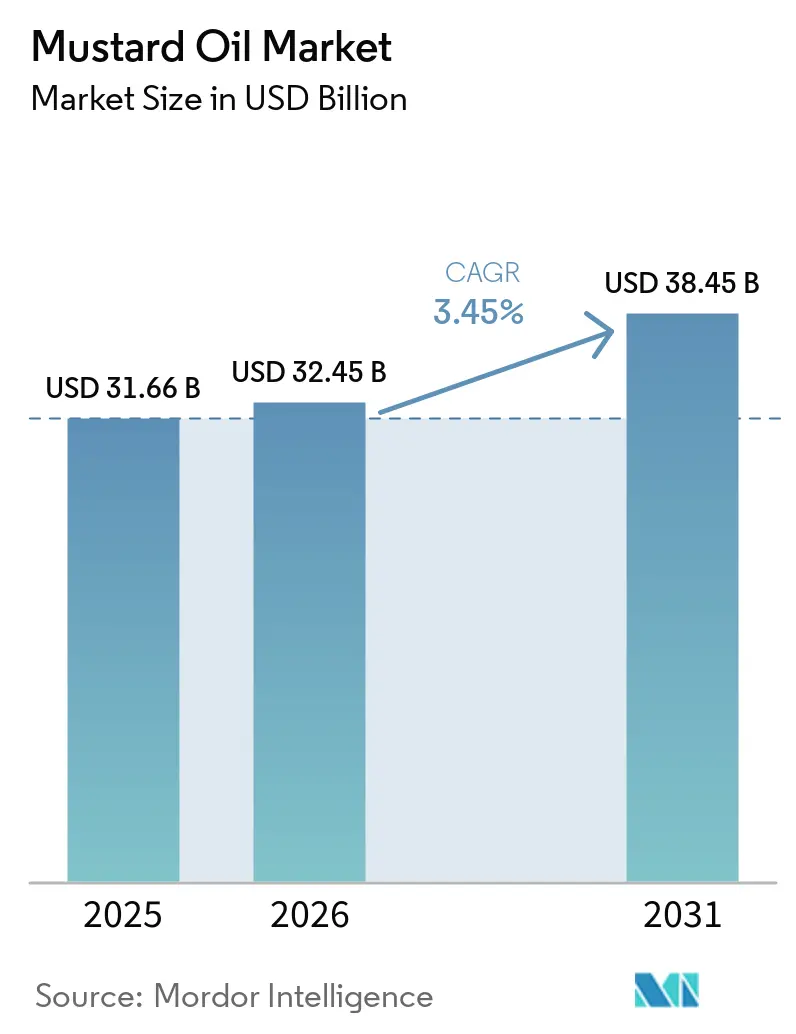
The global mustard oil market was valued at USD 31.66 billion in 2025 and is estimated to reach USD 32.45 billion in 2026, growing to USD 38.45 billion by 2031, registering a CAGR of 3.45% during the forecast period. Market growth is driven by increasing consumer preference for traditional, minimally processed edible oils with natural nutritional properties. Rising awareness of mustard oil's favorable fatty acid composition, along with growing demand for cold-pressed and chemical-free cooking oils, is supporting demand across both established and emerging markets. Additionally, the globalization of South Asian cuisine, expansion of ethnic food retail, and increasing availability of premium and organic mustard oil variants are expanding the product's consumer base beyond traditional consumption regions.
Key Report Takeaways
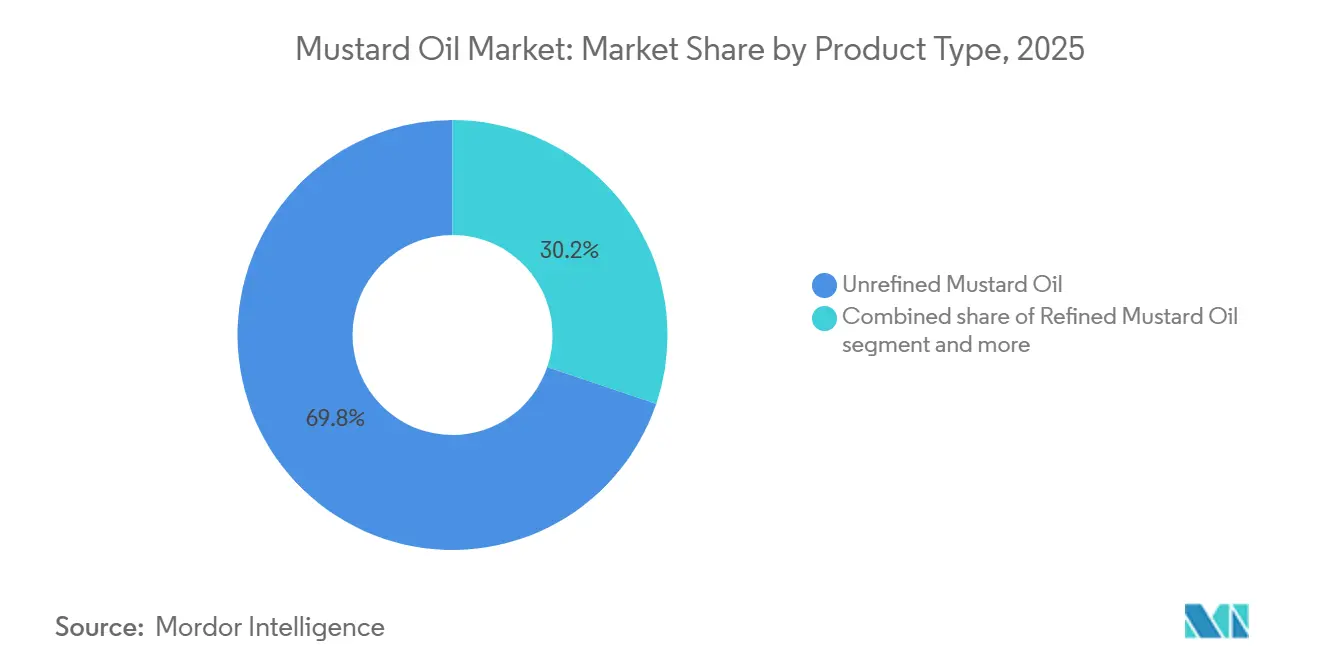
- By product type, unrefined mustard oil held 69.81% of the mustard oil market share in 2025, while refined mustard oil is forecast to grow at a 4.87% CAGR through 2031.
- By packaging, plastic and PET accounted for 57.23% of the mustard oil market share in 2025, while pouches are projected to expand at a 4.78% CAGR through 2031.
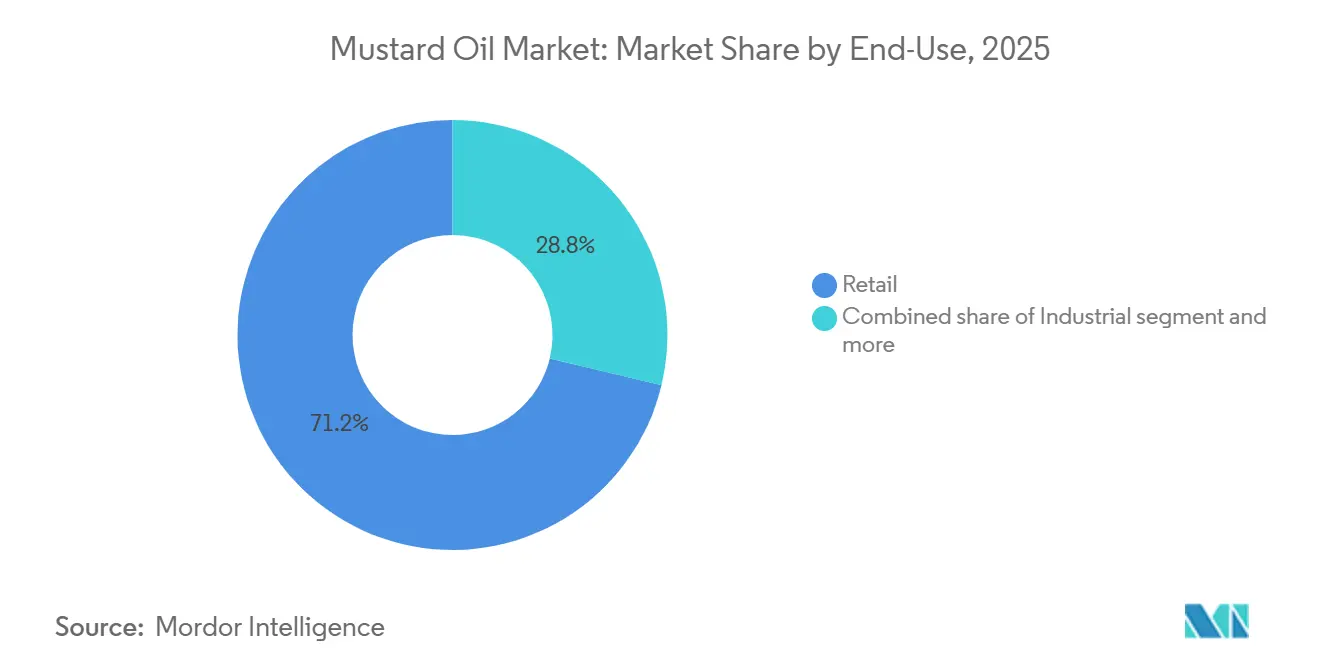
- By end use, retail held 71.24% of the mustard oil market share in 2025, while industrial use is expected to record the highest CAGR of 3.78% through 2031.
- By geography, Asia-Pacific accounted for 45.67% of the global mustard oil market in 2025, while North America is forecast to grow at a 5.23% CAGR through 2031.
Note: Market size and forecast figures in this report are generated using Mordor Intelligence’s proprietary estimation framework, updated with the latest available data and insights as of January 2026.
Global Mustard Oil Market Trends and Insights
Drivers Impact Analysis*
| Driver | (~) % Impact on CAGR Forecast | Geographic Relevance | Impact Timeline |
|---|---|---|---|
| Consumer preference for traditional and cold-pressed edible oils | +0.8% | Asia-Pacific core; diaspora pockets in North America and Europe | Short term (≤ 2 years) |
| Rising awareness of mustard oil's heart-health benefits | +0.7% | South Asia primary; growing in North America and Europe health-conscious segments | Medium term (2–4 years) |
| Expanding use of mustard oil in regional and ethnic cuisines | +0.5% | North America, Europe, Middle East and Africa (diaspora-led) | Medium term (2–4 years) |
| Demand for minimally processed and chemical-free cooking oils | +0.6% | Global, with Asia-Pacific core driving volume; North America generating premiumization | Short term (≤ 2 years) |
| Growth in organic and clean-label food trends | +0.4% | North America, Western Europe, urban Asia-Pacific | Medium term (2–4 years) |
| Preference for locally sourced and traceable edible oils | +0.3% | India, Bangladesh, and select Europe member states | Long term (≥ 4 years) |
| Source: Mordor Intelligence | |||
Consumer Preference for Traditional and Cold-Pressed Edible Oils
Consumer preference for traditional and cold-pressed edible oils is driving the mustard oil market, as purchasing decisions increasingly shift toward minimally processed products that retain their natural nutritional properties, pungency, and sensory characteristics. Cold-pressed mustard oil, commonly known as Kachi Ghani, has transitioned from a predominantly rural and regional cooking oil to a widely accepted premium edible oil in urban markets. This shift is supported by growing consumer confidence in traditional extraction methods that avoid chemical refining and high-temperature processing. As a result, manufacturers are expanding their portfolios with cold-pressed, wood-pressed, organic, and single-origin mustard oil variants, positioning them as premium offerings with higher perceived quality and traceability.
Rising Awareness of Mustard Oil's Heart-Health Benefits
Rising awareness of mustard oil's cardiovascular health benefits is driving market growth, as consumers increasingly seek edible oils with favorable fatty acid profiles and naturally occurring bioactive compounds. Mustard oil contains high levels of monounsaturated and polyunsaturated fatty acids, including omega-3 and omega-6 fatty acids, while remaining relatively low in saturated fats, making it an attractive option for consumers adopting heart-conscious dietary habits. The increasing prevalence of cardiovascular diseases has further accelerated this shift. According to the United States Centers for Disease Control and Prevention (CDC), 3% of adults in the United States had experienced a heart attack in 2024, highlighting the growing importance of preventive dietary choices[1]Source: Centers for Disease Control and Prevention (CDC), "Share of adults who had a heart attack/myocardial infarction in the United States", cdc.gov. This rising health awareness has encouraged consumers to replace conventional cooking oils with alternatives perceived to better support cardiovascular health.
Expanding Use of Mustard Oil in Regional and Ethnic Cuisines
The growing use of mustard oil in regional and ethnic cuisines is driving demand in the global mustard oil market, as international interest in authentic culinary ingredients increases. Mustard oil remains an essential cooking medium in many South Asian dishes, where its distinctive pungency and flavor are integral to traditional recipes, pickling, marinades, and spice tempering. The globalization of regional cuisines, rising migration, and the expansion of ethnic grocery retail have strengthened demand beyond traditional consumption markets. This trend is reflected in international trade flows. According to the World Integrated Trade Solution (WITS), India exported crude rapeseed-mustard oil worth USD 3.71 million to the United States and USD 3.51 million to Canada in 2024, indicating growing overseas demand for mustard oil in markets with expanding ethnic food retail ecosystems.
Demand for Minimally Processed and Chemical-Free Cooking Oils
Demand is rising for minimally processed and chemical-free cooking oils, with consumer preference shifting toward oils produced through mechanical extraction methods that avoid chemical solvents, bleaching agents, and intensive refining. This shift reflects the broader clean-label movement within the food industry. As a result, manufacturers are expanding their product portfolios to include cold-pressed, wood-pressed, virgin, and naturally extracted mustard oil variants, while emphasizing solvent-free processing and production transparency. Growing adoption of traceability systems, organic certifications, and quality assurance labels has further strengthened consumer confidence in minimally processed mustard oil products. As clean-label purchasing becomes an increasingly important criterion across retail channels, demand for naturally processed mustard oil continues to grow, supporting sustained market growth and encouraging further investment in traditional extraction technologies.
Restraints Impact Analysis*
| Restraint | (~) % Impact on CAGR Forecast | Geographic Relevance | Impact Timeline |
|---|---|---|---|
| Strong competition from alternative edible oils | -1.2% | South Asia (price-sensitive markets); global through import substitution | Short term (≤ 2 years) |
| Regulatory restrictions related to erucic acid content | -0.9% | North America, Europe, Australia, and New Zealand | Long term (≥ 4 years) |
| Limited consumer awareness in non-traditional markets | -0.5% | Western Europe, North America (non-diaspora segments), Latin America | Medium term (2–4 years) |
| Risk of product adulteration with lower-cost edible oils | -0.4% | India and Bangladesh, broadly across South Asia | Short term (≤ 2 years) |
| Source: Mordor Intelligence | |||
Strong Competition From Alternative Edible Oils
Strong competition from alternative edible oils is restraining the growth of the mustard oil market. Consumers have access to a wide range of cooking oils with varying nutritional profiles, flavor characteristics, and functional properties. Oils such as sunflower, soybean, canola, olive, rice bran, groundnut, and avocado oil are increasingly positioned as heart-friendly, neutral-flavored, or multifunctional cooking options, allowing consumers to select products that best suit their culinary preferences. Product innovation, fortified formulations, premium branding, and extensive marketing by major edible oil manufacturers have further intensified competition, limiting mustard oil's ability to expand beyond its traditional consumption base. The wide availability of alternative oils across supermarkets, convenience stores, and online retail platforms provides consumers with greater product variety, making market expansion more challenging for mustard oil manufacturers, particularly in regions where mustard oil is not a conventional household cooking oil.
Regulatory Restrictions Related to Erucic Acid Content
Regulatory restrictions related to erucic acid content are limiting the growth of the mustard oil market. Conventional mustard oil naturally contains higher levels of erucic acid than many other edible oils, prompting food safety authorities in various regions to establish maximum permissible limits or impose restrictions on its use in edible applications. As a result, manufacturers exporting mustard oil must invest in stringent quality testing, batch certification, traceability systems, and regulatory compliance to meet destination-country standards. These requirements increase production complexity and can limit the international commercialization of traditional mustard oil varieties. In addition, differences in erucic acid regulations across countries create barriers to cross-border trade, requiring producers to develop market-specific formulations and labeling practices, thereby increasing operational costs and slowing expansion into regulated international markets.
*Our forecasts treat driver/restraint impacts as directional, not additive. The impact forecasts reflect baseline growth, mix effects, and variable interactions.
Segment Analysis
By Product Type: Unrefined Variants Anchoring Volume While Refining Gains Share
Unrefined mustard oil accounted for 69.81% of the global mustard oil market in 2025, primarily because it requires minimal processing, allowing manufacturers to retain naturally occurring glucosinolates, antioxidants, tocopherols, and characteristic pungent compounds that differentiate it from refined edible oils. This product differentiation has enabled producers to position unrefined mustard oil as a premium traditional oil rather than a commodity cooking oil. The segment is also supported by widespread preference for "Kachi Ghani" extraction, where mechanical pressing preserves the oil's original sensory profile without chemical refining. The increasing penetration of regional premium brands, geographical identity-based marketing, and artisanal oil mills has further strengthened consumer preference for authentic unrefined varieties.
Refined mustard oil is projected to register the fastest CAGR of 4.87% through 2031, driven by continuous improvements in refining technologies that reduce pungency, color intensity, and impurities while maintaining product stability and consistency. The refined variant offers a more neutral sensory profile and extended shelf life, making it easier for manufacturers to achieve standardized quality across large production volumes. Growing investments in advanced filtration, deodorization, and quality assurance processes have further enhanced product uniformity, enabling refined mustard oil to meet stringent food quality specifications. Increasing availability in standardized packaging formats, coupled with greater compliance with international edible oil standards and export requirements, is expanding its acceptance in regulated markets and supporting its long-term growth.



By Packaging: Rigid PET Formats Dominant, Pouches Gaining Ground
Plastic and PET packaging accounted for 57.23% of the packaging segment in 2025, supported by their balance of product protection, manufacturing efficiency, and supply chain performance. PET containers offer high impact resistance, moisture and oxygen barrier properties, and dimensional stability, enabling mustard oil to retain its quality throughout storage and distribution. Their compatibility with high-speed blow molding, filling, capping, labeling, and automated palletizing systems allows manufacturers to achieve large-scale production with minimal operational downtime. PET bottles also provide design flexibility through customized shapes, tamper-evident closures, and transparent packaging that improves product visibility and brand differentiation at retail.
Pouches are projected to register the fastest CAGR of 4.78% through 2031, driven by advancements in flexible packaging materials and the industry's transition toward resource-efficient packaging solutions. Modern multi-layer laminate structures provide resistance to oxygen, moisture, and light, extending product stability while using less packaging material than rigid containers. Their compact form factor enables higher packing density during transportation and warehousing, reducing logistics requirements across the value chain. Manufacturers are increasingly adopting stand-up and refill pouch formats because they require lower resin consumption, occupy less shelf and storage space, and integrate efficiently with automated form-fill-seal production lines.
By End Use: Retail Leads on Volume, Industrial Channels Signal a Broader Demand Structure
Retail accounted for 71.24% of the by end-use segment in 2025, reflecting the strong penetration of mustard oil through organized retail networks and the rapid expansion of digital grocery commerce. The increasing integration of supermarkets, hypermarkets, convenience stores, and online grocery platforms has significantly improved product visibility and year-round availability across both urban and semi-urban markets. According to the International Telecommunication Union (ITU), 74% of the global population was using the internet in 2025, up from 71% in 2024, accelerating digital retail engagement and enabling consumers to access a wider range of branded, premium, organic, and cold-pressed mustard oil products through e-commerce platforms[2]Source: International Telecommunication Union (ITU), "Internet use", itu.int. In parallel, manufacturers have strengthened omnichannel distribution strategies by introducing exclusive online stock-keeping units (SKUs), subscription-based replenishment models, and direct-to-consumer sales, further reinforcing retail's dominance within the end-use landscape.
The industrial segment is projected to register the fastest CAGR of 3.78% through 2031, supported by the increasing standardization of mustard oil as a raw material across industrial production lines. Food manufacturers are expanding its use in processed foods that require consistent flavor profiles and standardized ingredient specifications, while personal care manufacturers are incorporating mustard oil into value-added formulations due to its natural fatty acid composition and plant-derived origin. Growing investments in automated food processing, contract manufacturing, private-label production, and large-scale ingredient sourcing are encouraging bulk procurement of mustard oil in industrial packaging formats. Additionally, increasing emphasis on traceable sourcing, quality certification, and formulation consistency is strengthening long-term procurement by industrial buyers, making this the fastest-growing end-use segment over the forecast period.
Geography Analysis
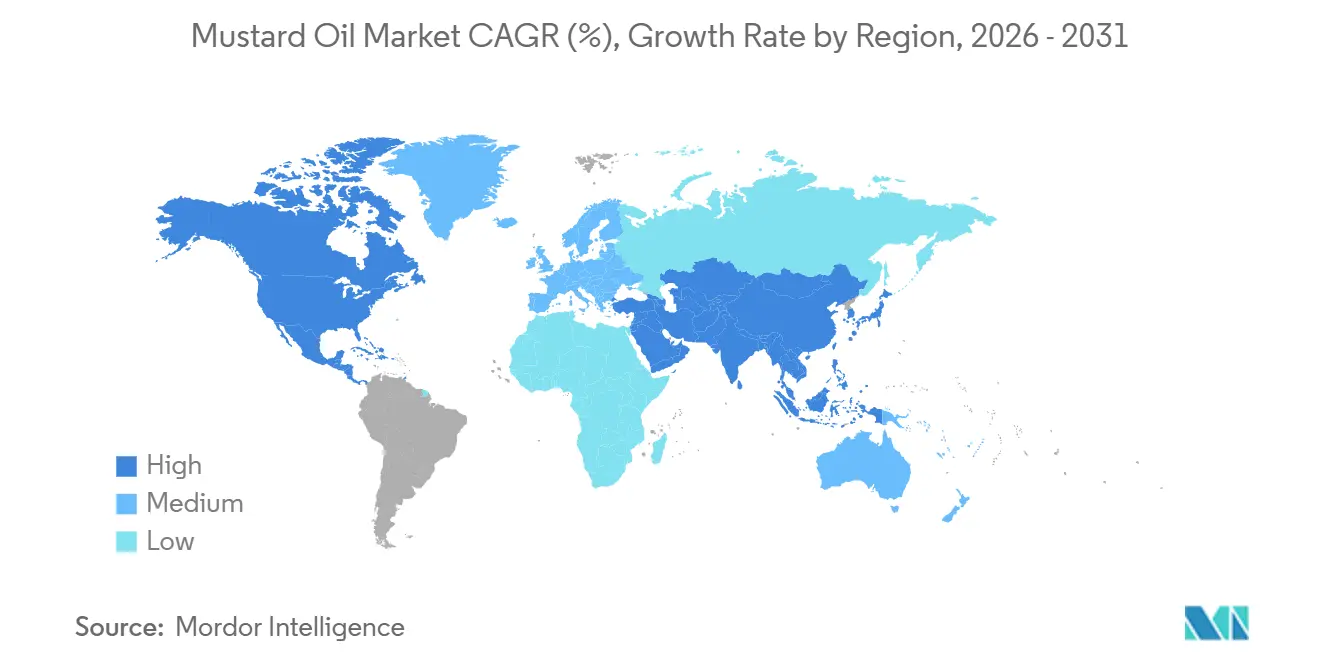
Asia-Pacific accounted for 45.67% of the global mustard oil market in 2025, supported by its well-established rapeseed–mustard cultivation ecosystem and integrated edible oil value chain. The region benefits from extensive domestic processing infrastructure, strong seed crushing capacity, and a well-developed network of oil mills that ensure consistent raw material availability throughout the year. According to the Solvent Extractors' Association of India (SEA), India's rapeseed–mustard production for the 2025–26 Rabi season is estimated at 119.4 lakh tonnes, representing a 3.5% increase over the previous season[3]Source: Solvent Extractors' Association of India (SEA), "Mustard Oil Export From India:", tradologie.com. This strengthens feedstock availability for mustard oil manufacturers and supports higher processing volumes. The combination of expanding oilseed production, continued investments in crushing facilities, and efficient distribution networks has reinforced Asia-Pacific's position in the global mustard oil market.
North America is projected to register the fastest CAGR of 5.23% through 2031, primarily driven by demographic changes and the increasing commercialization of ethnic food products. The steady expansion of South Asian communities has supported sustained demand for mustard oil through mainstream grocery retailers, warehouse clubs, and online grocery platforms, broadening the product's distribution beyond niche ethnic channels into specialty edible oil retail. In parallel, retailers are expanding their international food assortments while manufacturers continue to strengthen import partnerships and local distribution capabilities, improving product availability across conventional retail channels. Rising consumer interest in minimally processed specialty oils and premium international cuisines is further contributing to the region's growth.
Europe is emerging as a steadily growing market, supported by increasing availability of ethnic food products through mainstream retail chains and specialty grocery stores, particularly in countries with sizeable South Asian communities. South America remains an emerging market where growth is supported by expanding international food distribution networks, increasing penetration of specialty edible oils through e-commerce and gourmet retail outlets, and rising consumer exposure to global cuisines. The Middle East and Africa Region continues to witness stable demand due to a large expatriate population and the expansion of modern retail infrastructure, which is improving access to imported mustard oil brands across Gulf countries.

Competitive Landscape
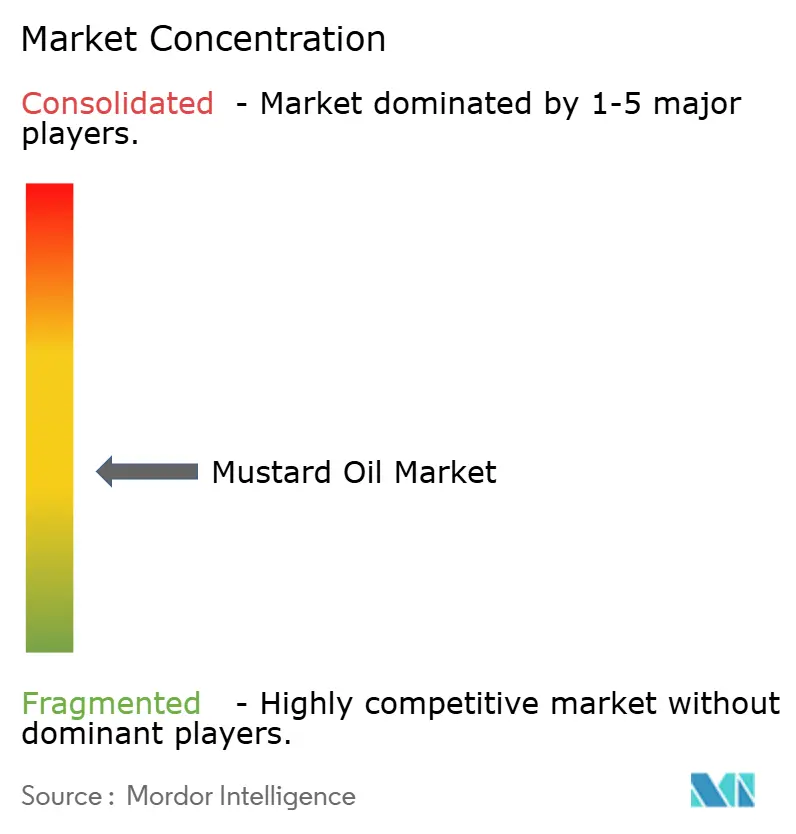
The global mustard oil market is medium fragmented, with numerous multinational edible oil companies, regional manufacturers, cooperative processors, and local oil mills competing across traditional and premium product categories. Key players, including AWL Agri Business Limited, Emami Group, Patanjali Foods Limited, Dabur India Limited, and Marico Limited, compete through extensive brand portfolios, diversified distribution networks, and strong regional market presence rather than market concentration. Competition is characterized by continuous portfolio expansion across cold-pressed, refined, organic, and premium mustard oil variants, enabling manufacturers to address evolving consumer preferences while differentiating their offerings through quality, purity, and traditional extraction methods.
Manufacturers are increasingly strengthening vertical integration by expanding their control across the value chain, from rapeseed procurement and seed crushing to oil extraction, refining, packaging, branding, and nationwide distribution. This integrated operating model enables companies to improve raw material traceability, maintain consistent product quality, optimize production costs, and enhance supply chain resilience amid fluctuations in mustard seed availability. Investments in modern crushing facilities, automated refining plants, and advanced packaging infrastructure are further supporting operational efficiency while ensuring compliance with increasingly stringent food quality and safety standards.
Innovation remains a key competitive differentiator, with companies introducing cold-pressed (Kachi Ghani), wood-pressed, organic, and minimally processed mustard oil variants to meet growing demand for clean-label and traditional edible oils. Manufacturers are also investing in sustainable packaging solutions, lightweight recyclable PET bottles, refill pouches, and responsible sourcing initiatives to align with evolving environmental expectations. Increasing emphasis on quality certifications, traceability systems, and environmentally responsible manufacturing practices is strengthening brand credibility and supporting long-term competitive positioning in both domestic and export markets.
Mustard Oil Industry Leaders
-
AWL Agri Business Limited
-
Emami Group
-
Patanjali Foods Limited
-
Dabur India Limited
-
Marico Limited
- *Disclaimer: Major Players sorted in no particular order

Recent Industry Developments
- June 2026: Fortune Kachi Ghani Mustard Oil launched the fourth edition of its seasonal campaign, "Achaar Ka Perfect Jodidaar." The initiative celebrates India's homemade pickle-making tradition through 360-degree activations, including digital content and experiential touchpoints.
- April 2026: Nutrica has expanded its clean-label portfolio by launching a new Yellow Mustard Oil. Targeted at health-conscious consumers and home cooks, the unrefined oil retains its natural antioxidants and Omega-3 and Omega-6 fatty acids, and is fortified with Vitamins A, D, and E.
- July 2025: Marico Limited has entered the cold-pressed oils market with the launch of the Saffola Cold-Pressed Oils range. The range combines the nutritional value of selected seed varieties and is designed for everyday cooking.


Global Mustard Oil Market Report Scope
Mustard oil is a pungent, reddish-amber vegetable oil pressed or extracted from mustard seeds. The mustard oil market is segmented by product type, packaging, end use, and geography. Based on product type, the market is segmented into refined mustard oil, unrefined mustard oil, and others. Based on packaging, the market is segmented into plastic and PET, pouches, bulk tins/drums, and others. Based on end use, the market is segmented into HoReCa/foodservice, industrial, and retail. The industrial segment is further categorized into food and beverages, personal care and cosmetics, and others, while the retail segment is further categorized into supermarkets/hypermarkets, convenience and grocery stores, online retail stores, and other distribution channels. Based on geography, the market is segmented into North America, Europe, Asia-Pacific, South America, and Middle East and Africa. The report provides market size and forecasts in both value (USD) and volume (liters) for all the mentioned segments.
| Refined Mustard Oil |
| Unrefined Mustard Oil |
| Others |
| Plastic and PET |
| Pouches |
| Bulk Tins/Drums |
| Others |
| HoReCa/Foodservice | |
| Industrial | Food and Beverages |
| Personal Care and Cosmetics | |
| Others | |
| Retail | Supermarkets/Hypermarkets |
| Convenience and Grocery Stores | |
| Online Retail Stores | |
| Other Distribution Channels |
| North America | United States |
| Canada | |
| Mexico | |
| Rest of North America | |
| Europe | United Kingdom |
| Germany | |
| France | |
| Italy | |
| Spain | |
| Rest of Europe | |
| Asia-Pacific | China |
| Japan | |
| India | |
| Australia | |
| Bangladesh | |
| Rest of Asia-Pacific | |
| South America | |
| Middle East and Africa |
| By Product Type | Refined Mustard Oil | |
| Unrefined Mustard Oil | ||
| Others | ||
| By Packaging | Plastic and PET | |
| Pouches | ||
| Bulk Tins/Drums | ||
| Others | ||
| By End Use | HoReCa/Foodservice | |
| Industrial | Food and Beverages | |
| Personal Care and Cosmetics | ||
| Others | ||
| Retail | Supermarkets/Hypermarkets | |
| Convenience and Grocery Stores | ||
| Online Retail Stores | ||
| Other Distribution Channels | ||
| By Geography | North America | United States |
| Canada | ||
| Mexico | ||
| Rest of North America | ||
| Europe | United Kingdom | |
| Germany | ||
| France | ||
| Italy | ||
| Spain | ||
| Rest of Europe | ||
| Asia-Pacific | China | |
| Japan | ||
| India | ||
| Australia | ||
| Bangladesh | ||
| Rest of Asia-Pacific | ||
| South America | ||
| Middle East and Africa | ||


Key Questions Answered in the Report
What is the projected size of the mustard oil market by 2031?
The mustard oil market is projected to grow from USD 32.45 billion in 2026 to USD 38.45 billion by 2031, at a 3.45% CAGR.
Which product type leads mustard oil consumption?
Unrefined mustard oil led product demand with a 69.81% share in 2025. Its position is supported by its established use in South Asian cooking and demand for traditional, minimally processed oils.
Why is refined mustard oil growing faster than unrefined variants?
Refined mustard oil is projected to grow at a 4.87% CAGR through 2031 because its lower pungency and reduced erucic acid content support food manufacturing, personal care, and export-oriented applications.
Which packaging format has the largest role in mustard oil sales?
Plastic and PET packaging held 57.23% of sales in 2025. Tamper-evident seals, product visibility, and lower distribution costs support its continued use across retail channels.
Page last updated on:


 Your data is secure and never sold or shared.



