
Microbial Lipase Market Size and Share
Market Overview
| Study Period | 2021 - 2031 |
|---|---|
| Market Size (2026) | USD 392.73 Million |
| Market Size (2031) | USD 528.49 Million |
| Growth Rate (2026 - 2031) | 6.12 % |
| Fastest Growing Market | Asia-Pacific |
| Largest Market | North America |
| Market Concentration | Medium |
Major Players *Disclaimer: Major Players sorted in no particular order Image © Mordor Intelligence. Reuse requires attribution under CC BY 4.0. | |
Microbial Lipase Market Analysis by Mordor Intelligence
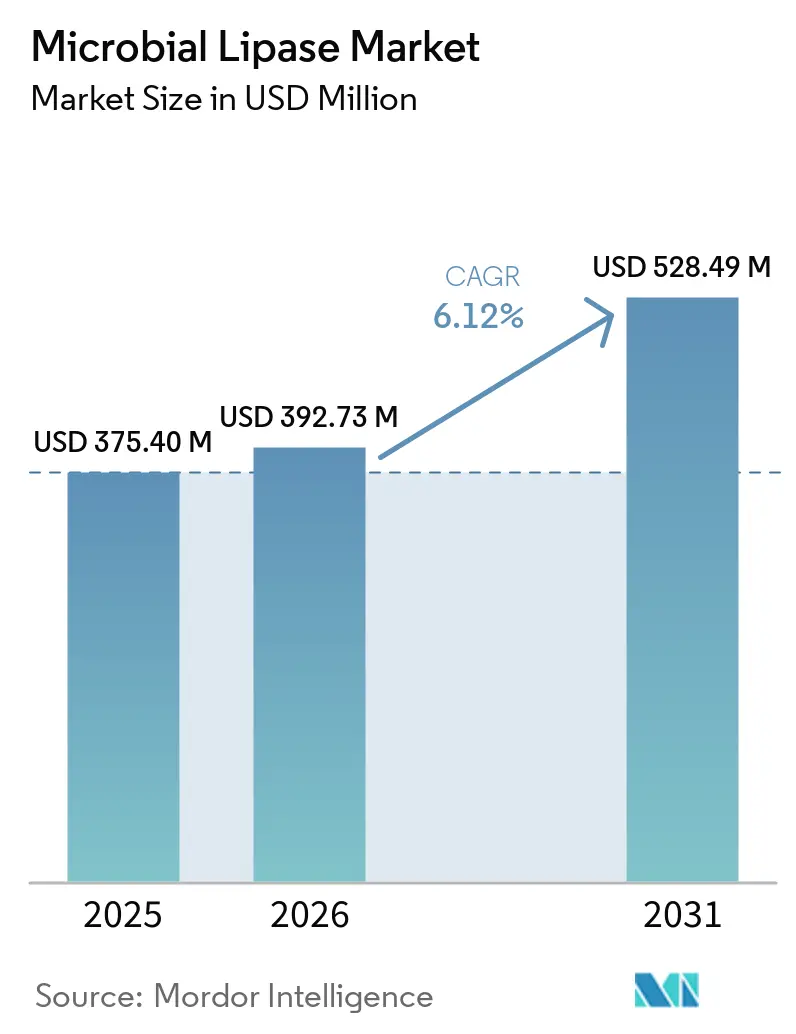
The Microbial lipase market size was valued at USD 375.40 million in 2025 and estimated to grow from USD 392.73 million in 2026 to reach USD 528.49 million by 2031, at a CAGR of 6.12% during the forecast period (2026-2031). The Microbial lipase market is shifting toward fermentation-derived enzymes for food processing, detergents, feed, and oleochemical production, as these enzymes can replace animal-derived enzymes and chemical catalysts in specific applications. Strain engineering, precision fermentation, and clearer approval processes are shortening development work for new lipase variants. Producers are competing on application support, formulation capability, and access to strains and regulatory resources rather than on enzyme price alone. Cost pressures in fermentation and downstream processing still constrain smaller producers, while stability limits their use in demanding industrial processes. The Microbial lipase market has room to grow, where low-temperature cleaning, controlled dairy processing, feed efficiency, and biocatalytic manufacturing create measurable operating benefits.
Key Report Takeaways
- By source, fungi held 46.83% of the Microbial lipase market share in 2025, while yeast is forecast to grow at a 7.46% CAGR through 2031.
- By form, powder held 55.37% of the Microbial lipase market share in 2025, while liquid lipase is forecast to grow at a 7.58% CAGR through 2031.
- By application, food and beverage held 34.04% of the Microbial lipase market size in 2025, while animal feed is forecast to grow at a 7.11% CAGR through 2031.
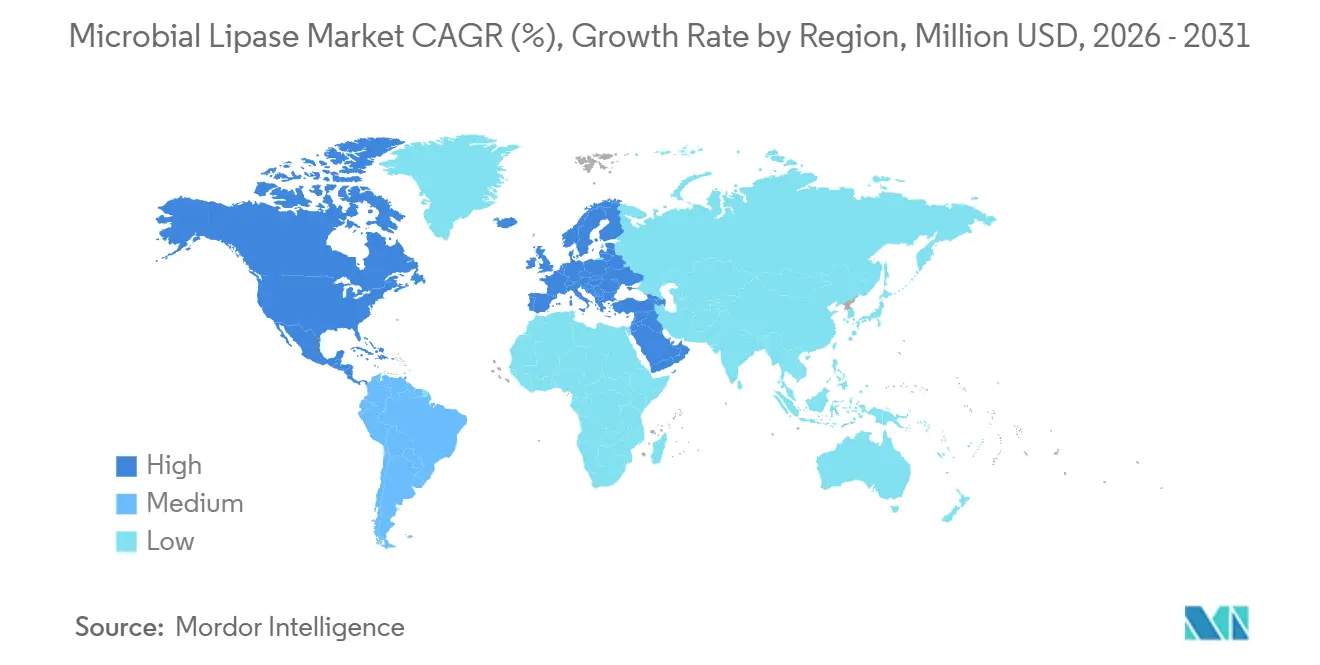
- By geography, North America held 38.90% of the 2025 value, while Asia-Pacific is forecast to grow at a 7.98% CAGR through 2031.
Note: Market size and forecast figures in this report are generated using Mordor Intelligence’s proprietary estimation framework, updated with the latest available data and insights as of January 2026.
Market Trends and Insights
Drivers Impact Analysis of Microbial Lipase Market*
| Driver | (~) % Impact on CAGR Forecast | Geographic Relevance | Impact Timeline |
|---|---|---|---|
| Growing substitution of animal-derived lipases with microbial alternatives | +1.4% | Global, with concentrated impact in North America, Europe, and East Asia (kosher/halal markets) | Medium term (2–4 years) |
| Expanding microbial lipase applications in cheese and dairy processing | +1.0% | North America, Europe (France, Italy, Germany, Netherlands) | Short term (≤ 2 years) |
| Increasing adoption of enzyme-based detergents and low-temperature cleaning | +0.7% | North America and Europe(Germany, Italy), with spill-over to Brazil, Australia | Medium term (2–4 years) |
| Rising demand for lipases in animal feed applications | +0.9% | Global; concentrated in Asia-Pacific, North America, South America | Short term (≤ 2 years) |
| Shift from chemical catalysts toward microbial biocatalysts | +0.7% | Global, with early gains in Europe oleochemical and pharmaceutical sectors | Long term (≥ 4 years) |
| Advances in microbial strain engineering and precision fermentation | +1.1% | North America, Europe, and the Asia-Pacific (China, Japan, India) | Long term (≥ 4 years) |
| Source: Mordor Intelligence | |||
Growing substitution of animal-derived lipases with microbial alternatives
The commercial case for replacing animal-derived lipases has shifted from primarily regulatory to primarily economic. Microbial lipases produced through submerged fermentation of Aspergillus, Rhizopus, and Yarrowia strains deliver batch-to-batch consistency and scalability at production costs that extraction-based animal enzyme operations cannot match. A 2025 review in Microbial Cell Factories confirmed that Candida antarctica lipase B (CALB) holds the largest commercial patent portfolio among all industrially deployed lipases and carries GRAS certification, validating its application breadth across food, pharmaceutical, and industrial uses at scale[1]. The less-discussed dimension of this substitution wave lies in kosher and halal certification: animal-derived pregastric lipases used in traditional specialty cheese production and flavored fat applications are non-compliant with certification requirements that are commercially significant in Middle Eastern, East Asian, and premium-segment Western markets. Microbial alternatives from Rhizopus oryzae and Aspergillus niger deliver comparable flavor profiles while enabling simultaneous compliance with certification, a combination that is compressing reformulation timelines across major dairy and specialty food ingredient manufacturers and generating demand that is structurally decoupled from general food market volume growth.
Expanding microbial lipase applications in cheese and dairy processing
Dairy remains the most commercially mature application for microbial lipases, but the growth dynamic has shifted decisively from commodity flavor development toward precision-controlled, large-scale lipolysis. A 2025 PubMed-indexed review confirmed that microbial lipases hydrolyze milk fat into free fatty acids, the primary flavor precursors in ripened and specialty cheeses, while offering lower production costs, broader substrate specificity, and superior adaptability to genetic modification relative to animal-derived counterparts, positioning them as the preferred input for enzyme-modified cheese (EMC) production at an industrial scale. The strategic implication lies in EMC production economics: microbial lipases enable controlled ripening speed and flavor intensity in a fraction of the time and at a fraction of the cost required for natural aging, which directly underpins premium cheese ingredient supply chains for snacks, sauces, and ready meals. In March 2025, DSM-Firmenich launched Maxiren EVO, a next-generation coagulant enzyme produced via precision fermentation that specifically targets αs1-casein to improve cheese texture, moisture distribution, yield, and processing flexibility. Signaling regulatory expansion of the approved dairy lipase toolkit, Food Standards Australia New Zealand (FSANZ) opened public consultation in April 2026 on Application A1338, seeking authorization for triacylglycerol lipase derived from Komagataella phaffii (gene donor: Yarrowia lipolytica) for dairy and plant-based dairy analog processing[3].
Rising demand for lipases in animal feed applications
Animal feed is the market's fastest-growing application, and the underlying demand driver is among the most economically durable in the industrial enzyme space. Lipase supplementation in poultry and swine diets delivers measurable 4-8% improvements in fat digestibility and feed conversion efficiency, with economic returns that consistently exceed supplementation costs, making adoption economically self-reinforcing rather than trend-dependent. The February 2025 announcement by Novonesis of its intention to acquire DSM-Firmenich's Feed Enzyme Alliance stake for EUR 1.5 billion (approximately USD 1.55 billion) was explicitly framed around growing global protein demand and increasing land and water scarcity as long-term structural drivers, a signal that the world's largest enzyme producer views animal biosolutions as one of its highest-conviction growth platforms[2]. The deal closed in June 2025, with the acquired DSM-Firmenich activities generating approximately EUR 300 million in annual net sales at the time of the transaction, adding approximately EUR 70 million in adjusted EBITDA in the first full year and consolidating global feed enzyme sales and distribution under Novonesis. An underdiscussed opportunity in this application is aquaculture: lipase supplementation in farmed fish diets improves omega-3 fatty acid utilization and flesh lipid profiles directly, reducing the environmental burden of over-supplementation, a dual benefit that aligns with sustainability mandates increasingly embedded in aquaculture procurement standards.
Advances in microbial strain engineering and precision fermentation
Strain engineering has evolved from a research capability into a commercial differentiator that is reconfiguring the competitive boundaries of the industrial enzyme industry. A March 2026 review in Archives of Microbiology identified CRISPR/Cas9-mediated multigene editing, directed evolution via error-prone PCR, metagenomic discovery, and AI-assisted library screening as the primary tools reshaping lipase development to simultaneously target thermostability, substrate specificity, fermentation titer, and downstream processability. The practical implication for manufacturing economics is significant: CRISPR-based knockout of a protease gene in Aspergillus niger has been shown to increase hydrolytic lipase activity by 56% relative to the parental strain, reducing dependence on multi-step downstream purification and lowering per-unit production cost. In November 2025, Novonesis and thyssenkrupp Uhde jointly launched an enzymatic fat-splitting process using the engineered Lipura Split lipase, operating at 70°C versus the conventional 260°C thermal fat-splitting process, delivering up to 60% lower CAPEX, 40% lower energy consumption, and 2% higher fatty acid yield, a real-world demonstration of how engineered enzyme stability translates directly into industrial process economics. The Novonesis-SEQENS strategic partnership announced in 2025, pairing the world's largest strain bank with Protéus' biocatalytic process expertise, validates a co-development model where strain discovery and process scale-up are optimized in tandem, a model that mid-sized producers will need to replicate through partnerships rather than internal capability build.
Restraints Impact Analysis of Microbial Lipase Market*
| Restraint | (~) % Impact on CAGR Forecast | Geographic Relevance | Impact Timeline |
|---|---|---|---|
| High fermentation and downstream processing costs | -0.9% | Global; most acute for mid-tier producers in Asia-Pacific and South America | Short term (≤ 2 years) |
| Limited enzyme stability under harsh industrial conditions | -0.5% | Global; concentrated impact in the oleochemical, textile, and biodiesel processing sectors | Medium term (2–4 years) |
| Application-specific enzyme performance and specificity variations | -0.4% | Global, with pronounced impact in multi-substrate industrial applications | Long term (≥ 4 years) |
| Stringent regulatory requirements for enzyme applications | -0.5% | Europe, North America, Japan, Australia; emerging regulatory burden in India and China | Medium term (2–4 years) |
| Source: Mordor Intelligence | |||
High fermentation and downstream processing costs
Precision-controlled bioreactor conditions, optimized carbon and nitrogen sources, and extensive downstream processing steps, centrifugation, ultrafiltration, precipitation, and spray drying, together create a cost structure that is difficult to compress below a competitive floor without scale or proprietary process innovations. For mid-tier producers operating below 100,000-liter fermenter capacities, achieving per-unit economics that are competitive with large-scale integrated manufacturers is structurally challenging, thereby confining these players to niche, high-margin segments such as pharmaceutical biocatalysis or specialty dairy applications. A 2025 review in Microbial Cell Factories highlighted that optimized fermentation strategies using agro-industrial residues as low-cost substrates represent one of the most promising routes to reduce production costs and promote environmentally sustainable processes, though translating these lab-scale approaches into validated commercial-scale workflows requires significant capital investment. The cost challenge is also dynamic: advances in precision fermentation are progressively raising the titer expectations for commercially viable enzyme production, meaning that operators relying on legacy fermentation processes face increasing relative cost disadvantages as the industry frontier moves. This creates consolidation pressure in enzyme manufacturing, where scale and process research and development investment compound over time in favor of larger, better-capitalized producers.
Limited enzyme stability under harsh industrial conditions
Many commercially deployed microbial lipases exhibit operational instability above 50-55°C or outside a pH range of approximately 5.5-8.5, creating a functional gap in applications where process conditions routinely exceed these thresholds. Oleochemical processing, leather treatment, and textile enzymatic scouring frequently require sustained lipase activity at elevated temperatures and in the presence of organic solvents or high-ionic-strength buffers, conditions that rapidly inactivate conventional commercial variants. The workaround, elevated enzyme dosing rates or addition of stabilizing agents, raises per-unit processing costs and introduces formulation complexity that undermines the economic case for enzyme substitution in these sectors. Enzyme immobilization on solid supports partially addresses the stability challenge by enabling reuse across 6-8 reaction cycles and broadening the operational temperature and pH window. A 2025 study in Scientific Reports demonstrated that Aspergillus niger-derived lipase immobilized on iron oxide nanoparticles achieved 81.73% immobilization yield and 97.4% activity retention over 8 cycles, with broadened pH tolerance and demonstrated efficacy in both industrial dye degradation and oil-stain removal applications. Despite this progress, the capital cost and technical complexity of immobilization at commercial scale continue to confine the technology primarily to high-value pharmaceutical synthesis and specialty oleochemical niches rather than volume commodity applications.
*Our forecasts treat driver/restraint impacts as directional, not additive. The impact forecasts reflect baseline growth, mix effects, and variable interactions.
Microbial Lipase Market Segment Analysis
By Source:
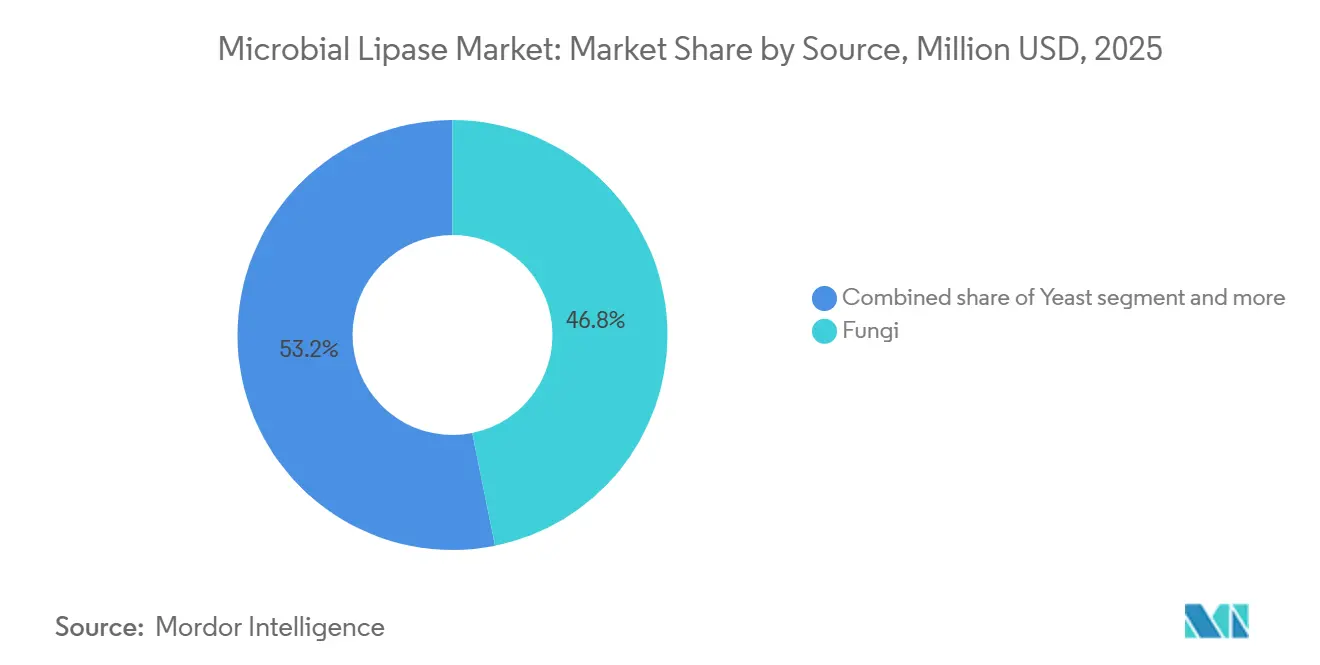
Fungi Anchor Commercial Volumes While Yeast Claims Fastest GrowthFungi held 46.83% of the source segment in 2025, which made fungal lipases the leading source category. Aspergillus niger and Rhizomucor miehei have established commercial roles because they combine protein secretion capacity with food-grade recognition and use of lower-cost fermentation substrates. The microbial lipase industry has relied on these fungal platforms in dairy, bakery, and oleochemical production for many years. A 2025 AMB Express study reported heterologous expression of Thermomyces lanuginosus lipase in engineered A. niger with activity of 4,547.95 U/mL under optimized fermentation conditions. This result illustrates the production scale available from an established fungal host. Fungal systems remain important where manufacturers need mature fermentation knowledge and broad application acceptance.
Bacterial lipases rank second in the source hierarchy and are valued for their thermostability in leather, textile, and bioremediation applications. Other sources, including actinomycetes and metagenomic strains, serve specialty chemistry and oleochemical synthesis, where regioselectivity or stereospecificity can justify premium pricing. Yeast-derived lipases are forecast to grow at a 7.46% CAGR through 2031, the fastest rate in this category. Yarrowia lipolytica can produce extracellular lipases at high titers with glycerol-based feeding and can tolerate broad pH and salt conditions. The supplied research also notes its EFSA-recognized novel food safety status for biomass, which can support food-grade development work. Its potential to produce extracellular lipase and intracellular single-cell protein from waste glycerol and agro-industrial substrates creates a dual-output production model.

By Form:
Powder Holds the Logistics Advantage While Liquid Reshapes Processing WorkflowsPowder lipase held 55.37% of the form segment in 2025, supported by shelf life, transport efficiency, and use in dry blends. The microbial lipase industry uses powdered products in bakery, dairy premix, and pelleted animal feed formulations, where simplicity in storage and handling is important. Spray-dried powder infrastructure also creates a unit-cost advantage for established manufacturers. Granulated and immobilized products within the other form category are used for interesterification, pharmaceutical synthesis, and specialty ester production. In these applications, repeated use can support the higher price of immobilized enzymes. A 2025 review of Aspergillus-derived immobilized lipases described high stability, broad substrate specificity, and enantioselectivity through repeated use in pharmaceutical kinetic resolution.
Liquid lipase is forecast to grow at a 7.58% CAGR through 2031, driven by cold-wash detergents and continuous food-processing workflows. BASF launched Lavergy L Pace in July 2025 as a liquid lipase for removing fat and oil stains at low temperatures. The launch completed the company's liquid enzyme range for laundry and home care. The research reported that cold-wash enzyme systems accounted for more than 25% of new liquid detergent launches in European markets during 2025 and 2026. This reflected consumer concern about energy costs and directives that reward low-temperature wash performance. Liquid formulations require stability engineering and precise dosing, which can distinguish formulation-oriented suppliers from firms that only supply fermentation output.
By Application:
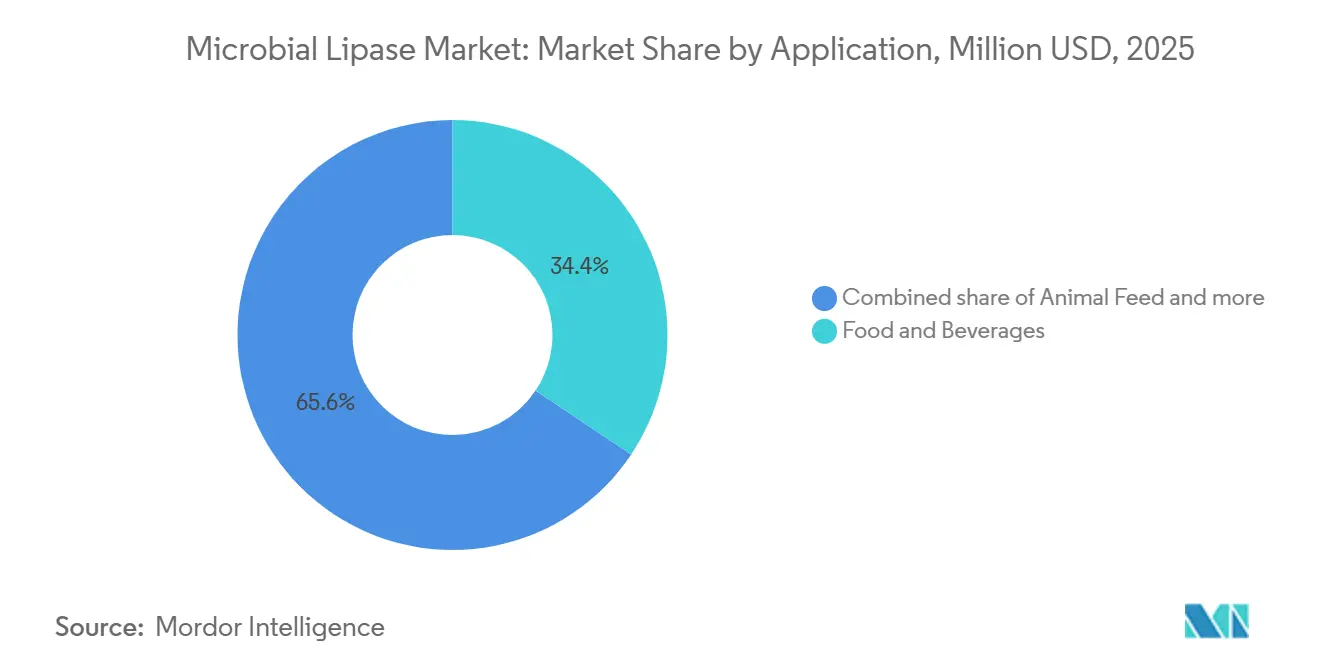
Food and Beverage Leads, Animal Feed Accelerates, Cosmetics EmergesFood and beverage accounted for 34.04% of application demand in 2025, led by dairy processing, bakery, and flavor synthesis. The Microbial lipase market size for this application is supported by cheese flavor development, dough conditioning, and fat modification. DSM-Firmenich stated that its Panamore lipase range can reduce costs by up to 70% compared with DATEM emulsifiers while improving dough tolerance, volume, and crumb structure. This gives industrial bakeries in the Microbial lipase market a direct economic reason to use enzymatic emulsification. Dairy processors are also replacing animal-derived pregastric lipases where kosher or halal compliance is important. Beverage and other food uses remain smaller, but include ester synthesis in specialty fermented beverages and flavor compounds for natural ingredient formulation.
Animal feed is forecast to grow at a 7.11% CAGR through 2031 and has the strongest reported application growth rate. The Microbial lipase market is supported in this segment by the link between lipase supplementation, fat digestibility, and feed conversion. The June 2025 acquisition of the June 2025 Feed Enzyme Alliance by Novonesis, which involved EUR 300 million in annual net sales at closing, reflected continued investment in animal biosolutions. Cosmetics and personal care are a smaller but distinct application for bio-based emollients, controlled sebum modulation, and compatible cleansing actives. Amano Enzyme uses specialty lipases in OPO infant nutrition, fat production, and omega-3 concentration for aquaculture feed. These high-value uses can support pricing of 3 to 5 times commodity food enzyme rates.
Geography Analysis
North America Microbial Lipase Market
North America accounted for 38.9% of global value in 2025, making it the largest regional segment of the Microbial lipase market. The United States supports demand through established dairy and bakery enzyme systems, cold-wash detergent reformulation, and enzyme manufacturing. Canada is boosting demand through cheese production and processed foods, while Mexico is increasing investment in food processing. The supplied research projects that cold-wash enzyme adoption in U.S. detergent formulations will increase from 40% to 45% of enzyme volume in 2026 to 60% to 70% by 2035. This favors liquid lipase systems designed for low-temperature performance. Buyers also assess application support, regulatory documentation, and co-formulation capability alongside enzyme cost.
EMEA and South America Microbial Lipase Market
Europe is the second-largest regional block, supported by cheese production and food manufacturing. Germany processed 31.3 million tonnes of cow's milk in 2024, according to the Federal Office for Agriculture and Food, providing a base for dairy enzyme demand. France, Italy, and Spain support controlled lipolysis for artisan and industrial cheese production. DSM-Firmenich reported site enhancements at its Seclin, France, and Yixing, China, sites in its 2025 annual report. South America, especially Brazil and Argentina, relies more heavily on feed enzymes for swine and poultry production. The Middle East and Africa remain the smallest segment, with food and beverage demand concentrated in the United Arab Emirates and Saudi Arabia, and a regional preference for halal-compliant microbial alternatives.
Asia-Pacific Microbial Lipase Market
Asia-Pacific is forecast to grow at a 7.98% CAGR through 2031, the fastest regional rate in the Microbial lipase market. The Asia-Pacific microbial lipase market is supported by the region’s expanding food processing, dairy, animal feed, detergent, and pharmaceutical industries. Demand is particularly strong in China, India, Japan, and Southeast Asia, where manufacturers are adopting enzyme-based processing to improve production efficiency, product quality, and sustainability. In food and dairy applications, microbial lipases are used for flavor development, fat modification, cheese ripening, and bakery processing, while detergent manufacturers use them to improve the removal of oil- and fat-based stains.
Competitive Landscape
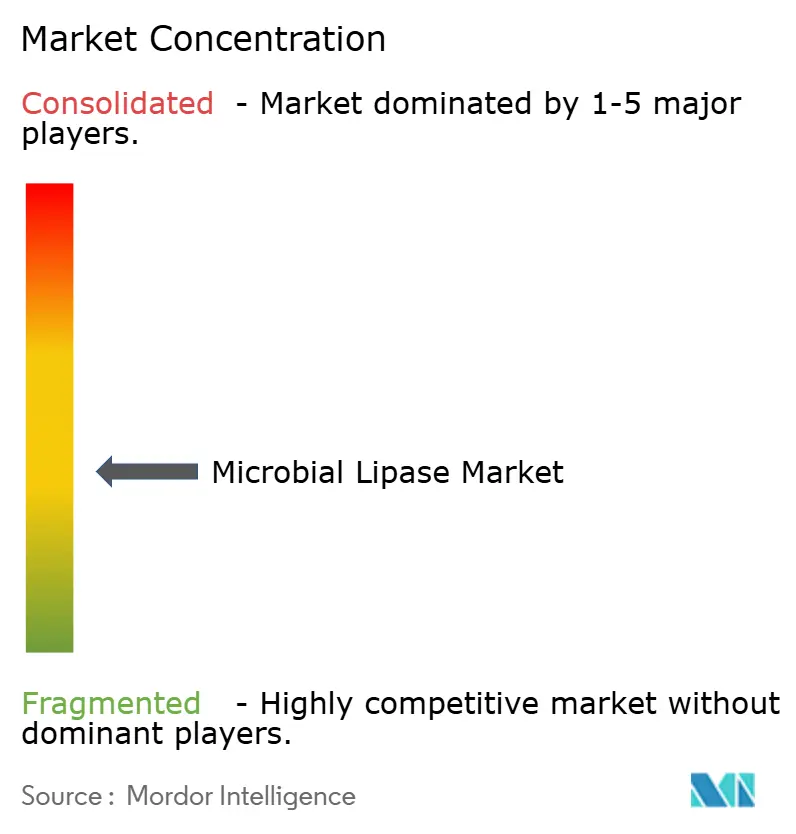
The Microbial lipase market is moderately consolidated, with Novonesis holding a leading position after the 2024 Novozymes and Chr. Hansen merger. The June 2025 completion of the EUR 1.5 billion Feed Enzyme Alliance acquisition from DSM-Firmenich strengthened its animal biosolutions position. The transaction brought strain research, fermentation manufacturing, sales, and distribution closer together in the feed enzyme business. This raises the resource level needed to compete across global animal nutrition accounts. The company is also using strain resources and partnership models to address high-value biocatalytic processes. These capabilities matter because customers increasingly need technical and regulatory support alongside enzyme supply.
Leading suppliers are building proprietary strain libraries, using engineering and metagenomic discovery, and offering multiple enzymes to a single customer. Novonesis and SEQENS announced their 2025 partnership to connect strain discovery with biocatalytic process expertise. BASF completed its liquid laundry and home-care enzyme range with the addition of Lavergy L Pace in July 2025. This supports a broader supplier role as detergent formulators move to liquid enzyme systems. The supplied patent review identified Aspergillus-derived enzymes as having the widest commercial patent coverage in kinetic resolution and industrial biocatalysis. Fungal platforms, therefore, remain an important area of commercial competition.
Mid-tier companies can compete in immobilized enzyme technology and specialist applications rather than through scale alone. Fermenta Biotech and Advanced Enzyme Technologies are using immobilized CALB formulations in pharmaceutical biocatalysis and specialty food enzyme work, with reuse across 6 to 8 reaction cycles described in the supplied research. Advanced Enzyme Technologies reported 15 EFSA enzyme dossiers by the end of FY2026 and 9 positive opinions. Asian producers, especially in China and India, are also expanding their export reach as technical and regulatory capabilities improve. Incumbents are responding with deeper application development and co-formulation services that bind them more closely to customer processes.
Microbial Lipase Industry Leaders
-
Novozymes A/S
-
DSM-Firmenich
-
BASF SE
-
International Flavors & Fragrances Inc.
-
AB Enzymes GmbH
- *Disclaimer: Major Players sorted in no particular order
Microbial Lipase Market Companies Covered in this Report
- Novonesis (Novozymes A/S)
- DSM-Firmenich
- BASF SE
- International Flavors & Fragrances Inc.
- AB Enzymes GmbH
- Advanced Enzyme Technologies Ltd.
- Amano Enzyme Inc.
- Sacco System
- Fermenta Biotech Limited
- Renco New Zealand Ltd.
- Biocatalysts Ltd.
- Creative Enzymes
- Thermo Fisher Scientific Inc.
- Kerry Group plc
- Novus Biologicals
- Sunson Industry Group Co., Ltd.
- Otto Chemie Pvt. Ltd.
- Boli Bioproducts
- Aum Enzymes
- Enzyme Development Corporation
Recent Industry Developments in Microbial Lipase Market
- November 2025: Novonesis and thyssenkrupp Uhde launched an enzymatic fat-splitting process using Lipura Split microbial lipase. It operated at 70°C and atmospheric pressure, compared with the conventional 260°C, 60-bar thermal process, and reduced CAPEX by up to 60%, energy consumption and water use by 40%, while increasing fatty acid yield by 2%.
- July 2025: BASF SE expanded its Lavergy liquid enzyme portfolio for laundry, home care, and industrial/institutional cleaning by launching Lavergy L Pace (liquid lipase for superior fat and oil stain removal at low temperatures), Lavergy C Care (care cellulase), and Lavergy A Star (amylase), completing a full liquid enzyme range for detergent formulators for the first time in its Care Chemicals division.
- July 2025: Novonesis entered a strategic partnership with TurtleTree to exclusively scale, manufacture, and commercialize LF+ precision-fermented lactoferrin for the early life nutrition market, with Mitsui Chemicals' CVC arm co-investing. The agreement extends Novonesis' precision fermentation capabilities beyond traditional enzymes into high-value bioactive food ingredients.
Global Microbial Lipase Market Report Scope
A microbial lipase is a specialized enzyme produced by bacteria, fungi, and yeasts. The microbial lipase market report is segmented by source, form, application, and geography. By source, the market is segmented into bacteria, fungi, yeast, and others. By form, the market is segmented into powder, liquid, and others. By application, the market is segmented into food and beverage, animal feed, cosmetics and personal care, and others. By geography, the market is segmented into North America, Europe, Asia-Pacific, South America, and the Middle East and Africa. The market forecasts are provided in terms of value (USD).
| Bacteria |
| Fungi |
| Yeast |
| Other microorganisms |
| Powder |
| Liquid |
| Others |
| Food and Beverage | Bakery and Confectionery |
| Dairy and Dairy Products | |
| Beverage | |
| Others | |
| Animal Feed | |
| Cosmetics and Personal Care | |
| Others |
| North America | United States |
| Canada | |
| Mexico | |
| Rest of North America | |
| Europe | United Kingdom |
| Germany | |
| France | |
| Italy | |
| Spain | |
| Netherlands | |
| Rest of Europe | |
| Asia-Pacific | China |
| Japan | |
| India | |
| Indonesia | |
| Australia | |
| Rest of Asia-Pacific | |
| South America | Brazil |
| Argentina | |
| Rest of South America | |
| Middle East and Africa | United Arab Emirates |
| South Africa | |
| Saudi Arabia | |
| Rest of Middle East and Africa |
| Source | Bacteria | |
| Fungi | ||
| Yeast | ||
| Other microorganisms | ||
| Form | Powder | |
| Liquid | ||
| Others | ||
| Application | Food and Beverage | Bakery and Confectionery |
| Dairy and Dairy Products | ||
| Beverage | ||
| Others | ||
| Animal Feed | ||
| Cosmetics and Personal Care | ||
| Others | ||
| Geography | North America | United States |
| Canada | ||
| Mexico | ||
| Rest of North America | ||
| Europe | United Kingdom | |
| Germany | ||
| France | ||
| Italy | ||
| Spain | ||
| Netherlands | ||
| Rest of Europe | ||
| Asia-Pacific | China | |
| Japan | ||
| India | ||
| Indonesia | ||
| Australia | ||
| Rest of Asia-Pacific | ||
| South America | Brazil | |
| Argentina | ||
| Rest of South America | ||
| Middle East and Africa | United Arab Emirates | |
| South Africa | ||
| Saudi Arabia | ||
| Rest of Middle East and Africa | ||
Key Questions Answered in the Report
What is the projected growth rate for microbial lipases through 2031?
The Microbial lipase market is forecast to grow at a 6.12% CAGR from 2026 to 2031, reaching USD 528.49 million.
Which source category leads microbial lipase sales?
Fungi led the source category with 46.83% of 2025 value, supported by established Aspergillus and Rhizomucor production platforms.
Why are animal feed applications expanding for microbial lipases?
Animal feed is forecast to grow at a 7.11% CAGR because lipase supplementation can improve fat digestibility and feed conversion efficiency.
Why is liquid lipase gaining adoption?
Liquid lipase is forecast to grow at a 7.58% CAGR as detergent and food processors need ready-to-use formulations for low-temperature and continuous processes.