

Top 5 Malaysia Power Generation EPC Companies

Solarvest Holdings
Sunway Construction Group Bhd
Cypark Resources Berhad
Scatec ASA
Kpower Berhad
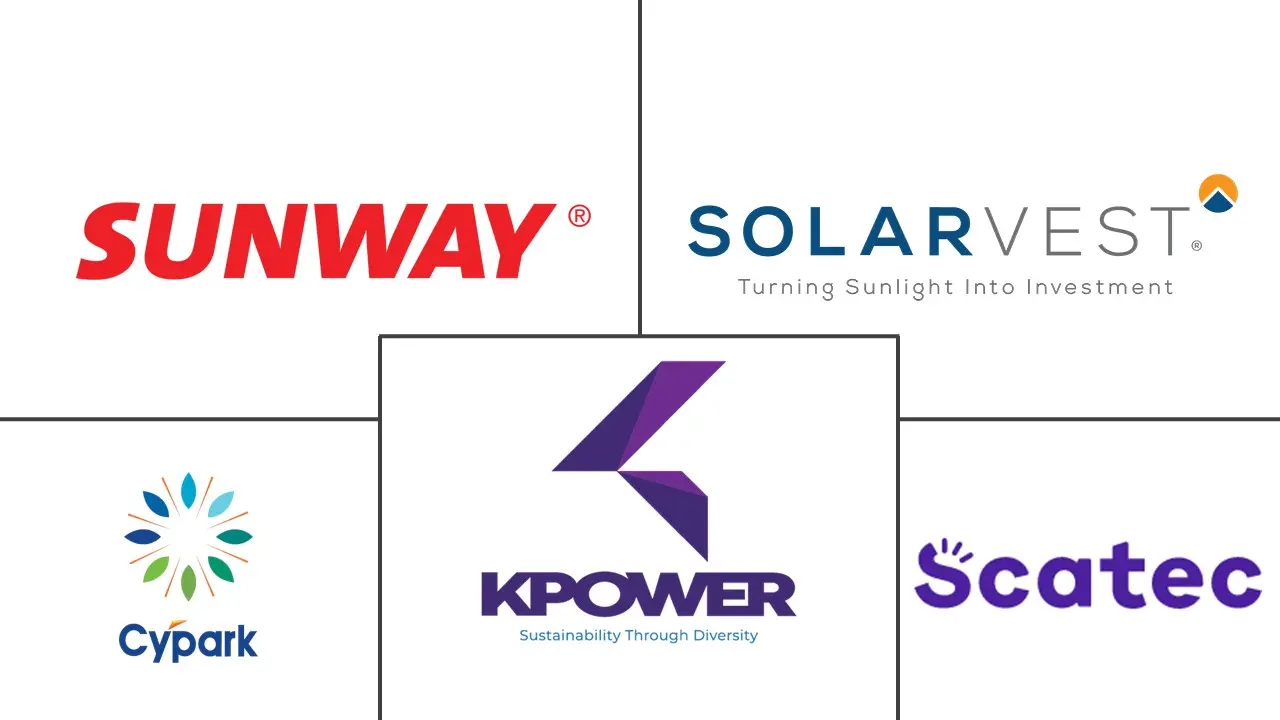
Source: Mordor Intelligence
Malaysia Power Generation EPC Companies Matrix by Mordor Intelligence
Our comprehensive proprietary performance metrics of key Malaysia Power Generation EPC players beyond traditional revenue and ranking measures
The MI Matrix can diverge from simple size rankings because it rewards proven delivery signals that buyers experience on real projects. Those signals include repeatable commissioning performance, depth of local partner networks, and how well a firm manages grid connection scope under Malaysia's current programs. It also reflects how reliably a company can scale people, equipment, and supervision across multiple sites without quality slippage. For Malaysia power generation EPC decisions, many executives want to know which firms can deliver CGPP and LSS schedules, and which ones can integrate storage or emissions controls without redesign churn. They also often need a quick view on who has credible experience in waste to energy permitting, stack testing, and community acceptance. This MI Matrix by Mordor Intelligence is better for supplier and competitor evaluation than revenue tables alone because it ties position to observable execution and project readiness.
MI Competitive Matrix for Malaysia Power Generation EPC
The MI Matrix benchmarks top Malaysia Power Generation EPC Companies on dual axes of Impact and Execution Scale.
Analysis of Malaysia Power Generation EPC Companies and Quadrants in the MI Competitive Matrix
Comprehensive positioning breakdown
Solarvest Holdings
Contract wins show Solarvest is gaining traction in both utility scale delivery and developer partnerships. It is a leading service provider in Malaysia solar EPCC and disclosed a large LSS5 photovoltaic build in Perak worth about USD 75.4 million, with a multi year delivery window. Repeat wins can translate into tighter subcontractor pricing and smoother commissioning curves, especially when projects must meet scheme deadlines. Solarvest also publicized selection for a very large LSS PETRA 5+ project, which supports a deeper utility scale bench if the conditional award converts. A realistic downside scenario is approval and connection slippage under program rules, which can compress margin through liquidated damages exposure.
General Electric
Commissioning at Pulau Indah can reset perceptions of delivery certainty for years. GE Vernova, part of General Electric and a top manufacturer in gas power technology, announced commercial operation of the 1.2 GW Pulau Indah plant in Selangor with a 21 year services arrangement. Malaysia's shift toward more solar and more gas fired capacity makes this type of flexible asset more relevant for grid reliability planning. The upside is follow on upgrades and digital optimization, not only new builds. The main operational risk sits outside the EPC fence line, since gas supply economics and dispatch rules can affect owner willingness to fund performance modifications.


Frequently Asked Questions
What should buyers prioritize when choosing a power plant EPC partner in Malaysia?
Prioritize proven grid connection delivery, commissioning track record, and contract management discipline. Then validate safety systems, subcontractor depth, and warranty response capacity.
How can a developer reduce schedule risk on LSS and corporate solar programs?
Lock long lead electrical equipment early and align interconnection studies with the utility timeline. Set clear testing protocols and require evidence of prior energization and handover performance.
What questions matter most for waste to energy EPC selection?
Ask about feedstock assumptions, emissions monitoring design, ash handling, and residue disposal plans. Also check community engagement plans and the operator's plan for stable plant availability.
How do gas plant builds differ from solar EPCC projects in execution risk?
Gas plants carry higher interface complexity across turbines, heat recovery, controls, and fuel supply readiness. Solar projects often fail on land access, weather windows, and interconnection delays instead.
How should owners evaluate carbon capture or retrofit readiness for thermal assets?
Start with space, steam, and cooling integration constraints, plus outage window feasibility. Then test economics under realistic capture rates and long term maintenance requirements.
What is a practical way to check contractor financial resilience for multi year projects?
Review recent audited results, working capital trends, and disclosed order backlog quality. Confirm bonding capacity and how claims and variations were handled on recent projects.











Methodology
Research approach and analytical framework
Data sourcing focused on company filings, official press rooms, and reputable journalism, with Malaysia specific project signals. Private firm scoring used observable awards, site activity, and disclosed mandates. Indicators were triangulated when one source lacked technical detail. When Malaysia specific financial detail was limited, we used conservative proxies tied to contracted activity.
Local sites, crews, partners, and permitting familiarity determine mobilization speed across Peninsular and East Malaysia.
Utility and regulator confidence lowers bid friction and supports faster approvals for connection and commissioning.
Contract scale and repeat awards indicate who is being selected for complex generation builds in Malaysia.
Owned engineering depth and construction controls reduce interface risk across civil, electrical, and grid tie packages.
Newer capabilities like floating solar, hybrid storage, and CCS readiness improve bid fit under evolving national programs.
Balance sheet and cash conversion affect ability to carry multi year schedules and absorb delay driven cost overruns.




