
Macadamia Milk Market Size and Share
Market Overview
| Study Period | 2021 - 2031 |
|---|---|
| Market Size (2026) | USD 56.94 Million |
| Market Size (2031) | USD 81.48 Million |
| Growth Rate (2026 - 2031) | 7.43 % |
| Fastest Growing Market | Asia-Pacific |
| Largest Market | North America |
| Market Concentration | Medium |
Major Players *Disclaimer: Major Players sorted in no particular order Image © Mordor Intelligence. Reuse requires attribution under CC BY 4.0. | |
Macadamia Milk Market Analysis by Mordor Intelligence
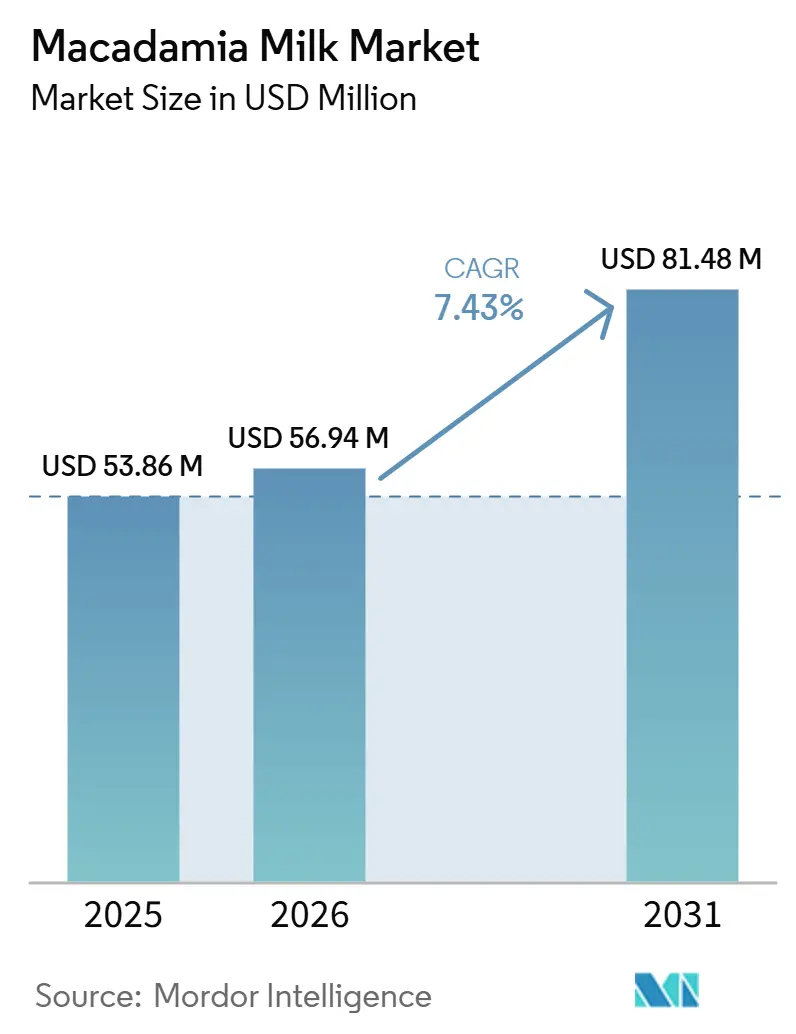
The macadamia milk market size is projected to grow from USD 53.86 million in 2025 and USD 56.94 million in 2026 to USD 81.48 million by 2031, registering a CAGR of 7.43% during 2026-2031. This growth positions the category among the faster-growing premium niches in plant-based beverages, even as the broader US plant-based milk category is expected to record a 2% decline in dollar sales in 2025, according to the Good Food Institute. This divergence reflects macadamia milk’s premium positioning, while mainstream oat and almond products face trade-down pressure and weaker margins. Flexitarian consumers remain a core demand group, as 46% of global consumers identified as flexitarian in ADM’s 2025 research, which highlighted active reductions in animal protein consumption rather than a full shift to vegan diets[1]Source: Archer-Daniels-Midland Company, “The Powerful Trends That Are Shaping Alternative Protein Innovation,” ADM, adm.com. Demand also relies on specialty coffee applications, where frothing quality, foam retention, and a coffee-neutral taste increasingly outweigh price considerations. On the supply side, the expected decline in the 2025 Australian crop has kept ingredient costs and sourcing resilience central to brand planning, according to Australian Macadamias.
Key Report Takeaways
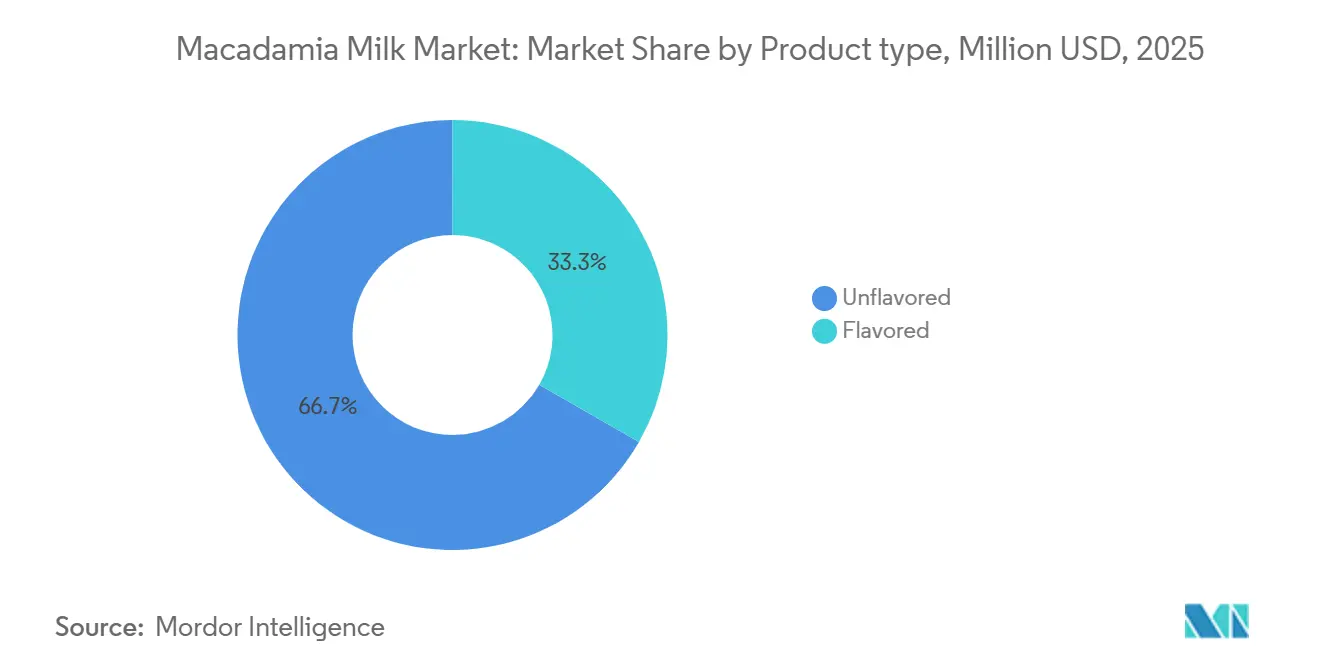
- By flavor, unflavored products held 66.71% of the macadamia milk market share in 2025, while flavored products are forecast to grow at an 8.46% CAGR through 2031.
- By nature, conventional products held 69.51% of the macadamia milk market share in 2025, while organic products are projected to expand at a 9.88% CAGR through 2031.
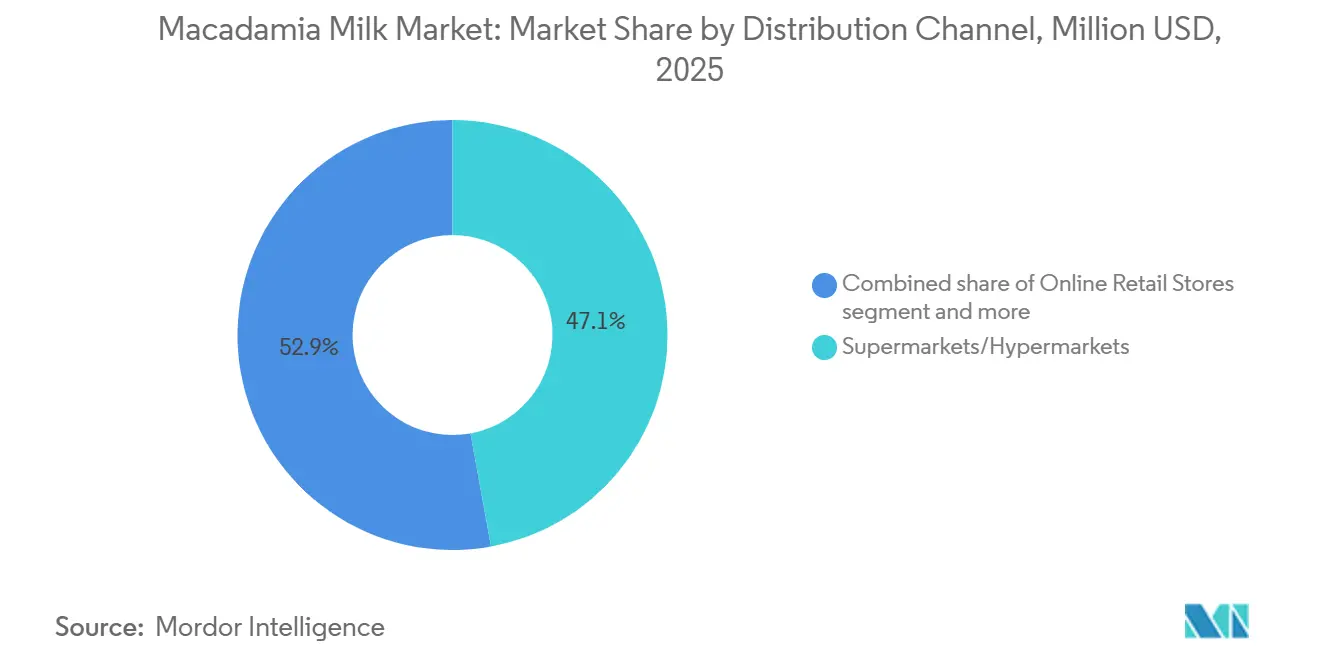
- By distribution channel, supermarkets and hypermarkets held 47.13% of the macadamia milk market size in 2025, while online retail stores are projected to grow at a 9.51% CAGR through 2031.
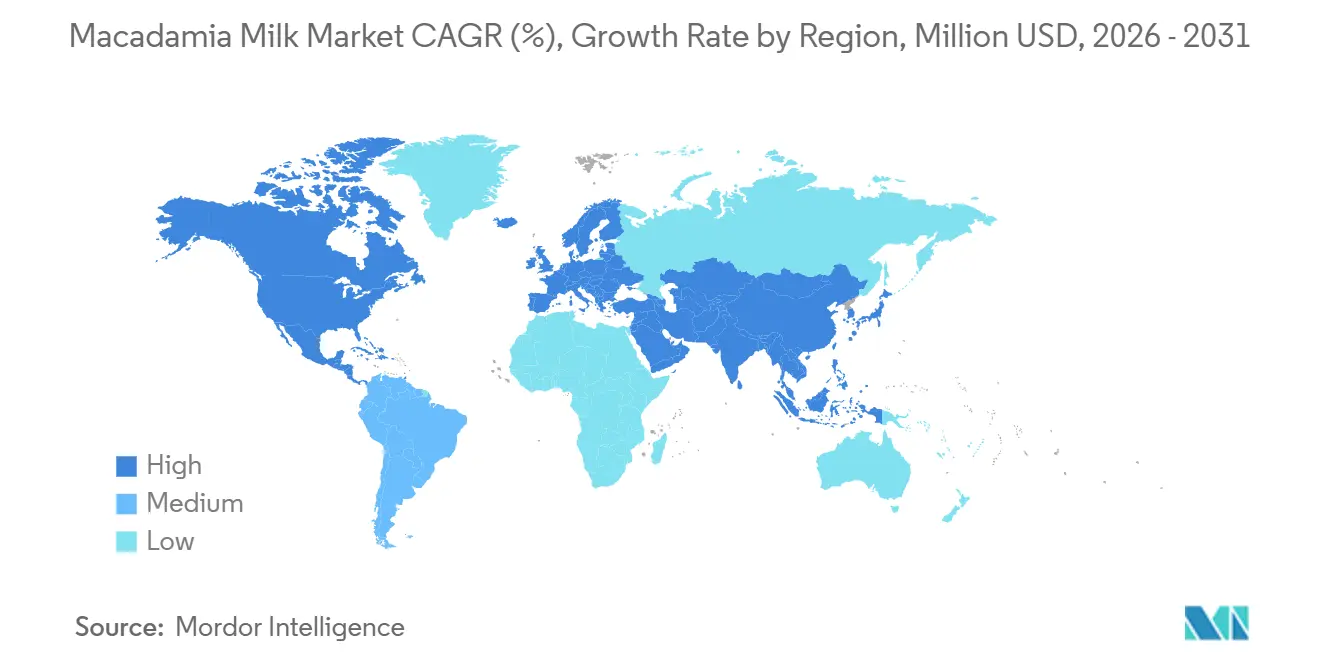
- By geography, North America held 35.90% of the macadamia milk market share in 2025, while Asia-Pacific is forecast to grow at an 8.68% CAGR through 2031.
Note: Market size and forecast figures in this report are generated using Mordor Intelligence’s proprietary estimation framework, updated with the latest available data and insights as of January 2026.
Global Macadamia Milk Market Trends and Insights
Drivers Impact Analysis*
| Driver | (~) % Impact on CAGR Forecast | Geographic Relevance | Impact Timeline |
|---|---|---|---|
| Expansion of plant-based and flexitarian consumption | +2.5% | Global, led by North America and Europe | Medium term (2–4 years) |
| Barista-grade creaminess and frothing performance | +1.2% | Global, most pronounced in the Asia-Pacific coffee markets and North America | Short term (≤ 2 years) |
| Premium clean-label and low-sugar positioning | +1.0% | North America and Europe | Medium term (2–4 years) |
| E-commerce and specialty retail access | +0.8% | Asia-Pacific core (China, Japan, South Korea), spill-over to the Middle East and Africa | Short term (≤ 2 years) |
| Macadamia-origin and regenerative-agriculture storytelling | +0.4% | North America, Europe, Australia | Long term (≥ 4 years) |
| Growing vegan population across the globe | +0.6% | Global, led by India, Europe, and North America | Medium term (2–4 years) |
| Source: Mordor Intelligence | |||
Expansion of plant-based and flexitarian consumption
The structural tailwind for the macadamia milk market is not veganism but flexitarianism at scale. ADM's 2025 Alt-Protein Outlook identifies 46% of global consumers as flexitarians, a cohort that actively reduces animal protein consumption rather than eliminating it entirely. This group disproportionately trades up within plant-based beverages. In Germany, plant-based milk sales are expected to grow 8.1% to EUR 632 million in 2025, with volume rising 7.7%, securing a 9.2% share of the total milk market by volume, according to GFI Europe[2]Source: Good Food Institute, “U.S. Retail Market Insights for the Plant-Based Industry,” Good Food Institute, gfi.org. This trend demonstrates that European consumers remain increasingly open to premium plant-based options. A less-discussed dynamic is that flexitarian purchase behavior is driven more by health than by ethics. Around 86% of global plant-forward consumers believe diversifying protein sources is healthier, and macadamia milk’s high monounsaturated fat profile and naturally low sugar content align closely with this motivation. At the category level, approximately 25.8 million people globally are expected to participate in Veganuary in January 2025, creating a recurring annual spike in trial demand that specialty brands can convert into long-term loyalty through strategic on-shelf placement and digital follow-through.
Barista-grade creaminess and frothing performance
Macadamia milk’s technical performance in espresso applications represents its most defensible commercial advantage. Published research in Beverages confirms that macadamia’s naturally high fat content and neutral flavor profile deliver stronger microfoam stability than most plant-based alternatives. In practice, Milkadamia’s barista-grade blend maintains foam structure for 8–12 minutes, compared with 4–6 minutes for most competing plant-based milks. This performance gap supports café reorders independent of shifts in consumer preference. The second-order opportunity lies in the foodservice channel’s evolving ordering logic. Specialty coffee shops increasingly set product specifications at the brand level rather than leaving choices to barista discretion. As a result, once a macadamia milk product becomes part of a training protocol or menu lineup, switching costs increase meaningfully. Germany illustrates the commercial upside; according to GFI Europe data, 55 of the 275 analyzed plant-based milk products in the German market in 2025 were classified as “Barista-Style,” confirming foodservice-led innovation as a key retail growth driver. Producers that invest in formulation science, including stabilizer optimization and pH buffering for acidic espresso, are likely to strengthen their foodservice advantage and convert it into retail listings.
Premium clean-label and low-sugar positioning
Consumer motivation in plant-based beverages is shifting from sustainability toward nutritional utility, and macadamia milk is benefiting from this shift more than many alternatives. According to the Plant-Based Foods Association’s late-2025 data, taste accounts for roughly 33% of experience-related consumer discussions, while health functionality, fitness (6.4%), weight management (4.8%), energy (3.9%), and gut health (3.4%) are gaining relevance. Macadamia milk’s naturally clean ingredient deck, typically comprising water, macadamia nuts, and salt, aligns with the “tradlife” aesthetic, which the Plant-Based Foods Association reported grew 270% year-over-year in consumer topic discussions in 2025. This trend reflects consumer preference for familiar, comforting, and minimally processed products. An underappreciated dynamic is that the fastest-growing consumer claims in the natural channel include organic (+29%) and fair trade (+40%) year-over-year. This suggests that macadamia milk producers combining clean-label positioning with certified organic sourcing can reach a compound-growth ceiling that single-attribute competitors may not match.
E-commerce and specialty retail access
Online retail stores represent the fastest-growing distribution channel in the macadamia milk market, with a projected CAGR of 9.51% during 2026–2031, significantly outpacing the overall market. In the broader plant-based milk category, online channels are expected to account for approximately 18.2% of distribution in 2025 and expand at rates exceeding 25% year-over-year, according to multiple channel-level analyses. Subscription services and direct-to-consumer brand platforms are driving this growth. The strategic rationale for macadamia milk is stronger, as macadamia milk is priced 40–60% higher than oat and almond milk equivalents. As a result, consumers require education before committing to purchase, and online discovery ecosystems, including reviews, recipe content, and influencer positioning, help convert consideration into purchase with less friction than physical shelf browsing. In China, Tmall and Douyin account for 40–55% of macadamia milk sales in tier-one and tier-two cities. Livestreaming-led consumer education fuels this growth and is scaling the premium import category at an estimated annual rate of 20–25%. Milkadamia’s availability across more than 13,000 US retail locations, including Whole Foods, Sprouts, Kroger, Albertsons, and Target, demonstrates how an omnichannel model anchored in specialty retail, Amazon, and direct-to-consumer channels serves as the playbook for building both volume and brand defensibility in this segment.
Restraints Impact Analysis*
| Restraint | (~) % Impact on CAGR Forecast | Geographic Relevance | Impact Timeline |
|---|---|---|---|
| High nut input cost and premium shelf pricing | -2.2% | Global, most acute in markets with low plant-based milk penetration | Medium term (2–4 years) |
| Concentrated and climate-sensitive macadamia supply | -1.0% | Global (Australia-dependent), spill-over to South Africa and Kenya | Short term (≤ 2 years) |
| Low consumer awareness versus oat, almond, and soy milk | -1.5% | The Asia-Pacific ex-Australia, South America, and the Middle East and Africa | Long term (≥ 4 years) |
| Fortification, allergen labeling, and formulation trade-offs | -0.4% | North America and Europe | Medium term (2–4 years) |
| Source: Mordor Intelligence | |||
High nut input cost and premium shelf pricing
Macadamia nuts are among the costliest tree nuts globally, with their premium commodity structure reflected in every retail SKU. This creates a dual constraint: it limits volume growth by narrowing the addressable base of price-sensitive consumers and restricts gross margin headroom for brands aiming to invest in marketing and distribution expansion. Cost pressure is expected to intensify in 2026 following the projected 2025 Australian crop shortfall. Low inventory levels entering 2026 are likely to keep ingredient procurement costs elevated, even as the Australian Macadamia Handlers Association forecasts a cautious production recovery in 2026, supported by improved growing conditions. In Germany, plant-based milk is expected to remain 10% more expensive than animal milk in 2025, primarily due to unequal VAT treatment (19% on plant-based milk versus 7% on animal milk). Without regulatory correction, this pricing gap may continue to act as a persistent structural barrier to mainstream adoption, according to the Good Food Institute Europe. Brands that invest in blended formulations, combining macadamia with oat, coconut, or almond to moderate per-unit nut content, are well-positioned to attract price-straddling consumers without fully abandoning their premium positioning.
Concentrated and climate-sensitive macadamia supply
Macadamia supply geography represents one of the sector's most underappreciated systemic risks. Australia remains the world's leading producer of premium processing-grade macadamias. However, its 2025 crop is expected to decline to 43,800 tonnes (in-shell, 3.5% moisture), compared to approximately 53,000 tonnes in 2024, as ex-Tropical Cyclone Alfred is expected to bring damaging winds, heavy rainfall, and flooding across key growing regions in early 2025, according to the Australian Macadamias Yearbook 2025[3]Source: Australian Macadamias, “Sourcing Sustainability, Why Australian Macadamias Offer a Natural Ingredient Advantage,” Australian Macadamias Trade, trade.australian-macadamias.org. While global macadamia supply is projected to increase from approximately 346,000 tonnes in 2025 to a midpoint of around 509,000 tonnes by 2030, South Africa and China are forecast to become the two largest producers by that horizon. This geographic shift may introduce quality consistency and traceability challenges for processors that have historically relied on the Australian supply. The key second-order risk is brand authenticity. Macadamia milk brands that have built consumer equity around “Australian macadamias” as a provenance signal may face a strategic dilemma if they must diversify sourcing to South Africa or Vietnam to maintain supply continuity. Farmers adopting regenerative agriculture, such as WelMac in South Africa, which secured a EUR 2.75 million investment from the Dutch Good Growth Fund, offer partial mitigation by combining supply diversification with sustainability narratives.
*Our forecasts treat driver/restraint impacts as directional, not additive. The impact forecasts reflect baseline growth, mix effects, and variable interactions.
Segment Analysis
By Flavor: Unflavored Volume Dominates, but Flavored Variants Lead Growth
Unflavored products are expected to account for 66.71% of the macadamia milk market share in 2025. This leading position reflects their use as an everyday beverage base and café ingredient rather than as occasional flavored drinks. Consumers typically prefer unflavored formats for routine consumption because they offer greater versatility across hot and cold beverages, cooking applications, and breakfast occasions. The source draft links this pattern to US plant-based milk data, where plain products held more than 55% of dollar sales and grew by 1% in 2025, according to the Good Food Organization. This stability supports repeat use in coffee, cooking, and cereal, as plain macadamia milk can blend with different flavor profiles without altering the taste of the final product. It also gives brands a core format for building barista and foodservice listings, particularly in cafés and restaurants that require neutral, consistent plant-based milk options for multiple menu applications.
Flavored products are forecast to register an 8.46% CAGR from 2026 to 2031. Chocolate, vanilla, and barista-oriented variants can encourage trial among consumers who use plant-based beverages in smoothies, cereal, and desserts, as these products provide a more familiar and indulgent taste profile. These formats can serve as entry points before consumers shift toward unflavored products for regular use. The source draft also identifies growing online discussion around macadamia combinations with matcha, turmeric, and seasonal spices, indicating opportunities for brands to test limited-edition and functional flavor extensions. Such products can support assortment expansion and help brands target consumers seeking variety, premium positioning, and café-style experiences at home, although demand will depend on maintaining the creaminess and low-sugar qualities associated with the category.


By Nature: Conventional Products Hold Scale While Organic Products Lead Growth
Conventional products accounted for 69.51% of the macadamia milk market size in 2025. This position reflected the high cost of organic sourcing, which can make it difficult for brands to serve volume-focused retail tiers and maintain competitive shelf prices. Therefore, conventional offerings provided the primary route to routine supermarket distribution, especially in mainstream stores where price gaps influence repeat purchases. They also allowed brands to build product awareness, secure shelf space, and test demand before introducing certified formats. A broader conventional range helped brands serve buyers who valued macadamia milk’s taste, texture, and coffee performance but did not prioritize certification.
Organic products are forecast to register a CAGR of 9.88% from 2026 to 2031, the highest rate among the reported segments. The source draft cited Milkadamia research indicating that 92% of premium plant-based milk purchasers preferred organic products and that more than 75% were willing to pay more for the claim. The brand introduced its organic shelf-stable line at Whole Foods at USD 7.00 per 32 oz, positioning it for consumers who associate organic labels with quality, traceability, and cleaner ingredient profiles. USDA Organic certification provides a framework for labeling, sourcing transparency, and third-party review in the United States. Brands with this certification can use it as a recognized quality signal when pursuing international distribution and premium retail placements. Therefore, organic growth depends on consumers’ willingness to pay, the reliable supply of certified nuts, and the ability of brands to manage higher input costs without limiting accessibility.
By Distribution Channel: Supermarkets Provide Reach While Online Stores Support Education
Supermarkets and hypermarkets held 47.13% of the macadamia milk market size in 2025. This share reflects the importance of planned, repeat shopping in driving beverage volume, as consumers often purchase plant-based milk alternatives during regular grocery trips. Convenience stores and other outlets offer on-the-go or impulse access but do not generate the same routine purchasing pattern. Large retailers also provide the shelf visibility needed to establish an unfamiliar milk base and encourage trial among mainstream shoppers. For specialist brands, supermarket distribution remains important for scale, repeat purchases, and household recognition.
Online retail stores are projected to expand at a CAGR of 9.51% through 2031. Subscription programs, Amazon distribution, and direct-to-consumer sites can increase revenue per order compared to physical retail by supporting bundled purchases, repeat orders, and targeted promotions. Digital channels also retain the full retail transaction value, although they require investment in fulfillment and customer acquisition. In China’s major cities, the source draft reported that e-commerce accounted for 40-55% of sales, showing how platform discovery can compensate for limited physical listings and help consumers learn about newer plant-based milk options. Therefore, an omnichannel structure can combine supermarkets for volume with online stores for product education, consumer engagement, and higher-value orders.

Geography Analysis
North America is expected to account for 35.9% of the macadamia milk market share in 2025. The region benefits from well-developed specialty retail infrastructure and strong consumer spending on premium plant-based beverages. According to the source draft, the natural retail channel in the United States continues to report positive growth in plant-based foods, while mass channels show weakness. Canada remains a smaller but important market, where brands position cold-press extraction as a quality baseline. However, consumption is expected to remain below 0.1 liters per person in 2025. Mexico presents an early-stage opportunity centered on specialty coffee chains, although household penetration remains limited.
Europe is expected to hold a meaningful share of global revenue in 2025, with Germany serving as a regional indicator for product development. According to the Good Food Institute Europe, German plant-based milk sales are expected to rise by 8.1% to EUR 632 million in 2025, with volume increasing by 7.7%. Barista-style products accounted for 55 of the 275 analyzed products. However, Germany’s 19% VAT on plant-based milk, compared with 7% for animal milk, may constrain premium adoption, according to the Good Food Institute Europe. The United Kingdom, France, Sweden, Denmark, and Norway show stronger organic demand, while Spain and Italy remain in earlier stages of adoption.
Asia-Pacific is forecast to grow at a CAGR of 8.7% from 2026 to 2031, making it the fastest-growing regional macadamia milk market. Australia has the most mature regional demand and is the only major market with a domestic macadamia supply base linked to local manufacturing. Noumi reported 18.8% growth in international plant-based sales in FY2025, identifying South Korea, Indonesia, and Thailand as key markets. China’s demand remains concentrated in café markets across Shanghai, Beijing, and Guangzhou, while e-commerce supports product discovery. Japan records high per-liter import prices due to distribution margins. South America, the Middle East, and Africa remain longer-term opportunities, while South Africa is gaining importance on the supply side through regenerative macadamia investment.

Competitive Landscape
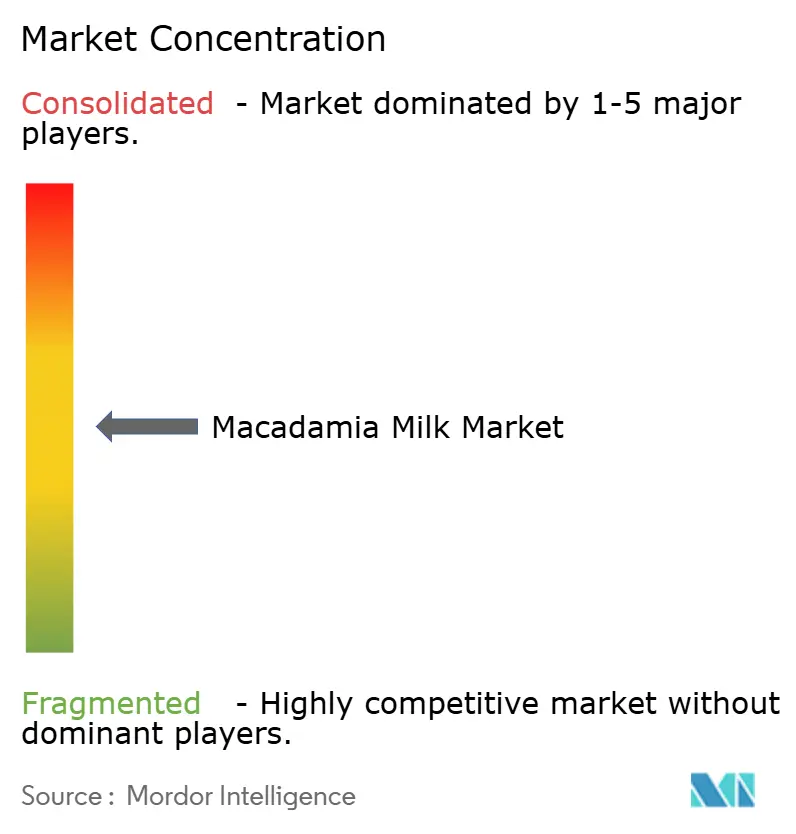
The macadamia milk market is moderately fragmented, with Milkadamia, Noumi Limited’s Milklab, and Elmhurst 1925 holding specialist premium positions. These brands compete through formulations, retail partnerships, and provenance rather than low pricing. Their positioning depends on product differentiation, ingredient transparency, and channel-specific offerings that appeal to premium plant-based consumers. Milkadamia reaches more than 13,000 retail locations in the United States and uses organic, barista, and packaging formats to maintain a differentiated offering. Its Flat Pack Organic Oat Milk format, expected to be introduced in 2025, is projected to reduce packaging waste by 94% and product weight by 85%.
Noumi’s Milklab highlights the importance of the Asia-Pacific café channel in the macadamia milk market. Noumi is expected to report 18.8% growth in international plant-based sales in FY2025 and expand distribution in South Korea, Indonesia, and Thailand. This strategy combines barista product performance with markets where café consumption and online discovery are expanding. It also reflects the role of foodservice partnerships in building consumer trial and strengthening brand visibility in plant-based beverages. Elmhurst 1925’s Clean Protein line is expected to enter ready-to-drink beverages in 2026 and receive a NEXTY Award in the dairy-alternative category. This move indicates that some clean-label brands view adjacent protein beverages as a way to extend brand trust beyond the milk aisle.
A differentiated position can combine USDA Organic certification, documented regenerative sourcing, and supportable nutrition claims. This combination is harder to replicate than a standard barista formula, but it requires reliable documentation and supply. It also allows brands to support premium pricing through verifiable sourcing and product quality rather than marketing claims alone. Private-label expansion remains the principal competitive risk identified in the source draft. Store brands are estimated to represent 15-20% of category volume in Australian and Japanese grocery chains in 2026, using lower-cost standardized formulas. If nut supply stabilizes and ingredient costs decline, these products could narrow the price gap and increase pressure on specialists. Brands will need to protect quality, sourcing, and foodservice relationships rather than rely solely on a premium shelf price.
Macadamia Milk Industry Leaders
Milkadamia
Kikkoman Corporation
Califia Farms LLC
Suncoast Gold Macadamias
Omello, Inc.
- *Disclaimer: Major Players sorted in no particular order

Recent Industry Developments
- May 2026: Elmhurst 1925 launched its Clean Protein ready-to-drink line (27 g complete plant protein, 190 calories, no gums or seed oils) nationwide at Sprouts Farmers Market, marking the brand's entry into the RTD protein category and demonstrating how premium plant-based milk makers are monetizing existing consumer trust in adjacent high-growth formats.
- September 2024: Milkadamia launched its Organic Artisan Shelf-Stable macadamia nut milk line at Whole Foods Market nationally and on Amazon, representing the brand's first USDA-certified organic offering and responding directly to consumer research showing 92% of premium plant-based milk buyers prefer organic.
- January 2024: Milkadamia introduced its Organic Artisan Refrigerated macadamia milk range at the Winter Fancy Food Show in Las Vegas. The new line included five USDA Organic varieties: Original Macadamia Milk, Unsweetened Macadamia Milk, Macadamia and Oat Milk, Macadamia and Coconut Milk, and Macadamia and Almond Milk. The products contained only four or five kitchen-style ingredients and did not include gums, fillers, added oils, or artificial flavors.


Global Macadamia Milk Market Report Scope
Macadamia milk is a rich, dairy-free plant milk made by blending soaked macadamia nuts with water. The macadamia milk market is segmented by flavor, nature, distribution channel, and geography. By flavor, the market is segmented into flavored and unflavored. By Nature, the market is segmented into conventional and organic. By distribution channel, the market is segmented into supermarkets/hypermarkets, convenience stores, online retail stores, and other distribution channels. By geography, the market is segmented into North America, Europe, Asia-Pacific, South America, and the Middle East and Africa. The market forecasts are provided in terms of value (USD).
| Flavored |
| Unflavored |
| Conventional |
| Organic |
| Supermarkets/Hypermarkets |
| Convenience Stores |
| Online Retail Stores |
| Other Distribution Channels |
| North America | United States |
| Canada | |
| Mexico | |
| Rest of North America | |
| Europe | United Kingdom |
| Germany | |
| France | |
| Italy | |
| Spain | |
| Sweden | |
| Belgium | |
| Poland | |
| Netherlands | |
| Rest of Europe | |
| Asia-Pacific | China |
| Japan | |
| India | |
| Singapore | |
| South Korea | |
| Australia | |
| Rest of Asia-Pacific | |
| South America | Brazil |
| Argentina | |
| Chile | |
| Rest of South America | |
| Middle East and Africa | United Arab Emirates |
| South Africa | |
| Saudi Arabia | |
| Rest of Middle East and Africa |
| Flavor | Flavored | |
| Unflavored | ||
| Nature | Conventional | |
| Organic | ||
| Distribution Channel | Supermarkets/Hypermarkets | |
| Convenience Stores | ||
| Online Retail Stores | ||
| Other Distribution Channels | ||
| Geography | North America | United States |
| Canada | ||
| Mexico | ||
| Rest of North America | ||
| Europe | United Kingdom | |
| Germany | ||
| France | ||
| Italy | ||
| Spain | ||
| Sweden | ||
| Belgium | ||
| Poland | ||
| Netherlands | ||
| Rest of Europe | ||
| Asia-Pacific | China | |
| Japan | ||
| India | ||
| Singapore | ||
| South Korea | ||
| Australia | ||
| Rest of Asia-Pacific | ||
| South America | Brazil | |
| Argentina | ||
| Chile | ||
| Rest of South America | ||
| Middle East and Africa | United Arab Emirates | |
| South Africa | ||
| Saudi Arabia | ||
| Rest of Middle East and Africa | ||


Key Questions Answered in the Report
What is the projected growth rate for macadamia milk through 2031?
The category is projected to grow at a 7.43% CAGR from 2026 to 2031, reaching USD 81.48 million by 2031.
Why do cafés use macadamia milk?
Its neutral flavor and stable microfoam make it suitable for espresso drinks, and café specifications can support repeat purchases.
Which macadamia milk product type is growing fastest?
Organic products are projected to grow at a 9.88% CAGR through 2031, ahead of the overall category.
Which sales channel is expanding fastest for macadamia milk?
Online retail stores are forecast to grow at a 9.51% CAGR through 2031, supported by subscriptions and direct-to-consumer sales.
Page last updated on:





