
Lyophilized Injectable Market Size and Share
Market Overview
| Study Period | 2020 - 2031 |
|---|---|
| Market Size (2026) | USD 466.35 Billion |
| Market Size (2031) | USD 910.20 Billion |
| Growth Rate (2026 - 2031) | 14.31 % |
| Fastest Growing Market | Asia-Pacific |
| Largest Market | North America |
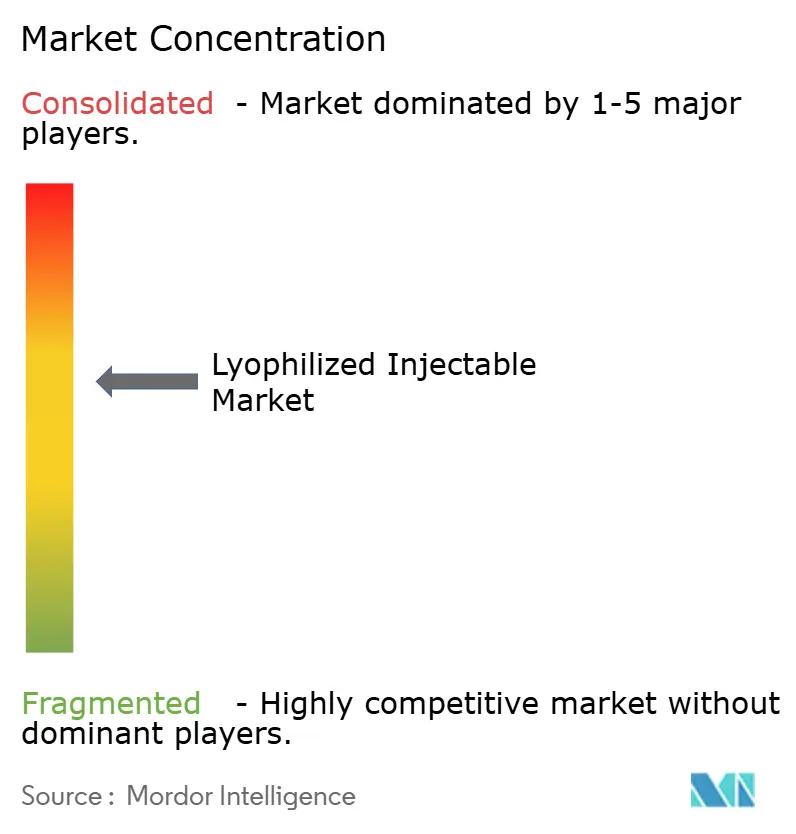
| Market Concentration | Medium |
Major Players *Disclaimer: Major Players sorted in no particular order Image © Mordor Intelligence. Reuse requires attribution under CC BY 4.0. | |
Lyophilized Injectable Market Analysis by Mordor Intelligence
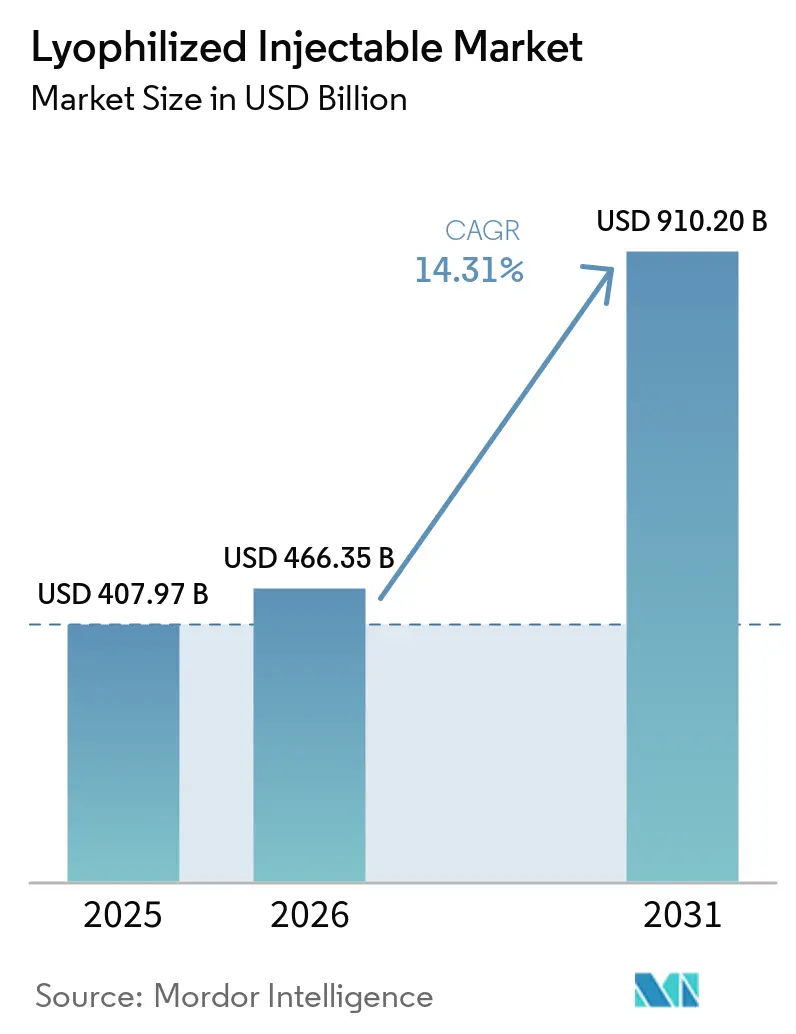
The Lyophilized Injectable Market size is projected to expand from USD 407.97 billion in 2025 and USD 466.35 billion in 2026 to USD 910.20 billion by 2031, registering a CAGR of 14.31% between 2026 and 2031.
The lyophilized injectable market is supported by a drug pipeline with more biologics, vaccines, and specialty therapies that need stable sterile presentations. Manufacturers are also giving greater attention to products that can tolerate longer storage and less demanding distribution conditions. This favors freeze-dried products when liquid stability remains difficult to maintain. Competition increasingly depends on formulation knowledge, sterile capacity, and packaging that makes reconstitution simpler. Investment by contract manufacturers can ease supply constraints, while tighter sterile manufacturing requirements can favor operators with established quality systems.
Key Report Takeaways
- By drug class, anti-infective drugs held 41.54% of the lyophilized injectable market share in 2025, while antineoplastic drugs are projected to grow at a CAGR of 16.65% through 2031.
- By packaging, vials accounted for 48.54% of the lyophilized injectable market share in 2025, while cartridges are forecast to expand at a 16.34% CAGR through 2031.
- By type of delivery, prefilled diluent syringes captured 42.54% of the lyophilized injectable market share in 2025, while proprietary reconstitution devices are forecast to grow at a 16.74% CAGR through 2031.
- By indication, metabolic conditions held 25.65% of the lyophilized injectable market share in 2025, while autoimmune diseases are forecast to advance at a 16.87% CAGR through 2031.
- By end user, hospitals accounted for 43.54% of the lyophilized injectable market share in 2025, while specialty clinics are forecast to grow at a 17.22% CAGR through 2031.
- By distribution channel, hospital pharmacies held 51.53% of the lyophilized injectable market share in 2025, while online pharmacies are forecast to expand at a 17.32% CAGR through 2031.
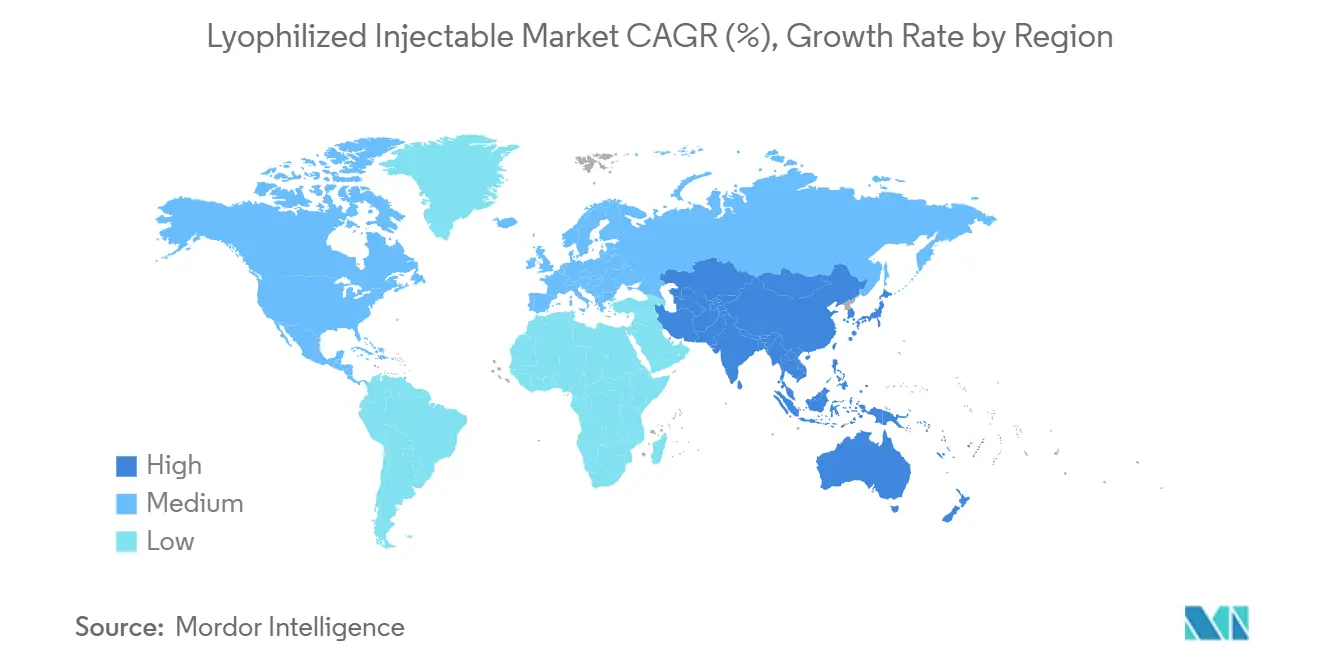
- By geography, North America accounted for 44.28% of the lyophilized injectable market share in 2025, while Asia-Pacific is projected to grow at a 15.65% CAGR through 2031.
Note: Market size and forecast figures in this report are generated using Mordor Intelligence’s proprietary estimation framework, updated with the latest available data and insights as of January 2026.
Market Trends and Insights
Drivers Impact Analysis of Lyophilized Injectable Market*
| Driver | (~) % Impact on CAGR Forecast | Geographic Relevance | Impact Timeline |
|---|---|---|---|
| Stable, Long Shelf-Life Injectable Demand | +2.80% | Global, with acute gains in North America and Europe | Short term (≤ 2 years) |
| Biologics, Vaccines, and Specialty Injectable Expansion | +3.50% | North America, EU, APAC core | Medium term (2-4 years) |
| Chronic-Disease Injectable Treatment Volumes | +2.00% | Global, APAC and MEA fastest scaling | Medium term (2-4 years) |
| Contract Development and Manufacturing Capacity Growth | +1.80% | North America, EU, India, China | Medium term (2-4 years) |
| Freeze-Dried mRNA and Lipid Nanoparticle Development | +1.50% | North America and EU with spill-over to APAC | Long term (≥ 4 years) |
| Lower Cold-Chain Dependence in Remote Distribution | +1.20% | APAC, MEA, South America | Long term (≥ 4 years) |
| Source: Mordor Intelligence | |||
Demand for Stable, Long Shelf-Life Injectable Drugs
The lyophilized injectable market benefits when drug developers need presentations that remain stable through storage, transport, and clinical use. Lyophilization removes 95%-99% of water from pharmaceutical formulations, which can extend shelf life beyond 24-36 months under controlled storage conditions. This feature is important for hospital pharmacies and specialty clinics that manage oncology and critical-care inventories. Stable formats can reduce product waste and make procurement planning more predictable. A 2024 journal article described the growing role of lyophilized presentations in parenteral development and regulatory practice[1]. The same storage benefit can support purchasing decisions where shortages and substitutions carry clinical or financial consequences.
Expansion of Biologics, Vaccines, and Specialty Injectables
The lyophilized injectable market is closely linked to the expansion of biologics, vaccines, and specialty injectables. Proteins and nucleic acid therapies can be difficult to preserve in aqueous form, particularly when they require a long shelf life. The lyophilized injectable market, therefore, has a role in supporting sterile drug products that need reconstitution before administration. The Biotechnology Innovation Organization has documented continuing development activity across the biopharmaceutical pipeline[2]. Biosimilar entry can add product presentations in established biologic categories instead of reducing the need for stable injectable formats. Competition in these categories can shift attention toward formulation consistency, packaging compatibility, and practical use in hospitals and clinics.
Rising Chronic-Disease Treatment Volumes Requiring Injectable Therapies
The lyophilized injectable market is supported by treatment needs associated with cancer, diabetes, cardiovascular disease, and other chronic conditions. Noncommunicable diseases accounted for 74% of deaths globally in the World Health Organization data cited in the supplied research[3]. Longer dosing intervals and more concentrated protein formulations can increase the challenge of validating liquid stability. The lyophilized injectable market can address this issue when a stable powder presentation is more suitable than a liquid product. Oncology products and complex biologics remain relevant because they are often administered in supervised settings with defined reconstitution workflows. The movement of selected maintenance therapies toward home use also increases interest in formats that are easier for patients to prepare correctly.
Growth of Contract Development and Manufacturing Capacity
The lyophilized injectable market is affected by the availability of sterile fill-finish capacity at contract development and manufacturing organizations. Smaller biopharma companies can depend on external partners when they do not have their own lyophilization suites. PCI Pharma Services announced in April 2026 that it is making investments exceeding USD 1 billion in sterile fill-finish and drug-device delivery capabilities, including a vial and lyophilization line in Bedford, New Hampshire. More available capacity can shorten the path from development to commercial supply for some products. At the same time, upgraded cleanroom and quality requirements can raise the cost of entry for new suppliers. This can make reliable capacity a competitive advantage for established providers in the lyophilized injectable market.
Restraints Impact Analysis of Lyophilized Injectable Market*
| Restraint | (~) % Impact on CAGR Forecast | Geographic Relevance | Impact Timeline |
|---|---|---|---|
| High Lyophilization Capital and Operating Costs | -1.50% | Global, most acute in APAC emerging markets and South America | Short term (≤ 2 years) |
| Complex Process Validation and Sterile Quality Control | -1.00% | Global, EMA and FDA jurisdictions in particular | Medium term (2-4 years) |
| Container-Closure and Reconstitution-Device Compatibility Risks | -0.80% | North America, EU regulatory-intensive markets | Medium term (2-4 years) |
| Limited Commercial-Scale Capacity for Emerging Biopharma | -0.70% | Global, concentrated in North America and EU pipeline | Long term (≥ 4 years) |
| Source: Mordor Intelligence | |||
High Capital and Operating Costs of Lyophilization
The lyophilized injectable market faces high equipment and facility costs compared with many other sterile manufacturing activities. A commercial-scale lyophilizer can cost USD 2 million to USD 5 million, while a compliant fill-finish line can require more than USD 50 million. These requirements can limit in-house manufacturing options for emerging biopharma companies. Long drying cycles also increase energy use and operating costs for protein biologics. Equipment upgrades may improve operating efficiency, but they require additional investment before savings are realized. As a result, high capital costs can reinforce the appeal of outsourcing while limiting the number of suppliers able to enter the lyophilized injectable market.
Complex Process Validation and Sterile Quality Control
The lyophilized injectable market is restrained by the demanding validation work required for sterile freeze-drying processes. Manufacturers must establish and document freezing rates, shelf temperatures, chamber pressure, residual moisture, and other critical process parameters. A 2025 review discussed control strategies and manufacturing observations for freeze-dried human drug applications. Small deviations can affect long-term product stability and can lead to significant quality consequences. New vial, cartridge, and device configurations add container-closure testing and compatibility work. These requirements can extend development schedules and make experienced quality and regulatory teams especially important.
*Our forecasts treat driver/restraint impacts as directional, not additive. The impact forecasts reflect baseline growth, mix effects, and variable interactions.
Lyophilized Injectable Market Segment Analysis
By Drug Class:
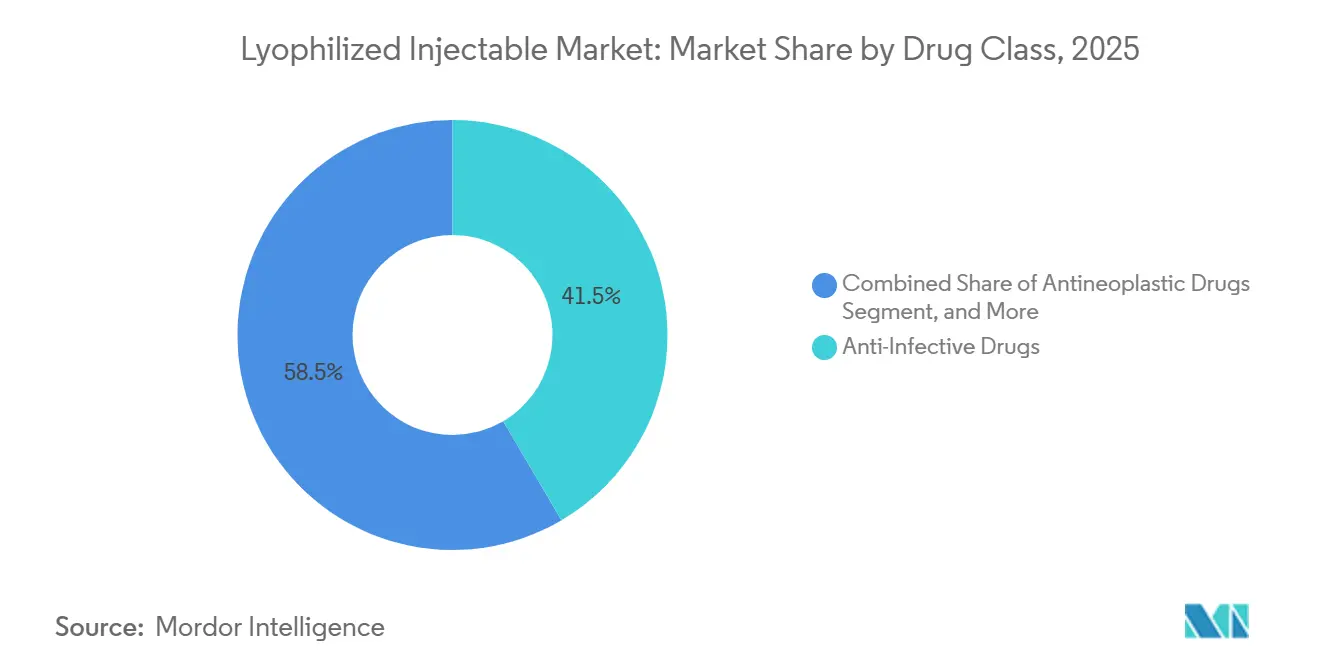
Anti-Infectives Lead Current Demand, While Oncology Supports Faster GrowthAnti-infective drugs held 41.54% of the lyophilized injectable market share in 2025. Their position reflects continued use in critical care and hospital environments. Freeze-dried formats provide storage flexibility for thermostable antibiotics and antifungals. Reconstitution also allows clinical teams to prepare products within established pharmacy workflows. Antimicrobial resistance adds demand for reserve antibiotics used in high-acuity situations. These products can benefit from longer storage because usage patterns are difficult to predict. Immunoglobulins and Biologicals provide further demand for stability-sensitive products. Anesthetics, Corticosteroids, and Anticoagulants complete the drug class landscape.
Antineoplastic drugs are forecast to grow at a 16.65% CAGR through 2031. The lyophilized injectable market size for this drug class is linked to an oncology pipeline with more targeted therapies and biologics. Antibody-drug conjugates, bispecific antibodies, and checkpoint inhibitors can have stability requirements that favor lyophilized presentations. Sterile reconstitution remains common for complex oncology products used in controlled care settings. The July 2026 approval of Revtorpyk, a lyophilized powder for injection, added a product for HR+/HER2-, PIK3CA wild-type locally advanced or metastatic breast cancer. Contract manufacturers are expanding capabilities that can serve oncology and antibody-drug conjugate programs. Faster approvals for innovative oncology therapies can place further demand on commercial sterile supply. This supports a strong growth outlook for the antineoplastic portion of the lyophilized injectable market.

By Packaging:
Vials Remain Established, While Cartridges Support Self-AdministrationVials accounted for 48.54% of the lyophilized injectable market share in 2025. Their established position rests on compatible manufacturing infrastructure and regulatory familiarity. Single-dose vials are used across clinical development and commercial supply. They can support a broad range of hospital and specialty-care products. SCHOTT AG and BD remain important suppliers within the vial and primary packaging value chain. Their packaging specifications can shape compatibility choices for drug developers. Prefilled Devices serve other needs, including hospital compounding convenience. However, freeze-dried formats can create additional compatibility requirements for these devices.
Cartridges are forecast to grow at a 16.34% CAGR through 2031. The lyophilized injectable market is shifting toward dual-chamber designs and pen injector systems for chronic therapies. These formats can support home administration when reconstitution is contained within the system. WuXi Biologics and VISEN Pharmaceuticals announced in June 2025 a technology transfer for lonapegsomatropin and China’s first dual-chamber lyophilized production line. The announcement showed a growing interest in cartridge-based formats within China. Cartridge systems require careful coordination among drug developers, packaging suppliers, and device designers. Their value depends on reliable reconstitution and a straightforward user experience. This packaging change broadens the commercial options available in the lyophilized injectable market.
By Type of Delivery:
Prefilled Diluent Syringes Lead, While Proprietary Devices Gain GroundPrefilled diluent syringes held 42.54% of the lyophilized injectable market share in 2025. They are widely used in hospitals where pharmacists and nurses follow standardized preparation procedures. A designated diluent can reduce the risk of selecting the wrong liquid during reconstitution. These systems can also reduce preparation time for acute-care medicines. Their use is consistent with the needs of North American and European hospital settings. Single-Step Devices have a role for relatively straightforward biologics. Multi-Step Devices are used where sequential diluent addition is necessary. Together, these formats address different levels of reconstitution complexity.
Proprietary reconstitution devices are forecast to advance at a 16.74% CAGR through 2031. The lyophilized injectable market size for these devices reflects demand for drug-device systems that guide users through preparation. The device design can incorporate the reconstitution sequence and reduce opportunities for user error. This is particularly relevant for complex biologics and therapies moving beyond hospital administration. SHL Medical and Lyophilization Technology, Inc. announced a 2025 partnership around the Reunite dual-chamber cartridge autoinjector and clinical lyophilization capabilities. Drug-device combination requirements create additional compliance work for manufacturers. Larger companies can be better placed to manage the regulatory and technical demands. This delivery format can become a point of differentiation within the lyophilized injectable market.
By Indication:
Metabolic Conditions Hold the Largest Position, While Autoimmune Diseases Grow FastestMetabolic conditions held 25.65% of the lyophilized injectable market share in 2025. This position is linked to therapies for metabolic syndrome, lysosomal storage diseases, and enzyme replacement needs. Many of these products rely on stable protein formulations for periodic infusions. Hospital-based administration remains important for several metabolic therapies. The global burden of chronic disease supports a sustained treatment base for this indication. World Health Organization estimates show the substantial contribution of noncommunicable diseases to mortality worldwide. Diabetes and related disorders add to the long-term demand environment. Stable injectable formats can support scheduled treatment programs that require a dependable supply.
Autoimmune diseases are forecast to grow at a 16.87% CAGR through 2031. The lyophilized injectable market is affected by biosimilar activity involving established immunology biologics. Tocilizumab, infliximab, golimumab, and abatacept are among the relevant therapeutic areas cited in the supplied research. TYENNE, a tocilizumab-aazg product, is listed in the National Library of Medicine’s drug-label resource. New therapeutic approaches can also require stable injectable presentations during development and commercialization. Specialty clinics are important administration sites for many autoimmune therapies. Oncology, infectious diseases, hormonal disorders, respiratory diseases, and gastrointestinal disorders make up the remaining indication categories. Each category creates distinct requirements for distribution, administration, and formulation in the lyophilized injectable market.
By End User:
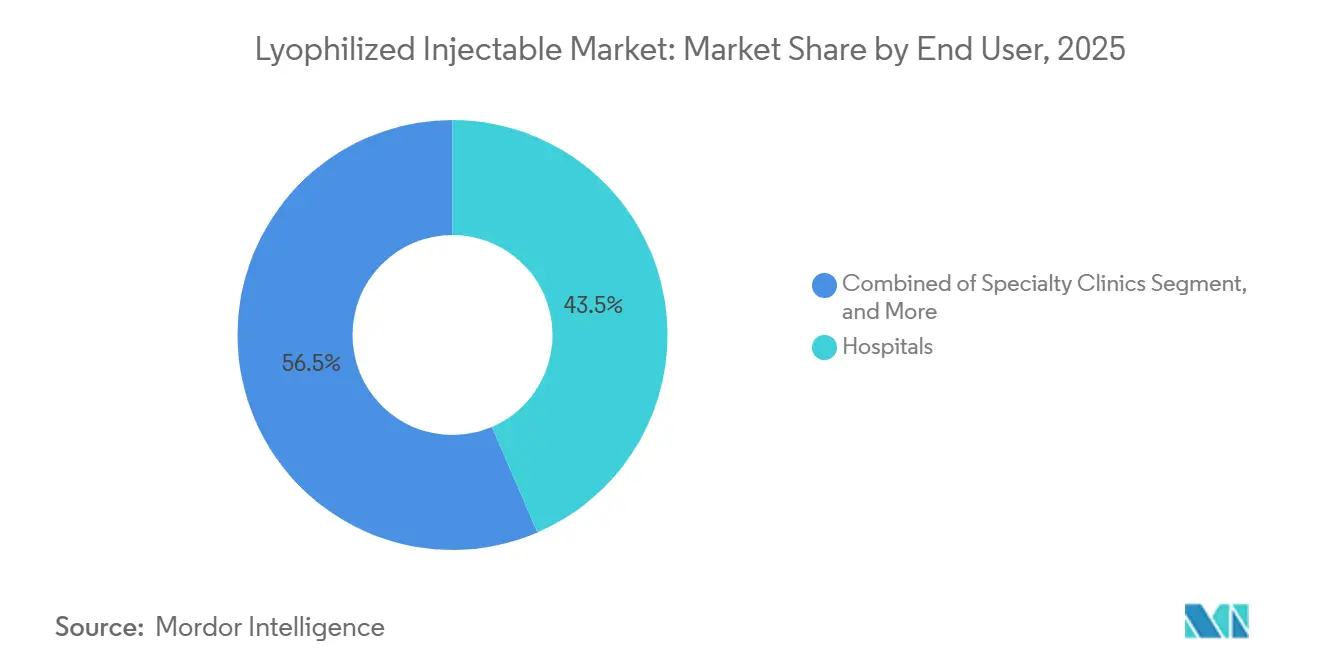
Hospitals Account for Most Demand, While Specialty Clinics Expand FasterHospitals accounted for 43.54% of the lyophilized injectable market share in 2025. They are the main administration setting for acute-care antibiotics, chemotherapy, immunoglobulin infusions, and enzyme replacement therapies. Hospital pharmacies also influence formulary selection and procurement decisions. This gives pharmacy leaders and hospital buying groups substantial influence over product access. Established hospital workflows are compatible with vial-and-syringe reconstitution. Ambulatory Surgical Centers provide additional demand for procedural and post-surgical injectable use. Other end users contribute smaller volumes across several therapy areas. Hospitals, therefore, remain central to the present structure of the lyophilized injectable market.
Specialty Clinics are forecast to grow at a 17.22% CAGR through 2031. The lyophilized injectable market is responding to the transfer of selected oncology and autoimmune treatments from inpatient settings to outpatient care. Dedicated infusion centers and disease-management clinics can provide these therapies closer to the patient. Specialty clinics can also make formulary decisions outside traditional hospital systems. This increases the number of distribution and access decisions for manufacturers. Their care settings can favor precise and traceable preparation methods. Proprietary Reconstitution Devices can meet these needs better than some multi-step preparations. The growth of specialty clinics can therefore influence both site-of-care strategy and product presentation decisions.
By Distribution Channel:
Hospital Pharmacies Lead Access, While Online Pharmacies Expand for Maintenance TherapiesHospital pharmacies held 51.53% of the lyophilized injectable market share in 2025. They are the primary procurement channel for high-acuity products used in supervised clinical care. Oncology agents, anti-infectives, and immunoglobulins commonly move through this route. Government tenders, group purchasing arrangements, and direct contracts can affect price realization and formulary continuity. Hospital pharmacy operations are closely connected to product preparation and inventory management. Direct tender channels remain important where public procurement is prominent. Retail sales can address selected patient needs outside hospital systems. These channels collectively maintain broad access across the lyophilized injectable market.
Online pharmacies are forecast to grow at a 17.32% CAGR through 2031. The lyophilized injectable market is not seeing online channels replace hospital dispensing for acute and complex drugs. Instead, online distribution can widen access for patients using maintenance biologics and hormone replacement products at home. Its expansion depends on delivery systems that support safe preparation and self-administration. Patient-friendly device formats can work alongside digital ordering and treatment support. Regulatory requirements for online dispensing differ across geographies. Manufacturers and distributors need to monitor these requirements as their distribution plans evolve. Online access may shift selected chronic therapies away from clinic visits. This channel creates a separate growth path within the lyophilized injectable market.
Geography Analysis
North America Lyophilized Injectable Market
North America held 44.28% of the lyophilized injectable market share in 2025. The region benefits from a large base of biopharmaceutical originators and established approval systems for biologics. It also has substantial spending on injectable oncology and autoimmune therapies. Accelerated regulatory routes can shorten commercialization timelines for qualifying products. ROIS completed the acquisition of Bristol Myers Squibb’s Phoenix manufacturing site in April 2026, adding a facility with commercial-scale lyophilization capacity and regulatory approvals from the FDA, EMA, and Japan. Canada adds research activity, while Mexico adds generic injectable manufacturing capability. These factors give North America a broad demand and supply base. The lyophilized injectable market remains centered on the region’s hospital networks, biopharma companies, and sterile manufacturing capacity.
Europe Lyophilized Injectable Market
Europe holds a significant position in the lyophilized injectable market, with Germany, the United Kingdom, France, Italy, and Spain as key production and consumption countries. EU GMP Annex 1 requirements continue to influence investment in sterile manufacturing operations. This raises quality requirements and can raise entry barriers for less established suppliers. LYOCONTRACT broke ground in March 2026 on a EUR 50 million facility in Ilsenburg, Germany, with a filling and lyophilization line designed for EU GMP Annex 1 compliance. Vetter, Recipharm, and other contract manufacturers support the region’s biologics and biosimilar supply chain. European manufacturers also need to balance capacity expansion with operating efficiency. These conditions support demand for compliant, reliable production in the lyophilized injectable market.
APAC, MEA and South America Lyophilized Injectable Market
Asia-Pacific is forecast to grow at a 15.65% CAGR through 2031. China, India, Japan, South Korea, and Australia each contribute through local demand or manufacturing capabilities. China and India are adding biologics infrastructure and lyophilization equipment to support domestic production. Japan has an established regulatory environment and demand for oncology and metabolic disease therapies. South Korea is building its position in biologics contract manufacturing. The lyophilized injectable market also has an opportunity in tropical and remote locations, where less dependence on the cold chain can improve distribution. Middle East and African countries can benefit from stable formats for vaccine and anti-infective distribution under demanding climate conditions. South America adds volume through public procurement of anti-infectives and vaccines, although local contract manufacturing constraints remain relevant.
Competitive Landscape
The lyophilized injectable market includes large originator pharmaceutical companies and specialized contract manufacturers. Pfizer Inc., Novartis AG, F. Hoffmann-La Roche Ltd, Sanofi, Merck & Co., and Amgen Inc. have lyophilized portfolios spanning oncology, immunology, and infectious diseases. These companies combine formulation knowledge with established regulatory and manufacturing capabilities. Contract manufacturers compete for biologics fill-finish programs that emerging biopharma companies cannot always manage internally. Lonza Group AG, Catalent, Recipharm AB, Vetter Pharma-Fertigung GmbH & Co. KG, and Jubilant HollisterStier LLC are relevant providers in this space. Primary packaging suppliers, including SCHOTT AG and BD, also influence product design through vial and cartridge specifications. The lyophilized injectable market, therefore, depends on coordinated capabilities across drug development, sterile processing, packaging, and delivery devices.
Capacity investment is a central competitive strategy in the lyophilized injectable market. PCI Pharma Services is expanding sterile fill-finish and drug-device delivery capabilities through investments exceeding USD 1 billion. ROVI announced in October 2025 a collaboration with Roche to manufacture a new medicine in development from Roche’s metabolic and cardiovascular pipeline. Recipharm also announced expanded U.S. sterile fill-finish capabilities to support demand for biologics and advanced therapies. Such moves can improve access to manufacturing capacity and strengthen customer relationships. They can also increase the importance of technical transfer experience. Companies with reliable commercial supply can be preferred partners for programs that need complex sterile processing.
Self-administration and small-batch clinical supply remain areas of active competition in the lyophilized injectable market. Liquid biologic autoinjectors are more established than closed-system lyophilized self-injection platforms. The SHL Medical and LTI partnership illustrates how device and lyophilization capabilities can be combined for reconstituted drug delivery. Drug-device combinations can help originator companies distinguish products facing biosimilar competition. Process monitoring during drying cycles can also improve development and technology-transfer decisions. The competitive structure remains moderately consolidated among originators, while contract manufacturing capacity is expanding among several specialized operators. This balance supports continuing competition based on capacity, quality, formulation, and delivery design.
Lyophilized Injectable Industry Leaders
-
Catalent, Inc.
-
Vetter Pharma-Fertigung GmbH & Co. KG
-
Lonza Group AG
-
Thermo Fisher Scientific Inc.
-
Baxter International Inc.
- *Disclaimer: Major Players sorted in no particular order
Lyophilized Injectable Market Companies Covered in this Report
- Amgen
- Baxter
- B. Braun
- Beckton Dickinson
- CordenPharma International GmbH
- Catalent
- Curia Global, Inc.
- Roche
- Fresenius
- GlaxoSmithKline
- Janssen
- Jubilant HollisterStier LLC
- Lonza Group
- Merck
- Novartis
- Pfizer
- Recipharm
- Sanofi
- SCHOTT
- Vetter Pharma-Fertigung GmbH & Co. KG
- Thermo Fisher Scientific
Recent Industry Developments in Lyophilized Injectable Market
- September 2026: Novartis AG entered an option and license agreement with Alteogen worth up to USD 3.2 billion for ALT-B4, berahyaluronidase alfa, enabling conversion of multiple Novartis biologics into subcutaneous presentations. The supplied source did not establish a confirmed lyophilized injectable application, so this development is not included as direct evidence for the lyophilized injectable market.
- July 2026: Teleflex received FDA Biologics License Application approval for EZPLAZ Freeze Dried Plasma on July 29, 2026. EZPLAZ can be stored at room temperature for 12 months and reconstituted in 2.5 minutes.
- April 2026: PCI Pharma Services announced investments exceeding USD 1 billion in U.S. and European sterile fill-finish and lyophilization capabilities, including a Bedford, New Hampshire, vial and lyophilization line.
Global Lyophilized Injectable Market Report Scope
According to the report’s scope, lyophilized injectables are medications that are freeze-dried to enhance stability and shelf life, requiring reconstitution with a liquid before administration. They are commonly used for sensitive drugs like vaccines and biologics.
The lyophilized injectables market is segmented into drug class, technology, packaging, indication, end user, distribution channel, and geography. By drug class, the market is segmented into instruments and reagents & consumables. By technology, the market is segmented into anti-infective drugs, antineoplastic drugs, immunoglobulins and biologicals, anesthetics, corticosteroids, anticoagulants, and other drug classes. By packaging, the market is segmented into Vials, Cartridges, and Prefilled devices. By type of delivery, the market is segmented into prefilled diluent syringes, single-step devices, multi-step devices, and proprietary reconstitution devices. By indication, the market is segmented into oncology, infectious diseases, autoimmune diseases, metabolic conditions, hormonal disorders, respiratory diseases, gastrointestinal disorders, and other indications. By end user, the market is segmented into hospitals, specialty clinics, ambulatory surgical centers, and other end users. By distribution channel, the market is segmented into direct tender, hospital pharmacy, retail sales, and online pharmacy. By geography, the market is segmented into North America, Europe, Asia-Pacific, the Middle East and Africa, and South America. The report also covers the estimated market sizes and trends for 17 countries across major regions globally. The report offers values (USD) for all the above segments.
Segmentation Overview
| Anti-Infective Drugs |
| Antineoplastic Drugs |
| Immunoglobulins and Biologicals |
| Anesthetics |
| Corticosteroids |
| Anticoagulants |
| Other Drug Class |
| Vials |
| Cartridges |
| Prefilled devices |
| Prefilled Diluent Syringes |
| Single-Step Devices |
| Multi-Step Devices |
| Proprietary Reconstitution Devices |
| Oncology |
| Infectious Diseases |
| Autoimmune Diseases |
| Metabolic Conditions |
| Hormonal Disorders |
| Respiratory Diseases |
| Gastrointestinal Disorders |
| Other Indications |
| Hospitals |
| Specialty Clinics |
| Ambulatory Surgical Centers |
| Other End Users |
| Direct Tender |
| Hospital Pharmacy |
| Retail Sales |
| Online Pharmacy |
| North America | United States |
| Canada | |
| Mexico | |
| Europe | Germany |
| United Kingdom | |
| France | |
| Italy | |
| Spain | |
| Rest of Europe | |
| Asia-Pacific | China |
| Japan | |
| India | |
| Australia | |
| South Korea | |
| Rest of Asia-Pacific | |
| Middle East and Africa | GCC |
| South Africa | |
| Rest of Middle East and Africa | |
| South America | Brazil |
| Argentina | |
| Rest of South America |
| By Drug Class | Anti-Infective Drugs | |
| Antineoplastic Drugs | ||
| Immunoglobulins and Biologicals | ||
| Anesthetics | ||
| Corticosteroids | ||
| Anticoagulants | ||
| Other Drug Class | ||
| By Packaging | Vials | |
| Cartridges | ||
| Prefilled devices | ||
| By Type of Delivery | Prefilled Diluent Syringes | |
| Single-Step Devices | ||
| Multi-Step Devices | ||
| Proprietary Reconstitution Devices | ||
| By Indication | Oncology | |
| Infectious Diseases | ||
| Autoimmune Diseases | ||
| Metabolic Conditions | ||
| Hormonal Disorders | ||
| Respiratory Diseases | ||
| Gastrointestinal Disorders | ||
| Other Indications | ||
| By End User | Hospitals | |
| Specialty Clinics | ||
| Ambulatory Surgical Centers | ||
| Other End Users | ||
| By Distribution Channel | Direct Tender | |
| Hospital Pharmacy | ||
| Retail Sales | ||
| Online Pharmacy | ||
| By Geography | North America | United States |
| Canada | ||
| Mexico | ||
| Europe | Germany | |
| United Kingdom | ||
| France | ||
| Italy | ||
| Spain | ||
| Rest of Europe | ||
| Asia-Pacific | China | |
| Japan | ||
| India | ||
| Australia | ||
| South Korea | ||
| Rest of Asia-Pacific | ||
| Middle East and Africa | GCC | |
| South Africa | ||
| Rest of Middle East and Africa | ||
| South America | Brazil | |
| Argentina | ||
| Rest of South America | ||
Key Questions Answered in the Report
What is driving demand for lyophilized injectable products?
Demand is supported by stable storage needs for biologics, vaccines, oncology medicines, and other specialty injectables.
What is the projected growth rate for lyophilized injectables?
The sector is forecast to grow at a CAGR of 14.31% from 2026 to 2031, reaching USD 910.20 billion by 2031.
Which drug class has the largest share of lyophilized injectable demand?
Anti-Infective Drugs held the largest drug-class share at 41.54% in 2025.
Why are cartridges gaining importance for lyophilized therapies?
Cartridges support dual-chamber and self-administration systems, and they are forecast to grow at a 16.34% CAGR through 2031.
Which end users account for most lyophilized injectable demand?
Hospitals held 43.54% of demand in 2025, while Specialty Clinics are forecast to expand at a 17.22% CAGR through 2031.
Which region is growing fastest for lyophilized injectable products?
Asia-Pacific is forecast to grow at a 15.65% CAGR through 2031, supported by expanding biologics manufacturing and treatment demand.