
Long Acting Injectables Market Size and Share
Market Overview
| Study Period | 2020 - 2031 |
|---|---|
| Market Size (2026) | USD 21.59 Billion |
| Market Size (2031) | USD 38.63 Billion |
| Growth Rate (2026 - 2031) | 12.34 % |
| Fastest Growing Market | Asia-Pacific |
| Largest Market | North America |
| Market Concentration | Medium |
Major Players *Disclaimer: Major Players sorted in no particular order Image © Mordor Intelligence. Reuse requires attribution under CC BY 4.0. | |
Long Acting Injectables Market Analysis by Mordor Intelligence
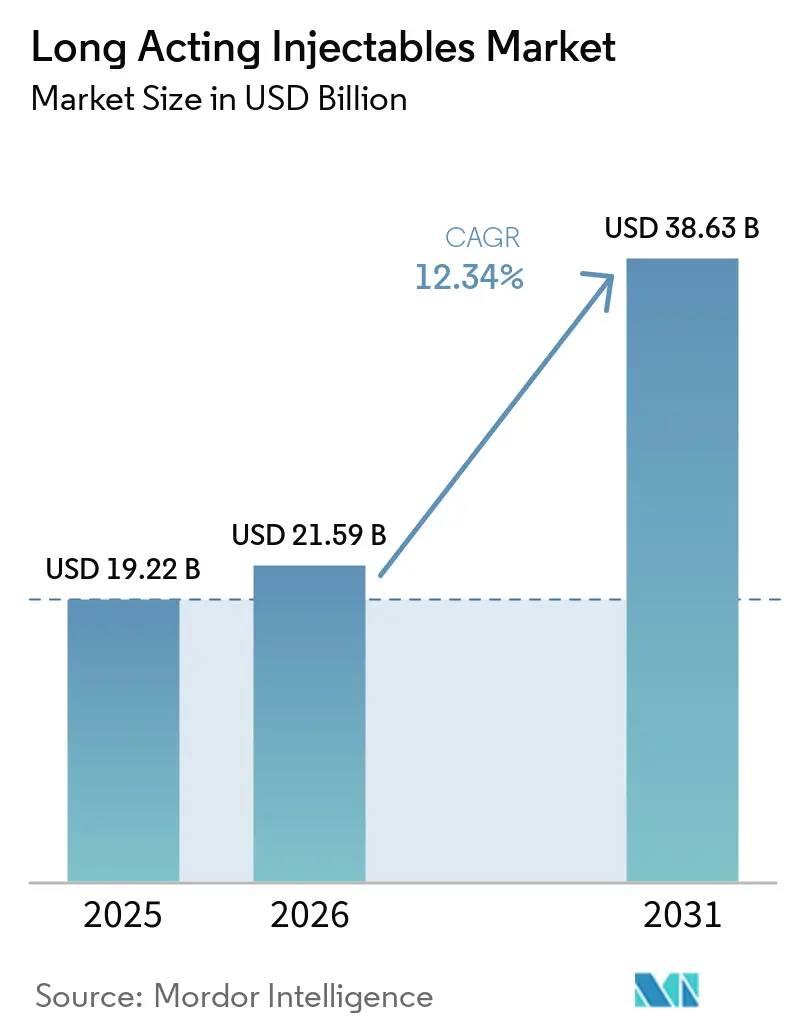
The Long-Acting Injectables Market size was valued at USD 19.22 billion in 2025 and is estimated to grow from USD 21.59 billion in 2026 to reach USD 38.63 billion by 2031, at a CAGR of 12.34% during the forecast period (2026–2031).
Growth reflects a broader shift in chronic care toward treatments that reduce daily dosing and improve treatment consistency. Providers and payers increasingly prioritize formulations that reduce relapse, hospitalization, and treatment discontinuation among patients who struggle with oral medications. The long-acting injectables market benefits from activity in HIV prevention, opioid use disorder, psychiatric care, and endocrine conditions. Competition centers on formulation design, dosing interval, administration route, and outpatient integration, while reimbursement requirements, sterile manufacturing, and missed-dose management remain key adoption barriers.
Key Report Takeaways
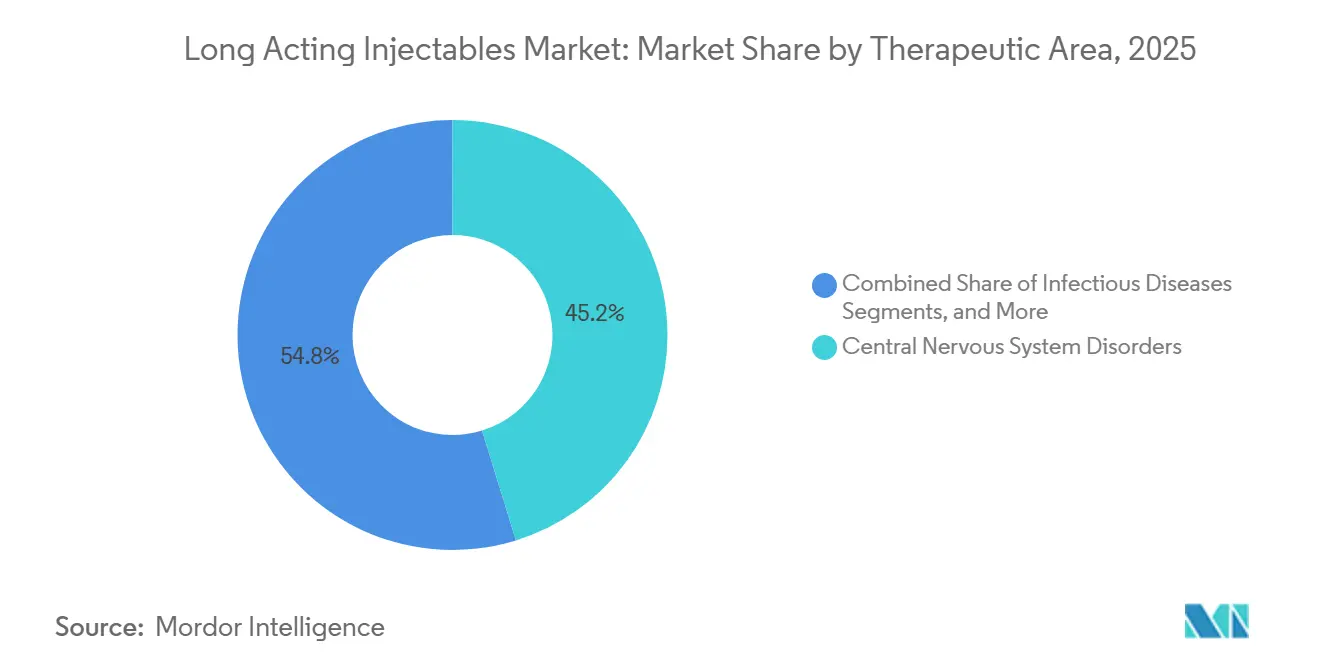
- By therapeutic area, CNS disorders held 45.23% of the long acting injectables market share in 2025, while infectious diseases are projected to expand at a 14.53% CAGR through 2031.
- By molecule type, small molecules accounted for 78.55% of the long acting injectables market share in 2025, while biologics are projected to grow at a 14.67% CAGR through 2031.
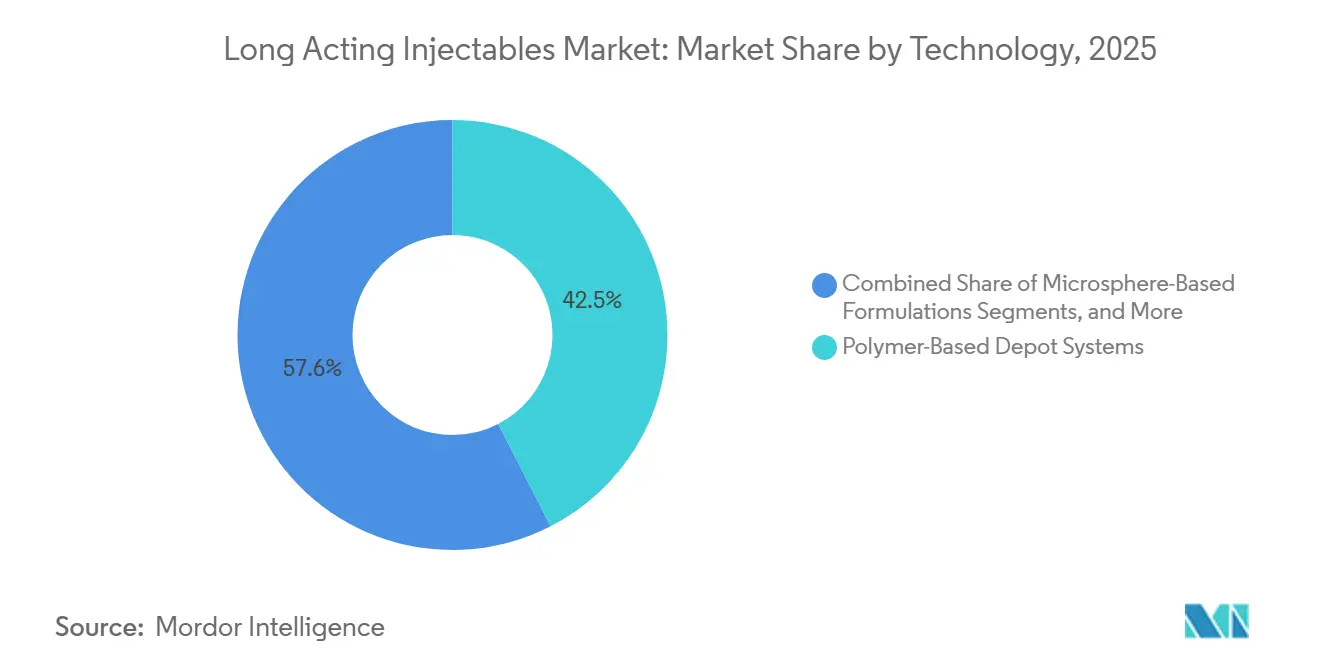
- By technology, polymer-based depot systems held 42.45% of the long acting injectables market size in 2025, while in-situ-forming depots are projected to grow at a 13.83% CAGR through 2031.
- By route of administration, intramuscular delivery held 72.67% revenue share in 2025, while subcutaneous delivery is projected to advance at a 13.45% CAGR through 2031.
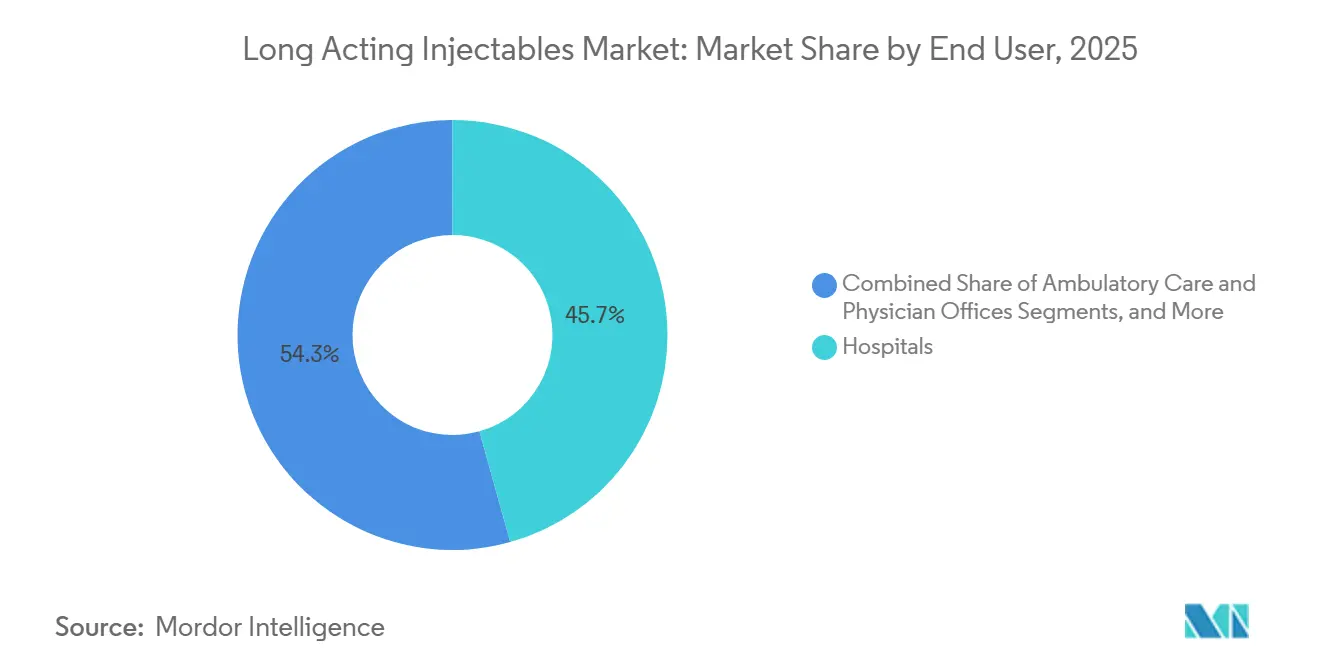
- By end user, hospitals held 45.67% revenue share in 2025, while ambulatory care and physician offices are projected to grow at a 12.88% CAGR through 2031.
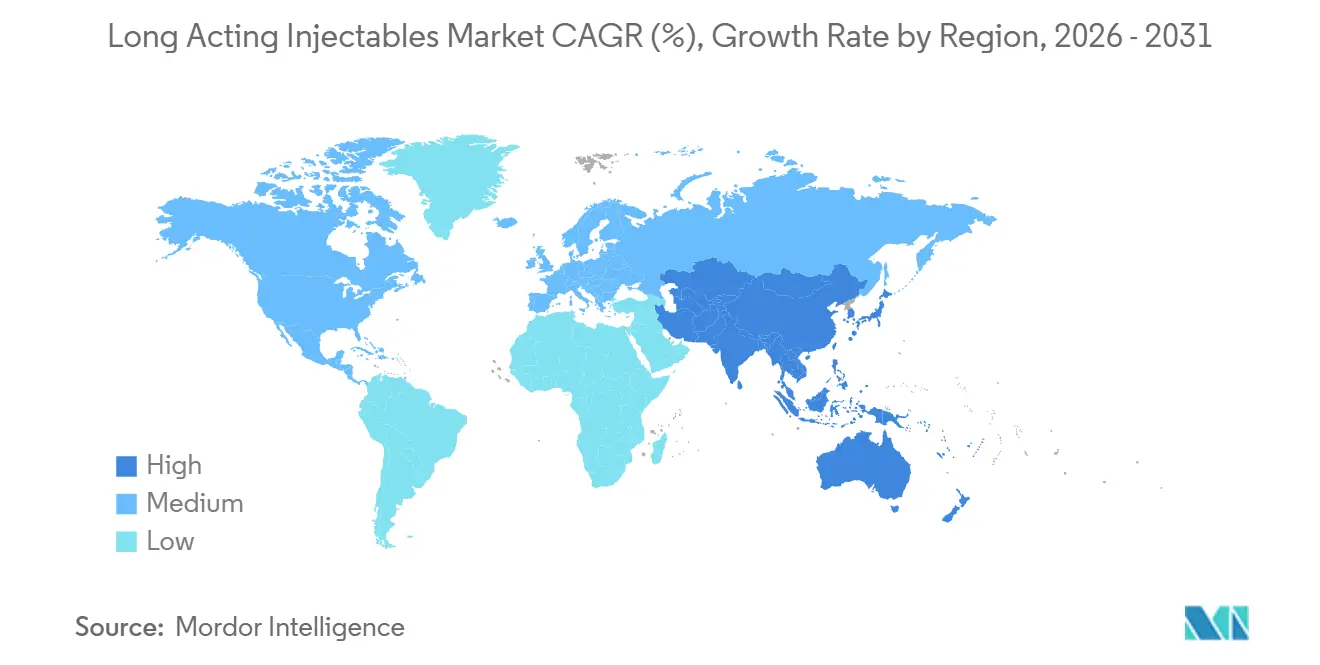
- By geography, North America held 41.67% revenue share in 2025, while Asia-Pacific is projected to expand at a 14.22% CAGR through 2031.
Note: Market size and forecast figures in this report are generated using Mordor Intelligence’s proprietary estimation framework, updated with the latest available data and insights as of January 2026.
Market Trends and Insights
Drivers Impact Analysis of Long Acting Injectables Market*
| DRIVER | (~) % IMPACT ON CAGR FORECAST | GEOGRAPHIC RELEVANCE | IMPACT TIMELINE |
|---|---|---|---|
| Improved adherence and relapse prevention in chronic disease management | +2.8% | Global, strongest pull in North America and Europe | Medium term (2-4 years) |
| Expansion of long-acting HIV treatment and pre-exposure prophylaxis | +2.3% | North America and Sub-Saharan Africa, with spillover to Europe and Asia-Pacific | Short term (≤ 2 years) |
| Rising need for extended-release therapies in opioid use disorder | +1.5% | North America, Australia, and Northern Europe | Medium term (2-4 years) |
| Evidence for lower dosing burden and reduced hospitalization | +1.2% | Global, with faster uptake in payer-constrained settings | Medium term (2-4 years) |
| Formulation platforms enabling monthly-to-six-month dosing intervals | +1.4% | Global, led by United States, European Union, and Japan approvals | Long term (≥ 4 years) |
| Provider workflow and injection-visit infrastructure as an adoption lever | +0.9% | Urban North America, Western Europe, and advanced Asia-Pacific settings | Medium term (2-4 years) |
| Source: Mordor Intelligence | |||
Improved Adherence and Relapse Prevention in Chronic Disease Management
Oral antipsychotic nonadherence affected nearly half of individuals with schizophrenia spectrum disorders and contributed significantly to inpatient psychiatric spending. The American Psychiatric Association recommended considering long-acting injectables (LAIs) earlier after a confirmed diagnosis, expanding the eligible patient population beyond those with documented oral treatment failure. A 2026 mirror-image study of 149 patients in Turkey associated LAI initiation with an 80% reduction in hospitalization hazard and an 83% reduction in relapse hazard compared with prior oral treatment periods.[1] A 2025 EULAST trial analysis found that LAIs reduced the risk of all-cause discontinuation by 36% versus oral antipsychotics among individuals with early-phase schizophrenia and comorbid substance use disorder.[2]
Expansion of Long-Acting HIV Treatment and Pre-Exposure Prophylaxis
Long-acting HIV therapies evolved from specialized adherence solutions into established clinical options. The FDA approved Gilead’s twice-yearly Yeztugo (lenacapavir) for pre-exposure prophylaxis (PrEP) in June 2025, following the PURPOSE 1 and PURPOSE 2 trials, in which at least 99.9% of participants remained HIV-negative. ViiV Healthcare’s LATITUDE Phase III trial found that Cabenuva reduced the cumulative risk of regimen failure to 22.8%, compared with 41.2% for daily oral therapy among individuals with adherence challenges. The CDC’s 2025 clinical recommendation and ViiV Healthcare’s expanded Medicines Patent Pool license covering 133 countries supported access and clinical capacity development in Sub-Saharan Africa and South Asia.[3]
Rising Need for Extended-Release Therapies in Opioid Use Disorder
Monthly injectable buprenorphine and extended-release intramuscular naltrexone reduced reliance on daily supervised dosing, which could create diversion risks, treatment fatigue, and adherence gaps. Long-acting formulations reduced clinic visits required solely for dosing and supported patient retention. A 2025 review found that the subcutaneous in-situ-forming depot technology used in Sublocade eliminated the need for daily clinic attendance and addressed a key barrier to treatment continuity. In July 2025, Virginia Medicaid unbundled reimbursement for certain LAIs from hospital daily rates, while the FDA’s listing of approved LAIs for opioid use disorder provided clearer guidance for prescribers.
Formulation Platforms Enabling Monthly-to-Six-Month Dosing Intervals
The long-acting injectables market was increasingly differentiated by formulations that maintained therapeutic drug concentrations for longer durations. Poly(lactic-co-glycolic acid) (PLGA) microspheres and in-situ-forming depot systems enabled dosing intervals ranging from two weeks to six months, with polymer properties determining release duration and initial release profiles. Teva and MedinCell used SteadyTeq copolymer technology in UZEDY and the investigational olanzapine LAI TEV-749; the FDA accepted its new drug application (NDA) in February 2026, and the European Medicines Agency accepted its marketing authorization application (MAA) in May 2026. Research published in 2025 achieved a drug loading of 293 mg/mL using self-aggregating microcrystals injectable through needles smaller than 25 gauge, while a 2026 study demonstrated cocrystal LAI suspension technology with tunable release profiles without proprietary polymer matrices.
Restraints Impact Analysis of Long Acting Injectables Market*
| RESTRAINT | (~) % IMPACT ON CAGR FORECAST | GEOGRAPHIC RELEVANCE | IMPACT TIMELINE |
|---|---|---|---|
| High acquisition cost and reimbursement complexity | -1.8% | North America, with growing relevance in Europe | Short term (≤ 2 years) |
| Injection-site reactions, administration burden, and limited reversibility | -1.0% | Global, with greater sensitivity in cost-restricted Asia-Pacific, Middle East, and Africa settings | Long term (≥ 4 years) |
| Manufacturing scale-up risk for sterile suspensions and complex depots | -0.9% | Global, especially for newer polymer and in-situ depot platforms | Medium term (2-4 years) |
| Missed-dose, bridging, and pharmacokinetic tail-management complexity | -0.7% | Global, with higher clinical risk in HIV and CNS care | Long term (≥ 4 years) |
| Source: Mordor Intelligence | |||
High Acquisition Cost and Reimbursement Complexity
New LAIs may experience slow uptake despite strong clinical evidence, as regulatory approval does not ensure routine coverage. Yeztugo had a U.S. annual list price of USD 28,218, increasing focus on formulary decisions and patient access. CVS Caremark initially excluded Yeztugo from its commercial and ACA formularies during negotiations, delaying treatment initiation. The Medicare Part D benefit redesign under the Inflation Reduction Act changed plan incentives for high-cost LAI antipsychotics and may have increased the use of prior authorization or step therapy. The olanzapine pamoate REMS required 3-hour post-injection monitoring at a certified facility, increasing delivery costs, which TEV-749 aimed to avoid through its REMS-free design.
Manufacturing Scale-Up Risk for Sterile Suspensions and Complex Depots
Sterile LAI suspensions posed manufacturing and regulatory challenges that affected supply reliability and development timelines. Many microsphere and depot products could not undergo terminal sterilization, requiring aseptic processing, validated cleanrooms, controlled excipient supplies, and rigorous environmental monitoring. Studies found that inadequate control of milling temperature and homogenization energy could extend polymorphic instability from laboratory-scale to commercial aripiprazole monohydrate production. Gamma irradiation also degraded polymeric surfactants, including poloxamer and PEG, and caused irreversible caking after 18 months. These factors increased production costs and made specialized manufacturing capabilities a competitive requirement in the long-acting injectables market.
*Our forecasts treat driver/restraint impacts as directional, not additive. The impact forecasts reflect baseline growth, mix effects, and variable interactions.
Long Acting Injectables Market Segment Analysis
By Therapeutic Area:
CNS Disorders Lead Revenue While Infectious Diseases Lead GrowthCNS disorders accounted for 45.23% of the long-acting injectables market in 2025, supported by the established use of antipsychotic LAIs for schizophrenia, schizoaffective disorder, and bipolar I disorder. Paliperidone palmitate is available in PP1M, PP3M, and PP6M formulations, supporting 1-, 3-, and 6-month treatment intervals. Otsuka’s and Alkermes’ aripiprazole LAI portfolios also serve the established psychiatric treatment population. These products support patient management from stabilization through long-term maintenance.
Infectious diseases are forecast to grow at a CAGR of 14.53% between 2026 and 2031, driven by HIV treatment and prevention. As of April 2026, the FDA had approved Cabenuva for administration every 1 to 2 months, Sunlenca every 6 months, and Yeztugo as a twice-yearly PrEP option. These dosing intervals expand patient and clinician options and extend LAI use beyond psychiatric treatment. Metabolic and endocrine disorders remain a stable therapeutic area, supported by LHRH agonist depots for hormone management in prostate and breast cancer. Camurus launched monthly subcutaneous octreotide, CAM2029, in Germany in late 2025 for acromegaly.

By Molecule Type:
Small Molecules Retain Scale While Biologics Gain MomentumSmall molecules accounted for 78.55% of the long-acting injectables market in 2025. Their leadership reflects the maturity of antipsychotics, antiretrovirals, and LHRH agonists in controlled-release formulation development. PLGA microspheres and nanocrystal suspensions are well established for many active ingredients, while regulatory precedents remain more developed for small-molecule LAIs than for newer biologic depots.
Biologics are forecast to grow at a CAGR of 14.67% from 2026 to 2031. HIV broadly neutralizing antibody programs and emerging autoimmune LAI programs support this outlook. ViiV Healthcare’s Phase IIb EMBRACE study found that lotivibart, combined with monthly intramuscular cabotegravir, maintained viral suppression in 94% of intravenous recipients and 82% of subcutaneous recipients. These findings indicate that biologic delivery can support durable pharmacokinetic activity across multiple administration routes.
By Technology:
Polymer-Based Depots Lead While In-Situ Depots Expand FasterPolymer-based depot systems accounted for 42.45% of the long-acting injectables market in 2025. Their leadership reflects decades of use in antipsychotics, oncology hormone therapies, and antiretrovirals. Developers can adjust PLGA degradation through the lactide-to-glycolide ratio, molecular weight, and terminal group chemistry, supporting release durations from 2 weeks to 6 months.
Microsphere formulations differ primarily in particle design, while nanoformulations and nanocrystal suspensions are gaining traction for potent biologic and oncology payloads where PLGA microsphere encapsulation efficiency is insufficient. Liposomal systems, established in intravenous oncology, are also being adapted for subcutaneous depot applications. These technologies continue to support a broad product base in the long-acting injectables market. In-situ-forming depots are forecast to grow at a CAGR of 13.83% from 2026 to 2031. Growth is supported by the elimination of a separate microparticle manufacturing step, compatibility with subcutaneous delivery, and high drug-loading potential. MedinCell’s SteadyTeq technology supports Teva’s UZEDY and the investigational TEV-749 olanzapine formulation. In the SOLARIS Phase 3 trial, TEV-749 showed no post-injection delirium or sedation syndrome across 3,470 injections.
By Route of Administration:
Intramuscular Delivery Leads While Subcutaneous Delivery Grows FasterIntramuscular delivery accounted for 72.67% of the long-acting injectables market in 2025. This position reflects established clinical practice for antipsychotic LAIs administered through gluteal and deltoid protocols. Products such as INVEGA SUSTENNA and Cabenuva rely on intramuscular administration for controlled depot absorption. The route benefits from established administration processes and trained healthcare professionals across psychiatric and infectious disease settings.
Subcutaneous delivery is forecast to advance at a CAGR of 13.45% from 2026 to 2031. Growth is supported by efforts to address injection volume and local-tolerability limitations. The 2025 SLIM microcrystal research reported a drug loading of 293 mg/mL through sub-25G needles. This payload density can support subcutaneous administration for medicines that previously required intramuscular depots and can reduce the risk of inadvertent intravascular injection compared with gluteal intramuscular administration.
By End User:
Hospitals Lead Administration While Ambulatory Care ExpandsHospitals accounted for 45.67% of the long-acting injectables market in 2025. Their leading role reflects the use of many antipsychotic LAIs at inpatient discharge to stabilize patients before outpatient transition. Hospital-based administration also remains important for REMS-restricted medicines requiring post-injection observation. Hospitals can coordinate prescribing, administration, monitoring, and immediate follow-up within a single setting.
Ambulatory care and physician offices are forecast to grow at a CAGR of 12.88% from 2026 to 2031. This growth follows the broader shift toward community-based chronic disease management. Virginia Medicaid’s July 2025 reimbursement change created a financial incentive to move LAI administration to ambulatory programs rather than retain it within hospital daily rates. The change covered serious mental illness and substance use disorder care in emergency department and inpatient settings. In the CAPTIVATE real-world study of 241 PrEP users, 89% of providers reported an overall positive view of administering CAB LA in outpatient settings.
Geography Analysis
North America Long Acting Injectables Market
North America accounted for 41.67% of the long-acting injectables market share in 2025. The region benefited from established specialty pharmacy infrastructure, buy-and-bill reimbursement under Medicare Part B, and a supportive regulatory environment. The FDA approved Yeztugo for twice-yearly HIV pre-exposure prophylaxis (PrEP) in June 2025 and accepted the new drug application for TEV-749, a long-acting injectable olanzapine formulation, in February 2026. Canada approved ABILIFY ASIMTUFII in January 2025, introducing a bimonthly aripiprazole option for schizophrenia and bipolar I disorder.
Europe Long Acting Injectables Market
Europe was the second-largest geography, with Germany, the United Kingdom, France, Italy, and Spain serving as key commercial markets. The European Commission authorized Yeytuo for HIV prevention, extending access across European Union member states, Norway, Iceland, and Liechtenstein. Camurus launched Oczyesa, CAM2029, a monthly subcutaneous octreotide treatment, in Germany in November 2025, while the EMA accepted the marketing authorization application for TEV-749 in May 2026. Prior authorization delays, the Part D redesign, and payer requirements for demonstrated administration or safety benefits remained relevant across developed markets.
APAC, MEA and South America Long Acting Injectables Market
Asia-Pacific is forecast to grow at a CAGR of 14.22% from 2026 to 2031. China expanded healthcare infrastructure and domestic manufacturing capabilities, supported by biosimilar and innovative LAI development, while Japan’s aging population and outpatient psychiatric care focus supported longer treatment intervals. A 2026 study reported PP3M continuation rates consistent with clinical trial findings, and Australia approved Yeytuo for HIV PrEP in January 2026. South Korea may support regional LAI production, while the Middle East and Africa and South America offer incremental opportunities through access programs, hormonal LAIs, and generic antipsychotic depot formulations.
Competitive Landscape
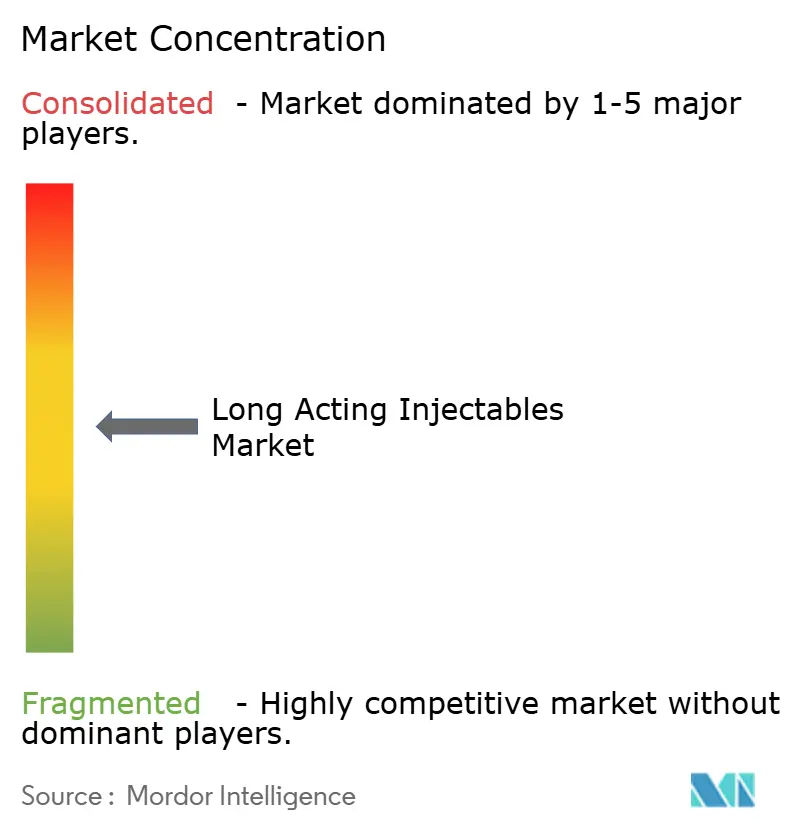
The long-acting injectables market is moderately concentrated among innovator companies, while generic antipsychotics and formulation platforms are increasingly diverse. Johnson & Johnson’s paliperidone palmitate franchise includes INVEGA SUSTENNA, INVEGA TRINZA, and PP6M. Otsuka, Lundbeck, and Alkermes compete through aripiprazole LAIs and ARISTADA, maintaining established positions in schizophrenia LAI care. ViiV Healthcare offers Cabenuva and Apretude and is developing investigational lotivibart combinations, while Gilead competes through Yeztugo at a twice-yearly HIV prevention dosing interval.
Formulation technology supports product differentiation as the underlying drug becomes less distinctive. Teva’s SteadyTeq copolymer platform supports UZEDY and TEV-749, for which FDA and EMA submissions were active. Lupin launched its risperidone LAI in November 2025 using PrecisionSphere and received 180-day CGT exclusivity. These programs demonstrate how delivery expertise supports competition beyond price and may facilitate ambulatory administration by reducing facility-based observation requirements.
ViiV extended its Medicines Patent Pool license to support long-acting HIV treatment access across 133 countries. Teva and MedinCell are advancing a once-monthly subcutaneous olanzapine option without the current REMS monitoring burden. Lupin is extending PrecisionSphere to additional antipsychotic molecules through Nanomi B.V. The long-acting injectables market has strong therapy-specific franchises, but no company dominates all therapeutic areas or delivery technologies.
Long Acting Injectables Industry Leaders
-
Johnson & Johnson
-
Alkermes plc
-
Otsuka Pharmaceutical Co., Ltd.
-
Indivior PLC
-
Camurus AB
- *Disclaimer: Major Players sorted in no particular order
Long Acting Injectables Market Companies Covered in this Report
- Alkermes plc
- Amneal Pharmaceuticals
- Aurobindo Pharma
- Camurus AB
- Dr. Reddy’s Laboratories
- H. Lundbeck
- Indivior
- Johnson & Johnson
- Lupin
- Luye Pharma Group Ltd.
- Mapi Pharma Ltd.
- MedinCell S.A.
- Novartis
- Otsuka
- Pharmathen S.A.
- Sun Pharmaceuticals Industries
- Teva Pharmaceutical Industries
- Tolmar, Inc.
- Viatris
- ViiV Healthcare Limited
- Zydus Lifesciences Limited
Recent Industry Developments in Long Acting Injectables Market
- August 2026: Gilead Sciences received FDA acceptance for its supplemental NDA for Yeztugo (lenacapavir) 300 mg, a potential once-weekly oral HIV PrEP formulation, with a PDUFA date of February 2, 2027.
- July 2026: ViiV Healthcare reported that Cabenuva demonstrated a 0.9% viral rebound rate versus 6.4% for daily oral therapy in the LATA Phase IIIb trial, while OPERA data showed 89% viral suppression versus 83% with oral standard of care (GSK).
- May 2026: The EMA accepted Teva Pharmaceutical Industries and MedinCell’s MAA for TEV-749, a once-monthly olanzapine injectable for adult schizophrenia, which showed no post-injection delirium or sedation syndrome across 3,470 SOLARIS trial injections.
Global Long Acting Injectables Market Report Scope
As per the scope of the report, long-acting injectables (LAIs) are specialized medical treatments delivered through an injection that gradually release medication into the body over an extended period of weeks or months.
The long-acting injectable market is segmented by therapeutic area, molecule type, technology, route of administration, end user, and geography. By therapeutic area, the market includes central nervous system disorders, infectious diseases, metabolic and endocrine disorders, oncology and supportive care, substance use disorders, autoimmune and inflammatory diseases, reproductive health and contraception, and other therapeutic areas. By molecule type, the market is segmented into small molecules and biologics. By technology, the market is categorized into polymer-based depot systems, microsphere-based formulations, in situ-forming depots, nanoformulations and nanocrystal suspensions, liposomal systems, and others. By route of administration, the market is segmented into intramuscular, subcutaneous, and intradermal and other routes. By end user, the market includes hospitals, specialty clinics and community mental health centers, ambulatory care centers and physician offices, home care settings, and others. By geography, the market is analyzed across North America, Europe, Asia-Pacific, the Middle East and Africa, and South America. The report also covers the estimated market sizes and trends for 17 countries across major regions globally. The report offers market sizes and forecasts in terms of value (USD) for the above segments.
Segmentation Overview
| Central Nervous System Disorders |
| Infectious Diseases |
| Metabolic and Endocrine Disorders |
| Oncology and Supportive Care |
| Substance Use Disorders |
| Autoimmune and Inflammatory Diseases |
| Reproductive Health and Contraception |
| Other Therapeutic Areas |
| Small Molecules |
| Biologics |
| Polymer-Based Depot Systems |
| Microsphere-Based Formulations |
| In-Situ-Forming Depots |
| Nanoformulations and Nanocrystal Suspensions |
| Liposomal Systems |
| Others |
| Intramuscular |
| Subcutaneous |
| Intradermal and Other Routes |
| Hospitals |
| Specialty Clinics and Community Mental-Health Centers |
| Ambulatory Care and Physician Offices |
| Homecare Settings |
| Others |
| North America | United States |
| Canada | |
| Mexico | |
| Europe | Germany |
| United Kingdom | |
| France | |
| Italy | |
| Spain | |
| Rest of Europe | |
| Asia-Pacific | China |
| India | |
| Japan | |
| Australia | |
| South Korea | |
| Rest of Asia-Pacific | |
| Middle East and Africa | GCC |
| South Africa | |
| Rest of Middle East and Africa | |
| South America | Brazil |
| Argentina | |
| Rest of South America |
| By Therapeutic Area | Central Nervous System Disorders | |
| Infectious Diseases | ||
| Metabolic and Endocrine Disorders | ||
| Oncology and Supportive Care | ||
| Substance Use Disorders | ||
| Autoimmune and Inflammatory Diseases | ||
| Reproductive Health and Contraception | ||
| Other Therapeutic Areas | ||
| By Molecule Type | Small Molecules | |
| Biologics | ||
| By Technology | Polymer-Based Depot Systems | |
| Microsphere-Based Formulations | ||
| In-Situ-Forming Depots | ||
| Nanoformulations and Nanocrystal Suspensions | ||
| Liposomal Systems | ||
| Others | ||
| By Route of Administration | Intramuscular | |
| Subcutaneous | ||
| Intradermal and Other Routes | ||
| By End User | Hospitals | |
| Specialty Clinics and Community Mental-Health Centers | ||
| Ambulatory Care and Physician Offices | ||
| Homecare Settings | ||
| Others | ||
| By Geography | North America | United States |
| Canada | ||
| Mexico | ||
| Europe | Germany | |
| United Kingdom | ||
| France | ||
| Italy | ||
| Spain | ||
| Rest of Europe | ||
| Asia-Pacific | China | |
| India | ||
| Japan | ||
| Australia | ||
| South Korea | ||
| Rest of Asia-Pacific | ||
| Middle East and Africa | GCC | |
| South Africa | ||
| Rest of Middle East and Africa | ||
| South America | Brazil | |
| Argentina | ||
| Rest of South America | ||
Key Questions Answered in the Report
What is driving demand for long acting injectables?
Demand is supported by the need to improve treatment continuity and reduce daily dosing, relapse, hospitalization, and discontinuation across chronic conditions.
How large is the long acting injectables market?
The long acting injectables market size is USD 21.59 billion in 2026 and is forecast to reach USD 38.63 billion by 2031 at a 12.34% CAGR.
Which therapeutic area leads long acting injectable use?
CNS disorders led with 45.23% share in 2025 because antipsychotic LAIs have a large and established treatment base.
Which route of administration is growing fastest?
Subcutaneous delivery is forecast to grow at a 13.45% CAGR from 2026 to 2031, supported by higher drug-loading and delivery advances.
Why are long acting HIV medicines important?
Cabenuva, Sunlenca, and Yeztugo provide dose intervals from monthly to twice yearly, creating more options for treatment and HIV prevention.
What limits wider use of long acting injectables?
High acquisition costs, coverage requirements, monitoring obligations, injection-site concerns, and complex sterile manufacturing can delay adoption.