
KSA Microgreens Market Size and Share
Market Overview
| Study Period | 2021 - 2031 |
|---|---|
| Forecast Data Period | 2026 - 2031 |
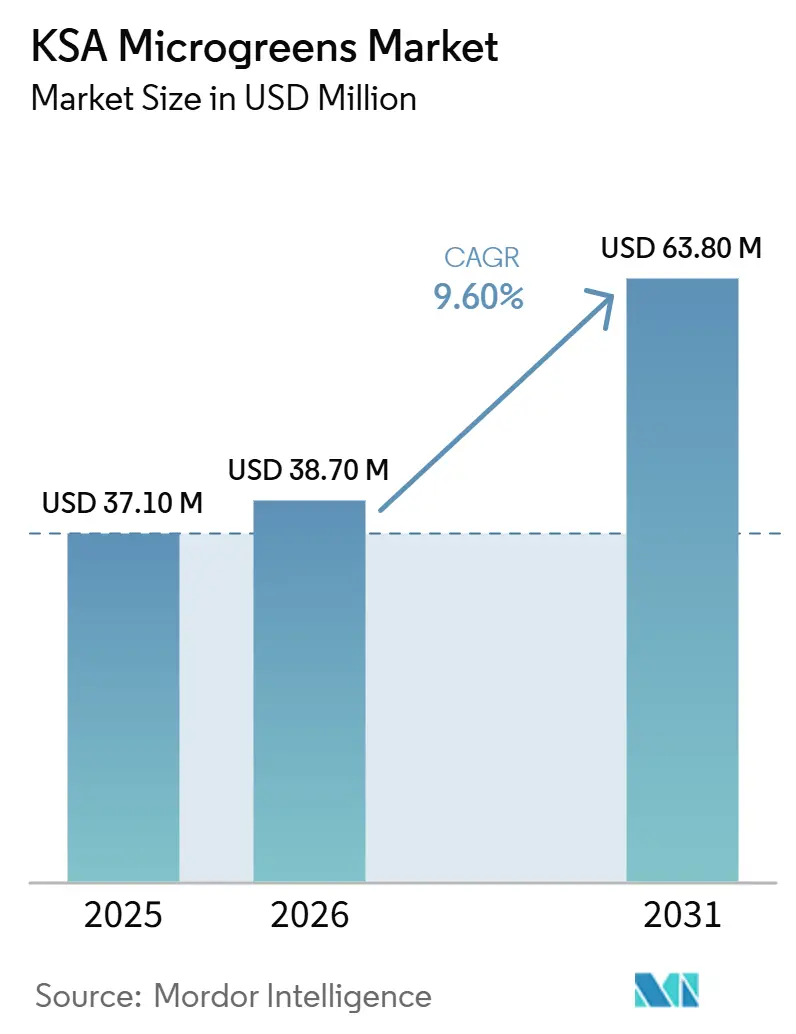
| Base Year Market Size (2025) | USD 37.10 Million |
| Market Size (2026) | USD 38.70 Million |
| Market Size (2031) | USD 63.80 Million |
| Growth Rate (2026 - 2031) | 9.60 % |
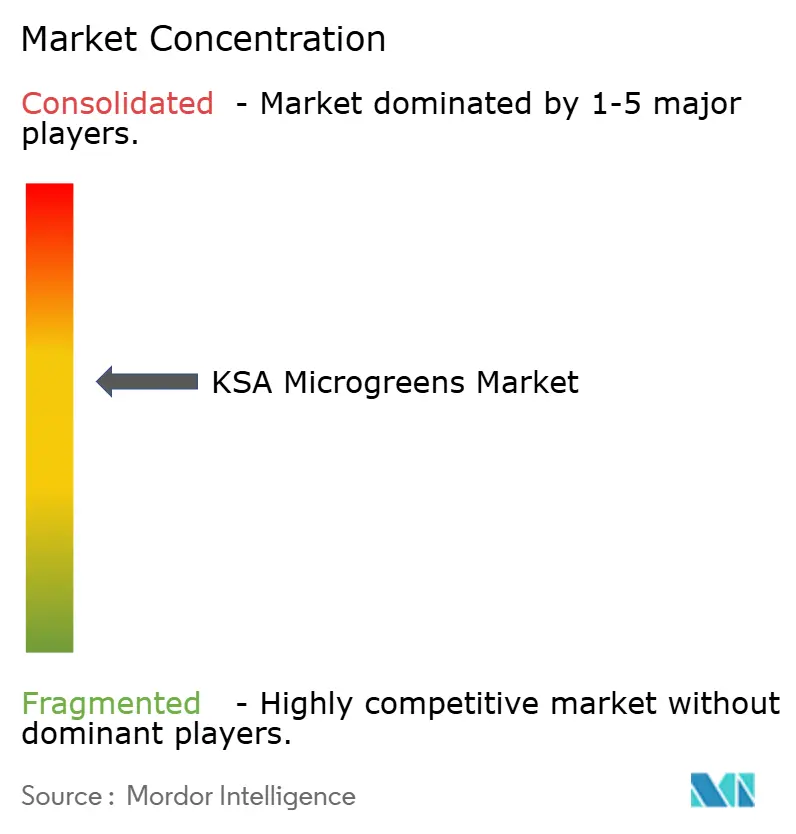
| Market Concentration | Medium |
Major Players *Disclaimer: Major Players sorted in no particular order Image © Mordor Intelligence. Reuse requires attribution under CC BY 4.0. | |
KSA Microgreens Market Analysis by Mordor Intelligence
The KSA microgreens market size was valued at USD 37.10 million in 2025 and is projected to grow from USD 38.70 million in 2026 to USD 63.80 million by 2031, registering a CAGR of 9.60% during the forecast period from 2026 to 2031. The market's growth is supported by the country's reliance on imported food, which prioritizes local supply growth in policy initiatives. Additionally, the market benefits from increasing demand for fresh, pesticide-free, and locally sourced greens in premium retail and foodservice channels, where factors such as freshness, handling quality, and traceability are highly valued. Short crop cycles enable local growers to respond swiftly to changes in demand, while shorter delivery windows reduce risks associated with long import routes and extended handling times. However, challenges such as high initial investment, a shortage of specialized talent, and inconsistent refrigerated delivery infrastructure limit the market's expansion beyond major urban areas. Furthermore, research on postharvest handling highlights that product quality is heavily reliant on controlled storage conditions, making logistics management critical for commercial success.
Key Report Takeaways
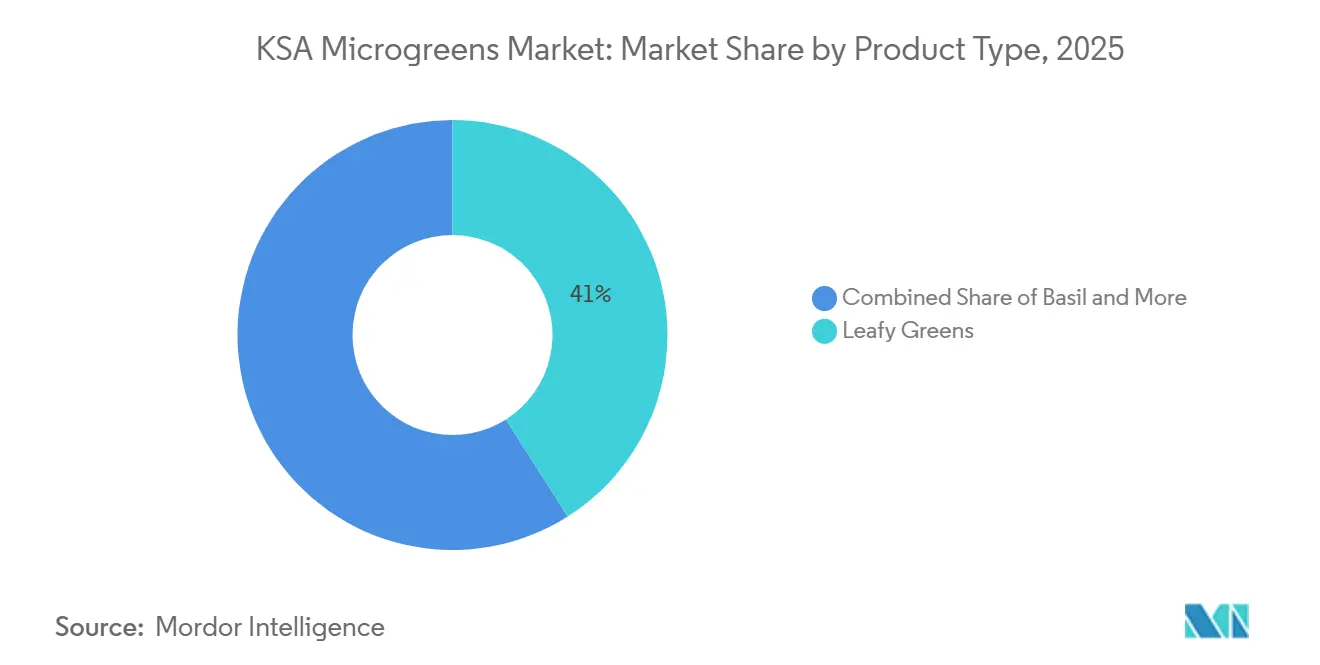
- By product type, the KSA microgreens market share for leafy greens held the largest 41.0% in 2025, while basil is projected to grow at the fastest CAGR of 10.7% from 2026 to 2031.
- By farming method, indoor vertical farming accounted for the largest 38.5% share in 2025, while the KSA microgreens market size for hydroponic farming is forecast to advance at the fastest 12.1% CAGR from 2026 to 2031.
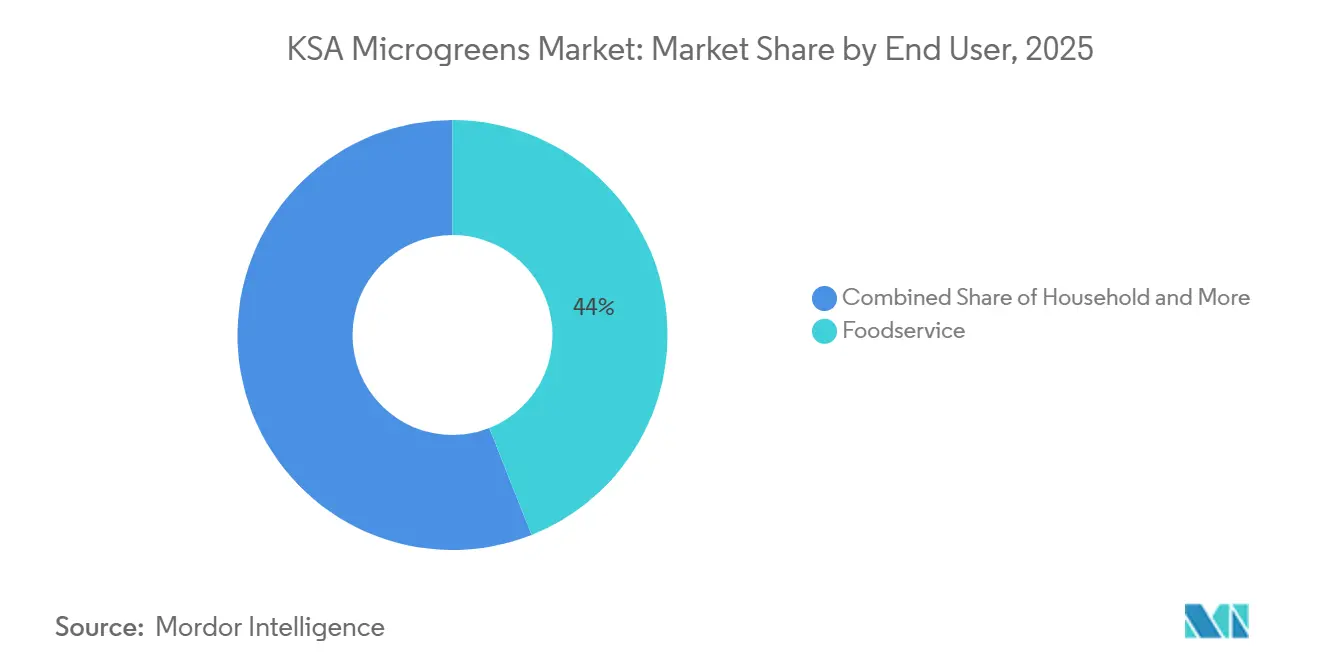
- By end user, foodservice captured the largest 44.0% share in 2025, while households are projected to grow at the fastest 9.7% CAGR from 2026 to 2031.
Note: Market size and forecast figures in this report are generated using Mordor Intelligence’s proprietary estimation framework, updated with the latest available data and insights as of January 2026.
KSA Microgreens Market Trends and Insights
Drivers Impact Analysis*
| Driver | (~) % Impact on CAGR Forecast | Geographic Relevance | Impact Timeline |
|---|---|---|---|
| Rising premium retail demand for fresh, pesticide-free greens | +2.1% | National, with highest intensity in Riyadh and Jeddah | Short term (≤ 2 years) |
| Vision 2030-linked food security and import substitution priorities | +2.0% | National | Long term (≥ 4 years) |
| Water-use efficiency advantage of controlled environment farming | +1.5% | National, with strongest relevance in inland growing zones | Medium term (2-4 years) |
| Hospitality and foodservice menu premiumization | +1.8% | Riyadh, Jeddah, Makkah, and Red Sea tourism corridor | Short term (≤ 2 years) |
| Shelf-life and loss-reduction benefits versus conventional leafy greens | +0.8% | National, with higher value in secondary cities | Medium term (2-4 years) |
| Year-round production reliability in hot-arid conditions | +1.2% | National | Long term (≥ 4 years) |
| Source: Mordor Intelligence | |||
Rising Premium Retail Demand for Fresh, Pesticide-Free Greens
Increasing consumer preference for healthier and traceable food products is driving the demand for premium fresh produce in Saudi Arabia, fostering growth in the KSA microgreens market. According to the USDA Foreign Agricultural Service (2025), Saudi Arabia’s food retail sales surpassed USD 50 billion in 2024 and are projected to grow by approximately 5% in 2025[1]Source: United States Department of Agriculture (USDA), Foreign Agricultural Service (FAS), “Saudi Arabia Retail Foods Annual Report,” apps.fas.usda.gov.. This growth reflects the ongoing expansion of modern retail channels, which are increasingly offering premium and locally sourced greens. Retailers are capitalizing on consumer interest in freshness, food safety, and sustainable sourcing, benefiting microgreens producers who can supply pesticide-free products with short harvest-to-shelf timelines and consistent quality.
Vision 2030-Linked Food Security and Import Substitution Priorities
Saudi Arabia's Vision 2030 initiative continues to drive investments in domestic agricultural production and food security infrastructure, fostering growth opportunities for the microgreens market in the Kingdom. The Agricultural Development Fund (ADF) Annual Report 2025 highlights the approval of SAR 6.5 billion (USD 1.73 billion) in loans during 2025, aimed at supporting greenhouse farming, agricultural production, and food supply chain infrastructure projects. These investments promote the expansion of controlled-environment agriculture, which is well-suited for microgreens production due to its efficient land utilization and short crop cycles. As the country focuses on enhancing food security and reducing reliance on imported fresh produce, microgreens growers are positioned to benefit from increased policy and financial support.
Hospitality and Foodservice Menu Premiumization
The rapid growth of Saudi Arabia's tourism and hospitality industry is driving increased demand for premium food ingredients, contributing to the expansion of the KSA microgreens market. According to the United States International Trade Administration (2025), Saudi Arabia welcomed more than 116 million tourists in 2024, exceeding its original Vision 2030 target of 100 million visitors. As a result, the government has raised its target to 150 million annual visitors by 2030[2]Source: U.S. International Trade Administration (ITA), “Saudi Arabia – Travel, Tourism and Entertainment,” trade.gov.. This growth has accelerated investments in hotels, resorts, restaurants, and catering services. As hospitality operators prioritize premium dining experiences and menu differentiation, demand for fresh, visually appealing specialty greens continues to rise, supporting local microgreens producers capable of supplying consistent quality and freshness.
Water-Use Efficiency Advantage of Controlled Environment Farming
Water scarcity in Saudi Arabia is driving the adoption of resource-efficient agricultural systems, boosting the use of controlled-environment cultivation in the country's microgreens market. According to the Saudi Press Agency (SPA, 2025), a hydroponic farm in Madinah achieved a production of over 2,015,000 kilograms of crops within a cultivation area of 183,000 square meters. The project demonstrated notable resource efficiency, reducing fertilizer usage by up to 60% and water consumption by as much as 90% compared to traditional farming methods. These results underscore the potential of hydroponic and indoor farming systems to enhance local fresh-produce production while supporting Saudi Arabia's food security and water conservation goals.
Restraints Impact Analysis*
| Restraint | (~) % Impact on CAGR Forecast | Geographic Relevance | Impact Timeline |
|---|---|---|---|
| High upfront capex for indoor farm buildouts | -1.8% | National, with strongest pressure on new entrants outside Riyadh | Long term (≥ 4 years) |
| Limited technical talent for precision farming operations | -1.2% | National, with sharper shortfalls in secondary cities | Medium term (2-4 years) |
| Premium unit economics versus imported greens | -1.5% | National, with the highest pressure in mass retail and institutional catering | Short term (≤ 2 years) |
| Cold-chain and last-mile handling sensitivity | -0.8% | National, with highest friction in secondary and tertiary cities | Medium term (2-4 years) |
| Source: Mordor Intelligence | |||
High Upfront Capex for Indoor Farm Buildouts
High upfront capital requirements continue to restrain the expansion of the microgreens market in Saudi Arabia. The Ministry of Environment, Water and Agriculture (MEWA) identifies protected cultivation as dependent on advanced greenhouse infrastructure equipped with climate-control systems, cooling units, artificial lighting, automated irrigation, and environmental monitoring technologies to support year-round production under the Kingdom's harsh climatic conditions. These production systems require substantial initial investment, and ongoing maintenance further increases operating costs. These financial barriers limit market entry for small and medium-sized growers, delay capacity expansion, and slow the adoption of indoor microgreens production across the Kingdom.
Cold-Chain and Last-Mile Handling Sensitivity
Cold-chain requirements present a significant operational challenge for the microgreens market in Saudi Arabia due to the highly perishable nature of the product. A 2025 study published in the journal Horticulturae indicates that microgreens stored at 5°C retained acceptable sensory and nutritional quality for up to 10 days, emphasizing the critical need for strict temperature control during storage and distribution. Any disruptions in refrigerated transport, warehousing, or retail handling can lead to accelerated quality deterioration and a reduced marketable shelf life. As a result, producers supplying areas beyond major urban centers often incur higher logistics costs and face increased risks of product loss, which can hinder geographic expansion and limit broader market penetration.
*Our forecasts treat driver/restraint impacts as directional, not additive. The impact forecasts reflect baseline growth, mix effects, and variable interactions.
Segment Analysis
By Product Type: Leafy Greens and Basil Define a Value-Stratified Crop Portfolio
The KSA microgreen market share for leafy greens is projected to account for 41.0% in 2025. Leafy greens continue to dominate commercial demand due to their suitability for salads, sandwiches, premium meal preparations, and foodservice garnishing applications. Varieties such as arugula, pea shoots, spinach blends, and watercress are consistently purchased by restaurants, hotels, and modern retailers for their freshness and visual appeal. Growers benefit from production flexibility, as multiple leafy varieties can be cultivated using similar operating systems. Their extensive culinary applications and regular replenishment cycles ensure their leading position across commercial distribution channels.
Basil is projected to grow at the fastest CAGR, 10.7%, from 2026 to 2031. This growth is driven by the increasing popularity of Mediterranean, Asian, and fusion cuisines in restaurants and premium household cooking. Basil microgreens are valued for their strong flavor profiles, visual appeal, and versatility, making them a preferred choice for chefs and specialty retailers. Product diversification, including varieties such as purple basil and Thai basil, is broadening consumer options. As buyers seek unique ingredients with premium attributes, basil microgreens are gaining prominence beyond traditional garnishing and are becoming an integral part of specialty fresh produce offerings.



By Farming Method: Vertical Farming Anchors Scale While Hydroponics Drives Efficiency Gains
Indoor vertical farming accounted for the largest 38.5% market share in 2025. This method enables year-round production by maintaining controlled conditions for temperature, humidity, lighting, and crop development. Such operational control is particularly beneficial in Saudi Arabia’s hot climate, where outdoor growing conditions pose challenges for delicate crops. Vertical farms also ensure product consistency, quality, and appearance, attributes highly valued by premium retailers and foodservice operators. These advantages continue to drive the adoption of vertically integrated production systems for commercial-scale microgreens cultivation in major urban markets.
The KSA microgreen market size for hydroponic farming is projected to grow at the fastest 12.1% CAGR from 2026 to 2031. Hydroponic systems are gaining traction due to their efficient resource utilization and scalable infrastructure requirements. This approach allows growers to produce crops in controlled environments, reducing reliance on traditional agricultural land. Consistent growing conditions further support uniform crop quality and predictable harvest schedules, which are critical for meeting the demands of premium buyers. As producers seek efficient methods to increase output while maintaining quality standards, hydroponic farming is emerging as a promising option for future production growth.
By End User: Foodservice Anchors Scale While Household Adoption Builds a New Growth Layer
Foodservice accounted for the largest 44.0% market share in 2025. Hotels, restaurants, catering operators, and premium dining establishments are the primary consumers of microgreens, utilizing them for presentation, flavor enhancement, and menu differentiation. Buyers in this segment emphasize freshness, consistency, and a reliable supply, creating opportunities for local producers who can meet stringent quality standards. The expansion of hospitality infrastructure and premium dining experiences further drives demand from professional kitchens. These factors collectively establish foodservice as the leading revenue-generating channel for microgreens suppliers in the Kingdom.
Households are projected to grow at the fastest CAGR of 9.7% from 2026 to 2031. Increasing consumer awareness of nutrition, healthy eating habits, and premium fresh produce is driving interest in microgreens beyond traditional restaurant settings. Social media content, home cooking trends, and direct-to-consumer delivery services are introducing specialty greens to a broader audience. Convenience and freshness are becoming key purchasing factors, encouraging repeat consumption among health-conscious consumers. As digital grocery platforms and home delivery networks continue to expand, household adoption is projected to contribute an increasing share of demand alongside the established foodservice segment.
Geography Analysis
Riyadh is the primary center for microgreens production and consumption in Saudi Arabia, driven by its concentration of controlled-environment agriculture facilities, premium retail outlets, and foodservice establishments. The city benefits from a large consumer base with higher purchasing power and significant exposure to international food trends, fostering the adoption of specialty produce. Additionally, its proximity to major logistics networks and agricultural support infrastructure enhances supply chain efficiency. Demand is bolstered by hotels, restaurants, caterers, and modern retail chains that require consistent access to fresh, high-quality greens year-round, solidifying Riyadh’s role as the leading commercial hub.
The western region, including Jeddah, Makkah, and Madinah, is the fastest-growing consumption corridor for specialty greens, driven by expanding hospitality activities and tourism-related foodservice demand. This region hosts a high concentration of hotels, restaurants, catering providers, and premium dining establishments that increasingly incorporate specialty produce into their offerings. Large-scale tourism and pilgrimage activities sustain year-round foodservice requirements, creating opportunities for suppliers capable of ensuring consistent quality and delivery standards. Furthermore, ongoing investments in the hospitality sector are promoting the adoption of premium fresh ingredients across institutional and commercial dining channels.
The central and northwestern regions, including Al-Qassim, Tabuk, and emerging development corridors, are gaining attention for controlled-environment agriculture investments. These areas offer opportunities for growers aiming to expand regional coverage and align with new tourism developments. Their long-term potential is supported by the growth of hospitality infrastructure and premium foodservice demand linked to large-scale destination projects. For instance, according to Red Sea Global (2025), AMAALA launched its first phase with 1,400 hotel keys across eight resorts, creating a growing demand for high-quality fresh ingredients in luxury hospitality and fine dining operations. This expanding hospitality footprint is projected to drive demand for locally sourced specialty greens and herbs across northwestern Saudi Arabia.
Competitive Landscape
The market is moderately consolidated, with key participants including Mowreq Specialized Agriculture Company, YesHealth Agri-Biotechnology Co., Ltd., Pure Harvest Smart Farms Holding Limited, Mishkat AgriTech Farms, and Saudi Greenhouses Management and Agri Marketing Company. Competition is primarily driven by production quality, cultivation technology, supply reliability, and the ability to cater to premium retail and foodservice customers. While some companies specialize in controlled-environment production, others leverage broader fresh produce operations and established distribution networks. This creates a competitive environment where differentiation increasingly depends on consistency, freshness, operational expertise, and customer relationships rather than scale alone.
Technology adoption and expertise in controlled-environment agriculture are becoming critical competitive differentiators. Companies are investing in advanced growing systems, climate-control technologies, and resource-efficient production methods to enhance consistency and productivity. Strategic partnerships are also significant, enabling operators to access international cultivation expertise, automation technologies, and specialized agronomic knowledge. Established producers benefit from existing logistics and distribution networks, while emerging operators focus on premium positioning and localized supply strategies. As the market evolves, competitive success is increasingly tied to execution quality, reliability, and operational efficiency.
Competitive positioning is increasingly shaped by access to advanced cultivation technologies, scalable production infrastructure, and improvements in operational efficiency. In January 2024, Pure Harvest Smart Farms Holding Limited commenced operations at Red Sea Farms’ Alajaweed facility near Riyadh and announced investments in the site, including the deployment of the iyris SecondSky heat-blocking greenhouse roof technology[3]Source: Pure Harvest Smart Farms Holding Limited, “Pure Harvest to Acquire RedSea’s Saudi Arabian Farming Operations and Form Climate Technology Partnership,” pureharvestfarms.com.. This development underscores the growing emphasis on technology-enabled controlled-environment agriculture, with leading operators investing in climate-resilient production systems to enhance crop performance, optimize resource utilization, and strengthen their competitive position in the premium fresh produce segment.
KSA Microgreens Industry Leaders
Mowreq Specialized Agriculture Company
YesHealth Agri-Biotechnology Co., Ltd.
Pure Harvest Smart Farms Holding Limited
Mishkat AgriTech Farms
Saudi Greenhouses Management and Agri Marketing Company
- *Disclaimer: Major Players sorted in no particular order

Recent Industry Developments
- January 2026: Mowreq Specialized Agriculture Company and YesHealth Agri-Biotechnology Co., Ltd. have expanded the commercial distribution of indoor vertically farmed leafy greens through Panda Retail stores under the Jana Farm by Mowreq brand. This initiative enhances the local supply of controlled-environment-grown fresh produce in Saudi Arabia.
- March 2025: Saudi Greenhouses Management and Agri Marketing Company partnered with the NEOM Food Company to establish the Horticulture Innovation Center at the University of Tabuk. This initiative aims to advance controlled-environment agriculture and strengthen innovation, skills development, and sustainable production technologies, supporting the growth of the microgreens market in Saudi Arabia.
- January 2024: Pure Harvest Smart Farms Holding Limited assumed operations of RedSea Farms’ Alajaweed farm near Riyadh and implemented iyris SecondSky heat-blocking greenhouse technology. This initiative enhances climate-resilient cultivation capabilities for microgreens and other premium fresh produce in Saudi Arabia.


KSA Microgreens Market Report Scope
Microgreens are young, edible vegetable and herb seedlings harvested 7 to 21 days after germination. They are valued for their nutritional content, flavor, vibrant color, and applications in salads, garnishes, sandwiches, and specialty dishes. The KSA microgreens market report is segmented by product type (leafy greens, basil, arugula, radish, broccoli, pea shoots, sunflower, and other product types), by farming method (indoor vertical farming, greenhouse farming, hydroponic farming, soil-based microgreens, and other farming methods), and by end user (households, foodservice, food manufacturers, retailers, and other end users). The market forecasts are provided in terms of value (USD).
| Leafy Greens |
| Basil |
| Arugula |
| Radish |
| Broccoli |
| Pea Shoots |
| Sunflower |
| Other Product Types |
| Indoor Vertical Farming |
| Greenhouse Farming |
| Hydroponic Farming |
| Soil-Based Microgreens |
| Other Farming Methods |
| Households |
| Foodservice |
| Food Manufacturers |
| Retailers |
| Other End Users |
| By Product Type | Leafy Greens |
| Basil | |
| Arugula | |
| Radish | |
| Broccoli | |
| Pea Shoots | |
| Sunflower | |
| Other Product Types | |
| By Farming Method | Indoor Vertical Farming |
| Greenhouse Farming | |
| Hydroponic Farming | |
| Soil-Based Microgreens | |
| Other Farming Methods | |
| By End User | Households |
| Foodservice | |
| Food Manufacturers | |
| Retailers | |
| Other End Users |


Key Questions Answered in the Report
What is the projected value of the KSA microgreens market by 2031?
The KSA microgreens market is forecast to reach USD 63.80 million by 2031 from USD 38.70 million in 2026, growing at a 9.60% CAGR over 2026-2031.
Which product type leads demand in Saudi Arabia microgreens?
Leafy greens led demand with the largest 41.0% share in 2025 because they fit steady purchasing by hotels, caterers, and premium supermarkets.
Which farming method is growing fastest in this space?
Hydroponic farming is projected to grow at the fastest 12.1% CAGR from 2026 to 2031 because it offers strong water efficiency and a lower infrastructure burden than full vertical farm systems.
Why is foodservice so important for microgreens sales in Saudi Arabia?
Foodservice held the largest 44.0% share in 2025, supported by hotels, fine dining, and pilgrimage catering.
Page last updated on:





