
Keratoacanthoma Market Size and Share
Market Overview
| Study Period | 2020 - 2031 |
|---|---|
| Market Size (2026) | USD 3.38 Billion |
| Market Size (2031) | USD 4.57 Billion |
| Growth Rate (2026 - 2031) | 6.24 % |
| Fastest Growing Market | Asia-Pacific |
| Largest Market | North America |
| Market Concentration | Medium |
Major Players *Disclaimer: Major Players sorted in no particular order Image © Mordor Intelligence. Reuse requires attribution under CC BY 4.0. | |
Keratoacanthoma Market Analysis by Mordor Intelligence
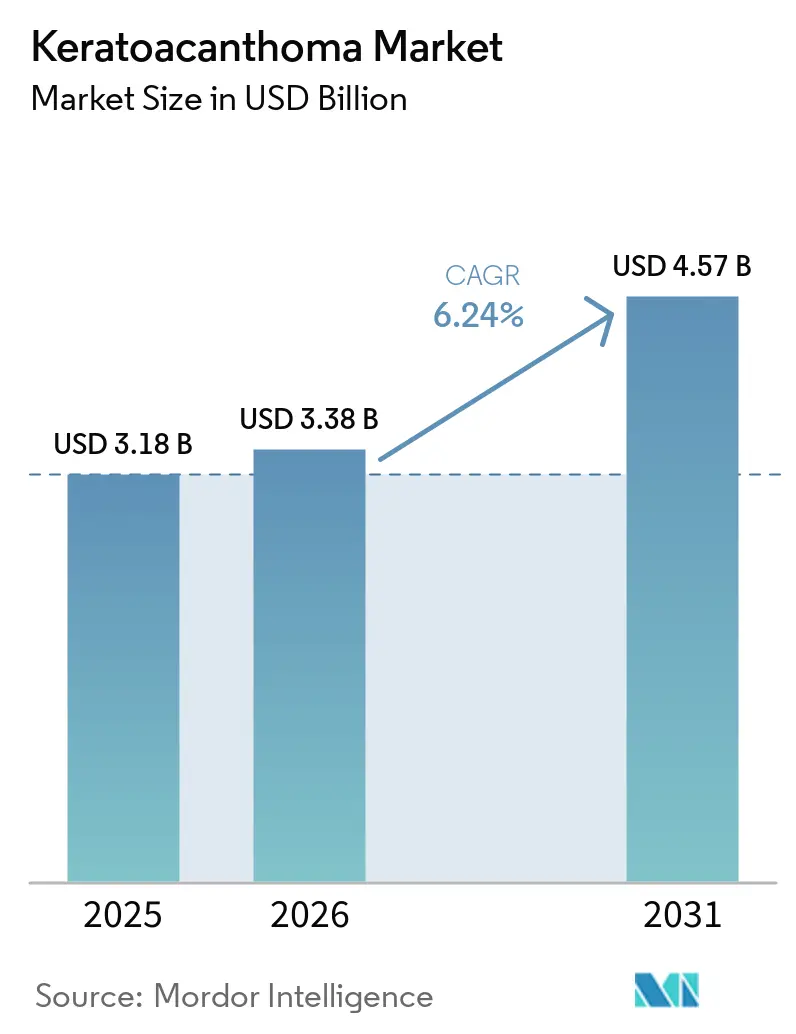
The Keratoacanthoma Market size is expected to grow from USD 3.18 billion in 2025 to USD 3.38 billion in 2026 and is forecast to reach USD 4.57 billion by 2031 at 6.24% CAGR over 2026-2031.
The Keratoacanthoma market is supported by an older patient population with accumulated ultraviolet exposure and a longer period between skin damage and tumor presentation. The global peak age for keratoacanthoma incidence has moved to 65-71 years from the 50-69 year range reported in the 1990s. More than 80% of cutaneous melanoma cases worldwide were attributable to ultraviolet radiation exposure, which reflects the wider clinical burden of ultraviolet-related skin disease that also shapes care pathways for keratoacanthoma. The Keratoacanthoma market also gains demand from patients receiving BRAF inhibitors or immune checkpoint inhibitors, who can develop treatment-associated lesions that require different management. Providers are responding through tissue-sparing surgery, earlier referral, digital assessment, and non-surgical options for patients with multiple or inoperable lesions.
Key Report Takeaways
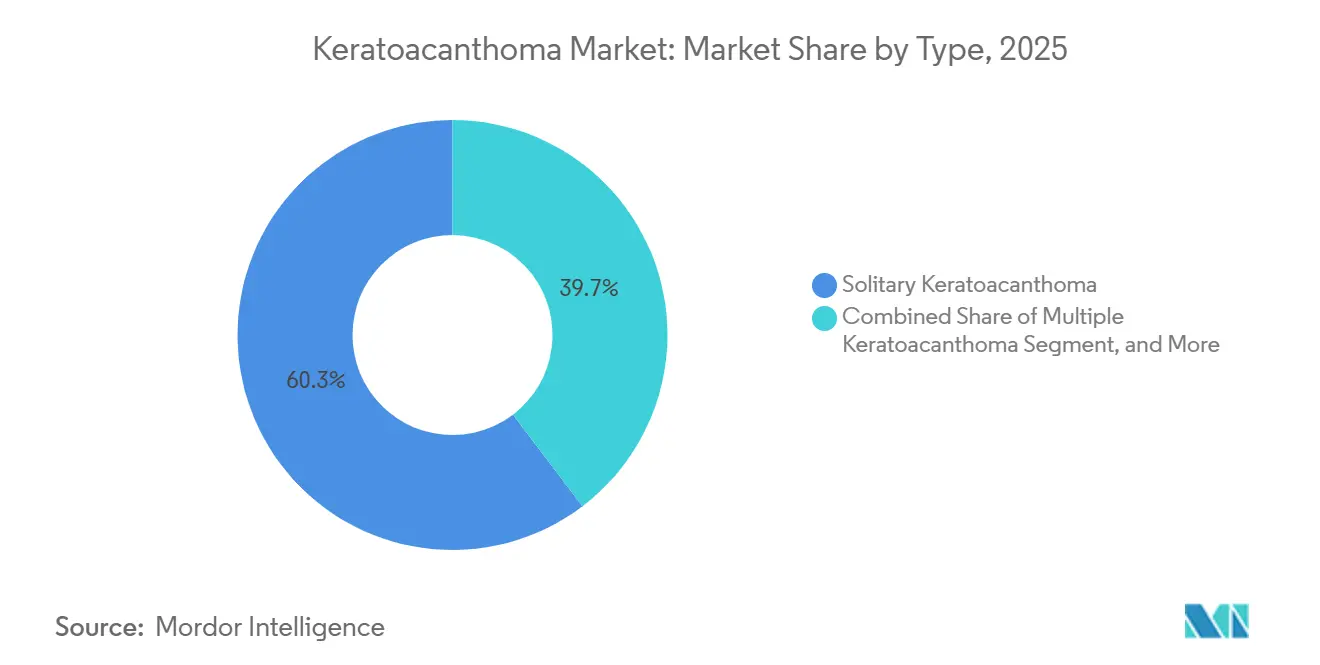
- By type, solitary keratoacanthoma held 60.34% of the Keratoacanthoma market share in 2025, while multiple keratoacanthoma is forecast to grow at a 6.65% CAGR through 2031.
- By treatment and diagnosis, therapeutic procedures held 56.38% of the Keratoacanthoma market share in 2025, while pharmacological treatment is forecast to grow at a 7.13% CAGR through 2031.
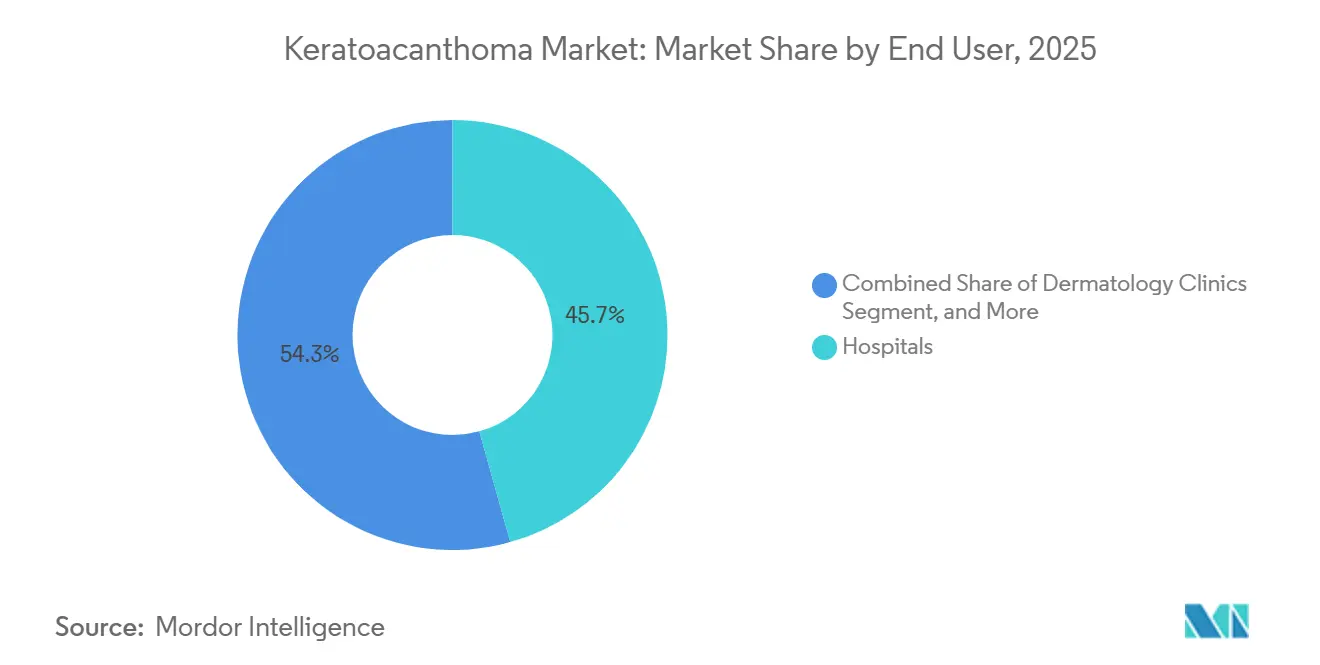
- By end user, hospitals held 45.67% of revenue in 2025, while dermatology clinics are forecast to grow at a 7.89% CAGR through 2031 in the Keratoacanthoma market.
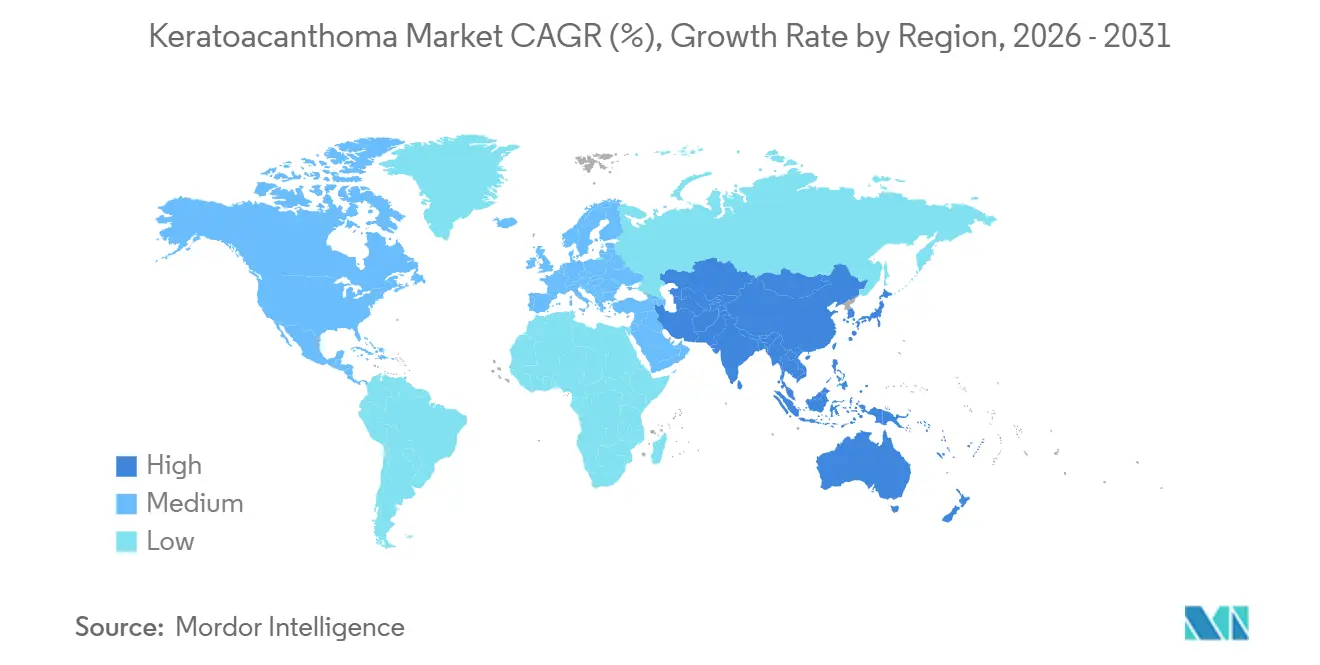
- By geography, North America held 37.83% share in 2025, while Asia-Pacific is projected to advance at a 8.24% CAGR through 2031.
Note: Market size and forecast figures in this report are generated using Mordor Intelligence’s proprietary estimation framework, updated with the latest available data and insights as of January 2026.
Market Trends and Insights
Drivers Impact Analysis of Keratoacanthoma Market*
| Driver | (~) % Impact on CAGR Forecast | Geographic Relevance | Impact Timeline |
|---|---|---|---|
| Aging and Cumulative Ultraviolet Exposure | +1.8% | Global, concentrated in North America, Australia, and Northern Europe | Long term (≥ 4 years) |
| Skin-Lesion Screening and Early Referral | +1.2% | North America, Europe, and Australia | Medium term (2-4 years) |
| Tissue-Sparing Mohs Micrographic Surgery | +1.0% | North America, expanding to Europe and Asia-Pacific | Medium term (2-4 years) |
| Non-Surgical Management for Multiple or Inoperable Lesions | +0.9% | Global, with strong uptake in Europe and Asia-Pacific | Medium term (2-4 years) |
| AI-Assisted Dermoscopy and Digital Dermatology | +0.8% | North America and Europe, with expansion to Asia-Pacific | Short term (≤ 2 years) |
| Therapy-Associated and Immunosuppression-Associated Lesions | +0.7% | Global, concentrated in oncology-intensive markets in North America and Europe | Medium term (2-4 years) |
| Source: Mordor Intelligence | |||
Aging and Cumulative Ultraviolet Exposure
The keratoacanthoma market reflects the growing number of older people with long-term exposure to ultraviolet radiation. The reported global peak age for keratoacanthoma has shifted to 65 to 71 years, from 50 to 69 years during the 1990s.[1] Age can weaken nucleotide excision repair, base excision repair, and Langerhans cell surveillance, which leaves repeatedly sun-damaged skin more susceptible to squamoproliferative changes. The World Health Organization reported an 88% increase in deaths from occupational solar ultraviolet exposure-related non-melanoma skin cancer between 2000 and 2019.[2] Australia, New Zealand, and the United States have particularly high age-standardized non-melanoma skin cancer incidence, which supports sustained demand for assessment and treatment.[3] In Southeast Asia and the Middle East, substantial outdoor exposure and historically limited surveillance can lead to a larger visible caseload as diagnostic capacity improves.
Screening, Referral, and Non-Surgical Care Expansion
The keratoacanthoma market benefits when skin-lesion screening and early specialist referral identify lesions before they become more complex to manage. Community dermatologists and trained nurse practitioners can use digital imaging to route patients with suspicious lesions to specialists, which can shorten the time to diagnosis. The same referral model can help patients with multiple, eruptive, or cosmetically sensitive lesions access care that does not rely solely on excision. Intralesional methotrexate has produced clearance in 70% to 92% of cases across retrospective series, while intralesional 5-fluorouracil has achieved resolution within 3 weeks at 3 injection intervals. Radiation treatment and X-ray therapy remain relevant for older or immunocompromised patients with substantial wound-healing risk. Cryotherapy, which has shown resolution rates of 87%, can provide a lower-cost option in settings with fewer specialist resources.
Growth of Tissue-Sparing Mohs Micrographic Surgery
The keratoacanthoma market is gaining support from the wider use of Mohs micrographic surgery in sensitive or cosmetically important anatomical locations. A 2024 comparative analysis found that keratoacanthoma required a mean of 1.28 Mohs stages, compared with 1.52 stages for invasive cutaneous squamous cell carcinoma. The study reported no keratoacanthoma recurrences at a mean follow-up of 1.5 years, supporting the procedure for lesions where margin control is important. A lower average number of stages can reduce surgical sessions and complications, while preserving tissue on the face, scalp, and acral areas. European accreditation efforts are expanding the number of credentialed Mohs surgeons and aligning practice with the European Academy of Dermatology and Venereology frameworks. This development can extend procedural capacity beyond North America into higher-income European and Asia-Pacific settings.
AI-Assisted Dermoscopy and Therapy-Associated Lesions
The keratoacanthoma market is also shaped by digital dermoscopy and a growing stream of lesions associated with cancer therapies and immunosuppression. A 2024 clinical utility study found that a digital dermoscopy image-based artificial intelligence device increased management sensitivity to 91.1% from 70.0% with unassisted assessment. Diagnostic sensitivity in the same study rose to 86.1% from 63.4%, independent of clinician training level. BRAF inhibitor monotherapy has been associated with an 8.97% keratoacanthoma incidence, compared with 1.82% for BRAF plus MEK inhibitor regimens. A review of 172 drug-induced eruptive keratoacanthoma and squamous cell carcinoma cases found that immune checkpoint inhibitor-associated lesions more often affected older patients and the lower extremities. These lesions were more often managed with oral retinoids and intralesional corticosteroids than surgical excision, creating a different mix of procedure and medication demand.
Restraints Impact Analysis of Keratoacanthoma Market*
| Restraint | (~) % Impact on CAGR Forecast | Geographic Relevance | Impact Timeline |
|---|---|---|---|
| Diagnostic Ambiguity With Cutaneous Squamous Cell Carcinoma | -1.2% | Global | Long term (≥ 4 years) |
| Lack of Keratoacanthoma-Specific Clinical Guidelines and Regulatory Pathways | -1.0% | Global | Long term (≥ 4 years) |
| Limited High-Quality Evidence for Non-Surgical Treatments | -0.6% | Global, most acute in emerging markets | Medium term (2-4 years) |
| Uneven Dermatology Access and Reimbursement for Specialist Procedures | -0.8% | Developing markets and rural areas in North America | Long term (≥ 4 years) |
| Source: Mordor Intelligence | |||
Diagnostic Ambiguity and Regulatory Pathways
The keratoacanthoma market remains limited by the clinical and histological overlap between keratoacanthoma and well-differentiated cutaneous squamous cell carcinoma. This uncertainty encourages treatment that prioritizes complete excision and histopathologic confirmation, even when a lesion may otherwise be considered for conservative care. In the 2024 Mohs analysis, 0.8% of lesions initially managed as keratoacanthoma were upstaged during surgery to moderate or poorly differentiated cutaneous squamous cell carcinoma. Coding cases as cutaneous squamous cell carcinoma to obtain reimbursement can understate the condition-specific treatment opportunity in billing data. The same lack of clear coding and distinct clinical pathways weakens the outcome data needed for a keratoacanthoma-specific drug indication. Without an established regulatory pathway, investment in targeted drug development remains less attractive than investment in the clearer cutaneous squamous cell carcinoma indication.
Evidence, Access, and Reimbursement Constraints
The keratoacanthoma market also faces uneven access to dermatologists, reimbursement pressure, and limited high-quality evidence for non-surgical options. The American Academy of Dermatology reported a 4.7% average decline in reimbursement rates for common dermatology procedures from 2007 to 2021, and a further 2.8% Medicare physician fee cut took effect in January 2025. These conditions can discourage expansion of specialist care in rural and underserved areas where patient access is already constrained. A 2025 review described how reimbursement patterns can create disparities in dermatology care and procedure delivery. Low dermatologist-to-population ratios in parts of Asia and Sub-Saharan Africa can leave lesions in the hands of general practitioners with limited dermoscopy training. The absence of consistent, high-quality comparative evidence for non-surgical treatment also slows wider clinical adoption, particularly in emerging settings.
*Our forecasts treat driver/restraint impacts as directional, not additive. The impact forecasts reflect baseline growth, mix effects, and variable interactions.
Keratoacanthoma Market Segment Analysis
By Type:
Solitary Presentations Dominate While Eruptive Cases MultiplySolitary keratoacanthoma held 60.34% of the Keratoacanthoma market size in 2025, reflecting the predominance of the classic single-lesion presentation. This presentation is a rapidly growing, dome-shaped nodule with a central keratin-filled crater that commonly arises on chronically sun-exposed skin. Incidence now peaks among people aged 65 to 71 years, which aligns with ultraviolet-driven disease in older, fair-skinned populations. A single resectable lesion usually follows a direct route to excision or Mohs surgery with less diagnostic complexity. Giant keratoacanthoma, defined as a lesion larger than 2 cm, can require multistage reconstruction or radiation because local tissue destruction, challenging locations, and wound-healing risk can make primary excision insufficient.
Multiple keratoacanthoma is forecast to grow at a 6.65% CAGR through 2031, supported by therapy-associated eruptive cases at the oncology and dermatology interface. BRAF inhibitor monotherapy has been associated with keratoacanthoma in 8.97% of patients, compared with 1.82% for BRAF plus MEK inhibitor combinations. A 2025 review of 172 drug-induced eruptive keratoacanthoma and squamous cell carcinoma cases found that immune checkpoint inhibitor-associated lesions more often affected older people and the lower extremities. These cases are more often treated with oral retinoids and intralesional corticosteroids than excision, creating a different treatment revenue profile from solitary lesions. Ferguson-Smith syndrome, Grzybowski generalized eruptive keratoacanthoma, subungual keratoacanthoma, and mucosal keratoacanthoma are rare forms where lesion multiplicity, recurrence, or tissue anatomy can complicate long-term surgical care.

By Treatment and Diagnosis:
Therapeutic Procedures Lead as Pharmacology Gains PaceTherapeutic procedures held 56.38% of the treatment and diagnosis segment in 2025. Surgical procedures support this position because excision combines treatment with definitive histopathologic staging. Mohs surgery is particularly relevant in cosmetically sensitive locations and cleared keratoacanthoma in a mean of 1.3 stages in the 2024 comparative study. Cryotherapy, electrodesiccation, curettage, and photodynamic therapy offer office-based local control when speed is more important than histopathologic confirmation. Cryotherapy had resolution rates of 87% in the supplied clinical evidence base. Radiation remains important for older patients or medically complex patients who cannot undergo surgery, while diagnostic procedures such as dermoscopy and biopsy feed therapeutic volumes.
The Keratoacanthoma market size for pharmacological treatment is forecast to grow at a 7.13% CAGR through 2031. This path serves patients whose multiple or therapy-associated lesions would make surgery disproportionately burdensome. Intralesional methotrexate showed 70-92% clearance in retrospective series, while intralesional 5-fluorouracil resolved lesions in 3 weeks across 3 injection cycles. In July 2026, SKNV secured exclusive rights to a Washington University fluorouracil and calcipotriene patent portfolio for Kefunova Cream. The International Immunosuppression and Transplant Skin Cancer Collaborative had recommended the combination in April 2026 for high-risk patients, including organ transplant recipients. Oral retinoids and corticosteroids also have a distinct role in immune checkpoint inhibitor and BRAF inhibitor-associated eruptive disease.
By End User:
Hospitals Anchor Volumes, Specialty Settings Build Structural ShareHospitals accounted for 45.67% of the keratoacanthoma market revenue in 2025. Their position rests on co-located pathology, surgical suites, and multidisciplinary oncology teams. These resources are valuable for complex lesions and treatment-emergent lesions associated with checkpoint inhibitors or BRAF inhibitors. Academic centers in the United States have adopted reflectance confocal microscopy for pre-excision characterization, helping reduce diagnostic excisions while maintaining assessment for cutaneous squamous cell carcinoma differentiation. Hospitals also manage patients needing general or regional anesthesia because of comorbidities, lesion size, or high-risk anatomical sites. This service mix maintains the hospital's role in the Keratoacanthoma industry.
Dermatology clinics are the fastest-growing end-user setting, with a projected 7.89% CAGR through 2031. Mohs surgery and other procedural services are moving toward specialty settings with lower overhead than hospitals. Ambulatory surgical centers are also taking a larger role in routine excisions under fee schedules that favor outpatient care. Telemedicine pre-screening can direct patients to dermatology clinics before an excisional procedure is scheduled. Clinics with artificial intelligence-enabled dermoscopy can concentrate specialist procedural volume after a higher-confidence assessment. Medical research laboratories add revenue through molecular assays and gene expression profiling, which may support future keratoacanthoma-specific submissions and link diagnostic services with procedures.
Geography Analysis
North America Keratoacanthoma Market
North America held 37.83% of the keratoacanthoma market size in 2025, supported by a high density of board-certified dermatologists and Mohs surgeons. The region also has established reimbursement for lesion excision and substantial use of checkpoint inhibitors and BRAF inhibitors. The United States accounted for most regional revenue, while Canada and Mexico contributed smaller but growing volumes. Canadian provincial health systems are expanding telemedicine dermatology referrals that can route previously undetected lesions into specialist care. The American Academy of Dermatology challenged the 2.8% Medicare physician fee cut that took effect in January 2025, which indicates continued pressure on provider access. Despite this pressure, established Mohs capacity and broader artificial intelligence-assisted dermoscopy support the region’s position.
APAC Keratoacanthoma Market
Asia-Pacific is forecast to achieve the fastest regional growth at a 8.24% CAGR through 2031. Australia and New Zealand have high age-standardized non-melanoma skin cancer incidence, supporting a sizable base for skin lesion procedures and private insurance-backed excision. China and India are expanding Mohs capacity in urban hospital dermatology departments, although rural access gaps remain. Government dermatology training programs in both countries can expand the specialist workforce needed to address latent demand. Japan’s population was more than 28% aged 65 or older, which aligns with growing clinical documentation of keratoacanthoma in older adults. South Korea’s digital health infrastructure supports faster deployment of artificial intelligence-enabled dermoscopy and may make it an early setting for new triage tools.
EMEA and South America Keratoacanthoma Market
Europe held a significant keratoacanthoma market share in 2025, led by Germany, the United Kingdom, and France with integrated dermatology and histopathology services. The European Academy of Dermatology and Venereology is supporting Mohs accreditation expansion across member states, addressing a long-standing capacity gap with North America. Spanish clinical literature has documented intralesional methotrexate and 5-fluorouracil as treatment alternatives for facial and acral lesions in older patients. The Middle East and Africa remain at an earlier stage, with Gulf Cooperation Council countries advancing through private hospital growth and medical tourism. Brazil anchors South American demand through its urban hospital network, elevated ultraviolet exposure, and increasing immuno-oncology prescribing.
Competitive Landscape
The keratoacanthoma market has no dedicated approved pharmacotherapy, so competition centers on surgical technique, diagnostic tools, and dermatology portfolios used in adjacent conditions. Galderma reported USD 3.1 billion in first-half 2026 net sales and USD 848 million in Therapeutic Dermatology sales. Its Therapeutic Dermatology sales grew 67.9% year over year at constant currency, mainly through Nemluvio for atopic dermatitis. This financial scale shows how broad dermatology franchises can participate in related care pathways without a keratoacanthoma-specific asset. The Keratoacanthoma market is therefore not currently defined by a small group of companies with direct condition-specific product control.
Biofrontera competes through Ameluz photodynamic therapy for actinic keratosis and related squamoproliferative care. In February 2026, the company reported positive Phase 3 results for Ameluz with the RhodoLED red-light platform in actinic keratoses on the extremities, neck, and trunk. The trial reported 45.6% complete clearance in the full analysis set, compared with 16.7% for vehicle photodynamic therapy. SKNV’s July 2026 licensing agreement for the fluorouracil-calcipotriene patent portfolio represents another strategy, which is commercializing a combination therapy for high-risk, sun-damaged skin.
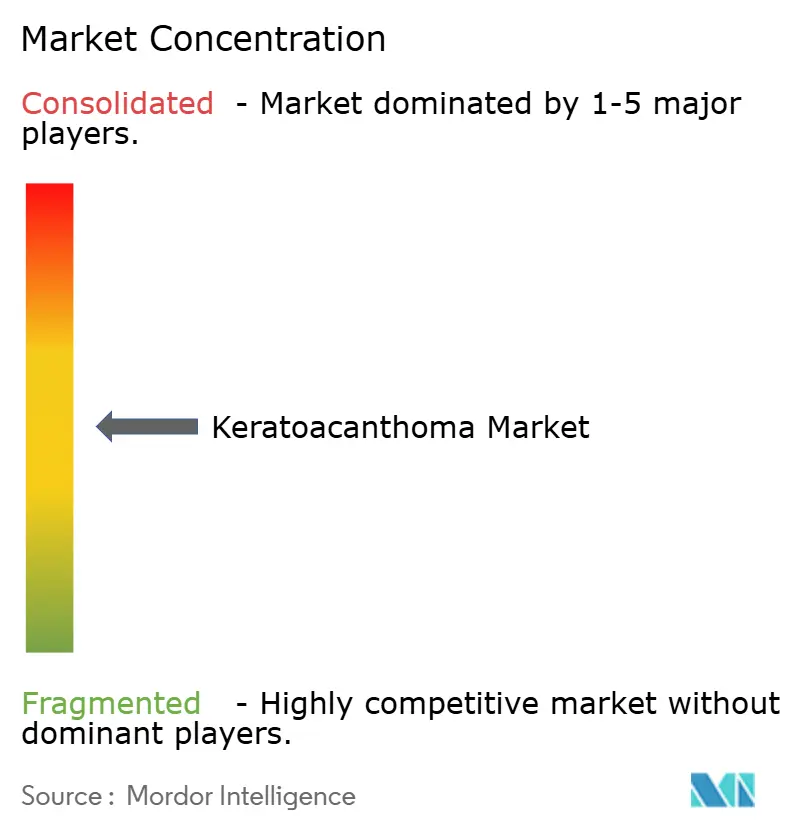
Diagnostic companies such as DermTech and Castle Biosciences are relevant because noninvasive triage could change the balance between biopsy-first care and diagnostic-led care. Carl Zeiss Meditec and Leica Microsystems have indirect relevance through microscopy used in Mohs procedures, although their dermatology focus is limited. The core opportunity remains a test that can distinguish keratoacanthoma from cutaneous squamous cell carcinoma before excision. A validated test could reduce uncertainty at the main clinical decision point and support more consistent coding and treatment selection. The market also has room for a specific drug registration and standardized non-surgical protocols for immunosuppression-associated lesions. The competitive structure remains fragmented because no leading group has a dedicated approved product or a reported combined share that would indicate concentration.
Keratoacanthoma Industry Leaders
-
Almirall, S.A.
-
Bausch Health Companies Inc.
-
Cipla Limited
-
Galderma Group AG
-
GLENMARK PHARMACEUTICALS LTD
- *Disclaimer: Major Players sorted in no particular order
Keratoacanthoma Market Companies Covered in this Report
- Almirall
- Amgen
- AstraZeneca
- Bausch Health
- Bayer
- Biofrontera
- Bristol-Myers Squibb
- Carl Zeiss
- Castle Biosciences, Inc.
- Cipla
- DermTech, Inc.
- Eli Lilly and Company
- Galderma Group AG
- GE HealthCare Technologies Inc.
- GLENMARK PHARMACEUTICALS LTD
- Danaher
- Leo Pharma
- Merck
- Novartis
- Pfizer
- Sanofi
- Sun Pharmaceuticals Industries
Recent Industry Developments in Keratoacanthoma Market
- July 2026: SKNV secured exclusive commercialization rights to Washington University in St. Louis’s patent portfolio for Kefunova Cream, a fluorouracil 5% and calcipotriene 0.005% combination therapy for actinic keratosis and low-risk superficial skin cancers. The company stated that the therapy has a 4-day treatment duration and will be manufactured through its FDA-registered 503B outsourcing facility. The International Immunosuppression and Transplant Skin Cancer Collaborative had already recommended the short-course combination in April 2026 for high-risk patients, including organ transplant recipients with elevated keratoacanthoma risk.
- February 2026: Biofrontera announced positive Phase 3 top-line results for Ameluz photodynamic therapy with the RhodoLED red-light LED platform for mild-to-moderate actinic keratoses on the extremities, neck, and trunk. Complete clearance reached 45.6% in the full analysis set, compared with 16.7% for vehicle photodynamic therapy, and 86.3% of patients said they would choose the treatment again. The company plans to submit a supplemental New Drug Application to the U.S. Food and Drug Administration in Q3 2026.
Global Keratoacanthoma Market Report Scope
As per the scope of the report, keratoacanthoma is a rapidly growing, dome‑shaped skin tumor that often resembles squamous cell carcinoma but is usually benign. It typically arises on sun‑exposed areas such as the face, arms, or hands, develops a central keratin plug, and may regress spontaneously, though it is often treated like skin cancer to avoid misdiagnosis.
The keratoacanthoma market is segmented by type, treatment and diagnosis, end user, and geography. By type, the market is segmented into solitary keratoacanthoma, multiple keratoacanthoma, giant keratoacanthoma, and others. By treatment and diagnosis, the market is segmented into diagnostic procedures, therapeutic procedures, and pharmacological treatment. By end user, the market is segmented into hospitals, dermatology clinics, ambulatory surgical centers, and others. The geography segment is further divided into North America, Europe, Asia-Pacific, the Middle East and Africa, and South America. The report also covers the estimated market sizes and trends for 17 countries across major regions globally. The report offers the market size and forecasts in value (USD) for the above segments.
Segmentation Overview
| Solitary Keratoacanthoma |
| Multiple Keratoacanthoma |
| Giant Keratoacanthoma |
| Others |
| Diagnostic Procedures | Clinical Examination |
| Dermoscopy | |
| Skin Biopsy & Histopathological Examination | |
| Others | |
| Therapeutic Procedures | Surgical Procedures |
| Destructive/Local Procedures | |
| Radiation Therapy | |
| Others | |
| Pharmacological Treatment | Topical Treatments |
| Intralesional Treatments | |
| Systemic Treatments | |
| Others |
| Hospitals |
| Dermatology Clinics |
| Ambulatory Surgical Centers |
| Others |
| North America | United States |
| Canada | |
| Mexico | |
| Europe | Germany |
| United Kingdom | |
| France | |
| Italy | |
| Spain | |
| Rest of Europe | |
| Asia-Pacific | China |
| India | |
| Japan | |
| Australia | |
| South Korea | |
| Rest of Asia-Pacific | |
| Middle East and Africa | GCC |
| South Africa | |
| Rest of Middle East and Africa | |
| South America | Brazil |
| Argentina | |
| Rest of South America |
| By Type | Solitary Keratoacanthoma | |
| Multiple Keratoacanthoma | ||
| Giant Keratoacanthoma | ||
| Others | ||
| By Treatment and Diagnosis | Diagnostic Procedures | Clinical Examination |
| Dermoscopy | ||
| Skin Biopsy & Histopathological Examination | ||
| Others | ||
| Therapeutic Procedures | Surgical Procedures | |
| Destructive/Local Procedures | ||
| Radiation Therapy | ||
| Others | ||
| Pharmacological Treatment | Topical Treatments | |
| Intralesional Treatments | ||
| Systemic Treatments | ||
| Others | ||
| By End User | Hospitals | |
| Dermatology Clinics | ||
| Ambulatory Surgical Centers | ||
| Others | ||
| By Geography | North America | United States |
| Canada | ||
| Mexico | ||
| Europe | Germany | |
| United Kingdom | ||
| France | ||
| Italy | ||
| Spain | ||
| Rest of Europe | ||
| Asia-Pacific | China | |
| India | ||
| Japan | ||
| Australia | ||
| South Korea | ||
| Rest of Asia-Pacific | ||
| Middle East and Africa | GCC | |
| South Africa | ||
| Rest of Middle East and Africa | ||
| South America | Brazil | |
| Argentina | ||
| Rest of South America | ||
Key Questions Answered in the Report
What is the projected value of the keratoacanthoma market by 2031?
The Keratoacanthoma market is forecast to reach USD 4.57 billion by 2031, growing at a 6.24% CAGR from 2026.
Which keratoacanthoma type is growing fastest?
Multiple keratoacanthoma is projected to grow at a 6.65% CAGR through 2031, supported by therapy-associated eruptive cases.
Which treatment category is expanding fastest for keratoacanthoma?
Pharmacological treatment is forecast to grow at a 7.13% CAGR through 2031, with intralesional and systemic options relevant for multiple lesions.
Why is Mohs surgery important for keratoacanthoma care?
Mohs surgery provides treatment and margin assessment in sensitive sites, and the supplied 2024 study reported a mean 1.3 stages with no recurrences at mean 1.5-year follow-up.
Which region has the fastest projected growth?
Asia-Pacific is forecast to grow at an 8.24% CAGR through 2031, supported by established demand in Australia and New Zealand and expanding capacity in China and India.
What limits wider access to keratoacanthoma treatment?
Diagnostic overlap with cutaneous squamous cell carcinoma, specialist shortages, and reimbursement pressure can delay referral and limit access to advanced procedures.