
Japan Pet Veterinary Diets Market Size and Share
Market Overview
| Study Period | 2021 - 2031 |
|---|---|
| Forecast Data Period | 2026 - 2031 |
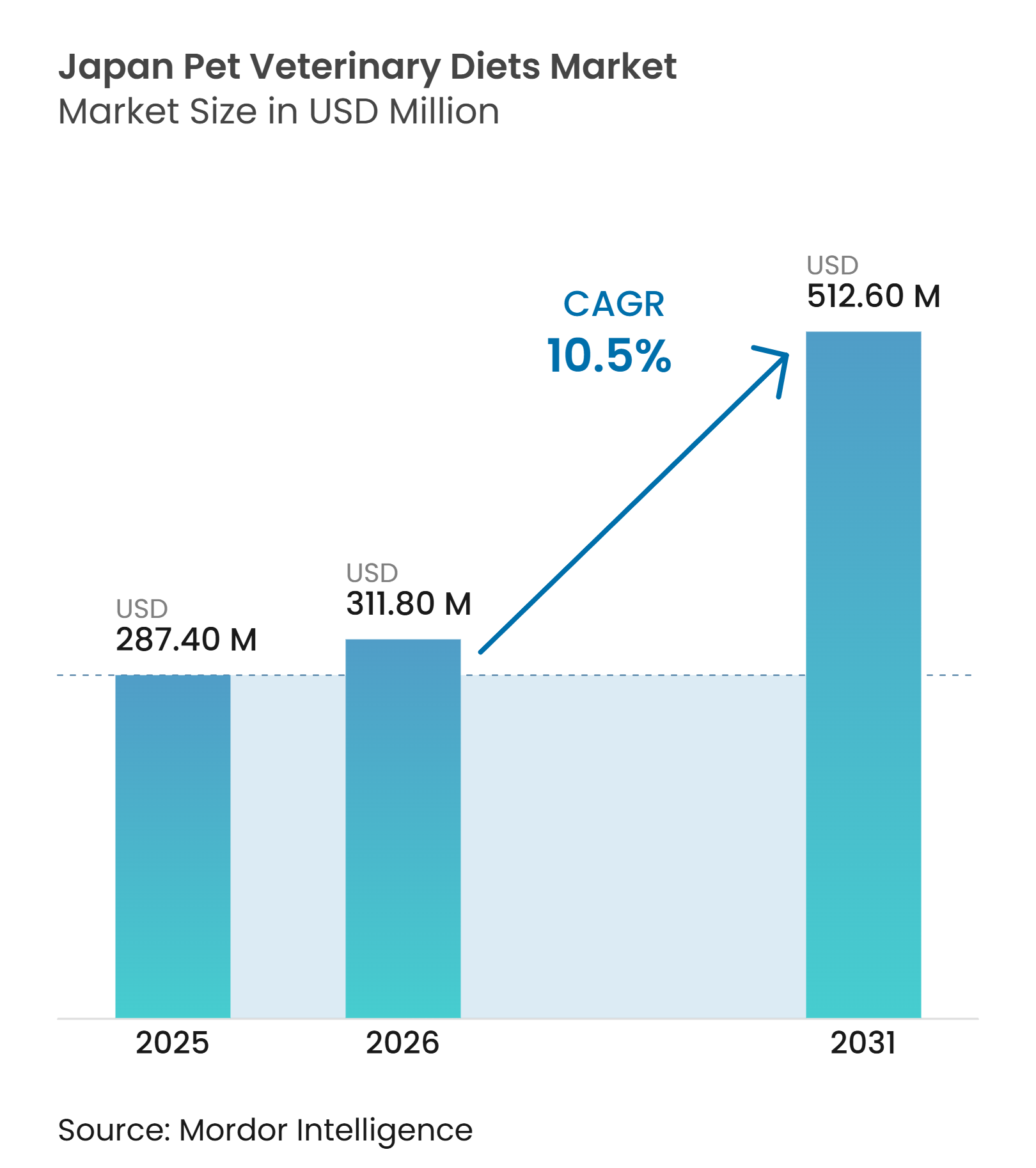
| Base Year Market Size (2025) | USD 287.40 Million |
| Market Size (2026) | USD 311.80 Million |
| Market Size (2031) | USD 512.60 Million |
| Growth Rate (2026 - 2031) | 10.50 % |
| Market Concentration | Medium |
Major Players *Disclaimer: Major Players sorted in no particular order Image © Mordor Intelligence. Reuse requires attribution under CC BY 4.0. | |
Japan Pet Veterinary Diets Market Analysis by Mordor Intelligence
The Japan pet veterinary diets market size is projected to increase from USD 287.4 million in 2025 to USD 311.8 million in 2026 and reach USD 512.6 million by 2031, growing at a CAGR of 10.5% over 2026-2031. Therapeutic diet purchasing is expanding in 2026 across veterinary hospitals and certified online storefronts as owners seek condition-specific nutrition that supports long treatment cycles. The market is also growing faster than the broader pet food space because veterinary recommendations remain a central purchase trigger, and Japan's pet base is weighted toward cats. Japan’s cat population stood at 8.7 million in 2024, while the dog population stood at 6.7 million[1], which supports stronger demand for feline therapeutic formulations in the veterinary diets. Japan’s aging society adds another layer of support, as 29.3% of the population was aged 65 and above in 2024[2], and this group tends to place a high value on companion animal health management. Price sensitivity remains the primary commercial constraint in the market, while leading suppliers continue to defend their positions through veterinary education, clinical product positioning, and controlled distribution systems.
Key Report Takeaways
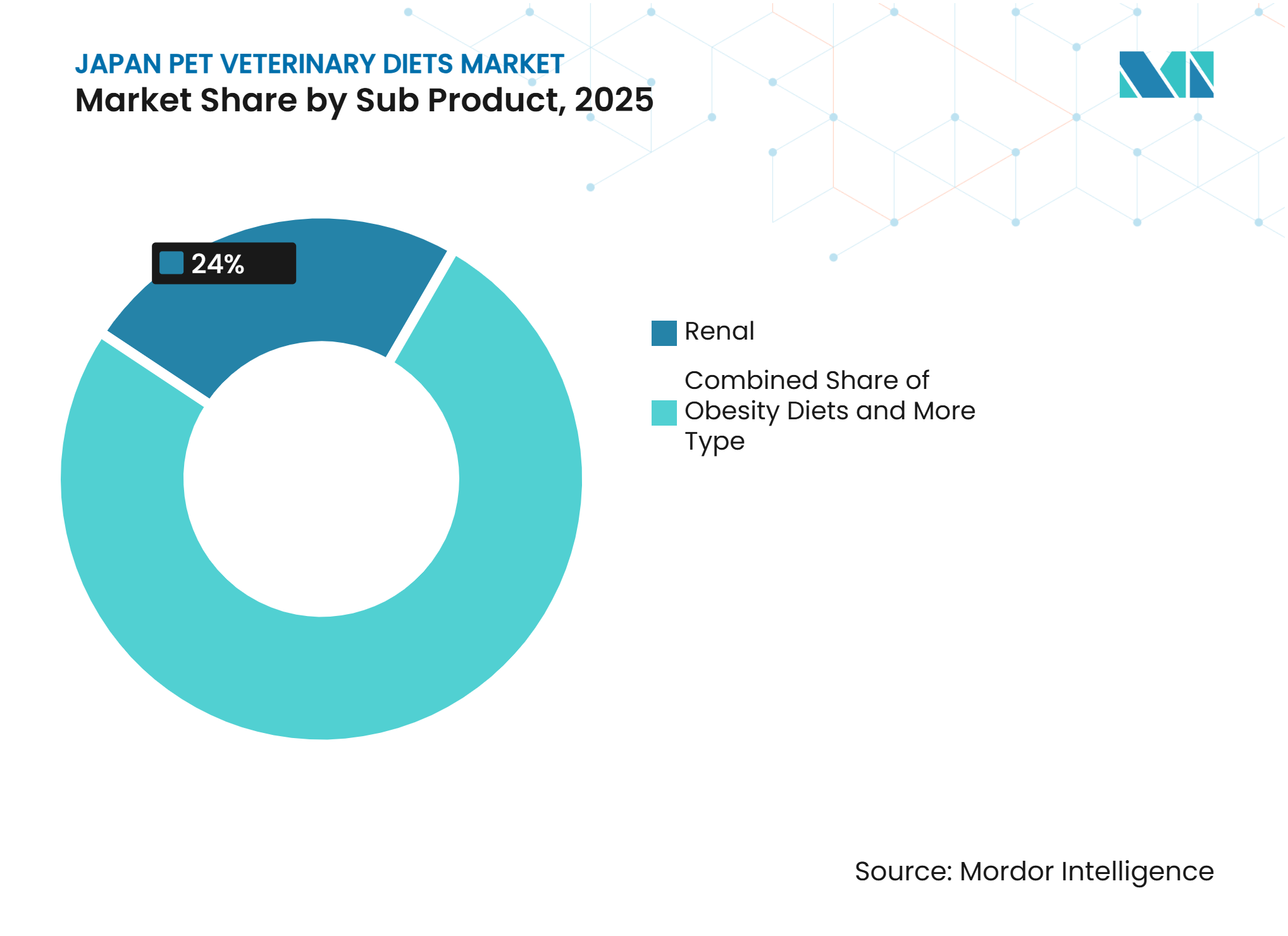
- By sub-product, renal diets were the largest segment, with a 24% revenue share in the Japan pet veterinary diets market size in 2025, and are forecast to grow at a CAGR of 11% from 2026 to 2031, making them the fastest-growing segment.
- By pets, cats were the largest segment, with a 56% revenue share of the Japan pet veterinary diets market share in 2025, and are forecast to grow at a CAGR of 9.4% from 2026 to 2031, making them the fastest-growing segment.
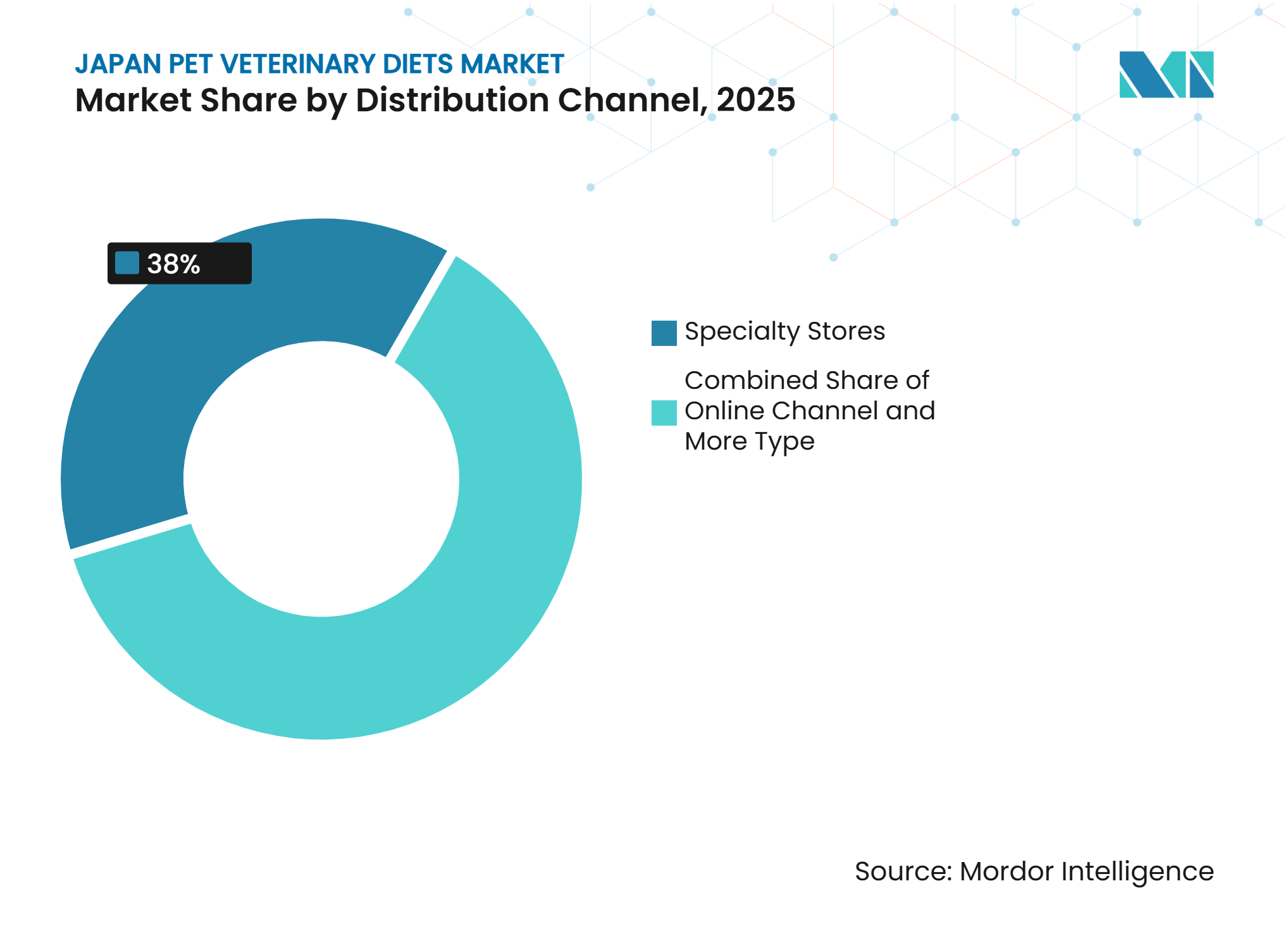
- By distribution channel, specialty stores were the largest segment, with a 38% revenue share in 2025, while the online channel is forecast to grow at a 12.6% CAGR from 2026 to 2031, making it the fastest-growing segment.
Note: Market size and forecast figures in this report are generated using Mordor Intelligence’s proprietary estimation framework, updated with the latest available data and insights as of January 2026.
Market Trends and Insights
Drivers Impact Analysis of Japan Pet Veterinary Diets Market*
| Driver | (~) % Impact on CAGR Forecast | Geographic Relevance | Impact Timeline |
|---|---|---|---|
| Aging Pet Population and Higher Chronic Disease Burden | +2.50% | Japan nationally, with stronger relevance in prefectures with older owner profiles and indoor cat ownership patterns | Medium term (2-4 years) |
| Veterinarian-Led Nutrition Recommendations | +2.00% | Japan nationally, with the highest conversion intensity in Tokyo, Osaka, and Fukuoka | Short term (≤ 2 years) |
| Premiumization of Pet Care Spending | +1.80% | Japan nationally, with stronger traction in major urban markets such as Tokyo, Osaka, and Nagoya | Short term (≤ 2 years) |
| Expansion of Prescription Diet Access Through Clinics and Authorized Retail | +1.50% | National, with early digital adoption concentrated in Tokyo, Osaka, and Nagoya | Short term (≤ 2 years) |
| Rising Demand for Condition-Specific Nutrition in Senior Pets | +1.20% | Japan nationally | Medium term (2-4 years) |
| Growth of Pet Insurance and Preventive Care Adoption | +0.80% | National, with stronger visibility in urban prefectures where insurance adoption is higher | Long term (≥ 4 years) |
| Source: Mordor Intelligence | |||
Aging Pet Population and Higher Chronic Disease Burden
Japan’s pet base has been shrinking in size, but the remaining population is becoming older and more clinically demanding, which supports steady demand in the Japan pet veterinary diets market. Agriculture and Agri-Food Canada (AAFC) reported that changes in household structure, more single-person living, and tighter urban housing conditions have weighed on dog ownership in Japan. At the same time, older animals remain in treatment for longer periods, which increases the need for diets that support management of chronic kidney disease, urinary issues, digestive disorders, and metabolic conditions over many months. A 2025 study in Life reported that the prevalence of chronic kidney disease in cats older than 10 years ranged from 20% to 50% across the clinical cohorts it reviewed, supporting the relevance of long-duration renal nutrition management. This combination of aging pets, longer treatment durations, and repeat-refill behavior gives the market a more durable revenue base than standard pet food categories.
Veterinarian-Led Nutrition Recommendations
Veterinary clinics remain the primary conversion point for therapeutic diet adoption in the market because owners typically act only after a clinical diagnosis and a clear feeding recommendation. Royal Canin Japon G.K., a subsidiary of Mars, Incorporated, disclosed in a July 2025 press release that a survey of 323 veterinary hospitals in Japan found an average of 25 dogs per clinic per month presenting with diarrhea conditions. That figure came from company-sponsored field research, but it still shows how often gastrointestinal conditions create repeat-prescription opportunities within the clinic channel. The same pattern applies across renal, urinary, digestive, and weight management categories, where product choice is closely tied to the veterinarian’s preferred nutrition protocol. This means the market rewards brands that invest in practitioner training, clinical support tools, and close relationships with hospitals, rather than brands that rely mainly on packaging or broad retail visibility.
Premiumization of Pet Care Spending
The Japan pet veterinary diets market benefits from a clear shift in owner spending toward products that can be tied to measurable health management rather than discretionary pet care purchases. Therapeutic diets fall within the spending basket where owners are more willing to absorb higher prices when the product is framed as part of a treatment plan. This makes clinically positioned nutrition more resilient than standard pet food as household budgets tighten. The effect is strongest when the recommendation comes from a veterinarian and when the owner expects the diet to support a chronic condition over a long period. As a result, the market continues to attract demand from owners who may cut back in other pet categories but still prioritize products linked to disease management and quality of life.
Expansion of Prescription Diet Access Through Clinics and Authorized Retail
Access to therapeutic diets in Japan used to depend heavily on a physical clinic visit, which limited convenient refills and reduced repeat purchasing frequency in the market. Royal Canin Japon G.K. announced that, as of October 2024, its therapeutic diet products would be sold only through veterinary hospitals and accredited online retailers, with sales through non-accredited physical retailers ending under the new policy. Kyoritsu Seiyaku Corporation also issued a formal public call for certified online retailers of Royal Canin therapeutic nutrition products, with the program set to take effect in winter 2024. Japan’s Pet Food Safety Act is administered by the Ministry of Agriculture, Forestry and Fisheries and the Ministry of the Environment for standard pet food, while therapeutic diets are handled outside that framework and remain tied to a stricter clinical channel structure. This controlled-but-broader-access model is helping the market expand refill convenience without weakening prescription oversight.
Restraints Impact Analysis of Japan Pet Veterinary Diets Market*
| Restraint | (~) % Impact on CAGR Forecast | Geographic Relevance | Impact Timeline |
|---|---|---|---|
| High Price Premium Versus Standard Pet Food | -2.00% | Japan nationally, with the sharpest effect on uninsured and lower-income households | Short term (≤ 2 years) |
| Limited Owner Awareness of Therapeutic Diet Compliance | -1.50% | National, with stronger impact in rural and suburban areas where follow-up is less frequent | Medium term (2-4 years) |
| Veterinary Clinic Dependency Can Restrict Refill Convenience | -1.00% | National, especially in prefectures with lower clinic density | Medium term (2-4 years) |
| Palatability Concerns and Switching Friction Across Therapeutic Brands | -0.80% | Japan nationally, especially in senior and multi-pet households | Short term (≤ 2 years) |
| Source: Mordor Intelligence | |||
High Price Premium Versus Standard Pet Food
The price gap between therapeutic diets and standard pet food remains the largest commercial barrier in the market. Agriculture and Agri-Food Canada (AAFC) reported that Japanese pet food manufacturers raised prices by 3% to 10% or more as food input costs rose during a period of unusual inflationary pressure in Japan. Therapeutic diets already carry added costs tied to clinical formulation, validation, and restricted distribution, so they enter the shelf at a structural premium even before inflation is considered. This leaves uninsured households paying the full extra cost out of pocket and creates a clear divide between owners who can maintain long-term dietary treatment and those who cannot. The market, therefore, has strong clinical demand, but part of that demand remains outside the addressable commercial base because affordability limits sustained compliance.
Limited Owner Awareness of Therapeutic Diet Compliance
Long-term compliance is another important restraint because the value of a therapeutic diet is often gradual rather than immediately visible in the market. Owners may expect faster results, and some discontinue the product when improvement seems slow or when symptoms appear to stabilize. This is especially relevant in renal and urinary management, where benefits build over time and depend on consistent feeding rather than short bursts of use. The problem becomes more severe in suburban and rural areas where follow-up visits are less frequent, and owner reinforcement is weaker. Certified online refill systems can ease some of this pressure, but the market still loses part of its potential revenue when owners stop the diet before the full treatment cycle is completed.
*Our forecasts treat driver/restraint impacts as directional, not additive. The impact forecasts reflect baseline growth, mix effects, and variable interactions.
Japan Pet Veterinary Diets Market Segment Analysis
By Sub Product:
Renal Diets Anchor Revenue and GrowthRenal diets held 24% of the Japan pet veterinary diets market share in 2025, and are projected to expand at an 11% CAGR from 2026 to 2031. This made renal diets both the largest and the fastest sub-product category in the market. The category benefits from long prescription durations because renal management usually requires sustained control of phosphorus and protein over months and often over years. That treatment pattern produces repeat purchasing that is more stable than in shorter intervention categories. It also gives leading renal formulations stronger customer retention because owners are less likely to switch when the diet is already part of a monitored clinical plan.
The rest of the sub-product mix is widening as veterinary nutrition practice becomes more condition-specific in the market. Diets for urinary tract disease remain important because feline urinary conditions are common and often require carefully managed feeding to reduce the risk of recurrence. Digestive sensitivity diets are also gaining more attention as gastrointestinal issues create frequent hospital visits and recurring dietary recommendations. Oral care diets, derma diets, diabetes diets, obesity diets, and other therapeutic products support a broader move toward targeted nutrition rather than general wellness feeding. The launch of cat cardiac support in January 2025 and the launch of Cat Renal Support + Joint Support in January 2026 show that suppliers are also building multi-condition and organ-specific portfolios inside the market.



By Pets:
Cats Sustain Leadership Across the Forecast PeriodCats accounted for 56% of revenue in 2025 and are projected to grow at a 9.4% CAGR in the market from 2026 to 2031. This keeps cats as both the largest and the fastest segment by pet type. The revenue pattern reflects Japan’s pet base, where cats outnumber dogs and where chronic feline conditions often require long dietary management. Feline demand is especially important for renal and urinary nutrition because these categories align with the disease profile of older indoor cats. The market, therefore, remains structurally tied to cat health trends, even as suppliers continue to serve both major companion-animal groups.
Dogs still represent a major revenue stream in the market, even though total ownership has come under pressure from smaller households and tighter urban living spaces. The dog segment remains commercially relevant because health-focused owners continue to spend on renal, digestive, and weight management diets once a condition is diagnosed. The category also benefits from fresh product development, including Hill’s Prescription Diet i/d Puppy and i/d Kitten in February 2026 and Royal Canin’s Neutered Care Large Dog in April 2026, which show how suppliers are refining life-stage and breed-specific clinical nutrition. Other pets remain a smaller niche, but the segment has room to grow as specialty clinics for rabbits and small mammals become more visible in urban Japan. This means the Japan pet veterinary diets market still rests on cats and dogs, but it has a modest path to widen its species coverage over time.
By Distribution Channel:
Specialty Stores Lead While Online Refills Scale FasterSpecialty stores held 38% of revenue in 2025, while the online channel is projected to grow at a 12.6% CAGR from 2026 to 2031 in the market. This split shows that the largest channel remains centered on guided purchase support, while the fastest channel is centered on refill convenience. Specialty stores keep their place because owners often want help with product selection, feeding transition, and understanding prescription nutrition during the first purchase. Their proximity to veterinary clinics also supports cross-referral and easier access to approved therapeutic products. In the market, this makes specialty stores important for onboarding and digital channels important for ongoing compliance.
The online channel is gaining ground because owners want to refill the same diet without making an extra trip to the clinic each time. Royal Canin’s restricted channel policy and Kyoritsu Seiyaku’s certified retailer framework have helped formalize this model and made online access compatible with prescription oversight. Convenience stores, supermarkets, and hypermarkets play a smaller role because they are not set up for registered prescription sales and clinical diet guidance. Direct veterinary hospital sales remain central because most initial diagnoses and product recommendations are made there. Over time, the market is likely to see a tighter connection between hospital recommendation, approved digital ordering, and repeat home delivery rather than a shift toward open mass retail distribution.

Geography Analysis
The Japanese pet veterinary diets Market operates as a single national market, but demand is more concentrated in the Tokyo, Osaka, and Nagoya metropolitan corridors, where veterinary access and premium pet retail are strongest. These urban areas bring together large veterinary hospital networks, stronger consumer willingness to pay for pet health, and better visibility for clinically positioned nutrition products. Owners in these cities also tend to visit veterinary hospitals more often, which raises the chance of diagnosis, prescription, and early dietary adoption. This gives metropolitan Japan a clear lead in first-time conversion to therapeutic diets and in long-term compliance support.
Rural and suburban areas exhibit a different market pattern. Veterinary clinic density is lower outside the largest urban centers, and longer travel times can delay diagnosis or reduce the frequency of follow-up for chronic conditions that benefit from dietary management. Certified online refill systems partly address this issue by allowing registered owners to continue purchases without another in-person visit every time. Japan’s dependable delivery infrastructure makes this model practical at a national scale, giving suppliers a viable way to reach underserved households beyond the main cities.
Japan also holds a strong position in the broader Asia-Pacific companion animal health landscape, which supports the market. Compared with many regional peers, Japan combines high household income, mature veterinary practice standards, and stronger familiarity with clinically guided nutrition. Those conditions make the country one of the most responsive markets in Asia-Pacific for prescription-based pet diets and reinforce the market's long-term depth.
Competitive Landscape
Market Concentration
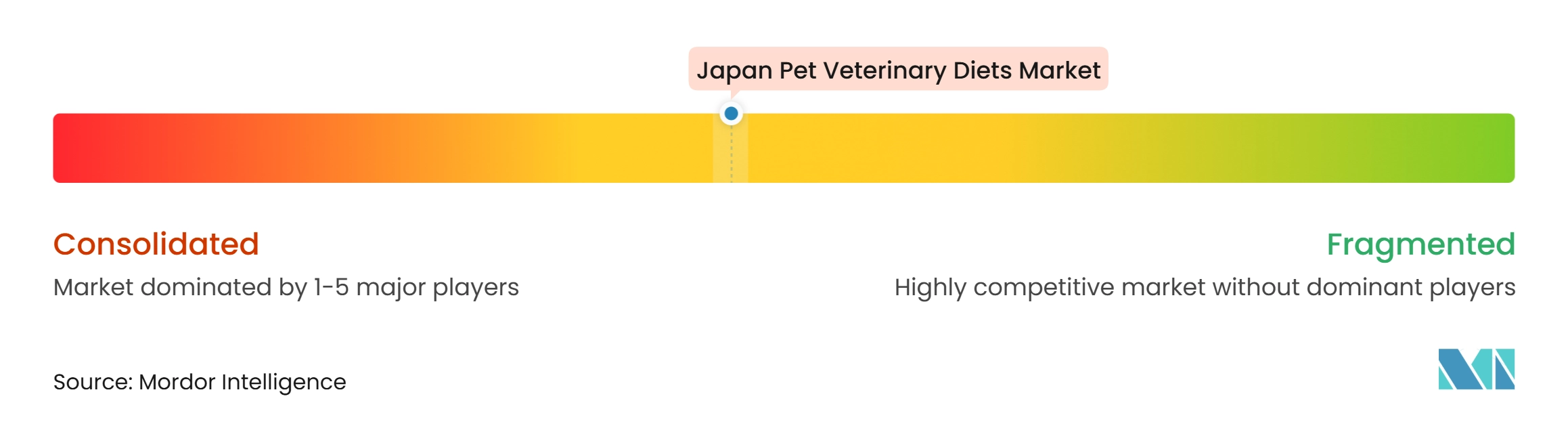
The Japan pet veterinary diets market is moderately concentrated, with Royal Canin Japon G.K., a subsidiary of Mars, Incorporated, Colgate-Palmolive Company, Nestlé S.A., Virbac S.A., and Kyoritsu Seiyaku Corporation as the main competitors. The structure favors companies that can stay close to veterinarians, maintain trust in the clinical performance of their products, and protect access through compliant channels. Royal Canin and Hill’s have built strong positions through long-standing relationships with veterinary hospitals and deep condition-specific product portfolios. Nestlé remains important through its scale and broader animal nutrition capabilities, while Virbac adds a differentiated proposition through its Veterinary HPM range and its higher-protein nutritional positioning[3]. This keeps the market competitive, but it also creates meaningful barriers for smaller entrants that lack clinical channel depth.
Recent strategic moves show how leading players are trying to protect growth in the market. Royal Canin launched Cat Renal Support + Joint Support in January 2026 and Neutered Care Large Dog in April 2026, both of which expanded its condition- and life-stage-specific offerings. Hill’s launched Prescription Diet i/d Puppy and i/d Kitten in February 2026, which pushed clinical digestive nutrition into earlier life stages. Royal Canin, a subsidiary of Mars, Incorporated, Incorporated also hosted the Royal Canin Veterinary Symposium 2026, which shows that practitioner education remains central to competitive strategy in the market.
A second tier of Japanese and Japan-focused players is trying to gain ground by combining online convenience with clinical oversight in the market. Kyoritsu Seiyaku’s support for certified online retail and its March 2026 collaboration announcement with bitBiome point to a strategy that goes beyond distribution and looks toward product and technology differentiation. Senior pets often need support for more than one chronic issue at the same time. White space also remains in therapeutic products for other pets, where validated species-specific nutrition is still limited. These gaps leave room for growth, but the market will likely continue to favor companies that can combine product depth, veterinarian trust, and controlled refill access.
Japan Pet Veterinary Diets Industry Leaders
-
Nestlé S.A.
-
Virbac S.A.
-
Kyoritsu Seiyaku Corporation
-
Mars, Incorporated
-
Colgate-Palmolive Company
- *Disclaimer: Major Players sorted in no particular order
Japan Pet Veterinary Diets Market Companies Covered in this Report
- Mars, Incorporated
- Hill’s-Colgate (Japan) Ltd.
- Nestlé S.A.
- Virbac S.A.
- Kyoritsu Seiyaku Corporation
- PETLINE CO., LTD.
- Unicharm Corporation
- Inaba-Petfood Co., Ltd.
- Nippon Pet Food Co., Ltd.
- DoggyMan H.A. Co., Ltd.
- Petio Corporation
- Earth Pet Co., Ltd.
- AIXIA Corporation
- D.B.F. Pet Co., Ltd.
- Vet’s Labo Co., Ltd.
Recent Industry Developments in Japan Pet Veterinary Diets Market
- June 2026: Royal Canin Japon G.K. hosted the Royal Canin Veterinary Symposium 2026, attended by more than 250 veterinary professionals and licensed animal care nurses in Japan. The symposium reinforced the company's strategy of practitioner education as a primary lever for therapeutic diet adoption, embedding clinical nutrition advocacy within the broader veterinary professional development agenda.
- April 2026: Royal Canin Japon G.K. launched Neutered Care Large Dog, a veterinary hospital-exclusive therapeutic diet formulated specifically for large-breed neutered dogs, incorporating 6 clinically validated care functions covering weight management, joint health, renal support, digestive function, skin health, and immune maintenance.
- February 2026: Hill's-Colgate (Japan) Ltd. launched Hill's Prescription Diet i/d Puppy for dogs and Hill's Prescription Diet i/d Kitten for cats on February 2, 2026, introducing the company's proprietary ActivBiome+ Digestion prebiotic fiber blend to early-life therapeutic digestive nutrition for the first time in Japan. Both products are sold exclusively through veterinary hospitals.
Japan Pet Veterinary Diets Market Report Scope
Pet veterinary diets (also known as therapeutic or prescription diets) are specialized, scientifically formulated pet foods designed to treat, prevent, or manage specific medical conditions.
The Japan Pet Veterinary Diets Market Report is segmented by sub product (Diabetes, Renal, Urinary Tract Disease, Digestive Sensitivity, Oral Care Diets, Derma Diets, Obesity Diets, and Others), by pets (Cats, Dogs, and Other Pets), by distribution channel (Convenience Stores, Online Channel, Specialty Stores, Supermarkets/Hypermarkets, and others). The market forecasts are provided in terms of value in USD and volume in metric tons.
Segmentation Overview
| Diabetes |
| Renal |
| Urinary Tract Disease |
| Digestive Sensitivity |
| Oral Care Diets |
| Derma Diets |
| Obesity Diets |
| Other Veterinary Diets |
| Cats |
| Dogs |
| Other Pets |
| Convenience Stores |
| Online Channel |
| Specialty Stores |
| Supermarkets and Hypermarkets |
| Other Distribution Channels |
| By Sub Product | Diabetes |
| Renal | |
| Urinary Tract Disease | |
| Digestive Sensitivity | |
| Oral Care Diets | |
| Derma Diets | |
| Obesity Diets | |
| Other Veterinary Diets | |
| By Pets | Cats |
| Dogs | |
| Other Pets | |
| By Distribution Channel | Convenience Stores |
| Online Channel | |
| Specialty Stores | |
| Supermarkets and Hypermarkets | |
| Other Distribution Channels |
Key Questions Answered in the Report
What is the 2026 value and 2031 outlook for Japan pet veterinary diets?
The market is estimated at USD 311.8 million in 2026 and is forecast to reach USD 512.6 million by 2031 at a 10.5% CAGR over 2026-2031.
Which product category is leading demand in Japan?
Renal diets are the largest category with 24% revenue share in 2025 and also the fastest-growing category with an 11% CAGR over 2026-2031.
Why are cats so important to therapeutic pet nutrition in Japan?
Cats accounted for 56% of revenue in 2025, which supports stronger demand.
What is driving adoption of veterinary diets in Japan?
The strongest drivers are aging pets, high chronic disease burden, veterinarian-led recommendations, and wider access through accredited online refill systems linked to clinical oversight.