
Japan Pet Nutraceuticals Market Size and Share
Market Overview
| Study Period | 2021 - 2031 |
|---|---|
| Forecast Data Period | 2026 - 2031 |
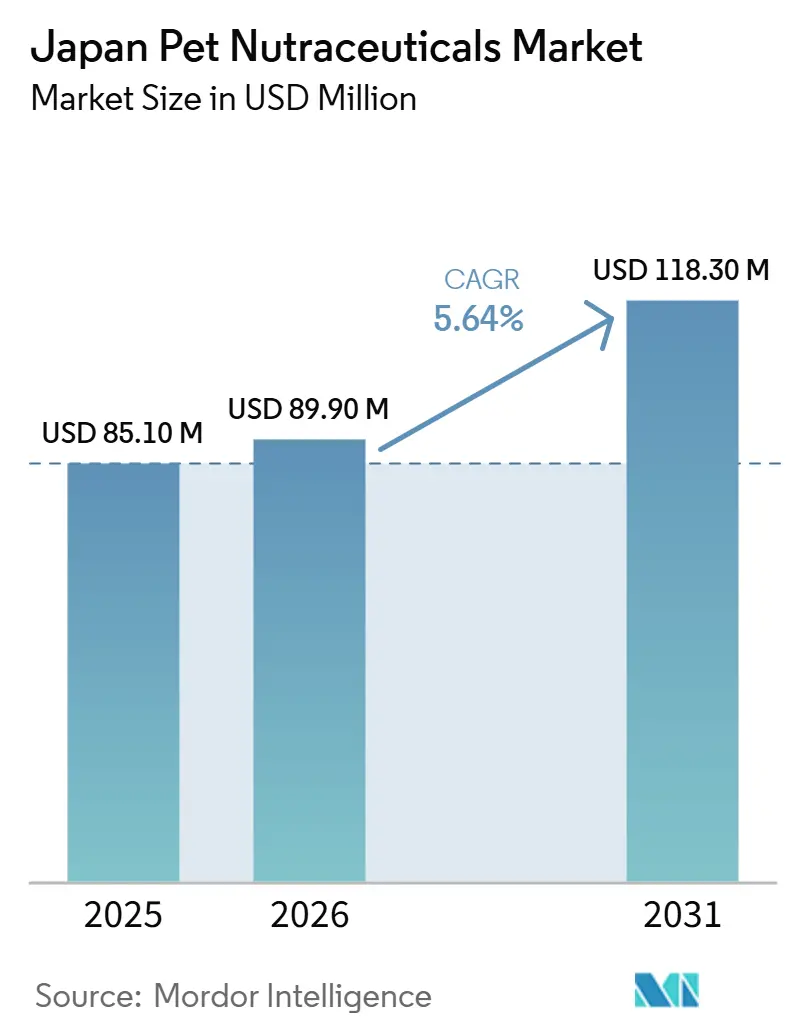
| Base Year Market Size (2025) | USD 85.10 Million |
| Market Size (2026) | USD 89.90 Million |
| Market Size (2031) | USD 118.30 Million |
| Growth Rate (2026 - 2031) | 5.64 % |
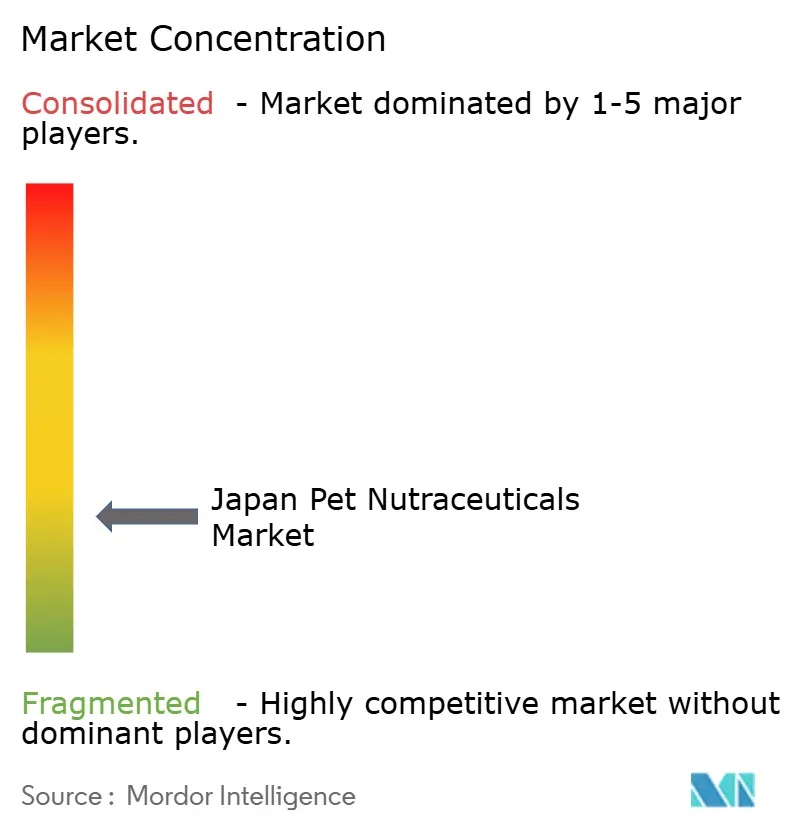
| Market Concentration | Low |
Major Players *Disclaimer: Major Players sorted in no particular order Image © Mordor Intelligence. Reuse requires attribution under CC BY 4.0. | |
Japan Pet Nutraceuticals Market Analysis by Mordor Intelligence
The Japan pet nutraceuticals market size is anticipated to increase from USD 85.10 million in 2025 to USD 89.90 million in 2026 and reach USD 118.30 million by 2031, growing at a CAGR of 5.64% over 2026-2031. The Japan pet nutraceuticals market is growing because pet owners are spending more on daily health support, especially for aging animals that need ongoing joint, digestive, kidney, and immunity care. According to the Japan Pet Food Association (JPFA) report, Japan's monthly spending on dogs reached USD 108 (JPY 16,198) in 2024, while monthly spending on cats rose to USD 73 (JPY 11,004), showing that household budgets are still supporting higher-value pet care purchases[1]Source: Japan Pet Food Association, “2025 National Dog and Cat Ownership Survey,” petfood.or.jp. The Japan pet nutraceuticals market is also benefiting from a strong domestic trust premium, as Japanese brands use local ingredient control, Japanese-language labeling, and familiar healthcare brand names to improve conversion. Updated labeling requirements under the Pet Food Safety Act are raising the compliance bar, which supports established companies with stronger regulatory capability and makes product credibility more important in the Japan pet nutraceuticals market.
Key Report Takeaways
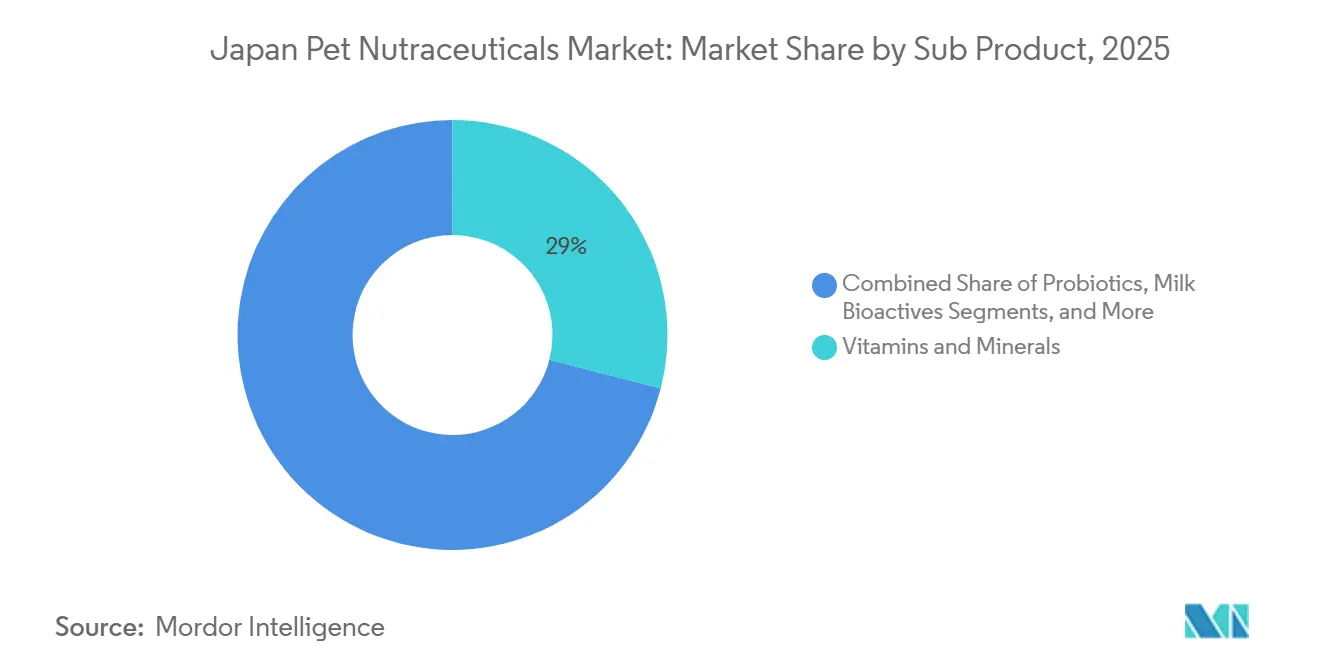
- By sub-product, vitamins and minerals led with 29.0% of the Japan pet nutraceuticals market share in 2025, while probiotics is the fastest-growing, forecast to expand at an 8.2% CAGR through 2026 to 2031.
- By pet type, dogs held the largest and accounted for 57.0% of the Japan pet nutraceuticals market size in 2025, while cats will be the fastest-growing segment, projected CAGR at 7.4% through 2026 to 2031.
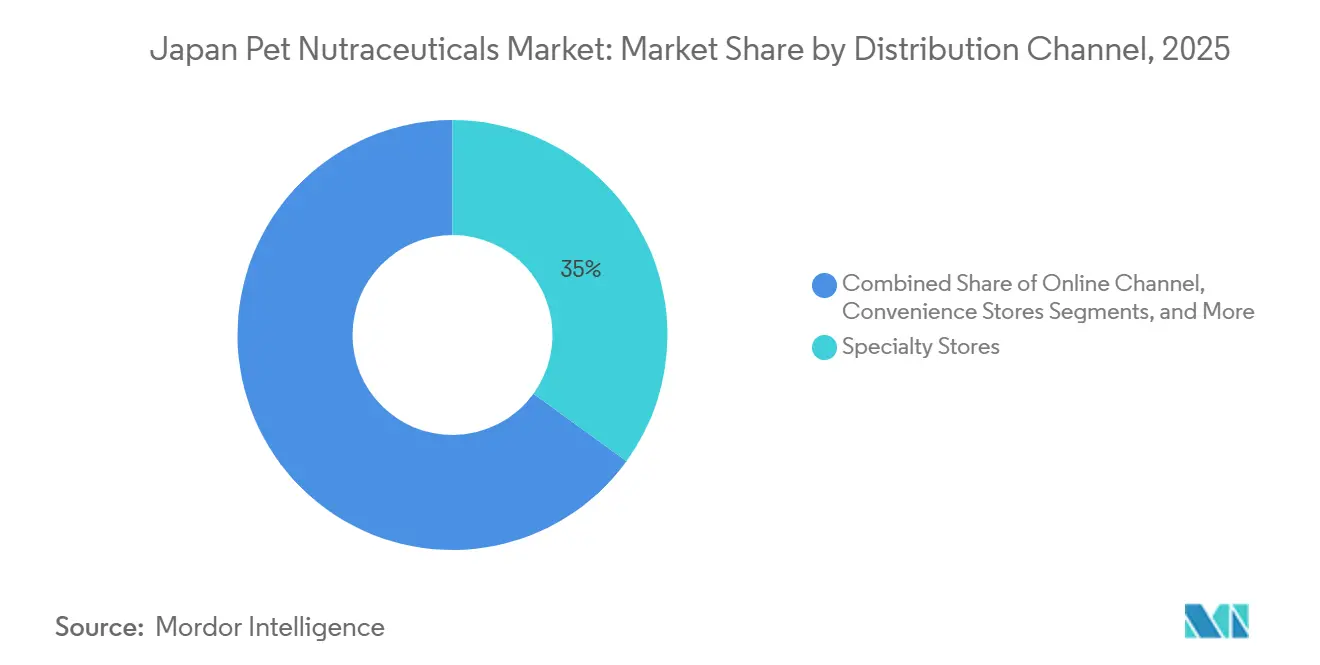
- By distribution channel, specialty stores accounted for the largest share of 35.0% in the Japan pet nutraceuticals market in 2025, while online channels are the fastest-growing, advancing at a 9.5% CAGR through 2026 to 2031.
Note: Market size and forecast figures in this report are generated using Mordor Intelligence’s proprietary estimation framework, updated with the latest available data and insights as of January 2026.
Japan Pet Nutraceuticals Market Trends and Insights
Drivers Impact Analysis*
| Driver | (~) % Impact on CAGR Forecast | Geographic Relevance | Impact Timeline |
|---|---|---|---|
| Aging pet population is increasing in preventive health spending | +1.1% | Japan, strongest in Tokyo, Kanto, and Kansai | Long term (≥ 4 years) |
| Humanization of pets is accelerating premium supplement adoption | +1.4% | Japan, strongest in Tokyo, Osaka, and Nagoya | Medium term (2-4 years) |
| Veterinary recommendation culture supporting functional product uptake | +0.8% | Japan, strongest in clinic-led urban markets | Medium term (2-4 years) |
| Rapid growth of targeted formulations for joints, digestion, and skin health | +0.9% | National, with strong adoption in premium pet care hubs | Short term (≤ 2 years) |
| Rising online reorder and subscription purchases for daily supplements | +0.7% | National, rising fastest in Kanto and Chubu | Short term (≤ 2 years) |
| Domestic brand trust and Japan-first quality positioning supporting conversion | +0.5% | Japan, strongest in tier-1 cities | Long term (≥ 4 years) |
| Source: Mordor Intelligence | |||
Aging Pet Population is Increasing in Preventive Health Spending
Rising pet longevity in Japan is shifting owner behavior toward daily preventive care rather than occasional treatment, supporting demand for pet nutraceuticals. The Japan Pet Food Association (JPFA) 2025 ownership survey recorded an average dog lifespan of 14.8 years and an average indoor cat lifespan of 16.0 years, sustaining demand for products used across extended aging cycles[2]Source: Japan Pet Food Association, National Survey of Dog and Cat Ownership 2025, petfood.or.jp.Repeat purchases of joint support ingredients, digestion support products, and cognitive support formulas address common age-related needs tied to this trend. Older pets also require products that are easy to incorporate into daily feeding routines, including powders, pastes, chewables, and functional food formats. The Japan pet nutraceuticals market, therefore, benefits from a customer base that purchases for long-term maintenance rather than one-time use.
Humanization of Pets Accelerating Premium Supplement Adoption
Japan's declining birth rate is reshaping household spending patterns. In 2025, the annual number of births fell to a record low of 671,236, according to the Ministry of Health, Labor and Welfare. With fewer children, many urban households are redirecting emotional and financial resources toward companion animals. This shift has elevated pets to a more central role in family life, prompting owners to invest in higher-quality products, including premium nutritional supplements, to support their animals' long-term health and well-being. According to the Japan Pet Food Association (JPFA), dogs remained the most popular pet in Japan in 2025, with the dog population increasing slightly to 6.82 million from 6.79 million in 2024. In the Japan pet nutraceuticals market, this trend supports demand for products with clear ingredient transparency, defined healthcare positioning, and ease of daily use.
Veterinary Recommendation Culture Supporting Functional Product Uptake
Veterinary advice strongly influences purchasing decisions in Japan's pet care market. Owners are less likely to switch away from a product once a veterinarian or clinic has recommended it, particularly when the product addresses a specific health need. This dynamic creates a stable demand base for functional products, as recommendations from trusted medical professionals carry significant weight in owner decision-making and tend to result in sustained product loyalty over time. Hill's Pet Nutrition launched Science Diet Vet Essential in March 2024 through veterinary clinics and specialty stores, demonstrating how companies are using medical channels to establish trust before scaling. This approach keeps clinically positioned products close to the point where owners are already receiving health guidance.
Rapid Growth of Targeted Formulations for Joints, Digestion, and Skin Health
The market is shifting from general wellness products to formulations targeting specific health conditions. Pet owners are increasingly seeking products designed to address identifiable concerns such as joint mobility, digestive function, and skin and coat health. This trend reflects a broader shift toward condition-specific pet care, in which owners adopt a more clinical approach to managing their animals' health. In 2024, Unicharm Corporation launched the AllWell Knee and Joint Health product for cats, illustrating the growing commercial interest in targeted therapeutic formulations. Taisho Pharmaceutical entered the category with pet probiotic products under the Biofermin brand, bringing a recognized human health brand into the pet digestive health segment. AstaReal also markets Astamate for pets from its Japan facility, indicating that antioxidant and anti-inflammatory support is emerging as a premium niche within the Japan pet nutraceuticals market.
Restraints Impact Analysis*
| Restraint | (~) % Impact on CAGR Forecast | Geographic Relevance | Impact Timeline |
|---|---|---|---|
| Limited consumer clarity on efficacy and ingredient differentiation | -0.7% | National, strongest among first-time buyers | Medium term (2-4 years) |
| Premium price sensitivity outside core urban and affluent pet owners | -0.6% | National, with sharper drag outside major urban centers | Long term (≥ 4 years) |
| Regulatory and labeling complexity for functional claims | -0.5% | Japan, across all compliant manufacturers | Short term (≤ 2 years) |
| Smaller dog population base constraining volume expansion | -0.5% | Japan, especially in dog-focused categories | Long term (≥ 4 years) |
| Source: Mordor Intelligence | |||
Limited Consumer Clarity on Efficacy and Ingredient Differentiation
Limited consumer understanding of the efficacy of nutraceutical ingredients remains a key challenge in the market. While awareness of pet health and preventive nutrition is growing, many pet owners struggle to differentiate between ingredients such as probiotics, omega-3 fatty acids, glucosamine, collagen, and herbal extracts, or understand their specific health benefits. While the Ministry of Agriculture, Forestry, and Fisheries (MAFF) has established a pet food framework with safety and labeling regulations, it does not provide supplement manufacturers with a clear method to communicate stronger functional health claims on packaging[3]Source: Ministry of Agriculture, Forestry and Fisheries, “Safety of Feeds and Pet Foods,” maff.go.jp. This leads many buyers to compare products on price rather than efficacy, particularly those new to the category. This market is slow to adopt novel ingredients and clinically positioned formulas, which require explanation before they can generate repeat demand. As a result, even strong products need channel support and consumer education to justify a premium price.
Regulatory and Labeling Complexity for Functional Claims
Japan's stringent regulatory framework for pet health products presents challenges for manufacturers seeking to communicate functional benefits. Companies must ensure that ingredient claims, health-related statements, and labeling comply with regulations designed to prevent misleading or unsubstantiated assertions. The Ministry of Agriculture, Forestry, and Fisheries (MAFF) oversees compliance checks covering ingredient identification, origin labeling, additive disclosure, and product safety standards, all of which add to the burden on new product launches. Foreign brands face particular challenges, since local documentation and formatting requirements differ from those in their home markets, slowing market entry and limiting flexibility to test new bioactive ingredients. Consequently, established domestic and multinational companies with dedicated compliance teams are better positioned than smaller entrants.
*Our forecasts treat driver/restraint impacts as directional, not additive. The impact forecasts reflect baseline growth, mix effects, and variable interactions.
Segment Analysis
By Sub Product: Vitamins and Minerals Lead While Probiotics Rise Fast
Vitamins and minerals represented the largest segment, and accounted for 29.0% of the Japan pet nutraceuticals market share in 2025. The segment's dominance is primarily driven by the growing emphasis on preventive pet healthcare and the increasing adoption of dietary supplements to support overall wellness. Japanese pet owners are increasingly incorporating vitamin and mineral supplements into their pets' daily diets to address nutritional deficiencies, strengthen immune function, improve bone and joint health, and promote healthy skin and coat. The rising population of aging companion animals has further boosted demand for formulations containing essential micronutrients that support mobility, cognitive function, and metabolic health.
Probiotics are the fastest-growing segment in the Japan pet nutraceuticals market, recording an 8.2% CAGR from 2026 to 2031. Growth is primarily driven by the recognized benefits of digestive health support and strong repeat-use behavior among pet owners. In December 2024, Taisho Pharmaceutical launched Wan Bioferm-in S for dogs and Nyan Bioferm-in S for cats, extending its established probiotic branding from the human health segment into the Japan pet nutraceuticals market. Proteins and peptides are gaining traction among owners of aging pets that require muscle and joint support, while milk bioactives remain a smaller but relevant category in immunity-focused use cases.



By Pet Type: Dogs Hold Revenue Leadership While Cats Expand Faster
Dogs accounted for 57.0% of the Japan pet nutraceuticals market share in 2025, making it the largest pet type. This reflects a long-established pattern of supplement use among dog owners, particularly for aging small breeds that frequently require mobility, digestive, and skin support products. While dog ownership is lower than cat ownership in unit terms, spending patterns still support a larger commercial base. As a result, dog-focused products continue to maintain shelf space and marketing attention despite softer population trends.
Cats are the fastest-growing animal type in the Japan pet nutraceuticals market, with a projected CAGR of 7.4% through 2026 to 2031. Japan had 6.82 million cats in 2025, well above the dog population, leaving room for deeper supplement penetration as owners become more willing to treat renal, digestive, and age-related issues earlier. Anicom Holdings, Inc. also reported 1.236 million cat insurance contracts by September 2024, indicating stronger veterinary engagement and a better path for routine recommendation-led product adoption in the Japan pet nutraceuticals industry.
By Distribution Channel: Specialty Stores Lead While Online Builds Repeat Demand
Specialty Stores held the largest, 35.0% share of the Japan pet nutraceuticals market in 2025, making them the largest route to market. Their lead comes from one clear advantage, the ability to explain products in person when buyers are confused by claims, ingredients, or dosage formats. In the Japan pet nutraceuticals market, this matters because trust still drives category conversion more than impulse buying. Supermarkets and other mass channels remain relevant for simpler vitamins and entry-level products, but they do not match the advisory role of specialty outlets.
Online is the fastest-growing distribution channel in the Japan pet nutraceuticals market, at a 9.5% CAGR through 2031. This channel is particularly effective for products used daily or on long cycles, as subscription and reorder models support consistent purchasing and reduce the likelihood of missed purchases. Platforms such as Amazon Japan, Rakuten, and brand-owned direct-to-consumer sites have expanded product visibility and made it easier for pet owners to access a wider range of nutraceutical formulas than what is typically available in physical retail. Within other channels, the veterinary clinic route is also gaining importance, with Hill's Pet Nutrition and Virbac S.A. both using medically trusted distribution to support clinically positioned products. This route carries added credibility, as recommendations from veterinary professionals tend to influence purchase decisions more directly than general retail or online advertising.
Geography Analysis
Tokyo and the Kanto region were among the largest contributors to the Japan pet nutraceuticals market in 2025. The region benefits from high incomes, dense urban living, greater access to specialty retail, and a significant proportion of single-person and child-free households, which tend to allocate more resources to pet health. These factors drive faster adoption of premium supplements and innovative ingredients. Additionally, Tokyo and Kanto have a well-developed network of specialty stores and veterinary clinics that support consumer education at the point of purchase. Together, these factors enable the region to adopt premium products earlier than other parts of the country.
Kansai remains the second-largest regional cluster in the Japan pet nutraceuticals market, supported by established urban centers such as Osaka and Kyoto. The demand in this region is bolstered by a strong culture of pet-friendly apartment living and sustained interest in wellness products tailored for cats. Meanwhile, the Chubu region benefits from its production visibility, which enhances local retail presence and strengthens consumer awareness of functional pet nutrition.
Kyushu and Okinawa hold a significant position in the Japan pet nutraceuticals market due to the increasing visibility of premium pet retail in urban areas like Fukuoka. Smaller markets, including Tohoku, Chugoku, Hokkaido, and Shikoku, are becoming less constrained by limited local store availability, owing to the growing convenience of online delivery for daily supplement purchases. The growth in these regions is projected to be slower due to higher price sensitivity and lower levels of category education compared to major metropolitan areas.
Competitive Landscape
The Japan pet nutraceuticals market remained highly fragmented in 2025, with the presence of numerous domestic and international manufacturers. Unicharm Corporation maintained its position through strong retail access, broad presence in pet care, and the ability to extend established brands into health-oriented formats. Inaba Foods Co., Ltd. (Inaba-Petfood) leveraged domestic consumer trust and strong recognition of its cat-focused brands. Mars, Incorporated and Colgate-Palmolive Company (Hill's Pet Nutrition, Inc.) also held notable positions in the market, supported by science-backed product portfolios and credibility in premium and clinic-linked channels.
Companies from adjacent health categories are also entering the market as the overlap with human wellness grows. Firms operating in human dietary supplements, functional foods, and nutraceuticals are applying existing formulation expertise and ingredient sourcing capabilities to develop pet-specific products. This trend is broadening the competitive field beyond traditional pet food and care companies. New entrants are targeting underserved product categories and distribution channels, including e-commerce and specialty pet retail, where established players may have limited presence. As competitive pressure intensifies, companies with strong local credibility, regulatory compliance, and access to veterinary or specialty channels maintain a distinct advantage in the Japan pet nutraceuticals market.
Rising demand for condition-specific and preventive pet health solutions is shaping the competitive landscape. Companies are increasingly focusing on products targeting joint health, digestive wellness, immunity, skin and coat health, and age-related concerns, reflecting the growing trend of pet humanization in Japan. Market participants are investing in research-backed formulations, functional ingredients, and premium product positioning to differentiate themselves in an increasingly competitive market.
Japan Pet Nutraceuticals Industry Leaders
Unicharm Corporation
Mars, Incorporated
Inaba Foods Co., Ltd. (Inaba-Petfood)
Colgate-Palmolive Company (Hill’s Pet Nutrition, Inc.)
Nestlé S.A. (Purina PetCare)
- *Disclaimer: Major Players sorted in no particular order

Recent Industry Developments
- March 2026: Nippon Pet Food Co., Ltd. launched a redesigned "Vitaone" balanced nutrition dog food drawing on 20 natural plant-based ingredients, repositioning the 65-year heritage brand for younger, health-conscious dog owners and expanding its functional nutrition positioning.
- May 2025: Inaba Foods Co. (Inaba-Petfood) commissioned the Smack Obu New Factory in Aichi Prefecture, Japan's largest domestic dry pet food production facility, with a planned annual output of 80,000 metric tons by 2028 and coverage of over 25% of Japan's domestic dry pet food supply.
- February 2025: DHC Corporation launched "Dog Gochiso Supli Onaka Kenkou," a paste-type intestinal health supplement for dogs, formulated as a chicken-flavored cream paste for dogs that cannot consume pill or powder formats.


Japan Pet Nutraceuticals Market Report Scope
Pet nutraceuticals are products administered to animals, including dogs, cats, birds, and horses, to offer health benefits that extend beyond basic nutrition. The Japan pet nutraceuticals market report is segmented by sub product (milk bioactives, omega-3 fatty acids, probiotics, proteins and peptides, vitamins and minerals, and other nutraceuticals), by pets (cats, dogs, and other pets), and by distribution channel (convenience stores, online channel, and more). The market forecasts are provided in terms of Value (USD) and Volume (Metric Tons).
| Vitamins and Minerals |
| Probiotics |
| Omega-3 Fatty Acids |
| Proteins and Peptides |
| Milk Bioactives |
| Other Nutraceuticals |
| Dogs |
| Cats |
| Other Pets |
| Convenience Stores |
| Online Channel |
| Specialty Stores |
| Supermarkets/Hypermarkets |
| Other Channels |
| By Sub Product | Vitamins and Minerals |
| Probiotics | |
| Omega-3 Fatty Acids | |
| Proteins and Peptides | |
| Milk Bioactives | |
| Other Nutraceuticals | |
| By Pet Type | Dogs |
| Cats | |
| Other Pets | |
| By Distribution Channel | Convenience Stores |
| Online Channel | |
| Specialty Stores | |
| Supermarkets/Hypermarkets | |
| Other Channels |


Key Questions Answered in the Report
What is the 2026 value of Japan pet nutraceuticals market?
The Japan pet nutraceuticals market stands at USD 89.90 million in 2026 and is projected to reach USD 118.30 million by 2031 at a 5.64% CAGR.
Which sub product leads revenue in Japan pet nutraceuticals market?
Vitamins and Minerals lead with a 29.0% revenue share in 2025, while Probiotics is the fastest-growing sub-product at an 8.20% CAGR through 2031.
Why are cat-focused supplements gaining ground in Japan?
Cats are the fastest-growing pet type at a 7.4% CAGR through 2031, supported by a large installed cat population and rising demand for kidney, digestive, and age-related support products.
Which sales channel is expanding the fastest for pet supplements in Japan?
Online is the fastest-growing channel at a 9.5% CAGR through 2031 because reorder and subscription models fit daily supplement use.
Page last updated on:





