
IVD Reagents Market Size and Share
Market Overview
| Study Period | 2020 - 2031 |
|---|---|
| Market Size (2026) | USD 52.79 Billion |
| Market Size (2031) | USD 76.99 Billion |
| Growth Rate (2026 - 2031) | 7.84 % |
| Fastest Growing Market | Asia-Pacific |
| Largest Market | North America |
| Market Concentration | Medium |
Major Players *Disclaimer: Major Players sorted in no particular order Image © Mordor Intelligence. Reuse requires attribution under CC BY 4.0. | |
IVD Reagents Market Analysis by Mordor Intelligence
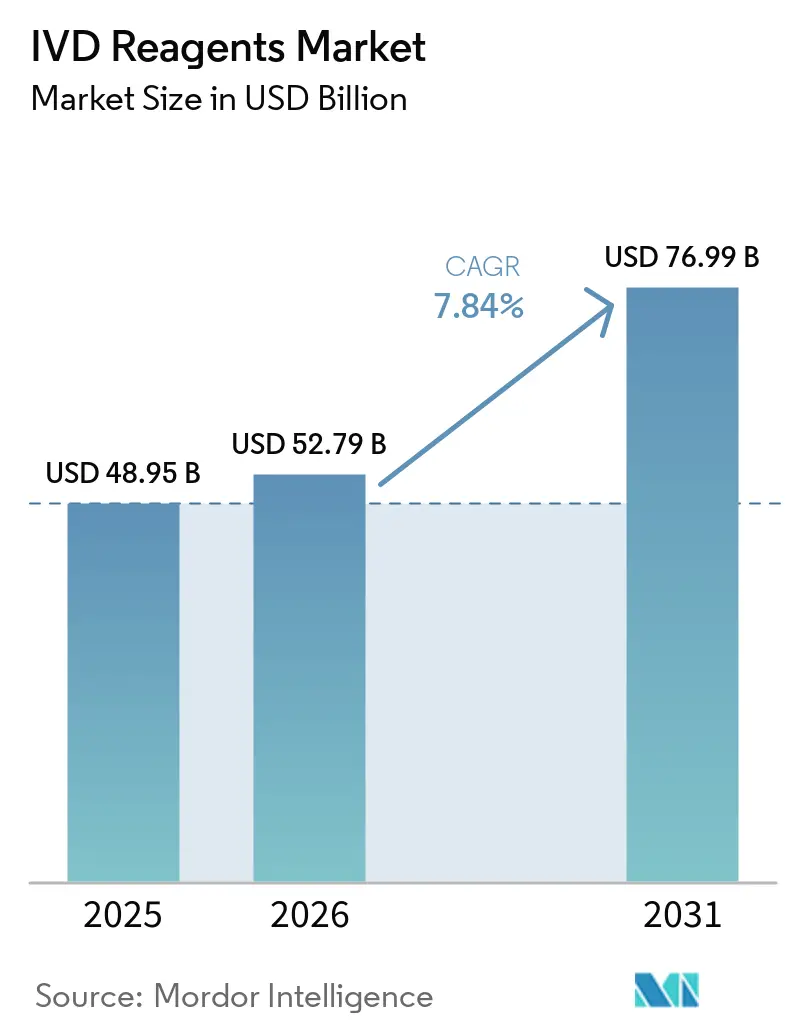
The IVD Reagents Market size is expected to grow from USD 48.95 billion in 2025 to USD 52.79 billion in 2026 and is forecast to reach USD 76.99 billion by 2031 at 7.84% CAGR over 2026-2031.
The return to normal testing volumes after the pandemic has shifted the IVD reagents market toward laboratory renewal and more reliable routine testing demand. Chronic disease management, population aging, and precision medicine support recurring use of clinical chemistry, immunoassay, and molecular tests. Regulatory changes in Europe and the United States raise the evidence requirements for suppliers and favor validated reagent portfolios. This increases the value of established platforms, while creating room for suppliers that can support laboratories through compliance changes. The IVD reagents market also benefits when laboratories modernize workflows, because installed platforms can create longer reagent purchasing cycles.
Key Report Takeaways
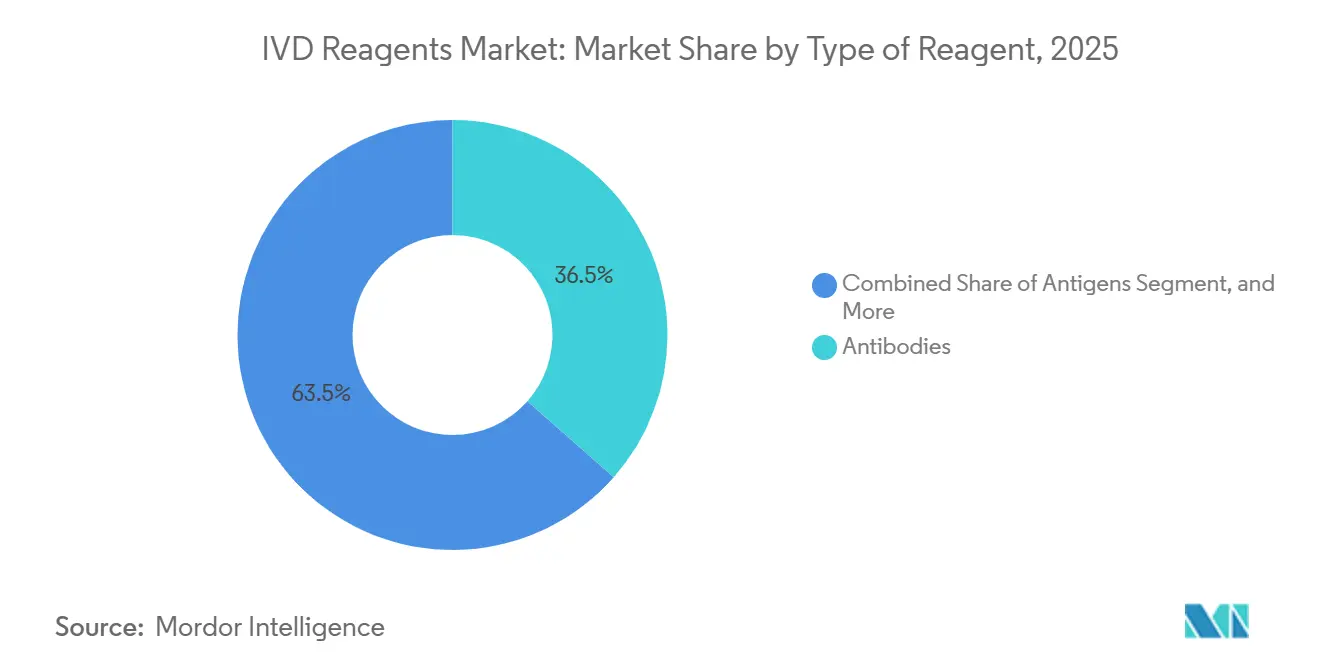
- By type of reagent, antibodies held 36.51% of revenue in 2025, while oligonucleotides and nucleic acid probes are forecast to grow at an 8.23% CAGR through 2031.
- By technology, immunoassay and immunochemistry held 32.48% of revenue in 2026, while molecular diagnostics is projected to grow at an 8.91% CAGR through 2031.
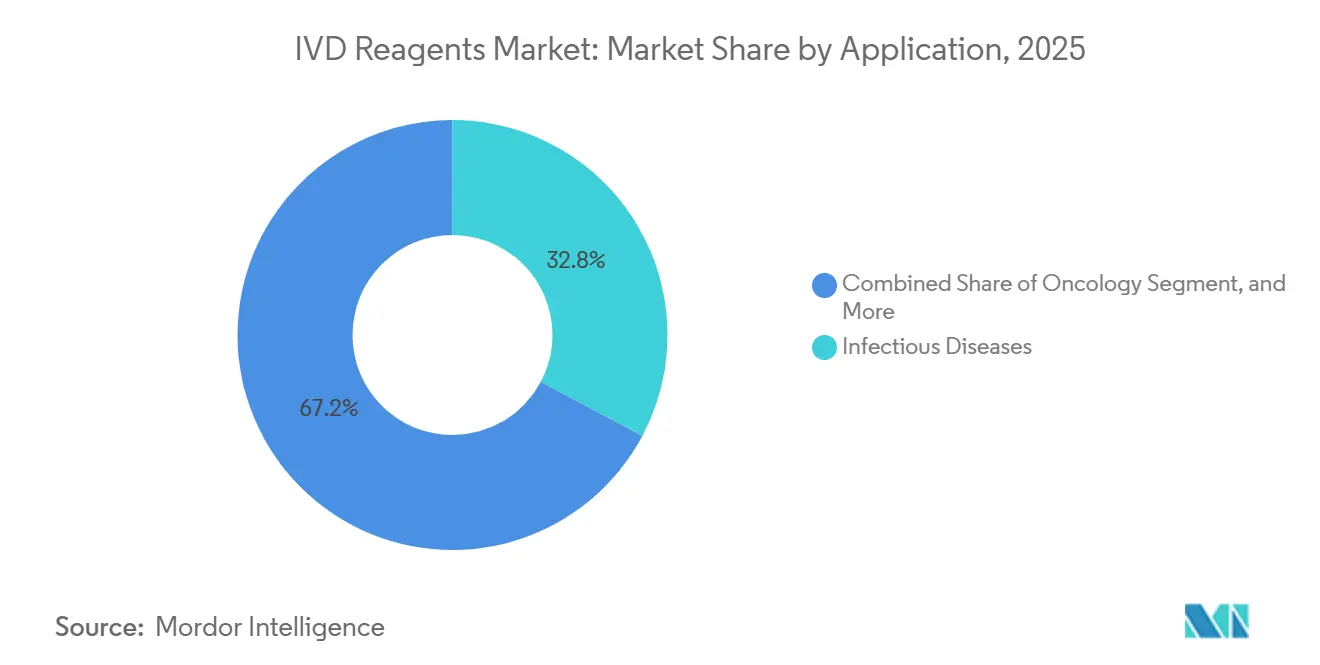
- By application, infectious diseases accounted for 32.76% of revenue in 2025, while oncology is forecast to expand at a 9.14% CAGR through 2031.
- By end user, hospitals and clinics held 39.62% of revenue in 2025, while home care settings are projected to grow at a 9.69% CAGR through 2031.
- By geography, North America held 38.15% of revenue in 2025, while Asia-Pacific is forecast to advance at a 10.57% CAGR through 2031.
Note: Market size and forecast figures in this report are generated using Mordor Intelligence’s proprietary estimation framework, updated with the latest available data and insights as of January 2026.
Market Trends and Insights
Drivers Impact Analysis of IVD Reagents Market*
| Driver | (~) % Impact on CAGR Forecast | Geographic Relevance | Impact Timeline |
|---|---|---|---|
| Aging Population and Chronic Disease Testing Demand | +1.4% | Global, highest concentration in North America, Europe, and East Asia | Long term (≥ 4 years) |
| Expansion of Molecular Diagnostics | +1.6% | Global, highest growth velocity in Asia-Pacific and North America | Medium term (2-4 years) |
| Decentralization Through Point-of-Care Platforms | +1.1% | Global, primary growth in Asia-Pacific, Middle East and Africa, and home care | Medium term (2-4 years) |
| Core-Laboratory Automation and Network Consolidation | +0.9% | North America, Europe, and developed Asia-Pacific | Long term (≥ 4 years) |
| Personalized Medicine and Companion-Diagnostic Adoption | +1.2% | North America and Europe, with early growth in Asia-Pacific | Medium term (2-4 years) |
| Ambient-Stable Reagents and Local Fill-Finish Capacity | +0.5% | Middle East and Africa, South America, and rural Asia-Pacific | Short term (≤ 2 years) |
| Source: Mordor Intelligence | |||
Aging Population and Chronic Disease Testing Demand
The IVD reagents market draws steady volume from older patients who need regular screening and disease monitoring. The World Health Organization expects 1 in 6 people worldwide to be aged 60 years or older by 2030. It also expects the population aged 80 years and over to reach 426 million by 2050, or 3 times its 2020 level.[1] These patients often require recurring hematology, immunoassay, and biomarker testing for diabetes, cardiovascular conditions, and cancer. A 2025 study reported 34.68 million deaths among older people from noncommunicable diseases in 2021 and projected elderly noncommunicable disease prevalence of 100,026 cases per 100,000 people by 2050.[2] Japan, South Korea, and Western Europe face especially strong demand because their older populations are expanding quickly. Suppliers can respond with testing bundles that suit primary care pathways and recurring disease management.
Expansion of Molecular Diagnostics
Molecular diagnostic reagents now serve oncology profiling, sepsis detection, and antimicrobial resistance surveillance beyond respiratory testing. This broadens the IVD reagents market beyond the temporary demand pattern seen during the pandemic. The U.S. Food and Drug Administration issued a final rule in 2024 that treats in vitro diagnostic tests offered as laboratory-developed tests as devices, with the first stage of enforcement beginning in May 2025.[3] Laboratories using cleared commercial kits may therefore face a clearer compliance path than laboratories relying on in-house formulations. Once a laboratory adopts a validated kit, it often standardizes the associated instrument platform. This can support repeat reagent purchases over the life of the installed base. Molecular suppliers in the IVD reagents market with strong clinical evidence and regulatory support are therefore better placed to serve oncology and infectious disease testing programs.
Decentralization of Testing Through Point-of-Care Platforms
The movement of testing into primary care, clinics, and homes changes the formats used in the IVD reagents market. Point-of-care systems usually require compact cartridges and simpler workflows rather than large bulk packs. A 2025 study found that decentralized point-of-care testing operating under central laboratory oversight can achieve analytical quality comparable to reference methods.[4] This evidence can reduce clinical hesitation when providers consider wider deployment in the IVD reagents market. A separate 2025 study reported an RPA-based molecular point-of-care system with sensitivity above 97%, specificity above 99%, and a per-test cost of USD 1.40. Ambient-stable and lyophilized formats can reduce cold-chain dependence in tropical and rural locations. The resulting distribution model gives suppliers a reason to develop smaller packs, local support, and channels for home-based care.
Core-Laboratory Automation and Network Consolidation
Automation continues to shape purchasing decisions in hospital laboratories. Research published in 2025 found that total laboratory automation can reduce turnaround-time variation, lower labor costs per test, and improve reagent use through automated volume management. DiaSorin reported a 15% vacancy rate in European clinical laboratory staffing in its 2026 investor presentation, reinforcing the pressure to automate routine work. Automation can bring chemistry, immunoassay, and hematology processes onto a single track. This makes reagent purchasing more closely tied to platform choice. Roche, Abbott Laboratories, and Siemens Healthineers use integrated systems to strengthen these relationships. The IVD reagents market gains from this trend because laboratories seek dependable supply and consistent performance across large testing networks.
Restraints Impact Analysis of IVD Reagents Market*
| Restraint | (~) % Impact on CAGR Forecast | Geographic Relevance | Impact Timeline |
|---|---|---|---|
| IVDR, FDA, and Clinical-Validation Burden | -1.8% | Europe under IVDR and North America under the FDA laboratory developed test rule | Medium term (2-4 years) |
| Reimbursement and Tender-Driven Price Compression | -1.5% | Global, most acute in China, Middle East and Africa, and South America | Medium term (2-4 years) |
| Lot-to-Lot Variability and Cold-Chain Dependence | -0.9% | Middle East and Africa, South America, and rural Asia-Pacific | Long term (≥ 4 years) |
| Skilled Workforce and Assay-Interpretation Bottlenecks | -0.8% | Global, most acute in Europe and South America | Long term (≥ 4 years) |
| Source: Mordor Intelligence | |||
IVDR, FDA, and Clinical-Validation Burden
Europe’s In Vitro Diagnostic Regulation requires suppliers to provide scientific validity and analytical performance evidence for most marketed products. Regulation EU 2024/1860 extended transition periods for some classes until 2027 to 2029, but technical documentation and notified body review remain demanding. Spain published Real Decreto 942/2025 in October 2025 to apply the regulation nationally, with provisions on notified body engagement, post-market surveillance, and registries. The IVD reagents market must also respond to the FDA’s phased laboratory-developed test rule in the United States. Smaller companies can face longer development schedules and greater spending before commercialization. ISO 13485 and ISO 15189 practices now act as baseline expectations in many procurement and laboratory settings. These demands can favor suppliers that already maintain regulatory, quality, and clinical support capabilities.
Reimbursement and Tender-Driven Price Compression
Public procurement and hospital tenders put the greatest pressure on standardized, high-volume tests. Routine clinical chemistry and hematology reagents face more price competition than specialized molecular oncology tests. The IVD reagents market is therefore divided between commoditized categories and differentiated assays with stronger clinical value. Suppliers often protect routine volume through automation bundles and reagent rental agreements. These arrangements combine instruments, maintenance, and reagents within longer service relationships. At the same time, they direct research spending toward companion diagnostics, oncology profiling, and other specialty tests. This approach helps companies defend profitability where routine assay prices are tightly managed.
*Our forecasts treat driver/restraint impacts as directional, not additive. The impact forecasts reflect baseline growth, mix effects, and variable interactions.
IVD Reagents Market Segment Analysis
By Type of Reagent:
Antibodies Support Current Revenue While Nucleotides Lead GrowthAntibodies held 36.51% of IVD reagents market share in 2025. They are used across immunoassays, lateral flow point-of-care tests, and immunohistochemistry companion diagnostic panels. Their target specificity makes substitution difficult in many validated workflows. Purified proteins and peptides provide reference materials, calibrators, quality controls, and functional reagents for clinical chemistry and immunoassay procedures. Their role is supported by laboratories seeking consistent measurement across sites. Antigens remain important in infectious disease serology and autoimmune testing. Pathogen surveillance programs continue to support this requirement after the pandemic period. The IVD reagents industry depends on these materials because reliable routine testing requires closely controlled assay inputs.
Oligonucleotides and nucleic acid probes are projected to grow at an 8.23% CAGR through 2031. They support PCR panels, next-generation sequencing library preparation, and emerging CRISPR-based detection systems. Their demand is closely linked to infectious disease testing, cancer profiling, and companion diagnostic development. Local synthesis and fill-finish capacity are becoming more important for supply security. European and U.S. policy discussions have identified nucleic acid synthesis as an important healthcare input. This supports interest in regional production partnerships. Enzymes, buffers, and proprietary reagent cocktails also support automated high-throughput systems. These products form the working basis for many laboratories even when they receive less attention than antibodies or probes.

By Technology:
Molecular Platforms Grow Faster Than Established ModalitiesImmunoassay and immunochemistry held 32.48% of revenue in 2026. The segment covers autoimmune, hormone, cardiac, and infectious disease testing in both central laboratories and decentralized settings. The IVD reagents market size for immunoassay is sustained by the wide range of conditions that require repeated monitoring. Integrated chemistry and immunoassay platforms remain central to laboratory capital spending. Roche received FDA 510(k) clearance in March 2026 for the cobas c703 and cobas ISE neo units. Roche stated that the cobas ISE neo can complete up to 1,800 tests per hour and includes automated maintenance functions intended to reduce hands-on work and reagent waste. Hematology and clinical chemistry remain established foundations of core laboratory testing. Their recurring use makes them important to reagent rental and total automation contracts.
Molecular diagnostics is forecast to grow at an 8.91% CAGR through 2031. Oncology profiling, syndromic infectious disease panels, and pharmacogenomic companion assays each add a durable source of demand. These use cases require both specialized chemistry and sustained clinical validation. A possible change in U.S. classification for some oncology companion diagnostics could reduce the burden of certain premarket submissions if finalized. That could widen access for smaller molecular assay developers. Flow cytometry and coagulation reagents remain important for specialized hematology-oncology and hemostasis work. Their clinical specificity can help sustain pricing. The IVD reagents market is moving toward technologies that combine high clinical value with clear laboratory workflow benefits.
By Application:
Oncology Builds Momentum While Infectious Disease Preserves VolumeInfectious diseases accounted for 32.76% of revenue in 2025. Routine pathogen surveillance, blood-borne infection screening, and respiratory panels support consistent test volumes. Multiplex molecular testing allows laboratories to assess influenza, RSV, COVID-19, and other pathogens in a single cartridge run. This has kept utilization above older testing patterns in many settings. Cardiology continues to use high-sensitivity troponin and lipid testing. bioMérieux completed IVDR CE marking for its SPINCHIP hs-cTnI high-sensitivity cardiac troponin assay in July 2026. Endocrinology and diabetes testing also provide recurring demand. The World Health Organization has estimated that 422 million people have diabetes worldwide.
Oncology is projected to expand at a 9.14% CAGR through 2031. Liquid biopsy, companion diagnostics, and multi-cancer early detection programs are expanding the range of cancer-related testing in the IVD reagents market. Guardant Health received FDA approval in June 2026 for Guardant360 CDx as a companion diagnostic for HERNEXEOS in HER2-mutant advanced non-small cell lung cancer. The approval was the platform’s 27th companion diagnostic indication worldwide. Abbott Laboratories completed its acquisition of Exact Sciences in March 2026 for an enterprise value of USD 23 billion. The portfolio includes Cologuard, Oncotype DX, and Cancerguard. Autoimmune and inflammation testing is also gaining attention as biologic therapies create greater demand for patient selection and treatment monitoring.
By End User:
Home Care Changes the Testing HierarchyHospitals and clinics held 39.62% of revenue in 2025. Their position reflects high patient throughput, broad test menus, and investment in total laboratory automation. Complex testing still needs hospital oversight. Independent and hospital-affiliated clinical laboratories remain important as smaller facilities send high-complexity work to centralized hubs. This concentrates reagent demand at larger locations and strengthens their negotiating position. Blood banks provide a stable demand for immunohematology and infectious disease screening reagents. Suppliers are difficult to replace in these workflows because substitutions require strict requalification. That creates a dependable relationship for validated products.
Home care settings are forecast to grow at a 9.69% CAGR through 2031. Self-testing for chronic conditions, telehealth use, and improved ambient-stable formats support this development. Asia-Pacific is an important contributor because digital health platforms and retail pharmacy networks can support wider test access. India’s changing device regulations and China’s digital health infrastructure can also support local manufacturing and distribution. Pharmaceutical and biotechnology companies use IVD reagents in companion diagnostic development. These workflows require high-purity antibodies, oligonucleotide standards, and calibrated protein panels. Their demand is linked to clinical-stage oncology programs. The IVD reagents industry therefore serves both patient testing and product development needs.
Geography Analysis
North America IVD Reagents Market
North America held 38.15% of the IVD reagents market share in 2025. The IVD reagents market in the region has a strong base in molecular testing and companion diagnostics. The FDA laboratory developed test rule is encouraging laboratories to assess validated commercial products for workflows that have used in-house assays. Abbott Laboratories completed the Exact Sciences acquisition in March 2026 at an enterprise value of USD 23 billion. Roche received FDA approval in June 2026 for the VENTANA PTEN SP218 RxDx assay for identifying PTEN protein loss in prostate adenocarcinoma.
Europe IVD Reagents Market
Europe is the second-largest regional grouping, with national differences operating under the IVDR framework. Germany recorded EUR 2.38 billion in IVD revenue in 2025, equal to USD 2.6 billion using the supplied average conversion, and reagents and test kits represented 82% of that value. The country’s revenue declined 0.8% from the prior year as compliance costs and reimbursement conditions affected growth. Spain adopted its national IVDR rules in October 2025. The IVD reagents market in Europe also benefits from bioMérieux’s planned BIOFIRE PCR facility in France, supported by an investment exceeding EUR 250 million, equal to USD 270 million, using the supplied conversion.
APAC and South America IVD Reagents Market
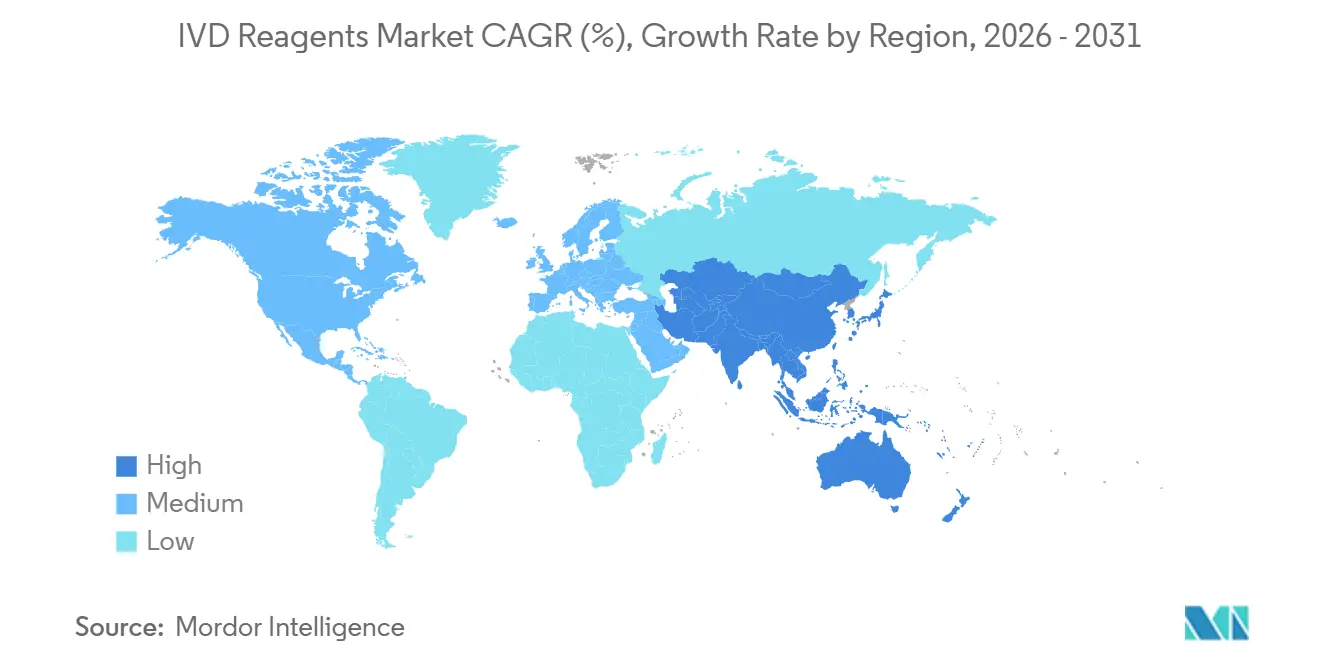
Asia-Pacific is forecast to grow at a 10.57% CAGR through 2031. The IVD reagents market is supported by volume-based procurement, expanding laboratory networks, and growing digital health use across the region. India’s private laboratory chains and government health programs support demand for standardized immunoassay and molecular products. Thermo Fisher opened a Barueri manufacturing facility in Brazil in 2026 to expand molecular reagent production for Latin American customers.
Competitive Landscape
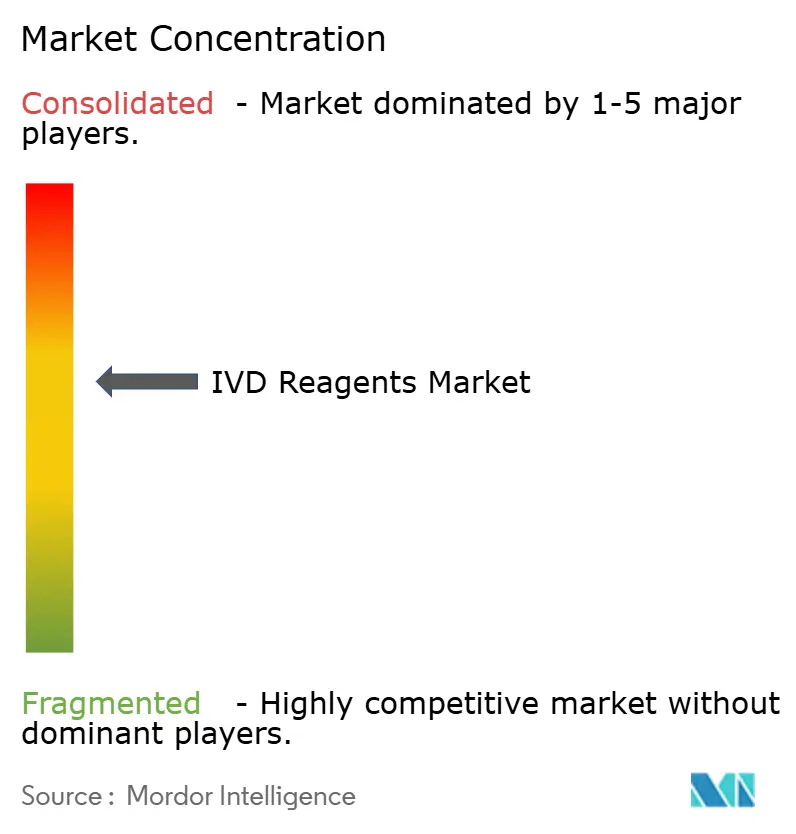
The IVD reagents market is moderately concentrated. bioMérieux estimated that the 10 largest in vitro diagnostics stakeholders represented 70% of global IVD revenue. Abbott Laboratories, F. Hoffmann-La Roche AG, Danaher, Siemens Healthineers, and Thermo Fisher compete through integrated analyzers, automation, software connectivity, and reagent supply. The IVD reagents market benefits from this model because installed platforms can retain reagent revenue over time. Leading companies are placing greater emphasis on oncology sequencing, companion diagnostics, and multi-cancer detection.
Thermo Fisher Scientific, Inc. agreed in April 2026 to sell its microbiology business, which generated USD 645 million in 2025 revenue, to Astorg. The transaction reflects a move toward portfolios with more specialized molecular and diagnostic products. Abbott Laboratories's Exact Sciences acquisition adds cancer screening and precision oncology testing capabilities to its diagnostics business. Roche has added companion diagnostic capacity through its VENTANA PTEN assay approval. These actions give the IVD reagents market a wider set of tests across screening, diagnosis, and treatment selection.
Mid-sized companies such as DiaSorin, Randox, QuidelOrtho, and DiaSys focus on areas between closed-system platforms and open-channel testing. DiaSorin submitted its LIAISON NES molecular point-of-care platform for U.S. 510(k) review in July 2025. Ambient-stable reagent formats and quality management requirements can shape competition outside core laboratories. The IVD reagents market remains open to specialized suppliers, but clinical validation and production control slow entry.
IVD Reagents Industry Leaders
-
Agilent Technologies, Inc.
-
Becton, Dickinson and Company
-
Bio-Rad Laboratories, Inc.
-
Danaher Corporation
-
Abbott Laboratories
- *Disclaimer: Major Players sorted in no particular order
IVD Reagents Market Companies Covered in this Report
- Abbott Laboratories
- Agilent Technologies
- Beckton Dickinson
- bioMérieux
- Bio-Rad Laboratories
- Danaher
- DiaSorin
- DiaSys Diagnostic Systems
- Roche
- Grifols
- Hologic
- Illumina
- QIAGEN
- QuidelOrtho
- Randox Laboratories
- Revvity, Inc.
- Siemens Healthineers
- Sysmex
- Thermo Fisher Scientific
- Werfen, S.A.
Recent Industry Developments in IVD Reagents Market
- July 2026: bioMérieux completed IVDR CE-marking for the SPINCHIP Analyzer and its first assay, SPINCHIP hs-cTnI, a high-sensitivity cardiac troponin immunoassay platform delivering laboratory-grade performance at the point of care. The clearance represents bioMérieux's formal entry into the high-sensitivity POC immunoassay cardiac segment, competing directly with established in-hospital troponin platforms.
- June 2026: F. Hoffmann-La Roche Ltd received EU IVDR approval for label expansions of the VENTANA MMR RxDx Panel companion diagnostic across five cancer types and six therapy-cancer type combinations, including pembrolizumab, durvalumab, olaparib, and dostarlimab indications. This multi-indication expansion in a single regulatory filing illustrates the acceleration of CDx label breadth as a competitive strategy for IHC reagent manufacturers seeking to maximize the commercial return per approved platform.
- June 2026: Guardant Health received FDA approval for Guardant360 CDx as a companion diagnostic for Boehringer Ingelheim's HERNEXEOS zongertinib in HER2-mutant advanced non-small cell lung cancer, marking the platform's 27th companion diagnostic indication globally. Coverage across Medicare and commercial payers representing more than 300 million covered lives underscores the commercial accessibility of this liquid biopsy-based reagent system.
Global IVD Reagents Market Report Scope
As per the scope of the report, IVD reagents are the chemical substances, kits, and consumables used in in‑vitro diagnostic (IVD) tests to detect diseases, monitor health conditions, or guide treatment decisions. They include buffers, substrates, antibodies, primers, and probes that enable assays such as PCR, ELISA, immunoassays, and clinical chemistry tests. As consumables, they represent the largest revenue‑generating sub‑segment of the global IVD market, since every diagnostic test requires reagents for accurate results.
The IVD reagents market is segmented by type of reagent, technology, application, end user, and geography. By type of reagent, the market is segmented into antibodies, purified proteins and peptides, antigens, oligonucleotides and nucleic acid probes, and others. By technology, the market is segmented into hematology, clinical chemistry, molecular diagnostics, immunoassay, and immunochemistry, molecular diagnostics and others. By application, the market is segmented into infectious diseases, oncology, cardiology, endocrinology and diabetes, autoimmune diseases and inflammation, and others. By end user, the market is segmented into hospitals & clinics, clinical laboratories, blood banks, home care settings, pharmaceutical & biotechnology, and others. The geography segment is further divided into North America, Europe, Asia-Pacific, the Middle East and Africa, and South America. The report also covers the estimated market sizes and trends for 17 countries across major regions globally. The report offers the market size and forecasts in value (USD) for the above segments.
Segmentation Overview
| Antibodies |
| Purified Proteins and Peptides |
| Antigens |
| Oligonucleotides and Nucleic Acid Probes |
| Others |
| Hematology |
| Clinical Chemistry |
| Molecular Diagnostics |
| Immunoassay and Immunochemistry |
| Others |
| Infectious Diseases |
| Oncology |
| Cardiology |
| Endocrinology and Diabetes |
| Autoimmune Diseases and Inflammation |
| Others |
| Hospitals & Clinics |
| Clinical Laboratories |
| Blood Banks |
| Home Care Settings |
| Pharmaceutical & Biotechnology |
| Others |
| North America | United States |
| Canada | |
| Mexico | |
| Europe | Germany |
| United Kingdom | |
| France | |
| Italy | |
| Spain | |
| Rest of Europe | |
| Asia-Pacific | China |
| India | |
| Japan | |
| Australia | |
| South Korea | |
| Rest of Asia-Pacific | |
| Middle East and Africa | GCC |
| South Africa | |
| Rest of Middle East and Africa | |
| South America | Brazil |
| Argentina | |
| Rest of South America |
| By Type of Reagent | Antibodies | |
| Purified Proteins and Peptides | ||
| Antigens | ||
| Oligonucleotides and Nucleic Acid Probes | ||
| Others | ||
| By Technology | Hematology | |
| Clinical Chemistry | ||
| Molecular Diagnostics | ||
| Immunoassay and Immunochemistry | ||
| Others | ||
| By Application | Infectious Diseases | |
| Oncology | ||
| Cardiology | ||
| Endocrinology and Diabetes | ||
| Autoimmune Diseases and Inflammation | ||
| Others | ||
| By End User | Hospitals & Clinics | |
| Clinical Laboratories | ||
| Blood Banks | ||
| Home Care Settings | ||
| Pharmaceutical & Biotechnology | ||
| Others | ||
| By Geography | North America | United States |
| Canada | ||
| Mexico | ||
| Europe | Germany | |
| United Kingdom | ||
| France | ||
| Italy | ||
| Spain | ||
| Rest of Europe | ||
| Asia-Pacific | China | |
| India | ||
| Japan | ||
| Australia | ||
| South Korea | ||
| Rest of Asia-Pacific | ||
| Middle East and Africa | GCC | |
| South Africa | ||
| Rest of Middle East and Africa | ||
| South America | Brazil | |
| Argentina | ||
| Rest of South America | ||
Key Questions Answered in the Report
What is driving IVD reagent demand through 2031?
Population aging, chronic disease monitoring, molecular testing, and laboratory automation support demand. The sector is forecast to grow at a 7.84% CAGR through 2031.
Which reagent type leads current revenue?
Antibodies led revenue with a 36.51% share in 2025 because they are used in immunoassays, lateral flow tests, and immunohistochemistry.
Which testing technology is growing fastest?
Molecular diagnostics is forecast to grow at an 8.91% CAGR through 2031, supported by oncology profiling, infectious disease panels, and companion diagnostics.
Why are point-of-care tests important for suppliers?
Point-of-care systems create demand for compact cartridge formats and ambient-stable reagents in clinics, primary care settings, and homes.
Which application is expected to grow fastest?
Oncology is forecast to grow at a 9.14% CAGR through 2031 as liquid biopsy and companion diagnostic use expands.
Which region is growing fastest?
Asia-Pacific is forecast to grow at a 10.57% CAGR through 2031, supported by local manufacturing, digital health adoption, and expanding laboratory networks.