
Intrauterine Pressure Catheters Market Size and Share
Market Overview
| Study Period | 2021 - 2032 |
|---|---|
| Market Size (2027) | USD 293.32 Million |
| Market Size (2032) | USD 402.26 Million |
| Growth Rate (2027 - 2032) | 6.52 % |
| Fastest Growing Market | Asia-Pacific |
| Largest Market | North America |
| Market Concentration | Medium |
Major Players *Disclaimer: Major Players sorted in no particular order Image © Mordor Intelligence. Reuse requires attribution under CC BY 4.0. | |
Intrauterine Pressure Catheters Market Analysis by Mordor Intelligence
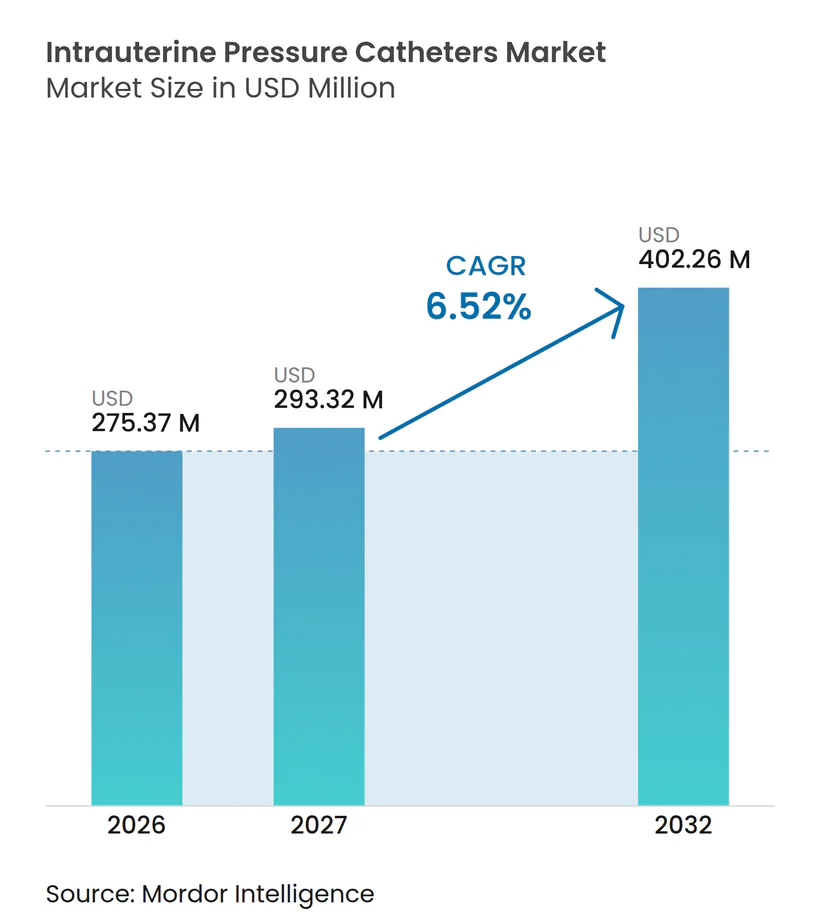
The Intrauterine Pressure Catheters Market size is expected to increase from USD 275.37 million in 2026 to USD 293.32 million in 2027 and reach USD 402.26 million by 2032, growing at a CAGR of 6.52% over 2027-2032.
The Intrauterine Pressure Catheter Market is supported by labor-management protocols that require a direct measure of uterine activity when external monitoring is inadequate. ACOG recommends intrauterine pressure catheter use for patients with ruptured membranes who have protracted active labor or contractions that cannot be accurately assessed externally. This clinical setting links catheter demand to oxytocin titration and to the measurement of Montevideo Units. The Intrauterine Pressure Catheter Market also benefits from the greater clinical attention given to complicated pregnancies, induction, and maternal safety. Noninvasive monitoring systems remain a constraint in moderate-risk labor, although they do not provide the same direct pressure measurement in cases with obesity, signal noise, or a need to confirm contraction strength.
Key Report Takeaways
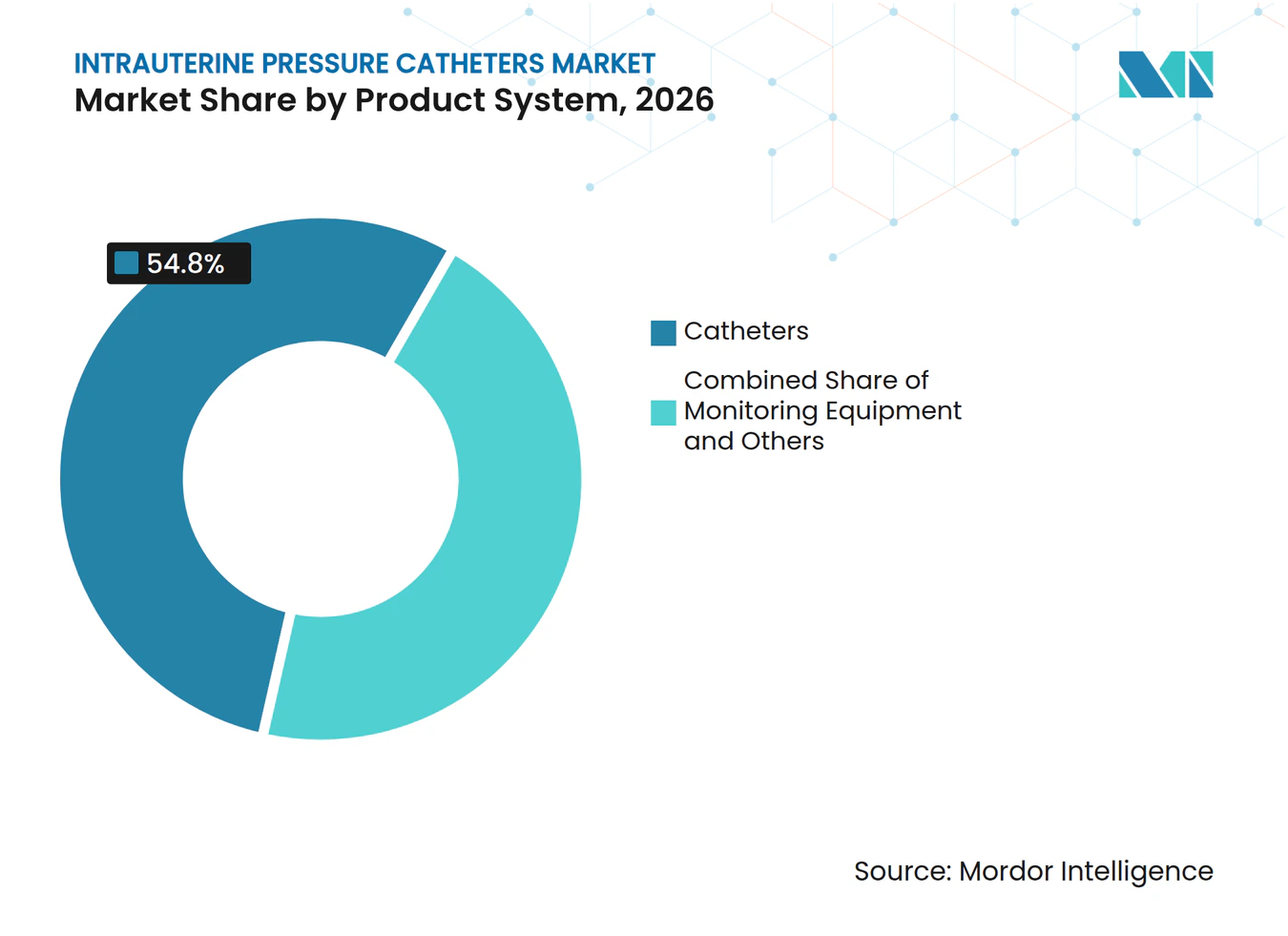
- By product system, catheters held 54.80% of the Intrauterine Pressure Catheter Market share in 2026, while monitoring equipment is forecast to grow at an 8.4% CAGR through 2032.
- By technology, fluid-filled pressure transmission held 61.50% of the Intrauterine Pressure Catheter Market share in 2026, while advanced multi-parameter sensing is forecast to grow at a 10.2% CAGR through 2032.
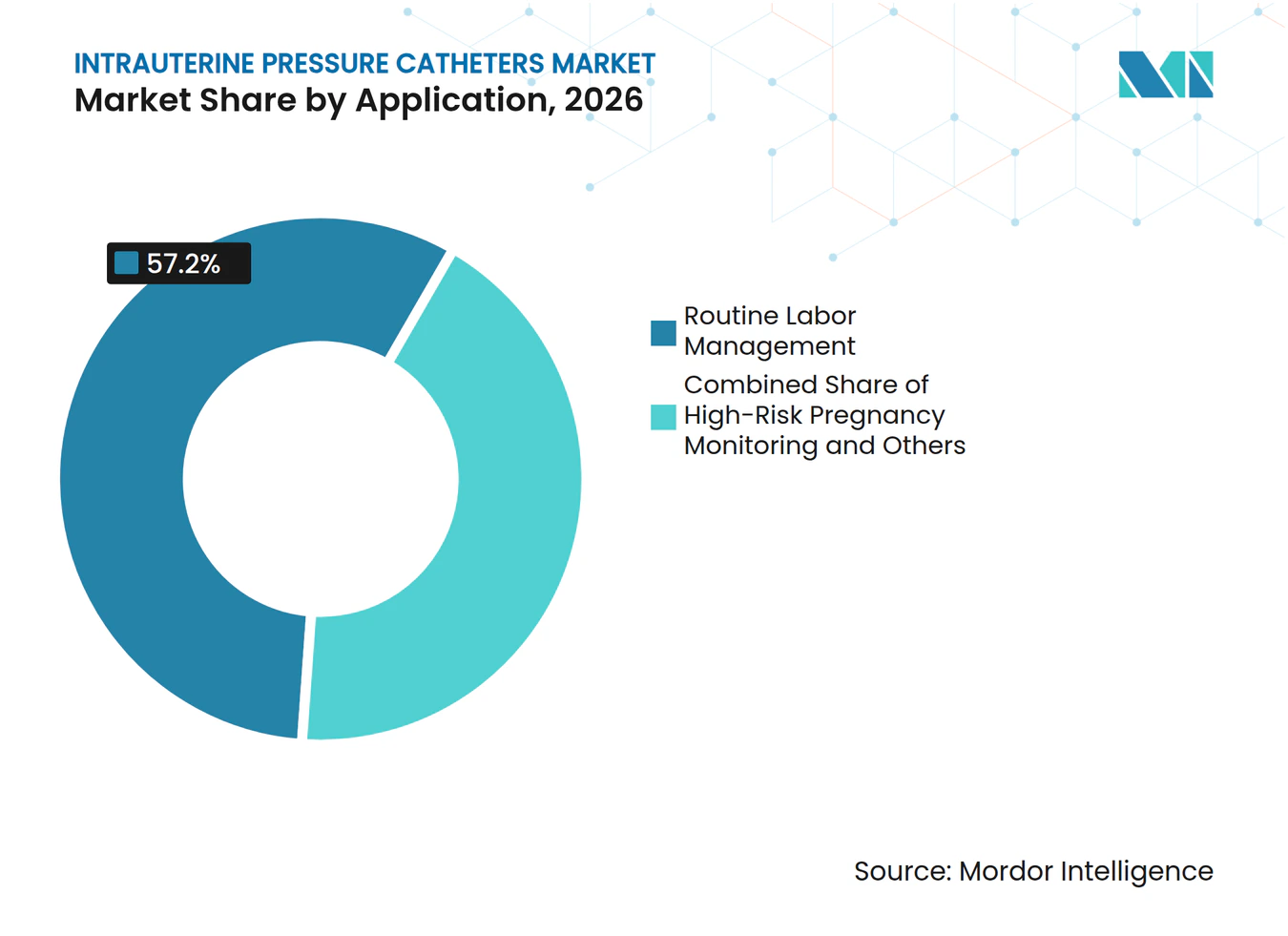
- By application, routine labor management accounted for 57.20% of the Intrauterine Pressure Catheter Market size in 2026, while high-risk pregnancy monitoring is forecast to grow at a 9.10% CAGR through 2032.
- By end user, hospitals held 75.60% of revenue in 2026, while specialty clinics are forecast to grow at an 8.70% CAGR through 2032.
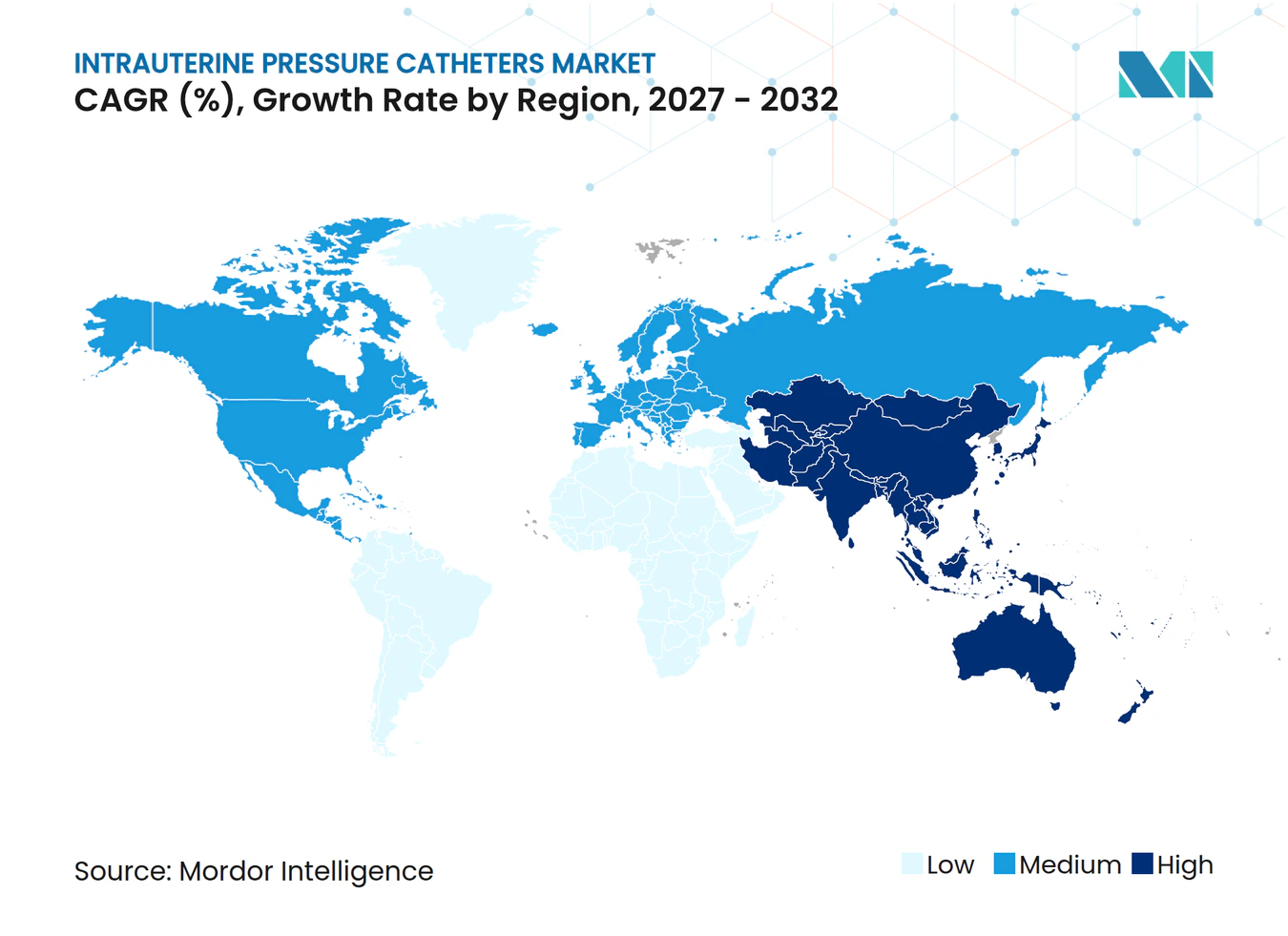
- By geography, North America held 41.80% of revenue in 2026, while Asia-Pacific is forecast to grow at a 9.80% CAGR through 2032.
Note: Market numbers in this report are based on Mordor Intelligence's proprietary estimation framework, which combines nine months of actuals with Q4 projections for base year 2026.
Market Trends and Insights
Drivers Impact Analysis of Intrauterine Pressure Catheters Market*
| Driver | (~) % Impact on CAGR Forecast | Geographic Relevance | Impact Timeline |
|---|---|---|---|
| Rising Complicated Pregnancies and High-Risk Labor Monitoring | +1.6% | Global, most pronounced in North America and Europe | Long term (≥ 4 years) |
| Evidence-Based Labor Management and Oxytocin Titration | +1.1% | North America and Europe | Medium term (2-4 years) |
| Growing Maternal and Fetal Safety Awareness | +0.8% | Global, with rapid expansion in Asia-Pacific and the Middle East and Africa | Long term (≥ 4 years) |
| Expansion of Maternity Specialty Clinics and Developing-Region Access | +0.9% | Asia-Pacific, with spillover to the Middle East and Africa and South America | Medium term (2-4 years) |
| Sensor Miniaturization, Wireless Connectivity and Digital Labor Analytics | +0.6% | Global, concentrated in North America, Europe, and Japan | Short term (≤ 2 years) |
| Interoperable, Low-Training Monitoring Workflows | +0.5% | North America and Europe | Short term (≤ 2 years) |
| Source: Mordor Intelligence | |||
Rising Complicated Pregnancies and High-Risk Labor Monitoring
The Intrauterine Pressure Catheter Market is affected by the growing number of labor cases that need closer observation. The share of early-term singleton births with induced labor rose from 17.7% in 2014 to 31.3% in 2024. This increase was 77% over the period and added to the number of cases where clinicians may need to calibrate oxytocin using uterine pressure data. Reported a sustained rise in gestational hypertension from 2016 through 2024, which added to the high-risk diagnoses managed in hospital labor units. In 2024, the U.S. maternal mortality rate for women aged 40 and older was 62.3 per 100,000 live births, nearly 5 times the rate for women under 25. These patterns keep direct contraction measurement relevant when labor risk, induction, and oxytocin use occur together.
Evidence-Based Labor Management and Oxytocin Titration
The Intrauterine Pressure Catheter Market is reinforced by protocols that define when internal monitoring is clinically appropriate. ACOG defines active-phase arrest as no cervical progression after 4 hours of adequate uterine activity above 200 Montevideo Units or 6 hours of inadequate activity with oxytocin. The guideline strongly recommends an intrauterine pressure catheter for ruptured membranes and protracted active labor when contractions cannot be accurately measured externally. A 2025 review of 10 randomized trials covering more than 5,500 pregnancies found lower chorioamnionitis risk with high-dose oxytocin regimens, without a higher cesarean rate. The reported number needed to treat was 25. These findings support the use of pressure data when care teams need to apply oxytocin protocols consistently and document adequate uterine activity.[1]
Growing Maternal and Fetal Safety Awareness
The Intrauterine Pressure Catheter Market is also shaped by formal maternal and fetal safety programs. The World Health Organization reported that more than 700 women died each day from preventable pregnancy-related causes in 2024. Most of these deaths occurred in sub-Saharan Africa and South Asia. A 2025 review described the role of cardiotocography and real-time uterine pressure data in identifying high-risk fetuses in pregnancies affected by placental pathology or fetal growth restriction. The same clinical focus makes comprehensive intrapartum monitoring part of hospital safety expectations. The Intrauterine Pressure Catheter Market, therefore, has a role in facilities that maintain device availability for complex cases rather than relying only on physician preference.
Expansion of Maternity Specialty Clinics and Developing-Region Access
The Intrauterine Pressure Catheter Market gains access points as maternity specialty clinics and private hospitals expand in developing regions. India’s expanding private hospital sector and China’s upgrade of tertiary obstetric care are increasing the ability of subnational facilities to keep specialist inventories. Structured labor-monitoring protocols introduced in Southeast Asia reduced unnecessary oxytocin use from 20.7% to 9.1% in a review based on World Health Organization trial evidence. This evidence supports investment in quantitative monitoring tools in cost-sensitive settings. Public insurance and national maternal-health priorities in India, Gulf Cooperation Council countries, and Brazil can reduce out-of-pocket barriers for approved maternity devices. Greater specialist capacity also makes internal monitoring more practical in complex labor cases.
Restraints Impact Analysis of Intrauterine Pressure Catheters Market*
| Restraint | (~) % Impact on CAGR Forecast | Geographic Relevance | Impact Timeline |
|---|---|---|---|
| Invasive Placement, Infection Risk and Limited Routine-Use Recommendations | -1.2% | Global | Long term (≥ 4 years) |
| Uterine Perforation, Bleeding and Other Placement-Related Safety Concerns | -0.8% | Global | Long term (≥ 4 years) |
| Membrane-Rupture, Placental-Location and Skilled-Operator Constraints | -0.7% | Global, most acute in developing regions with lower specialist density | Medium term (2-4 years) |
| Connector Fragmentation, Disposable Waste and Total-Cost-of-Ownership Pressure | -0.6% | Global, sharpest in price-sensitive Asia-Pacific, the Middle East and Africa, and South America | Short term (≤ 2 years) |
| Source: Mordor Intelligence | |||
Invasive Placement, Infection Risk and Limited Routine-Use Recommendations
The invasive nature of catheter placement limits the Intrauterine Pressure Catheter Market in low-risk and moderate-risk labor. ACOG described the supporting evidence as low quality despite its strong recommendation for the indicated patient group. The guideline also cited an AHRQ review that found no statistically significant difference from external monitoring in delivery mode, mean time to delivery, neonatal acidemia, or neonatal intensive care unit admission in comparable populations. This evidence allows clinicians to reserve the device for protracted labor instead of using it routinely. Infection-control reviews can require a clinical justification beyond protracted labor, which narrows the eligible use window. GE HealthCare’s Novii+ Wireless Patch Solution received FDA clearance in February 2024 and provides a noninvasive option for maternal and fetal monitoring in eligible cases.
Connector Fragmentation, Disposable Waste and Total-Cost-of-Ownership Pressure
The Intrauterine Pressure Catheter Market faces cost pressure that extends beyond the price of a single-use catheter. Proprietary connections between disposable catheters and reusable monitoring cables can tie hospitals to a particular supplier. This structure can be difficult for procurement teams in constrained health systems. Each placement also creates waste from the catheter, packaging, introducer, and, in some cases, an amnioinfusion kit. Environmental and disposal obligations add to the cost burden in facilities with hospital sustainability requirements. Sensor miniaturization, wireless connectivity, digital labor analytics, and simpler workflows can improve the product offering, but they do not remove the need for compatible systems and trained operators. The Intrauterine Pressure Catheter Market remains exposed, where membrane rupture, placental location, clinical safety concerns, or limited specialist availability restrict placement.
*Our forecasts treat driver/restraint impacts as directional, not additive. The impact forecasts reflect baseline growth, mix effects, and variable interactions.
Intrauterine Pressure Catheters Market Segment Analysis
By Product System:
Catheter Dominance Persists, Monitoring Equipment AcceleratesCatheters held 54.80% of revenue in 2026, making them the largest product system in the Intrauterine Pressure Catheter Market. Their position reflected their role as the direct physical link between the uterine cavity and the monitoring system. Catheter use remains necessary across fluid-filled, transducer-tipped, and advanced sensing approaches. This supports demand even when hospitals update their equipment. Cables and transducers contributed system revenue as reusable components with moderate replacement cycles. Disposables and accessories provided recurring expenditure with each procedure. The product mix, therefore, combined single-procedure consumption with equipment replacement and support needs.
Monitoring equipment is forecast to grow at an 8.40% CAGR through 2032, the fastest rate within this segmentation. This part of the Intrauterine Pressure Catheter Market size reflects the wider value of connected monitoring platforms. GE HealthCare launched CareIntellect for Perinatal in October 2025 as a cloud-first application that consolidates uterine activity, fetal heart rate, SpO2, and blood pressure data from different bedside systems. The application was developed with input from 29 physicians and 85 nurses across 12 HCA Healthcare hospitals. The platform approach links equipment purchases with software-based services. It also shifts vendor competition toward data integration, remote visibility, and the compatibility of bedside systems.



By Technology:
Fluid-Filled Systems Anchor Volume, Multi-Parameter Sensing Redefines ValueFluid-filled pressure transmission held 61.50% of revenue in 2026, the largest technology position in the Intrauterine Pressure Catheter Market. Long clinical familiarity, established installation practices, and lower acquisition costs supported this share. The installed base also helps hospitals continue using familiar systems. Fluid-filled technology can face reproducibility issues if air bubbles disrupt the pressure column. That problem can become more important during active labor when the catheter position changes. Transducer-tipped pressure sensing remained a meaningful middle tier for hospitals that sought a direct measurement approach with established products.
Advanced multi-parameter sensing is forecast to grow at a 10.2% CAGR through 2032, the fastest growth rate across the reported segment types. This Intrauterine Pressure Catheter Market size opportunity reflects demand for systems that combine uterine pressure with fetal ECG, maternal ECG, or real-time data transmission. Advanced platforms can command greater value where hospitals prioritize integrated surveillance. Utah Medical Products’ Intran Plus remained a widely deployed transducer-tipped intrauterine pressure catheter. Clinical Innovations received FDA clearance in May 2025 for its updated Koala Intrauterine Pressure Catheter, IPC-5000E. Air-coupled external transducer systems served facilities where membranes had not ruptured or internal monitoring was contraindicated.[2]
By Application:
High-Risk Monitoring Is the Fastest-Growing Revenue PoolRoutine labor management held 57.20% of revenue in 2026 and remained the leading application in the Intrauterine Pressure Catheter Market. Its size reflected the high volume of deliveries where a catheter may be used during active labor after amniotomy. Routine cases provide the broad procedural base for device use. They also establish familiarity among labor and delivery teams. The clinical threshold for placement remains tied to the adequacy of externally measured contractions. This limits use in patients whose labor can be assessed without an internal device.
High-risk pregnancy monitoring is forecast to grow at a 9.1% CAGR through 2032. This part of the Intrauterine Pressure Catheter Market can have longer monitoring periods and a greater likelihood of amnioinfusion capability needs. Labor dystocia accounted for nearly 1 third of primary cesarean deliveries in the United States, according to ACOG. It is a clinical condition that can move a case from routine care to closer monitoring. Diagnostic and therapeutic procedures formed a smaller, stable area of use. Research and specialized applications were concentrated in academic medical centers studying pressure sensing, labor physiology, and prediction algorithms.

By End User:
Hospital Dominance Is Structural, Specialty Clinic Growth Is StrategicHospitals held 75.60% of revenue in 2026, the largest end-user share in the Intrauterine Pressure Catheter Market. The setting concentrates on high-risk labor cases that need continuous internal and fetal monitoring. Catheter insertion requires ruptured membranes and a skilled operator. It also requires immediate monitoring capability, which is more consistently available in hospital labor departments. Hospitals maintain a standing inventory for cases that become clinically complex. This creates a durable link between hospital-based delivery care and catheter procurement.
Specialty clinics are forecast to grow at an 8.70% CAGR through 2032. The Intrauterine Pressure Catheter Market in this setting benefits from dedicated maternity facilities in the Asia-Pacific and the Gulf Cooperation Council. These clinics may favor portable equipment and systems with straightforward training needs. Their purchasing decisions can differ from full-scale hospital procurement. Birth centers recorded modest but positive growth as alternative delivery settings expanded in Western Europe and North America. Academic and research institutions maintained baseline demand for work on Montevideo Unit thresholds and labor prediction models that use pressure time-series data.
Geography Analysis
North America
North America held 41.80% of global revenue in 2026, the leading regional position in the Intrauterine Pressure Catheter Market. The United States supported this position through reimbursement for indicated labor monitoring, guideline use, and hospital purchasing systems that keep inventory in labor and delivery units. The United States recorded 3.6 million births in 2025. This was an increase from 17.7% in 2014. Canada benefited from provincial funding for advanced maternity monitoring, while Mexico showed procurement activity in urban institutional delivery centers.
Europe
Europe was the second-largest revenue region in the Intrauterine Pressure Catheter Market. Germany, the United Kingdom, and France had mature clinical infrastructure and evidence-based obstetric protocols. National health systems supported catheter use in indicated cases. German facilities were adopting cloud-connected dashboards that combine uterine pressure data with fetal heart rate and nurse-call workflows. Nordic and the United Kingdom health systems showed interest in multi-parameter sensing platforms, where the clinical evidence supported the higher acquisition cost. Italy and Spain represented secondary markets with growing investment in specialist obstetric care.
Asia-Pacific, MEA, and South America
Asia-Pacific is forecast to grow at a 9.80% CAGR through 2032, the fastest regional rate in the Intrauterine Pressure Catheter Market. India and China are the principal demand centers because private hospital capacity and tertiary obstetric care are expanding. India’s Pradhan Mantri Surakshit Matritva Abhiyan supports the national focus on maternal care. Japan’s medical-device database recorded 20 labor-monitoring devices in a Class II intrauterine pressure transducer category. The BT-350 labor-monitoring unit received Japanese regulatory certification in July 2024. South Korea and Australia were mature technology-accepting markets, while the Gulf Cooperation Council and South America added demand through maternity investment and distribution partnerships[3].
Competitive Landscape
Market Concentration
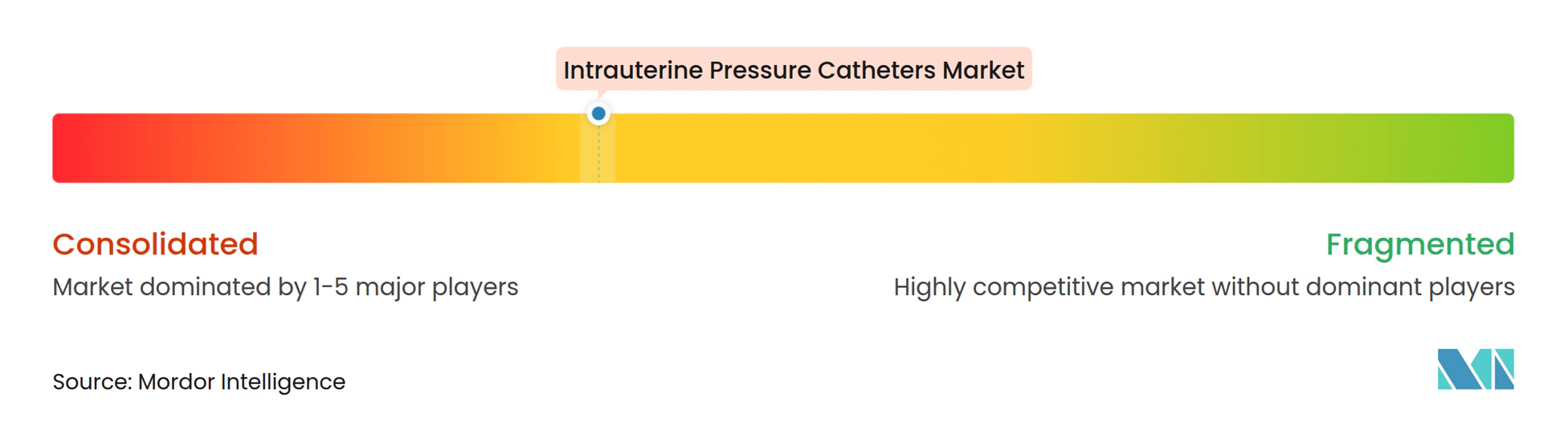
The Intrauterine Pressure Catheter Market had moderate concentration, with specialized women’s health and medical-device companies holding positions in distinct product categories. Regional distributors and smaller catheter suppliers competed through price, connector compatibility, and training support. Clinical Innovations, now owned by Laborie, remained active in the catheter and transducer-tipped category. The company received FDA 510(k) clearance in May 2025 for the Koala Intrauterine Pressure Catheter, IPC-5000E. This clearance was the company’s ninth cleared intrauterine pressure catheter submission. The product iteration showed continued commitment to the category.
Utah Medical Products maintained its position through the Intran Plus line. The company described this transducer-tipped system as the most widely accepted system in its category for more than 30 years in its 2024 Form 10-K. Clinician familiarity and reuse of cables supported institutional loyalty. GE HealthCare expanded its perinatal data platform with the October 2025 CareIntellect for Perinatal launch. Koninklijke Philips integrated intrauterine pressure catheter information into its Avalon CL and IntelliVue monitoring networks. These actions shifted competition from stand-alone catheter purchases toward system-level hospital contracts and connected surveillance environments.
The Intrauterine Pressure Catheter Market continues to face proprietary connector fragmentation that adds procurement friction. A manufacturer that addresses multi-vendor compatibility could differentiate its offering where hospitals seek lower ownership costs. Emerging developers of MEMS-based pressure transducers and labor analytics are positioned against the established fluid-filled segment. The Intrauterine Pressure Catheter Market also includes companies that offer noninvasive monitoring across the labor and delivery pathway. GE HealthCare’s Novii+ solution was cleared for monitoring 95% of eligible U.S. births. This creates competition for moderate-risk cases while allowing the company to participate across invasive and noninvasive monitoring needs.
Intrauterine Pressure Catheters Industry Leaders
-
Clinical Innovations, LLC
-
Koninklijke Philips N.V.
-
Medtronic plc
-
Utah Medical Products, Inc.
-
Becton, Dickinson and Company
- *Disclaimer: Major Players sorted in no particular order
Intrauterine Pressure Catheters Market Companies Covered in this Report
- Beckton Dickinson
- Cardinal Health
- Clinical Innovations LLC
- Cook Group
- The Cooper Companies
- GE HealthCare Technologies Inc.
- Hologic
- Kentec Medical Inc.
- Koninklijke Philips
- Laborie
- MedGyn Products
- Medtronic
- Millar Inc.
- Natus Medical (Integra LifeSciences)
- Neoventa Medical AB
- Stryker
- Teleflex
- Terumo
- Thomas Medical
- Utah Medical Products
Recent Industry Developments in Intrauterine Pressure Catheters Market
- October 2025: GE HealthCare launched CareIntellect for Perinatal, previously Mural Perinatal Surveillance. The cloud-first application integrates real-time uterine activity, fetal heart rate, blood pressure, and maternal SpO2 from bedside systems into one chronological view.
- May 2025: Clinical Innovations LLC, Laborie, received FDA 510(k) clearance for the Koala Intrauterine Pressure Catheter, IPC-5000E, under 21 CFR 884.2700. The decision followed a 58-day review and covered product code HFN, Transducer, Pressure, Intrauterine.
Global Intrauterine Pressure Catheters Market Report Scope
As per the scope of the report, intrauterine pressure catheters (IUPCs) are medical devices inserted into the uterine cavity during labor to directly measure intrauterine pressure and uterine contraction strength. These devices provide accurate, real-time monitoring of labor progression and uterine activity, particularly in cases where external contraction monitoring is inadequate or when enhanced fetal and maternal surveillance is required.
The intrauterine pressure catheter market is segmented by product system into catheters, cables & transducers, monitoring equipment, and disposables & accessories; by technology into fluid-filled pressure transmission, transducer-tipped pressure sensing, air-coupled external transducer systems, and advanced multi-parameter sensing; by application into routine labor management, high-risk pregnancy monitoring, diagnostic & therapeutic procedures, and research & specialized applications; by end user into hospitals, specialty clinics, birth centers, and academic & research institutions; and by geography into North America, Europe, Asia-Pacific, Middle East and Africa, and South America. The market report also covers the estimated market sizes and trends for 17 countries across major regions globally. For each segment, the market size and forecast are provided in terms of value (USD).
Segmentation Overview
| Catheters |
| Cables & Transducers |
| Monitoring Equipment |
| Disposables & Accessories |
| Fluid-Filled Pressure Transmission |
| Transducer-Tipped Pressure Sensing |
| Air-Coupled External Transducer Systems |
| Advanced Multi-Parameter Sensing |
| Routine Labor Management |
| High-Risk Pregnancy Monitoring |
| Diagnostic & Therapeutic Procedures |
| Research & Specialized Applications |
| Hospitals |
| Specialty Clinics |
| Birth Centers |
| Academic & Research Institutions |
| North America | United States |
| Canada | |
| Mexico | |
| Europe | Germany |
| United Kingdom | |
| France | |
| Italy | |
| Spain | |
| Rest of Europe | |
| Asia-Pacific | China |
| Japan | |
| India | |
| Australia | |
| South Korea | |
| Rest of Asia-Pacific | |
| Middle East and Africa | GCC |
| South Africa | |
| Rest of Middle East and Africa | |
| South America | Brazil |
| Argentina | |
| Rest of South America |
| By Product System | Catheters | |
| Cables & Transducers | ||
| Monitoring Equipment | ||
| Disposables & Accessories | ||
| By Technology | Fluid-Filled Pressure Transmission | |
| Transducer-Tipped Pressure Sensing | ||
| Air-Coupled External Transducer Systems | ||
| Advanced Multi-Parameter Sensing | ||
| By Application | Routine Labor Management | |
| High-Risk Pregnancy Monitoring | ||
| Diagnostic & Therapeutic Procedures | ||
| Research & Specialized Applications | ||
| By End User | Hospitals | |
| Specialty Clinics | ||
| Birth Centers | ||
| Academic & Research Institutions | ||
| By Geography | North America | United States |
| Canada | ||
| Mexico | ||
| Europe | Germany | |
| United Kingdom | ||
| France | ||
| Italy | ||
| Spain | ||
| Rest of Europe | ||
| Asia-Pacific | China | |
| Japan | ||
| India | ||
| Australia | ||
| South Korea | ||
| Rest of Asia-Pacific | ||
| Middle East and Africa | GCC | |
| South Africa | ||
| Rest of Middle East and Africa | ||
| South America | Brazil | |
| Argentina | ||
| Rest of South America | ||
Key Questions Answered in the Report
What is driving demand for intrauterine pressure catheters?
Induction, high-risk labor, and protocols for oxytocin titration support use when external contraction monitoring is inadequate.
How large is the intrauterine pressure catheter market?
It is valued at USD 293.32 million in 2027 and is projected to reach USD 402.26 million by 2032 at a 6.5% CAGR.
Which product category leads intrauterine pressure catheter sales?
Catheters led product-system revenue with a 54.80% share in 2026.
Which technology is growing fastest in intrauterine pressure catheter systems?
Advanced multi-parameter sensing is forecast to grow at a 10.2% CAGR through 2032.
Which end users purchase intrauterine pressure catheter systems most often?
Hospitals led end-user revenue with a 75.60% share in 2026 because high-risk labor care requires skilled placement and continuous monitoring.
Which region has the fastest growth for intrauterine pressure catheters?
Asia-Pacific is forecast to grow at a 9.8% CAGR through 2032, led by India and China.