
Indoor Pepper Farming Market Size and Share
Market Overview
| Study Period | 2022 - 2032 |
|---|---|
| Market Size (2027) | USD 0.88 Billion |
| Market Size (2032) | USD 1.16 Billion |
| Growth Rate (2027 - 2032) | 5.80 % |
| Fastest Growing Market | Europe |
| Largest Market | Asia-Pacific |
| Market Concentration | Low |
Major Players *Disclaimer: Major Players sorted in no particular order Image © Mordor Intelligence. Reuse requires attribution under CC BY 4.0. | |
Indoor Pepper Farming Market Analysis by Mordor Intelligence
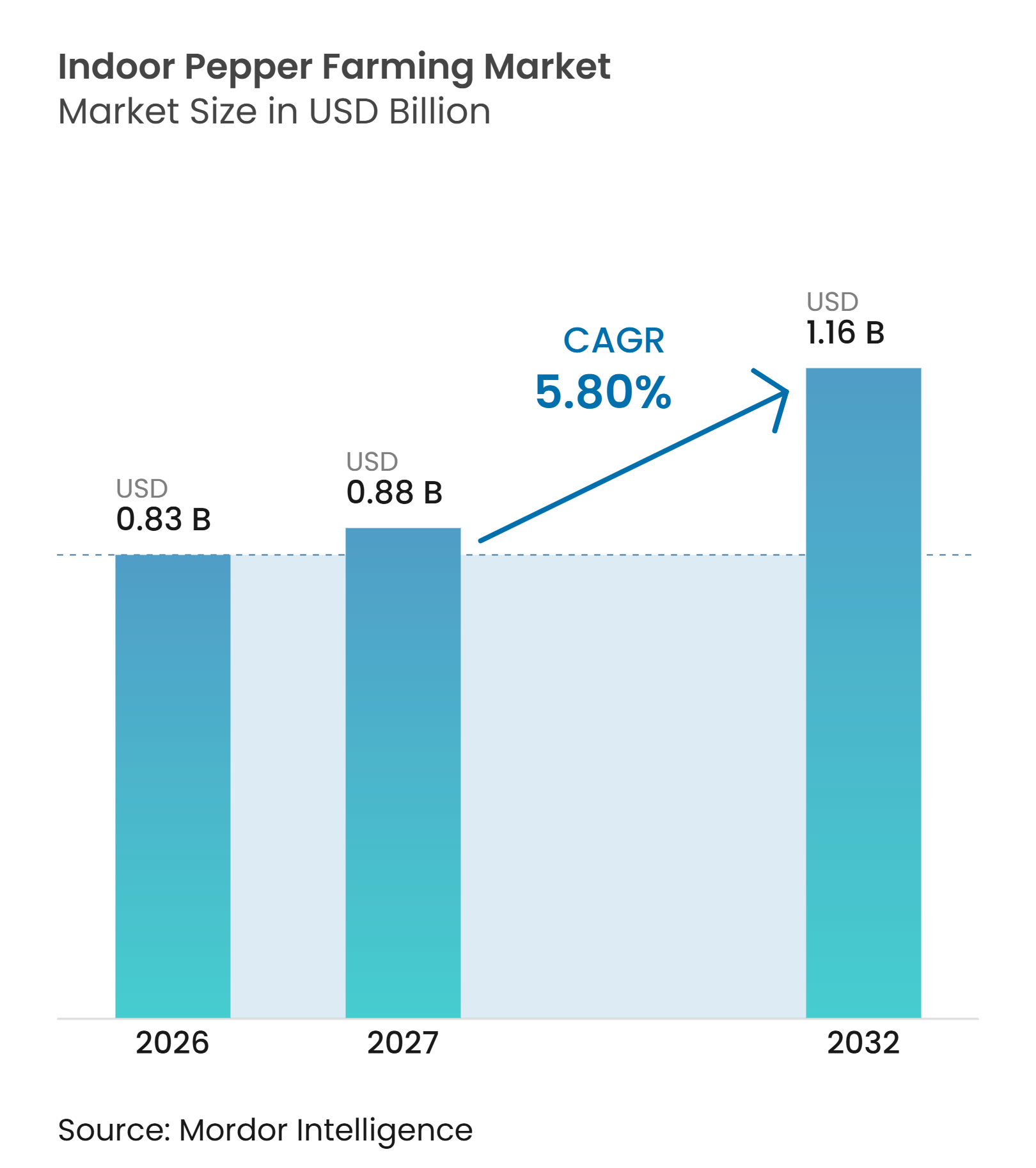
The indoor pepper farming market size is projected to expand from USD 0.83 billion in 2026 and USD 0.88 billion in 2027 to USD 1.16 billion by 2032, registering a CAGR of 5.8% between 2027 to 2032. The market is supported by retailers that need dependable year-round volumes, uniform quality, and predictable shelf life. Controlled cultivation also reduces dependence on weather-sensitive open-field supply and supports traceability requirements in higher-value retail programs. Asia-Pacific provides the largest production base, while Europe is expected to add capacity faster as growers invest in glass greenhouse operations. Larger operators are strengthening their position through acquisitions, production contracts, and energy infrastructure that can reduce exposure to power costs. These conditions create room for producers that can combine reliable supply, crop expertise, and disciplined capital investment, while matching the operating practices, food-safety documentation, packaging capability, and delivery schedules expected by major retail customers in several regions, including programs that need consistent product specifications across seasonal promotions, store formats, and established distribution networks, without compromising freshness, food-safety records, or the quality requirements of premium fresh-produce buyers.
Key Report Takeaways
- By product type, Bell Peppers were the largest segment and held 53.2% of the indoor pepper farming market share in 2026, while Chili Peppers are the fastest-growing segment with a projected 8.7% CAGR from 2027 to 2032.
- By facility type, Glass Greenhouses were the largest segment and accounted for 49.7% of the indoor pepper farming market share in 2026, while Indoor Vertical Farms are the fastest-growing segment with a projected 6.3% CAGR from 2027 to 2032.
- By cultivation system, Hydroponics was the largest segment, holding 36.7% of the indoor pepper farming market share in 2026, while Aquaponics is the fastest-growing segment, with a projected 7.8% CAGR from 2027 to 2032.
- By distribution channel, Supermarkets and Hypermarkets were the largest segment, holding 32.8% of the indoor pepper farming market share in 2026, while Direct-to-Consumer and Online Retail are the fastest-growing segment, with a projected 6.7% CAGR from 2027 to 2032.
- By geography, Asia-Pacific was the largest region and held 39.8% of the indoor pepper farming market share in 2026, while Europe is the fastest region with a projected 7.2% CAGR from 2027 to 2032.
Note: Market numbers in this report are based on Mordor Intelligence's proprietary estimation framework, which combines nine months of actuals with Q4 projections for base year 2026.
Market Trends and Insights
Drivers Impact Analysis of Indoor Pepper Farming Market*
| Driver | (~) % Impact on CAGR Forecast | Geographic Relevance | Impact Timeline |
|---|---|---|---|
| Year-Round Availability and Retail Supply Reliability | +1.2% | Global, with strong relevance in North America and Europe | Short term (≤ 2 years) |
| Higher Yield and Quality Consistency Through Controlled Climate | +1.1% | Global, with strong relevance in the Netherlands, Canada, Mexico, and Japan | Medium term (2-4 years) |
| Water and Land Efficiency in Hydroponic Pepper Production | +0.8% | Asia-Pacific, the Middle East, and North Africa | Medium term (2-4 years) |
| Retail Demand for Pesticide-Reduced and Locally Grown Produce | +0.7% | North America, Europe, and urban Asia-Pacific markets | Short term (≤ 2 years) |
| Expansion of Protected Cultivation in Major Pepper-Producing Regions | +0.9% | Spain, the Netherlands, Poland, Canada, Mexico, South Africa, and Brazil | Long term (≥ 4 years) |
| Precision Lighting and Crop-Management Innovation for Fruiting Crops | +0.6% | Global, with concentrated deployment in the Netherlands, Germany, Canada, and China | Medium term (2-4 years) |
| Source: Mordor Intelligence | |||
Year-Round Availability and Retail Supply Reliability
Retailers need peppers that meet color, size, and shelf-life requirements during every season. Indoor production enables growers to plan volumes more consistently than open-field producers. Farm Credit Canada reported that Canada moved from a net pepper importer to a net exporter between 2013 and 2023 as controlled-environment production expanded[1]. The change supports retailers that want to reduce reliance on field-grown imports and simplify supply arrangements. Larger growers can use year-round contracts to secure shelf space, while smaller operators may find it harder to meet the required volume and service levels. This driver supports the indoor pepper farming market because dependable availability is a key factor in supplier selection, especially as retailers seek fewer suppliers that can meet recurring program requirements.
Higher Yield and Quality Consistency Through Controlled Climate
Controlled environments help growers manage the conditions that determine fruit set, color, size, and marketable yield. The United States Department of Agriculture's Economic Research Service found that peppers, tomatoes, and cucumbers accounted for 60% to 70% of controlled-environment agriculture crop production in the United States in 2024[2]. This crop mix reflects the value of stable quality for retailers and foodservice buyers. Climate control, irrigation management, and integrated pest management can limit the seasonal variation found in open-field production. Producers who manage these variables well can serve specifications that are difficult to maintain with inconsistent weather. The indoor pepper farming market benefits from predictable quality, which supports recurring supply programs rather than individual spot sales, giving growers a clearer basis for planning labor, packaging, harvest schedules, and distribution.
Water and Land Efficiency in Hydroponic Pepper Production
Hydroponic cultivation allows pepper producers to manage water and nutrients more directly than field-based systems. This approach is relevant in locations where usable agricultural land is constrained or water availability is uncertain. It also supports intensive production close to urban demand centers. The model is important in Asia-Pacific, the Middle East, and North Africa, where protected cultivation can be aligned with food security programs. Growers still need the technical capability to manage nutrient balance, root health, and climate conditions. The indoor pepper farming market can benefit where resource efficiency improves the practical case for local pepper production, particularly when import dependence, land limitations, and water conditions affect supply planning.
Retail Demand for Pesticide-Reduced and Locally Grown Produce
Retail buyers increasingly seek peppers with reliable traceability and documented production practices. Indoor farms can use integrated pest management and controlled production systems to support these requirements. Japan’s stricter 2025 enforcement of maximum residue limit documentation for imported capsicum products favors suppliers that can provide clear records. Local greenhouse supply can also shorten transport routes and improve delivery freshness. These requirements can raise the entry barrier for producers that lack traceability systems or consistent residue controls. The indoor pepper farming market therefore gains from procurement practices that value verified production conditions as well as volume, because compliance capability can be as important as crop availability in supplier evaluations.
Restraints Impact Analysis of Indoor Pepper Farming Market*
| Restraint | (~) % Impact on CAGR Forecast | Geographic Relevance | Impact Timeline |
|---|---|---|---|
| High Electricity and Climate-Control Costs for Fruiting Crops | -0.6% | The Netherlands, Belgium, Germany, Poland, and North America | Short term (≤ 2 years) |
| High Capital Intensity and Longer Payback Periods | -0.5% | Global, with heightened relevance in South Africa, Brazil, and the United Arab Emirates | Long term (≥ 4 years) |
| Pepper-Specific Crop Complexity and Limited Indoor Production Knowledge | -0.3% | India, Southeast Asia, and parts of South America | Medium term (2-4 years) |
| Input, Food-Safety, and Cross-Border Compliance Exposure | -0.3% | North America, Europe, and Asia-Pacific export corridors | Medium term (2-4 years) |
| Source: Mordor Intelligence | |||
High Electricity and Climate-Control Costs for Fruiting Crops
Peppers need controlled temperatures and humidity to support fruit set, color development, and stable quality. These requirements make them more energy-intensive than many leafy crops. Energy costs can be particularly challenging for facilities that rely on purchased electricity or fossil-fuel-based heating. Operators with geothermal heat, waste heat, or Combined Heat and Power systems can be better placed to manage this exposure. The cost difference can encourage consolidation because larger producers are more likely to have access to infrastructure and financing. The indoor pepper farming market remains exposed when sustained energy inflation weakens project economics for mid-sized growers, especially those without access to geothermal heat, waste heat, or efficient energy infrastructure.
High Capital Intensity and Longer Payback Periods
High-tech greenhouse projects require significant capital before the first commercial crop is sold. The investment covers structures, climate equipment, irrigation, lighting, packing capability, and operational systems. Longer payback periods can make development sensitive to interest rates and the availability of structured finance. This challenge is more acute in markets where growers cannot access public support or long-term agricultural financing. Smaller family farms may therefore favor lower-cost protected systems instead of glass greenhouse development. The indoor pepper farming market can grow more slowly where financially viable projects cannot secure the required capital, because greenhouse development needs funding for both construction and the systems needed to operate reliably.
*Our forecasts treat driver/restraint impacts as directional, not additive. The impact forecasts reflect baseline growth, mix effects, and variable interactions.
Indoor Pepper Farming Market Segment Analysis
By Product Type:
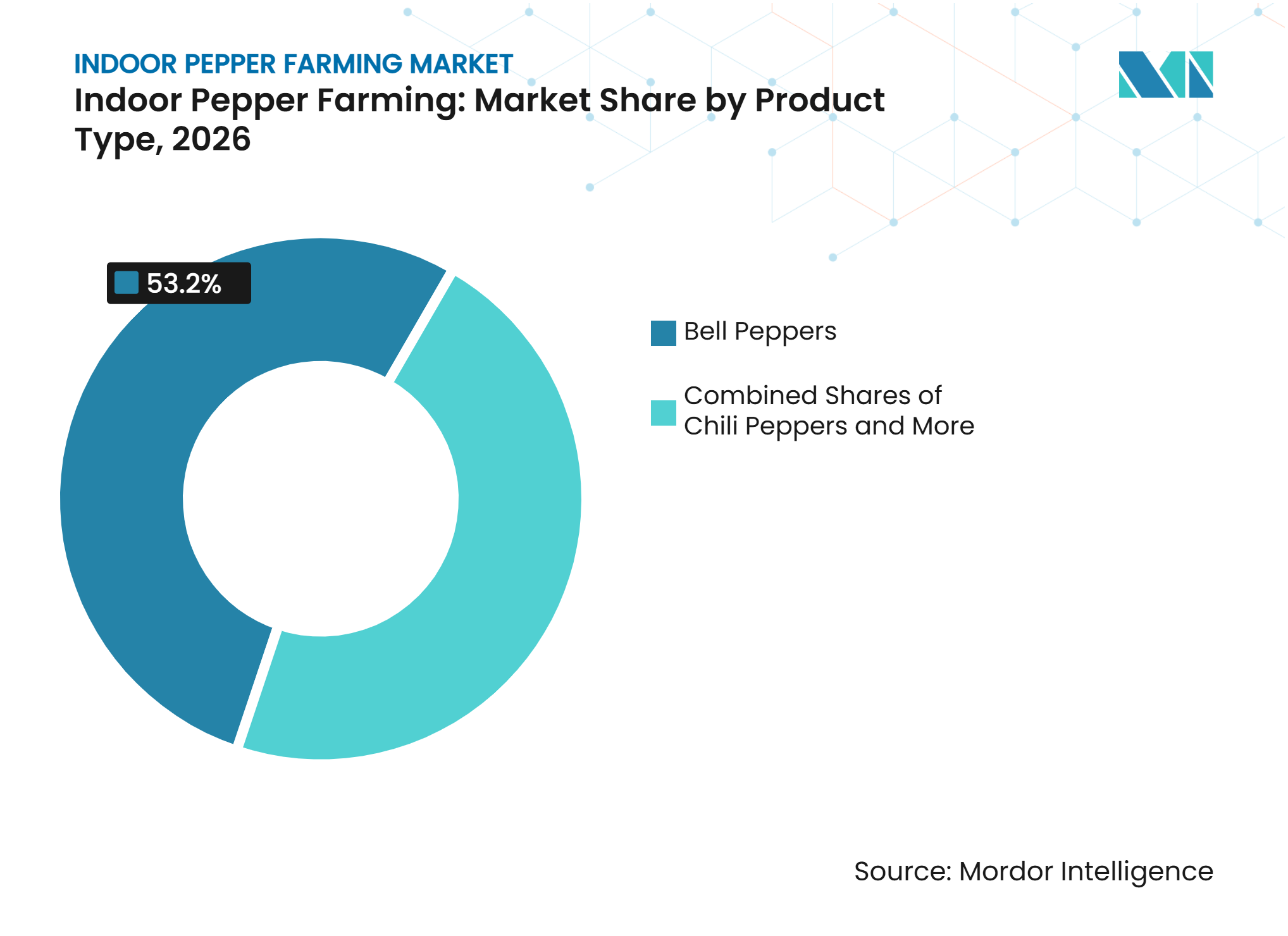
Bell Peppers Lead Volume While Chili Peppers Grow FastestBell Peppers were the largest product type, accounting for 53.2% of the indoor pepper farming market share in 2026. Their position reflects retail programs that require standard color, sizing, and shelf-life performance, which controlled cultivation can support year-round. In the Netherlands, the sweet pepper greenhouse area reached 1,660 hectares in 2025, and red bell peppers covered 960 hectares of that area. The production concentration highlights the central role of bell peppers in mature greenhouse systems. Chili Peppers are the fastest product type, with a projected CAGR of 8.7% through 2032.
Chili demand is supported by specialty foodservice, premium grocery, and products that use capsaicinoids, although the crop requires careful control of growing conditions. Mini and Snack Peppers are suited to convenience retail and snack-focused foodservice formats. Specialty Pepper Varieties appeal to buyers seeking regional origins, distinct flavors, or heritage characteristics. Product differentiation enables indoor growers to meet premium demand without relying solely on large-volume bell pepper sales. The indoor pepper farming market is shaped by a broad base of bell pepper volume and a smaller but faster specialty segment.



By Facility Type:
Glass Greenhouses Provide Scale While Indoor Vertical Farms Grow FastestGlass Greenhouses were the largest facility type, representing 49.7% of the indoor pepper farming market share in 2026. They support high-volume sweet pepper production for major grocery programs through detailed climate control, automated irrigation, and lighting systems. The Netherlands and Spain illustrate the continued importance of this facility model for protected pepper production. The greenhouse share of pepper cultivation in the European Union increased from an average of 65.0% during 2015 to 2017 to 70.9% during 2023 to 2025. The shift confirms that protected systems are becoming more important within the broader pepper supply base.
Indoor Vertical Farms are the fastest facility type, with a projected CAGR of 6.3% through 2032. Their proximity to urban demand centers can support freshness and targeted specialty production, while research shows that light intensity can materially improve pepper performance in vertical settings. Poly Greenhouses remain relevant where growers need lower capital costs than glass structures require. Container Farms can support remote locations where transport from major growing regions is costly. Hybrid Greenhouse and Indoor Facilities give operators flexibility to manage different crops and production conditions within the same operation.
By Cultivation System:
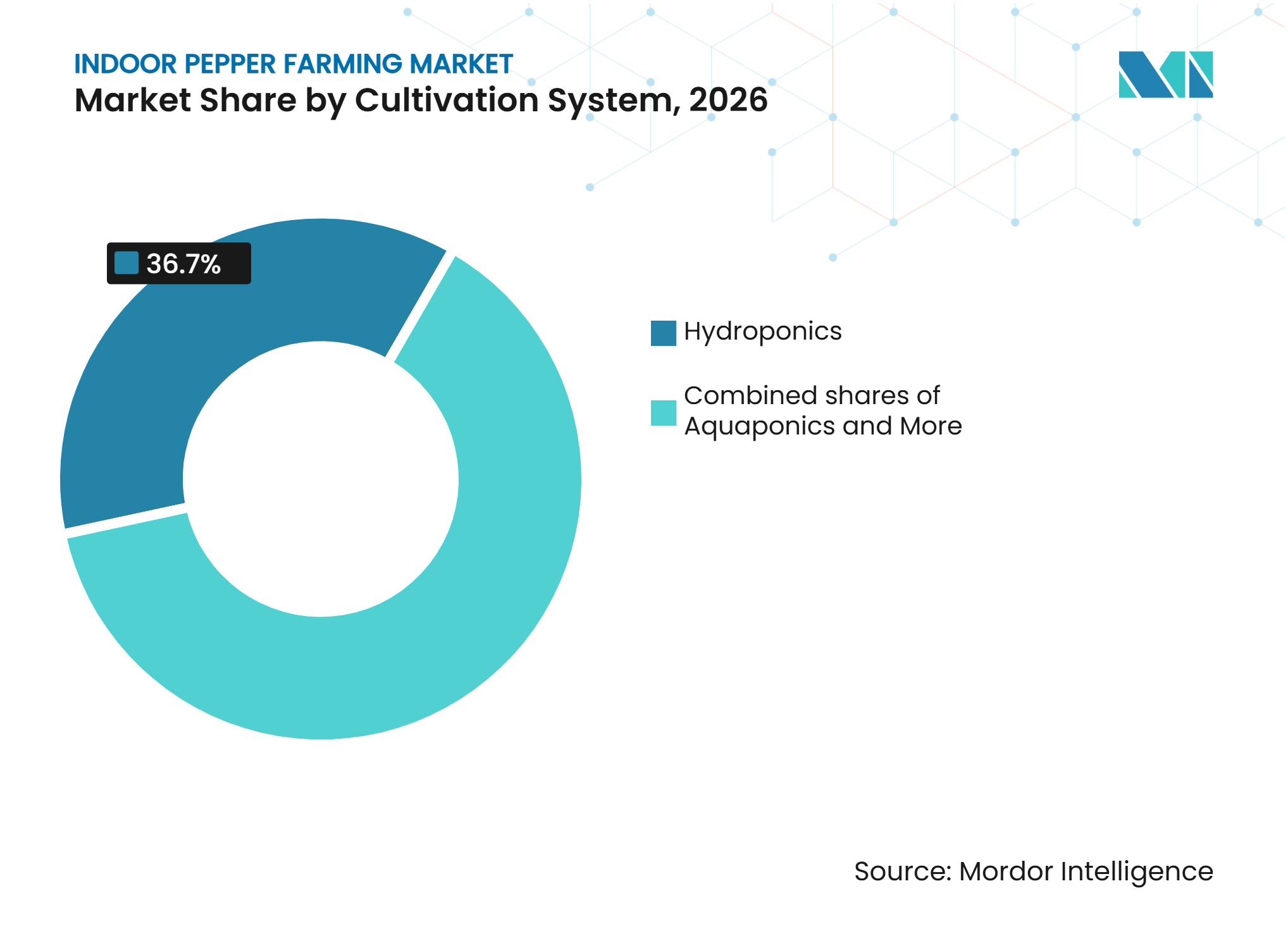
Hydroponics Lead While Aquaponics Grow FastestHydroponics were the largest cultivation system and held 36.7% of the indoor pepper farming market share in 2026. The system has been refined in mature greenhouse regions such as the Netherlands, Canada, and Mexico, where growers manage nutrient delivery, water use, and root-zone conditions with greater consistency. These controls help operators produce marketable peppers across more than 1 seasonal cycle. Research published in Scientific Reports found stable, marketable yields of bell pepper cultivars grown in Nutrient Film Technique (NFT) hydroponic systems under controlled nutrition regimes. The system remains important for commercial growers focused on repeatable quality and high-value contracts[3].
Aquaponics is the fastest cultivation system, with a projected CAGR of 7.8% through 2032. The model combines fish production with pepper cultivation, providing 2 revenue streams, with buyers for both outputs. This feature can improve the economics of facilities for lenders applying strict agricultural credit criteria. Soil-Based Protected Cultivation remains relevant where substrate conversion costs are high and existing land can be adapted. Hybrid Cultivation Systems can combine hydroponic zones with protected soil beds to serve several customer types, reflecting differences in local financing, water availability, crop knowledge, and buyer needs.

By Distribution Channel:
Supermarkets and Hypermarkets Lead While Direct-to-Consumer and Online Retail Grow FastestSupermarkets and Hypermarkets were the largest distribution channels, representing 32.8% of the indoor pepper farming market share in 2026. Their role reflects long-term supply agreements that require stable pricing, delivery, and quality, supported by the logistics and marketing systems of large greenhouse operators. Mastronardi Produce Limited supplies retail customers through its greenhouse network and has expanded its production footprint to support year-round programs. Retail contracts can improve revenue visibility for growers who meet demanding service standards. The channel remains central to the indoor pepper farming market size for large commercial suppliers.
Direct-to-Consumer and Online Retail are the fastest channels, with a projected CAGR of 6.7% through 2032. These channels serve customers seeking provenance, specialty cultivars, and very fresh produce, while allowing growers to develop branded lines. Specialty Produce Retailers remain important in premium urban markets where greenhouse peppers can command higher prices. Foodservice Distributors provide a stable demand for standardized menus and regular deliveries. Wholesale Produce Markets continue to play a major role in Asia-Pacific and South America, where established fresh-produce trading systems handle substantial domestic volume.
Geography Analysis
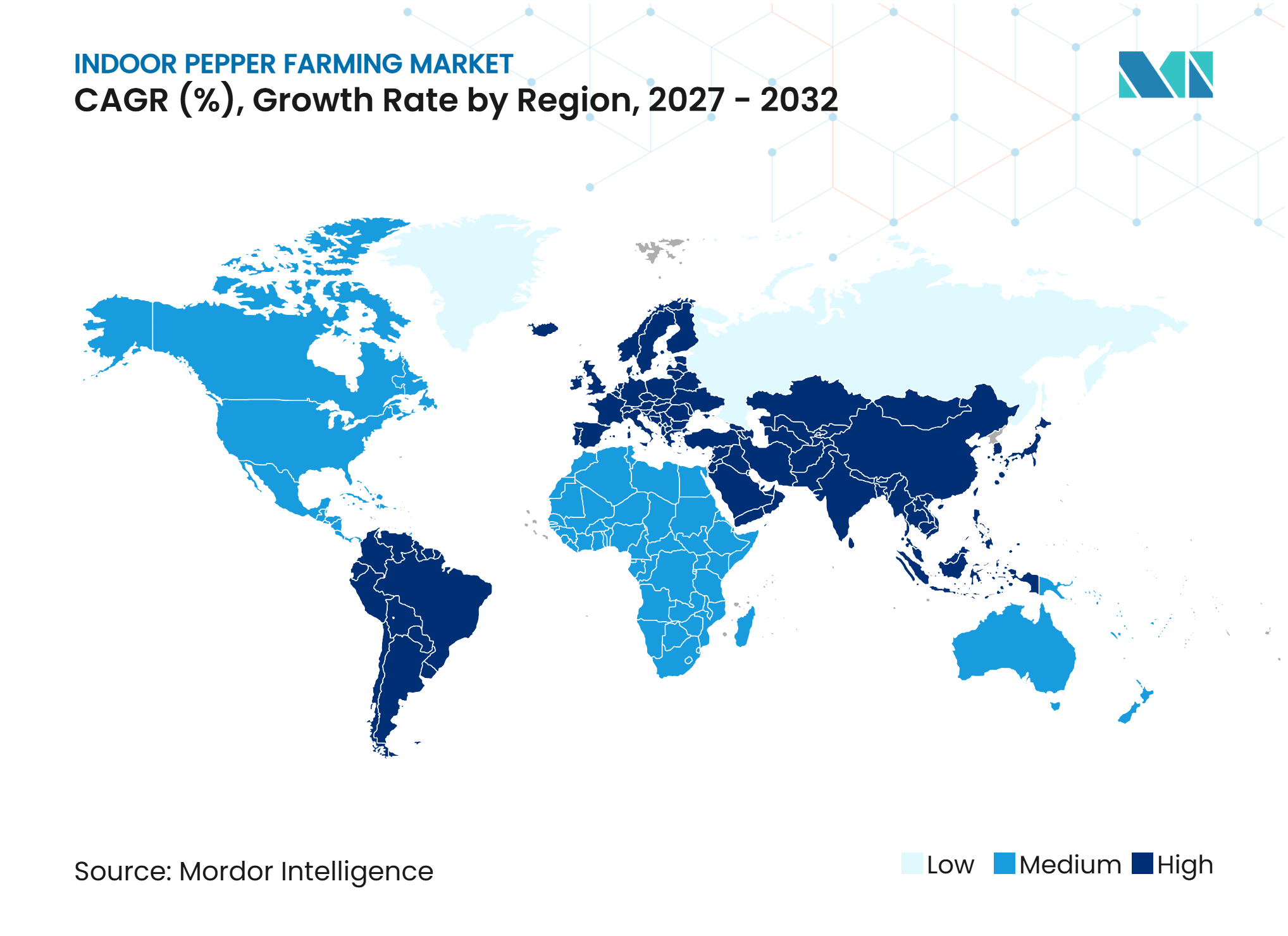
Asia-Pacific is the largest regional segment, holding 39.8% of the indoor pepper farming market share in 2026. China supports regional volume through greenhouse clusters in Shandong, Liaoning, Guizhou, and Shaanxi, where smart systems use sensors and integrated water-fertilizer management. India has a substantial protected capsicum base, and polyhouse systems can deliver 2 to 3 times the yield of open-field production. Japan and South Korea serve premium segments in which food safety compliance and traceability influence supplier selection. Australia also continues to develop protected cropping as retailers seek stable quality despite outdoor climate variability.
Europe is the fastest-growing region, and the indoor pepper farming market size is projected to grow at a 7.2% CAGR through 2032. New glass greenhouse capacity in the Netherlands and Poland is supported by demand for locally grown, traceable peppers. The Netherlands added 130 hectares of sweet pepper greenhouse area in 2025, bringing the total to 1,660 hectares, while the number of Dutch greenhouse vegetable farms fell by 50 to 1,030. Poland’s greenhouse pepper production is also expanding as growers direct investment toward protected cultivation. Retail demand for reduced-residue produce supports the region’s investment case.
North America remains an important production region because the United States and Canada support large retail programs, with Mexico acting as a bridge producer for regional trade. South America has developed protected cultivation in Brazil and Argentina, largely to meet domestic retail demand. Saudi Arabia and the United Arab Emirates are investing in climate-controlled food production as part of broader food security programs. Africa remains at an earlier stage, with South Africa the most developed commercial greenhouse pepper base, and Egypt providing an opportunity for tunnel greenhouse growth.
Competitive Landscape
Market Concentration
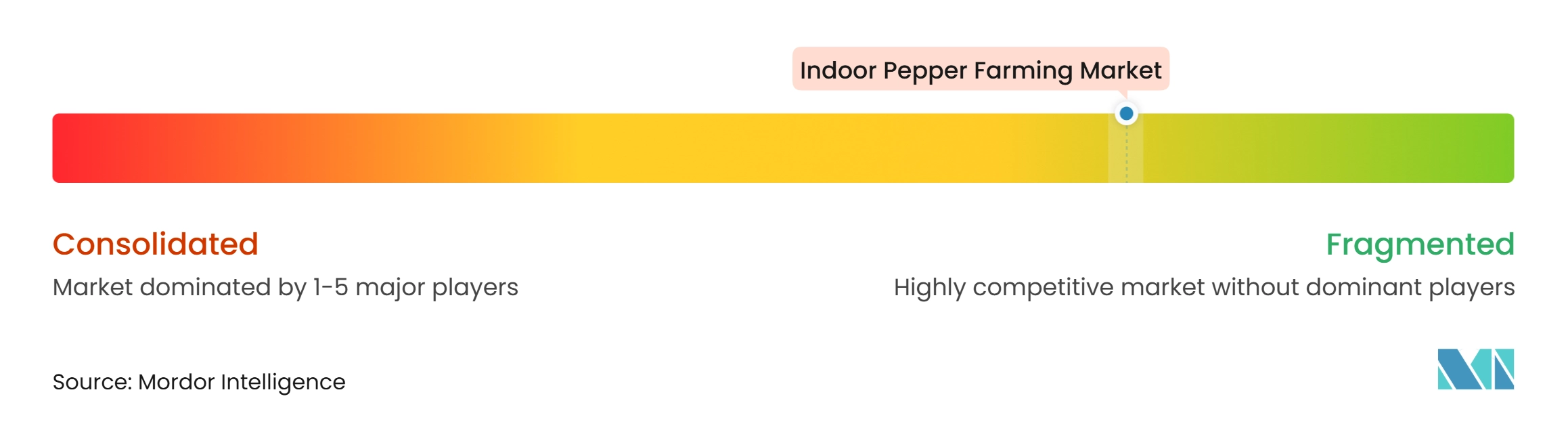
The indoor pepper farming market is fragmented globally in 2026, and no single operator holds more than a low single-digit share of global production, although regional concentration is increasing in North America and the Netherlands. Cox Farms, through Mucci Farms Ltd., added more than 300 acres of bell pepper greenhouse capacity in Ontario through the 2024 acquisitions of Hacienda Farms and Greenhill Produce. Mastronardi Produce Limited expanded its United States greenhouse network to more than 600 acres across 15 states by mid-2025. These moves show how scale can strengthen a supplier’s ability to serve large grocery accounts with consistent volume.
Production technology is also separating operators that can maintain quality at scale from those that cannot. Leading growers use controlled irrigation, lighting, and crop management systems to reduce labor dependence while maintaining premium-grade output. Hoogweg Paprikakwekerijen B.V. expanded its glass pepper area through acquisitions and new construction and is linking facilities to its geothermal heat network. These investments address both production reliability and energy exposure. Smaller operators can still find opportunities in specialty chili peppers, snack peppers, aquaponics, and premium urban markets that are less effectively served by broad-volume programs.
Seed developers provide genetics for commercial greenhouse programs, but are not indoor pepper growers. The competitive environment includes farm operators with different levels of integration, crop specialization, and access to energy infrastructure. Long-term retail contracts can favor larger growers because they require dependable volume, logistics capability, and consistent compliance records, while specialized operators can serve differentiated cultivars or local markets. The indoor pepper farming market is likely to remain globally diverse even as leading regional platforms expand.
Indoor Pepper Farming Industry Leaders
-
Mastronardi Produce Ltd.
-
Horticola Cimarrón S.A. de C.V.
-
Tangmere Airfield Nurseries Ltd.
-
Village Farms International, Inc.
-
Pure Hothouse Foods Inc.
- *Disclaimer: Major Players sorted in no particular order
Indoor Pepper Farming Market Companies Covered in this Report
- Mastronardi Produce Limited
- Windset Farms
- Pure Hothouse Foods Inc.
- Horticola Cimarrón S.A. de C.V.
- Tangmere Airfield Nurseries Ltd.
- Village Farms International, Inc.
- Mucci Farms Ltd. (Cox Farms)
- Nature Fresh Group Inc.
- Del Fresco Produce Ltd. (Del Fresco Group)
- Hoogweg Paprikakwekerijen B.V.
- Tas Paprika
- Southern Paprika Limited
- VGT Rijkevorsel
- Emseni Farming (Pty) Ltd.
- Rijk Zwaan Zaadteelt en Zaadhandel B.V.
Recent Industry Developments in Indoor Pepper Farming Market
- September 2025: Hoogweg Paprikakwekerijen B.V. acquired a 10-hectare greenhouse in Luttelgeest previously held by Fresunto (part of RedStar), combined with two additional 11-hectare new builds, adding a total of 32 hectares for the 2026 season and positioning the company above 200 hectares of glass pepper area; the acquired site is being connected to Hoogweg's geothermal heat network.
- June 2025: Mastronardi Produce Limited added 2 high-tech greenhouses in Minnesota and Iowa to its U.S. farm distribution network, expanding the U.S. greenhouse portfolio by 48 acres to more than 600 acres across 15 states; the move supports year-round pepper, tomato, and strawberry programs and directly responds to retailer demand for increased domestic sourcing.
- November 2024: Mastronardi Produce Limited added 91 acres of Canadian greenhouse capacity through a 27-acre new glass greenhouse in Kingsville, Ontario, plus long-term marketing agreements with J.C. Fresh Farms Ltd. (32 acres) and Orangeline Farms Limited (32 acres) in Leamington, Ontario.
Global Indoor Pepper Farming Market Report Scope
Indoor pepper farming is the cultivation of pepper plants in controlled environments, such as greenhouses or vertical indoor farms, where temperature, humidity, lighting, and irrigation are managed to optimize growth. It enables year-round production, improved crop quality, and reduced exposure to pests and adverse weather conditions.
The Indoor Pepper Farming Market Report is Segmented by Product Type (Bell Peppers, Chili Peppers, Mini and Snack Peppers, and Specialty Varieties), Facility Type (Glass Greenhouses, Poly Greenhouses, Vertical Farms, Container Farms, and Hybrid), Cultivation System (Hydroponics, Soil-Based, Aquaponics, and Hybrid), Distribution Channel (Supermarkets, Specialty Retailers, Foodservice, Direct-to-Consumer, and Wholesale), and Geography (North America, South America, Europe, Asia-Pacific, Middle East, Africa). Forecasts in Value (USD).
Segmentation Overview
| Bell Peppers |
| Chili Peppers |
| Mini and Snack Peppers |
| Specialty Pepper Varieties |
| Glass Greenhouses |
| Poly Greenhouses |
| Indoor Vertical Farms |
| Container Farms |
| Hybrid Greenhouse and Indoor Facilities |
| Hydroponics |
| Soil-Based Protected Cultivation |
| Aquaponics |
| Hybrid Cultivation Systems |
| Supermarkets and Hypermarkets |
| Specialty Produce Retailers |
| Foodservice Distributors |
| Direct-to-Consumer and Online Retail |
| Wholesale Produce Markets |
| North America | United States |
| Canada | |
| Mexico | |
| South America | Brazil |
| Argentina | |
| Europe | Germany |
| United Kingdom | |
| France | |
| Italy | |
| Spain | |
| Russia | |
| Asia-Pacific | China |
| India | |
| Japan | |
| South Korea | |
| Australia and New Zealand | |
| Middle East | Saudi Arabia |
| United Arab Emirates | |
| Africa | South Africa |
| Egypt |
| By Product Type | Bell Peppers | |
| Chili Peppers | ||
| Mini and Snack Peppers | ||
| Specialty Pepper Varieties | ||
| By Facility Type | Glass Greenhouses | |
| Poly Greenhouses | ||
| Indoor Vertical Farms | ||
| Container Farms | ||
| Hybrid Greenhouse and Indoor Facilities | ||
| By Cultivation System | Hydroponics | |
| Soil-Based Protected Cultivation | ||
| Aquaponics | ||
| Hybrid Cultivation Systems | ||
| By Distribution Channel | Supermarkets and Hypermarkets | |
| Specialty Produce Retailers | ||
| Foodservice Distributors | ||
| Direct-to-Consumer and Online Retail | ||
| Wholesale Produce Markets | ||
| Geography | North America | United States |
| Canada | ||
| Mexico | ||
| South America | Brazil | |
| Argentina | ||
| Europe | Germany | |
| United Kingdom | ||
| France | ||
| Italy | ||
| Spain | ||
| Russia | ||
| Asia-Pacific | China | |
| India | ||
| Japan | ||
| South Korea | ||
| Australia and New Zealand | ||
| Middle East | Saudi Arabia | |
| United Arab Emirates | ||
| Africa | South Africa | |
| Egypt | ||
Key Questions Answered in the Report
What is the projected value of indoor pepper farming by 2032?
The sector is projected to reach USD 1.16 billion by 2032, increasing at a 5.8% CAGR from 2027. Growth is supported by contracted retail demand, protected cultivation, and investment in reliable local supply.
Which pepper type holds the largest share of indoor production?
Bell Peppers are the largest product segment, with 53.2% share in 2026. Their prominence reflects the needs of grocery programs for standard color, size, shelf life, and dependable year-round availability.
Which facility format is growing fastest for pepper production?
Indoor Vertical Farms are the fastest facility type, with a projected 6.3% CAGR through 2032. The format is relevant for urban specialty production where proximity can support fresh deliveries and verified provenance.
Why do retailers use indoor pepper suppliers?
Indoor farms can provide year-round supply, consistent quality, traceability, and dependable shelf life for retail programs. These characteristics help retailers and procurement teams manage planning, reduce seasonal supply uncertainty, and meet documented production requirements across large, recurring fresh-produce programs.
Which region has the highest share of indoor pepper production?
Asia-Pacific is the largest regional segment, with 39.8% share in 2026. China's greenhouse clusters and the region's range of protected cultivation models provide a broad production base.
What is the main challenge for indoor pepper growers?
Electricity, climate-control costs, high upfront capital needs, and crop-management complexity can affect project returns. These issues are more difficult for growers that lack specialist teams, long-term finance, or energy infrastructure.