
Indonesia Pet Treats Market Size and Share
Market Overview
| Study Period | 2021 - 2031 |
|---|---|
| Forecast Data Period | 2026 - 2031 |
| Base Year Market Size (2025) | USD 127.41 Million |
| Market Size (2026) | USD 133.88 Million |
| Market Size (2031) | USD 181.88 Million |
| Growth Rate (2026 - 2031) | 6.55 % |
| Market Concentration | Medium |
Major Players
*Disclaimer: Major Players sorted in no particular order Image © Mordor Intelligence. Reuse requires attribution under CC BY 4.0. |
|
Indonesia Pet Treats Market Analysis by Mordor Intelligence
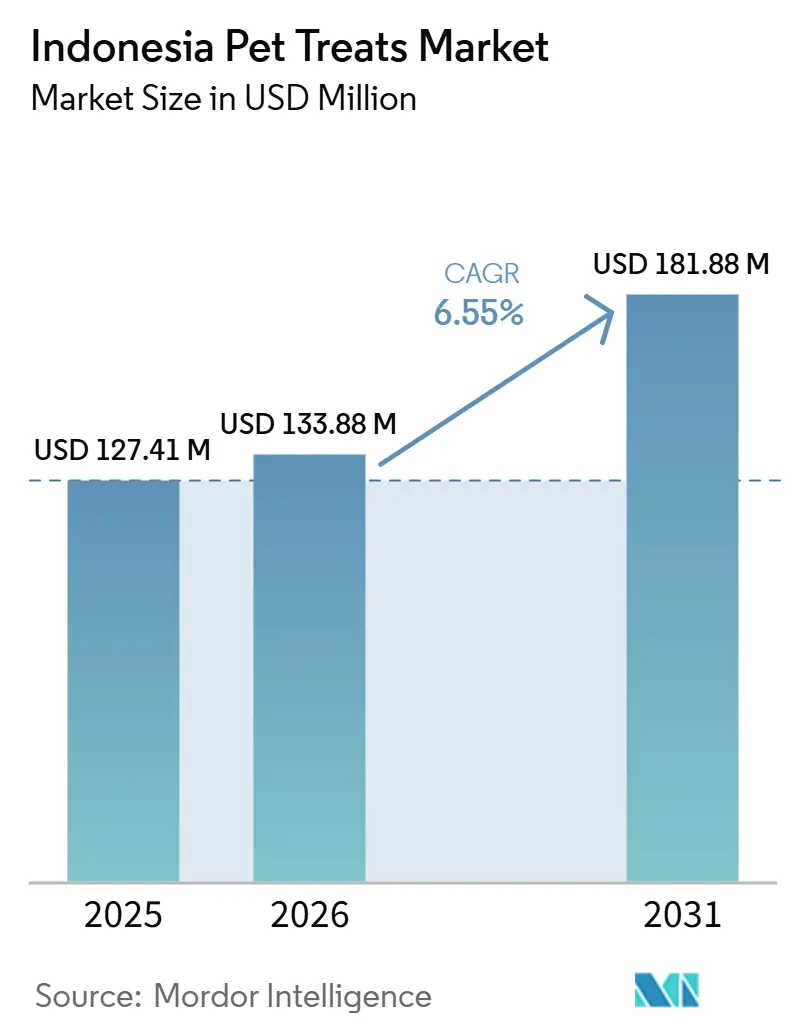
The Indonesia pet treats market was valued at USD 127.41 million in 2025 and is projected to grow from USD 133.88 million in 2026 to USD 181.88 million by 2031, at a CAGR of 6.55% during the forecast period (2026-2031). The market is expanding as rising pet ownership, increasing urbanization, and greater awareness of companion animal nutrition drive demand for premium and functional pet treats. Cats remain the primary demand driver owing to their large pet population, compatibility with urban lifestyles, and strong cultural acceptance, supporting frequent purchases of treat products. Despite steady growth, the market remains underpenetrated, indicating significant headroom for higher adoption of commercial pet treats as formal pet care practices continue to develop. Digital retail channels, veterinary recommendations, and increasing availability of premium and functional products are further improving consumer access to higher-value offerings. Manufacturers are also strengthening their market presence through halal-certified products, functional formulations, product innovation, and wider distribution networks, creating opportunities for premiumization while increasing competition across the Indonesia pet treats market.
Key Report Takeaways
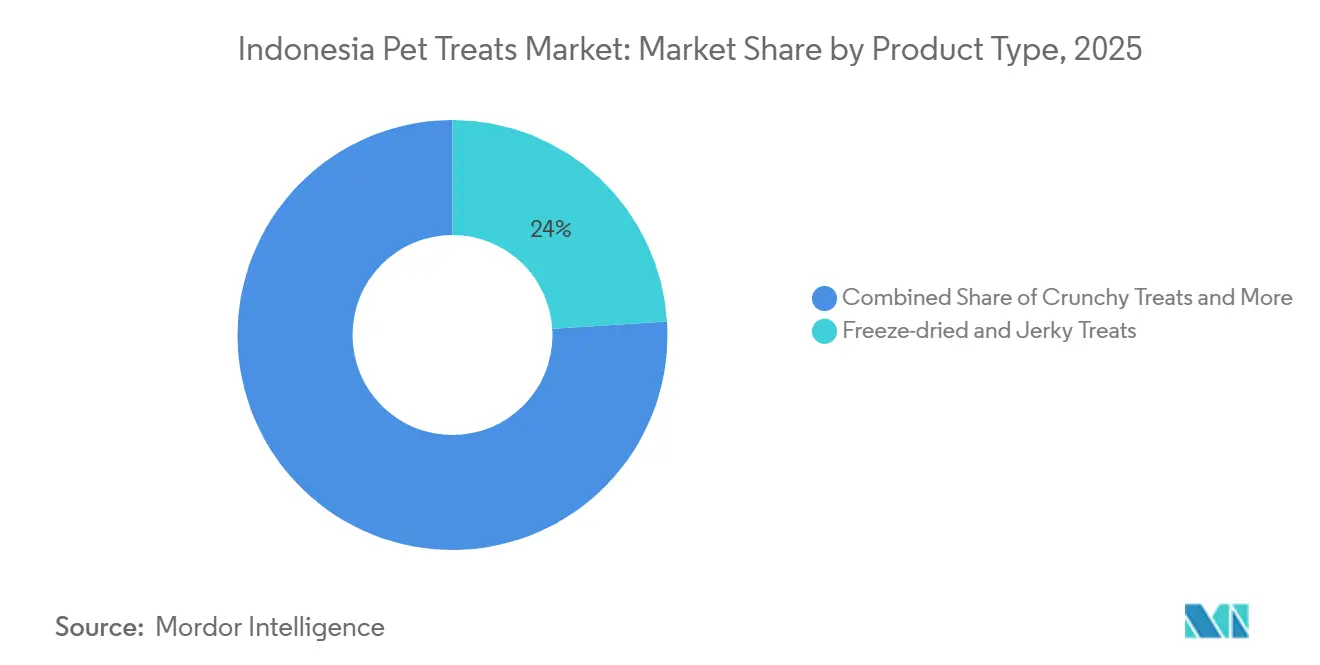
- By product type, freeze-dried and jerky treats accounted for 24.0% of the Indonesia pet treats market share in 2025 and is anticipated to grow at a CAGR of 7.55% between 2026 and 2031.
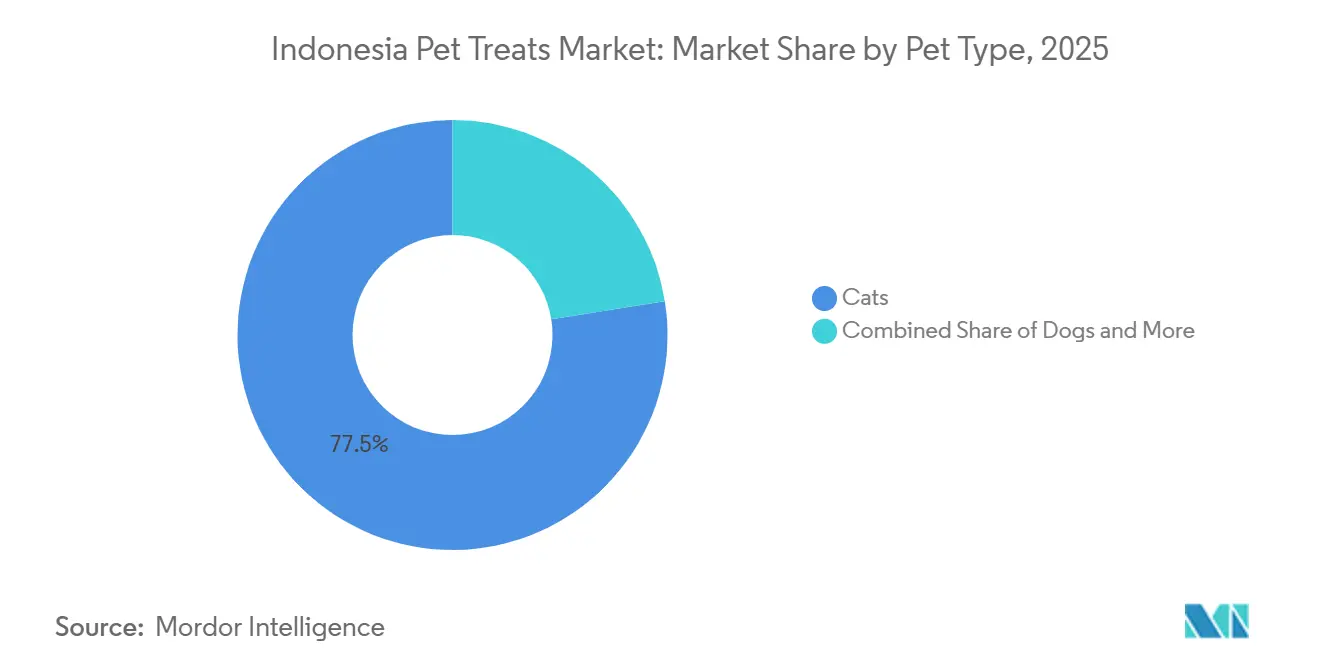
- By pet type, cats represented 77.5% of the Indonesia pet treats market size in 2025, with the cat segment projected to expand at a CAGR of 7.31% between 2026 and 2031.
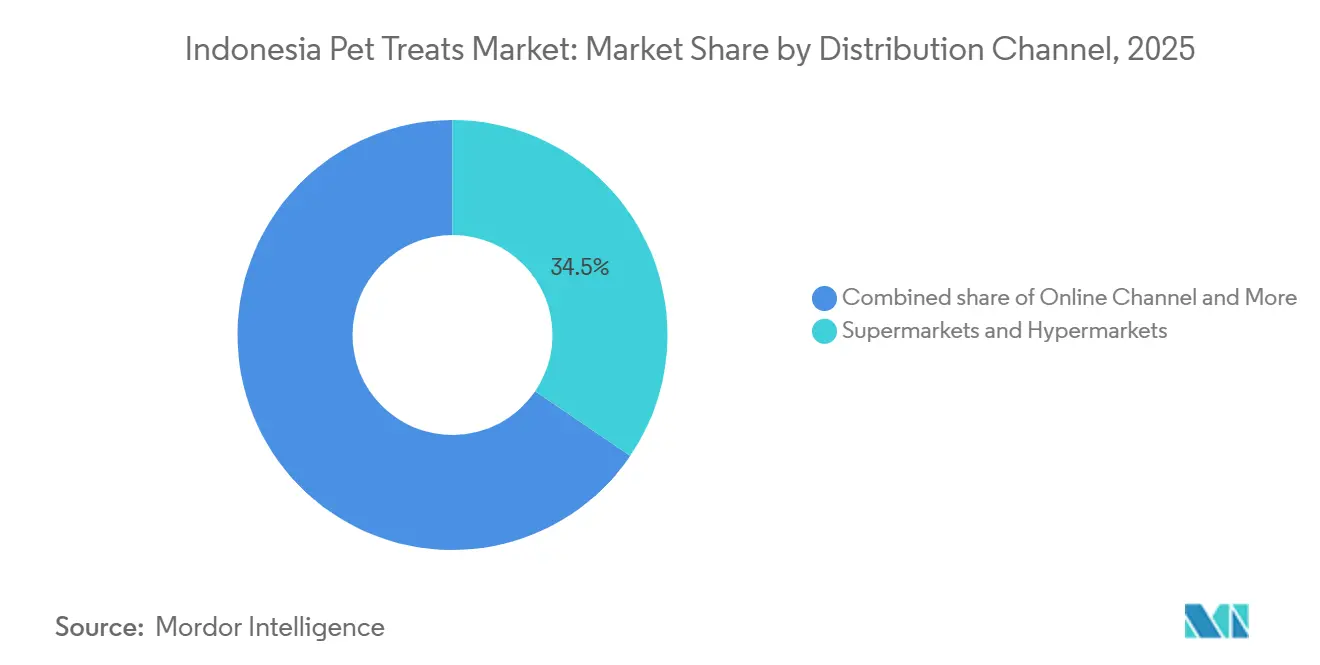
- By distribution channel, supermarkets and hypermarkets accounted for 34.5% to the Indonesia pet treats market size in 2025, while the online channel is forecasted to grow at a CAGR of 7.18% between 2026 and 2031.
Note: Market size and forecast figures in this report are generated using Mordor Intelligence’s proprietary estimation framework, updated with the latest available data and insights as of January 2026.
Indonesia Pet Treats Market Trends and Insights
Drivers Impact Analysis*
| Driver | (~) % Impact on CAGR Forecast | Geographic Relevance | Impact Timeline |
|---|---|---|---|
| Pet humanization driving premium treat purchase | +1.5% | Indonesia, urban Southeast Asia | Long term (≥ 4 years) |
| Increasing cat ownership and routine treat consumption | +1.3% | Indonesia, Southeast Asia | Long term (≥ 4 years) |
| E-Commerce expansion and convenience-led buying | +1.1% | Indonesia, Southeast Asia, Asia | Short term (≤ 2 years) |
| Growing demand for functional and veterinary-backed treats | +0.8% | Indonesia, Southeast Asia | Medium term (2-4 years) |
| Local formulation flexibility and halal-ready branding | +0.7% | Indonesia, Southeast Asia | Short term (≤ 2 years) |
| Imported premium ingredient positioning | +0.6% | Indonesia urban centers, Asia | Medium term (2-4 years) |
| Source: Mordor Intelligence | |||
Pet Humanization Driving Premium Treat Purchases
In Indonesia, pet care spending is increasingly driven by emotional factors, with cats remaining the most commonly owned pets and younger adults accounting for the largest share of pet owners. As emotional attachment grows, treats are no longer viewed as casual add-ons but are integrated into daily bonding and reward routines, increasing basket value even with stable feeding frequency, as owners combine standard crunchy treats with single-protein or function-focused options. Brands that position treats as essential to care, wellness, and bonding are better placed to capture premium spending in the Indonesian pet treats market. Supporting this trend, individual disposable income grew from USD 2,454.0 to USD 2,950.9 in 2024 over the past four years, according to Agriculture and Agri-Food Canada (AAFC)[1]Source: Government of Canada, "Sector Trend Analysis – E-commerce market trends in Indonesia," agriculture.canada.ca. This rise in disposable income, combined with increased pet care spending, supports overall market growth in the country.
Increasing Cat Ownership and Routine Treat Consumption
Cats play a significant role in driving the volume growth of the Indonesian pet treats market. Their prominence within the ownership base influences product design, distribution channels, and repeat purchase behaviors.This ownership pattern encourages more frequent snacking occasions, as cat owners typically use treats for daily interactions rather than training purposes. Lickable treats, bite-sized rewards, and small portion packs align well with this routine, unlike larger formats designed for dogs. Consequently, the demand profile favors high repurchase rates and cat-specific product innovations over species-neutral planning. This structural preference ensures that the Indonesian pet treats market remains closely aligned with feline nutrition trends, providing cat-focused brands with a clearer path to scale and growth.
E-Commerce Expansion and Convenience-Led Buying
Online retail is expanding access and enhancing the variety of products available in the Indonesia pet treats market. The continued expansion of Indonesia's retail e-commerce market is facilitating broader digital product discovery across pet care categories. Growing online demand for pet care products is supporting replenishment-driven categories, including pet treats. Leading e-commerce platforms provide treat brands with high-reach digital storefronts supported by strong promotional and live-commerce capabilities. This digital infrastructure enables premium treats to reach consumers in regions where specialty pet retail is limited. It also supports a diverse product assortment, which is crucial for scaling freeze-dried, imported, and functional treat formats.
Growing Demand for Functional and Veterinary-Backed Treats
The veterinary channel is strengthening demand for functional pet treats in Indonesia, particularly in categories related to urinary health, digestion, skin and coat care, and weight management. As veterinary recommendations continue to influence purchasing decisions, pet owners are increasingly willing to pay premium prices for products that address specific health concerns. Functional treats introduced through veterinary clinics often transition from trial purchases to regular use as they become part of routine pet care. This trend is driving demand for supplement-based and health-oriented treats, which typically command higher value than conventional reward treats. At the same time, domestic manufacturers are expanding their portfolios with functional formulations, indicating that demand for health-focused pet treats is extending beyond imported premium brands.
Restraints Impact Analysis*
| Restraint | (~) % Impact on CAGR Forecast | Geographic Relevance | Impact Timeline |
|---|---|---|---|
| Price sensitivity in mass-market pet households | -1.3% | Indonesia, Southeast Asia | Short term (≤ 2 years) |
| Limited formal retail reach outside major urban corridors | -0.9% | Indonesia non-Java regions, rural Southeast Asia | Medium term (2-4 years) |
| Raw material volatility in meat-based treats | -0.7% | Indonesia, global supply chains | Short term (≤ 2 years) |
| Low awareness of repeat treat use in rural areas | -0.6% | Indonesia rural markets, outer Southeast Asia | Long term (≥ 4 years) |
| Source: Mordor Intelligence | |||
Price Sensitivity in Mass-Market Pet Households
Price remains a significant constraint on premium adoption within the Indonesia pet treats market, particularly outside upper-income urban households. Many pet owners allocate a limited portion of their household budgets to overall pet care, leaving less room for discretionary purchases such as premium treats. As a result, higher-priced products continue to face lower acceptance in the mass market, even though premium offerings perform well through specialty stores and online channels. This dynamic has created a clear divide between economy products, which drive higher sales volumes, and premium products, which primarily target a smaller urban consumer base. Local manufacturers also face cost pressures, as developing functional formulations requires higher investment before production volumes are sufficient to achieve economies of scale. Although value packs and multi-pack formats help improve affordability, their availability remains limited, preventing a complete reduction in price-related barriers.
Limited Formal Retail Reach Outside Major Urban Corridors
Retail distribution in the Indonesia pet treats market remains uneven, hindering category growth outside major cities. The country's archipelago structure, with its numerous islands, adds complexity to delivery logistics, particularly for products requiring stricter storage and handling conditions. Formal pet retail is most developed in urban centers such as Jakarta, Surabaya, and Bandung, leaving many pet owners in other areas with limited product options. This constraint particularly affects the availability of freeze-dried and dental pet treat formats in regions where modern trade networks are less established, and specialist pet stores are scarce. Domestic companies with established trade networks in feed, poultry, and general distribution are better positioned to distribute products efficiently in these areas compared to imported brands. While e-commerce and pickup-point models are anticipated to improve accessibility over time, physical availability continues to play a significant role in driving trial and repeat purchases across much of the Indonesia pet treats market.
*Our forecasts treat driver/restraint impacts as directional, not additive. The impact forecasts reflect baseline growth, mix effects, and variable interactions.
Segment Analysis
By Product Type: Premiumization Concentrates in Freeze-Dried Formats
Freeze-dried and jerky treats accounted for 24.0% of the Indonesia pet treats market size in 2025, with this format projected to grow at a 7.55% CAGR between 2026 and 2031. This combination of current market share and anticipated growth indicates that premiumization in the Indonesia pet treats industry is well-established rather than emerging. Urban consumers are increasingly drawn to single-protein labeling, visible ingredient quality, and the minimally processed image associated with freeze-dried products. Similar trends have been observed in other Southeast Asian pet food markets, where premium single-protein and freeze-dried formats are gaining popularity among urban pet owners.
Crunchy treats continue to dominate everyday consumption due to their affordability and strong sales through supermarkets and convenience stores. Soft and chewy treats are gaining traction in senior pet care and scenarios where texture sensitivity is important, such as post-dental procedures or during recovery. Dental treats benefit from veterinary recommendations and functional claims, enabling them to maintain price premiums in the Indonesia pet treats market. Functional and supplement treats, which offer the highest value per gram, are experiencing growth driven by increased owner interest in urinary, digestive, coat, and weight-related care. Other treat formats, such as lickable pastes and topper-style products, are also gaining popularity through social commerce. Small pack sizes lower the barrier for first-time purchases and align well with cat feeding routines.



By Pet Type: Cats Drive Volume with Structural Momentum
Cats accounted for 77.5% of the Indonesia pet treats market share in 2025, with the segment anticipated to grow at a 7.31% CAGR between 2026 and 2031. Cats account for the majority of the pet population in Indonesia, making feline demand the primary driver of the pet treats market. This market structure supports a product portfolio focused on lickable treats, smaller dental formats, hairball-control products, and bite-sized daily rewards. Brands that prioritize cat-specific product development are better aligned with household preferences than those offering generalized global portfolios.
Dogs represent a smaller opportunity at the national level due to ownership being more geographically and demographically concentrated on cats. This limits the scale for dog-specific treat lines compared to cat categories. However, dog owners in select urban areas can still serve as a premium audience. In the Indonesia pet treats market, dog-focused brands often require precise channel targeting and selective product planning to avoid low-velocity listings. Other pets, such as birds, ornamental fish, and rabbits, contribute a smaller sales base but offer potential for companies willing to develop species-specific products. While these categories are less about immediate scale, they help extend brand presence across companion animal households. Overall, the market remains centered on feline nutrition for volume growth, with opportunities for premium dog products and niche animal offerings in targeted segments.
By Distribution Channel: Online Channels Challenge Supermarket Dominance
Supermarkets and hypermarkets accounted for 34.5% of the market share in 2025, maintaining their position as the largest distribution channel in the Indonesia pet treats market. Their dominance is driven by high foot traffic, routine household shopping patterns, and in-store impulse promotions, particularly during payday and promotional periods. Specialty pet stores remain an important offline channel by providing product recommendations, attracting grooming-related traffic, and offering a wider range of premium stock-keeping units. Convenience stores complement the market by catering to everyday purchases of smaller packs and crunchy treats, appealing to consumers seeking quick access and affordable options. Veterinary clinics, although more specialized, play a significant role in functional and dental treats, where professional recommendations support the adoption of premium products.
The online channel is projected to grow at a CAGR of 7.18% between 2026 and 2031, making it the fastest-growing distribution channel in the Indonesia pet treats market. According to Economy news article, Shopee held a 54% share of Indonesia's e-commerce gross merchandise value in 2025, while the combined TikTok Shop and Tokopedia entity accounted for a 38% share, giving online pet brands significant reach for product discovery and conversion[2]Source: News Article, "Idiec: Shopee and TikTok Shop Excels Through Video, Live Shopping, Affiliates, and Promotions," ekonomi.bisnis.com. The growth of e-commerce and social commerce is enabling brands to reach consumers beyond traditional retail outlets while offering greater product variety and convenience. Social commerce is also improving market access for emerging local brands, allowing them to demonstrate product texture, feeding applications, and customer testimonials through live-selling formats, reducing reliance on costly shelf space. As a result, digital channels are increasingly driving product discovery, consumer education, and repeat purchases, shifting the distribution landscape beyond physical retail.
Geography Analysis
Indonesia remains one of the fastest-growing markets, which creates a significant yet under-penetrated demand base for pet treats, particularly as formal feeding and treat habits are still developing across the country. Urban demand is the primary driver, as higher-income households, modern retail exposure, and stronger digital adoption are concentrated in major urban areas. However, non-urban markets present the most promising long-term volume opportunities, contingent on improvements in logistics, retail access, and product affordability.
The rest of Southeast Asia serves as both a competitive benchmark and a supply context for Indonesia. The regional pet care market is benefiting from urbanization, the growth of digital commerce, and increasing interest in premium nutrition for cats and dogs. Regional dynamics are significant, as brands operating in Indonesia increasingly adopt a Southeast Asia-wide portfolio approach rather than focusing solely on individual countries. This strategy offers advantages in sourcing, product launch timing, and brand building by coordinating efforts across neighboring markets.
Across Indonesia and the rest of Southeast Asia, social commerce is the most structurally disruptive regional trend in 2026. TikTok Shop operates simultaneously as a discovery and transaction platform in Indonesia, Thailand, Vietnam, and the Philippines, allowing pet treat brands that achieve conversion velocity in one market to replicate their content model across borders at low incremental cost. Domestic manufacturers that have built a TikTok Shop presence in Indonesia are demonstrating that multi-market digital brand equity no longer requires the capital investment traditionally associated with physical shelf-listing programs. Halal certification is maturing from a single-country compliance requirement into a regional market access credential. Indonesia's PP 42/2024 framework under BPJPH and Malaysia's JAKIM standards are converging into a de facto dual-certification corridor that any brand targeting the two largest Muslim-majority pet care markets in Southeast Asia must navigate[3]Source: American Halal Foundation, "Latest Indonesia Halal Certification News [2026 Updated]," halalfoundation.org. Thailand-based manufacturers that dominate Indonesia's import volumes are investing in halal-compliant production lines to defend their regional distribution positions as enforcement tightens across both markets.
Competitive Landscape
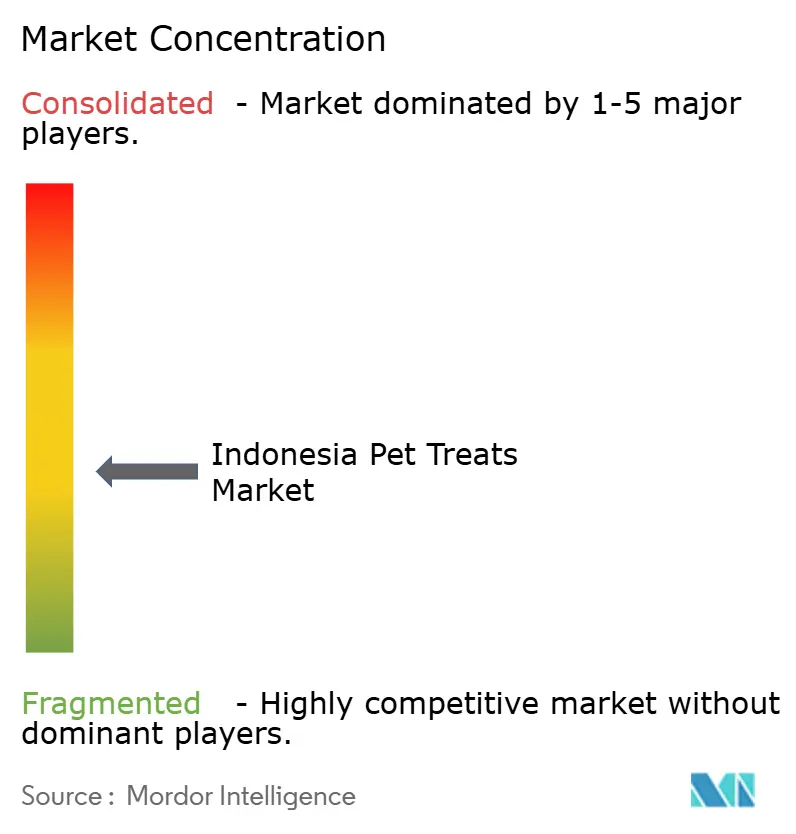
The Indonesia pet treats market remained moderately fragmented in 2025, with the top five players accounting for a major share. Large multinational brands continue to hold strong positions, but sufficient room exists for local companies to expand. Mars, Incorporated operates through its Whiskas, Pedigree, and Temptations brands, supported by a broad distribution network spanning modern retail, traditional trade, and e-commerce. Nestlé S.A., through Purina PetCare, built its position through veterinary recommendations and science-based product positioning, which supported stronger repeat purchases in premium treat categories.
PT Central Proteina Prima Tbk (CP Prima) competed through halal certification, cost-efficient local sourcing, and established trade relationships across Java and Sumatra. PT Japfa Comfeed Indonesia Tbk holds a competitive advantage through its integrated animal feed and protein supply chain, which supports lower-cost production in meat-based treat formats. Colgate-Palmolive Company, through Hill's Pet Nutrition, is more active in the premium veterinary-linked segment, where clinical recommendations help reduce consumer price sensitivity and support repeat purchases through specialty stores and clinics.
Social commerce is also lowering the barrier to entry, as digital-first brands use TikTok Shop and Shopee Live to reach customers nationwide without relying on physical shelf placement. These platforms allow smaller brands to run live demonstrations, offer time-limited promotions, and engage directly with pet owners, reducing the need for costly retail distribution agreements. This shift is widening the competitive field and helping smaller local brands gain share in functional and trial-driven treat categories. As consumer comfort with online pet product purchases continues to grow, social commerce is anticipated to remain a key channel for new entrants looking to establish brand recognition and build a loyal customer base without the overhead associated with traditional retail presence.
Indonesia Pet Treats Industry Leaders
-
Mars, Incorporated
-
Nestlé S.A. (Purina PetCare)
-
PT Central Proteina Prima Tbk (CP Prima)
-
PT Japfa Comfeed Indonesia Tbk
-
Colgate-Palmolive Company (Hill's Pet Nutrition)
- *Disclaimer: Major Players sorted in no particular order

Recent Industry Developments
- May 2026: CPPETINDO (PT Central Proteina Prima Tbk) launched Cleo Functional at Pet Fest 2026, introducing Indonesia's first domestically manufactured science-based functional cat nutrition line across 3 variants, skin and coat, indoor weight control, and urinary care. The launch directly positions a local manufacturer against imported premium brands in the market's highest-margin segment.
- November 2025: Indonesia's BPJPH issued Decree No. 221 of 2025, effective November 15, 2025, revising foreign halal certificate registration procedures under Government Regulation No. 42 of 2024. Imported food and beverage products, including pet treats, must comply with Indonesian halal certification requirements by October 17, 2026, or face administrative sanctions, including market withdrawal.
- April 2025: The integration of TikTok and Tokopedia has resulted in a social commerce platform that now accounts for 38% of Indonesia’s e-commerce gross merchandise value. The platform's live-streaming checkout model has emerged as a key channel for discovery and conversion, particularly for pet treat brands targeting Millennial and Gen Z consumers. This approach allows new brands to reach nationwide audiences without the need for traditional retail shelf placement.


Indonesia Pet Treats Market Report Scope
Pet treats are supplementary food products formulated for companion animals as rewards, snacks, or functional nutrition aids, and are designed to support pet training, bonding, dental care, and overall wellness. The Indonesia pet treats market is segmented by Sub Product (Crunchy Treats, Dental Treats, and More), by Pets (Cats, Dogs, Other Pets), and by Distribution Channel (Convenience Stores, Online Channel, and More). The market forecasts are provided in terms of Value (USD) and Volume (Metric Tons)
| Crunchy Treats |
| Dental Treats |
| Freeze-dried and Jerky Treats |
| Soft and Chewy Treats |
| Other Treats |
| Cats |
| Dogs |
| Other Pets |
| Convenience Stores |
| Online Channel |
| Specialty Stores |
| Supermarkets/Hypermarkets |
| Other Channels |
| By Sub Product | Crunchy Treats |
| Dental Treats | |
| Freeze-dried and Jerky Treats | |
| Soft and Chewy Treats | |
| Other Treats | |
| By Pets | Cats |
| Dogs | |
| Other Pets | |
| By Distribution Channel | Convenience Stores |
| Online Channel | |
| Specialty Stores | |
| Supermarkets/Hypermarkets | |
| Other Channels |


Key Questions Answered in the Report
Why do cats account for most pet treat sales in Indonesia?
Cats lead the sales because cat ownership is much more widespread than dog ownership and fits urban living patterns across the country.
What are the main factors supporting future demand for pet treats in Indonesia?
Growth is being supported by rising pet humanization, strong cat ownership, expanding e-commerce access, and increasing demand for functional and veterinary-linked products
What is limiting faster premium adoption across Indonesia?
Price sensitivity remains the main barrier, especially outside major cities, while limited formal retail reach and raw material volatility also slow broader premium conversion.
How large is the Indonesia pet treats market in 2026?
The Indonesia pet treats market is valued at USD 133.88 million in 2026 and is projected to reach USD 181.88 million by 2031, growing at a 6.55% CAGR over 2026-2031.
Page last updated on:





