
Immunity Boosting Food Products Market Size and Share
Market Overview
| Study Period | 2022 - 2032 |
|---|---|
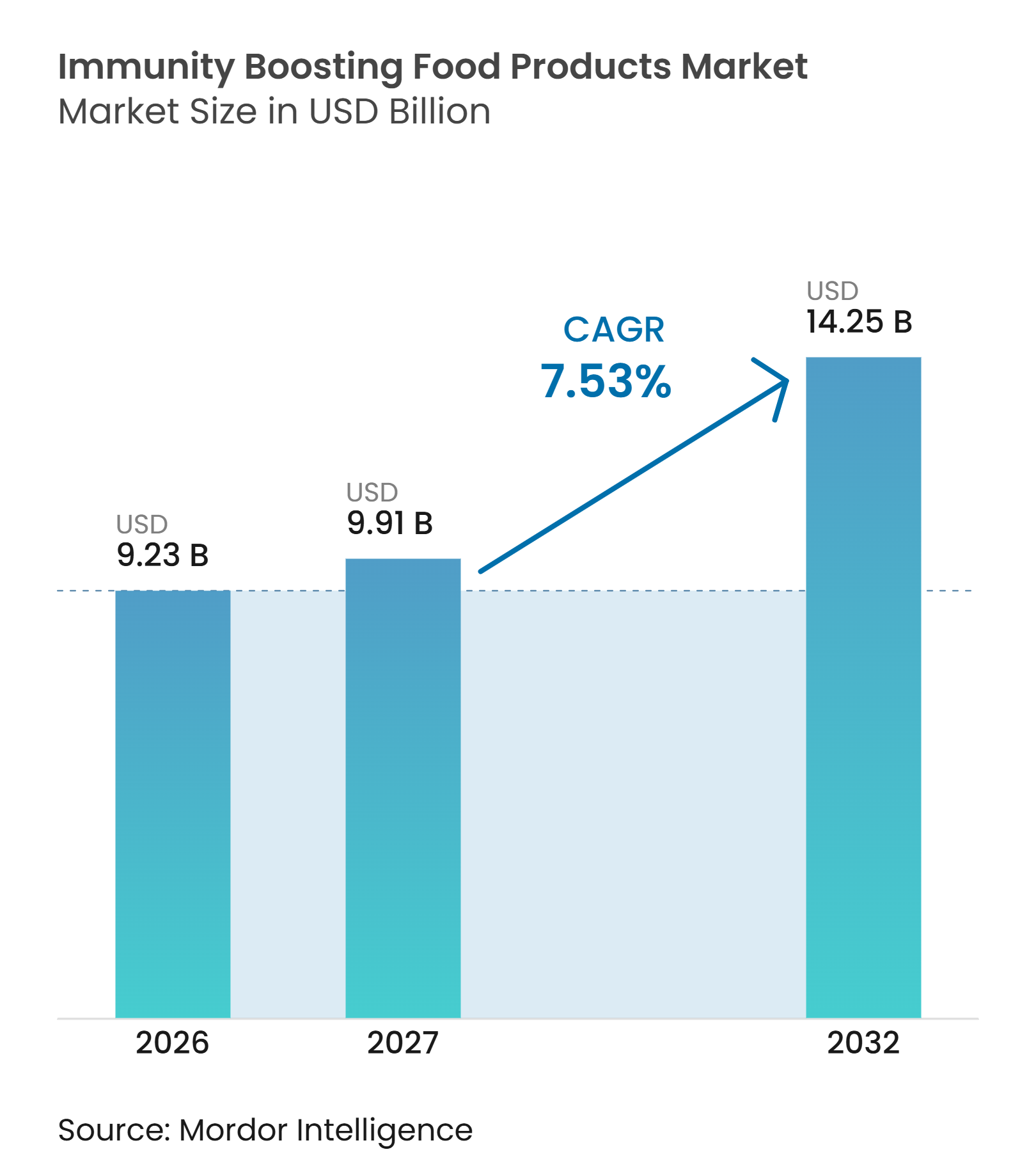
| Market Size (2027) | USD 9.91 Billion |
| Market Size (2032) | USD 14.25 Billion |
| Growth Rate (2027 - 2032) | 7.53 % |
| Fastest Growing Market | Asia-Pacific |
| Largest Market | North America |
| Market Concentration | Medium |
Major Players *Disclaimer: Major Players sorted in no particular order Image © Mordor Intelligence. Reuse requires attribution under CC BY 4.0. | |
Immunity Boosting Food Products Market Analysis by Mordor Intelligence
The immunity boosting food products market size is expected to increase from USD 9.23 billion in 2026 to USD 9.91 billion in 2027 and reach USD 14.25 billion by 2032, growing at a CAGR of 7.53% over 2027-2032. The immunity boosting food products market is supported by a wider consumer focus on prevention and by recurring demand for foods that fit daily routines. Aging populations in North America, Europe, and Asia-Pacific reinforce demand for food and beverage formats that support everyday health across regular eating and drinking occasions. Competition is shifting toward formulations that combine scientific support with familiar formats and accessible retail placement. Growing interest in probiotics, prebiotics, postbiotics, vitamins, and functional ingredients is further encouraging product diversification across dairy, beverages, snacks, and nutritional foods. The immunity boosting food products market also faces stricter scrutiny of health claims, which favors brands that can document product benefits and meet applicable food regulations clearly and consistently.
Key Report Takeaways
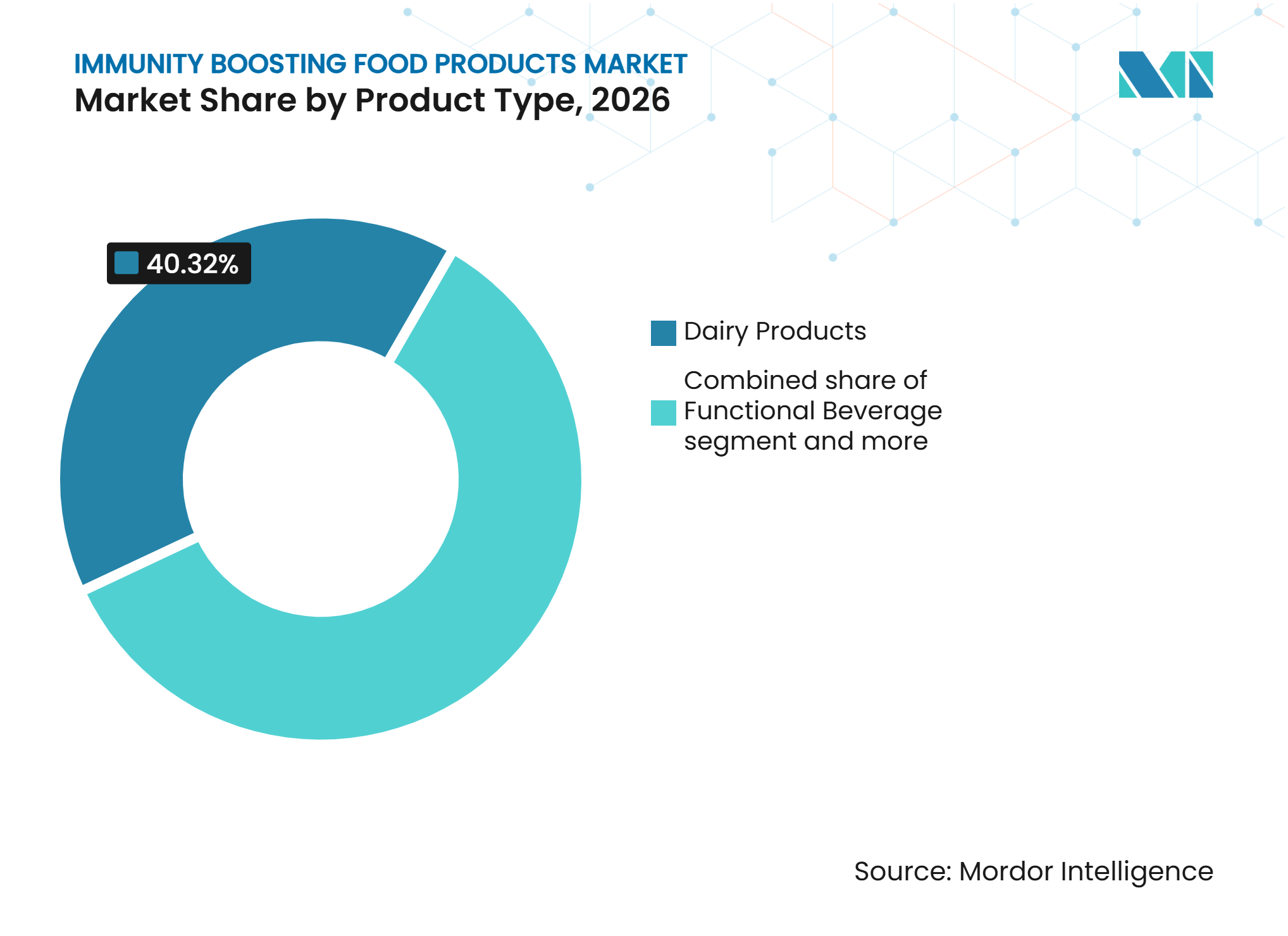
- By product type, dairy products held 40.32% of the immunity boosting food products market share in 2026, while functional beverages are forecasted to grow at an 8.50% CAGR through 2032.
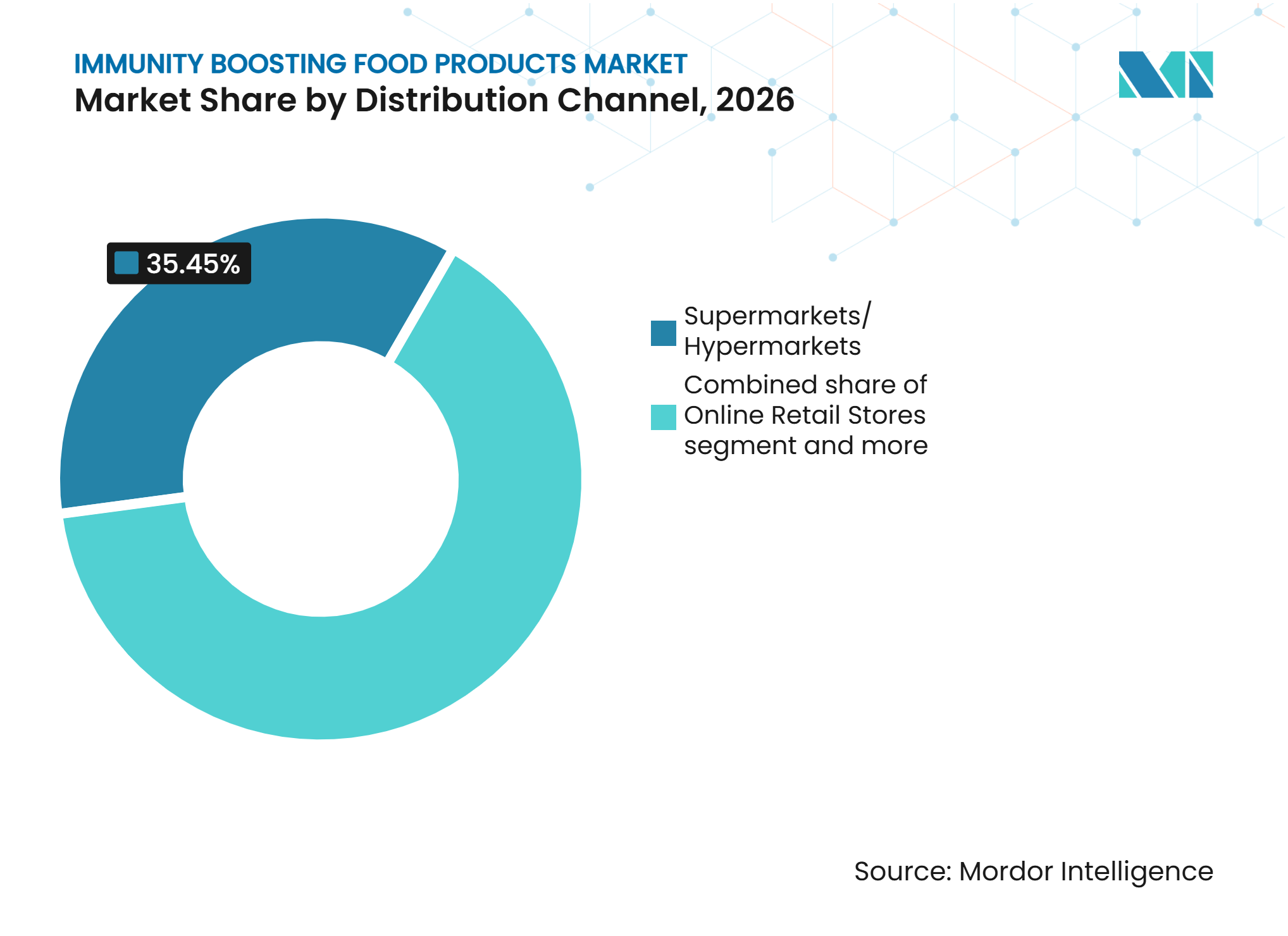
- By distribution channel, supermarkets/hypermarkets accounted for 35.45% of the immunity boosting food products market share in 2026, while online retail stores are projected to expand at a 9.32% CAGR through 2032.
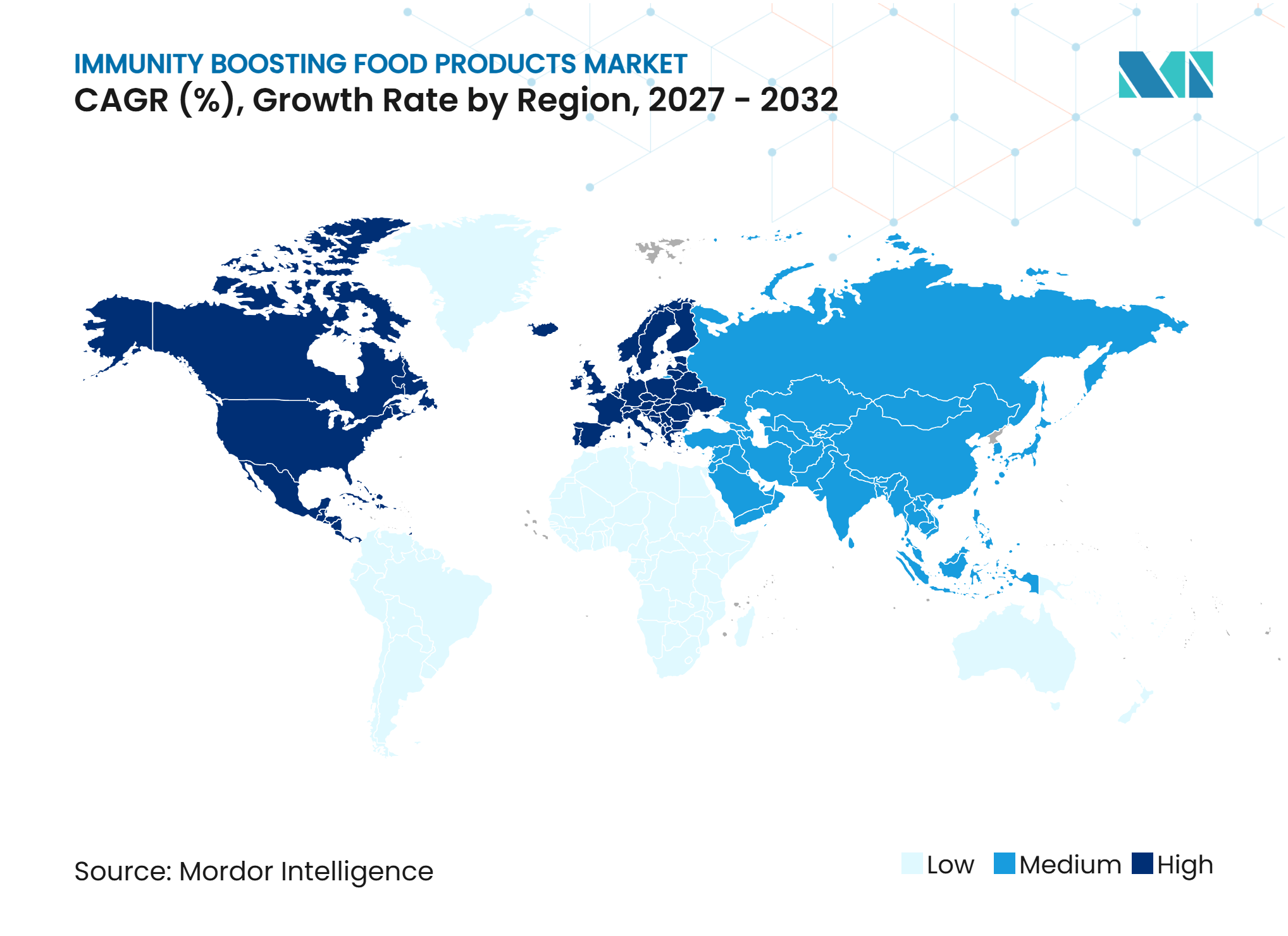
- By geography, North America held 39.57% of the market in 2026, while Asia-Pacific is forecasted to grow at an 8.54% CAGR through 2032.
Note: Market numbers in this report are based on Mordor Intelligence's proprietary estimation framework, which combines nine months of actuals with Q4 projections for base year 2026.
Market Trends and Insights
Drivers Impact Analysis of Immunity Boosting Food Products Market*
| Driver | (~) % Impact on CAGR Forecast | Geographic Relevance | Impact Timeline |
|---|---|---|---|
| Rising focus on preventive health and immune health | +2.1% | Global | Long term (≥ 4 years) |
| Demand for functional and fortified foods | +1.5% | Global, with Asia-Pacific and North America as primary demand centers | Medium term (2-4 years) |
| Demand for convenient nutritional solutions | +0.8% | North America, Western Europe, and urban Asia-Pacific | Medium term (2-4 years) |
| Immune ingredients in everyday foods | +0.7% | Global, with early adoption in Japan, South Korea, and the United States | Long term (≥ 4 years) |
| Innovation in plant-based and botanical functional foods | +0.5% | Europe and North America, with spillover to Middle East and Africa and South America | Medium term (2-4 years) |
| Influence of social media and wellness influencers | +0.4% | Global, concentrated in North America, Europe, and Asia-Pacific | Short term (≤ 2 years) |
| Source: Mordor Intelligence | |||
Rising Consumer Focus on Preventive Healthcare and Immune Health
Preventive health has become a more regular purchase consideration for consumers, and the immunity boosting food products market benefits when immune support is built into familiar food choices. European consumers are increasingly incorporating preventive health products into their regular purchasing habits rather than limiting purchases to occasional needs. This shift extends demand beyond seasonal illness periods and supports repeat purchase across a broader range of households. Food formats can reach consumers who may not seek a dedicated supplement but still want products linked to daily resilience. The category therefore has room to grow through routine breakfast, snack, dairy, and beverage occasions. According to IFIC's 2026 Food & Health Survey, 24% of United States consumers seek immune health benefits from foods, beverages, and nutrients, highlighting continued demand for immunity-focused functional food products [1]. However, brands still need to support their claims carefully as regulators require evidence for many health-related statements.
Increasing Demand for Functional and Fortified Food Products
Functional and fortified foods are becoming part of baseline product expectations in several established food categories. A 2025 study found that 73% of grain products purchased in the United States were fortified, while vitamin C fortification appeared in 44% of ready-to-eat cereals [2]. This established use of fortification gives manufacturers a familiar route for adding immune-related benefits to everyday products. The immunity boosting food products market can therefore gain from formulations that pair standard nutrition with more targeted functional ingredients. In South Korea, the Ministry of Food and Drug Safety recognizes approved functional ingredients and provides an established framework for products seeking health functionality. Companies that can meet those requirements may be better placed to build consumer confidence and secure online distribution. Growing consumer familiarity with fortified staples also allows manufacturers to introduce immunity-focused formulations without requiring major changes to established consumption habits.
Increasing Innovation in Plant-Based and Botanical Functional Foods
Plant-based and botanical product development is expanding the immunity boosting food products market beyond dairy-led formats. Plant extracts can be used in snacks, infusions, and beverages when manufacturers can preserve their relevant compounds through processing. Microwave-assisted, ultrasound-assisted, and enzyme-assisted extraction techniques improve the yield and stability of bioactive compounds derived from plant extracts. These methods help make botanical ingredients more practical for food applications that need a consistent dose and shelf life. Traditional ingredients such as ginseng, turmeric, and mushrooms can also be adapted into products with clearer labeling and familiar food formats. Growing interest in clean-label and plant-derived ingredients is further encouraging manufacturers to explore botanical blends as alternatives to conventional synthetic additives in functional food formulations. Repeat purchase will depend on whether brands pair botanical positioning with credible substantiation rather than relying on broad wellness language.
Incorporation of Immune-Supporting Ingredients into Everyday Food Products
Adding immune-supporting ingredients to common food formats can expand demand beyond consumers who actively shop for supplements. Postbiotics are particularly relevant because some are more stable during food processing than live cultures. Encapsulation using protein-polysaccharide complexes helps balance shelf-life requirements with the bioavailability of polyphenols in food products. Advances in microencapsulation and controlled-release technologies are further improving the stability of sensitive bioactive compounds, enabling their incorporation into a wider range of processed food and beverage applications. This supports the use of functional compounds in ambient products such as cereals, bakery products, and ready-to-drink beverages. Clinical research involving Lacticaseibacillus paracasei strain Shirota also provides an example of the type of human evidence that can support a food-based immune position. The immunity boosting food products market may benefit as more ingredients can retain function after standard manufacturing steps.
Restraints Impact Analysis of Immunity Boosting Food Products Market*
| Restraint | (~) % Impact on CAGR Forecast | Geographic Relevance | Impact Timeline |
|---|---|---|---|
| Requirements for health and immunity claims | -1.1% | Global, most acute in the Europe, United States, Japan, and South Korea | Long term (≥ 4 years) |
| Product development and ingredient costs | -0.9% | Global, with higher pressure in South America and Middle East and Africa | Medium term (2-4 years) |
| Consumer skepticism of immunity claims | -0.7% | North America and Europe, emerging in Asia-Pacific | Medium term (2-4 years) |
| Functional ingredient stability challenges | -0.6% | Global, most acute for ambient-shelf formats | Medium term (2-4 years) |
| Source: Mordor Intelligence | |||
Stringent Regulatory Requirements for Health and Immunity Claims
Regulatory compliance is a central constraint for products that make immunity-related claims. The United States Food and Drug Administration finalized its updated definition for the voluntary “healthy” nutrient content claim, with compliance beginning in 2028. The rule links the claim to food-group requirements and limits for saturated fat, sodium, and added sugars. This can require manufacturers to manage nutrition criteria separately from the evidence supporting an immune-related ingredient. In Europe, Regulation (EC) No 1924/2006 requires authorization for food health claims, which can lengthen development timelines. Differences in permitted health claims and ingredient approval requirements across markets also increase the need for region-specific product formulations and labeling strategies. The immunity boosting food products market therefore favors companies that can manage evidence, formulation, and labeling requirements across several jurisdictions.
High Product Development and Ingredient Costs
Science-backed products require substantial investment to achieve commercial scale, with clinical intervention studies potentially costing USD 500,000-2 million, creating a significant financial burden for manufacturers in mainstream food categories. Ingredient stability creates another cost pressure when bioactive compounds need protection from heat, oxygen, or digestive conditions. Functional ingredients often face significant challenges in translating scientific potential into commercially viable food applications. Encapsulation and related delivery systems can add manufacturing cost even when they improve product performance. Smaller manufacturers may also face challenges in accessing clinical validation partners and specialized processing infrastructure, limiting their ability to compete with established nutrition companies. Price sensitivity in Latin America and Middle East and Africa can lengthen the return period for premium formulations in the immunity boosting food products market.
*Our forecasts treat driver/restraint impacts as directional, not additive. The impact forecasts reflect baseline growth, mix effects, and variable interactions.
Immunity Boosting Food Products Market Segment Analysis
By Product Type:
Dairy Provides Scale While Beverages Lead GrowthDairy products held 40.32% of global category revenue in 2026. Their position reflects consumer familiarity, established cold-chain networks, and the use of fermented formats in everyday diets. Dairy products also offer a practical route for adding probiotics and postbiotics to products consumers already recognize. Yakult has continued to extend its portfolio with immune-function positioning linked to its proprietary L. casei Shirota strain. Its Yakult 400W Meneki Otsuu renewal added an immune function maintenance claim, strengthening the connection between gut health and immunity within an existing dairy format. Tea and coffee remain relevant because their routine use can lower the consumer education needed for botanical and functional additions.
Functional beverages are forecast to grow at an 8.50% CAGR through 2032, the strongest rate among product types. The immunity boosting food products market size for functional beverages is supported by convenient consumption, portable packaging, and the potential for ambient distribution. Heat-killed postbiotics may be useful in this category because they can retain functionality during processing that would challenge live-culture products. Everyday tea and beverage products can also incorporate ingredients such as ginger and other botanicals without moving far from established consumption habits. Fortified snacks, confectionery, and condiments remain earlier-stage product areas. Their progress depends on formulation technologies that preserve active ingredients while meeting taste, price, and shelf-life expectations.



By Distribution Channel:
Physical Grocery Retains Reach While Online Retail Gains SpeedSupermarkets/Hypermarkets accounted for 35.45% of global category revenue in 2026. They remain important because they serve routine grocery purchases and expose functional products to shoppers who may not search for them directly. Shelf placement and product visibility can help build familiarity and support regular replenishment. Convenience stores have a related role in high-density urban markets, especially for small dairy shots and portable drinks. Pharmacies and direct-to-consumer channels can reach more health-motivated consumers who seek specialized products. A multi-channel strategy remains important because the category includes both routine food shoppers and consumers seeking specific functionality.
Online retail stores are projected to grow at a 9.32% CAGR through 2032. This channel suits the immunity boosting food products market because it allows product education, repeat ordering, and subscription models. Digital channels can also give manufacturers space to explain ingredients, usage, and compliant product information in greater detail. South Korea provides a relevant setting for this approach because its functional food framework supports products with recognized health functionality. However, online growth does not remove the need for clear labeling and credible claims. Brands that combine transparent evidence with practical replenishment options can use digital channels to complement grocery distribution.

Geography Analysis
North America held 39.57% of the global category in 2026, benefiting from established consumer familiarity with functional nutrition and a developed food retail system. Immune support is an important food purchase consideration in the United States, which supports interest in probiotic, plant-based, and dairy-based formats. The United States Food and Drug Administration (FDA)’s updated “healthy” claim framework is influencing how manufacturers manage saturated fat, sodium, and added sugar while pursuing immunity-related positioning. This regulatory influence increases the value of formulations that can meet nutrition expectations and communicate their role clearly.
Asia-Pacific is forecast to grow at an 8.54% CAGR through 2032, making it the fastest-growing geography. Japan’s Foods with Function Claims framework provides a route for food-based functionality claims, while South Korea introduced its Customized Health Functional Food System in January 2025 [3]. These systems support product development that links food formats with documented functional ingredients. The immunity boosting food products market size in the region is also supported by strong familiarity with probiotics, traditional botanicals, and digital purchasing channels.
Europe remains an important volume area, with Germany, France, and the United Kingdom supporting demand for products with credible natural and clinically supported ingredients. Regulation (EC) No 1924/2006 remains a key compliance factor for health claims across the European Union. South America offers scope for functional nutrition investment and wider access to products through modern retail and digital channels. In Middle East and Africa, local familiarity with dates, pomegranates, and herbs can inform product development, while urbanization supports demand for convenient food and beverage formats. These regions require formulations that reflect local tastes, pricing conditions, and the strength of available retail infrastructure.
Competitive Landscape
Market Concentration
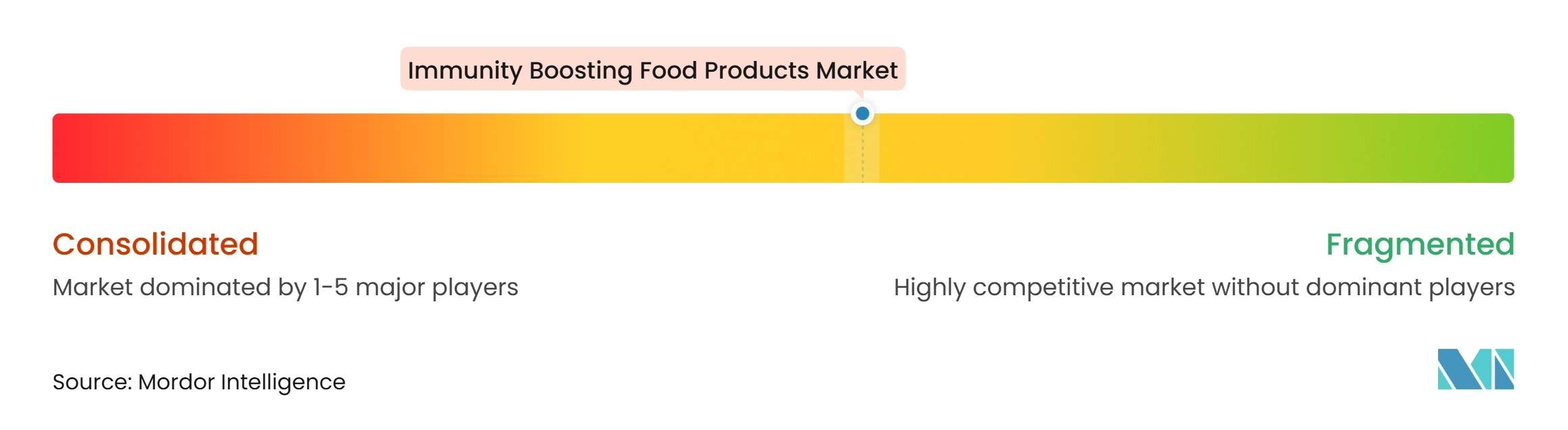
The immunity boosting food products market has a moderate concentration profile, with global food companies, specialized functional brands, and ingredient suppliers competing across multiple formats. Danone and Nestlé leverage established nutrition portfolios and broad distribution networks, while Yakult differentiates through its proprietary Shirota strain and supporting clinical evidence. Its 2026 Yakult 400W renewal, incorporating immune function maintenance claims, reinforces its gut and immunity positioning.
Kirin has built its functional food strategy around LC-Plasma, extending postbiotic applications across familiar beverage formats. Ingredient stability and integration into everyday consumption occasions support this approach, while licensing and partnerships enable wider market access. Digital-first regional brands compete through transparent ingredient communication and e-commerce channels. Personalized nutrition, children's products, and senior-focused dairy remain emerging opportunities, with competitive differentiation increasingly dependent on scientific evidence and compliant health claims.
Emerging ingredient supply chains may reshape competitive dynamics, with precision fermentation potentially expanding the availability of specialized ingredients such as lactoferrin. This creates partnership opportunities while increasing the importance of sourcing capabilities and intellectual property. Scale, formulation science, claim substantiation, and distribution execution will remain key competitive factors, while regional brands can differentiate through culturally relevant ingredients and familiar product formats.
Immunity Boosting Food Products Industry Leaders
-
Danone SA
-
Yakult Honsha Company, Limited
-
Suja Life, Inc.
-
The Hain Celestial Group, Inc.
-
Dabur Limited
- *Disclaimer: Major Players sorted in no particular order
Immunity Boosting Food Products Market Companies Covered in this Report
- Danone SA
- Yakult Honsha Company, Limited
- Kirin Holdings Company, Limited
- Morinaga & Co.
- Suja Life, Inc.
- East West Tea Company, LLC
- The Hain Celestial Group, Inc.
- VitaCup Inc.
- Dabur Limited
- ITC Limited
- Gujarat Co-operative Milk Marketing Federation Ltd.
- Nestle SA
- The Collective
- NurturMe
- Bonn Group of Industries
- Thai Union Group PCL
- Bonafarm Group
- Kellanova
- Tata Consumer Products
- Bio&Me Limited
Recent Industry Developments in Immunity Boosting Food Products Market
- February 2026: Kung Fu Tea partnered with ADVANCED to launch HYDRATION+ Immunity, a functional beverage mix range in three tea-inspired flavors. The zero-sugar, caffeine-free blends claim combining electrolytes, vitamins C and D, and zinc to support hydration and immune health.
- January 2026: Kirin Beverage launched two new iMUSE Fruit Refresh beverages (Grapefruit Mix and Apple Mix) in Japan, claiming to contain 100 billion Plasma Lactic Acid Bacteria to support immune function. The products also mention providing daily recommended amounts of vitamins B6 and C (Grapefruit Mix) or vitamin C and iron (Apple Mix), combining immunity support with refreshing fruit flavors and everyday hydration.
- July 2025: GoodBelly launched reformulated 2 oz Wellness Shots across Whole Foods Market stores in the United States, available in Mango and Strawberry Banana flavors. Each shot claims combining 3g of prebiotic fiber, the clinically studied DE111® probiotic strain, and essential vitamins to support gut and immune health.
Global Immunity Boosting Food Products Market Report Scope
Segmentation Overview
| Dairy Products |
| Tea and Coffee |
| Functional Beverages |
| Other Product Types |
| Supermarkets/Hypermarkets |
| Convenience Stores |
| Online Retail Stores |
| Other Distribution Channels |
| North America | United States |
| Canada | |
| Mexico | |
| Rest of North America | |
| Europe | Germany |
| United Kingdom | |
| Italy | |
| France | |
| Spain | |
| Netherlands | |
| Rest of Europe | |
| Asia-Pacific | China |
| India | |
| Japan | |
| Australia | |
| South Korea | |
| Rest of Asia-Pacific | |
| South America | Brazil |
| Argentina | |
| Rest of South America | |
| Middle East and Africa | South Africa |
| Saudi Arabia | |
| United Arab Emirates | |
| Rest of Middle East and Africa |
| By Product Type | Dairy Products | |
| Tea and Coffee | ||
| Functional Beverages | ||
| Other Product Types | ||
| By Distribution Channel | Supermarkets/Hypermarkets | |
| Convenience Stores | ||
| Online Retail Stores | ||
| Other Distribution Channels | ||
| By Geography | North America | United States |
| Canada | ||
| Mexico | ||
| Rest of North America | ||
| Europe | Germany | |
| United Kingdom | ||
| Italy | ||
| France | ||
| Spain | ||
| Netherlands | ||
| Rest of Europe | ||
| Asia-Pacific | China | |
| India | ||
| Japan | ||
| Australia | ||
| South Korea | ||
| Rest of Asia-Pacific | ||
| South America | Brazil | |
| Argentina | ||
| Rest of South America | ||
| Middle East and Africa | South Africa | |
| Saudi Arabia | ||
| United Arab Emirates | ||
| Rest of Middle East and Africa | ||
Key Questions Answered in the Report
What is the forecast value of the immunity boosting food products market by 2032?
The immunity boosting food products market is projected to reach USD 14.25 billion by 2032, increasing from USD 9.91 billion in 2027 at a 7.53% CAGR.
Which product category has the largest share?
Dairy products led with a 40.32% share in 2026, driven by familiar fermented formats, regular consumption, established distribution, and probiotic and postbiotic integration.
Which product category is growing fastest?
Functional beverages are forecast to expand at an 8.50% CAGR through 2032. Portable formats, everyday beverage occasions, and the prospect of ambient distribution support this rate.
Which sales channel is expected to grow fastest?
Online retail is projected to grow at 9.32% CAGR through 2032, driven by product information, convenient reordering, subscriptions, and targeted consumer engagement.