
Ice Cream Parlor Market Size and Share
Market Overview
| Study Period | 2021 - 2031 |
|---|---|
| Market Size (2026) | USD 15.03 Billion |
| Market Size (2031) | USD 19.54 Billion |
| Growth Rate (2026 - 2031) | 5.39 % |
| Fastest Growing Market | Europe |
| Largest Market | North America |
| Market Concentration | Low |
Major Players
*Disclaimer: Major Players sorted in no particular order Image © Mordor Intelligence. Reuse requires attribution under CC BY 4.0. |
|
Ice Cream Parlor Market Analysis by Mordor Intelligence
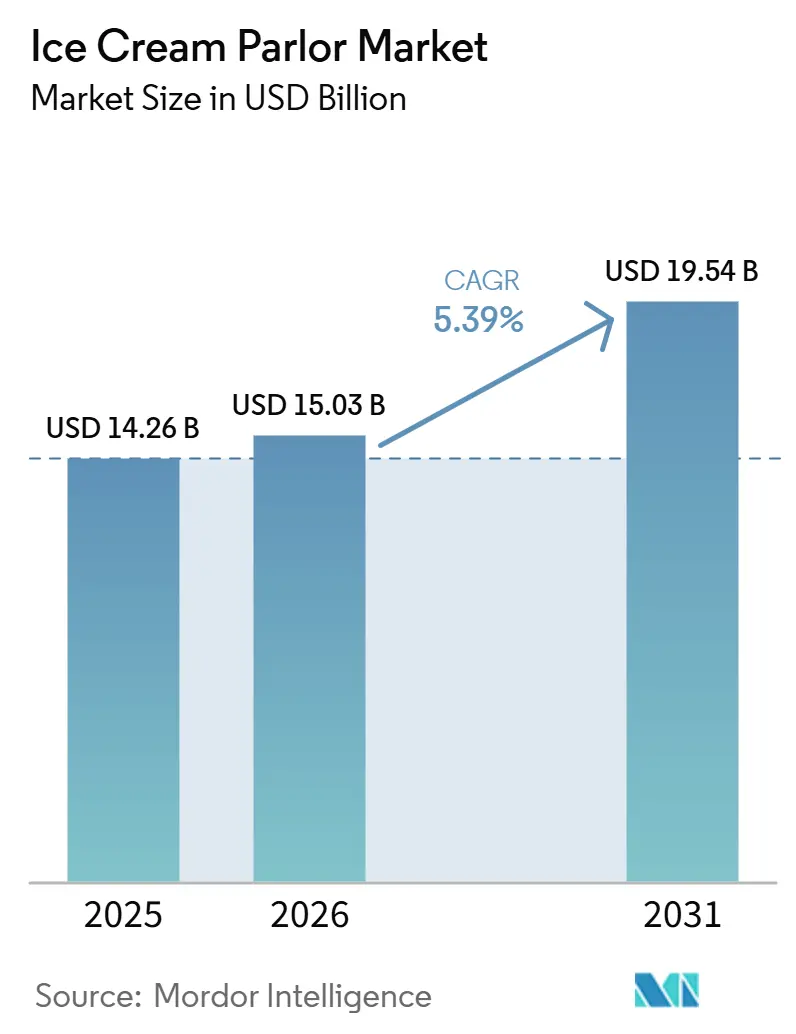
The ice cream parlor market size was valued at USD 14.26 billion in 2025 and is estimated to grow from USD 15.03 billion in 2026 to reach USD 19.54 billion by 2031, at a CAGR of 5.39% during the forecast period (2026-2031). The ice cream parlor market is supported by demand for premium desserts, social dining occasions, and formats that offer more than a packaged product purchase. Many operators are building stores around the visit itself, using seating, product presentation, and seasonal menus to support higher average checks. This approach helps separate parlor demand from packaged ice cream sales, especially when consumers seek an occasional food experience rather than a routine grocery purchase. Franchise networks are expanding their reach through standardized supply systems, while local parlors compete through regional flavors and ingredient stories. Input costs and seasonal staffing needs remain important limits on profitability, particularly for independent businesses.
Key Report Takeaways
- By product, traditional ice cream held 58.81% of the ice cream parlor market share in 2025, while artisanal ice cream is forecast to grow at a 7.83% CAGR through 2031.
- By product format, hard ice cream accounted for 61.31% of the ice cream parlor market share in 2025, while gelato is forecast to expand at a 7.56% CAGR through 2031.
- By service modality, dine-in held 67.23% of revenue in 2025, while takeout is forecast to grow at a 7.95% CAGR through 2031.
- By store format, traditional parlors represented 71.33% of revenue in 2025, while kiosks and mobile parlors are forecast to expand at a 7.71% CAGR through 2031.
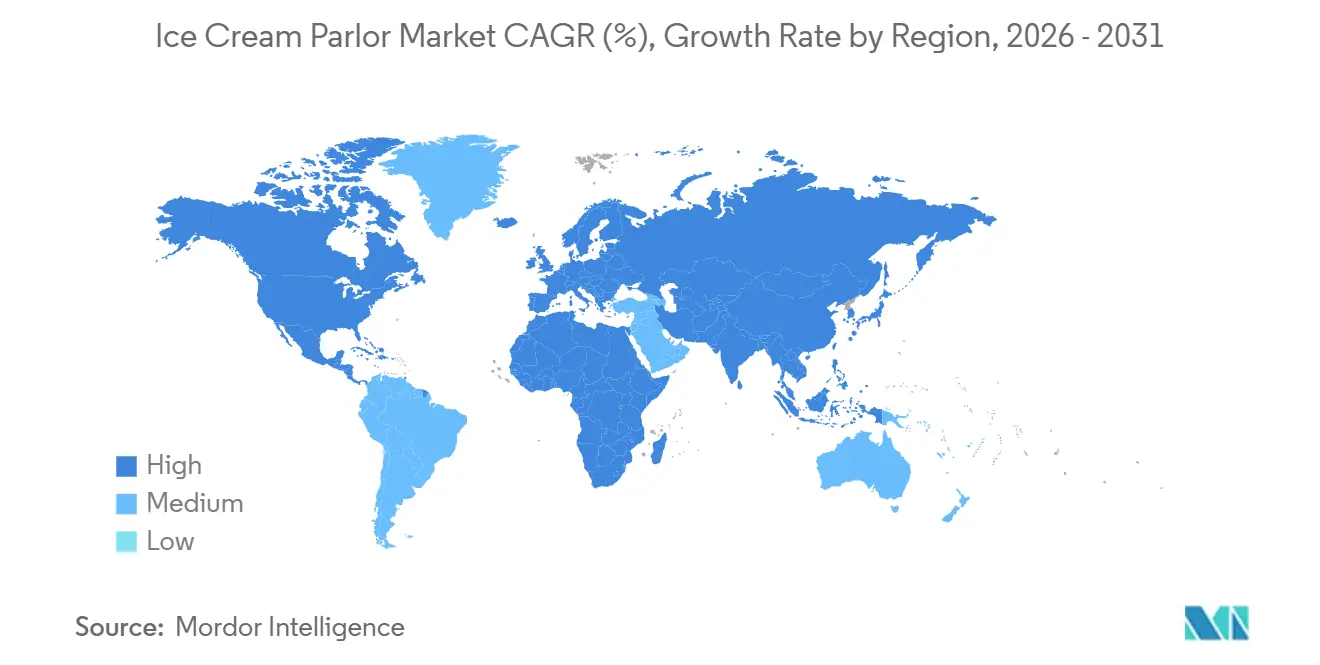
- By geography, North America held 21.68% of revenue in 2025, while Europe is forecast to grow at a 7.08% CAGR through 2031.
Note: Market size and forecast figures in this report are generated using Mordor Intelligence’s proprietary estimation framework, updated with the latest available data and insights as of January 2026.
Market Trends and Insights
Drivers Impact Analysis of Ice Cream Parlor Market*
| Driver | (~) % Impact on CAGR Forecast | Geographic Relevance | Impact Timeline |
|---|---|---|---|
| Premiumization and artisanal ice cream culture | +1.3% | Global; concentrated in North America, Europe, and urban Asia-Pacific | Long term (≥ 4 years) |
| Franchise expansion in emerging urban markets | +1.0% | Asia-Pacific, South America, Middle East and Africa | Medium term (2–4 years) |
| Integration with food delivery and online ordering platforms | +0.8% | Global; highest penetration in North America, India, South Korea | Short term (≤ 2 years) |
| Seasonal flavor innovation and co-branded launches | +0.5% | North America, Europe, East Asia | Medium term (2–4 years) |
| Strong tourism and hospitality sector growth | +0.7% | Europe, Middle East and Africa, Southeast Asia | Medium term (2–4 years) |
| Cold-chain and refrigeration infrastructure improvements by parlor operators | +0.4% | South and Southeast Asia, Africa | Long term (≥ 4 years) |
| Source: Mordor Intelligence | |||
Premiumization and artisanal ice cream culture
The ice cream parlor market benefits when consumers accept higher prices for small-batch products and distinct flavors. Parlors use ingredient sourcing, simpler product labels, and seasonal ranges to support this positioning. In 2025, Vadilal Industries introduced Pista Kunafa and Café Mocha flavors in India through a campaign aimed at younger consumers. The launch demonstrated how premium frozen desserts are being aligned with café-style flavor preferences rather than conventional mass-market choices. This improves unit value without requiring increased visit frequency from every customer. It also makes product credibility important, as a higher price point is difficult to sustain when the formulation or in-store experience does not support it.
Franchise expansion in emerging urban markets
The ice cream parlor market is expanding through franchise systems that replicate supply chains, training, and brand standards. Yoajung opened more than 300 stores in South Korea during 2025 and had more than 680 locations before expanding to Australia, Hong Kong, and China. The company targeted 100 outlets in China by the end of 2026 through a master franchise approach. Carvel also entered India in 2025 through Unify Foodworks, with plans for 100 stores over five years. These entries raise consumer expectations for product consistency and cold storage among local consumers. As branded competitors make familiar formats more widely available, independent parlors must improve reliability to remain competitive.
Strong tourism and hospitality sector growth
The continued growth of the tourism and hospitality industry is creating additional consumption opportunities for ice cream parlors by increasing footfall across shopping districts, tourist attractions, entertainment venues, airports, and hospitality establishments. Ice cream is widely regarded as an impulse purchase and experiential dessert, making it a popular choice among leisure travelers and families during vacations and recreational outings. According to the World Travel & Tourism Council (WTTC), following 2.1% growth in 2025, domestic leisure travel spending is projected to rise by a further 0.9% to USD 909 billion in 2026, with stronger growth expected from 2027 onwards[1]Source: U.S. Travel Association, "U.S. Travel Forecast",ustravel.org. Rising leisure travel is expected to translate into higher visitation to high-footfall commercial locations where branded ice cream parlors are concentrated, increasing customer traffic and purchase frequency. As tourism activity expands, ice cream parlor operators are also expected to benefit from greater demand for premium dessert experiences, seasonal offerings, and destination-based dining, reinforcing long-term market growth.
Seasonal flavor innovation and co-branded launches
Limited editions give consumers reasons to return to ice cream parlors between routine visits. In February 2026, Ben & Jerry's added 3 Sundaes flavors, expanding the lineup to 7 flavors. The new additions included Straw-Bae Shortcake, PB Blondie Bestie, and Mocha Mood Pie. In March 2026, the company introduced the limited-batch Honey Graham Latte flavor at scoop shops nationwide. These launches reflect a broader strategy of using seasonal and time-limited offerings to maintain consumer interest and differentiate from retail frozen dessert options. Such launches can drive traffic to existing stores and give operators a reason to promote higher-value products. By rotating flavors on a scheduled basis, parlors can create a sense of urgency that encourages repeat visits and trial purchases. However, they also require accurate ingredient declarations and disciplined product execution when menus change frequently.
Restraints Impact Analysis of Ice Cream Parlor Market*
| Restraint | (~) % Impact on CAGR Forecast | Geographic Relevance | Impact Timeline |
|---|---|---|---|
| Dairy, sugar, vanilla and cacao cost volatility | -1.0% | Global; most acute in North America and Europe | Short term (≤ 2 years) |
| Seasonal labor shortages and wage pressure | -0.6% | North America, Europe, Australia | Short term (≤ 2 years) |
| Health concerns around sugar, fat and dietary restrictions | -0.5% | North America, Europe, urban Asia-Pacific | Medium term (2–4 years) |
| Intense competition from packaged ice cream brands | -0.8% | Global; most acute in North America and Asia-Pacific | Long term (≥ 4 years) |
| Source: Mordor Intelligence | |||
Dairy, sugar, vanilla and cacao cost volatility
Volatility in the prices of key raw materials, including dairy products, sugar, vanilla, and cocoa, continues to pressure profit margins for ice cream parlor operators, particularly those in the premium and artisanal segments. Fluctuations in the availability and pricing of these ingredients increase production costs and complicate menu pricing, especially for operators offering chocolate- and vanilla-based products, which account for a significant share of consumer demand. In July 2026, Nigeria reaffirmed its strategy to expand domestic cocoa processing and increase value addition within the cocoa industry, and imposed ban on cocoa exports to other countries, signaling potential shifts in global cocoa supply dynamics and pricing [2]Source: The Trade Union, "Implications of Nigeria’s Raw Cocoa Export Ban for Global Chocolate Market Players", thetradeunion.in. This is particularly relevant for the ice cream industry, as the International Dairy Foods Association (IDFA) reported that vanilla remained the most popular ice cream flavor in the United States in 2024, followed by chocolate and strawberry, making vanilla and cocoa among the industry's most essential ingredients. Sustained volatility in input costs may compress operating margins, require menu price adjustments, or prompt operators to reformulate products and optimize sourcing strategies.
Health concerns around sugar, fat and dietary restrictions
Growing consumer awareness of sugar intake and lifestyle-related diseases is influencing purchasing decisions in the ice cream industry, particularly for traditional, high-sugar products. Consumers are increasingly seeking lower-sugar, reduced-fat, and functional frozen desserts, prompting ice cream parlors to diversify their product portfolios. According to the International Diabetes Federation, approximately 16% of adults aged 20–79 in Turkey were living with diabetes in 2024, with countries such as Mexico, the United States, and Portugal also reporting high diabetes prevalence [3]Source: International Diabetes Federation, "IDF Diabetes Atlas 2025", diabetesatlas.org. As awareness of metabolic health grows globally, consumers may reduce indulgent dessert consumption or shift toward healthier alternatives. This trend is encouraging ice cream parlor operators to invest in sugar-free, low-calorie, vegan, and high-protein product offerings while balancing taste, innovation, and profitability.
*Our forecasts treat driver/restraint impacts as directional, not additive. The impact forecasts reflect baseline growth, mix effects, and variable interactions.
Ice Cream Parlor Market Segment Analysis
By Product:
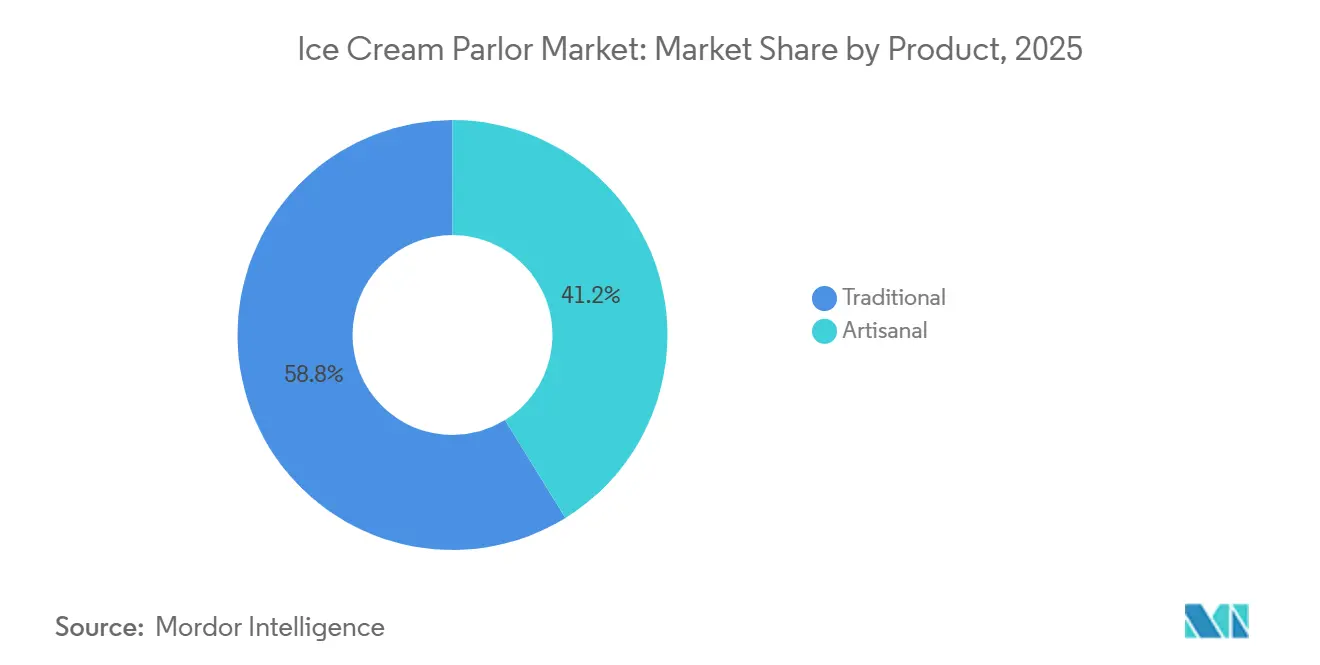
Traditional Formats Support Volume While Artisanal Products Build ValueTraditional ice cream held a 58.81% revenue share in 2025. Its broad appeal supports repeat purchases across family visits, tourist locations, and different income groups. Traditional products also align with established cold-chain systems and can be distributed through a wide range of outlets. Artisanal ice cream is forecast to grow at a 7.83% CAGR through 2031, which is above the overall ice cream parlor market CAGR. This higher growth rate is driven by operators using limited runs, local ingredients, and seasonal menus to support higher price points.
Demand for artisanal offerings is supported by customers seeking more distinct products and in-store experiences. This approach also allows producers to pursue simpler ingredient declarations while maintaining texture. Traditional formats continue to protect volume and everyday cash flow, while artisanal ranges improve value per order and provide room to test new flavors. Operators serving both formats can meet everyday demand while offering a premium option within the same location.


By Product Format:
Hard Ice Cream Retains Scale While Gelato Grows FasterHard ice cream accounted for a 61.31% revenue share in 2025. This dominant position reflects established scoop-shop operations, wide flavor availability, and compatibility with existing cold storage infrastructure. Hard ice cream also supports high service volumes at traditional locations, making it the preferred format for large-scale foodservice operators and established dessert chains. Its long-standing consumer familiarity and broad retail presence further reinforce its position across the market. Gelato is forecast to grow at a 7.56% CAGR through 2031, driven by its artisanal identity and lower-fat positioning, which appeal to consumers seeking a differentiated dessert experience. Growing interest in premium and authentic food products continues to support gelato's expansion, particularly in urban markets where specialty dessert concepts are gaining traction.
Soft serve remains well-suited to kiosk formats, offering quick service with relatively simple equipment. Its low operational complexity and consistent output make it a practical choice for high-footfall locations such as shopping centers, amusement parks, and quick-service restaurants. Frozen yogurt occupies a more mixed position, as consumers weigh health considerations against the preference for indulgent products. While the format benefited from earlier health-focused trends, sustaining consumer interest has become more challenging as competing better-for-you dessert options have expanded. Smaller European gelato operators may also face additional cost pressures as equipment investments increase in response to changing refrigerant requirements, which could affect the pace of new outlet openings in certain markets.
By Service Modality:
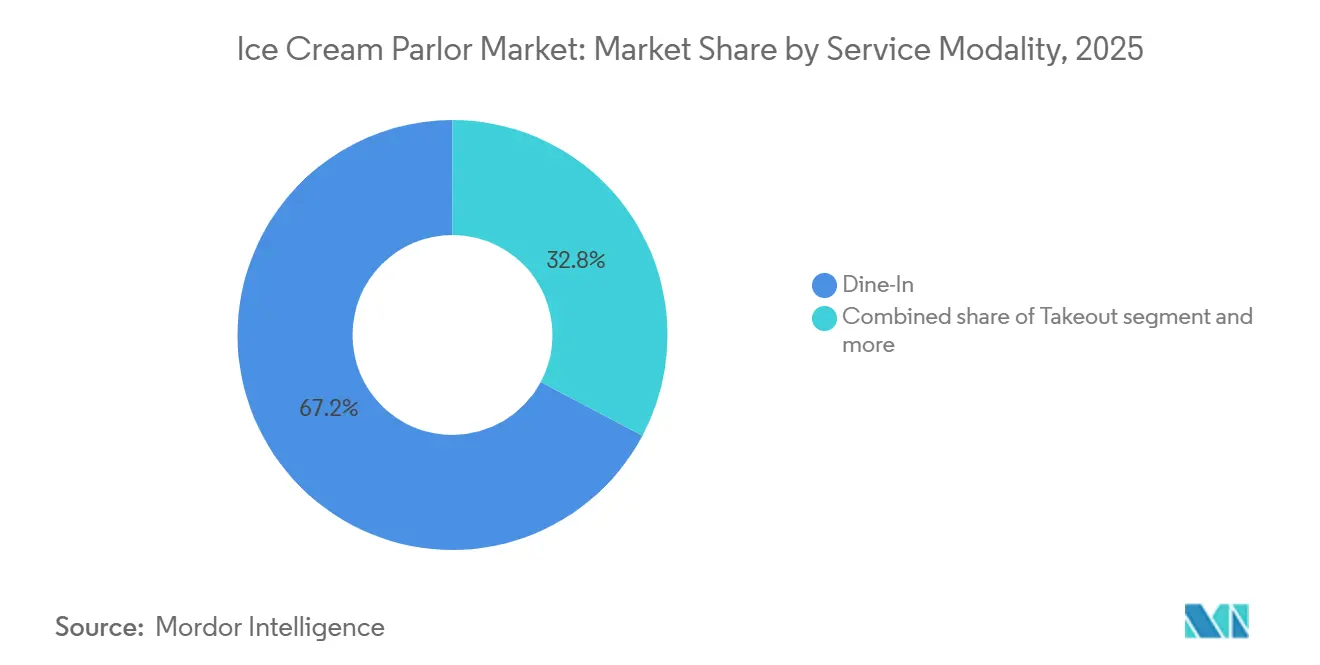
Dine-In Leads While Takeout Extends ReachDine-in accounted for 67.23% of service revenue in 2025. This share reflects the value of the social setting, visual presentation, and immediate consumption that a parlor provides. Many consumers choose a parlor because the visit itself is part of the experience, making the physical location a key driver of revenue. The growth of app-based ordering platforms has made it easier for consumers to access parlor menus, place orders, and schedule pickups, reducing friction in the purchase process. However, third-party delivery platforms, while improving chain visibility, present a margin concern due to commissions of 15-30%. Delivery-specific pricing that is visibly higher than in-store pricing may also frustrate customers and discourage repeat orders through these channels.
Takeout is forecast to grow at an 7.95% CAGR through 2031, supported by online ordering and wider acceptance of premium desserts consumed at home. The Magnum Ice Cream Company used DoorDash advertising in 2026 to position ice cream as an everyday snack, demonstrating how delivery platforms can be used as a marketing tool beyond simple order fulfillment. Parlors can use order data collected through these platforms to identify neighborhood preferences, track demand patterns, and inform future menu planning or location decisions. This data-driven approach allows operators to align their offerings more closely with local consumer behavior.

By Store Format:
Traditional Parlors Lead While Kiosks Improve FlexibilityTraditional parlors accounted for 71.33% of store-format revenue in 2025, supported by long-established locations in malls, high streets, and tourist areas. Seating capacity and larger menus further support the dine-in model. Smaller formats help operators manage high urban occupancy costs. Cold Stone Creamery and Wetzel's Pretzels planned 17 co-branded locations across 8 states in 2026. Kiosks and mobile parlors are forecast to grow at a 7.71% CAGR through 2031, driven by their ability to reach transit locations and event venues where full leases are less practical.
Co-branded arrangements distribute real estate costs between complementary brands and can extend demand across more dayparts. Other formats include hotel lobby locations, pop-up concessions, and event catering, which provide additional sales channels for operators with established brands. A mix of fixed and mobile units also allows companies to direct inventory and staff toward locations with the strongest local demand on any given day.
Geography Analysis
North America Ice Cream Parlor Market
North America held a 21.68% revenue share in 2025. The region is supported by mature franchise systems, high frozen dessert consumption, and established cold logistics infrastructure. International Dairy Queen announced in 2026 that it will open 20 restaurants in Puerto Rico through Caribbean Creamery LLC. Canada and Mexico remain secondary growth areas, with Mexico benefiting from urban expansion, resort demand, and warmer weather in coastal areas.
Europe Ice Cream Parlor Market
Europe is forecast to grow at a 7.08% CAGR through 2031, the fastest rate among the regions analyzed. The European ice cream parlor market benefits from a long artisanal gelato tradition and sustained tourism activity. The European artisanal ice cream sector recorded EUR 11 billion in turnover during 2024 across 65,000 points of sale. Refrigerant upgrades may place a greater burden on small independent parlors than on chains with centralized cold-chain systems.
APAC, South America and MEA Ice Cream Parlor Market
Asia-Pacific combines mature urban franchise activity with earlier-stage cold-chain development in India and Southeast Asia. The company is targeting 15% sales growth in India during 2026. South America, the Middle East, and Africa are supported by demand from Brazil's southeastern corridor, tourism, and hospitality expansion. Saudi Arabia, the United Arab Emirates, and Turkey are supporting premium formats through tourism and leisure investment. Cold-chain compliance is also encouraging smaller operators to work with certified logistics partners.

Competitive Landscape
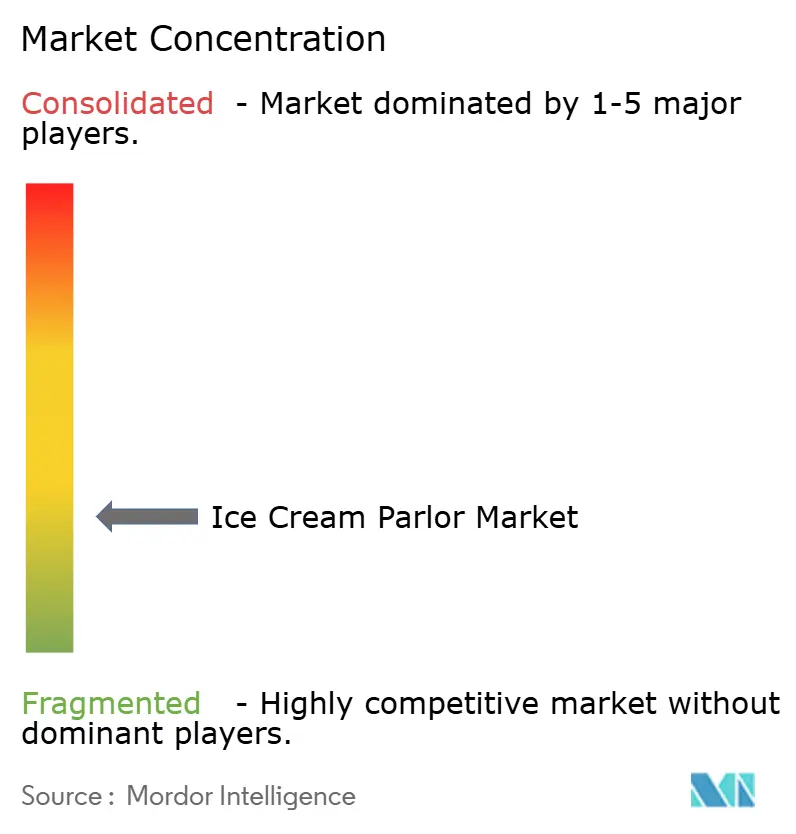
The ice cream parlor market is fragmented, comprising global franchise systems, regional chains, and independent operators. Baskin-Robbins, Dairy Queen, and Cold Stone Creamery compete on broad brand recognition and established supply arrangements, allowing them to maintain consistent product quality and pricing across locations. These chains also benefit from economies of scale in procurement and marketing, which smaller operators find difficult to match.
Amorino, Gelato Messina, and Grom rely on premium positioning and specialized menus, often emphasizing authentic recipes and high-quality ingredients to justify higher price points. Independent parlors can offer local ingredient sourcing and change their menus quickly to reflect seasonal availability or local preferences, though their smaller scale can make purchasing, staffing, and consistent storage more challenging. Despite these challenges, independent operators can build strong customer loyalty within their local communities by offering a more personalized experience.
The market accommodates both standardized brands and locally focused businesses, with each competing on different strengths. Companies differentiate through operational and format choices, including store layout, service style, and product range. Food hygiene and temperature-control practices can serve as visible components of premium positioning, and larger chains may find it easier to standardize these processes across multiple locations, while independent operators may need to invest more effort to demonstrate equivalent standards. As consumer preferences continue to evolve, operators across all segments are adjusting their offerings to remain competitive.
Ice Cream Parlor Industry Leaders
-
International Dairy Queen, Inc. (IDQ)
-
Baskin-Robbins (Unilever PLC)
-
Cold Stone Creamery (MTY Food Group)
-
Amorino
-
Häagen-Dazs (General Mills)
- *Disclaimer: Major Players sorted in no particular order
Ice Cream Parlor Market Companies Covered in this Report
- Baskin-Robbins (Unilever PLC)
- International Dairy Queen, Inc. (IDQ)
- Cold Stone Creamery (MTY Food Group)
- Ben & Jerry's Homemade, Inc.
- Häagen-Dazs (General Mills)
- Amorino
- Ghirardelli Chocolate Company
- Marble Slab Creamery
- Cream Stone
- Natural Ice Creams (Kamaths Ourtimes Ice Creams Pvt. Ltd.)
- Gelato Messina
- Grom
- Vadilal Industries Limited
- Creambell
- Jeni's Splendid Ice Creams
- Nestlé S.A.
- Unilever PLC
- General Mills, Inc.
- Lotte Corporation
- Ferrero International S.A.

Recent Industry Developments in Ice Cream Parlor Market
- July 2026: Ben & Jerry's launched "Razz Up!", a limited-batch ice cream flavor combining black raspberry ice cream, raspberry swirls, and crackling fudge chunks, alongside a nationwide voter engagement campaign in the United States. The initiative extends the brand's social mission by using product innovation and community-focused marketing to encourage civic participation ahead of the 2026 midterm elections.
- June 2026: International Dairy Queen (IDQ), through its subsidiary American Dairy Queen Corporation (ADQ), announced a franchise agreement to expand its presence in Puerto Rico by opening 20 DQ Grill & Chill restaurants by 2036. The first outlet is planned to open in San Juan in Q1 2027, with the remaining locations to be developed over the following years through a partnership with Caribbean Creamery LLC, an affiliate of Richport Restaurants LLC.
- May 2026: Cold Stone Creamery and Wetzel's Pretzels expanded their co-branding strategy by developing dual-concept locations that combine premium ice cream and fresh snack offerings under one roof. The partnership, operated under the Kahala Brands portfolio, plans to open at least 17 co-branded locations in 2026, with additional units in development across multiple U.S. states.


Global Ice Cream Parlor Market Report Scope
| Traditional |
| Artisanal |
| Hard Ice Cream |
| Soft Serve |
| Frozen Yogurt |
| Gelato |
| Other Frozen Desserts |
| Dine-In |
| Takeout |
| Delivery |
| Traditional Ice Cream Parlors |
| Kiosks and Mobile Ice Cream Parlors |
| Others |
| North America | United States |
| Canada | |
| Mexico | |
| Rest of North America | |
| Europe | United Kingdom |
| Germany | |
| France | |
| Italy | |
| Spain | |
| Russia | |
| Sweden | |
| Belgium | |
| Poland | |
| Netherlands | |
| Rest of Europe | |
| Asia-Pacific | China |
| Japan | |
| India | |
| Thailand | |
| Singapore | |
| Indonesia | |
| South Korea | |
| Australia | |
| New Zealand | |
| Rest of Asia-Pacific | |
| South America | Brazil |
| Argentina | |
| Colombia | |
| Chile | |
| Rest of South America | |
| Middle East and Africa | United Arab Emirates |
| South Africa | |
| Saudi Arabia | |
| Nigeria | |
| Egypt | |
| Morocco | |
| Turkey | |
| Rest of Middle East and Africa |
| By Product | Traditional | |
| Artisanal | ||
| By Product Format | Hard Ice Cream | |
| Soft Serve | ||
| Frozen Yogurt | ||
| Gelato | ||
| Other Frozen Desserts | ||
| By Service Modality | Dine-In | |
| Takeout | ||
| Delivery | ||
| By Store Format | Traditional Ice Cream Parlors | |
| Kiosks and Mobile Ice Cream Parlors | ||
| Others | ||
| Geography | North America | United States |
| Canada | ||
| Mexico | ||
| Rest of North America | ||
| Europe | United Kingdom | |
| Germany | ||
| France | ||
| Italy | ||
| Spain | ||
| Russia | ||
| Sweden | ||
| Belgium | ||
| Poland | ||
| Netherlands | ||
| Rest of Europe | ||
| Asia-Pacific | China | |
| Japan | ||
| India | ||
| Thailand | ||
| Singapore | ||
| Indonesia | ||
| South Korea | ||
| Australia | ||
| New Zealand | ||
| Rest of Asia-Pacific | ||
| South America | Brazil | |
| Argentina | ||
| Colombia | ||
| Chile | ||
| Rest of South America | ||
| Middle East and Africa | United Arab Emirates | |
| South Africa | ||
| Saudi Arabia | ||
| Nigeria | ||
| Egypt | ||
| Morocco | ||
| Turkey | ||
| Rest of Middle East and Africa | ||


Key Questions Answered in the Report
What is the projected value of the ice cream parlor market by 2031?
The ice cream parlor market is forecast to reach USD 19.54 billion by 2031, growing at a 5.39% CAGR from 2026.
Which product category is growing fastest in ice cream parlors?
Artisanal ice cream is forecast to grow at a 7.83% CAGR through 2031, ahead of the overall rate.
Which service format leads revenue at ice cream parlors?
Dine-in led service revenue with a 67.23% share in 2025, while takeout is expected to grow fastest at a 7.95% CAGR.
Why are kiosks and mobile parlors gaining attention?
They are forecast to grow at a 7.71% CAGR through 2031 because they can serve high-footfall locations without a full-store lease.
Page last updated on:





