
Aesthetic Wellness Market Size and Share
Market Overview
| Study Period | 2022 - 2032 |
|---|---|
| Market Size (2027) | USD 22.59 Billion |
| Market Size (2032) | USD 34.93 Billion |
| Growth Rate (2027 - 2032) | 9.11 % |
| Fastest Growing Market | Asia-Pacific |
| Largest Market | North America |
| Market Concentration | Low |
Major Players *Disclaimer: Major Players sorted in no particular order Image © Mordor Intelligence. Reuse requires attribution under CC BY 4.0. | |
Aesthetic Wellness Market Analysis by Mordor Intelligence
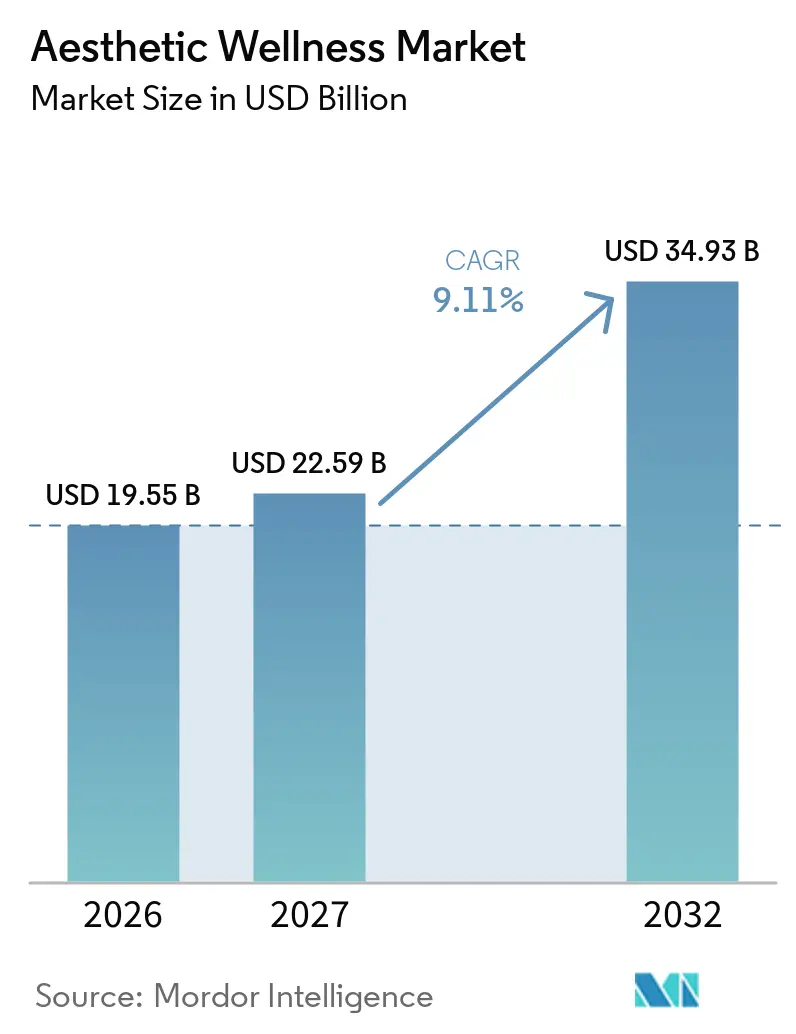
The Global Aesthetic Wellness Market was valued at USD 19.55 billion in 2026 and is estimated to grow from USD 22.59 billion in 2027 to reach USD 34.93 billion by 2032, at a CAGR of 9.11% during the forecast period (2027–2032). The aesthetic wellness market is evolving beyond occasional elective procedures as consumers increasingly prioritize skin quality, preventive care, and natural-looking outcomes. Demand for minimally invasive treatments is rising because they typically require limited recovery time and can be incorporated into recurring care plans. Healthy aging trends and weight-loss-related aesthetic needs are also expanding the patient base for providers. In emerging markets, the expansion of dermatology clinic chains and the growth of the urban middle class are supporting long-term demand. However, treatment affordability and practitioner standards remain key considerations.
Key Report Takeaways
- By service type, Non-Surgical Aesthetic Services accounted for 45.32% of the Aesthetic Wellness Market share in 2026, while Minimally Invasive Aesthetic Services are projected to grow at a 10.82% CAGR through 2032.
- By treatment category, Facial Aesthetics and Skin Rejuvenation accounted for 32.24% of the Aesthetic Wellness Market share in 2026, while Injectables and Biostimulatory Treatments are projected to grow at a 10.34% CAGR through 2032.
- By service provider, Dermatology and Aesthetic Clinics accounted for 44.83% of the Aesthetic Wellness Market revenue share in 2026, while Medical Spas are projected to grow at a 10.53% CAGR through 2032.
- By end user, the Female segment accounted for 74.31% of the Aesthetic Wellness Market revenue share in 2026 and is projected to grow at a 9.97% CAGR through 2032.
- By geography, North America accounted for 38.71% of the Aesthetic Wellness Market revenue share in 2026, while Asia-Pacific is projected to grow at a 10.50% CAGR through 2032.
Note: Market numbers in this report are based on Mordor Intelligence's proprietary estimation framework, which combines nine months of actuals with Q4 projections for base year 2026.
Global Aesthetic Wellness Market Trends and Insights
Drivers Impact Analysis*
| Driver | (~) % Impact on CAGR Forecast | Geographic Relevance | Impact Timeline |
|---|---|---|---|
| Rising Preference for Non-Surgical and Minimally Invasive Treatments | +1.8% | Global, with intensity in North America and Asia-Pacific | Short term (≤ 2 years) |
| Mainstreaming of Preventive Aesthetic Care | +1.6% | North America, Europe, South Korea, and Japan | Medium term (2-4 years) |
| Social media and Appearance-Led Wellness Spending | +1.5% | Global, highest in Asia-Pacific, South America, and the Middle East | Short term (≤ 2 years) |
| Healthy Aging and Longevity-Oriented Demand | +1.4% | Global, particularly North America and Europe | Long term (≥ 4 years) |
| Personalization Through AI-Assisted Assessment and Treatment Planning | +1.0% | North America, Europe, and Asia-Pacific core | Medium term (2-4 years) |
| Expansion of Medical Spas and Integrated Wellness Clinics | +1.3% | North America, Middle East, and South-East Asia | Medium term (2-4 years) |
| Source: Mordor Intelligence | |||
Rising Preference for Non-Surgical and Minimally Invasive Treatments
Preference for non-surgical and minimally invasive care drives growth in the aesthetic wellness market. Plastic surgeons performed 7.3 million botulinum toxin procedures and 4.7 million hyaluronic acid filler procedures in 2025[1]. These figures exclude procedures performed by dermatologists and other aesthetic practitioners. Lower upfront costs, limited downtime, and reversibility reduce barriers for first-time patients. These attributes appeal to urban consumers seeking procedures that fit work and personal commitments. Recurring maintenance visits, rather than a single corrective procedure, support market growth. When clinically appropriate, providers combine neurotoxins, fillers, laser procedures, and topical protocols. This approach supports continuity of care and adapts treatment plans to changing patient needs. It also highlights the importance of medical consultation, qualified administration, and clear communication of expected outcomes. Recurring care plans can strengthen medical spas and dermatology clinics with the capacity to manage repeat treatment cycles.
Mainstreaming of Preventive Aesthetic Care
Preventive aesthetic care shifts the focus from correcting visible signs of aging to maintaining skin quality earlier in adulthood. According to the AAFPRS 2023 Annual Member Survey, 77% of American Academy of Facial Plastic and Reconstructive Surgery (AAFPRS) members expected greater emphasis on preventive maintenance among individuals in their twenties and thirties. Minimally invasive treatments accounted for 83% of procedures performed by surveyed members in 2023[2]. This shift creates opportunities for the Global Aesthetic Wellness Market through personalized assessments, conservative treatments, and ongoing skincare plans. However, prevention-led demand requires realistic outcome communication and clinical assessment rather than age-based promotion. Younger consumers’ interest in skincare also supports education-led services. The American Academy of Dermatology’s 2025 survey found that 73% of United States adults used products or procedures to prevent premature aging, while only 56% regularly used sunscreen. Clinics can differentiate through individualized consultations, documented treatment plans, and qualified practitioners while avoiding unnecessary interventions driven by social media trends.
Social Media and Appearance-Led Wellness Spending
Social media supports treatment discovery, patient education, and the normalization of aesthetic procedures. It connects consumers with providers and treatment information while increasing interest in natural-looking outcomes and skin-quality improvement. Digital visibility helps consumers discover clinics but does not replace in-person clinical consultations. Providers must clearly explain a procedure’s limitations, risks, and expected outcomes. Unverified content and heavily edited images can create unrealistic expectations, leading patients to request treatments that may not suit their condition. Clinics can address this gap through evidence-based education and transparent discussions of likely results. Providers must differentiate qualified medical guidance from online promotional content. Established clinics can build trust through physician oversight and consistent patient communication.
Healthy Aging and Longevity-Oriented Demand
Healthy aging is broadening the reasons consumers seek skin care and aesthetic treatments. Demand focuses on long-term skin health, wrinkle prevention, and natural-looking results. The aesthetic wellness market can benefit as consumers incorporate procedures into broader personal-care routines. This approach favors consistent, individualized treatment plans over dramatic transformation. Interest in clinically validated products and procedures that support long-term care is also increasing. Weight-loss-related skin laxity and facial changes create an additional entry point into aesthetic care. Patients who experience substantial weight loss may seek consultations for skin quality, body contouring, or facial rejuvenation, including those new to medical aesthetic providers. Care plans must remain patient-specific because weight-change effects and procedure suitability vary. Qualified clinicians help align patient expectations with appropriate treatment options.
Restraints Impact Analysis*
| Restraint | (~) % Impact on CAGR Forecast | Geographic Relevance | Impact Timeline |
|---|---|---|---|
| Treatment Cost and Limited Reimbursement | -0.8% | Global, most acute in South America and Southeast Asia | Short term (≤ 2 years) |
| Shortage of Skilled and Licensed Practitioners | -0.6% | Global, especially high-growth markets in Asia-Pacific and Middle East and Africa | Long term (≥ 4 years) |
| Safety Risks, Counterfeit Products, and Unqualified Providers | -0.5% | Global, concentrated in markets with weak enforcement | Short term (≤ 2 years) |
| Regulatory Fragmentation and Compliance Burden | -0.4% | Global, especially cross-border operators | Medium term (2-4 years) |
| Source: Mordor Intelligence | |||
Treatment Cost and Limited Reimbursement
Consumers pay for most aesthetic procedures directly, limiting access for price-sensitive patients. This constraint is significant in markets with uneven disposable income or where advanced care is concentrated in major cities. The aesthetic wellness market can expand through broader service access; however, providers cannot assume that all patients can afford repeated treatment cycles. Clear pricing and medically appropriate treatment plans help maintain patient trust. Membership and subscription models may spread the cost of recurring care but do not eliminate affordability constraints, particularly for procedures requiring licensed practitioners or regulated products. Small providers may face challenges in managing recurring payments and follow-up commitments. In emerging markets, cost sensitivity remains significant outside affluent urban groups despite growing awareness of aesthetic treatments.
Shortage of Skilled and Licensed Practitioners
A shortage of qualified practitioners may constrain the global aesthetic wellness market, particularly for injectables and energy-based treatments requiring clinical expertise. According to the ISAPS Global Survey 2024, plastic surgeons performed approximately 20.54 million nonsurgical aesthetic procedures worldwide in 2024, highlighting the need for adequate clinical capacity. The WHO projects a global shortage of 11 million health workers by 2030, although this estimate covers the broader healthcare workforce rather than aesthetic practitioners specifically[3]. Limited access to qualified professionals may restrict clinic expansion and increase patient safety risks. In emerging markets, investments in accredited training, clinical supervision, and standardized treatment protocols can help providers scale responsibly while improving patient trust and service quality.
*Our forecasts treat driver/restraint impacts as directional, not additive. The impact forecasts reflect baseline growth, mix effects, and variable interactions.
Consumer Behavior Analysis
Consumer preferences vary by procedure type, age group, and desired outcomes. The ISAPS 2024 Global Survey reported 20.54 million non-surgical procedures worldwide. Hyaluronic acid filler procedures totaled 6.34 million, up 5.2% year over year, while non-surgical skin-tightening procedures rose 38.9% to 1.24 million. These trends indicate opportunities in injectable and device-based treatments, with selection influenced by individual concerns, expected outcomes, and downtime tolerance. Trust, affordability, and confidence in clinical expertise affect booking decisions and spending. In its 2024 annual survey, published in February 2025, AAFPRS reported that 30% of surveyed facial plastic surgeons cited finding the right surgeon as a key patient concern, alongside cost and recovery time. Provider credentials, transparent pricing, realistic recovery guidance, clear consultations, and follow-up can support conversion and loyalty. Longevity and regenerative offerings require evidence-based communication to avoid overstating benefits.
Aesthetic Wellness Performance Intelligence
Unlike hotels, aesthetic clinics lack a universally standardized occupancy metric. Monthly patient visits serve as a practical utilization indicator. AmSpa’s 2024 industry report recorded an average of 245 patient visits per medical spa per month. Capacity utilization depends on available treatment rooms, practitioner hours, procedure duration, and cancellations. Clinics can improve productivity through effective appointment planning and scheduling, without compromising consultation time or patient safety. Average daily rate does not directly apply to aesthetic clinics; average spend per visit is a more relevant commercial measure. AmSpa reported average spending of USD 527 per visit and average annual medical spa revenue of USD 1,398,833, compared with USD 1,307,587 in the previous report. These United States figures indicate the revenue potential of effective service delivery and appropriate treatment mixes. However, revenue does not equal profit, as staffing, consumables, equipment financing, and facility costs affect margins.
Segment Analysis
By Service Type: Volume and Protocol Stacking Drive Non-Surgical Dominance
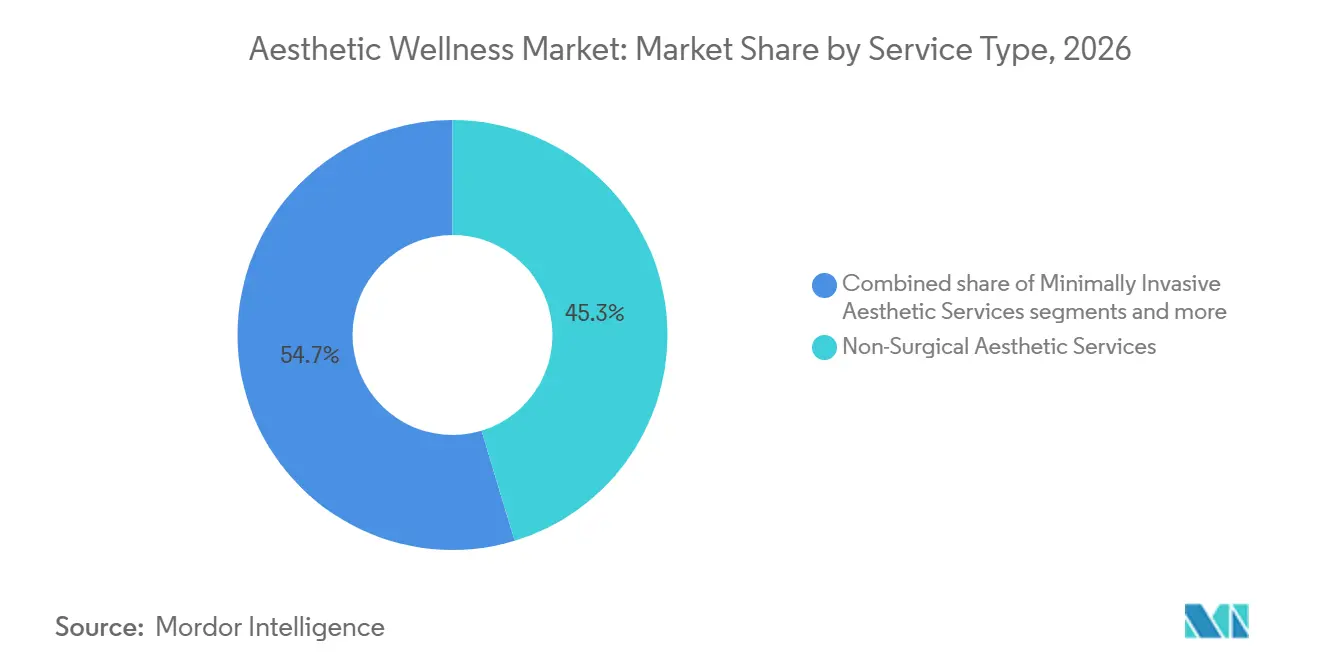
Non-Surgical Aesthetic Services segment accounted for 45.32% of the aesthetic wellness market size in 2026. The category includes neurotoxins, dermal fillers, laser skin resurfacing, chemical peels, and professional-grade topical treatments. Its breadth enables clinicians to tailor treatment plans to patient objectives. Limited-downtime procedures support demand among patients seeking non-surgical treatment. The segment reflects the importance of recurring skin-quality and maintenance care.
Minimally Invasive Aesthetic Services segment is forecast to grow at a CAGR of 10.82% through 2032. The category includes treatments between conventional non-surgical care and surgery. Biostimulants, polynucleotides, and neuromodulators are expanding provider options. Surgical Aesthetic Services segment remains relevant for patients requiring or preferring surgical outcomes. ISAPS reported that breast lifts among women showed the highest percentage increase, while eyelid surgery recorded the highest absolute increase globally.

By Treatment Category: Skin Quality and Biostimulators Redefine Injectable Demand
Facial Aesthetics and Skin Rejuvenation accounted for 32.24% of the global aesthetic wellness market size in 2026. Demand for skin quality improvement and natural-looking results supports the category. It includes clinic-based treatments and professional skincare protocols for ongoing care. In 2025, Allergan Aesthetics expanded SKINVIVE by JUVÉDERM to 35 additional markets, bringing its total to 57 markets[4]. This reflects the expansion of injectable portfolios beyond traditional volumizing fillers.
Injectables and Biostimulatory Treatments are forecast to grow at a CAGR of 10.34% through 2032. Patients consider treatment longevity, skin quality, and expected results when selecting injectable procedures. During the first nine months of 2025, Galderma reported double-digit biostimulator growth, while its Injectable Aesthetics business grew 10.5% year over year. Treatment suitability, product selection, and outcomes vary by patient.
By Service Provider: Medical Spas Disrupt the Clinic-Dominated Landscape
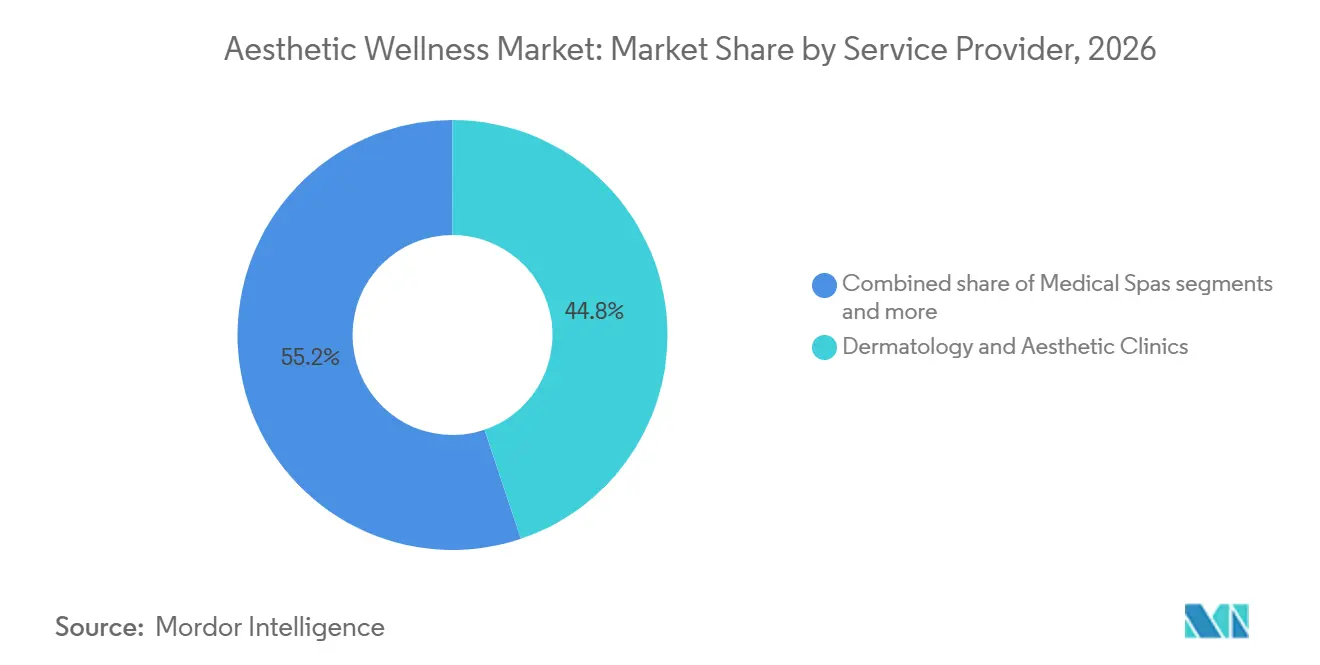
Dermatology and aesthetic clinics held 44.83% of the aesthetic wellness market in 2026. Clinical credibility, physician oversight, and access to prescription-only products and advanced devices support their role. These facilities assess patient suitability, provide follow-up care when clinical monitoring is required, and explain procedure risks, alternatives, and expected outcomes. In emerging markets, the expansion of dermatology chains supports a structured route to aesthetic care for urban consumers.
Medical spas are forecast to grow at a CAGR of 10.53% through 2032. They provide accessible settings for recurring skin and wellness appointments but require appropriate medical supervision for applicable services. According to the American Med Spa Association, the United States medical spa sector grew from 1,600 locations in 2010 to more than 10,000 in 2023.
By End User: Female Dominance Is Entrenched; Male Trajectory Is Structural
The female segment accounted for 74.31% of the aesthetic wellness market in 2026 and is projected to grow at a CAGR of 9.97% through 2032. Women represented 84.8% of global non-surgical aesthetic procedures in ISAPS data for 2025. The 35-50 age group accounted for 47% of botulinum toxin procedures, the largest age and gender cohort. Demand includes preventive care, skin-quality treatments, and procedures addressing visible signs of aging.
Male consumers remain comparatively underpenetrated in the aesthetic wellness industry. Men accounted for 15.2% of global non-surgical procedures in 2025. Eyelid surgery was the most common surgical procedure among men in the ISAPS survey. Interest may begin with acne scarring or hair removal and extend to other procedures. Providers should tailor treatment communication to individual needs and avoid applying a single aesthetic standard to all patients.
Geography Analysis
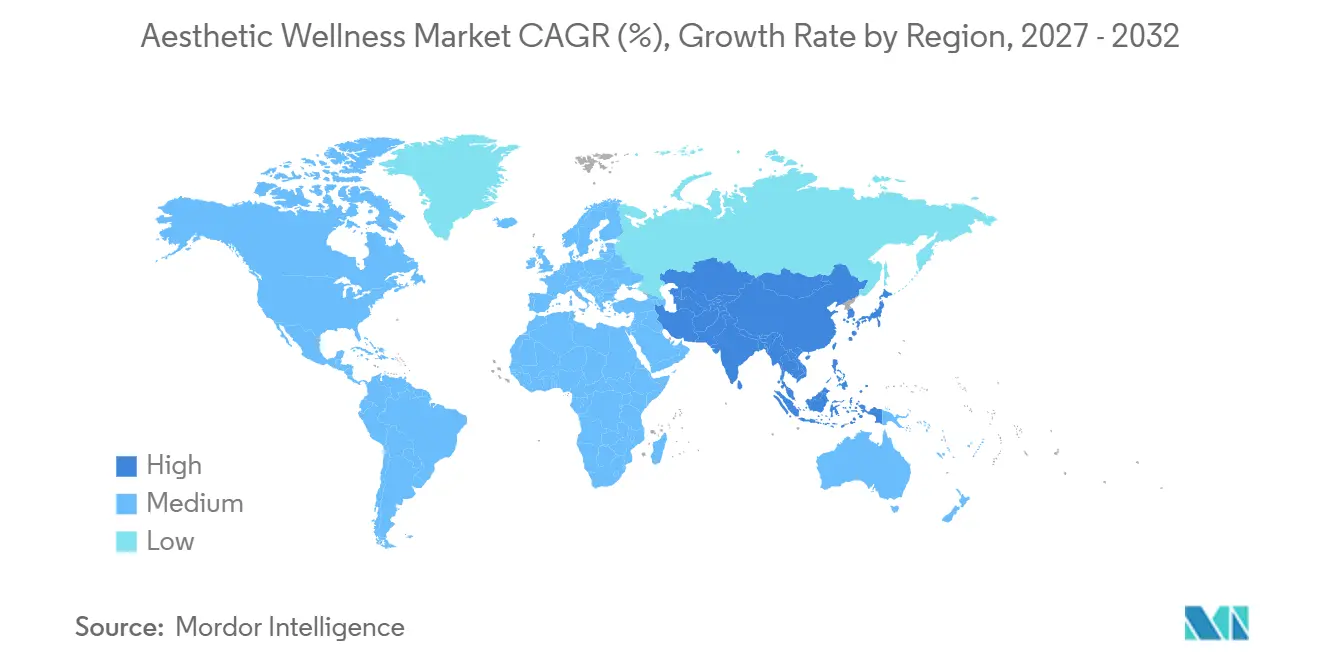
North America accounted for 38.71% of the aesthetic wellness market in 2026. In 2025, plastic surgeons in the United States performed more than 5.4 million aesthetic procedures. The region has a mature provider base, high consumer awareness, and established infrastructure. Medical spas, dermatology clinics, and surgical practices provide different levels of care.
Asia-Pacific is forecast to grow at a CAGR of 10.50% through 2032. China, India, South Korea, Japan, and Southeast Asia support the regional demand outlook. Galderma identified China as the world’s second-largest injectable aesthetics market and cited Sculptra’s China launch as a contributor to its 2025 performance. South Korea remains a treatment destination and source of procedural innovation. Expanding dermatology clinic chains and a growing urban middle class in emerging Asian markets support long-term demand, while regulation and practitioner capacity remain material factors.
Europe remains significant, with the United Kingdom, Germany, France, Italy, and Spain contributing to demand. The United Kingdom is planning stricter regulations for cosmetic procedures. Spain investigated 24 clinics for using illegal aesthetic substances in early 2025. Brazil recorded 3.2 million aesthetic procedures in 2025 and ranked first globally in surgical procedures, with 2.3 million. The United Arab Emirates and Saudi Arabia are attracting medical aesthetics investment, while Nigeria and South Africa remain earlier-stage markets.
Aesthetic Wellness Supply & Development Intelligence
According to the American Med Spa Association (AmSpa), the United States medical aesthetics provider base increased from 8,899 medical spas in 2022 to 10,488 in 2023. However, 81% operated from a single location, indicating a fragmented provider landscape and opportunities for clinic networks, standardized operations, and geographic expansion. In February 2025, Allergan Aesthetics announced three new United States training centers, reflecting the industry’s focus on clinical skills and treatment quality. Services include injectables, skin resurfacing, hair removal, and non-surgical body contouring. The ISAPS 2024 survey recorded 1.24 million non-surgical skin-tightening procedures, up 38.9% year over year, and 820,225 chemical peels, up 33.3%. This growth supports investment in energy-based devices and skin-renewal services. However, providers must assess equipment costs, training, and local patient demand before expanding service portfolios.
Competitive Landscape
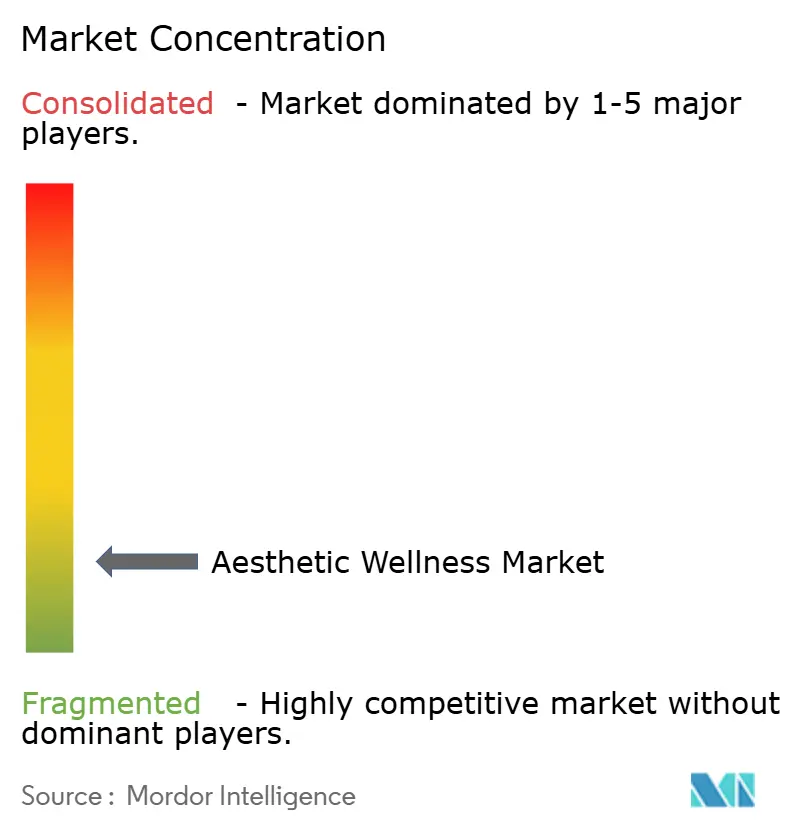
The aesthetic wellness market is fragmented, with no single company holding a decisive share across geographies and service categories. AbbVie, through Allergan Aesthetics; Galderma; Merz Pharma; Bausch Health, through Solta Medical; and Sisram Medical are major participants. Their portfolios span injectables, skincare, energy-based devices, and related treatments, enabling them to serve multiple provider settings. Device specialists compete through proprietary platforms, clinical training, and provider relationships.
Galderma reported record net sales of USD 3.74 billion for the first nine months of 2025, up 15.0% at constant currency. It raised its 2025 constant-currency net sales growth guidance to 17.0%-17.7%, citing neuromodulators, fillers, and biostimulators. Injectable Aesthetics revenue grew 10.5% year over year, highlighting the value of broad category participation.
Companies pursue product launches, training, and geographic expansion rather than price competition alone. Allergan Aesthetics expanded SKINVIVE by JUVÉDERM to 35 additional markets in September 2025. Galderma launched Restylane SHAYPE in Brazil in April 2025 and held its inaugural GAIN SPARK training meeting in Barcelona in 2025. Regulatory requirements can favor established supply chain controls, clinical education, and compliance. In emerging markets, competition depends on alignment with local requirements, practitioner capabilities, and patient expectations.
Aesthetic Wellness Industry Leaders
-
AbbVie Inc.
-
Galderma S.A.
-
Merz Pharma GmbH & Co. KGaA
-
Bausch Health Companies Inc.
-
Sisram Medical Ltd.
- *Disclaimer: Major Players sorted in no particular order
Recent Industry Developments
- September 2026: Allergan Aesthetics launched its Layered Beauty: The New Aesthetic Mindset report, based on research involving more than 12,000 consumers across nine global markets. The report examines attitudes toward beauty and aging and opportunities for personalized, multimodal aesthetic treatment plans.
- September 2026: InMode launched Morpheus8 Cool, an upgrade to its Morpheus8 radiofrequency microneedling system on the Morpheus8MAX platform, with a cooling tip to improve treatment comfort, precision, and control. The launch expands its aesthetic device portfolio and supports controlled treatment delivery.
- September 2025: Allergan Aesthetics, an AbbVie company, expanded SKINVIVE by JUVÉDERM into 35 additional markets, bringing availability to 57 markets in 2025. The hydrating injectable supports facial skin-quality improvement and expands the company’s portfolio beyond traditional volumizing fillers.
- April 2025: Galderma launched Restylane SHAYPE in Brazil, a hyaluronic acid filler designed for chin and lower-face projection. The non-surgical contouring option expanded Galderma’s injectable portfolio in South America and addressed demand for defined facial contours.
Global Aesthetic Wellness Market Report Scope
The Global Aesthetic Wellness Market report analyzes aesthetic treatments and wellness-oriented services delivered through clinical, medical spa, and specialized aesthetic providers worldwide. The market is segmented by service type (Non-Surgical Aesthetic Services, Minimally Invasive Aesthetic Services, Surgical Aesthetic Services, and Others), treatment category, service provider, end user, and geography. The study examines key drivers, including rising preference for minimally invasive procedures, preventive aesthetic care, social media influence, healthy-aging demand, AI-assisted personalization, and medical spa expansion, alongside restraints such as treatment costs, practitioner shortages, safety risks, counterfeit products, and regulatory complexity. It evaluates provider capacity, service offerings, appointment utilization, average spending, consumer preferences, booking behavior, and emerging treatment trends. The report provides market size and growth forecasts, regional and country-level analysis, competitive landscape assessment, market concentration, market share, strategic developments, and profiles of leading aesthetic treatment, injectable, and device companies. It also explores opportunities in integrated longevity and aesthetic memberships, AI-personalized treatment planning, regenerative approaches, and at-home aesthetic care. Market estimates and forecasts are presented in value (USD) across all covered segments.
Key Questions Answered in the Report
What is the projected size of the global aesthetic wellness market by 2032?
The global aesthetic wellness market was valued at USD 19.55 billion in 2026 and is projected to reach USD 34.93 billion by 2032, growing at a 9.11% CAGR from 2027
Which service type leads aesthetic wellness demand?
Non-Surgical Aesthetic Services led with 45.32% revenue share in 2026, supported by procedures with limited downtime and recurring care needs.
Which treatment category is growing fastest?
Injectables and Biostimulatory Treatments are forecast to grow at a 10.34% CAGR through 2032.
Which region leads the global aesthetic wellness market?
North America accounted for 38.71% of the global aesthetic wellness market in 2026, while Asia-Pacific is projected to grow at the fastest CAGR of 10.50% through 2032.
What are the main risks for aesthetic treatment providers?
The main risks include out-of-pocket cost, shortages of skilled practitioners, counterfeit products, unqualified providers, and differing regulatory requirements.
Why are provider qualifications important in aesthetic care?
Qualified practitioners are needed to assess suitability, administer treatment safely, explain risks, and provide follow-up care.