
Glaucoma Diagnostics Market Size and Share
Market Overview
| Study Period | 2020 - 2031 |
|---|---|
| Market Size (2026) | USD 2.63 Billion |
| Market Size (2031) | USD 3.46 Billion |
| Growth Rate (2026 - 2031) | 5.62% CAGR |
| Fastest Growing Market | Asia-Pacific |
| Largest Market | North America |
| Market Concentration | Medium |
Major Players *Disclaimer: Major Players sorted in no particular order Image © Mordor Intelligence. Reuse requires attribution under CC BY 4.0. | |
Glaucoma Diagnostics Market Analysis by Mordor Intelligence
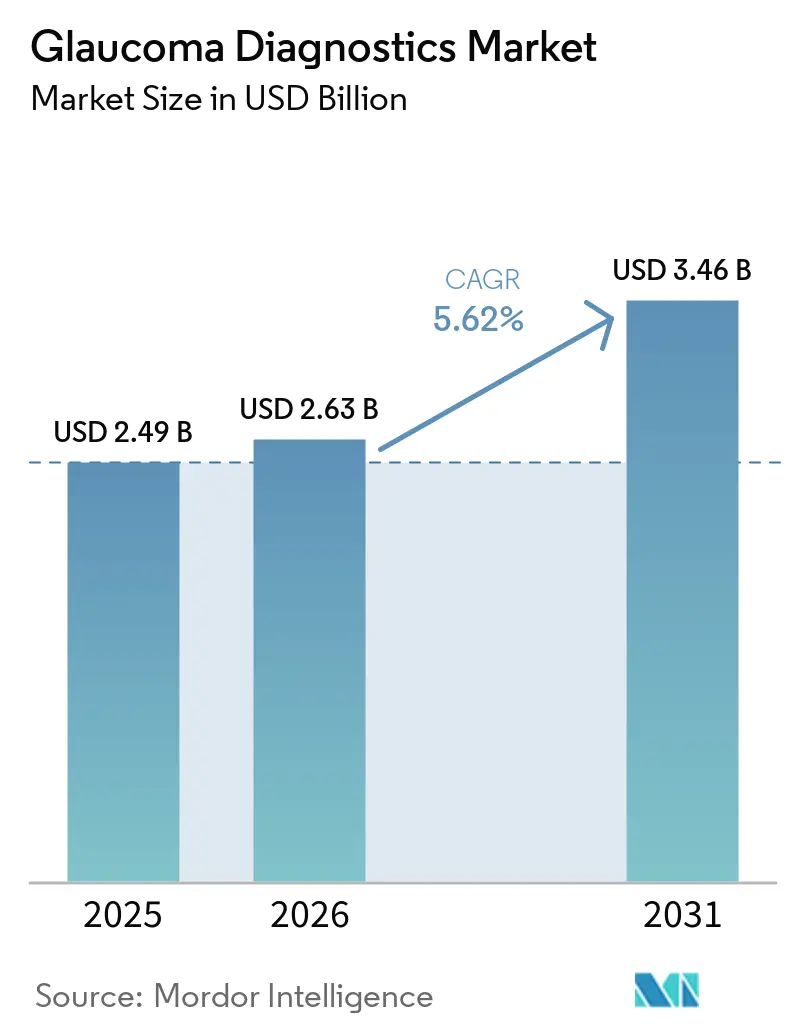
The Glaucoma Diagnostics Market size is expected to grow from USD 2.49 billion in 2025 to USD 2.63 billion in 2026 and is forecast to reach USD 3.46 billion by 2031 at 5.62% CAGR over 2026-2031.
The glaucoma diagnostics market is supported by a growing patient base, longer follow-up needs, and a continuing need to find the disease before irreversible vision loss occurs. Open-angle glaucoma affected 80.5 million people globally in 2024 and is forecast to affect 186.6 million by 2060, while myopia is expected to add 28.9 million cases independent of population aging. These forces increase demand for tonometry, imaging, visual field testing, and repeat monitoring across care settings. Suppliers are responding by linking imaging, software, and longitudinal records within fewer clinical steps. East Asia is expected to face a 50.5% increase in open-angle glaucoma prevalence from 2024 to 2060, which makes the region an important procurement area for the glaucoma diagnostics market.
Key Report Takeaways
- By product type, diagnostic instruments held 56.23% of the glaucoma diagnostics market share in 2025, while diagnostic imaging devices are forecast to grow at a 6.27% CAGR through 2031.
- By technology, optical coherence tomography accounted for 38.73% of the glaucoma diagnostics market share in 2025, while visual field testing is forecast to grow at a 6.85% CAGR through 2031.
- By patient demographics, adults aged 18 to 64 accounted for 56.32% of revenue in 2025, while the geriatric segment is forecast to grow at a 7.53% CAGR through 2031 in the glaucoma diagnostics market.
- By test category, diagnostic tests accounted for 53.91% of revenue in 2025, while progression-monitoring tests are forecast to grow at an 8.71% CAGR through 2031.
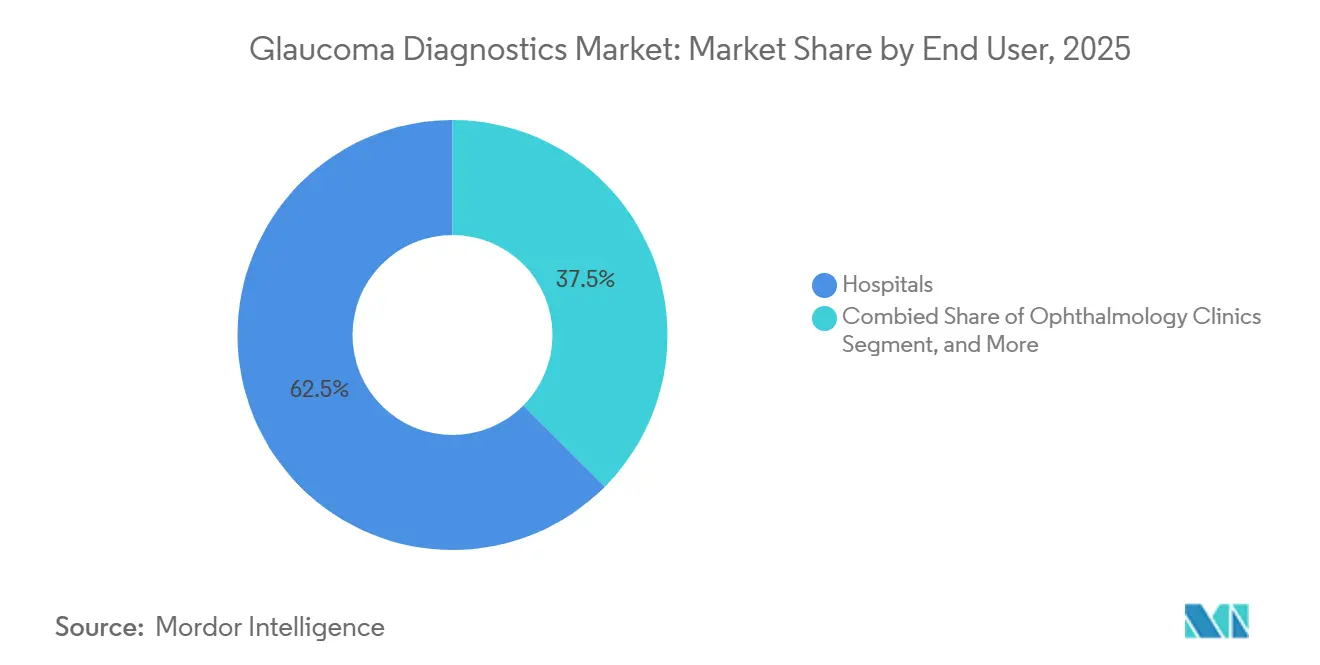
- By end user, hospitals accounted for 62.54% of revenue in 2025, while ophthalmology clinics are forecast to grow at a 9.19% CAGR through 2031 in the glaucoma diagnostics market.
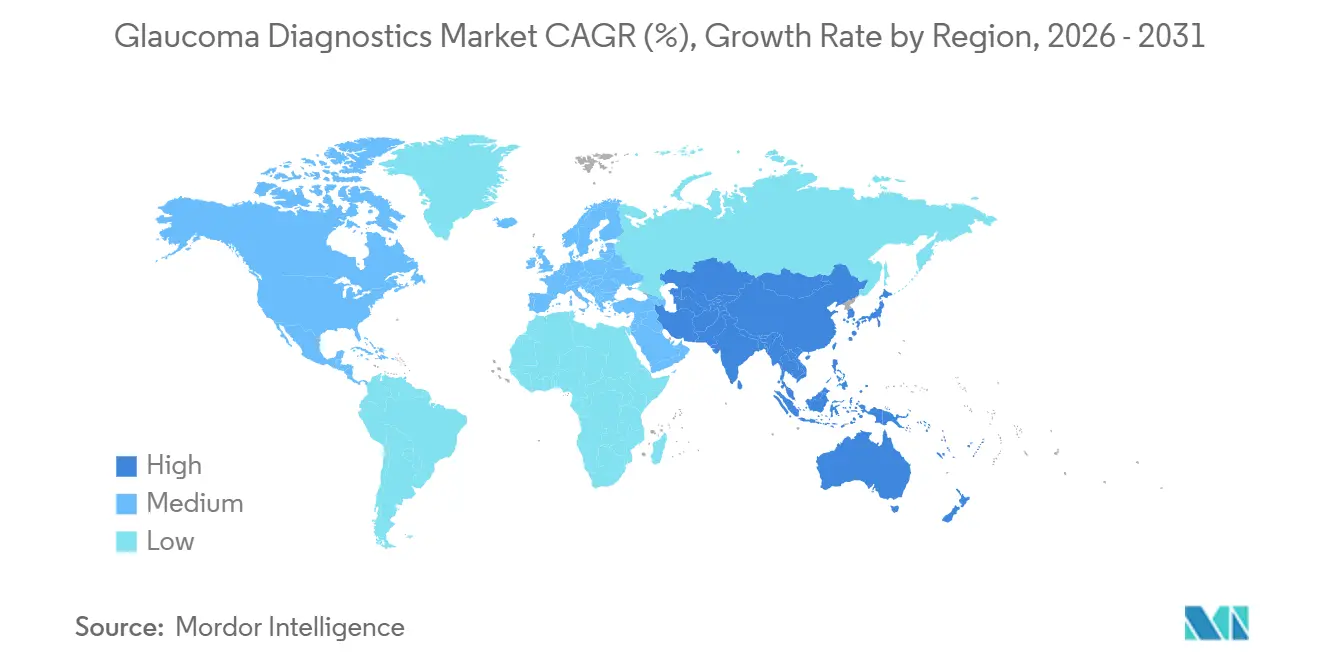
- By geography, North America held 38.62% share in 2025, while Asia-Pacific is projected to advance at a 10.44% CAGR through 2031 in the glaucoma diagnostics market.
Note: Market size and forecast figures in this report are generated using Mordor Intelligence’s proprietary estimation framework, updated with the latest available data and insights as of January 2026.
Global Glaucoma Diagnostics Market Trends and Insights
Drivers Impact Analysis*
| Driver | (~) % Impact on CAGR Forecast | Geographic Relevance | Impact Timeline |
|---|---|---|---|
| Rising Glaucoma Prevalence and Undiagnosed Disease Burden | +1.4% | Global | Long term (≥ 4 years) |
| Aging Population and Longer Diagnostic Follow-Up | +1.2% | APAC, North America & EU | Long term (≥ 4 years) |
| OCT, Multimodal Imaging and AI-Assisted Interpretation | +1.6% | Global, with early gains in North America, EU, Japan | Medium term (2-4 years) |
| Government Screening and Community Eye-Care Programs | +0.7% | APAC, North America | Medium term (2-4 years) |
| Primary-Care and Tele-Ophthalmology Channel Expansion | +0.6% | North America, EU, APAC | Short term (≤ 2 years) |
| Interoperable Longitudinal Structure-Function Workflows | +0.5% | North America & EU, APAC core | Medium term (2-4 years) |
| Source: Mordor Intelligence | |||
Rising Glaucoma Prevalence and Earlier Case Finding
Global glaucoma cases increased from 4.1 million in 1990 to 7.6 million in 2021, while the age-standardized disability-adjusted life-year rate reached 33.1 per 100,000 population in 2021. In 2020, at least 43 million cases of primary open-angle glaucoma remained undetected, with Africa and Asia bearing a greater burden of missed cases than Europe. This undiagnosed population creates sustained demand for screening pathways that guide patients toward a confirmed diagnosis. Glaucoma caused bilateral blindness in 3.6 million people and moderate-to-severe visual impairment in 4.1 million people in 2020, accounting for 8.4% of global blindness. Therefore, the glaucoma diagnostics market relies on both advanced hospital-based equipment and accessible first-line tools to identify individuals who have not yet entered specialist care. The expected contribution of myopia to the future disease burden also indicates that demand is not limited to countries with the oldest populations.
Aging, Imaging, and Connected Monitoring Workflows
Glaucoma prevalence increases from 1 in 200 people at age 40 to 1 in 8 people at age 80, extending the period during which many patients require observation and testing. Individuals diagnosed in later middle age can undergo OCT and visual field testing for many years, supporting the recurring use of existing equipment. Germany’s clinical guideline recommends glaucoma risk assessments from age 40, although statutory insurance coverage remains limited to individuals with specific risk factors.[1]Association of the Scientific Medical Societies in Germany, “Assessment of Risk Factors for Open-Angle Glaucoma,”
OCT platforms are expanding their role by integrating structural imaging, vascular information, and software-based review into a single session. The glaucoma diagnostics market benefits when clinicians can review imaging and visual field results together, enabling them to assess changes over time while reducing reliance on disconnected records. Automated alignment, portable imaging, and remote review also make diagnostic activities more practical in primary care and tele-ophthalmology settings, where specialist capacity remains limited.
Community Programs and Primary-Care Access
Government and community programs are bringing glaucoma detection closer to primary care settings, where many individuals first access eye health services. In the United States, the Michigan SIGHT telemedicine program found that care-navigation support improved referral follow-up among underserved populations. The related MI-SIGHT 2 study will begin enrollment in December 2025, sustaining focus on approaches that link screening with specialist care. These programs support the adoption of devices that can operate reliably outside large hospital settings and enable qualified clinicians to review results remotely. Consequently, image quality, ease of image capture, and secure results transfer are critical requirements for community-based screening pathways. For the glaucoma diagnostics market, the opportunity extends beyond initial screening to establishing repeat pathways for diagnostic confirmation and lifelong monitoring.
AI-Enabled Interpretation and Screening Quality
AI-supported glaucoma screening is gaining relevance as providers seek to interpret imaging consistently amid higher patient volumes. A 2026 primary-care study in Lisbon reported 78% sensitivity and 95% specificity for an AI-based glaucoma screening approach, at a screening cost of EUR 11.65 per person. Its economic model found that the approach becomes cost-saving when glaucoma prevalence reaches at least 2%. These findings support the combined use of imaging and software in community settings; however, clinical validation and regulatory review remain essential. AI tools can also assess image quality and help prioritize patients for further evaluation, particularly when technicians collect data outside specialist centers. Consequently, the glaucoma diagnostics market is shifting toward platforms that integrate image acquisition, interpretation support, and secure longitudinal records rather than providing isolated measurements.
Restraints Impact Analysis*
| Restraint | (~) % Impact on CAGR Forecast | Geographic Relevance | Impact Timeline |
|---|---|---|---|
| High Capital, Service and Calibration Costs | -0.5% | Global, most acute in the Middle East, Africa, and South America | Long term (≥ 4 years) |
| Shortage of Ophthalmologists and Ophthalmic Technicians | -0.4% | Global, most acute in the Middle East, Africa, and South Asia | Long term (≥ 4 years) |
| Corneal Biomechanics and Test-Protocol Variability | -0.3% | Global | Medium term (2-4 years) |
| Data Governance and Clinician Liability for AI Triage | -0.3% | North America and Europe | Short term (≤ 2 years) |
| Source: Mordor Intelligence | |||
Capital Costs and Uneven Diagnostic Capacity
Premium OCT and multimodal imaging systems cost between USD 30,000 and more than USD 100,000, excluding service, software, and calibration expenses. These costs limit procurement by smaller community centers, particularly in areas with a high burden of undiagnosed disease. Limited capital budgets must cover both the equipment purchase and ongoing expenses for servicing, licensing, calibration, and staff training. Foreign currency exposure can further constrain affordability, as many high-specification systems are priced in USD or EUR. Portable tonometers and fundus cameras improve access; however, they cannot replace the structural imaging and functional testing required for confident staging and follow-up. Therefore, the glaucoma diagnostics market must address the needs of facilities with varying budgets, staffing levels, and service capabilities. Suppliers that provide durable equipment, transparent maintenance arrangements, and scalable training programs can reduce a key adoption barrier while maintaining clinical standards.
Workforce Limits, Variable Testing, and AI Governance
Many countries with high rates of undiagnosed glaucoma face shortages of ophthalmologists and trained ophthalmic technicians who can operate and interpret advanced diagnostic equipment. These shortages limit the number of facilities that can justify significant capital investments while increasing the value of tools that enable non-specialist staff to capture images. Although teleglaucoma continues to develop, it can connect patients who lack access to eye specialists with remote review services.[2]“Teleglaucoma, How Telehealth Services Help Eye Doctors Combat Glaucoma,” University of Colorado Anschutz Medical Campus Corneal biomechanics and variations in testing protocols continue to affect the interpretation of intraocular pressure and functional results, underscoring the need for standardized processes. Data governance, clinician accountability, and regulatory requirements continue to constrain the adoption of AI-based triage in North America and Europe. Consequently, the glaucoma diagnostics market must combine automation with validated workflows, staff training, and clear accountability.
*Our forecasts treat driver/restraint impacts as directional, not additive. The impact forecasts reflect baseline growth, mix effects, and variable interactions.
Segment Analysis
By Product Type: Imaging Devices Gain Clinical Relevance
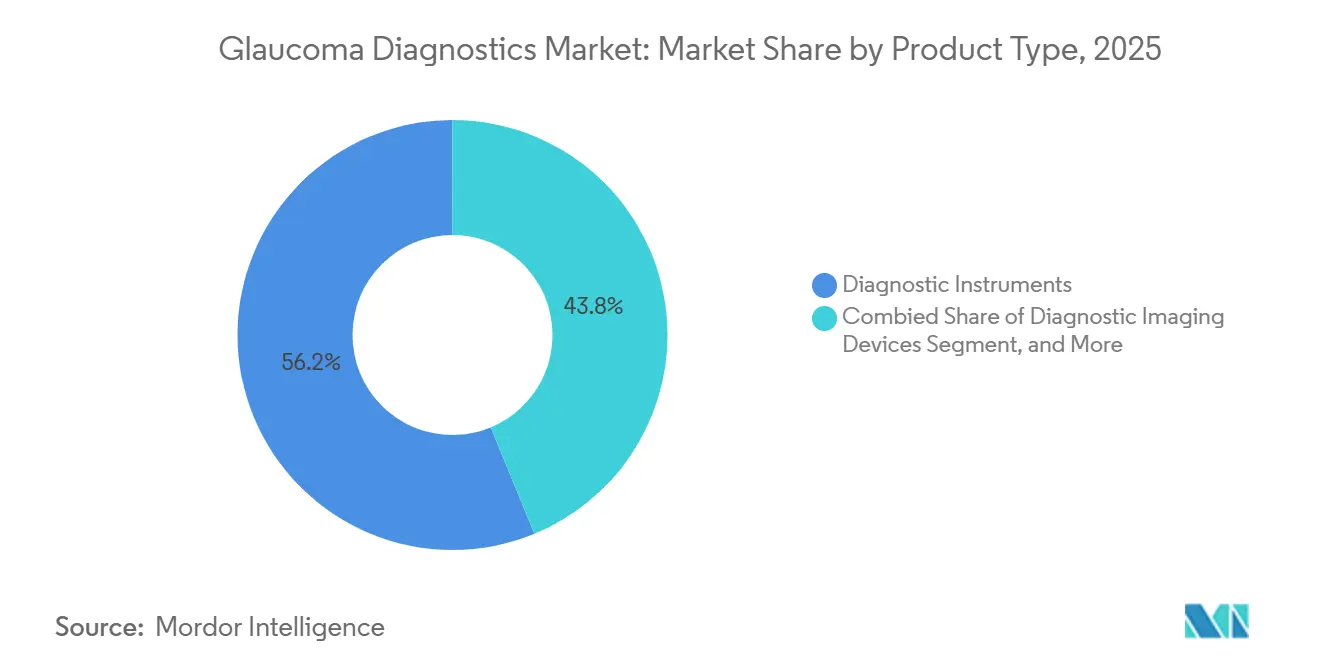
Diagnostic instruments accounted for 56.23% of the glaucoma diagnostics market share in 2025. Tonometers, slit lamps, and gonioscopy equipment remain essential first-line tools in specialist and primary care workflows. Their long service life and relatively straightforward maintenance requirements support consistent use, particularly among providers that require reliable equipment for high volumes of routine examinations and cannot immediately replace established examination methods with more complex imaging technologies.
Many practices rely on these instruments for initial intraocular pressure, angle, and optic disc assessments. These measurements provide the practical information needed to determine whether a patient requires observation, imaging referral, or further evaluation by a glaucoma specialist. Although demand is mature in well-equipped markets, these instruments remain necessary before clinicians interpret imaging findings. They also provide a practical option for clinics that cannot support a full multimodal diagnostic platform.
Consumables, including probe covers, visual field materials, and maintenance items, are expected to generate smaller but recurring revenue streams. This recurring demand is expected to increase the relevance of service contracts in the glaucoma diagnostics market, enabling suppliers to support equipment uptime through scheduled calibration, replacement accessories, and practical user assistance throughout the extended period during which clinics retain their core examination tools. Overall, this product group is expected to provide a broad foundation for routine ophthalmic care, allowing providers to maintain familiar first-line examination methods while adopting imaging technologies when clinical pathways or referral patterns require more detailed assessments.
Diagnostic imaging devices are projected to grow at a CAGR of 6.27% through 2031. This category includes optical coherence tomography (OCT) systems, scanning laser ophthalmoscopes, and fundus cameras. These systems integrate structural measurements, retinal visualization, and increasingly, vascular assessment within a connected workflow. In September 2025, Topcon introduced Triton2 and IMAGEnet7 to the European market, adding wide-field OCT angiography, true-color imaging, anterior-segment analysis, and Smart Denoise technology.[3]“Topcon Introduces Triton2 and IMAGEnet7 to the European Market,” These systems enable providers to consolidate multiple clinical tasks into fewer instruments. They also support more detailed follow-up during repeat testing, as clinicians can compare current images with earlier structural findings and use the same platform to document whether suspected changes warrant further assessment. As of 2026, the glaucoma diagnostics industry is shifting toward platforms that support both initial evaluation and ongoing monitoring. However, imaging suppliers must demonstrate reliable clinical value compared with lower-cost standalone instruments. Their advantage is strongest in settings where providers require more comprehensive information from each visit. A single imaging platform can support baseline assessments, confirmation of suspected disease, comparison of structural findings during follow-up appointments, and clearer patient discussions when clinicians need to explain the need for continued monitoring.



By Technology: OCT Leads While Visual Field Testing Expands
Optical coherence tomography (OCT) accounted for 38.73% of the glaucoma diagnostics market in 2025. OCT supports structural assessment by measuring the retinal nerve fiber layer and ganglion cell complex, while OCT angiography adds vascular information within the same imaging workflow. Established normative databases reinforce OCT’s role in routine clinical decision-making, and serial scans help clinicians identify subtle structural changes over time. As a result, OCT plays an important role in both diagnosis and long-term surveillance, particularly when practices monitor patients from initial risk assessment and disease confirmation through treatment review and potential progression assessment. The glaucoma diagnostics market maintains a strong OCT foundation because the technology supports multiple stages of care. However, image quality, acquisition consistency, and clinician interpretation remain critical to generating useful results. Suppliers can improve usability in busy practices by integrating data review with patient records. Systems that guide staff through consistent measurement protocols at each visit also support comparable follow-up scans and enhance their practical value.
Visual field testing is forecast to expand at a CAGR of 6.85% through 2031. Functional testing remains essential because structural measurements alone cannot fully characterize a patient’s visual impairment. The German guideline identifies tonometry and optic disc assessment as core elements of glaucoma risk evaluation for individuals aged 40 years and older. Carl Zeiss Meditec announced a collaboration with Envision Health Technologies in June 2026 to develop gamified, VR-based visual field testing. The collaboration aims to improve access and patient adherence across different care settings. VR-based approaches may reduce the practical barriers associated with conventional clinic-based perimetry by enabling testing in more locations and helping patients complete repeat assessments with fewer travel and scheduling challenges. Tonometry remains the standard initial screening method for intraocular pressure, while gonioscopy and ophthalmoscopy retain specialist roles. Together, these technologies provide the glaucoma diagnostics market with a balance between accessible screening and detailed diagnostic confirmation. This balance remains important because pressure measurement, structural imaging, and functional testing each address distinct clinical questions during glaucoma assessment.
By Patient Demographics: Older Patients Increase Follow-Up Needs
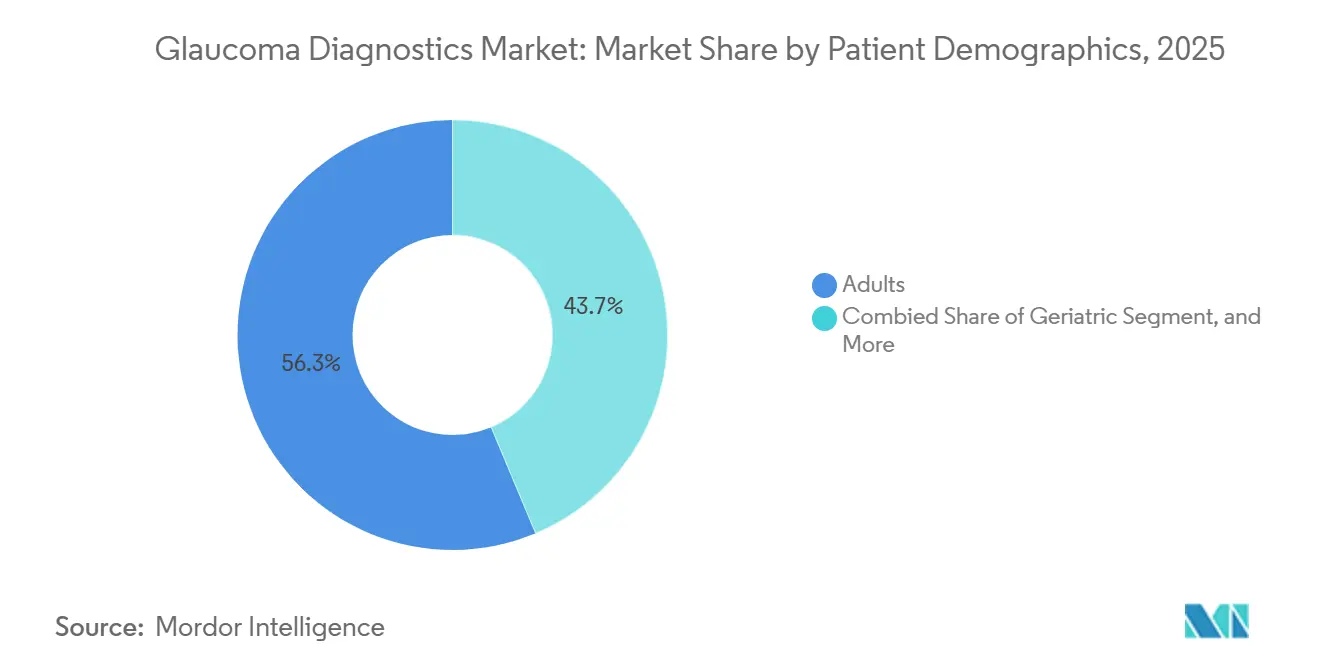
Adults aged 18-64 accounted for 56.32% of revenue in 2025. This group includes many individuals under surveillance following a glaucoma-suspect finding or an established diagnosis. Ongoing follow-up during middle age generates a substantial testing workload before patients reach the oldest age groups. Providers use repeat intraocular pressure measurements, imaging, and functional assessments to determine disease stability. This share also reflects the importance of identifying risk before vision loss becomes advanced. Working-age adults often prioritize efficient visits and testing that minimizes repeated travel and appointment burdens. As a result, providers have an incentive to sequence pressure checks, imaging, and functional testing clearly within a single outpatient encounter. These needs encourage clinics to organize diagnostic workflows around speed and consistent recordkeeping. This patient group remains important to the glaucoma diagnostics market because monitoring begins well before the disease burden peaks later in life. It also supports demand for services that can be delivered in outpatient settings. By collecting reliable pressure, imaging, and visual field data during a coordinated appointment, providers can reduce unnecessary repeat visits for patients managing work and family commitments.
The geriatric segment is forecast to grow at a CAGR of 7.53% through 2031. Glaucoma affects 1 in 8 people by age 80, creating a large patient pool requiring repeated diagnostic follow-up. Older patients may experience fixation difficulties and require longer testing times, increasing the importance of rapid image acquisition and effective patient guidance. DeepEyeVision began nationwide commercial sales of AI-CO in Japan in January 2026. This Class II device combines OCT three-dimensional scan data with automated visual field perimetry results for glaucoma monitoring. The pediatric glaucoma segment remains substantially smaller; however, congenital and juvenile cases may require specialized anterior-segment imaging and gonioscopy. Providers therefore still need access to equipment with sufficient clinical flexibility, although this group does not drive overall testing volumes. This niche supports demand for premium platform capabilities rather than high-volume testing. As populations age, the glaucoma diagnostics market must accommodate patient comfort and reliable testing across a broader age range. Faster acquisition, clear instructions, and dependable repeatability can help providers obtain useful results when longer examinations become challenging for older patients.
By Test Category: Progression Monitoring Supports Repeat Use
Diagnostic tests accounted for 53.91% of the glaucoma diagnostics market share in 2025. These tests include baseline OCT, gonioscopy, pachymetry, and threshold perimetry used when providers confirm or characterize disease. A comprehensive baseline helps clinicians choose a follow-up schedule and identify which measurements need comparison later. The category is important because every established care pathway begins with a reliable diagnostic record. It also brings several modalities together during the initial clinical workup, allowing the provider to document pressure, corneal characteristics, optic-nerve appearance, and visual function before deciding whether treatment or a more intensive observation schedule is appropriate. Hospitals and specialist clinics commonly use advanced imaging and field testing at this stage. The glaucoma diagnostics market benefits from this broad testing base because it establishes the data used in future monitoring. Screening results alone are often insufficient for diagnosis. Confirmation continues to require specialist assessment and well-documented measurements. A clear baseline also gives clinicians a reference point for distinguishing a clinically meaningful change from ordinary measurement variation at a future visit.
Progression-monitoring tests are forecast to grow at an 8.71% CAGR through 2031. Confirmed patients may receive several OCT and visual field assessments each year for many years. This creates recurring testing demand that is less dependent on new diagnosis volumes because a patient already in care may return for several assessments across the year, creating an established workflow for imaging and functional review within the same provider relationship. Heidelberg Engineering received FDA clearance in June 2026 for a SPECTRALIS software release with an updated Change Analysis function and OCTA acquisition at 250 kHz. The update targets the identification of small structural changes in glaucoma monitoring. Screening tests are also gaining relevance through community programs in Indonesia, Australia, and North America. Their value lies in finding patients who need formal diagnosis, even though their per-test revenue is lower. The glaucoma diagnostics industry is therefore placing greater emphasis on longitudinal software, standardized repeat scans, and change detection. These tools help make monitoring more consistent across successive visits. Their value is greatest when longitudinal images and field results can be reviewed together, rather than being stored in separate systems that make change harder to assess.
By End User: Clinics Expand Beyond Hospital-Based Care
Hospitals accounted for 62.54% of the glaucoma diagnostics market size in 2025. They manage complex diagnoses, surgical preparation, and patients who require advanced imaging or specialist evaluation. Academic medical centers in North America, Europe, and Japan also play an important role in capital equipment purchasing. Hospitals can support premium OCT, visual field, and imaging data-management platforms because they have specialist teams, referral volumes, and complex cases that make it practical to use systems with a wider feature set and more extensive data-management requirements. They often receive patients referred from smaller practices after an initial concern is identified. This environment favors systems with broad functionality and robust regulatory documentation. The hospital base gives suppliers access to high-acuity cases and clinical validation settings. It also supports the established revenue position of the glaucoma diagnostics market. Large institutions can also provide the specialist oversight needed for difficult cases, which makes them important referral points even as simpler monitoring moves into other settings. However, hospitals face pressure to reserve specialist capacity for people who need complex care.
Ophthalmology clinics are forecast to grow at a 9.19% CAGR through 2031. This growth reflects the movement of straightforward monitoring from hospital outpatient departments toward specialist clinics. Clinics generally need compact equipment, easier operation, and a clearer service model than large hospital tenders require because smaller teams must fit testing into busy schedules and may not have dedicated technical staff for every modality or software task. The European Glaucoma Society supported the possibility of AI-enabled screening within public primary care where specialist capacity is preserved for confirmation. Diagnostic centers in Asia-Pacific are also offering bundled ophthalmic screening services. Optometry chains and community health centers can use portable fundus cameras and AI-assisted tonometers as initial access points. The glaucoma diagnostics market can grow across these settings when providers can refer patients quickly after a concerning result. Vendor-managed compliance and integrated software can be especially useful for smaller operators. This channel shift rewards suppliers that align equipment with daily clinic workflow rather than only with hospital specifications. Clinics need systems that fit within limited space, can be operated by small teams, and can transfer findings securely when a patient needs hospital-based confirmation.
Geography Analysis
North America held a 38.62% share of the glaucoma diagnostics market in 2025, supported by reimbursed OCT use, active screening programs, and a dense network of academic ophthalmology centers. The Michigan SIGHT program demonstrated that telemedicine and care navigation can improve follow-up in underserved communities, while MI-SIGHT 2 began enrollment in December 2025. An implementation study at Federally Qualified Health Centers is comparing OCT-only and combined imaging protocols for AI-based screening. These initiatives support platforms that integrate primary care, remote review, and specialist confirmation. Canada’s provincial health systems are evaluating OCT funding models, while Mexico’s mixed public-private healthcare system continues to drive demand for entry-level tonometry and fundus photography.
Asia-Pacific is forecast to grow at a CAGR of 10.44% through 2031, representing the fastest regional growth rate in the glaucoma diagnostics market. East Asia is expected to record a 50.5% increase in open-angle glaucoma prevalence between 2024 and 2060. Major public hospitals in China are modernizing ophthalmology departments with multimodal imaging, India is expanding telemedicine-based screening networks, and Japan’s aging population continues to support investment in clinical equipment. South Korea and Australia are early adopters of AI-integrated workflows. The region is important both for high-volume adoption and for service models that operate beyond specialist hospitals.
Europe held a significant market share in 2025, supported by established ophthalmology networks, reimbursement-backed imaging, and regional manufacturers. Germany’s guideline framework supports risk assessment from age 40, although statutory coverage remains limited to individuals with defined risk factors. EU medical device requirements may favor suppliers with documented processes and established clinical evidence. The Middle East, Africa, and South America face high unmet needs; however, capital and workforce constraints limit deployment. Sub-Saharan Africa is projected to experience an 86.3% increase in undetected primary open-angle glaucoma by 2040.

Competitive Landscape
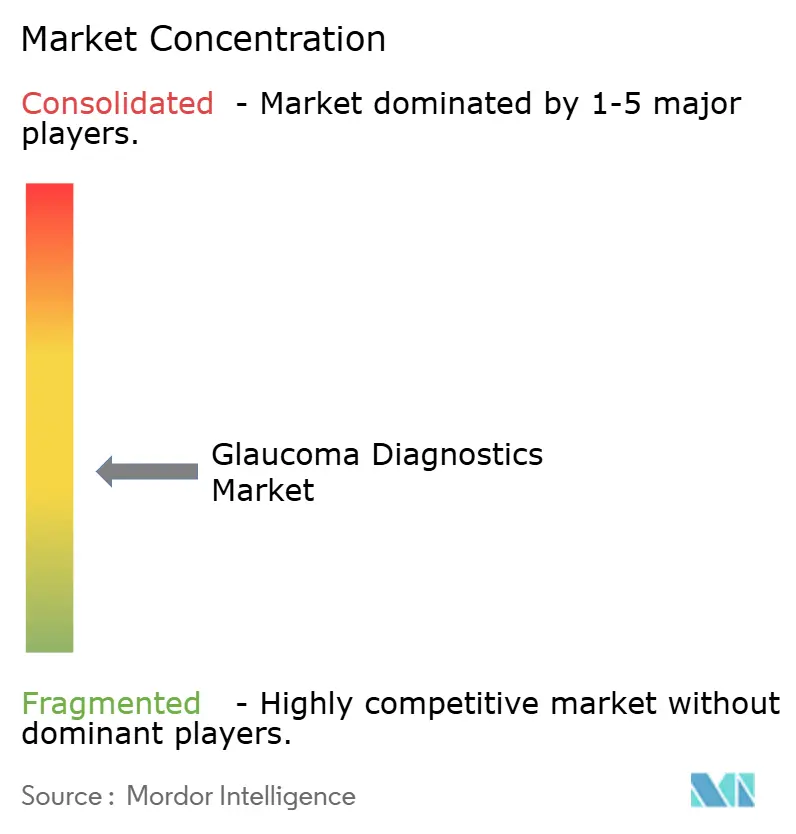
The glaucoma diagnostics market has moderate-to-high concentration in the premium segment, where Heidelberg Engineering, Carl Zeiss Meditec, Topcon Corporation, and NIDEK compete through imaging platforms, clinical data, and software workflows. Their products combine OCT, visual field testing, anterior-segment imaging, and longitudinal data review, while established normative databases can make clinical switching more difficult. ISO 10940 for ophthalmoscopes and ISO 8612 for tonometers remain relevant standards for product specifications. Leading suppliers compete on clinical reliability, feature breadth, and the ability to support diagnosis, repeat testing, and record management. This integrated approach is an important feature of the glaucoma diagnostics market.
Platform integration reduces the need to move data across separate products. Heidelberg Engineering received FDA clearance in June 2026 for a SPECTRALIS software update that included enhanced change analysis for the Posterior Pole Glaucoma Module and faster OCTA acquisition. Carl Zeiss Meditec’s June 2026 collaboration with Envision Health Technologies seeks to make visual field testing more accessible through VR. Topcon’s Triton2 launch in Europe in September 2025 expanded its multimodal imaging offer with wide-field OCT angiography and anterior-segment analytics. These moves show that product strategy includes data integration, testing convenience, and imaging breadth, with the aim of making routine glaucoma assessment easier to organize across varied care settings.
There is room for portable tonometry and wide-field fundus imaging designed for community health workers in South and Southeast Asia. Topcon received CE mark approval in July 2026 for Gaia, a fully automated ultra-widefield fundus imaging device with a 209-degree true-color field of view from a single non-mydriatic capture. DeepEyeVision’s AI-CO program in Japan shows how smaller technology providers can combine OCT and perimetry data within a focused monitoring product, while incumbents retain an advantage where they can link algorithms to installed imaging systems and established service networks. The glaucoma diagnostics market remains competitive because providers must balance lower-cost access tools against the need for complete diagnostic and monitoring capabilities.
Glaucoma Diagnostics Industry Leaders
Bausch & Lomb Incorporated
Carl Zeiss Meditec AG
Haag-Streit Group
NIDEK CO., LTD.
- *Disclaimer: Major Players sorted in no particular order

Recent Industry Developments
- July 2026: Topcon Healthcare received CE mark approval for Gaia, a fully automated ultra-widefield fundus imaging device offering a 209-degree true-color field of view in a single non-mydriatic, non-contact capture. EU commercial availability is planned for the ESCRS congress in London in September 2026, marking Topcon’s direct entry into ultra-widefield peripheral retinal imaging and expanding its portfolio in glaucoma peripheral nerve fiber visualization.
- June 2026: Heidelberg Engineering received FDA clearance for its latest SPECTRALIS Software release, introducing 250 kHz OCTA acquisition speed, an updated Change Analysis function for the Glaucoma Module Posterior Pole scan enabling ganglion cell complex layer segmentation, and a Green Autofluorescence Module for macular atrophy quantification. Commercial launch is planned for H2 2026.
- June 2026: Carl Zeiss Meditec AG announced a strategic collaboration with Envision Health Technologies to develop gamified VR-based visual field testing, explicitly targeting expanded patient access and improved compliance with high-frequency perimetry monitoring requirements.


Global Glaucoma Diagnostics Market Report Scope
As per the scope of the report, glaucoma diagnostics refers to the specialized set of tests and devices used to detect, confirm, and monitor glaucoma, a leading cause of irreversible blindness. It includes tonometry for intraocular pressure measurement, optical coherence tomography (OCT) for optic nerve imaging, and visual field testing for functional vision loss. These tools are critical for early detection, disease staging, and progression monitoring, ensuring timely intervention and reducing the risk of vision impairment.
The glaucoma diagnostics are segmented by product type, technology, patient demographics, test category, end user, and geography. By product type, the market is segmented into diagnostic instruments, diagnostic imaging devices, and consumables. By technology, the market is segmented into tonometry, ophthalmoscopy, visual field testing, optical coherence tomography, and others. By patient demographics, the market is segmented into adults, geriatrics, and pediatrics. By test category, the market is segmented into screening tests, diagnostic tests, and progression-monitoring tests. By end user, the market is segmented into hospitals, ophthalmology clinics, diagnostic centers, and others. The geography segment is further divided into North America, Europe, Asia-Pacific, the Middle East and Africa, and South America. The report also covers the estimated market sizes and trends for 17 countries across major regions globally. The report offers the market size and forecasts in value (USD) for the above segments.
| Diagnostic Instruments |
| Diagnostic Imaging Devices |
| Consumables |
| Tonometry |
| Ophthalmoscopy |
| Visual Field Testing |
| Optical Coherence Tomography |
| Others |
| Adults |
| Geriatrics |
| Pediatrics |
| Screening Tests |
| Diagnostic Tests |
| Progression-Monitoring Tests |
| Hospitals |
| Ophthalmology Clinics |
| Diagnostic Centers |
| Others |
| North America | United States |
| Canada | |
| Mexico | |
| Europe | Germany |
| United Kingdom | |
| France | |
| Italy | |
| Spain | |
| Rest of Europe | |
| Asia-Pacific | China |
| India | |
| Japan | |
| Australia | |
| South Korea | |
| Rest of Asia-Pacific | |
| Middle East and Africa | GCC |
| South Africa | |
| Rest of Middle East and Africa | |
| South America | Brazil |
| Argentina | |
| Rest of South America |
| By Product Type | Diagnostic Instruments | |
| Diagnostic Imaging Devices | ||
| Consumables | ||
| By Technology | Tonometry | |
| Ophthalmoscopy | ||
| Visual Field Testing | ||
| Optical Coherence Tomography | ||
| Others | ||
| By Patient Demographics | Adults | |
| Geriatrics | ||
| Pediatrics | ||
| By Test Category | Screening Tests | |
| Diagnostic Tests | ||
| Progression-Monitoring Tests | ||
| By End User | Hospitals | |
| Ophthalmology Clinics | ||
| Diagnostic Centers | ||
| Others | ||
| By Geography | North America | United States |
| Canada | ||
| Mexico | ||
| Europe | Germany | |
| United Kingdom | ||
| France | ||
| Italy | ||
| Spain | ||
| Rest of Europe | ||
| Asia-Pacific | China | |
| India | ||
| Japan | ||
| Australia | ||
| South Korea | ||
| Rest of Asia-Pacific | ||
| Middle East and Africa | GCC | |
| South Africa | ||
| Rest of Middle East and Africa | ||
| South America | Brazil | |
| Argentina | ||
| Rest of South America | ||


Key Questions Answered in the Report
What is driving demand for glaucoma diagnostic equipment?
Rising glaucoma prevalence, a growing older population, and the need for repeat monitoring support demand. The sector is forecast to grow at a 5.62% CAGR from 2026 to 2031.
Which care setting is growing fastest for glaucoma testing?
Ophthalmology clinics are forecast to grow at a 9.19% CAGR through 2031 as routine monitoring shifts from hospital outpatient departments to specialist clinics.
Which region is expected to grow fastest?
Asia-Pacific is forecast to expand at a 10.44% CAGR through 2031, supported by a high disease burden, aging populations, and broader screening activity.
How is AI changing glaucoma screening?
A Lisbon primary-care study reported 78% sensitivity and 95% specificity for AI-based screening, supporting its use as a tool to identify people needing specialist evaluation.
Which product category has the largest revenue share?
Diagnostic instruments led product revenue with 56.23% in 2025. Tonometers, slit lamps, and gonioscopy equipment remain central to initial evaluation.
Why is OCT important in glaucoma care?
OCT held 38.73% of technology revenue in 2025 because it supports structural assessment and longitudinal monitoring of retinal nerve fiber and ganglion cell changes.
Page last updated on:






