
Fungal Testing Kits Market Size and Share
Market Overview
| Study Period | 2020 - 2031 |
|---|---|
| Market Size (2026) | USD 3.33 Billion |
| Market Size (2031) | USD 4.95 Billion |
| Growth Rate (2026 - 2031) | 8.23% CAGR |
| Fastest Growing Market | Asia-Pacific |
| Largest Market | North America |
| Market Concentration | Medium |
Major Players *Disclaimer: Major Players sorted in no particular order Image © Mordor Intelligence. Reuse requires attribution under CC BY 4.0. | |
Fungal Testing Kits Market Analysis by Mordor Intelligence
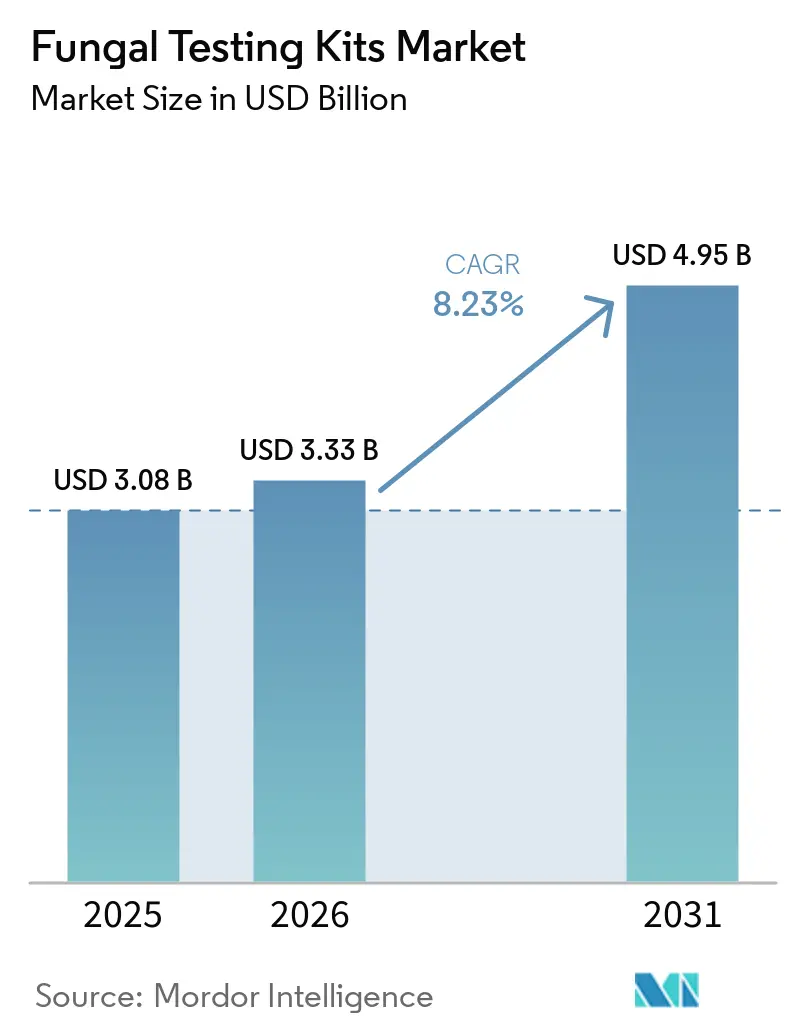
The Fungal Testing Kits Market size is expected to grow from USD 3.08 billion in 2025 to USD 3.33 billion in 2026 and is forecast to reach USD 4.95 billion by 2031 at 8.23% CAGR over 2026-2031.
The fungal testing kits market is driven by increased clinical focus on invasive infections, food safety controls, and environmental monitoring requirements. Fungal diseases affect more than 300 million people annually, while mortality rates for the highest-priority pathogens can reach 88%, keeping diagnostic access high on public health agendas. In the United States, fungal diseases cost the healthcare system more than USD 19 billion annually and are associated with 7,300 deaths and 130,000 hospitalizations. However, underdiagnosis suggests that the actual disease burden may be higher. Rapid molecular and antigen-based tests are gaining adoption in settings where treatment decisions cannot wait for culture results, while food producers must meet recurring mycotoxin testing requirements. The fungal testing kits market also presents growth opportunities in decentralized care settings and emerging economies. However, test costs, laboratory capacity, and inconsistent standards will continue to influence adoption.
Key Report Takeaways
- By application, clinical diagnostics held 46.37% of the fungal testing kits market share in 2025, while environmental monitoring is forecast to grow at a 8.98% CAGR through 2031 in the fungal testing kits market.
- By technology, molecular diagnostics held 38.74% of the fungal testing kits market share in 2025, while immunoassays are forecast to grow at a 9.23% CAGR through 2031.
- By test type, molecular tests held 32.46% of revenue in 2025, while antifungal susceptibility tests are forecast to grow at a 9.84% CAGR through 2031 in the fungal testing kits market.
- By sample type, blood-based testing held 36.28% of revenue in 2025, while urine-based testing is forecast to grow at a 10.35% CAGR through 2031.
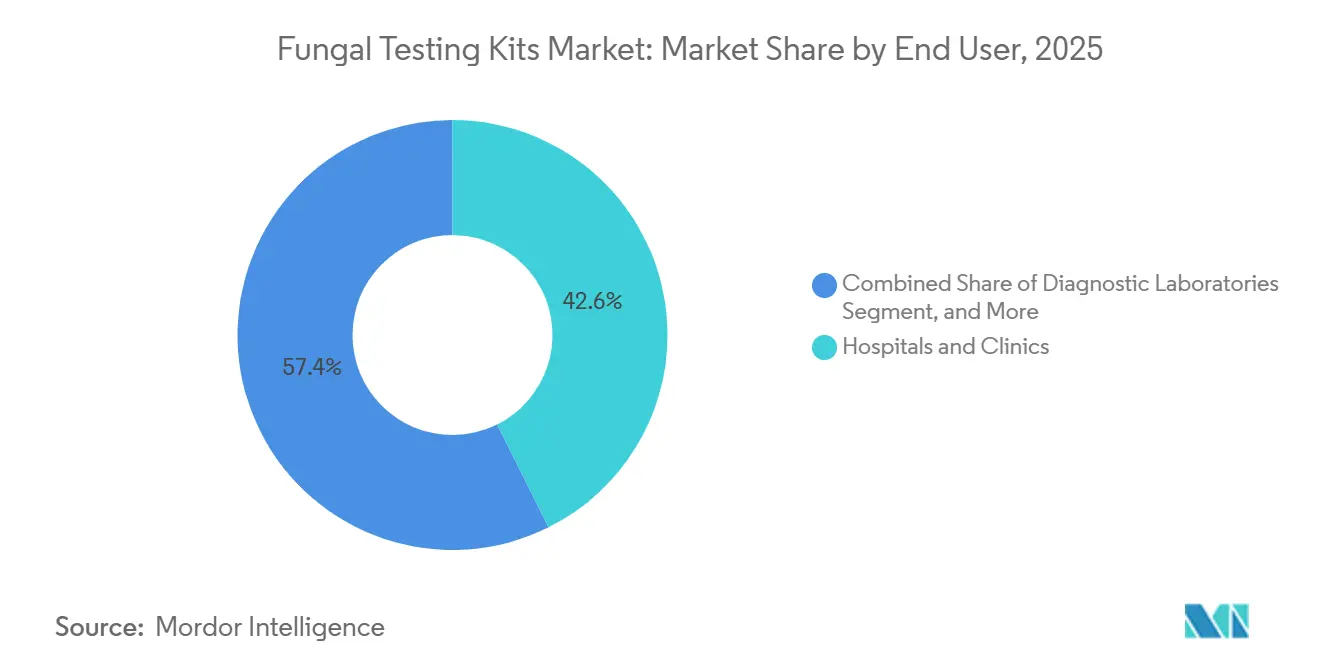
- By end user, hospitals and clinics held 42.63% of revenue in 2025, while diagnostic laboratories are forecast to grow at an 11.46% CAGR through 2031 in the fungal testing kits market.
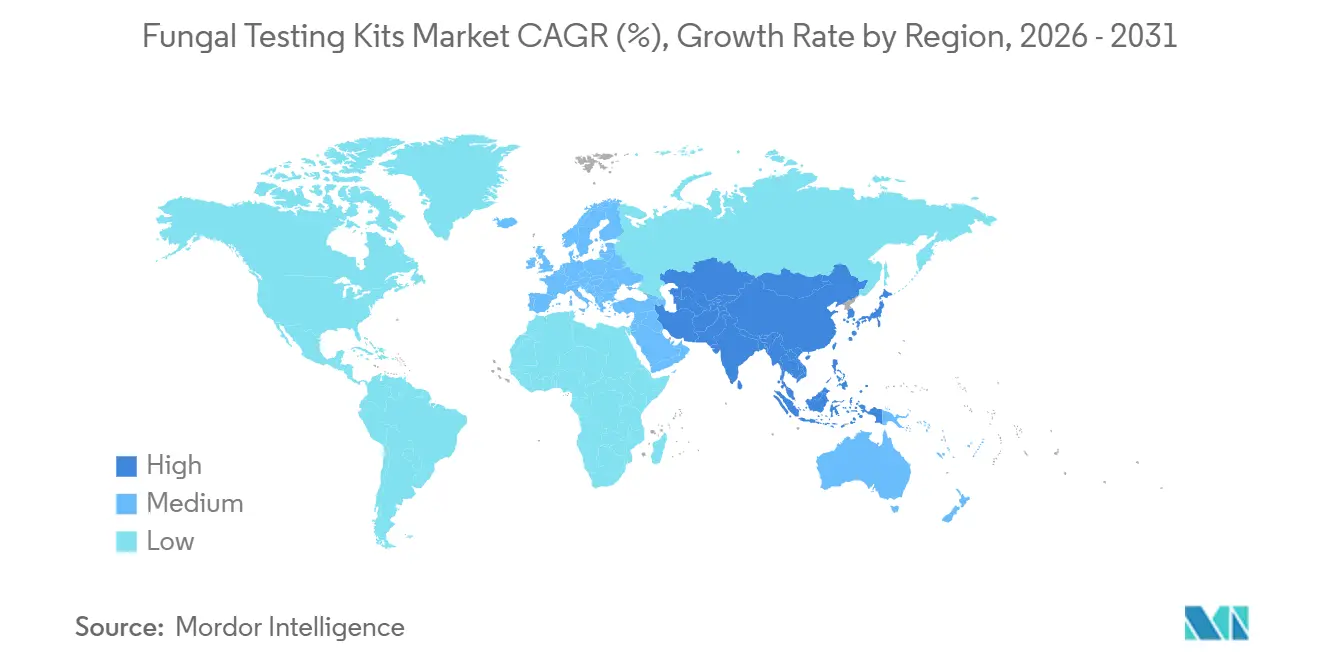
- By geography, North America held 36.72% of revenue in 2025, while Asia-Pacific is forecast to grow at a 13.67% CAGR through 2031.
Note: Market size and forecast figures in this report are generated using Mordor Intelligence’s proprietary estimation framework, updated with the latest available data and insights as of January 2026.
Global Fungal Testing Kits Market Trends and Insights
Drivers Impact Analysis*
| Driver | (~) % Impact on CAGR Forecast | Geographic Relevance | Impact Timeline |
|---|---|---|---|
| Rising Burden of Invasive Fungal Infections | +2.5% | Global, concentrated in North America, Europe, and APAC ICU and oncology hubs | Short term (≤ 2 years) |
| Expansion of Mycotoxin Compliance Testing | +1.8% | Global, with early gains in the EU, North America, and grain-exporting economies in South America and APAC | Medium term (2-4 years) |
| Demand for Faster Culture-Independent Diagnostics | +1.5% | North America and the EU, with spillover to core APAC markets | Short term (≤ 2 years) |
| Growth of Decentralized and Near-Patient Testing | +1.2% | North America, the EU, and core APAC markets, with emerging activity in the GCC and South Africa | Medium term (2-4 years) |
| Antifungal Resistance Surveillance Requirements | +0.9% | Global, with immediate relevance in North America and the EU | Medium term (2-4 years) |
| Climate-Linked Expansion of Fungal Contamination Risk | +0.7% | Global, with high relevance in sub-Saharan Africa, South Asia, and Southern Europe | Long term (≥ 4 years) |
| Source: Mordor Intelligence | |||
Rising Burden of Invasive Fungal Infections
The growing burden of invasive fungal infections is a core demand driver for the fungal testing kits market. A 2024 review estimated 6.5 million life-threatening invasive fungal infections each year and 3.8 million related deaths.[1]“Global Incidence and Mortality of Severe Fungal Disease,” Critically ill populations carry a particularly high risk, and a 2025 review reported more than 1.66 million deaths in critical-care settings. Untreated invasive candidiasis can have a 30-day mortality of 35% to 45%, making delayed diagnosis difficult to accept in acute care. Traditional culture methods can require 3 to 7 days, so hospitals increasingly favor molecular and antigen-based testing. This shift supports higher-value testing workflows and limits the need for vendors to use large price concessions to build volume.
Mycotoxin Compliance and Climate-Related Contamination Risk
Food safety rules are creating recurring demand for fungal testing kits across agricultural supply chains. EU Implementing Regulation 2023/2782 sets sampling and analysis methods for mycotoxin controls, and later amendments extended its coverage to additional food matrices. ISO 23719:2025 established a validated UHPLC-MS/MS method for measuring 17 mycotoxins in cereals and cereal products.[2]“ISO 23719:2025 Cereals and Cereal Products, Determination of 17 Mycotoxins by UHPLC-MS/MS," These rules encourage laboratories to replace single-toxin testing with systems that can assess several analytes in one run. Climate-related changes in aflatoxin and fumonisin contamination add pressure in maize- and wheat-dependent supply chains across Southern and Eastern Europe. The result is a clearer divide between lower-cost rapid tests and laboratory-grade methods for high-throughput inspection.
Faster Culture-Independent Diagnostics and Resistance Surveillance
Culture-based diagnostics often have sensitivity below 50% for several invasive infections, which creates a need for faster alternatives. The fungal testing kits market is therefore moving toward qPCR, LAMP, and CRISPR-based formats that can identify pathogens without waiting for culture growth. A 2026 study described an automated real-time PCR platform that identified 4 major Aspergillus species within hours. A separate 2026 study reported digital CRISPR diagnostics that quantified Candida auris and identified resistance mutations within 40 minutes.[3]“Digital CRISPR-Based Diagnostics for Quantification of Candida auris and Resistance Mutations,” The combined need for identification and resistance profiling is encouraging integrated testing workflows, subject to reimbursement support.
Decentralized and Near-Patient Testing
Testing is gradually shifting from central reference laboratories toward near-patient settings. This supports stewardship programs that need results quickly enough to guide treatment choices. Zepto Life Technology launched the FungiFlex Mold Panel in January 2026, a plasma cell-free DNA test that detects 14 mold species in under 24 hours through a CLIA reference laboratory. Roche completed its LumiraDx acquisition in 2024, adding point-of-care technology to its diagnostics portfolio. Diagnostic laboratories are growing partly because they can support near-patient satellite systems.
Restraints Impact Analysis*
| Restraint | (~) % Impact on CAGR Forecast | Geographic Relevance | Impact Timeline |
|---|---|---|---|
| High Cost of Advanced Molecular and Mass Spectrometry Workflows | -1.5% | Global, with the strongest effect in low- and middle-income countries, South America, and the Middle East and Africa | Medium term (2-4 years) |
| Limited Diagnostic Infrastructure in Low- and Middle-Income Countries | -1.2% | Middle East and Africa, South Asia, sub-Saharan Africa, and parts of Latin America | Long term (≥ 4 years) |
| Incomplete Standardization of Pan-Fungal and Metagenomic Assays | -0.7% | Global, especially for multisite hospital networks and regulatory approval programs | Medium term (2-4 years) |
| Difficulties Differentiating Colonization from Active Infection | -0.5% | Global, concentrated in critical care and oncology settings in North America and the EU | Short term (≤ 2 years) |
| Source: Mordor Intelligence | |||
Cost and Standardization Barriers for Advanced Workflows
MALDI-TOF mass spectrometry, whole-genome sequencing, and metagenomic sequencing provide details that conventional culture methods cannot match. Their instrument, reagent, and operating costs still limit uptake in many settings. The World Health Organization stated in 2025 that available diagnostics are often slow, inaccurate, expensive, and limited in scope, especially in low- and middle-income countries. This cost gap creates a two-tier pattern, with advanced systems adopted by high-income hospitals while other facilities rely on immunoassays or culture. Incomplete standards for pan-fungal and metagenomic assays also make multisite validation and regulatory review harder. Multiplexed tests that lower the cost per result may ease both barriers by combining species detection and resistance markers in a single run.
Infrastructure Gaps and Clinical Interpretation Limits
Laboratory capacity remains a major restraint in regions with a high fungal disease burden. The WHO reported that many fungal diseases are absent from national health plans and antimicrobial resistance frameworks in low- and middle-income countries. Cold-chain requirements for some reagents can further complicate distribution in tropical and resource-limited areas. IMMY appointed Intralink in 2025 to develop a 3-year expansion plan in India, showing the need for local distribution structures rather than product availability alone. Clinical teams also need to distinguish colonization from active infection, especially in critical care and oncology. These limits can delay appropriate use even when a test is available, keeping adoption uneven through 2031.
*Our forecasts treat driver/restraint impacts as directional, not additive. The impact forecasts reflect baseline growth, mix effects, and variable interactions.
Segment Analysis
By Application: Clinical Diagnostics Leads While Environmental Monitoring Advances
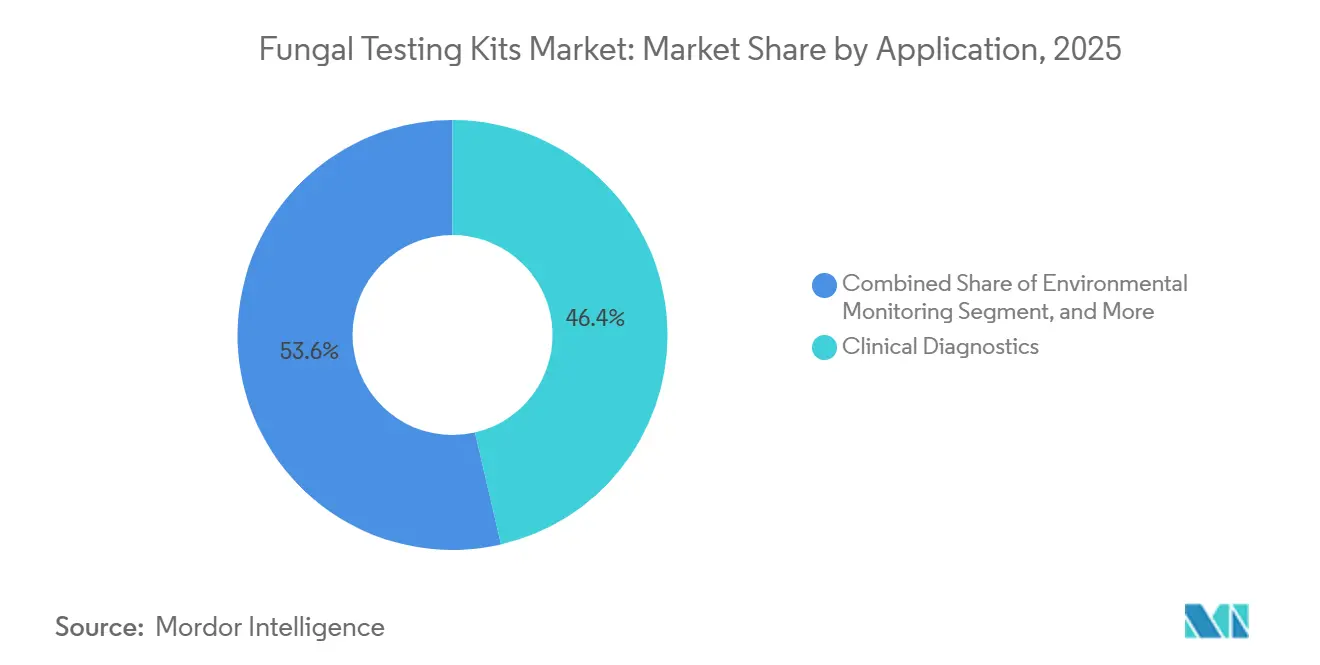
Clinical diagnostics held 46.37% of the fungal testing kits market share in 2025. The segment is supported by use in intensive care, oncology, and transplant settings, where fast identification influences antifungal treatment decisions. The WHO identified clinical settings as a primary destination for diagnostic investment because of the mortality associated with critical-priority pathogens such as Candida auris and Aspergillus fumigatus. Food and agriculture is the second-largest application areas. Its demand is supported by the required mycotoxin surveillance under EU rules and FDA action-level enforcement. These obligations make testing a recurring operational need rather than a discretionary purchase.
Environmental monitoring is forecast to grow at a 8.98% CAGR through 2031. The fungal testing kits market size for this application is supported by monitoring needs in pharmaceutical cleanrooms, water systems, and air-handling units. Mold risk in built environments is also receiving greater attention as contamination conditions change. ISO/IEC 17025 accreditation requirements and USP <797> standards are pushing facilities beyond periodic culture plates toward methods with quantitative outputs. Veterinary and cosmetic safety uses remain smaller applications. They are attracting early innovation activity, including testing in food-producing animals where antifungal resistance is emerging as a regulatory concern.



By Technology: Molecular Diagnostics Holds the Largest Position and Immunoassays Grow Fastest
Molecular diagnostics held 38.74% of technology revenue in 2025. PCR-based systems offer results within hours and species-level resolution that culture cannot usually deliver at the same speed. The fungal testing kits market includes qPCR, LAMP, digital droplet PCR, and CRISPR-based assays. A 2025 review described portable molecular tools that support near-real-time fungal identification and resistance prediction. QIAGEN launched its CE-IVDR-certified QIAstat-Dx BCID GPF Plus AMR Panel in April 2026, detecting 20 fungal and gram-positive targets and 10 resistance markers in 1 hour from positive blood cultures. Such panels combine identification and resistance information in one workflow.
Immunoassays are forecast to grow at a 9.23% CAGR through 2031. Their demand reflects the use of beta-D-glucan and galactomannan assays, which can provide infection signals earlier than culture. They can also avoid invasive specimen collection in some settings. The fungal testing kits market growth in immunoassays is supported by their fit with routine clinical screening and decentralized testing. The fungal testing kits market retains substantial culture-kit and consumable volumes in food and environmental testing. Their low cost and simple operation remain appropriate for routine monitoring work.
By Test Type: Molecular Tests Lead and Susceptibility Testing Becomes More Important
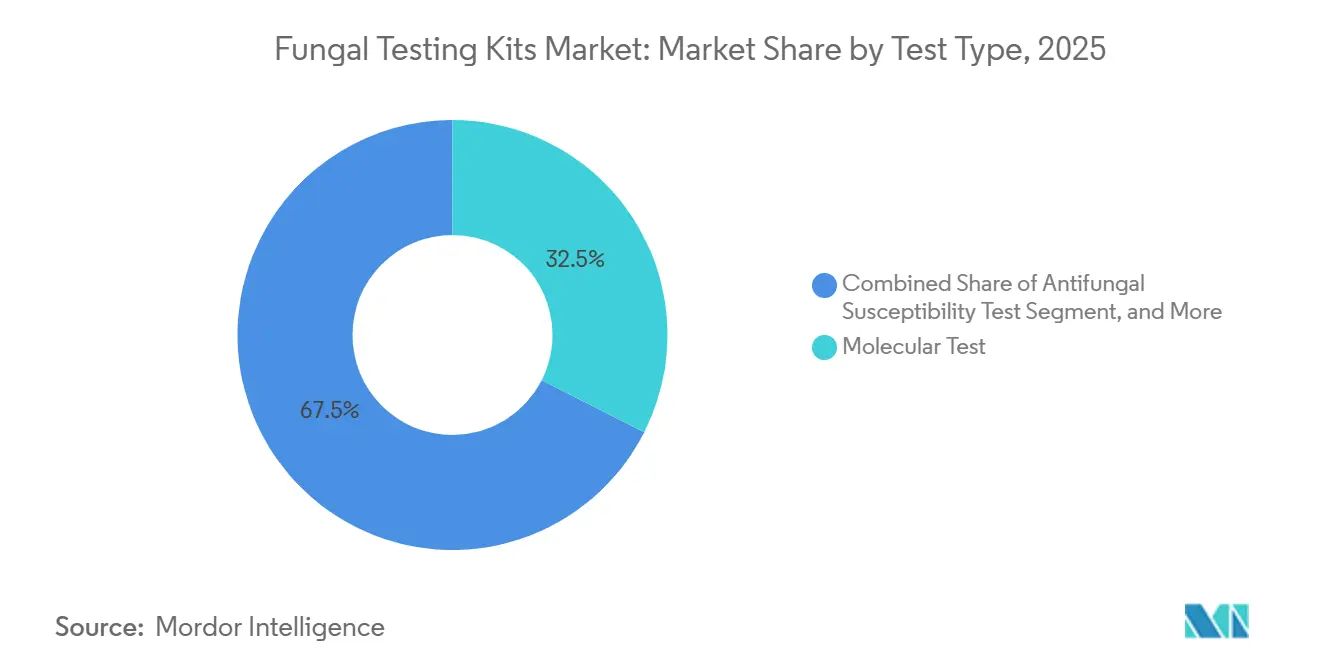
Molecular tests held 32.46% of test-type revenue in 2025. qPCR and next-generation sequencing formats are becoming central to invasive fungal disease assessment in tertiary care. China issued the national standard WS/T 497-2026 for laboratory diagnosis of invasive fungal disease, which is expected to support more consistent molecular testing protocols across medical institutions. Chromogenic and culture-based tests remain important in high-throughput screening. Thermo Fisher Scientific, Inc. launched Brilliance Candida 2 Agar in Europe and Spectra Candida Agar in the United States in March 2026, supporting visual differentiation of Candida species, including Candida auris. This shows that the fungal testing kits market continues to support culture innovation, where a focused clinical use remains clear.
Antifungal susceptibility tests are forecast to grow at a 9.84% CAGR through 2031. The fungal testing kits market is benefiting from the clinical need to identify resistance patterns in Candida auris. U.S. Candida auris clinical cases exceeded 6,197 in 2024, and the FDA allocated FY2026 funding to advance susceptibility test criteria for the pathogen. EUCAST published Candida auris clinical breakpoints in 2025, which supports validation of standardized commercial kits. Many hospitals that offer susceptibility testing still send work to external laboratories. Compact automated systems for on-site use can address this remaining gap.
By Sample Type: Blood Leads While Urine Testing Meets Noninvasive Demand
Blood-based testing held 36.28% of sample-type revenue in 2025. Blood is central to the diagnosis of invasive candidiasis and systemic aspergillosis because circulating cell-free DNA and antigens can appear before culture positivity. The FungiFlex Mold Panel detects 14 mold species from plasma in under 24 hours. These platforms can reduce reliance on more invasive procedures, including bronchoalveolar lavage. Skin samples retain meaningful use in primary care and dermatology. The CDC estimated 9 million outpatient visits annually in the United States for superficial fungal infections, including ringworm and nail disease.
Urine-based testing is forecast to grow at a 10.35% CAGR through 2031. Its use is expanding for cryptococcal antigen screening in HIV-positive populations in resource-limited settings. Urine testing avoids venipuncture and lowers biosafety needs, which can support community-level screening. The fungal testing kits market also includes urine-matrix assays for ochratoxin A and aflatoxin exposure monitoring. Vaginal secretion samples serve dermatology, gynecology, and oral health applications. The fungal testing kits market also supports veterinary uses through other samples, where specialty developers may find higher-value opportunities.
By End User: Hospitals and Clinics Lead While Diagnostic Laboratories Expand
Hospitals and clinics held 42.63% of end-user revenue in 2025. Their position reflects the need for on-site or nearby testing for inpatient fungal infection management. Academic medical centers often operate dedicated mycology laboratories that serve as regional reference sites. These facilities use advanced mass spectrometry and molecular systems for complex cases. Outpatient diagnosis and surveillance are gradually moving some work toward specialized laboratories. This transfer does not reduce the fungal testing kits market demand because hospitals continue to initiate testing and manage treatment decisions.
Diagnostic laboratories are forecast to grow at an 11.46% CAGR through 2031. The fungal testing kits market size for this channel is supported by the externalization of molecular and susceptibility workflows from hospital laboratories. Specialized facilities can achieve better instrument utilization and purchasing efficiency for consumables. Research institutes are smaller users but remain important early adopters of metagenomic and pan-fungal methods. Environmental monitoring firms, food manufacturers, and veterinary services make up the remaining end-user base. Their repeat purchases are often linked to compliance schedules and routine quality-control programs.
Geography Analysis
North America held 36.72% of the fungal testing kits market share in 2025. The region has established clinical laboratory networks, reimbursement mechanisms for molecular tests, and active surveillance through the CDC and the Antimicrobial Resistance Laboratory Network. Candida auris clinical cases in the United States exceeded 6,197 in 2024, prompting faster screening and species-specific testing in healthcare settings. The United States accounts for most regional demand, while Canada and Mexico are increasing investment in tertiary-hospital diagnostics. The July 2025 transaction involving Waters and BD's Biosciences and Diagnostic Solutions business was valued at USD 17.5 billion and is expected to focus the combined business on regulated, high-volume diagnostic workflows.
Europe held the second-largest regional position in 2025. Germany is an anchor market, and the EU IVDR transition favors manufacturers that can meet Notified Body compliance requirements. The transition raises the quality threshold for fungal kits, while creating barriers for smaller companies with products subject to revised classification. EU mycotoxin rules provide a legally enforceable base of recurring food-safety testing across Germany, France, Italy, and Spain. QIAGEN launched the QIAstat-Dx BCID GN Plus AMR Panel in Europe in July 2026, extending bloodstream testing coverage to 33 pathogen targets and 28 resistance markers across its panels. This regulatory setting makes certification a key condition for fungal testing kits market commercialization of broad syndromic panels.
Asia-Pacific is forecast to grow at a 13.67% CAGR through 2031. China has established national laboratory requirements for invasive fungal disease through WS/T 497-2026, creating a clearer pathway for commercial procurement. India offers substantial potential because of healthcare expansion and a large population vulnerable to cryptococcal meningitis. Japan, South Korea, and Australia add demand through advanced diagnostics and food safety systems. The Middle East and Africa are supported by healthcare modernization in GCC states, but laboratory infrastructure and cold-chain gaps remain. South America also offers growth through Brazil's agricultural sector and its need for mycotoxin compliance testing.

Competitive Landscape
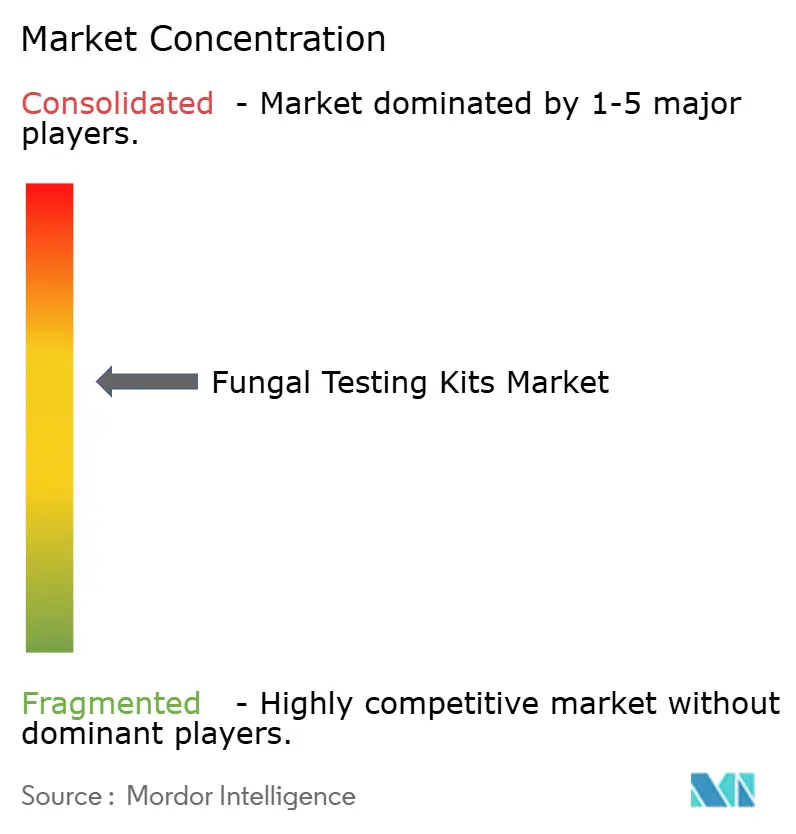
The fungal testing kits market is moderately consolidated in high-complexity clinical testing. Thermo Fisher Scientific, bioMérieux, QIAGEN, F. Hoffmann-La Roche, and Becton Dickinson have strong positions in molecular, culture, and clinical diagnostics. Neogen, Romer Labs, VICAM, and Charm Sciences are established specialists in agricultural and food-safety testing. Bruker's MALDI-TOF systems remain widely used for rapid species-level identification in hospital mycology laboratories. The company has strengthened fungal database coverage through software updates rather than hardware refreshes. The fungal testing kits industry is seeing more overlap as molecular suppliers add fungal targets to syndromic panels and immunoassay suppliers expand their assay capabilities.
QIAGEN's April 2026 QIAstat-Dx BCID GPF Plus AMR Panel is one example of this strategy because it combines fungal targets with gram-positive pathogens and resistance markers in one platform. Thermo Fisher's March 2026 chromogenic Candida media launch shows continued investment in targeted culture workflow. Zepto Life Technology's FungiFlex portfolio represents a further approach based on cell-free DNA testing from blood samples. This approach may reduce reliance on blood culture or bronchoalveolar lavage if broader regulatory clearance is obtained. The fungal testing kits market therefore includes competition among established instrument providers, assay developers, and newer liquid-biopsy platforms.
Hospital-based antifungal susceptibility testing remains an area with open demand because many facilities rely on external laboratories. Pan-fungal metagenomic panels that identify rare species and resistance mutations in one run are still at an early commercial stage. Low-cost immunoassays for mycotoxin testing in grain storage also remain limited for smallholder farmers in South Asia and sub-Saharan Africa. Neogen agreed in March 2026 to sell its Genomics business to Zoetis for USD 160 million, enabling more focus on food safety and natural-toxin testing. This transaction supports its position in mycotoxin testing rather than broader diversification. No combined share for the largest companies was provided, so a quantitative concentration score cannot be assigned without introducing unsupported data.
Fungal Testing Kits Industry Leaders
Agilent Technologies, Inc.
Becton, Dickinson and Company
bioMérieux SA
Bio-Rad Laboratories, Inc.
Bruker Corporation
- *Disclaimer: Major Players sorted in no particular order

Recent Industry Developments
- July 2026: QIAGEN launched the CE-IVDR-certified QIAstat-Dx BCID GN Plus AMR Panel in Europe, detecting 13 gram-negative pathogen targets and 18 AMR markers from positive blood cultures in approximately one hour. Combined with the April 2026 GPF Plus AMR Panel, QIAGEN now offers 33 pathogen targets and 28 AMR markers on a single platform, establishing the most comprehensive bloodstream infection fungal-plus-bacterial syndromic offering in the CE-IVDR market to date. FDA regulatory review for the GN panel is underway.
- June 2026: WHO published its Blueprint for Strengthening Responses to Fungal Disease and Antifungal Resistance, providing countries with a structured framework to close critical gaps in diagnostics, surveillance, and treatment access. The Blueprint directly designates laboratory diagnostic kits as a priority investment area, with implementation catalysts expected to drive procurement programs in 141 GLASS-participating countries by 2027–2028.
- April 2026: QIAGEN launched the QIAstat-Dx BCID GPF Plus AMR Panel (CE-IVDR certified), detecting 20 gram-positive and fungal pathogen targets and 10 AMR markers in approximately one hour, with over 5,200 QIAstat-Dx instruments now placed globally. The panel extends QIAstat-Dx beyond respiratory and gastrointestinal testing into the bloodstream infection segment.


Global Fungal Testing Kits Market Report Scope
As per the scope of the report, fungal testing refers to the diagnostic procedures used to detect and identify fungal infections in humans, animals, food, or the environment. It involves methods such as culture-based assays, molecular diagnostics (PCR, sequencing), and rapid test kits to confirm the presence of pathogenic fungi. These tests are critical for guiding treatment decisions, monitoring outbreaks, and ensuring safety in clinical, agricultural, and industrial settings.
The fungal testing market is segmented by application, technology, test type, sample type, end user, and geography. By application, the market is segmented into clinical diagnostics, food & agriculture, environmental monitoring, and others. By technology, the market is segmented into molecular diagnostics, immunoassays, and culture‑based kits & consumables. By test type, the market is segmented into molecular test, chromogenic test, immunoassay test, culture-based test, antifungal susceptibility test, and others. By sample type, the market is segmented into skin, urine, vaginal secretion, blood, and others. By end user, the market is segmented into diagnostic laboratories, hospitals and clinics, research institutes, and others. The geography segment is further divided into North America, Europe, Asia-Pacific, the Middle East and Africa, and South America. The report also covers the estimated market sizes and trends for 17 countries across major regions globally. The report offers the market size and forecasts in value (USD) for the above segments.
| Clinical Diagnostics |
| Food & Agriculture |
| Environmental Monitoring |
| Others |
| Molecular Diagnostics |
| Immunoassays |
| Culture‑based Kits & Consumables |
| Molecular Test |
| Chromogenic Test |
| Immunoassay Test |
| Culture-Based Test |
| Antifungal Susceptibility Test |
| Others |
| Skin |
| Urine |
| Vaginal Secretion |
| Blood |
| Others |
| Diagnostic Laboratories |
| Hospitals and Clinics |
| Research Institutes |
| Others |
| North America | United States |
| Canada | |
| Mexico | |
| Europe | Germany |
| United Kingdom | |
| France | |
| Italy | |
| Spain | |
| Rest of Europe | |
| Asia-Pacific | China |
| India | |
| Japan | |
| Australia | |
| South Korea | |
| Rest of Asia-Pacific | |
| Middle East and Africa | GCC |
| South Africa | |
| Rest of Middle East and Africa | |
| South America | Brazil |
| Argentina | |
| Rest of South America |
| By Application | Clinical Diagnostics | |
| Food & Agriculture | ||
| Environmental Monitoring | ||
| Others | ||
| By Technology | Molecular Diagnostics | |
| Immunoassays | ||
| Culture‑based Kits & Consumables | ||
| By Test Type | Molecular Test | |
| Chromogenic Test | ||
| Immunoassay Test | ||
| Culture-Based Test | ||
| Antifungal Susceptibility Test | ||
| Others | ||
| By Sample Type | Skin | |
| Urine | ||
| Vaginal Secretion | ||
| Blood | ||
| Others | ||
| By End User | Diagnostic Laboratories | |
| Hospitals and Clinics | ||
| Research Institutes | ||
| Others | ||
| By Geography | North America | United States |
| Canada | ||
| Mexico | ||
| Europe | Germany | |
| United Kingdom | ||
| France | ||
| Italy | ||
| Spain | ||
| Rest of Europe | ||
| Asia-Pacific | China | |
| India | ||
| Japan | ||
| Australia | ||
| South Korea | ||
| Rest of Asia-Pacific | ||
| Middle East and Africa | GCC | |
| South Africa | ||
| Rest of Middle East and Africa | ||
| South America | Brazil | |
| Argentina | ||
| Rest of South America | ||


Key Questions Answered in the Report
What is the forecast for fungal testing kits through 2031?
The fungal testing kits market is forecast to reach USD 4.95 billion by 2031, growing at an 8.23% CAGR from 2026.
Which application holds the largest share?
Clinical diagnostics held 46.37% of revenue in 2025, supported by use in intensive care, oncology, and transplant settings.
Which testing technology is growing fastest?
Immunoassays are forecast to grow at a 9.23% CAGR through 2031 because they can provide earlier infection signals than culture in some workflows.
Why is antifungal susceptibility testing important?
Antifungal susceptibility tests are forecast to grow at a 9.84% CAGR as providers need resistance information for pathogens such as Candida auris.
Which region is expanding most quickly?
Asia-Pacific is forecast to grow at an 13.67% CAGR through 2031, supported by regulatory progress and healthcare expansion.
What limits adoption of advanced fungal diagnostics?
High test costs, laboratory infrastructure gaps, limited assay standardization, and difficulty separating colonization from active infection remain key barriers.
Page last updated on:






