
Foam Dressing Market Size and Share
Market Overview
| Study Period | 2020 - 2031 |
|---|---|
| Market Size (2026) | USD 1.82 Billion |
| Market Size (2031) | USD 2.30 Billion |
| Growth Rate (2026 - 2031) | 4.76 % |
| Fastest Growing Market | Asia Pacific |
| Largest Market | North America |
| Market Concentration | Medium |
Major Players *Disclaimer: Major Players sorted in no particular order Image © Mordor Intelligence. Reuse requires attribution under CC BY 4.0. | |
Foam Dressing Market Analysis by Mordor Intelligence
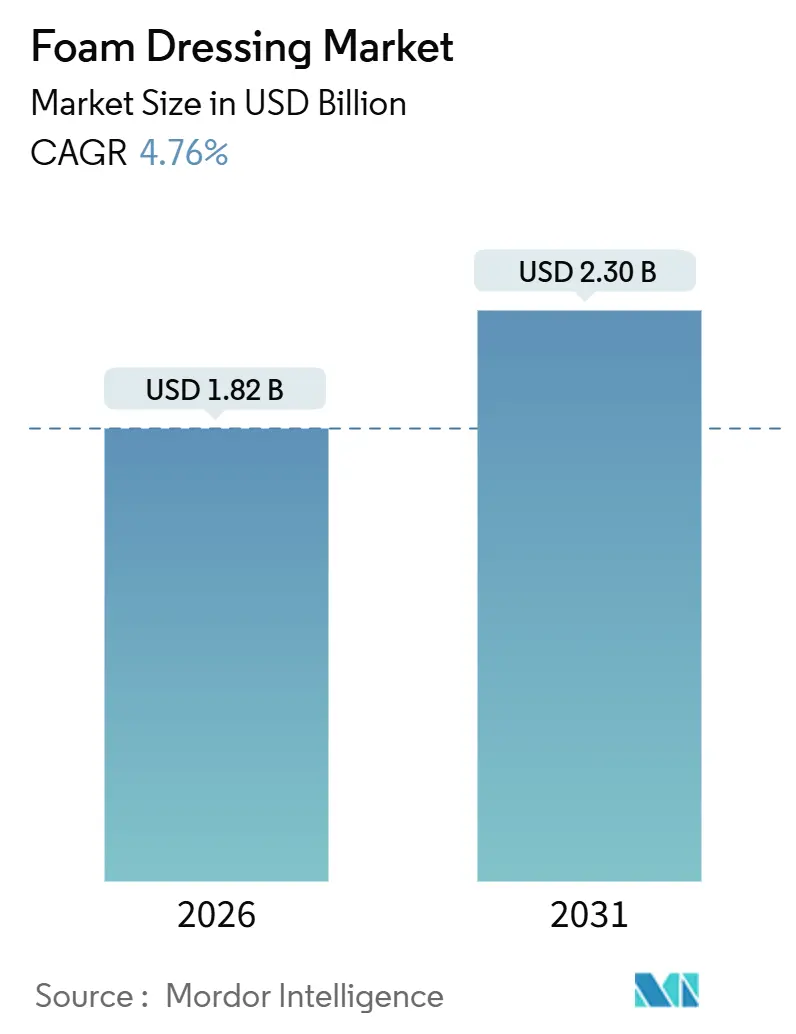
The Foam Dressing Market size is estimated at USD 1.82 billion in 2026, and is expected to reach USD 2.30 billion by 2031, at a CAGR of 4.76% during the forecast period (2026-2031).
The growth trajectory is underpinned by hospital supply-chain digitization that is cutting inventory carrying costs while keeping high-turnover dressings available on demand, and by antimicrobial peptide-infused polyurethane foams that are proving effective against multidrug-resistant pathogens. Suppliers who link procurement efficiency with clinical efficacy are winning formulary approvals because procurement officers value reduced waste, and wound-care specialists value lower infection risk. Accelerating surgical volumes, the shift of post-acute care into outpatient settings, and a growing geriatric population with fragile skin further reinforce demand momentum. Meanwhile, manufacturers are differentiating through silicone-adhesive technology that enables atraumatic removal and extended wear times, a combination that reduces nursing visits in home healthcare programs. Environmental scrutiny over single-use polyurethane waste, however, is prompting life-cycle analyses and recycled-polyol formulations, signaling that sustainability will become a competitive requirement rather than an optional extra.
Key Report Takeaways
- By application, chronic wounds commanded 62.45% foam dressing market share in 2025, while acute wounds are forecast to register a 6.89% CAGR through 2031.
- By product type, adhesive foam dressings held 58.65% of the foam dressing market in 2025, yet non-adhesive variants are poised for a 6.54% CAGR through 2031.
- By end user, hospitals accounted for 59.65% of revenue in 2025; home healthcare is projected to expand the fastest at a 7.32% CAGR through 2031.
- By distribution channel, retail pharmacies and drug stores led with 68.53% share in 2025, while online pharmacies are on track for a 7.54% CAGR to 2031.
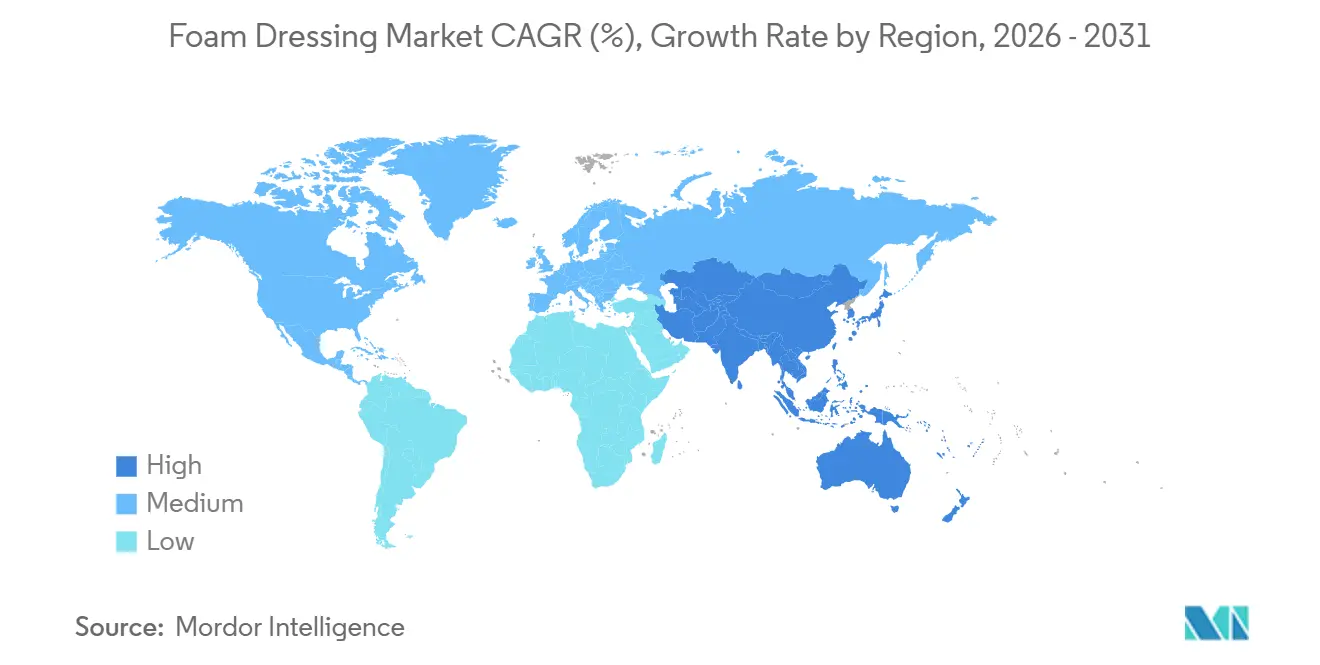
- By geography, North America dominated with 43.12% share in 2025, whereas Asia-Pacific is expected to post the highest regional CAGR at 5.43% through 2031.
Note: Market size and forecast figures in this report are generated using Mordor Intelligence’s proprietary estimation framework, updated with the latest available data and insights as of January 2026.
Market Trends and Insights
Drivers Impact Analysis of Foam Dressing Market*
| Driver | (~) % Impact on CAGR Forecast | Geographic Relevance | Impact Timeline |
|---|---|---|---|
| Rising prevalence of chronic and acute wounds globally | +1.2% | Global, with peak impact in North America, Europe, and Asia-Pacific urban centers | Long term (≥ 4 years) |
| Growing geriatric population susceptible to complex wounds | +0.9% | Global, concentrated in North America, Europe, Japan, and China | Long term (≥ 4 years) |
| Technological advancements in absorbent polyurethane foam materials | +0.8% | Global, early adoption in North America and Europe, spillover to Asia-Pacific | Medium term (2-4 years) |
| Increasing adoption of advanced wound care in outpatient settings | +0.7% | North America, Europe, and Asia-Pacific metropolitan areas | Medium term (2-4 years) |
| Hospital supply chain digitization enabling just-in-time advanced dressings | +0.5% | North America and Europe, early pilots in Asia-Pacific tier-1 cities | Short term (≤ 2 years) |
| Emergence of antimicrobial peptide-infused foams targeting multidrug-resistant pathogens | +0.4% | Global, regulatory approvals concentrated in North America and Europe | Medium term (2-4 years) |
| Source: Mordor Intelligence | |||
Rising Prevalence of Chronic and Acute Wounds Globally
Chronic wounds affect 10.5 million Medicare beneficiaries in the United States, generating USD 28 billion in annual treatment costs and sustaining demand for high-absorbency foam dressings that manage exudate in diabetic foot, pressure, and venous leg ulcers. International Working Group on the Diabetic Foot guidelines endorse foam dressings for moderate exudate ulcers, a recommendation that has accelerated hospital formulary uptake[1]International Working Group on the Diabetic Foot, “IWGDF Guidelines 2023,” iwgdf.org. India mirrors this need: 15% of its diabetic population develops foot ulcers, creating millions of potential users as secondary and tertiary care networks expand. Surgical procedures are rising in step with an aging population, and post-operative incisions require atraumatic, moisture-controlling foams to prevent maceration. Trauma and burn injuries add another layer of demand, especially in regions with high accident and industrial activity, where emergency departments routinely stock foam dressings for rapid bleeding control and infection prevention.
Growing Geriatric Population Susceptible to Complex Wounds
Adults aged 65 and older are the fastest-growing demographic and experience elevated rates of pressure ulcers, venous insufficiency, and diabetes. The National Pressure Injury Advisory Panel recommends the use of multi-layer foam dressings on heels and sacral areas for at-risk patients. This practice has become standard in nursing homes and long-term care[2]National Pressure Injury Advisory Panel, “2024 Prevention and Treatment Guidelines,” npiap.org. Silicone-adhesive foams mitigate skin tears during removal, improving comfort and adherence to care plans. As Asia-Pacific life expectancy rises, wound management is shifting from hospitals to community settings, where non-specialist caregivers rely on foam dressings that can remain in place for up to 7 days, reducing visit frequency and labor costs. This demographic evolution is thus locking in a long-term customer base for the foam dressing market.
Technological Advancements in Absorbent Polyurethane Foam Materials
Material science breakthroughs have re-engineered open-cell foams into intelligent dressings. Antimicrobial peptides, silver nanoparticles, and quaternized chitosan are embedded within the polyurethane matrix to curb biofilm formation without triggering resistance. Defensin-conjugated polymers further disrupt bacterial membranes, tackling hospital-acquired pressure ulcer pathogens. Pore-size optimization now balances fluid absorption and vapor transmission, keeping wound beds moist yet non-macerated. Moisture-vapor transmission rates have risen, allowing dressings to handle heavy exudate. Life-cycle assessments reveal that foams formulated with 50-75% recycled polyols can cut environmental impact by up to 37%, aligning clinical performance with sustainability targets.
Increasing Adoption of Advanced Wound Care in Outpatient Settings
Value-based payment models reimburse outcomes, not inputs. Under the 2025 CMS DMEPOS fee schedule, surgical dressings saw a 2.4% rate lift, underscoring policy support for technologies that shorten healing times. Home-health agencies combating nurse shortages prefer silicone-bordered foams that remain effective for a week, reducing visit frequency. Outpatient wound clinics are proliferating in suburban corridors, and telemedicine platforms now integrate high-resolution imaging that lets clinicians assess foam dressing saturation remotely, minimizing patient travel. These shifts are re-routing purchasing decisions from hospital central stores to outpatient formularies, broadening the footprint of the foam dressing market.
Restraints Impact Analysis of Foam Dressing Market*
| Restraint | (~) % Impact on CAGR Forecast | Geographic Relevance | Impact Timeline |
|---|---|---|---|
| High cost of advanced siliconed foam dressings | -0.6% | Global, pronounced in developing economies and rural zones | Medium term (2-4 years) |
| Reimbursement gaps across developing economies | -0.4% | Asia-Pacific (ex-Japan), Middle East & Africa, South America | Long term (≥ 4 years) |
| Environmental concerns over single-use polyurethane waste | -0.3% | Europe and North America; regulatory pressure rising in Asia-Pacific | Long term (≥ 4 years) |
| Supply disruptions in medical-grade polyols and isocyanates | -0.2% | Gulf Coast (US) and Asia-Pacific chemical hubs | Short term (≤ 2 years) |
| Source: Mordor Intelligence | |||
High Cost of Advanced Siliconed Foam Dressings
Silicone-adhesive technology improves patient comfort but commands premium prices. A 2024 cost-effectiveness study found that a silicone foam regimen cut total treatment costs by 33% through fewer changes, yet the upfront unit price still deters adoption in price-sensitive markets. Public reimbursement lists in India and much of Africa exclude advanced dressings, forcing hospitals either to absorb costs or fall back on cotton gauze. Manufacturers are responding with tiered portfolios: basic polyurethane foams for budget-constrained facilities and premium silicone lines for tertiary centers, but the split risks widening outcome disparities.
Reimbursement Gaps Across Developing Economies
Fragmented payment systems across Asia-Pacific and Latin America limit uptake of premium dressings. India’s state insurance schemes rarely reimburse foam products, confining use to urban private hospitals. China’s provincial formularies vary, creating market-access uncertainty. Without outcome-based reimbursement structures, payers struggle to quantify economic returns from faster healing and lower infection rates, impeding conversion from traditional dressings to advanced foams.
*Our forecasts treat driver/restraint impacts as directional, not additive. The impact forecasts reflect baseline growth, mix effects, and variable interactions.
Foam Dressing Market Segment Analysis
By Product Type:
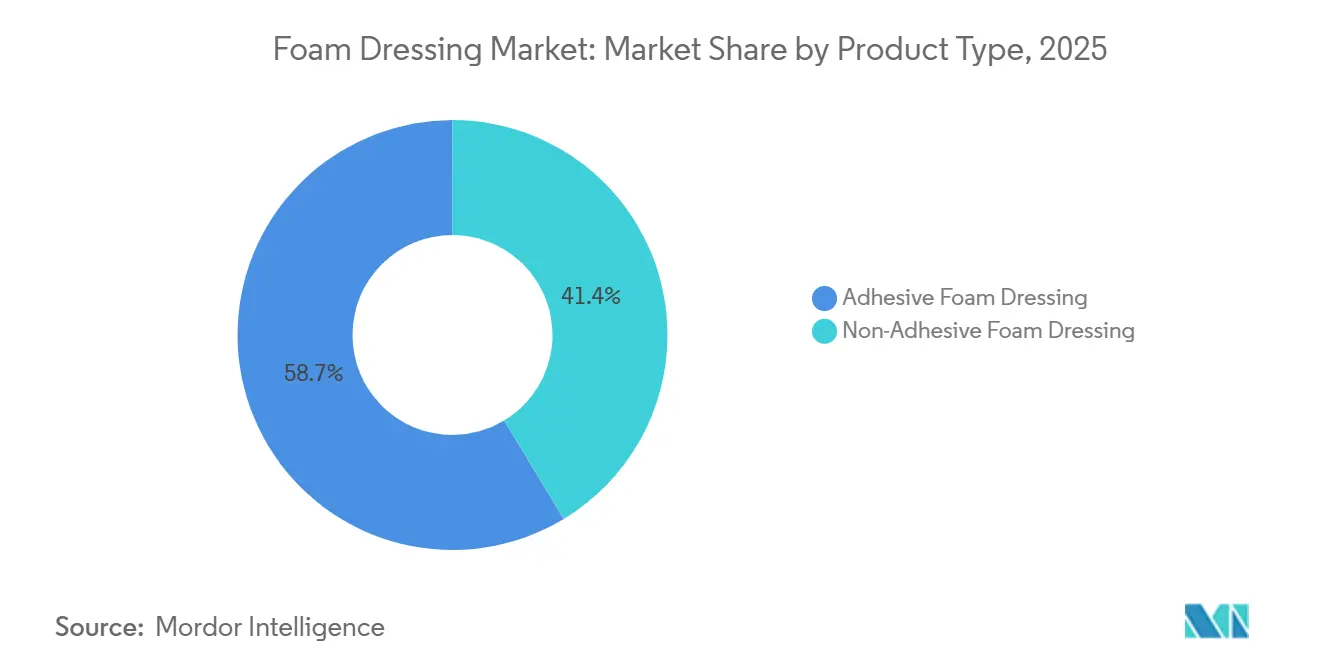
Silicone Adhesives Dominate, Non-Adhesives Gain GroundSilicone-bordered variants captured 58.65% of foam dressing market share in 2025, a leadership position built on gentle adhesion, reduced pain, and wear times up to seven days. Their dominance in surgical suites and wound centers translates into repeat purchasing by hospital systems that prioritize patient-experience metrics. The non-adhesive subsegment, however, is projected to grow at a 6.54% CAGR to 2031, outpacing overall foam dressing market growth as home-health providers favor repositionable dressings that reduce skin trauma in elderly patients. Antimicrobial innovations—silver, PHMB, and peptide-infused foams—are carving a premium micro-niche, although guideline skepticism about routine topical antimicrobials tempers adoption.
Despite premium pricing, silicone adhesives retain formulary preference when payer coverage is available, as lower nursing-time costs offset higher unit prices. In contrast, community clinics and resource-constrained hospitals still purchase acrylic-adhesive or unbordered foams strictly on price. FDA Class I exemption for synthetic non-adhesive foams (21 CFR §878.4020) simplifies U.S. market entry, intensifying price competition at the value end of the spectrum[3]U.S. Food & Drug Administration, “Class I Exemptions—21 CFR §878.4020,” fda.gov. The split between bordered and non-bordered designs further segments demand: bordered for sacral and heel pressure ulcer prevention, non-bordered for irregular wound geometries or as secondary cover over fillers.



By Application:
Chronic Wounds Lead While Acute Wounds AccelerateChronic wounds accounted for 62.45% of the foam dressing market in 2025, underscoring the burden of diabetic foot, pressure, and venous leg ulcers. Medicare’s USD 28 billion outlay on chronic-wound care illustrates the financial scale driving policy attention. Foam dressings are first-line therapy for moderate-exudate diabetic foot ulcers because they maintain moist healing without maceration. Pressure ulcer prophylaxis in long-term care continues to expand usage, mainly as facilities apply sacral and heel foams preventively under NPIAP guidance. Venous leg ulcers, with their high recurrence rate, sustain a steady demand despite their lower prevalence.
Acute wounds, though smaller in absolute terms, are on track for a 6.89% CAGR, fueled by orthopedic, cardiovascular, and abdominal surgeries that leave high-drainage incisions. Emergency rooms rely on foams for trauma and lacerations, appreciating the rapid fluid uptake and cushioning against shear forces. Burn units use silicone-bordered silver foams as pain-reducing secondary layers over graft sites. The acute-wound surge is reinforced by expanding elective-surgery backlogs post-COVID, boosting short-cycle consumption of dressings in hospital settings.
By End-User:
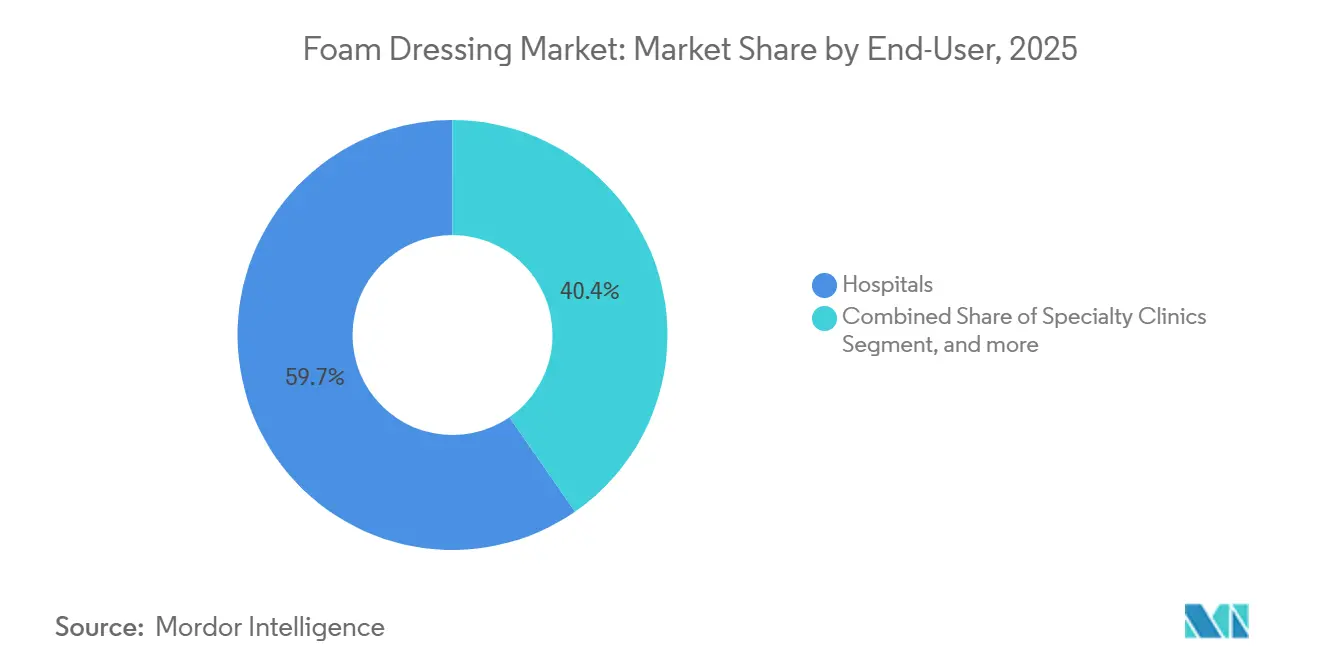
Home Healthcare Disrupts Hospital DominanceHospitals retained 59.65% revenue in 2025, yet payer incentives to shorten inpatient stays are redirecting chronic-wound care to community settings. Home-health agencies are expected to post a 7.32% CAGR through 2031 because silicone-bordered foams reduce dressing changes, saving labor hours when nursing resources are scarce. Specialty outpatient wound clinics serve suburban and rural locales lacking hospital-based centers, while nursing homes integrate prophylactic foams into pressure-injury prevention bundles under pay-for-performance rules. Military field hospitals and disaster-relief operations comprise a small but mission-critical niche, stocking long-shelf-life foams for mass-casualty readiness.
By Distribution Channel:
Online Pharmacies Disrupt Retail DominanceRetail pharmacies and drug stores accounted for 68.53% of sales in 2025, driven by walk-in consumer purchases and pharmacist recommendations. Online pharmacies, however, are forecast to deliver a 7.54% CAGR to 2031 as subscription models and tele-consults appeal to caregivers managing chronic wounds at home. Amazon Pharmacy’s algorithm-driven replenishment reminders illustrate how e-commerce ecosystems can lock in repeat orders. Direct hospital tenders remain central to bulk purchasing, but group-purchasing organizations are streamlining formularies, forcing manufacturers to undergo competitive rebids every 2 to 3 years, and driving price transparency across regions.
Geography Analysis
North America Foam Dressing Market
North America accounted for 43.12% of 2025 revenue, driven by Medicare’s coverage framework and the region’s advanced hospital digital supply chains. Canada’s provincial formularies reimburse foam dressings for venous-leg ulcer and pressure-injury protocols, while Mexico’s private hospital expansion leverages premium foams to attract medical tourists. Yet reimbursement audits show a 57.6% improper-payment rate for surgical dressings, prompting documentation tightening that could slow new-product adoption.
Europe Foam Dressing Market
Europe remains a mature but margin-pressured territory. The United Kingdom’s NHS spends more than GBP 110 million annually on advanced dressings in primary care, but NICE’s cautious stance on clinical superiority keeps procurement officers laser-focused on cost-effectiveness. Germany and France maintain high uptake of silicone-adhesive foams in surgical wards, whereas southern European markets lean toward economic variants. EU green-deal policies are nudging manufacturers toward recycled-polyol foams, with early LCA studies demonstrating up to 37% lower global-warming impact. Regulatory complexity and rising private-label competition, however, squeeze incumbent margins.
APAC Foam Dressing Market
Asia-Pacific is the fastest-growing cluster, forecast for a 5.43% CAGR. China’s 116 million diabetics and India’s 15% diabetic-foot-ulcer prevalence anchor huge addressable populations. Domestic manufacturers offering 30-50% cheaper polyurethane foams are fragmenting the landscape, pressing multinationals to release tier-two lines. Japan, despite demographic headwinds, sustains premium sales thanks to robust reimbursement and standardized wound-care pathways. Southeast Asian nations are piloting tele-wound-care programs, potentially leapfrogging distribution constraints.
MEA and South America Foam Dressing Market
The Middle East & Africa and South America offer nascent but strategically relevant opportunities. GCC governments are building specialist wound-care units in pursuit of medical-tourism revenue, while Brazil’s private hospitals drive adoption amid currency swings. Limited reimbursement and out-of-pocket payment norms restrict foam dressing penetration to urban tertiary centers, yet rising diabetes incidence underscores long-term potential once coverage widens.

Competitive Landscape
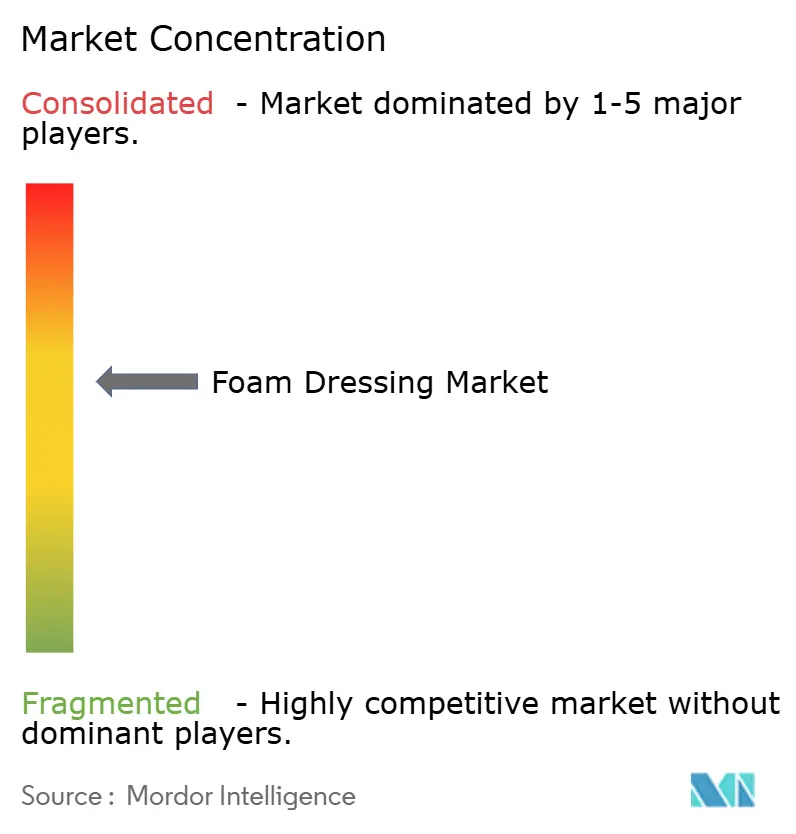
The foam dressing market is moderately concentrated. Smith+Nephew, Mölnlycke, ConvaTec, and newly independent Solventum collectively occupy the strategic high ground, leveraging broad portfolios, robust clinical datasets, and entrenched supplier contracts. Product launches such as ConvaTec’s AQUACEL Foam Pro and Mölnlycke’s Mepilex Border Flex Lite illustrate a steady cadence of incremental innovation that keeps hospital buyers engaged. Digital health convergence is unfolding, with dressing-embedded sensors transmitting exudate metrics to cloud dashboards, enabling early intervention and supporting value-based contracts.
Regional challengers in China and India are scaling rapidly by exploiting local polyurethane supply chains and lower labor costs. Ningbo Medelast and Zhejiang Kawamoto now compete head-to-head on provincial tenders, offering price points unattainable for multinationals without tiered branding. M&A continues to reshape the field: Advanced Medical Solutions’ EUR 132.5 million purchase of Peters Surgical in 2024 roughly doubled its surgical revenue, while BioStem Technologies’ planned acquisition of ProgenaCare assets positions it to merge bioengineered matrices with traditional foams.
Regulatory change represents the wild card. The FDA’s 2023 notice that antimicrobial dressings may require PMAs will raise the evidence bar, rewarding firms with clinical-trial heft and potentially thinning smaller players reliant on 510(k) routes. Sustainability credentials are also emerging as a differentiator; firms publishing life-cycle data and recycled-content targets gain an edge with environmentally conscious procurement committees.
Foam Dressing Industry Leaders
Mölnlycke Health Care AB
Smith+Nephew
Convatec Inc.
B. Braun SE
Solventum (3M)
- *Disclaimer: Major Players sorted in no particular order
Foam Dressing Market Companies Covered in this Report
- Aero Healthcare AU Pty Ltd
- B. Braun
- Cardinal Health
- Changzhou Major Medical Products Co., Ltd.
- Coloplast
- Convatec
- Datt Mediproducts Private Limited
- DermaRite Industries, LLC
- Essity
- Medline Industries, L.P.
- Mediq
- Molnlycke Health Care
- Ningbo Medelast Co., Ltd.
- Smiths Group
- Solventum (3M)
- Tasami
- Zhejiang Kawamoto Health Care Products Co., Ltd.

Recent Industry Developments in Foam Dressing Market
- October 2025: Smith+Nephew announced the release of new scientific data supporting the efficacy of their ALLEVYN COMPLETE CARE 5-Layer Foam Dressing in preventing pressure injuries. The data highlight improved skin protection and wound-healing outcomes. This development reinforces Smith+Nephew's commitment to advancing wound care solutions.
- September 2025: Mölnlycke Health Care broke ground on a USD 135 million expansion of its Brunswick, Maine plant to boost Mepilex foam dressing output
- March 2025: Mölnlycke Health Care agreed to purchase a wound-cleansing specialist, broadening its advanced wound-care portfolio
- November 2024: BioStem Technologies signed an LOI to acquire ProgenaMatrix and revyve Antimicrobial Wound Gel assets from ProgenaCare


Global Foam Dressing Market Report Scope
As per scope of the report, foam dressings are advanced wound care products made of soft, hydrophilic foam material that absorb exudate while maintaining a moist healing environment. They provide cushioning and protection for the wound, reducing pain and risk of infection. Foam dressings are commonly used for moderate to heavily exuding wounds.
The Foam Dressing Market is Segmented by Product Type (Adhesive Foam Dressing and Non-Adhesive Foam Dressing), Application (Acute Wounds and Chronic Wounds), End-User (Hospitals, Specialty Clinics, Home Healthcare, and Others), Distribution Channel (Direct Tenders, Retail Pharmacies & Drug Stores, and Online Pharmacies), and Geography (North America, Europe, Asia-Pacific, Middle East & Africa, and South America). The market report also covers the estimated market sizes and trends for 17 countries across major regions globally. The report offers the value (in USD million) for the above segments.
| Adhesive Foam Dressing | Silicone Adhesive |
| Acrylic Adhesive | |
| Non-Adhesive Foam Dressing |
| Acute Wounds | Surgical Wounds |
| Traumatic Wounds | |
| Burns | |
| Chronic Wounds | Diabetic Foot Ulcers |
| Pressure Ulcers | |
| Venous Leg Ulcers |
| Hospitals |
| Specialty Clinics |
| Home Healthcare |
| Others |
| Direct Tenders |
| Retail Pharmacies & Drug Stores |
| Online Pharmacies |
| North America | United States |
| Canada | |
| Mexico | |
| Europe | Germany |
| United Kingdom | |
| France | |
| Italy | |
| Spain | |
| Rest of Europe | |
| Asia-Pacific | China |
| Japan | |
| India | |
| Australia | |
| South Korea | |
| Rest of Asia-Pacific | |
| Middle East & Africa | GCC |
| South Africa | |
| Rest of Middle East & Africa | |
| South America | Brazil |
| Argentina | |
| Rest of South America |
| By Product Type | Adhesive Foam Dressing | Silicone Adhesive |
| Acrylic Adhesive | ||
| Non-Adhesive Foam Dressing | ||
| By Application | Acute Wounds | Surgical Wounds |
| Traumatic Wounds | ||
| Burns | ||
| Chronic Wounds | Diabetic Foot Ulcers | |
| Pressure Ulcers | ||
| Venous Leg Ulcers | ||
| By End-User | Hospitals | |
| Specialty Clinics | ||
| Home Healthcare | ||
| Others | ||
| By Distribution Channel | Direct Tenders | |
| Retail Pharmacies & Drug Stores | ||
| Online Pharmacies | ||
| Geography | North America | United States |
| Canada | ||
| Mexico | ||
| Europe | Germany | |
| United Kingdom | ||
| France | ||
| Italy | ||
| Spain | ||
| Rest of Europe | ||
| Asia-Pacific | China | |
| Japan | ||
| India | ||
| Australia | ||
| South Korea | ||
| Rest of Asia-Pacific | ||
| Middle East & Africa | GCC | |
| South Africa | ||
| Rest of Middle East & Africa | ||
| South America | Brazil | |
| Argentina | ||
| Rest of South America | ||


Key Questions Answered in the Report
What is the current value of the foam dressing market?
The foam dressing market size stands at USD 1.82 billion in 2026 and is forecast to reach USD 2.30 billion by 2031.
Which application segment drives most sales?
Chronic wounds, led by diabetic foot, pressure, and venous leg ulcers, accounted for 62.45% of 2025 revenue.
Which region is growing the fastest for foam dressings?
Asia-Pacific is projected to register a 5.43% CAGR through 2031, propelled by high diabetes prevalence and expanding surgical volumes.
How are online pharmacies influencing sales?
Online pharmacies are forecast for a 7.54% CAGR as subscription models and telehealth integrations make reordering advanced dressings convenient.
What technology trends are shaping product innovation?
Antimicrobial peptide-infused foams, silicone-adhesive borders for atraumatic removal, and recycled-polyol formulations aimed at sustainability are the key innovation fronts.
Which companies lead the competitive landscape?
Smith+Nephew, Mölnlycke Health Care AB, ConvaTec, and Solventum headline the market, while regional manufacturers in China and India compete on price.
Page last updated on:





