
Eyelash Serum Market Size and Share
Market Overview
| Study Period | 2021 - 2031 |
|---|---|
| Market Size (2026) | USD 1.10 Billion |
| Market Size (2031) | USD 1.57 Billion |
| Growth Rate (2026 - 2031) | 7.37 % |
| Fastest Growing Market | Asia-Pacific |
| Largest Market | North America |
| Market Concentration | Medium |
Major Players *Disclaimer: Major Players sorted in no particular order Image © Mordor Intelligence. Reuse requires attribution under CC BY 4.0. | |
Eyelash Serum Market Analysis by Mordor Intelligence
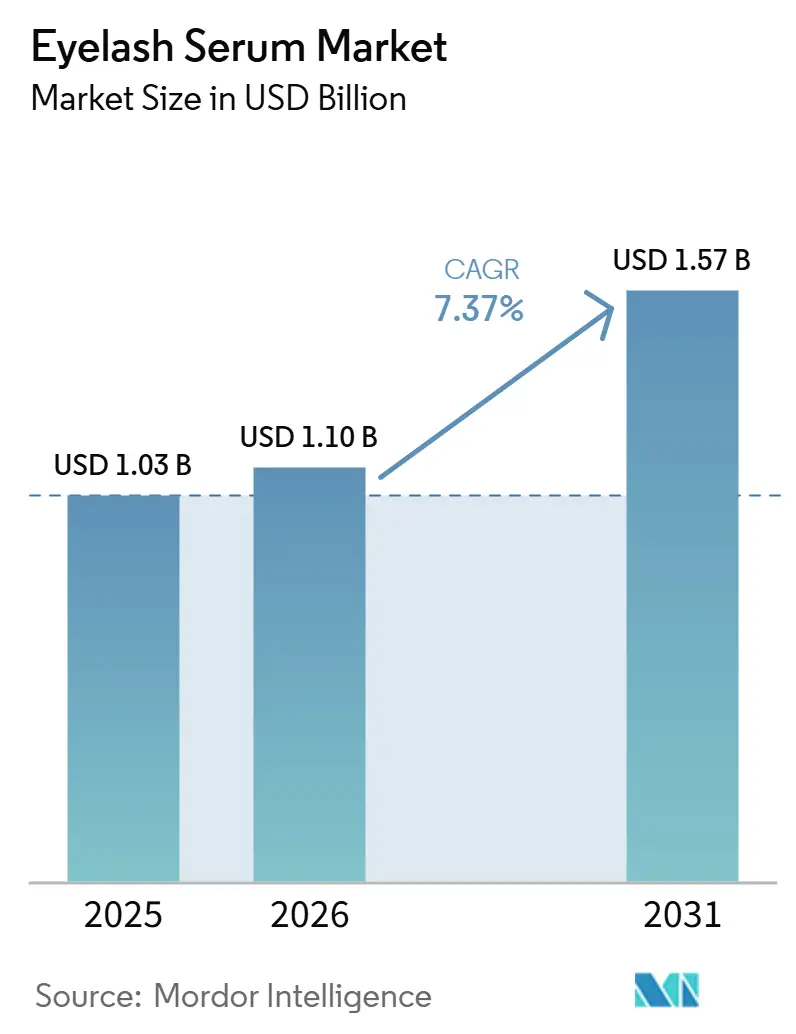
The eyelash serum market size is projected to reach USD 1.03 billion in 2025 and USD 1.10 billion in 2026, before increasing to USD 1.57 billion by 2031, registering a CAGR of 7.37% from 2026 to 2031. The market is shifting toward at-home products as consumers seek alternatives to regular salon extensions and false lashes, which often require repeat appointments, higher maintenance costs, and professional application. Growing regulatory scrutiny of prostaglandin analogs is also guiding product development toward peptide- and botanical-based formulas, as brands focus on safer positioning, clearer claims, and ingredient profiles that align with consumer preference for gentler beauty products. This shift strengthens the position of brands with established testing capabilities, transparent ingredient disclosure, and reformulation expertise, as these companies can respond faster to evolving regulations and consumer concerns. Digital product discovery and direct online sales are shortening the path from product awareness to purchase, supported by influencer marketing, social media reviews, brand-owned websites, and e-commerce platforms. As a result, the eyelash serum market offers opportunities for both accessible products aimed at routine at-home use and clinically positioned premium formulas that emphasize efficacy, testing, and differentiated ingredients.
Key Report Takeaways
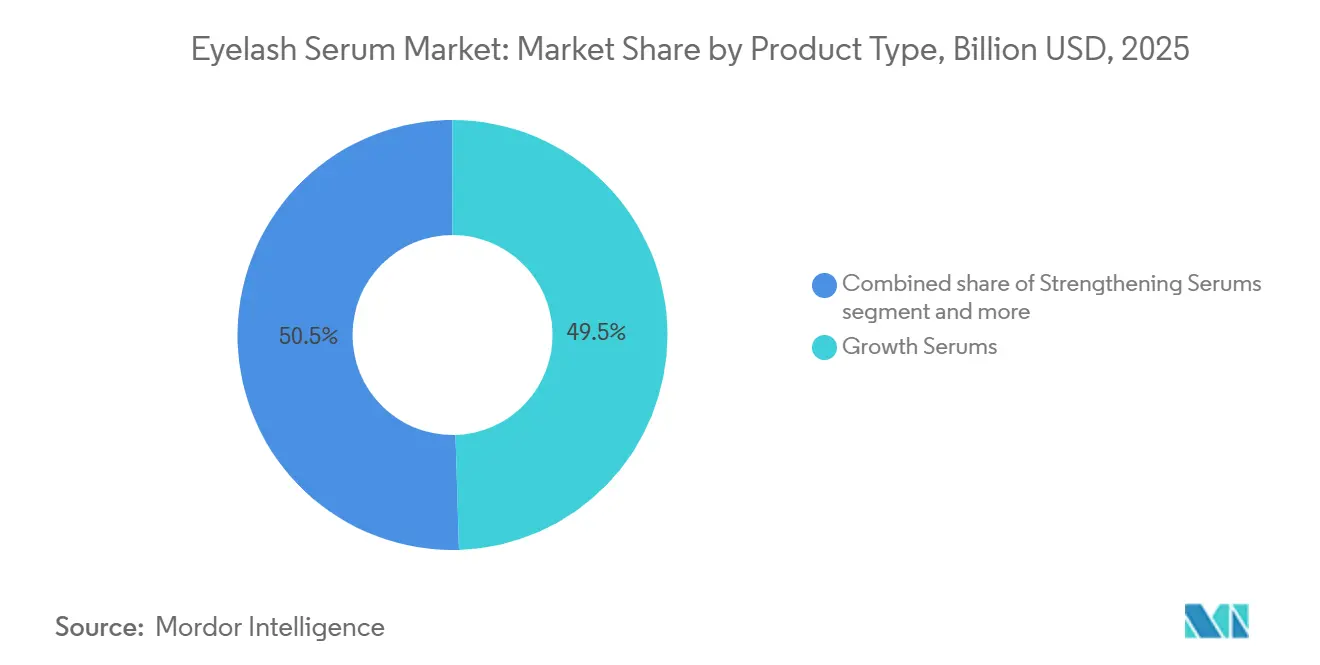
- By product type, growth serums held 49.51% of the eyelash serum market share in 2025, while strengthening serums are forecast to grow at an 8.46% CAGR through 2031.
- By category, conventional formulations held 88.62% of revenue in 2025, while organic formulations are forecast to grow at a 9.11% CAGR through 2031.
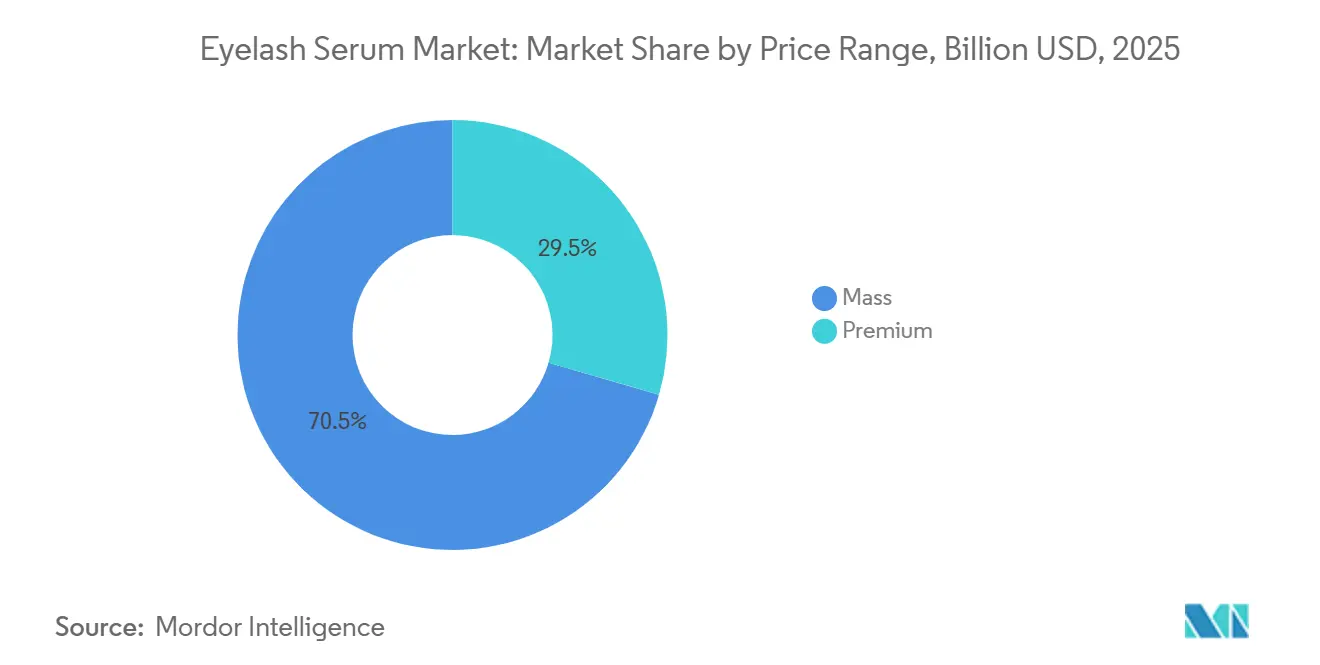
- By price range, mass-priced products accounted for 70.51% of the eyelash serum market size in 2025, while premium products are forecast to advance at an 8.35% CAGR through 2031.
- By distribution channel, online retail stores held 39.13% of the eyelash serum market share in 2025 and are forecast to grow at an 8.91% CAGR through 2031.
- By geography, North America held 38.9% of revenue in 2025, while Asia-Pacific is forecast to expand at an 8.98% CAGR through 2031.
Note: Market size and forecast figures in this report are generated using Mordor Intelligence’s proprietary estimation framework, updated with the latest available data and insights as of January 2026.
Market Trends and Insights
Drivers Impact Analysis of Eyelash Serum Market*
| Driver | (~) % Impact on CAGR Forecast | Geographic Relevance | Impact Timeline |
|---|---|---|---|
| Non-invasive alternatives to eyelash extensions and false lashes | +2.0% | Global | Short term (≤ 2 years) |
| Social commerce and influencer-led product discovery | +1.8% | Global, with the highest intensity in North America, and the Asia-Pacific | Short term (≤ 2 years) |
| Clean-label and prostaglandin-free formulation demand | +1.5% | North America and Europe core, and spill over to the Asia-Pacific | Medium term (2-4 years) |
| Premium beauty and direct-to-consumer channel expansion | +1.2% | North America, Europe, and the Asia-Pacific core | Medium term (2-4 years) |
| EU prostaglandin opinion accelerating peptide substitution | +1.0% | Europe, spill-over to North America, and the Asia-Pacific | Medium term (2-4 years) |
| Applicator precision and dose-control innovation | +0.6% | Global | Long term (≥ 4 years) |
| Source: Mordor Intelligence | |||
Non-invasive alternatives to eyelash extensions and false lashes
The shift from professional lash treatments to at-home serums serves as the category’s primary demand driver. This shift does not reflect trend-driven volatility; rather, it indicates a fundamental reallocation of beauty spending toward daily-use cosmeceuticals that deliver visible and measurable results without professional intervention. Salon eyelash extensions use adhesive bonding agents that can cause cumulative follicle stress. Repeat users often develop traction alopecia or contact dermatitis, creating a clinically driven entry point for growth serums. Economics further support this behavior: a three-month supply of a premium serum priced at USD 48 replaces recurring monthly extension costs that typically exceed USD 100–200 per appointment. The post-extension repair cycle further expands the category. Consumers who discontinue extensions often need conditioning and strengthening serums to rehabilitate damaged follicles before restarting a growth serum regimen, which structurally broadens the product portfolio beyond single-SKU purchases. This dynamic is most pronounced in North America and South Korea, where extension penetration rates are highest and the clean-beauty movement provides additional cultural momentum.
Social commerce and influencer-led product discovery
Social commerce has shortened the awareness-to-purchase cycle for lash enhancement products more than most beauty subcategories, giving brands with strong creator relationships a structural distribution advantage over those that depend on traditional retail sell-in timelines. In 2024, TikTok became the second-most-popular social commerce platform in the United States, with 26% of online shoppers purchasing products through the app. UKLASH, a direct-to-consumer lash serum brand, reported 55% revenue growth from 2020 to 2024, with more than 40% of its sales now generated through TikTok Shop UK live streams. Such a concentration of social-channel revenue would have been difficult to imagine for a beauty brand five years ago. K-beauty brand COSNORI is expected to enter Costco in the United States in September 2025 with its Long Active Eyelash Serum and sell out within one month, supported by prior Amazon momentum and creator-amplified social proof. The compliance dimension of influencer marketing is also tightening. In January 2025, the United States National Advertising Division (NAD) is expected to recommend that NuOrganic Cosmetics discontinue TikTok and Instagram posts containing unsupported lash growth claims, signaling that the social commerce layer faces increasing regulatory scrutiny.
Clean-label and prostaglandin-free formulation demand
Prostaglandin-free formulations are expected to transition from a marketing differentiator to a regulatory requirement in several major markets, with near-term enforcement implications that many brands may not have fully factored into their product roadmaps. The SCCS’s final opinion of February 10, 2026 (SCCS/1680/25), is expected to declare three widely used prostaglandin analogs, IPCP, MDN, and DDDE, unsafe for cosmetic use in eyelash products, citing concerns about reproductive toxicity and the lack of data ruling out non-genotoxic carcinogenicity in women of childbearing age, according to the European Commission, SCCS, 2026[1]Source: European Commission Scientific Committee on Consumer Safety, “SCCS Opinion on Prostaglandin Analogues,” European Commission, health.ec.europa.eu. Canada has already prohibited all prostaglandins and their analogs in cosmetics ahead of EU action. In response, peptide-based alternatives, particularly Biotinoyl Tripeptide-1 and Acetyl Tetrapeptide-3 combined with glycosaminoglycans, are gaining clinical validation. A peer-reviewed open clinical trial in the Journal of Cosmetic Dermatology documented measurable improvements in lash density from a prostaglandin-free peptide formulation, with results comparable to pharmaceutical benchmarks. Grande Cosmetics’ planned September 2025 launch of GrandeLASH-Sensitive, a prostaglandin-free peptide serum with ophthalmologist validation, illustrates how leading brands are accelerating this reformulation pivot ahead of formal EU restrictions.
EU prostaglandin opinion accelerating peptide substitution
The SCCS opinion expected in February 2026 would introduce a compliance catalyst that could materially reshape the European serum category within two to four years, with effects likely to move upstream through ingredient supply chains. Brands formulating with IPCP, MDN, or DDDE would face a binary choice: reformulate with peptide or botanical actives or exit European retail distribution. This regulatory inflection would benefit peptide ingredient suppliers and contract manufacturers with established prostaglandin-free pipelines. It would also raise the formulation cost floor and compress margins for low-investment mass-market entrants. Japan's Ministry of Health, Labour and Welfare has similarly tightened cosmetic ingredient disclosure requirements, pushing brands toward transparent peptide sourcing. This shift is particularly relevant as South Korean professional salons now routinely stock peptide-based serums as standard lash extension aftercare. The secondary effect of the SCCS opinion would be price floor support. Reformulated peptide serums carry higher research and development and ingredient costs, which are incompatible with deep mass-market discounting and provide a structural rationale for premium expansion across the category.
Restraints Impact Analysis of Eyelash Serum Market*
| Restraint | (~) % Impact on CAGR Forecast | Geographic Relevance | Impact Timeline |
|---|---|---|---|
| Periocular safety and irritation concerns | -0.5% | Global | Short term (≤ 2 years) |
| Counterfeit products and claim-compliance risk | -0.3% | The Asia-Pacific core, spill-over to North America | Medium term (2-4 years) |
| Lash-cycle time misalignment with consumer payback expectations | -0.2% | Global | Short term (≤ 2 years) |
| Cross-border reformulation and SKU fragmentation | -0.2% | Europe, North America, and the Asia-Pacific | Medium term (2-4 years) |
| Source: Mordor Intelligence | |||
Periocular safety and irritation concerns
Consumer-reported adverse effects in the periocular zone remain the category’s most persistent demand suppressor, while the gap between clinical risk communication and consumer awareness continues to widen. A 2025 consumer survey in Japan, conducted among 1,000 female eyelash serum users aged 20 to 50, found that 97.5% of respondents who experienced side effects, including pigmentation and irritation, did not consult a physician. This finding highlights inadequate product-level risk disclosure and material latent liability for brands. The US Modernization of Cosmetics Regulation Act (MoCRA) mandates cosmetic product registration from July 2024. By January 2025, the FDA’s database is expected to contain 589,762 unique active cosmetic listings, 16 times the pre-MoCRA total, significantly increasing the likelihood that adverse event reports related to periocular products will draw federal enforcement attention. A comprehensive review published in the Journal of Cosmetic Dermatology further noted that current US law does not require FDA pre-market efficacy or safety assessments for over-the-counter eyelash serums. This regulatory gap creates liability exposure for brands while allowing underdisclosed actives to enter the consumer market. The convergence of expanded MoCRA enforcement visibility and the EU’s prostaglandin opinion increases the likelihood of coordinated regulatory scrutiny across the two largest serum markets within the next two years.
Counterfeit products and claim-compliance risk
Counterfeit risk in the eyelash serum segment is more operationally complex than headline litigation figures suggest, as the threat appears at two distinct levels: outright product fraud and undisclosed-ingredient non-compliance by legitimate brands. In Osaka, Japan, authorities arrested three individuals in 2024 for selling counterfeit units of Mizuhashi Hojudo Pharmaceutical's Emaked eyelash serum through online channels, with the products sourced from China. A 2024 survey by the Japanese Cosmetic Science Society, published on J-STAGE, used LC/MS/MS analysis to detect isopropyl cloprostenate in eyelash serums that did not disclose the ingredient on their labels. This labeling omission creates direct regulatory and liability consequences for brands across the Asia-Pacific market[2]Source: Japanese Cosmetic Science Society, “Survey of Prostaglandin F2-Alpha Analogues in Eyelash Serum,” Fragrance Journal, jstage.jst.go.jp. In the United States, litigation filed in the Eastern District of New York in October 2024 alleged that Babe Lash and Babe Brow serums contained undisclosed isopropyl cloprostenate, with plaintiffs citing omitted warnings about ocular inflammation and iris color change. Together, counterfeit infiltration in digital channels and undisclosed-ingredient litigation weaken category-level consumer trust and disproportionately penalize brands that have not invested in supply chain authentication and transparent ingredient disclosure.
*Our forecasts treat driver/restraint impacts as directional, not additive. The impact forecasts reflect baseline growth, mix effects, and variable interactions.
Eyelash Serum Market Segment Analysis
By Product Type:
Strengthening Serums Gaining Ground on Growth-Serum DominanceStrengthening serums are projected to record the highest growth rate in the product type segmentation, advancing at a CAGR of 8.46% during 2026-2031 and outpacing the overall market. Growth serums are expected to account for a 49.51% share in 2025, anchoring the category’s revenue base. The difference in growth rates across sub-segments reflects a post-extension behavioral cycle: consumers who discontinue professional lash treatments often need conditioning and strengthening formulations to restore follicle integrity before resuming a growth serum regimen. This shift expands demand beyond the single-function growth serum archetype. Conditioning serums address the hydration and flexibility needs of lashes stressed by adhesive removal, while volumizing serums appeal to consumers seeking cosmetic density gains without a clinically validated growth mechanism. Brands are also driving a clinically oriented convergence of functionality across sub-segments by developing dual- and triple-action serums that combine growth actives with conditioning and strengthening peptides. This approach blurs category distinctions and supports premium price positioning.
Peer-reviewed evidence supports this multi-modal formulation architecture. A clinical trial published in the Journal of Cosmetic Dermatology documented measurable lash density improvements using a prostaglandin-free peptide and glycosaminoglycan hybrid formulation, suggesting that multi-modal actives can meet the evidentiary standard previously associated with single-function prostaglandin formulas. The convergence also supports shelf productivity, as specialty beauty retailers and online DTC platforms increasingly favor multi-benefit SKUs that generate higher units per transaction and repeat purchase rates than single-function formulas. OLAPLEX’s LashBond Building Serum, launched in March 2024 with the company’s patented bond-building peptide complex and positioned as lengthening, thickening, and hydrating, demonstrates how crossover ingredient science from adjacent categories can redefine the product type segmentation.



By Category:
Organic Is the Fastest-Growing Tier Despite Conventional Market LockThe organic formulation tier is expected to account for approximately 11.38% of the market in 2025 and register a CAGR of 9.11% during 2026-2031. This growth rate exceeds the overall market CAGR and the rate projected for the fastest-growing geography. A convergence of regulatory pressure and consumer demand is accelerating the category’s transition toward clean beauty faster than many brand roadmaps anticipated. Conventional formulations are expected to retain 88.62% of the market in 2025, reflecting the category’s long-standing reliance on synthetically derived actives with efficacy claims established over more than a decade. Niche wellness consumers are not the only drivers of the organic tier’s growth. The SCCS opinion issued in February 2026 is expected to push mainstream brands toward botanical and peptide actives, which naturally align with organic certification criteria such as Ecocert’s Cosmos Organic standard. UKLASH founder Nima Pourian’s August 2025 launch of “groa,” a brand positioned as 99% naturally sourced, prostaglandin-free, and dermatologically tested for Gen Z and Gen Alpha consumers, indicates that the organic tier is expanding toward accessible price points, rather than only toward prestige positioning.
The shift from conventional to organic formulations is not cost-neutral. Certified organic actives involve higher sourcing costs, shorter shelf lives, and greater formulation complexity, requiring advanced emulsion technology. This dynamic creates a competitive bifurcation, with organic growth concentrated among mid-to-premium brands that have the research and development infrastructure to manage the transition, rather than being evenly distributed across market tiers. The mass organic segment remains underdeveloped compared with prestige, creating a potential white space for brands that can develop cost-effective botanical active systems at accessible price points. This opportunity is particularly relevant in Asia-Pacific markets, where local botanical ingredient sourcing offers a cost advantage that Western formulators may not have.
By Price Range:
Premium Gains Velocity as Mass Retains Base ScaleThe premium tier is projected to register an 8.35% CAGR during 2026-2031, outpacing mass growth by a meaningful margin, even as mass-priced products are expected to account for 70.51% of revenue in 2025. Premiumization in this category is structurally supported by the transition in ingredient science. Prostaglandin-free peptide serums require substantially higher formulation investment than their prostaglandin-based predecessors, and brands are converting that cost base into a clinical efficacy narrative that supports higher retail prices. GrandeLASH-Sensitive, expected to launch at USD 48 for a three-month supply in September 2025 and be distributed across Sephora, Ulta Beauty, Amazon, and Salon Centric, illustrates how leading brands are positioning the peptide pivot as a premium consumer proposition rather than a cost center. The mass tier remains highly competitive, with brands such as UKLASH, e.l.f. Cosmetics, and Pacifica Beauty driving volume through accessible pricing and digital-native distribution.
The mass-to-premium trade-up is further supported by direct-to-consumer (DTC) economics. When consumers purchase directly from brand websites or through social commerce platforms, brands capture higher margins and can invest in clinical validation. This creates a cycle in which premium claims are tested, validated, and amplified through creator content. According to the Bureau of Labor Statistics, US consumer spending on personal care products and services grew by 9.7% from 2022 to 2023, indicating that premiumization in lash serums reflects a broader willingness to invest in personal care rather than a category-specific anomaly. The lash serum category’s price ladder is likely to expand in both directions over the forecast period, with clinical prestige serums moving above USD 80 and entry-level organic-claim products settling below USD 20.
By Distribution Channel:
Online Retail's Dual Role as Leader and Fastest-Growing ChannelOnline retail stores are expected to hold the leading distribution share, at 39.13%, in 2025 and record the fastest growth rate, with an 8.91% CAGR through 2031. This trend reflects not an early-stage digital transition but the accelerating migration of beauty commerce to creator-led digital environments. Online channels continue to displace physical retail, particularly specialty beauty stores, including Sephora, Ulta Beauty, and salon professional channels. These channels still account for a significant revenue share but face direct-to-consumer (DTC) margin pressure from online-native brands. Hypermarkets and supermarkets remain relevant in mass-market price tiers and in geographies where limited broadband penetration restricts digital commerce adoption, particularly across parts of South America and Sub-Saharan Africa. Other distribution channels, including pharmacies and aesthetics clinics, serve a medically adjacent consumer segment seeking ophthalmologist-recommended formulations. This channel is growing alongside the increasing competition among premium serum brands to establish clinical credibility.
The key second-order dynamic in distribution is the emergence of social commerce as a distinct commerce layer within online retail, supported by unit economics that specialty retailers cannot replicate. A direct-to-consumer brand generated 40% of approximately USD 7.9 million in annual sales through TikTok Shop UK livestreams. In-app checkout, affiliate commission structures, and creator-produced demonstration content enabled this revenue concentration. Social commerce infrastructure is reshaping how brands scale. Brands that build creator relationships early are gaining channel advantages over those that rely on wholesale retail sell-in timelines. Aptar Beauty's NeoDropper Autoload technology, which auto-loads a consistent serum dose after each use and was selected by Dermalogica for its FutureCode Booster serum, shows how applicator innovation is becoming a differentiating factor in the premium online DTC segment.
Geography Analysis
North America Eyelash Serum Market
North America is expected to hold 38.9% of the eyelash serum market in 2025. High beauty spending, established direct-to-consumer channels, and broad specialty retail availability support the region’s position and strengthen consumer access to premium and niche lash-enhancing products. The United States remains the largest contributor to regional demand, supported by strong brand awareness, frequent product launches, and high adoption of at-home beauty solutions. GrandeLASH-MD accounted for 62% of US prestige lash-serum sales in 2024, according to company-cited Circana data in the supplied research. Canada’s restrictions on prostaglandins and their analogs in cosmetics are accelerating the shift toward alternative formulations, particularly peptide-, vitamin-, and botanical-based products positioned as safer long-term options.
Europe Eyelash Serum Market
Europe remains a major regional cluster, driven by demand in the United Kingdom, Germany, France, Italy, and Spain. Consumers in these markets continue to support growth through interest in premium beauty, clean-label positioning, and salon-recommended products. The SCCS opinion expected in February 2026 could create a clear formulation challenge for products using MDN, IPCP, or DDDE[3]Source: European Commission Scientific Committee on Consumer Safety, “Scientific Committee on Consumer Safety Final Opinion SCCS/1680/25,” European Commission, health.ec.europa.eu . If restrictions advance, brands may need to reformulate or adjust their European product ranges to meet evolving safety and compliance requirements. This shift may temporarily increase costs due to product testing, ingredient replacement, and packaging updates, but it could also benefit companies that already offer transparent peptide- or botanical-based systems. RevitaLash is expanding its United Kingdom operations, indicating continued interest in local salon and specialty retail relationships.
South America, APAC and Middle East Eyelash Serum Market
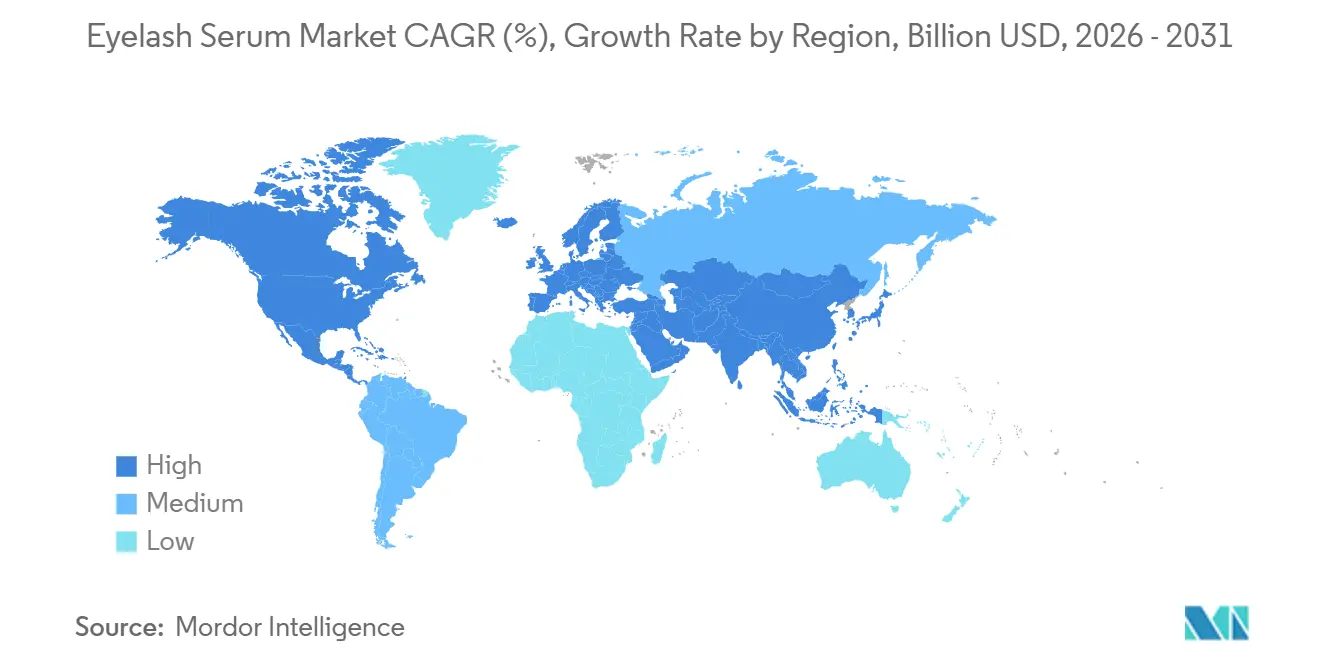
Asia-Pacific is forecast to grow at a CAGR of 8.98% through 2031, the highest regional rate in the supplied forecast. China, South Korea, Japan, India, and Southeast Asia are key markets, supported by rising online beauty activity, expanding social commerce, and active regional product innovation. Anfar reported that its ScalpD eyelash serum series reached the top domestic position in Japan by value and volume in 2025, reflecting strong consumer interest in specialized lash-care products. South Korea is both a demand center and a source of K-beauty product development, with brands using trend-driven formats and ingredient innovation to expand category visibility. South America remains smaller by revenue, with Brazil and Colombia contributing demand through growing beauty spending and improving access to international brands. Saudi Arabia and the United Arab Emirates offer longer-term potential, supported by beauty spending, premium retail development, and broader product availability across modern trade and online channels.

Competitive Landscape
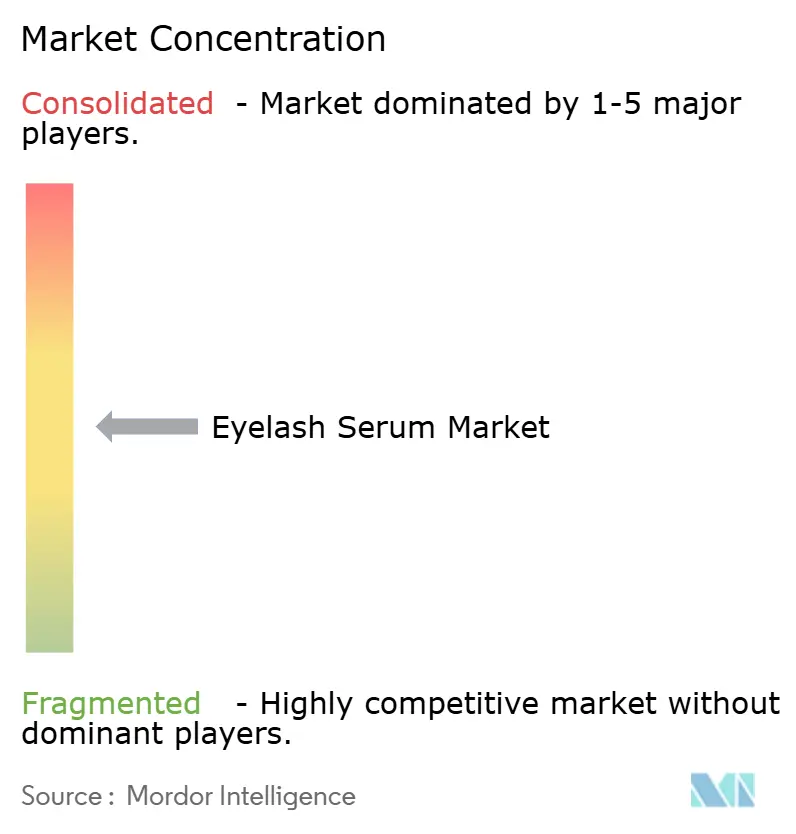
The eyelash serum market remains moderately fragmented, although specialized brands hold strong positions within specific channels. Grande Cosmetics accounted for 62% of U.S. prestige lash-serum sales in 2024, highlighting the influence a focused brand can have in a premium subcategory. The company competes with larger beauty groups that leverage broader research capabilities, distribution networks, and retail resources to support product development, retailer partnerships, and consumer outreach. Clinical credibility, ingredient transparency, product claims, and creator-led digital reach shape competition, especially as consumers increasingly compare efficacy, safety profiles, and brand reputation before purchase. Brands with substantiated formulas are better positioned to respond to evolving safety expectations and maintain trust across prestige, professional, and direct-to-consumer channels.
Grande Cosmetics is expected to launch GrandeLASH-Sensitive in September 2025, offering a prostaglandin-free peptide formula for consumers with sensitive eyes and related concerns. RevitaLash introduced an updated Advanced Eyelash Conditioner formula in December 2024, incorporating its updated BioPeptin Complex to reinforce its positioning around lash conditioning and formula performance. UKLASH is expected to announce its U.S. direct-to-consumer expansion in June 2025, extending its digital route to market and giving the brand greater control over customer acquisition, education, and retention. These developments highlight three distinct growth strategies: sensitive-eye product development, formula refreshes, and direct market entry.
Key opportunity areas include credible prostaglandin-free formulas at accessible prices, stronger professional salon distribution, and packaging that improves application control. The European regulatory environment may displace products that rely on prostaglandin analogs and create opportunities for brands with compliant alternatives, particularly those that can document ingredient safety and efficacy. Independent brands can move quickly, but they need strong supply chain authentication and disciplined claims management to reduce regulatory, quality, and reputational risks. Larger companies benefit from scale advantages, while smaller companies can leverage focused product narratives and direct customer relationships to build loyalty in targeted consumer segments. The competitive outcome will depend on brands’ ability to combine product safety, realistic claims, consistent distribution, and clear value for consumers.
Eyelash Serum Industry Leaders
L'Oréal S.A.
The Estée Lauder Companies Inc.
Shiseido Company, Limited
Grande Cosmetics LLC
Athena Cosmetics, Inc.
- *Disclaimer: Major Players sorted in no particular order
Eyelash Serum Market Companies Covered in this Report
- L'Oréal S.A.
- The Estée Lauder Companies Inc.
- Shiseido Company, Limited
- Grande Cosmetics LLC
- Athena Cosmetics, Inc.
- RevitaLash Cosmetics
- Skin Research Laboratories
- RapidLash
- Pacifica Beauty LLC
- E.l.f. Cosmetics, Inc.
- JB Cosmetics Group
- Talika Group
- Obagi Medical
- Topix Pharmaceuticals, Inc.
- Neora
- OLAPLEX, Inc.
- UKLASH
- LashFood
- Ardell International Inc.
- Rodan + Fields

Recent Industry Developments in Eyelash Serum Market
- July 2026: RevitaLash Cosmetics introduced upgraded hero lash serum formulas with time-release ingredient encapsulation technology. It claims to be the first and only ophthalmologist-led lash serum brand using controlled-release delivery. The company also established a dedicated UK subsidiary to bring regional operations in-house and strengthen salon and specialty retail partnerships in a market it identified as having significant untapped premium potential.
- September 2025: Grande Cosmetics launched GrandeLASH-Sensitive Peptide Lash Enhancing Serum (USD 48, three-month supply) at Sephora, Ulta Beauty, Amazon, and Salon Centric. The prostaglandin-free formula, its first for consumers with sensitive eyes, eczema, or eyelid dermatitis, reported 96% of participants seeing thicker-looking lashes in a 16-week clinical study and launched ahead of the EU's SCCS final opinion.
- August 2025: UKLASH founder Nima Pourian launched "groa," a lash and brow serum brand designed specifically for Gen Z and Gen Alpha consumers, with distribution spanning 570+ retail doors across the UK, Southern Europe, and Ireland. Groa combines 99% naturally sourced, prostaglandin-free, peptide-powered formulas at an accessible price point, explicitly positioned as a trade-up funnel toward the parent UKLASH brand.


Global Eyelash Serum Market Report Scope
An eyelash serum is a cosmetic or prescription liquid applied to the lash line to make eyelashes appear longer, thicker, and darker. The Eyelash serum market report is segmented by product type, category, price range, distribution channel, and geography. By product type, the market is segmented into growth serums, conditioning serums, volumizing serums, strengthening serums, and other product types. By category, the market is segmented into conventional and organic. By price range, the market is segmented into mass and premium. By distribution channel, the market is segmented into hypermarkets/supermarkets, specialty beauty stores, online retail, and others. By geography, the market is segmented into North America, Europe, Asia-Pacific, South America, and Middle East and Africa). The market forecasts are provided in terms of value (USD).
| Growth Serums |
| Conditioning Serums |
| Volumizing Serums |
| Strengthening Serums |
| Other Product Types |
| Conventional |
| Organic |
| Mass |
| Premium |
| Hypermarkets and Supermarkets |
| Specialty Beauty Stores |
| Online Retail Stores |
| Other Distribution Channels |
| North America | United States |
| Canada | |
| Mexico | |
| Rest of North America | |
| Europe | United Kingdom |
| Germany | |
| France | |
| Italy | |
| Spain | |
| Sweden | |
| Belgium | |
| Poland | |
| Netherlands | |
| Rest of Europe | |
| Asia-Pacific | China |
| Japan | |
| India | |
| Thailand | |
| Singapore | |
| Indonesia | |
| South Korea | |
| Australia | |
| Rest of Asia-Pacific | |
| South America | Brazil |
| Argentina | |
| Colombia | |
| Peru | |
| Chile | |
| Rest of South America | |
| Middle East and Africa | United Arab Emirates |
| South Africa | |
| Saudi Arabia | |
| Nigeria | |
| Egypt | |
| Morocco | |
| Turkey | |
| Rest of Middle East and Africa |
| Product Type | Growth Serums | |
| Conditioning Serums | ||
| Volumizing Serums | ||
| Strengthening Serums | ||
| Other Product Types | ||
| Category | Conventional | |
| Organic | ||
| Price Range | Mass | |
| Premium | ||
| Distribution Channel | Hypermarkets and Supermarkets | |
| Specialty Beauty Stores | ||
| Online Retail Stores | ||
| Other Distribution Channels | ||
| Geography | North America | United States |
| Canada | ||
| Mexico | ||
| Rest of North America | ||
| Europe | United Kingdom | |
| Germany | ||
| France | ||
| Italy | ||
| Spain | ||
| Sweden | ||
| Belgium | ||
| Poland | ||
| Netherlands | ||
| Rest of Europe | ||
| Asia-Pacific | China | |
| Japan | ||
| India | ||
| Thailand | ||
| Singapore | ||
| Indonesia | ||
| South Korea | ||
| Australia | ||
| Rest of Asia-Pacific | ||
| South America | Brazil | |
| Argentina | ||
| Colombia | ||
| Peru | ||
| Chile | ||
| Rest of South America | ||
| Middle East and Africa | United Arab Emirates | |
| South Africa | ||
| Saudi Arabia | ||
| Nigeria | ||
| Egypt | ||
| Morocco | ||
| Turkey | ||
| Rest of Middle East and Africa | ||


Key Questions Answered in the Report
What is the forecast growth rate for the eyelash serum market?
The category is forecast to grow at a 7.37% CAGR from 2026 to 2031, reaching USD 1.57 billion by 2031.
Which eyelash serum product type is growing fastest?
Strengthening serums are forecast to grow at an 8.46% CAGR through 2031, while growth serums remained the largest product type in 2025.
Why are prostaglandin-free eyelash serums becoming more important?
In February 2026, the SCCS found that MDN, IPCP, and DDDE could not be considered safe in cosmetic eyelash-growth products, increasing the need for alternative formulas.
Which sales channel leads eyelash serum purchases?
Online retail stores led with 39.13% of 2025 revenue and are forecast to grow at an 8.9% CAGR through 2031.
Page last updated on:





