
Extra Virgin Olive Oil Market Size and Share
Market Overview
| Study Period | 2022 - 2032 |
|---|---|
| Market Size (2027) | USD 19.45 Billion |
| Market Size (2032) | USD 24.94 Billion |
| Fastest Growing Market | Asia-Pacific |
| Largest Market | Europe |
| Market Concentration | Low |
Major Players *Disclaimer: Major Players sorted in no particular order Image © Mordor Intelligence. Reuse requires attribution under CC BY 4.0. | |
Extra Virgin Olive Oil Market Analysis by Mordor Intelligence
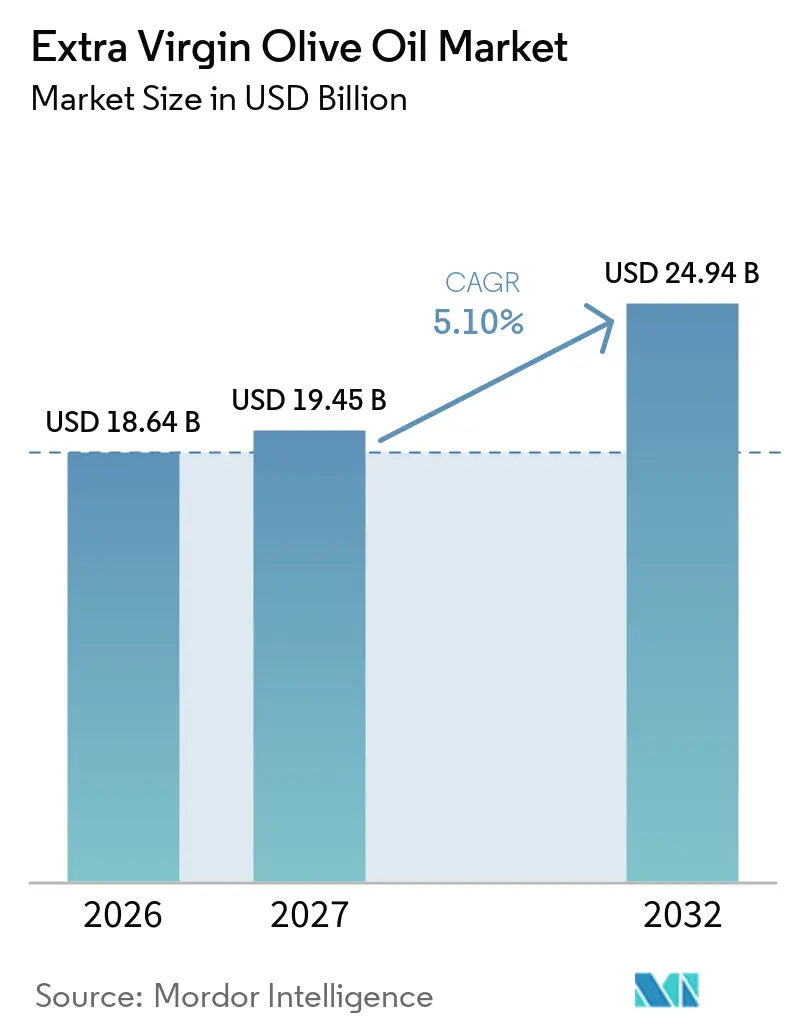
The global extra virgin olive oil market size is expected to grow from USD 18.64 billion in 2026 to USD 19.45 billion in 2027 and is forecast to reach USD 24.94 billion by 2032 at a 5.10% CAGR over 2027-2032. The global extra virgin olive oil market is driven by rising consumer awareness of the health benefits associated with the Mediterranean diet, increasing preference for natural and minimally processed food products, and growing demand for high-quality edible oils. The expansion of premium and specialty olive oil offerings, including products differentiated by geographical origin, olive variety, harvesting period, and production methods, is further supporting market growth. Growing interest in clean-label ingredients and food authenticity is encouraging consumers to choose extra virgin olive oil for its recognizable composition and distinctive sensory characteristics. Its versatility in applications such as salad dressings, marinades, sauces, pasta, roasted vegetables, and other culinary preparations is broadening its use across household and foodservice settings. The increasing popularity of plant-based diets, greater availability through online retail channels, and innovations in packaging designed to preserve freshness are improving product accessibility and appeal. Growing attention to sustainable olive cultivation, responsible sourcing, and supply chain traceability is also encouraging producers to adopt improved agricultural practices, strengthening the position of extra virgin olive oil in the global edible oils market.
Key Report Takeaways
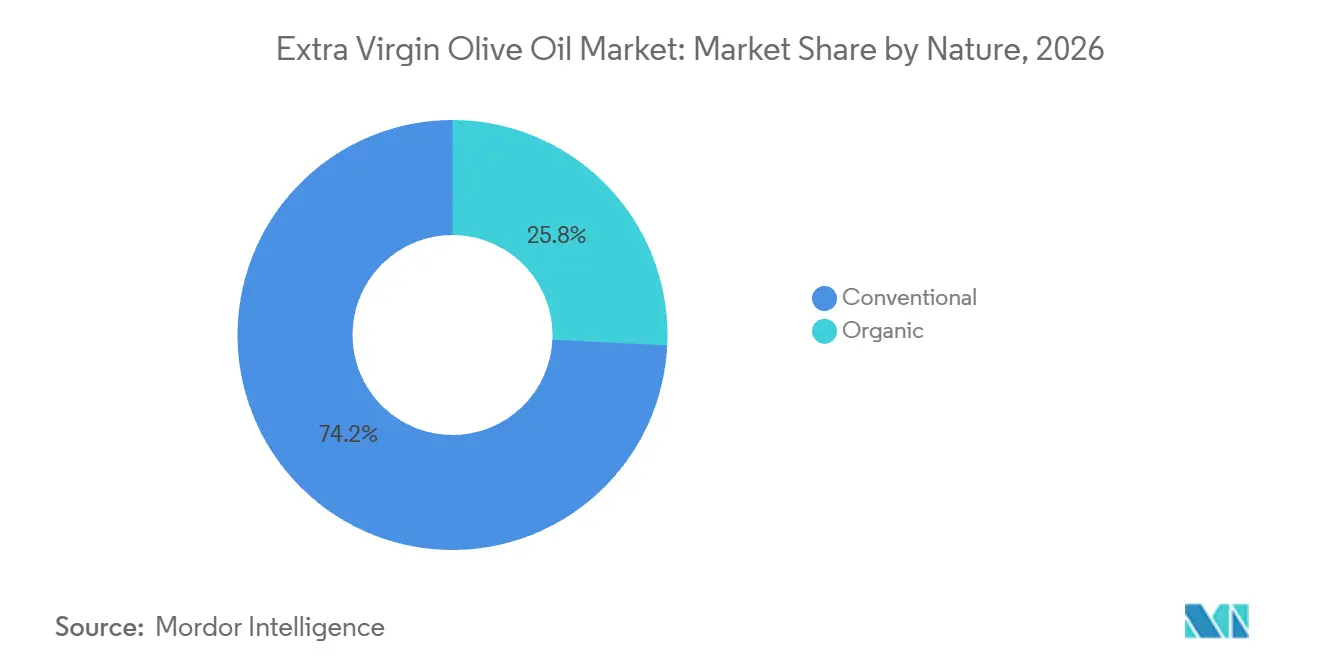
- By nature, conventional olive oil held 74.23% of the extra virgin olive oil market share in 2026, while organic olive oil is forecast to grow at a 7.25% CAGR during 2027-2032.
- By packaging type, glass bottles held 68.25% share in 2026, while pouches are forecast to expand at a 6.85% CAGR during 2027-2032.
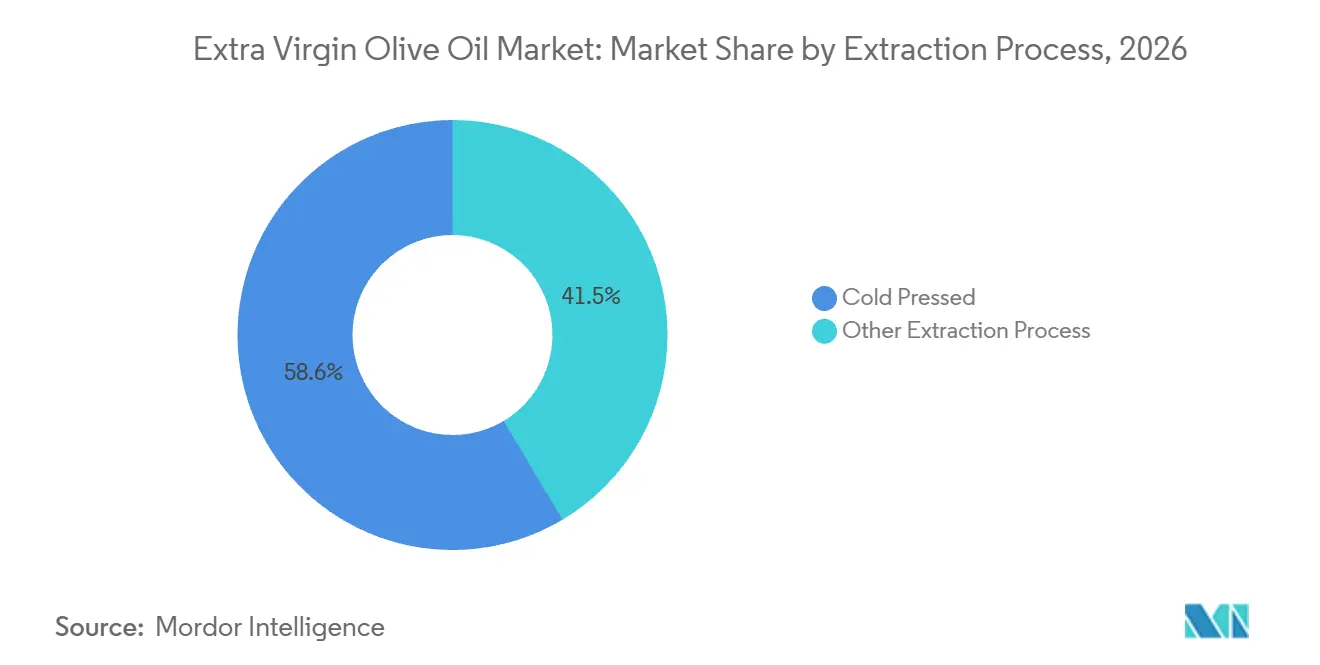
- By extraction process, cold pressed olive oil accounted for 58.55% of the extra virgin olive oil market size in 2026 and is forecast to grow at a 6.43% CAGR during 2027-2032.
- By distribution channel, supermarkets/hypermarkets held 43.31% share in 2026, while online retail stores are forecast to grow at a 7.65% CAGR during 2027-2032.
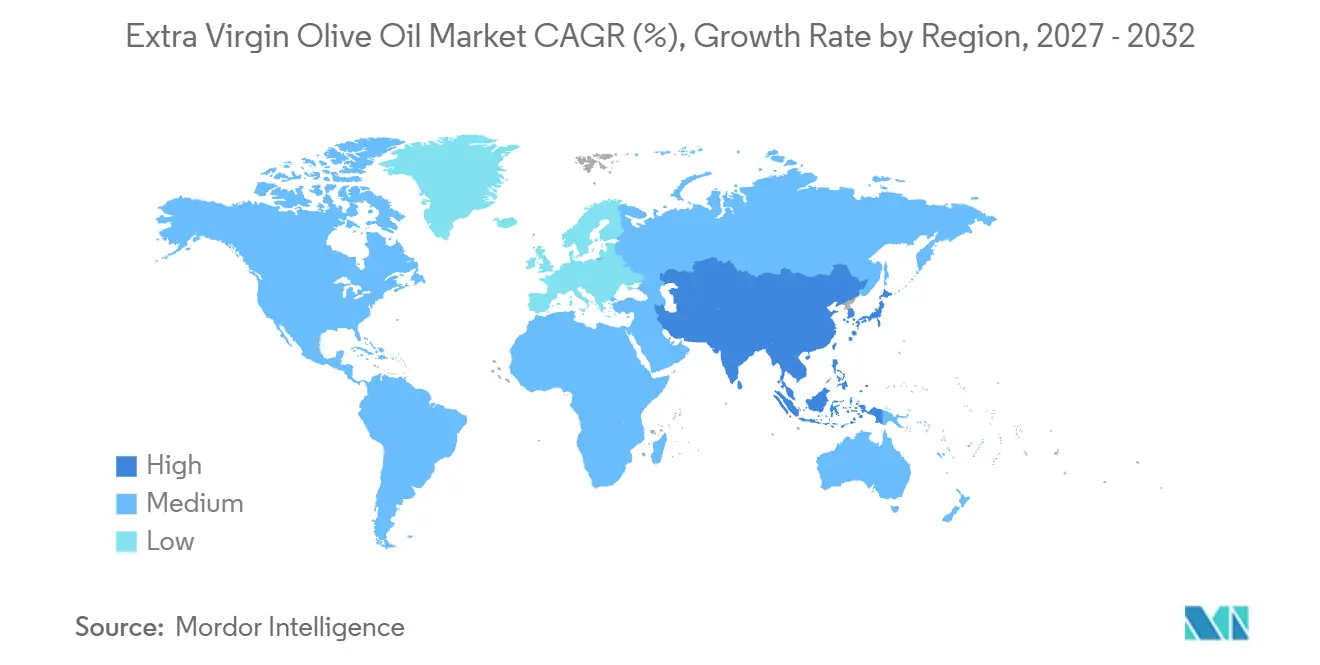
- By geography, Europe held 47.13% of the olive oil market share in 2026, while Asia-Pacific is forecast to expand at a 7.35% CAGR during 2027-2032.
Note: Market numbers in this report are based on Mordor Intelligence's proprietary estimation framework, which combines nine months of actuals with Q4 projections for base year 2026.
Market Trends and Insights
Drivers Impact Analysis of Extra Virgin Olive Oil Market of Extra Virgin Olive Oil Market*
| Driver | (~) % Impact on CAGR Forecast | Geographic Relevance | Impact Timeline |
|---|---|---|---|
| Rising consumer awareness of Mediterranean diet benefits | +0.9% | Global, strongest in North America, Northern and Central Europe, and East Asia | Medium term (2-4 years) |
| Expansion of premium and specialty olive oil products | +0.8% | Europe, North America, Australia, and Japan | Medium term (2-4 years) |
| Increasing preference for natural and minimally processed foods | +0.7% | Global, led by North America and Western Europe | Short term (≤ 2 years) |
| Growing demand for clean-label and authentic food ingredients | +0.5% | North America and the European Union | Medium term (2-4 years) |
| Increasing use in diverse culinary applications | +0.6% | Asia-Pacific, with spillover to Middle East and Africa | Medium term (2-4 years) |
| Increasing interest in sustainable olive cultivation and production | +0.4% | Global, concentrated in the European Union | Long term (≥ 4 years) |
| Source: Mordor Intelligence | |||
Rising Consumer Awareness of Mediterranean Diet Benefits
Rising consumer awareness of Mediterranean diet benefits is driving demand for extra virgin olive oil (EVOO), as it is a key ingredient in this dietary pattern and a widely used source of unsaturated fats. Growing recognition of balanced nutrition and healthy dietary habits is encouraging consumers to incorporate EVOO into daily meals, including salads, vegetable dishes, pasta, marinades, and dressings. Extra virgin olive oil is valued for its monounsaturated fatty acids and naturally occurring polyphenols, which contribute to its nutritional profile and antioxidant properties. As consumers become more attentive to food quality and ingredient selection, many are showing greater interest in minimally processed oils that retain their characteristic flavor, aroma, and naturally occurring compounds. The widespread availability of nutritional information through healthcare professionals, food and wellness publications, and public health initiatives is further strengthening awareness of Mediterranean-style eating habits across established and emerging markets. Additionally, the growing popularity of home cooking and plant-forward diets is creating more opportunities for EVOO to be used as both a cooking ingredient and a finishing oil. These developments are encouraging households to incorporate extra virgin olive oil into a wider range of dishes, supporting its adoption as a premium culinary ingredient and contributing to the long-term growth of the global market.
Expansion of Premium and Specialty Olive Oil Products
The growing availability of premium and specialty extra virgin olive oil products is supporting global market expansion by catering to consumers seeking distinctive flavors, verified product quality, and differentiated culinary experiences. Producers are increasingly diversifying their portfolios with single-origin oils, estate-produced varieties, early-harvest extra virgin olive oils, organic offerings, and products made from specific olive cultivars. This enables brands to differentiate themselves through taste profiles, production techniques, and geographical heritage. These products appeal particularly to gourmet food enthusiasts, specialty retailers, and consumers who prioritize ingredient quality and authenticity. The development of limited-harvest collections, award-recognized oils, and region-specific varieties is further strengthening the association between extra virgin olive oil and premium culinary experiences. Specialty packaging, including dark glass bottles, decorative containers, and gift-oriented formats, is also helping producers enhance product presentation while protecting oil quality from light exposure. Online specialty food platforms and direct-to-consumer channels allow smaller producers to communicate product provenance, harvesting practices, and tasting characteristics to a wider audience. The increasing emphasis on product differentiation and the availability of diverse premium offerings are encouraging consumers to explore higher-quality extra virgin olive oils, broadening market opportunities and supporting growth across the global industry.
Growing Demand for Clean-Label and Authentic Food Ingredients
Growing consumer interest in ingredient transparency, food processing methods, and product authenticity is supporting demand for extra virgin olive oil (EVOO) as a recognizable, minimally processed edible oil. The International Food Information Council (IFIC) 2026 Food & Health Survey found that 52% of surveyed consumers were familiar with the term ultra-processed food, compared with 44% in 2025 and 32% two years earlier, indicating growing public awareness of food processing and its role in product selection[1]. This trend reflects a broader consumer focus on understanding how foods are produced and what they contain. Extra virgin olive oil benefits from its relatively simple ingredient composition and mechanical extraction process, which distinguishes it from refined oils that undergo additional processing. Consumers seeking greater transparency also pay closer attention to olive origin, cultivar, harvest date, extraction method, and certification when choosing EVOO. In response, producers are emphasizing traceability, clear labeling, geographical provenance, and independent quality verification to strengthen consumer confidence and differentiate authentic products from oils of uncertain origin or grade. These developments are supporting the positioning of extra virgin olive oil as a premium ingredient for home cooking, salad dressings, marinades, and other culinary applications, reinforcing its appeal among consumers who prioritize recognizable ingredients and product integrity.
Increasing Interest in Sustainable Olive Cultivation and Production
Growing interest in environmentally responsible agriculture is encouraging olive oil producers to adopt sustainable cultivation practices and expand their offerings of extra virgin olive oil produced through organic farming methods. Techniques such as water-efficient irrigation, soil conservation, integrated pest management, reduced reliance on synthetic agricultural inputs, and biodiversity protection are gaining importance as producers seek to improve orchard resilience and minimize environmental impact. According to the World of Organic Agriculture 2026 report published by the Research Institute of Organic Agriculture (FiBL) and IFOAM – Organics International, in 2024 Spain accounted for 284,335 hectares of organic olive cultivation, followed by Italy with 221,141 hectares and the United States with 169,402 hectares[2]. These figures reflect the scale of organic olive-growing areas across established producing countries and indicate the agricultural base available for developing organic olive oil products. The expansion of organically managed olive groves can create opportunities for producers to offer certified organic extra virgin olive oil to consumers who prioritize sustainable sourcing and ingredient quality. Retailers and specialty food distributors can also use organic certification and transparent sourcing information to differentiate products and strengthen their positioning in the premium segment. As sustainability becomes more prominent in food production and sourcing decisions, investment in responsible olive cultivation and verified production practices can support product differentiation, broaden the availability of organic EVOO, and contribute to the long-term development of the global extra virgin olive oil market.
Restraints Impact Analysis of Extra Virgin Olive Oil Market of Extra Virgin Olive Oil Market*
| Restraint | (~) % Impact on CAGR Forecast | Geographic Relevance | Impact Timeline |
|---|---|---|---|
| Climate change and unpredictable olive harvests | -1.2% | Mediterranean production regions, with effects across global supply | Long term (≥ 4 years) |
| Competition from alternative edible oils | -0.8% | Global, particularly price-sensitive Asia-Pacific and Middle East and Africa markets | Medium term (2-4 years) |
| Risk of adulteration and product mislabeling | -0.5% | European Union, North America, and emerging import markets | Medium term (2-4 years) |
| Sensitivity to storage, transportation, and distribution conditions | -0.3% | Asia-Pacific, Middle East and Africa, and South America | Medium term (2-4 years) |
| Source: Mordor Intelligence | |||
Competition From Alternative Edible Oils
The global extra virgin olive oil market faces competition from a wide range of alternative edible oils, including sunflower, soybean, canola, rapeseed, corn, and avocado oils. These alternatives offer different nutritional profiles, flavor characteristics, and cooking properties. They are widely used in household kitchens due to their suitability for specific applications such as deep-frying and recipes requiring a neutral flavor. Sunflower and canola oils are commonly selected for their versatility, while avocado oil attracts consumers seeking alternative plant-based oils for cooking and food preparation. Extra virgin olive oil, by contrast, has a distinctive taste and aroma that may not suit every recipe, particularly those requiring a neutral flavor. The availability of numerous substitutes gives consumers the flexibility to switch between oils based on culinary requirements and preferred product attributes. This competitive environment can limit the use of extra virgin olive oil in certain applications, constrain its penetration into price-sensitive product categories, and pressure producers to differentiate their offerings through quality, provenance, flavor, and versatility.
Risk of Adulteration and Product Mislabeling
The risk of adulteration, fraudulent origin claims, and incorrect product classification remains a significant restraint for the global extra virgin olive oil market, as consumer confidence depends heavily on the authenticity and quality of oil sold under the extra virgin designation. Misconduct can include blending olive oil with lower-grade or other vegetable oils, misrepresenting geographical origin, and labeling products as extra virgin when they do not meet the required chemical and sensory standards. According to European Union data, 50 cross-border notifications concerning olive oil were recorded in the first quarter of 2024, while 182 notifications relating to suspected fraud or non-compliance were reported between the beginning of 2023 and mid-2024. Of these notifications, 54 involved Italian products, 41 Spanish products, and 39 Greek products[3]. These figures highlight the challenges associated with monitoring authenticity and compliance across international olive oil supply chains, although notifications do not necessarily represent confirmed cases of fraud. Such incidents can undermine consumer trust, create uncertainty about product quality, and make it more difficult for genuine producers to differentiate authentic extra virgin olive oil from misrepresented alternatives. Addressing these concerns requires investment in laboratory testing, sensory evaluation, traceability systems, supplier verification, and regulatory compliance, which can increase operational complexity for producers and distributors. Persistent authenticity concerns may discourage purchases, damage brand reputations, and restrict market growth, particularly in premium segments where origin, production methods, and verified quality are central to product positioning.
*Our forecasts treat driver/restraint impacts as directional, not additive. The impact forecasts reflect baseline growth, mix effects, and variable interactions.
Extra Virgin Olive Oil Market Segment Analysis
By Nature:
Organic Growth Builds Value Beyond Conventional DemandConventional olive oil accounted for 74.23% of category sales in 2026, supported by its widespread availability, versatility in everyday cooking, and established presence across supermarkets and grocery stores. Growing consumer awareness of Mediterranean dietary practices, increasing use of olive oil in salads, sauces, marinades, and meal preparation, and demand for minimally processed edible oils are supporting consumption. The broad product portfolios of established manufacturers, diverse packaging options, and availability across different quality and price tiers are further strengthening the accessibility of conventional olive oil among household consumers.
Organic olive oil is forecast to grow at a 7.25% CAGR during 2027-2032, driven by growing interest in sustainable agriculture, organic food production, and transparent ingredient sourcing. Consumers seeking products made from organically cultivated olives tend to prefer certified organic extra virgin olive oil (EVOO), as it is produced in accordance with applicable organic farming and processing requirements. Expanding organic olive cultivation, particularly in established producing countries such as Spain and Italy, is creating opportunities to increase product availability. The development of premium organic product ranges, greater visibility through specialty retailers and online platforms, and producers' emphasis on environmental responsibility and traceability are also supporting demand for organic EVOO.
By Packaging Type:
Flexible Formats Gain Alongside Glass BottlesGlass bottles accounted for 68.25% of category sales in 2026, driven by consumer preference for premium packaging, product visibility, and effective preservation of oil quality. Dark-colored glass bottles help limit light exposure, which can accelerate oxidation and affect the oil's flavor and aroma. Glass packaging supports premium brand positioning by communicating product quality, authenticity, and origin, making it suitable for specialty and high-value retail offerings. Its chemical inertness, recyclability, and availability in different shapes and sizes also appeal to consumers seeking reliable packaging for household use, gifting, and gourmet cooking.
Pouches are forecast to grow at a 6.85% CAGR during 2027-2032, driven by demand for lightweight, space-efficient, and convenient packaging for household consumption. Flexible pouches can reduce packaging material requirements and transportation weight compared with rigid formats, while resealable closures and controlled dispensing features improve ease of use. Smaller pouch sizes may appeal to consumers seeking trial packs or manageable quantities, reducing the risk of keeping opened oil for extended periods. The development of multilayer barrier materials can further help protect olive oil from oxygen and light exposure, supporting product freshness when suitable packaging specifications and storage conditions are maintained.
By Extraction Process:
Cold Pressed Products Lead in Scale and GrowthCold pressed olive oil accounted for 58.55% of the olive oil market size in 2026 and is forecast to grow at a 6.43% CAGR through 2032. The cold-pressed extra virgin olive oil market is driven by growing consumer preference for oils produced through mechanical extraction under controlled temperature conditions, which preserves their characteristic flavor, aroma, and naturally occurring compounds. This production method appeals to consumers seeking minimally processed food products and premium culinary ingredients. Increasing interest in Mediterranean cuisine, product authenticity, and quality-focused processing is further supporting demand. Producers also use cold-extraction claims, alongside information about olive varieties and origin, to differentiate their retail products and attract quality-conscious consumers.
The market for extra virgin olive oil produced through other mechanical extraction methods is supported by producers seeking operational flexibility and efficient processing while maintaining the quality standards required for the extra virgin classification. Advances in milling, centrifugation, and separation technologies can improve oil recovery, processing consistency, and production efficiency. These methods enable manufacturers to supply retail markets across different product categories and price points while preserving the oil's defining sensory characteristics.
By Distribution Channel:
Online Retail Broadens Premium AccessSupermarkets/hypermarkets held 43.31% of category sales in 2026, driven by their extensive product assortments, convenient shopping experience, and ability to offer consumers multiple brands, origins, packaging formats, and price categories in one location. In-store product displays, promotional offers, private-label options, and access to established international and regional brands help consumers compare products and make informed purchasing decisions. The availability of EVOO alongside other cooking oils, salad dressings, and Mediterranean food ingredients encourages complementary purchases, while regular grocery shopping supports repeat purchases for household consumption.
Online retail is forecast to grow at a 7.65% CAGR during 2027-2032, driven by the convenience of home delivery, access to a broader selection of domestic and international brands, and the ability to compare prices, product specifications, and customer reviews. E-commerce platforms allow consumers to explore specialty offerings, including organic, single-origin, and premium EVOO products that may have limited availability in nearby physical stores. Detailed product descriptions, origin information, certifications, and tasting notes help shoppers evaluate authenticity and quality before purchasing. Subscription options, multi-bottle bundles, targeted promotions, and repeat ordering features further support customer retention and online sales of extra virgin olive oil.
Geography Analysis
Europe Extra Virgin Olive Oil Market
Europe accounted for 47.13% of regional sales in 2026, supported by the region's established olive-growing heritage, strong culinary traditions, and widespread use of olive oil in everyday food preparation. Countries such as Spain, Italy, and Greece benefit from well-developed cultivation, processing, and distribution networks that support product availability across retail channels. Growing consumer interest in Mediterranean dietary practices, premium single-origin oils, protected geographical designations, and organic products is further supporting demand. Established quality standards, origin labeling, and investments in sustainable olive cultivation also contribute to product differentiation and consumer confidence.
Asia-Pacific Extra Virgin Olive Oil Market
Asia-Pacific is forecast to grow at a 7.35% CAGR during 2027-2032, driven by increasing awareness of Mediterranean cuisine, growing interest in dietary variety, and expanding availability of imported specialty food products. Consumers are incorporating EVOO into salads, dressings, pasta, and home-cooked meals as culinary preferences diversify. The expansion of modern grocery retailers, premium supermarkets, and e-commerce platforms is improving access to international olive oil brands across markets such as China, Japan, Australia, and India. Growing demand for organic products, traceable ingredients, and premium cooking oils is creating opportunities for producers to expand their retail presence and introduce products suited to regional consumer preferences.
North America, South America, and the Middle East and Africa Extra Virgin Olive Oil Market
The extra virgin olive oil market across these regions is supported by increasing exposure to Mediterranean cuisine, growing interest in product quality, and the expansion of modern retail and online distribution channels. In North America, consumer interest in healthy dietary patterns, premium culinary ingredients, and organic food products supports EVOO adoption in household cooking. In South America, established olive production in countries such as Argentina and Chile, alongside increasing use of olive oil in salads and other culinary applications, supports market development. In the Middle East and Africa, demand is driven by the use of olive oil in traditional cuisines, growing availability of imported and locally produced products, and expanding supermarket and specialty food retail networks. Across all three regions, product diversification, improved availability, and greater consumer awareness of olive oil varieties and applications are creating opportunities for market growth.
Competitive Landscape
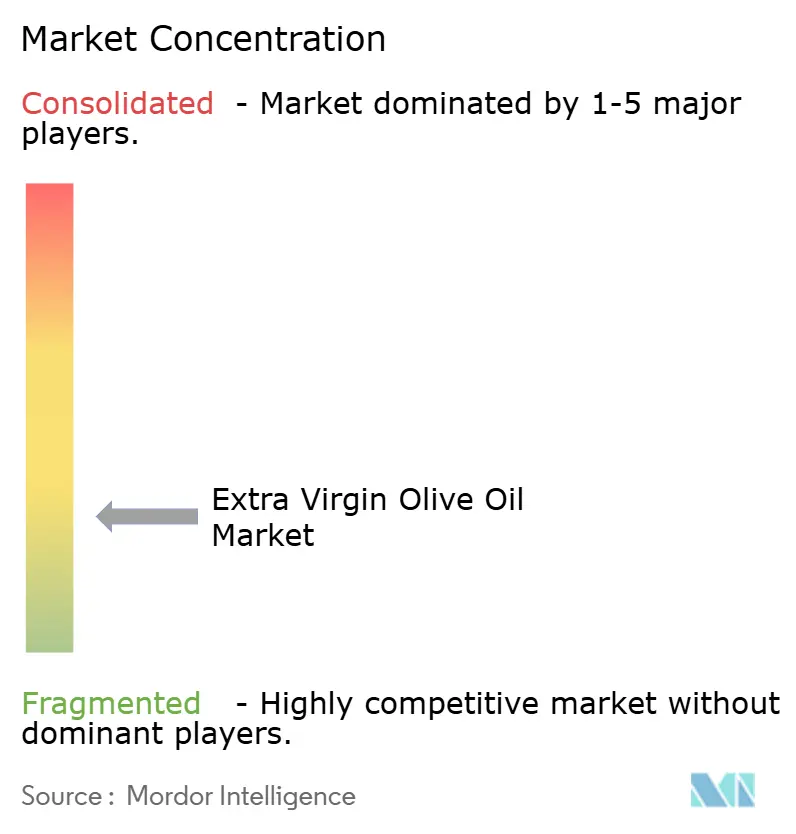
The global extra virgin olive oil market is characterized by intense competition among established international manufacturers, regional producers, and specialized premium brands. Competition is influenced by brand reputation, access to reliable olive supplies, product quality, distribution capabilities, and retailer relationships. While established European producers benefit from longstanding olive-growing traditions and extensive distribution networks, emerging players in other regions are strengthening their presence through localized marketing, product differentiation, and expanded retail availability. This competitive structure provides opportunities for both large-scale manufacturers and niche producers targeting specific consumer preferences.
Market participants are increasingly focusing on premiumization, operational efficiency, product portfolio diversification, and geographic expansion to strengthen their competitive positions. Companies are differentiating their offerings through organic certification, distinctive olive varieties, geographical provenance, harvesting practices, and specialized product ranges. Investment in sustainable cultivation, reliable sourcing networks, and production capabilities is also becoming important for maintaining consistent product quality and securing supply. These strategies enable manufacturers to address demand across mass-market, premium, and specialty segments while expanding their reach through traditional and digital retail channels.
Product authenticity, traceability, and packaging innovation are emerging as important competitive factors in the global market. Producers that demonstrate compliance with quality standards, provide transparent origin information, and maintain consistent product characteristics can strengthen consumer trust and brand loyalty. Packaging solutions that protect oil from light and oxygen while offering convenience for household use and online distribution also support product differentiation. Specialist brands can build market presence through consumer education, direct-to-consumer sales, and distinctive product positioning.
Extra Virgin Olive Oil Industry Leaders
-
Salov S.p.A.
-
California Olive Ranch, Inc.
-
Borges International Group, S.L.U.
-
Sovena Group
-
Deoleo S.A.
- *Disclaimer: Major Players sorted in no particular order
Extra Virgin Olive Oil Market Companies Covered in this Report
- Deoleo S.A.
- Sovena Group
- Borges International Group, S.L.U.
- California Olive Ranch, Inc.
- Salov S.p.A.
- Gallo Worldwide
- Pompeian, Inc.
- Bright Food (Group) Co., Ltd.
- Minerva S.A.
- Monini S.p.A.
- Aceites del Sur-Coosur, S.A.
- Jaencoop S.C.A.
- Grupo Ybarra Alimentación, S.L.
- Colavita S.p.A.
- Oliviers and Co.
- Cargill, Incorporated
- Conagra Brands, Inc.
- Modi Naturals Limited
- O-Live and Co.
- Dcoop S.C.A.
Recent Industry Developments in Extra Virgin Olive Oil Market
- October 2026: Gratsi launched two Greek extra virgin olive oils, a cooking oil and a finishing oil, in 3-liter bag-in-box packaging. The products are made from early-harvest olives using cold extraction. The packaging is designed to limit exposure to light and oxygen, preserving freshness for up to 18 months after opening. This launch reflects packaging innovation in the premium olive oil segment, combining bulk capacity with freshness preservation for everyday household use.
- August 2026: Vimal Wellness launched a 30 ml extra virgin olive oil pouch in India, available exclusively through Zepto. The compact, single-use packaging format is designed to offer consumers greater convenience and portion control. This development reflects packaging innovation in the extra virgin olive oil market and the growing role of quick-commerce platforms in expanding product accessibility.
- September 2025: Coração do Vale, a premium Portuguese extra virgin olive oil brand, entered the Indian market through a partnership between Leads Brand Connect and Lagar do Vale. Launched at World Food India 2025, the product features a blend of indigenous Portuguese olive varieties and is available in 500 ml tinted bottles designed to protect the oil from light exposure. The brand follows a limited-batch, direct-to-consumer model with pre-booking availability, reflecting the growing emphasis on premium positioning, product provenance, and specialized retail strategies in India's extra virgin olive oil market.
Global Extra Virgin Olive Oil Market Report Scope
Our study defines the global extra virgin olive oil market as all olive oils classified as extra virgin, obtained through mechanical or other permitted physical extraction processes and meeting applicable quality standards, irrespective of their nature or packaging format, sold through retail channels. The market is segmented by nature (Conventional and Organic), packaging type (Glass Bottles, PET Bottles, Tin Cans, Pouches, and Other Packaging Type), extraction process (Cold-Extracted and Other Extraction Process), distribution channel (Supermarkets/Hypermarkets, Specialty Stores, Online Retail Stores, and Other Retail Stores), and geography (North America, Europe, Asia-Pacific, South America, and Middle East and Africa).
Segmentation Overview
| Conventional |
| Organic |
| Glass Bottles |
| PET Bottles |
| Tin Cans |
| Pouches |
| Other Packaging Type |
| Cold-Extracted |
| Other Extraction Process |
| Supermarkets/Hypermarkets |
| Specialty Stores |
| Online Retail Stores |
| Other Retail Stores |
| North America | United States |
| Canada | |
| Mexico | |
| Rest of North America | |
| Europe | Germany |
| United Kingdom | |
| Italy | |
| France | |
| Spain | |
| Rest of Europe | |
| Asia-Pacific | China |
| India | |
| Japan | |
| South Korea | |
| Australia | |
| Rest of Asia-Pacific | |
| South America | Brazil |
| Argentina | |
| Rest of South America | |
| Middle East and Africa | South Africa |
| Saudi Arabia | |
| United Arab Emirates | |
| Turkey | |
| Rest of Middle East and Africa |
| By Nature | Conventional | |
| Organic | ||
| By Packaging Type | Glass Bottles | |
| PET Bottles | ||
| Tin Cans | ||
| Pouches | ||
| Other Packaging Type | ||
| By Extraction Process | Cold-Extracted | |
| Other Extraction Process | ||
| By Distribution Channel | Supermarkets/Hypermarkets | |
| Specialty Stores | ||
| Online Retail Stores | ||
| Other Retail Stores | ||
| By Geography | North America | United States |
| Canada | ||
| Mexico | ||
| Rest of North America | ||
| Europe | Germany | |
| United Kingdom | ||
| Italy | ||
| France | ||
| Spain | ||
| Rest of Europe | ||
| Asia-Pacific | China | |
| India | ||
| Japan | ||
| South Korea | ||
| Australia | ||
| Rest of Asia-Pacific | ||
| South America | Brazil | |
| Argentina | ||
| Rest of South America | ||
| Middle East and Africa | South Africa | |
| Saudi Arabia | ||
| United Arab Emirates | ||
| Turkey | ||
| Rest of Middle East and Africa | ||
Key Questions Answered in the Report
What is the forecast growth rate for extra virgin olive oil through 2032?
The category is forecast to grow at a 5.10% CAGR from 2027 to 2032, reaching USD 24.94 billion by 2032.
Which extra virgin olive oil type is growing fastest?
Organic olive oil is forecast to grow at a 7.25% CAGR during 2027-2032, while conventional olive oil held 74.23% share in 2026.
Which packaging format leads extra virgin olive oil sales?
Glass bottles held 68.25% share in 2026, while pouches are forecast to grow at a 6.85% CAGR through 2032.
Which region is growing fastest for extra virgin olive oil demand?
Asia-Pacific is forecast to grow at a 7.35% CAGR through 2032, supported by health awareness and expanding distribution.