
Embolization Coils Market Size and Share
Market Overview
| Study Period | 2020 - 2031 |
|---|---|
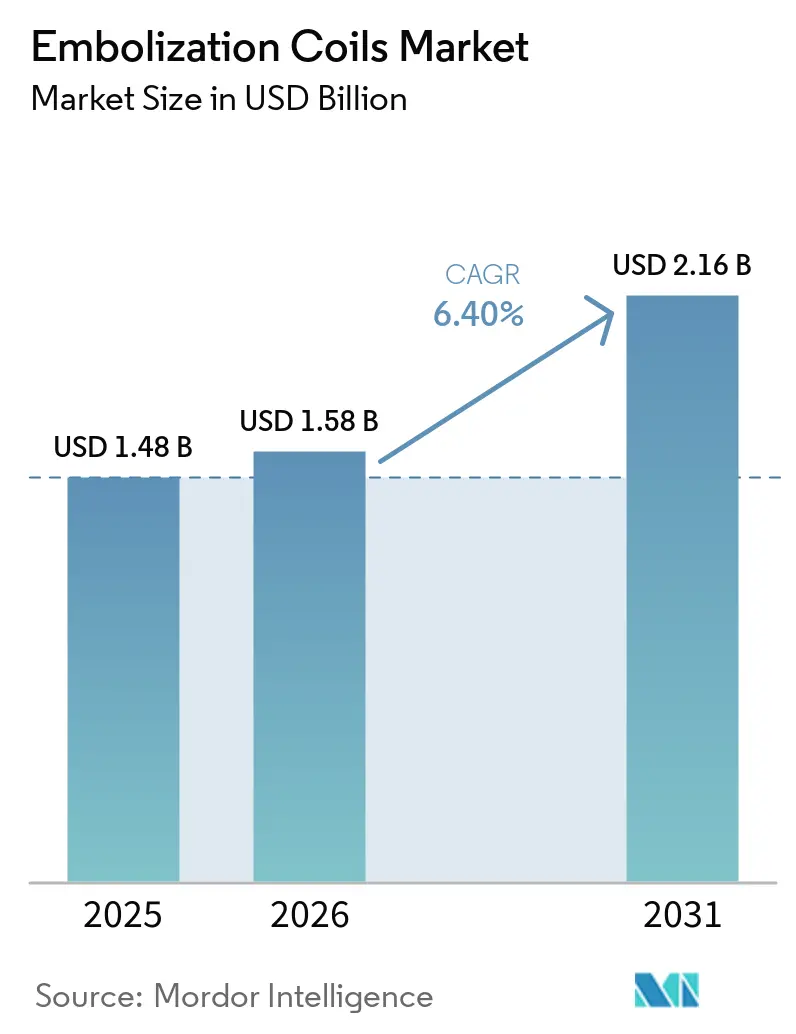
| Market Size (2026) | USD 1.58 Billion |
| Market Size (2031) | USD 2.16 Billion |
| Growth Rate (2026 - 2031) | 6.40 % |
| Fastest Growing Market | Asia-Pacific |
| Largest Market | North America |
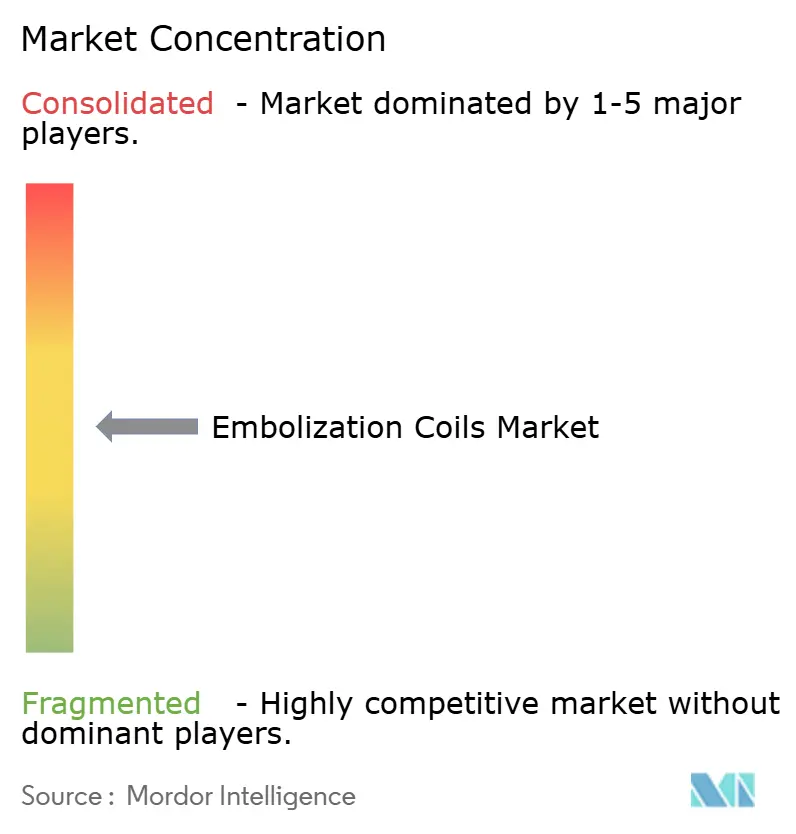
| Market Concentration | Medium |
Major Players *Disclaimer: Major Players sorted in no particular order Image © Mordor Intelligence. Reuse requires attribution under CC BY 4.0. | |
Embolization Coils Market Analysis by Mordor Intelligence
The Embolization Coils Market size is expected to increase from USD 1.48 billion in 2025 to USD 1.58 billion in 2026 and reach USD 2.16 billion by 2031, growing at a CAGR of 6.40% over 2026-2031.
Sustainability requirements are adding pressure to the disposable laparoscopic instruments market, particularly in European tenders. A 2026 systematic review found that single-use instruments had higher environmental footprints than multi-use alternatives, while a separate life cycle study calculated emissions of 1.13 kg CO₂e per laparoscopic cholecystectomy for disposable trocars, compared with 0.236 kg CO₂e for reusable trocars. The study reported that switching to reusable trocars alone reduced per-procedure emissions by 21%. Manufacturers need to address waste and life cycle performance alongside clinical value as procurement teams incorporate environmental measures into product assessments and tender specifications.
Key Report Takeaways
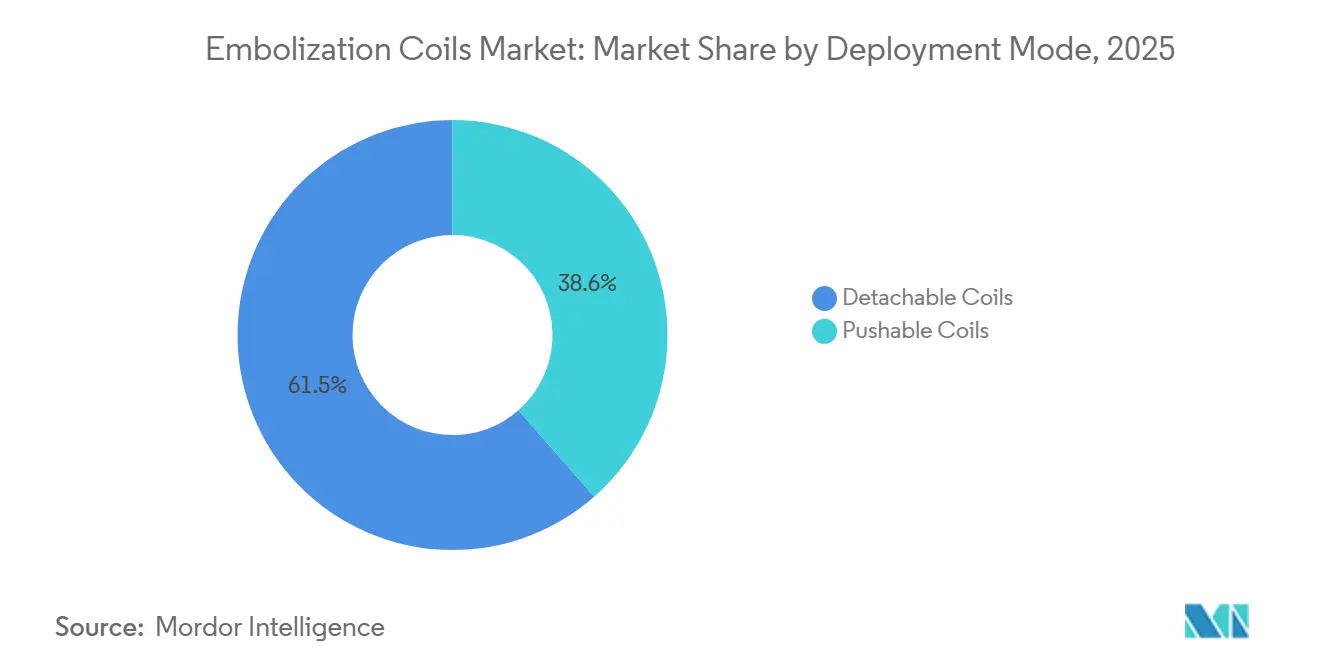
- By deployment type, detachable coils held 61.45% of the Embolization coils market share in 2025, while pushable coils are projected to grow at a 7.22% CAGR through 2031.
- By material, bare platinum coils held 41.67% revenue share in 2025, while platinum-tungsten alloy coils are projected to grow at a 7.56% CAGR through 2031.
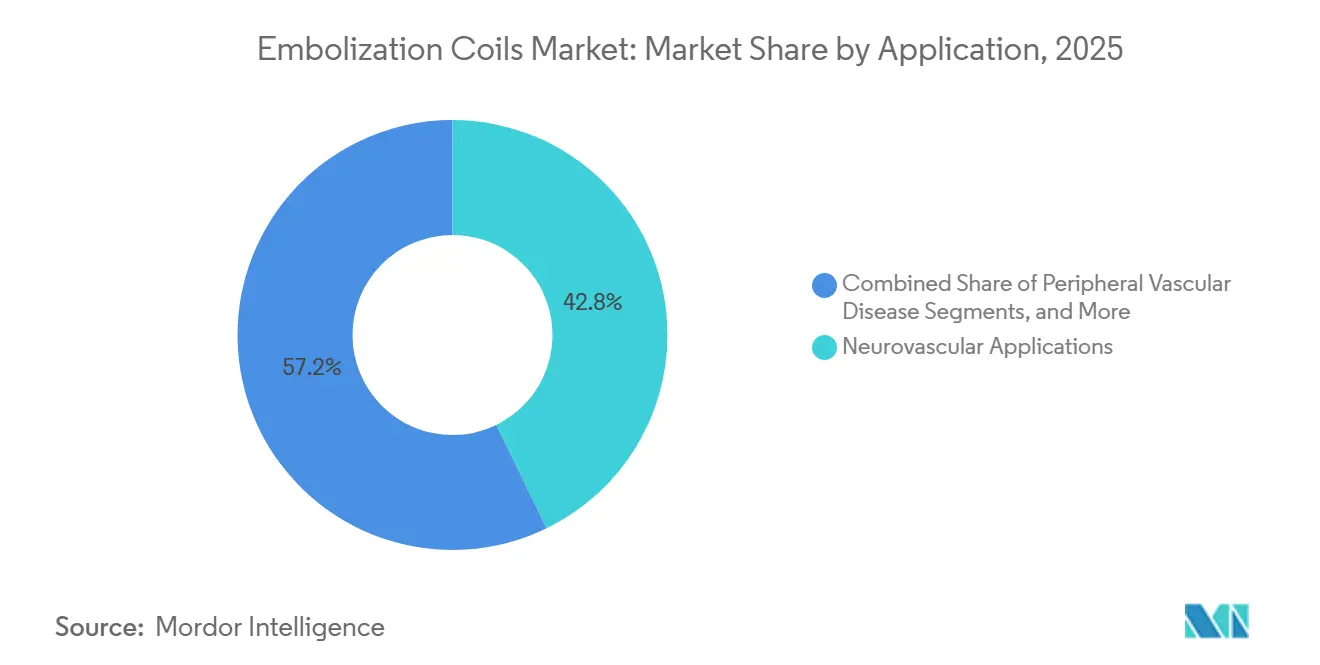
- By application, neurovascular applications accounted for 42.78% share in 2025, while peripheral vascular disease is projected to grow at an 8.98% CAGR through 2031.
- By end user, hospitals held 56.44% share in 2025, while ambulatory surgical centers are projected to grow at an 8.20% CAGR through 2031.
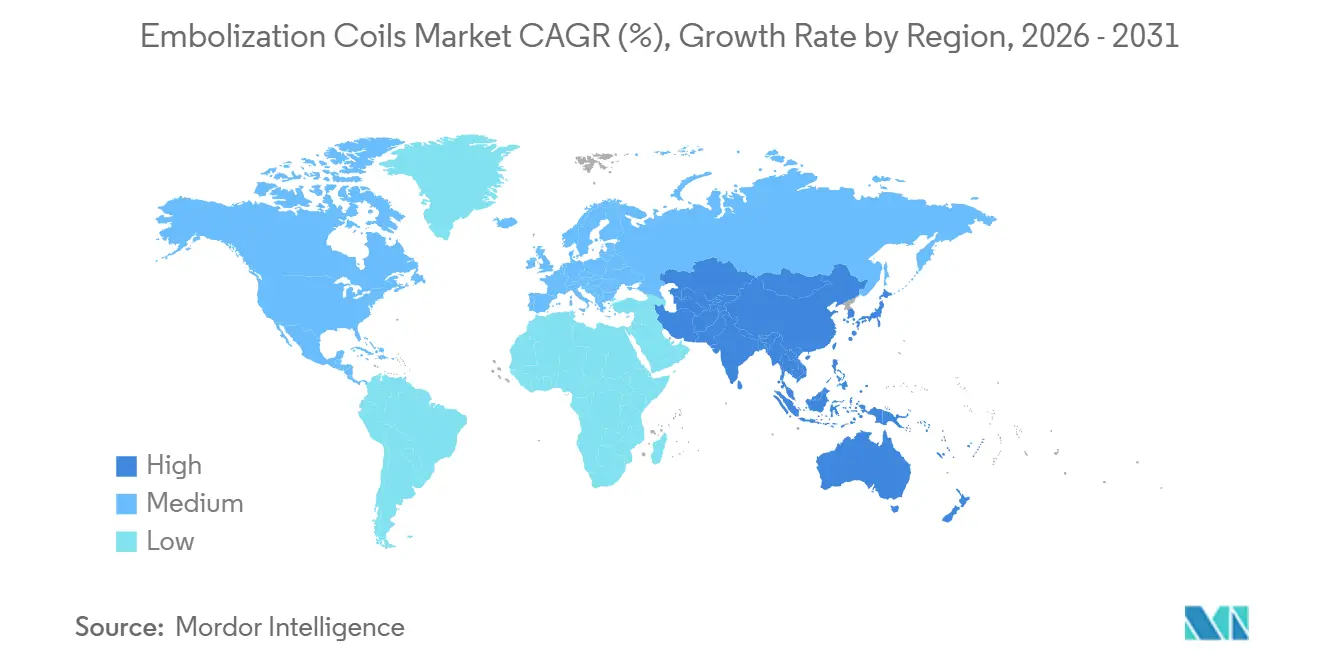
- By geography, North America held 40.40% share in 2025, while the Asia-Pacific is projected to grow at a 7.90% CAGR through 2031.
Note: Market size and forecast figures in this report are generated using Mordor Intelligence’s proprietary estimation framework, updated with the latest available data and insights as of January 2026.
Market Trends and Insights
Drivers Impact Analysis of Embolization Coils Market*
| DRIVER | (~) % IMPACT ON CAGR FORECAST | GEOGRAPHIC RELEVANCE | IMPACT TIMELINE |
|---|---|---|---|
| Rising neurovascular aneurysm and AVM treatment volumes | +2.0% | Global, with the highest procedure concentration in North America, Europe, and Japan | Short term (≤ 2 years) |
| Preference for minimally invasive endovascular procedures | +1.5% | Global | Medium term (2-4 years) |
| Expansion of interventional radiology and stroke-care infrastructure | +1.2% | Asia-Pacific, with spillover to the Middle East, Africa, and South America | Medium term (2-4 years) |
| Use of coils in peripheral haemorrhage and oncology embolization | +0.8% | North America, Europe, and the Asia-Pacific | Medium term (2-4 years) |
| Improving coil conformability and packing-density performance | +0.5% | North America and Europe | Long term (≥ 4 years) |
| Demand for bioabsorbable and artifact-reducing coil technologies | +0.4% | North America, Europe, and Japan | Long term (≥ 4 years) |
| Source: Mordor Intelligence | |||
Rising Neurovascular Aneurysm and AVM Treatment Volumes
Intracranial aneurysm embolization remained a key demand driver for the Embolization coils market. Wider access to computed tomography angiography and magnetic resonance angiography increased aneurysm detection among patients without emergency presentations. This expanded the pool of patients eligible for planned neurovascular intervention. The World Health Organization’s 2025 report identified stroke as the leading neurological contributor to global health loss, while the Stroke Alliance reported that the direct cost of 24 brain disorders exceeded USD 1.7 trillion.[1]
The expansion of stroke centers across Asia-Pacific, the Middle East, and Africa strengthened the clinical infrastructure for aneurysm and arteriovenous malformation procedures. The American Heart Association reported continued growth in endovascular therapy use for acute ischemic stroke during a six-year national analysis. This trend showed that catheter-based neurovascular care had become more established within hospital treatment pathways.
Preference for Minimally Invasive Endovascular Procedures
Endovascular embolization was often preferred over surgical ligation or craniotomy because it reduced hospitalization and recovery time. In suitable patients, it also reduced intensive care resource utilization. These clinical and operational benefits supported catheter-based procedures as healthcare systems managed capacity and costs. The Embolization coils market benefited as coils remained integral to aneurysm and vessel occlusion procedures.
Training also reinforced the shift toward endovascular care. As hospitals established interventional radiology and interventional neurology fellowship programs, the number of qualified operators increased. A larger trained workforce reduced the concentration of complex coiling procedures in a limited number of tertiary hospitals. OECD data showed that ischemic stroke case-fatality rates declined across member countries between 2013 and 2019 as improvements in reperfusion therapy delivery coincided with wider endovascular use.
Expansion of Interventional Radiology and Stroke-Care Infrastructure
Healthcare investments across Asia-Pacific, the Middle East, and South America reduced structural barriers to coil adoption. New imaging capacity, catheter laboratories, and stroke programs enabled complex embolization procedures to become more routine. The Embolization coils market expanded as these clinical capabilities became available beyond long-established centers. However, trained operators remained necessary for sustained procedural adoption.
Reimbursement policy remained as important as physical device availability. Japan’s national insurance coverage for NUMEN coils supported commercial access across more than 250 hospitals. This demonstrated that payment coverage influenced product adoption in clinical practice. Japan and South Korea remained mature healthcare systems where physicians sought premium coil performance, while India and China were volume-driven markets where accessible pricing influenced early adoption.
Increased Use of Coils in Peripheral Hemorrhage and Oncology Embolization
The Embolization coils market gained demand from applications beyond the neurovascular setting. Transcatheter procedures for hepatocellular carcinoma, splenic artery aneurysms, postsurgical hemorrhage, and prostate artery embolization expanded coil use across interventional radiology programs. Providers increasingly performed these procedures in community settings and academic medical centers. This broadened the addressable patient base for vendors offering suitable peripheral products.
Selected lower-acuity peripheral procedures shifted from hospital catheter laboratories to ambulatory surgical centers when case complexity permitted. These settings favored standardized procedure kits and efficient device selection. Pushable coils and small-diameter detachable coils met these requirements when repositioning was less critical. Manufacturers that tailored packaging and delivery systems to outpatient workflows were better positioned in this channel.
Restraints Impact Analysis of Embolization Coils Market*
| RESTRAINT | (~) % IMPACT ON CAGR FORECAST | GEOGRAPHIC RELEVANCE | IMPACT TIMELINE |
|---|---|---|---|
| High device and procedure costs | -0.7% | Global, with the greatest effect in the Middle East, Africa, South America, and emerging Asia-Pacific markets | Medium term (2-4 years) |
| Requirements for highly specialized operators and infrastructure | -0.5% | The Middle East, Africa, South America, and frontier Asia-Pacific markets | Long term (≥ 4 years) |
| Polymer particulate shedding and long-term safety concerns | -0.3% | Global, especially for newer polymer-enhanced and fibered coils | Long term (≥ 4 years) |
| Limited comparative evidence across coil designs and manufacturers | -0.2% | Global | Medium term (2-4 years) |
| Source: Mordor Intelligence | |||
High Device and Procedure Costs
Premium detachable systems, including hydrogel-enhanced and platinum-tungsten designs, can cost several thousand USD per procedure. In many middle-income healthcare systems, these costs can exceed available reimbursement. The gap between device costs and reimbursement can limit adoption, even when clinical need is high. Consequently, coil uptake remains uneven across countries with varying payment systems and is concentrated in locations with stronger reimbursement frameworks and established referral pathways.
Cost is not the only barrier to premium coil adoption. A prospective, multicenter, randomized trial, with follow-up completed in February 2025, found that operators rated bare platinum coils easier to manipulate than second-generation hydrogel designs, with scores of 8.8 and 6.3, respectively, on a 10-point scale.[2] Higher-priced systems must therefore demonstrate clear procedural or clinical benefits. Group purchasing arrangements also increase price pressure, limiting pricing flexibility for manufacturers and new entrants. Vendors must support premium pricing through clinical evidence, workflow advantages, or differentiated clinical applications.
Requirements for Highly Specialized Operators and Infrastructure
Coil embolization requires specialized training, appropriate angiography equipment, and supporting clinical services. Complex neurovascular cases may require neurointerventional or vascular intervention training, biplane fluoroscopy, and intraoperative neuromonitoring capabilities. Few facilities possess all these resources, limiting the number of locations that can routinely perform advanced coiling procedures. This constraint is particularly evident in healthcare systems developing stroke and interventional care networks.
Hospitals may procure imaging equipment before employing clinicians who can perform complex coiling procedures, creating procurement interest without immediate procedure volumes. The shortage of interventional neurology specialists also encourages suppliers to simplify deployment systems. Easier-to-use products may reduce operational barriers, provided they maintain acceptable clinical outcomes. Training constraints, concerns over particulate shedding and long-term safety, and limited direct comparisons among coil designs can delay procurement decisions and slow the transition from familiar bare-platinum products.
*Our forecasts treat driver/restraint impacts as directional, not additive. The impact forecasts reflect baseline growth, mix effects, and variable interactions.
Embolization Coils Market Segment Analysis
By Deployment Type:
Detachable Systems Lead While Pushable Coils Serve Expanding Peripheral UsesDetachable coils held a 61.45% share of the embolization coils market in 2025. Their ability to reposition coils and confirm stability before electrolytic or mechanical detachment supports precise vessel occlusion in wide-neck aneurysms and high-flow arteriovenous fistulae. This capability enables physicians to adjust placement before final release in anatomically complex cases.
Suppliers must offer a range of diameters, softness levels, and delivery options to address the segment’s large installed base. Product breadth can support standardized purchasing across framing, filling, and finishing stages. Pushable coils are the fastest-growing deployment type, with a projected CAGR of 7.22% from 2026 to 2031, driven by oncology and gastrointestinal hemorrhage procedures that prioritize speed and cost efficiency.

By Material:
Bare Platinum Retains Scale While Platinum-Tungsten Gains MomentumBare platinum coils held a 41.67% revenue share in 2025, supported by extensive clinical use, documented safety, and compatibility with existing microcatheter inventories. Physician familiarity and established procurement relationships further reinforce demand. Bare platinum remains the standard benchmark for evaluating newer coil technologies.
Platinum-tungsten alloy coils are forecast to grow at a CAGR of 7.56% through 2031. Higher radiopacity, thinner wire gauges, improved packing density, and three-dimensional conformability support detailed visualization and controlled filling in complex anatomy. This design approach has been commercialized in more than 30 countries, supporting adoption in neurovascular and peripheral procedures.
By Application:
Neurovascular Procedures Remain Largest While Peripheral Vascular Disease Grows FastestNeurovascular applications accounted for a 42.78% share of the embolization coils market in 2025. The category includes intracranial aneurysms, arteriovenous malformations, carotid cavernous fistulae, and middle meningeal artery embolization for chronic subdural hematoma. These cases often require five to 15 coils per aneurysm, supporting segment value through high device use and premium pricing.
Peripheral vascular disease is the fastest-growing application, with a projected CAGR of 8.98% from 2026 to 2031. Growth is driven by treatment for splenic artery aneurysms, uterine fibroid embolization, prostate artery embolization, and post-EVAR sac embolization. As these procedures expand coil use beyond neurovascular care, the peripheral vascular disease segment is expected to outpace overall market growth during the forecast period.
By End User:
Hospitals Hold the Largest Position as Ambulatory Surgical Centers ExpandHospitals held a 56.44% share of the embolization coils market in 2025. Their position reflects the complexity of neurovascular coiling, which may require biplane angiography, neuroanesthesia, and immediate neurosurgical backup. Academic and tertiary hospitals also concentrate clinical expertise and procedure volumes through interventional radiology and neurovascular fellowship training programs.
Ambulatory surgical centers are forecast to grow at a CAGR of 8.20% from 2026 to 2031. Medicare coverage expansion for interventional radiology-adjacent procedures in the 2026 covered procedures list created a reimbursement pathway for selected peripheral embolization procedures in lower-cost outpatient settings. However, complex neurovascular coiling is expected to remain concentrated in hospitals.
Geography Analysis
North America Embolization Coils Market
North America held 40.40% of the embolization coils market share in 2025, supported by comprehensive stroke centers, third-party reimbursement, and an established interventional radiology workforce. A six-year national assessment reported 103,355 endovascular therapy procedures among 867,335 acute ischemic stroke hospitalizations in the United States, representing an 11.9% utilization rate. Canada standardizes aneurysm care through provincial stroke networks, while Mexico is expanding neurovascular capacity through public and private hospital modernization.
Europe and Japan Embolization Coils Market
Germany, the United Kingdom, France, Italy, and Spain support the European market through the integration of coil embolization into national stroke care pathways. The EU Medical Device Regulation creates entry barriers for smaller companies, while established suppliers with CE certification are better positioned to retain market access. Japan remains a premium market and regulatory reference point, with Terumo Neuro receiving PMDA approval for WovenEndoBridge 17 in November 2025 and launching it commercially in May 2026.
APAC and MEA Embolization Coils Market
Asia-Pacific is projected to record the fastest regional CAGR of 7.90% from 2026 to 2031, driven by mature interventional radiology systems in Japan and South Korea and increasing procedure volumes in China. India is strengthening institutional capacity, with equipment availability, training, and pricing remaining key adoption factors. MicroPort NeuroScientific launched the NUMEN Coil Embolization System in Egypt in August 2025 through its partnership with PentaMed, expanding access to Middle East and Africa markets.
Competitive Landscape
The Embolization coils market is moderately concentrated. Boston Scientific, Medtronic, Penumbra, Stryker Neurovascular, Terumo Neuro through MicroVention, Johnson & Johnson through Cerenovus, and Cook Medical hold strong positions in procedure-level purchasing. No single supplier dominates all coil categories or regions. Companies compete through broad portfolios covering framing, packing, and finishing needs, which can simplify hospital procurement.
Geographic expansion remains a key competitive strategy. Asia-Pacific and Middle East and Africa markets offer growth opportunities, as coil use per eligible patient remains lower than in developed markets. Larger companies leverage regulatory capabilities, distribution networks, and product breadth, while smaller players target specific material or imaging requirements. Competition is driven by clinical fit and commercial reach rather than price alone.
Penumbra launched the Ruby XL System in June 2025 to support large-vessel embolization. The system includes coils up to 40 mm in diameter and 70 cm in length and is designed for delivery through a 0.035-inch diagnostic catheter. By increasing volume per coil, it aims to reduce coil counts in large-vessel and high-flow procedures, supporting cost and workflow efficiencies for hospitals.
Terumo Neuro launched the WEB 17 Aneurysm Embolization System in Japan in May 2026 after receiving PMDA approval in November 2025. The device is delivered through a 0.017-inch microcatheter and expands treatment options for ruptured and unruptured intracranial aneurysms. MicroPort NeuroScientific expanded NUMEN coil access through its Egypt launch in August 2025. Regulatory approvals, distributor partnerships, and material innovation remain critical for expanding access and reducing MRI and CT artifacts.
Embolization Coils Industry Leaders
-
Cook Medical LLC
-
Terumo Corporation
-
Stryker Corporation
-
Boston Scientific Corporation
-
Medtronic plc
- *Disclaimer: Major Players sorted in no particular order
Embolization Coils Market Companies Covered in this Report
- Acandis GmbH & Co. KG
- Artio Medical, Inc.
- Asahi Intecc
- B. Braun
- BALT Extrusion SAS
- Boston Scientific
- Cook Group
- Integer Holdings
- Johnson & Johnson
- KANEKA CORPORATION
- Lepu Medical Technology (Beijing) Co., Ltd.
- Medtronic
- Merit Medical Systems
- MicroPort NeuroTech Co., Ltd.
- MicroVention
- Penumbra
- Phenox
- Q'Apel Medical, Inc.
- Rapid Medical Ltd.
- Route 92 Medical, Inc.
- Shape Memory Medical, Inc.
- Sirtex Medical Pty Ltd
- Stryker
- Terumo
- Wallaby Medical, Inc.
Recent Industry Developments in Embolization Coils Market
- May 2026: Terumo Neuro launched the WovenEndoBridge 17 Aneurysm Embolization System in Japan following PMDA approval, expanding treatment options for intracranial aneurysms.
- August 2025: MicroPort NeuroScientific launched the NUMEN Coil Embolization System in Egypt through PentaMed, expanding its presence to more than 30 countries.
- June 2025: Penumbra, Inc. launched the FDA-cleared Ruby XL System, designed to reduce coil use and radiation exposure in large-vessel, high-flow procedures.
Global Embolization Coils Market Report Scope
As per the scope of the report, embolization coils are tiny, flexible metal devices usually made of platinum or stainless steel guided through a catheter into a blood vessel to block abnormal blood flow, seal off aneurysms, or stop internal bleeding by triggering a secure blood clot.
The embolization coils market is segmented by deployment type, material, application, end user, and geography. By deployment type, the market includes detachable coils and pushable coils. By material, the market is segmented into bare platinum coils, platinum-tungsten alloy coils, platinum and hydrogel coils, fibered polymer-enhanced coils, nitinol and reduced-artifact coils, and bioabsorbable polymer coils. By application, the market is categorized into neurovascular applications, peripheral vascular disease, oncology, gastrointestinal bleeding, cardiology and structural heart procedures, urology, trauma and emergency hemorrhage control, and others. By end user, the market is segmented into hospitals, ambulatory surgical centers, cardiology centers, specialty interventional radiology centers, and others. By geography, the market is analyzed across North America, Europe, Asia-Pacific, the Middle East and Africa, and South America. The report also covers the estimated market sizes and trends for 17 countries across major regions globally. The report offers market sizes and forecasts in terms of value (USD) for the above segments.
| Detachable Coils |
| Pushable Coils |
| Bare Platinum Coils |
| Platinum-Tungsten Alloy Coils |
| Platinum and Hydrogel Coils |
| Fibered Polymer-Enhanced Coils |
| Nitinol and Reduced-Artifact Coils |
| Bioabsorbable Polymer Coils |
| Neurovascular Applications |
| Peripheral Vascular Disease |
| Oncology |
| Gastrointestinal Bleeding |
| Cardiology and Structural Heart Procedures |
| Urology |
| Trauma and Emergency Hemorrhage Control |
| Others |
| Hospitals |
| Ambulatory Surgical Centers |
| Cardiology Centers |
| Specialty Interventional Radiology Centers |
| Others |
| North America | United States |
| Canada | |
| Mexico | |
| Europe | Germany |
| United Kingdom | |
| France | |
| Italy | |
| Spain | |
| Rest of Europe | |
| Asia-Pacific | China |
| India | |
| Japan | |
| Australia | |
| South Korea | |
| Rest of Asia-Pacific | |
| Middle East and Africa | GCC |
| South Africa | |
| Rest of Middle East and Africa | |
| South America | Brazil |
| Argentina | |
| Rest of South America |
| By Deployment Type | Detachable Coils | |
| Pushable Coils | ||
| By Material | Bare Platinum Coils | |
| Platinum-Tungsten Alloy Coils | ||
| Platinum and Hydrogel Coils | ||
| Fibered Polymer-Enhanced Coils | ||
| Nitinol and Reduced-Artifact Coils | ||
| Bioabsorbable Polymer Coils | ||
| By Application | Neurovascular Applications | |
| Peripheral Vascular Disease | ||
| Oncology | ||
| Gastrointestinal Bleeding | ||
| Cardiology and Structural Heart Procedures | ||
| Urology | ||
| Trauma and Emergency Hemorrhage Control | ||
| Others | ||
| By End User | Hospitals | |
| Ambulatory Surgical Centers | ||
| Cardiology Centers | ||
| Specialty Interventional Radiology Centers | ||
| Others | ||
| By Geography | North America | United States |
| Canada | ||
| Mexico | ||
| Europe | Germany | |
| United Kingdom | ||
| France | ||
| Italy | ||
| Spain | ||
| Rest of Europe | ||
| Asia-Pacific | China | |
| India | ||
| Japan | ||
| Australia | ||
| South Korea | ||
| Rest of Asia-Pacific | ||
| Middle East and Africa | GCC | |
| South Africa | ||
| Rest of Middle East and Africa | ||
| South America | Brazil | |
| Argentina | ||
| Rest of South America | ||
Key Questions Answered in the Report
What is driving demand for embolization coils?
Growth is supported by treatment of intracranial aneurysms, arteriovenous malformations, peripheral hemorrhage, and the continued shift toward catheter-based intervention.
What is the forecast CAGR for embolization coils?
The market is projected to grow at a CAGR of 6.40% from 2026 to 2031, reaching USD 2.16 billion by 2031.
Which embolization coil application is growing fastest?
Peripheral vascular disease is the fastest-growing application, with a projected 8.98% CAGR from 2026 to 2031.
Why do detachable coils lead deployment type?
Detachable coils held 61.45% share in 2025 because they allow repositioning and stability checks before final detachment.
Which region has the strongest growth outlook?
Asia-Pacific is projected to grow at a 7.90% CAGR from 2026 to 2031 as hospitals, stroke programs, and specialist capacity expand.
How are ambulatory surgical centers affecting coil use?
Ambulatory surgical centers are projected to grow at an 8.20% CAGR as suitable peripheral embolization procedures move to lower-cost outpatient settings.