
Egg Protein Powder Market Size and Share
Market Overview
| Study Period | 2021 - 2031 |
|---|---|
| Market Size (2026) | USD 7.97 Billion |
| Market Size (2031) | USD 10.5 Billion |
| Growth Rate (2026 - 2031) | 5.67 % |
| Fastest Growing Market | Asia-Pacific |
| Largest Market | North America |
| Market Concentration | Low |
Major Players *Disclaimer: Major Players sorted in no particular order Image © Mordor Intelligence. Reuse requires attribution under CC BY 4.0. | |
Egg Protein Powder Market Analysis by Mordor Intelligence
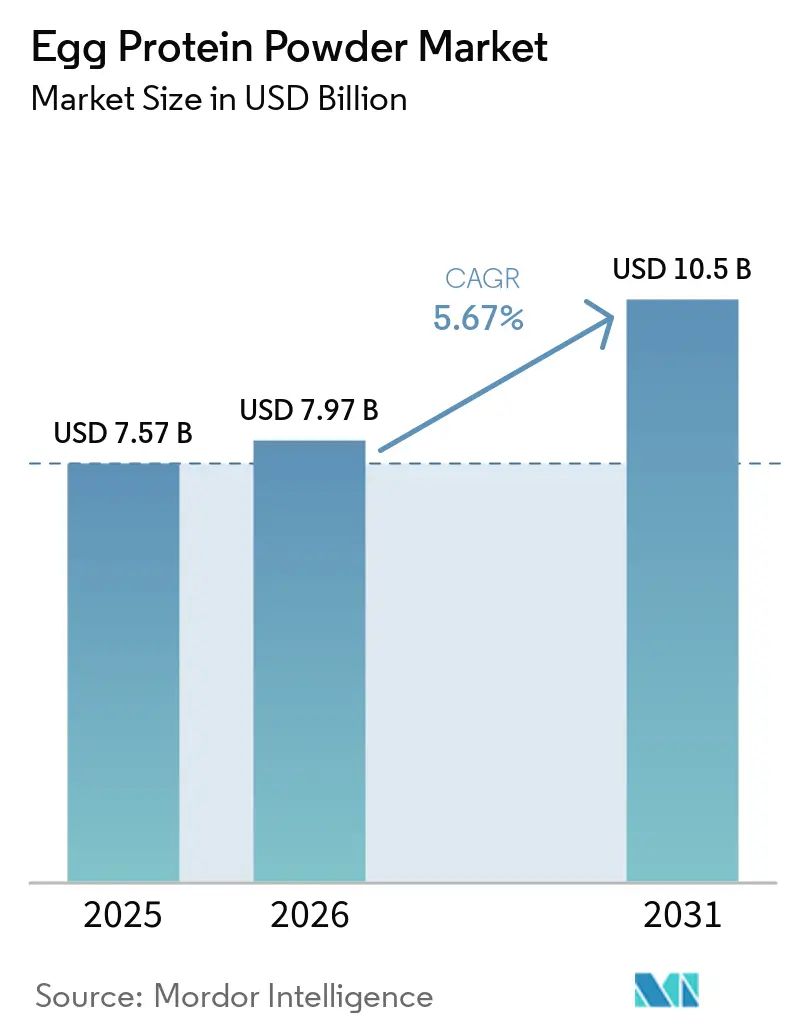
The egg protein powder market size was valued at USD 7.57 billion in 2025 to USD 7.97 billion in 2026, and is forecast to reach USD 10.50 billion by 2031 at a 5.67% CAGR over 2026-2031. The egg protein powder market is supported by demand for protein-rich foods, dietary supplements, and functional ingredients. Buyers value its shelf-stable format, which simplifies handling compared with liquid eggs. Dietary supplement use remains widespread in the United States, while sports nutrition use among surveyed supplement users increased from 36% in 2019 to 45% in 2024, according to the Council for Responsible Nutrition[1]. Consequently, the egg protein powder market serves demand across sports nutrition, dietary supplements, and food manufacturing, rather than relying on a single consumer use case. The market also benefits from the established functional properties of egg-based ingredients. Supply reliability, product traceability, and formulation performance are likely to remain key purchasing considerations, particularly as food manufacturers seek predictable inputs, established quality documentation, and consistent functional performance across supplement, bakery, and other industrial applications amid variable egg supply conditions.
Key Report Takeaways
- By product type, egg white protein powder led the egg protein powder market with a share of 47.24% in 2025, while egg yolk protein powder is anticipated to register the fastest CAGR of 6.43% during 2026-2031.
- By protein source, chicken egg retained an 88.43% share in 2025, and is forecast to expand at a 5.85% CAGR through 2031.
- By application, dietary supplements led the market with a share of 53.78% in 2025, whereas bakery and confectionery is anticipated to register the fastest CAGR of 6.68% during 2026-2031.
- By distribution channel, B2C led the market with a share of 57.65% in 2025, while B2B is anticipated to register the fastest CAGR of 6.29% during 2026-2031.
- By geography, North America led the egg protein powder market in 2025 with a 42.12% share, while Asia-Pacific is projected to advance at a 6.84% CAGR through 2031.
Note: Market size and forecast figures in this report are generated using Mordor Intelligence’s proprietary estimation framework, updated with the latest available data and insights as of January 2026.
Market Trends and Insights
Drivers Impact Analysis of Egg Protein Powder Market*
| Driver | (~) % Impact on CAGR Forecast | Geographic Relevance | Impact Timeline |
|---|---|---|---|
| Rising consumer appetite for high-protein diets and weight management | +1.5% | Global, with highest intensity in North America and Western Europe | Medium term (2-4 years) |
| Structural advantage of lactose-free animal-based protein | +0.8% | North America and European Union, with spillover to core Asia-Pacific markets | Medium term (2-4 years) |
| Clean-label reformulation and ingredient traceability | +0.7% | North America and European Union | Long term (≥ 4 years) |
| Protein-enriched bakery, confectionery, and shelf-stable manufacturing demand | +0.6% | Global, with spillover to Middle East and Africa and South America | Long term (≥ 4 years) |
| Weight management and low-carbohydrate product interest | +0.5% | North America, Western Europe, and core Asia-Pacific markets | Short term (≤ 2 years) |
| Shelf-stable ingredient demand in food manufacturing | +0.4% | Core Asia-Pacific markets, with spillover to Middle East and Africa | Medium term (2-4 years) |
| Source: Mordor Intelligence | |||
Rising Consumer Appetite for High-Protein Diets and Weight Management
The egg protein powder market benefits from demand beyond traditional athletic consumers. Egg protein powder provides high protein density and a low-carbohydrate profile, making it suitable for products designed for smaller meal portions and protein-focused dietary plans. These trends expand the market's customer base to include consumers seeking wellness, clinical nutrition, and daily food fortification applications. They also support demand for convenient protein formats among consumers who require nutritional support without significantly increasing meal volume or carbohydrate intake. Growing interest in balanced nutrition and protein-enriched diets further encourages manufacturers to incorporate egg protein into functional foods, beverages, and meal replacement products. This broader application base supports repeat consumption and creates opportunities for egg protein powder across specialized and mainstream nutrition categories.
Structural Advantage of Lactose-Free Animal-Based Protein
The egg protein powder market serves consumers and formulators seeking an animal-based protein that is naturally lactose-free. According to an article published in Frontiers in 2024, egg protein has a protein digestibility-corrected amino acid score (PDCAAS) of 1.0, while dairy allergies can limit access to complete protein ingredient options for some consumers[2]. The prevalence of lactose intolerance and cow’s milk allergy drives demand for complete protein alternatives free from dairy-derived ingredients. Egg protein offers a high-quality, animal-based option for consumers seeking to avoid lactose or cow’s milk proteins while maintaining their protein intake. For formulators, egg white protein reduces reliance on multi-source plant protein blends when they require simpler ingredient lists and familiar functional properties. Its compatibility with lactose-free formulations enables manufacturers to develop protein products for consumers who avoid dairy-derived ingredients while retaining an animal-based protein source.
Clean-Label Reformulation and Ingredient Traceability
The egg protein powder market is driven by demand for clear labeling and traceable ingredient sourcing. In November 2025, the International Food Information Council found that two in three Americans reviewed nutrition information on product packaging, with protein source and quantity among the most sought-after front-of-pack details[3]. Single-origin egg ingredients enable product labels that highlight protein sources and straightforward formulations. Advancements in spray-drying technology preserve protein functionality while reducing moisture content and extending shelf life, which improves ingredient handling. Documentation supporting non-genetically modified organism (GMO) and antibiotic-free sourcing, along with farm-to-powder traceability, benefits processors with direct supply relationships and established quality systems. These attributes strengthen consumer confidence in product authenticity and enable manufacturers to differentiate premium egg protein formulations in an increasingly transparent nutrition market.
Protein-Enriched Bakery, Confectionery, and Shelf-Stable Manufacturing Demand
The egg protein powder market derives significant demand from bakery and confectionery manufacturers, which use egg proteins for aeration, gelling, foam stability, and structural support. Egg white protein performs multiple functions in bread, pastries, meringues, and confectionery products, limiting the ability of a single substitute ingredient to replace it across all applications. The Food and Agriculture Organization has documented the role of bakery production in food systems, including the expansion of industrial production in developing regions. Shelf-stable powder formats are particularly relevant in regions with uneven cold-chain infrastructure, including parts of Asia-Pacific, the Middle East, and Africa. During egg supply disruptions, bakeries may consider fermentation-derived egg proteins as a secondary supply option rather than a complete replacement for conventional egg protein powder.
Restraints Impact Analysis of Egg Protein Powder Market*
| Restraint | (~) % Impact on CAGR Forecast | Geographic Relevance | Impact Timeline |
|---|---|---|---|
| High production costs and raw material volatility | -0.6% | Global, concentrated in price-sensitive Middle East and Africa and South America | Long term (≥ 4 years) |
| Egg allergy, food safety, and channel limitations | -0.4% | North America, Australia, and Western Europe | Medium term (2-4 years) |
| Egg and raw material price volatility | -0.5% | North America and European Union, with spillover to core Asia-Pacific markets | Short term (≤ 2 years) |
| Strict food safety and quality requirements | -0.3% | North America and European Union | Long term (≥ 4 years) |
| Source: Mordor Intelligence | |||
High Production Costs and Raw Material Volatility
The egg protein powder market faces a cost premium because shell egg sourcing, pasteurization, spray drying, and quality testing involve multiple processing steps. Smaller processors that purchase shell eggs on the spot market experience greater margin pressure than vertically integrated producers. In 2026, the United States Department of Agriculture Animal and Plant Health Inspection Service reported that highly pathogenic avian influenza had affected 154 million birds in the United States since 2022; declining layer-hen populations are tightening the availability of eggs used as raw materials for egg protein powder production. These supply constraints can increase egg procurement costs and heighten price volatility for processors. Recurring supply disruptions complicate cost planning for processors and their food manufacturing customers. Consequently, suppliers with captive layer flocks, contracted procurement arrangements, and the ability to maintain consistent supply during price spikes may hold a competitive advantage. These supply-side pressures can lead to higher and more volatile egg protein powder prices, limiting adoption among cost-sensitive food manufacturers and supplement brands.
Egg Allergy, Food Safety, and Channel Limitations
Egg allergies limit product adoption among certain consumer groups and necessitate robust allergen management throughout the egg protein powder market. Although spray drying can reduce the immunoreactivity of egg allergens, it does not eliminate them. Food safety, quality assurance, and allergen documentation requirements may create entry barriers for small processors. In contrast, established sports nutrition and industrial food manufacturers are better positioned to meet these requirements. Compliance increases testing, segregation, labeling, and certification costs, particularly for manufacturers serving multiple international markets with varying allergen regulations. These requirements can also extend product approval timelines and increase operational complexity for manufacturers entering new markets. Consequently, smaller suppliers may face greater challenges in competing on cost and expanding distribution across regions with stringent food safety standards.
*Our forecasts treat driver/restraint impacts as directional, not additive. The impact forecasts reflect baseline growth, mix effects, and variable interactions.
Egg Protein Powder Market Segment Analysis
By Product Type:
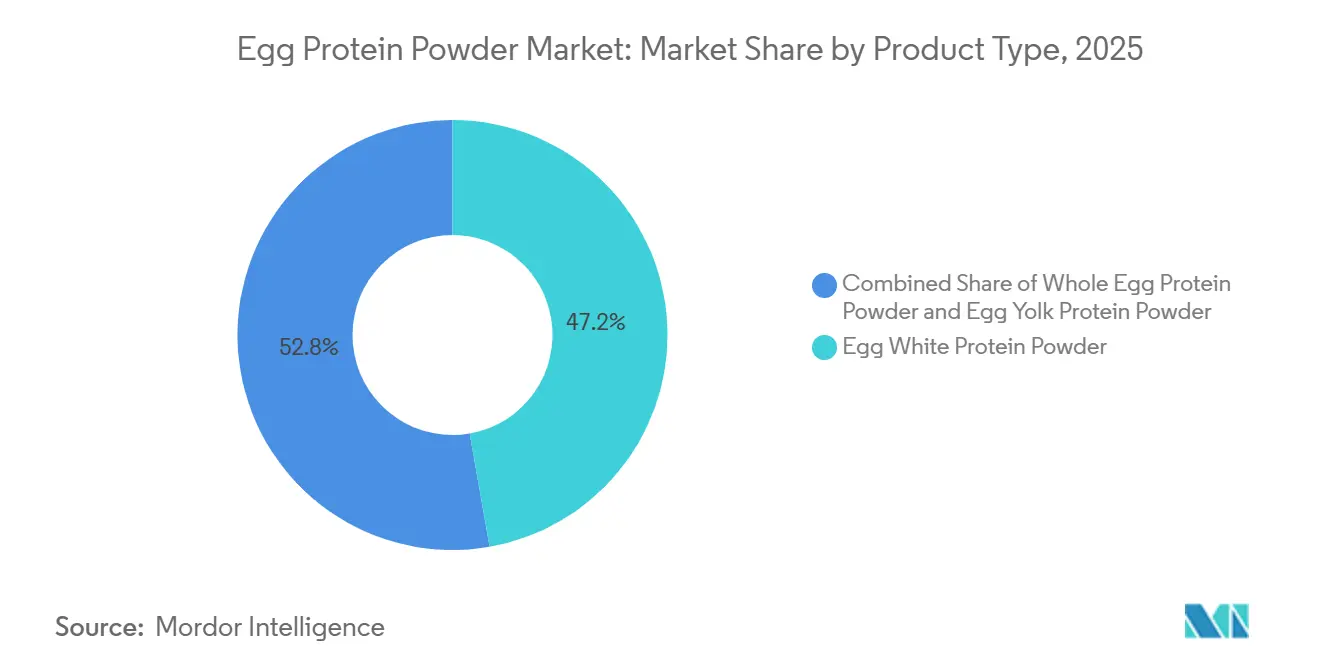
Egg Yolk Protein Gains Ground in a Mature CategoryEgg white protein powder accounted for a 47.24% share in 2025, remaining the leading product type. Its established use in sports nutrition, meal replacement, and dietary supplement products supports its market position. Its complete amino acid profile, neutral flavor, and foaming properties enable its use across multiple formulation applications. Clean-label compatibility also drives demand among product developers seeking recognizable protein sources. Whole egg protein powder held a minority share, as it combines egg white protein with yolk-derived lecithin and fat-soluble vitamins. This broader nutrient profile helps formulators consolidate selected functional ingredients into a single egg-based source. It also appeals to products seeking traceable, whole-food positioning rather than a single isolated function.
Egg yolk protein powder is forecast to grow at a CAGR of 6.43% through 2031, making it the fastest-growing product type from a smaller base. Interest in this segment centers on phosvitin, a primary yolk phosphoprotein that provides emulsification functionality at low inclusion levels. The Institute of Food Technologists identified phosvitin as an ingredient development opportunity because it can deliver emulsification effects in complex food systems at trace quantities. This growth outlook reflects functional specialization rather than a shift away from egg white protein’s larger installed base. It also indicates that premiumization opportunities exist within conventional egg ingredients.

By Protein Source:
Chicken Egg Maintains a Broad AdvantageChicken eggs accounted for an 88.43% share in 2025. This high concentration reflects the scale of global layer poultry production and the established processing systems in North America and Europe. Chicken eggs are also projected to record the highest CAGR of 5.85% during the forecast period through 2031, indicating that alternative sources will remain limited in absolute volume. During supply disruptions, buyers place greater value on reliable conventional suppliers with established powder production capacity. Long-term supply contracts can further strengthen demand for processors with proven poultry supply networks and spray-drying operations. Therefore, chicken eggs maintain their market position through both established infrastructure and customer familiarity. Alternative supply options have not yet achieved comparable scale or supply predictability.
Duck eggs and other sources remain concentrated in specialty applications within the egg protein powder market. Duck eggs can attract demand in high-calorie sports nutrition products because they offer higher protein and fat content per unit than chicken eggs. However, commercial duck egg powder production lacks the large, vertically integrated processing networks available for chicken eggs. This limitation constrains reliable volume availability and complicates price comparisons for buyers. Quail and goose egg proteins also offer novelty for specialized supplement brands and premium retail formats. However, their commercial role is expected to remain limited globally. Chicken eggs retain their advantage in sourcing depth, standardization, and established customer specifications.
By Application:
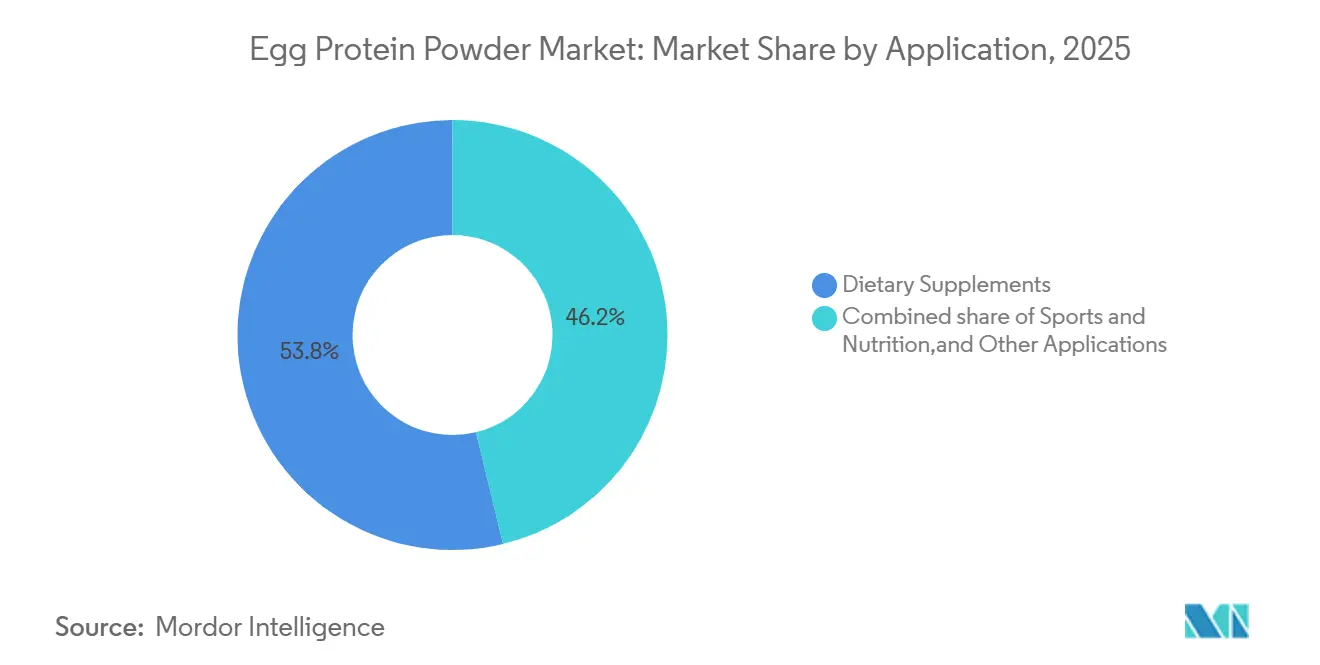
Dietary Supplements Lead While Bakery and Confectionery AccelerateDietary supplements accounted for 53.78% of the egg protein powder market in 2025, making them the largest application segment. Egg white protein has an established role in shakes, bars, and meal replacement products sold through supplement channels in the United States and Europe. These channels require ingredient suppliers to provide robust quality documentation and maintain consistent processing controls. Other applications include meat processing, pharmaceuticals, and personal care products. Manufacturers in these industries use egg-derived emulsifiers, binders, and film-forming agents, for which substitution may require reformulation. Functional beverages and high-protein snacks provide additional volume opportunities for suppliers in North American retail markets.
Bakery and confectionery is projected to record a CAGR of 6.68% through 2031, the fastest growth rate among applications in the egg protein powder market. This growth reflects the increasing use of powdered ingredients in industrial baking and confectionery manufacturing. Shelf-stable powder is easier to handle than liquid egg in regions with limited cold-chain distribution capacity. This advantage is particularly relevant as bakery chains expand into smaller cities across China, India, and Southeast Asia. The segment also benefits from the functional properties of egg proteins, including aeration, structure formation, and foaming. These requirements may favor established spray-drying operators over unverified small-scale suppliers. Growth in this application is driven by both protein enrichment and the core functional use of egg proteins in baked products.
By Distribution Channel:
B2C Anchors Demand While B2B Broadens AdoptionB2C accounted for a 57.65% share in 2025, making it the largest distribution channel. Branded egg protein supplements benefit from established shelf placements across sports nutrition, dietary supplement, and wellness categories. Physical stores also allow consumers to compare nutrition labels, protein content, and ingredient sources before making a purchase. B2B represented the second-largest channel and includes the direct supply of egg protein ingredients to food manufacturers, foodservice operators, supplement manufacturers, and contract manufacturers. These relationships often involve recurring orders and long-term supply agreements, which support stable demand and reduce price-driven switching.
The B2B distribution channel is projected to grow at a CAGR of 6.29% through 2031, making it the fastest-growing channel. Growth is driven by the increasing use of egg protein powder in sports nutrition products, functional foods, bakery products, and nutritional formulations. Food and supplement manufacturers increasingly source protein ingredients directly from specialized suppliers to support product reformulation, ensure consistent quality, and scale production. B2B suppliers also offer customized specifications, bulk packaging formats, technical support, and traceability, strengthening relationships with industrial customers. The expansion of protein-fortified food applications and recurring ingredient procurement drive B2B growth faster than consumer-facing distribution channels. However, the B2C channel continues to hold the largest market share.
Geography Analysis
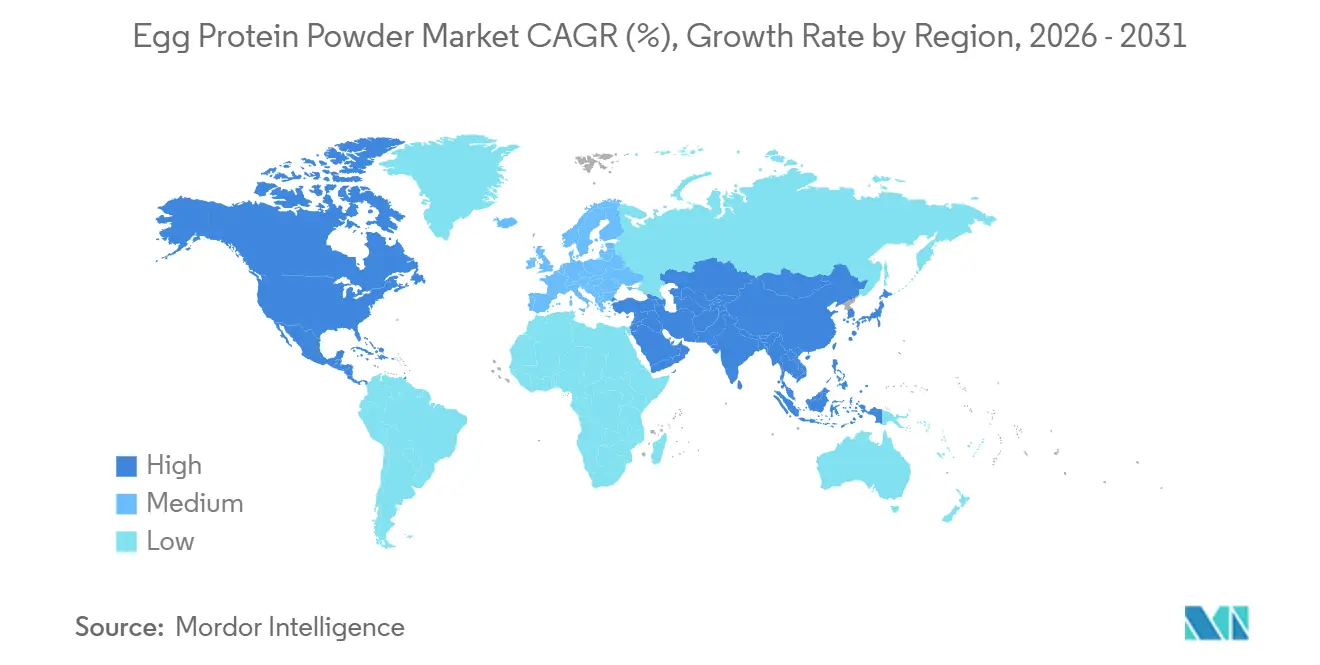
North America hold a 42.1% share of the egg protein powder market in 2025, making it the largest regional market. The region benefits from a high concentration of vertically integrated egg processors and spray-drying facilities. These facilities provide suppliers with advantages in traceability, cost control, and customer service by enabling closer coordination of layer supply, processing operations, and customer specifications. The United States serves as the region’s primary hub for conventional egg protein production and the development of emerging fermentation-derived egg proteins. Canada and Mexico represent stable secondary markets, while Mexico’s expanding foodservice and bakery manufacturing base supports recurring demand for shelf-stable ingredients that are easier to transport and store than liquid egg products.
Europe is projected to be the second-largest regional market for egg protein powder, supported by established functional food and dietary supplement manufacturing industries in Germany, the Netherlands, France, and the United Kingdom. The Netherlands and Poland serve as processing hubs, supplying buyers across the European Union through competitive spray-drying capacity and cross-border distribution networks. The United Kingdom’s post-Brexit certification environment imposes additional, albeit limited, requirements on suppliers without local certification or recognized certification equivalence. This environment favors larger producers that can maintain comprehensive supply documentation.
Asia-Pacific is projected to record a CAGR of 6.84% through 2031, the fastest regional growth rate in the egg protein powder market. China, India, and Japan account for much of the volume increase. In China, fitness consumers and growing awareness of protein supplementation support sales through specialty retailers and mainstream e-commerce channels, including products targeting active consumers beyond traditional bodybuilding users. South America and the Middle East and Africa remain smaller markets; however, Brazil’s poultry processing base and sports nutrition retail sector, along with rising health and wellness spending in Saudi Arabia and the United Arab Emirates, create additional demand opportunities.
Competitive Landscape
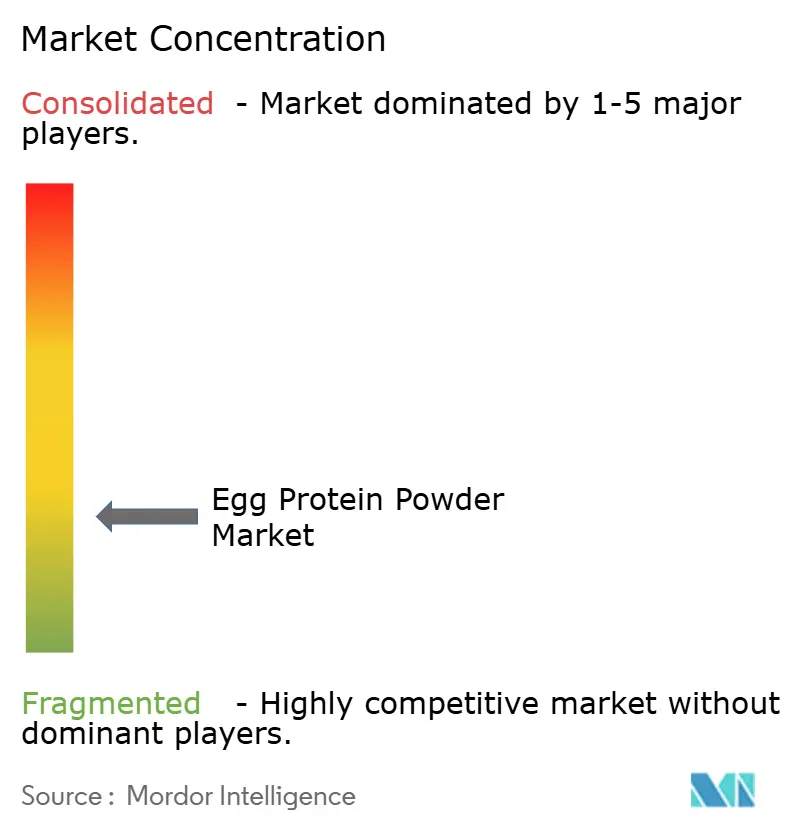
The egg protein powder market is fragmented, with competition driven by supply reliability, certifications, traceability, and customer service rather than the pricing power of any single manufacturer. Conventional processors, including Sanovo Egg Group, Rembrandt Foods, Eurovo Group, and Ovostar Union, compete through established customer relationships and integrated operations spanning layer flocks to dried powder production. Emerging precision fermentation developers offer animal-free egg white proteins that are not directly exposed to avian influenza cycles, providing buyers with a potential second-source option during disruptions in conventional egg supplies. A fragmented supplier base also limits the ability of individual processors to dictate procurement terms when food manufacturers have qualified alternatives.
Sanovo Technology Group supports egg protein powder processing through equipment and technology solutions for egg producers. Its partnerships in Turkey, Southeast Asia, and Brazil have expanded access to spray-drying and related processing capacity. In November 2025, Sanovo Group signed an equipment agreement with Oytun Yumurta for a second pasteurized and powdered egg processing line in Turkey, increasing the facility's projected capacity to 6 million eggs per day. These initiatives demonstrate how processing technology can influence input costs, quality consistency, and the supplier base available to ingredient buyers.
Product-specific opportunities remain relevant, as large commodity processors may not pursue every specialized application, particularly those in which yolk fractions offer distinct functional benefits. Phosvitin from egg yolk has emulsification potential in applications requiring functional efficiency at low inclusion levels. For conventional suppliers, the more immediate risk is that buyers will use emerging protein alternatives to negotiate favorable terms during long-term contract renewals. This dynamic increases pressure on manufacturers to strengthen cost control, product functionality, traceability, and customer service.
Egg Protein Powder Industry Leaders
-
Sanovo Egg Group
-
Eurovo Group
-
Ovostar Union
-
NOW Health Group Inc.
-
Julian Bakery
- *Disclaimer: Major Players sorted in no particular order
Egg Protein Powder Market Companies Covered in this Report
- Sanovo Egg Group
- Ovostar Union
- Avangardco Investments Public Limited
- Bouwhuis Enthoven B.V.
- Igreca
- Eurovo Group
- NOW Health Group Inc.
- DANÆG Products
- Pulviver
- VPA Australia Pty Ltd
- Taiyo Kagaku Co. Ltd.
- Evonik Industries AG.
- Julian Bakery
- Taj Agro Products
- Rembrandt Foods
- Sharrets Nutritions LLP
- Healthier Comforts
- Dava Foods
- BarBend
- MuscleEgg
Recent Industry Developments in Egg Protein Powder Market
- March 2026: EVERY partnered with Healthier Comforts to launch Animal-Free Egg White Protein Powder for direct-to-consumer use. Powered by EVERY’s precision-fermented OvoPro, the product comes in an 8-ounce resealable package for home cooking and baking. This launch marked the first time EVERY made its egg-white protein directly available to consumers. The product initially soft-launched in December 2025 and reportedly sold out shortly thereafter.
- February 2026: Healthier Comforts launched an animal-free egg white protein powder powered by EVERY’s OvoPro. The product expands egg white protein powder availability in the consumer and home-baking market and supports applications such as meringues, macarons, and angel food cakes.
- October 2024: PoLoPo signed a Memorandum of Understanding (MoU) with CSM Ingredients to develop a price-stable egg protein powder for commercial baking applications. PoLoPo planned to produce ovalbumin, the primary protein in egg whites, through molecular farming in potato plants. The company then extracts and processes the protein into powder.
- July 2024: Designer Protein launched Totally Egg, an egg protein powder combining the nutritional components of both egg whites and egg yolk. The product was positioned as a complete egg-based protein powder that provides nutrients from both parts of the egg, differentiating it from conventional egg-white protein products.
Global Egg Protein Powder Market Report Scope
Egg protein powder is a concentrated protein ingredient produced by drying and processing egg whites, egg yolks, or whole eggs into powdered form. It provides high-quality, complete protein and is used in sports nutrition, dietary supplements, functional foods, bakery products, and other food applications.
The egg protein powder market is segmented by product type, protein source, application, distribution channel, and geography. By product type, the market is segmented into whole egg protein powder, egg white protein powder, and egg yolk protein powder. By protein source, the market is segmented into chicken egg, duck egg, and other egg sources. By application, the market is segmented into sports and nutrition, dietary supplements, bakery and confectionery, and other applications. By distribution channel, the market is segmented into B2B and B2C (supermarkets and hypermarkets, online retail, and other distribution channels. Based on geography, the market is classified into North America, Europe, South America, Asia-Pacific, and the Middle East and Africa. The market forecasts are provided in terms of value (USD).
Segmentation Overview
| Whole Egg Protein Powder |
| Egg White Protein Powder |
| Egg Yolk Protein Powder |
| Chicken Egg |
| Duck Egg |
| Other Egg Sources |
| Sports and Nutrition |
| Dietary Supplements |
| Bakery and Confectionery |
| Other Applications |
| B2B | |
| B2C | Supermarkets and Hypermarkets |
| Online Retail | |
| Other Distribution Channels |
| North America | United States |
| Canada | |
| Mexico | |
| Rest of North America | |
| Europe | Germany |
| United Kingdom | |
| Italy | |
| France | |
| Spain | |
| Netherlands | |
| Poland | |
| Belgium | |
| Sweden | |
| Rest of Europe | |
| Asia-Pacific | China |
| India | |
| Japan | |
| Australia | |
| Indonesia | |
| South Korea | |
| Thailand | |
| Singapore | |
| Rest of Asia-Pacific | |
| South America | Brazil |
| Argentina | |
| Colombia | |
| Chile | |
| Peru | |
| Rest of South America | |
| Middle East and Africa | South Africa |
| Saudi Arabia | |
| United Arab Emirates | |
| Nigeria | |
| Egypt | |
| Morocco | |
| Turkey | |
| Rest of Middle East and Africa |
| By Product Type | Whole Egg Protein Powder | |
| Egg White Protein Powder | ||
| Egg Yolk Protein Powder | ||
| By Protein Source | Chicken Egg | |
| Duck Egg | ||
| Other Egg Sources | ||
| By Application | Sports and Nutrition | |
| Dietary Supplements | ||
| Bakery and Confectionery | ||
| Other Applications | ||
| By Distribution Channel | B2B | |
| B2C | Supermarkets and Hypermarkets | |
| Online Retail | ||
| Other Distribution Channels | ||
| By Geography | North America | United States |
| Canada | ||
| Mexico | ||
| Rest of North America | ||
| Europe | Germany | |
| United Kingdom | ||
| Italy | ||
| France | ||
| Spain | ||
| Netherlands | ||
| Poland | ||
| Belgium | ||
| Sweden | ||
| Rest of Europe | ||
| Asia-Pacific | China | |
| India | ||
| Japan | ||
| Australia | ||
| Indonesia | ||
| South Korea | ||
| Thailand | ||
| Singapore | ||
| Rest of Asia-Pacific | ||
| South America | Brazil | |
| Argentina | ||
| Colombia | ||
| Chile | ||
| Peru | ||
| Rest of South America | ||
| Middle East and Africa | South Africa | |
| Saudi Arabia | ||
| United Arab Emirates | ||
| Nigeria | ||
| Egypt | ||
| Morocco | ||
| Turkey | ||
| Rest of Middle East and Africa | ||
Key Questions Answered in the Report
What is the current and forecasted size of the egg protein powder market?
The egg protein powder market was valued at USD 7.57 billion in 2025 and is expected to grow to USD 7.97 billion in 2026 and USD 10.50 billion by 2031, registering a CAGR of 5.67% during 2026-2031.
Which product type held the largest share of the egg protein powder market in 2025?
Egg white protein powder dominated the market in 2025, accounting for 47.24% of the total market revenue.
Which protein source accounted for the largest market share in 2025?
Chicken egg was the leading protein source, capturing 88.43% of the market in 2025.
What was the largest application segment in the egg protein powder market in 2025?
Dietary supplements represented the largest application segment, contributing 53.78% of the market in 2025.
Which distribution channel led the market in 2025?
B2C were the leading distribution channel, accounting for 57.65% of total market sales in 2025.
Which region held the largest share of the egg protein powder market in 2025?
North America was the largest regional market, holding 42.12% of the market share in 2025.