
Early Toxicity Testing Market Size and Share
Market Overview
| Study Period | 2020 - 2031 |
|---|---|
| Market Size (2026) | USD 1.62 Billion |
| Market Size (2031) | USD 2.29 Billion |
| Growth Rate (2026 - 2031) | 7.17 % |
| Fastest Growing Market | Asia-Pacific |
| Largest Market | North America |
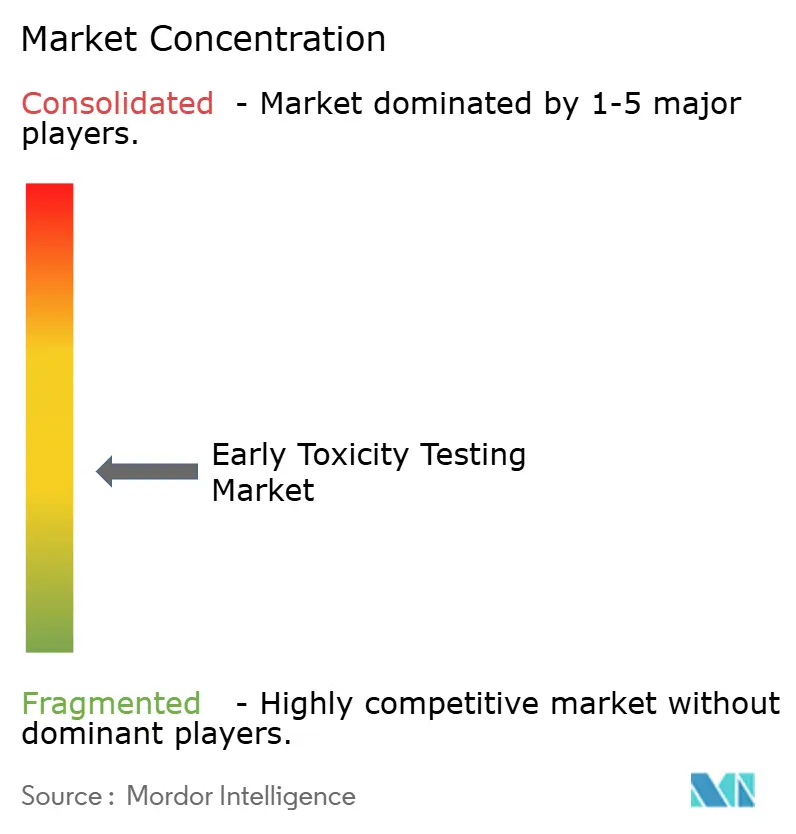
| Market Concentration | Medium |
Major Players *Disclaimer: Major Players sorted in no particular order Image © Mordor Intelligence. Reuse requires attribution under CC BY 4.0. | |
Early Toxicity Testing Market Analysis by Mordor Intelligence
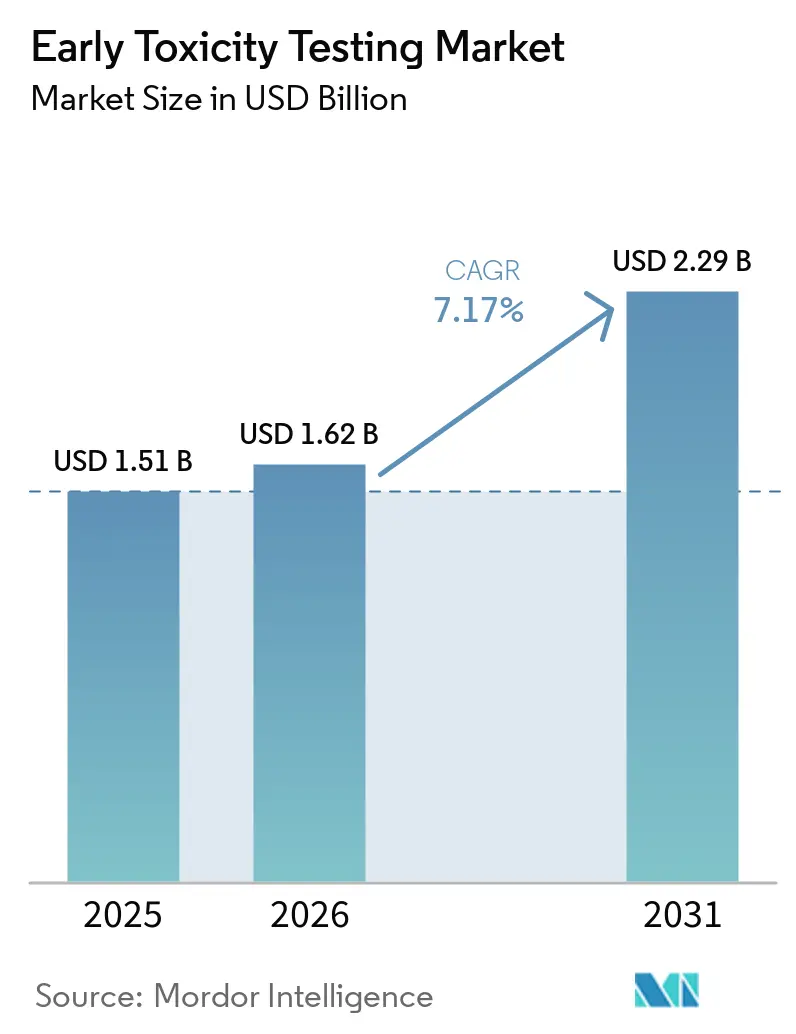
The Early Toxicity Testing Market size was valued at USD 1.51 billion in 2025 and is estimated to grow from USD 1.62 billion in 2026 to reach USD 2.29 billion by 2031, at a CAGR of 7.17% during the forecast period (2026-2031).
Rising drug-development attrition is moving safety assessment earlier in discovery, where sponsors can remove unsuitable compounds before larger clinical commitments. Regulatory actions in the United States and Europe are increasing the practical relevance of non-animal methods for submissions and chemical safety reviews. Human-cell platforms and computational tools are also making earlier safety decisions more relevant to human biology. Competition is developing around integrated testing services, reproducible advanced models, and software that connects experimental results with compound selection. The early toxicity testing market also faces limits because complex chronic and multi-organ effects still require evidence that many non-animal systems cannot yet provide.
Key Report Takeaways
- By technique, in vitro testing held 58.43% of revenue in 2025, while in silico testing is forecast to grow at an 8.24% CAGR through 2031.
- By offering, services held 34.76% of revenue in 2025, while software and databases are forecast to grow at a 9.38% CAGR through 2031.
- By toxicity endpoint, cytotoxicity testing held 23.81% of revenue in 2025, while organ toxicity is forecast to grow at a 9.86% CAGR through 2031.
- By technology, cell culture held 36.54% of revenue in 2025, while microfluidics and organ-on-chip technologies are forecast to grow at an 8.47% CAGR through 2031.
- By method, cellular assays held 41.28% of revenue in 2025, while in silico and computational methods are forecast to grow at an 8.91% CAGR through 2031.
- By application, drug development held 52.67% of revenue in 2025, while cosmetics and personal care safety testing is forecast to grow at a 9.44% CAGR through 2031.
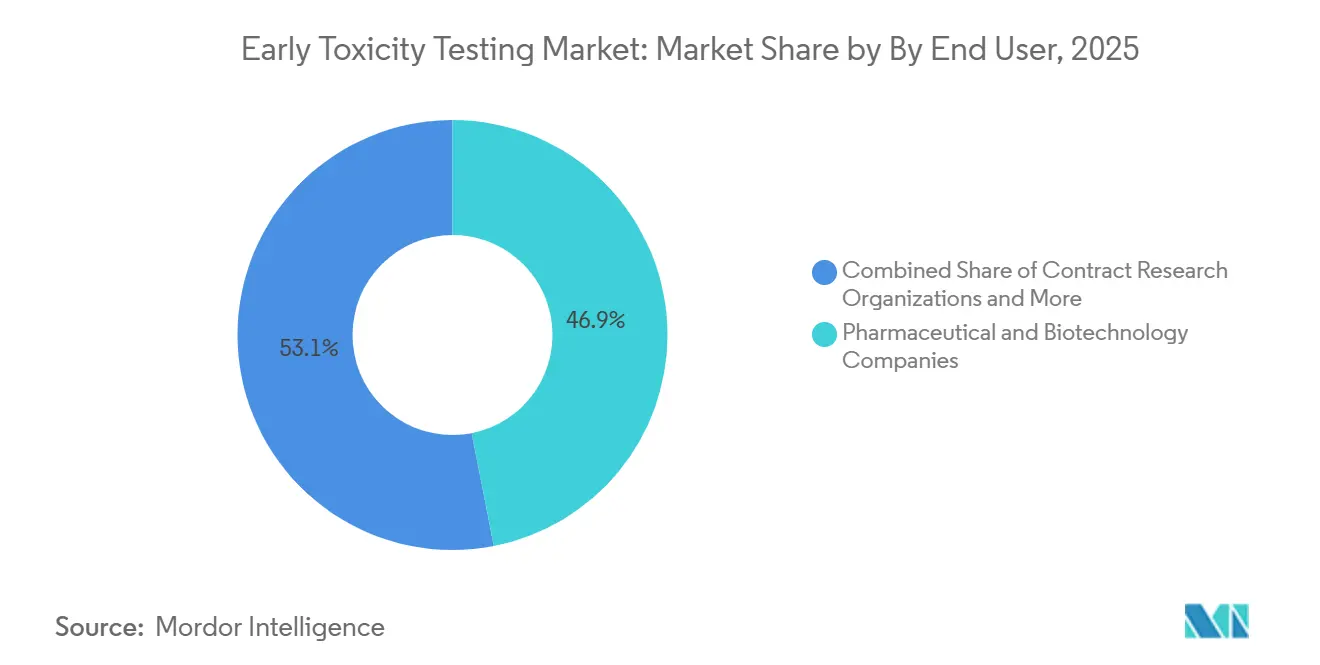
- By end user, pharmaceutical and biotechnology companies held 46.92% of revenue in 2025, while contract research organizations are forecast to grow at an 8.76% CAGR through 2031.
- By geography, North America held 39.45% of revenue in 2025, while Asia-Pacific is forecast to grow at an 8.93% CAGR through 2031.
Note: Market size and forecast figures in this report are generated using Mordor Intelligence’s proprietary estimation framework, updated with the latest available data and insights as of January 2026.
Market Trends and Insights
Drivers Impact Analysis of Early Toxicity Testing Market*
| Driver | (~) % Impact on CAGR Forecast | Geographic Relevance | Impact Timeline |
|---|---|---|---|
| Rising Drug-Development Attrition and Safety De-Risking | +2.1% | Global, concentrated in North America, the EU, and Japan | Short term (≤ 2 years) |
| Regulatory and Ethical Shift Toward New Approach Methods | +1.8% | Global (US, EU, APAC); regulatory influence particularly strong in North America and Western Europe | Medium term (2-4 years) |
| Human-Relevant Models for Translational Predictivity | +1.3% | North America and the EU; spill-over to APAC pharma hubs | Medium term (2-4 years) |
| Outsourcing of Early Safety Workflows to Specialist CROs | +1.1% | North America, EU, and APAC core (China, India, South Korea) | Short term (≤ 2 years) |
| AI-Ready Multimodal Toxicity Data for Design-Make-Test Cycles | +0.8% | North America and the EU, with early gains in APAC tech hubs | Short to medium term (≤ 3 years) |
| Zebrafish and Developmental-Phenotype Screening for Rapid Hazard Triage | +0.5% | North America and Europe, national, with emerging activity in Singapore and South Korea | Medium term (2-4 years) |
| Source: Mordor Intelligence | |||
Rising Drug-Development Attrition and Safety De-Risking
Toxicity remains a major non-efficacy cause of drug attrition, with 30% of preclinical candidate compounds failing on safety grounds and 40% failing because of inadequate ADMET profiles in a 2025 review.[1] More than 90% of compounds that appeared safe and effective in animal models did not receive human approval, a gap cited in the discussion of the FDA’s animal-testing reduction roadmap. These losses are encouraging sponsors to treat early testing as a way to protect development budgets rather than as a late compliance activity. The early toxicity testing market benefits when companies expand testing across cytotoxicity, genotoxicity, and organ-specific endpoints during discovery. Smaller biotechnology firms and academic programs can also use specialist providers when they lack their own safety laboratories. This broadens demand beyond the largest pharmaceutical organizations and places more value on testing that can inform selection decisions early.
Regulatory and Ethical Shift Toward New Approach Methods
The regulatory environment has changed materially since mid-2024 as agencies have formalized their interest in New Approach Methodologies, also called NAMs. The EPA updated its Toxic Substances Control Act list of NAMs in June 2026, adding 13 methods and opening a process for further nominations. The European Commission published a June 2026 roadmap with 22 actions across 15 legislative areas for phasing out animal testing in chemical safety assessments. These signals are increasing demand for validated cell-based and computational assays that can support future regulatory evidence packages. The early toxicity testing market is therefore supported by the need to align data generation with OECD, ICH M7, and ISO 10993 requirements. Adoption remains dependent on whether individual methods can demonstrate validity and fit within agency-specific review practices.
Human-Relevant Models for Translational Predictivity
Published benchmarking studies placed average liver-toxicity concordance between animal and human outcomes at 55%, strengthening interest in models based on human biology.[2] A 2026 gut-liver-on-chip study also showed how perfused systems can evaluate drug-induced liver injury and drug-drug interactions. The early toxicity testing market is gaining from providers that can produce human-cell data with the consistency needed for regulatory use. Zebrafish and developmental-phenotype screening add a rapid hazard-triage option, particularly where early biological signals are needed before more detailed testing. Throughput and standardization remain decisive because advanced systems need to fit routine discovery workflows as well as scientific research settings.
Outsourcing of Early Safety Workflows to Specialist CROs
Contract research organizations are forecast to grow at an 8.76% CAGR from 2026 to 2031 as sponsors outsource earlier safety work rather than build full internal capacity. Modern programs can require genomics, proteomics, organ-level physiology, and computational modeling, which many sponsors cannot maintain in-house. The early toxicity testing market is supported when CRO involvement begins before GLP-compliant studies, because providers can help shape protocols, regulatory plans, and safety-margin calculations. Lonza expanded pilot toxicology material capabilities for antibody-drug conjugates at its Oss site in February 2026, illustrating how service infrastructure is being aligned with earlier development decisions. Established CROs retain an advantage in regulatory testing through accredited infrastructure and established operating procedures. Specialist NAM providers compete in discovery-stage work where scientific differentiation and fit-for-purpose evidence carry greater weight.
Restraints Impact Analysis of Early Toxicity Testing Market*
| Restraint | (~) % Impact on CAGR Forecast | Geographic Relevance | Impact Timeline |
|---|---|---|---|
| Limited External Validity for Complex Chronic and Multi-Organ Effects | -0.6% | Global | Long term (≥ 4 years) |
| Regulatory Acceptance Gaps for Non-Animal Evidence Packages | -0.5% | Global; most acute in markets outside the United States and the EU with limited NAM guidance | Medium term (2-4 years) |
| Assay-Data Fragmentation and Proprietary Model Silos | -0.3% | Global | Short to medium term (≤ 3 years) |
| Reproducibility Risk Across Advanced 3D and Microphysiological Systems | -0.3% | Global | Short to medium term (≤ 3 years) |
| Source: Mordor Intelligence | |||
Limited External Validity for Complex Chronic and Multi-Organ Effects
No validated NAM currently captures the full interaction of the 50 connected tissues involved in chronic systemic toxicity, reproductive toxicity, or multi-organ failure. A 2026 perspective described strong results for acute liver and cardiac endpoints but identified phenotypic drift, incomplete immune representation, and conflicting safety signals as continuing challenges for organ-on-chip systems.[3]A scientific workshop also found no validated animal-free alternative for sub-chronic, chronic, carcinogenicity, or reproductive and developmental endpoints under the EU Cosmetics Regulation. The early toxicity testing market, therefore, cannot fully displace in vivo studies for difficult endpoints. In vitro and in silico methods often serve as decision-support tools or confirmatory evidence in these settings. This limits revenue conversion per compound even as the number of early screens increases.
Regulatory Acceptance Gaps for Non-Animal Evidence Packages
A 2025 FDA CDER analysis found that fewer than 1% of regulatory submissions during the prior 15 years included any NAM, with no significant increase after the 2022 FDA Modernization Act 2.0. Sponsors must navigate differences in validation standards and terminology across the FDA, EMA, ECHA, and regional bodies. The early toxicity testing market can lose demand when companies repeat animal studies to reduce uncertainty in a submission package. This creates a cycle in which limited accepted precedent restricts the broader use of methods that regulators want to encourage. The EMA identified limited data sharing between developers and regulators, as well as inadequate funding for regulatory evidence generation, as important barriers in 2025. Wider acceptance will depend on public validation data and cross-industry work that gives agencies confidence in specific contexts of use.
*Our forecasts treat driver/restraint impacts as directional, not additive. The impact forecasts reflect baseline growth, mix effects, and variable interactions.
Early Toxicity Testing Market Segment Analysis
By Technique:
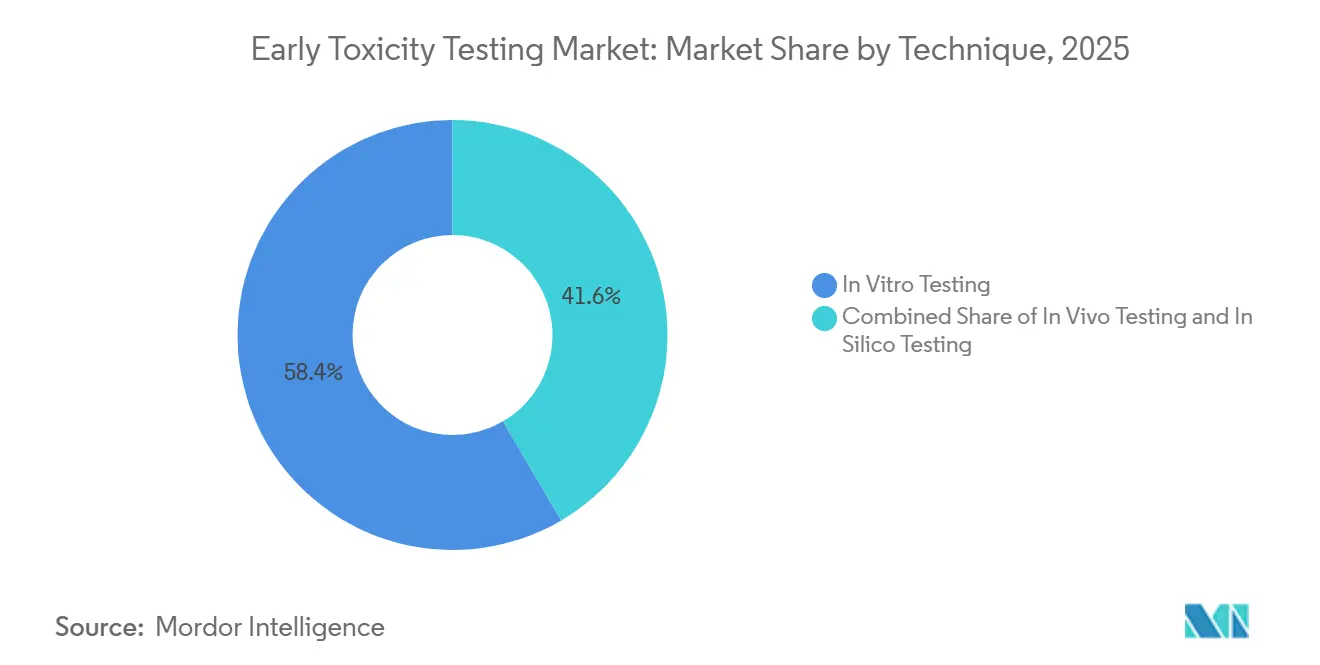
In Vitro Methods Remain the Core While In Silico Testing Gains GroundIn vitro testing held 58.43% of the early toxicity testing market share in 2025, reflecting its long-standing role in cytotoxicity, genotoxicity, and ADMET profiling—the segment benefits from established multiwell workflows, high-content imaging, cell-line models, and broad laboratory familiarity. OECD guidelines and existing FDA and EMA frameworks also support its use in many safety programs. In vivo testing continues to address complex endpoints where current alternatives are not yet sufficient. Its role is under pressure from cost and regulatory interest in reducing animal use. In silico testing is forecast to grow at an 8.24% CAGR from 2026 to 2031 as computational triage becomes more useful in compound selection.
ADMETLab 3.0 and ProTox 3.0, released in 2024, provided 119 and 61 endpoint models, respectively, supporting high-volume screening that wet-lab methods cannot match. The early toxicity testing market is increasingly shaped by linked in vitro and in silico workflows rather than a simple substitution between methods. Machine-learning models can be trained on human hepatocyte data and then used to prioritize new compounds before synthesis. A 2026 study combined high-throughput physiologically based kinetic modeling with mechanistic in vitro assays for drug-induced liver injury prediction. This approach can reduce unnecessary experiments while preserving laboratory confirmation for higher-risk compounds. Providers that combine software and experimental services may be better able to package evidence for sponsor decisions.

By Offering:
Services Lead While Software and Databases AccelerateServices held 34.76% of revenue in 2025 because assay execution, interpretation, and regulatory reporting remain labor-intensive. Outsourcing demand supports laboratories that can run established tests and interpret results within development timelines. NAM execution also requires scientific judgment that cannot yet be fully automated. Reagents and assay kits maintain demand through routine cytotoxicity and genotoxicity screening. Consumables and laboratory ware generate repeat demand because they are used in each assay cycle. These factors keep services at the center of commercial activity despite expanding digital capabilities.
Software and databases are forecast to grow at a 9.38% CAGR from 2026 to 2031 as companies invest in QSAR, PBPK, and AI-supported compound ranking tools. Simulations Plus released ADMET Predictor 13 with extended API and Python scripting support, reflecting the move toward software that can fit enterprise discovery workflows. The company’s DILIsym 11 added pediatric population modeling and T-cell immune-mediated liver injury simulation. These functions address questions that were often reserved for animal studies. The early toxicity testing market may see more bundled offerings where software prioritizes compounds and laboratory services validate selected risks. This changes the value of data quality, interoperability, and model transparency for vendors.
By Toxicity Endpoint:
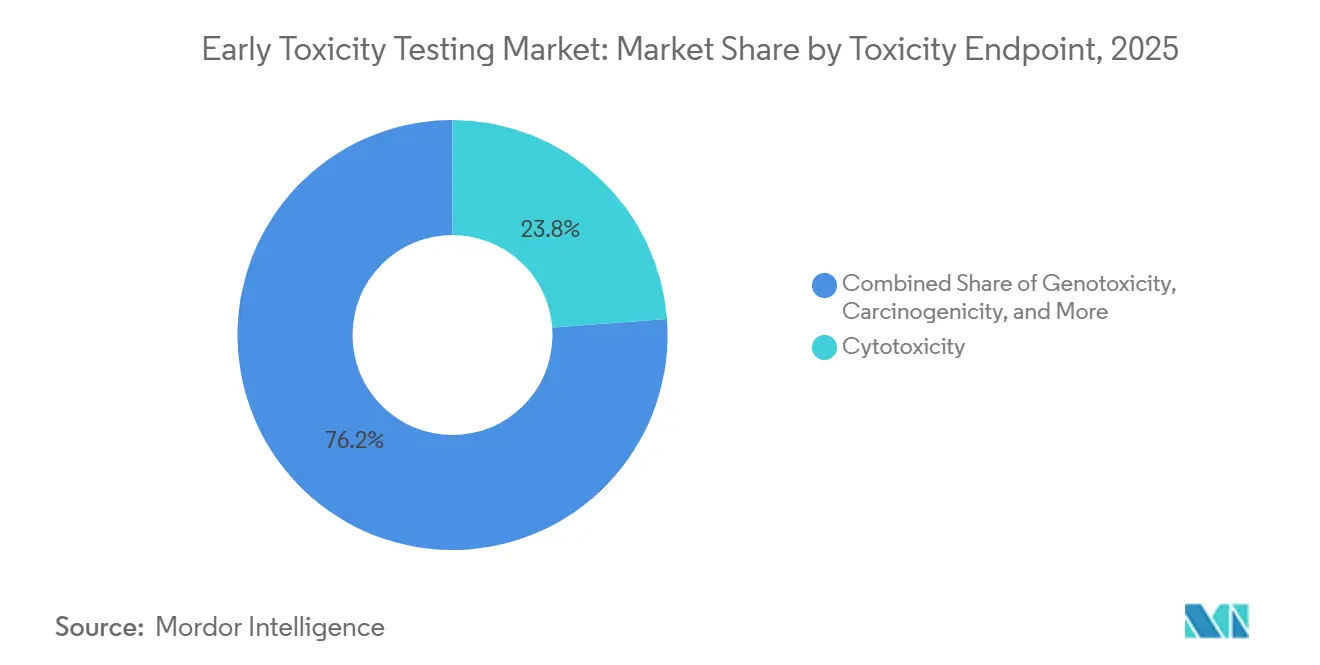
Cytotoxicity Holds the Largest Position While Organ Toxicity ExpandsCytotoxicity testing held 23.81% of revenue in 2025 because it is a universal first-tier screen across pharmaceutical, chemical, agrochemical, and cosmetics programs. FDA, EMA, and OECD data expectations reinforce its place in development workflows. Genotoxicity and carcinogenicity assays also have a stable role under ICH M7, S2(R1), and S1B(R1) frameworks. Reproductive and developmental toxicity, dermal, and ocular testing address more specific product and regulatory pathways. Demand across these endpoints remains diverse because each application has different evidence requirements. Cytotoxicity retains a broad base because most programs need an early indication of cell-level harm.
Organ toxicity is forecast to grow at a 9.86% CAGR from 2026 to 2031 as providers focus on liver, kidney, and cardiac risk assessment. Human tissue models and organ-on-chip systems can assess these risks at more relevant concentrations than some conventional methods. A 2025 machine-learning model for drug-induced liver injury reached 88% sensitivity and outperformed more than 20 preclinical models in a head-to-head comparison. It also identified drugs that had failed Phase III trials because of liver injury. The early toxicity testing market is moving toward more targeted organ-risk screening before candidates enter expensive development stages. Revenue may shift from later confirmation studies toward earlier validated in vitro and computational tools.
By Technology:
Cell Culture Leads While Organ-on-Chip Technology ExpandsCell culture held 36.54% of revenue in 2025 and remained the most widely used technology base. Its scope includes 2D monolayers, 3D spheroids, organoids, and co-culture systems. These formats support scalable cytotoxicity, ADMET, and mechanistic safety work across large compound sets. High-throughput and high-content screening add automated phenotypic profiling. OMICS tools support mechanism-based characterization through transcriptomic, proteomic, and metabolomic readouts. Bioinformatics and predictive modeling help turn multi-endpoint results into more coherent evidence packages.
Microfluidics and organ-on-chip technology are forecast to grow at an 8.47% CAGR from 2026 to 2031 as commercial systems improve throughput and usability. Emulate launched its AVA Emulation System in June 2025, supporting up to 96 organ-chip emulations in one run and producing more than 30,000 time-stamped data points during a 7-day experiment. The system combines incubation, microfluidic culture, and real-time imaging. These capabilities address throughput constraints that previously limited the use of organ-chip approaches. The early toxicity testing market benefits when multi-organ profiling can be performed in a more standardized operating format. Adoption still depends on reproducibility and regulatory confidence in the resulting data.
By Method:
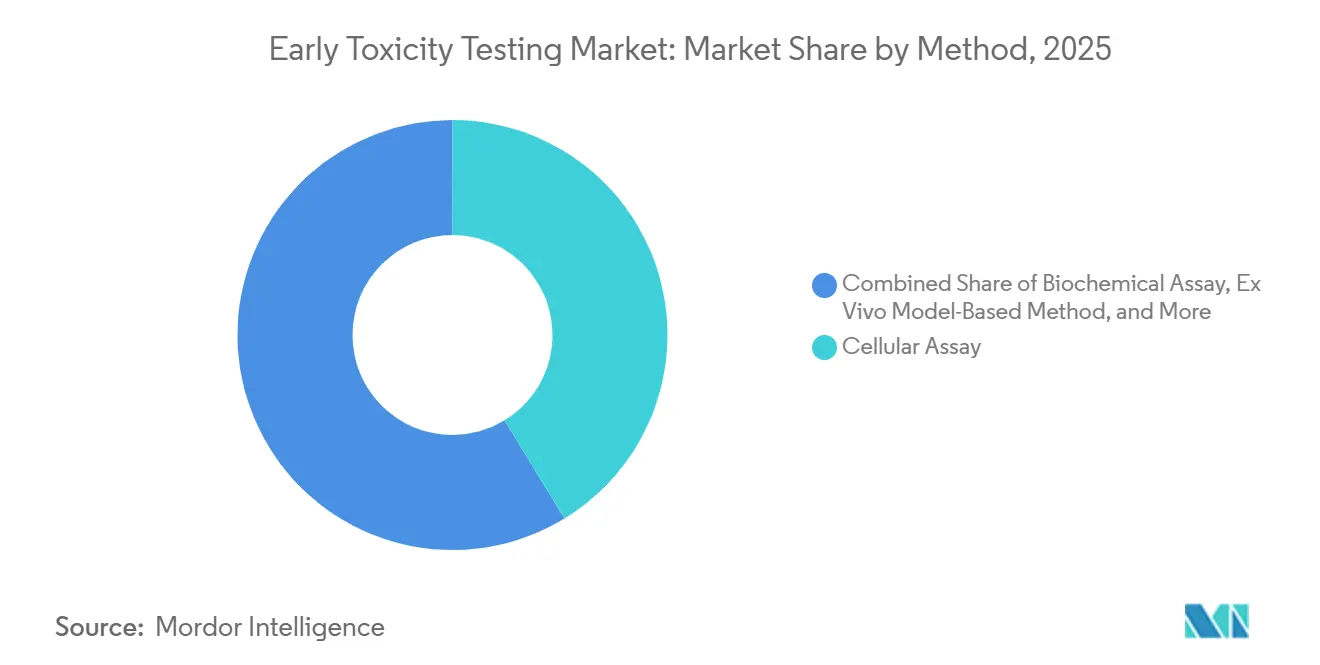
Cellular Assays Form the Core While Computational Methods AdvanceCellular assays held 41.28% of revenue in 2025 because they support both required cytotoxicity testing and newer phenotypic safety profiling. Their scalability and compatibility with high-content imaging make them a common approach in pharmaceutical and CRO laboratories. Biochemical assays measure enzyme inhibition, receptor binding, and plasma protein binding to complement cell-based screens. Ex vivo model-based methods provide added biological context for certain hazards. Molecular and OMICS-based methods help characterize mechanisms at later stages. Together, these methods give sponsors different levels of throughput and biological detail.
In silico and computational methods are forecast to grow at an 8.91% CAGR from 2026 to 2031. ADMETLab 3.0 and admetSAR 3.0, both released in 2024, showed the broader availability of multitask platforms covering 119 simultaneous ADMET endpoints. A 2026 mapping study found that more than 90% of molecules created during discovery failed basic ADME standards. This failure rate supports investment in prospective safety filters at the library-design stage. The early toxicity testing market is consequently giving more weight to methods that prevent unsuitable compounds from reaching physical assays. Computational approaches still require suitable training data and careful interpretation when used for novel chemical spaces.
By Application:
Drug Development Leads While Cosmetics Safety Testing Grows FastestDrug development held 52.67% of revenue in 2025, supported by the scale of global IND-enabling toxicology programs. Small molecules, biologics, and advanced therapy medicinal products all require early safety assessment. Pharmaceutical and biotechnology pipeline activity, therefore, provides demand across assays, endpoints, and service models. Chemical and agrochemical safety assessment is another material application with its own regulatory requirements. Food safety testing and environmental monitoring represent smaller but relevant areas of demand. The early toxicity testing industry relies on drug development as its largest recurring source of testing volume.
Cosmetics and personal care safety testing is forecast to grow at a 9.44% CAGR from 2026 to 2031. Animal testing bans in the EU, the United Kingdom, and several APAC markets are increasing interest in alternative safety evidence for cosmetic ingredients. The European Commission’s June 2026 roadmap will extend the policy direction toward non-animal approaches across consumer products, pesticides, industrial chemicals, and other areas. Cancer and disease research also use early safety systems to separate tumor-cell effects from harm to healthy tissue. The early toxicity testing market is likely to see adjacent chemical safety needs increasingly use in vitro and in silico workflows. Regulatory acceptance will determine how quickly these applications can replace established animal-derived evidence.
By End User:
Pharmaceutical and Biotechnology Companies Lead While CROs Grow FastestPharmaceutical and biotechnology companies held 46.92% of revenue in 2025, reflecting the size and range of their development pipelines. These organizations use safety studies from early discovery through IND-enabling stages. They increasingly outsource specialized work when they do not have internal NAM capabilities. Academic and research institutes contribute through mechanistic toxicology work and validation datasets. Diagnostics, cosmetics, chemicals, agrochemicals, and food and beverage companies create a broader base of demand. This diversity reduces reliance on one downstream customer group for testing providers.
Contract research organizations are forecast to grow at an 8.76% CAGR from 2026 to 2031. Virtual biotechnology companies and asset-light pharmaceutical models concentrate more on preclinical execution with external specialists. Consolidation also contributes because larger CROs acquire smaller providers and absorb demand that was previously categorized independently. Diagnostics and food and beverage companies are emerging users of early toxicity approaches for contaminants and additives. The early toxicity testing market favors providers that hold multi-industry accreditation and can address different regulatory needs. CROs that combine GLP infrastructure with new methods can serve both established and developing safety workflows.
Geography Analysis
North America Early Toxicity Testing Market
North America held 39.45% of the early toxicity testing market share in 2025, supported by a large pharmaceutical R&D base and a dense network of GLP-accredited CROs. The region also has prominent organ-on-chip developers and in silico software providers. The FDA’s policy direction has supported greater attention to NAMs in development planning. The April 2025 roadmap, the October 2025 searchable database of acceptable streamlined nonclinical study contexts, and the August 2025 FDA-NIH memorandum of understanding supported a more enabling setting for alternative approaches. These measures contribute to demand for advanced in vitro and computational platforms. Canada and Mexico remain smaller markets, but alignment with U.S. requirements supports demand from sponsors seeking U.S. authorization.
Europe Early Toxicity Testing Market
Europe is a strategically important part of the early toxicity testing market because EMA, ECHA, REACH, and the EU Cosmetics Regulation create extensive toxicology data requirements. The European Commission’s roadmap, published in June 2026, sets out 22 actions across 15 legislative domains to phase out animal testing for chemical safety assessments. Germany, Switzerland, the Netherlands, and the United Kingdom host companies such as InSphero, MIMETAS, CN Bio Innovations, Lhasa Limited, and Toxys. This gives the region a strong technology-development base relative to its revenue position. REACH-related needs and defined approaches for skin sensitization and genotoxicity continue to support demand for validated cell-based and computational services.
APAC, MEA and South America Early Toxicity Testing Market
Asia-Pacific is forecast to grow at an 8.93% CAGR from 2026 to 2031, the fastest regional rate in the early toxicity testing market. China’s CRO sector includes WuXi AppTec and Pharmaron, while India, South Korea, Japan, and Australia are increasing pharmaceutical R&D activity. China’s National Medical Products Administration has indicated closer alignment with ICH guidelines, increasing the need for ICH-compliant datasets. Japan’s Pharmaceuticals and Medical Devices Agency has participated in NAM discussions through ICH working groups. The Middle East, Africa, and South America remain smaller markets that international CROs mainly serve. GCC healthcare investment and Brazil’s domestic pharmaceutical sector could support demand over the medium term.
Competitive Landscape
The early toxicity testing market is moderately fragmented, with no company holding a decisive revenue position across techniques, offerings, and applications. Charles River Laboratories, Eurofins Scientific, SGS SA, WuXi AppTec, and Pharmaron compete through service breadth, geographic reach, GLP accreditation, and regulatory experience. Thermo Fisher Scientific, Agilent Technologies, Danaher, Revvity, Sartorius, and Merck KGaA compete through platform throughput, detection sensitivity, and workflow automation. Simulations Plus and Lhasa Limited have specialized positions in in silico tools through training datasets, regulatory validation records, and ICH M7-compatible frameworks. Instrument suppliers are increasingly designing systems that produce data suitable for downstream computational analysis. This makes software integration a more important part of equipment competition.
Specialist in vitro providers compete primarily through the biological relevance and consistency of their models. InSphero launched the 3D InSight DIGIT gastrointestinal toxicity platform in April 2026, using patient-derived intestinal organoids and Gri3D technology for early safety assessment. In November 2025, InSphero signed an agreement to acquire DOPPL SA and Sun Bioscience’s Gri3D technology, expanding its 3D in vitro model portfolio for drug discovery and safety testing. Emulate’s progress with FDA ISTAND qualification for Liver-Chip S1 points to a separate strategy based on advancing a specific model toward regulatory use. The early toxicity testing market rewards providers that can link experimental human-cell models to decision-ready data. Multi-organ and chronic-exposure models remain an important area where commercial capabilities are still limited.
Data fragmentation remains a competitive issue because NAM datasets often sit in proprietary systems that are difficult to combine into one regulatory submission. Interoperable exchange standards would reduce manual curation and make multi-vendor evidence packages more practical. Reproducibility across 3D and microphysiological systems is also a condition for broader adoption. Charles River and Toxys announced a collaboration in October 2025 to offer ReproTracker, a human stem cell-based in vitro assay for developmental toxicity hazard identification. Charles River also announced planned acquisitions of K.F. Cambodia Ltd. and PathoQuest SAS in January 2026, with PathoQuest adding in vitro NGS-based NAM capabilities relevant to safety assessment.
Early Toxicity Testing Industry Leaders
-
Thermo Fisher Scientific Inc.
-
Charles River Laboratories International, Inc.
-
Eurofins Scientific SE
-
Merck KGaA
-
Agilent Technologies, Inc.
- *Disclaimer: Major Players sorted in no particular order
Early Toxicity Testing Market Companies Covered in this Report
- Agilent Technologies
- ATCC
- BioIVT
- Charles River
- CN Bio Innovations Limited
- Danaher
- Emulate
- Eurofins
- Evotec
- Inotiv, Inc.
- InSphero
- Lhasa Limited
- Lonza Group Ltd.
- Merck
- MIMETAS B.V.
- Pharmaron Beijing Co., Ltd.
- Promega
- Revvity, Inc.
- Sartorius
- SGS
- Simulations Plus
- Thermo Fisher Scientific
- Toxys B.V.
- WuXi AppTec Co., Ltd.
Recent Industry Developments in Early Toxicity Testing Market
- June 2026: The European Commission published its roadmap to phase out animal testing for chemical safety assessments, with 22 actions across 15 domains, including industrial chemicals, pesticides and biocides, pharmaceuticals, and food/feed additives.
- June 2026: The US EPA updated its TSCA NAMs list and opened a stakeholder nomination process for additional NAMs.
- March 2026: FDA issued the draft guidance General Considerations for the Use of New Approach Methodologies in Drug Development.
- April 2026: InSphero AG launched the 3D InSight DIGIT platform for early gastrointestinal toxicity assessment using patient-derived intestinal organoids and Gri3D technology.
- January 2026: Charles River announced planned acquisitions of K.F. Cambodia Ltd. and PathoQuest SAS, with K.F. strengthening in vivo safety assessment supply chain and PathoQuest enhancing in vitro NGS-based NAM capabilities.
- June 2025: Emulate launched the AVA Emulation System, a high-throughput organ-on-chip platform supporting up to 96 organ-chip samples per run and generating more than 30,000 time-stamped data points in a typical 7-day experiment.
Global Early Toxicity Testing Market Report Scope
According to the report's scope, early toxicity testing comprises a range of in vitro, in vivo, and in silico approaches used to identify, characterize, and predict potential toxic effects of drug candidates, chemicals, cosmetics ingredients, food substances, and other compounds during the early stages of research and development.
The early toxicity testing market is segmented by technique, offering, toxicity endpoint, technology, method, application, end user, and geography. By technique, the market is segmented into In Vivo Testing, In Vitro Testing, and In Silico Testing. By offering, the market is segmented into Instruments, Reagents and Assay Kits, Consumables and Labware, Software and Databases, and Services. By toxicity endpoint, the segmentation includes Cytotoxicity, Genotoxicity, Carcinogenicity, Reproductive and Developmental Toxicity, Dermal/Skin Toxicity, Ocular Toxicity, Phototoxicity, Ecotoxicity, Organ Toxicity, and Other Toxicity Endpoints. By technology, the market is segmented into Cell Culture Technology, High-Throughput and High-Content Screening Technology, OMICS Technology, Microfluidics and Organ-on-Chip Technology, and Bioinformatics and Predictive Modeling. By method, the market is segmented into Cellular Assay, Biochemical Assay, In Silico and Computational Method, Ex Vivo Model-Based Method, and Molecular and OMICS-Based Assays. By application, the market is segmented into Drug Development, Chemical and Agrochemical Safety Assessment, Cosmetics and Personal Care Safety Testing, Food Safety Testing, Environmental Monitoring, Cancer and Disease Research, and Other Applications. By end user, the market is segmented into Pharmaceutical and Biotechnology Companies, Contract Research Organizations, Academic and Research Institutes, Diagnostics Companies, Cosmetics and Personal Care Companies, Chemicals and Agrochemicals Companies, Food and Beverage Companies, and Other End Users. Geographically, the market is analyzed across North America, Europe, Asia-Pacific, the Middle East & Africa, and South America. The market report also covers the estimated market sizes and trends for 17 countries across major regions globally. For each segment, the market size and forecast are provided in terms of value (USD).
| In Vivo Testing |
| In Vitro Testing |
| In Silico Testing |
| Instruments |
| Reagents and Assay Kits |
| Consumables and Labware |
| Software and Databases |
| Services |
| Cytotoxicity |
| Genotoxicity |
| Carcinogenicity |
| Reproductive and Developmental Toxicity |
| Dermal/Skin Toxicity |
| Ocular Toxicity |
| Phototoxicity |
| Ecotoxicity |
| Organ Toxicity |
| Other Toxicity Endpoints |
| Cell Culture Technology |
| High-Throughput and High-Content Screening Technology |
| OMICS Technology |
| Microfluidics and Organ-on-Chip Technology |
| Bioinformatics and Predictive Modeling |
| Cellular Assay |
| Biochemical Assay |
| In Silico and Computational Method |
| Ex Vivo Model-Based Method |
| Molecular and OMICS-Based Assays |
| Drug Development |
| Chemical and Agrochemical Safety Assessment |
| Cosmetics and Personal Care Safety Testing |
| Food Safety Testing |
| Environmental Monitoring |
| Cancer and Disease Research |
| Other Applications |
| Pharmaceutical and Biotechnology Companies |
| Contract Research Organizations |
| Academic and Research Institutes |
| Diagnostics Companies |
| Cosmetics and Personal Care Companies |
| Chemicals and Agrochemicals Companies |
| Food and Beverage Companies |
| Other End Users |
| North America | United States |
| Canada | |
| Mexico | |
| Europe | Germany |
| United Kingdom | |
| France | |
| Italy | |
| Spain | |
| Rest of Europe | |
| Asia-Pacific | China |
| Japan | |
| India | |
| Australia | |
| South Korea | |
| Rest of Asia-Pacific | |
| Middle East and Africa | GCC |
| South Africa | |
| Rest of Middle East and Africa | |
| South America | Brazil |
| Argentina | |
| Rest of South America |
| By Technique | In Vivo Testing | |
| In Vitro Testing | ||
| In Silico Testing | ||
| By Offering | Instruments | |
| Reagents and Assay Kits | ||
| Consumables and Labware | ||
| Software and Databases | ||
| Services | ||
| By Toxicity Endpoint | Cytotoxicity | |
| Genotoxicity | ||
| Carcinogenicity | ||
| Reproductive and Developmental Toxicity | ||
| Dermal/Skin Toxicity | ||
| Ocular Toxicity | ||
| Phototoxicity | ||
| Ecotoxicity | ||
| Organ Toxicity | ||
| Other Toxicity Endpoints | ||
| By Technology | Cell Culture Technology | |
| High-Throughput and High-Content Screening Technology | ||
| OMICS Technology | ||
| Microfluidics and Organ-on-Chip Technology | ||
| Bioinformatics and Predictive Modeling | ||
| By Method | Cellular Assay | |
| Biochemical Assay | ||
| In Silico and Computational Method | ||
| Ex Vivo Model-Based Method | ||
| Molecular and OMICS-Based Assays | ||
| By Application | Drug Development | |
| Chemical and Agrochemical Safety Assessment | ||
| Cosmetics and Personal Care Safety Testing | ||
| Food Safety Testing | ||
| Environmental Monitoring | ||
| Cancer and Disease Research | ||
| Other Applications | ||
| By End User | Pharmaceutical and Biotechnology Companies | |
| Contract Research Organizations | ||
| Academic and Research Institutes | ||
| Diagnostics Companies | ||
| Cosmetics and Personal Care Companies | ||
| Chemicals and Agrochemicals Companies | ||
| Food and Beverage Companies | ||
| Other End Users | ||
| By Geography | North America | United States |
| Canada | ||
| Mexico | ||
| Europe | Germany | |
| United Kingdom | ||
| France | ||
| Italy | ||
| Spain | ||
| Rest of Europe | ||
| Asia-Pacific | China | |
| Japan | ||
| India | ||
| Australia | ||
| South Korea | ||
| Rest of Asia-Pacific | ||
| Middle East and Africa | GCC | |
| South Africa | ||
| Rest of Middle East and Africa | ||
| South America | Brazil | |
| Argentina | ||
| Rest of South America | ||
Key Questions Answered in the Report
What is the size of the early toxicity testing market?
The early toxicity testing market was USD 1.62 billion in 2026 and is forecast to reach USD 2.29 billion by 2031, at a 7.17% CAGR.
Which testing technique has the largest share?
In vitro testing led with 58.43% in 2025, supported by its established role in cytotoxicity, genotoxicity, and ADMET testing.
Which application is growing fastest?
Cosmetics and personal care safety testing is forecast to grow at a 9.44% CAGR from 2026 to 2031, supported by demand for non-animal safety evidence.
Why are pharmaceutical companies outsourcing early safety work?
Specialized CROs provide access to diverse testing skills, regulatory knowledge, and infrastructure without requiring sponsors to build all capabilities internally.
How are NAMs affecting early toxicity testing?
NAMs are increasing demand for validated in vitro and computational methods as agencies in the United States and Europe advance non-animal safety frameworks.