
Disposable Hospital Gowns Market Size and Share
Market Overview
| Study Period | 2020 - 2031 |
|---|---|
| Market Size (2026) | USD 2.70 Billion |
| Market Size (2031) | USD 3.52 Billion |
| Growth Rate (2026 - 2031) | 5.50 % |
| Fastest Growing Market | Asia-Pacific |
| Largest Market | North America |
| Market Concentration | Medium |
Major Players *Disclaimer: Major Players sorted in no particular order Image © Mordor Intelligence. Reuse requires attribution under CC BY 4.0. | |
Disposable Hospital Gowns Market Analysis by Mordor Intelligence
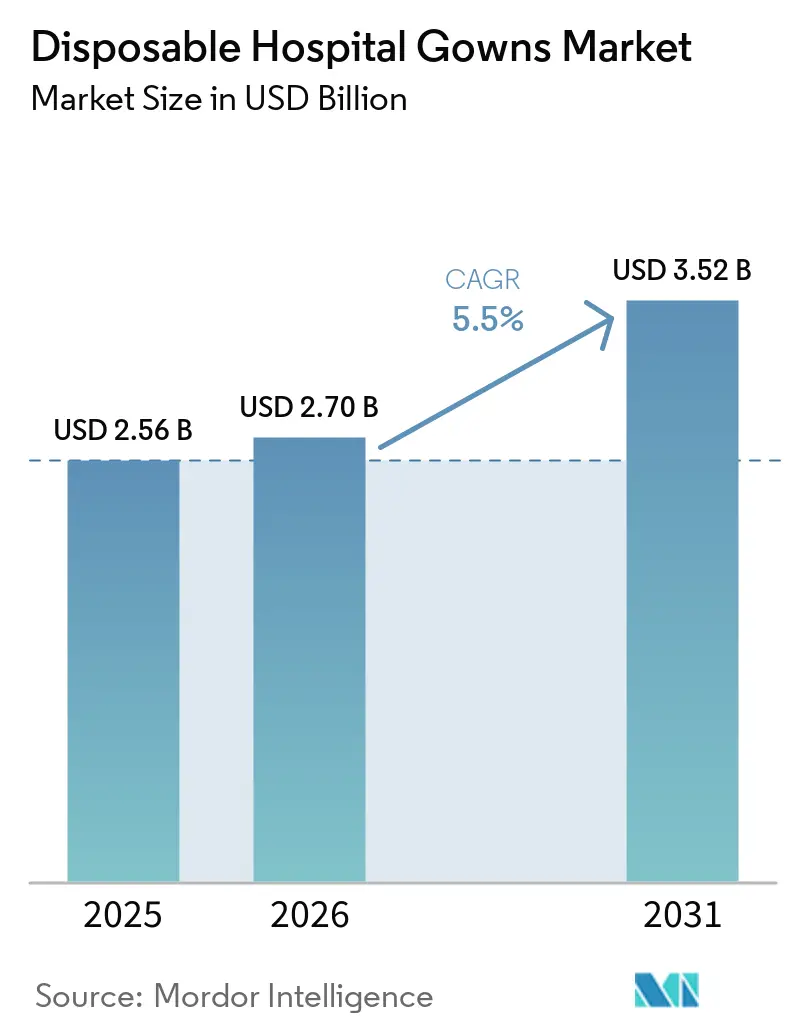
The Disposable Hospital Gowns Market size is projected to expand from USD 2.56 billion in 2025 and USD 2.70 billion in 2026 to USD 3.52 billion by 2031, registering a CAGR of 5.5% between 2026 to 2031.
Demand is supported by the continued use of single-use protective apparel in clinical settings, following the pandemic-driven change in infection-control practices. Hospitals are also placing more weight on reliable supply, product performance, and domestic availability when awarding contracts. Higher surgical activity and the expansion of ambulatory surgery centers are widening the number of facilities that require gowns with stronger barrier protection. Public stockpiling programs in North America and Western Europe add demand that is not tied only to elective procedures. These conditions give suppliers opportunities to serve clinical users with different order sizes, product specifications, and replenishment requirements.
Key Report Takeaways
- By product type, surgical gowns held 49.88% of the disposable hospital gowns market share in 2025, while chemotherapy gowns are projected to record a 14.52% CAGR through 2031.
- By sterility, sterile disposable gowns accounted for 64.67% of revenue in 2025 and are also expected to grow at a 15.20% CAGR through 2031.
- By material, polypropylene nonwoven held 56.76% of revenue in 2025, while polyethylene-coated nonwoven is projected to expand at a 13.55% CAGR through 2031.
- By end user, hospitals accounted for 53.24% of revenue in 2025, while ambulatory surgery centers are projected to grow at a 13.87% CAGR through 2031.
- By geography, North America held 39.56% share in 2025, while Asia-Pacific is forecast to grow at a 14.77% CAGR through 2031.
Note: Market size and forecast figures in this report are generated using Mordor Intelligence’s proprietary estimation framework, updated with the latest available data and insights as of January 2026.
Market Trends and Insights
Drivers Impact Analysis of Disposable Hospital Gowns Market*
| DRIVER | (~) % IMPACT ON CAGR FORECAST | GEOGRAPHIC RELEVANCE | IMPACT TIMELINE |
|---|---|---|---|
| Rising surgical and interventional procedure volumes | +3.5% | Global, strongest in North America and Asia-Pacific | Short term (≤ 2 years) |
| Persistent infection-prevention and hai-control requirements | +2.8% | Global, with regulatory anchors in North America and the EU | Medium term (2-4 years) |
| Domestic PPE-resilience policies and strategic stockpiling | +2.0% | North America and the EU, with spillover to Asia-Pacific and the Middle East, and Africa | Medium term (2-4 years) |
| Procurement shift toward verified barrier performance rather than the lowest unit price | +1.5% | North America and the EU, with early uptake in Japan and South Korea | Medium term (2-4 years) |
| Digitally traceable, lower-waste gown specifications in public healthcare tenders | +0.9% | EU and Asia-Pacific national health systems | Long term (≥ 4 years) |
| Source: Mordor Intelligence | |||
Rising Surgical and Interventional Procedure Volumes
Surgical activity remains a key demand driver for the disposable hospital gowns market, as each procedure requires defined protective apparel. The outpatient channel is gaining importance as procedures shift from acute-care hospitals to ambulatory surgery centers (ASCs). CMS added 560 procedure codes to the ASC Covered Procedures List in its CY 2026 final rule, including cardiovascular, orthopedic, and spinal procedures. CMS also began a three-year phaseout of the Inpatient-Only List in 2026, supporting the migration of suitable procedures to outpatient facilities.[1] These facilities require product assortments, packaging formats, and delivery schedules that differ from traditional hospital purchasing models. Higher-acuity procedures performed outside inpatient hospitals may require Level 3 or Level 4 barrier protection.
Persistent Infection-Prevention and HAI-Control Requirements
Infection prevention continues to support demand in the disposable hospital gowns market, as gown performance remains central to clinical protection protocols. ANSI/AAMI PB70:2022 classifies protective apparel and drapes based on liquid barrier performance for healthcare facilities. The standard has increased the focus on documented barrier performance during product selection. Hospitals may place greater emphasis on test evidence and product certification when evaluating suppliers. A 2025 peer-reviewed study evaluated methods for testing the liquid barrier performance of disposable isolation gowns. Its findings reinforced the distinction between laboratory evaluations and real-world clinical use.[2] Infection-control teams may require suppliers to provide stronger evidence of gown performance. This strengthens the role of testing, traceability, regulatory documentation, and quality systems in the disposable hospital gowns market.
Domestic PPE-Resilience Policies and Strategic Stockpiling
Public policy has shifted PPE resilience from emergency planning to routine procurement discussions across the disposable hospital gowns market. CMS released an Advance Notice of Proposed Rulemaking in January 2026 seeking input on strengthening domestic supply chains for PPE and essential medicines.[3] The proposal included a Secure American Medical Supplies designation for eligible hospitals. It also identified potential Medicare payment incentives linked to domestic sourcing thresholds. The U.S. Department of Veterans Affairs linked its Medical and Surgical Prime Vendor Program to requirements under the Make PPE in America Act. The United Kingdom also announced GBP 1 billion in health-protection investment during 2025 under its pandemic strategy.
Procurement Shift Toward Verified Barrier Performance and Traceability
Healthcare buyers are placing less emphasis on the lowest unit price when products lack documented barrier performance. This shift directs supplier evaluation toward verified testing, regulatory history, and quality systems. Regulatory qualification may require detailed product documentation and validated test records. Suppliers with reliable technical documentation can strengthen their position in hospital tenders. Public buyers are also incorporating product traceability and waste characteristics into tender specifications. The revised EU Waste Framework Directive entered into force on October 16, 2025, establishing an extended producer responsibility framework for textiles in the European Union.
Restraints Impact Analysis of Disposable Hospital Gowns Market*
| RESTRAINT | (~) % IMPACT ON CAGR FORECAST | GEOGRAPHIC RELEVANCE | IMPACT TIMELINE |
|---|---|---|---|
| Volatility in polypropylene and other nonwoven input costs | -1.2% | Global, most acute in Europe and the Asia-Pacific | Short term (≤ 2 years) |
| Sustainability pressure from single-use medical waste | -0.9% | EU core, with spillover to North America and Asia-Pacific | Long term (≥ 4 years) |
| Performance variability across low-cost disposable gown products | -0.6% | Emerging markets and ASC procurement channels globally | Medium term (2-4 years) |
| Source: Mordor Intelligence | |||
Volatility in Polypropylene and Other Nonwoven Input Costs
Polypropylene resin accounts for 60% to 70% of nonwoven conversion costs for manufacturers in the disposable hospital gowns market. Resin price volatility can compress margins under fixed-price supply contracts, particularly when converters cannot pass higher material costs to hospital customers. Long-term group purchasing organization contracts can restrict price revisions, while spot-market purchases can increase short-term costs during supply disruptions. Smaller regional manufacturers are more exposed due to limited purchasing scale and reduced access to long-term supply arrangements. Product performance variability creates an additional commercial constraint in the disposable hospital gowns market. Low-cost products with inconsistent barrier performance can increase buyer testing and qualification requirements.
Sustainability Pressure From Single-Use Medical Waste
Single-use medical waste remains a growing concern for healthcare providers and suppliers in the disposable hospital gowns market. A 2025 mixed-methods study assessed reusable drapes and gowns across 134 countries and included data from 5,230 perioperative professionals. The study reported that reusable gowns generated 66% fewer greenhouse gas emissions and 84% less solid waste per 1,000 uses than disposable alternatives. These findings can influence procurement decisions among health systems pursuing lower-waste operating room practices. The revised EU Waste Framework Directive increased attention on post-use textile management. EURATEX and other European associations requested the clear exclusion of PPE and medical devices from the textile extended producer responsibility scope, reflecting concerns about products regulated for health and safety purposes.
*Our forecasts treat driver/restraint impacts as directional, not additive. The impact forecasts reflect baseline growth, mix effects, and variable interactions.
Disposable Hospital Gowns Market Segment Analysis
By Product Type:
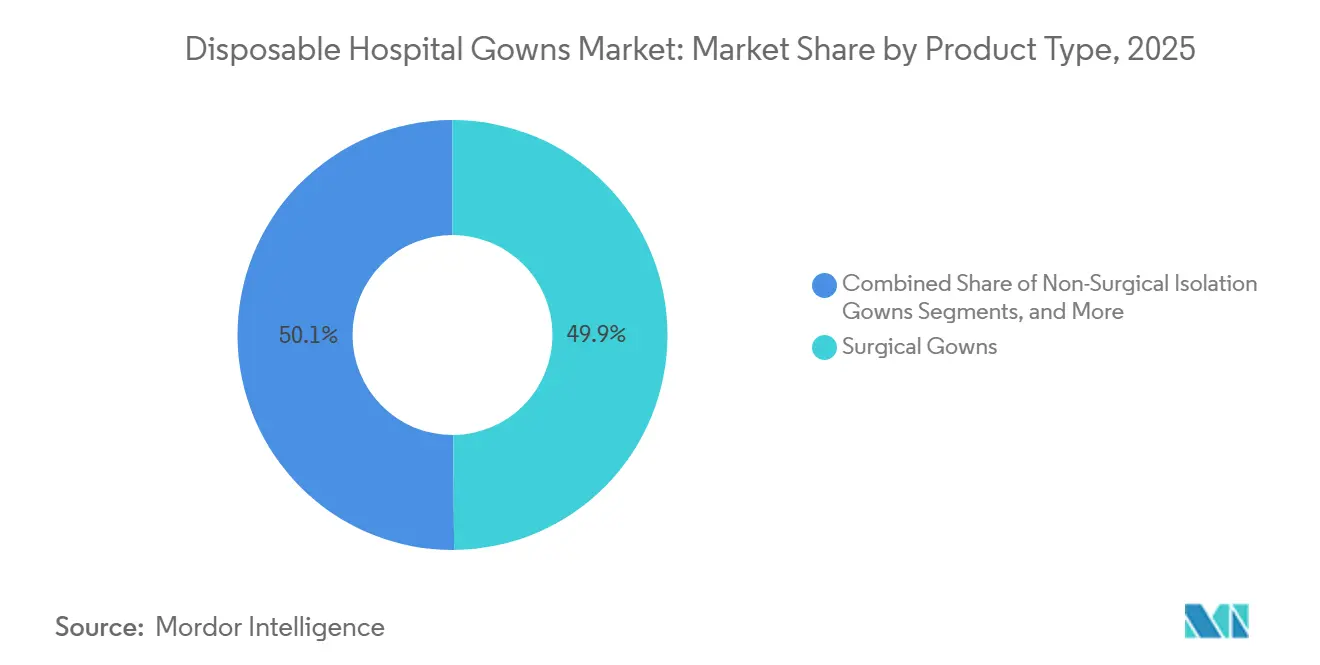
Chemotherapy Gowns Support a Higher-Acuity Product MixSurgical gowns held 49.88% of global revenue in 2025, making them the leading product category in the disposable hospital gowns market. Their use spans elective orthopedic procedures, emergency interventions, cardiovascular care, and other surgical settings requiring higher barrier protection to maintain a sterile field. ANSI/AAMI PB70:2022 provides the liquid barrier classification framework for protective healthcare apparel. Non-surgical isolation, patient, examination, and dignity gowns remain essential for routine procurement across general wards, outpatient clinics, long-term care facilities, diagnostic settings, and patient-contact environments.
Chemotherapy gowns are the fastest-growing product category, with a forecast CAGR of 14.52% during 2026-2031. USP <800> identifies polyethylene-coated polypropylene or equivalent materials tested under ASTM D6978 for hazardous-drug handling, differentiating these gowns from standard surgical and isolation products. As oncology services expand, hospitals and community care settings are formalizing hazardous-drug safety procedures beyond specialized cancer centers. This trend increases demand for compliant gowns and creates a premium product category with specific material and testing requirements.

By Sterility:
Sterile Gowns Combine Revenue Leadership With Strong GrowthSterile disposable gowns held 64.67% of revenue in 2025 and led the sterility category. Healthcare providers use them in procedures requiring aseptic conditions and enhanced protection against fluid and microbial penetration, particularly Level 3 and Level 4 barrier procedures. Their performance requirements and sterilization processes support higher unit prices. Non-sterile gowns remain necessary in general wards, diagnostic laboratories, and long-term care settings, particularly in budget-sensitive procurement environments.
Sterile disposable gowns are forecast to grow at a 15.20% CAGR during 2026-2031, the highest rate in the sterility category. EN 13795-1:2025 covers surgical drapes, gowns, and clean air suits used as medical devices and introduced a high-performance tier. The tier requires a wet microbial penetration barrier index IB of at least 6.0 and liquid penetration resistance of at least 100 cm H₂O in critical zones. European hospitals renewing supply contracts after the 2025 regulatory update need to assess compliance, supporting demand for higher-value sterile gowns.
By Material:
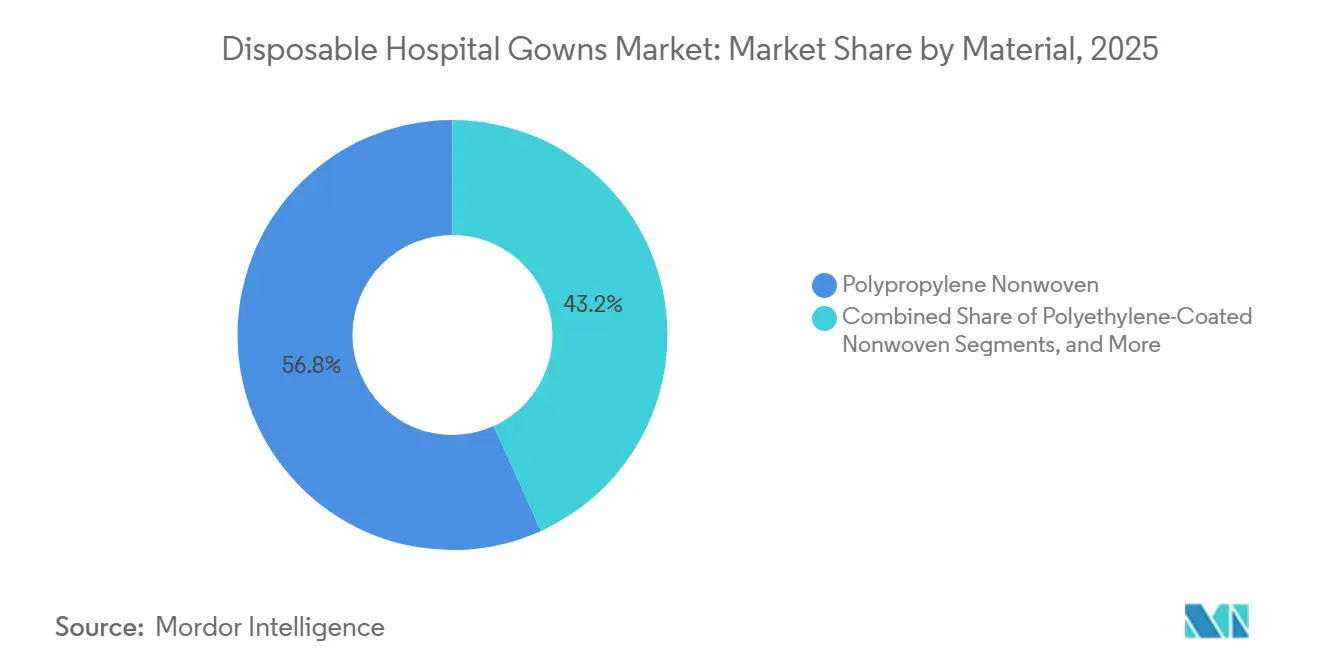
Polyethylene-Coated Nonwoven Gains From Specialized Protection RequirementsPolypropylene nonwoven held 56.76% of material revenue in the disposable hospital gowns market in 2025. It remains the leading material due to its cost efficiency, broad design compatibility, and suitability for products meeting AAMI Level 1 to Level 3 protection requirements. Large nonwoven conversion capacity in China, the United States, and Germany supports stable availability. Polyethylene film, microporous film laminates, and polyethylene-polypropylene composites address applications with higher liquid barrier requirements.
Polyethylene-coated nonwoven is forecast to grow at a 13.55% CAGR during 2026-2031. USP <800> identifies polyethylene-coated polypropylene as a reference construction for chemotherapy gowns used in hazardous-drug compounding and administration. SMS constructions combine spunbond outer layers with a meltblown barrier layer to balance breathability and fluid protection. Material innovation supports compliance with clinical requirements while maintaining usability for healthcare staff.
By End User:
Ambulatory Surgery Centers Create New Supply RequirementsHospitals held 53.24% of revenue in 2025 and represented the largest end-user group. They perform high-acuity procedures, including cardiac surgery, transplantation, and trauma care, which often require higher-value Level 3 or Level 4 gowns. Centralized supply chains and group purchasing organizations commonly manage hospital procurement, favoring suppliers with reliable distribution and broad product portfolios. Physician offices, outpatient clinics, diagnostic laboratories, and long-term care facilities provide a stable demand base for lower-barrier products.
Ambulatory surgery centers are forecast to grow at a 13.87% CAGR during 2026-2031. CMS made 560 additional codes eligible for ASC treatment under the CY 2026 final rule, including cardiac ablation and lumbar spinal fusion. The shift toward higher-acuity outpatient procedures increases demand for stronger barrier apparel and specialized gown solutions. ASC customers may require smaller orders, faster replenishment, and broader SKU availability, creating opportunities for suppliers with ASC-focused logistics capabilities.
Geography Analysis
North America Disposable Hospital Gowns Market
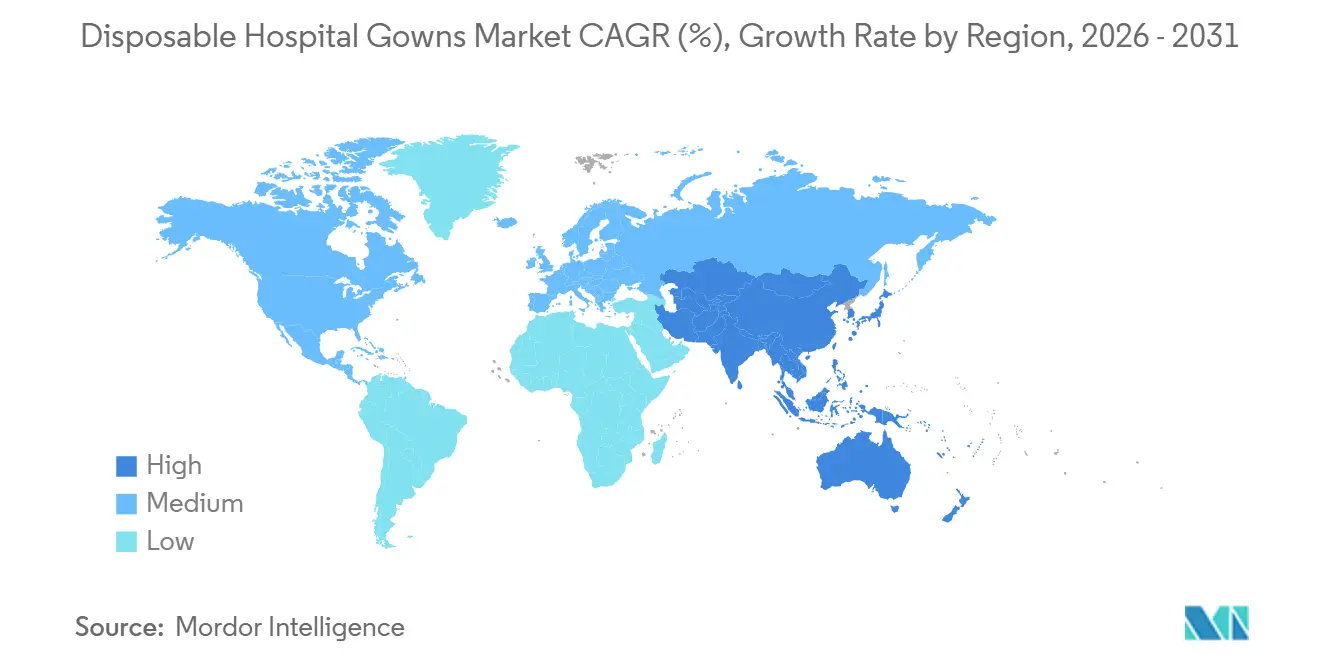
North America held 39.56% of global revenue in 2025, making it the largest regional market. High gown usage per procedure, established group purchasing systems, stringent barrier-performance requirements, and the concentration of complex surgical care supported demand. In January 2026, CMS sought comments on strengthening domestic supply chains for PPE and essential medicines, including the Secure American Medical Supplies designation and potential Medicare payment incentives. The VA also applied domestic-content requirements through its Medical and Surgical Prime Vendor Program, while Canada and Mexico contributed through publicly funded healthcare systems and expanding outpatient surgical capacity.
Europe, Middle East and South America Disposable Hospital Gowns Market
Europe’s disposable hospital gowns market was shaped by evolving technical standards and waste-management policies. Commission Implementing Decision (EU) 2025/2078 addressed harmonized standards for surgical clothing, drapes, medical face masks, and sterilizers in October 2025, increasing compliance requirements for sterile surgical gowns marketed as medical devices. Germany, France, and the United Kingdom faced supply contract renewals, while the revised Waste Framework Directive increased the focus on producer responsibility for textile products. Hospital construction supported demand in Saudi Arabia and the UAE, while public hospital investments supported Brazil and Argentina despite currency volatility and reliance on imported nonwoven inputs.
APAC Disposable Hospital Gowns Market
Asia-Pacific is forecast to grow at a CAGR of 14.77% from 2026 to 2031, making it the fastest-growing region. China and India are expanding hospital infrastructure and domestic manufacturing capacity for operating room consumables. China’s GB 19082-2024 standard aligned with AAMI Level 4 requirements, raising the quality baseline for protective products. In May 2026, Winner Medical broke ground on a USD 60 million, 93,000-square-meter production facility in Quang Ninh Province, Vietnam, with Phase I focused on advanced medical dressings and operating room consumables. Japan and South Korea remain key premium markets, where public tenders increasingly prioritize quality-system certification and performance specifications.
Competitive Landscape
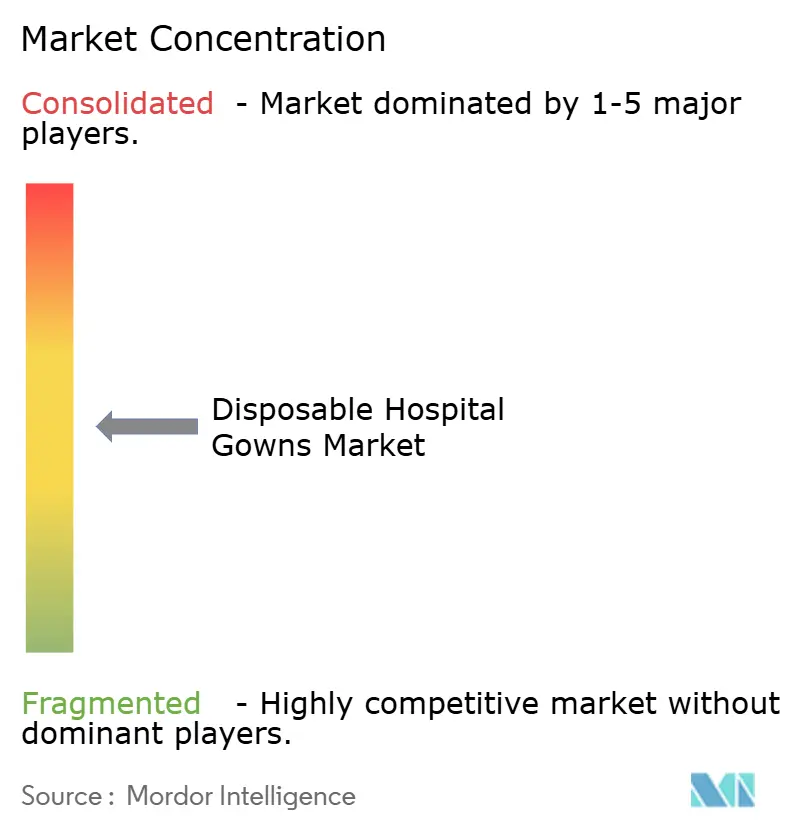
The disposable hospital gowns market is moderately consolidated in premium surgical products and fragmented across lower-acuity categories. Kimberly-Clark Corporation, Cardinal Health, Mölnlycke Health Care AB, Medline Industries, and Owens & Minor compete in AAMI Level 3 and Level 4 surgical gowns, supported by material capabilities, regulatory credentials, and group purchasing organization relationships. Regional manufacturers in Asia, India, and Europe compete primarily in non-sterile, patient, and isolation gown categories, where supplier availability and price pressure are higher.
Established suppliers strengthened their positions through manufacturing investments and regional capacity expansion. Mölnlycke invested EUR 115 million (USD 134.57) to expand capacity at its Brunswick facility in the United States and established new ProcedurePak tray production in Saudi Arabia and Thailand. These initiatives enhanced regional supply capabilities and supported bundled operating room offerings that included gowns and other consumables.
Specialty products remained a key competitive area in the disposable hospital gowns market. Chemotherapy gowns meeting USP <800> and ASTM D6978 requirements require specialized materials and validated performance. Suppliers also used RFID-enabled packaging, lot traceability, and data-supported replenishment to support premium contracts and operating room inventory management. In January 2026, Mölnlycke reached production of 100 million ProcedurePak custom procedure trays at its Czech Republic facility, demonstrating the scale of bundled procedure-pack models.
Disposable Hospital Gowns Industry Leaders
-
Cardinal Health, Inc.
-
Angelica Corporation
-
Medline Industries, LP
-
PAUL HARTMANN AG
-
Standard Textile Co., Inc.
- *Disclaimer: Major Players sorted in no particular order
Disposable Hospital Gowns Market Companies Covered in this Report
- Angelica Corporation
- Ansell
- B. Braun
- Bellcross Industries Pvt. Ltd.
- Cardinal Health
- Dynarex
- Hogy Medical Co., Ltd.
- Kimberly-Clark Worldwide
- Lohmann & Rauscher
- Medline Industries
- MedSource Labs Pvt. Ltd.
- Molnlycke Health Care
- Owens & Minor, Inc.
- Hartmann Group
- Priontex Ltd.
- Sara Healthcare Pvt. Ltd.
- Solventum Corporation
- Standard Textile Co., Inc.
- Surgiene Healthcare (India) Private Limited
- Winner Medical Co., Ltd.
Recent Industry Developments in Disposable Hospital Gowns Market
- May 2026: Winner Medical began construction of a USD 60 million, 93,000-square-meter manufacturing facility in Hai Ha Industrial Park, Quang Ninh Province, Vietnam, with Phase I focused on advanced medical dressings and operating room consumables.
- April 2026: Mölnlycke Health Care confirmed a EUR 115 million (USD 134.54 million) expansion of its Brunswick, United States, facility and new ProcedurePak tray production in Saudi Arabia and Thailand.
- January 2026: CMS issued an ANPRM proposing a Secure American Medical Supplies designation and potential Medicare incentives for hospitals purchasing minimum shares of domestically produced PPE, including disposable gowns.
- January 2026: Mölnlycke Health Care produced 100 million ProcedurePak custom procedure trays at its Czech Republic facility, including disposable surgical gowns, drapes, instruments, and related supplies.
Global Disposable Hospital Gowns Market Report Scope
As per the scope of the report, disposable hospital gowns are single-use protective garments worn by healthcare workers or patients to prevent the spread of microorganisms, bodily fluids, and contaminants. They are typically made from non-woven synthetic materials like polypropylene and discarded after a single use.
The disposable hospital gowns market is segmented by product type, sterility, material, end user, and geography. By product type, the market includes surgical gowns, non-surgical isolation gowns, patient gowns, chemotherapy gowns, and dignity and examination gowns. By sterility, the market is segmented into sterile disposable gowns and non-sterile disposable gowns. By material, the market is categorized into polypropylene nonwoven, polyethylene-coated nonwoven, polyethylene film, microporous film laminate, polyethylene-polypropylene composite, and others. By end user, the market is segmented into hospitals, ambulatory surgery centers, physician offices and outpatient clinics, diagnostic and testing laboratories, long-term care and nursing facilities, and others. By geography, the market is analyzed across North America, Europe, Asia-Pacific, the Middle East and Africa, and South America. The report also covers the estimated market sizes and trends for 17 countries across major regions globally. The report offers market sizes and forecasts in terms of value (USD) for the above segments.
Segmentation Overview
| Surgical Gowns |
| Non-Surgical Isolation Gowns |
| Patient Gowns |
| Chemotherapy Gowns |
| Dignity and Examination Gowns |
| Sterile Disposable Gowns |
| Non-Sterile Disposable Gowns |
| Polypropylene Nonwoven |
| Polyethylene-Coated Nonwoven |
| Polyethylene Film |
| Microporous Film Laminate |
| Polyethylene-Polypropylene Composite |
| Others |
| Hospitals |
| Ambulatory Surgery Centers |
| Physician Offices and Outpatient Clinics |
| Diagnostic and Testing Laboratories |
| Long-Term Care and Nursing Facilities |
| Others |
| North America | United States |
| Canada | |
| Mexico | |
| Europe | Germany |
| United Kingdom | |
| France | |
| Italy | |
| Spain | |
| Rest of Europe | |
| Asia-Pacific | China |
| India | |
| Japan | |
| Australia | |
| South Korea | |
| Rest of Asia-Pacific | |
| Middle East and Africa | GCC |
| South Africa | |
| Rest of Middle East and Africa | |
| South America | Brazil |
| Argentina | |
| Rest of South America |
| By Product Type | Surgical Gowns | |
| Non-Surgical Isolation Gowns | ||
| Patient Gowns | ||
| Chemotherapy Gowns | ||
| Dignity and Examination Gowns | ||
| By Sterility | Sterile Disposable Gowns | |
| Non-Sterile Disposable Gowns | ||
| By Material | Polypropylene Nonwoven | |
| Polyethylene-Coated Nonwoven | ||
| Polyethylene Film | ||
| Microporous Film Laminate | ||
| Polyethylene-Polypropylene Composite | ||
| Others | ||
| By End User | Hospitals | |
| Ambulatory Surgery Centers | ||
| Physician Offices and Outpatient Clinics | ||
| Diagnostic and Testing Laboratories | ||
| Long-Term Care and Nursing Facilities | ||
| Others | ||
| By Geography | North America | United States |
| Canada | ||
| Mexico | ||
| Europe | Germany | |
| United Kingdom | ||
| France | ||
| Italy | ||
| Spain | ||
| Rest of Europe | ||
| Asia-Pacific | China | |
| India | ||
| Japan | ||
| Australia | ||
| South Korea | ||
| Rest of Asia-Pacific | ||
| Middle East and Africa | GCC | |
| South Africa | ||
| Rest of Middle East and Africa | ||
| South America | Brazil | |
| Argentina | ||
| Rest of South America | ||
Key Questions Answered in the Report
What is the expected growth rate for disposable hospital gowns?
The disposable hospital gowns market is forecast to grow at a 5.50% CAGR from 2026 to 2031, increasing from USD 2.72 billion in 2026 to USD 3.52 billion in 2031.
Which product category leads global revenue?
Surgical gowns led revenue with a 49.88% share in 2025 because they are used across high-acuity operating room procedures.
Which gown category is expected to grow fastest?
Chemotherapy gowns are forecast to grow at a 14.52% CAGR through 2031, supported by hazardous-drug handling requirements.
Why are sterile disposable gowns important?
Sterile disposable gowns held 64.67% of revenue in 2025 and are used where aseptic conditions and stronger barrier protection are required.
What is driving demand from ambulatory surgery centers?
ASCs are expected to grow at a 13.87% CAGR through 2031 as additional, higher-acuity procedures become eligible for outpatient treatment.
Which region is growing fastest?
Asia-Pacific is forecast to grow at a 14.77% CAGR during 2026 to 2031, supported by hospital expansion and growing local manufacturing capacity.