
Digital Lab Operations Software Market Size and Share
Market Overview
| Study Period | 2020 - 2031 |
|---|---|
| Market Size (2026) | USD 2.71 Billion |
| Market Size (2031) | USD 4.13 Billion |
| Growth Rate (2026 - 2031) | 8.79 % |
| Fastest Growing Market | Middle East |
| Largest Market | North America |
| Market Concentration | Medium |
Major Players *Disclaimer: Major Players sorted in no particular order Image © Mordor Intelligence. Reuse requires attribution under CC BY 4.0. | |
Digital Lab Operations Software Market Analysis by Mordor Intelligence
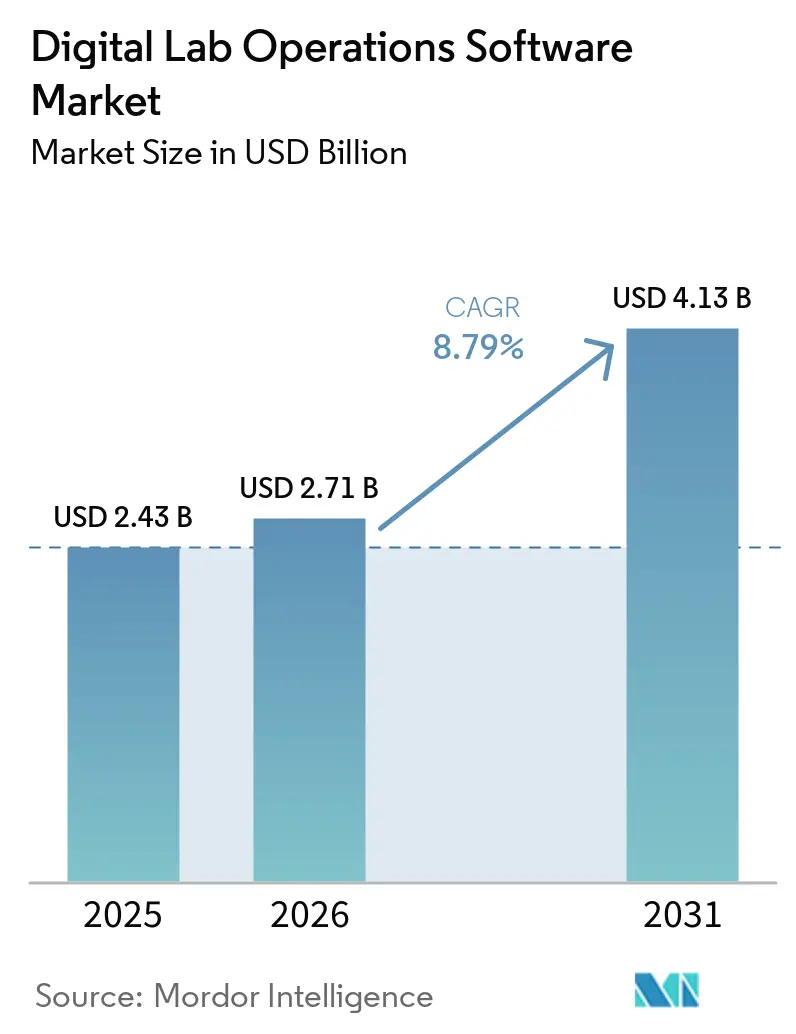
The digital lab operations software market size is projected to be USD 2.43 billion in 2025, USD 2.71 billion in 2026, and reach USD 4.13 billion by 2031, growing at a CAGR of 8.79% from 2026 to 2031. The digital lab operations software market is being shaped by spending on GxP-compliant systems across pharmaceutical manufacturing, biotechnology research, and contract service organizations. Laboratories are replacing paper records because traceable electronic workflows have become central to inspection readiness and data integrity. The FDA’s 2026 Computer Software Assurance guidance supports a risk-based approach that may reduce documentation-heavy validation work for appropriate systems. Connected instruments, cloud platforms, and AI features are increasing the value of integrated products over isolated tools. Vendors are responding by building broader workflow coverage, stronger connectors, and compliance-ready configurations for the digital lab operations software market.
Key Report Takeaways
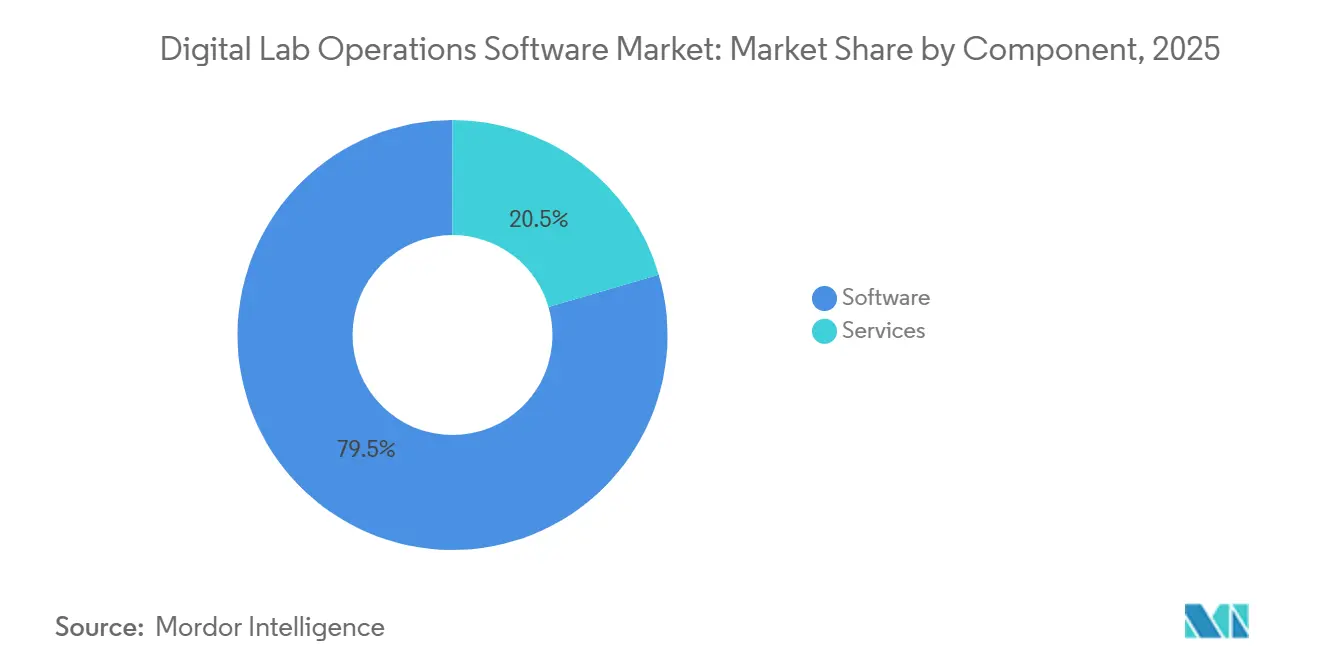
- By component, software held 79.53% of the digital lab operations software market share in 2025 and is projected to expand at a 9.26% CAGR through 2031.
- By deployment, cloud-based solutions held 39.63% of the digital lab operations software market share in 2025 and are expected to expand at a 10.31% CAGR through 2031.
- By lab type, research and development laboratories held 35.07% of revenue in 2025 and are projected to expand at a 9.34% CAGR through 2031.
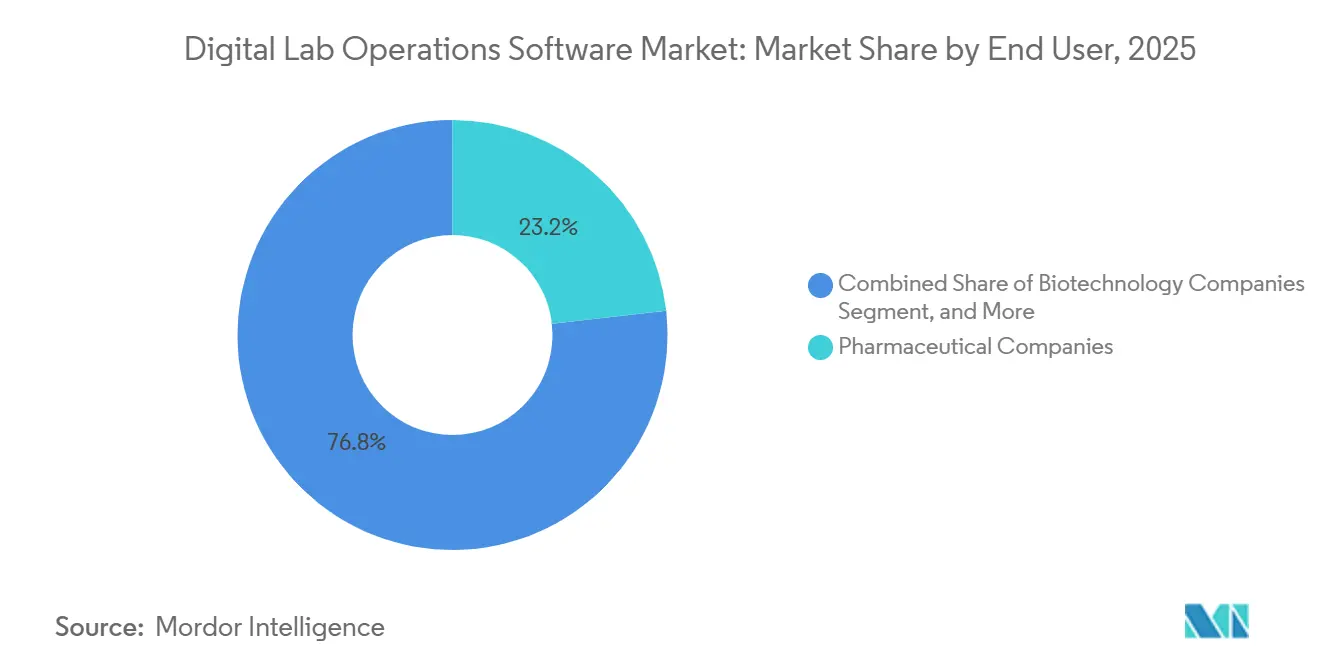
- By end user, pharmaceutical companies held 23.21% of the market in 2025, while biotechnology companies are expected to expand at a 10.14% CAGR through 2031.
- By organization size, large enterprises accounted for 65.47% of revenue in 2025, while small and medium-sized organizations are projected to expand at a 10.23% CAGR through 2031.
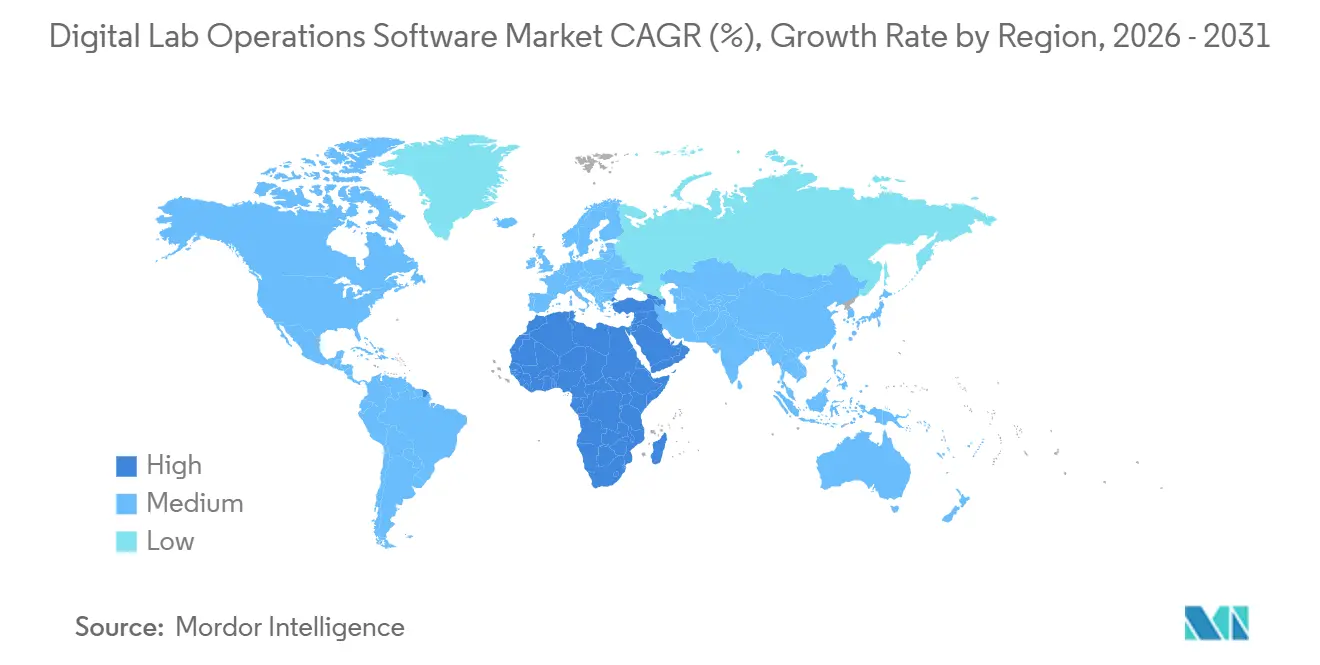
- By geography, North America held 39.12% of revenue in 2025, while the Middle East is expected to expand at a 12.06% CAGR through 2031.
Note: Market size and forecast figures in this report are generated using Mordor Intelligence’s proprietary estimation framework, updated with the latest available data and insights as of January 2026.
Market Trends and Insights
Drivers Impact Analysis of Digital Lab Operations Software Market*
| DRIVER | (~) % IMPACT ON CAGR FORECAST | GEOGRAPHIC RELEVANCE | IMPACT TIMELINE |
|---|---|---|---|
| Rising Demand for Audit-Ready, Traceable Digital Workflows | +1.5% | Global, with highest intensity in North America and Europe | Short term (≤ 2 years) |
| Cloud-Native Platforms Lowering Deployment and Validation Friction | +1.3% | North America and Europe, with accelerating uptake in Asia-Pacific | Medium term (2-4 years) |
| AI-Assisted Experiment and Exception Management | +1.2% | Global, with early concentration in North American biotech hubs | Medium term (2-4 years) |
| Instrument Connectivity and Real-Time LabOps Visibility | +1.0% | Global, particularly in pharmaceutical manufacturing and industrial laboratories | Medium term (2-4 years) |
| Expansion of Distributed Biopharma, CRO, and Multisite Laboratories | +0.9% | North America and Asia-Pacific core, with spillover to Europe | Short term (≤ 2 years) |
| Regulatory Acceptance of Computer Software Assurance | +0.7% | United States and Europe, with global harmonization effects | Short term (≤ 2 years) |
| Source: Mordor Intelligence | |||
Rising Demand for Audit-Ready, Traceable Digital Workflows
Regulatory enforcement of ALCOA+ principles has made electronic audit readiness a core requirement in pharmaceutical, biotechnology, and clinical laboratory procurement. Buyers assess audit trails, role-based access, and electronic signatures before they consider price or configuration depth. FDA guidance describes a risk-based assurance approach for production and quality management system software, reinforcing the importance of intended use and documented assurance in regulated settings.[1] The digital lab operations software market, therefore, benefits when organizations need systems that maintain complete and reviewable records. Organizations that receive regulatory observations may include LIMS weaknesses in corrective action plans, which can bring forward replacement decisions. Rigid legacy products can lose these evaluations to platforms with preconfigured compliance functions and managed audit trail infrastructure.
Cloud-Native Platforms Lowering Deployment and Validation Friction
Cloud deployment changes validation responsibilities by allowing vendors to manage infrastructure qualification while customers focus on workflows and configurations. Bayer’s centralized LIMS migration showed how immutable records and continuous audit logging can support a GxP-compliant cloud deployment at enterprise scale. Boehringer Ingelheim and Cognizant completed a Veeva Development Cloud go-live in March 2025 that replaced more than 20 legacy systems across clinical, regulatory, and quality functions for more than 15,000 users. This model helps multisite organizations centralize validation management, update controls, and audit information. Security configuration remains an important challenge, particularly where access privileges, encryption, and cloud settings require continuous review. In the digital lab operations software market, suppliers that include configured security controls, review procedures, and validation documentation in subscriptions can simplify implementation for regulated buyers.
AI-Assisted Experiment and Exception Management
AI is becoming an operational feature in leading laboratory platforms, but its value depends on whether outputs can be documented within regulated workflows. LabVantage introduced CORTEX in March 2026 as a cloud-native platform that uses autonomous AI agents within its LIMS environment without requiring a full upgrade or revalidation cycle. Benchling introduced Automation in May 2026 to connect instruments, automation systems, and scientific records through a hardware-agnostic approach. The Pistoia Alliance found that 77% of surveyed life sciences professionals expected to use AI within 2 years, while 34% identified skills shortages as the primary barrier.[2] The digital lab operations software market is favoring embedded, configurable AI functions because many laboratories cannot build those capabilities internally. Across the digital lab operations software market, these features can automate anomaly review, exception routing, and experiment coordination while retaining the traceability needed for quality review.
Instrument Connectivity and Real-Time Lab Operations Visibility
Real-time instrument connectivity is becoming a central platform requirement because AI outputs and audit trails depend on complete, accurate data capture. The OPC UA Laboratory and Analytical Device Standard provides cross-manufacturer templates for exposing instrument status, results, and metadata in a standard format. LabWare supports REST/JSON, MQTT, XML, ASTM, and HL7 interfaces for laboratory and enterprise connections without custom scripting. Better connectivity reduces the cost and delay associated with bespoke instrument-to-LIMS projects. It also gives laboratories a more complete view of sample status, data flow, and instrument activity. Within the digital lab operations software market, continuous data access can support maintenance planning and reduce downtime, which strengthens the operational case for connected platforms.
Restraints Impact Analysis of Digital Lab Operations Software Market*
| RESTRAINT | (~) % IMPACT ON CAGR FORECAST | GEOGRAPHIC RELEVANCE | IMPACT TIMELINE |
|---|---|---|---|
| Legacy-System Lock-In and Migration Risk | -0.5% | Global, most acute in established pharmaceutical companies in North America and Europe | Long term (≥ 4 years) |
| Validation, Cybersecurity, and Data-Integrity Cost Burden | -0.4% | Global, acute in cost-constrained markets including South America and Africa | Medium term (2-4 years) |
| Interoperability Gaps Across Instruments and Informatics Stacks | -0.3% | Global | Medium term (2-4 years) |
| Shortage of Laboratory Digital-Transformation Skills | -0.2% | Global, with particular severity in Asia-Pacific and the Middle East | Long term (≥ 4 years) |
| Source: Mordor Intelligence | |||
Legacy-System Lock-In and Migration Risk
Validated on-premise LIMS estates create a difficult choice for laboratory operators. Remaining on a legacy system can increase exposure to cybersecurity issues and vendor end-of-support, while migration may require comprehensive revalidation under cGMP, GLP, and Annex 11 requirements. The Association of Public Health Laboratories reported in 2025 that workforce capacity and funding shortfalls affected 2-thirds of surveyed laboratories pursuing data modernization. Its findings also showed that instrument interfaces and system replacement were common active projects, although fewer than 1-third of institutions had formal modernization roadmaps. ISPE’s GAMP 5 Second Edition addresses cloud migration issues, including encryption, supplier qualification, backup and restore testing, and audit trail preservation.[3] Mergers and acquisitions and vendor end-of-support notices can force replacement decisions into a narrower period than vendors would prefer.
Validation, Cybersecurity, and Data-Integrity Cost Burden
Cloud adoption does not remove validation duties in regulated laboratories. It changes validation into a lifecycle activity that must account for platform updates after deployment. Security requirements add to the total cost of ownership because organizations need to maintain access controls, encryption, secrets management, and key management. This burden can be especially difficult for smaller organizations with limited compliance teams. The digital lab operations software market has an opening for suppliers that provide prevalidated cloud configurations and documentation services as part of a single offering. For the digital lab operations software market, these packages reduce the work required to maintain an inspection-ready environment and can improve adoption among organizations with limited internal resources.
*Our forecasts treat driver/restraint impacts as directional, not additive. The impact forecasts reflect baseline growth, mix effects, and variable interactions.
Digital Lab Operations Software Market Segment Analysis
By Component:
Software Anchors Revenue as Services Scale With Deployment ComplexitySoftware held 79.53% of revenue in 2025 and is projected to expand at a 9.26% CAGR through 2031. Pharmaceutical companies, biotechnology companies, and contract research organizations often buy multiple modules rather than a single standalone product. They seek platforms that combine LIMS, ELN, and scientific data management functions in one environment. This purchasing pattern supports software revenue because a unified platform can cover several laboratory workflows. The digital lab operations software market size for software is also supported by AI-enabled product tiers that can increase per-seat pricing. Subscription licensing changes former implementation-focused revenue into recurring contract value and makes switching less attractive for established customers.
Services include implementation, validation consulting, training, and managed support. They have a smaller revenue base than software, but their role grows as cloud migrations and multisite rollouts become more complex. An IDBS survey of 856 biopharma professionals identified limited scalability, lack of flexibility, and poor integration as leading platform challenges in 2025. These challenges can create opportunities for cloud-native suppliers when contracts are renewed. Implementation revenue is increasingly shared with third-party systems integrators, which expands partner channels but can pressure vendor service margins. No-code and low-code configuration tools also reduce reliance on specialist developers, which is important for small and medium-sized organizations with limited IT capacity.
By Deployment:
Cloud-Based Adoption Resets Laboratory Infrastructure EconomicsCloud-based deployment held 39.63% of revenue in 2025 and is expected to expand at a 10.31% CAGR through 2031. Centralized validation, managed update cycles, and consolidated audit logs can give cloud systems practical advantages across multiple sites. These benefits are not limited to lower infrastructure spending. They can also help organizations operate consistent controls across laboratories in different geographies. The digital lab operations software market is therefore moving toward cloud platforms when buyers need common workflows, shared records, and faster system administration. Regulatory expectations under FDA 21 CFR Part 11 and broader GxP cloud principles apply to hosted systems as well as local systems. Suppliers with prebuilt compliance frameworks can shorten procurement reviews by giving customers a more defined validation starting point.
Verve Therapeutics adopted Veeva LIMS through a cloud-first approach during its early clinical stage, allowing scientific teams to operate the system without building internal server management capacity.[4] On-premise systems still matter where data sovereignty requirements, air-gapped manufacturing settings, or validated legacy estates make transition costly. Hybrid deployment is a practical route for established manufacturers that keep core local systems while adding cloud analytics or reporting. This approach lets organizations phase migration without replacing every validated process at once. Cloud platforms are increasingly selected in new procurement cycles involving biotechnology startups, CROs, and academic spinouts. For the digital lab operations software market, these groups form a significant part of the new customer pipeline because they often begin without a large existing IT estate.
By Lab Type:
Research and Development Laboratories Set the Pace for Platform SophisticationResearch and development laboratories held 35.07% of revenue in 2025 and are projected to expand at a 9.34% CAGR through 2031. Drug discovery work involves sample registration, experiment tracking, high-throughput screening results, and comparisons across many assays. Those activities require flexible platforms that can manage large and varied scientific records. Automation adds further demand because it produces data volumes that are not suited to manual recordkeeping. The digital lab operations software market size for this lab type is supported by expanding biopharma pipelines and wider use of automated laboratory systems. Nature Reviews Chemistry described self-driving laboratory architectures in 2026 as dependent on interoperable standards, modular hardware connections, and complete provenance metadata.
Quality control and manufacturing laboratories form the next-largest lab type group. Their requirements center on batch release, instrument qualification, and out-of-specification investigations that must align with GMP procedures. Clinical and molecular diagnostics laboratories are also digitizing as hospital networks standardize operations across several locations. Environmental testing and food, beverage, and agriculture laboratories are smaller but continue to adopt structured systems to support quality certifications and compliance programs. Each setting has distinct configuration needs, so generic deployment can add time and cost. Vendors with validated workflow templates and configuration libraries for specific laboratory settings can reduce implementation time and strengthen their position when buyers prioritize a clear path to use.
By End User:
Pharmaceutical Companies Command Volume as Biotechnology Companies Outpace GrowthPharmaceutical companies held 23.21% of revenue in 2025. Their requirements span research and development, quality control, clinical functions, and manufacturing across global laboratory networks. They typically prioritize compliance depth, multisite scalability, and long-term supplier stability over speed of implementation or initial price. This emphasis supports broad platform vendors that can provide validated configurations and long deployment experience. Biotechnology companies are expected to expand at a 10.14% CAGR through 2031 because cell and gene therapy programs, biosimilar pipelines, and antibody discovery create high volumes of multimodal data. Their needs favor science-aware platforms that connect experimental context with structured laboratory operations.
Schrödinger selected the Sapio Platform in January 2025 to combine LIMS and ELN capabilities for wet laboratory operations after expanding into physical laboratory research.[5] Contract research organizations and contract manufacturing organizations are also increasing demand as their global networks seek consistent processes across locations. LabConnect deployed Sapio LIMS at more than 30 locations on 6 continents in August 2025, showing the scale of the harmonization task faced by contract laboratory networks. Hospitals and diagnostic networks continue to adopt systems to support CLIA compliance and consistent diagnostic quality. Chemical and petrochemical companies remain a stable demand base linked to quality certification. Academic institutions, government laboratories, and public health agencies also need structured data environments as digital modernization programs proceed.

By Organization Size:
Large Enterprises Sustain Scale While Small and Medium-Sized Organizations AccelerateLarge enterprises accounted for 65.47% of revenue in 2025. Global pharmaceutical and industrial networks have centralized procurement capacity and complex regulatory requirements. Their deployments often combine LIMS, ELN, scientific data management, and laboratory execution systems over multiyear schedules. These configurations have high switching costs and can establish vendor relationships that last for many years. Small and medium-sized organizations are projected to expand at a 10.23% CAGR through 2031. Cloud subscriptions are reducing the infrastructure and internal validation requirements that once limited access to advanced laboratory systems for smaller buyers.
Small and medium-sized organizations focus first on foundational integration needs rather than AI novelty. Cenevo reported in its January 2026 survey that 62% of small and medium-sized life sciences organizations ranked connections among LIMS, ELNs, and instruments as their top investment priority. VANUDIS implemented Cenevo’s Labguru platform in December 2025 to standardize documents, inventory, and sample data before late preclinical regulatory requirements. In the digital lab operations software market, such adopters view digital laboratory systems as an early compliance investment rather than a later operational upgrade. Suppliers can serve this group with defined onboarding paths, modular pricing, and prevalidated configurations. These design choices can help smaller scientific organizations implement structured processes without large internal IT or compliance teams.
Geography Analysis
North America Digital Lab Operations Software Market
North America held 39.12% of revenue in 2025. Pharmaceutical and biotechnology headquarters, established CRO networks, and rigorous FDA oversight support regional demand. The United States remains the main demand center. A 2025 MLO survey found that 48% of U.S. medical laboratory professionals identified LIS and EHR integration issues as an obstacle to laboratory digitization. This issue sustains demand for platforms with stronger integration capabilities and for middleware that connects existing systems.
North America and Europe Digital Lab Operations Software Market
Canada adds demand through its biotechnology and genomics research base. Mexico presents a developing opportunity as pharmaceutical manufacturing formalizes under government-supported industrial policy. North America is projected to remain the largest region through 2031. Its contribution to new demand may decline in relative terms as faster-growing regions expand from smaller bases. Europe remains the second-largest regional market, supported by pharmaceutical manufacturing in Germany, biotechnology research in the United Kingdom, and hospital laboratory networks in France. The digital lab operations software market has a broad European base because these users need systems that support regulated development, manufacturing, and diagnostic workflows.
MEA, APAC and South America Digital Lab Operations Software Market
The Middle East is expected to expand at a 12.06% CAGR through 2031, the fastest regional rate in the digital lab operations software market. Gulf Cooperation Council countries are investing in healthcare infrastructure, pharmaceutical manufacturing, and clinical diagnostics capacity. PureHealth opened a 70,000-square-foot AI-powered diagnostic facility in Abu Dhabi in December 2025 with capacity for more than 30 million samples annually. Beaufond announced a USD 112 million program in June 2026 to expand analytical and quality infrastructure across its development network, including a shared digital data system for partner CMO sites. Asia-Pacific follows as a significant growth area, with China, India, Japan, South Korea, Australia, and ASEAN markets expanding laboratory capabilities. South America and Africa remain smaller markets, led by Brazil and South Africa, where funding and healthcare infrastructure constraints can slow adoption.
Competitive Landscape
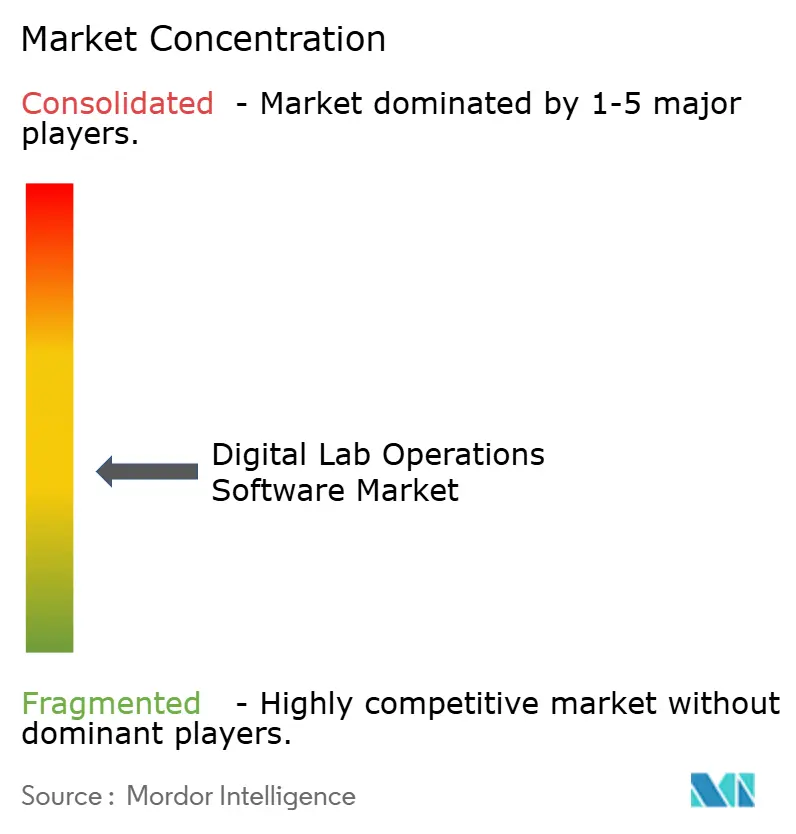
The digital lab operations software market is moderately fragmented at the product portfolio level. Full-suite vendors compete alongside specialists that focus on defined laboratory types, regions, or organization sizes. Thermo Fisher Scientific, LabWare, and Dassault Systèmes BIOVIA compete through compliance prevalidation, instrument connectivity, and experience in large multisite deployments. Their pharmaceutical installed bases produce recurring maintenance and service demand and can be difficult to replace without a merger, acquisition, or end-of-support event. The digital lab operations software market is also shifting toward AI as a practical selection criterion. Buyers increasingly compare whether AI functions can operate within validated workflows, not simply whether a supplier offers AI features.
LabVantage’s March 2026 CORTEX launch placed autonomous AI agents within the core LIMS environment without requiring a full system upgrade or revalidation cycle. Benchling’s May 2026 Automation launch created a hardware-agnostic connection between instruments, automation systems, and scientific records. LabWare and Phizzle announced an April 2026 partnership that combined LabWare’s platform with a cleanroom-ready gateway for API-based data transfer from laboratory instruments. These moves address recurring buyer concerns around AI adoption, manual data handling, and instrument integration. They also show why connectivity and compliance execution remain important alongside feature breadth.
Open opportunities include cloud platforms for small organizations with prevalidated compliance modules. Environmental testing and food safety laboratories also need industry-specific systems that address ISO 17025 and food safety obligations without the scale of pharmaceutical procurement. Middle East and Africa deployments can benefit from Arabic-language support and local regulatory alignment. STARLIMS Corporation, Revvity, and Clinisys retain broad installed bases in the middle tier. Their challenge is to add credible AI capabilities without disrupting the validated status of established customer systems. Suppliers are also developing AI-enabled workflow and cloud GxP compliance capabilities that can be difficult to replicate when they are embedded in a validated platform and supported by proprietary technology.
Digital Lab Operations Software Industry Leaders
-
Thermo Fisher Scientific Inc.
-
LabWare
-
LabVantage Solutions, Inc.
-
Agilent Technologies, Inc.
-
STARLIMS Corporation
- *Disclaimer: Major Players sorted in no particular order
Digital Lab Operations Software Market Companies Covered in this Report
- Thermo Fisher Scientific Inc.
- LabWare
- LabVantage Solutions, Inc.
- Agilent Technologies, Inc.
- STARLIMS Corporation
- Waters Corporation
- Siemens Healthineers AG
- Dassault Systèmes SE
- Benchling, Inc.
- Sapio Sciences
- L7 Informatics, Inc.
- Xybion Corporation
- Revvity, Inc.
- Clinisys, Inc.
- LabLynx, Inc.
- Autoscribe Informatics
- Accelerated Technology Laboratories, Inc.
- Agaram Technologies Pvt. Ltd.
- AmpleLogic
- Tulip Interfaces, Inc.
- Elemental Machines, Inc.
Recent Industry Developments in Digital Lab Operations Software Market
- July 2026: Gulf Pharmaceutical Industries, Julphar, in collaboration with IBM and SAP, announced a strategic SAP S/4HANA enterprise modernization program covering finance, supply chain, manufacturing, and HR operations across its regional footprint. The program aimed to establish a unified intelligent digital core to enhance regulatory compliance and data transparency across Julphar’s Middle East and African operations, positioning the company for expanded digital quality management capacity.
- June 2026: Beaufond PLC announced a USD 112 million capital program to expand analytical and quality infrastructure across its pharmaceutical development facility and a network of partner CMOs. The program included a shared digital data system deployed across partner sites, directly reducing method transfer delays when moving analytical methods from in-house development to partner production facilities.
- April 2026: LabWare and Phizzle announced a partnership to simplify instrument data transfer in regulated cleanroom and pharmaceutical laboratory environments. The collaboration combined LabWare’s laboratory informatics platform with Phizzle’s Edge Puck, a cleanroom-ready gateway device that connects directly to lab instruments and transfers data via API into LabWare LIMS, eliminating manual data collection and enabling real-time instrument activity monitoring with continuous audit logging.
- March 2026: LabVantage Solutions launched LabVantage CORTEX, a cloud-native multi-tenant AI and analytics platform deploying autonomous agents within the core LabVantage LIMS environment without system upgrades or revalidation cycles. The platform targeted the 75% of laboratories that reported plans to implement AI within 2 years, offering an adoption pathway designed to minimize compliance disruption during AI integration.
Global Digital Lab Operations Software Market Report Scope
The Digital Lab Operations Software Market encompasses software platforms designed to digitize, manage, and optimize laboratory workflows, data management, resource allocation, testing procedures, and quality control processes. These solutions combine laboratory information management systems (LIMS), workflow automation, analytics, and cloud-based collaboration tools to improve operational efficiency, traceability, and regulatory compliance. The market serves laboratories across the pharmaceutical, biotechnology, environmental, food and beverage, healthcare, academic, and industrial research sectors.
The Digital Lab Operations Software Market Report is Segmented by Component (Software, and Services), Deployment (Cloud-Based, On-Premise, and Hybrid), Lab Type (Research and Development Laboratories, Quality Control and Manufacturing Laboratories, Clinical and Molecular Diagnostics Laboratories, Environmental Testing Laboratories, Food, Beverage, and Agriculture Laboratories, and Other Lab Types), End User (Pharmaceutical Companies, Biotechnology Companies, Contract Research Organizations, Contract Manufacturing Organizations, Hospitals and Diagnostic Networks, Chemical and Petrochemical Companies, and Other End Users [Academic, Government, and Public-Health Institutions, Food and Agriculture Companies]), Organization Size (Large Enterprises, and Small and Medium-Sized Organizations), and Geography (North America, South America, Europe, Asia-Pacific, and Middle East and Africa). The Market Sizes and Forecasts are Provided in Terms of Value in (USD).
Segmentation Overview
| Software |
| Services |
| Cloud-Based |
| On-Premise |
| Hybrid |
| Research and Development Laboratories |
| Quality Control and Manufacturing Laboratories |
| Clinical and Molecular Diagnostics Laboratories |
| Environmental Testing Laboratories |
| Food, Beverage, and Agriculture Laboratories |
| Other Lab Types |
| Pharmaceutical Companies |
| Biotechnology Companies |
| Contract Research Organizations |
| Contract Manufacturing Organizations |
| Hospitals and Diagnostic Networks |
| Chemical and Petrochemical Companies |
| Other End Users (Academic, Government, and Public-Health Institutions, Food and Agriculture Companies) |
| Large Enterprises |
| Small and Medium-Sized Organizations |
| North America | United States |
| Canada | |
| Mexico | |
| South America | Brazil |
| Argentina | |
| Chile | |
| Rest of South America | |
| Europe | Germany |
| United Kingdom | |
| France | |
| Italy | |
| Russia | |
| Rest of Europe | |
| Asia-Pacific | China |
| Japan | |
| India | |
| South Korea | |
| Australia and New Zealand | |
| ASEAN | |
| Rest of Asia-Pacific | |
| Middle East | Saudi Arabia |
| United Arab Emirates | |
| Turkey | |
| Rest of Middle East | |
| Africa | South Africa |
| Rest of Africa |
| By Component | Software | |
| Services | ||
| By Deployment | Cloud-Based | |
| On-Premise | ||
| Hybrid | ||
| By Lab Type | Research and Development Laboratories | |
| Quality Control and Manufacturing Laboratories | ||
| Clinical and Molecular Diagnostics Laboratories | ||
| Environmental Testing Laboratories | ||
| Food, Beverage, and Agriculture Laboratories | ||
| Other Lab Types | ||
| By End User | Pharmaceutical Companies | |
| Biotechnology Companies | ||
| Contract Research Organizations | ||
| Contract Manufacturing Organizations | ||
| Hospitals and Diagnostic Networks | ||
| Chemical and Petrochemical Companies | ||
| Other End Users (Academic, Government, and Public-Health Institutions, Food and Agriculture Companies) | ||
| By Organization Size | Large Enterprises | |
| Small and Medium-Sized Organizations | ||
| By Geography | North America | United States |
| Canada | ||
| Mexico | ||
| South America | Brazil | |
| Argentina | ||
| Chile | ||
| Rest of South America | ||
| Europe | Germany | |
| United Kingdom | ||
| France | ||
| Italy | ||
| Russia | ||
| Rest of Europe | ||
| Asia-Pacific | China | |
| Japan | ||
| India | ||
| South Korea | ||
| Australia and New Zealand | ||
| ASEAN | ||
| Rest of Asia-Pacific | ||
| Middle East | Saudi Arabia | |
| United Arab Emirates | ||
| Turkey | ||
| Rest of Middle East | ||
| Africa | South Africa | |
| Rest of Africa | ||
Key Questions Answered in the Report
What is the digital lab operations software market size?
The digital lab operations software market size is projected to be USD 2.43 billion in 2025, USD 2.71 billion in 2026, and reach USD 4.13 billion by 2031, growing at a CAGR of 8.79% from 2026 to 2031.
What is driving adoption of digital laboratory operations software?
Audit-ready electronic records, cloud deployment, AI-enabled workflow support, and instrument connectivity are increasing adoption across regulated laboratories.
Which component leads digital lab operations software revenue?
Software led with 79.53% share in 2025 and is projected to expand at a 9.26% CAGR through 2031.
Why are cloud-based laboratory platforms growing?
Cloud-based solutions held 39.63% share in 2025 and are expected to grow at a 10.31% CAGR because they support centralized validation and audit controls.
Which end users are growing fastest for laboratory operations software?
Biotechnology companies are projected to grow at a 10.14% CAGR through 2031 as complex therapy programs generate more experimental data.
Which region is growing fastest for digital lab operations software?
The Middle East is expected to grow at a 12.06% CAGR through 2031, supported by healthcare, diagnostics, and pharmaceutical infrastructure investment.