
Digital Companion Diagnostics Software Market Size and Share
Market Overview
| Study Period | 2020 - 2031 |
|---|---|
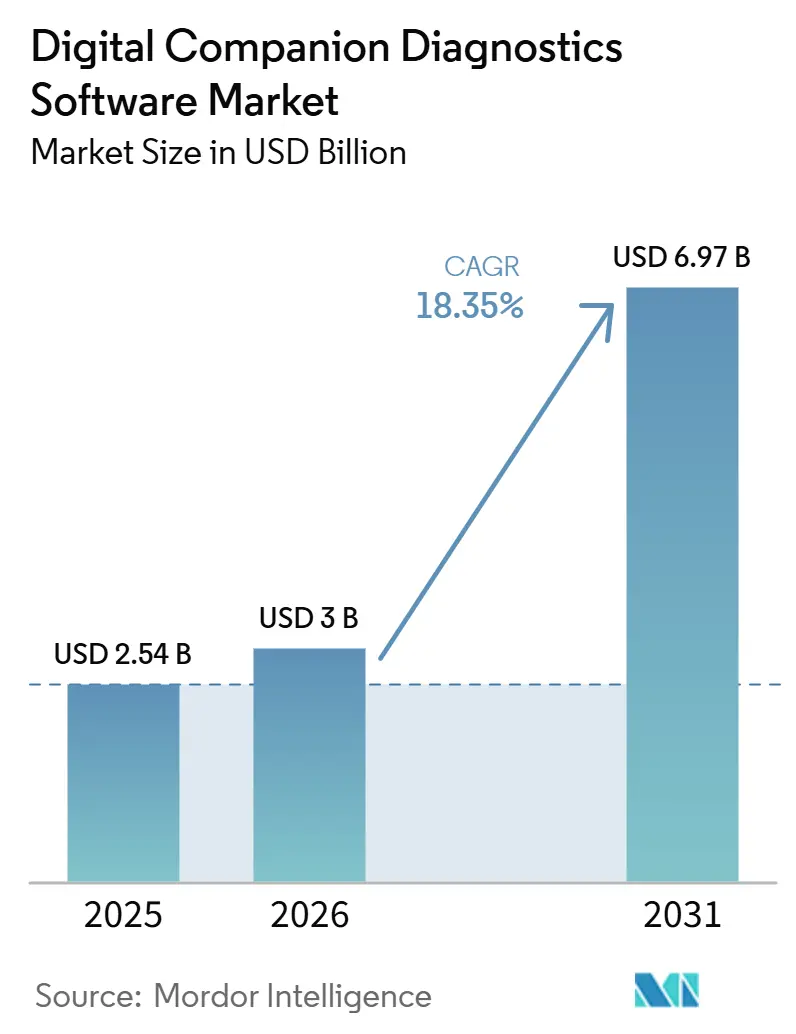
| Market Size (2026) | USD 3 Billion |
| Market Size (2031) | USD 6.97 Billion |
| Growth Rate (2026 - 2031) | 18.35 % |
| Fastest Growing Market | Asia-Pacific |
| Largest Market | North America |
| Market Concentration | Medium |
Major Players *Disclaimer: Major Players sorted in no particular order Image © Mordor Intelligence. Reuse requires attribution under CC BY 4.0. | |
Digital Companion Diagnostics Software Market Analysis by Mordor Intelligence
The Digital Companion Diagnostics Software Market size is projected to grow from USD 2.54 billion in 2025 and USD 3.00 billion in 2026 to USD 6.97 billion by 2031, registering a CAGR of 18.35% during the forecast period 2026-2031.
Growth in the digital companion diagnostics software market depends on the broader adoption of biomarker-led treatment selection, which requires reliable software for drug development, diagnostic testing, and treatment monitoring. Pharmaceutical sponsors in the digital companion diagnostics software market seek integrated platforms that connect sequencing data, pathology images, clinical reports, and trial workflows, rather than separate point solutions. In this market, regulatory-grade validation, data security, and interoperability with laboratory and clinical systems remain key purchasing requirements. Competition is shifting toward ownership of validated AI algorithms, access to real-world data, and established clinical deployment networks, rather than instrument distribution alone. The digital companion diagnostics software market also offers growth opportunities beyond oncology, as neurological, autoimmune, and cardiovascular programs increasingly apply biomarker stratification to more complex trial populations.
Key Report Takeaways
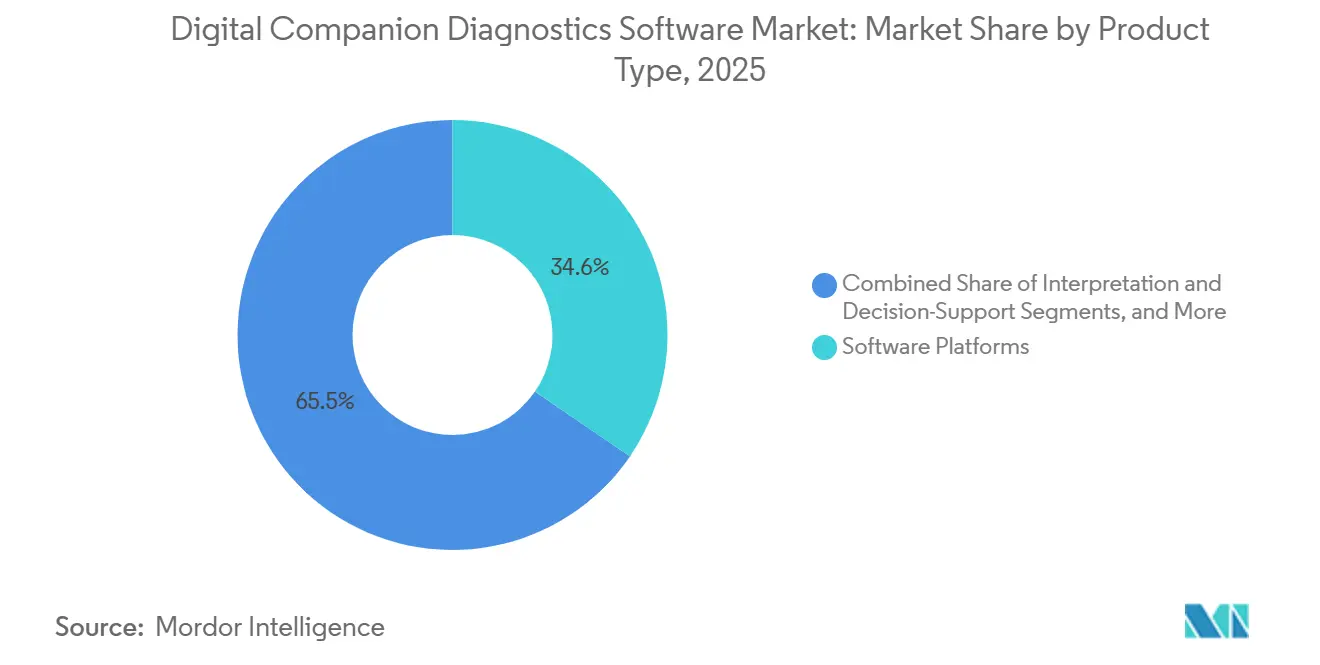
- By product type, software platforms held 34.55% of the digital companion diagnostics software market share in 2025, while digital pathology and image-analysis software is projected to grow at an 18.93% CAGR through 2031.
- By deployment, cloud-based systems held 63.56% of revenue in 2025, while hybrid deployment is projected to grow at a 19.67% CAGR through 2031.
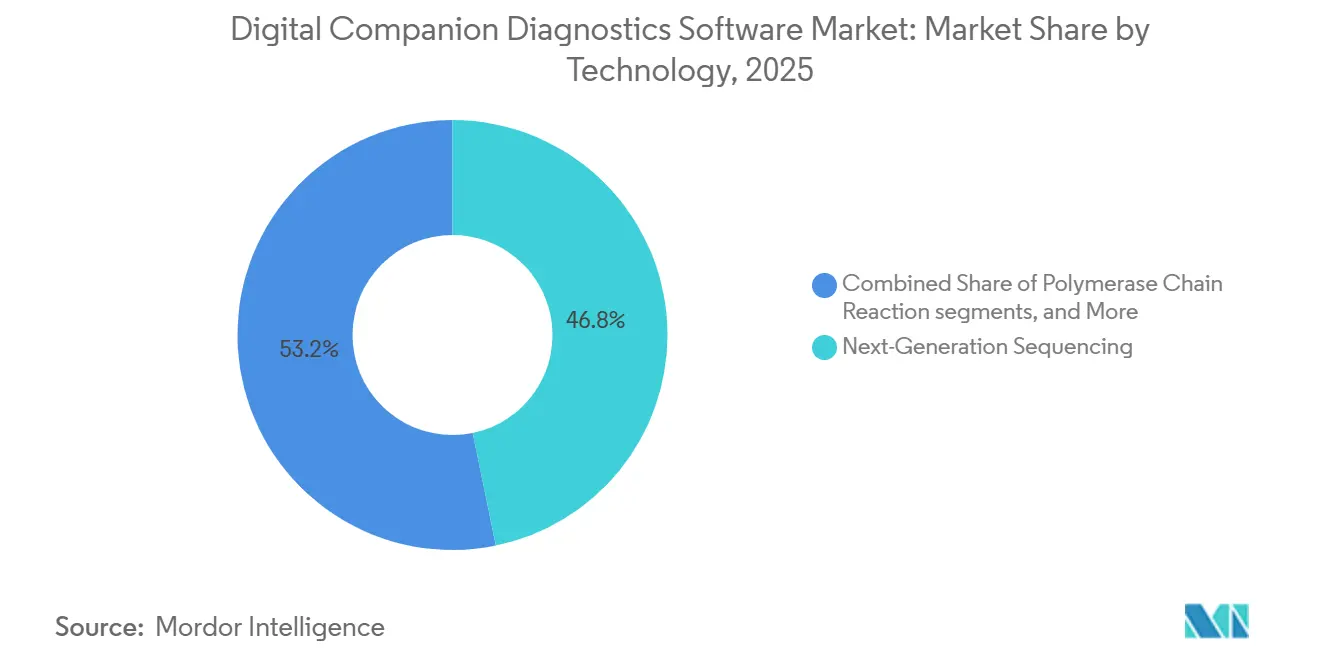
- By technology, digital PCR held 46.77% of revenue in 2025, while digital pathology is projected to grow at a 20.35% CAGR through 2031.
- By application, oncology held 42.88% of revenue in 2025, while neurology is projected to grow at a 21.45% CAGR through 2031.
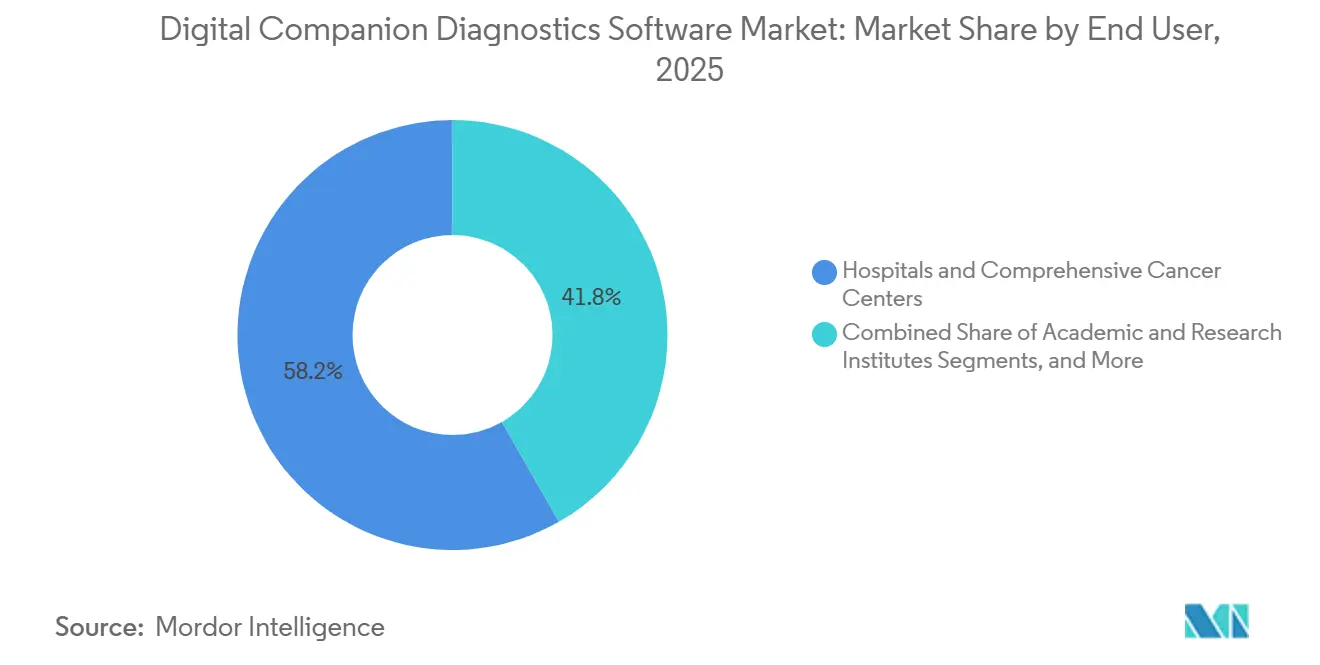
- By end user, hospitals and comprehensive cancer centers held 58.24% of revenue in 2025, while clinical reference laboratories are projected to grow at a 19.22% CAGR through 2031.
- By geography, North America held 41.45% of revenue in 2025, while Asia-Pacific is projected to grow at an 20.56% CAGR through 2031.
Note: Market size and forecast figures in this report are generated using Mordor Intelligence’s proprietary estimation framework, updated with the latest available data and insights as of January 2026.
Global Digital Companion Diagnostics Software Market Trends and Insights
Drivers Impact Analysis*
| DRIVER | (~) % IMPACT ON CAGR FORECAST | GEOGRAPHIC RELEVANCE | IMPACT TIMELINE |
|---|---|---|---|
| Precision oncology and biomarker-guided therapy expansion | +4.5% | Global, concentrated in North America and Europe | Medium term (2-4 years) |
| Rising adoption of NGS-based therapy selection | +3.8% | North America, Europe, and core Asia-Pacific markets | Medium term (2-4 years) |
| Mainstreaming of ai-assisted digital pathology | +3.2% | North America and Europe, with expansion into Asia-Pacific | Medium term (2-4 years) |
| Decentralized companion diagnostic deployment | +2.1% | North America, with early gains in Asia-Pacific | Short term (≤ 2 years) |
| Pharmaceutical demand for real-world evidence and biomarker-defined trial matching | +2.0% | Global, concentrated in North America and Europe | Medium term (2-4 years) |
| Companion diagnostic expansion beyond oncology | +1.9% | Global, with early gains in North America | Long term (≥ 4 years) |
| Source: Mordor Intelligence | |||
Precision Oncology and Biomarker-Guided Therapy Expansion
Each new oncology label requiring biomarker stratification can create sustained software demand across co-development and patient-selection workflows. This trend makes companion diagnostic development a key source of recurring licenses and subscriptions for the digital companion diagnostics software market. Tempus received FDA approval in May 2026 for a tumor-only indication for its xT CDx platform, becoming the first laboratory with companion diagnostic approval for both tumor-only and tumor-normal comprehensive genomic profiling. Roche received FDA approval in June 2026 for the VENTANA PTEN assay, the first IHC companion diagnostic for PTEN-deficient prostate adenocarcinoma. The approval supported patients eligible for AstraZeneca's TRUQAP and addressed a population in which 25% of metastatic hormone-sensitive cases carried PTEN deficiency. Broader use of antibody-drug conjugates and multi-target therapies supports demand for multi-panel software, as single-gene PCR tests cannot manage the required biomarker combinations.
Rising Adoption of Next-Generation Sequencing-Based Therapy Selection
NGS-based workflows in the digital companion diagnostics software market are expanding beyond tertiary cancer centers into community oncology settings. Thermo Fisher received FDA approval in July 2025 for the Oncomine Dx Express Test on its Ion Torrent Genexus Dx Integrated Sequencer, which can deliver results for EGFR exon 20 insertion mutations in as few as 24 hours from decentralized laboratories. Illumina launched DRAGEN v4.4 in May 2025 with configured applications for heme WGS, solid WGS tumor-normal, and MRD pipelines, and reported a 30% improvement in germline structural variant calling accuracy, validated in a Nature Biotechnology study. SOPHiA GENETICS introduced MSK-IMPACT Flex in September 2025, combining DNA and RNA biomarker analysis, including TMB, MSI, HRD, and CNV detection, in one modular workflow. Higher testing volumes can strain older laboratory information systems, increasing demand for middleware and interpretation tools that connect sequencing output with clinical decision support.
Mainstreaming of AI-Assisted Digital Pathology
AI-assisted digital pathology is moving from research use toward regulated companion diagnostic applications. Roche's VENTANA TROP2 RxDx Device received FDA Breakthrough Device Designation in April 2025 for assessing TROP2 expression and determining treatment eligibility in non-small cell lung cancer. A 2026 review reported that U.S. laboratory digital pathology adoption stood at 10% in 2024, while clinical use advanced as algorithms moved toward regulated diagnostic endpoints. The digital companion diagnostics software market benefits when pathology tools support both drug development and clinical testing, driving investment in whole-slide image management, algorithm validation, and reporting workflows.
Decentralized Companion Diagnostic Deployment and Trial Matching
Testing in the digital companion diagnostics software market is increasingly reaching community settings as treatment decisions often cannot wait for central laboratory workflows. Adaptive Biotechnologies integrated clonoSEQ MRD testing into Flatiron Health's OncoEMR in July 2025, enabling more than 4,500 clinicians across 1,000 U.S. community cancer care locations to order and review results in the electronic medical record. Inocras listed its CancerVision WGS-based companion diagnostic at 10 major South Korean hospitals in July 2025. These deployments favor cloud-hosted software subscriptions and per-test licenses over upfront instrument purchases. SOPHiA GENETICS also used its network of more than 800 institutions in more than 70 countries to support international deployment, highlighting the network scale sponsors seek for multinational trials. More decentralized testing and greater demand for real-world evidence make trial matching, standardized biomarker reporting, and connected data management important platform capabilities.
Restraints Impact Analysis*
| RESTRAINT | (~) % IMPACT ON CAGR FORECAST | GEOGRAPHIC RELEVANCE | IMPACT TIMELINE |
|---|---|---|---|
| Regulatory complexity for continuously updated diagnostic algorithms | -1.2% | Global | Short term (≤ 2 years) |
| Uneven reimbursement for software-enabled interpretation | -1.0% | North America and Europe | Medium term (2-4 years) |
| Interoperability gaps across laboratory and clinical systems | -0.8% | Global, acute in Asia-Pacific and South America | Medium term (2-4 years) |
| Dataset bias and limited representation of under-studied populations | -0.6% | Global | Long term (≥ 4 years) |
| Source: Mordor Intelligence | |||
Regulatory Complexity for Continuously Updated Diagnostic Algorithms
Machine-learning software in the digital companion diagnostics software market must balance continuous refinement with stable, validated diagnostic outputs. When a retrained model changes an output, developers may need to revalidate it against clinical specimen sets that took years to assemble. European platforms also face Class C and D re-certification requirements under the EU IVDR in 2027 and 2028, which may require prospective clinical evidence for tools that previously relied on CE marking. This workload favors companies with dedicated regulatory teams and may delay performance-enhancing updates, while dataset bias can require additional validation before international label expansion.
Uneven Reimbursement and System Interoperability
In the digital companion diagnostics software market, uneven coverage for software-enabled interpretation limits revenue certainty for software-first developers. MedPAC noted in April 2025 that software technologies could be eligible for payment under OPPS, PFS, and IPPS, but no consistent framework existed for valuing AI-driven interpretation. Germany's DiGA pathway covers digital health applications but does not create a defined coverage category for most AI-based diagnostic software. Hospitals and laboratories may need to treat software costs as overhead, lengthening purchasing cycles, while system interoperability gaps hinder workflow integration and data exchange across sites.
*Our forecasts treat driver/restraint impacts as directional, not additive. The impact forecasts reflect baseline growth, mix effects, and variable interactions.
Segment Analysis
By Product Type: Software Platforms Lead Enterprise Spending While Pathology AI Tools Grow Fastest
Software platforms held 34.55% of product revenue in 2025. Hospital networks and pharmaceutical research organizations used these licensed environments to integrate biomarker analytics, NGS interpretation, and regulatory documentation. Multi-application suites strengthened the digital companion diagnostics software market, as each added module increased switching complexity for institutions. Interpretation tools, clinical decision support, patient-matching applications, real-world evidence analytics, and development software supported sponsors and contract research organizations seeking verified biomarker outputs and automated bioinformatics documentation.
Digital pathology and image-analysis software was the fastest-growing product type, registering an 18.93% CAGR through 2031. Proscia launched the fifth generation of Concentriq in June 2026 as an AI-native platform used by 16 of the top 20 pharmaceutical companies. The platform supported drug discovery, clinical development, and diagnostic review within related workflows. Validation and regulatory services remained the smallest product category, but demand increased as regulated algorithms required structured evidence, IEC 62304 lifecycle compliance, and ISO 13485 quality management alignment.



By Deployment: Cloud Holds the Largest Position While Hybrid Models Address Governance Needs
Cloud-based deployment accounted for 63.56% of the digital companion diagnostics software market size in 2025. NGS secondary analysis, whole-slide image management, and multi-site real-world evidence aggregation required scalable computing capacity without fixed local hardware. SOPHiA GENETICS connected more than 800 institutions across more than 70 countries through its cloud-native DDM platform. This architecture supported geographically dispersed pharmaceutical trial networks more effectively than isolated on-premise installations.
Hybrid deployment is forecast to register a 19.67% CAGR through 2031. Hospital security teams may require raw patient genomic data to remain behind institutional firewalls, even when analytics and reporting use cloud resources. Vendors offering containerized deployments can run a common codebase inside a hospital or on a cloud cluster, improving competitiveness in enterprise tenders. On-premise systems retained relevance in European and Middle Eastern settings where data-sovereignty requirements restricted cross-border patient data transfers.
By Technology: Digital PCR Holds the Largest Base While Digital Pathology Sets the Growth Rate
Digital PCR held 46.77% of the technology segment in 2025. Its position reflected continued use in quantitative nucleic acid measurement, including MRD monitoring and therapy-selection assays requiring absolute copy-number precision. NGS remained important for comprehensive genomic profiling, especially where laboratories needed to assess multiple biomarkers in one workflow. Illumina's DRAGEN v4.4 and Thermo Fisher's Oncomine Dx Express showed how NGS could be packaged for clinical use and decentralized laboratories.
Digital pathology is forecast to register a 20.35% CAGR through 2031. Leica Biosystems, Indica Labs, and Lunit announced a collaboration in May 2026 to develop AI-powered computational pathology assays for PD-L1 and emerging IHC biomarkers. Ibex Medical Analytics achieved CE-IVDR certification in July 2026 for its breast IHC portfolio covering H&E, HER2, ER, PR, and Ki67. Liquid biopsy, ctDNA, and multi-omics platforms continued to support advanced workflows combining quantification, methylation, fragmentomics, and RNA signals.
By Application: Oncology Leads Current Use While Neurology Expands the Addressable Base
Oncology accounted for 42.88% of application revenue in 2025. More than 78 drug-companion diagnostic combination approvals created recurring needs across development, clinical testing, and treatment monitoring. The application expanded beyond established lung and breast programs to include PTEN deficiency in prostate cancer, KRAS mutation in low-grade serous ovarian cancer, and TROP2 expression in non-small cell lung cancer. Roche's PTEN assay approval highlighted the widening biomarker scope.
Neurology is forecast to register a 21.45% CAGR through 2031. Neurodegenerative therapy development required systems that could stratify patients by amyloid, tau, and alpha-synuclein biomarker status. Tempus expanded its collaboration with Bristol Myers Squibb in May 2026 across five clinical trial programs in solid tumor oncology and Alzheimer's disease. Cardiovascular, immunology or autoimmune, and infectious disease applications also used biomarker-driven software to reduce endpoint heterogeneity and support complex clinical decisions.
By End User: Hospitals Lead Revenue While Reference Laboratories Grow Fastest
Hospitals and comprehensive cancer centers in the digital companion diagnostics software market held 58.24% of end-user revenue in 2025. Their deployments connected pathology, molecular diagnostics, and oncology decision support within clinical workflows. A 2026 Nature Digital Medicine study evaluated the real-world deployment of the Paige Prostate AI Suite across the UK National Health Service. The study found that AI-assisted review changed diagnosis or Grade Group for 5% of patients, with 1.3% of changes significant enough to alter clinical management.
Clinical reference laboratories are forecast to register a 19.22% CAGR through 2031. Their economics favored high-throughput testing, centralized billing, and standardized reporting across multiple payer relationships. Quest Diagnostics, LabCorp, and NeoGenomics scaled platforms that handled tissue, liquid biopsy, and imaging inputs in unified reporting environments for distributed pharmaceutical studies. Mayo Clinic and Techcyte implemented a next-generation digital pathology platform under a co-development and IP licensing agreement in July 2026, supporting the shift of institutional pathology innovation toward commercial deployment.
Geography Analysis
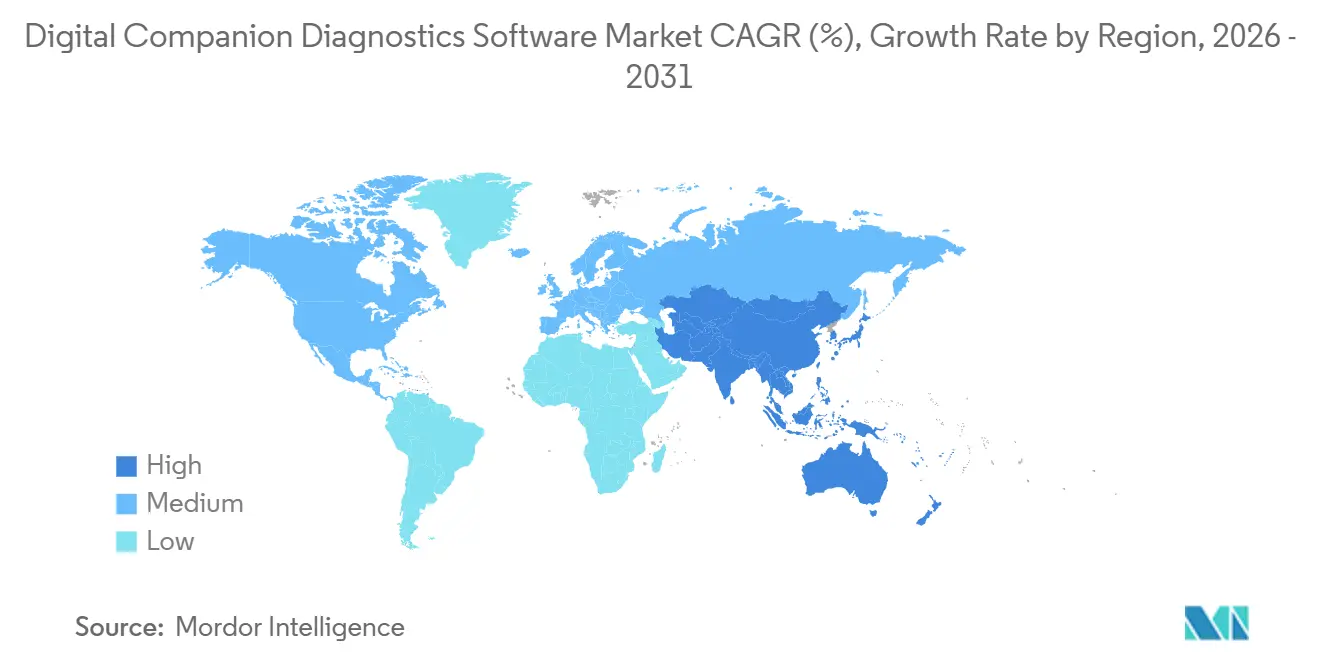
North America held 41.45% of the digital companion diagnostics software market size in 2025. The region had a strong base of FDA-approved companion diagnostic drug labels, an established CMS Advanced Diagnostic Laboratory Test reimbursement mechanism, and a large AI diagnostics ecosystem. Guardant Health received FDA approval in 2025 for Guardant360 CDx in HER2-mutant non-small cell lung cancer, its 25th companion diagnostic indication. Canada’s health technology assessment process and Mexico’s lower investment in molecular diagnostics concentrated regional revenue in the United States.
Europe was the second-largest geography in the digital companion diagnostics software market in 2025. EU IVDR Class C and D requirements raised compliance standards for digital pathology platforms and favored clinically validated systems over research tools. Ibex achieved CE-IVDR certification for breast IHC AI algorithms in July 2026, while Tribun Health announced CaloPix 6 as its first IVDR-certified version for routine diagnostic use in June 2026. Tyrolpath adopted SOPHiA GENETICS' MSK-IMPACT Flex as Austria's first modular comprehensive genomic profiling laboratory, and the UK NHS deployment of the Paige Prostate AI Suite provided clinical evidence for procurement decisions across European health systems.
Asia-Pacific is forecast to grow at a 20.56% CAGR through 2031, the fastest regional rate in the digital companion diagnostics software market. China’s Healthy China 2030 program, Japan's expedited pathways for AI-integrated IVD devices, South Korea's precision medicine programs, and India's pharmaceutical outsourcing base support demand. CancerVision's deployment at 10 South Korean hospitals showed that institutional-scale adoption can advance quickly with reimbursement support. Middle East and Africa and South America remain smaller markets, although national genomics programs in GCC countries and Brazil's SUS health system are creating early demand, while interoperability constraints and limited bioinformatics workforces limit near-term adoption.

Competitive Landscape
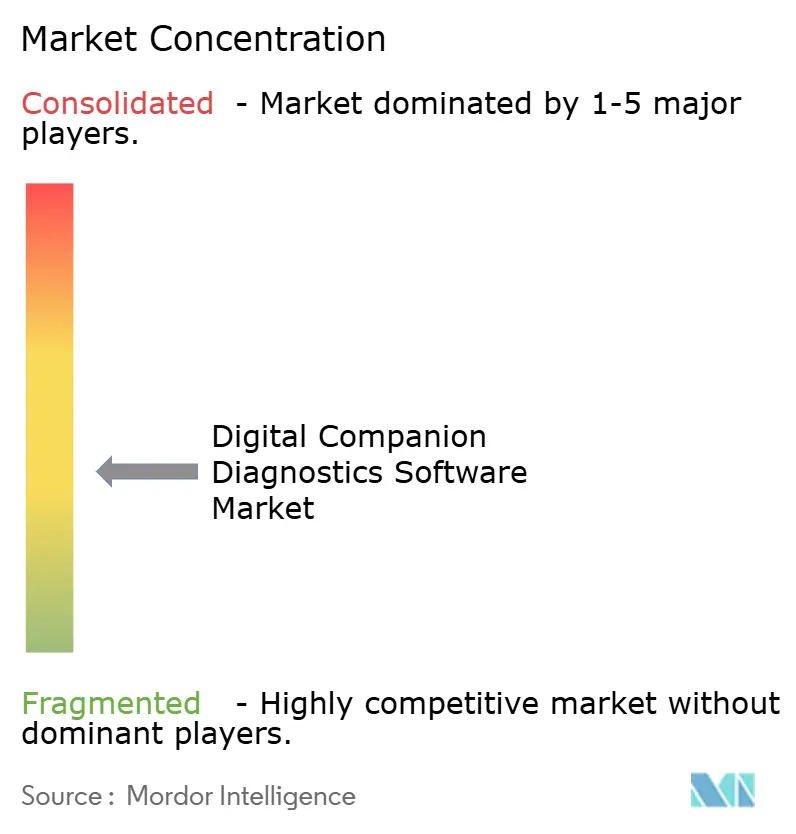
The digital companion diagnostics software market remains moderately fragmented. Roche, Illumina, Thermo Fisher Scientific, and Danaher hold established positions through sequencing hardware and reagent ecosystems, making them preferred co-development partners for pharmaceutical sponsors. Tempus AI, SOPHiA GENETICS, and Foundation Medicine compete through multimodal analytics and real-world data networks. The market increasingly rewards validated AI algorithms, broad clinical evidence, and connected data workflows, which are becoming as important as access to sequencing hardware and reagent ecosystems.
Interoperability standards are becoming important competitive tools as laboratories connect scanners and information systems across multiple locations. DICOM, HL7, and IHE digital pathology image acquisition profiles help platforms manage heterogeneous image data across multi-site networks. SOPHiA GENETICS and Myriad Genetics began collaborating in September 2025 on a liquid biopsy companion diagnostic offering. The partnership combined Myriad’s US CLIA laboratory capabilities with SOPHiA’s international network, allowing regional specialists to support global programs without building all sequencing infrastructure internally.
Opportunities remain in non-oncology companion diagnostics, including neurology and autoimmune disease, where no platform has clear dominance. MRD monitoring software, federated learning approaches, and multi-omics liquid biopsy platforms also remain areas of active development. These platforms can combine ctDNA, methylation, fragmentomics, and protein biomarkers into a single predictive workflow. ISO 27001, HIPAA, GDPR, and IEC 62304 requirements increasingly serve as entry conditions rather than product differentiators, favoring vertically integrated vendors with regulatory teams over standalone algorithm developers.
Digital Companion Diagnostics Software Industry Leaders
F. Hoffmann-La Roche Ltd
Agilent Technologies, Inc.
Abbott Laboratories
Illumina, Inc.
Thermo Fisher Scientific Inc.
- *Disclaimer: Major Players sorted in no particular order

Recent Industry Developments
- July 2026: Ibex Medical Analytics achieved CE-IVDR certification for its breast cancer IHC AI diagnostic portfolio, covering H&E, HER2, ER, PR, and Ki67, establishing an end-to-end IVDR-certified AI pathology workflow for biopsies and excisions.
- July 2026: Tempus highlighted the Articulate Pro study in Nature Digital Medicine, where the Paige Prostate AI Suite changed diagnoses or Grade Groups for 5% of UK NHS patients and reduced turnaround times by nearly 1 day.
- July 2026: Mayo Clinic and Techcyte implemented a next-generation digital pathology platform under a co-development and IP licensing agreement to support AI-driven companion diagnostic deployment in clinical workflows.
- June 2026: Roche received FDA approval for the VENTANA PTEN RxDx Assay, the first IHC companion diagnostic for PTEN-deficient prostate adenocarcinoma, supporting TRUQAP eligibility identification.
- May 2026: Leica Biosystems, Indica Labs, and Lunit partnered to develop AI-powered computational pathology assays for PD-L1 and emerging IHC biomarkers through Leica Biosystems' Aperio AI Store.
- May 2026: Tempus AI expanded its Bristol Myers Squibb collaboration to apply AI and multimodal real-world data across 5 clinical trial programs in solid tumor oncology and Alzheimer's disease.


Global Digital Companion Diagnostics Software Market Report Scope
As per the scope of the report, digital companion diagnostics software is a specialized medical software tool that analyzes patient biomarker data to match individuals with specific targeted therapies. It functions as the digital or computational component of a companion diagnostic system, helping determine safe, effective drug usage and personalized treatment strategies.
The digital companion diagnostics software market is segmented by product type, deployment, technology, application, end user, and geography. By product type, the market includes software platforms, interpretation and decision-support software, clinical trial and patient-matching software, digital pathology and image analysis software, real-world evidence and data analytics software, companion diagnostic development software, and software-related validation and regulatory services. By deployment, the market is segmented into cloud-based, on-premise, and hybrid. By technology, the market is segmented into next-generation sequencing, polymerase chain reaction, digital polymerase chain reaction, immunohistochemistry, in-situ hybridization, digital pathology, liquid biopsy, circulating tumor DNA, and multi-omics. By application, the market is segmented into oncology, rare and genetic diseases, neurology, cardiovascular diseases, infectious diseases, and immunology and autoimmune diseases. By end user, the market is segmented into pharmaceutical companies, biotechnology companies, contract research organizations, clinical reference laboratories, hospitals and comprehensive cancer centers, academic and research institutes, and payers and health technology assessment organizations. By geography, the market is analyzed across North America, Europe, Asia-Pacific, the Middle East and Africa, and South America. The report also covers the estimated market sizes and trends for 17 countries across major regions globally. The report offers the market sizes and forecasts in terms of value (USD) for the above segments.
| Software Platforms |
| Interpretation and Decision-Support Software |
| Clinical Trial and Patient-Matching Software |
| Digital Pathology and Image-Analysis Software |
| Real-World Evidence and Data-Analytics Software |
| Companion Diagnostic Development Software |
| Software-Related Validation and Regulatory Services |
| Cloud-Based |
| On-Premise |
| Hybrid |
| Next-Generation Sequencing |
| Polymerase Chain Reaction |
| Digital Polymerase Chain Reaction |
| Immunohistochemistry |
| In-Situ Hybridization |
| Digital Pathology |
| Liquid Biopsy |
| Circulating Tumor DNA |
| Multi-Omics |
| Oncology |
| Rare and Genetic Diseases |
| Neurology |
| Cardiovascular Diseases |
| Infectious Diseases |
| Immunology and Autoimmune Diseases |
| Pharmaceutical Companies |
| Biotechnology Companies |
| Contract Research Organizations |
| Clinical Reference Laboratories |
| Hospitals and Comprehensive Cancer Centers |
| Academic and Research Institutes |
| Payers and Health Technology Assessment Organizations |
| North America | United States |
| Canada | |
| Mexico | |
| Europe | Germany |
| United Kingdom | |
| France | |
| Italy | |
| Spain | |
| Rest of Europe | |
| Asia-Pacific | China |
| India | |
| Japan | |
| Australia | |
| South Korea | |
| Rest of Asia-Pacific | |
| Middle East and Africa | GCC |
| South Africa | |
| Rest of Middle East and Africa | |
| South America | Brazil |
| Argentina | |
| Rest of South America |
| Product Type | Software Platforms | |
| Interpretation and Decision-Support Software | ||
| Clinical Trial and Patient-Matching Software | ||
| Digital Pathology and Image-Analysis Software | ||
| Real-World Evidence and Data-Analytics Software | ||
| Companion Diagnostic Development Software | ||
| Software-Related Validation and Regulatory Services | ||
| By Deployment | Cloud-Based | |
| On-Premise | ||
| Hybrid | ||
| By Technology | Next-Generation Sequencing | |
| Polymerase Chain Reaction | ||
| Digital Polymerase Chain Reaction | ||
| Immunohistochemistry | ||
| In-Situ Hybridization | ||
| Digital Pathology | ||
| Liquid Biopsy | ||
| Circulating Tumor DNA | ||
| Multi-Omics | ||
| By Application | Oncology | |
| Rare and Genetic Diseases | ||
| Neurology | ||
| Cardiovascular Diseases | ||
| Infectious Diseases | ||
| Immunology and Autoimmune Diseases | ||
| By End User | Pharmaceutical Companies | |
| Biotechnology Companies | ||
| Contract Research Organizations | ||
| Clinical Reference Laboratories | ||
| Hospitals and Comprehensive Cancer Centers | ||
| Academic and Research Institutes | ||
| Payers and Health Technology Assessment Organizations | ||
| By Geography | North America | United States |
| Canada | ||
| Mexico | ||
| Europe | Germany | |
| United Kingdom | ||
| France | ||
| Italy | ||
| Spain | ||
| Rest of Europe | ||
| Asia-Pacific | China | |
| India | ||
| Japan | ||
| Australia | ||
| South Korea | ||
| Rest of Asia-Pacific | ||
| Middle East and Africa | GCC | |
| South Africa | ||
| Rest of Middle East and Africa | ||
| South America | Brazil | |
| Argentina | ||
| Rest of South America | ||


Key Questions Answered in the Report
What is the projected value of digital companion diagnostics software by 2031?
The digital companion diagnostics software market is projected to reach USD 6.97 billion by 2031 from USD 3.00 billion in 2026, at an 18.35% CAGR. Biomarker-guided therapy selection supports this expansion.
Which application will grow fastest through 2031?
Neurology is forecast to grow at a 21.45% CAGR as neurodegenerative therapy programs require biomarker-based patient stratification. This need extends beyond established oncology workflows.
Why are cloud-based platforms widely used in companion diagnostics?
Cloud-based deployment held 63.56% in 2025 because NGS analysis, whole-slide images, and multi-site data aggregation require scalable computing. Cloud networks also support cross-site trial operations.
Which technology will show the fastest growth?
Digital pathology is forecast to grow at a 20.35% CAGR through 2031, supported by regulated AI pathology workflows and expanded image-analysis use. CE-IVDR certifications are strengthening clinical use cases.
Who are the leading participants in digital companion diagnostics software?
Large diversified participants include Roche, Illumina, Thermo Fisher Scientific, and Danaher, while Tempus AI, SOPHiA GENETICS, and Foundation Medicine compete through analytics and data networks. Their strategies combine workflow access with validated algorithms.
Page last updated on:





