
Dental Air Polishing Unit Market Size and Share
Market Overview
| Study Period | 2020 - 2031 |
|---|---|
| Market Size (2026) | USD 2.20 Billion |
| Market Size (2031) | USD 2.98 Billion |
| Growth Rate (2026 - 2031) | 6.25 % |
| Fastest Growing Market | Asia Pacific |
| Largest Market | North America |
| Market Concentration | Medium |
Major Players *Disclaimer: Major Players sorted in no particular order Image © Mordor Intelligence. Reuse requires attribution under CC BY 4.0. | |
Dental Air Polishing Unit Market Analysis by Mordor Intelligence
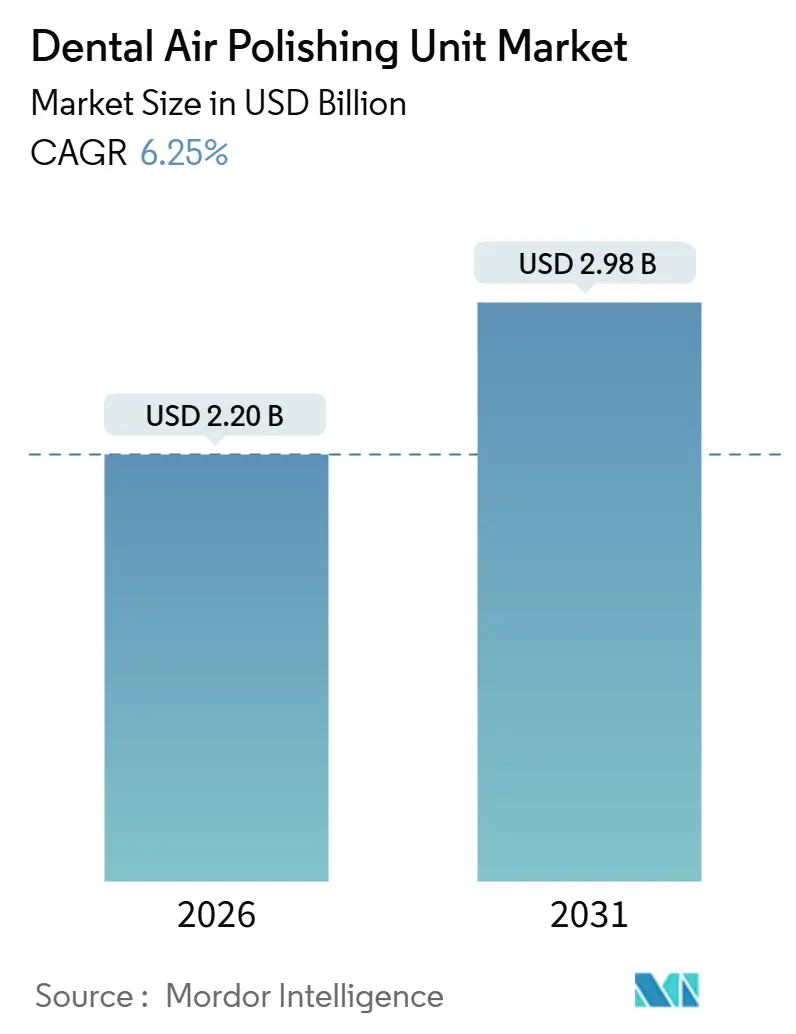
The Dental Air Polishing Unit Market size is estimated at USD 2.20 billion in 2026, and is expected to reach USD 2.98 billion by 2031, at a CAGR of 6.25% during the forecast period (2026-2031).
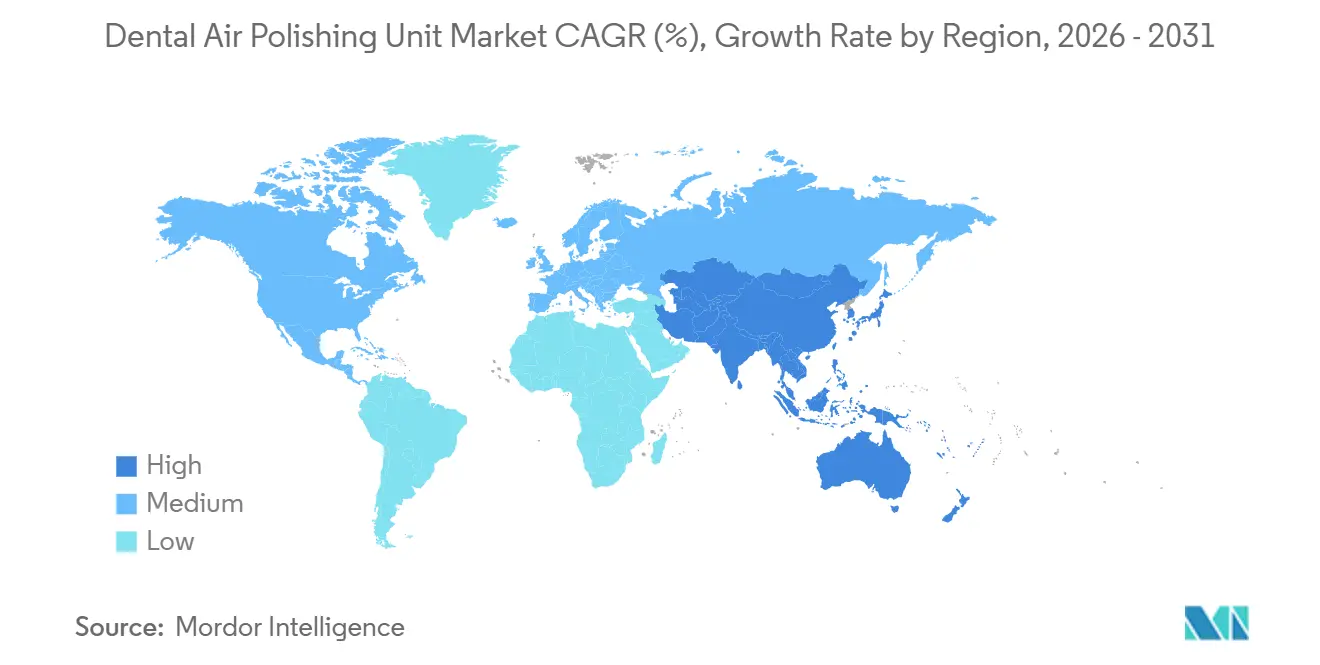
Uptake is accelerating because glycine- and erythritol-based powders deliver gentler enamel and implant maintenance than legacy sodium bicarbonate, aligning with the shift toward minimally invasive dentistry. Portable battery-powered devices are gaining traction in outreach and mobile settings, while bundled digital workflows and subscription equipment models are raising replacement cycles inside urban clinics. Powder innovation is redefining competitive moats, with rare-sugar formulations such as tagatose expanding gross margins and locking practitioners into proprietary consumable ecosystems. Regionally, North America remains the highest revenue generator, yet Asia-Pacific supplies the steepest growth as insurance pilots and cosmetic-aesthetic demand converge.
Key Report Takeaways
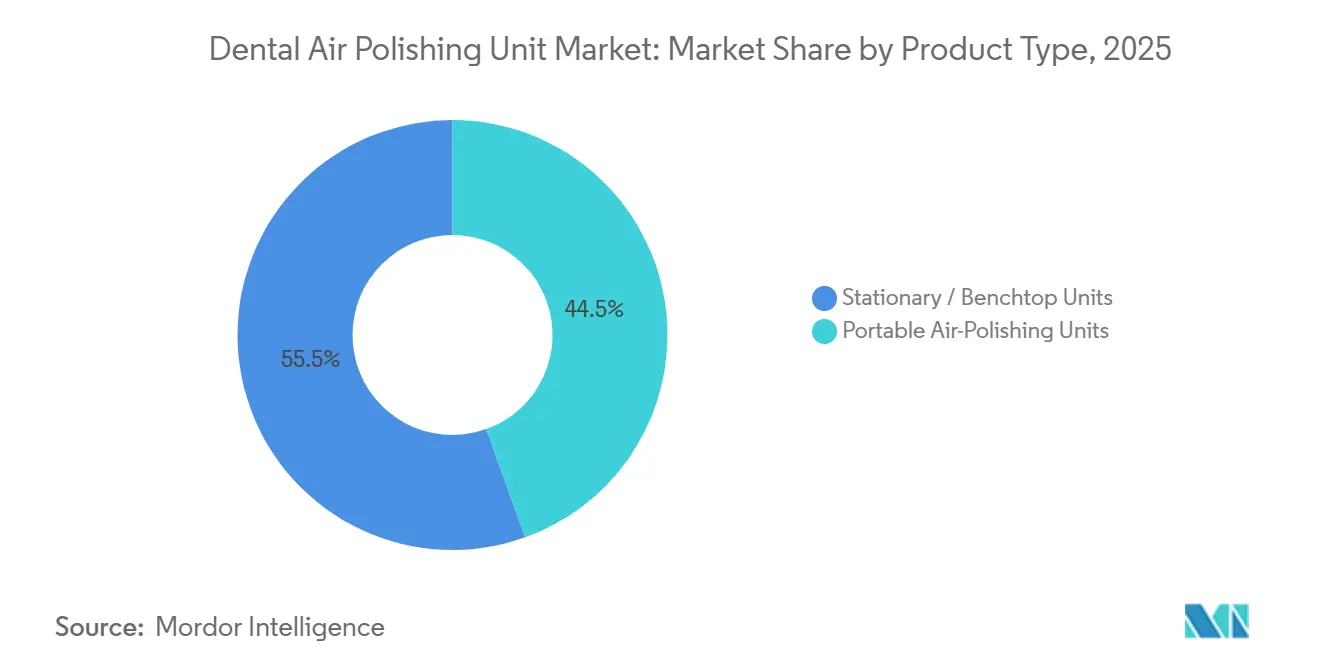
- By product type, stationary benchtop units led with a 55.55% share of the dental air polishing unit market share in 2025, while portable systems are forecast to expand at an 8.25% CAGR through 2031.
- By powder type, sodium bicarbonate held 36.53% of the dental air polishing unit market size in 2025, whereas tagatose powder is projected to grow at 9.55% CAGR to 2031.
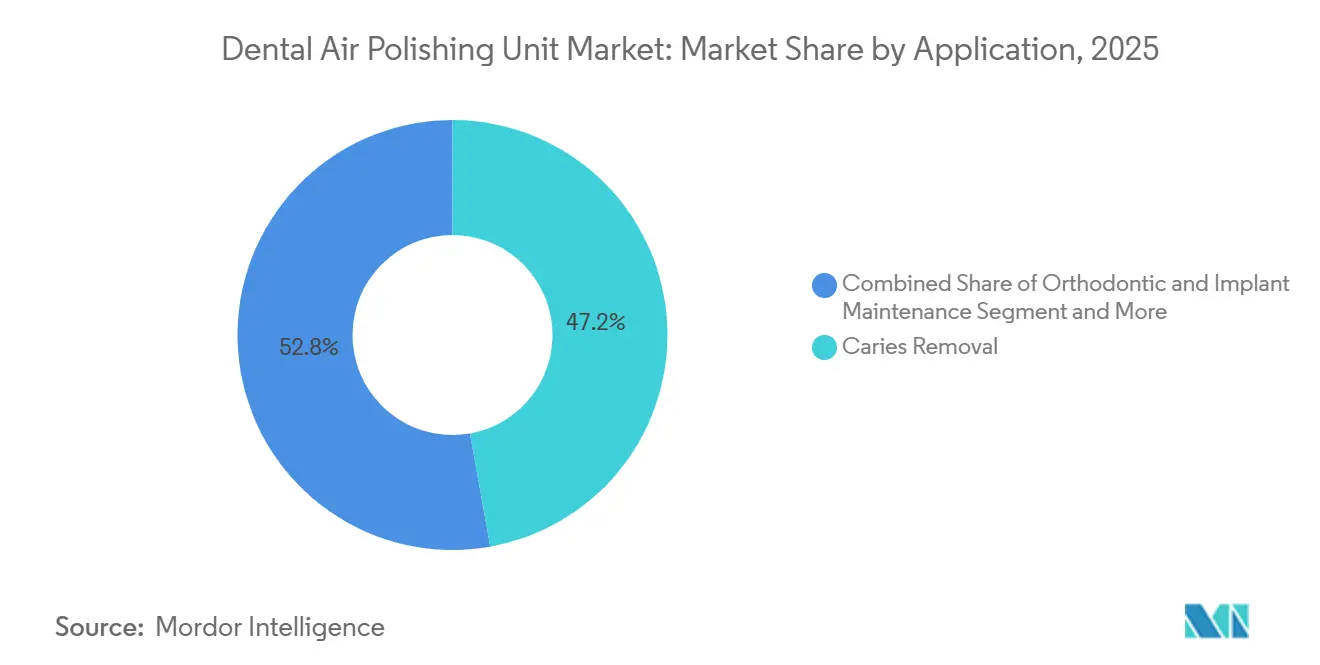
- By application, caries preparation accounted for 47.23% of the dental air polishing unit market size in 2025, and orthodontic plus implant maintenance is advancing at a 9.15% CAGR.
- By end user, dental clinics captured 63.25% of the dental air polishing unit market size in 2025 and are poised to grow at 7.21% CAGR, outpacing hospitals and academic centers.
- By geography, North America commanded 34.15% revenue in 2025, whereas Asia-Pacific is forecast to register a 9.51% CAGR through 2031.
Note: Market size and forecast figures in this report are generated using Mordor Intelligence’s proprietary estimation framework, updated with the latest available data and insights as of January 2026.
Market Trends and Insights
Drivers Impact Analysis of Dental Air Polishing Unit Market*
| Driver | (~) % Impact on CAGR Forecast | Geographic Relevance | Impact Timeline |
|---|---|---|---|
| Widespread adoption of minimally invasive dentistry | +1.2% | Global, accelerated in North America and Western Europe | Medium term (2-4 years) |
| Rising demand for cosmetic and aesthetic treatments | +0.9% | North America, Asia-Pacific urban centers, GCC | Short term (≤ 2 years) |
| Digital-workflow integration driving operatory upgrades | +1.5% | North America, Europe, Japan, South Korea | Medium term (2-4 years) |
| Shift to subscription or OPEX equipment models | +0.6% | North America, Europe, Australia | Short term (≤ 2 years) |
| Air-polishing powders with prebiotic benefits | +0.8% | Global, early adoption in Scandinavia and North America | Long term (≥ 4 years) |
| Tariff-induced local manufacturing realignment | +0.5% | Asia-Pacific hubs, Mexico | Medium term (2-4 years) |
| Source: Mordor Intelligence | |||
Widespread Adoption of Minimally Invasive Dentistry
Protocols that emphasize tissue preservation are encouraging clinics to replace ultrasonic scalers with air polishing systems that remove biofilm without microfracturing enamel. A 2024 study reported 62% lower post-procedure sensitivity when glycine was used instead of mechanical scaling. Pediatric and geriatric segments benefit most because fragile dentition increases the risk of trauma. The trend was underscored when Dentsply Sirona acquired Propel Orthodontics in 2025, anticipating that the procedure will become standard alongside clear aligner therapy.
Rising Demand for Cosmetic and Aesthetic Treatments
Cosmetic dentistry revenue in North America topped USD 18 billion in 2025, making air polishing the entry treatment ahead of veneers and in-office whitening. Immediate removal of coffee, tea, and tobacco stains in 15 minutes appeals to millennials and Gen Z patients across Asia-Pacific, where the number of dedicated cosmetic dental clinics rose 22% year over year in 2025[1]Chinese Stomatological Association, “Annual Industry Report 2025,” CNDENT.COM. GCC nations are leveraging medical tourism packages that bundle air polishing with composite bonding, attracting more than 120,000 visitors to Dubai and Abu Dhabi during 2025.
Digital-Workflow Integration Driving Operatory Upgrades
Clinics refreshing entire operatories are prioritizing devices that communicate with intraoral scanners and practice-management clouds. Bluetooth-enabled air polishing units now integrate with DS Core and other dashboards to track powder levels and schedule predictive maintenance, reducing downtime. ISO 13485 and IEC 60601-1 compliance is mandatory for hospital procurement.
Air-Polishing Powders with Prebiotic Benefits
Rare sugars such as tagatose and erythritol disrupt cariogenic biofilm while promoting Streptococcus salivarius, leading to periodontal pocket reductions documented in 2024 clinical trials. EMS captured 12% of the European market within 18 months of launching its erythritol-based PLUS powder subscription. Price premiums of 18% over sodium bicarbonate are sustainable because the powders are marketed as wellness products.
Restraints Impact Analysis of Dental Air Polishing Unit Market*
| Restraint | (~) % Impact on CAGR Forecast | Geographic Relevance | Impact Timeline |
|---|---|---|---|
| High upfront and maintenance cost of premium units | -0.7% | Global, most acute in emerging markets | Short term (≤ 2 years) |
| Steep operator learning curve and training gaps | -0.5% | Asia-Pacific, Latin America, Sub-Saharan Africa | Medium term (2-4 years) |
| Consumable lock-in and warranty-tied ecosystems | -0.4% | North America, Europe | Long term (≥ 4 years) |
| Particulate-emission regulations tightening | -0.3% | European Union, Canada | Medium term (2-4 years) |
| Source: Mordor Intelligence | |||
High Upfront and Maintenance Cost of Premium Units
Premium devices retail between USD 7,500 and USD 12,000, and five-year ownership exceeds USD 18,000 when service contracts are included[2]Indian Dental Association, “Practice Infrastructure Survey 2025,” IDA.ORG.IN. Leasing volumes grew 34% in 2025, but penetration is below 15% where small-business credit remains scarce.
Steep Operator Learning Curve and Training Gaps
Mastery of angulation, distance, and powder flow requires 8–12 hours of hands-on instruction. Only 42% of U.S. hygiene schools embedded air polishing into 2025 curricula, lengthening adoption timelines. Virtual-reality modules launched by W&H Dentalwerk aim to bridge the gap but remain concentrated in Europe and North America.
*Our forecasts treat driver/restraint impacts as directional, not additive. The impact forecasts reflect baseline growth, mix effects, and variable interactions.
Dental Air Polishing Unit Market Segment Analysis
By Product Type:
Portability Unlocks Underserved MarketsStationary units represented 55.55% of 2025 revenue, the highest slice of the dental air polishing unit market size, because hospital departments favor integrated suction and multi-patient throughput. Portable systems, however, are expanding at 8.25% CAGR as mobile clinics and school programs deploy lithium-ion models that run for 45 minutes without external power.
Growth in the portable segment broadens the dental air polishing unit market by tapping rural and military settings that lacked prophylaxis services. India’s National Oral Health Programme rolled out 1,200 mobile units during 2025, illustrating how portability supports universal coverage targets. Manufacturers offset the 20% price premium through higher service reach, keeping utilization high and accelerating consumable pull-through.


By Powder Type:
Rare Sugars Displace Legacy AbrasivesSodium bicarbonate retained 36.53% share of the dental air polishing unit market size in 2025, but migration toward sub-50-micron glycine, erythritol, and calcium carbonate is accelerating. Tagatose is the fastest-growing formulation, projected to climb 9.55% CAGR through 2031, underpinned by dual mechanical and prebiotic benefits.
Clinical evidence showing that erythritol avoids titanium-implant pitting is steering implantologists to premium powders, supporting long-term subscription margins. Regulatory hurdles remain minimal because most powders sit within FDA GRAS status, yet European REACH reviews add incremental testing costs for novel additives.
By Application:
Implant Longevity Drives Maintenance ProtocolsCaries preparation held 47.23% revenue in 2025, the largest slice of the dental air polishing unit market share, while orthodontic and implant maintenance is the fastest-growing use case at 9.15%. Implant survival improves when quarterly air polishing is bundled into care plans, raising five-year survival by 18% according to Straumann’s 2025 data.
Stain removal remains a visible gateway service that converts cosmetic dentistry interest into comprehensive treatment plans. Subgingival biofilm disruption with glycine and erythritol is the gold standard endorsed by the American Academy of Periodontology, indicating that therapeutic and aesthetic motives reinforce each other.

By End-User:
Clinics Dominate but Hospitals Gain ShareDental clinics captured 63.25% of 2025 revenue and are forecast to grow 7.21% CAGR, upheld by subscription models that lower capital barriers for 140,000 private practices in North America. Hospitals now integrate air polishing into cardiac and orthopedic pre-surgical protocols after the American Heart Association linked periodontal biofilm with systemic inflammation.
Academic institutes, while accounting for less than 9%, set future standards by equipping simulation labs with ISO-certified units. The University of Michigan installed 24 devices in 2025, ensuring that graduating dentists enter the workforce already proficient with the technology.
Geography Analysis
North America Dental Air Polishing Unit Market
North America led the dental air polishing unit market with a 34.15% share in 2025, propelled by 201,000 active dentists and annual per-capita dental spending of USD 548. Stricter aerosol-capture rules in Canada added USD 600–900 to unit prices but deepened compliance moats that benefit certified suppliers. Mexico’s USMCA status encouraged Danaher to expand a Tijuana facility in 2025, enhancing cross-border supply chains.
APAC Dental Air Polishing Unit Market
Asia-Pacific is the fastest-growing region at 9.51% CAGR as Chinese provincial insurance pilots reimburse up to 60% of prophylaxis costs and Japan’s aging society demands gentle cleaning modalities[3]Ministry of Health, Labour and Welfare Japan, “Oral Health Survey 2024,” MHLW.GO.JP. India’s urban middle class, expanding 8% yearly, is driving a cosmetic-dentistry upswing that places air polishing as the introductory procedure before veneers or whitening. South Korea added the technique to its school sealant program, familiarizing 2.1 million children with the service in 2025.
EMEA and South America Dental Air Polishing Unit Market
Europe, the Middle East, and Africa show mixed dynamics. MDR 2017/745 compliance costs are spurring consolidation, illustrated by ACTEON’s 2025 distributor acquisitions to secure post-market surveillance capacity. GCC mandates that every licensed clinic possess air-polishing capability are locking in equipment purchases across 1,800 UAE facilities. South American momentum is slower because of currency volatility, but local assembly partnerships in Brazil are mitigating tariff impacts.

Competitive Landscape
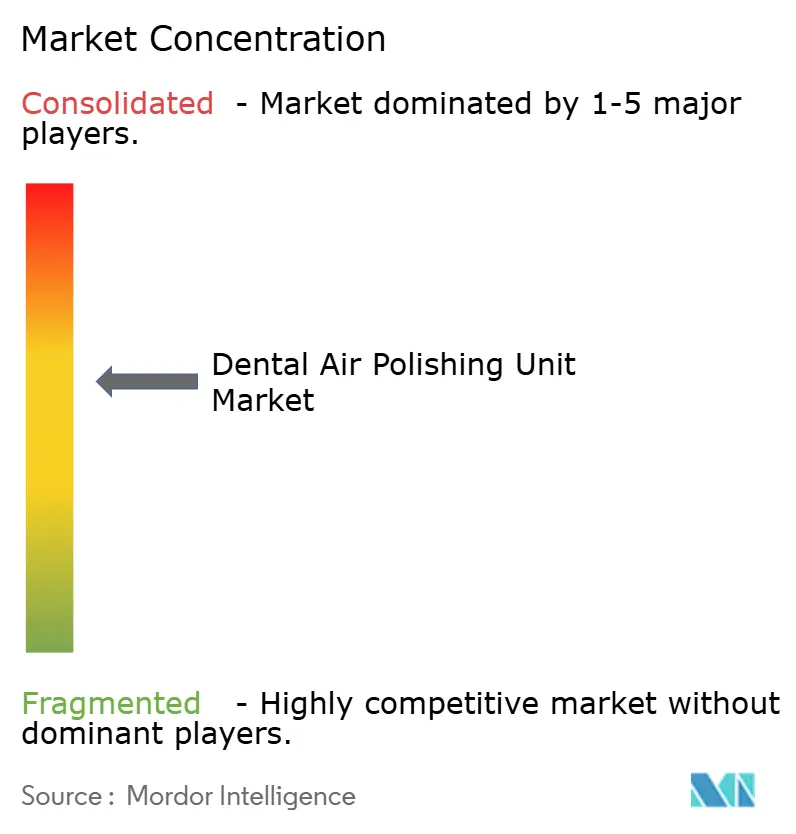
The dental air polishing unit market is moderately concentrated, with Dentsply Sirona, EMS, KaVo Kerr, W&H Dentalwerk, and NSK holding the largest combined share in 2025. Razor-and-blade economics dominate because recurring powders earn 38–42% gross margins, reinforcing vendor lock-in. Dentsply Sirona’s 2025 purchase of Datum Dental integrated cloud inventory analytics that alert clinics when consumables fall below two-week thresholds, tightening loyalty.
Patent filings cluster in nozzle aerodynamics and erythritol delivery, with 37 active U.S. patents recorded in 2024, creating freedom-to-operate hurdles for newcomers. Smaller challengers such as Mectron and TPC Advanced target sub-USD 5,000 devices stripped of touchscreens and Bluetooth to gain traction in price-sensitive settings.
Regulatory compliance acts as a competitive differentiator. Products that hold FDA 510(k), CE marking under MDR 2017/745, and Health Canada Class II approvals can command 15–20% price premiums. Channel consolidation is underway; Henry Schein’s 2025 direct leasing platform bypasses distributors, capturing full economic value from equipment and consumables.
Dental Air Polishing Unit Industry Leaders
Dentsply Sirona
EMS Electro Medical Systems
KaVo Dental / Kerr
W&H Dentalwerk
NSK Nakanishi Inc.
- *Disclaimer: Major Players sorted in no particular order
Dental Air Polishing Unit Market Companies Covered in this Report
- Acteon Group
- A-dec
- Bien Air
- Danaher
- Danville Materials
- DentalEZ Group
- Dentsply Sirona
- Durr Dental
- EMS Electro Medical Systems
- GC Corporation
- Hu-Friedy
- Ivoclar Vivadent
- KaVo Dental / Kerr
- LM-Dental
- Mectron S.p.A
- NSK Nakanishi Inc.
- Planmeca
- TPC Advanced
- Ultradent Products
- Velopex International
- W&H Dentalwerk
- Young Innovations

Recent Industry Developments in Dental Air Polishing Unit Market
- January 2026: Kidbrooke Village Dentist (Smile 4 U) opened consultation slots for new private patients seeking dental hygiene and air polisher treatments.
- April 2025: NSK broadened its dental operatory line with a subgingival air polisher, micromotor, and implant stability device, aiming to deliver connected periodontal care across the treatment cycle.


Global Dental Air Polishing Unit Market Report Scope
As per the scope of the report, a Dental Air Polishing Unit is a dental device used to remove plaque, stains, and debris from teeth surfaces. It employs a high-pressure stream of air, water, and a fine abrasive powder (usually sodium bicarbonate or glycine) to gently and effectively clean and polish teeth, enhancing oral hygiene and esthetics.
The segmentation of the dental air polishing unit market is categorized by product type into portable air-polishing units and stationary/benchtop units; by powder type into sodium bicarbonate, glycine, erythritol, calcium carbonate, and tagatose powder; by application into stain removal, plaque/biofilm removal, caries preparation, and orthodontic & implant maintenance; by end-user into dental clinics, hospitals, and academic & research institutes; and by geography into North America, Europe, Asia-Pacific, Middle East and Africa, and South America. The Market Forecasts are Provided in Terms of Value (USD).
| Portable Air-Polishing Units |
| Stationary / Benchtop Units |
| Sodium Bicarbonate |
| Glycine |
| Erythritol |
| Calcium Carbonate |
| Tagatose Powder |
| Stain Removal |
| Plaque / Biofilm Removal |
| Caries Preparation |
| Orthodontic & Implant Maintenance |
| Dental Clinics |
| Hospitals |
| Academic & Research Institutes |
| North America | United States |
| Canada | |
| Mexico | |
| Europe | Germany |
| United Kingdom | |
| France | |
| Italy | |
| Spain | |
| Rest of Europe | |
| Asia-Pacific | China |
| India | |
| Japan | |
| Australia | |
| South Korea | |
| Rest of Asia-Pacific | |
| Middle East and Africa | GCC |
| South Africa | |
| Rest of Middle East and Africa | |
| South America | Brazil |
| Argentina | |
| Rest of South America |
| By Product Type | Portable Air-Polishing Units | |
| Stationary / Benchtop Units | ||
| By Powder Type | Sodium Bicarbonate | |
| Glycine | ||
| Erythritol | ||
| Calcium Carbonate | ||
| Tagatose Powder | ||
| By Application | Stain Removal | |
| Plaque / Biofilm Removal | ||
| Caries Preparation | ||
| Orthodontic & Implant Maintenance | ||
| By End-User | Dental Clinics | |
| Hospitals | ||
| Academic & Research Institutes | ||
| By Geography | North America | United States |
| Canada | ||
| Mexico | ||
| Europe | Germany | |
| United Kingdom | ||
| France | ||
| Italy | ||
| Spain | ||
| Rest of Europe | ||
| Asia-Pacific | China | |
| India | ||
| Japan | ||
| Australia | ||
| South Korea | ||
| Rest of Asia-Pacific | ||
| Middle East and Africa | GCC | |
| South Africa | ||
| Rest of Middle East and Africa | ||
| South America | Brazil | |
| Argentina | ||
| Rest of South America | ||


Key Questions Answered in the Report
What is the current size of the dental air polishing unit market?
The dental air polishing unit market size reached USD 2.20 billion in 2026 and is on course to hit USD 2.98 billion by 2031.
Which region is growing fastest for dental air polishing units?
Asia-Pacific exhibits the fastest regional CAGR at 9.51% through 2031, supported by insurance pilots in China and rising cosmetic demand in India.
Why are tagatose and erythritol powders gaining popularity?
These rare sugars disrupt cariogenic biofilms while preserving enamel and implants, and they command 18% price premiums over sodium bicarbonate.
How do subscription models impact adoption?
Monthly leasing schemes of USD 150-250 reduce upfront capital barriers, enabling smaller clinics to integrate advanced air polishing technology.
Which application segment is expanding quickest?
Orthodontic and implant maintenance is the fastest-growing segment, posting a 9.15% CAGR due to the global surge in implants and clear aligners.
What regulatory trends affect market participants?
Stricter particulate-emission limits in the EU and Canada require integrated HEPA filtration, raising compliance costs but creating barriers for uncertified rivals.
Page last updated on:


 Your data is secure and never sold or shared.


