
Cutaneous Squamous Cell Carcinoma Treatment Market Size and Share
Market Overview
| Study Period | 2021 - 2032 |
|---|---|
| Market Size (2027) | USD 16.60 Billion |
| Market Size (2032) | USD 23.41 Billion |
| Growth Rate (2027 - 2032) | 7.11 % |
| Fastest Growing Market | Asia-Pacific |
| Largest Market | North America |
| Market Concentration | Medium |
Major Players *Disclaimer: Major Players sorted in no particular order Image © Mordor Intelligence. Reuse requires attribution under CC BY 4.0. | |
Cutaneous Squamous Cell Carcinoma Treatment Market Analysis by Mordor Intelligence
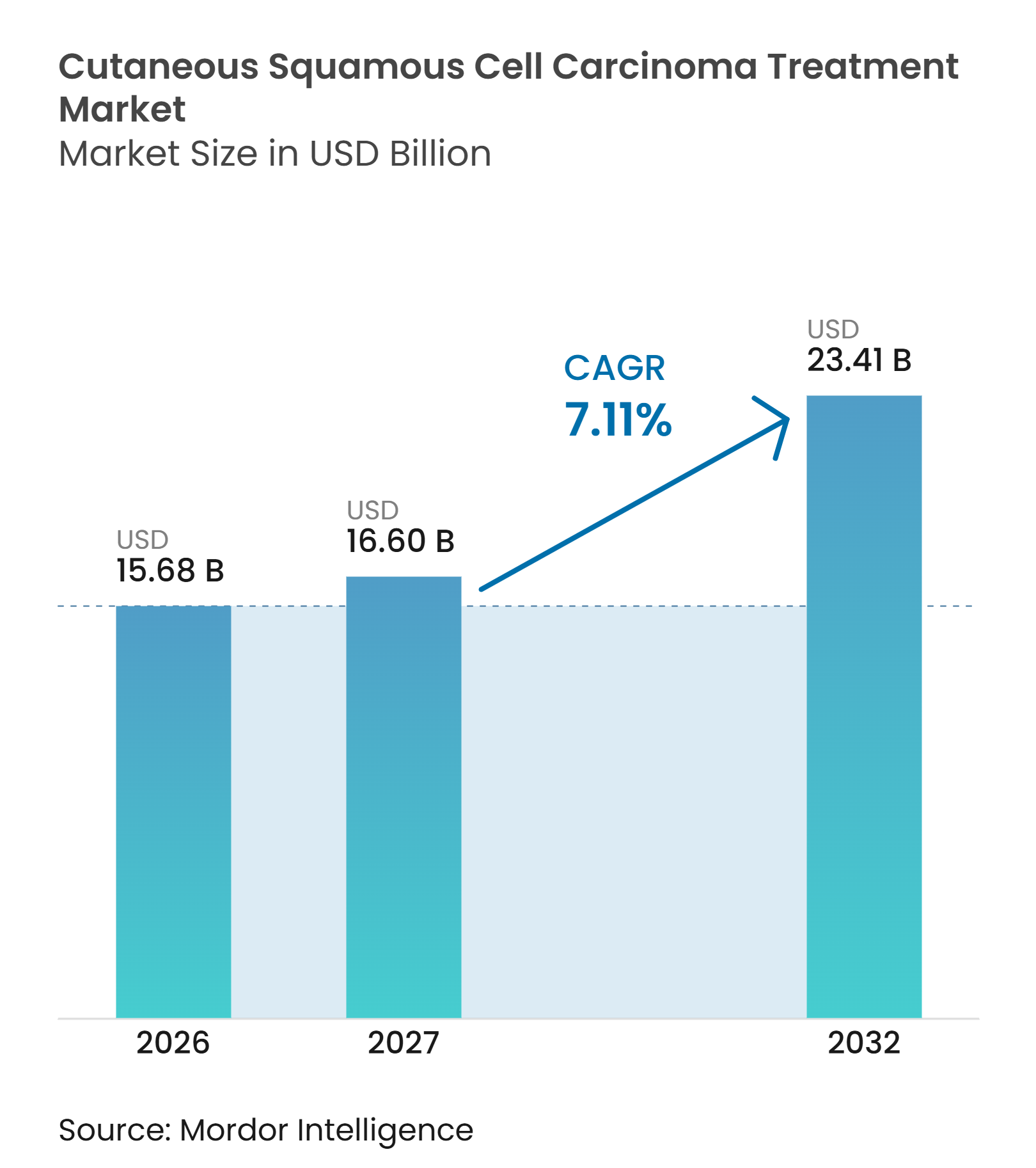
The cutaneous squamous cell carcinoma treatment market is expected to grow from USD 15.68 billion in 2026 to USD 16.60 billion in 2027, and to reach USD 23.41 billion by 2032, at a CAGR of 7.11% during the forecast period (2027-2032). The cutaneous squamous cell carcinoma treatment market is supported by a sustained rise in diagnoses, linked to population aging and lifetime ultraviolet exposure. Global incident cases increased from nearly 465,000 in 1990 to nearly 1.9 million in 2021, while modeled age-standardized incidence is expected to rise from 22.38 per 100,000 in 2021 to 64.66 per 100,000 by 2045. Treatment patterns are also changing as immunotherapy reaches patients with high-risk disease after surgery and radiation. This expansion makes coordination between dermatology, surgery, pathology, and oncology more important in the cutaneous squamous cell carcinoma treatment market. Uneven reimbursement and limited specialist access continue to restrict the use of expensive systemic therapies, particularly outside wealthier health systems.
Key Report Takeaways
- By treatment, surgical procedures held 51.16% of the cutaneous squamous cell carcinoma treatment market share in 2026, while non-surgical treatments are expected to be the fastest-growing treatment segment with a 8.06% CAGR through 2032.
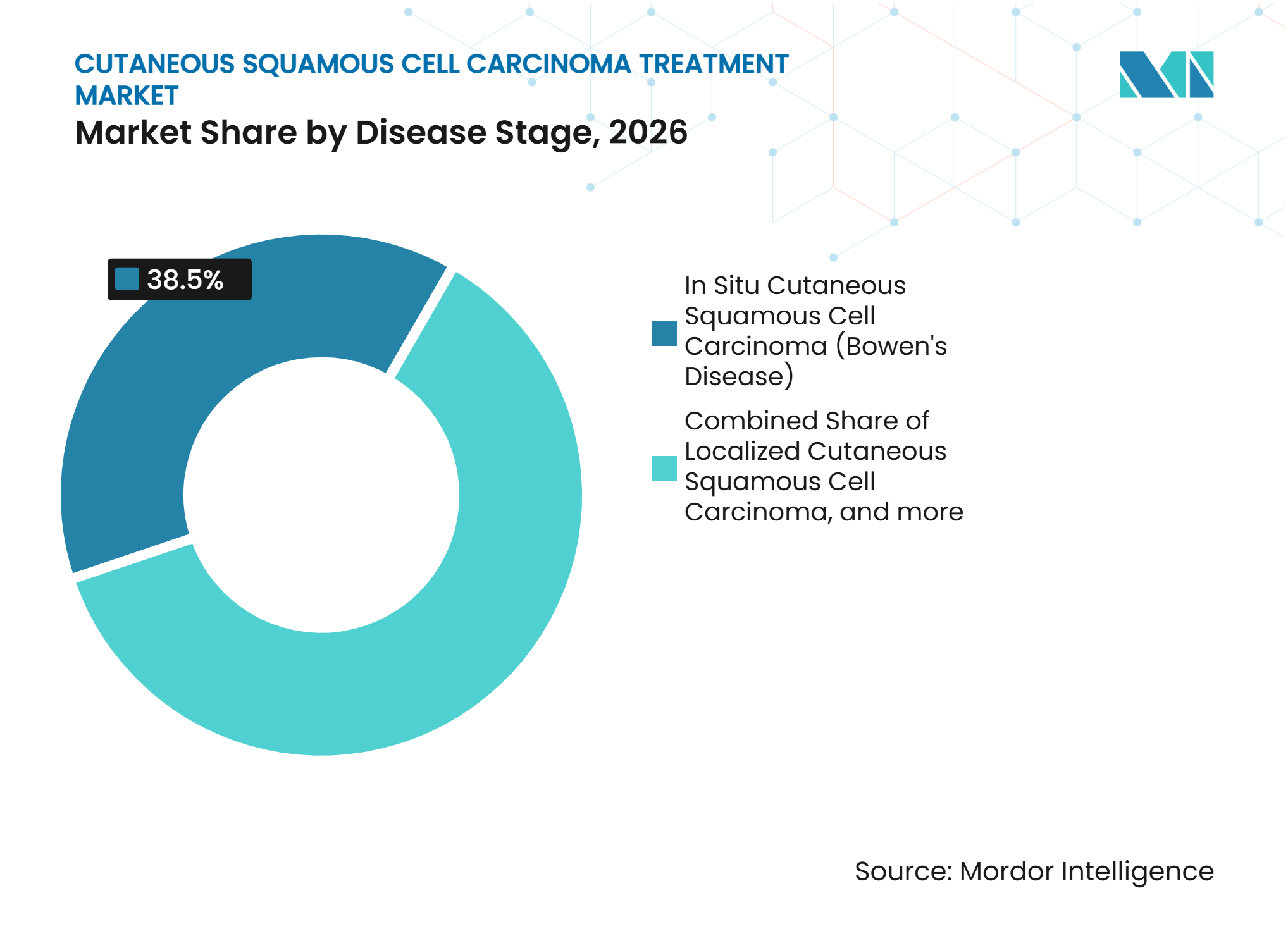
- By disease stage, in situ cutaneous squamous cell carcinoma (Bowen’s disease) accounted for 38.53% of the market share in 2026, while locally advanced cutaneous squamous cell carcinoma is projected to register the fastest growth, with a CAGR of 8.15% through 2032.
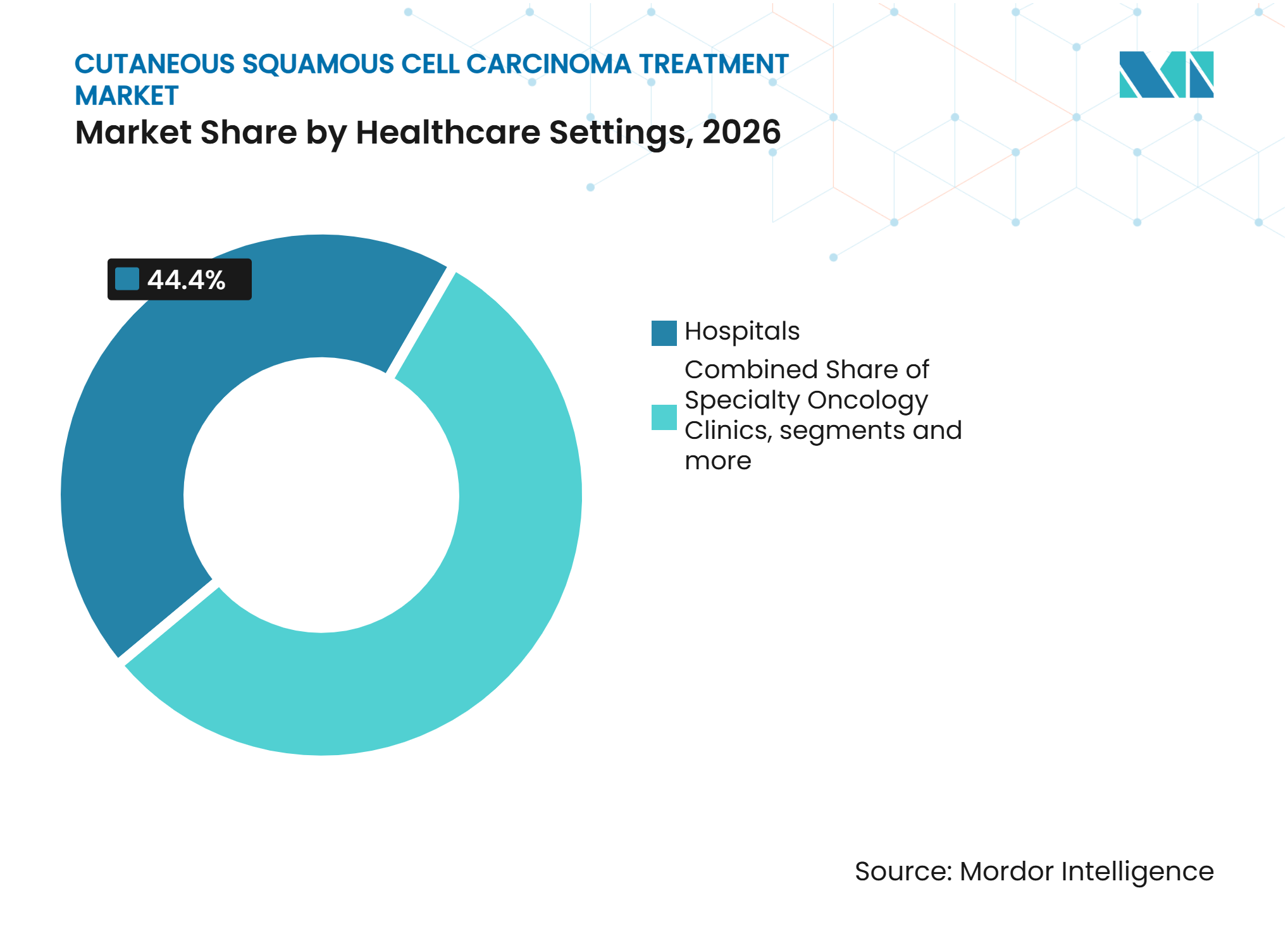
- By healthcare settings, hospitals held 44.36% of the cutaneous squamous cell carcinoma treatment market share in 2026, while specialty oncology clinics are expected to grow at a 7.73% CAGR through 2032.
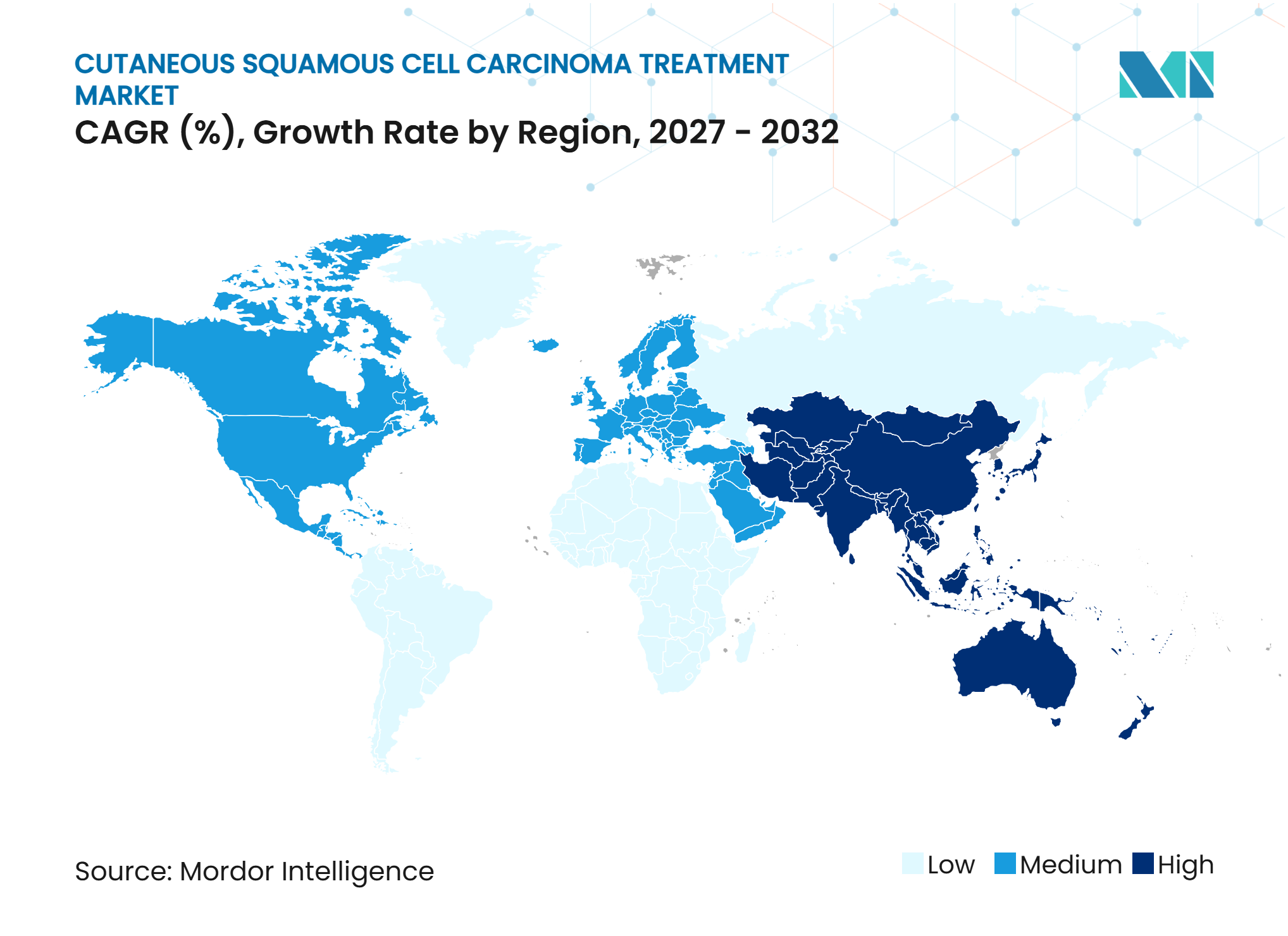
- By geography, North America held 48.25% of revenue in 2026, while Asia-Pacific is projected to grow at a 9.31% CAGR through 2032.
Note: Market numbers in this report are based on Mordor Intelligence's proprietary estimation framework, which combines nine months of actuals with Q4 projections for base year 2026.
Market Trends and Insights
Drivers Impact Analysis of Cutaneous Squamous Cell Carcinoma Treatment Market*
| Driver | (~) % Impact on CAGR Forecast | Geographic Relevance | Impact Timeline |
|---|---|---|---|
| Rising Global cSCC Incidence | +1.8% | Global | Short term (≤ 2 years) |
| Population Aging and Cumulative UV Exposure | +1.4% | Global, concentrated in high-SDI regions, including North America, Australasia, and Western Europe | Long term (≥ 4 years) |
| Expanding Advanced-Disease Immunotherapy Use | +1.6% | North America and Europe, with early-stage uptake in Asia-Pacific | Medium term (2-4 years) |
| Post-Transplant cSCC Surveillance and Treatment Demand | +0.6% | North America and Europe | Medium term (2-4 years) |
| Neoadjuvant and Adjuvant Treatment Expansion | +0.9% | North America and Europe | Short term (≤ 2 years) and medium term (2-4 years) |
| Digitally Enabled Triage and Dermatology Referral | +0.5% | Europe and core Asia-Pacific markets, with spillover to North America | Medium term (2-4 years) |
| Source: Mordor Intelligence | |||
Rising Global cSCC Incidence
The rise in cSCC incidence remains a central volume driver for the cutaneous squamous cell carcinoma treatment market. High-income North America held the largest share of prevalent cases in 2021, and Australasia recorded the highest age-standardized mortality rate at 3.19 per 100,000.[1]Modeled prevalence exceeds 1,660 per 100,000 among people older than 95 by 2045, which makes aging populations important to long-term treatment demand. Population aging, cumulative ultraviolet exposure, and greater surveillance will therefore maintain demand for surgery and systemic care in the cutaneous squamous cell carcinoma treatment market.
Expanding Advanced-Disease Immunotherapy Use
Checkpoint inhibitors are widening the systemic treatment options available in the cutaneous squamous cell carcinoma treatment market. The FDA approved cemiplimab for advanced cSCC in 2018 and pembrolizumab in 2020, while cosibelimab received approval on December 13, 2024, for metastatic or locally advanced disease not amenable to curative surgery or radiation.[2] In the CK-301-101 study, cosibelimab produced objective response rates of 47% in metastatic disease and 48% in locally advanced disease. Its PD-L1 target adds a third approved checkpoint inhibitor and gives clinicians another treatment option. UV-induced cSCC has a high tumor mutational burden, a feature associated with durable checkpoint inhibitor responses. This clinical profile supports the response rates near 46% reported across cemiplimab and pembrolizumab studies and may support further late-stage development in the cutaneous squamous cell carcinoma treatment market.
Neoadjuvant and Adjuvant Treatment Expansion
The FDA approved cemiplimab for adjuvant treatment of adults with high-risk cSCC after surgery and radiation on October 8, 2025. In C-POST, adjuvant cemiplimab reduced the risk of disease recurrence or death by 68% against placebo, with a hazard ratio of 0.32.[3]The European Commission approved the adjuvant indication on November 19, 2025, and Germany’s Federal Joint Committee issued its benefit assessment resolution on June 4, 2026. Regeneron began the Phase 3 CLEAR CSCC trial in January 2025 to compare intralesional cemiplimab with primary surgery in early-stage disease. The trial could bring systemic therapy earlier in the care pathway if its results are positive. Patients with perineural invasion, poor differentiation, or tumors larger than 2 cm are increasingly relevant to the cutaneous squamous cell carcinoma treatment market because they may move from surgery alone into adjuvant care.
Digitally Enabled Triage and Dermatology Referral
Digital triage is changing referral routes that influence treatment volume in the cutaneous squamous cell carcinoma treatment market. NICE conditionally recommended the DERM platform for autonomous use in the National Health Service urgent suspected skin cancer pathway in May 2025. The recommendation was the first of its kind in the United Kingdom for artificial intelligence skin cancer triage. A study in Acta Dermato-Venereologica found that teledermatology reduced referral delays from 55 days to 3 days and surgical waiting times from 28.7 days to 12.3 days for cSCC diagnoses. An earlier assessment can identify patients who are suitable for surgical cure and those who need assessment for adjuvant systemic therapy. Mobile-first care systems in the Asia-Pacific could benefit as teledermatology capacity expands.
Restraints Impact Analysis of Cutaneous Squamous Cell Carcinoma Treatment Market*
| Restraint | (~) % Impact on CAGR Forecast | Geographic Relevance | Impact Timeline |
|---|---|---|---|
| Uneven Reimbursement and Specialist Access | -1.2% | Global, concentrated in lower- and middle-income countries and lower-access high-income regions | Long term (≥ 4 years) |
| Immune-Related Adverse-Event Management Burden | -0.8% | Global | Short term (≤ 2 years) and medium term (2-4 years) |
| Immunotherapy Eligibility Constraints in Immunosuppressed Patients | -0.5% | Global | Medium term (2-4 years) |
| Inconsistent High-Risk Staging and Follow-Up Standards | -0.4% | Global, with acute gaps in lower- and middle-income countries and rural settings | Long term (≥ 4 years) |
| Source: Mordor Intelligence | |||
Uneven Reimbursement and Specialist Access
Reimbursement differences constrain the cutaneous squamous cell carcinoma treatment market because checkpoint inhibitors are not available evenly across health systems. A 2025 Lancet EClinicalMedicine analysis reported access to PD-1 and PD-L1 inhibitors in 41 high-income countries, 18 upper-middle-income countries, and 3 lower-middle-income countries. The analysis estimated effective coverage at 22% of eligible patients globally in 2024. In high-income countries, PD-1 and PD-L1 medicines accounted for up to 25% of cancer medicine spending, which has encouraged restrictions, step-edit rules, and prior authorization controls. Mohs surgery access is also concentrated in metropolitan centers, leaving rural and remote patients with delays in diagnosis and treatment. These gaps limit both surgical and systemic care, especially where cSCC is still viewed as a routinely curable skin cancer.
Immune-Related Adverse-Event Management Burden
Immune-related adverse events add cost and clinical complexity to the cutaneous squamous cell carcinoma treatment market. In the C-POST trial, serious adverse reactions occurred in 18% of patients treated with Libtayo, including pneumonia at 1.5%, colitis-related diarrhea at 1.5%, adrenal insufficiency at 1%, and cardiac arrhythmia at 1%. Rash and pruritus each affected at least 10% of treated patients. Management can require immunology or rheumatology support, corticosteroid protocols, and treatment discontinuation. Patients with autoimmune disease requiring systemic immunosuppressants and patients with a history of solid-organ transplant are excluded from the adjuvant cemiplimab label. This is important because transplant recipients face high cSCC risk, while the absence of broadly adopted tailored protocols continues to limit checkpoint inhibitor eligibility.
*Our forecasts treat driver/restraint impacts as directional, not additive. The impact forecasts reflect baseline growth, mix effects, and variable interactions.
Cutaneous Squamous Cell Carcinoma Treatment Market Segment Analysis
By Disease Stage:
In Situ cSCC Dominates, Locally Advanced Disease Shows Strong GrowthIn situ squamous cell carcinoma (Bowen's disease) accounted for 38.53% of the cutaneous squamous cell carcinoma treatment market in 2026, making it the largest disease stage segment. Its dominance is driven by the high diagnosis rates of early-stage lesions through routine dermatological screening and skin cancer surveillance programs. Patients with Bowen's disease are often treated using localized interventions such as surgical excision, cryotherapy, photodynamic therapy, and topical agents, enabling effective disease control before progression to invasive carcinoma. Growing awareness of skin cancer prevention and increasing access to dermatology services continue to support demand within this segment.
Locally advanced cutaneous squamous cell carcinoma is projected to register the fastest growth, with a CAGR of 8.15% through 2032. Growth is being driven by rising adoption of advanced systemic therapies, particularly immune checkpoint inhibitors, for patients who are not suitable candidates for curative surgery or radiation therapy. Increasing identification of high-risk and recurrent tumors, coupled with expanding treatment options for unresectable disease, is improving outcomes and broadening the addressable patient population. As therapeutic innovation continues, locally advanced cSCC is expected to represent an increasingly important focus area within the treatment landscape.



By Treatment:
Surgical Procedures Lead, Systemic Therapies Narrow the GapSurgical procedures held 51.16% of the cutaneous squamous cell carcinoma treatment market in 2026. Mohs micrographic surgery remained central for high-risk and cosmetically sensitive lesions because it supports staged removal and margin assessment. The technique is especially relevant for facial, periocular, and auricular disease. Dense dermatopathology capacity in North America and Western Europe supports its use in dermatology and plastic surgery centers. Curettage and electrodesiccation also remain important for small, low-risk tumors in community dermatology settings. This keeps surgery accessible beyond specialist centers, although patient access still differs across regions.
Non-surgical treatments are expected to be the fastest-growing treatment category with 8.06% CAGR in the cutaneous squamous cell carcinoma treatment market through 2032. Radiation therapy, cryotherapy, photodynamic therapy, topical treatment, and systemic immunotherapy serve different disease stages and patient needs. If positive, it could redirect a portion of early-stage care toward a non-surgical path. Photodynamic therapy, 5-fluorouracil, and imiquimod remain relevant for actinic keratoses and superficial lesions in immunocompetent patients.
By Healthcare Settings:
Hospital Dominance Persists as Outpatient Oncology Clinics AccelerateHospitals held 44.36% of revenue in 2026. They combine Mohs surgery, intravenous infusion capacity, radiation departments, and multidisciplinary tumor boards. Academic medical centers and cancer hospitals were early sites for the implementation of adjuvant cemiplimab after the 2025 FDA approval. Their ability to manage high-risk disease and adverse events supports their current position. Hospital radiation units also serve patients with inoperable tumors or elevated surgical risk. Specialty dermatology clinics remain important for outpatient procedures and community-based Mohs care.
Specialty oncology clinics are forecasted to be the fastest-growing healthcare settings segment, with a 7.73% CAGR forecast through 2032. Long-duration checkpoint inhibitor treatment is increasingly managed in outpatient settings. Ambulatory infusion can cost less than inpatient care and aligns with payer incentives in the United States and Western Europe. Specialty dermatology clinics are also expanding through teledermatology-supported triage. They are positioned to manage a greater share of early-stage disease as referral pathways improve. Ambulatory surgical centers and community facilities continue to support lower-acuity surgical and topical care in the cutaneous squamous cell carcinoma treatment market.

Geography Analysis
North America
North America held 48.25% of the cutaneous squamous cell carcinoma treatment market in 2026. The United States has a large diagnosed cSCC burden and established dermatology, oncology, and infusion networks. These networks supported the uptake of cemiplimab and pembrolizumab after their FDA approvals. The 2025 adjuvant cemiplimab approval expands the addressable systemic therapy group among patients with high-risk disease after surgery and radiation. Canada adds a smaller but growing contribution through provincial formulary coverage. Mexico remains underpenetrated because specialist availability and private insurance coverage restrict systemic treatment use.
Europe
Europe was the second-largest regional contributor to the cutaneous squamous cell carcinoma treatment market. Germany, France, the United Kingdom, Italy, and Spain have national health systems that reimburse advanced cSCC immunotherapy following European approvals. The European Commission approved adjuvant cemiplimab in November 2025, and Germany’s G-BA issued its benefit assessment resolution in June 2026. EuroSkin projected a 40% increase in keratinocyte cancer incidence and a 50% increase in mortality across Europe over the coming decades. The NHS deployment pathway for the DERM platform may improve referral quality in a system facing dermatology capacity constraints.
Asia-Pacific, Middle East and Africa, and South America
Asia-Pacific is projected to record the highest regional CAGR at 9.31% through 2032. Japan has established checkpoint inhibitor reimbursement and is the commercial base for Rakuten Medical’s photoimmunotherapy platform. India and South Korea are expanding private oncology capacity in tier-1 cities. Australia and New Zealand retain substantial treatment demand because of their high cSCC incidence and mortality rates. Middle East and Africa, along with South America, remain earlier-stage opportunities where affordability and infrastructure continue to limit immunotherapy use.
Competitive Landscape
Market Concentration
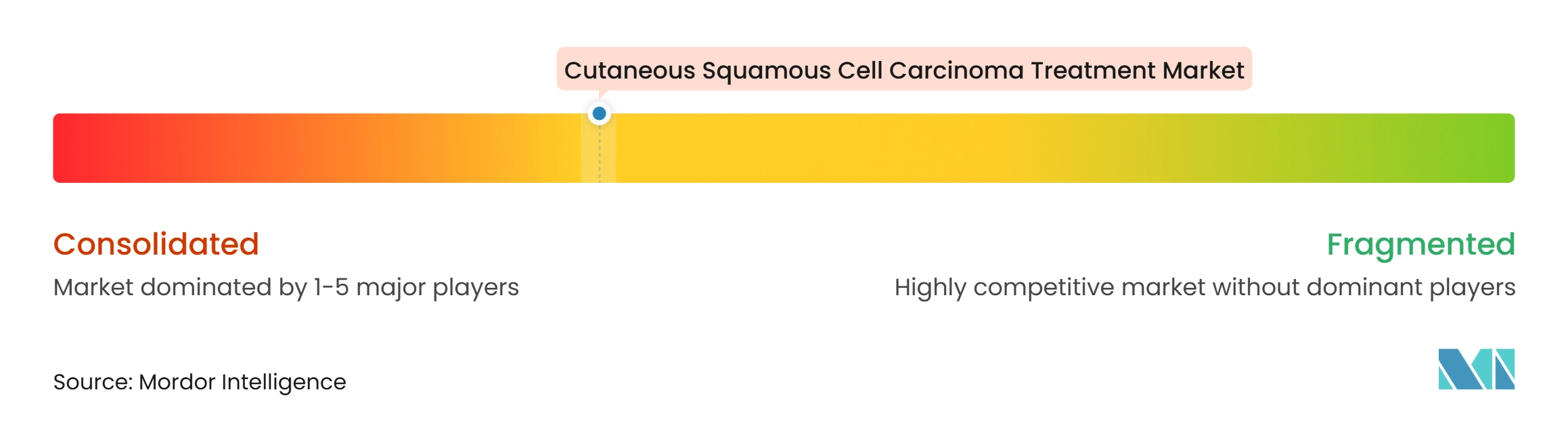
The cutaneous squamous cell carcinoma treatment market is moderately concentrated in systemic immunotherapy and fragmented in surgical and procedural care. Three approved checkpoint inhibitors compete in overlapping advanced-disease settings. Regeneron has a strong position through cemiplimab’s 2018 advanced-disease approval, its October 2025 adjuvant expansion, and its intralesional Phase 3 program. The C-POST result gives cemiplimab a distinct adjuvant evidence base. This can concentrate prescribers' attention on cemiplimab for eligible post-surgical patients. Thousands of independent dermatology and Mohs practices, however, keep procedural provision highly fragmented.
Merck’s pembrolizumab remains a competitor in locally advanced and metastatic disease through the KEYNOTE-629 evidence base and global commercialization infrastructure. Its KEYNOTE-630 adjuvant study did not establish the same post-surgical position, which differentiates the current profile of cemiplimab. Checkpoint Therapeutics entered with cosibelimab, the approved PD-L1 inhibitor for cSCC. FDA materials reported objective response rates of 47% in metastatic disease and 48% in locally advanced disease. The company must still build the commercial reach needed for payer negotiations and broad access. These conditions maintain active competition in the cutaneous squamous cell carcinoma treatment market.
Rakuten Medical is developing photoimmunotherapy technology that could reach adjacent cSCC applications, while RM-1995 is in Phase 1 for cSCC. Lotte Holdings announced a strategic investment in Rakuten Medical on April 2, 2026, supporting the development of its photoimmunotherapy pipeline. Castle Biosciences’ DecisionDx-SCC test can influence treatment selection by identifying high-risk patients more precisely. Opportunities remain in immunosuppressed transplant recipients and in neoadjuvant treatment, where no medicine has an approved label. Companies that produce positive Phase 3 data in these groups could encounter limited near-term competition. Patient-reported outcomes and health-related quality-of-life evidence are also becoming relevant in label discussions within the cutaneous squamous cell carcinoma treatment industry. The cutaneous squamous cell carcinoma treatment market favors companies that align drug development with evidence needs in underserved patient groups.
Cutaneous Squamous Cell Carcinoma Treatment Industry Leaders
-
Regeneron Pharmaceuticals, Inc.
-
Merck & Co., Inc.
-
Checkpoint Therapeutics, Inc.
-
Bristol Myers Squibb Company
-
F. Hoffmann-La Roche AG
- *Disclaimer: Major Players sorted in no particular order
Cutaneous Squamous Cell Carcinoma Treatment Market Companies Covered in this Report
- Abbvie
- Amgen
- AstraZeneca
- Bristol-Myers Squibb
- Castle Biosciences, Inc.
- Checkpoint Therapeutics, Inc.
- Eli Lilly and Company
- Roche
- GlaxoSmithKline
- Johnson & Johnson
- Leo Pharma
- Merck
- NeoImmuneTech, Inc.
- Novartis
- Pfizer
- Rakuten Medical, Inc.
- Regeneron Pharmaceuticals
- Sanofi
- Sirnaomics
- Sun Pharmaceuticals Industries
Recent Industry Developments in Cutaneous Squamous Cell Carcinoma Treatment Market
- June 2026: Germany's Federal Joint Committee (G-BA) issued its benefit-assessment resolution for cemiplimab (Libtayo) in the adjuvant treatment of adults with high-risk cSCC following surgery and radiation. The resolution follows the European Commission's November 2025 marketing-authorization expansion and establishes the reimbursement and pricing negotiation framework for cemiplimab's adjuvant use within Germany's statutory health insurance system, making it a critical commercial milestone for Regeneron in the EU's largest pharmaceutical market.
- April 2026: LOTTE HOLDINGS, CO., LTD. announced a strategic investment in Rakuten Medical, Inc. to support the company's photoimmunotherapy pipeline, centered on ASP-1929 (cetuximab sarotalocan), currently in a global Phase 3 trial for recurrent head and neck squamous cell carcinoma across sites in the United States, Japan, Taiwan, Poland, and Ukraine, with a planned BLA submission to the FDA targeting 2028.
- January 2026: Lotte Biologics signed a contract manufacturing organization (CMO) agreement with Rakuten Medical to establish phased supply chains from clinical trial through commercialization, supporting ASP-1929's global Phase 3 program. This partnership covers manufacturing infrastructure critical to the product's US and international regulatory pathway.
Global Cutaneous Squamous Cell Carcinoma Treatment Market Report Scope
According to the report’s scope, the cutaneous squamous cell carcinoma treatment market refers to the global segment focused on therapeutic approaches for cSCC, one of the most common forms of skin cancer. It includes surgical procedures such as excision and Mohs surgery, radiation therapy, and systemic drug therapies like immunotherapies and targeted agents.
The cutaneous squamous cell carcinoma treatment market is segmented into disease stage, treatment, healthcare settings, and geography. By disease stage, the market is segmented into in situ cutaneous squamous cell carcinoma (Bowen’s disease), localized cutaneous squamous cell carcinoma, locally advanced cutaneous squamous cell carcinoma, and metastatic cutaneous squamous cell carcinoma. By treatment, the market is segmented into surgical treatment and non-surgical treatment. The non-surgical treatment is further segmented into radiation therapy, cryotherapy, photodynamic therapy, topical therapies, and systemic therapies. By healthcare settings, the market is segmented into hospitals, specialty oncology clinics, specialty dermatology clinics, and other healthcare settings. By geography, the market is segmented into North America, Europe, Asia-Pacific, the Middle East and Africa, and South America. The report also covers the estimated market sizes and trends for 17 countries across major regions globally. The report offers values (USD) for all the above segments.
Segmentation Overview
| In Situ Cutaneous Squamous Cell Carcinoma (Bowen's Disease) |
| Localized Cutaneous Squamous Cell Carcinoma |
| Locally Advanced Cutaneous Squamous Cell Carcinoma |
| Metastatic Cutaneous Squamous Cell Carcinoma |
| Surgical Treatment | |
| Non-Surgical Treatment | Radiation Therapy |
| Cryotherapy | |
| Photodynamic Therapy | |
| Topical Therapies | |
| Systemic Therapies |
| Hospitals |
| Specialty Oncology Clinics |
| Specialty Dermatology Clinics |
| Other Healthcare Settings |
| North America | United States |
| Canada | |
| Mexico | |
| Europe | Germany |
| United Kingdom | |
| France | |
| Italy | |
| Spain | |
| Rest of Europe | |
| Asia-Pacific | China |
| Japan | |
| India | |
| Australia | |
| South Korea | |
| Rest of Asia-Pacific | |
| Middle East and Africa | GCC |
| South Africa | |
| Rest of Middle East and Africa | |
| South America | Brazil |
| Argentina | |
| Rest of South America |
| By Disease Stage | In Situ Cutaneous Squamous Cell Carcinoma (Bowen's Disease) | |
| Localized Cutaneous Squamous Cell Carcinoma | ||
| Locally Advanced Cutaneous Squamous Cell Carcinoma | ||
| Metastatic Cutaneous Squamous Cell Carcinoma | ||
| By Treatment | Surgical Treatment | |
| Non-Surgical Treatment | Radiation Therapy | |
| Cryotherapy | ||
| Photodynamic Therapy | ||
| Topical Therapies | ||
| Systemic Therapies | ||
| By Healthcare Settings | Hospitals | |
| Specialty Oncology Clinics | ||
| Specialty Dermatology Clinics | ||
| Other Healthcare Settings | ||
| By Geography | North America | United States |
| Canada | ||
| Mexico | ||
| Europe | Germany | |
| United Kingdom | ||
| France | ||
| Italy | ||
| Spain | ||
| Rest of Europe | ||
| Asia-Pacific | China | |
| Japan | ||
| India | ||
| Australia | ||
| South Korea | ||
| Rest of Asia-Pacific | ||
| Middle East and Africa | GCC | |
| South Africa | ||
| Rest of Middle East and Africa | ||
| South America | Brazil | |
| Argentina | ||
| Rest of South America | ||
Key Questions Answered in the Report
How large is the cutaneous squamous cell carcinoma treatment market?
The market is expected to grow from USD 15.68 billion in 2026 to USD 16.60 billion in 2027 and is forecasted to reach USD 23.41 billion by 2032, growing at a 7.11% CAGR.
Which treatment approach leads to cSCC care?
Surgical treatment led with 51.16% of revenue in 2026, supported by the established role of Mohs micrographic surgery.
Why is the locally advanced cSCC segment gaining attention?
Locally advanced cSCC is expected to grow at an 8.15% CAGR through 2032, driven by increasing use of immunotherapies and expanding treatment options for unresectable and high-risk tumors.
Which region is growing fastest for cSCC treatment?
Asia-Pacific is projected to grow at a 9.31% CAGR through 2032 as oncology capacity, awareness, and treatment access expand.